▌ LA Pre-Trip
Speaker 1
00:00:00 [UKR] Alex, we're meeting at our place.
00:00:00 [UKR] Alex, we're meeting at our place.
Speaker 2
00:00:13 [UKR] But I think on Thursday we'll all meet together.
Speaker 3
00:00:48 He's been there before, he spent a month, so he spent a couple of weeks. He's been there before, he spent a month, so he spent a couple of weeks. So he will finish his residency in a year and a half,
Speaker 1
00:00:00 [UKR] Alex, we're meeting at our place.
00:00:00 [UKR] Alex, we're meeting at our place.
Speaker 2
00:00:13 [UKR] But I think on Thursday we'll all meet together.
Speaker 3
00:00:48 He's been there before, he spent a month, so he spent a couple of weeks. He's been there before, he spent a month, so he spent a couple of weeks. So he will finish his residency in a year and a half,
Speaker 1
00:00:57 and then he's doing an extra year of spine training after that. What's his name? Connor. But also, there are articles I've seen on him.
00:01:20 [UKR] And then on Friday we can meet, we'll already be seeing off Alex and your team too, at a cafe.
Speaker 2
00:01:28 [UKR] Usually doctors are present, neurosurgeons, anesthesiologists.
00:01:48 - Any thoughts? - Tuesday, Wednesday, Thursday.
Speaker 1
00:02:00 - Friday, no, Thursday. - Sometimes on Monday, when I have severe penetrating TBI injury, it's not to wait. It's maybe on Monday also will be an operation. And is that typically in the evening or is that during the day? Usually on the day. After meeting, rounds, consultation, and 10:00 a.m., 11:00 a.m., go to operation room.
Speaker 3
00:02:36 It's like 24 hours. That's great. And you say you operate with Bodon or with Andre or on your own? Well, usually I follow Andre. Sometimes if he has meetings, I might go to the ICU. Gotcha. I'm assuming that like, I've been assuming that most everything, do the ICU people, any of them speak English or how do you communicate?
Speaker 1
00:03:18 Yeah, pretty well. The one who speaks best is Nick, he's a resident. But the ICU people, most of us, are Carolina and Natalia. But would that be okay if we had a translator with us?
Speaker 2
00:03:49 [RUS] Yes, workers. [RUS] Can you already find some workers? [RUS] Yes, maybe. [RUS] Yes, if you, yes, that's what you're doing, of course.
Speaker 1
00:04:18 so it has a setup where there's a control room it's an x-ray suite and you can actually do some good video recording their procedures also i show our department yeah icu department the with a brand new machine that wasn't there before. - Can you help me there, right? - I had a very good idea. - I had a very good idea.
Speaker 2
00:05:00 - I had a very good idea. - Yeah, we'll decide that the first day will be like orientation, - Yeah, we'll decide that the first day will be like orientation,
Speaker 1
00:06:18 and then it's your world that we're inhabiting. Yes. No.
Speaker 3
00:07:03 Probably from me. It is different every time. Of course. That's detailed. Yes. From your point of view, probably not.
Speaker 2
00:08:33 or to the angiosuite, then to the operating room, and then to the ICU.
Speaker 1
00:08:56 So that's another potential storyline, right?
Speaker 2
00:09:11 And then how, at the end, they're packed up and they go onto the hospital trains to leave.
Speaker 1
00:09:17 How close is the next similar facility in Ukraine to where you are? Similar facility? Our hospital is the most busy hospital in the eastern of Ukraine. That's why a lot of patients accumulated in our hospital. After that, we sent this pension to Kiev, some small part of Odessa, a lot of Vinice and Lviv. That's why it's near the... - It was a business one. - Yeah, in Dnepro, the no. The previous city, small hospital,
00:10:00 maybe in Kharkiv also, it's very busy. The hospital in Kharkiv and Dnepro. It's a first, it came out of casualties in this hospital. After we perform primary treatment, primary operation, three, four, five days, we need to evacuate this patient to another hospital to continue treatment, rehabilitation process in order to prepare a new free space,
Speaker 3
00:10:33 for people. I say 35 patients every day arrive. Every day, do the patients go to the hospital train at 10 a.m. every day?
Speaker 1
00:10:51 It's usually twice a week, right? It's different because every week we have a schedule.
00:11:00 in which city will departure our people. For example, if Vinicius, Lviv and Kyiv are the main direction, in these days, a lot of people, maybe 40, 50 patients, evacuated from ICU units from another department but there are some small city like Ivana-Franciivsk, Ternopoli, it's only 10 patients, 15 patients evacuated without ICU patients.
Speaker 3
00:11:45 That's why it's a different situation and usually the main direction, - That would be good for them to get on film too, it's very interesting. - Do you know what day that's gonna be yet?
Speaker 1
00:12:03 - Yeah, one over there. - I will know when I come back.
Speaker 3
00:12:09 - Coming or going? - Leaving Mexico. - So they have to leave to make room for the new ones. - So they have to leave to make room for the new ones.
Speaker 1
00:12:28 - Four times three, thank you. - Coming process, it's a continuous process. Every one hour, two hour, patient admitted to the hospital, but evacuated is together. Collect these people and a lot of 30 maybe cars, Ambulance, go to train station.
00:12:54 [RUS] Let me write down your phone number so I don't forget. [RUS] And we can through...
00:12:59 Yes.
Speaker 3
00:13:00 In WhatsApp actually...
00:13:04 [UKR] I can just share your contact information.
Speaker 1
00:13:06 [RUS] You, yes. [RUS] Maybe.
Speaker 3
00:13:09 Yes.
Speaker 2
00:14:34 A gente tem que ser um pouco mais importante.
Speaker 1
00:22:32 [UKR] If you decide to do it in English, that's fine, but not in Ukraine's case. [UKR] Of course, in Ukrainian, these are explosives. [UKR] He says it's very important not only to film, but also to record what we feel, [UKR] what we see during the day, perhaps at the end of the workday, when the day ends, [UKR] in Ukrainian we dictate into the phone that the day was hard, [UKR] such an operation was planned, it went well, everything's fine, or something didn't work out. [UKR] Well, that's what feels real. [UKR] He says Henry Marsh read the book, it's all written there, you need to read it,
00:23:21 [UKR] but actually it conveys what a person really feels, and for them this is very important. [UKR] In Ukrainian you don't need to pick English words,
00:23:30 [UKR] they will have the ability to translate and add subtitles.
Speaker 2
00:23:45 People have adapted to the war, people have adapted to this. It's very important for you to show that, as was mentioned earlier, that people got adapted to it.
Speaker 1
00:24:02 [UKR] This is how it happened
Speaker 2
00:24:35 [UKR] And you hear the alarm, so you should react. [UKR] And she said it's very important that if you hear the air raid siren, [UKR] you need to react. [UKR] From age. [UKR] From age. [UKR] That is, you need to rest. [UKR] Especially outside the hospital. [UKR] Especially if you will... [UKR] Especially outside the hospital.
00:24:58 I have used a double wall rule. I have used a double wall rule. So make sure you have inside of the building where there are two walls which separate you from outside. In the past it was not so bad, but recently it has been very serious and pretty bad. I actually, I've been in Kiev in January for months, and people get used to it. Nobody pays attention to you or something anymore.
00:25:30 Oh, we'll be fine. And then, like, somebody doesn't wake up, and somebody doesn't wake up, and somebody doesn't wake up the next morning, and then it becomes like, oh, shit. Maybe one of them will be fine, maybe we need to respond. But then people get used to it, - Thank you very much. I could even see a world where we would get some of your thoughts into the, like, everything that you've just shared right now, like, that kind of thing, or beyond, or your concerns, you're recording those voice memos as well.
Speaker 1
00:26:23 [UKR] So that you record such a tag. [UKR] It will be possible when guests come to us.
Speaker 2
00:26:32 [UKR] It will be possible when guests come to us.
00:26:46 She said it's impossible to describe it with words. It's such a terrifying pain. I was crying for three years. She can't cry anymore. There's no tears left. She feels terrible. She's sad for people. She feels sad for mother-in.
Speaker 1
00:27:15 [UKR] This can't be recorded. [UKR] No, this can't be done.
Speaker 2
00:27:26 [UKR] when you see soldiers on the streets just sitting, [UKR] holding their heads like this, they don't understand where they are. [UKR] This can't be explained, it probably just needs to be shown. [VO CANDIDATE]
Speaker 1
00:27:40 [UKR] This is very hard. [UKR] And the second situation is that we don't understand, we have this chat called Deep State Map. [UKR] Deep State Map. And every day we read about this contact line. It's slowly getting closer and closer to Dnipro.
Speaker 2
00:28:23 [RUS] Here's today's report.
00:28:25 - For example, this is today, the map update.
00:28:30 That the enemy occupied Pyrobudove, Kamar, and Myrne, and moved closer to Iwanihkaeva Skrisenka. So, those are little villages and towns,
Speaker 1
00:28:41 which are getting closer and closer to Nefro. - Every day, small part of village, one village, two village, three village, occupied by Russia, it's like a plzushia
00:34:20 And one thing that I just want to add, though, like, I don't typically like voiceover.
Speaker 3
00:35:44 Because, you know, I want to sort of compile what this is so that the rest of the team can have an idea. I had talked to Terry. We had a Zoom meeting. And she was kind of saying the same thing. She said, look, I got thousands of pictures on my computer for Rocco and Andrew. So I suggest she has to have a time. Yeah, set up a time for like a virtual Zoom meeting or something. And I can share my screen and she can kind of pick out the one she wants or something. Because, you know, I can try to pick a few and send them to you.
Speaker 2
00:36:27 I mean, that's... Well, share an album. I'm going to create a Google Drive album.
Speaker 1
00:37:55 I'm like, "If I don't do it, who's gonna do it?"
Speaker 2
00:40:39 [UKR] Please translate for Tanya.
00:40:44 [RUS] She worked for the Red Cross,
00:40:46 [UKR] she worked during this period, [UKR] and she says that [UKR] everyone asks why you're doing this, [UKR] and she says if I don't do this, [UKR] then who will do it? [VO CANDIDATE] [UKR] Because you can see that you were brave, [UKR] that you lived your life this way, [UKR] to help people [UKR] to give more and take less. [VO CANDIDATE] [UKR] And she says I can't worry when he's there, because I can't do anything about it. [UKR] They discussed the issue that in military families, when service members in the USA go to Iraq or other countries on deployment for 3-6 months, those families who stay home can't help but worry.
00:41:56 [UKR] There's so much humor that helps us. [UKR] You're depressing, you'll learn.
00:42:23 The other exit from this severe stress and pain is learning, education. People learn things they never thought they would be interested in. They learn about music, they learn about engineering stuff. People just learn and learn and learn and throw themselves into education instead of focusing on the negativity. It's a compensation. - It's a great picture, I have to pull it out on the camera.
Speaker 1
00:42:57 - I can't pull it in.
Speaker 2
00:43:00 - Humor is on every path. - Humor is everywhere. - I got a little on every step.
00:43:56 We will say: "You are the best, you are the best." They just laugh. peace so all the ukrainians were like we'll support you we'll give it to you in exchange for
Speaker 3
00:47:14 Yes. That's a great line. That's a great way to put it. Bohdan was at a military hospital,
Speaker 1
00:47:23 and after that, only two days after he left this hospital, he was bombed directly to this operation room. Yeah, totally destroyed. Bohdan sent photos from this operation room previously, and after that, you leave this hospital, go to home.
Speaker 2
00:47:48 - Yeah, directed. - And then you mentioned that Nikita had a younger daughter. And I'm always thinking about the kids who were four, five years old when the war started.
00:48:00 They almost 10 now. They don't know life in peace time. They don't know life without the war. Their whole existence has been more. - And it's a huge generation of kids now. It's becoming a generation. - Thank you. - Okay, director, tell us what's next.
Speaker 3
00:49:00 Right. Yeah, some of these-- Yeah. Yeah. So-- or to keep notes or something of some of the changes?
Speaker 2
00:49:16 - Do you have a pen?
Speaker 3
00:49:35 - You don't want Al writing anything, So what I had emailed you earlier, I think, get rid of UT Southwestern and Parkland and Chief of Neurosurgery. Because they don't support me at all in this. Oh, really? So MedStar, Georgetown University. All right. And, yeah, you're a 31-year veteran.
Speaker 1
00:50:41 He has the meals better.
Speaker 3
00:51:38 attendings has the Bears head cover. Oh, yes, I got pictures of that, yeah. Of course, yeah. And the medical director for NFL is Alan Sills, who's a neurosurgeon, this concussion stuff. So, I actually have sent him a couple of pictures. Oh, that's great. Just so you know,
Speaker 1
00:52:43 Anyway, it just reminded me of that. Anyway, it just reminded me of that. I think we'll be able to leave them.
Speaker 3
00:52:50 Okay, go back. Andrei, Bagdad is 27 years old.
Speaker 1
00:52:56 Yeah, 27.
Speaker 2
00:53:00 - Clarification. - He thinks he's 27. - Clarify. The 50,000 were wounded since 2014.
Speaker 1
00:53:09 - It's the, yeah, the war started in 2014. - From the full, since full, start full scale,
Speaker 3
00:53:19 with the invasion, 45,000 plus 5,000 before from 2014.
Speaker 2
00:53:34 Yeah, OK.
Speaker 1
00:53:38 I can change that.
Speaker 3
00:53:56 Alex, you've seen this? It's a 24 hour train ride from Warsaw.
00:54:00 It's from, how far from Helm to the border? It takes about 30 hours to go from Warsaw to Dnepra. Well, I get it in 24 hours. I travel on, I figured out. I travel on, I figured out. I spent a lot of time searching Google for the most efficient.
Speaker 2
00:54:21 We leave Helm about 10:30 in the morning.
Speaker 1
00:54:25 I was sitting on the border for like three hours.
Speaker 2
00:54:30 With Helm it's about 21 hours or 20 hours?
Speaker 1
00:54:35 Four hours from Warsaw to Helm? Yeah, four hours from Helm? It's three hours from Warsaw to Helm, and then one hour waiting at Helm. Three. Three hours, yeah? Yeah. And from Dniepro to Helm? To Helm about 20 hours or so. 20 hours. It's like one day. Yeah, yeah, 23, 24. And all that, that's just from, now that's an official radio transcript?
Speaker 3
00:55:05 Yes, yes. Yeah. Did you, have you read this, Patty? On the right, this is the one from Snake Island, the first day of the war. On the right, this is the one from Snake Island, the first day of the war.
Speaker 1
00:55:23 I was a political politician. Mein lieb
Speaker 3
00:56:05 But yes, but 24 hours. And Andre, is that 2500 brain surgeries? Is that accurate or is that your whole team? All team. Yeah, whole team, yeah. Just say, just say, Mexico neurosurgeon. Yeah, Mexico neurosurgeon, yes. And, Andre, let's get into it.
Speaker 1
00:56:22 [RUS] And I together with
00:56:52 Heritage of Inesco, yes, yes. Oh, no, no, no. One place of the war where it's created by handmade painting.
Speaker 2
00:57:01 Wait, wait, wait.
Speaker 1
00:57:14 Should I have somewhere in there? Oh, that's pretty amazing. It's also brand new. Also, it's true, in the world.
Speaker 2
00:57:48 - And so what does it represent, then? - Cultural history, right? - It's just cultural history. - It means this is Ukraine because it's like a soul of Ukraine, because it's flowers and it's Ukrainian colors.
Speaker 1
00:58:44 [UKR] We're not discussing this. [UKR] and passed it off as their Khokhloma, because they called Ukrainians 'khokhols'.
Speaker 2
00:59:00 [UKR] That's why for them it's Khokhloma, but this is our Petrykivka.
00:59:06 Russians have very similar artists called "Kukhuma" and back in the days they took Ukrainian artists and sent them to Siberia and made them make all of this and they call Ukrainians "Kukhly" so they renamed the place like this as "Kukhuma"
Speaker 3
00:59:26 But the real name is "Petrikivka" Andre, do most of the casualties still come at night? We will finish very quickly. Yeah, we can be very quick. So Andre, the patients mostly come, the combat casualties come at night, right? Because the drone, they do not travel during daytime. It's true. It's true. It's true. It's true. It's true. It's true. It's true. It's true. It's true. It's true. It's true. It's true. It's true. It's true. It's true. It's true. It's true. It's true. It's true. It's true. It's true. It's true. It's true. It's true. It's true. It's true. It's true. It's true. It's true. It's true. It's true. It's true. It's true. It's true. It's true. It's true. It's true. It's true. It's true. It's true. It's true. It's true. It's true. It's true. It's true. It's true. It's true. It's true. It's true. It's true. It's true. It's true. It's true. It's true. It's true. It's true. It's true. It's true. It's true. It's true. It's true. It's true. It's true. It's true. It's true. It's true. It's true. It's true. It's true. It's true. It's true. It's true. It's true. It's true. It's true. It's true. It's true. It's true.

Speaker
00:00:00 (Transcript content available)

Speaker 4
00:02:07 Okay.
00:07:53 There's something I haven't told you yet, is that when Rocco was there, your first or second visit, there was a neurosurgery resident from the University of Virginia in Conor Berlin, who took a month to go. He has Jewish parents. And he is actually going to be there when you're there. When does he be there? He will be from 20 to 30 October. October is some four or five days.
Speaker 6
00:25:51 I would like to say first of all, for example for today I received information about from my colleague, it's a number of casualties from the full start Russian military invasion. It's to be...
Speaker 4
00:26:17 So even though we're here in Los Angeles, Amir is still in contact, still working, they're still using WhatsApp to send him images about patients and asking his advice and it's 24
Speaker 4
00:02:07 Okay.
00:07:53 There's something I haven't told you yet, is that when Rocco was there, your first or second visit, there was a neurosurgery resident from the University of Virginia in Conor Berlin, who took a month to go. He has Jewish parents. And he is actually going to be there when you're there. When does he be there? He will be from 20 to 30 October. October is some four or five days.
Speaker 6
00:25:51 I would like to say first of all, for example for today I received information about from my colleague, it's a number of casualties from the full start Russian military invasion. It's to be...
Speaker 4
00:26:17 So even though we're here in Los Angeles, Amir is still in contact, still working, they're still using WhatsApp to send him images about patients and asking his advice and it's 24
Speaker 6
00:26:24 It's a number of patients today, 45,619. It's number of wounded people, both civilian and military, start the full-scale military invasion, was admitted in our hospital. So that's just about.
Speaker 4
00:26:49 February 2022, 46,000. It's start of 24. February 2022.
Speaker 6
00:26:57 - 22. - Okay, February 24, 2022.
00:27:00 - Yeah, today it's admitted 45,619 patients. It's, they sent me information about what need to do. That's why a lot of casualties, you need first of all instruments, consombrance in order to care this huge number of patients. We need to find a lot of way to find these instruments, catheters, coils, volunteers, humanitarian aids. Fine, because every day it's a number of 35 patients admitted in our hospital. 35 every day.
00:27:49 35 wounded people admitted in our hospital. That's why the first problem was to find the resources to continue this a lot of patients. Continue a lot of patients because it's only penetrating traumatic brain injury. We treated more than 2,500 cases. That's why when Rokko proposed his health, it's like fresh air for our lives. Yes, it was constantly support. So every three months we got a lot of tons, hundred tons and maybe a thousand tons from US. Roku find friends, colleagues, they would like to help Ukrainian.
00:28:41 It's not only for neurosurgeon, a lot of equipment for general surgeon, ANT surgeon, maxillin, facial surgeon, urologist, vascular surgeon, endovascular surgeon, anesthesiologist, specialist, IC units, it's a lot of, a lot of, but not all, some part expired items, items but in very good condition because to be honest a lot of country sent a lot of like can go to the operation go to the factory and find what need never to use it's not functional not functional but say to Ukraine
00:29:41 say it's a humanitarian aid we must be happy we must be happy and say thank you but Roko sent us first of all, before, asked what we need what we need we send the list, one list, two list, three list And all Roka sent, even expired, we used. We used, we used. For example, forceps for performing operations, bipolar forceps to stop bleeding. In US, use one time. We use 40 times. 40 times, yeah. 40 times, but thanks to Roka and their colleagues, we have, we know how we need to do, but we need instruments to do this operation.
00:30:36 It's the first goal. The second goal, Rokom sent new technologies in our practice. Non-invasive measurement of intracranial pressure. New technologies to cause a complex intracranial aneurysm. I say some other devices we never see before, we never used before. And this would start our cooperation. And Roco first visit was in February 2023.
00:31:16 [RUS] First of all, we started working in the operating room, with equipment, at Mechnikov Hospital.
00:31:23 It was an example. First, don't afraid to be in the Mechnikov hospital, front line hospital, because a lot of people go to the western of Ukraine. Lviv and other cities, previously it was a safety place, more safety place, but now it's also a lot of drones, But 2023-2024, all American colleagues, four-aging colleagues, neurosurgeon, traumatologists, go to Lviv. Lviv, western of Ukraine, but no one go to Dnepro. Rokov was the first, his example was for another people.
00:32:23 It was support, not only material support, it also emotional support for our Mechnikov team,
00:32:30 Because my colleagues thought that we don't stay alone. We have support from American colleagues. It was very important. After that, we continue work. And Alex. First contact was also Maxim Shapira. send contact Alex I start the conversation by email and first of all I know that Alex is a world famous neurotraumatologist has a lot of publication has a high rate in scientific I think maybe we need to analyze our results we need to publish we need to share our knowledge.
Speaker 4
00:34:15 Andrey Cigo, the star of show Ron Bermondas It's Tatyada It's Andrey's head
00:34:24 [RUS] I can't.
Speaker 6
00:34:26 Do we need to turn the air to see? No, we don't need it. It's good for our music. It's worth it.
Speaker 4
00:35:03 Andrei specifically wanted to bring that because he didn't want to leave them in case his apartment building got hit by drones. Wow.
Speaker 6
00:37:27 [RUS] Look, if it's cold, tell me. [UKR] So you don't get sick, that's all. [RUS] Okay?
00:38:31 [RUS] Funny, we're with you. [RUS] I'll say a few words. [RUS] Alex, I'll tell you about Katoslav. [RUS] Alex said I can help us more. [RUS] Alex is also a neurointensivist. [RUS] I love anesthesiology, universities and trauma.
00:38:58 and ask me I can help your anesthesiologist in our ICU. And the first time Alex went to the operation room, we performed surgery together with Alex. The next time Alex said I would like to work more with anesthesiologist. And the third time I would like to go to the urgent room to see how this patient admitted in hospital, how we organize this process and after that Alex created this idea every month monthly meeting together with NeuroICU in Dnepro and NeuroICU his team is Texas Dallas
00:39:44 Because we one time prepare Alex and his team cases, difficult cases, complex cases, how we need to treat patients is the best variant. And another time we prepare these cases. It's we start to find all way when we can to help first of all Ukrainian people, Ukrainian
00:40:09 [RUS] and how we can resist Russian aggression. [RUS] Yes? [RUS] Protest.
00:40:30 Yes, stand against. That's why Rocco, more consamblers, Alex, more maybe experience in education, experience in scientific work. We create one group in WhatsApp. This group, we connection every day, every day. We describe and analyze cases. We share our knowledge, experience. Also we talk about politics,
00:41:00 talk about situation in the front, in the Dnipro, what damage, this time when a lot of missile attacks, a lot of drones, shark heads. That's why it's a group, group work every day, every night, because if I go to bed, the time Alex and Roko get up a message, and you're in the morning, I read this message, answer, and they wake up. That's why Roko even gave his blood donation to, in our hospital, It was a donor day when we invited all students, all employees from another, for example, university.
00:41:51 And Rocco also, I would like to give my blood. Prepare, take American passport and go. I would like to give my blood. We need to think your signature. We need to fill all forms. And first of all, was answer. What is the region? I asked Roka, Washington DC. Roka said the part of Washington DC. They see what's in this list.
00:42:37 There are subordinate regions. there are no they were confused no no for this situation
00:43:00 we have paper form we fill paper form and go to the doctors doctors answer smoking no blood pressure 20 years old man, 120 per 80 mm. They, bad food, not only healthy food, running. Doctor was imagine.
00:43:30 I never seen these people. Yeah, it's true. And Rokko, it was an example not only maybe 500 milliliters blood, it will be for military wounded people or civilian wounded people. It was an example that the U.S. US support Ukraine. It was very, very important moment. And after that, I think we need to prepare more articles and share our experiences. since Rocco, he's a resident, now his doctor, Alexander Vlati, Alex and his team, we start to create a lot of publication, articles in the world famous journal,
00:44:21 Journal of Neurosurgery. It's one of two world famous journals. Neurosurgery and Journal of Neurosurgery.
00:44:30 Now we have near eight, maybe nine publications. It's a journal. it's we need to pay attention - Get attention from all neurosurgeons around the world. And we start to talk part in all Congress, meeting, webinars, mostly together. For example, Roca Armando in person was, I don't remember, I forgot the place. It's Walter Ritt, maybe a lecture, Marmorova lecture was, and after that, your lecture. Rokko was in person, I was online.
00:45:19 Also, in this year, conference, military resurgence in Utah. Rokko was in person. We together with Alex were in my cabinet in Dnepro and gave presentation online. That's why Roka said, Alex said about Ukraine, about Dnepro, about Ukrainian neurosurgery and use all possibility, all the opportunity to share this knowledge. which is also very important because Russia's Russian neurosurgeon also try to find the way journal Congress I decided no Russia only you must be Ukraine and help to Alex Roko we have this
00:46:06 possibility and in this year the first time we decided go to European Association Neurological Society meeting in Vienna and help to another European neurosurgeon we create a symposium joint symposium like European Association Neurological Surgeon and Ukrainian Neurosurgical Association where I, the President, this association, it's never have been before. It's in this Congress was a separate symposium where Rokko, for my colleagues and I, even our general director Sergei Ryzenko and our military association,
00:47:01 very good friends from Sweden, from Belgium, it was Ukrainian, joint Ukrainian Neurosurgical Association and European Association Neurological Society, meeting, name it, treatment of severe and military wounded penetrating TBI injury. It was impressive. At the end of this meeting, I prepared a gift for the chief of this meeting, the Ukrainian flag. ukrainian flag and prepare a large plate a large plate it's a name it in petriky ka painting petriky ka patent it's one place of the world where it's painting handmade painting
00:47:49 create a creation it belongs to uh unesco heritage this was big plate in this map of ukraine map of ukraine before the 1990s together with crimea together with donetsk lukansk region and was photo flag ukrainian and big plate wood plate and we share instagram facebook it's also people a lot of people this and roca alex and gregory gavriluk randy bell asked me we would like to see you in congress neurological surgeon in los angeles i i never have been in the usa i never came in it's
00:48:41 very difficult imagine how i can to leave my hospital for two weeks because i have one vacation during one week per year but i need to go time from 2 october to 18 it's 16 days it was difficult but i decided it's a good possibility to be in person and told about our joint work first of all and our results our work and show each my presentation in vienna in this los angeles in
00:49:27 vienna i have four presentation oral presentation these two presentation first my presentation start with i show murder russia's killer russia's pregnant woman child and shows this bombin this destroy and people you never imagine what maybe in 21 century and i show pregnant woman I operate. He was in the maternity hospital in Kamensky city. It's only 50 kilometers from Dnipro. At night, Russia bombarded this maternity hospital. One
00:50:21 mother-to-be, maybe pregnant woman died, another 23 years walked with multiple injuries, fracture arm, fracture leg, and severe traumatic brain injury was admitted in our hospital, and I operated this woman, operation was successful, and the next day after operation, our general director had a conversation with him and she said i thank you because we say not only my life we say save my unborn child all people who see you was imagine yesterday the late evening was president reception a lot of people come to me and say we never imagined this we never see it was
00:51:19 information for all of that's why it's our mission treat patient in our difficult condition with
00:51:29 [RUS-NEEDS] Суплайз, что мы имеем. Украинские мова говорят: «Роби то, что ты можешь, там, где ты есть, с тем, что ты можешь». [RUS] Translate. [RUS] What you can. [RUS] Yes, yes. But with Rocco and Alex we have the opportunity to do this. [RUS] And most of all we must unite. [RUS-NEEDS] Университет Европейская социальная, Американская социальная и все ресурсы в одной группе поддерживают Украину.
00:52:14 Ukraine. It's a big mission. It's a safe life. It's very important to give our patient best treatment, advanced treatment in the world, in the second level, but more than it, we need to show only humanity democracy another humanity values is uh will be win ukraine ukraine was is it will be free independent sovereign democratic country it's a big mission even this Congress in this Congress and I show 40 second video it was plenary session
00:53:05 plenary session big room and Randy Bell our friends from Ukraine told about new guidelines penetrating TBI injury
00:54:20 I'm not going on, so... Maybe two, two, three. Okay, everybody's good on the... Just a little bit. Yeah, yeah, warmer.
00:54:30 Because it's hot. It's hot? Oh, okay. I mean, if you're a little bit of a drink, it's a little bit.
Speaker 4
00:54:50 Let me follow up a little bit about Rocco, Andres, and Logan. You need to watch Rocco's opening comments here. I told you, this guy is good. He's our most articulate and passionate advocate for standing in Ukraine. So that's your whole documentary right there. So I still remember we were at that guidelines meeting. It was early September of 2023 in Bethesda when he started talking about Ukraine. and we're standing in a break, standing in a hallway area. I said, how'd you wind up going there? And he started telling me. And this light bulb kind of clicked up. He said, I can do that, too. And it turns out that you mentioned Luke Tomich, who works with Rosam, Luke is in New Jersey, Rosam's in New York City. And I actually hired Luke when we were in Austin. So I still had his contact information on my phone.
00:55:46 So after that meeting, Uber ran away from Bethesda down to the airport in Washington. and I got hold of Luke. And we started the ball rolling. And Rocco and I both come in and realize a big part of what we do is also just kind of advocacy
00:56:00 and educating people and giving these talks wherever we can. And at the end, during the question and answer session, people would always ask me, how and why did I get involved? So I had to stop and kind of try to articulate that and put that into words because it just seemed, like you said, Rocco, why would you not go? And there are a couple of things. One is that my wife, Patty, she's a nurse who's been volunteering with the Red Cross for a long time. And I've always thought that was kind of interesting, but that's very kind of front line, you know, emergency department stuff, you know, paramedic stuff.
00:56:30 And maybe not best suited for a neurosurgical skill set. You know, to quote Liam Neeson, not having a very particular set of skills, maybe not good for trying to help people with fires and floods and all that. And the other thing, Rocco mentioned, my family, my parents came from Lithuania, and a few years ago, I became a citizen of Lithuania, and got my passport, and we made But part of that was we took a tour of what's called the KGB Museum. It's the former headquarters of the KGB of Vilnius, which is now a museum, which is fascinating to just learn about the history of what went on there.
00:57:19 But you go to the basement, and you see these cells where something about smaller than the size of this room, they would cram 20 to 30 people in there with no beds, no chairs or anything.
00:57:30 You see the torture chamber where there's still a padding and the walls. to Buffalo screaming. You go to the sub-basement where I think they told us a thousand people were executed between 1945 and 1952. And you realize that same stuff is still happening in the countries you mentioned. Russia, China, and the occupying portions Yeah. And so maybe, in retrospect, maybe the combination of what Patti has been doing and what I saw in the KGB movement and Vilnius kind of preconditioned me, so when Rocco mentioned this, it all kind of clicked and said, you know, why would you not go to try to fight evil and prevent some of that stuff from happening as well?
00:58:17 And the other funny thing, too, to follow up on what Rocco said, and Audrey mentioned this also, so my first trip there, just kind of getting the lay of the land. Second trip, I wanted to spend more time in the ICU. And then the third trip, I wanted to spend a couple nights taking call, maybe to see the You know, you see the patients when they first come in. And we were leaving. You know, there was a little dinner for me that night before we go to the train station to catch the 10 p.m. train. And one of the anesthesiologists said, don't forget about us. And that's what Rocco was saying, too. Just by showing up, you realize that you're having such a good impact because they know that at least some people in America still care. And I've been wearing this Ukrainian lapel pin on this trip here
00:59:02 and multiple people at the airport that come up to me and say they really like the kid, give me a thumbs up, they're supporting Ukraine. So I realized for my fourth trip in a couple of weeks, I don't need to try to do anything different. Just showing up is good enough, but it turns out I'll be bringing you guys too. So I am raising my game. You're more than just showing up this time.
00:59:59 Rocco has mentioned this before. So Rocco, in the Middle East, when you were deployed there, what was the average employment? 12 months or something? So, okay, you were there a year. A year. But as you pointed out, in Negro, they don't get to go home after. That is their home. I mean, so this same group of people, same doctors and nurses, have been taking care of thousands of these penetrating TBI patients. They never do that. Rocco Youth Head Great Fridge, it's an immersive experience. I mean, they're living it every day. And every night. Every night. You don't escape it. That's why it's so amazing for Rocco to come to this big, international meeting because everyone, I'm sorry, you, Andre, because, you too, but because Andre has recognized that he is the world's expert in penetrating brain injury, and it's not something he ever wanted to do. Right. I mean, he's a skull-based tumor surgeon. Andre is one of the best skull-based surgeons, probably the best skull-based surgeons I've ever operated with. He does tumors, but now he's had to become an expert in all these horrible penetrating injuries, the fragments kind of go up through the bottom of the skull at the brain or through the eyes into the brain. It's incredibly difficult work and these results are just phenomenal. I would like to say there are two different parts. First of all, we talk about our professional work, how many casualties, how we treat, how we operate. But another, I think it's more important part, it's in which condition we work. which condition we were because in Iraq and Hainistan, Roko was in desert, but his family was safe. They're back in the state. Safety place. And in Iraq and Hainistan, they have rotation. Three, six months rotation. New people came to the desert and now they go to rest. In our situation, we know rotation. we don't have a rotation. More than a lot of people, especially neurosurgeon, doctors, go abroad together with his family. Some people go to another hospital, peaceful hospital for elective surgery where we don't treat casualties military that's why it's our number of doctors decrease a half before the war but the number of patients we treat increase double double decrease with personnel, but double, maybe more, three times more operation. - Because all the other patients from the south and east are going to Nipro. So not only is the combat casualties, but there are a lot more... - The number of doctors decreased. But the number of patients increased due to the... I say 45,000 and plus a lot of forced migrants from Donetsk, Lugansk, Paris, Nikolai, Kherson region went to Dnepro. That's why it's more difficult. The most strong part of our team in my department is nurses. No one goes away. Only go to due to pregnancy in order to burn the baby and come back. Nurses is the strongest part of our department. Yeah, during the attack, during the explosion, we go to the corridor and I saw how they cry. I said, I don't cry. Also, don't need to cry. I say, thank you, chief, we don't cry. It's one situation. Another situation, every day I start my working day, go to ICU, go to ICU in military block, where severe wounded people lay. It's not difficult physically. I can sleep at 3-4 hours per day. It's enough. But it was more difficult emotionally, because I saw a lot of young men, boys, guys, the same age, like my oldest son, Bogdan, 27 years old. It was difficult emotionally, that's why it's more terminal state, I understand, realize they couldn't die. It's very difficult. But more difficult is to realize about my youngest son, Sato Slav. It's very difficult for him. Every night, every late evening, he couldn't go back while he's checked all telegram channels and realize it's safety not safety a lot of drones go to dnipro one direction from one direction a lot of drones from another direction missile attack and during the his sleep wake wake up and catch telephone check this situation what's the real situation what you can see
Speaker 6
00:59:59 [RUS] Profanity, but this is [RUS] movement, [RUS] this is [RUS] explosion [RUS] a little [RUS] We [RUS] live [RUS] we have [RUS] we have [RUS] construction [RUS] with [RUS] with
00:59:59 a lot of for rocket the first step of rocket even the Elon Musk use this system for go to his rocket orbit yes it's a large place we live very close for this factory and this factory was bombed a lot of times a lot of times it's a sometimes i was alone at home sometimes my family was at home it's a during this explosion some part of picture from the wall down in the nearby windows buildings windows totally crushed destroyed it's a another situation we how we live now i show you our name it schedule. For example, 10 pm, go to sleep. The next, shakets, half past three rockets attack, a file ballistic, and a half past five explosions. This is why we start the alarm, the air alarm, we go to the underground and our shelter. I think we have a possibility to show the shelter. It's under our five, that is a story, or buildings, we go and- - Yeah. - A cellar, but not a reliable cellar, because it's, I saw a lot of videos where direct explosions, even the basement shelter, but we go. And it's very difficult for younger son, for Svetoslav. He... Shaking, his heart is a bit more. - Raising. - Raising, yes. It's the last time when we were at the shuttle, Thanks to our neighbors, all his attention, pay attention to this dog. And when we heard explosion, especially shahed.
00:59:59 [UKR-NEEDS] Шахет – це як голос, це одноврема більше, і звук шахет. [UKR-NEEDS] І з кожною хвилиною громкості стає більше, гучніше, гучніше, гучніше. [UKR] And we understand the impression that they want to hit exactly us. [UKR-NEEDS] Потім таке тихеньке затишє, і він починає падати. [RUS-NEEDS] И потом... [RUS-NEEDS] И это неприятный звук. [RUS-NEEDS] И потом, explosion. [RUS] And explosion. [RUS-NEEDS] И потом, there's a big explosion. [RUS] And wave. [RUS-NEEDS] И wave of explosion. [RUS-NEEDS] Да, даже в подсеркновении, [RUS-NEEDS] вентилятором, [RUS-NEEDS] вентилятором системе. [RUS-NEEDS] И у нас есть
00:59:59 Last time we were there, there was a count of... Yes. 10, 11, 12, 15, 13, it was... Shakhets. Shakhets, but we realized, understand that after shakhets, there will be ballistic missiles, because it's shakhets need to destroy air defense system. It's destruct, yeah. It is destruct, and after that, we realized, will be ballistic. ballistic is three four ballistic it's a one kilometer one two kilometer from our place where we live it's very not impressive it's very not difficult for me obviously i know next day i will have a very complex operation four six hours i said my wife i go to bed they say but also they kill the search and rescue and paramedics. They have double taps. Even today I have conversation in my oldest son Bogdan. Bogdan said now I'm rushed to the basement because a lot of shakets under Dnepro. About Dnepro. And maybe three or four days before we... - The part, before, before, it's a, I show you. - It's a, it's a, it's a center of Dnipro. You can see here, you can see here, to the center of the door. Bogdan was very close to these planes in his "car car and very often on duty on Friday on Friday but she's the light to our city on Friday late evening late evening in the 25 October 2024 ballistic explosion very close for our hospital it's this time 440 windows totally destroyed destroy the roofs in rooms, walls, and Bogdan this time performed operation, removed, subdural gematoma, intracranial gematoma, and windows was totally destroyed, and glasses covered. He's in the middle of this guy's head, the guy's brain's exposed, and he's in the
00:59:59 [RUS-NEEDS] Викно находится в раме. Вместе с рамой вылетели векна, вылетели двери. [RUS-NEEDS] Прямо операционно.
Speaker 4
00:59:59 - And it's his son operating. - Yeah, and he is operating in the cap. The name of the U.S. Army, it's a gift. Rock Armando. - I thought he was dead. - He wakes up and says, "I'm not dead." - He's got to finish the operation. It was amazing. My first trip there, my last day was on a Friday, right? It was about 5 in the morning when I heard the explosions, and you were texting me about there was actually an attack underway. And, um, fortunately it wasn't that bad. And the hotel lights flickered but stayed on. And two hours later, I'm walking to the hospital. It's like, life goes on. The farmers are pulling up. They drop off their vegetables and things to sell. You see the people on the trolley and taking the bus to work. It's just part of life. Oh, and the Russians treat their POWs horrible. Ukraine the latest podcast they're talking about how when they have upcoming prisoners the Russians will take the prisoners they're going to let go and they put them in a special place for a couple of weeks so all their wounds and bruises can go away and heal up. So they don't look quite so bad. They start feeding them more also when they know they're going to be released. You expect what you're saying at the beginning. Russia's never going to stop. If you look at Russian history, it doesn't matter if it's Russia or Soviet Union. All they do, their leadership just keeps expanding and trying to conquer. They're never satisfied with the current war.
00:59:59 [RUS-NEEDS] - Какой украинский суть? [RUS-NEEDS] Украина пытается быть очень торгет, [RUS-NEEDS] и украинские цены, [RUS-NEEDS] оиловая ревинары, и все так далее. [RUS-NEEDS] Россия не обиделась. [RUS-NEEDS] Они выпадают апартаменты, [RUS-NEEDS] и пещеры, и супермеркеты.
00:59:59 Yeah, the flagship of the Black Sea. It's difficult to imagine that no one in Ukraine don't feel a safety place. No one. No one. If Alex said to me, you would like to go to the battlefield, I said, it's very dangerous, first of all, because it's now kill zone, it's 20, 30 kilometers. It's not like a line battlefield. It's kill zone. It's white zone where drones, a lot of drones, and the especially journalists and would like to damage this. It's targeting journalists. That's the response that Terry mentioned. You guys were thinking about going to the stabilization points, which are kind of the first right stop. That Dnepro is not more safety place than Pokrovsky or another region near the front line. It's, no, it's a lot of dangers every day. Every day. We go to the bed and no one, don't think, will wake up next month, this morning, or not. It's true. We live in this condition. It's 3.5 years. That's why it's the main reason when I catch my family together with me in VN in LA. because I couldn't imagine how I will tap this message and think where they now, what's happened now. So I will call every hour to realize what is the feeling. That's why I catch it. It's very helpful for your mind, for emotional health. Svato Sl
Speaker 6
00:59:59 [UKR-NEEDS] Вакачіон, вакачіон, і ми вважалися, щоб його вважати до козакського кемпу. [UKR-NEEDS] Козацький лагер, називається як? [RUS-NEEDS] Козацька хвортеця. [UKR-NEEDS] Козацька хортеця, там литячий табор, табор він не такий, як привиклий Артек, тому що там в лісі, вони ходять босиком, в шароварах, [UKR-NEEDS] Шароварахи живуть в лісі, в дерев'яних будиночках, і в них там багато таких активностей. [UKR-NEEDS] Передай, передай, щоб всі подивилися.
Speaker 4
00:59:59 It's interesting how many women are traveling alone on a train. And men in the military seem like they are in the military. You're not even just talking to the University of Dallas. Fuck you! I mean, it's exactly what I confront on a daily basis. So Irina was a professor there, and she thanked me the next day. I said oh we had no idea that Russia is attacking Ukraine like that. They thought it was just the occasional drone goes off course and explodes. So, Logan, do you think this is an interesting story here? Yeah. You still want to go? I made up my mind a few weeks ago. I didn't want to go and do this. I'll send you all your tickets, by the way. Those just got set up the rounds up. And when we arrived on Sunday, you remember my first day, my first visit, we went to lunch, you showed me the city. Maybe we could do that on Sunday afternoon, you could show them some of the crowds. I can show the city but I... There are two... How is the... The sides. Ah, two sides. Dnepro. The bright side and the dark side. More different parts. But I would like to worry about...
Speaker 6
00:59:59 [RUS] [To be continued...] [RUS-NEEDS] Существует
00:59:59 And need damage again. First of time I show ROKA, ROKA, you can see this hospital maternity department. start to video pictures. - Someone was like reporting what I was doing - So it saved me. - That's why I show all of this, but we can do a recording bright side of Dnepro, but some side, especially factory, it's don't, yes. Our hospital, you can coordinate our hospital. You can do videos. Never there, it's more than, oh, one hour, I've been through a year, I've been through a year, I've been through a year,
00:59:59 [RUS-NEEDS] В самом госпитале, из стены можно снимать, и внутри там багато залишилось, мы называемо... [UKR-NEEDS] - Ми називаємо "wooden windows", там де було скло, зараз заби́то фанеру, це все можна знімати. [UKR] And over there at that factory, it's forbidden, you can look, but if they see us filming, we could have problems with Ukrainian security services.
00:59:59 - But, in the same time, if you remember, we will show you our own bedroom. This is the rock that I was talking about. This is the 12 floors. They're just taking out. This used to be all the buildings there, so now it looks like... Something's there. The longest river walk in Europe, Logan. 30 kilometers. It's a big river. Yeah, I saw it. I'd say, it's our hospital. It's hotel. It's our flag is a highest flag maybe was in Ukraine, maybe in Kyiv. And church. This place is more safe place in Dnepro. You can stay here. Okay? Okay. Next day, you're in the morning. Rokos sent me a picture. 18 kilometers from this place. When you say you need to stay. It's part of the same team, been there forever. These nurses know Andre's every move. They know what he needs before he knows it because they just work so closely together for so long. Such a beautiful observation. I love that picture you show in your talk at the end. You show President Zelenskyy walking with Director Rozhanko. Yeah. And Director Odenko, this, you know, great-haired senior guy who runs the hospital, he's talking to the president of this country. He's wearing blue jeans and Yeah. Because they're just too busy taking care of patients to bother with the stupid stuff about dressing up like I am here. Yeah. You know, it's a whole different perspective. Well, there's that slide we saw at this meeting. In the last 10 or 20 years, the number of physicians in this country has gone up by 50%. The number of administrators has gone up by 3,200%. Wow. My name is Sirko. Yeah? His name? His name is Sirko.
00:59:59 [UKR-NEEDS] Це Кошовий атаман, дуже знайомий український активист. [RUS-NEEDS] Це дженеральний церковий. [UKR-NEEDS] Це можна буде знайти в інтернеті. [RUS] No, no, no, no. [UKR-NEEDS] Войни, які захищали Україну, українські землі.
00:59:59 And even they were invited by Turkish people.
00:59:59 [RUS-NEEDS] Иван Сирко, чем он запоминался, что он не програв, жодные битвы не програв. [RUS-NEEDS] 64 батл, и он не смог.
00:59:59 And here we see that the father is a distant father. He is in the Kazakh army. and they will be able to live those who were three or four hundred years ago. Sunday we will take it and leave the items in the hotel. And then afterwards he will organize an excursion to the city. For the afternoon? Yes. Is the last time to go to the hotel, drop off our luggage, get a shower, sleep a little bit? I'm going to church. Okay, Alex, stay asleep. We are going to... Alex, this is on the 25th. That's Sunday. We will arrive Sunday, October 26th. 7 a.m. Yeah, so like I said, we'll get to the hotel, drop off our stuff. We probably want to take a shower. We have early check it. Oh, that's not a problem. Gotcha. And Andre, you don't work that day on Sunday? I don't work. So we like he'll have time to show us around and stuff. Yeah. Yes. Is it just you two and Laura coming? As of right now. Yeah, once we get a little more money. And you're leaving, Logan, on Friday the 31st. Two days. Okay, so I'll try to work with Irene and see if we can change your train ticket. Okay, yeah. So you're going to be leaving then Monday, November, wait a minute, Friday, Saturday. You're coming back Sunday, November 2nd? Is that when you're leaving, Etero? Okay, so we get back to Warsaw Saturday night. I just booked a hotel right by the airport. So I take an Uber equivalent from the train station to the airport. If I plan, it's 6.30 a.m. So where do you want to stay that night in Warsaw? I don't have a reservation for you yet, so let me know where. Yeah, yeah, yeah. Das ist es nicht in Marriott. Also, ich werde das Hotel bei der Airport. It's a very odd courtyard inn, but it's at the airport. So it gave me the same place that we get on the... Oh, I thought you were going to say something. I'm going to talk to Logan. So just working this out. So you're going to leave. I'll email Laura later. Yeah. I'll email Irina from Razum, who buys the Ukraine tickets. You're going to leave Dnipro Sunday night, the 2nd. So we get into Warsaw the night of Monday, the 3rd. And we'll get your hotel at Warsaw the night of Monday. Are you going to leave Tuesday, the 4th, fly to Warsaw? What day are you leaving Warsaw? Oh, in Warsaw. In Warsaw, okay. So when does your flight leave Warsaw? So you'll be getting into about 24 hours after you leave Nipro, you get into Warsaw. Gotcha. So it'll be Monday night. So it'll be Monday night. Three days there. Yeah, so you'll have all day Tuesday, Wednesday, Thursday, and you can leave Friday morning. Yeah, that sounds correct. So you guys probably want to stay in the center of the city, right? Yeah, yeah. It doesn't have to be fancy or anything, you know? You'll just have to get up extra early that Friday morning. Gotcha. That's totally fine. You can download an app called Bolt, which is everything that's Uber. Yeah, that's what I use. Yeah, not as many people use it though. You can use Uber, but it takes longer. There are two Uber-carouts, like hundreds of them. I can put all this in writing for you via email too. What are you doing? You leave in Purchase, you don't go to Ukraine, right? She's used to like London and stuff. There's thousands of people everywhere. There were a half a dozen doctors and nurses from Lithuania who were busy in Mechikov. Wow. So they walked in and at the morning report. Oh, that's great. Yeah, that's fantastic. Yeah, I said, good morning, they're from Lithuania, and we exchanged information. Oh, that's wonderful. And about a month later, I get this email from somebody in the Ministry of Health in Republic of Lithuania, wondering if I could join a virtual meeting with some of the Lithuanian neurosurgeons. Because the government is trying to get them to go to Ukraine. They weren't because they're afraid they're going to get to that. They're going to come out of their own. And it was funny trying to set up the meeting, because we had a date, but then my email stopped going through. And the guy got back to me for another email. He said he even hacked by the Russians. you have to get a new email account. I know, yeah, exactly. We've got a little bit destructive. Yeah. I've got some organizational things. Yes. - You want me to translate you real quick about the week, - Yes. and they went somewhere else. - We could go there. - Yes, and then we'll have a bit of sleep at the evening. Breakfast. - Yes. - We'll have breakfast at the hotel, unfortunately. Rockwell starts at 7:30 in the morning or something. Usually, you're gone by that. So bring some power bars or buy some cereal or milk and fruit or something like that. If you say that if you don't die, it's Alex. I'm going to tell you. Yeah, but that's okay. yeah usually it's a few kilometers away starts at 10 it goes for a long time like an hour 25 minutes - No, because it needs to be organized. - Yes, because you need to understand that I will not be alone. I will be charged with working, and I can just be able to get them and they will be ready as a daily routine practice. They will be able to take everything and walk.
00:59:59 [RUS] You can [RUS-NEEDS] чтобы мы приготовились. [RUS-NEEDS] дали [RUS-NEEDS] кожаный [RUS-NEEDS] джинс [RUS-NEEDS] за встречи с команды [RUS-NEEDS] м [UKR] After this, meeting with the general director. [UKR] All of this can be filmed. [UKR-NEEDS] Після цього третій мітинг я провожу як завідувач клініки з трима відділеннями нейрохірургії. [RUS-NEEDS] После этого мы можем обход по трём отделениям реанимации и интенсивной терапии. [RUS-NEEDS] После этого консультация пациентов.
Speaker 4
00:59:59 Yeah, that's basically clinic. That's okay. Consultation for patients. As usual, the Monday is not an operation day. We have to have a whole our department, we have to check all the patients. Yes, Monday will be on Saturday. The Monday will be on Sunday.
Speaker 6
00:59:59 [UKR] And he starts his shift from 4 PM until 8 PM. [UKR-NEEDS] Я не знаю, чи є необхідність залишатися на ніч, а якщо є бажання, може залишитися. [UKR] Most urgent surgeries are usually late evening or at night. [RUS-NEEDS] Наступнее время, тоже самое. [RUS-NEEDS] Три митинга. [RUS-NEEDS] Три раунда. [RUS-NEEDS] И по Тимет, правило, я в операции. [RUS-NEEDS] Тюзды, вензды, сёздды, фрайды и на операцию.
00:59:59 We will do one or two operations together. Alex said, you want to meet him with Bogdan. For example, on the second evening, you can meet him with Bogdan. He can take him in his interview, if it's necessary.
00:59:59 [UKR] On Wednesday we can meet at our home. [UKR] Usually we meet at our home, like at Ezrul's. [UKR-NEEDS] З Руф, останній день, це п'ятницю, і Рока, і Алекс, ми зустрічаємося у нас вдома. [UKR-NEEDS] Але я думаю, що в четверх ми зустрінемося всі разом.
00:59:59 It's the first day to take a conversation with Conor Berlina from Virginia. It's a resident who will be working with us. Conor Berlina. He's at University of Virginia. He was at Bronco there before. He spent a month. He's been a couple of weeks. So he will finish his residency in a year and a half, and then he's doing an extra year of spine training after that. What's his name? Connor. Connor Berlin. Yeah, he'll be around, running around with us. And then we can meet you. We are already following Alex and your team. We are also here at the cafe. And as usual, we are here at the clinic. - And what should propose? Sometimes on Monday when I have severe penetrating TBI injury, it's not to wait. It's maybe on Monday also will be operation. Usually on the day. After meeting, rounds, consultation, and 10:00 a.m., 11:00 a.m., go to the operation room. So he's saying that you have consultations or patients and clinic but if Bob Don has an emergency or something we can figure it out and get you to the operating room. Well, usually I follow Andre. Sometimes if he has meetings, I might go to the ICU. Gotcha. You learn a lot of talking to the ICU people. Yeah, pretty well. The one who speaks best is Nick. He's a resident. But the ICU people, most of the time, are in Atlanta. Yes, they can. Also, I show all our department, ICU department, emergency department, and the vascular center. I've heard some letters. I need to tell you what to show, - Of course. - That's detailed neurosurgery. From your point of view, probably not, right, Rocco? Yes, like following the patient. Similar facility? Our hospital is a most busy hospital in eastern of Ukraine. That's why a lot of patients accumulated in our hospital. And after that we treat this pension, sent to the Kiev, some small part Odessa, a lot of Vinny and Lviv. That's why it's near the... - It was the busiest one. - Yeah, in the Dnepr, the other one, the previous city, small hospital, maybe in Kharkiv also, it's very busy. The hospital in Kharkiv and Dnepr. It's first, it came out of casualties in this hospital. After we performed primary treatment, primary operation, three, four, five days, we need to evacuate this patient to another hospital to continue treatment rehabilitation process in order to prepare a new free space, for people. I say, "Certified patient, every day, they arrive." - Every day, do the patients go to the hospital train at 10:00 a.m. every day? My first visit there, they were all lined up to go. - It's different because it's every week we have a schedule. in which city will departure our people. For example, if Vinitsa, Lviv and Kyiv is main direction, in these days a lot of people, maybe 40, 50 patients, evacuated from ICU units from another department but there are some small city like Ivano-Frankivsk, Ternopoli, it's only 10 patients, 15 patients evacuated without ICU patients. That's why it's a different situation and usually the main direction, Lviv, Vinitsa and Kiev usually is near 10 a.m. a lot of cars that would be good for them to get on film it was very interesting do you know what day that's gonna be yet? what day? yeah, when we're there I will know when I come back coming or going leaving Mexico right we have to leave to make room for the new ones yeah, exactly - Common process is a continuous process. Every one hour, two hour patient admitted to the hospital, but evacuated is together. Collect these people and a lot of certain maybe cars, ambulance, go to train station. I can just share your contact information with you.
00:59:59 [UKR-NEEDS] Він каже, що ще дуже важливо не тільки знімати, а й записувати те, що ми відчуваємо, [UKR-NEEDS] те, що ми бачимо протягом дня, можливо, в кінці робочого дня, коли день закінчується, [UKR-NEEDS] українською мовою надиктовуємо на телефон, що день був важкий, така операція була запланована, [RUS-NEEDS] вона вийшлася все добре, або щось не вийшло. [UKR] That is, what feels like reality. [UKR-NEEDS] Він каже, що Генри Маршін читав книгу, [RUS-NEEDS] там це все написано, це треба читати, [UKR-NEEDS] але насправді це передає те, що відчуває людина, [UKR-NEEDS] і для них це дуже важливо, каже, українською мовою [UKR-NEEDS] не треба підбирати слова англійські, [UKR-NEEDS] в них буде можливість перекласти і пустить субтитри. [RUS-NEEDS] а для них важливо, що кожен день... [RUS-NEEDS] Особливо поза "outside the hospital". Особливо якщо ви будете… [RUS-NEEDS] Ну и другая ситуация, что мы не понимаем. [RUS-NEEDS] У нас есть такой чат, называется Deep State Map. [UKR-NEEDS] Діпстейт меб. І кожного дня ми читаємо ця лінія зіткнення. Вона потихеньку ближче-ближче становиться до Дніпра.
00:59:59 Every day, small part of the village, one village, two villages, three villages, occupied by Russia, it's like a pulsed-shia have an idea but yeah I had talked to Terry at a zoom meeting and she was kind of saying the same thing is look I got thousands of pictures on my computer so I suggest she has set up a time yeah set up a time for like a virtual like a zoom meeting or something and we can I can share my screen she can kind of pick out the one she wants or something because you know I can try to pick a few I can't even send them to you, but who knows what you guys might think is interesting is not what I would think is interesting. Humor is on every side. We're not even with which my old friend Alex is with the Ukrainian. That's a great way to put it. Yeah, Bogdan was in a military hospital and after that, only two days after he left this hospital, his rocket was bombed directly to this operation room. Yeah, totally destroyed. Yes, Bogdan sent photos from this operation room previously and after that, he left this hospital and went home. That might be a good idea, actually. Some of the numbers. Do you have a way to write down or keep notes or something on some of the changes? Well, the... Do you have a paper? So what I emailed you earlier, I think, get rid of UT Southwestern and Parkland and Chief of Neurot Surgery, because, you know, they don't support me at all, Rockwell, and this. Oh, really? And you're a 31-year veteran. I said you tend to go every February around the anniversary. I know you're probably a Bears fan, but bringing some of that to connect to the... Yeah, of course. Yeah, the medical director for NFL is Alan Sills, who's a neurosurgeon. This concussion stuff. So, I actually have sent him a couple of pictures. Oh, that's great. Just so you know, Andrei Sierko in Ukraine is still wearing an NFL, you know, the Cowboys cap. Andre, Bondan is 27 years old? Yeah, 27. Clarification. Clarify. The 50,000 war wounded since 2014. Yeah, the war started in 2014. Yeah, from the full, since full, start full scale, we have the invasion, 45,000 plus 5,000 before. Okay, so that was in 2014 with the illegal annexation. It's a 25-hour train ride from Warsaw. How far from Helm to the border? That's maybe 20 hours or so. Well, I get it in 24 hours. Oh. When I travel, I've figured it out. Yeah. I spent a lot of time searching Google for the most efficient. With Helm to Warsaw, it's about four hours. With Helm, it's about 21 hours or 20 hours. hours from warsaw to helm yeah it's three hours from warsaw to helm and then one hour waiting yeah and from new pro to hell about 20 hours or so 20 hours it's like one day one day yeah 23 24 and all that that is from now that's an official radio transcript yes yes yeah have you read this patty yeah on the right this is what from snake island the first day of the war Okay, so I guess it's 24 hour training, wash under the pillow. Is that Akron or is that your old team? Old team. Just say, just say, Mexico neurosurgeon. Yeah, Mexico neurosurgeon, yes.
00:59:59 [UKR-NEEDS] - Разом з дружиною, підоживіть, [RUS-NEEDS] поки у вас тут вся команда, ми привезли [UKR] a piece of Ukraine, [UKR-NEEDS] а пісов України. [UKR-NEEDS] - Ні, не сало. [UKR-NEEDS] Я подарую керівник, я так розумію, головний Матова, [RUS-NEEDS] йому подарують, так? [RUS] Yes.
00:59:59 Heritage of UNESCO. Heritage of UNESCO, yes. Oh, another play. One place of the war where it is created by... ...and made painting. - It's like passed down from generation to generation.
00:59:59 [UKR-NEEDS] Вони свої думки, свої емоції. [UKR-NEEDS] Це мистецтво передається з покоріння покоріння вже сотні роки.
Speaker 4
00:59:59 Yeah. Um, Andre, do most of the casualties still come at night? Yes. Okay, we will finish very quickly. Right, right. Yeah, we can be very quick. So, Andre, the... The patients mostly come, the combat casualties come at night, right? Because the drone, they did not travel during the night. Okay, next slide. Oh, wow. Can I have a picture? Yeah, so these are other similar movies. Yeah, that's all. One of the things before I forget, Rocco, how often do you drive supplies up to Rasm from D.C.? So it's usually about once every two months or so. So that might be worth it, because you guys order and fly out there. Just so you can see how Rocco has gotten boxes. So yeah, from the U.S. He loads them and he drives them to New York City and drives them off at Rasm. Yeah, that would be... He's amazing at how to get supplies. It's just a viable. I don't know how the system works. Idina can get there. Razza was doing that, right? Yeah, Idina, she's actually in Ukraine, but she was just there. I hope there's still seats available and all that. I can build around that. I can change your hotels. I think that would be awesome if you guys go back in February with Brooklyn, too. Because he's so much better than I am. Oh, no. He's very passionate. He's very quenchy on the way you speak. Yeah, and he's got the military West Point background.

Speaker 2
00:03:25 And there's something I haven't told you yet, is that when Rocco was there, first or second visit, there was a neurosurgery resident from the University of Virginia named Conor Berlin, who took a month to go. He has Jewish parents. And he is actually going to be there when you're there. Conor, when is he? Will he be there?
Speaker 6
00:18:55 Connected.
Speaker 2
00:21:45 Angeles I'm still in context still working they're still using whatsapp to send him images about patients and asking his advice it's 24 hours a day 2022. It's 46,000. February 24,
00:22:33 2022.
Speaker 2
00:03:25 And there's something I haven't told you yet, is that when Rocco was there, first or second visit, there was a neurosurgery resident from the University of Virginia named Conor Berlin, who took a month to go. He has Jewish parents. And he is actually going to be there when you're there. Conor, when is he? Will he be there?
Speaker 6
00:18:55 Connected.
Speaker 2
00:21:45 Angeles I'm still in context still working they're still using whatsapp to send him images about patients and asking his advice it's 24 hours a day 2022. It's 46,000. February 24,
00:22:33 2022.
00:29:46 Yeah, sure. Andrei Circo, the star of the show. Rocco Armando, the US Army veteran in Washington. It's Tatiana. It's Andrei Sleif. It's Vatoslav.
00:30:30 [RUS] Ivan, this, what's he in, and Andrey, [RUS-NEEDS] он мне специалист, который, он мне, [RUS-NEEDS] чтобы привезли, чтобы он не был. [RUS-NEEDS] Важно, в случае. [RUS-NEEDS] Возможно, у него есть. [RUS-NEEDS] Важно.
00:50:30 what Rocco and Andre said and Logan, you need to watch Rocco's opening comments here. It's, I told you, this guy is good. Yeah, he's our most articulate and passionate advocate for what's happening in Ukraine. So that's your whole documentary right there. - Right. - So I still remember we were at that guidelines meeting, it was early September of 2023 in Bethesda when he started talking about Ukraine and we're standing in, you know, at a break, standing in a hallway area. I said, "How'd you wind up going there?" And he started telling me. And this light bulb kind of clicked up. I said, "I can do that too." And it turns out that he mentioned Luke Tomich, who works with Roslyn in Ukraine. Luke is in New Jersey, Roslyn's in New York City. And I actually hired Luke when we were in Austin. So I still had his contact information on my phone.
00:51:18 So after that meeting in the Uber on the way from Bethesda down to the airport in Washington, I got hold of Luke. And we started the ball rolling. And Rocco and I both come and realize a big part of what we do is also just kind of advocacy and educating people and giving these talks wherever we can. And at the end, during a question and answer session, people would always ask me, how and why did I get involved? So I had to stop and kind of try to articulate that and put that into words because it just seemed, like you said, Rocco, why would you not go? And there are a couple of things. One is that my wife, Patty, she's a nurse who's been volunteering with the Red Cross for a long time. And I've always thought that was kind of interesting.
00:52:03 But that's very kind of front line, you know, emergency department stuff, you know, paramedic stuff. And maybe not best suited for a neurosurgical skill set. You know, to quote Liam Neeson, not have a very particular set of skills. Maybe not good for when trying to help people with fires and floods and all that. And the other thing, Rocco mentioned my family, my parents came from Lithuania, and a few years ago I became a citizen of Lithuania and got my passport. And we made our first trip to Vilnius in June of 2023, which was a great trip. I strongly recommend it. But part of that was we took a tour of what's called the KGB Museum. It's the former headquarters of the KGB in Vilnius, which is now a museum, which is fascinating to learn about the history of what went on there. But you go to the basement and you see these cells where something about smaller than the size of this room,
00:52:56 they would cram 20 to 30 people in there with no beds, no chairs or anything. You see the torture chamber where there's still a padding on the walls, you know, the Buffalo was screaming. You go to the sub-basement where I think they told us a thousand people were executed between 1945 and 1952. And you realize the same stuff is still happening in the countries you mentioned. You know, Russia, China, and the... Yeah, in the Ukraine. And so maybe, in retrospect, maybe the combination of what Patty has been doing and then...
00:53:30 What I saw in the KGB Museum in Vilnius kind of preconditioned me. So when Rocco mentioned this, it all kind of clicked and said, yeah, why would you not go to try to fight evil and prevent some of that stuff from happening as well? And the other funny thing, too, that follow up on what Rocco said, and Audrey mentioned this also, so my first trip there, just kind of getting the lay of the land. Second trip, I wanted to spend more time in the ICU. And then the third trip, I wanted to spend a couple nights taking calls. Maybe to see the patients when they first come in. And we were leaving. There was a little dinner for me that night before we go to the train station to catch the 10 p.m. train. And one of the anesthesiologists said, don't forget about us.
00:54:21 And that's what Rocco was saying, too. Just by showing up, you realize that you're having such a big impact because they know that at least some people in America still care. And I've been wearing this Ukrainian lapel pin on this trip here, and multiple people at the airport that come up to me and say they really like the pin, you know, giving So I realized for my fourth trip in a couple of weeks, I don't need to try to do anything different. You know, just showing up is good enough, but it turns out I'll be bringing you guys too. So I am raising my game.
00:58:35 Rocco has mentioned this before. So Rocco, in the Middle East, when you were deployed there, what was the average employment? 12 months or something? - So, okay, you're there a year. - A year, a year, but then you come home. - But as you pointed out, in Nipro, they don't get to go home after. That is their home. I mean, so this same group of people, same doctors and nurses have been taking care of thousands of these penetrating TBI patients. - They never do that. - Rocco, you had a great phrase. It's an immersive experience. I mean, they're living it every day. And every night. Every night. You don't escape it. That's why it's so amazing for Rocco to come to this big international meeting because everyone, I'm sorry, not Rocco, you, Andre. Because, you too. But because Andre's recognized that he is the world's expert in penetrating brain injury, and it's not something he ever wanted to do.
00:59:24 Right. I mean, he's a skull-based tumor surgeon. Andre's one of the best skull-based surgeons, probably the best skull-based surgeon I've ever operated with.
00:59:30 He does tumors. But now he's had to become an expert in all these horrible penetrating into the fragments kind of go up through the bottom of the skull into the brain or through the eyes into the brain. It's incredibly difficult work and his results are just phenomenal. - Because all the other patients from the south and east are going to Nipro. So not only is the combat casualties, but there are a lot more refugees. - More refugees. He's in the middle of this guy's head, the guy's brain's exposed, and the emergency operating with the window the window blows open and not only the video destroy also the He wakes up and says, I guess I'm not dead. It was amazing. My first trip there, my last day, was on a Friday, right? It was about 5:00 in the morning when I heard the explosions and you were texting me about there's actually a tax underway. And fortunately it wasn't that bad. And the hotel lights flickered but stayed on. And two hours later I'm walking to the hospital and it's like life goes on. The farmers are pulling up to drop off their vegetables and things to sell. You see the people on the trolley taking the bus to work. It's just part of life. Oh, and the Russians treat their POW as horrible. If you look at Russian history, it doesn't matter if it's Russia or Soviet Union, all they do, their leadership just keeps expanding and trying to conquer. And it's also their economy. Look at the difference between what Russia is doing and what Ukraine is doing. Ukraine is trying to be very targeted and deliver strategic targets, oil refineries, things like that. Russia doesn't care. They're blowing up apartment blocks and hospitals and playgrounds and village squares and supermarkets. - Yeah, the flagship of the Black Sea. that terry mentioned you guys were thinking about going to the stabilization points which are kind of - It is interesting how many women are traveling alone on a train. - Yeah, the men cannot leave. - And then you come out and see much in the military. When I need to talk to the University of Dallas, fuck you! I mean, that's exactly what I confront on a daily basis. So Irina was a professor there, and she thanked me the next day, and some of her students came up and said, oh, we had no idea that Russia is attacking Ukraine like that. They thought it was just the occasional drone goes off course and explodes. So Logan, do you think this is an interesting story here? Yeah. You still want to go? I made up my mind a few weeks ago that I would go and do this. Yeah, I'll send you all your tickets by the way. Those just got set up the Raza. Because I think that this is a story that needs to be told. And I think that there is an angle here that's different than other media you see coming out of Ukraine, other documentaries. and I think I'm fascinated by kind of this dichotomy of like life in Ukraine where you're dealing with you know obviously there's kind of the medical aspect of this but also this idea of like Nupro is a city where there's like a million people that live there but most people in the United States haven't heard of this place and they're living right at this kind of precipice of, you know, normal life into anything south, you know, east of that becomes extremely dangerous. And it's like, you know, it's like how do you grapple with that and how do you live your life? And then, you know, obviously the work that you guys are doing now with Rocco, it's like, you know, that's extremely heroic, but also, you know, Andre is there the entire time. And you know, a lot of dads articulated that as well, the fact that, you know, it's like you guys get to leave, but then, you know, this is continuing. And, you know, to everyone's point, I think the US media is a very, like, very, very thin and small attention span towards things. And I feel like, you know, it was like Ukraine was kind of the hot topic, and then we moved on to Israel and Hamas and Gaza and then Iran. And then now it's like, you know, it's like all these things have kind of been pushed to the— Now it's Trump. Every day it's Trump. Yeah, exactly, now we're back to Trump. It's up to you. Yeah. And honestly, when we arrived on Sunday, you remember my first day, my first visit, we went to lunch, you showed me the city. Maybe we could do that on Sunday afternoon. You could show them. This is what Rocco was talking about. This is the 12 floors. They're just taking out. There used to be all the buildings there, so now it looks like nothing's there. The longest river walk could you have, Logan, 30 kilometers. It's a big river, yeah. Logan's a runner as well. It's part of the same team. Been there forever. These nurses know Andre's every move. They know what he needs before he knows it because they just work so closely together for so long. It's such a beautiful observation. I love that picture you show in your talk at the end. You show President Zelenskyy walking with Director Oshanko. Yeah. And Director Oshanko, this great-haired senior guy who runs the hospital, He's talking to the president of his country. He's wearing blue jeans and sneakers. Because they're just too busy taking care of patients to bother with the stupid stuff about dressing up like I am here. It's a whole different perspective. What was that slide we saw at this meeting? In the last 10 or 20 years, the number of physicians in this country has gone up by 50%. The number of administrators has gone up by 3,200%. Wow. - Yeah, for the afternoon. Yeah, so let's have to go to the hotel, drop off our luggage, get a shower, sleep a little bit. We can sleep on the train. Alex is on the 25th. That's Sunday. Yeah, we will arrive Sunday, October 26th, Andre. Is that correct? What time does, do you know what time the train arrives? 7 a.m. 7-8-O, because we'll have a full day there. Yeah, so like I said, we'll get to the hotel, drop off our stuff. You probably want to take a shower. And we have early check-in at the hotel. That's not a problem. Got you. Yeah, so we'll put the deal up. Is it just you two and Laura coming? As of right now. Unless we get a little more money. And you're leaving, Logan, on Friday the 31st. We're going to stay. Laura and I are going to stay another two days. Two days. Just to keep shooting. Okay, so I'll try to work with that. And see if we can change your train ticket. Gotcha. Okay, yeah. That was something I was going to ask on that schedule. So you're going to be leaving then Monday, November. Wait a minute. Friday is Saturday. You're coming back Sunday, November 2nd. Is that when you're leaving, Itero? Because you're leaving on the 31st, right? Friday night at 10. Yeah, then it would be the 2nd. And when we get to Warsaw, how many nights are you going to stay? Okay, so we get back to Warsaw Saturday night. Yeah. I just booked a hotel right by the airport. So I take an Uber equivalent from the train station to the airport. I plan these at 6:30 a.m. So where do you want to stay that night in Warsaw? I don't have a reservation for you yet, so let me know. Yeah, yeah, yeah. Is everybody on the table? It's downtown, the Marriott. Well, it's not a Marriott anymore. It's like the Warsaw Hotel. So just at the hotel right by the airport? No, it's a great hotel. It's a Marriott courtyard in, but it's at the airport. Well, actually, I'm going to talk to Logan. So just working this out. So you're going to leave. I'll email Laura later. Yeah. I'll email Irina from Raza who buys the Ukraine tickets. You're going to leave Dnipro Sunday night, the 2nd, so we get into Warsaw the night of Monday the 3rd. And we'll get to your hotel in Warsaw the night of Monday. Are you going to leave Tuesday the 4th, fly out of Warsaw? We're actually leaving on the morning of the 7th. On what day? Was that Friday? What, in a week? What day are you leaving Warsaw? Like, Lord, I were going to stay a few days. Oh, in Warsaw. Okay, so when does your flight leave Warsaw? It's about noon on the 7th. The 7th. Are you gonna stay a week in Warsaw? Oh, well I guess because we don't we lose if we're leaving Sunday night and then we'll lose a day I guess it'd be two or three days let me double show you'll be getting into about 24 hours after you leave Nippero you get into Warsaw. Gotcha, so it'll be Monday night. Yeah, so you'll have all day Tuesday, Wednesday, Thursday, and you can leave Friday morning. Yeah, that sounds correct. So you guys probably want to stay in the center of the city, right? It's not pretty fancy or anything, you know? You just have to get up extra early that Friday morning. Gotcha. So that's totally fine. Yeah, you can download an app that's called Bolt, which is equivalent to Uber. Gotcha. Yeah, that's what I use. You can use Uber, but it takes longer. I figured that out in Lithuania. - Two Uber cars by 100 foot. I can put all this in my name for you via email. well i don't know because i don't think about it but now i'm looking at it the website was being Where was it? Yeah. She's used to like London and stuff. There's thousands of people everywhere. I'm going to surprise me. There were a half a dozen doctors and nurses from Lithuania who were visiting Mexico. Wow. So they walked in and had the morning report. Oh, that's great. Yeah, that's fantastic. Yeah, I said, good morning, them in Lithuania. And we exchanged it for Mexico. Oh, that's wonderful. And about a month later, I get this email from somebody in the Ministry of Health in Republic of Lithuania wondering if I could join a virtual meeting with some of the Lithuanian neurosurgeons. Because the government is trying to get them to go to Ukraine and learn because they're afraid they're going to get to take a look at this team. And it was funny trying to set up the meeting because we had a date but then my email stopped going through and the guy got back to me for other email and he said he's been hacked by the Russians. So he had to get a new email account. You can express your opinion. Yeah, so it'll be kind of cold. Okay, all right, yeah. Yeah, because you want to send a meter, you know, your chest size, you know, that's... He's still a resident. He's at University of Virginia. He was at Bronco there before. He spent a month. He spent a couple of weeks. So he will finish his residency in a year and a half, but then he's doing an extra year of spine training after that. He'll be around, running around with us. any insults suggestions this is all good andre one more time which days do you do surgery Tuesday, Wednesday, Thursday. Friday. Is that typically in the evening or is that during the day? - So, what he's saying is, consultations or patients in clinic, but if Bogdan has an emergency or something, we can figure it out and get you to the operating room. - Well, usually I follow Andre. - With Andre? - Yeah, but sometimes if he has meetings, I might go to the ICU. - Gotcha. - You learn a lot of talking to the ICU people. - Yeah, pretty well. The one who speaks best is Nick, he's a resident. But the ICU people, most of our, It is different every time, but that's detailed neurosurgery. From your point of view, probably not, right Rocco? - Yeah, it's like following the patient. - Exactly. - I think every day, do the patients go to the hospital train at 10:00 a.m. every day? My first visit there, they were all lined up to go. A lot of-- - Yeah, that would be good for them to get on film, too, it's very interesting. Do you know what day that's gonna be? Yes? What day? Yeah, when we're there. Coming or going? Leaving Mexico. Right. So they have to leave to make room for the new ones. Yeah, exactly. I'm coming in. I'm in a 2R spot. Do you want to steal your key out here? Sure. Thank you. I'll be back in a few minutes. - Four, three, thank you. You here. Maybe. Maybe. Yeah. Okay, I'm going to share. We had a Zoom meeting, and she was kind of saying the same thing. look I got thousands of pictures on my computer for Rocco and Andrew so I should just see that set up a time for like a virtual like a zoom meeting or something and we can I can share my screen she can kind of pick out the one she wants or something because you know I can try to pick a few and send them to you but who knows what you guys might think is visually interesting is not That's a great way to put it. Yeah. Do you have a way to write down or keep notes or something on some of the changes? Well, the-- Do you have a paper? Yeah. So, when I had emailed you earlier, I think, get rid of UT Southwestern and Parkland, the chief of nurse surgery. Because, you know, they don't support me at all, Rockwell, in this. I'm just acting as a private citizen. And, yeah, you're a 31-year veteran. I said you tend to go every February around the anniversary. The medical director for NFL is Alan Sills, who's a neurosurgeon, this concussion stuff. So I actually have sent them a couple of pictures. Oh, that's great. Just so you know. On this, they're going, Ukraine. They're still wearing an NFL, you know, the Calvary's cap. Okay, go back. Bogdan is 27 years old? Yeah, 27. now you've seen this it's a 24-hour train ride from Warsaw it's from how far from Well, I get it in 24 hours. I travel on. I figured it out. I started a long time searching Google. yeah so it's three hours from warsaw to helm and then one hour waiting yeah three three hours yeah and all that yeah just from now that's an official radio transcript yes yes yeah did you have you read this patty on the right this is it went from snake island the first day of the war Oh, yes. 24-- OK, so yeah. Is that 2,500 brain surgeries? Is that Akron or is that your old team? Old team. Just say Mexico neurosurgeon. - Andre, do most of the casualties still come at night? - Yes. - Okay, we will finish very quickly. Yeah, we can be very quick. the combat casualties come at night, right? Because the drone, they do not travel very long. Okay. Next slide. Okay. how often do you drive supplies up to RASM from D.C.? So that might be more than you guys coordinating fly out there. Just so you can see how Rocco has gotten boxes. So yeah, from the U-Haul, he loads them, and he drives them himself to New York City. He drives them off at RASM. Because I think the city is just so interesting. It's got a lot of modernization. Is it typically overcast there? It depends. In general, not a year. It's like who's important, like which nurses have interesting stories. So it's so great to meet you. Can you send me an email? Yeah, with all the final bases you have. The only thing I cannot do is get the trade teams inside Ukraine, because some of the blocks here. I don't know how the system works. Once Idina can get that... Yeah, Idina, she's actually in Ukraine, but she works with Thrasa. I hope there's still seats available and all that. He's so much better than I am. No, no, he's very passionate, articulate. He's very quiet. Yeah, and he's got the military West Point background as well. No, I think he's going to be great now. It might just accept it. It felt really wrong and kind of violating, but it's kind of like vibration. That's how rock and roll. Yeah, let me, let me. I'll just text it to you. Sure. Why am I not too? All this? Yeah, just everything. I think we've learned some good stuff, right? - Let me text Laura and just tell her that we finished up here. - Yeah. - 'Cause we're trying to do this call at like 5:30 at 6:00 is what Laura said. The L is up. My card is like dead, dead. I need to charge it before we go to dinner. Gotcha. I'm wondering if we have a gap now. Maybe you could eat. I'll go deal with that and then I'll just come back. Right. When we do the call. We can do that. I don't know why I thought it was between one or two and they were going to decide. character. He's a lot more charismatic than Alex. So that was like very he's very articulate in the with he explains things so that was the thing when we when we started out with - Yeah, it feels very, I think it's like.

Speaker 1
00:00:00 Yeah, you can close it. Normally, I would put all of these on each of you. If I weren't trying to start the meeting, I would-- I'm going to put the not disturb side. Go ahead and do so, yeah. We make sure I don't have anything in view. Okay. Got one more set of-- I think I'm good. Is somebody else coming? Yeah, Logan's coming, but I forgot to tell him the time. Or I thought I told him the time. Does he know how to get up here? Does he have a way to get up here? No, but he won't be here for a little while because I didn't tell him the time. Do you want to text him my phone number? It's a contact her when you get here. Yes, let's do that. 5.2? Yeah, let me, um, okay, I was just going to share your contact.
Speaker 2
00:00:55 What was that? I'll just do that. I have a key, so I'll just quietly go with me to.
Speaker 1
00:01:02 Yeah, yeah, all right, there's that, and then share contact, select all fields. Logan, this is Lacia. Her contact information, she has my keys. She can come down and get you when you are here. Just meet her at the green elevators. Text her when you are here. All right.
00:02:03 I'll actually include you on this.
Speaker 1
00:00:00 Yeah, you can close it. Normally, I would put all of these on each of you. If I weren't trying to start the meeting, I would-- I'm going to put the not disturb side. Go ahead and do so, yeah. We make sure I don't have anything in view. Okay. Got one more set of-- I think I'm good. Is somebody else coming? Yeah, Logan's coming, but I forgot to tell him the time. Or I thought I told him the time. Does he know how to get up here? Does he have a way to get up here? No, but he won't be here for a little while because I didn't tell him the time. Do you want to text him my phone number? It's a contact her when you get here. Yes, let's do that. 5.2? Yeah, let me, um, okay, I was just going to share your contact.
Speaker 2
00:00:55 What was that? I'll just do that. I have a key, so I'll just quietly go with me to.
Speaker 1
00:01:02 Yeah, yeah, all right, there's that, and then share contact, select all fields. Logan, this is Lacia. Her contact information, she has my keys. She can come down and get you when you are here. Just meet her at the green elevators. Text her when you are here. All right.
00:02:03 I'll actually include you on this.
Speaker 3
00:02:07 Okay.
Speaker 1
00:02:13 There it is. Alright. I guess I should have something on me as well. So we can see me eventually. One more. Alright. We'll be finished. So, I am excited to, I'm excited to hear how this began for you. But you can finish your texting. Yeah. But we can do it in some kind of an order now that I'm going to be able to. Yeah, tell me when to start.
00:03:03 Yeah, when I can actually. This is funny.
Speaker 4
00:03:10 I love your cool little cameras here. I have a son who's a budding engineer. He would love this setup here. Well, yes, so I was telling Alex and Patty that I'm getting back to scripted film, which is how I started this journey.
Speaker 1
00:03:19 and and but I discovered accidentally so I had never attempted a documentary
00:03:30 before my my first one which did quite well it was the most watched documentary premiere in ESPN's history that's the one about SMU yeah yeah pony excess yeah And so that meant that I got, it's not a bad thing. I just ended up with a career in documentaries, which is not what I intended, but it's been amazing.
00:04:00 And here, another sound device to record. And so what's finally happened, though, is Lacia doesn't even know this, because I haven't seen her in like six or five, six years. She was just like, I'm going to come out. So here she is. Alright, that's recording. And so now I have a team with me that we're actively raising funds for my bigger productions.
00:04:30 And let me make sure I'm rolling everything. And so that means that... Here we go. Rolling there. That means that I'm not going to be doing quite as many documentaries, but I learned as I started to do them that I was actually pretty good at them. And I was also pretty good at the interviewing part of it, and I enjoyed it. So I didn't want to totally give up the interviewing. So that's the, hey, I think everything's recording.
00:05:16 And I have one to go if I need it for anything. So, let me see. So, yeah. So, Andre, thank you so much for coming. I really appreciate your being here. And thank you all three of you that I'll be in your way. And with my cameras and I. My cameraman will you meet. You'll meet my cinematographer, Logan. But I'm really, I'm honored by the opportunity to be of service to your country and your story. And my big thing is that I lived in Austin, Texas for a little while. And Austin, Texas is home of UT.
00:06:07 And while I was living there, I made a film about their rival. a team member of their rival, and I found that you can get anyone to root for anyone else as long as you connect with humanity, their humanity. And so what I want to do is not to be overbearing on the wise. All I want to show is for you two, I want to show that you have convictions. You're going because you feel called to, compelled to. And that is something that I think any audience member can understand and be attracted to.
00:06:53 Because we all have goals and dreams, right? Or we may know what a passion is if we haven't identified it yet in ourselves. But when we see other people following it, we can root for that. And so our way in will be you two on your train rides in, right? And then we'll get introduced to the hospital, Mechikawa the whole, Dnipro the city, and to you. And I feel like it's going to be more you and the other surgeons there. I particularly find it very compelling that your son works alongside you.
00:07:40 And so whether or not we include other surgeons, we probably will. I know you mentioned a young one.
Speaker 3
00:07:53 There's something I haven't told you yet. is that when Rocco was there, first or second visit, there was a neurosurgery resident from the University of Virginia in Conor Berlin,
00:08:00 who took a month to go. He has Jewish parents. I've seen pictures of him there. And he is actually going to be there when you're there. When is he going to be there? He will be from 20 to 30. October, October is some four or five days.
Speaker 5
00:08:21 Yeah, so that's somebody else you can talk to.
Speaker 1
00:08:28 Yeah, I've seen a number of pictures of his last trip,
00:08:30 and it's a pretty large Jewish population in Dnipro as well. Right there's the big center. I'm a quarter Jewish, so my mother's father was Jewish. So there's a little...
Speaker 4
00:08:47 Yeah, you have to go to the Menorah Temple, to the Holocaust Museum there. So it was the first time I actually had been to a Jewish temple. Really? Yeah. Did you go for a service or did you go just to see it? One of the circle colleagues, ENT colleagues, took us there on our last day. And it was quite emotionally impressive. I mean, you know, how did this all start? This sort of started from a phone call. And all of us veterans from the U.S. Army and military were very engaged in the news in Ukraine when the war broke out. We felt very strongly about what was happening in Ukraine. But there was a few who were actually already over there doing trauma work, humanitarian work. And they were trauma surgeons.
00:09:32 Trauma surgeons from former military, John Holcomb, Warren Dorlock in particular. And I had known them for almost 30 years from deployments in Iraq and their trauma work in Afghanistan as well. It was a very tight network of us. And so I responded to their message and they said they needed help. I asked what kind of help did they need. And initially it was logistics help. It was equipment.
00:10:00 It was materials. So I started reaching out to a lot of the reps and companies I know and working with and see if we couldn't put together equipment packages for them. And it started out very small. We would collect these packages, sort of like crowdsourcing. We'd pack them into these plastic tubs. I would then rent a U-Haul, drive up to New Jersey. Initially, I was meeting some of the trauma surgeons at the airport in Newark, and we would give them these packages. But they'd go in and take one or two of these big tubs at once. And then it expanded where we connected with a large NGO called RASM, which had been there for over 10 years since 2014, Luke Tomczyk, and Luke said, listen, we can ship pallets. And through Luke, we were able to connect with Professor Serko and his team. And it started with a webinar in about
00:10:46 maybe October, November of 2022. And from that webinar, I immediately identified that's where I need to go. Because I had served in the Army for 31 years. I was in Iraq in the first beginning portion of 2003. And we were initially totally isolated in the middle of the desert. And when I saw what was going on at Metropa Dnepro, I felt this instant connection. That that was the same kind of feeling I felt when I was out in the middle of the desert. That you're this island totally separate from the rest of the world. And you're like at the end of the line for all logistics support, for all equipment. But you're getting the most number of casualties.
00:11:30 So I worked very closely with one of my former neurosurgery technologists who's Ukrainian-American, and he helped me through Razum to make coordination where we landed in Krakow, and then we rented a car, drove to Lviv, and then we took a train from Lviv, 14 hours to the city of Dnipro, and that was our first visit. So that's how it all sort of started, and then it just became a yearly thing, and then Alex and I were together at a penetrating brain injury guidelines meeting, and Alex told me what his plans were in terms of he had just gotten his Lithuanian passport and his background being Lithuanian-American. And we had a connection many years through the Trauma Foundation and through our teaching work as well as we're both from Chicago. So that was another connection. And we had this idea of how can we do more? How could we go there in person?
00:12:23 How could we do more advocacy? How could we do more logistic support? How could we help the folks who are on the front lines?
00:12:30 And, you know, we swore an oath, those of us who were in the military, for me it was at West Point in 1986. We swore an oath to the Constitution of the United States to defend it against all enemies, foreign and domestic. And we instantly saw, those of us who were prior service, that Putin, Russia, was an enemy of the free world. Not just an enemy to Ukraine, but an enemy to democracy throughout the world. and an enemy to humanity. That they did not value international order.
00:13:00 They did not value the sense of civilization as it stands. That it was an imperial conquest, that they were going to commit genocide on the largest scale to try to grasp that which was not theirs. And if they couldn't have what was theirs, they were going to destroy it. Just totally down to the cinder of ashes. And so that reminded me of what happened in World War II when Poland was invaded from both sides and being a student of history, say this is all happening again. And just There was no movement of US troops, there was no movement of NATO, there was no attempt to have any kind of no-fly zone or any kind of intervention to protect millions and So I'm not Ukrainian by blood, but I'm Ukrainian by spirit, soul, and heart.
Speaker 2
00:13:54 Thank you.
Speaker 4
00:13:59 And it's just, you know, you can't stand on the sidelines.
00:14:00 You know, it's like you were trained, you know, to go into Iraq, to go into Afghanistan, to defend those who were fighting, to basically free other people. I mean, we didn't go into Afghanistan or Iraq to conquer it. We wanted to basically depose terrorism and to try to make life better for others. And so I saw, if this is not the exact same thing that we saw in World War II, then we're ignoring our responsibilities as leaders of the free world. And so, you know, a lot of people in the U.S., they said, well, it's not your war, it's not your time, these aren't your family members. I said, but yes, they are.
00:14:45 I said, we're not necessarily family by blood, but we're family by ideals. And if you don't connect with people who are going through the very same things that we did while we were fighting these wars overseas, then your humanity is affected. It's very hard for those of us who are brought up this way to look the other way. And it's a strain on families, no doubt. I mean, my wife, my five daughters, my son, they're always incredibly stressed out when I go over there. Like, Dad, you did your time in Iraq. You're now into your third mission over in Ukraine. It's like you're really stressing us out a lot. I said, "Don't worry, I'll be fine. I'll be fine." And, you know, like, "But Dad, you're not invincible." I said, "No, it's not about invincibility. It's about you have a purpose, and you have a mission that is making a huge difference.
00:15:36 It's not that my particular effort is going to save a lot of lives. But what you do is you spread hope, support, and advocacy. And you tell them they're not alone, that we'll be there for them, that we'll help them in any which way we can. And it just grows. I mean, it grows enormously. Alex's missions, Max Shapiro, and Peter Kim Nelson's missions as well, all to the same hospital. They do the neuro Luke Tomsek's missions, Al Rosamovsky, and Ken Green went there to help teach transcranial dopplers and neurocritical care. It's like this incredible sort of momentum that you gain by people working together. So although I may have been one of the first, it just was this whole effort spread amongst
00:16:23 many, many other people. And ours is just a small portion of this.
00:16:30 There's orthopedic surgeons going. There's trauma surgeons going. There's huge efforts because they have many, many more amputees than what we have in Iraq and Afghanistan. If we had 2,000 over a period of 20 years, they've had 60,000 over a period of three years, just in amputees. So it's a large-scale combat operation. It's literally like World War II. It's a near-peer adversary. It's not an insurgency. It is truly war. And in the United States, it was sort of military at war during the global war on terrorism. It was military families bear the burden. The rest of society was sort of detached from it. In Ukraine, it's the entire society that bears the cost. Civilians being targeted. Everyone in Ukraine has someone, a loved one, or someone that they know who's either on the front lines, who's died, been injured, or affected, or whose daily life is disrupted by drone attacks,
00:17:20 air raid sirens, going to bomb shelters, where their sleep, their lifestyle, their ability to live is totally affected. So it's one of those things where it's just as a soldier, as a surgeon of soldiers, you're hardwired to basically respond to a call, and that was the call. Luckily, I was no longer active duty, so I didn't have to abide by the regulations that restricted active duty members from going. So I was like, hey, I'm free. I'm a retiree. You know, I did my time, so you can't say no. And so because of that restriction on active duty military members, they're not allowed to go, which is a terrible, terrible shame. Because it's such an opportunity for us to learn, to assist, and to be prepared for our next war.
00:18:09 You know, I tell everybody, war is sort of a race of learning, and we're losing that race. Ukraine is winning that race, but we as a country, U.S., are losing that race because we focus on the past. We're not focusing on preparing for the future. And to prepare for the future means you have to engage on the ground with what's going on in Ukraine. Because China's watching. Russia's, of course, watching. Iran is watching. North Korea is watching. They're getting stronger by this collaboration of evil, and we as a free world are getting weaker. They see the West as being very timid and very hesitant, without the will to fight. And the way the Russian mentality is, they don't fight one year at a time. They fight generationally. It's 30 years. It's a generation.
00:18:59 We'll indoctrinate the Ukrainian children to fight against their own nation for the next generation. So you have to realize you're dealing with a mindset that looks in generations, whereas our mindset in the U.S. looks at it in days, months, and barely a year. So it's a different mindset. So you have to have that uniformity of will to fight. And there's a hybrid war going on all over Europe right now. You see attacks with warehouses in Warsaw being set on fire. You see incursions of drones into Poland. You see the Munich airport shut down because of drones. You see assassination attempts on the Rheinmetall CEO who helps produce weapons in Germany for Ukraine. So this is what we call hybrid warfare in the military.
00:19:45 In the military, that means that basically it's not a massive ground war, but it's a preparation to deter other allies from fighting. To make it so that they show a willingness to support Ukraine that their population will be in danger. So it's to break and divide NATO, break and divide the United States.
Speaker 1
00:20:05 And, you know, we as the West, as the U.S. and NATO, we promised our support to this country when... Exactly. Yeah. When they gave up their nuclear weapons. Yes. In 1994. The Budapest Accords. The Budapest Accords. And so it's, what a paradox, right? So it was Britain, U.S. and Russia. And so the one who guaranteed their protection and who's on the U.N. Security Council, another absurdity. It says, well, we'll guarantee their security.
Speaker 4
00:20:41 And now they claim to the current administration, we want to be involved in their security decisions. Well, that's ridiculous. You are the reason why there's war. You know, if Russia stops fighting, war's over. If Ukraine stops fighting, Ukraine's over. So it's this ludicrous disinformation and propaganda that's being promoted by Russia. And they are masters of propaganda. They are masters at disinformation. It's something that they've been doing for decades, for generations under the Soviet Union. And, you know, they know that we could destroy the U.S. not by head-to-head confrontation, but by having the U.S. divided, by fighting amongst itself. Yeah, what's happening?
00:21:29 What's happening?
00:21:30 Current right now. So if there's any attempts to basically create division in a country, they will optimize it. They've done it with bots in the Philippines. So if you look at the Philippines, Maria Ressa's biography, when she talked about it, she said there were these Russian bots that were working as sort of like an experimental project to basically create division in the Philippines. And people believed what they were seeing from these Russian bots. And the same thing happened in the U.S.
00:22:00 And so if there's ever any kind of cultural divide, they will emphasize that cultural divide to create division. Say, oh, you know, Ukraine, it's a territorial dispute. It's not a territorial dispute. It has nothing to do about territory. It's about human values and the values of civilization, values of a democracy. And so you get into these discussions with these lawmakers where they self-determine, they figure ways, well, we can't give them F-16s. We can't give them long-range missiles. We can't give them this because there would be escalation. It's like, we have the saying at West Point. It's like, the olive branch is best delivered from the point of a spear. It's like, and that's a Roman quote.
00:22:47 If you want peace, you have to show strength. If you want war, you show weakness. And so the West has shown weakness, and so the war continues. If aggression goes unchecked, then it keeps going. That's correct. That's correct. It basically reaffirms and gives Putin more wherewithal to attack other countries. You know, he's not going to stop in Ukraine. He has his eyes on, you know, basically the Swarovski gap between what's basically Lithuania, Kolonkrad, Belarus, and Soviet Union. He wants to reconnect. That's right. In the next. Exactly. So you know he has all these other sites that he's looking out because it's about conquest for him It's about bringing back
Speaker 2
00:23:31 I hate to use the word president, dictator.
Speaker 4
00:23:49 Dictator. It's very Aurelian. In the Aurelian model, if you have perpetual war, you have a perpetual crisis, and then you can use these extra democratic means to stay in power. And make money. Oh, the profiterium is unbelievable. But it's not just him making money, too. It's the oligarch. It's people who profited. And it's the people who are complicit. India getting oil. Saudi Arabia getting oil. Areas of South America getting oil. So it doesn't just restrict to Iran, North Korea, or China. You see other people benefiting from cheap oil. And it's really tragic because India is supposed to be one of our allies.
00:24:37 But they're not. They're not allies of the Western free world. And they're benefiting from this. And even within NATO itself, you see Hungary and Slovakia who basically are supporting Putin. And our puppets are Putin.
Speaker 1
00:24:56 Yeah, it's not a good thing.
00:25:00 I applaud both of you for doing what you've been doing. having the courage of conviction. It's pretty impressive and like you know you brought up areas in Lithuania so I know it's personal for you if this goes on unchecked. But you have, all three of you, you have to live this.
00:25:30 what what what do I not what do I guess what does the rest of the world maybe not understand yet about what's happening there even even if it's been reported
Speaker 5
00:25:48 what what what do we need to know I would like to say first of all for example for So for today, I received information from my colleague, it's a number of casualties from the full start Russian military invasion. It's to be...
Speaker 3
00:26:17 So even though we're here in Los Angeles, Amadev is still in contact, still working, they're still using WhatsApp to send him images about patients and asking his It's a number of patients today,
Speaker 5
00:26:32 45,619. It's number of wounded people, both civilian and military, started the full-scale military invasion, was admitted in our hospital. So that's just February 2022. It's 46,000. It's start of 24. 24. February 2022. Okay, February 24, 2022.
00:27:00 Yeah, yeah. Today it's admitted 45,619 patients. They sent me information about what need to do. That's why a lot of casualties. You need, first of all, instruments, consangments, in order to care this huge number of patients. We need to find a lot of way to find these instruments, catheters, coils, volunteers, humanitarian aids. Fine, because every day it's a number of 35 patients admitted in our hospital. 35 every day.
00:27:49 35 wounded people admitted in our hospital. That's why the first problem was to find the resources to continue this a lot of patients. Continue a lot of patients because it's only penetrating traumatic brain injury. We treated more than 2,500 cases. That's why when Rokko proposed his health, it's like fresh air for our alliance. Yes, it was constantly support. Every three months we got a lot of tons, hundred tons and maybe a thousand tons from US. Rokko, find friends, colleagues, they would like to help Ukrainian.
00:28:41 It's not only for neurosurgeon. a lot of equipment for general surgeon, ANT surgeon, maxillofascial surgeon, urologist, vascular surgeon, endovascular surgeon, anesthesiologist,
00:29:00 specialist, IC units, it's a lot of, a lot of, but not all, some part expired items, but in very good condition, because, to be honest, a lot of country, send a lot of like trash useless stuff yes go to the operation go to the factory and find what need never to use it's not functional but say to Ukraine yes it's a humanitarian We must be happy and say thank you.
00:29:49 But Rokko sent us, first of all, before us, what we need. We send the list, one list, two list, three list, and all Rokko sent, even expired, we used. we used for example for steps for perform operations to bipolar for steps to stop bleeding in us use one time we use 40 times 40 times here 40 times but thanks to ropa and their colleagues we have we know how we need to do what we need instruments to do this operation is the first goal The second goal, Rokom sent new technologies in our practices.

Speaker 1
00:00:00 non-invasive measurement of intracranial pressure new technologies to close a
00:00:00 complex intracranial aneurysm I say to some another devices when never see before we never used before and this would start our maybe cooperation and roco first visit was was in on february 20 23 we start to work in operation room open operation room and the the vascular operation room together with Roka, it was the first, maybe, it's like the open the door, we say it in Europe, but it opens the door in Dnipro, in Mechnikov hospital,
00:00:47 it was an example, it's the first, so don't afraid to be in Mechnikov hospital, frontline hospital because a lot of people go to western of ukraine live another city since previously it was a safety place more safety place but now it's also a lot of drones ahead but 2023 2024 all american colleagues for aging colleagues surgeon surgeon traumatologists go to to live, but no one go to Dnipro. Rokov was the first, his example was for another people.
00:01:34 It was support, not only material support, it also emotional support for our Mechnikov team, because my colleagues thought that we don't stay alone. We have support from American colleagues. It was very important. After that, we continue work and Alex. First contact was also Maxim Shapira. send contact Alex
Speaker 1
00:00:00 non-invasive measurement of intracranial pressure new technologies to close a
00:00:00 complex intracranial aneurysm I say to some another devices when never see before we never used before and this would start our maybe cooperation and roco first visit was was in on february 20 23 we start to work in operation room open operation room and the the vascular operation room together with Roka, it was the first, maybe, it's like the open the door, we say it in Europe, but it opens the door in Dnipro, in Mechnikov hospital,
00:00:47 it was an example, it's the first, so don't afraid to be in Mechnikov hospital, frontline hospital because a lot of people go to western of ukraine live another city since previously it was a safety place more safety place but now it's also a lot of drones ahead but 2023 2024 all american colleagues for aging colleagues surgeon surgeon traumatologists go to to live, but no one go to Dnipro. Rokov was the first, his example was for another people.
00:01:34 It was support, not only material support, it also emotional support for our Mechnikov team, because my colleagues thought that we don't stay alone. We have support from American colleagues. It was very important. After that, we continue work and Alex. First contact was also Maxim Shapira. send contact Alex
00:02:20 I start the conversation by email and first of all I know that Alex is a world famous neurotraumatologist has a lot of publication has a high rate in scientific I think maybe we need to analyze our results we need to publish we need to share our knowledge. This is Logan.
Speaker 2
00:02:52 I have a good time. You can, Lacey, you can get the other chair. Oh, okay. So this is Logan.
00:03:00 He's our cinematographer.
00:03:00 He's gifted at what he does. We're just hearing from Andre right now about how this has all come about. And so he's gotten to the point where I was talking about now getting the point where Alex has been. Can I have a quick round of introductions for Logan?
Speaker 3
00:03:24 Yeah, sure. Andrei Sirko, the star of the show. Rako Armando.
00:03:30 Rako Armando. Rako Armando. It's Tatyara. It's Ratoslav. It's okay.
Speaker 4
00:03:38 He's in my white guy. He's got emails from me.
Speaker 2
00:03:45 That's nice to meet you. Yes, exactly. This is Laysia, who's a... Well, you met her. You are. Okay, are we... Don't worry. Don't worry. Don't worry. There's a conditioner. Let me turn off the ears.
Speaker 1
00:04:00 No, no, no. It's good for us. All right. Do we need to turn the ears to the ears? No, we don't need to. It's good for our ears. It's good for us. It's good for us. specifically want me to bring them because he didn't want to leave them in case his apartment building got hit by drones. Wow. Well he's in different time zones so he's exhausted.
Speaker 2
00:04:23 Well I want to get back to you in one second but I don't know how well you two can understand English but it's not, I don't want to go just to document the individuals like your husband, your father, but I want to see the surrounding, we want to see the surrounding world of Dnepro as I've been thinking about naming the film, we'll find the name as we go, but in advance, The Front arrives at night, where it's like around, everybody's trying to live,
00:05:00 And maybe not forget what's happening, definitely not forget what's happening, but for you, you go in each day and the front line is there. And so that kind of strain, you know, or pressure point between what is happening 60 miles away, what's happening inside the hospital, and then how the rest of the city And so I'm very glad to have both of you here because I do want to be able to see you at home.
Speaker 5
00:05:57 [UKR-NEEDS] - Як люди живуть. - Так, так. Я зрозуміла, що людина хоче побачити всі ситуації, які виникають з додому. [RUS-NEEDS] - Само так, саме. - Того, так, так. [RUS] Let me put it down. - Look, if it's cold, tell me. [UKR-NEEDS] - У мене керівник. - Щоб ти не заболіла, ти все. [RUS] Okay? - Okay.
00:06:45 [UKR] Dobra, we'll be very happy, we're very...
00:06:49 She will be very happy to show you around and to introduce you to... ...and we'll try to make your life while you're there as comfortable as possible.
Speaker 2
00:07:06 Now, can... What is it like to be a teenager? Do you guys still get together with your friends? Are there school events? Are there sports?
Speaker 6
00:07:27 [RUS-NEEDS] Я, в 50-50, [RUS-NEEDS] я ходил в школу, [RUS] in school, [RUS] in school, [RUS-NEEDS] и в школу [RUS-NEEDS] и я изучал английский [RUS-NEEDS] в школе. [RUS-NEEDS] В школе. [RUS-NEEDS] Я [RUS-NEEDS] пару слов, [RUS-NEEDS] и тогда я [RUS-NEEDS] Александр Татаслав, да? [RUS-NEEDS] Александр Татаслав: Да. [RUS-NEEDS] Александр Татаслав: Алекс сказал, что я могу быть полезным, [RUS-NEEDS] самый полезным для нас.
Speaker 1
00:08:03 [RUS-NEEDS] Александр Татаслав: Алекс также нервно-интенсивист, [RUS-NEEDS] и я люблю анестезиологи, интенсивные отделения, [RUS-NEEDS] и травма, и я спросил, [RUS-NEEDS] что я могу помочь вашему анестезологу в нашем ICU. [RUS-NEEDS] И за первую очередь Алекс
00:08:20 go went to the operation room we perform surgery together with alex the next time i would say i would like to work it more with anesthesiologist and the third time i would like to go to the urgent room to see how this patient admitted in hospital how we organize this process and after After that, Alex created this idea every month, monthly meeting together with NeuroICU in Dnepro. And NeuroICU, his team is Texas Dallas.
00:09:00 We one time prepare Alex and his team cases, difficult cases, complex cases, how we need to treat patients is the best variant. Another time we prepare these cases. It's we start to find all way when we can to help First of all Ukrainian people Ukrainian a neurosurgeon and how we can to protest a Russian aggression Yes, that's why Rocco, more consamblers, Alex, more maybe experience in education, experience in scientific work. We create one group in WhatsApp. This group, we connection every day. Every day. We describe and analyze cases. We share our knowledge, experience.
00:09:58 Also we talk about politics, talk about situation in the front, in Dnipro, what damage this time when a lot of missile attacks, a lot of drones, shark heads. That's why it's a group every day, every night, because if I go to bed, the time Alex and Rocco
00:10:28 [RUS-NEEDS] И я получил месс
00:10:42 for example university and roco also i would like to give my blood prepare take american passport and go i would like to give my blood we need to think your signature we need to fill all form and first of all was answer what is the region i asked roca washington dc roca said
00:11:35 part of washington dc they see watching this list there are subordinate regions there are - Ocean DC was not the last. No, no, they were confused. No, no, no, no, no. Okay, for this situation we have paper form. We fill paper form and go to the doctors. Doctors answer, "Rock on." Smoking? No. Blood pressure, like a 20 years old man.
00:12:23 120 per 80 mm hydrarum.
00:12:30 Bad food, not only healthy food, running. Doctor was imagine. I never seen these people. Yeah, it's true. And Roko, it was an example, not only maybe 500 ml blood. It will be for military wounded people or civilian wounded people. It was an example that the U.S. together with Ukraine. U.S. support Ukraine. It was a very important moment. And after that, I think we need to prepare more articles and share our experience. since Rocco, he's a resident, now his doctor,
00:13:19 Alexander Vlati, Alex and his team, we start to create a lot of publication, articles, in the world famous journal, Journal of Neurosurgery. It's one of two world famous journal, Neurosurgery and Journal of Neurosurgery. Now we have near eight, maybe nine publications, public is this journal it's we need to pay attention attention from all neurosurgeons around the world and we start to talk part in all congress meeting webinars mostly together for example roca armanda in person was i i don't remember is forgot the place it's walter rita
00:14:13 maybe a lecture marmoro lecture was and after that your lecture roko was in person i was online also in this year conference military surgeon in utah roko was in person we together with alex were in my cabinet in Dnipro and gave a presentation online. That's why Roka said, Alex said about Ukraine, about Dnipro, about Ukrainian neurosurgery and use all possibility, all the opportunity to share this knowledge.
00:14:59 it's also very important because russists russians russian neurosurgeon also try to find the way journal congress i decided no russia only you must be ukraine and help to alex roko we have this possibility and in this year the first time we decided go to european association neurological society meeting in vienna where and help to another european neurosurgeon we create a symposium joint symposium like european association neurological surgeon and ukrainian neurosurgical
00:15:46 association where i the president this association it's never have been before it's in this congress was separate symposium where roca for my colleagues and i even our general director and our military neurosurgeon friends from Sweden, from Belgium, it was Ukrainian, joint Ukrainian neurosurgical association and European association in neurological society, meeting, named treatment of severe and military wounded penetrating TBI injury. It was impressive. And the end of this meeting,
00:16:32 I prepare a gift for the chief of this meeting, Ukrainian flag.
Speaker 4
00:16:42 Ukrainian flag.
Speaker 1
00:16:50 And prepare a large plate. A large plate. It's named Petrkivka painting. Petrkivka painting.
00:17:00 It's one place of the world where it's painting, handmade painting, creation. It belongs to UNESCO heritage. This was big plate in this map of Ukraine, map of Ukraine before the 1990s together with Crimea, together with Donetsk, Lugansk region, and was photo flag Ukrainian And we share Instagram, Facebook. It's also people, a lot of people. And Roko, Alex and Gregory, Gavriluk, Randy Bell asked me, we would like to see you in Congress, I never have been in the USA. I never have been. It's very difficult. Imagine how I can leave my hospital for two weeks.
00:17:57 Because I have one vacation during one week per year, but I need to go time from 2 October to 18. It's 16 days. It was difficult, but I decided it's a good possibility to be in person and talk about our joint work, first of all, and our results, our work, and show each my In this Los Angeles, in Vienna, I have four presentation, oral presentation. These two presentations. First, my presentation starts with, I show murder, racist,
00:18:45 And people never imagined what maybe in 21 century. And I show pregnant woman. I operate. He was in the maternity hospital in Kamenskyi city. It's only 50 kilometers from Dnepro. At night, Russia bombed this maternity hospital.
00:19:31 One mother-to-be, maybe pregnant woman, died. Another 23 years, walked with multiple injuries, fracture arm, fracture leg, and severe traumatic brain injury was admitted in our hospital. And I operate this woman. The operation was successful.
00:20:00 And the next day after operation, our general director had a conversation with him and she said, I thank you because we saved not only my life, we saved my unborn child. All people who see you, as you imagine, yesterday the late evening was president reception, A lot of people come to me and say, we never imagined this, we never see. It was information for all of us. That's why it's our mission to treat patients in our difficult condition with supplies, what we have.
00:20:54 [RUS-NEEDS] Работать то, что ты можешь, там, где ты есть, с тем, что ты можешь. [RUS-NEEDS] Прикладать.
Speaker 5
00:21:02 [RUS-NEEDS] Делать то, что ты можешь, где ты, где ты, где ты, где ты. [RUS] What you can.
Speaker 1
00:21:09 [RUS] Yes, yes. [RUS-NEEDS] Но из Рокко и Алекс, мы имеем возможность делать это. [RUS-NEEDS] И больше, мы должны, чтобы общаться, чтобы объединить.
00:21:16 European society, American society and all neurosurgeons in one group support to Ukraine. It's a big mission. It's a safe life. It's very important to give our patient best treatment, advanced treatment in the world is the second level, but more than it's we need to show only humanity, democracy and other humanity values will win Ukraine's wars, it It's a big mission even this Congress.
00:22:14 I show 40 second video. It was a plenary session. Big room and Randy Bell, our friends from Ukraine, told about new guidelines penetrating TBI injury.
Speaker 2
00:22:35 How is the AC?
00:23:26 Do I need to change the temperature? I'm okay.
Speaker 1
00:23:30 I haven't done it on, so... Okay, everybody's good on the... Just a little bit. Make it a little warmer. I'm a woman. Because Satois-Slav says it's hot. Because it's hot. It's hot. Oh, ok. You want to put your hand up? You can put your hand up. Right, yeah, yeah. But we're not going to do it. Yeah. And does anybody need a Water?
Speaker 2
00:24:00 And we can get some soda or anything? So let me follow up a little bit about Rocco,
Speaker 3
00:24:08 and Andrev said, and Logan. You need to watch Rocco's opening comments here. I told you, this guy is good. He's our most articulate and passionate advocate for handling in Ukraine. So that's your whole documentary right there. So I still remember we were at that guidelines meeting. It was early September of 2023 in Bethesda
00:24:30 when he started talking about Ukraine. were standing in a break, standing in a hallway area. I said, how did you wind up going there? And he started telling me. And this light bulb kind of clicked up. I said, I can do that, too. And it turns out that you mentioned Luke Tomich, who works with Rosam in Ukraine. Luke is in New Jersey, Rosam's in New York City. And I actually hired Luke when we were in Austin. So I still had his contact information on my phone. So after that meeting, in the Uber, on the way from Bethesda down to the airport in Washington, I got hold of Luke. And we started the ball rolling. And Rocco and I both come and realize a big part of what we do is also just kind of advocacy and educating people and giving these talks wherever we can. And at the end, during the question and answer session, people would always ask me, how and why did I get involved?
00:25:21 So I had to stop and kind of try to articulate that and put that into words because it just seemed, like you said, Rocco, why would you not go? And there are a couple of things. One is that my wife, Patty, she's a nurse who's been volunteering with the Red Cross for a long time. And I've always thought that was kind of interesting, but that's very kind of front line, you know, emergency department stuff, you know, paramedic stuff. And maybe not best suited for a neurosurgical skill set. You know, to quote Liam Neeson, not have a very particular set of skills. Maybe not good for when you're trying to help people with fires and floods and all that. And the other thing, Rocco mentioned, my family, my parents came from Lithuania, and a few years ago I became a citizen of Lithuania, and got my passport. And we made our first trip to Vilnius in June of 2023, which was a great trip, I strongly recommend it.
00:26:12 But part of that was, we took a tour of what's called the KGB Museum. It's the former headquarters of the KGB of Vilanius, which is now a museum, which is fascinating to just learn about the history of what's going on there. But you go to the basement, and you see these cells where something about smaller than the size of this room, they would cram 20 to 30 people in there with no beds, no chairs or anything. You see the torture chamber where there's still a padding and the walls, you know, to Buffalo screaming. You go to the sub-basement where I think they told us a thousand people were executed between 1945 and 1952. And you realize the same stuff is still happening in the countries you mentioned.
Speaker 7
00:26:59 You know, Russia, China, and the occupying portions of... Ukraine, yeah. Yeah, in eastern Ukraine. And so maybe, in retrospect, maybe the combination of what Japan has been doing, And then what I saw in the KGB Museum in Vilnius kind of preconditioned me.
Speaker 3
00:27:15 So when Rocco mentioned this, it all kind of clicked and said, why would you not go to try to fight evil and prevent some of that stuff from happening as well? And the other funny thing, too, to follow up on what Rocco said, and Audrey mentioned this also,
00:27:30 so my first trip there, just kind of getting the lay of the land. Second trip, I wanted to spend more time in the ICU. And then the third trip, I wanted to spend a couple nights taking call, maybe to see the patients when they first come in. And we were leaving, there was a little dinner for me that night before we go to the train station to catch the 10 p.m. train, and one of the anesthesiologists said, don't forget about us. And that's what Rocco was saying, too. Just by showing up, you realize that you're having such a good impact, because they know that at least some people in America still care. And I've been wearing this Ukrainian lapel pin on this trip here, and multiple people at the airport that come up to me and say they really like the pin, giving me thumbs up, you know, they're supporting Ukraine. So I realized for my fourth trip in a couple of weeks, I don't need to try to do anything different. You know, just showing up is good enough, but it turns out
00:28:30 I'll be bringing you guys too. So I am raising my game. You're more than just showing up this time. I have to say to Alex's point, Alex wasn't in a combat zone, he wasn't in the military for his career like I was. So we assume a certain amount of risk. We know we're going into hazardous territory.
Speaker 7
00:28:47 We assume that, our families assume that. You get acclimated, you accept it. That's part of the nature of doing medical care in a combat zone. But for civilians, it's very in-neutral. So, you know, for my first mission, I wasn't going to go alone. I asked a bunch of people, but they backed out. So, you know, I mean, understandably, you know, like, well, you know, my life insurance is not going to cover me if something happens in Ukraine. Okay, we understand that it's a combat zone. We're not going because we want our families compensated if we pass away. And, you know, I have young children, or I have a lot of other extenuating circumstances where they don't want to put themselves at risk.
00:29:35 And I understand that. Not everybody needs to go in person, but there's still other ways that they can support. One thing about Alex that I thought was so remarkable is that I didn't ask Alex. Alex asked me. You know, I asked a dozen other people. of them showed up, but Alex actually pursued me to find out what I had done and then he took upon himself his own initiative to organize a trip to go multiple times and then to stay interconnected and be an amazing editor-wordsmith for us, because I am dyslexic, so I'm not the best writer, to actually get all of our publications organized for the highest scientific level. So you can't just do the mission. You have to be able to do the mission, report on what's being done, and then look at it from a scientific standpoint. Because, honest
00:30:24 to God, they're actually making history there. They're doing things that we could never do
00:30:30 in Iraq and Afghanistan. If you were to transport the whole Walter Reed Medical facility and move it an hour from the battlefront, that's what's being done over there. They're advancing medical care in ways that we could never do. They had microsurgery, they had

Speaker 1
00:00:00 sophisticated bi-planar digital subtraction angiography, you know, machines to look at
00:00:00 blood vessels that we didn't have until our soldiers came back seven, ten days later. But they were doing definitive surgery up front early on where we were doing this piecemeal operation with all these complications. And then the volume of patients were so much larger. So it's like, are we teaching? Maybe a little bit. But truth be told, I think Alex and I and other Americans, we're learning a lot. a lot. And, you know, Andre talks about this cycle of doing the care, analyzing the care, taking those lessons learned, and then changing the care. So it's a cycle of learning for us. And we've been, you know, very fortunate to be involved in that process. You know, it's small. We're there, but, you know, basically it takes almost a week to get there and get back, and then you're
00:00:46 there for a week. So it's a very small part of the whole year. But during that interval, you see things things that you would not see anywhere else. And I tell people, you know what happens is in the United States I'm in a thousand bed hospital in Washington DC and how many times do I hear excuses, well we can't accept that admission we don't have a bed or we can't do that operation because we don't have the equipment or my wellness is affected I need to take a rest. You know, so you like, right or we can't do the care because patients, yeah, that's an
Speaker 2
00:01:18 in the Middle East when you were deployed there, what was the average employment?
Speaker 1
00:00:00 sophisticated bi-planar digital subtraction angiography, you know, machines to look at
00:00:00 blood vessels that we didn't have until our soldiers came back seven, ten days later. But they were doing definitive surgery up front early on where we were doing this piecemeal operation with all these complications. And then the volume of patients were so much larger. So it's like, are we teaching? Maybe a little bit. But truth be told, I think Alex and I and other Americans, we're learning a lot. a lot. And, you know, Andre talks about this cycle of doing the care, analyzing the care, taking those lessons learned, and then changing the care. So it's a cycle of learning for us. And we've been, you know, very fortunate to be involved in that process. You know, it's small. We're there, but, you know, basically it takes almost a week to get there and get back, and then you're
00:00:46 there for a week. So it's a very small part of the whole year. But during that interval, you see things things that you would not see anywhere else. And I tell people, you know what happens is in the United States I'm in a thousand bed hospital in Washington DC and how many times do I hear excuses, well we can't accept that admission we don't have a bed or we can't do that operation because we don't have the equipment or my wellness is affected I need to take a rest. You know, so you like, right or we can't do the care because patients, yeah, that's an
Speaker 2
00:01:18 in the Middle East when you were deployed there, what was the average employment?
Speaker 1
00:01:27 12 months or something? Well it was only supposed to be 3 to 6 months, but we were there for 14 months. So, okay, you were there a year. But as you pointed out, in Necro,
Speaker 2
00:01:35 they don't get to go home after. That is their home. So this same group of people, same doctors and nurses, have been taking care of thousands of these penetrating TBI patients. So, you, Rockwell Youth Head, Great Fringe, it's an immersive experience. Yes, totally. And they're living it every day. And every night. Every night. You don't escape it. That's why it's so amazing for Rocco to come to this big international meeting because everyone, I'm sorry, not Rocco, you, Andre, because, you too, but because Andre has recognized that he is the world's expert in penetrating brain injury and it's not something he ever wanted to do. Right. I mean, he's a skull-based tumor surgeon. Andre is one of the best skull-based surgeons, probably the best skull-based surgeon I've he's not a doctor you've ever operated with, he does tumors. But now he's had to become an expert in all these horrible penetrating injuries of fragments, kind of go up through the bottom of the skull into the brain, or through the eyes into the brain. It's incredibly difficult work, and his results are just phenomenal. I would like to say, there are two parts, different parts.
Speaker 3
00:02:36 First of all, we talked about our professional work, how many casualties, how we treat, how we operate, But another, I think it's more important part, it's in which condition we work. In which condition we work. Because in Iraq and Hainistan, Roko was in the desert, but his family was... They were safe, they're back in the state. Safety place. And Iraq and Hainistan, they have rotation. Three, six months rotation. new people came to the desert and now they go to rest. In our situation, we know rotation.
00:03:21 We don't have a rotation. More than a lot of people, especially neurosurgeon, doctors go abroad together with his family. Some people go to the another hospital, peaceful hospital for elective surgery where we don't treat casualties, military. That's why it's our number of doctors decrease half before the war. But the number of patients we treat increase. - Double. - Double. Double decrease personnel, but double, maybe more, three times more operation. - Also because all the other patients from the south and east are going to Nipro. So not only is the combat casualties, but there are a lot more... - More refugees. - The number of doctors decreased. But the number of patients increased due to the,
00:04:26 I'd say 45,000 and plus a lot of forced migrants went to Dnepro. That's why it's more difficult. The most strong part of our team in my department is nurses. No one goes away. Only go to pregnancy in order to burn the baby and come back. Nurses This is the strongest part of our department. Yeah, during the attack, during the explosion, we go to the corridor and I saw how they cried. I said, "I don't cry. Also, don't need to cry."
00:05:21 I said, "Thank you, Chief, we don't cry." it's one situation another situation every day i start my working day go to icu go to icu in military block where severe wounded people lay it's not physical difficult physically i can to sleep at three four hours per day it's enough but it more difficult emotionally because i saw a lot
00:06:00 of youngest men boys guys the same age like my oldest son bachdan 27 years old it was difficult emotional. That's why it's more terminal state. I understand, realize they couldn't die. It's very difficult. But more difficult is realize about my youngest son, Sato Slav. It's very difficult for him. every night every late evening he couldn't go back while he's checked all telegram channels and realized it's not safety a lot of drones go to Dnepro one direction from one direction
00:06:56 a lot of drones from another direction missile attack and during the his sleep wake up
00:07:04 [RUS-NEEDS] Вокап, и качь телефон, [RUS-NEEDS] чек, [RUS-NEEDS] здесь [RUS-NEEDS] ситуация, what's the real situation
00:07:18 what you can see here um our factory uh using machine street in the zone source it's a sound factory which builds cars uh cars but previously rocket engines a lot of um for rocket the first step of rocket even the Elon Musk used this system for go to his rocket orbit. Yes, it's a large place. We live very
00:08:13 close for this factory and this factory was bombed a lot of times. A lot of times it's sometimes i was alone at home sometimes my family was at home it's a during this explosion some part of picture from the wall down in the nearby windows buildings windows totally crushed destroy it's a another situation we how we live now i show you our
00:09:01 name it shed shed for example 10 pm go to sleep the next shahets past half past three rockets attack
00:09:30 and five ballistic and half past five explosions this is why we then start alarm air alarm we go to the underground in our um I think we have a possibility to show the shelter.
00:10:00 It's under our five... Petita historic buildings. We go and... - It's a cellar. - Cellar, but not a reliable cellar, because it's... I saw a lot of videos where direct explosions... It's hit all the building, even the basement, shelter, but we go. And it's very difficult for younger son, for Sato Slav. He is shaking, his heart is a bit more. Racing.
00:10:52 Yes, it's the last time when we were at the shuttle, thanks to our neighbors, all his attention, pay attention to this dog, and when we heard explosion, especially shahed.
00:11:07 [RUS-NEEDS] Шахет – це як звук шахета. [UKR-NEEDS] гучніше, гучніше, гучніше, і ми розуміємо таке враження, що він хоче попасти саме в нас. [UKR-NEEDS] Потім таке тихеньке затишчає, і він починає падати.
00:11:57 [UKR-NEEDS] І потім різкий, різкий, неприятний звук.
00:12:03 explosion explosion explosion wave wave even we are underground in the basement there are ventilation
Speaker 2
00:12:11 the air ducts
Speaker 3
00:12:29 and the air ducts you can feel the air moving out of the air ducts last time we were there, there was a count of how many times happened 10, 11, 12, 15, 13 But we realized, understand that after the Shahid will be ballistic missiles, because the Shahid need to destroy air defense system. It's destructive. And after that, we realized it will be ballistic. ballistic is three, four, ballistic is one kilometer, two kilometer from our place where we live. It's very, not impressive, it's very, not difficult for me.
00:13:28 Obviously, I know next day I will have a very complex operation. And for six hours, I said to my wife, I go to bed. They said, Andriy. Look at your telegram channel. Telegram channel, it's our region is in red. Our region is in red.
Speaker 4
00:14:01 Our region is under air raid.
Speaker 5
00:14:03 [UKR-NEEDS] Що характерно, що коли закінчується атака, ми з підвалю виходимо, ми радіо не одному бачить, і в цей час люди, які постраждали, туди, які ведять рятівники. [UKR-NEEDS] Росія намагається вдарити туди, де приїхали наші рятівники, та знищить їх. І це така тактика у них останнім часом.
Speaker 4
00:14:29 [RUS] This is such tactics. [RUS] This is such tactics. [RUS-NEEDS] Сегодня я у меня поговорил с моим сыном Богданом. [RUS-NEEDS] Богдан сказал: "Но я в ручке в бассейн,
Speaker 3
00:15:10 [RUS-NEEDS] потому что много шахетов в Днепр, [RUS-NEEDS] а может быть 3-4 дней до департамента,
00:15:19 Before, before, I show you... It's the center of Dnipro.
Speaker 6
00:15:38 You can see here, you can see here,
Speaker 3
00:15:49 [RUS-NEEDS] Дом, который
00:16:20 And very often Bogdan is on duty on Friday. On Friday, but Roshis like to bomb our city on Friday, late evening.
00:16:30 Late evening, 25 October 2024, ballistic explosion, very close for our hospital. It's this time 440 windows totally destroyed. Destroyed the roofs in rooms, walls, and Bogdan this time performed operation removed. Subdural hematoma, intracranial hematoma, and windows was totally destroyed, and glasses covered.
Speaker 2
00:17:05 [RUS-NEEDS] Он в центре этого парня, у него мозг обрабатывается. [RUS-NEEDS] И он работает с дверью, и она вылетелась дверью.
Speaker 3
00:17:19 [RUS-NEEDS] Не только в виду, но и в окне, как он называется, [RUS-NEEDS] в окне находится в раме. [RUS-NEEDS] Вместе с рамой вылетела и в окне, вылетела и дверь. [RUS-NEEDS] Примерно в операционном...
Speaker 4
00:17:40 - The glass, the frames, the doors. - The frames, yes. - The doors, not just the glass, everything. - And it's his son operating. - Yeah, and he is operating in the cap. The name of the U.S. Army, it's a gift.
Speaker 2
00:17:57 - But I thought he was dead. - He wakes up and says, "I guess I'm not dead."
Speaker 1
00:18:05 - He's got to finish the operation. Yeah, patient degree. 26 years old. So, you know, when I see this and I think about history, I think about the Battle of Britain. So, the Battle of Britain was devastating. It really only lasted 8 months. So, this is 3 and a half years of the Battle of Britain, on a scale that's never been reported before. So, you know, it's not one or two drones.
00:18:30 It's up to almost a thousand drones a night. And then multiple missiles. So let's say you take out 80 or 90% of the drones. You still have 10 to 20% of the drones, which are going to inflict terrible damage to civilians. And they're weapons of terror, right? So it's trying to grind down the civilization so that you don't have any will for resisting them. And now, as the weather gets colder, the Russians are notorious for targeting the infrastructure for gas and electricity. So they take out their heating, they take out their electricity. Cities go completely black. So they're in darkness without heating, sometimes without water, that can be affected. So this is on a scale that is so hard to explain to the Americans.
00:19:24 They just don't get it. They've never been attacked at this scale. You know, to understand that you have this accumulating, not just a once-time kind of event, but multiple times during a week. And to then wake up the next morning, go to work, do these complex operations, the staff are all there. You know, it's not like at Washington Hospital Center where people are like, oh, it's a Friday. I'm going to call out sick on Friday because I want a long weekend. You know, it's like, they're showing up in the middle of a war zone. And the only time that they're maybe late for work is because there was a roadblock because of the war damage.
Speaker 2
00:20:03 It was amazing. My first trip there, my last day was on a Friday, right? And it was about 5 in the morning when I heard the explosions. And you were texting me about there's actually an attack underway. And fortunately, it wasn't that bad. and the hotel lights flickered but stayed on. And two hours later, I'm walking to the hospital. It's like life goes on.
00:20:30 The farmers are pulling up. They drop off their vegetables and things to sell. You see the people on the trolley and taking the bus to work. It's just part of life. Unconquerable is the word that comes to mind. Unconquerable. So Churchill gave this amazing talk after Obama, I think it was in Coventry in the 1940s.
Speaker 1
00:20:49 And I thought of that talk, and I said to Andre, I said to Alex, and I said, this is the unconquerability of the Ukrainian people. That they have embodied that spirit of, you know, resistance of the human will.
00:21:00 That we will not give up, we will not surrender, we will not give in, we will fight to the end. And part of that, for a regular civilian, is basically living every moment to its fullest. don't put off tomorrow what you could enjoy embrace today you see people getting married you see people having children you see children doing a dance competition
00:21:30 I mean it's like you see people going to school and the schools are sometimes underground for protection for the children you see them embracing life and that's just incredibly inspiring to see that kind of will to live. As I was leaving once, the attendant on the train, Andre, introduced me to her. Her son was imprisoned in the Azov Brigade. So this is a brigade that held on the city of Mariupol to the very, very end in a steel industrial complex. And he was pictured in this famous picture where this shard of light was coming down through an opening in the ceiling, right to him, like a spiritual renaissance
00:22:17 And that was his mom on the train. And I had this coin, military coins, you know, that we passed around as veterans. So I gave her this coin. And the coin was actually from President Obama. And I said, this is the most valuable coin I have. But I'm going to give it to you because you as a mother are making the ultimate sacrifice. You know, and I can only imagine what it would be like for that mother knowing that her son is a POW with the Russians. I mean, my mom went crazy, you know, having one son in Afghanistan and another son in Iraq, but it was only for 12 to 6 months. And here, it's 3 and a half years where he's a
Speaker 2
00:23:05 Oh, and the Russians treat their POWs horrible.
Speaker 1
00:23:23 Horrible. Horrible. I mean, it's just, you see, you know, the wounds 50, 60, 70 pounds, wounds not treated, all kinds of electrocution, torture, all kinds of abuse, to scales that just go beyond description. It's like that KGB museum.
Speaker 4
00:23:43 Yeah. It's a way of life in Russia. Totally. It's a different human. It's animals. They're not humans. The entire nation is like that. Ukraine, the latest, the podcast, is that they're talking about how when they have upcoming prisoners in Russia and Ukraine, the Russians will take out the prisoners who are never going to let go. And they put them in a special place for a couple of weeks, so all their wounds and bruises can go away and heal up. So they don't look quite so bad. They start feeding them more also when they know they're going to be released. It's said that Ukrainians treat their animals like people, and Russians treat their people like animals. Worse.
Speaker 1
00:24:29 Worse than animals, right?
00:24:30 I mean, it's just inhuman. I think it's back to what you were saying at the beginning. Russia's never going to stop. If you look at Russian history, it doesn't matter if it's Russia or Soviet Union. All they do, their leadership just keeps expanding and trying to conquer.
Speaker 2
00:24:40 They're never satisfied with the current war.
Speaker 4
00:24:44 It's an accidental nation. I mean, what only brings it to an end is where you make the cost of war so expensive, so intolerable, that for their survival they have to stop. He'll lose 2 million, 3 million, 5 million people, because life doesn't mean anything to him.
Speaker 1
00:25:01 They're not sending the oligarch son from St. Petersburg or Moscow. They're saying the minorities from the far eastern portion of the country. They're the ones bearing the burden. They're sending criminals. And prisoners. And prisoners, yeah. So, you know, it's not anybody who has any kind of ability to resist. I mean, it's over a million soldiers. Over a million. And now they have North Koreans.
Speaker 4
00:25:30 They have 10,000 North Koreans there. That's right. Now they have Cuba. From India, from Cuba. That's right. Insanity. It is totally insanity. It's absolutely insanity. So you talk about the axis of evil, what President Bush and previously Reagan talked about. I mean, here it is. You have Iran, you have North Korea, you have China, you have Russia,
Speaker 1
00:25:46 and I mean, being supported, right? Being supported by like, you know, India, Brazil, you know, these other countries, Saudi Arabia. Why is Saudi Arabia buying oil from Russia? Because it's economically benefiting. They use the oil to run their factories, then they sell their refinery at a higher price. It's all for profit.
Speaker 4
00:26:14 So do you think us bombing all the refineries, I mean us as Ukrainians, will somehow be helpful?
Speaker 1
00:26:18 Absolutely. So that's a strategy of basically industrialized warfare. Because this is what we call a war of attrition. It's a war of attrition. And in a war of attrition, it's not just soldiers. It's about means for warfare. So if you look at World War II, in World War II, when we had the strategic bombing against Germany, what made the biggest difference wasn't the firebombing of German cities. It was taking out Nazis, Germany's refineries. Because if they didn't have refineries, if they didn't have oil, then their fighter pilots didn't have oil.
00:27:06 Their tanks didn't have oil. So it's basically oil was the blood of a wartime machine. So to take out the war machine, you take out the oil. And it's also their economy. Look at the difference between what Russia did and what Ukraine is doing. Ukraine is trying to be very targeted and deliver strategic targets, oil refineries, things like that. Russia doesn't care.
Speaker 2
00:27:33 They're blowing up apartment blocks and hospitals and playgrounds and village squares and supermarkets. They don't care.
Speaker 4
00:27:40 They don't have value for human life, period. Plus, they are, whole second army is a joke. There is no professional there. They press the bottom of the, oh, let's see where it will end. Oh, it's three kilometers away. All right, all right. They don't care.
00:28:00 And there is no specialist there. And the whole thing with their nuclear weapons, that everybody was so afraid of escalation, it's another joke. I mean, if somebody's going to press the red button, it's going to go up and it's going to drop down. Because none of this has been served since 1987. Because up until 1987, it was served by Ukrainian engineers. Ever since, it's just a whole shell sitting there. Yeah. So it's... It's a totally mass incompetent army that's riddled with corruption. When you look at how the Moscow was taken out, how does their state-of-the-art warfighting
Speaker 1
00:28:32 naval vehicle, ship, be taken out by a country without a navy?
Speaker 2
00:28:42 Yeah, the flagship of the Black Sea.
Speaker 1
00:28:47 So the flagship was taken out because there's so much corruption, it didn't have the appropriate radar detection active.
Speaker 4
00:28:53 And it didn't have an ability to protect it. No. most recent one when they blew up right outside of Sochi they sent two fake boats and Russia immediately attacked them and the boats had cameras on in so the guys back in Ukraine were sitting in life viewing everything what happened and then when they knew everything what happened they sent the real stuff and blew it all up. I mean we are fighting like I don't know barbarians.
Speaker 1
00:29:15 But it's a David and Goliath type of war, because they have three times the population, right? And they have so much more natural resources, right?
00:29:30 And they have allies who don't have democracy. Your allies can supply them endlessly. North Korea is going to supply them with thousands and thousands of soldiers, because they're getting a benefit. We don't know what that benefit is. Maybe it's missile technology, engineering technology, where they can strike the U.S. Right. And so this is bailing out North Korea. So it becomes a very dangerous situation where in the West, in the US, we were just in Europe. And it's almost like Europe is It's like the Europeans don't realize this is happening on your doorstep. This is happening in your countries, the hybrid war. And yet, you know, nobody wants to think about the horrors of the war and what can happen. But they're not at a stage where they're able to defend themselves and fight back.
Speaker 4
00:30:24 Because Europeans, generationally, since even before the Second World War, they were so like relapsed, like, oh, just give me my pizza, my wine and cheese, and I'll be fine.
Speaker 1
00:30:33 Totally. I mean, it is really interesting to be in Vienna, you know, where World War I had broken out in the Austro-Hungary War in Sarajevo.

Speaker 1
00:00:00 to see that repeat disconnected mentality in Vienna.
00:00:00 It's the opera, it's the music, it's celebrating hobbies. It's not realizing that tens of thousands of human lives are being lost on a daily basis on a battlefield at your doorstep. It's like all of Ukraine is defending Europe. It's like, you know, your Air Force, your Army, your anti-drone technology is not up to speed. You know, you can learn this from the Ukrainians. The Ukrainians can show you what will work and what won't work. You know, and you can then become more prepared for the Russian onslaught. It's just, it really is sort of interesting.
00:00:45 But to this point, and to Andre's effect, is that Andre is about leadership, and leadership in the trenches, meaning that he didn't run for cover. He didn't take off and take his family out of Ukraine to Europe to escape the war. He stayed there. And because he stayed there, he gave confidence to other people that they could stay, that they can, in fact, continue to work. So it's such a pivotal point of how much dependent upon the personality of Andre to stay put, to show them we can take care of patients, we can continue this mission and because it would have been very easy for him.
00:01:30 I look at my colleagues. 99% of them would head for the hills. They would take off. I don't have a lot of faith in a lot of people I work with today that say that they would stay behind if, in fact, their city was attacked. No. If anyone of means would have figured out, how do I get out of here? I mean, we saw it during COVID, where people of wealth basically figured a way to have a life on their vacation resorts or on their ships or anything else. Exactly. So, I mean, so the real thing here is that of leadership under fire. And the leadership under fire by Andre and his family, who live it every single day, is truly remarkable. I mean, that just is totally inspiring to me. You know, we did it in these short intervals, three months, six months, maybe a year, but then it was over. And our families were safe.
Speaker 1
00:00:00 to see that repeat disconnected mentality in Vienna.
00:00:00 It's the opera, it's the music, it's celebrating hobbies. It's not realizing that tens of thousands of human lives are being lost on a daily basis on a battlefield at your doorstep. It's like all of Ukraine is defending Europe. It's like, you know, your Air Force, your Army, your anti-drone technology is not up to speed. You know, you can learn this from the Ukrainians. The Ukrainians can show you what will work and what won't work. You know, and you can then become more prepared for the Russian onslaught. It's just, it really is sort of interesting.
00:00:45 But to this point, and to Andre's effect, is that Andre is about leadership, and leadership in the trenches, meaning that he didn't run for cover. He didn't take off and take his family out of Ukraine to Europe to escape the war. He stayed there. And because he stayed there, he gave confidence to other people that they could stay, that they can, in fact, continue to work. So it's such a pivotal point of how much dependent upon the personality of Andre to stay put, to show them we can take care of patients, we can continue this mission and because it would have been very easy for him.
00:01:30 I look at my colleagues. 99% of them would head for the hills. They would take off. I don't have a lot of faith in a lot of people I work with today that say that they would stay behind if, in fact, their city was attacked. No. If anyone of means would have figured out, how do I get out of here? I mean, we saw it during COVID, where people of wealth basically figured a way to have a life on their vacation resorts or on their ships or anything else. Exactly. So, I mean, so the real thing here is that of leadership under fire. And the leadership under fire by Andre and his family, who live it every single day, is truly remarkable. I mean, that just is totally inspiring to me. You know, we did it in these short intervals, three months, six months, maybe a year, but then it was over. And our families were safe.
00:02:21 And we weren't getting bombed directly. Yes, there are IEDs, you did have your risk. But it was on such a low level, it doesn't even compare to what the normal everyday civilian feels in Ukraine. Or anywhere in Ukraine. Anywhere in Ukraine. Any city that's, no city is protected. I would like to add information. It's difficult to imagine that no one in Ukraine don't feel a safety place.
Speaker 2
00:02:45 No one. No one. If Alex said to me, you would like to go to the battlefield, I said it's very dangerous, first of all, because it's now a kill zone. It's 20, 30 kilometers. It's not like a line battlefield. It's a kill zone. it's white zone where drones a lot of drones and see where the car especially journalists and would like to damage this
Speaker 3
00:03:25 it's retargeting journalists that's the response that Terry mentioned you guys were thinking about going to the stabilization points which are kind of the first stop
Speaker 4
00:03:35 and uh terry said yeah no yeah yeah i i i saw what was happening there and it was like well that that's visually interesting but then yeah the report like yeah don't go there so is that uh
Speaker 2
00:03:51 dnepro is not more safety place than pokrovsky or another region near the front line it's no it's a lot of dangers every day. We go to bed and no one will wake up next morning or not. It's true. we live in this condition it's 3.5 years that's why it's a the main reason when i catch my family together with me in vien in l.a because i couldn't imagine how i will tap this message and think where they now what's happened now i will call every hour to realize what is
00:04:47 the feeling that's why i catch it's very helpful for your mind for emotional health Sato Slav, Sato Slav rest in Vienna and even today's on it will be Sunday maybe not Sunday go to the Santa Monica beach and swim in the ocean.
00:05:09 [RUS-NEEDS] Я рада. [UKR-NEEDS] Це козацька хортеця, там литячий табор, але табор він не такий як привиклий артек, тому що там в лісі
Speaker 5
00:06:00 [RUS-NEEDS] Це як бойскут. [UKR-NEEDS] Вони ходять босяком, шароварах, і живуть на свіжому повіку. [UKR-NEEDS] Живуть в лісі, живуть в дерев'яних будиночках, і в них там багато таких активностей. [RUS] - Yes
Speaker 1
00:06:42 traveling back in time. Because you know you don't do like we travel worldwide here, right? You don't fly into Kiev or fly into Dhebra. You take the train and you're on these trains, the train starts from Warsaw back out, and as you're going through these trains, it's a process of 24 to 30 hours, right? So you take a train to Kiev and another train from to the Nip
00:07:31 people are there's a sea of humanity moving in two different directions right so you see people leaving Ukraine but then you see people coming back to Ukraine like the women and children coming back to Poland to see their you know their fathers and their spouses who are on the front lines and they'll meet
00:08:16 maybe in the train stations
Speaker 5
00:08:21 they can't that's right and so you see the children on the
Speaker 1
00:08:26 And it's very emotional. Because when I left for Iraq, I had left my wife, she's pregnant, we had two young children, and I had two adult, older children from my first So those older, they're now adults of course, all of them, but at the time they're all young children. So that separation of the fathers and the mothers, who are on the front lines from their children, is something that you notice on the train.
Speaker 3
00:08:50 interesting how many women are traveling alone on a train you see them traveling right yeah the
00:09:00 men cannot leave and the commanders seem like they're in the military that's right i was on the
Speaker 5
00:09:06 polish border the first week when the war started yeah yeah delivering humanitarian aid oh my goodness
Speaker 1
00:09:11 and what i saw was heartbreaking yeah i mean it was almost 10 million women and children who left
Speaker 5
00:09:15 i mean and like people were walking out they had no idea where they're going right they had their their whole life behind.
Speaker 1
00:09:27 Their whole life in a briefcase. The fear of unknown.
Speaker 5
00:09:30 It was horrible. And that's what's so striking about this, is that the Western world has this incredibly short attention span. Oh, is that war still going on? Exactly. Oh my gosh. Word to word. Hey, what's going on with your parents? Is that war still going on? You just talk to the University of Dallas. Fuck you! I mean, that's exactly what I confront on a daily basis. So Irina was a professor there and she thanked me the next day and some of her students came up and said, oh, we had no idea that Russia is attacking Ukraine like that.
Speaker 3
00:10:01 They thought it was just the occasional drone goes off course and explodes. Well, isn't her city completely overrun? She's in Kharkiv. Yeah, she's from Kharkiv. But, like, isn't that beyond now the front? No, no, no. Kharkiv is still holding out. It's standing. They're bombing it heavily. But it's just very hard. They just bombed the train from Kiev to Kharkiv. The whole train was civilians and children. I have videos of it if you want me to. So, Logan, do you think this is an interesting story here?
00:10:30 Yeah. You still want to go? I made up my mind a few weeks ago. I'll send you all your tickets, by the way. Those just got set up the rounds up. What makes you want to go, Logan? Because I think that this is a story that needs to be told.
Speaker 6
00:10:49 And I think that there is an angle here that's different than other media you see coming out of Ukraine, other documentaries. sure and I think I'm fascinated by kind of this dichotomy of like life in Ukraine where you're dealing with you know obviously there's kind of the medical aspect of this the hospital the war yeah but also this idea of like Nipro as a city where there's like a million people that live there but most people in the United States haven't heard of this place right and they're living right at this kind of precipice of, you know, normal life into anything south, you know, east of that is, becomes extremely dangerous.
00:11:30 And it's like, you know, it's like, how do you grapple with that? How do you live your life? And then, you know, obviously the work that you guys are doing, Alex and Rocco, it's like, you know, that's extremely heroic, but also, you know, Andre is there the entire time. And, you know, Thad's articulated that as well, the fact that, you know, it's like you guys get to leave, but then, you know, this is continuing. And, you know, to everyone's point, I think, you know, like, U.S. media is a very, like, very, very thin and small attention span towards things. And I feel like, you know, it was like Ukraine was kind of the hot topic, and then we moved on to Israel and Hamas and Gaza and then Iran. And then now it's like, you know, it's like all these things have kind of been pushed. Now it's Trump. Every day it's Trump.
00:12:17 Yeah, exactly, now we're back to Trump. The top team. And when we arrived on Sunday, you remember my first day, my first visit, we went to lunch, you showed me the city.
Speaker 3
00:12:29 Maybe we could do that on Sunday afternoon, you could show them some of the. I showed the city, but there are two sides.
Speaker 2
00:12:36 sides. Dnepro, the bright side and the dark side. But I would like to worry about the
00:12:48 [RUS-NEEDS] - У нас
Speaker 5
00:13:27 Okay, so because of the war situation, it's certain places which were destroyed, which were bombed, or strategic objects are not allowed to be filled. So for example, you cannot...
Speaker 2
00:13:47 Because it's maybe... They think we are Russian agent, and so what is... Damage and need damage again.
Speaker 5
00:14:00 At the beginning of the war, you were not allowed to shoot any kind of drones or any kind of missiles anywhere, because people would make videos of it, post it, and then the Russians can see the location and see what's happening. So it was kind of providing information for the enemy. First of time I show ROCA, you can see this hospital maternity department. ROCA start to video.
Speaker 1
00:14:27 Someone was like reporting what I was doing and Andre very quickly identified that. So I didn't get like pulled up by the security services. Yes, yes. That's why I show all of this, but we can do a recording bright side of Dnepro, but some side, especially factory, it's don't, yes. You can record our hospital.
Speaker 2
00:14:59 You can do videos. It's more than one hour.
00:15:05 [RUS-NEEDS] Rik уже прошел.
Speaker 5
00:15:11 If the year passed by since the moment of the explosion, and you can see, there's still results of it, then you can make video. Yes, yes.
Speaker 1
00:15:24 Something recent you can know.
Speaker 2
00:15:24 [RUS-NEEDS] В самом госпитале, из стены можно снимать, и внутри там багато залишилось. [UKR] We call it...
Speaker 5
00:15:53 [UKR] Accordingly, we call it... [UKR] We call it...
Speaker 2
00:15:58 [UKR] Accordingly, we call it...
00:16:00 [UKR-NEEDS] Відповідно, там де було скло, [RUS-NEEDS] зараз забито фанерю, [UKR-NEEDS] це все можна знімати. [RUS-NEEDS] А от… [RUS-NEEDS] А от там де цей же завод, [RUS-NEEDS] ну там заборонено, [RUS-NEEDS] тобто дивитися можна, [UKR-NEEDS] але якщо вони побачать, що ми фільмуємо, [UKR-NEEDS] у нас можуть бути служби безпеки України
Speaker 5
00:16:18 So, like some more strategic factories, if they will see that you recorded, you might have issues with the authorities. But, if you remember, we will show you our own home-robbling bedroom.
00:16:30 But, they would like to show you their own handmade basement, shelter.
Speaker 1
00:16:39 There's a beauty to the city. I used to wake up as soon as the curfew was off. And I'm an avid runner, at least before I got my hip done recently, a couple of months ago.
Speaker 3
00:16:54 This is what Ross was talking about. This is the 12 floors. They're just taking out. There used to be all the buildings there, so now it looks like nothing's there.
Speaker 1
00:17:03 But in the morning to see... And we can build there. Yeah, yeah. In the morning to see the sunrise coming up over the Dnipro River along the river walk, which is where I would run, was just magnificent. The longest river walk could you have, Logan? 30 kilometers.
Speaker 3
00:17:21 It's a big river, yeah. Logan's a runner as well. Yeah, so I would wake up early in the morning, I'd go for a run. Of course, Andre was not very happy with me.
Speaker 1
00:17:28 You're supposed to stay in this little square where I told you you're on, you know, 30 kilometers.
Speaker 2
00:17:34 It's our hospital, it's hotel, it's our flag, it's the highest flag maybe was in Ukraine, maybe in Kyiv, and church. This place is the most safe place in Dnepro. You can stay here. Next day, in the morning, Roko sent me a picture, 18 kilometers from this place. You need to stay.
Speaker 1
00:18:15 It was just so beautiful. So here you are in a city stricken by war, but the most beautiful parks and churches and monuments and not a single piece of trash or dirt anywhere. Just meticulously kept. And so, you know, if you're a runner, you sort of take in the city, like early in the mornings, and you sort of get a feel for, you know, the terrain. And it was just absorbing. I ran too far, right, of course. But it was hard, it was hard to stop, because it just got prettier and prettier. And I would stop, take a picture, stop, take a picture, and every mile or so, there is a bomb shelter.
00:19:00 It's like a concrete block that you could run into. So, I'm probably okay here. But there are other people. You're not by yourself. There's other people out there as well. And there are a whole group of people who are waiting for the curfew to be over to then start their normal day. And, you know, like you said, it's like night and day. It's like day comes on, people are back to their regular activities. And it's a beautiful park, Shevchenko Park.
00:19:30 And this park sits up on this hill, and it has beautiful scenery. Then you go down towards the river and then there's a bridge over to an island. And on this island is like a little small amusement park, a church. And so I've been there like in the early summer in May and then also in the winter. And in the winter, it's beautiful with the snow. And you see the little kids out there with their sleds. And then you see all these little people out there with their dogs, walking their dogs. And you see them shoveling the snow to make a walk path for people to go. So it was near Valentine's Day, right? So I have all these pictures of all these Valentines and flowers and people celebrating. And along the river, I've got a picture of this.
00:20:15 There's this place where young lovers take locks. Locks, yeah. And they put their locks on a bench, and it's the Cupid bench. And so there's all these locks in the midst of a war. People are testing their love for each other. I mean, it's so powerful. It's like life doesn't stop. It's just life becomes that much more important. That much more intense and precious. Yeah. It's like no time is ever wasted. You know, and it's, it, there's all kinds of artists who've written books about this. And I can, I can share that with you. Yeah, how much time we wasted in our lives here versus there.
00:21:00 It's just no time is wasted. So for a photographer, cinematographer, or a storyteller, this is amazing stories. You know, to sit and talk with the nurses. We talk with the nurses, and I was like, how do you get to work? It takes over an hour and a half to get to work. You just gotta take a train, gotta take a bus, take a trolley. She's never late. She's there every day. She's in the operating room with Andre. It's either Ola or... Karina. Karina. and they're always either scrubbed in or circulating. Same nurses. Karina or Ola. Karina or Ola. It's like you never get that in the US.
Speaker 3
00:21:41 It's part of the same team. Been there forever. These nurses know Andre's every move. They know what he needs before he knows it because they just work so closely together for so long.
Speaker 1
00:21:49 It has like a beauty unto itself and it's like as you go further further west, What happens is that there's this dichotomy of separation. The military hospitals are over here, civilian hospitals are over here, and they don't collaborate. Here, because it's so close to the front lines, the civilian hospital becomes the military hospital. It's totally different. But as you get further away from the front lines, people pursue business, they pursue economic gain, they pursue the normal, you know, flow of life. And they say, well, you know, that's not necessarily my problem.
00:22:30 You go to the military hospital. We're not going to take care of that, which is sort of a shame. And the same thing happened when we were in Iraq and Afghanistan. As you got closer and closer into theater, you got into the combat zone, everybody would find a way to work together. Whereas when I came back to Washington, D.C., everyone found an excuse why they couldn't work together. So it's like I have these patients coming back. I was like, well, they should be able to get civilian rehabilitation care. Well, they can't. They have to go to the VA. But the VA isn't prepared to do these things with the young patient population.
00:23:00 They say, well, that's not our problem. So that's like the same thing I saw in Ukraine, is that as they're so close to the front lines, everybody finds a way to work together. Whereas in the other cities, especially Lviv. It's such a beautiful observation. I love that picture you show in your talk at the end. You show President Zelenskyy walking with Director Rozhanko. Yeah. And Director Rozhanko, this great-heared senior guy who runs a hospital, He's talking to the president of this country. He's wearing blue jeans and sneakers.
Speaker 3
00:23:29 Because you're just too busy taking care of patients to bother with the stupid stuff about dressing up like I am here. It's a whole different perspective.
Speaker 1
00:23:39 And every day, the head of the hospital meets with all the division chairmen, and they sit down, face to face, and they have a conference. And he gives them an update on the hospital, an update on what's going on with the war, an update on what's going on in terms of things within the city. It's like what we used to call them in the military, it was a battle update brief. The battle update brief.
00:24:00 But it was being given by the civilian general director for the hospital. We never have meetings like that in our hospital. It's like you get an email, you get a text, you know, you get something like, there's such a disconnection between the people who are in charge and the people who are actually, you know. And here it was just so very intimate and so very direct. I tell people, I say, you know, so there was no administrators, there were no computers, there was no lawyers. I said it was just pure medicine.
00:24:30 I said it was so different from what you said. Well, there's that slide we saw at this meeting. In the last 10 or 20 years, the number of physicians in this country has gone up by 50%. The number of administrators has gone up by 3,200%.
Speaker 3
00:24:44 Wow. Yeah, it's like this. The number of administrators goes like this. And so that's not what medicine was about. You go back to Ukraine in two wars and find out what medicine is about.
Speaker 2
00:24:56 I would like to say,
00:25:00 my name is Sirko. Yes? His last name is Sirko. Sirko is our very famous very famous Ukrainian activist. So it's general Sirko.
00:25:20 [RUS-NEEDS] Это можно будет знать в интернате. [RUS] No, no, no, no.
Speaker 5
00:25:27 [RUS-NEEDS] Воины. [RUS-NEEDS] Воины, которые защищали Украину, украинские земли.
00:25:29 So Kazakhs were military soldiers, high rank soldiers, who were protecting Ukrainian land? They were freezing. They were invited by Turkish government, they were invited by French people.
Speaker 2
00:25:55 [RUS-NEEDS] Иван Сирко, чем запомнился, что он не програв. [RUS-NEEDS] Жодные битвы не програв. [RUS-NEEDS] 64 битвы он не програв.
Speaker 5
00:26:17 [RUS-NEEDS] И когда он не сли, как флаг,
00:26:21 carried it as a flag in front of uh
Speaker 2
00:26:33 and here we think that we are going to go to the kazaq It's the kazaq tabor, and all the traditions they will be served, which was three hundred or
Speaker 5
00:26:50 and the history of that independent Kazakhs, independent soldiers who were fighting for freedom in Ukraine. And their older son, Bogdan, went to the camp as well, and he's been attending it for many years.
Speaker 2
00:27:21 Yes, and Alex said plans, for example, for the week...
Speaker 5
00:27:31 He was talking about the plans, for example, on Sunday...
Speaker 2
00:27:36 Sunday we will take it and we can leave things in the hotel. And then afterwards he will organize an excursion to the city.
Speaker 3
00:27:50 For the afternoon? Yeah. So let's have to go to the hotel, drop off our luggage, get a shower, sleep a little bit. No sleep, no sleep.
Speaker 2
00:28:04 I'm going to church. Okay, Alex, stay asleep. We are going to... Alex, this is on the 25th. That's Sunday. We will arrive Sunday, October 26th. Do you know what time the train arrives?
Speaker 3
00:28:23 7 a.m. Okay, so we'll have a full day there. Yeah, so like I said, we'll get to the hotel, drop off our stuff. We'll probably want to take a shower. We have early check date at the hotel, that's not a problem. Gotcha. And Andre, you don't work that day on Sunday? On work, I don't work. I like a lot of time to show us around and stuff. Yeah, yeah. Yes, so, is it just you two and Laura coming? As of right now. Yeah, let's get a little more money. And you're leaving, Logan, on Friday the 31st. We're going to stay.
Speaker 6
00:29:05 We're going to stay another two days. Two days. Just to keep shooting. Okay, so I'll try to work with Irene and see if we can change your train ticket. Gotcha. Okay, yeah. That was something I was going to ask on that schedule. So you're going to be leaving then Monday, November. Wait a minute.
Speaker 3
00:29:22 Friday, Saturday. You're coming back Sunday, November 2nd? Is that when you're leaving, Heathrow? Um, because you're leaving on the 31st, right? Friday night at 10 p.m. Yeah, then it would be the 2nd. So I'm going to be traveling with you, Alex, to get you leaving, to get that part. Yeah.
Speaker 4
00:29:42 I had considered breaking off and going to Romania because I've been doing history of my family. And that's from there. It was hungry at the time, but yeah, the Matulas are from there. I was thinking of doing that, but I think I'll go all the way back to Warsaw before heading over. And when we get to Warsaw, how many nights are you going to stay? Just one, because I'm going to go to either Romania or Italy after. Okay, so we get back to Warsaw Saturday night.
Speaker 3
00:30:08 I just booked a hotel right by the airport. So I take an Uber equivalent from the train station to the airport. I plan these at 6.30 a.m. So where do you want to stay that night in Warsaw? I don't have a reservation for you yet. So let me know where. Well, there's a Marriott that's the street on PlayStation. Yeah, yeah, yeah. Is there where you understand? It's downtown, the Marriott. Well, it's not a Marriott anymore. It's like the Warsaw Hotel. It's the Presidential Hotel of Warsaw. That's where we're staying. Yeah, it's actually great. Yeah, we're staying there on the way in. I mean, I think I'll stay at the same hotel as you, because I'll fly to the

Speaker 1
00:00:00 As I'm planning, I'm flying to Milan after the next day.
Speaker 2
00:00:00 So just at the hotel right by the airport?
Speaker 1
00:00:05 Yeah, unless you're telling me it's not... No, it's a great hotel. Why don't you just spend a day in Warsaw? It's a very odd courtyard in, but it's at the airport. Yeah, no, so it gave me the same place that we get on the... The presidential? Yeah. Okay, yeah, right by the train station. One thing that's interesting about that, especially historically, if you get a chance to stay there, because you can go into the old city of Warsaw,
Speaker 4
00:00:25 You can go to where the Tomb of the Unknown Soldier is in Warsaw. And if you go through the old city in Warsaw, what you'll see, I don't know if you've ever been to Warsaw, they've totally rebuilt it after World War II. And so this is one thing I was struck by, and you may be as an artist, is that you feel like you're walking into the pre-World War II of Warsaw. There'll be somebody playing a violin, There'll be somebody who is performing. There'll be kids actively and older adults in the cobblestones. And then you can take pictures. And there's pictures that they have of Warsaw at the end of World War II versus Warsaw now and then Warsaw before World War II. And then what that does is it gives you this perspective
Speaker 1
00:00:00 As I'm planning, I'm flying to Milan after the next day.
Speaker 2
00:00:00 So just at the hotel right by the airport?
Speaker 1
00:00:05 Yeah, unless you're telling me it's not... No, it's a great hotel. Why don't you just spend a day in Warsaw? It's a very odd courtyard in, but it's at the airport. Yeah, no, so it gave me the same place that we get on the... The presidential? Yeah. Okay, yeah, right by the train station. One thing that's interesting about that, especially historically, if you get a chance to stay there, because you can go into the old city of Warsaw,
Speaker 4
00:00:25 You can go to where the Tomb of the Unknown Soldier is in Warsaw. And if you go through the old city in Warsaw, what you'll see, I don't know if you've ever been to Warsaw, they've totally rebuilt it after World War II. And so this is one thing I was struck by, and you may be as an artist, is that you feel like you're walking into the pre-World War II of Warsaw. There'll be somebody playing a violin, There'll be somebody who is performing. There'll be kids actively and older adults in the cobblestones. And then you can take pictures. And there's pictures that they have of Warsaw at the end of World War II versus Warsaw now and then Warsaw before World War II. And then what that does is it gives you this perspective
00:01:14 of not just the annihilation from war, but also the potential and hope for rebuilding.
00:01:21 [RUS-NEEDS] Потому что у нас есть такие же жители в Украине, которые были вовремя, [RUS-NEEDS] которые были полностью унич
00:01:30 Just a one day to do was a fair night.
Speaker 3
00:01:55 It's been a four days. I'll say this. Oh, I thought you were going to say something.
Speaker 2
00:02:02 Actually, I'm going to talk to Logan. So just working this out. So you're going to leave. I'll email Laura later. Yeah. I'll email Irina from Razum, who buys the Ukraine tickets. You're going to leave Dnipro Sunday night, the 2nd. So we get into Warsaw the night of Monday the 3rd. We'll get you a hotel in Warsaw on the night of the month. Are you going to leave Tuesday the 4th, fly to Warsaw? We're actually leaving on the morning of the 7th. On what day?
Speaker 5
00:02:33 Was that Friday? In a week? What day are you leaving Warsaw? Lou and I were going to stay a few days in Warsaw. Oh, in Warsaw. In Warsaw, okay. When does your flight leave Warsaw? It's about noon on the 7th. The 7th. Are you going to stay a week in Warsaw? Oh, well, I guess because don't we lose, if we're leaving Sunday night, then we'll lose a day. I guess it would be two or three days. Let me double check. So you'll be getting into about 24 hours after you leave Nipro, you get into Warsaw. Gotcha.
Speaker 2
00:03:07 So it'll be Monday night. So it'll be Monday night. Three days there. Let me make sure it's not. Is it Wednesday, Thursday, Friday? Yeah, so you'll have all day Tuesday, Wednesday, Thursday, and you can leave Friday morning. Yeah, that sounds correct. So you guys probably want to stay in the center of the city, right? Yeah, yeah.
00:03:23 [RUS-NEEDS] Это не очень фанцовый.
00:03:24 You just have to get up extra early on Friday morning. Gotcha. That's totally fine.
00:03:30 You can download an app, it's called Bolt, which is there for Uber. Gotcha. Yeah, that's what I use. Does it have Uber too? Yeah, not as many people use it though. You can use Uber, but it takes longer. I figured I don't move away. There are two Uber-carouts. I can put all this in writing for you via email too. What do you want to do? It's going to be in Poland, and nobody is going to go to Ukraine, right? He's coming from Ukraine. He's coming from Ukraine on 31 July, and he's left in Dnepr.
Speaker 1
00:03:59 So I used to go to Poland every other summer when it was behind the Iron Curtain. We would go to Poznan. My dad is a computer scientist. He's about to be 88. So we would go to this computer science conference in Poznan. We really didn't spend much time in Warsaw, but I still remember as a young child that my dad needing to call Poznan because we were going to be late. It was late at night. And he asked, we're going through a checkpoint. He asked the police officer, you know, how do I call Poznan? He's like, you want to call Poznan? Go to Poznan. And so we kept going. But also growing up, we went into East Germany as well. Yeah, yeah. Czechoslovakia. When it was Czechoslovakia. And I remember one time I woke up and there was the person asking for the papers, you know. But the guy was next to him with his finger on the trigger of the machine gun.
00:04:59 And you look out, and there's this whole battalion of army out there. And I was like, please have your papers, Dad. Please have me. As a child, that's incredibly impressionable. Yeah, so. You're going back to face a childhood trauma? Yeah, so we were actually in Europe in 89 when the wall fell. Wow. We were living in Denmark. My dad was writing a book with a colleague, so we went there often. Oh, my goodness. But my dad's a college professor, so going to the conferences like you are, I used to be in your position. I mean, in fact, I've been, right before we spent the year in Europe, we went to a conference in Santa Monica. So I had that experience as well.
Speaker 4
00:05:43 I was a little younger than you were. Have you been back since to Poland? I've not been back to Poland since. My favorite film director is from Poland, Kieslowski is his name. And my last name is a word in Polish.
Speaker 1
00:06:00 Matula means mommy dearest. Wow. So I'm really looking forward. I'm very much looking forward to seeing that. It's amazing. It's one of the most thriving, productive democracies in all of Europe. I think it gives Ukrainians great hope.
Speaker 4
00:06:20 When you see a country that was destroyed so much by World War II and how it could be rebuilt, and how they fought for their freedom and fought against the Soviet oppression, and, you know, because they were behind the Iron Curtain, and they had to stand up against that. So it's really quite inspiring. Now they're fighting to make their national identity. That's right. That's right. It's so important. You saw the credit cards. A couple of different areas. They didn't have more situations. Why did it not go? I don't know. I don't know. I don't think about it. But now I'm looking at it. I don't see any kind of information. And now they're all like, yeah, bring it back. The website was being real. And that's what they make it. They make it white. Is it Krakow? Krakow is more interesting in Warsaw. They like to go spend the weekend. Yeah, Krakow is beautiful as well. That's a way of surprise. It was just. Oh, what surprised me was the lack of people. We were out at noontime in this market square.
Speaker 7
00:07:21 There was not one person. Where was it? What month? We were in a year.
00:07:30 I think. She's used to like London and stuff. There's thousands of people everywhere. What's the month of the year with it? June. June. Yeah. I mean, the population is so much less than us. And then on the street corner you could see buildings from different areas of different occupations. All one, two, three, four, totally different. And it's just, it was, you know, the culture's still thriving. Sure, sure. Yeah, it's just, I loved it. It was a fascinating place to be so, you know, alien to what we're using. I don't know if I told you, but one of my trips, honestly surprised me.
Speaker 2
00:08:10 There were a half a dozen doctors and nurses from Lithuania who were busy in Mexico. Wow. So they walked in and at the morning report. Oh, that's great. Yeah, that's fantastic. Yeah, I said, good morning, they're from Lithuania, and we exchanged information. Oh, that's wonderful. And about a month later, I get this email from somebody in the Ministry of Health in Republic of Lithuania. Wow. Wondering if I could join a virtual meeting with some of the Lithuanian neurosurgeons. The government is trying to get them to go to Ukraine. They were afraid they're going to get to that. Because they're on the front line. And it was funny trying to set up the meeting, because we had a date, but then my email stopped going through. And the guy got back to me for other email. He said he'd been hacked by the Russians. So he had to get a new email account. Lithuanian people are incredible. I was in Lithuania in 1990. They were in Bartlett. Oh, yeah. They were just the most. without the whole question number. - My mother loves you from your family. And I tell people I love you so much. Because you would feel it oozed from her.
Speaker 7
00:09:19 She would never accept it. And that would be... - Okay. - Okay. - Is this weird that we know, like, the right? - Oh, yeah.
00:09:30 - Yeah, exactly.
Speaker 3
00:09:48 First of all it's going to be negative to Celsius which is around 28 degrees Fahrenheit. Can I suggest what he can show you? Yeah, you can express your opinion.
Speaker 2
00:10:11 Yeah, so it'll be Kevin Cole. Okay, right, yeah. That's 10 days ahead. Not that, not negative 2. No, it's also negative 2.
Speaker 1
00:10:28 28 Fahrenheit.
00:10:30 Yeah, but the app was not showing that. You want me to translate you real quick about the week, how he sees it?
Speaker 3
00:10:41 Yes. So just give him a second and listen to it, and then if you have any questions, address it at the end. We started on Wednesday and went somewhere else.
Speaker 6
00:10:52 Meet, hotel, excursions.
Speaker 3
00:10:57 We take you to the hotel and then towards the city on Sunday.
00:11:00 Then, the evening, a little sleep, maybe breakfast.
Speaker 6
00:11:04 Yeah, Monday.
Speaker 2
00:11:10 Have breakfast at the hotel, unfortunately, Rockwell starts at 7:30 in the morning or something. Basically you're gone by that. So bring some power bars or buy some cereal or milk and fruit or something like that. If you say that if you don't die, it's Alex.
Speaker 6
00:11:26 I can tell you. Maybe he's dead, but you can tell him.
Speaker 3
00:11:30 Alex, you said you're also trying to go to church on Sunday? Alex, you need? I'm sorry. He said, I'm not going to die from church on Sunday. Yeah, we'll be fine. You're also trying to attend church on Sunday? Yeah, but that's okay. Yeah, usually it's a few kilometers away. It starts at 10, it goes for a long time, like an hour, 25 minutes. So I did want to shoot it, but apparently it's just a regular-looking church.
Speaker 1
00:11:59 It's not like a Christian Orthodox.
Speaker 5
00:12:04 Can you let him finish?
00:12:08 [UKR-NEEDS] Це тільки я можу витримувати і ритм, чесно. [UKR-NEEDS] Ні, тому що треба організувати, тому що... [UKR-NEEDS] Я їм сказала, щоб слухала.
Speaker 6
00:12:17 [UKR-NEEDS] Тому що потрібно розуміти, що я ж не буду вільний, я буду заряджений роботою, [UKR-NEEDS] просто я їх можу передягти, і вони будуть задіяни, як daily routine practice, [UKR-NEEDS] вони можуть все знімати і ходити, ну...
Speaker 3
00:12:32 [RUS-NEEDS] - Он хочет понять, что он не может быть с нами, потому что он должен работать, [RUS-NEEDS] так что, если вы здесь, он уйдет или нет, у него есть еще один job, и он должен быть уйдеть. [RUS-NEEDS] Он хочет все, чтобы все, что он может быть с нами, чтобы быть там. [RUS-NEEDS] Он хочет быть полностью, полностью подготовленным, чтобы выиграть, и чтобы выиграть или что-то, что-то интересное.
Speaker 6
00:12:52 [RUS-NEEDS] - Мы делаем палатку, мы делаем туалет там, там будет мошроссий. [UKR-NEEDS] Ми будемо передягати і давати зміни взуття, халати. [UKR-NEEDS] Хто відповідальний буде за людину, яка відповідальна, я дам свої контакти, щоб вони мені, наприклад, [RUS-NEEDS] прислали размер зуття, размер одев, чтобы мы приготовили.
Speaker 3
00:13:32 [RUS-NEEDS] Он должен знать, кто будет ответственность, [RUS-NEEDS] кто может отправить ему информацию, [RUS-NEEDS] его шоу, его плотно, [RUS-NEEDS] чтобы он может приготовить все, [RUS-NEEDS] чтобы он может ходить по-другому. [RUS-NEEDS] Я думаю, что Терри.
Speaker 1
00:13:51 [RUS] Terry. [RUS] Terry. [RUS-NEEDS] Я напишу тогда свою электронную почту, [RUS-NEEDS] телефон, можно по WhatsApp. [RUS-NEEDS] Он будет дать вам информацию, что вы нужны. [RUS-NEEDS] Да, потому что
Speaker 6
00:14:05 [UKR] After this, meeting with the general director. [UKR] All of this can be filmed. [UKR-NEEDS] І за нами... [UKR-NEEDS] Після цього третій мітинг, це... [UKR-NEEDS] Я провожу як професор, завідувач клініки з трима відділеннями нейрохірургії. [UKR-NEEDS] Ми маємо обход по трьом відділенням реанімації інтенційної терапії.
00:15:00 [UKR-NEEDS] Після цього консультати пацієнтів. [UKR-NEEDS] Як правило, в понеділок це неоперігний день.
Speaker 3
00:15:27 Usually there is no surgeries on Monday.
00:15:30 On Monday they have to walk through the entire hospital and the Resil Diet Department to visit every patient.
Speaker 6
00:15:35 Yes. On Monday he will be on duty on Monday.
00:15:41 [UKR] And he starts his shift from 4 PM until 8 PM. [UKR-NEEDS] Я не знаю, чи є необхідність залишатися на ніч, якщо є бажання, може залишитися.
00:16:00 [UKR] Most urgent surgeries are usually late evening or at night.
Speaker 3
00:16:09 He's in surgeries.
Speaker 6
00:16:44 We will do one or two operations together. Sometimes, usually Alec is doing one or two surgeries, with him they do surgeries together. Alec said that you want to meet him with Bogdan, for example, on the second evening, you can meet him at home and take an interview if it's necessary.
Speaker 3
00:17:01 Alec said that he would like to meet with Bogdan, his son, so on Tuesday evening
Speaker 6
00:17:05 [UKR] On Wednesday we can meet at our home. [UKR] Usually we meet at our home, like at Ezrul's.
Speaker 3
00:17:33 You usually will meet on the last day before you leave. And Ruka knows it and Alex knows it the last evening before departure we'll meet at our house.
Speaker 6
00:17:51 But I think this would be a good time for all of us to meet together on Thursday. And to have Conor Berlina from Virginia. He's a resident who will finish his residence with us.
Speaker 3
00:18:09 How is he? Conor Berlina. And meet with Conor Berlina. So, Logan, there's another young surgeon who has gone over there and spent a month and is going to be back and is spending two weeks. He's a resident. He's at University of Virginia. He was at Rocco there before. He spent a month. He's spending a couple of weeks.
Speaker 2
00:18:30 So he will finish his residency in a year and a half, and then he's doing an extra year of spine training after that.
Speaker 6
00:18:37 What's his name? Connor. Connor. - Berlund. I think it's C-O-N-R. He's, what am I trying to say, you can find him.
Speaker 2
00:18:54 He'll be around, running around with us. But also there are articles I've seen on him, so you can look who he is. Gotcha.
Speaker 6
00:19:04 And then on Friday, we'll be talking about Alex and your team, also the cafe. As a matter of fact, we're here with the karener and the anesthesiologist.
Speaker 3
00:19:13 On Friday, just kind of have a final before the bye meeting in some coffee shop place, little restaurant, and he can invite some other neurosurgeons and What should propose to you?
00:19:30 Any insults? Suggestions? This is all good. Andrey, one more time, which days do you do surgery? Tuesday, Wednesday, Thursday. Friday. Friday. Thursday. Sometimes on Monday when I have severe penetrating TBI injury, it's not to wait. It's maybe on Monday also will be operation.
Speaker 5
00:19:55 Is that typically in the evening or is that during the day? Usually on the day.
Speaker 6
00:20:02 meeting, rounds, consultation, and 10 a.m., 11 a.m., go to operation room. Gotcha.
Speaker 7
00:20:13 So, what was that? Yeah, probably during the day and then at night time, too. It's like 24-hour circle. So, he's saying that you have consultations or patients and clinic,
Speaker 2
00:20:25 but if Bob has an emergency or something, we can figure it out and get you to the operation.
Speaker 1
00:20:29 That's great. And you say you operate with Bodan or with Andre or on your own?
Speaker 2
00:20:35 Well, usually I follow Andre. Sometimes if he has meetings, I might go to the ICU. You learn a lot of talking to the ICU people.
Speaker 1
00:20:48 I'm assuming that, like, I've been assuming that most everything, do the ICU people, any of them speak English? or how do you communicate?
Speaker 2
00:21:01 Yeah, pretty well. The one who speaks best is Nick. He's a resident. But the ICU people, most of the time, and the Italian, he speaks something.
Speaker 1
00:21:07 So we've been looking into having a translator with us to help understand what's happening and being able to communicate. We've been handling that. Would that be okay if we had a translator with us?
Speaker 3
00:21:26 Yes, if you need, of course.
Speaker 4
00:21:40 I was going to say, it might be worthwhile to bring them to the angio suite, because there are a lot of interesting stuff that they can film. So the endovascular suite is another kind of operating room, but it's endovascular neurosurgery where we do catheter-based treatments. So it has a setup where there's a control room, it's an x-ray suite, and you can actually do some good video recording their procedures.
Speaker 6
00:22:03 Also, I show all our department, ICU department, emergency department, and the water center.
Speaker 4
00:22:11 Yeah, because it's state of the art. So that was a big change compared to when I was there in 2023. So when I came back in 2024, and then it was improvement from then to 2025, they built a brand new state of the art biplanar angiography suite with a brand new machine that wasn't there before. I think you're right. I wrote some letters in the pen. I have to say, what to show, what to do, what to do. I think I should say in advance what you want to shoot more, what you want to shoot less,
Speaker 3
00:22:47 so he can make plans accordingly.
Speaker 1
00:22:52 So, in terms of, I feel like we're going to go there and feel out what is happening, what the...
Speaker 3
00:23:05 We will decide the first day will be orientation, what you see and what you want to do.
Speaker 1
00:23:10 So from the story perspective, what we're going to film, at least in the beginning, I feel like we're going to be filming the first day or so from our mentality will be of view. I mean, even though we're shooting, then it will shift to your point of view, as in like, we're following the person that's visiting, and then even though you guys are together, it'll be a perspective shift. So, because what I want with the film is I want for the world to be invited in through, you know, the people that are going, and then it's
00:23:57 your world that we're inhabiting. Yeah. But yeah, I like his Logan and I discussed sort of like the, there comes a time, like I'm not sure, but is there, will the procedures themselves, I feel like we're only going to need to cover so many of the procedures because it'll be not similar but I'm just curious though or is it different every time or? Probably from, it is different every time. Of course. That's
Speaker 2
00:24:42 detailed neurosurgery. From your point of view, probably not, right Rocco? But you're going to need
Speaker 4
00:24:51 only so much video recording of the operating room, of the procedure of the craniotomy, and the procedure of the flow of what's done. So you sort of, the operating theater itself is its own world. But there's probably only so much of that, because they're so active in the treatment of surgery that they're not going to be able to have a dialogue with you during the operation. They're focusing on the operation. So, but I think that's an important important part of any documentary. People want to see that. They want to see surgeons operating. But what's really, I think, in some of the work that's been done before, what really engages people is when you talk to them after the
00:25:38 operation, or then they round on the patient afterwards, or then the preoperative assessment before they go to surgery kind of thing.
Speaker 2
00:25:47 Like following the patient. Exactly. So this sort of, this pathway that you go on with the patient. So it might be a case where you see the patient come in through the emergency triage area.
Speaker 4
00:25:59 And then you might see Bogdan or one of the other attendings assessing that patient, conferring with Andre about the treatment. and then you follow that patient to the operating room or to the angio suite, then to the operating room, and then to the ICU. And then go a little bit with the story of the patient because there is no way of knowing the severity of the injuries. What you're going to witness while you're there. Every patient has a story about how they got injured and how they got evacuated and all the effort that it took to get them from the front lines to the mention part is a story unto itself. So that's another potential storyline, right? Is the humanity of these patients coming into the center and then how they flow through the center to get their treatment done.
00:26:46 And then how, at the end, they're packed up and they go onto the hospital trains to leave.
Speaker 3
00:26:55 How close is the next similar facility in Ukraine to where you are?
Speaker 6
00:27:01 Similar facility? Our hospital is the most busy hospital in the eastern of Ukraine. That's why a lot of patients accumulated in our hospital. And after that we treat this patient, sent to the Kiev, some small part Odessa, a lot of Vinitsa and Telviv. That's why it's near the... - It was the busiest one. - Yeah, Dnepro, the no. The previous city, small hospital, maybe in Kharkiv also. It's very busy. The hospital in Kharkiv and Dnepro. It's first came out of casualties in this hospital. After we performed primary treatment,
00:27:58 treatment primary operation. Three, four, five days, we need to evacuate this patient to another hospital to continue treatment rehabilitation process in order to prepare a new free space, free bed for people. I said, 35 patients every day arrive.
Speaker 2
00:28:20 I think every day, do the patients go to the hospital train at 10 a.m. every day? My first visit there, they were all lined up to go.
Speaker 4
00:28:32 It's usually twice a week, right? It's different because every week we have a schedule in which the city will departure our people.
Speaker 6
00:28:39 I see. For example, if Vinitsa, Lviv and Kyiv is the main direction, in these days, a lot of people, maybe 40, 50 patients, evacuated from ICU units, from another department. but there are some small city like Ivano-Frankivsk, Ternopoli, it's only 10 patients, 15 patients evacuated without ICU patients. That's why it's a different situation and usually the main direction
Speaker 2
00:29:26 Lviv, Vinitsa and Kyiv usually is near 10 a.m. a lot of... Yeah, that would be good for them to get on film home too is very interesting. Do you know what day that's going to be yet? What day? Yeah, when we're there. I will know
Speaker 6
00:29:47 when I come back. Coming or
Speaker 2
00:29:51 going? Leaving Mexico. Right. Yeah, so they have to leave to make room for the new ones. Yeah, exactly.
Speaker 5
00:29:58 Come in if it's continuous. I'm in a 2R spot. Do you want to steal your key out here? Sure. Thank you. I'll be back in a few minutes. 4KL3. Coming process, it's a continuous process. Every one hour, two hour, patient admitted to the hospital, but evacuated is together. Collect these people,
Speaker 6
00:30:27 and a lot of certain maybe cars, ambulance, go to train station.
00:30:32 [RUS-NEEDS] Давайте, чтобы я не забыл, я запишу номер телефона.

Speaker 1
00:00:00 share your contact information with him.
Speaker 2
00:00:00 Wait a minute. Yeah. Okay, I'm gonna share.
Speaker 3
00:00:08 Oops. I have a question. I can't believe I've been able to manage all these cameras. I know. But go ahead. Yes. You keep kicking them over. Just a few times. I know this as part of your story that you tell, that you're going to tell. I think, and this is just a quite random question for my own curiosity. Americans feel like that this war is between Ukraine and Russia. I don't think they have
Speaker 4
00:00:36 an understanding how it impacts us as well and what's going on in America today. It's all part of, even if there's no freedom for the Ukraine, it's just going to get, Russia's going to get farther and farther and farther. I don't think people understand the implication for us in how it relates to that. Is that something that you're going to touch on or no?
Speaker 1
00:00:00 share your contact information with him.
Speaker 2
00:00:00 Wait a minute. Yeah. Okay, I'm gonna share.
Speaker 3
00:00:08 Oops. I have a question. I can't believe I've been able to manage all these cameras. I know. But go ahead. Yes. You keep kicking them over. Just a few times. I know this as part of your story that you tell, that you're going to tell. I think, and this is just a quite random question for my own curiosity. Americans feel like that this war is between Ukraine and Russia. I don't think they have
Speaker 4
00:00:36 an understanding how it impacts us as well and what's going on in America today. It's all part of, even if there's no freedom for the Ukraine, it's just going to get, Russia's going to get farther and farther and farther. I don't think people understand the implication for us in how it relates to that. Is that something that you're going to touch on or no?
Speaker 3
00:01:02 Well, so, like, I think that what I want...
Speaker 4
00:01:09 I'm not saying that very well, and I... I think what you're trying to say is very understandable, yes. And I think that maybe that is an impediment for people to take notice, get involved. We see the Ukrainians as very courageous, very brave.
00:01:30 We admire them. I'm sure you say that. But admiring somebody and sitting on the sidelines and watching and looking at it is a lot different than actually doing something, whatever that may be, getting involved in whatever way that is.
Speaker 5
00:01:40 Just like one of those silver lining, you don't want to be promotion. you want to be informative but at the same time you want to be informative enough where it touches people's hearts where they willingly want to do it it's like a good salesperson I mean it's ugly work to use in particular circumstances but it is what it is getting the sourcing information is what I guess is what I'm saying getting you know keeping the interest alive The trains are still going, the help is still needed. So what I want to do again is that it's all about connecting, the audience connecting to humanity.
Speaker 3
00:02:26 Yeah, absolutely. And so I don't want to get into like where we're doing interviews of people talking about the geopolitical implications. But what I do want to like is the individuals that we're following, if there's interactions like that where they talk about that, where the information flows
Speaker 4
00:02:47 Right, it's not your message.
Speaker 3
00:03:02 blatantly. But I find, so yeah, I mean, I find that if you convey information like this in the course of the action of a film, that the information is processed at a different level, where they just, they understand it's part of the fabric of what's going on, and so that when they leave the experience, they leave with this additional knowledge that maybe wouldn't have gotten through if you just cut to this person saying, you know, this is the situation. So, yes, absolutely. But we're going to do it in a way where, yes, where it comes out. So, like, that's, you know, that's...
Speaker 4
00:03:45 Thank you for answering my question. You're welcome. I've done some conservation documentary work.
Speaker 3
00:03:55 I told your husband this. And so one thing that I, the biologist that I went in the field with, he had said to me that he got more comments about the film that we did together than anything he had done. And I was like, well, that's because instead of like it being about these species going extinct, it was about you and your passion to go to this and the people who had the And then within that, you got to express all of this other information that was just part of the package. And I think that's the, I think it's actually incredibly effective at instilling information at an even deeper level because it's just sort of like it's part of the fabric of the
00:04:49 story. So yeah, absolutely, but not in a, here, this is the presentation of what we're doing. Got it, got it, got it.
Speaker 4
00:05:02 More organic. Yeah. It comes out. So I mean, I may prompt something like that, but I'm hoping that we're just going to go and it's going to be, it'll come out. Maybe in conversations between the two of you or some such.
Speaker 3
00:05:17 I'm not, don't force anything. I actually don't want you guys to force anything at all. I'm hopeful to not, you know, I want to catch you like after surgeries to get maybe a few words here and there. But this sort of like leads to another thing that I want to do on this film that can actually start now. I would love for each of you, at first it starts as something for us to create a playbook from that will eventually become a part of the film. And what it is is like I would love for you guys to record some voice notes and send it to us just about like, you know, what it is you've seen, what it is, you know, that would
00:06:02 All of these things just whenever they occur. Right. You know, just like you can just record it and then we can add it to the transcription. But what I want to do when we're there is I want you guys to continue this at the end of the day, just recording what it was that happened that day into your phone, the voice But we're also occasionally going to film a couple of those moments so that, like, we can utilize those times where you're telling us, you know, and I mean, as a But I want it to come out like we're – Logan and I have talked a lot about A Heart of Darkness and how there's a traveling element to getting into where you get to.
00:06:57 And one of the things that that film does effectively – I don't – I mean, I'm getting into the technical film. I don't normally like voiceover because often voiceover is used to the director just has the voiceover explain what you're already seeing. But like if you have in a narrative film, if you have voiceover that colors some different aspect, it becomes very compelling.
00:07:30 But like with you guys, I don't think we're going to do too many traditional interviews. It'll be catching you in moments. But then like in the evening or in your office or in the hotel room, just like we'll get a couple shots occasionally of just you explaining what you had seen that day. And that way we can have this sort of like, you know, I'm reading Do No Harm. It's a Henry Marsh. Yeah. Oh. Yes. And it's, I'm learning a lot in it. But like what I love about the reading it is this idea of like getting a little inside of the surgeon's thought process, you know, Like, as in, you know, I'm only early in the book, a quarter of the way through a third of the way.
00:08:33 But, you know, him talking about, like, the last surgery didn't go well. So there's more fear than normal, you know, than, like, you know, whether with the sheer volume of what you guys experience, you know, it's whether it becomes, I don't I mean, however you respond to it, I think, you know, my goal is, or my thought is that we won't use too much of this explaining, you know, what that's happening. But to have these little periods, and Andrei, you, and Bodan, and anybody else we follow there, you can do these recordings in Ukrainian. We'll have them translated so you can feel more comfortable explaining everything, you know.
00:09:20 If you want to do some of it in English, that's fine, but completely in Ukrainian is not a problem. So, thanks. That's a good Ukrainian. It's a little subtitle. That's, you know, I mean, it'll be more comfortable. Yeah.
Speaker 2
00:09:38 [UKR-NEEDS] Він каже, що дуже важливо не тільки знімати, а й записувати те, що ми відчуваємо, [UKR-NEEDS] те, що ми бачимо протягом дня, можливо, в кінці робочого дня, коли день закінчується, [UKR-NEEDS] українською мовою надиктовуємо на телефон, що день був важкий, [UKR-NEEDS] така операція була запланована, вона вийшлася, все добре, бо щось не вийшло. [UKR] That is, what feels like reality. [UKR-NEEDS] Він каже, що Генрі Маршін читав книгу, там це все написано, це треба читати, [UKR-NEEDS] але насправді це передає те, що відчуває людина і для них це дуже важливо. [UKR-NEEDS] Українською мовою не треба підбирати слова англійські, у них буде можливість перекласти і пустить субтитри. [RUS-NEEDS] Для них важливо, що кожен день…
Speaker 5
00:11:02 there is somebody's killed, there is somebody's injured, there is something that gets destroyed, that you have to go to the shelter, it's becomes, unfortunately, it becomes everyday life. And that's what she was just saying, that you need to make sure that it's like, it's, you show it in the film, that people understand it.
Speaker 6
00:11:18 - I can say, like, when they come, they'll be able to get out of trouble. - Yeah, not to get out of trouble, but to get out of trouble.
Speaker 5
00:11:32 - She said that also it's very important that if you hear air retire you need to react. You cannot just say like, all will be fired. You have to walk away from the window. - Especially outside the hospitality. - In Ukraine what we have is called a double wall rule. So make sure you are inside of the building where there are two walls which separate you from outside of the building. - In the past it wasn't as bad, but recently it's been very serious and pretty bad. And I actually, I've been in Kiev in January for a month and people get used to it. Nobody pays attention to Ares area anymore.
00:12:23 Oh, we'll be fine. And then like somebody doesn't wake up and somebody doesn't wake up and somebody doesn't wake up the next morning. And then it becomes like, oh shit, maybe we're not going to be fine. But then people get used to it and they forget that they move on with their life. Thank you very much.
Speaker 3
00:12:42 So, I mean, I could even see a world where we would get some of your thoughts into the, like everything you've just shared right now, like that kind of thing, or beyond, or your concerns, you recording those voice memos as well.
Speaker 5
00:13:01 [UKR-NEEDS] Я був би дуже добре, якби ви теж записали на телефон, все, що ви зараз сказали, все ваше відчуття, все ваші тривоги, все вашу боль, щоб ви записали таку новичку.
Speaker 2
00:13:05 [RUS-NEEDS] Коли вам зручно, не на зараз. [UKR-NEEDS] Можна бути, коли до нас прийдуть гості.
Speaker 5
00:13:23 Is it a good idea? Maybe you can record it when you come to see them on one night. Do you agree that she can talk about it?
Speaker 3
00:13:32 She's very smart. Yeah, no, I definitely want to get it in person. It's a must of a word. It's such a terrifying pain.
Speaker 5
00:13:42 She's been crying for three years and she cannot cry anymore.
Speaker 6
00:13:51 [UKR-NEEDS] Мені шкоди людей, мені шкода землі своїх людей, мені шкода не передавати. [UKR-NEEDS] Мені не можна записати.
Speaker 5
00:14:02 [RUS-NEEDS] Не можна записати. [RUS] This cannot be recorded.
Speaker 2
00:14:09 [UKR-NEEDS] Ні, це чого не можна.
Speaker 6
00:14:13 [UKR-NEEDS] Ти розумієш, що те страждання, які переживаються раз в люті, коли ви побачите на вулицях військових, які просто сидять, отак от тримаючи голову, вони не розуміють, [UKR-NEEDS] Ну і друга ситуація, що ми не розуміємо, у нас є такий чат, називається Deep State Map.
Speaker 2
00:14:42 [UKR-NEEDS] І кожного дня ми читаємо ця лінія зіткнення, вона потихеньку ближче-ближче становиться до Дніпра. [RUS-NEEDS] Ну вот сегодняшний поведом, вы можете перекладывать.
Speaker 5
00:15:17 today that enemy occupied and moved closer to Ivani's campus Kresenka. So those are little villages and towns, which are getting closer and closer to Dnipro.
Speaker 2
00:15:36 - Every day, small part of the village, one village, two village, three village, occupied by Russia, it's like a pulzusha, It's a crawling snake.
Speaker 7
00:15:57 It's like a spreading virus.
00:16:00 You know, an infection spreading up into the body of the nation. I mean, I think what this all comes down to is a multi-perspective storytelling, right? So it's like you're telling a story and you're traveling. So you're taking a journey. taking the audience on this journey from the West via this long train ride into the battle lines. And in this journey, you're telling the story from the perspective of Alex and Andre and Tatiana and eventually myself,
00:16:30 and then the other people in Metchnikov. telling it from this perspective of what they see, how they live, how they adapt, how they feel, right? And you can't do that in words sometimes. Of course. Right? So you do it in images, right? So there are certain images that are incredibly powerful. One of the stories I'll never forget is on the second trip, I met the mother of some young man who I treated on the first trip. And I found out about how his brother had brought him, they're both fighting the battle back moot, and the brother had brought him to the combat casually care for
00:17:16 But then the brother returned and went back into the battle of Bakhmut. The brother was killed, and we saved his brother. This is actually written up in the Washington Post. And then to meet the mother and to see the connection of the family with this soldier. So it's a totally different perspective. And what I tell people is that, you know, when we were in Iraq and Afghanistan, you know, we never saw the families. We just saw the casualties.
00:18:01 And when we came back to Walter Reed and we saw both the casualties and the family, it changes your perspective. Because when that mother shows up, it's not this big, bulking, you know, soldier that they see. What they see is this little boy who they taught swimming lessons. It's this son they spent 18 years of their life with before they sent him away to the army. And that's a part of your work that's really hard to translate that to the lay public, because You're supposed to be this objective, isolated, almost robotic surgeon, but it's very hard
00:18:50 to not let that affect you, especially when the soldiers are the same age as your son, and you feel that instant connection. So for a mother, I see my own mother. a child, I see my own children for those periods when I was gone for 12 months. And I try to imagine, what would that be like if I was gone for three and a half years? Or what would that be like if they were under attack and I had to worry about them every night? And it's hard, because I'll be honest, it's hard for me to explain this to even my own family, because this is their perspective. My daughters are like, Dad, that's very selfish of you to
00:19:38 go. I said, what do you mean selfish of me to go? Well, you're not thinking of us. So, but that's sort of a reflection of the United States. It's like we have developed into a country that is so inwardly thinking that we don't think beyond ourselves. And even my own children, you know, not all of them, but the younger ones, certainly they get this perspective of, but I should be the most important one. You should be thinking about being around for me and when I get married and I have children, God forbid something happens to you. And you're not thinking about that, Dad. And you try to explain to them that there's levels of consideration and thought and safety. You don't take unnecessary risk. You don't go to the zero line. You don't
00:20:28 go to the front lines. You don't ignore air raid sirens. But you still have to make an impact. you still have to show a presence. So I think that's the beauty of cinematography. I think that's the beauty of storytelling, is being able to convey that kind of a story. And it's very difficult to do, because there's a language bearer, there's a cultural bearer, there's all those things, but there's a common humanity in that. There's mothers and fathers, husbands, wives, children. That's what Americans can connect to. That's what the West can connect to. And all of that can be seen visually even without understanding the language. And one thing that I just want to add, though, like I don't typically like voiceover.
Speaker 3
00:21:15 So like because we're like this is a visual medium, right? And so like if a picture is worth a thousand words, we're dealing with 24,000 words a second. So all of my talk about like these extra things, it's only to color at times because for the most part, like the emotions that you're talking about, you'll be able to see And even if, you know, I know that there are going to be periods where we don't even have to have subtitles of a lot, you know, where you understand what's happening and And so, understand that even though I was talking about these recordings, that yes, absolutely, you know, we're going there to get the visuals to get this. Sure.
00:22:11 To connect it. Reality, you know. Yeah. Like, you know, everybody can understand a photograph or everybody can understand moving pictures. You can see what's happening in them for yourself, you know. Yeah. And so the emotions that you're talking about. And, like, you know, before you guys leave, anything that you've shown me, I'd love to get copies of or just sent to me. Because, you know, I want to sort of compile what this is so that the rest of the team can have an idea.
Speaker 1
00:22:38 I had talked to Terry at a Zoom meeting, and she was kind of saying the same thing. look I got thousands of pictures on my computer and for Rocco and Andrew so I should just see that stuff at the same yeah set up a time for like a virtual like a zoom meeting right thing and we can I can share my screen she can kind of pick
00:23:00 out the one she wants or something because you know I can try to pick a few and send them to you but who knows what you guys might think is really interesting
Speaker 3
00:23:08 is not what I would think is interesting well the video you showed that your your your son shot that video in the middle of the intro?
Speaker 5
00:23:16 Share an album, create an album and share it with everybody.
Speaker 3
00:23:24 I think it's wonderful creating an album, a Google Drive album. Dump a bunch of pictures and videos. And yeah, I mean, all of it can be used in this sort of pastiche of what we're going to be putting together. It's sort of like because those kinds of videos also, I mean, I also wanted, you know, the other images and type of information shared. But those kinds of videos that are like they're the human first person. And so having that to sort of like augment and especially, you know, Logan and I will figure these things out. the immediacy of you guys actually just you showing me the video on the phone it's almost
00:24:09 like it has an additional level to it but you know I'm yeah this is go ahead Patty. No. How do you feel when your husband goes away? How do I feel?
Speaker 4
00:24:32 So when he first said he was gone I was like okay you don't know. My philosophy is, I mean, I'm a breadcrumbs nurse, and people ask me, why do you go when it's so uncomfortable, and you're in a shelter, and you don't have any food, and You know, who? Somebody has to do it. There it is. Somebody's got to do it. In a word. Yeah. If I don't do it, then who? Yeah, if it's not me, who? And I know I do go with other people, but you either do or you don't.
00:25:00 You're a giver, you're a taker. You're probably somewhere in between. But my philosophy is sort of if we all could give more, take more. Do more. And it's not a difficult thing to do. I think it's just kind of a mindset for me. Unless there's a compelling reason not to, then why not? You know, it's a good, it's his life's work is helping people, and what better way to do it, you know, to go somewhere where people desperately need help. You know, why not?
Speaker 3
00:25:44 I, so. I don't worry. I don't worry. I worried about the 24-hour, the only thing I said to Alex was, So what happens if you go on the 24-hour train ride and they're hitting like the electric whatever and your train stops in the middle of nowhere and he goes, well, I'll
Speaker 4
00:25:54 And I'm like, I said, well, you better think about that because your phone might not work. But it's like anything else. You know, you just, you can't stop doing something. I would feel worse for him if he didn't do it because, or didn't go, or didn't do what he does every day. because of fear you have to confront your fears in life if you don't that's harsh but
Speaker 7
00:26:33 that's the bravest person in the room because because she's married to me what it is is that you have so little control as a family member when your loved one goes in the hardest way. So I applaud you for that. Because you have no control. So, you know, I saw this in all the military families. When their loved ones got deployed because they have no control, but they have to respect the life work of their loved one, you know, who is basically standing up to try to make the world a better place.
00:27:21 And that word, if not me, then who?
Speaker 4
00:27:27 Who? Yeah.
Speaker 7
00:27:31 Yeah. Yeah.
Speaker 2
00:27:33 [UKR-NEEDS] Аби це перекладіть для Титанії. [RUS-NEEDS] Вона каже, що вона працювала для чоловного христа, [UKR-NEEDS] вона на це з твоєю працювала,
Speaker 5
00:27:41 [UKR-NEEDS] і вона каже, що всі запитують, [RUS-NEEDS] для чого ти це робиш, [RUS-NEEDS] а вона каже, якщо я це не буду робити, [RUS] then who will do this? [UKR-NEEDS] Повинно, щоб ти була сміливою, [UKR-NEEDS] щоб ти проживала так своє життя, [RUS-NEEDS] щоб допомагати людям, [UKR-NEEDS] більше давати і менше брати. [UKR-NEEDS] І вона каже, що я не можу хвилюватися, коли він там, бо я не можу ні на що подіяти. [UKR-NEEDS] Вони обсуждали те питання, що в сем'ях воєнних, коли воєнний в США їдуть у Іраку або інших країн на депо, на 3-6 місяців, то ті їхні сім'ї, коли нарушаються вдома, то [UKR-NEEDS] Вони хвилюються, обов'язково, але це дивний рівень хвилювання, бо вони ні на що не можуть повлияти.
Speaker 6
00:28:30 [RUS-NEEDS] Так, все право, все в уков бушах. [UKR] There's so much humor that helps us.
00:28:51 Everybody has a sense of humor that's helping a lot. It's incredible.
Speaker 5
00:28:58 And a sense of humor is... And cherishing each other in those times in Ukraine are insane. And the other exit from this severe stress and pain, is learning, education. People learn things they never thought they would be interested in. They learn about music, they learn about engineering stuff.
00:29:30 People just learn and learn and throw themselves into education instead of focusing on the negativity. It's a compensation. We hit this trauma. Relief from traumatic, psychological...
Speaker 7
00:29:46 There's a great picture, I have to pull it out.
Speaker 5
00:29:50 There's no other way.
Speaker 2
00:29:54 Humor is on every side. Yeah, sense of humor is everywhere. Little on every step. We know each other than Yoroka and Alex with Ukrainian. Yeah, that's the hospital thing in the hospital.
Speaker 4
00:30:06 We laugh constantly, everything. And if you look at it from the outside looking in, you're like, what? They're laughing, why did nurses laugh? We don't do it in something about it. But it's just how it's just... You just naturally get into that. You naturally get into that rhythm. It's self-soothing in a kind of a way. How else do you get through it? Yeah. When Trump asked for the Prime Minister,
Speaker 6
00:30:40 the Ukrainians were surprised, but then they said, "Okay, we'll nominate you,

Speaker 1
00:00:00 - You can give us a premium to the mayor, give us a hand, and we will tell you, you are the best.
Speaker 2
00:00:00 We just laughed.
Speaker 3
00:00:07 - So all the Ukrainians were like, we'll support you, we'll give it to you in the exchanger for tamahax. - Yes. - Perfect. - We'll say whatever you want us to say, just give us tamahaks. - Premium, not to the premium
Speaker 4
00:00:22 That's a good exchange.
Speaker 1
00:00:00 - You can give us a premium to the mayor, give us a hand, and we will tell you, you are the best.
Speaker 2
00:00:00 We just laughed.
Speaker 3
00:00:07 - So all the Ukrainians were like, we'll support you, we'll give it to you in the exchanger for tamahax. - Yes. - Perfect. - We'll say whatever you want us to say, just give us tamahaks. - Premium, not to the premium
Speaker 4
00:00:22 That's a good exchange.
Speaker 5
00:00:30 There was a picture. We were just talking about learning. And what it was is this young child during an air raid attack. And the young child is in a blackout. So this young child is over a book and has a headlight on. And it's the cutest little picture you ever see about resilience. and the resilience of the children and resilience of the population to say, even in the midst of a blackout, this young child is going to put a headlight on to learn how to read. And it was just so cute. I can't find it here now, but it was like, it's just like that visual that sort of captures that moment to say, you know, I'm not going to let this war stop us.
00:01:20 We're going to let it stop. You know our learning our ability to grow our ability to live to live to love to grow to continue life You know it's a I that looks like Nikita Lombroso, so Nikita, yeah, right? Yeah, Nikita has a young child his young daughter and He's a young man. He's not but what 30 years old I mean at most and he's been doing this for over three and a half years So you think about that, you know, you're at like the prime of your life with young children young families and here you are you know, basically day in and day out under these conditions serving to try to save another life because That's what you're trying to do. But at the same time
00:02:11 Nikita has classmates of his Who are on the front lines? And so he feels this sense of guilt. Why am I not on the front lines? Why am I privileged to be in this hospital? I mean, it's so bizarre, but you have to understand that's And so that perspective of, I need to see if I can't do more. I'm like, but you're already doing this. You're saving lives. The same thing with Bodan. Bodan would volunteer to go to a far-forward hospital, in addition to doing his work at Mishnikov, into a hospital that was near the front lines to do trauma surgery because he felt this connection for his classmates
00:03:00 who were actually in the trenches. So that's something that would be very valuable to convey. You know, it's this, in the US, we come up with excuses. In Ukraine, they come up with solutions.
Speaker 6
00:03:15 That's a great line. That's a great way to put it.
Speaker 2
00:03:21 It's like, Bogdan was in a military hospital, and after that, only two days after he left this hospital, his rocket was bombed directly to this operation room. Yeah, totally destroyed. Yes, I sent photos from this operation room previously, and after that, he left this hospital and went home. It was destroyed. Direct hit.
Speaker 3
00:03:51 And then you mentioned that Nikita had a younger daughter. And I'm always thinking about the kids who were 4, 5 years old when they were started. They're almost 10 now. They don't know life in peacetime. They don't know life without the war. That's their life. That is their whole life. Their whole existence has been war. And it's a huge generation of kids now. It's becoming generation. Oh, yeah. Yeah. Well, thank you, guys.
Speaker 4
00:04:27 Thank you. Okay, director, tell us what's next. What's next is, I think we've gone over, like, you know, what we're going to try and do. I can't see anything. There. That's the light. Yeah, there it is. You know, I'm, my, oh, did you want to go through this and tell me, like, normally, again, I don't show the subjects what we're, you know, the stories that we're telling. but I can't.
Speaker 6
00:05:01 Oh, yeah, that would be a good idea, actually. Some of the numbers. Right. Yeah, some of these. For the director. Yeah. So, um, do you have a way to write down or keep notes or something on some of the changes? Um, well, the, uh, do you have a paper? Yeah. Can you use this notebook? Yes, but, yes, if you want to write it down, go ahead. There should be some stationery somewhere in there. also like in addition to these I'm recording to this which goes straight to transfer all right so like just telling me well we'll have it on knees and I'll
Speaker 7
00:05:32 output it in a transcript so what I emailed you earlier yes get rid of yeah
Speaker 6
00:05:39 get rid of UT Southwestern and Parkland and chief of surgery because you know they don't support me at all right going this oh really I just
Speaker 4
00:05:51 I'll change it but for the most part also this is only being shared with people who would be buyers
Speaker 5
00:05:58 but still. Actually Georgetown University does support me so MedStar, Georgetown University I would include so I do get support from them as well support for donations so MedStar, Georgetown University, hospital.
Speaker 6
00:06:14 Yeah, you're a 31-year veteran. I said you tend to go every February around the anniversary. Yeah, near the anniversary. It's really, I go around.
Speaker 5
00:06:30 So the first mission was April, May, but then I found out that Andre's birthday is in, is it the 19th of February? Oh. So I tend to go on his birthday, only because he has the best birthday parties ever. And the meal's better.
Speaker 2
00:06:46 Wow, that's awesome. So once I found out it was his birthday, I said, yeah, I want to go in February when it's his birthday. That is incredible.
Speaker 5
00:06:56 Because the most impressive thing to see, you know, a man is well-loved when on his birthday, not just his patients, but everybody in the hospital is bringing him gifts and flowers and chocolates. I mean, it's really outpouring.
Speaker 2
00:07:08 I don't know if you're on the day on the day, but people are getting flowers, getting chocolate. I know you're probably a Bears fan, but like, bring some of that to connect to like the...
Speaker 4
00:07:19 Actually, we do have a Bears fan. No, no, but I'm sure we have a bunch of Texas themes. Yeah, I think something from Dallas, though, at least for the visual, and then you can have you bring something from, you know... Well, he has it.
Speaker 5
00:07:39 Rostelov, one of his junior attendings, has the Bears head cover. Yeah, of course.
Speaker 6
00:07:47 And the medical director for NFL is Alan Sills, who's a neurosurgeonist, concussion. So I actually have sent them a couple of pictures. Oh, that's great. Just so you know, Andres Sierko in Ukraine is still wearing an NFL, you know, the Calvary's cap. So there's a story to this.
Speaker 5
00:08:01 You go back. Who was the famous coach for the Dallas Cowboys? Kyle Landry. Was it Landry? Yeah. So he was, in World War II, part of the 8th Army Corps, the 8th Air Corps, that was fighting the B-17s over Germany. So, you know, in the series Masters of the Air, Masters of the Sky, the book Masters of the Sky, he actually had served as a, I think it was maybe 18, 17, 18 years ago. It was
Speaker 3
00:08:28 Das ist 27, ja.
Speaker 2
00:08:57 Mein Mann ist 27 Jahre alt?
00:09:00 Ja, 27. Ja, klar. Verification. Ich weiß, dass 50,00 war since 2014. Ja, das war start in 2014. from the full, since full, start full scale, with an invasion, 45,000 plus 5,000 before. - Okay, so that was in 2014 with the illegal annexation.
Speaker 4
00:09:31 - 2014 to 2022, there was 5,000, and it was 45,000 cents. - Yes. - Yeah, okay. - So it should be since 2014? - Yes, I can change that. If you would like to say 45,000 since 2022. Yeah, I've got that. Okay, next. You want to read any of this? I think this is all. You've seen this, right? Alex, you've seen this? It's a 25-hour train ride from Warsaw. It's from, how far from Helm to the border? That's maybe 20 hours or so. It takes about 30 hours to go from Warsaw to Dnepro.
Speaker 6
00:10:13 Well, I get it in 24 hours. Oh, yeah. I travel on. I figured it out. Yeah. I spent a lot of time searching Google for the most efficient. How do you want to go to Warsaw to Dnepro? We leave in Helm about 10:30.
Speaker 2
00:10:27 I'll say it. You're staying on the border for like three hours.
00:10:30 With Helm to Warsaw, it's about one hour. It's about one hour. With Helm, it's about 21 hours or 20 hours. Four hours from Warsaw to Helm?
Speaker 3
00:10:41 Yes. I don't know what you're saying. Yes, four hours from Warsaw to Helm. Yes, it's three hours from Warsaw to Helm and then one hour waiting at Helm. Three.
Speaker 2
00:10:52 Three hours, yes? Yes. And from Dnepro to Helm? About 20 hours or so. 20 hours.
00:11:00 It's like one day.
00:11:00 23, 24. And all of that. That's an official radio transcript? Yes. Yes. Have you read this, Patty? On the right, this is from Snake Island, the first day of the war. I'm Russia, I suggest you.
Speaker 4
00:11:18 I mean, I can play the recording. Yeah, no, it's great. I'm sorry, I'm a political politician. My politicians call me. My favorite line just in case It doesn't really matter like those kinds of things, but it'll matter for like when we're actually have the film done.
00:12:03 But yes, but 24 news. Yeah, Andre, is that 2,500 brain surgeries? Is that Akron or is that your old team? Old team. Yeah, old team. Just say Mexico neurosurgeon. Yeah. Mexico neurosurgeon, yes. Okay, let's get the other team.
Speaker 2
00:12:25 [RUS-NEEDS] - Почти, поки
00:12:29 Heritage of Inespa, yes. Oh, another plate. One place of the war where it's created by and made paintings.
Speaker 3
00:13:06 Yeah, I want to take a picture too. Petra Kivka. No, no, no. Petra Kivka. I finally remembered it. Petra Kivka. Should I have some more? Petra Kivka plays. The back. The back is beautiful, beautiful, beautiful art. It looks beautiful. So the artists have also taken the empty tubes, the javelin tubes, the anti-tank tubes, and they've cut the same petrakiika flowers and artwork.
Speaker 4
00:13:36 Yeah, it's amazing. So what does it represent then? It's like cultural history art.
Speaker 3
00:13:58 It's just culture. It's
Speaker 2
00:14:06 [UKR-NEEDS] Це мистецтво передається з покоління до покоління вже сотні років.
Speaker 3
00:14:32 [RUS-NEEDS] Там не просто так.
Speaker 1
00:14:36 [UKR] In Russia there's a style like khokhloma. [RUS-NEEDS] Хохлома. [UKR-NEEDS] Ми не обсуждаємо. [UKR] No, wait. [UKR-NEEDS] Вони вивезли українців в Сибір, які писали Петриківку і видали її за своєму хохлому, тому що вони називали українців хохлами. [UKR-NEEDS] Тому у них оце Хохлома, а це наша Петриківка.
Speaker 3
00:15:05 So Russians have very similar art, it's called "Khukuma" and back in the days they took Ukrainian artists and sent them to Siberia and made them make all of this. And they call Ukrainian "Khukly" so they renamed the place like this as "Khukuma". But the real name is "Khukumka".
Speaker 6
00:15:31 Yeah. Andre, do most of the casualties still come at night? Okay, I'm gonna change them.
Speaker 2
00:15:42 Yes. Okay, we will finish very quickly. Right, right, right. Yeah, we can be very quick. So, Andre, the patients mostly come, the combat casualties come at night, right? Because the drone, they did not travel very much.
Speaker 6
00:15:58 Okay, next slide. Oh, wow. Can I have a picture? Yeah, so these are other similar movies. Yeah, that's all. Yeah, that's all. Yeah, that's all. It's like, you know, you're sort of. Yeah, yeah, yeah. We're not every six weeks or so, there's like a news article about. So, look on children. You know, like a newsworthy shelling, but like, I mean, is it like a weekly or a Thursday It's umbrella.
Speaker 8
00:16:24 I mean, some parties. It's so good to see you. Thank you for being here. Is this helpful?
Speaker 2
00:16:33 You're still excited about this? Oh my gosh, yes. This is such an honor.
Speaker 4
00:16:41 I mean, you know, we intend to go back with Rocco, but also to know we're going to go on this trip as if we're getting the whole film this first time, just because we don't and then, you know. Oh, one of the things before I forget, Rocco, how often do you drive supplies up to Rasm from D.C.? So it's usually about, what, every two months or so?
Speaker 6
00:17:08 So that might be worth it, because you guys hoarding fly out there. Just so you can see how Rocco has gotten boxes. So, yeah, from, from. He runs a U-Haul, he loads them, and he drives them on himself to New York City. Okay.
Speaker 4
00:17:22 He drives them off at Rasm. Yeah, that would be, that would be, actually, you know, Because I was thinking, like, there wouldn't be – we wouldn't want to see you in Dallas or, you know, and want to see you in the States. But that, like, could really connect, you know? And not to say, like – not to say that we couldn't, but, like, you know, the whole idea is, you know, us traveling in. But this – that's obviously needed supplies that you're personally – that he's personally taking. Yeah, he's amazing at how he gets supplies.
Speaker 2
00:17:51 I think he steals that. I think the city is just so interesting. It's got a lot of modernization. the message in one Saturday,
Speaker 3
00:18:11 you will reply to that number and it will send all the images that you wanted. Right, so I actually I'll I've got your number now, so let me just send a message. Is it typically overcast there?
Speaker 5
00:18:33 It depends. Sometimes the sun is I want to do also, you were talking about the WhatsApp chat that you have between neurosurgeons.
Speaker 4
00:18:41 At some point, I'd love to shoot that and, you know, just show it. There's just a three of us. That's great to know. So, that's just the three of you. Okay, so I've sent you a WhatsApp. Yes. Thank you so much for giving so much of your day today. Thank you.
Speaker 2
00:19:30 I think you have the hospital to the inside. I mean, you know, start logging information about, like, there is an interesting, you know, like, where we want to shoot.
Speaker 3
00:19:39 And they're using every possibility to get people attention to what we're doing. I don't understand this out of ego, so I'll start with saying,
Speaker 4
00:19:45 I see myself in the car show, where, like, a casualty comes in,
Speaker 2
00:19:50 you know, like, Alex, you know, I see myself coming in the light house. This is a direct action.
00:20:00 The work has a license. I am not the light.
Speaker 4
00:20:21 You guys are the light. It's my job to be special. They might still be in it. They might still be in it.
Speaker 3
00:20:30 Yeah, because some of the people who are. Yeah. They're watching. But there's no other soldiers that are injured. I'm right. That's lesser injured. Yeah. I, you know, I, so, like, I used to feel self-conscious about talking about what we do. But with something like this, we are trying to change the world with this.
Speaker 2
00:20:52 [RUS-NEEDS] И это было таки части, когда я не почувавшил,
Speaker 8
00:20:57 [RUS-NEEDS] что они уже
Speaker 4
00:21:01 I told my folks, I was like, the real danger would be not going. Once you know, you have to go.
Speaker 2
00:21:43 Yeah, because I mean, for my personal, I was trying to, you know, obviously, like, you know, my own risk level and stuff, but also the way the story is, like, you know, Is there a similar term to weapons of mass construction in Ukrainian?
Speaker 4
00:21:55 And if there's not just the concept, that's a statement in English, but I see films as weapons of mass construction, where you build allies, you win friends.
Speaker 3
00:22:01 [RUS-NEEDS] Я буду сказать, что она будет именно спора сброя массового просветления.
Speaker 4
00:22:13 Yeah, and also, I'm sorry I had to be operating all of these, but I wasn't giving 100% of my eye contact, but I was 100% with you guys.
Speaker 3
00:22:43 I just see my... Oh, I just felt like getting this... No, no, no.
00:23:00 I don't know if it's very... I've been to Russia, but I've been to Romania as well. We've got weapons in Romania.
Speaker 2
00:23:08 I'm not sure if we can't... I'm sure that the drones at right side,
00:23:15 [RUS-NEEDS] Это не для уничтожения, это не для уничтожения, это нужно отверстие к голове. [RUS-NEEDS] Это не для другой стороны, не отверстие к голове. [RUS-NEEDS] Просто, конечно, это мастер. [RUS-NEEDS] И тогда мы должны понимать, понимать, что... [UKR-NEEDS] Насово пропаганда, яка проходить зараз з боку Росії, з боку цього всього, люди, які не розуміли ситуацію, вони мають пересерити в чому. [RUS-NEEDS] А ми, ми, ми, ми, ми, ми, ми, ми, ми, ми, ми, ми, ми, ми, ми, ми, ми, ми,
Speaker 1
00:23:53 This is for a man of the five-day
Speaker 4
00:24:10 Thank you. Thank you. You're welcome. Yes.
Speaker 2
00:24:56 You and I will be in touch with you. Thank you. I appreciate it. Thank you so much.
Speaker 6
00:25:07 I don't know how the system works. - Once Idina can get back, Raza was doing that, right? - Yeah, Idina, she's actually in Ukraine, but she was just driving out there. - I hope there's still seats available and all that. - But once you can do some example, I can build around that, I can change your hotel. - Okay, I'll send you that to you today, so we get all that. - So she can change it, then it'll flow it out. - Okay, perfect. - All right, I'll see you next time. - Yeah. - Oh, wow, I think we're going to work.
Speaker 4
00:26:00 - Yeah, I'll show you later. - I'll show you later. Good to see you. I'm actually going to spend this weekend. For sure. Yeah, let me get your number. Sure. All right. I haven't done this yet. I need to unlock. I think that would be awesome if you guys go back in February with Brooklyn, too. Because he's so much of the person I am. No, no, he's very passionate. He's very quenchy on the way you speak. Yeah, and he's got the military West Point background as well.
00:26:30 So, you know, we're just, okay, go ahead. Do I need to turn something on? I haven't done this before. Have you done this? It might just accept it. It felt really wrong and kind of violating. It's kind of like vibration. That's how rock it rolls. Yeah, let me, let me. I'll just text it to you. Sure. Well, I have enough to text it. Yeah, he's got my contact. Okay. Let me see.
00:27:00 Airdrop. Phone numbers. Where is it? Airdrop phone numbers. We can just go. I'll just send it to you. I'll just send it to you. Okay. All right, yeah, send it to me. I'll message you. Thank you. I hope it was nice. Thank you. Thanks so much for your time. And, like, I definitely want to go. We want to go with you. Sure. We'll see how things turn out. Hopefully, everything's over. We won't have to go. But I don't believe it. Good to see you. Thank you.
00:27:30 And I'll see you in the future. All right, have a wonderful day, evening. Thank you. Thank you so much. See you. Yeah, yeah. And we'll talk later. Yeah, for sure. Bye-bye. Bye. Bye, guys. All right. Hey. That was quite the adventure. Chaotic, surprisingly chaotic.
Speaker 8
00:27:57 Yeah. All this?
00:28:00 Yeah, like all. Just everything. Yeah. I don't think we've learned some good stuff, right? Yeah, absolutely. Absolutely.
Speaker 4
00:28:12 Now, personally, I am starving. I haven't eaten today. I don't know about you, but I don't mind if we hang around here and I order room service, but I've got to get something. You don't think you'll make it towards the floor? No, no, I could.
00:28:30 That'd be a minute, though. Yeah, I would still eat... Like a little lunch? Yeah, I'd still eat something later. I'd just get some room service right now. Let me text Laura and just tell her that we've finished up here. Yeah. We're trying to do this call at like 5:30 to 6:00 is what Laura said. Has she been in touch with Terry and King?
00:29:00 I don't know. The only elephant on my car is like dead dead.
Speaker 8
00:29:12 I need to charge it before we go to dinner. Gotcha. I'm wondering if we have a gap now. Maybe you could eat. I'll go and deal with that and then I'll just come back. Right. When we do the call. We can do that. You calling King? Yeah, my mother had called so I was calling her back. I'll message King Terry.
Speaker 4
00:29:34 Well, maybe I'll do that. Go ahead and I'll message you as well. It'll be you, King Terry, Logan, you, Laura. Okay, sounds good. All right, well, that was very... And I'm sorry that I didn't... Oh, yeah, you're both in the cracks. I don't know why I thought it was like between one or two and they were going to decide. No, no, it's my, I'm, I thought I, I thought I had said that it was one o'clock. Did they say a lot of good stuff in the first, like, hour? They did, but it was a lot, you got what Rocco, who he is, and his, but, like, he was very, like, he was leading the conversation at the beginning.
Speaker 8
00:30:15 So basically, he's a super compelling character, because he's, he's, he's, he's, like, a lot more charismatic than Alex, uh, so that was, like, very, he's very articulate in the way that he explains things.
Speaker 4
00:30:27 So that was the thing. When we started out with this, my thought was like, I'll just go with Alex in October, at the end of the month, right? And we'll see what we get. I get what I get. And then we'll be able to use that to put some money together to go in February. But then the idea was just like, man, well...

Speaker 1
00:00:00 We're going, we have the access, like why not try, you know?
00:00:00 And so as I told Rocco as he was leaving, hopefully the war's over and we don't have to go. We don't have to return. But I still think it's smart and for our own safety to try and figure out, you know, getting it all. But I'm mentally booked that February trip. especially also it being during Rocco's birthday oh you have my card?
00:00:30 birthday is the anniversary of the invasion yeah it feels very fitting we'll talk more about it but the way I want to approach it is to try and edit the whole film before going and then get that and maybe edit that on its own and then put them together You know, yeah, yeah, cheers. Hey gang, incredible, incredible meeting.
00:01:20 we are we are definitely doing the
Speaker 1
00:00:00 We're going, we have the access, like why not try, you know?
00:00:00 And so as I told Rocco as he was leaving, hopefully the war's over and we don't have to go. We don't have to return. But I still think it's smart and for our own safety to try and figure out, you know, getting it all. But I'm mentally booked that February trip. especially also it being during Rocco's birthday oh you have my card?
00:00:30 birthday is the anniversary of the invasion yeah it feels very fitting we'll talk more about it but the way I want to approach it is to try and edit the whole film before going and then get that and maybe edit that on its own and then put them together You know, yeah, yeah, cheers. Hey gang, incredible, incredible meeting.
00:01:20 we are we are definitely doing the
00:01:30 Lord's work if you will
00:01:30 the proverbial Lord's we don't have to it doesn't have to be a a non-denominational non-religiosity Lord whoever your Lord is we're doing that work anyway his car to get a charge. I'm taking care of a few things around the hotel. He's going to come back here in a bit and we'll do the call. What are we thinking? Like six o'clock our time on the west coast?
00:02:00 Crazy times. Amazing. What a gift this project is. Amen. And cut.
00:03:24 Look at that. Look at how good you are. You're just all over the... Aren't you? Look at you. Look at us. Now, do you still have me after I did that? Oh, you didn't. How dare you. You lost the subject. Here's the subject again. There you go. Now you will not lose the subject again, will you? Let's spike the camera, spike the lens with the sunlight. I'm obviously spiking it right now, but there you go.
00:04:14 Glory. Look at that. Glorious. Glory. My eyes have seen the glory of the coming of the sunset. Yes. There we go. Gratitude. Onward. Thank you.
00:09:46 Okay.

Speaker 1
00:00:00 Yeah, yeah. I'm not, I don't have anything to rush back for.
00:00:30 So if there's any, if there's any reason that, you know, we want a little longer or I don't, I can easily change my flight. I got it on miles so it's even easier. So we'll get the 10 piece, we'll get one or two rolls, whichever you like, and then I'll I'll order a few extra pieces of the gyri. And then we'll enjoy the magic. I wouldn't put it past, I wouldn't put it past us though, to find something, but yeah,
00:01:58 it's, I mean, I, and actually the deadline can help as well, you know, in some ways. We'll do the ten piece and then which one?
Speaker 2
00:02:23 We'll do the bread roll and then the chef number one. Yeah.
Speaker 1
00:00:00 Yeah, yeah. I'm not, I don't have anything to rush back for.
00:00:30 So if there's any, if there's any reason that, you know, we want a little longer or I don't, I can easily change my flight. I got it on miles so it's even easier. So we'll get the 10 piece, we'll get one or two rolls, whichever you like, and then I'll I'll order a few extra pieces of the gyri. And then we'll enjoy the magic. I wouldn't put it past, I wouldn't put it past us though, to find something, but yeah,
00:01:58 it's, I mean, I, and actually the deadline can help as well, you know, in some ways. We'll do the ten piece and then which one?
Speaker 2
00:02:23 We'll do the bread roll and then the chef number one. Yeah.
Speaker 1
00:02:31 And then a few more pieces of the gary, like yellowtail. What do you recommend? yeah
00:03:42 Is that the easiest place? - I'll have one. So do you want one? Yeah, yeah. Thank you. Appreciate it. Right.
Speaker 3
00:04:32 ¿Puedo hacer un plan?
Speaker 1
00:04:55 And then you're running a Venice in
Speaker 2
00:05:03 over the past few days.
Speaker 1
00:05:33 Here, you can take the anamorphic off, but no, I brought the quarter diffusion at least this time. You shot him when you can't get the lens. Right, yeah. Entirely on that. It does have a macro lens. Yeah, I have the macro here.
00:06:00 So that's that's the anamorphic with quarter diffusion on it. Okay. Might have to brighten it up. Yeah, so handy for us to like have locked off even, you know, or like one of the things that I have it set up so like one of my cameras that I can, you can mount it to any camera, And the thought in my mind is, like, especially if it had been just me going, you know, I was going to, like, lock on the subject with this guy and have it on the rig that I was
00:06:52 So, like, you know, it's like, I don't know if you noticed at all, Logan, but, like, everyone's doing a great job of following people when they got up and they moved So I feel like you could be shooting the incision or whatever, and the camera can stay locked on to Andre or Alex's face or something. Not to say that you'd want to, depending on what we're able to get, not that you want to leave your A angle potentially to something like that. you know, it feels like it's going to serve, especially in this, a lot of uses.
00:07:49 And I've got two of them. And I've also got an exterior car mount and an interior car mount. So, yeah. So the interior car mount can be used on other things, too. It's just magnetic suction and all that. so so you you've been here before then like a current roommate?
00:08:43 Yeah. Yeah. Yeah. So why LMU for you? How did you come to that?
Speaker 3
00:09:00 I wanted to get out of the room. Mm-hmm. Yeah, I offered you a what? Okay. Yeah. That's pretty key. Right.
Speaker 1
00:09:25 Right. . Of course. It gets as far away as possible. So when did you first know that like, film is what you wanted to do?
Speaker 3
00:09:46 Yeah. I mean, it's so powerful when you, I'm forgetting the term, but like when you see, when you can
Speaker 1
00:10:37 see someone, yourself and someone else. I went back to speak to my, well, I've gone back a number of times to speak at my phone school, but this last time I went, the room was like 90, 95% women, and when I was there, it was the opposite. So it was like, yeah, yeah. It was crazy, yeah, yeah. So it was like, you know, it's not inclusion,
00:11:22 whatever that word is that I'm looking for, where you can see yourself in someone. Representate, yes.
Speaker 2
00:11:29 It's so key.
Speaker 1
00:11:30 It makes it real, and also, in your case, can maybe open your eyes to, like,
Speaker 3
00:11:38 I didn't even think about that. Yeah. It's a new thing that you're saying, what about Audrey? I'm like, okay. I can say this. Make it a key. Make it a number. I was the worst. You know, I used to tell people who asked me how to get it, you know, how to get it, I used to tell them don't do it.
Speaker 1
00:11:55 And I would immediately explain, oh wow, no. Thank you. Because I was like, if you can hear no from me, someone that you're looking to for advice, and you still want to do it, then you might have a chance. But I decided to not be as right. If I was in the background, I need to do a...
Speaker 3
00:12:31 You're right, there you go.
Speaker 1
00:12:38 You've got to lift the part, you know? I didn't wear the hat when I first started working in Logan. It was something that just happened. It happened over COVID, really. I was going out and walking every day, about 10,000 steps, and it was coming out of COVID. It was before the summer, and I do very poorly in sun. I can't tell you how many times I've just had to go lay down. and it's, I had just a sort of allergy. Like, I get symptoms, it's crazy. - Can we be talking to other people? - Yeah, I mean, but, it, it, it, it always comes back. And it's the, and, um, so, but as I was walking,
Speaker 3
00:13:24 I was like, you know, maybe when summer comes around,
Speaker 1
00:13:30 I'm not gonna be as susceptible, and, and, uh, And as soon as it started to get just a little warmer, then the sun started making me sick again. And I was like, well, maybe I could wear one of those silly looking floppy hats, right? So I buy the silly looking floppy hat and I put it on and I'm like, this doesn't look all that silly on me. Maybe I'm a hat guy. And so, I bought one that didn't look silly. And really none of it really helped with my sun allergy, poisoning, whatever you want to call it.
00:14:00 But it's stuck.
Speaker 3
00:14:09 Ah, well that's good to know. - It's kind of chocolate. I was always embarrassed by it.
Speaker 1
00:14:36 You know? Like, the first weekend we ever shot together, we filmed that, that show. I do remember that.
Speaker 3
00:14:55 Yeah. And I just had to go... I was delirious. Yeah.
Speaker 1
00:15:00 I mean, like, I have a video of myself from that day, like, sitting on the curb, sort of reporting how I'm feeling, what's happening, and I look like hell. I don't know how I've survived going into the jungle and shooting in the direct sunlight of Jamaica. We filmed this, we went for the hatching season of this, thank you.
Speaker 3
00:15:30 Thank you.
Speaker 1
00:15:40 We went for the hatching season of this critically endangered iguana, the Jamaican iguana. The Jamaican iguana used to be so prevalent in Jamaica, that the old name for it, the Greek-Columbian name for Jamaica was "ligany," which means "iguana." But the Jamaican iguana was thought to be extinct for 50 years. And then one extinct individual was found and reached back and they found a little clutch. And it turned out there was one still active nest. And for the last quarter century, up to the time that we had gone, it was common. The species was able to continue with constant care by humans thus living out in the middle
00:16:28 of this protected area from intense. Intense, sorry. But the nest was on the top of a hill inside of a dry forest. I had never even heard of a dry forest. Have you heard of this? So, it's a tropical forest that's not the rainforest. And the trees, they were incredibly thin, they were like this, but they were still pre-Columbian themselves. So, hundreds of years. So, the trees grew out of this rock that was like moon rock. So there was no shade, there was no cover from these trees.
00:17:19 And going up to the nest, it was a half mile, three-quarter of a mile, and it was uphill. So we got up there and I did those things with a conservation biologist and photographer. We got to the top and I was like, "I'm just gonna take a nap." I laid down under this black car and I was like, "Robin," that's his name, he caught his breath. Maybe to make me not feel bad, but it was brutal for even a regular person. and um so when he was ready to go film or photograph i was like take the camera just
00:18:00 just just set it up and film while you're photographing and uh man but like um i don't know i mean it will be a little cool right we'll be quite as old as um as uh andre was getting us prep for at least at least according to no from what i saw like what the weather
Speaker 2
00:18:24 app it looked like you were going to be grown to the world like more like the 30s and 40s
00:18:30 play it snowed once but we were there I guess that would have been like other students, you know, which would make a difference but we were like pretty comfortable wearing like
Speaker 3
00:19:00 jackets oh jeans and stuff you guys you guys want a bowl or a plate? they didn't have actually Yeah, so I haven't been, of course, I know I haven't been to Romania, but in the next year,
Speaker 1
00:19:24 I'll be starting both my Romanian and Hungarian citizenship. So, yeah. I don't know why I'm doing both, but why just one is, you know, every time I go to Paris or Rome, I'm like, I could live here for a year or two or whatnot. And if you have EU citizenship, any of the countries, you can live anywhere in Europe, no problem. I'm not saying that, you know, at least for now, I consider the U.S. home and I don't want to go anywhere permanently, but it would be nice to just have the freedom to do so. Also like, I know it sounds a little, so when I went to SMU they advanced me out of all the lower level courses and then to graduate they needed me to go back and take the
00:20:23 and I was like, I'm not doing it. And it's never given me any trouble not finishing. But like, I feel like I could go and every few years spend a semester at some university that's free for EU citizens and enjoy a city, not study film, but like, if I just, if I wanted to,
00:21:00 But I like to have that just, you know, random things that, you know, and like, I don't know, that's that issue, I'm not sure. Or psychology, or both. Or, you know, people, humans, sociology. But as per, go ahead, sorry. But as per, like, the thing is, is that my, I was looking, I gone to Paris a couple years back, three years ago, I guess it was.
Speaker 3
00:21:23 I was there right around now.
Speaker 1
00:21:33 That iguana, we helped save that species. Like, we were a part of saving the species. The film never got finished because the footage that we shot was shown in the Jamaican parliament. And it made them change course. And then nothing ever... Thank you. . Sometimes it's set up that way.
00:22:27 So, well, thank you. We can just take random ones. But, so the London Museum of Natural History did an exhibit on the power of photography. and they highlighted this work. And they used some of my footage. So I was like, this is the most polyamorous, because I couldn't get anyone to pay for it. I was like, these stories don't end up with half the ending. Why can't we find anybody to pay that to finish this out? We can go here with the Jamaican Prime Minister. It was a secretive plan to turn over this protected area to a blacklisted Chinese conglomerate that they would have.
00:23:15 And then they would come in and build a transshipment port. Transshipment port, do you know what that is?
00:23:30 So it's basically what Singapore is. So you bring pieces partially manufactured, like you ship them in, and then in a center there, usually on an island, they're, like say it's umbrellas, the parts are all shipped from China, and then they're constructed in these factories that are in that transshipment port, and then they go and they go out to the US, in this example, right? And so, like I can't fault the government or the prime minister from,
00:24:00 like these island nations, like they are just stripped of resources. Like they are, and it's such a great coral aligulary for the whole earth because eventually we're gonna run out of stuff, right? And so like, you know, you can see, hey, look, we're the government of Jamaica, we already own this land. We know it's nice to save these species, but our people are starving, you know? Like we don't have anything. So if we can do this, we can provide this. And so it's like, if they could continue to do it in, in, in, uh, in secrecy, once it would have happened, I'm sure they would have gotten, like, the public would have been like, "Oh yeah, we have jobs." Um, but like, this is the largest protected area in Jamaica, and you were gonna basically pave it, and, uh, and, uh, you were gonna put up, like, smokestacks, so like, the exact opposite of what you protect And you're going to annihilate the only remaining habitat for this one, I guess, somewhat iconic species. The Jamaicans themselves don't like guanus, and most people think they're a little icky or scarier.
00:25:14 They're not cute, that's why we got their hatching. Most can look cute at the hatching. But when the guanam is going up, I'm sure the guanam. In Logan, the guanam, they're working with pets.
Speaker 3
00:25:29 They're very convenient. Yeah, they definitely have pets. What they do is they'll go with you with your tail.
Speaker 2
00:25:41 They're the pet's mechanism, and then they bite you. They have a lot of bacteria. Oh! Do your parents have a monkey?
Speaker 1
00:25:59 No, not anymore. They did. I met his parents. We didn't talk a lot enough for them to see Matt. That's pretty great. So you guys had a monkey when you were around? No, that was before I was born. Oh, okay. You're right. Yeah. Mm-hmm. Yeah, well the monkey attacked my c-spirce. Mmm.
Speaker 3
00:26:30 So it wasn't a great good pet. No. That would be bad. It was like a squirrel monkey. It was a small monkey. It wasn't like a monkey. Mmm. So, I had friends from Austin
Speaker 1
00:26:45 moved away from Austin a year before I did, and they moved to Spain. Neither of them are Spanish. They worked it out to be in Paris for a year. They didn't change with another family in Paris. And so I was like, well, hey, when I leave, I'm going to leave through Paris and spend a few days with you guys, and I'm like, don't worry, I won't crash on your couch. I'll stay at the nearest hotel, which happened to be across the street. And I was like, yeah, I can really live here. And I was like, well, wait a second. I'm sure one of these countries that does the direct bloodline, because that's the easiest. It's the same relative for Hungary and Romania, because where that person, that line is from,
00:27:37 is from an area that's currently in Romania, was in the Hungarian empire when the person left. Or even when the person was born. So all you have to do is bring in your and maybe if you need a marriage somewhere in there but just for proving direct lineage. I was doing Hungarian first because I read that Hungary was easy, but they have their own Trump there. So it's like, oh, thank you. Thank you.
00:28:22 And so I think it would be ironic if for some reason I left here because of that, that I would use the Hungarian. But anyway, I went to Hungary with my dad last summer. I'm about to be 88 now, but he still has math problems to solve. He's a computer scientist and he was a lifetime academic. He had a paper to present to me, so he asked me if I could travel him. And I'm sure. And I've been doing Duolingo Hungarian because one of the requirements was just being able to send a paper. And I get there and like everybody I met was like, no, you don't have to know the language, they're going to want you. They want people who are doing things in the world and And then, you know, I come back, literally come back from that trip.
00:29:19 I'm here in Los Angeles. I meet this guy who has both my Uber drivers. So often my Uber driver connects to whatever adventure I'm already on.
00:29:30 And yeah, he had a Hungarian and a Romanian. And he's like, it's easier to get a Romanian. And I'm like, okay, well, they, you know, it's Romania now. We're, uh, we're, uh, the Matula that I've been able to link back to is from the area, like, right near Transylvania. And that made me think. My, uh, my, my father, uh, has aged very well. His father aged very well. And I'm like, you know, my name is ULA. That's, that's kind of like Dracula, Matula. Maybe they were a family that just aged well, and that's how the legend—yes, I know, I'm Prince Vlad. So long story short, that's why.
00:30:23 I have a number of my future projects are overseas.
00:30:30 I want to tell the story of the Byzantine Empire during the reign of Justinian, doing television series on it. And they thought of themselves as Rome,

Speaker 1
00:00:00 I have another one called Stilico, which is about a general over there, and then it's that. Point is, we should get back to talking about why we're going. But, uh... My mother feels like I could be letting down our ancestors. As of now, I wouldn't go back to stay.
00:00:52 I've lived over there twice growing up. So I'm actually going to leave. My dad has a bad old, you know, kind of bad.
00:01:00 Do you want to split this or should I just take it all myself? You want to split it? We can get an extra one. I think I'm going to play a piece. But, oh yeah, that started with Romania. So yeah, I haven't been to Romania. So it's cool that you guys have gone. Who went to the water star room man? Like all the Dracula stuff, that's on the western side.
Speaker 3
00:01:30 The three of the eastern side. Yosh was the name of the city. Very depressing. Very, very pretty place. Not much going on there. things really stall under the Soviet Union over there. And then you leave that area, you go into the border, to Bispo, Cervantes, where the green border was. And then all the way there, just like, farms and horses and buggies going by. It was kind of an Amish country, to be honest. It was beautiful. We got some crazy stuff of the subject, like just walking through the woods and stuff,
Speaker 1
00:00:00 I have another one called Stilico, which is about a general over there, and then it's that. Point is, we should get back to talking about why we're going. But, uh... My mother feels like I could be letting down our ancestors. As of now, I wouldn't go back to stay.
00:00:52 I've lived over there twice growing up. So I'm actually going to leave. My dad has a bad old, you know, kind of bad.
00:01:00 Do you want to split this or should I just take it all myself? You want to split it? We can get an extra one. I think I'm going to play a piece. But, oh yeah, that started with Romania. So yeah, I haven't been to Romania. So it's cool that you guys have gone. Who went to the water star room man? Like all the Dracula stuff, that's on the western side.
Speaker 3
00:01:30 The three of the eastern side. Yosh was the name of the city. Very depressing. Very, very pretty place. Not much going on there. things really stall under the Soviet Union over there. And then you leave that area, you go into the border, to Bispo, Cervantes, where the green border was. And then all the way there, just like, farms and horses and buggies going by. It was kind of an Amish country, to be honest. It was beautiful. We got some crazy stuff of the subject, like just walking through the woods and stuff,
00:02:21 just like the fucking time of the road, and it's foggy and like the pool, and there's like abandoned rooms and churches and things. There didn't really seem to be any rules, just passing or anything. We walked in wherever we wanted to shoot. yeah like you would look at your credit card statement you're like what was that two dollar charge wow not bad
Speaker 1
00:03:06 Yeah. Yeah. Really? Yeah. Like, terrible Mexican food. Shocking. I wonder why. Yeah. I was like, I thought it was funny. Well, no, I mean, I...
Speaker 2
00:03:20 It wasn't funny enough to hear. Right.
Speaker 1
00:03:25 Yeah, but if it's so bad, that's not funny, then that's a real problem. Yeah. I can't remember if it was a Mexican place, but I saw something completely out of place in Kenya and not Nairobi. So I know what you're talking about. I also saw businesses called Thadfish. Apparently it's a Kenyan word. I don't know. I never looked it up. G-A-G-A-D-F-I-S-H. I bet I can search my photos for Thadfish and it'll recognize it on the building. I should have had to stop the car. Because it was like, what in the world did that? Did not come up immediately.
00:04:13 I can find it. I'll find it some other time. So what about this project made you decide, you know what, Logan, I'll come with you, or I'd like to come with you. What was that? What about it? Right.
Speaker 2
00:04:41 - Right. - Yeah. - I guess like all of them. - Doctor, what is Kulik? What is the, yeah. - Okay. - Well, technically, it was a. - Okay. - So, I think when they. - Yeah, there was actually. - Yeah, I was. - Right.
00:05:29 Uh-huh. Oh, wow. Wow. Right. Right. Wow. Oh, you're from Pittsburgh. Yeah, I know you said the East Coast. I love Pittsburgh. Well, what I love about Pittsburgh is like, it's unexpected, you know, and that's why it's been able to remain so pretty, etc.
Speaker 1
00:05:57 So, I like to get in the gym, I think.
Speaker 2
00:06:06 私はこの場所にお話しします。
Speaker 1
00:06:24 I'm trying to see that. My freshman year of college roommate lives there these days. He's an actor. Able to find, I think he's probably doing some teaching as well, but he's been able to find a living doing that there.
00:07:00 Anyway, I like Pittsburgh. I like it because it was so unexpected. You know, I was expecting dreary steel, you know, blah, blah, blah, and then you get there and, like, wow, this is beautiful. Anyways, we got off our paper, so something meaningful and relative road in Ukrainian, and then... Yeah, I agree. I mean, as I told Logan, if you draw your line, draw the line near the front of the north,
00:07:47 I understand. it's not that question
00:08:00 leads to you being along on this and you know I'm just I'm both grateful but I'm also you know like I'm just going to not that I'm not concerned about Logan's safety but you know it's just you know I don't know what words something meaningful and pointed but no it's not lost on me though that you're going simply because it was something that came up and and i want to make sure we do whatever we can make sure we're all safe etc within reason like safe completely is not going
Speaker 2
00:08:42 So. - No, I mean, I think there's some extra and more basic with the stuff we have, I think we're gonna be a big.
Speaker 1
00:08:56 Is there anything that I can do with whatever it is that I do that will help you feel, like, I, well, just know that, like, If you see something and it's worth bringing up time, it's a team for. My theory is always the director doesn't have to have the idea to recognize the right idea or not get in the way of the right idea. That's where I come from. too often you, like a lot of directors, a lot of directors are not nice people. And it's kind of insecurities and because of like,
00:09:49 if somebody has a good idea that's not yours, you gotta like put your voice over it. It's like, oh, if I don't have my own ideas, then I'm not good enough. So I have to show that I have my own. I think it's, I mean, obviously, I have some ego side if you want to run the show or some such, but I think that I work with my own way. It has a lot to do with my sobriety, but I work to take my ego out of everything. So yeah, we're doing this together. And we're, you know, I've spoken to you a thousand times, but, you know, we're going to be making, like I always say this, we're going to be making somebody's all-time
00:10:39 And we owe it to that one person to give everything we can every time we're working on this. And hopefully it's many one person. We've got to remember that one person. This is one where we can really be of service to humanity, right? So, anyway, I'm excited about that. Thank you for coming and thank you for coming. You're such a...
Speaker 2
00:11:27 I'm still already looking for something.
Speaker 1
00:11:30 I actually, I'm perfect. I'm really, I'm fine doing this. If they want to talk to me, I can... I mean, I talk like this all the time. I mean, I think that's a benefit, though, to the people that we work with,
Speaker 2
00:12:01 and especially on the other side of the camera. I know I'm actually really, if you would like that,
Speaker 1
00:12:09 let's set up a Zoom.
Speaker 2
00:12:14 I don't think it's going to go.
Speaker 3
00:12:24 Yeah, I think obviously my mom was kind of a little bit.
Speaker 2
00:12:47 Oh yeah, I... Right, and this is the thing you get. Yeah, exactly. So, I told my, maybe I mentioned this on the call, but I told this to my folks. I was like, so, um, I make, I don't want to hide that I drink, because for me when I quit drinking,
Speaker 1
00:13:01 I didn't know many people who didn't or who had drank and then didn't anymore. It was really helpful for me to know that there were some people I could look to. But I used to be governed by fear. So I don't know if I told you this story, Logan. Maybe I told you this recently because I told you it again a couple times. When I did my first conservation documentary, I was actually living in a sober house at the time. And you would have to get a meeting sheet signed, you know, that you were going to meetings.
00:13:50 And I decided to stay on this sober house for a few more months until I basically closed a deal on a film that would afford me to be able to live where I wanted to live. Because I realized I had been working on time. And I was just like waiting for my life. Waiting for this time at this house to be over before I got back to the real world. And then all of a sudden I was like, that is really not smart. Because you have all these stupid rules here. But there are stupid rules to build in positive habits. But once you leave here, you can continue to walk with that.
00:14:30 And so I started looking to resume my life, and I was able to, I started, like, at the bottom, I did a friend's audition for American Ninja Warrior, so, like, I was like, I ran into him literally and he was out running and I was getting off the bus and I was getting off the bus because I didn't have any money for car insurance. This is after phoning it says so. He was like, "Yeah, you know if I do this?" and I'm like, "Dude, I'll do it." He was like, "That's still kind of, no, I need to start." And he's like, "What can I do for you?" I'm like, "I can buy the camera that I'll shoot it on." It doesn't even have to be expensive one.
00:15:15 So we got an $800 camera in this. That's the one that, like, I did my first conservation doc while living at that sober house. And I got approvals and whatnot to go to Costa Rica. And I'm in the middle of the water. And I'm up to, I probably did just tell you this because I sent you a product. But I'm up to my thighs in swamp water, right? And it feels like it's the middle of the night. It might have been 8 p.m., 9 p.m., but it had been dark for a while. And you're in a mid-junk. And then we're surrounded by how we're on pace. And I don't know if you've ever heard of the scream of how I'm like, well, it sounds like the souls of the damn. I mean, it is really disconcerting.
00:16:02 And I'm in there, and I've got only a headlamp on, right? And it's not even like a professional one. and I'm borrowing one of my nephew's like a Cub Scout headlamp, right? And I'm walking towards a crocodile, and I know that I'm walking towards a crocodile because this grad student was saying, "Come look at this crocodile." And I'm walking towards it, and I'm like, I realized two things.
Speaker 2
00:16:24 I was like, "I'm not afraid."
Speaker 1
00:16:28 And wow, today I'm six months sober, and six months ago I was afraid to leave my apartment. So much of my young, all these years, it's always about looking for where the universe is pointing and stepping in that direction. So what I told my folks was, the danger is in not going. Like, once this, like the misery of life, it's always when you sort of deny the path that you know that you need to be on, And if you just take the step, whether in faith or in fear, or because you have no other choice, your foot keeps landing on solid ground, and you can end up in amazing places as long as you keep moving onward. And so I think with what we're doing,
00:17:20 and I think that once you know that this is what you need to do, It really is like the path of misery would be to not do it and not go.
00:17:30 And it could be the path of even more pain than just misery, right? And so I don't know, you know, like there are no guarantees for us.
Speaker 2
00:17:41 That's why it's, that's what's going to make it as meaningful as it will be. like you know
Speaker 1
00:17:57 anyway what other what business do we need to get to discuss
Speaker 3
00:18:02 I could hear on the call, things seem to not be pleased to be putting someone up. - Mm-hmm. - I don't know if you thought that.
Speaker 2
00:18:30 - I think we could just ask Alex to have Roslyn put him up. - So, please thank you. - 'Cause I think Roslyn's staying there. - I think. - So, I mean, I guess the question is, for the two pictures, one of these things is what's happening. - So, was today a bust, - I would say, one of the two that you're deciding between. - Oh, no.
Speaker 1
00:19:08 - Yeah. I would say, though, regardless of hiring her for the whole time, they're there are rental houses open also we may have to change trains in So if we had someone that liked it to hear it already. Yeah, but we could also be going through, or both, where your family is from, that's a stop that we're likely making. So if we wanted to look into getting any gear, Keeve is the place to get it. And so it could be brought to us, or like met the train station. So that's, that's, that doesn't have to be part of our discussion now.
00:20:01 There's at least reason to, you know, not tell her not nice things about her bread, these kinds of things.
Speaker 2
00:20:08 ¿Puedo hacer un poco de tiempo?
00:21:11 I mean, he was definitely more confident.
Speaker 3
00:21:17 I think his English was a little easier to understand. His accent was a little less strong. But, I mean, he had more attention, more in, like, the military press kind of route. Which, I don't know how much that's going to benefit us.
Speaker 1
00:21:41 Right. It could even distract us thinking about other things, you know. Anyway, go ahead, Dan. But. We use someone who works within, like, the greater hospital area,
Speaker 3
00:22:02 but I feel like we could probably gain access to anyone who needs to in the hospital. Oh, yeah. With our connections. I think it's a lot of work. Yeah, I think these people want more.
Speaker 1
00:22:24 Have you seen the images of Odessa? It's pretty heartbreaking.
Speaker 3
00:22:34 This is, I have a friend who's a clinical psychologist at the Regional Hospital of War Veterans, located in the territory of the Copacabana. They deal with neurology and rehabilitation. many patients come to them after, that's been called amputees, after strokes, injuries, PTSD, pneumonia, fractures, et cetera. Is it also, I'm not sure if this is interesting in the context of the movie, but I know a Palestinian doctor who looked at Palestine at the Ukraine once. The couple was evacuated to Ukraine about a month ago and they lived in a group. - Oh, wow. That's, that's. - Yeah. So that's, but still, it's like, that's such an interesting Palestinian and Ukrainian evacuated from. I'll sign up.
00:23:30 There's a woman I referred yesterday who is a funeral company which does a tantapraxia for the military. She's a person's body. Including aesthetic restoration of bases after serious injuries. So she specializes in rebuilding. Oh my god. So they're going to have like, which also is kind of an interesting, obvious human component to that. So, you know, we need some cool things too. But you know, we didn't really get there. Right. I think it would be... I don't know.
Speaker 1
00:24:42 I don't know. I mean, I feel like they're both good options. And I like your, you know, we could, I mean, both of them, you know, we had the full crew. Yeah, if we get the full crew. Yeah, I made this fall apart. I don't see how I believe more of that once that happens.
Speaker 3
00:25:30 Sure, sure.
Speaker 2
00:25:34 But I think we might be able to, at least any... ...still like that connection, okay? Yeah, she would be able to live there. I wonder, in my two cents, like the benefit of having someone who's from there,
Speaker 1
00:25:45 for what we're doing, might be the real wild card. because like it's like we were going and we didn't have rosam and we didn't have the hospital the dude who could bust us out of the
Speaker 3
00:26:05 right but yeah I agree because there is some like major benefits like you know the city traffic you know sometimes like hey where can we go to get this we want to we want to sunrise so I do think that's And it's probably compelling. Yep. Her. She did, yes. This is her Instagram. So it's like she's very involved with lots of different social causes. She's a journalist. She's a secret. Yeah, what's going on?
Speaker 1
00:26:55 Is she a mother up here? Maybe. She's pretty much young.
00:27:00 Okay. I think that's just, no, that's a friend or something. Yeah, I think so. But like, you know, it's like, she looks young.
Speaker 3
00:27:09 Like, she probably has less experience than that. Oh, yeah. Oh, yeah. I think this. Right. Or like, right, you know, like, what you expect. Right. numbery you know like victor like you know what are we gonna do if uh right you know everything goes to shit like the russians brings like go to the bar yeah oh man but i think the only other
00:27:55 But it wasn't very long. She was saying she had friends with minivans. So I guess the way it works out there is you don't just rent a car. I guess you just haggle with people you know in cars. Which I get. She wants to get homies and some cashier for their cars or whatever. But the other pictures from he had also set a similar thing, right?
Speaker 2
00:28:26 Yeah, she didn't have a car out of the car.
Speaker 3
00:28:31 Yeah, but she's such a new people. Yeah. But the picture was kind of a different way. Yeah, he did like a different way. I mean, that's sad. That's all, you know. Also, like, considering all the factors like that, but then he needs a hotel room. But on the other side of the coin, because he needs a hotel room,
Speaker 1
00:28:49 then like, you know, he's with us all the time, right?
Speaker 3
00:28:54 - Yeah, that's a good point too.
00:29:00 'Cause it's like, okay, like if we need to go somewhere.
Speaker 2
00:29:05 Yeah.
Speaker 1
00:29:10 - Yeah, I'll just get a different menu. Well, what do you have? I'll just take some ice cream, whatever, however that goes. What do you reckon? So again, like, maybe I'll get... Oh, no, is there an ice cream place nearby? Well, I think we're going to be okay. Yeah. No problem. Because, like, I could see how walking back from the hospital later at night near curfew, that it wouldn't be terrible to have...
Speaker 2
00:29:51 I'm just saying...
Speaker 3
00:29:59 I don't know, it's like the middle of the night, and like...
00:30:00 I don't know, I think like... Terry and King are gonna say no to this, but... Like if there's a throne attack, like the middle of the night, we should fucking go in and shoot. you know right after half of that right right i wasn't like one thing that they brought up today which i've heard this too it's like a little scary is like the Russians will park at the same place twice so like the first drone will hit the building and then the second drone they'll try to take out the firefighters and like the people that are running there which is a little scary because your instinct will be like okay well the drone is hit so it's like this is a safe and they're trying - I'm trying to break the will. - You don't have a place to go. But it's like, I don't know, it's like realistically,

Speaker 1
00:00:00 I think the city is getting like big, constant days.
00:00:00 Like, we don't see, we need to see that or else. - Yeah, did you see the video that-- - Yeah, exactly. I mean, like, you know, that would be an incredible thing for us to see on the way the hospital film. But, I don't know, maybe we just need to hang out with his son. His son seems to have a, one, he seems to be very lucky. - Right, right. - And two, like, he seems to like narrowly miss a lot of interesting shit. Well, it's like... He seems to be constantly on stage. I would say that probably like... I would bet that he shares a lot of same traits as his father,
Speaker 2
00:00:33 but he's not married and doesn't have kids. And so, like, he can live a little bit more. It just seems like if he's got something like a really exciting habit,
Speaker 1
00:00:46 he seems to be in the episode. Right. Even like all the stories. Right. He was there when the OR got blown. He showed his dad, there was a video today where he's driving down the 7D Pro. And then there's a drone that goes by and there's a massive explosion in the distance. Like a cloud and like...
Speaker 1
00:00:00 I think the city is getting like big, constant days.
00:00:00 Like, we don't see, we need to see that or else. - Yeah, did you see the video that-- - Yeah, exactly. I mean, like, you know, that would be an incredible thing for us to see on the way the hospital film. But, I don't know, maybe we just need to hang out with his son. His son seems to have a, one, he seems to be very lucky. - Right, right. - And two, like, he seems to like narrowly miss a lot of interesting shit. Well, it's like... He seems to be constantly on stage. I would say that probably like... I would bet that he shares a lot of same traits as his father,
Speaker 2
00:00:33 but he's not married and doesn't have kids. And so, like, he can live a little bit more. It just seems like if he's got something like a really exciting habit,
Speaker 1
00:00:46 he seems to be in the episode. Right. Even like all the stories. Right. He was there when the OR got blown. He showed his dad, there was a video today where he's driving down the 7D Pro. And then there's a drone that goes by and there's a massive explosion in the distance. Like a cloud and like...
Speaker 2
00:01:11 Yeah, he was driving to work or something. In the 8D Pro, yeah. I don't know if you want to see it, but I have it. Okay. Don't send it to your parents. Where is the... Okay, I'm playing the videos in WhatsApp. I forget where the... - You see the next one?
Speaker 1
00:01:51 I know, right? I know, right? I don't like the... I don't like the... Exactly. Uh... Yeah. All right. The filmmaker's attitude. Oh.
Speaker 2
00:02:30 Well... Mom's wrong with calling these guys. Yes, let's uh... Let's be there and film that. I think it's actually a good thing. shooting a couple nights there when everybody's being brought in, that like, you know, seeing them still in their fatigue, right, you know, with the wounds, etc. Like, that's what I think really, to drive home that like, that like, Andre is going into his own front every time he goes to the hospital, right?
00:03:21 It's not disconnected from what's happening. It was interesting, you know, the cover image. Have you seen the deck that I sent it to everybody? Thank you. Thank you. Call this up. Alright, so we went through it together and they said that this guy, the doctor, the surgeon in that picture,
00:04:09 that he feels guilty about not being at the front. You know, and it's like, I mean, what more could he be doing there than he's doing right there for the war effort? Now, my favorite thing is always going to be that, thank you, appreciate it, that radio exchange. Here it's on the side. That was the first day of the invasion.
00:04:55 My favorite line, and when you hear it, my favorite line is, just in case. It's like a little bit of a little bit I heard something going on right there.
00:05:47 A CIDADE NO BRASIL Yeah, so, what's a film that changed the way you looked at the world?
00:06:51 I'll give you an example. I have a friend who we saw, Jerry Mavoyer, together in the theater. years later, he tells me that he became a chef because of watching Jerry Maguire that day. And I'm like, there's no cooking in it. He's like, I know, but it just felt like I needed to follow my path. It gave me that courage. So it doesn't have to be that existential, but like...
Speaker 1
00:07:28 How did it change that?
Speaker 2
00:07:34 I don't know. It didn't change your life. It just changed the way you looked at something or changed the way you, you know, or affected a decision in an impactful way where you realized, oh, hey, I don't know that I would have made that choice if I hadn't seen X. Mmm. How's that working out for you, Logan?
Speaker 1
00:08:23 Not well. That's a pretty tough thing to overcome.
Speaker 2
00:08:30 But you know, the cool thing though is that you're identifying a movie that makes you want to do that, right? And your nature is to avoid.
Speaker 1
00:08:42 Yeah. Beautiful. Yeah, that scene, the script to it is a frame. The script to it? Yeah, it's like a scene's screen. Oh, wow. Oh, I haven't already told that. I'm a lot of math. I think about the story. Yeah, I realize like when I have my interns starting up, I ask them questions like this, or when I'm helping somebody, you know, if they want a favor, right, you know, whatever,
Speaker 2
00:09:38 like I ask these questions, but not, yeah, but not, I don't actually ask them for me. I like knowing the information, but it's also like, I think it's always a good reminder to the individual and me in doing the asking questions. I asked this girl, she's a college student, she and another college student are making a documentary. One is my advice, and one of them is living in Italy right now going to school, a semester abroad. I asked both of them the same question. One said it's really intellectual, and she's going to Yale.
00:10:24 But then the one that was in Italy was like, this is going to sound ridiculous. But it wasn't, I don't know if it was in Montana, but it was something like that.
Speaker 1
00:10:37 The environment would be, is that the question?
Speaker 2
00:10:42 Yes, yes, there you go. It's like, I wouldn't be living here if it weren't for Lizzie McGuire. And I'm like, that's also a representation, you know, seeing that kind of thing. But yeah, you've got to pay attention. That's a good way of thinking. We don't give away Peel Team patches to just anybody. They gotta be earned. I do have Peel Team patches coming. Also DLF Film Group. There's a hierarchy here. Double Life Films. Double Life Films is named after a film called The Double Life of Varnie. which is by a Polish director named Christoph Inzalowski. He emigrated to France late in his life and did some French language films at the end of his life,
00:11:30 blue, white, and red. White is half in Polish, but the other two are in French. Yeah, "Double Life of Barone" was the one right before that, right after he had emigrated. But he also did this, and Logan, if I didn't suggest this, he did this 10 film epic called The Decalogue. So it was 10 hour long films that take place in the same Warsaw block. And it's like, pretty moving. I mean, it's funny because he's not a religious guy, but it's the Ten Commandments laid out in real life in the same apartment block. So, you know, it's worth, for where we're going,
00:12:20 it could be worth making a look at at least a couple of them. The first one is just, I have, it's so effective. I'll leave it at that. You want to get an eye-creen? Is that what you're looking at? What are you? Oh, that picture. the notes and you know what we we were i was i was going towards that but i and i think that's probably the play but it's the idea of him having a jeep being with us all the time, right? You know, like, going back from the hospital, you know, like, um, like...
Speaker 1
00:13:09 Because if we're maybe asking for more information from her, she wants to live in the jeep road, like, you know, if we got a hotel room for you, that would be better than we could just stay with us and not have to travel.
Speaker 2
00:13:26 Right. Because it seems like also with the... We'll have to figure it out, but it seems like with the shooting at the Circo's house, if we're there too late at all, are we there the night?
Speaker 1
00:13:49 Yeah, but she was saying that the curfew wasn't like super cool. It was more in the sense that if you were trying to leave the city at night, you wouldn't
00:14:00 be able to leave the city. It wasn't like the way that we think about like Marshall Law in America, where you know you're plucking soldiers in the street and you're like, "Let's see your house and pay It would probably be a powerful scene if we spent the night there and I agree on the air raid warning that the basement,
Speaker 2
00:14:51 like, we've never talked about that and how difficult that would fit out. I mean, I don't disagree that like, staying there, I mean like, we could get Andre and his warning and going to work and all that kind of stuff, We have to put that ass in it. I mean, they want us to see the real stuff. It was so great to have. So, Andre was, like I said on the call, I was there with his wife and son, and they didn't speak much English. But she was very, when she started speaking in Ukraine, she was very emotional, you know, and about how important it was for us to show, like, the toll on everything,
00:15:37 And then I was telling them that I want each of them to do recordings. Just to say, "Thank you." I have the ability to get things down or recorded in terms of what can be hard, at least in the beginning of the day. Find our storyline or jump into our storyline. But I think, you know, like, you know, she was very much like, you know,
00:16:24 there are a lot of things that can't be put in the words that you just have to see, you know? And I'm like, I know what you're talking about. But it was like, it was really nice to like, so why I'm saying that is like, I don't think it's going to be, it'll be an imposition, but I don't think it's going to be an unwelcomed imposition to like have, you know, us stay or some of us stay, I kind of think it's, like, that's, I mean, honestly, that's kind of what we want, right? You know? We want, like, the real, right? Oh, definitely.
Speaker 1
00:17:02 These are kind of the notes that I picked up on Sunday. The priest arrives at 7 a.m. Andres is going to pick up all of us. and then you want to do something really cool, so we're not really sure what that means or how long that's going to be, and how it's going to be with a church. So if that was something we wanted to pursue filming, that would be something that we'd test the local picture, being like, hey, can you get permission for us to advance this church? And you were saying that the church that he goes to wasn't very interesting. Well, that's what Alex said, that we have to go to an interesting church. No, we don't. We don't. No, I was in Ken, Ken. Ken would be like, hey, you go to this church. Yeah, I would love it if he, you know, like, he seems like a, like, he's a devout Catholic. So, like, you know, I don't know how open he would be, but I would love it if he were going to an Orthodox church, right?
Speaker 2
00:18:00 like, and where they have the, you know, the different depictions of Christ, and they have all the mosaics, um, yeah, so like the, yeah, the Roman Catholic Church, that's the, actually, I mean, it looks like it's pretty central. We should just tell him, like, hey, even if you don't go to the service, we'd love to have you just sitting in a pew in this church, you know? Like a nice one.
Speaker 1
00:18:44 Yeah, exactly. Because that's kind of easier for us to get access to. Yeah, and we just want it empty, and he's just sitting there contemplative, right? Yeah, almost like a kind of portraiture. Right, exactly. Yeah, I like that. Yeah, and that way you can, you know, I'm putting that to a wall scene with him going in and sitting down. Right. You can go for an interview or other things or that in at various places. Yeah, yeah.
Speaker 2
00:19:09 We can have him, like, after a little while, we can get him to speak to what he's saying or we can do it in an interview later. What I love about the Eastern churches is they don't have the crucifix like in Roman Catholic. They have the Christ, I forget what it's called, but he's doing this hand signal, right? And it's all about sort of more of a welcoming than a scary figure. And that was, you know, part of the schism was this idea of, like, not wanting to depict the crucifixion, wanting to depict the welcoming. And whereas we in the West see orthodox Catholicism as more severe and strict and whatnot, but, like, to at least have that element of it where it is that, like, you know,
00:19:58 And so I've been doing a mosaics class for a little while. I've been going in my third term of it. Primarily because, well, anyways, there's some mosaics in Ravenna, Italy that I want to go see. And I'm making them. But for some reason, because I'm doing the mosaics, it really, like, USSR was big on doing mosaics. and all of these Soviet cities have Soviet-era mosaics
00:20:44 that are crumbling, right? And so I think, I feel like the, I feel like visually there's something like getting the mosaics in this church versus the mosaics of USSR, and how that part of the world uses that kind of style of imagery to make comments on their life or to define who they are. So anyway, go ahead, Logan, you were going through. I didn't mean to...
Speaker 1
00:21:19 I don't know. And then I think it's down to... I think it's a dinner with Alex that was... Yeah, and I think us. Yeah, so I don't know if that was... I'm going to go on if that was going to be a guest house. I'm going to admit that we're gone usually for the worst. I'm going to go on to breakfast. So we have to do something to do with breakfast. I'll be traveling with organ powder in a little packet of protein shakes. I'll have another for you guys.
Speaker 2
00:21:56 I'll have to say that you can't do something entirely different. And then, Andre is kind of like, well, I'm going to be able to go to, like, time, you know, every day.
Speaker 1
00:22:02 Or, like, kind of schedule. Like, or, like, things are your time to tell. And then you can accommodate. But that being said, like, you said that, but that means it's pretty generous. Right. Well, I do think we should probably try to schedule sooner rather than later, like, what they would do to, like, interview them in the office. Right.
Speaker 2
00:22:26 You know, sometimes you can get them down for, like, an hour or two. And you've seen the, it's in the deck, you've seen the picture of the hospital director, right?
00:22:30 I think so. He's got a good look. Are we trying to talk to the hospital director? I don't know. That would probably be something that we'd have to call him formally. Right. I mean, the hospital director is excited to have us there, but here he is with Zelensky. He looks the part. I'm on the fence on it. I could see how it's like, we could definitely learn something from him. Because he's the one, correct me if I'm wrong, but he's the one that institutes the whole,
00:23:22 it's like he's involved in their morning meetings, right?
00:23:30 I'm not sure. Well, I'll ask. Because if he is involved in the morning meetings, then it makes him a character interacting with art. I'll look at the transcripts. But he was speaking with an accent, so the transcript doesn't always. And then he said, yeah, he said on Monday, typically there's more surgery, but his son is coming in on Monday.
Speaker 1
00:24:02 He's going to work forth again, so his son will be there.
Speaker 2
00:24:13 Yeah, he said that would be, we could stay there with him that night.
Speaker 1
00:24:17 Monday or Tuesday?
Speaker 2
00:24:22 On Sunday. I thought he said it was Tuesday. It's not going to be there, but I don't know.
Speaker 1
00:24:30 Maybe you check the transcript too, because I was walking down to the conference, and then pretty much the rest of the time, we just had a great meeting from the morning. um
Speaker 2
00:25:12 the largest Jewish center in the world there, which Rocco, before Logan got there, Rocco was telling us about having gone there. I think he even had a service that he went to with one of the people at the hospital and said he was found, anyway. - So eventually he became secondary. - American, American, yeah. But like American that's younger, that's not like at the end. These guys were following, their kids are out of college, right? Like, this is one who's just out of college himself. Right?
Speaker 1
00:25:47 And then on Friday, you're clearing out some sort of goodbye send-off with Alex. And then, Ron, go ahead and mention that. I don't know how he's filming. I think he's a question. He's a vascular suite. Yes. He said this is like a straight suite that was like interesting to film. and one day of this week at around 10 a.m. they're going to take all the patients that are going to get used to another hospital and they're going to transport them to each point. So we will want to film that. Yeah, Rockover sent me pictures of it. I'm sorry, just like stuff. I feel like we could put the camera in.
00:26:33 Yeah. It was so funny because like... We should get the interview. Yeah, yeah.
Speaker 2
00:26:42 Oh, no, I already got it transcribed. Yeah, Otter is really good about that. And so what I'm also doing, though, is I had a couple other mics going, so I'm going to have Otter do some additional transcriptions. But I have Otter on my phone as well, so here... Other key information that was presented with us,
Speaker 1
00:27:01 we'll have a same agreement possible. That's gonna have a bathroom and stuff. - Yeah, that's where we can sleep if we're there. - We can sleep and then we can probably set up with batteries and our DNA. But I think that's a complicating element that I literally flagged was, it seemed like it was gonna be a lot of bouncing back. Or if you wanted to go to his house, it wasn't something that we would only do for once.
00:27:30 It seemed like I wanted to be the sun. It would happen to this day. So that's why it's all. Yeah. So yeah, so like the transcript is here, but what I usually do with the transcript is, even though there's an AI built into this where you can ask questions, I usually take
Speaker 2
00:27:44 the whole transcript over to Flod or ChatGPT and like ask questions specifically and then I can search through the transcript to find it. and you can obviously search right now, word search.
00:28:00 Let me see here. What's one of the questions? Alex? Bodon.
Speaker 1
00:28:33 With a Monday or Tuesday. I'll take this off the transcript and go in to the Kaminai. Kaminai is a little better with the long-term. I'm going to read this transcript, isolate the points, identify the schedule that we'll
Speaker 2
00:29:00 have on the ground there talk about the shooting techniques that we discussed uh this is a conversation between myself Alice Galatka, and then Paddy the White, but Paddy the White joint, and then Andre the Circo, and then the first person of the other, the wife and child, and the son, and the nation, and then there was
00:29:53 Rocco Armando. - But I think there's shoes

Speaker 1
00:00:00 and stuff like that.
00:00:00 Let me go ahead and let these things run while we will work for our street. All right. Yeah, exactly.
Speaker 2
00:01:04 We would. Because even reading that, there's a lot going on at different times of the day. Yeah. Yeah, we can't work that thing in the morning.
Speaker 1
00:01:20 Right. Right. Thank you. Thank you. Thank you. Right. Arigato. I mean, if she's available, we'll work for free, sure. Yes. I mean, I can ask Rosam about, like, I've seen...
Speaker 1
00:00:00 and stuff like that.
00:00:00 Let me go ahead and let these things run while we will work for our street. All right. Yeah, exactly.
Speaker 2
00:01:04 We would. Because even reading that, there's a lot going on at different times of the day. Yeah. Yeah, we can't work that thing in the morning.
Speaker 1
00:01:20 Right. Right. Thank you. Thank you. Thank you. Right. Arigato. I mean, if she's available, we'll work for free, sure. Yes. I mean, I can ask Rosam about, like, I've seen...
Speaker 2
00:01:59 I wish Pedro was the first one. I feel like Guilty and Sixth and Fournier is a PMC group. Fucking the Blackwater funds for hire. A thousand percent, that's how you get a Guilty admission.
Speaker 1
00:02:26 Yeah, I guess. I guess. I thought there was a...
00:02:30 Yeah. I guess the social causes are, I don't know. Right. Right. Excitement of the war.
Speaker 2
00:03:44 I agree. Upside down.
00:04:50 Which has the taiyaki and then it's like soft-robed cup. Okay, gotcha. So it's kind of like a little waffle thing that you can fill it with. Where do you see upside down? On one, on the left. Yeah, upside down. So there's one where you can either use a picon or you get like a cup. I think we think the cup's easier to eat. I imagine so, yes. But then you pick your filling, like Nutella, Oreo, or custard. Right.
Speaker 1
00:05:19 So like, we can even have it in the pocket of someone.
Speaker 2
00:05:29 Oh, it's tracking right now.
Speaker 1
00:05:33 That's kind of creepy, honestly. Well, I was actually operating that. That's what I was doing. So I was... That's like, you know, whoops. I would go slower on the other one, the settings. There we go. Wow, yeah, right? I have to turn.
00:06:00 But, uh, anyway. I know. Let's, uh, you can go to sleep for a while. Um, yeah. What are your boys, Tyler? Look at that. 800 straight days of Hungarian. I can't speak at all.
00:06:30 It's not doing it? No, it's not. It's not. No, no. I'd have better luck if I used one of the, and I'm going to do one of the AI. But like, I don't even, I'm just doing that to remind myself you have to take care of your citizenship. Like, keep it a reminder. Oh yeah, I'm going to run that. I'm going to run that. Yeah, I'm going to learn some food phrases.
Speaker 2
00:06:59 Like some reading, how to order things. Agreed. Once again, it's important.
Speaker 3
00:08:38 And order for Bella.
Speaker 1
00:09:15 How many flavors do you pick? Aha, I gotcha. Cream strawberry. Any recommendations here? And do you do a cone filling? Or what's the...yeah, okay. Well, that sounds great, but ice cream-wise... What about both?
Speaker 3
00:09:59 Here we go. Alright, and then... Ooh, Nutella or custard. Ok, eu vou fazer isso.
Speaker 1
00:10:09 Right. Okay, come on now. I keep trying to jump the gun. There we go. Sarah, that's from in there. That looks like something only.
00:11:12 Yeah, I'm fine.
Speaker 2
00:11:20 - Yeah, that actually might be the move. - I'm fine. I don't need it. I don't need it. I don't need it. All right.
Speaker 3
00:11:40 *Sounds of a fire*
Speaker 1
00:11:54 You know, I've got... I've got a couple of cinematographers I've worked with in the past who might just be down if you want to. If I ask them if they want to go, you know, get on a zoom with them, see what they've done.
Speaker 2
00:12:41 It's tough because it's like, it's not like someone's operating, it's like they're running their own unit. So it's like, don't really, you know, it's as hard because it's like, I want some of people who kind of like knows what I think, but we're kind of in a top spot. Yep. But the problem is, is like, just bring another person. It's not going to be enough. Because like, we're going to, we need another producer and then we need another fixer. At the very least, like, someone's going to need to offload media, handle other things. This is kind of a tricky situation.
00:13:26 See, we just need to fall into a lot of money really quickly.
Speaker 1
00:13:32 I'm going to pull out a few stops and see what I can... I think I feel much better about getting something now that there's 25 accounted for, right? That's good. Because it's like... Was that 25 accounting for what Alex was putting in, too? So we actually only got 15.
Speaker 2
00:14:00 Right. Yeah. Yeah. Yeah. That's why King was saying that he'd feel better if we had another 10 or something. Yeah, another 5, yeah.
Speaker 1
00:14:09 So that's... I think that... Well, I'm going to... I've got... Go ahead. Well, I was going to say... Ich weiß nicht, wie ich das Thema, She's like, I could, she may be able to help us, but I don't know if it's like, she wouldn't be working full time.
Speaker 2
00:14:52 Yeah, because we need someone who's like, available like 24-7 for three days.
Speaker 3
00:15:00 So it's not a bad thing to like, get help, but it's probably just not a good thing.
Speaker 2
00:15:05 I feel like it's not a solution, yeah. I mean, $350 a day is not expensive for labor. No. I mean, that was the number I told King, so hopefully that's what got quick into the budget. What did you say for him?
Speaker 1
00:15:27 I told him $350. Oh yeah, yeah. Because that was like the number that all these people are giving me. * Musik * The teenage son was like Sladevsov, and they put it Thaddeus/Love. What is the AI leaked dossier? What is AI making? I asked it for a complete dossier. I think the transcription must have said, please make a leaked dossier.
00:16:15 Yeah, oops. American background, government, American background, advocate even after what . Remove. Motivation, realize the same horrors happening in the occupation of the brain. No, my mother's name is Pat Patricia's name. Yeah, it's scary because it just makes so many mistakes. And then you're like, well, I caught some of these.
Speaker 3
00:16:53 And then you're like, what are the ones I didn't catch? So I have all three. That's why I have all three do it. So it's like, then what I do is I take each of the things that they,
Speaker 1
00:17:00 but this one, I had him do a, I had this one do a dossier, including all of my recent conversations with Tatiana. That's his wife's name. Connor Berlin. like it says we'll give tour of city on sunday it's like that's not true uh no yeah that's that's not true round schedule neepro all right so here's the ground yeah man that part is accurate 7:55
00:17:48 Okay, confirm which day, Monday Surgery, typically none happens, coming on 24 hours, okay, so it is Monday 8am on the 8am He's not a 24 hour, that's gotta be wrong. Um, this was 4pm to 8am. So, night surgery is most severe penetrating. TBI is coming at night.
00:18:30 Daytime major surgery day. Alex Austin operates with Andre. Evening interview, Bada, at his home. Full or access. Angiosuite.
Speaker 2
00:18:42 Is that true that Connor Berlin arrives?
Speaker 1
00:18:46 No, Connor's already there. He's already there. Yeah. Where did it say that he arrived? This is on a Thursday. Oh, that Connor Berlin... Well, maybe. But maybe they were saying next Thursday he arrives, and they got jumbled in. That's not right on the 10 p.m. Alex doesn't leave on the 10 p.m. on the 3rd. He leaves on Friday, right? Yeah. We'll get a seat for Sunday. Sunday. No, but anyway, it's okay. Okay. I don't know.
00:20:15 Well, maybe that was Nikita's daughter. I don't know. Yeah, I asked it to, like, identify what we talked about in terms of being, you know, shooting priorities, etc. Department complex. Yeah, we should, if we do go back in February with Rocco, we should ask him if he would donate blood again. He talked a lot about his...
00:21:04 Yeah. Seems like ours would have been up by now. I guess we have a mission. Alright. Green journey traveling back to time, double wall, river at dawn, Cupid bench lock, like in Pittsburgh.
Speaker 3
00:21:44 How about that was your bench lock, not this. Yeah.
Speaker 1
00:22:03 Alright, now let me hit Gemini and let him run in there. - And Portipoy Addison.
Speaker 3
00:22:16 Once again, Portipoy Addison.
Speaker 2
00:22:22 I feel like we could probably put that in a schedule from here, right? Yeah.
Speaker 1
00:23:06 So what I'm doing is I'm going to have, I'll send you all three versions of the schedule. But I'm also going to have them like check against each other, right? So we get one that...
Speaker 3
00:23:19 Visual style. - Oh.
00:23:30 - And only for Akash. - Yeah. I feel like we might have gotten skipped in the queue here, because I feel like these people would order much later. I did, I did, yeah.
Speaker 1
00:24:12 Did you mean this, that is? Okay, oh okay. Yes, they did call our name, but we weren't here, apparently.
Speaker 3
00:24:33 So. So you guys can try it. Yeah. Okay. Is that you? - I think so. I think you and I have the same one. - Any toppings?
Speaker 1
00:25:09 Do you guys recommend any toppings? - Yeah, go Oreos. - Yeah, Oreos, why not? Do you have any like, - Buttercup, no, that'll be good. - I'll give you the first one, then we'll have to buy it. - Thank you. - Next one, we need to get back to the bottom. - Sorry, I didn't mean to take the first one.
00:25:30 I will. - No, no, no. - The second one, - Can I do an Oreo and a grapefruit? - I'd like to carry a big open. - No, I'd like to bring a little green. - This is the second one. - You can do it. - I better bet I started online. - Where do you go? - You wanna go back outside or you wanna grab that?
Speaker 3
00:25:57 Either way. .
Speaker 1
00:26:26 here I got more here. Is there one of these in Santa Monica on the walking?
00:27:42 There might be.
Speaker 2
00:27:49 There's one that saw fell. I feel like I was having something almost exactly like this when I ran into a random
Speaker 1
00:28:01 friend. Yeah.
00:29:03 Yeah. Worth coming over for this. *Scoffs*
00:29:30 So I have a letter to respond to, an email. Ten years ago, I had a young intern, and I've had several attractive interns before, and never was there anything there. there and anyway I had this young woman interning for me and I realized very quickly that like I hadn't felt like I felt around her around anybody else in my life. I was like she's probably too young but I can't I was like I can't have her
00:30:20 continue interning for me because I don't want to utilize a position of power or and I'd love to see, I don't know if something can work out here, but anyway, she was maybe 23, 24 times, 25, 10 years ago.

Speaker 1
00:00:00 was from Australia and I had this conversation with her because it was sort of like you know
00:00:00 I talked to my AA sponsor and he was like he said to me let yourself get hurt I didn't realize that in doing anything I would hurt her and for her I was just another man in her life who only saw her and you know a certain way whether that was true or not I mean she I think she knew then it wasn't true but it felt like that anyway so for many years I would remind myself that I have that I have the capacity for that I meant that there is someone out there for me and I would always think well you know there Laura funny her name
00:00:48 Laura I was like there's always it's always Laura and it always made me smile and finally I was like I should write her a note sometime and just tell her that like what I told her then has turned out to be true like that I haven't felt like I felt about anyone and and that just thinking of her brings me joy and I hope she's doing well so after eight years of like thinking that I I just decided to It was a very brief one. And I'm very much in my life, divorced myself from the results, take the action, divorce from the results. And so I didn't really have expectations of hearing back from her. I wanted to, but yeah, she just responded two years later now.
Speaker 2
00:01:38 Two years after you sent the note?
Speaker 1
00:00:00 was from Australia and I had this conversation with her because it was sort of like you know
00:00:00 I talked to my AA sponsor and he was like he said to me let yourself get hurt I didn't realize that in doing anything I would hurt her and for her I was just another man in her life who only saw her and you know a certain way whether that was true or not I mean she I think she knew then it wasn't true but it felt like that anyway so for many years I would remind myself that I have that I have the capacity for that I meant that there is someone out there for me and I would always think well you know there Laura funny her name
00:00:48 Laura I was like there's always it's always Laura and it always made me smile and finally I was like I should write her a note sometime and just tell her that like what I told her then has turned out to be true like that I haven't felt like I felt about anyone and and that just thinking of her brings me joy and I hope she's doing well so after eight years of like thinking that I I just decided to It was a very brief one. And I'm very much in my life, divorced myself from the results, take the action, divorce from the results. And so I didn't really have expectations of hearing back from her. I wanted to, but yeah, she just responded two years later now.
Speaker 2
00:01:38 Two years after you sent the note?
Speaker 1
00:01:46 Yeah, and it's been a week. And I started the response last night on the plane. and it's very it's you know very interesting that it's come to me right before going to Ukraine which is certainly one of the most I'm not thinking about my mortality but obviously here I can actually read to you what you wrote if you're at all interested yeah of course Um, so let's see here. It's, uh, I mean, like, I didn't, uh, um, I didn't, didn't even realize, you know, um, like, when, because it came in while I was, like, at the football game or something like
00:02:43 that, so I guess it was Saturday. Um, yeah. Hi, dear Thaddeus. I so apologize for the delay in my response to this incredibly kind, beautiful, and vulnerable email. It impacted my life in only positive ways. My delay is only due to my own life intricacies and turbulence. I read it, remembered it, but only until now was able to be steady and sound enough to respond. I'm sorry for the delay. To remind anyone of joy makes me feel so happy. Thank you for letting me know the impact I've had. It is beyond kind, and your vulnerability is cherished and protected here. I'm so happy we met and I could be so meaningful and impactful to your most beautiful and precious life. Perhaps it was written. I can only wish for you that you feel everything in the body. Feelings are not scary.
00:03:31 They're your truth. Channel integrity, kindness, and honesty and always trust in your voice. You're beautiful, wonderful, creative, and powerful. I'm so happy to have known and still know you. Stay in touch, kind soul. Thank you for the kind email. Warm regards. Laura, Anna, Annie, Henry. Deep. I know. I've never received an email like that before. I wouldn't respond immediately, but I've been so busy. I read the words and they were deep, but I wanted to take a moment on the plane last night and read them and really think about them. But I guess eight years and then two years I can have a week. Yeah, but I'll finish it, you know, it's not going to be a long one, but because it's like, yeah, I mean, it feels like, um, I don't know where she is. I don't know what's going on with
00:04:34 I can obviously ask, but it obviously feels like, I don't know, it feels like there could be something to revisit there. But it's, I'm trying to remind myself to not have expectations and not, um...
Speaker 2
00:04:55 I'm a horrible person who gives advice on that kind of matter, but I feel like that's healthy, how long you have on, branny endeavor in life. Yeah, I had written her at that time
Speaker 1
00:05:16 because I was about to go to New Zealand and I made a conscious decision to not go to Australia as well even though the flight over there is so arduous that most people do both if they're gonna do both. And I was like, I wonder if people from either one of those countries, the Kiwi or the Australians, they're upset that no one just comes to their country, right? That it always has to be the other one, too. I was like, I would assume maybe the New Zealanders might have more of a beat, because Australia's just too big.
00:06:00 I was like, yeah, I could ask some people in my life, and I think that was at a time, I might have been around the Houston, yeah, that was the Houston time, so I was thinking of the punter from the Houston. No Australian punter, yeah. And I thought of Laura, and I was like, you know what, I'm finally just going to send her the note, and I was very brief, to the point, and I'm, yeah, I didn't, like, I didn't expect, But obviously the content of the letter, the email itself is obviously why I was...
00:06:30 Why I saw something or why I was like... I can't... I don't know if this opportunity will happen again. It certainly was a... You know... I don't like... I don't like feeling like someone who would be... a person who would take advantage of another person and so it was really like it was very difficult because like it was like regardless of anything like I'm like she came to Austin to intern for me like this is you know I'm like I can't like how did how how How did this happen and and it was just it just kept being like our conversation and I was like I can't
00:07:16 Yeah, anyway, so it was weird. I'm not weird, but it was I guess good weird and who knows. Anyway, I'm just sharing my life. I guess it's the way I'm sharing it. I guess it's like, I got this right before going to Ukraine and so it's like, as she said, maybe it is written. Who knows. Maybe it'll return
Speaker 2
00:07:52 with a new outlook on it. More outlook on it. I don't know, but I love the line, um, um, what did he say?
Speaker 1
00:08:00 Live every minute, live every moment?
Speaker 2
00:08:09 Yeah, I don't remember what he said. It was kind of like live every moment was the last, but it was less cliché than that. It was much more provocative.
Speaker 1
00:08:20 It felt like it could be a title. That's why I turned to you. Like, live every moment is like a truth or something like that. It was like, damn, Rocco.
Speaker 2
00:08:30 It's like a damn. That's how you're in bars. Right, actually. At one point, one of the questions you've mentioned was Rocco, if you've got them identified.
Speaker 1
00:08:37 Thank you. Can you see what he said about, like, living life? like living every moment. I can't remember the direct line, but you could go through and find it and let me know, that would be great. - Yeah, definitely one of those lines. - Yeah, and then there was, yeah. - Somebody said the film, the movie kind of moment. - No, and he had another one, like, he said another one, like, in his very, in that, like, he's describing unconquerable spirit of the Ukrainian people on how in the face of constant war they embody a philosophy of living with urgency and appreciation. Here's the direct quote you're looking for, which appears around the hour 42 mark of the recording.
00:09:24 And part of that, for a regular civilian, is basically living every moment to its fullest. Don't pull off tomorrow what you could enjoy and embrace today. You see people getting married, you see people having children, you see children doing a dance competition, right? I mean, it's like you see people going to school, you see them embracing life, and that's just incredibly inspiring. It's like life doesn't stop. It just, life becomes that much more important, intense, that much more intense. No time is ever wasted. Maybe it was that, but we can go back and see what actually you said. Um, cause, you know, um, let me actually go at that. Yeah, I mean, you know, he's just like, he's just like, he's just like, he's just like,
00:10:09 Yeah, you what I said to them like I had kind of decided that we weren't going to do anything here in the US yeah but like as an interstitial so Rocco every year personally drives a u-haul truck of supplies from like DC to New York right or Jersey to New York that's all the donated supplies that he takes to Rossum and then Rossum ships over to Ukraine. But, like, the fact that it's him gathering the... and personally driving the U-Haul,
00:10:56 I mean, it shows, like, the level of commitment to... You know, the courage of his conviction is not just going...
Speaker 2
00:11:05 He needs to take off his time from work and go next week.
Speaker 1
00:11:11 Right, right, right. Rocco, can you drop everything and go with us? Yeah, like your schedule of surgeries you're doing or whatever. Yeah. Can you drop me back? Of course. oh yeah I'll give you the vest the vest? yes the uh the uh the press vest yeah
Speaker 2
00:12:09 is it body armor or is it the vest? no it's uh it's not like it's not It's got padding but it doesn't have like... It's got bulletproof. But you can add place into it. Okay. Yeah, so. Alright, well, we'll see you. Yeah, take care. If I don't see you before, I'll see you in Poland. Yeah.
Speaker 1
00:12:40 Yeah. I mean, I'll probably see you via Zoom, but in person. it was really lovely having dinner with you uh thank you for taking the time and talking about why you're passionate it was meaningful grateful that you're uh going to be with us cheers onward
Speaker 2
00:12:50 I don't think I've ever seen like a documentary subject.
Speaker 1
00:13:14 No. Like you would have been like... Yeah, it was like, it felt like he'd like read the note. Right, right, exactly. Exactly. I was like, I was like, I'm wondering if you want to take a picture. Also, it seems to have like a similar...
Speaker 2
00:13:32 You know, it's like the impact of communism on the brain and all these like... Yeah, I mean like... A little like interesting to see for like the whole thing. I mean, you know, obviously like Alex is great too and stuff. And then, you know, like Camille and like, you know, he can't be like, you know, and stuff. But he's like, a little more like, a little more like robotic. He's not a little too. Right. You want a guy who's like, a sound bar, it's like, it's out. You know, he's like, off. Yeah, that's why I feel like having both would be critical because I think that like, I think Alex undersells, because exactly what we're talking about, but I also feel Yeah, yeah, no, that all seems to be like, wow, great personality.
Speaker 1
00:14:29 I asked King to have our editor come in early and we sent the stuff to her. The editor of the... GG. Of Revolution's Daughter. Revolution's Daughter. Yeah, that would be... She's good. So you're going to have cut the sizzle?
00:15:17 Yeah, I mean, I just cut what... Some stuff that we had today, even just... Well, I mean, a sizzle, yes, later. But like, Stabber start now with what we have, so we can put together just like a little package of... Yeah. Of today, you know? my thought is like I don't have time to do the edit justice and even though you could have anyone do it or whatever might as well have the person that's probably going to be editing the doc get in early and you know
00:16:00 Right. Help give us a Road map
Speaker 2
00:16:09 I feel bad for the Ukrainians because they came here and the weather is shit. Yeah. Like, this is probably not what they're expecting. Nope. LA to be like, this is literally like the worst weather. It's been like months here. And it's been like super hot here too. Like, today's like the first day that's like, legit felt kind of chilly. Yeah. I think it's only 62, but... But yeah, no. The comparison makes it quite stark. Like, it was like in the 80s last week.
Speaker 1
00:16:54 Yep. You ever go to the symphony? No, I've never been. I made sure, I, I, I, has, uh, has, what's his name, moved on to New York yet, or is he still finishing his contract here, Gustavo Dudamel, the conductor, if you don't know at
00:17:47 all, I don't know. No, I wouldn't know, unfortunately. Dudamel is, yeah, he started here, he's a very young, passionate conductor. I made sure to see him, see them and him a few years back, I'm glad I didn't before New York poached him away. He's either already, now, with the New Yorkville, or he's going. Yeah, I'm not sure I'm poor. That's a fun culture. You've got time. I, uh...
00:18:30 Stop me if I was telling you this story, but, uh... Um... The book I read a few years ago articulated this idea of, like, always having... ...enough time, you know, as long as you just take it, rather than... claim that you don't or whatever and it was about like uh or the the anecdote was about meeting this you know 96 year old woman who was the world um um the the world's foremost expert at like of mesopotamian history or something like that right and like um um so like talking here she thought oh she must have studied this her whole life are you coming in or I should probably head out unfortunately well I'll just send you the vest or whatever yeah or do you want to wait here and
00:19:21 I'll just bring it down to you or you what do you want to do honestly like like would it be a pain
Speaker 2
00:19:29 for you to bring it to Ukraine you know I was gonna bring enough I was gonna bring three of them
Speaker 1
00:19:34 them to here and like I could only bring one so it's like in in my one bag but I
Speaker 2
00:19:39 can I can figure it out I don't know if I have an easy way of transporting it to
Speaker 1
00:19:46 be honest yeah yeah all right well uh I'll I'll figure it out I'll send you
Speaker 2
00:19:51 pictures or something I do want to see it yeah well I mean if you want to park
Speaker 1
00:20:01 can see it you know okay okay we'll do well do uh what was i saying oh yeah and so like what the whole point of the story is that um she must have studied her whole life or been a but no she she uh she became the world's foremost expert when she started studying it when she was 83 years old so in 96 she was you know and it was after her husband died and so always time i don't know why i brought that up but like uh always time always time oh that was my friend robin the scottish uh biologist and photographer like i i looked wistfully um when we were in miami we're going through customs and um and like i was like i i i i see these these two people walk these two young
00:20:47 ladies walk past and I didn't even know if Robin knew what I was talking about like yeah it's like do you ever feel like uh you've wasted time and I don't feel like this way anymore but I was a lot closer to you know my getting sober at that point so like I hadn't fully accepted time and he's like he's like Thaddeus there's always time for younger beautiful women I was like I was like you're married to a little literal princess he's like for you yeah all right that is yeah well i will i will chat with you probably tomorrow yeah sure of course of course and i'll uh i'll see you in poland
00:21:34 oh yeah we didn't talk about this i um let's talk about i i don't mind like either staying there or coming back and doing a little traveling with you guys yeah let's figure that out um
Speaker 2
00:21:45 I don't know how to run a little bit of those hotels and stuff.
Speaker 1
00:21:49 Yeah. Let's just base on that. I, I, I, uh, unless you guys want just the two of you, that's fine. But, like, spending a couple days doing that would be fun. For sure, dude.
Speaker 2
00:22:00 Yeah, let me, let me talk to Laura. Yeah. Yeah, we'll just, you know, I don't mean the whole time, just something. All right, cheers.
Speaker 1
00:22:07 Appreciate you. Later. Later. Thank you.
00:25:01 hitting these for the morning.
00:25:51 What was that? Two. What did you say? Two. Okay. Yeah. Yes. 14.03. I'd also love a couple of cups of ice. Please and thank you. Matula, M-A-T-U-L-A. And again, 14.03. Are you from Greek? No, but people think that. Matula, it's apparently a Czech name, but I've traced, I mean, it's near Greece because, like, I've traced us back to Romania, so that's near-ish, if you will. It's all, what am I trying to say?
00:26:38 23. 3.3. Um, Matula. But yeah, it's-- How many have I? Two. Thank you. Thank you.
00:27:35 Thank you. Thank you. It's all good. Appreciate it. Thank you. Good evening. Thank you.
00:28:51 I'm going to go ahead and
Speaker 1
00:00:00 Speaker 1: There. That means that I'm not going to be doing as quite as many documentaries, but I learned as I started to do them, that I was actually pretty good at them.
00:00:00 Speaker 1: There. That means that I'm not going to be doing as quite as many documentaries, but I learned as I started to do them, that I was actually pretty good at them. Speaker 1: And I mean, I was also pretty good at the interviewing part of it, and I enjoyed it. Speaker 1: So like, I didn't want to, I didn't want to totally give up the interviewing. Speaker 1: So that's the, yeah, I think everything's, everything's recording. Speaker 1: And I have one, one to, one to go if I need it for anything. Speaker 1: So, let me see. Speaker 1: So yeah, so Andre, thank you so much for coming. Speaker 1: I really appreciate your being here. Speaker 1: and I thank you all three of you that I'll be in your way and with my my my cameras and I not
00:00:56 Speaker 1: my cameraman will you meet you'll meet my cinematographer Logan but I'm really I'm honored Speaker 1: by the opportunity to be of service to your country and your story and my big thing is that Speaker 1: So I lived in Austin, Texas for a little while. Speaker 1: And Austin, Texas is home of UT. Speaker 1: And while I was living there, I made a film about their rival, Speaker 1: as a team member of their rival. Speaker 1: And I found that you can get anyone to root for anyone else Speaker 1: as long as you connect with humanity, their humanity. Speaker 1: And so, like, what I want to do is not to be overbearing on the whys.
00:01:52 Speaker 1: All I want to show is, like, for you two, I want to show that, like, you know, you have convictions. Speaker 1: You know, you're going because you feel called to, compelled to. Speaker 1: And that is something that I think any audience member can understand and be attracted to. Speaker 1: Because we all have goals and dreams, right? Speaker 1: Or we may know what a passion is if we haven't identified it yet in ourselves. Speaker 1: But when we see other people following it, we can root for that. Speaker 1: And so our way in will be you two on your train rides in, right?
Speaker 1
00:00:00 Speaker 1: There. That means that I'm not going to be doing as quite as many documentaries, but I learned as I started to do them, that I was actually pretty good at them.
00:00:00 Speaker 1: There. That means that I'm not going to be doing as quite as many documentaries, but I learned as I started to do them, that I was actually pretty good at them. Speaker 1: And I mean, I was also pretty good at the interviewing part of it, and I enjoyed it. Speaker 1: So like, I didn't want to, I didn't want to totally give up the interviewing. Speaker 1: So that's the, yeah, I think everything's, everything's recording. Speaker 1: And I have one, one to, one to go if I need it for anything. Speaker 1: So, let me see. Speaker 1: So yeah, so Andre, thank you so much for coming. Speaker 1: I really appreciate your being here. Speaker 1: and I thank you all three of you that I'll be in your way and with my my my cameras and I not
00:00:56 Speaker 1: my cameraman will you meet you'll meet my cinematographer Logan but I'm really I'm honored Speaker 1: by the opportunity to be of service to your country and your story and my big thing is that Speaker 1: So I lived in Austin, Texas for a little while. Speaker 1: And Austin, Texas is home of UT. Speaker 1: And while I was living there, I made a film about their rival, Speaker 1: as a team member of their rival. Speaker 1: And I found that you can get anyone to root for anyone else Speaker 1: as long as you connect with humanity, their humanity. Speaker 1: And so, like, what I want to do is not to be overbearing on the whys.
00:01:52 Speaker 1: All I want to show is, like, for you two, I want to show that, like, you know, you have convictions. Speaker 1: You know, you're going because you feel called to, compelled to. Speaker 1: And that is something that I think any audience member can understand and be attracted to. Speaker 1: Because we all have goals and dreams, right? Speaker 1: Or we may know what a passion is if we haven't identified it yet in ourselves. Speaker 1: But when we see other people following it, we can root for that. Speaker 1: And so our way in will be you two on your train rides in, right?
00:02:37 Speaker 1: And then we'll get introduced to the hospital at Mechnikov as a whole, Dnipro, the city, and to you. Speaker 1: And I feel like it's going to be more you and the other surgeons there. Speaker 1: I particularly find it very compelling that your son works alongside you. Speaker 1: And so whether or not we include other surgeons, we probably will.
Speaker 2
00:03:04 Speaker 1: I know you mentioned a young one. Speaker 2: There's something I haven't told you yet, is that when Rocco was there, Speaker 2: your first or second visit, there was a neurosurgery resident from the University of Virginia in Connor Berlin, Speaker 2: who took a month to go. Speaker 2: He has Jewish parents. Speaker 1: I've seen pictures of him there. Speaker 2: And he is actually going to be there when you're there. Speaker 2: When is he going to be there? Speaker 3: He will be from 20 to 30 October.
Speaker 3
00:03:33 Speaker 3: October is some -- four or five days will be together.
Speaker 1
00:03:39 Speaker 3: Yeah, so that's somebody else we can talk to about. Speaker 1: Yeah, I've seen some -- I've seen a number of pictures Speaker 1: Yeah, I've seen some -- I've seen a number of pictures Speaker 1: of his last trip, and it's a pretty large Jewish population Speaker 1: in Dnipro as well, right? Speaker 1: There's the big center. Speaker 1: I'm a quarter Jewish, so my mother's father --
Speaker 4
00:03:57 Speaker 4: Jewish so there's a little you have to go to the menorah temple yeah for the Speaker 4: Holocaust Museum there I so it was the first time I actually had been to a Speaker 4: Jewish temple really yeah yeah so you go for a service you know just to see one of Speaker 4: the circle colleagues the ENT colleagues took us there on our last day and it was Speaker 4: quite emotionally impressive I mean you know how did this all start that this Speaker 4: This sort of started from a phone call. Speaker 4: And all of us veterans from the U.S. Army and military were very engaged in the news Speaker 4: in Ukraine when the war broke out. Speaker 4: We felt very strongly about what was happening in Ukraine. Speaker 4: But there was a few who were actually already over there doing trauma work, humanitarian work.
00:04:43 Speaker 4: And they were trauma surgeons. Speaker 4: Trauma surgeons from former military, John Holcomb, Warren Dorlach in particular. Speaker 4: I had known them for almost 30 years from deployments in Iraq and their trauma work in Afghanistan Speaker 4: It was a very tight network of us. Speaker 4: It was a very tight network of us. Speaker 4: So I responded to their message and they said they needed help. Speaker 4: I asked what kind of help did they need. Speaker 4: Initially it was logistics help. Speaker 4: It was equipment. Speaker 4: It was materials. Speaker 4: So I started reaching out to a lot of the reps and companies I know and working with and see Speaker 4: if we couldn't put together equipment packages for them. Speaker 4: And it started out very small. Speaker 4: We would collect these packages, sort of like crowdsourcing. Speaker 4: We'd pack them into these plastic tubs. Speaker 4: I would then rent a U-Haul, drive up to New Jersey. Speaker 4: Initially, I was meeting some of the trauma surgeons Speaker 4: at the airport in Newark, and we would give them Speaker 4: these packages, but they're going to take one or two Speaker 4: of these big tubs at once. Speaker 4: And then it expanded where we connected with a large NGO
00:05:46 Speaker 4: called Rosin, which had been there for over 10 years, Speaker 4: 2014 and Luke Tomczyk and Luke said listen we can ship pallets and through through Luke we were able Speaker 4: to connect with Professor Sirko and his team and it started with a webinar in about maybe October Speaker 4: November of 2022 and from that webinar I immediately identified that's where I need to go because I Speaker 4: had served in the army for 31 years I was in Iraq in the first beginning portion of 2003 and we were Speaker 4: initially totally isolated in the middle of the desert. Speaker 4: When I saw what was going on at Mechnikov Dnipro,

Speaker 1
00:00:00 Speaker 1: So I worked very closely with one of my former neurosurgery technologists who's Ukrainian-American,
00:00:00 Speaker 1: So I worked very closely with one of my former neurosurgery technologists who's Ukrainian-American, Speaker 1: and he helped me through Razum to make coordination where we landed in Krakow, Speaker 1: and then we rented a car, drove to Lviv, and then we took a train from Lviv, 14 hours, to the city of Dnipro, Speaker 1: and that was our first visit. Speaker 1: So that's how it all sort of started, and then it just became a yearly thing, Speaker 1: and then Alex and I were together at a penetrating brain injury guidelines meeting, Speaker 1: And Alex told me what his plans were in terms of he had just gotten his Lithuanian passport Speaker 1: and his background being Lithuanian-American. Speaker 1: And we had a connection many years through the Trauma Foundation and through our teaching Speaker 1: work as well as we're both from Chicago. Speaker 1: So that was another connection. Speaker 1: And we had this idea of how can we do more?
00:00:50 Speaker 1: How could we go there in person? Speaker 1: How could we do more advocacy? Speaker 1: How could we do more logistic support? Speaker 1: How could we help the folks who are on the front lines?
00:01:00 Speaker 1: And we swore an oath, those of us who were in the military, Speaker 1: for me it was at West Point in 1986. Speaker 1: We swore an oath to the Constitution of the United States Speaker 1: to defend it against all enemies, foreign and domestic. Speaker 1: And we instantly saw, those of us who were prior service, Speaker 1: that Putin, Russia, was an enemy of the free world. Speaker 1: Not just an enemy to Ukraine, but an enemy to democracy Speaker 1: throughout the world, and an enemy to humanity. Speaker 1: that they did not value international order. Speaker 1: They did not value the sense of civilization as it stands, Speaker 1: that it was an imperial conquest, Speaker 1: that they were going to commit genocide on the largest scale Speaker 1: to try to grasp that which was not theirs. Speaker 1: And if they couldn't have what was theirs, Speaker 1: they were going to destroy it, Speaker 1: just totally down to the cinder of ashes.
Speaker 1
00:00:00 Speaker 1: So I worked very closely with one of my former neurosurgery technologists who's Ukrainian-American,
00:00:00 Speaker 1: So I worked very closely with one of my former neurosurgery technologists who's Ukrainian-American, Speaker 1: and he helped me through Razum to make coordination where we landed in Krakow, Speaker 1: and then we rented a car, drove to Lviv, and then we took a train from Lviv, 14 hours, to the city of Dnipro, Speaker 1: and that was our first visit. Speaker 1: So that's how it all sort of started, and then it just became a yearly thing, Speaker 1: and then Alex and I were together at a penetrating brain injury guidelines meeting, Speaker 1: And Alex told me what his plans were in terms of he had just gotten his Lithuanian passport Speaker 1: and his background being Lithuanian-American. Speaker 1: And we had a connection many years through the Trauma Foundation and through our teaching Speaker 1: work as well as we're both from Chicago. Speaker 1: So that was another connection. Speaker 1: And we had this idea of how can we do more?
00:00:50 Speaker 1: How could we go there in person? Speaker 1: How could we do more advocacy? Speaker 1: How could we do more logistic support? Speaker 1: How could we help the folks who are on the front lines?
00:01:00 Speaker 1: And we swore an oath, those of us who were in the military, Speaker 1: for me it was at West Point in 1986. Speaker 1: We swore an oath to the Constitution of the United States Speaker 1: to defend it against all enemies, foreign and domestic. Speaker 1: And we instantly saw, those of us who were prior service, Speaker 1: that Putin, Russia, was an enemy of the free world. Speaker 1: Not just an enemy to Ukraine, but an enemy to democracy Speaker 1: throughout the world, and an enemy to humanity. Speaker 1: that they did not value international order. Speaker 1: They did not value the sense of civilization as it stands, Speaker 1: that it was an imperial conquest, Speaker 1: that they were going to commit genocide on the largest scale Speaker 1: to try to grasp that which was not theirs. Speaker 1: And if they couldn't have what was theirs, Speaker 1: they were going to destroy it, Speaker 1: just totally down to the cinder of ashes.
00:01:50 Speaker 1: And so that reminded me of what happened in World War II Speaker 1: when Poland was invaded from both sides, Speaker 1: being a student of history, say this is all happening again. Speaker 1: And just like in the beginning of World War II, the world seemed to not care and not to Speaker 1: make any interventions. Speaker 1: There was no movement of U.S. troops. Speaker 1: There was no movement of NATO. Speaker 1: There was no attempt to have any kind of no-fly zone or any kind of intervention to protect Speaker 1: millions and millions of lives in Ukraine. Speaker 1: So I'm not Ukrainian by blood, but I'm Ukrainian by spirit, soul, and heart. Speaker 2: Thank you. Speaker 1: And it's just, you know, you can't stand on the sidelines. Speaker 1: You know, it's like you were trained, you know, to go into Iraq, to go into Afghanistan,
00:02:37 Speaker 1: to defend those who were fighting, to basically free other people. Speaker 1: I mean, we didn't go into Afghanistan or Iraq to conquer it. Speaker 1: We wanted to basically depose terrorism and to try to make life better for others. Speaker 1: And so I saw if this is not the exact same thing that we saw in World War II, Speaker 1: then we're ignoring our responsibilities as leaders of the free world. Speaker 1: And so, you know, a lot of people in the U.S., they said, Speaker 1: well, it's not your war, it's not your time, these aren't your family members. Speaker 1: I said, but yes, they are. Speaker 1: I said, we're not necessarily family by blood, but we're family by ideals. Speaker 1: And if you don't connect with people who are going through the very same things that we did while we were fighting these wars overseas, then your humanity is affected.
00:03:29 Speaker 1: It's very hard for those of us who are brought up this way to look the other way. Speaker 1: And it's a strain on families, no doubt. Speaker 1: I mean, my wife, my five daughters, my son, they're always incredibly stressed out when I go over there. Speaker 1: Like, Dad, you did your time in Iraq. Speaker 1: You know, you're now into your third mission over in Ukraine. Speaker 1: It's like you're really stressing us out a lot. Speaker 1: I said, don't worry, I'll be fine. Speaker 1: I'll be fine. Speaker 1: And, you know, like, but, Dad, you're not invincible. Speaker 1: I said, no, it's not about invincibility. Speaker 1: It's about you have a purpose, and you have a mission that is making a huge difference. Speaker 1: It's not that my particular effort is going to save a lot of lives. Speaker 1: But what you do is you spread hope, support, and advocacy.
00:04:15 Speaker 1: And you tell them they're not alone, that we'll be there for them, that we'll help them any which way we can. Speaker 1: And it just grows. I mean, it grows enormously. Speaker 1: Alex's missions, Max Shapiro and Peter Kim Nelson's missions as well, all to the same hospital. Speaker 1: They do the neuroendovascular work, Luke Tomczyk's missions, Al Rosamovsky and Ken Green went there to help teach transcranial dopplers and neurocritical care. Speaker 1: So it's like this incredible sort of momentum that you gain by people working together. Speaker 1: So although I may have been one of the first, it just was this whole effort spread amongst many, many other people. Speaker 1: And ours is just a small portion of this. Speaker 1: There's orthopedic surgeons going. Speaker 1: There's trauma surgeons going. Speaker 1: There's huge efforts because they have many, many more amputees than what we have in Iraq and Afghanistan.
00:05:10 Speaker 1: If we had 2,000 over a period of 20 years, they've had 60,000 over a period of three years, just in amputees. Speaker 1: So it's a large-scale combat operation. Speaker 1: It's literally like World War II. Speaker 1: It's a near-peer adversary. Speaker 1: It's not an insurgency. Speaker 1: It is truly war. Speaker 1: And in the United States, it was sort of military at war during the global war on terrorism. Speaker 1: It was military families bear the burden. Speaker 1: The rest of society was sort of detached from it. Speaker 1: In Ukraine, it's the entire society that bears the cost. Speaker 1: Civilians being targeted. Speaker 1: Everyone in Ukraine has someone, a loved one, or someone that they know who's either on the front lines, Speaker 1: who's died, been injured, or affected, or whose daily life is disrupted by drone attacks, Speaker 1: air raid sirens, going to bomb shelters, where their sleep, their lifestyle, their ability to live is totally affected.
00:06:00 Speaker 1: So it's one of those things where it's just as a soldier, as a surgeon of soldiers, Speaker 1: you're hardwired to basically respond to a call, and that was the call. Speaker 1: Luckily, I was no longer active duty, so I didn't have to abide by the regulations Speaker 1: that restricted active duty members from going. Speaker 1: So I was like, hey, I'm free. I'm a retiree. Speaker 1: You know, I did my time, so you can't say no. Speaker 1: And so because of that restriction on active duty military members, they're not allowed to go, which is a terrible, terrible shame, because it's such an opportunity for us to learn, to assist, and to be prepared for our next war. Speaker 1: You know, I tell everybody, war is sort of a race of learning, and we're losing that race.
00:06:48 Speaker 1: Ukraine is winning that race, but we as a country, U.S., are losing that race, because we focus on the past. Speaker 1: We're not focusing on preparing for the future. Speaker 1: And to prepare for the future means you have to engage on the ground with what's going on in Ukraine. Speaker 1: Because China's watching. Speaker 1: Russia's, of course, watching. Speaker 1: Iran is watching. Speaker 1: North Korea is watching. Speaker 1: They're getting stronger by this collaboration of evil, and we as a free world are getting weaker. Speaker 1: They see the West as being very timid, very hesitant, without the will to fight. Speaker 1: And the way the Russian mentality is, they don't fight one year at a time. Speaker 1: They fight generationally. Speaker 1: It's 30 years. Speaker 1: It's a generation. Speaker 1: We'll indoctrinate the Ukrainian children to fight against their own nation for the next generation.
00:07:34 Speaker 1: So you have to realize you're dealing with a mindset that looks in generations, Speaker 1: whereas our mindset in the U.S. looks at it in days, months, and barely a year. Speaker 1: So it's a different mindset. Speaker 1: So you have to have that uniformity of will to fight. Speaker 1: And there's a hybrid war going on all over Europe right now. Speaker 1: You see attacks with warehouses in Warsaw being set on fire. Speaker 1: You see incursions of drones into Poland. Speaker 1: You see the Munich airport shut down because of drones. Speaker 1: You see assassination attempts on the Rheinmetall CEO who helps produce weapons in Germany for Ukraine. Speaker 1: So this is what we call hybrid warfare in the military. Speaker 1: In the military, that means that basically it's not a massive ground war, but it's a preparation to deter other allies from fighting.
00:08:25 Speaker 1: To make it so that if they show willingness to support Ukraine, that their population will be in danger.
Speaker 3
00:08:32 Speaker 1: So it's to break and divide NATO, break and divide the United States. Speaker 3: And, you know, we as the West, as the U.S. and NATO, we promised our support to this country when... Speaker 1: When they gave up their nuclear weapons. Speaker 1: When they gave up their nuclear weapons. Speaker 1: When they gave up their nuclear weapons. Speaker 1: In 1994. Speaker 1: In 1994. Speaker 1: In 1994. Speaker 1: The Budapest reports. Speaker 1: The Budapest reports. Speaker 1: And so it's, what a paradox, right? Speaker 1: So it was Britain, U.S. and Russia.
Speaker 1
00:09:00 Speaker 1: And so the one who guaranteed their protection and who's on the U.N. Security Council, another absurdity. Speaker 1: It says, well, we'll guarantee their security. Speaker 1: And now they claim to the current administration, we want to be involved in their security decisions. Speaker 1: Well, that's ridiculous. Speaker 1: You are the reason why there's war. Speaker 1: You know, if Russia stops fighting, war's over. Speaker 1: If Ukraine stops fighting, Ukraine's over. Speaker 1: So it's this ludicrous disinformation and propaganda that's being promoted by Russia. Speaker 1: And they are masters of propaganda. Speaker 1: They are masters at disinformation. Speaker 1: It's something that they've been doing for decades, for generations under the Soviet Union.
00:09:46 Speaker 1: And, you know, they know that we could destroy the U.S. not by head-to-head confrontation, Speaker 1: but by having the U.S. divided, by fighting amongst itself. Speaker 1: Yeah, what's happening? Speaker 1: Current, right now. Speaker 1: You know, so if there's any attempts to basically create division in a country, they will optimize it. Speaker 1: They've done it with bots in the Philippines. Speaker 1: So if you look at the Philippines, Maria Ressa's biography, when she talked about it, Speaker 1: she said there were these Russian bots that were working as sort of like an experimental project Speaker 1: to basically create division in the Philippines. Speaker 1: And people believed what they were seeing from these Russian bots. Speaker 1: And the same thing happened in the U.S.
00:10:30 Speaker 1: And so if there's ever any kind of cultural divide, they will emphasize that cultural divide to create division. Speaker 1: Say, oh, you know, Ukraine, it's a territorial dispute. Speaker 1: It's not a territorial dispute. Speaker 1: It has nothing to do about territory. Speaker 1: It's about human values and the values of civilization, values of a democracy. Speaker 1: And so you get into these discussions with these lawmakers where they self-deter. Speaker 1: They figure ways, well, we can't give them F-16s.
00:11:00 Speaker 1: We can't give them long-range missiles. Speaker 1: We can't give them this because there will be escalation. Speaker 1: It's like we have the saying at West Point. Speaker 1: It's like the olive branch is best delivered from the point of a spear. Speaker 1: It's like, and that's a Roman quote. Speaker 1: If you want peace, you have to show strength. Speaker 1: If you want war, you show weakness. Speaker 1: And so the West has shown weakness, and so the war continues. Speaker 1: If aggression goes unchecked, then it keeps going. Speaker 1: That's correct. Speaker 1: It basically reaffirms and gives Putin more worth all to attack other countries. Speaker 1: It basically reaffirms and gives Putin more worth all to attack other countries. Speaker 1: You know, he's not going to stop in Ukraine. Speaker 1: He has his eyes on, you know, basically the Swarokhi gap between what's basically Lithuania,
00:11:46 Speaker 1: Kolonkrad, Belarus, and Soviet Union. Speaker 1: He wants to reconnect. Speaker 2: For the next. Speaker 2: For the next. Speaker 1: So you know he has all these other sites that he's looking out you know because it's about conquest for him Speaker 1: So you know he has all these other sites that he's looking out you know because it's about conquest for him
Speaker 2
00:11:58 Speaker 1: It's about bringing back you know the Soviet Union Empire Speaker 2: I think at this point he completely lost his connection with reality and he's just doing it because he cannot lose the war because they're gonna turn on him
Speaker 1
00:12:11 Speaker 2: So as long as there's some war he can stay as Speaker 1: Absolutely Speaker 1: President dictator dictator it's very old it's very Speaker 1: aurelian in the aurelian model if you have perpetual war you have a perpetual Speaker 1: crisis and then you can use these extra democratic means to stay in power and Speaker 1: make money oh the profiterian was yeah is unbelievable but it's not just him Speaker 1: making money too you know it's the other it's the oligarch it's people who Speaker 1: profited and it's the people who are complicit India getting oil Saudi Arabia Speaker 1: areas of South America getting oil. So it doesn't just restrict to Iran, North Korea, or China.
00:13:00 Speaker 1: You see other people benefiting from cheap oil. And it's really tragic because India is supposed to be one of our allies, but they're not. Speaker 1: They're not allies of the Western free world, and they're benefiting from this.
Speaker 3
00:13:16 Speaker 1: And even within NATO itself, you see Hungary and Slovakia who basically are supporting Putin and are puppets of Putin. Speaker 3: Yeah, it's not a good thing. Speaker 3: I applaud both of you for doing what you've been doing, having the courage of conviction. Speaker 3: It's pretty impressive and like you know you brought up areas in Lithuania so I know it's personal for you if this goes unchecked. Speaker 3: and but you have you all three of you have to live this what what what do I
00:14:10 Speaker 3: not what do I guess the what does the rest of the world maybe not understand Speaker 3: yet about what's happening there even even if it's been reported what what what
Speaker 4
00:14:21 Speaker 3: What do we need to know? Speaker 4: I would like to say first of all, for example, for today, I received information about, from Speaker 4: my colleague, it's a number of casualties from the full-star Russian military invasion.
Speaker 5
00:14:43 Speaker 4: It's to be… Speaker 5: So even though we're here in Los Angeles, Speaker 5: Andrade is still in contact, still working, Speaker 5: they're still using WhatsApp to send him images about patients
Speaker 4
00:14:55 Speaker 5: and asking his advice and he gets 24 hours a day. Speaker 4: Yes, number of patients today, Speaker 4: what is 5,619, it's number of wounded people, Speaker 4: both civilian and military, Speaker 4: started the full-scale military invasion, Speaker 4: was admitted in our hospital. Speaker 5: - So that's just February 2022, 46,000. Speaker 4: - It's start to 24. Speaker 4: - 24, February 2022. Speaker 5: - Okay, February 24, 2022. Speaker 4: - Yeah, yeah, today it's admitted 45,619 patients. Speaker 4: It's, they sent me information about what need to do.
00:15:41 Speaker 4: That's why a lot of casualties, Speaker 4: We need first of all instruments and semblance in order to care this huge number of patients. Speaker 4: We need to find a lot of way to find these instruments, catheters, coils, volunteers, humanitarian aids. Speaker 4: Fine, because every day it's a number of 35 patients admitted in our hospital. Speaker 4: 35 every day. 35 wounded people admitted in our hospital. Speaker 4: That's why the first problem was to find the resources to continue this a lot of patients.
00:16:30 Speaker 4: continue a lot of patients because it's only penetrating traumatic brain injury Speaker 4: we treated more than two thousand five hundred cases that's why when roca proposed his health it's Speaker 4: like a fresh air for our lives yes it was constantly support every three months Speaker 4: we got a lot of tons hundred tons and maybe a thousand tons from u.s roko find friends Speaker 4: colleagues they would like to help ukrainian it's not only for neurosurgeon a lot of equipment for
00:17:18 Speaker 4: general surgeon ant surgeon maxilla facial surgery urologist vascular surgeon and the vascular Speaker 4: surgeon anesthesiologist specialist IC units is a lot of a lot of but not all some part Speaker 4: expired items but in very good condition because to be honest a lot of country sent a lot of like Speaker 4: trash yes yes go to the operation go to the factory and find what need never to use it's
00:18:04 Speaker 4: not functional but functional but say to ukraine yes and say it's a humanitarian aid Speaker 4: We must be happy. We must be happy and say thank you. Speaker 4: But Roco sent us, first of all, before us, what we need. Speaker 4: What we need. We sent the list, one list, two list, three list, and all Roco sent, even expired, we used. Speaker 4: We used, we used. For example, for-ceps for performing operations, bipolar for-ceps to stop bleeding. Speaker 4: In the US, use one time. We use 40 times.
00:18:53 Speaker 4: 40 times, yes. Speaker 4: 40 times, but thanks to ROKA and their colleagues, we have... Speaker 4: We know how we need to do, but we need instruments to do this operation. Speaker 4: It's the first goal. Speaker 4: The second goal, ROKA sent new technologies in our practice. Speaker 4: non-invasive measurement of intracranial pressure. Speaker 4: New technologies to close a complex intracranial aneurysm. Speaker 4: To popelometry, I say some other devices we never see before, we never used before, and
00:19:39 Speaker 4: This would start our maybe cooperation and Roco first visit was in February 2023. Speaker 4: We started Roco in operation room, open operation room, endovascular operation room, together with Roco. Speaker 4: Because the first, maybe, it's like the opens the door, we say it in Europe, but it opens the door in Dnipro, in Mechnikov hospital. Speaker 4: It was an example. It's the first, so don't afraid to be in Mechnikov hospital, frontline hospital. Speaker 4: Because a lot of people go to western of Ukraine.
00:20:24 Speaker 4: Lviv, another city, previously it was a safety place, more safety place, but now it's also a lot of drones, shahats, but 2023-2024, all American colleagues, for Asian colleagues, neurosurgeon, traumatologists, go to Lviv, Lviv, western of Ukraine, but no one go to Dnepro. Speaker 4: Rokov was the first example for another people.

Speaker 1
00:00:00 Don't stay alone. We have support from American colleagues. It was very important.
00:00:00 Don't stay alone. We have support from American colleagues. It was very important. After that, we continue work and Alex. First contact was also Maxim Shapira. I send contact Alex. I start the conversation by email. And first of all, I know that Alex is a world-famous neurotraumatologist. He has a lot of publications, has a high rate in scientific.
00:00:45 I think maybe we need to analyze our results.
Speaker 2
00:00:50 We need to publish, we need to share our knowledge. - This is Logan.
Speaker 1
00:00:00 Don't stay alone. We have support from American colleagues. It was very important.
00:00:00 Don't stay alone. We have support from American colleagues. It was very important. After that, we continue work and Alex. First contact was also Maxim Shapira. I send contact Alex. I start the conversation by email. And first of all, I know that Alex is a world-famous neurotraumatologist. He has a lot of publications, has a high rate in scientific.
00:00:45 I think maybe we need to analyze our results.
Speaker 2
00:00:50 We need to publish, we need to share our knowledge. - This is Logan.
00:01:00 You can get the other chair. Okay, so this is Logan, he's our cinematographer. He's gifted at what he does. We're just hearing from Andre right now about how this has all come about. And so he's gotten to the point where I was talking about now getting to the point where Can I have a quick round of introductions for Logan? Can I have a quick round of introductions for Logan? Andre Sirko, the star of the show. Andre Sirko, the star of the show.
Speaker 3
00:01:35 Rocco Armando. Rocco, hi. How do you see you? It's Tatyana. It's Tatyana. It's Andre's wife. It's Vatoslav.
Speaker 4
00:01:43 [RUS] [NEEDS_TRANSLATION] Его можно прикрыть этим. [RUS] [NEEDS_TRANSLATION] Его можно прикрыть этим. [RUS] [NEEDS_TRANSLATION] Дай укутать. [RUS] [NEEDS_TRANSLATION] На крышу. [RUS] [NEEDS_TRANSLATION] Вы имеете ввиду?
Speaker 2
00:01:52 That's nice to meet you first. - Yes, this is Lisa, who's, well, you met her.
00:02:30 it. Yes. Well, I want to get back to you in one second, but I don't know how well you two can
00:02:30 it. Yes. Well, I want to get back to you in one second, but I don't know how well you two can understand English, but it's not, I don't want to go just to document the individuals like your husband, your father, but I want to see the surrounding, we want to see the surrounding world of Dnipro as well and how life attempts to go on around this you know I've been I've been thinking about naming the film we'll find the name as we go but in advance the front arrives at night
00:03:16 where it's like around everybody's trying to live a, as far as I understand, a normal life as normal as it can be. And maybe not forget what's happening, definitely not forget what's happening, but for you, you go in each day and the front line is there. And so that kind of strain, you know, or pressure point between what's happening 60 miles away, what's happening inside the hospital, and then how the rest of the city reacts.
Speaker 6
00:04:02 And so I'm very glad to have both of you here because I do want to be able to see you at home.
00:04:32 [UKR] [NEEDS_TRANSLATION] - Так, як люди живуть. - Так, так. Я зрозуміла, що людина хоче побачити всі ситуації, які виникають в ду. [UKR] [NEEDS_TRANSLATION] - Само так, само. - Того, так, так. [UKR] [NEEDS_TRANSLATION] - Вона не доведу коричку, бо ми не доведу коричку. [UKR] [NEEDS_TRANSLATION] - Давайте, я покладу. - Дивись, якщо холодно, ти скажися. [UKR] [NEEDS_TRANSLATION] - У мене керівни, високі. - Щоб ти не заболіг, ти все. [UKR] Good? - Good. [UKR] [NEEDS_TRANSLATION] - Добача, ми будемо дуже раді, ми дуже...
00:04:58 She will be very happy to show you around and to introduce you to... We'll be here in Dnepr, and we'll try to make your life more comfortable.
Speaker 2
00:05:11 And we'll try to make your life while you're there as comfortable as possible. Now, can... Vladislav? Vladislav. What is it like to be a teenager? Do you guys still have... Get together with your friends? Are there school events? Are there sports? On-line. I am 50/50, I go to the school and school online.
Speaker 4
00:05:45 Offline? Online, offline. And study English online in the teacher.
Speaker 1
00:05:52 together with each other. Yes. I have a few words to Alex and then I told about Tsatoslav. Yes. And Alex said what I can be helpful, most helpful for us.

Speaker
00:00:00 how we organize this process.

Speaker 1
00:00:00 It's -- we start to find all way when we can to help, first of all, Ukrainian people,
00:00:00 It's -- we start to find all way when we can to help, first of all, Ukrainian people,
00:00:00 It's -- we start to find all way when we can to help, first of all, Ukrainian people,
Speaker 2
00:00:10 Ukrainian neurosurgeon, and how we can to protest Russian aggression, protect --
Speaker 1
00:00:00 It's -- we start to find all way when we can to help, first of all, Ukrainian people,
00:00:00 It's -- we start to find all way when we can to help, first of all, Ukrainian people,
00:00:00 It's -- we start to find all way when we can to help, first of all, Ukrainian people,
Speaker 2
00:00:10 Ukrainian neurosurgeon, and how we can to protest Russian aggression, protect --
Speaker 1
00:00:22 Yeah, stand against. Yes, stand against. That's why Rocco, more consomplence. Alex, more maybe experience in education, experience in scientific work. We create one group in WhatsApp. This group, we connection every day, every day. We describe and analyze cases. We share our knowledge, experience. Also we talk about politics, talk about situation in the front, in Dnepro, what damage this time when a lot of missile attacks, a lot of drones, shot heads.
00:01:09 That's why it's a group, group work every day, every night, because if I go to bed, the time Alex and Rocco get up a message, and you're in the morning, I read this message, answer,
00:01:30 they wake up. That's why it's Rokko even gave his blood donation to in our hospital. It was a donor day when we invite all the students, all employees from another, for example, university. And Rokko also I would like to give my blood. prepare, take American passport and go. I would like to give my blood. We need to think your signature. We need to fill all forms.
00:02:17 And first of all, what's the answer? What is the region? I asked Roca, Washington DC, Roca said that part of Washington DC, they see, watching this list, there are subordinate regions, there are... Washington DC was not the last one. No! They were confused. No! No! No washing the seat! OK. For this situation we have a paper form. We fill paper form and go to the doctors. Doctors answer: "Rock on." Smoking? No.
00:03:04 Blood pressure, like a 20-year-old man, 120 per 80 mm. Bad food, not only healthy food, running. Doctor was imagine. I never seen these people. Yeah, it's true. And Rokko, it was an example not only maybe 500 milliliters blood, it will be for military wounded people or civilian wounded people. It was an example that the U.S. together with Ukraine, U.S. support Ukraine.
00:03:49 It was a very important movement. And after that, I think we need to prepare more articles and share our experiences.
00:04:00 Since Roko, he's a resident, now his doctor, Alexander Vlati, Alex and his team, we start to create a lot of publication, articles in the world famous journal, Journal of Neurosurgery. It's one of two world famous journals: Neurosurgery and Journal of Neurosurgery. Now we have eight, maybe nine publications.
Speaker 3
00:04:28 It's a journal.
Speaker 1
00:04:30 We need to pay attention from all neurosurgery around the world. And we started to part in all Congress meeting webinars, mostly together. For example, Rocco Armando in person was, I don't remember, I forgot the place, it's Walter Ritt, maybe a lecture, Marmorova lecture was, and after that lecture, Rocco was in in person, I was online. Also in this year, conference military surgeon in Utah. Rokko
00:05:21 was in person. We together with Alex were in my cabinet in Dnipro and gave presentation online. That's why Roka said, Alex said about Ukraine, about Dnipro, about Ukrainian neurosurgery and use all possibility, all the opportunity to share this knowledge. It's also very important because Russian neurosurgery also try to find their way, journal, Congress, I decided, no, Russia, only must be Ukraine, and help to Alex Roko, we have this possibility.
00:06:09 And in this year, the first time, we decided to go to the European Association Neurological Society meeting in Vienna, And we are, and help to another European neurosurgeon, we create symposium, joint symposium, like European Association of Neurological Surgeons and Ukrainian Neurosurgical Association, where I am president. this association. It's never have been before. It's in this Congress was separate symposium where for my colleagues and I, even our general director, Sergei Ryzenko, and our military
00:06:57 neurosurgeon friends from Sweden from Belgium it was Ukrainian joint Ukrainian neurosurgical association and European association in neurological society meeting named treatment of severe and military wounded penetrating TBI injury It was impressive. At the end of this meeting, I prepared a gift for the chief of this meeting: Ukrainian flag. Ukrainian flag. And prepared a large plate. It's named Petrkivka Patink. Petrkivka Patent is one place of the world where it's a handmade painting,
00:07:47 create a creation. It belongs to UNESCO heritage. This was big plate in this map of Ukraine, map of Ukraine before the 1990s together with Crimea, together with Donetsk, Lugansk region, and it was photo flag ukrainian and big plate wood plate and we share instagram facebook it's also people a lot of people this and roco alex and gregory gavriluk randy bell asked me we would
00:08:30 like to see you in the congress neurological surgeon in los angeles i i never have been in the usa i never came in it's a very difficult imagine how i can to leave my hospital for two weeks because i have one vacation during one week per year but i need to go time from two
00:09:00 October 2018, it's 16 days. It was difficult but I decided it's a good possibility to be in person and talk about our joint work first of all and our results, our work and show each my presentation in Vienna in Los Angeles in Vienna I have four presentation
00:09:30 oral presentation these two presentations first my presentation start with I show murder, racist killer, racist pregnant woman child and show this bombing this destroy and people He never imagined what maybe in 21 century. And I show pregnant woman, I operate. He was in the maternity hospital in Kamensky city. It's only 50 kilometers from Dnepro. At night, Russia bombed this maternity hospital.
00:10:17 one uh uh uh uh uh mother to be maybe pregnant woman died another 23 years worked with multiple injuries fracture arm fracture leg and severe traumatic brain injury was admitted in our hospital and I operate this woman operation was successful and the next day after operation our general director have a conversation with him and she said I thank you because we say not only my life we save my unborn child.
00:11:03 All people who see or imagine. Yesterday, the late evening was president reception. A lot of people come to me and say, "We never imagined this. We never see. It was information for all of them."
00:11:25 [RUS] [NEEDS_TRANSLATION] Поэтому это наша миссия, чтобы воспринимать пациента в наших трудных условиях, с употреблением, что мы имеем.
Speaker 2
00:11:36 [RUS] [NEEDS_TRANSLATION] Украинский молоковый, что ты можешь, там, где ты есть, с тем, что ты можешь.
Speaker 1
00:11:43 To do what you can, where you are, what you have. What you have, yes. But since to Roku and Alex we have the possibility to do this. And more than we need to share, we need to unite. European society, American society and all neurosurgeons in one group support to Ukraine. It's a big mission. It's a safe life. It's very important to give our patient best treatment, advanced treatment in the world is the second level but more than it's we need to show only
00:12:37 humanity democracy another humanity various is will be win Ukraine Ukraine was is it will be free, independent, sovereign, democratic country. It's a big mission, even this Congress. Even this Congress, and I show a 42nd video, it was plenary session. Plenary session, big room, and Randy Bell, our friends from Ukraine, told about new guidelines,
Speaker 4
00:13:18 penetrating TBI in June.
00:14:19 And does anybody need a water and we can get soda?
Speaker 5
00:14:40 And does anybody need a water and we can get soda? Let me follow up a little bit about what Rocco and Andreyov said and Logan. You need to watch Rocco's opening of comments here. I told you, this guy is good. He's our most articulate and passionate advocate for defending Ukraine. So that's your whole documentary right there. So I still remember we were at that guidelines meeting, it was early September of 2023 in Bethesda, when he started talking about Ukraine and we're standing in, you know, at a break, standing in a, you know, in a hallway area. I said, "How'd you wind up going there?" And he started telling me. And this light bulb kind of clicked up, "I can do that too." And it turns out that you mentioned
00:15:28 Luke Tomich, who works with Rosem in Ukraine. Luke is in New Jersey, Rosem is in New York City. And So I still had this contact information on my phone. So after that meeting, and Uber on the way from Bethesda down to the airport in Washington, I got hold of Luke. And we started the ball rolling. And Rocco and I both come and realize a big part of what we do is also just kind of advocacy and educating people and giving these talks wherever we can. And at the end, during the question and answer session, people would always ask me how and why did I get involved? So I had to stop and kind of try to articulate that and put that into words because it just seemed, like you said, Rocco, why would you not go?
00:16:14 And there are a couple of things. One is that my wife, Patty, she's a nurse who's been volunteering with the Red Cross for a long time. And I've always thought that was kind of interesting, but that's very kind of front line, you know, emergency department stuff, you know, paramedic stuff and maybe not best suited for a neurosurgical skill set. You know, to quote Liam Neeson, I have a very particular set of skills. Maybe not good for when you try to help people with fires and floods and all that. And the other thing, Rocco mentioned my family, my parents came from Lithuania, and a few years ago I became a citizen of Lithuania and got my passport. And we made our first trip to Vilnius in June of 2023, which was a great trip, I strongly recommend it.
00:17:01 But part of that was we took a tour of what's called the KGB Museum. It's the former headquarters of the KGB at Villeneuve, which is now a museum, which is fascinating to just learn about the history of what went on there. But you go to the basement and you see these cells where something about smaller than the size of this room, they would cram 20 to 30 people in there with no beds, no chairs or anything. You see the torture chamber where there's still a padding and walls to buffalo screaming. You go to the sub-basement where I think they told us a thousand people were executed between 1945 and 1952 and you realize that same
Speaker 6
00:17:40 stuff is still happening in the countries you mentioned. You know Russia, China,
Speaker 5
00:17:44 and the occupying portions of... Yeah, in Ukraine. And so maybe in retrospect maybe the combination of what You know, Patty has been doing it, and then what I saw in the KGB Museum in Vilnius kind
00:18:00 of preconditioned me, so when Rocco mentioned this, it all kind of clicked and said, "Yeah, why would you not go to try to fight evil and prevent some of that stuff from happening as well?" And the other funny thing, too, to follow up on what Rocco said, and Andre mentioned this also, so my first trip there, just kind of getting to lay the land. trip I wanted to spend more time in the ICU and then the third trip I wanted to spend a couple nights taking call and maybe to see the stuff see the patients
00:18:30 when they first come in and we were leaving you know there's a little dinner for me that night before we go to the train station to catch the 10 p.m. train and one of the anesthesiologist said don't forget about us and that's what Rocco was saying too just by showing up you realize that you're having such a to the impact because they know that at least some people in America still care. And I've been wearing this Ukrainian lapel pin on this trip here, and multiple people at the airports that come up to me and say they really like the pin, you know, giving me thumbs up, you know, they're supporting Ukraine. So I realized for my fourth trip in a couple of weeks, I don't need to try to do anything You know, just showing up is good enough, but it turns out I'll be bringing you guys too. You know, just showing up is good enough, but it turns out I'll be bringing you guys too.
00:19:15 So I am raising my game. Yeah. You're more than just showing up this time. I have to say to Alex's point, Alex wasn't in a combat zone.
Speaker 6
00:19:24 He wasn't in the military for his career like I was. So we assume a certain amount of risk.
00:19:30 We know we're going into hazardous territory. We assume that. Our families assume that. You get acclimated. You accept it. That's part of the nature of doing medical care in a combat zone. But for civilians, it's very unusual. So, you know, for my first mission, I wasn't going to go alone. I asked a bunch of people, but they backed out. So, you know, I mean, understandably, you know, like, well, you know, my life insurance is not going to cover me if something happens in your grave.
00:20:00 Okay, we understand that it's a combat cell. We're not going because we want our families compensated if we pass away. And, you know, I have young children or I have a lot of other extenuating circumstances where they don't want to put themselves at risk. And I understand that. Not everybody needs to go in person, but there's still other ways that they can support. One thing about Alex that I thought was so remarkable is that I didn't ask Alex. Alex asked me. You know, I asked a dozen other people. of them showed up but Alex actually pursued me to find out what I had done and then he took it upon himself his own initiative to organize the trip to go multiple times and then to stay interconnected and be an amazing editor wordsmith for us because I am dyslexic
00:20:51 so I'm not the best writer to actually get all of our publications organized for the highest scientific level. So you can't just do the mission. You have to be able to do the mission, report on what's being done, and then look at it from a scientific standpoint. Because honest to God, they're actually making history there. They're doing things that we could never do in Iraq and Afghanistan. If you were to transport the whole Walter Reed Medical facility and move it an hour from the battlefront, that's what's being done over there. They're advancing medical care in ways that we could never do. They had microsurgery, they had sophisticated biclinar, digital subtraction angiography, you know, machines to look at blood vessels that we didn't have until our
00:21:37 soldiers came back seven, ten days later. But they were doing definitive surgery up front early on where we were doing this piecemeal operation with all these complications. And then the volume of patients were so much larger. So it's like, are we teaching? Maybe a little But truth be told, I think Alex and I and other Americans, we're learning a lot. Learning a lot.
00:22:00 And, you know, Andre talks about this cycle of doing the care, analyzing the care, taking those lessons learned, and then changing the care. So it's a cycle of learning for us. And we've been, you know, very fortunate to be involved in that process. You know, it's small. We're there, but, you know, basically it takes almost a week to get there and get back, and then you're there for a week. So it's a very small part of the whole year. But during that interval, you see things that you would not see anywhere else. And I tell people, you know, what happens is in the United States, I'm in a thousand-bed hospital in Washington, D.C. And how many times do I hear excuses? Well, we can't accept that admission if we don't have a bed. Or we can't do that operation because we don't have the equipment.
00:22:45 Or my wellness is affected. I need to take a rest. It's a part of the insurance. It's a part of the insurance. Right, or we can't do the care because patient doesn't have the insurance.
Speaker 5
00:22:55 Rocco has mentioned this before. So Rocco, in the Middle East, when you were deployed there,
00:23:00 what was the average employment? Twelve months or something? Well, it was only supposed to be three to six months, but we were there for 14 months. So, okay, you were there a year, I believe. A year, but that could come home. As you pointed out, in Nipro, they don't get to go home after. That is their home. So this same group of people, same doctors and nurses, have been taking care of thousands of these penetrating TBI patients. They never do that. Rocco Youth had great phrases. It's an immersive experience. They're living it every day. They're living it every day. And every night. Every night. You don't escape it. That's why it's so amazing for Rocco to come to this big international meeting because everyone, I'm sorry, not Rocco, you. You. Because, you too. Because I recognize that he is the world's expert in penetrating brain injury. And it's not something he ever wanted to do. I mean, he's a skull-based tumor surgeon. I mean, he's a skull-based tumor surgeon. Andre is probably the best skull base surgeons I've ever operated with.
00:23:51 He does tumors. But now he's had to become an expert in all these horrible penetrating injuries of fragments, kind of go up through the bottom of the skull at the brain or through the eyes into the brain. It's incredibly difficult work and his results are just phenomenal.
Speaker 1
00:24:06 I would like to say there are two different parts. First of all, we talk about our professional work, how many casualties, how we treat, how we operate. But another, I think it's more important part, it's in which condition we work. In which condition we work. Because in Iraq and Hainistan, Roko was in the desert, but his family was-- - They were safe, they're back in the state. - Safety place. And Iraq and Hainistan, they have rotation. three, six months rotation. New people came to the desert and now they go to rest.
00:24:52 In our situation, we know rotation. We don't have a rotation. More than a lot of people, especially neurosurgeon, doctors, go abroad together with his family. Some people go to another hospital, peaceful hospital for elective surgery, where they don't treat casualties, military. That's why our number of doctors decreased half before the war, but the number of patients
Speaker 5
00:25:32 we treat increase. Double decrease the personnel, but double, maybe more, three times more operation. Also because all the other patients from the south and east are going to Nipro.
Speaker 1
00:25:47 So not only is the combat casualties, but there are a lot more... The number of doctors decreased, but the number of patients increased due to the, I'd say, 45,000 and plus a lot of forced migrants from Donetsk, Lugansk, Paris, Nikolai, Kherson region went to Dnipro. That's why it's more difficult. The most strong part of our team in my department is nurses. No one goes away. Only go to pregnancy in order to burn the baby and come back.
00:26:35 Nurses is the strongest part of our department.
00:26:40 [RUS] [NEEDS_TRANSLATION] И я увидел, как они плачут. [RUS] [NEEDS_TRANSLATION] Я сказал: "Я не плачу. Вы тоже не должны плачать". [RUS] [NEEDS_TRANSLATION] Я сказал: "Спасибо, генерал, мы не плачем".
00:27:05 It's one situation. Another situation, every day I start my working day, go to ICU, go to ICU in military block where severe wounded people lay. It's not difficult physically. I can sleep at 3-4 hours per day. It's enough. But it's more difficult emotionally, because I saw a lot of youngest men, boys, guys, the same age like my oldest son Bohdan, 27 years old.
00:27:53 It was difficult emotionally, that's why it's more terminal state. I understand, realize they couldn't die. It's very difficult. But more difficult is to realize about my youngest son, Sato Slav. It's very difficult for him.
00:28:13 [RUS] [NEEDS_TRANSLATION] И каждый вечер, каждый вечер, он не мог бы пойти, когда он проверял все телеграммные каналы и понял, что это безопасно.
00:28:29 A lot of drones go to Dnepro one direction from one direction, a lot of drones from another direction. Missile attack and during the sleep wake up, wake up and catch telephone, check this situation, what's the real situation.
00:28:54 [UKR] [NEEDS_TRANSLATION] Ось ви бачите тут. [UKR] [NEEDS_TRANSLATION] Ненормативний лексик, але це вибух.
Speaker 7
00:29:13 We live near the factory.
Speaker 1
00:29:27 It's a factory which builds cars. Gas, but previously a lot of for rocket, the first step of rocket, even Elon Musk used this system for go to his rocket orbit. Yes, it's a large place. We live very close to this factory. And this factory was bombed a lot of times. A lot of times. It's...
Speaker 8
00:30:10 Sometimes I was alone at home. Sometimes my family was at home.

Speaker 1
00:00:00 For example, 10 p.m. go to sleep. For example, 10 p.m. go to sleep. The next shahits, half past three rockets attack, five ballistic, and half past five explosions. This is why we then start alarm, air alarm, we go to the underground in our shelter. I think we have a possibility to show the shelter.
00:00:45 It's under our five buildings. go and yes seller but not reliable seller because it's i saw a lot of videos where direct explosions it's hit all building even the basement shelter but we go and it's very difficult for Younger son, for Sato Slav, he... Shaking, his heart is a bit more...
00:01:33 Raising? Raising, yes. It's the last time when we were at Sato, thanks to our neighbors. all his attention, pay attention to this dog. And when we heard explosion, especially "Shahed". Shahed is like voice, it's one time more closer, closer, and sounds greater.
00:02:11 [UKR] [NEEDS_TRANSLATION] Якщо я скажу українське, ми чуємо звук шахеда, і з кожною хвилиною громкості стає більше, гучніше, гучніше, і ми розуміємо таке враження, що він хоче попасти саме в нас.
Speaker 1
00:00:00 For example, 10 p.m. go to sleep. For example, 10 p.m. go to sleep. The next shahits, half past three rockets attack, five ballistic, and half past five explosions. This is why we then start alarm, air alarm, we go to the underground in our shelter. I think we have a possibility to show the shelter.
00:00:45 It's under our five buildings. go and yes seller but not reliable seller because it's i saw a lot of videos where direct explosions it's hit all building even the basement shelter but we go and it's very difficult for Younger son, for Sato Slav, he... Shaking, his heart is a bit more...
00:01:33 Raising? Raising, yes. It's the last time when we were at Sato, thanks to our neighbors. all his attention, pay attention to this dog. And when we heard explosion, especially "Shahed". Shahed is like voice, it's one time more closer, closer, and sounds greater.
00:02:11 [UKR] [NEEDS_TRANSLATION] Якщо я скажу українське, ми чуємо звук шахеда, і з кожною хвилиною громкості стає більше, гучніше, гучніше, і ми розуміємо таке враження, що він хоче попасти саме в нас.
Speaker 2
00:02:38 [UKR] [NEEDS_TRANSLATION] Потім таке тихенько затишує, і він починає падати. І потім різкий і неприятний звук.
Speaker 1
00:02:49 [RUS] [NEEDS_TRANSLATION] И это очень непросто.
00:02:53 explosion explosion explosion wave wave even we are on the underground in the basement there are ventilation ventilatory system yeah yeah yeah you can feel the air moving out of the air the blast Yes, last time we were there, they lost count of how many things happened.
Speaker 2
00:03:31 Yes, 10, 11, 12, 15, 13, it was shahed.
Speaker 1
00:03:38 There were like 8 of those shaheds. But we realized, understand that after the Shahid will be ballistic missiles, because the Shahid need to destroy air defense system. It's destructive. And after that, we realized it will be ballistic. Ballistic is 3, 4. Ballistic is 1-2 km from our place where we live. It's very not impressive. It's very not difficult for me. Obviously, I know next day I will have a very complex operation. For six hours, I said to my wife, "I go to bed."
Speaker 2
00:04:26 They said, "Andre."
Speaker 1
00:04:33 Look at your telegram channel.
Speaker 2
00:04:38 Telegram channel, it's our region is in red.
Speaker 3
00:04:44 Our region is under air raid.
00:04:49 [UKR] [NEEDS_TRANSLATION] що характерно, що коли закінчується атака, ми з підвалю виходимо, ми радіо один одному бачать, [UKR] [NEEDS_TRANSLATION] і в цей час люди, які постраждали, туди ведять рятівники.
Speaker 2
00:05:09 [UKR] And Russia tries to strike where our rescuers have arrived, and destroy them. This has been their tactic lately. [VO CANDIDATE]
00:05:20 All the paramedics and all the search and rescue go to the places which were damaged the most. And what Russians do, they do second wave of attack on the same place, so they not only kill civilians, which were already hurt, injured, but also they kill the search and rescue and paramedics. - And double taps. - Yeah. - It's a kind of tactical. - That's their tactics. Even today I have conversation in my oldest son, Bohdan.
Speaker 1
00:05:51 Bohdan said now I'm in rush to the basement because a lot of shaheads are above Dnepro.
00:06:00 [RUS] [NEEDS_TRANSLATION] И может быть, три-три-три дня до того, как мы... [RUS] [NEEDS_TRANSLATION] Департамент... [RUS] [NEEDS_TRANSLATION] До того, как я показываю. [RUS] [NEEDS_TRANSLATION] До того, как я показываю.
Speaker 4
00:06:18 [RUS] [NEEDS_TRANSLATION] Это центр Днепро.
Speaker 1
00:06:30 You can see here, you can see here, in the center of Dnipro. Bohdan was very close to this place in his car when he heard his voice under the... And glasses from windows covered his car. and very often Bohdan on duty on Friday, on Friday but Roshis like to bomb our city on Friday late
00:07:18 evening late evening in the 25 October 2024 ballistic explosion very close for our hospital it's this time 440 windows totally destroyed destroy the roofs in rooms, walls, and Bohdan this time performed operation removed,
Speaker 5
00:07:46 subdual hematoma, intracranial hematoma, and windows was totally destroyed, and glasses covered. He's in the middle of this guy's head, the guy's brain's exposed.
00:08:00 The window's operation room.
00:08:00 The window's operation room. The window blows open.
Speaker 2
00:08:14 [UKR] [NEEDS_TRANSLATION] Викно знаходиться в рамі. Вместе з рамою вилетіли вікна, вилетіли двері.
00:08:21 Oh, the glass, the frames, the doors.
Speaker 5
00:08:27 The doors, not just glass, everything.
Speaker 1
00:08:30 And it's his son operating. Yeah, and his operation is in the cap.
Speaker 5
00:08:38 The name of the U.S. Army is the gift of Roca Armando. I thought he was dead. He wakes up and says, I guess I'm not dead. He's got to finish the operation. Then he finishes the operation. Right. Patient did great. Patient did great. 26 years old. So, you know, when I see this and I think about history, I think about the Battle of Britain.
Speaker 7
00:08:59 So, Battle of Britain was devastated. But it really only lasted eight months. So, this is three and a half years of the Battle of Britain on a scale that's never been reported before. So, you know, it's not one or two drones. It's up to almost a thousand drones a night. And then multiple missiles. So let's say you take out 80 or 90% of the drones. You still have 10 to 20% of the drones, which are going to inflict terrible damage to civilians. And they're weapons of terror, right?

Speaker 1
00:00:00 They're in darkness without heating, sometimes without water, you know, that can be affected.
00:00:00 They're in darkness without heating, sometimes without water, you know, that can be affected. So, you know, this is on a scale that it's so hard to explain to Americans. They just don't get it. They've never been attacked at this scale, you know, to understand that you have this accumulating not just in a once-time kind of event, but multiple times during a week. And to then wake up the next morning, go to work, do these complex operations, the staff are all there. You know, it's not like at Washington Hospital Center where people are like, oh, it's a Friday. I'm going to call out sick on a Friday because I want a long weekend. You know, it's like they're showing up in the middle of a war zone. And the only time they're maybe late for work is because there was a roadblock because of the war damage.
Speaker 2
00:00:52 It was amazing. My first trip there, my last day was on a Friday, right? And it was about 5 in the morning when I heard the explosions.
00:01:00 And you were texting me about there's actually an attack underway. And fortunately, it wasn't that bad. And the hotel lights flickered but stayed on. And two hours later, I'm walking to the hospital. It's like life goes on. The farmers are pulling up to drop off their vegetables and things to sell.
Speaker 1
00:00:00 They're in darkness without heating, sometimes without water, you know, that can be affected.
00:00:00 They're in darkness without heating, sometimes without water, you know, that can be affected. So, you know, this is on a scale that it's so hard to explain to Americans. They just don't get it. They've never been attacked at this scale, you know, to understand that you have this accumulating not just in a once-time kind of event, but multiple times during a week. And to then wake up the next morning, go to work, do these complex operations, the staff are all there. You know, it's not like at Washington Hospital Center where people are like, oh, it's a Friday. I'm going to call out sick on a Friday because I want a long weekend. You know, it's like they're showing up in the middle of a war zone. And the only time they're maybe late for work is because there was a roadblock because of the war damage.
Speaker 2
00:00:52 It was amazing. My first trip there, my last day was on a Friday, right? And it was about 5 in the morning when I heard the explosions.
00:01:00 And you were texting me about there's actually an attack underway. And fortunately, it wasn't that bad. And the hotel lights flickered but stayed on. And two hours later, I'm walking to the hospital. It's like life goes on. The farmers are pulling up to drop off their vegetables and things to sell.
Speaker 1
00:01:18 You see the people on the trolley are taking the bus to work. It's just part of life. Unconquerable is the word that comes to mind. Unconquerable. See, Churchill gave this amazing talk after a bombing, I think it was in Coventry, in the 1940s. And I thought of that talk, and I sent it to Andrei, I sent it to Alex, and I said, this is the unconquerability of the Ukrainian people, that they have embodied that spirit of, you know, resistance of the human will, that we will not give up, we will not surrender, we will not give in. we will fight to the end and part of that for a regular civilian is basically living every moment to its fullest don't put off tomorrow what you could enjoy, embrace today you see people getting married you see people having children you see children doing a dance competition I mean it's like you see people going to school and the schools are sometimes underground you know, for protection for the children. You see them embracing life. And that's just
00:02:32 incredibly inspiring for the rest of humanity, to see that kind of will to live. As I was leaving once, the attendant on the train, Andre, introduced me to her. Her son imprisoned in the Azov Brigade. So this is a brigade that held on in the city of Mariupol to the very very end in a steel industrial complex. And he was pictured in this famous picture where this shard of light was coming down through an opening in the ceiling right to him like a spiritual Renaissance picture and that was his mom on the train and I had this coin military coins you
00:03:19 know that we pass around as veterans so I gave her this point the coin was actually from President Obama and I said this is the most valuable point I have but I'm going to give to you because you as a mother are making the ultimate
Speaker 3
00:03:34 sacrifice. You know, and I can only imagine what it would be like for that mother knowing that her son

Speaker 1
00:00:00 profit. So do you think us bombing all the refineries, I mean us as Ukrainians, will
Speaker 2
00:00:00 profit. So do you think us bombing all the refineries, I mean us as Ukrainians, will somehow be helpful? Absolutely. So that's a strategy of basically industrialized warfare. Because this is what we call a war of attrition. This is a war of attrition. And in a war of attrition, it's not just soldiers, it's about means for warfare. So if you look at World War II, in World War II, when we had the strategic bombing against Germany, what made the biggest difference wasn't the firebombing of German cities, it was taking
00:00:45 out Nazis, Germany's refineries. Because if they didn't have refineries, if they didn't have oil, then their fighter pilots didn't have oil. Their tanks didn't have oil. So it's basically oil was the blood of a wartime machine. So to take out the war machine, you take out the oil. And it's also their economy. Look at the difference to what Russia's doing and what Ukraine is doing. Ukraine is trying to be very targeted and deliver strategic targets, oil refineries,
Speaker 3
00:01:15 and things like that. Russia doesn't care. They're blowing up apartment blocks and hospitals and playgrounds and village squares and supermarkets.
Speaker 1
00:00:00 profit. So do you think us bombing all the refineries, I mean us as Ukrainians, will
Speaker 2
00:00:00 profit. So do you think us bombing all the refineries, I mean us as Ukrainians, will somehow be helpful? Absolutely. So that's a strategy of basically industrialized warfare. Because this is what we call a war of attrition. This is a war of attrition. And in a war of attrition, it's not just soldiers, it's about means for warfare. So if you look at World War II, in World War II, when we had the strategic bombing against Germany, what made the biggest difference wasn't the firebombing of German cities, it was taking
00:00:45 out Nazis, Germany's refineries. Because if they didn't have refineries, if they didn't have oil, then their fighter pilots didn't have oil. Their tanks didn't have oil. So it's basically oil was the blood of a wartime machine. So to take out the war machine, you take out the oil. And it's also their economy. Look at the difference to what Russia's doing and what Ukraine is doing. Ukraine is trying to be very targeted and deliver strategic targets, oil refineries,
Speaker 3
00:01:15 and things like that. Russia doesn't care. They're blowing up apartment blocks and hospitals and playgrounds and village squares and supermarkets.
Speaker 1
00:01:22 They don't care. They don't have value for human's life, period. Plus, they are whole second army is a joke. There is no professional there. They press the bottom of the "Oh, let's see where it will end." "Oh, three kilometers right or left." They don't care. And there is no specialist there. And the whole thing with their nuclear weapons that everybody was so afraid of escalation, it's another joke. I mean, if somebody's going to press the red button, it's going to go up and it's going to drop down. Because none of this has been served since 1997.
00:02:00 Because up until 1997, it was served by Ukrainian engineers.
Speaker 2
00:02:04 Ever since, it's just a whole shell sitting there.
Speaker 1
00:02:08 So it's... So it's... It's a totally mass incompetent army that's riddled with corruption.
Speaker 2
00:02:14 I mean, look at how the Moscow was taken out. How does their state-of-the-art, you know,
Speaker 3
00:02:23 war-fighting naval vehicle ship be taken out by a country without a navy?
Speaker 2
00:02:30 Yeah, the flagship of the Black Sea. So the flagship was taken out because there's so much corruption. It didn't have the appropriate radar detection active. And it didn't have an ability to protect it. No. And then the most recent one, when they blew up right outside of Sochi, they sent two fake
Speaker 1
00:02:46 boats and Russia immediately attacked them and the boats had cameras on it. So the guys back in Ukraine were sitting in life viewing everything what's happened. And then when they knew everything what happened, they sent the real stuff and blew it all up.
Speaker 2
00:03:01 I mean, we're fighting like, I don't know, barbarians. But it's a David and Goliath type of war, because they have three times the population, right? And they have so much more natural resources, right? And they have allies who don't have democracy. Your allies can supply them endlessly. North Korea is going to supply them with thousands and thousands of soldiers, because they're getting a benefit.
00:03:30 We don't know what that benefit is. Maybe it's missile technology, engineering technology, where they can strike the U.S. - The pressure. And so this is bailing out North Korea. And so this is bailing out North Korea. So it becomes a very dangerous situation where in the West, in the US, we were just in Europe. And it's almost like Europe is totally detached from this war. It's like the Europeans don't realize this is happening on your doorstep. This is happening in your countries, the hybrid war.
00:04:00 And yet, nobody wants to think about the horrors of war.
Speaker 1
00:04:05 and what can happen. But they're not at a stage where they're able to defend themselves and fight back. Because Europeans, generationally, since even before Second World War,
Speaker 2
00:04:16 they were so, like, relapsed, like, oh, just give me my pizza, my wine, and cheese, and I'll be fine. Totally. I mean, it is really interesting to be in Vienna, you know, where World War I, They're broken out in the Austro-Hungary War in Sarajevo. And to see that repeat disconnected mentality in Vienna. You know, it's the opera, it's the music, it's celebrating hobbies. It's not realizing that, you know, tens of thousands of human lives are being lost on a daily basis on a battlefield at your doorstep. You know, it's like all of Ukraine is defending Europe. It's like, you know, your Air Force, your Army, your anti-drone technology is not up to speed.
00:05:03 You know, you can learn this from the Ukrainians. The Ukrainians can show you what will work and what won't work, you know, and you can then become more prepared for the Russian onslaught. It's just, it really is sort of interesting. But to this point and to Andre's effect is that Andre is about leadership and leadership in the trenches, meaning that he didn't run for cover. He didn't take off and take his family out of Ukraine to Europe to escape the war. He stayed there. And because he stayed there, he gave confidence to other people that they could stay, that they can, in fact, continue to work. So it's such a pivotal point of how much dependent upon the personality of Andre to stay put, to show them we can take care of patients, we can continue this mission and not abandon our people.
00:06:02 Because it would have been very easy for him. I look at my colleagues, 99% of them would head for the hills, they would take off. You know, I don't have a lot of faith in a lot of people I work with today that say that they would stay behind if, in fact, their city was attacked. No. If anyone of means would have figured out, how do I get out of here? I mean, we saw it during COVID, where people of wealth basically figured a way to have, you know, a life on their vacation resorts or everything else.
00:06:30 Exactly. Exactly. So, I mean, so the real thing here is that of leadership under fire. And the leadership under fire by Andre and his family, who live it every single day, is truly remarkable. I mean, that just is totally inspiring to me. You know, we did it in these short intervals, three months, six months, maybe a year, but then it was over. And our families were safe. And we weren't getting bombed directly. Yes, there were IEDs, you did have your risks. But it was on such a low level, it doesn't even compare to what the normal everyday civilian feels in Ukraine. Or anywhere in Ukraine. Anywhere in Ukraine, any city that's -- no city is protected.
Speaker 4
00:07:12 I would like to add information. It's difficult to imagine that no one in Ukraine don't feel a safety place. No one. No one.

Speaker 1
00:00:00 drones, a lot of drones, and
00:00:00 drones, a lot of drones, and Rashid see where the car, especially journalists, and would like to damage this. We're targeting journalists. That's the response that Terry had mentioned. You guys were thinking about going to the stabilization points, which are kind of the first stop, and Terry said, yeah, no. Yeah, I saw what was happening
Speaker 3
00:00:30 and it was like, well, that's visually interesting. But then, yeah, the report, like, don't go there.
Speaker 1
00:00:36 - That Dnepro is not more safety place - That Dnepro is not more safety place than Pokrovsky or another region near the front line. It's, no, it's a lot of dangerous every day, every day. We go to the bed and no one, don't think we'll wake up next month,
Speaker 1
00:00:00 drones, a lot of drones, and
00:00:00 drones, a lot of drones, and Rashid see where the car, especially journalists, and would like to damage this. We're targeting journalists. That's the response that Terry had mentioned. You guys were thinking about going to the stabilization points, which are kind of the first stop, and Terry said, yeah, no. Yeah, I saw what was happening
Speaker 3
00:00:30 and it was like, well, that's visually interesting. But then, yeah, the report, like, don't go there.
Speaker 1
00:00:36 - That Dnepro is not more safety place - That Dnepro is not more safety place than Pokrovsky or another region near the front line. It's, no, it's a lot of dangerous every day, every day. We go to the bed and no one, don't think we'll wake up next month,
00:01:00 or this morning, or not. It's true. We live in this condition. It's 3.5 years. That's why it's the main reason when I catch my family together with me in Vienna, in LA, because I couldn't imagine how I will up this message and think where they know what's happened now i will call every hour to realize what is the feeling that's why i catch it's very helpful for your mind for emotional health
Speaker 2
00:01:49 Sato Slav, Sato Slav rest in Vienna and even today's on it will be Sunday maybe not yes Sunday go to the Santa Monica beach and swim in the ocean.
Speaker 1
00:02:31 [RUS] [NEEDS_TRANSLATION] Взагал [RUS] [NEEDS_TRANSLATION] Козацька хортеця, там…
00:02:42 [UKR] [NEEDS_TRANSLATION] – Як літячий табор. – Літячий табор, але табор він не такий, як привиклий Артек, тому що там…
Speaker 4
00:02:49 [UKR] [NEEDS_TRANSLATION] – В лісі. – В лісі. [UKR] [NEEDS_TRANSLATION] – Це як бойскавці. – Так, так. [UKR] [NEEDS_TRANSLATION] – Вони ходять босяком, в шароварах, і живуть на свіжому повіку. [UKR] [NEEDS_TRANSLATION] Живуть в лісі, в дерев'яних будиночках, і в них там багато таких активностей. [UKR] Horseback riding.
00:03:15 They have little houses in little cabins, and they ride horses, and they cook for themselves. Yeah, yeah. It's my thing. Let's go ahead. Let's go ahead.
Speaker 5
00:03:30 I sent him some sheroor. Like Rocco was saying, life goes out in spite of everything else. When you go there, it's like traveling back in time. Because you don't do like we travel worldwide here, right? You don't fly into Kiev or fly into the Nibiru. You take the train, and you're on these trains.
00:04:00 The train starts from Warsaw back out. And as you're going through these trains, it's a process of 24 to 30 hours. So you take a train to Kiev and another train from Kiev, to Nipro or a train to Lviv and a train from Lviv to Nipro. And in these trains, you're basically traveling through the countryside and you see the beauty of the countryside. You see the beauty of the cities as you're coursing through. And it's a slow process, but you're like stepping back into what it would have been like to sort of go back into World War or go back into these areas where people are, there's a sea of humanity moving in two different directions. So you see people leaving Ukraine, but then you see people coming back to Ukraine, like the women and children coming back from Poland to see their fathers and their spouses
00:04:59 who are on the front lines,
00:05:00 and they'll meet maybe in Dnipro, they'll meet at the train stations. - Or they just cannot afford leaving outside Ukraine. They are forced to come in back home. They are forced to come in back home. And so you see the children on the train. And so you see the children on the train. And it's very emotional because, you know, when I left for Iraq, I had left my wife. She's pregnant. We had two young children. Then I had two adult, older children from my first marriage. So those older, they're now adults, of course, all of them. But at the time, they're all young children.
00:05:30 that separation of the fathers and the mothers who are on the front lines from their children
Speaker 2
00:05:37 is something that you notice on the trains. It's interesting how many women are traveling alone on a train. You see them traveling, right? Because the men cannot leave. Yeah, the men cannot leave. And they do come out and seem like they're in the military. That's right. I was on the Polish border the first week when the war started. Yeah, yeah. Delivering humanitarian aid. Oh my goodness. And what I saw was heartbreaking. Yeah. I mean, it was almost 10 million women and children who left.
Speaker 4
00:06:02 And, like, people were walking out. They had no idea where they were going.
Speaker 5
00:06:06 They had their small briefcases. They left their whole life behind. Their whole life in a briefcase. The fear of unknown. It was horrible. Yeah. And that's what's so striking about this, is that the Western world has this incredibly short attention span.
Speaker 4
00:06:22 Oh, is that war still going on? Exactly. Oh my gosh. Word to word. Hey, what's going on with your parents?
Speaker 2
00:06:30 What's going on? You're just talking to Russia. Fuck you! I mean, it's exactly what I confront on a daily basis. So Irina was a professor there, and she thanked me the next day, and some of her students came up and said, oh, we had no idea that Russia is attacking Ukraine like that. They thought it was just the occasional drone goes off course and explodes. Well, isn't her city completely overrun? She's in Kharkiv. Yeah, she's from Kharkiv. But like, isn't that beyond now, the front? - No, no, no, Harkiv is still holding out. - It's standing, but they're bombing it heavily.
Speaker 4
00:07:00 They just bombed the train from Kiev to Harkiv. The whole train was civilians and children. I have videos of it if you want me to. - So, Logan, you think this is an interesting story here? - Yeah. You still want to go? - I made up my mind a few weeks ago that I could go and do this.
Speaker 2
00:07:20 - Yeah, I'll send you all your tickets, by the way. Those just got set up the rouse up. What makes you want to go, Logan? I mean, this is... Because I think that this is a story that needs to be told.
Speaker 6
00:07:33 And I think that there is an angle here that's different than other media you see coming out of Ukraine, other documentaries. And I think that there is an angle here that's different than other media you see coming out of Ukraine, other documentaries. Sure. And I think I'm fascinated by kind of this dichotomy of life in Ukraine, where you're dealing with, you know, obviously there's kind of the medical aspect of this, the hospital, the war, but also this idea of like Dnipro is a city where there's like a million people that live there, but most people in the United States haven't heard of this place. And they're living right at this kind of precipice of, you know, normal life into anything south, you know, east of that is, becomes extremely dangerous. And it's like, you know, it's like how do you grapple with that, how do you live your life and, and then, you know, obviously the work that you guys are doing, Alex and Rocco,
00:08:23 it's like, you know, that's extremely heroic, but also, you know, Andre is there the entire time. And, you know, Thad's articulated that as well, the fact that, you know, it's like you guys get to leave but then you know this is continuing and you know to everyone's point I think you have like the US media is a very like very very thin and small attention span towards things that I feel like you know it was like Ukraine was kind of the hot topic and then we moved on to Israel and Hamas and Gaza and then Iran and then now it's like you know it's like all these things have kind of
Speaker 2
00:08:56 been pushed that was Trump every day it's Trump yeah now we're exactly now and
00:09:00 Now we're back to Trump. And, Andre, when we arrived on Sunday, you remember my first day, my first visit, we went to lunch, you showed me the city. Maybe we could do that on Sunday afternoon. You could show them some of the-- Yeah, I show the city, but I--
Speaker 1
00:09:19 there are two-- The side. - Ah, two sides. Dnepro. The bright side and the dark side. - Part, different parts. - But I would like to worry about recording possibility to a lot of filming, recording, put in place where damage, for example, damage our factory. I show, but if our policy or Department of Defense,
Speaker 4
00:10:06 Service of Defense of Ukraine show we--
Speaker 1
00:10:11 OK. So recording-- So because of the war situation,
Speaker 4
00:10:18 it's certain places which were destroyed, which were bombed, or strategic objects are not allowed to be filled.
Speaker 1
00:10:26 So for example, you cannot... Because it's maybe, they think we are Russian agent, and so what is not damage and need damage again.
Speaker 4
00:10:41 At the beginning of the war you were not allowed to shoot any kind of drones or any kind of missiles anywhere, because people would make videos of it, post it, and then the Russians can see the location and see what's happening. So it was kind of providing information for the enemy. - First of time I show Rokka,
Speaker 1
00:11:00 you can see this hospital maternity department, Rokka start to video. - Yeah, we see the pictures. - Someone was like reporting what I was doing, - Someone was like reporting what I was doing, and Andre very quickly identified that. - So I didn't get like pulled up by the security services. - Yes, yes. - So it saved me. - That's why I show all of this, but we can do a recording bright side of Dnepro, but some side, especially factory, it's don't, yes. Our, you can, you can record in our hospital. - You can do videos at the hospital. It's more than one hour.
Speaker 4
00:11:54 If the year passed by since the moment of the explosion, and you can see the results of it, then you can make video of it.
Speaker 5
00:12:03 But something recent you can note. So there's an apartment complex that was attacked in January 2023, where approximately 46 people were killed, over 100 injured. And it was one single missile that is one of these hypersonic missiles that's designed to take out an aircraft carrier. And it took out an entire 12-story swath of this apartment complex.
Speaker 1
00:12:29 It's a shocking scene.
00:12:30 [UKR] And a lot remained inside. We call it...
00:12:30 [UKR] And a lot remained inside. We call it... [UKR] [NEEDS_TRANSLATION] Ми називаємо «wooden windows», там де було скло, зараз забито фанерою. [UKR] [NEEDS_TRANSLATION] Це все можна знімати. [UKR] Over there, where that same factory is, it's prohibited. [UKR] [NEEDS_TRANSLATION] Дивитися можна, але якщо вони побачать, що ми фільмуємо, у нас можуть бути служби безпеки України проблеми.
Speaker 4
00:13:01 [UKR] [NEEDS_TRANSLATION] – Але якщо вибачає, що ви нагадаєте мені, ми покажемо наш саморобний підвал.
00:13:19 they would love to show you, just remind you, they would like to show you their own handmade basement. The basement, the shelter. Yeah. There's a beauty to the city. I used to wake up as soon as the curfew was off and I'm an avid runner, at least before I got my hip done recently, a couple months ago. This is what Ross was talking about. This is the twelve floors. They're just taking out. This used to be all the buildings there, so now it looks like nothing's But in the morning to see the sunrise coming up over the Dnepro River along the river walk,
Speaker 2
00:13:59 which is where I would run, was just magnificent. The longest river walk in your own, Logan. It's a big river, yeah. Logan's a runner as well. Yeah, so I would wake up early in the morning, I'd go for a run. Of course, Andre was not very happy with me.
Speaker 1
00:14:14 You're supposed to stay in this little square where I told you you're on, you know, 30 kilometers. I say, it's our hospital, it's hotel, it's our flag, is the highest flag maybe was in Ukraine, maybe in Kyiv, and church. This place is most safe place in Dnepro. You can stay here. Okay, okay. Next day, you're in the morning, Roko sent me a picture, 18 kilometers from this place when you say,
Speaker 5
00:14:55 you need to stay. We go to the... - It was just so beautiful.
00:15:00 I mean, so here you are in a city, stricken by war, but the most beautiful parks and, and churches and monuments and, you know, not a single piece of trash or dirt anywhere, just meticulously kept. And so, you know, if you're a runner, you sort of take in the city like early in the mornings and you sort of get a feel for the terrain and it was just absorbing. I ran too far right of course, but it was hard to stop because it just got prettier and prettier and I would stop, take a picture, stop, take a picture and every mile or so there
00:15:45 is a bomb shelter, it's like a concrete block that you could run into. So I'm probably okay here. But there are other people, you're not by yourself, there's other people out there as well and there are a whole group of people who are waiting for the curfew to be over to then start
00:16:00 their normal day and you know like you said it's like night and day it's like day comes on people are back to their regular activities and it's a beautiful park shevchenko park and this park sits up on this hill and it has beautiful scenery then you go down towards river and then there's a bridge over to an island and on this island is like a little small like amusement park a church and
00:16:30 so I've been there like in the early summer in May and then also in the winter and in the winter it's beautiful with the snow and you see the little kids out there with their sleds and then you see all these little people out there with their dogs walking their dogs and you see them shoveling the snow to make a walk path for people to go so it's near Valentine's Day right so I have all these pictures of all these valentines and flowers and people celebrating and along the river i've got the picture of this there's this place where young lovers sort of take uh locks yeah and they put their locks on a bench and it's the cupid bench and so there's all these locks in the midst of a war people are testing their love for each other i mean it's it's it's so powerful it's like life
00:17:20 It doesn't stop. It just, life becomes that much more important. Intense. That much more intense and precious. Yeah. It's like no time is ever wasted. You know, and it's, it, there's all kinds of artists who've written books about this. And I can share that with you. Yeah, how much time we wasted in our lives here, versus there, it's just no time is wasted. for a photographer, cinematographer, or a storyteller. This is amazing stories. You know, to sit and talk with the nurses. Like, we talk with the nurses and I was like, how do you get to work? It takes like over an hour and a half to get to work. You just gotta take a train, gotta take a bus, take a trolley. She's never late. She's there every day.
00:18:09 She's in the operating room with Andre. It's either Ola or... Karina. Karina. And they're always either scrubbed in or circulating. Same nurses. Karina or Ola. Karina and Ola. It's like you never get that in the US. It's part of the same team. Been there forever. These nurses know Andre's every move. They know what he needs before he knows it.
00:18:30 Because they just work so closely together for so long. It has like a beauty unto itself. And it's like, as you go further, further west, what happens is that there's this dichotomy of separation. The military hospitals are over here, civilian hospitals are over here, and they don't collaborate. Here, because it's so close to the front lines, the civilian hospital becomes the military hospital. It's totally different. But as you get further away from the front lines, people pursue business. pursue economic gain, they pursue the normal, you know, flow of life. And they say, well, you know, that's not necessarily my problem. You go to the military hospital, we're not going to take care of that, which is sort of a shame. And the same thing happened when
00:19:18 we were in Iraq and Afghanistan, is you got closer and closer into theater, you got into the combat zone, everybody would find a way to work together. Whereas when I came back to Washington, D.C., everyone found an excuse why they couldn't work together. So it's like I have these patients coming back. And I was like, well, they should be able to get civilian, you know, rehabilitation care. Well, they can't. They have to go to the VA. I said, but the VA isn't prepared to do these things with the young patient population. They said, well, that's not our problem. So that's like the same thing I saw in Ukraine is that, like, as they're so close to the front lines, everybody finds a way to work together. Whereas, like, in the other cities, especially Lviv. It's such a beautiful observation. I love that picture you show in your talk at the end. show President Zelensky walking with Director Rozhanko. And Director Rozhanko, this, you know, And Director Rozhanko, this, you know, great-haired senior guy who runs the hospital, he's talking to the president of this country. He's wearing blue jeans and sneakers. Because they're just too busy taking care of patients to bother with the stupid stuff about dressing up like I am here. You know, it's a whole different perspective. You know, it's a whole different perspective. And every day, the head of the hospital meets with all the division chairman, and they sit down, face to face, and they have a conference.
00:20:28 And he gives them an update on hospital, update on what's going on with the war, update of what's going on in terms of things within the city. It's like what we used to call in the military, it was a battle update brief, the battle update But it was being given by the civilian general director for the hospital. But it was being given by the civilian general director for the hospital. We never have meetings like that in our hospital. It's like you get an email, you get a text, you know, you get something like, there's such a disconnection between the people who are in charge and the people who are actually, you And here it was just so very intimate and so very direct. Like, I tell people, I say, you know, so there was no administrators, there were no computers, there was no lawyers. I said it was just pure medicine. I said it was so different from what you see. Well, there's that slide we saw at this meeting. In the last 10 or 20 years, the number of physicians in this country has gone up by 50%.
Speaker 2
00:21:24 The number of administrators has gone up by 3,200%. Wow. Yeah, it's like this. The number of administrators.
Speaker 5
00:21:30 It goes like this. And so it's just – that's not what medicine was about.
Speaker 1
00:21:36 You go back to Ukraine in two wars and you find out what medicine is about. I would like to say – my name is Sirko. Yeah? His last name is Sirko. Sirko is our very famous – It was a very famous Ukrainian activist leader. It was the general circle.
Speaker 4
00:22:02 It was the general circle. It was the Ukrainian activist leader. No, no, no. They were the wars that were killed Ukraine. The Ukrainian land.
Speaker 1
00:22:15 [UKR] [NEEDS_TRANSLATION] — Казахи були милітарні солдати, але хіній рейнів, які були протягнути українську дитину.
Speaker 4
00:22:27 [UKR] [NEEDS_TRANSLATION] Вирні люди. [UKR] [NEEDS_TRANSLATION] — Вирні люди. [UKR] [NEEDS_TRANSLATION] — Вирні люди. [UKR] [NEEDS_TRANSLATION] — І навіть їх запрошили хто турки, щоб вони воювали. [UKR] [NEEDS_TRANSLATION] — Вирні люди. [UKR] [NEEDS_TRANSLATION] — Вирні люди. [UKR] [NEEDS_TRANSLATION] — Вирні люди. [UKR] [NEEDS_TRANSLATION] — Вирні люди. [UKR] [NEEDS_TRANSLATION] — Вирні люди. [UKR] [NEEDS_TRANSLATION] — Вирні люди.
Speaker 1
00:22:45 [RUS] [NEEDS_TRANSLATION] Иван Сирко, че он запоминался, что он не програв.
Speaker 4
00:22:50 [RUS] [NEEDS_TRANSLATION] Водный битвый не програв. [RUS] [NEEDS_TRANSLATION] Сирко, он никогда не потерялся. [RUS] 64 battles, he won. [RUS] [NEEDS_TRANSLATION] Ико-либин помер, игору, вы не потеряли.
Speaker 1
00:23:06 [RUS] [NEEDS_TRANSLATION] И так уж не проигрывали в них.
00:23:10 [UKR] [NEEDS_TRANSLATION] Несли як флаг. [UKR] And so Sviatoslav, we believe that the descendant is far away, goes to the Cossack camp.
Speaker 4
00:23:24 [UKR] Exactly a Cossack camp, and all the customs will show them those that existed three hundred, four hundred years ago.
00:23:34 So after he passed away, they chucked his arm and they carried it as like a symbol of independence and a symbol of victory. So the camp that we were talking about earlier that Svetoslav is going to is a camp which is based on the traditions and the history of that independent Kazakhs, independent soldiers who were fighting for freedom of Ukraine.
00:24:00 [UKR] [NEEDS_TRANSLATION] Старший син Богдан вирез в цьому отелі також.
Speaker 1
00:24:04 [UKR] And their son Bohdan, he too, and he was supported for many years.
Speaker 4
00:24:10 [UKR] [NEEDS_TRANSLATION] І ще Алік сказав, що плани, наприклад, неділя.
Speaker 1
00:24:15 [UKR] [NEEDS_TRANSLATION] Також, він розповідає про плани, наприклад, на сьогодні.
Speaker 4
00:24:19 [UKR] [NEEDS_TRANSLATION] На сьогодні ми забираємо, можемо відвести, залишити речі в отелі.
00:24:25 - He's gonna pick you up and he's gonna keep you. You can stop by the hotel and then we'll get the - Yes, and then afterwards he's gonna organize. - Yeah, I'll organize an excursion, a tour of the city.
Speaker 2
00:24:36 - Yeah, for the afternoon? - Yeah, so let's have to go to the hotel, drop off our luggage, - Yeah, so let's have to go to the hotel, drop off our luggage, get a shower, sleep a little bit. - No sleep, no sleep, no sleep. - No sleep, no sleep. - No sleep, no sleep. - Okay, Alex, stay asleep. We are going to... Alex is on the 25th. That's Sunday. Yeah, we will arrive Sunday, October 26th.
Speaker 6
00:25:02 What time does the, do you know what time the train arrives? It's scheduled for 7:00 a.m. Okay, so we'll have a full day there.
Speaker 2
00:25:09 Yeah, so like I said, we'll get to the hotel, drop off our stuff. We probably want to take a shower. We have early check-in at the hotel.
Speaker 1
00:25:17 That's not a problem. And Andre, you don't work that day on Sunday? I don't work. They like a lot of time to show us around and stuff. Yeah. Yeah. So, is it just you two and Laura coming?
Speaker 2
00:25:34 As of right now. Yeah, let's get a little more money. And you're leaving, Logan, on Friday the 31st. We're going to stay, Laura and I are going to stay another two days. Two days. Just to keep shooting. Okay, so I'll try to work with Irene and see if we can change your train ticket. Gotcha. Okay, yeah. That was something I was going to ask on that schedule. So you're going to be leaving then Monday, November. Wait a minute. Friday, Saturday. You're coming back Sunday, November 2nd? Is that when you're leaving, Nipro?
Speaker 6
00:26:09 Because you're leaving on the 31st, right? Friday, yeah. Friday night at 10 p.m. Yeah, then it would be the 2nd. So I'm gonna be traveling with you Alex To get you leaving to get your that part
Speaker 3
00:26:21 Yeah, I had considered breaking off and going to Romania because Doing history of my my family and that's
00:26:30 From there and it was hungry at the time, but yeah Matulas are from there so I was thinking of doing that but I think I'll go all the way back to Warsaw before heading over and when we get to Warsaw how many don't you get a stitch one because I'm gonna go to it either
Speaker 2
00:26:46 Romania or Italy after so Okay, so what I saw what I so we get back to Warsaw Saturday night Yeah, I just booked a hotel right by the airport So I take an Uber equivalent from the train station to the airport to my plane leaves at 6:30 a.m. So where do you want to stay that night in Warsaw? I don't have a reservation for you yet. So let me know where well There's a Marriott that's straight on PlayStation. Yeah, yeah, yeah. Is there a way to stay? It's downtown. The Marriott. Well, it's not a Marriott anymore. It's like the... It's the presidential hotel of Warsaw. That's where we're staying. Yeah, it's actually great. Yeah, we're staying there on the way in. I mean, I think... I think I'll stay at the same hotel as you because I'll fly to...
Speaker 3
00:27:30 As I'm planning, I'm flying to Milan after the... Okay. That next day. So just at the hotel right by the airport? Unless you're telling me it's not... Unless you're telling me it's not... But why don't you spend a day in Warsaw? But why don't you spend a day in Warsaw? It's a very odd courtyard in, but it's a dear poor. Yeah, no, so it gave me the same place that we get on the... Yeah. Yeah. Yeah, right by the train station. Yeah, right by the train station. One thing that's interesting about that, especially historically,
Speaker 5
00:27:54 if you get a chance to stay there, because you can go into the old city of Warsaw, you can go to where the Tomb of the Unknown Soldier is in Warsaw. And if you go through the old city of Warsaw, what you'll see, I don't know if you've ever been to Warsaw, They have totally rebuilt it after World War II. And so this is one thing I was struck by, and you may be as an artist, is that you feel like you're walking into the pre-World War II of Warsaw. There'll be somebody playing a violin. There'll be somebody who is performing.
00:28:30 There'll be kids actively and older adults in the cobblestones. And then you can take pictures. And there's pictures that they have of Warsaw at the end of World War II versus Warsaw now, and then Warsaw before World War II. And then what that does is it gives you this perspective of not just the annihilation from war, but also the potential and hope for rebuilding. Because there's these same villages in Ukraine that have been devastated, totally destroyed,
Speaker 4
00:29:01 that we are all hopeful that can be rebuilt just like Warsaw was rebuilt.
Speaker 1
00:00:00 And, but I've discovered accidentally, so I had never attempted a documentary before my first one, which did quite well. And, but I've discovered accidentally, so I had never attempted a documentary before my first one, which did quite well.
Speaker 2
00:00:13 It was the most watched documentary premiere in ESPN's history.
Speaker 1
00:00:17 That's the one about SMU? Yeah, that's the one about SMU. The SMU scandal. Yeah. Pony XS. And so that meant that I got, it's not a bad thing. And so that meant that I got, it's not a bad thing. I just ended up with a career in documentaries, which is not what I intended, but it's been amazing. And here, another sound device to record. And so what's finally happened, though, is Lacey, I didn't even notice, because I haven't seen her in like six or five, six years. She just, she was just like, "I'm gonna come out." So here she is. All right, that's recording. And so now I have a team with me that we're actively raising funds for my bigger productions.
00:01:10 And let me make sure I'm rolling everything. And so that means that... There we go. Rolling there. That means that I'm not going to be doing quite as many documentaries but I I learned as I as I as I started to do them that I was actually pretty good at them and I mean and I was also pretty good at the the the interviewing part of it and I enjoyed it and I so like I didn't want to I didn't want to totally give up the interviewing so that's the hey I think everything everything I said I have one one did one to go if I need it for
Speaker 1
00:00:00 And, but I've discovered accidentally, so I had never attempted a documentary before my first one, which did quite well. And, but I've discovered accidentally, so I had never attempted a documentary before my first one, which did quite well.
Speaker 2
00:00:13 It was the most watched documentary premiere in ESPN's history.
Speaker 1
00:00:17 That's the one about SMU? Yeah, that's the one about SMU. The SMU scandal. Yeah. Pony XS. And so that meant that I got, it's not a bad thing. And so that meant that I got, it's not a bad thing. I just ended up with a career in documentaries, which is not what I intended, but it's been amazing. And here, another sound device to record. And so what's finally happened, though, is Lacey, I didn't even notice, because I haven't seen her in like six or five, six years. She just, she was just like, "I'm gonna come out." So here she is. All right, that's recording. And so now I have a team with me that we're actively raising funds for my bigger productions.
00:01:10 And let me make sure I'm rolling everything. And so that means that... There we go. Rolling there. That means that I'm not going to be doing quite as many documentaries but I I learned as I as I as I started to do them that I was actually pretty good at them and I mean and I was also pretty good at the the the interviewing part of it and I enjoyed it and I so like I didn't want to I didn't want to totally give up the interviewing so that's the hey I think everything everything I said I have one one did one to go if I need it for
00:01:55 so um let me see so yeah so um andre thank you so much for coming i really appreciate your being here and uh i thank you all three of you that i'll be in your way uh and with my my my cameras and i not my cameraman will you meet you'll meet my cinematographer logan um but uh um i'm really I'm honored by the opportunity to be of service to your country and your story and my big thing
00:02:30 is that I saw I lived in Austin, Texas for a little while and Austin, Texas is home of UT and I while I was living there I made a film about their rival as a team member you know form of their rival and I found that like you can get anyone to root for anyone else as long as you connect with humanity their humanity and so like what I
00:03:00 want to do is not to be overbearing on on the wise all I want to show is like for for you two i want to show that like you know that you have convictions you know you're going because it's you feel called to compelled to and that is something that i think any audience member can uh can understand and and and be attracted to uh because we all have goals and dreams right uh or we have a we may know what a passion is if we haven't identified it yet in ourselves but when we see other people following it we can root for that and so
00:03:51 our way in will be you two on your train rides in right and then we'll get introduced to the hospital at Metznikav is a whole the Nipro city and to you and I feel like it's going to be more you and the other other surgeons there I particularly find it very compelling that your son works alongside you and so whether or not we include
Speaker 2
00:04:20 other surgeons I we probably will I know you mentioned a young one and there's something I haven't told you that is that when Rocco was there first second visit there was a neurosurgery resident from the university of virginia named connor berlin who uh took a month to go you know
Speaker 3
00:04:37 he has jewish oh yeah i've seen pictures of him there and um he is actually going to be there when
Speaker 2
00:04:42 you're there yeah he will be from 20 to 30 yeah october october that's what is uh some
Speaker 1
00:04:55 four or five days a little bit yeah so that's somebody else you can talk to also that is great
00:05:00 yeah i've seen some uh i've seen a number of pictures of his last trip and it's a pretty large jewish population in nipro as well right there's the big center um i'm uh i'm a quarter jewish so
Speaker 4
00:05:13 my mother's father was jewish um so there's a little yeah you have to go to the menorah temple yeah to the holocaust museum there i i was the first time i actually had been to a jewish temple Really? Did you go for a service or did you go just to see it? One of the surgical colleagues, ENT colleagues, took us there on our last day and it was quite emotionally impressive. I mean, you know, how did this all start? This sort of started from a phone call and all of us veterans from the U.S. Army and military were very engaged in the news in Ukraine when war broke out. We felt very strongly about what was happening in Ukraine. But there was a few who were actually already over there doing trauma work, humanitarian work. And they
00:06:02 were trauma surgeons. Trauma surgeons from former military, John Holcomb, Warren Dorlock in particular. And I had known them for almost 30 years from deployments in Iraq and their trauma work in Afghanistan as well. It was a very tight network of us. And so I responded to their message and they said that they needed help. And I asked what kind of help did they need? And initially it was logistics help. It was equipment.
00:06:30 It was materials. So I started reaching out to a lot of the reps and companies I know and working with and see if we couldn't put together equipment packages for them. And it started out very small. We would collect these packages, sort of like crowdsourcing. We'd pack them to these plastic tubs. I would then rent a U-Haul, drive up to New Jersey. Initially, I was meeting some of the trauma surgeons at the airport in Newark, and we would give them these packages, but they're going to take one or two of these big tubs at once.
00:07:00 And then it expanded where we connected with a large NGO called RASM, which had been there for over 10 years since 2014, and Luke Tomczyk. And Luke said, listen, we can ship pallets. And through Luke, we were able to connect with Professor Serko and his team. And it started with a webinar in about maybe October, November of 2022. And from that webinar, I immediately identified that's where I needed to go. Because I had served in the Army for 31 years. I was in Iraq in the first beginning portion of 2003. And we were initially totally isolated in the middle of the desert. And when I saw what was going on at Metchnikoff and Dnipro, I felt this instant connection. That that was the same kind of feeling I felt when I was out in the middle of the desert.
00:07:49 That you're this island totally separate from the rest of the world. And you're like at the end of the line for all logistics support, for all equipment, but you're getting the most number of casualties. So I worked very closely with one of my former neurosurgery technologists who's Ukrainian-American, and he helped me through RASM to make coordination where we landed in Krakow and then we rented a car, drove to Levive, and then we took a train from Levive, 14 hours, to the city of Dnipro, and that was our first visit. So that's how it all sort of started, and then it just became a yearly thing, and then Alex and I were together at a penetrating brain injury guidelines meeting and Alex had told me what his plans were in terms of he had just gotten his Lithuanian passport and his background
00:08:38 being Lithuanian-American. And we had a connection many years through the Trauma Foundation and through our teaching work as well as we're both from Chicago. So that was another connection. And we had this idea of how can we do more? How could we go there in person? How could we do more advocacy? How can we do more logistics support? How can we help the folks who are on the front lines? And we swore an oath, those of us who were in the military, for me it was at West Point in 1986. And we swore an oath to the Constitution of the United States to defend it against all enemies, foreign and domestic. And we instantly saw, those of us who were prior service, that Putin, Russia, was an enemy of the free world.
00:09:23 Not just an enemy to Ukraine, an enemy to democracy throughout the world, an enemy to humanity. That they did not value international order. They did not value the sense of civilization as it stands. That it was an imperial conquest, that they were going to commit genocide on the largest scale to try to grasp that which was not theirs. And if they couldn't have what wasn't theirs, they were going to destroy it. Just totally down to the cinder of ashes. And so that reminded me of what happened in World War II, when Poland was invaded from both sides and being a student of history, to say this is all happening again. And just like in the beginning of World War II, the world seemed to not care and not to make any interventions.
00:10:08 There was no movement of U.S. troops. There was no movement of NATO. There was no attempt to have any kind of no-fly zone or any kind of intervention to protect millions and millions of lives in Ukraine.
Speaker 5
00:10:24 So I'm not Ukrainian by blood, but I'm Ukrainian by spirit, soul, and heart.
Speaker 4
00:10:29 Thank you.
00:10:30 And it's just, you know, you can't stand on the sidelines. You know, it's like you were trained, you know, to go into Iraq, to go into Afghanistan, to defend those who were fighting, to basically free other people. I mean, we didn't go into Afghanistan and Iraq to conquer it. We wanted to basically depose terrorism and to try to make life better for others. And so I saw if this is not the exact same thing that we saw in World War II, then we're ignoring our responsibilities as leaders of the free world. And so, you know, a lot of people in the U.S., they said, well, it's not your war, it's not your time, these aren't your family members. I said, but yes, they are. I said, we're not necessarily family by blood, but we're family by ideals.
00:11:21 And if you don't connect with people who are going through the very same things that we did while we were fighting, you know, these wars overseas, then your humanity is affected. It's very hard for those of us who are brought up this way to look the other way. And it's a strain on families, no doubt. I mean, my wife, my five daughters, my son, they're always incredibly stressed out when I go over there. Like, Dad, you did your time in Iraq. you know, you're now into your third mission over in Ukraine. It's like you're really stressing this out a lot. I said, don't worry, I'll be fine. I'll be fine. And, you know, like, but dad, you're not invincible. I said, no, it's not about invincibility. It's about you have a purpose, and you have a mission that is making a huge difference.
00:12:08 It's not that my particular effort is going to save a lot of lives. But what you do is you spread hope, support, and advocacy. And you tell them they're not alone, that we'll be there for them, that we'll help them any which way we can. And it just grows. I mean, it grows enormously. Alex's missions, Max Shapiro and Peter Kim Nelson's missions as well, all to the same hospital. They do the neuroendivascular work. Luke Thompson's missions. Alec Rosamofsky and Ken Green went there to help teach transcranial dopplers and neurocritical care. So it's like this incredible sort of momentum that you gain by people working together. So although I may have been one of the first, it just was this whole effort spread amongst many, many other people.
00:12:59 And ours is just a small portion of this. There's orthopedic surgeons going. There's trauma surgeons going. There's huge efforts because they have many, many more amputees than what we had in Iraq and Afghanistan. If we had 2,000 over a period of 20 years, they've had 60,000 over a period of three years, just in amputees. So it's a large-scale combat operation. It's literally like World War II. It's a near-peer adversary. It's not an insurgency. It is truly war. And in the United States, it was sort of military at war during the global war on terrorism. It was military families buried the burden. The rest of society was sort of detached from it. In Ukraine, it's the entire society that bears the cost. Civilians being targeted. Everyone in Ukraine has someone, a loved one, or someone that they know who's either on the front lines,
00:13:49 who's died, been injured, or affected, or whose daily life is disrupted by drone attacks, air raid sirens, going to bomb shelters, where their sleep, their lifestyle, their ability to live is totally affected. It's one of those things where it's just as a soldier, as a surgeon of soldiers, you're hardwired to basically respond to a call. And that was the call. Luckily, I was no longer active duty, so I didn't have to abide by the regulations that restricted active duty members from going. So I was like, "Hey, I'm free. I'm a retiree. I did my time, so you can't say no." that restriction on active duty military members, they're not allowed to go, which is a terrible,
00:14:37 terrible shame, because it's such an opportunity for us to learn, to assist, and to be prepared for our next war. You know, I tell everybody, war is sort of a race of learning, and we're losing that race. Ukraine is winning that race, but we as a country, U.S., are losing that race, because we focus on the past. We're not focusing on preparing for the future, and to prepare for the future means you have to engage on the ground with what's going on in Ukraine. Because China's watching, Russia's of course watching, Iran is watching, North Korea is watching. They're getting stronger by this collaboration of evil and we as a free world are getting weaker. They see the West as being very timid, very hesitant, without the will to fight. And the way the Russian
00:15:23 mentality is, they don't fight one year at a time, they fight generationally. It's 30 years,
00:15:30 a generation will indoctrinate the Ukrainian children to fight against their own nation for the next generation. So you have to realize you're dealing with a mindset that looks in generations, whereas our mindset in the US looks at it in days, months, and barely a year. So it's a different mindset. So you have to have that uniformity of will to fight. And there's a hybrid war going on all over Europe right now. You see attacks with warehouses warehouses in Warsaw being set on fire. You see incursions of drones into Poland. You see the Munich airport shut down because of drones. You see assassination attempts on the Rheinmetall CEO who helps produce weapons in Germany for Ukraine. So, you know, this is what we call hybrid warfare
00:16:17 in the military. And in the military, that means that basically it's not a massive ground war, but but it's a preparation to deter other allies from fighting, to make it so that they show willingness to support Ukraine that their population will be in danger. So it's to break and divide NATO, break and divide the United States.
Speaker 1
00:16:41 - And we as the West, as the US and NATO,
Speaker 4
00:16:46 we promised our support to this country When exactly yeah, when they gave up their nuclear weapons 1994 The Budapest Accords and so it's what a paradox right so it was Britain US and Russia and so the one who Guaranteed their you know their protection right and who's on the UN Security Council another Absurdity right says well, we'll guarantee their security and now they claim to the current administration We want to be involved in their security decisions Well, that's ridiculous. You are the reason why there's war. You know, if Russia stops fighting, war's over. If Ukraine stops fighting, Ukraine's over. So it's this ludicrous disinformation and propaganda that's being promoted by Russia.
00:17:38 And they are masters of propaganda. They are masters at disinformation. It's something that they've been doing for decades, for generations under the Soviet Union. And, you know, they know that we could destroy the U.S. not by head-to-head confrontation, but by having the U.S. divided, by fighting amongst itself. Yeah, what's happening?
00:18:00 Current, right now. You know, so if there's any attempts to basically create division in a country, they will optimize it. They've done it with bots in the Philippines. So if you look at the Philippines, Maria Ressa's biography, when she talked about it, she said there were these Russian bots that were working as sort of like an experimental project to basically create division in the Philippines. And people believed what they were seeing from these Russian bots. And the same thing happened in the U.S. And so if there's ever any kind of cultural divide, they will emphasize that cultural divide to create division. say, oh, you know, Ukraine, it's a territorial dispute. It's not a territorial dispute. It has nothing to do about territory. It's about human values and the values of civilization, values of a democracy.
00:18:55 And so you get into these discussions with these lawmakers where they self-determine.
00:19:00 They figure ways, well, we can't give them F-16s. We can't give them long-range missiles. We can't give them this because there would be escalation. It's like we have the same at West Point. It's like, the olive branch is best delivered from the point of the spear. It's like, and that's a Roman quote. If you want peace, you have to show strength. If you want war, you show weakness. And so the West has shown weakness, and so the war continues. If aggression goes unchecked, then it keeps going.
00:19:30 That's correct. That's correct. It basically reaffirms and gives Putin more wherewithal to attack other countries. he's not going to stop Ukraine. He has his eyes on basically the Swarokka gap between what's basically Lithuania, Kolondra, Belarus, and Soviet Union. He wants to reconnect. That's right. Exactly. So, you know, he has all these other sites that he's looking at, you know, because it's about conquest.
Speaker 5
00:20:00 For him, it's about bringing back, you know, the Soviet Union empire. I think at this point, he completely lost his connection with reality and he's just doing it because he cannot lose the war because they're gonna turn on him so those who lose some war he can stay as absolutely it's a
Speaker 4
00:20:19 hate to use the word president dictator dictator it's very old it's very aurelian in the aurelian model if you have perpetual war you have a perpetual crisis and then you can use these extra democratic means to stay in power and make money oh the profiterian museum is unbelievable but it's not just him making money too you know it's the other it's the oligarchs people who profited and it's the people who are complicit India getting oil Saudi Arabia getting oil areas of South America getting oil. So it doesn't just restrict to Iran, North Korea, or China. You see other people benefiting from cheap oil. And it's really tragic because India is supposed
00:21:11 to be one of our allies, but they're not. They're not allies of the Western free world, and they're benefiting from this. And even within NATO itself, you see Hungary and Slovakia who basically
Speaker 1
00:21:24 are supporting poop and our puppets of poop.
00:21:30 - Yeah, it's not a good thing. I applaud both of you for doing what you've been doing, having the courage of conviction. It's pretty impressive. And like, you brought up areas in Lithuania. So I know it's personal for you if this goes unchecked. But you have, all three of you, you have to live this. What do I not, what do I guess, what does the rest of the world
00:22:17 maybe not understand yet about what's happening there? even if it's been reported. What do we need to know?
Speaker 3
00:22:26 I would like to say first of all, for example, for today, I received information from my colleague,
Speaker 2
00:22:38 it's the number of casualties from the full start of the Russian military invasion. Even though we're here in Los Angeles, Andre is still in contact, still working. They're still using WhatsApp to send him images about patients and asking his advice.
Speaker 3
00:22:58 And it's 24 hours a day. Yes, number of patients today, 45,619. It's number of wounded people, both civilian and military.
Speaker 6
00:23:15 start the full-scale military invasion was admitted in our hospital.
Speaker 3
00:23:19 So that's February 2022, it's 46,000. It's start of 24. 24. February 2022. Okay, February 24, 2022. Yeah, yeah, it's today it's admitted 45,619 patients. It's the same information about what need to do. that's why a lot of casualties you would need first of all instruments and semblance in order to care this uh huge number of patients we need to do we find a lot of way to find these instruments cateters coils volunteers humanitarian aids fine because every day it's a number 35 patients
00:24:17 admitted in our hospital 35 every day 35 wounded people admitted in our hospital that's why the The first problem was to find the resources to continue this a lot of patients. Continue a lot of patients because it's only penetrating traumatic brain injury. We treated more than 2500 cases. That's why when Rokko proposed his help, it's like fresh air for our alliance. Yes, it was constantly support. Every three months we got a lot of tons, hundred tons and maybe a thousand tons from US.
00:25:10 Roka, find friends, colleagues, they would like to help you. And it's not only for neurosurgeon, a lot of equipment for general surgeon, ANT surgeon, maxillofascial surgeon, urologist, vascular surgeon, endovascular surgeon, anesthesiologist, specialist IC units, it's a lot of, a lot of. But not all, some part expired items, but in very good condition. Because to be honest, a lot of country send a lot of like...
Speaker 5
00:25:53 What's the... Trash, useless stuff. yes yes go to the operation go to the factory and find what need never to use it's not functional
Speaker 3
00:26:07 not functional but say to ukraine and then just use it and say it's a humanitarian aid we must be happy we must be happy and say thank you but roca sent us first of all before us what we need what we need we send the list one list two list three list and all roca sent even expired we used we used we used for example for steps for perform operations to bipolar footsteps to stop bleeding in us use one time we use 40 times 40 times here 40 times but
00:26:59 sense to europe and their colleagues we have we know how we need to do what we need instruments to do this operation is the first goal the second goal professor roca sent new technologies in our practice non-invasive measurement of intracranial pressure new technologies to close a complex intracranial aneurysm. The pupillometry, I say, some other devices we never see before, we never used before. And this would start our
Speaker 6
00:27:44 maybe cooperation.

Speaker 2
00:00:29 He said, "I'm not going to die from the church." He said, "I'm not going to die from the church." Yeah, a little bit. After one, were you saying about it? You're also trying to attend church on Sunday? Yeah, but that's okay. Yeah, usually it's probably a few kilometers away. It starts at 10, it goes for a long time, like an hour, 25 minutes.
Speaker 4
00:00:52 So I did want to shoot it, but apparently it's just a regular-looking church.
Speaker 1
00:01:00 [RUS] [NEEDS_TRANSLATION] Я не проти. [RUS] [NEEDS_TRANSLATION] Я не проти.
Speaker 5
00:01:02 [UKR] [NEEDS_TRANSLATION] Кінилася і феніш? [UKR] [NEEDS_TRANSLATION] Це тільки я можу витримати ритм, чесно. [UKR] [NEEDS_TRANSLATION] Ні, тому що, треба організувати.
Speaker 2
00:00:29 He said, "I'm not going to die from the church." He said, "I'm not going to die from the church." Yeah, a little bit. After one, were you saying about it? You're also trying to attend church on Sunday? Yeah, but that's okay. Yeah, usually it's probably a few kilometers away. It starts at 10, it goes for a long time, like an hour, 25 minutes.
Speaker 4
00:00:52 So I did want to shoot it, but apparently it's just a regular-looking church.
Speaker 1
00:01:00 [RUS] [NEEDS_TRANSLATION] Я не проти. [RUS] [NEEDS_TRANSLATION] Я не проти.
Speaker 5
00:01:02 [UKR] [NEEDS_TRANSLATION] Кінилася і феніш? [UKR] [NEEDS_TRANSLATION] Це тільки я можу витримати ритм, чесно. [UKR] [NEEDS_TRANSLATION] Ні, тому що, треба організувати.
Speaker 6
00:01:11 [UKR] [NEEDS_TRANSLATION] Я їм сказала, щоб слухала. [UKR] [NEEDS_TRANSLATION] Тому що потрібно розуміти, що я ж не буду вільний.
00:01:18 [RUS] [NEEDS_TRANSLATION] Я буду заряджений роботою.
00:01:21 [UKR] [NEEDS_TRANSLATION] Просто я їх можу передягти, і вони будуть задіяни,
Speaker 2
00:01:25 [RUS] [NEEDS_TRANSLATION] и как делая рутин практика, они могут все снимать и ходить. [RUS] [NEEDS_TRANSLATION] Он хочет понимать, что он не может быть с вами полностью, потому что он должен работать. [RUS] [NEEDS_TRANSLATION] Так что, если вы там или нет, он у вас еще есть работа, он должен быть осторожным. [RUS] [NEEDS_TRANSLATION] Он хочет планировать все, чтобы вы получаете самый лучший использовательный момент, [RUS] [NEEDS_TRANSLATION] чтобы быть там. И он хочет быть полностью готовым, полностью готовым,
Speaker 6
00:01:49 [RUS] [NEEDS_TRANSLATION] чтобы идти и делать шутки или что-то.
Speaker 2
00:01:53 [UKR] [NEEDS_TRANSLATION] Ми виділимо палату у відділенні, там де буде туалет, там де буде можливість… [UKR] [NEEDS_TRANSLATION] – Він даде тебе в спільному відео, де є пастором, де можна бачити відео,
Speaker 6
00:02:02 [UKR] [NEEDS_TRANSLATION] якщо треба садати, якщо треба змінити, або зберігати.
Speaker 2
00:02:06 [UKR] [NEEDS_TRANSLATION] – Ми будемо передягати, давати змінне взуття, халати… [UKR] [NEEDS_TRANSLATION] – Він даде тебе правильні шоу і хіпіальні тіри, як хіпіальні тіри, [UKR] [NEEDS_TRANSLATION] щоб ви вирішили до хіпіальні.
Speaker 4
00:02:29 He needs to know who will be responsible, who can send him your information, your shoe size, your clothing size, so he can prepare everything accordingly so you can walk around the hospital in it. I think Terry would be the one to... - Terry? - Yeah, Terry. - Yeah, she's pretty well-known. - I'll send you his phone, phone, phone, phone, you can call it on WhatsApp. - He's gonna give you his old information that you need, maybe WhatsApp.
Speaker 1
00:03:00 - Yeah, because you want to send a meter, you have your chest size, you know what that's. - And Terry will have to send it to him. - Right.
Speaker 6
00:03:10 - Every day starts at 7:55.
00:03:14 [UKR] [NEEDS_TRANSLATION] Зустріч з командою лікарі-медсестри відділення. [UKR] [NEEDS_TRANSLATION] Після цього мітинг з генеральним директором.
00:03:30 [UKR] [NEEDS_TRANSLATION] Це все можна буде знімати. [UKR] [NEEDS_TRANSLATION] Після цього третій мітинг я провожу як професійний.
Speaker 2
00:03:42 [UKR] [NEEDS_TRANSLATION] Завідувач клініки з трьома відділеннями нейрохірургії. [UKR] He organizes himself as a professor, [UKR] [NEEDS_TRANSLATION] у трьох відділенням, у нейрохірургії.
Speaker 6
00:03:54 [UKR] After all, we have rounds in three departments
Speaker 2
00:03:59 [UKR] [NEEDS_TRANSLATION] реанімації інтенсійної терапії. [UKR] After all, they work three other sections
Speaker 6
00:04:09 [UKR] [NEEDS_TRANSLATION] відділенням нейрохірургії. [UKR] [NEEDS_TRANSLATION] Після цього консультації пацієнтів. Як правило, понеділок — це не операційний день. [UKR] [NEEDS_TRANSLATION] Ми маємо обход по всьому нашому відділенню, дивимося всіх пацієнтів. [UKR] [NEEDS_TRANSLATION] В понеділок буде чергувати Богдан.
Speaker 2
00:04:40 [UKR] [NEEDS_TRANSLATION] Богдан, він починає чергувати з 4 годин дня.
Speaker 6
00:04:48 [UKR] [NEEDS_TRANSLATION] Він починає чергувати з 4:00 до 8:00.
Speaker 2
00:04:54 [UKR] [NEEDS_TRANSLATION] Я не знаю, чи є необхідність залишатися на ніч. Якщо є бажання, може залишитися.
Speaker 6
00:04:58 [UKR] [NEEDS_TRANSLATION] Якщо ви відчуваєтеся, що це щось ви декількою, то ви повин [UKR] [NEEDS_TRANSLATION] Потім, як правило, я в операційній тисі.
Speaker 2
00:05:34 [UKR] [NEEDS_TRANSLATION] Тюздей, венздей, сьосдей, фрайдей, іноперечі. [UKR] [NEEDS_TRANSLATION] Тюздей, венздей, фрайдей, іноперечі. [UKR] [NEEDS_TRANSLATION] Будуть ми з Алексом, як правило, одну-дві операції робимо разом. [UKR] [NEEDS_TRANSLATION] Алекс казав, що хочете зустрітися з Богданом, наприклад, у вікторок вечора можна зустрітися з Богданом, у нього вдома, взяти у нього інтерв'ю, якщо це необхідно.
00:06:00 Alex said that he would like to meet with Bob Dan, his son, so Tuesday evening would be probably a good time doing that.
Speaker 6
00:06:05 We can meet at his house and interview him there. Okay. On Wednesday you could have dinner and meet at his house.
Speaker 2
00:06:16 With my family, with our Svetoslav. Svetoslav will be in Kazakh camp.
Speaker 6
00:06:21 Svetoslav will be departing to his Kazakh camp, so he won't be there, but he will be welcome to meet.
00:06:26 [UKR] [NEEDS_TRANSLATION] Зазвичай зустріч у нас вдома, це як Езрул, останній день, [UKR] [NEEDS_TRANSLATION] останній день, це п'ятницю, і Рока, і Алєкс, ми зустрічаємся у нас вдома.
00:06:51 But I think this would be a good time for all of us to meet together on Thursday? On Thursday, and to have a conversation with Conor Berlina from Virginia.
Speaker 2
00:07:03 He's a resident who will finish his residence with us.
Speaker 6
00:07:08 How is it? Conor Berlina. And meet with Conor Berlina. So, Logan, there's another young surgeon who has gone over there and spent a month and is going to be back and is spending two weeks.
Speaker 1
00:07:24 He's a resident. He's at University of Virginia. He was with Rocco there before. He spent a month. He's spending a couple of weeks.
Speaker 6
00:07:31 So he will finish his residency in a year and a half, and then he's doing an extra year of spine training after that. What's his name? Connor Burrenner. Connor Burrenner. Berlin. I think it's C-O-N-N-R. Berlin. He's, what am I trying to say, you can find him. He'll be around running around with us. But also there are articles I've seen on him, so you can look who he is. Gotcha. And then, in the next week, we can meet our team and our team, also, in the cafe.
Speaker 2
00:08:10 On Friday, just kind of have a final meeting in some coffee shop place, a little restaurant, and he can invite some other neurosurgeons and anesthesiologists. Any thoughts? Suggestions? This is all good. Andrei, one more time. Which days do you do surgery? - Tuesday, Wednesday, Thursday? - Tuesday, Wednesday, Thursday. - Friday. - Friday, no, Thursday, okay. - Friday, no, Thursday, okay. - No, no, no, yeah, Thursday is no. - Sometimes on Monday, when I have severe penetrating TBI injury, it's not to wait.
Speaker 3
00:08:49 It's maybe on Monday also will be operation. - And is that typically in the evening or is that during the day?
Speaker 6
00:08:56 - Usually on the day. After meeting, rounds, consultation, and 10:00 AM, 11:00 AM, go to operation room.
Speaker 7
00:09:08 Gotcha. So, what was that? Yeah, right during the day and then at night time, too. It's like 24-hour circle of--
Speaker 1
00:09:20 So, what he's saying is consultations or patients and clinic, but if Bohdan has an emergency
Speaker 4
00:09:26 or something, we can figure it out and get you to the operating room. That's great. And you say you operate with Bodan or with Andre or on your own?
Speaker 1
00:09:36 Well, usually I follow Andre. Sometimes if he has meetings, I might go to the ICU.
Speaker 4
00:09:42 Gotcha. You learn a lot of talking to the ICU people. I'm assuming that, like, I've been assuming that most everything, do the ICU people, any
Speaker 1
00:09:54 of them speak English or how do you communicate? Yeah, pretty well. The one who speaks best is Nick. He's a resident. But the ICU people
Speaker 4
00:10:03 we own most are in Atlanta and in Atlanta. So we've been looking into having a translator with us to help understand what's happening and being able to communicate. So we've been
Speaker 2
00:10:17 handling that. But would that be okay if we had a translator with us?
Speaker 8
00:10:34 Yes, if that's what you need, of course. Go ahead. I was going to say, it might be worthwhile to bring them to the NGO suite, because there Yes. Interesting stuff that they can film. So the endovascular suite is, it's another kind of operating room, but it's endovascular neurosurgery where we do catheter-based treatments. So it has a
Speaker 6
00:10:59 setup where there's a control room, it's an x-ray suite, and you can actually do some good video recording there of procedures. Also, I show all our department, ICU departments, emergency department,
Speaker 8
00:11:10 and it was called center. Yeah, because it's state of the art. So that was a big change compared to when I was there in 2023. So when I came back in 2024, and then it was improvement from then to 2025, they built a brand new state of the art bi-planar angiography suite with a brand new machine that wasn't there before. You helped with that, right? I remember some letters and... I would say, "What can I show?" If you want to do more, you want to shoot more, what you want to shoot less, so he can
Speaker 4
00:11:47 make plans accordingly. So in terms of, I feel like we're going to go there and feel out what is happening, what
Speaker 2
00:12:07 right what you see and where you want to be so um from the story perspective um what what we're right what you see and where you want to be so um from the story perspective um what what we're
Speaker 4
00:12:16 going to film um at least in the beginning i feel like um we're going to be filming the first day or so uh from our mentality will be that it's from alex's point of view i mean even though we're shooting and it's then it will shift it'll shift to your point of view as in like we're following the person that's visiting and then even though you guys are together it'll be a perspective shift so because what I what I want with the film is I want for the world to be invited in through you know the people that are going and then it's your world that we're inhabiting.
00:13:00 Yes. But yeah, I like as Logan and I discussed sort of like the, there comes a time like I'm not sure but is there, will the procedures themselves, I feel like we're only getting need to cover so many of the procedures because it'll be not similar but but I'm
Speaker 1
00:13:35 I'm just curious though or are is it is it is it different every time or probably from me it is different every time of course that's the detail you know
Speaker 8
00:13:47 from your point of view probably not right right though but you're gonna need only so much video recording of the operating room, of the procedure of the craniotomy and
00:14:00 the procedure of the flow of what's done. The operating theater itself is its own world, but there's probably only so much of that because they're so active in the treatment of surgery that they're not going to be able to have a dialogue with you during the operation. Of course. They're focusing on the operation. But I think that's an important part of any documentary. They want to see surgeons operating. They want to see surgeons operating. But what's really, I think, in some of the work that's been done before, what really engages people is when you talk to them after the operation or then they round on the patient afterwards or then the preoperative assessment before they go to surgery kind of thing.
Speaker 1
00:14:45 Yeah, like following the patient. Exactly. So this sort of, this pathway that you go on with a patient.
Speaker 8
00:14:53 So it might be a case where you see the patient come in through the emergency triage area,
00:15:00 and then you might see Bohdan or one of the other attendings assessing that patient, conferring with Andre about the treatment, and then you follow that patient to the operating room or to the angiosuite,
Speaker 2
00:15:13 then to the operating room, and then to the ICU. And then go a little bit with the story of the patient, because there is no way of knowing the severity of the injuries. What you're going to witness while you're there. Every patient has a story about how they got injured and how they got evacuated, and all the effort that it took to get them from the front lines
Speaker 8
00:15:32 to the mention cough is a story unto itself. So that's another potential storyline, right? Is the humanity of these patients coming into the center Is the humanity of these patients coming into the center and then how they flow through the center to get their treatment done.
Speaker 2
00:15:50 And then how, at the end, they're packed up and they go onto the hospital trains to leave.
Speaker 6
00:15:55 How close is the next similar facility in Ukraine to where you are? Similar facility? Our hospital is the most busy hospital in eastern of Ukraine. That's why a lot of patients accumulated in our hospital. And after that, we treat this patient, sent to the Kiev, some small part, Odessa, a lot of Vinice and Lviv. That's why it's near the... - It was the busiest one. - Yeah, in the program, no. The previous city, small hospital, maybe in Kharkiv also, It's very busy, the hospital in Harkiv and Dnipro.
00:16:45 It's the first, it came out of casualties in this hospital. After we performed primary treatment, primary operation, three, four, five days, we need to evacuate this patient to another hospital to continue treatment, in order to prepare a new free space, free bed for people.
Speaker 1
00:17:15 I say 35 patients every day arrive. I think every day, do the patients go to the hospital train at 10 a.m. every day?
Speaker 8
00:17:27 My first visit there, they were all lined up to go. It's usually twice a week, right? It's different because every week we have a schedule in which the city will departure our people.
Speaker 6
00:17:47 For example, if Vinitsa, Lviv and Kyiv is the main direction, in these days, a lot of people, maybe 40, 50 patients, evacuated from ICU units from another department but there are some small city like Ivano-Frankivsk, Ternopoli, it's only 10 patients, 15 patients evacuated without ICU patients. That's why it's a different situation and usually the
Speaker 1
00:18:27 direction, Lviv, Vinicius and Kyiv, usually it's near 10:00 a.m. That would be good for them to get on film, too. It was very interesting. Do you know what day that's going to be yet? What day? Yeah, when we're there. I will know when I come back. Coming or going? Leaving Mexico. Right. So they have to leave to make room for the new ones. Yeah, exactly. - And all our-- - Coming, it's continuous. - 'Cause I'm in a two hour spot. - 'Cause I'm in a two hour spot.
Speaker 3
00:19:00 Do you want to steal your key out of here? - Here. - Thank you, I'll be back in a few minutes. - Just a minute, more questions. - 14-03. - 14-03, thank you. - Coming process, it's a continuous process. Every one hour, two hour patient admitted to the hospital,
Speaker 6
00:19:16 but evacuated is together. collect these people and a lot of certain maybe cars, ambulance, go to train station.
Speaker 1
00:19:33 So, let's not forget to ask the number of telephone. I can just share your contact information with him.
Speaker 7
00:19:45 Maybe, maybe.
Speaker 4
00:19:57 I have a question. I can't believe I've been able to manage all these cameras. But go ahead. Yes. You keep kicking them over. Just a few times. I know this as part of your story that you tell, that you're going to tell.
Speaker 7
00:20:14 I think, and this is just a random question for my own curiosity, Americans feel like that this war is between Ukraine and Russia. Right. I don't think they have an understanding how it impacts us as well and what's going on in America today. It's all part of, if there's no freedom for the Ukraine, It's just going to get, Russia's going to get farther and farther and farther. I don't think people understand the implication for us in how it relates to that.
Speaker 4
00:20:50 Is that something that you're going to touch on or no? Well, so, like, I think that what I want... I'm not saying that very well.
Speaker 7
00:21:00 I think what you're trying to say is very understandable, yes. Yeah, and I think that maybe that is an incentive for people to take notice, get involved. We see the Ukrainians as very courageous, very brave. I'm sure you say that. I'm sure you say that. But admiring somebody and sitting on the sidelines and watching and looking in is a lot different
Speaker 2
00:21:24 than actually doing something, whatever that may be, getting involved in whatever way that is. Just like one of those silver lining, you don't want to be promotional. You want to be informative. But at the same time, you want to be informative enough where it touches people's hearts, But at the same time, you want to be informative enough where it touches people's hearts, whereas they willingly want to do it. It's like a good salesperson. It's like a good salesperson. I mean, it's ugly work to use in particular circumstances, but it is what it is.
Speaker 7
00:21:52 Getting the, the sourcing information is what I, I guess, is what I'm saying.
Speaker 2
00:21:57 Getting, you know, keeping the interest alive.
Speaker 4
00:22:03 The truth is still going, the help is still needed. So what I want to do again is that it's all about connecting, the audience connecting to the humanity of the individuals. And so I don't want to get into like where we're doing interviews of people talking about the geopolitical implications. But what I do want to like is the the individuals that we're following if there's interactions like that where they talk about that where the information
Speaker 7
00:22:40 Flows naturally rather than it being about you know, like we're gonna cut to this information
Speaker 4
00:22:48 But I find so yeah, I mean I find that if you convey information like this in the course of the action of of a film, that the information is processed at a different level where they just, they understand it's part of the fabric of what's going on, and so when they leave the experience, they leave with this additional knowledge that maybe wouldn't have gotten through if you just cut to this person saying, you know, this is the situation. So yes, absolutely, but we're going to do it in a way where it comes out.
Speaker 7
00:23:29 So like that's you know that's... Thank you for answering my question. You're welcome.
Speaker 4
00:23:39 I've done some conservation documentary work. I told your husband this and so one thing that I, the biologist that I went in the field with he had said to me that he got more comments about the film that we did together than anything he had done and I was like well that's because instead of like it being about these species going extinct it was about you and your your passion to go to this and other people who had the passion to do this and then within that you got to express all of this other information that was just part of the package. And I think that's the, I think it's actually incredibly
00:24:25 effective at, instilling information at an even deeper level because it's just sort of like, it's part of the fabric of the story. So yeah, absolutely, but not in a, here, this is the presentation of what we're. It's more organic. It's more organic. Yeah. So, I mean, I may prompt something like that. But I'm hoping that, you know, we're just going to go and it's going to be, it'll come out, you know. It'll, maybe, you know, in conversations between the two of you or some such. I'm not, I'm not, don't force anything. I don't, I actually don't want you guys to force anything at all. I'm hopeful to not, you know, I want to catch you like after surgeries to get maybe a few words here and there.
00:25:20 But this sort of like leads to another thing that I want to do on this film that can actually start now.
00:25:30 I would love for each of you, at first it starts as something for us to create a playbook from that will eventually become a part of the film. And what it is, is like, I would love for you guys to record some voice notes and send it to us just about like, you know, what it is you've seen, what it is, you know, that would be of interest, all of these things, just whenever they occur, right? You know, just like you can just record it and then we can add it to the transcription. But what I want to do when we're there is I want you guys to continue this at the end of the day,
00:26:16 just recording what it was that happened that day into your phone, the voice notes. But we're also occasionally going to film a couple of those moments so that we can utilize those times where you're telling us, you know, and I mean, as a filmmaker, I could see a world where we tell the audience that we asked you guys to record your thoughts. But I want it to come out like we're...Logan and I have talked a lot about Heart of Darkness and how there's a traveling element to getting into where you get to. And one of the things that that film does effectively, I don't...I mean I'm getting into
00:27:01 the technical film. I don't normally like voiceover because often voiceover is used to, the director just has the voiceover explain what you're already seeing, but like if you have in a narrative film if you have voiceover that colors some different aspect, it becomes very compelling, But like with you guys, I don't think we're going to do too many traditional interviews. It'll be catching you in moments. But then like in the evening or in your office or in the hotel room, just like we'll get a couple shots occasionally of just you explaining what you had seen that day.
00:27:47 And that way we can have this sort of like, you know, I'm reading Do No Harm. Henry Marsh. Yeah.
00:28:00 Oh. Yes. And it's, I'm learning a lot in it. But like what I love about the reading it is this idea of like getting a little inside of the surgeon's thought process, you know, Like, as in, you know, I'm only early in the book, a quarter of the way, through a third of the way. But, you know, him talking about, like, the last surgery didn't go well. So there's more fear than normal, you know, than, like, you know, whether with the sheer volume of what you guys experience, you know, it's whether it becomes, I don't know. I mean, however you respond to it, I think, you know, my goal is, or my thought is that
00:28:48 we won't use too much of this explaining, you know, what that's happening. But to have these little periods, and Andrei, you, and Bodan, and anybody else we follow
00:29:00 there, you can do these recordings in Ukrainian. We'll have them translated so you can feel more comfortable explaining everything, you know. If you want to do some of it in English, that's fine, but completely in Ukrainian is not a problem. So, thanks. - That's Ukrainian. - Of course. - That's, you know, it'll be more comfortable. - Yeah. - He says it's very important not only to record, but to record what we feel, what we see
Speaker 6
00:29:32 [UKR] [NEEDS_TRANSLATION] Протягом дня, можливо, в кінці робочого дня, коли день закінчується, українською мовою надиктовуємо на телефон, що день був важкий. [UKR] [NEEDS_TRANSLATION] Така операція була запланована, вона вийшлася, все добре, бо щось не вийшло. [UKR] [NEEDS_TRANSLATION] Тобто, що відчуває реалію. Він каже, що Генрі Маршін читав книгу, це все написано, це треба читати, але насправді це передає то, що відчуває людина.
Speaker 2
00:30:04 [UKR] And for them this is very important, in Ukrainian you don't need to pick English words, they will have the opportunity to translate and add subtitles.
00:30:29 It's very important for you also to show that, as was mentioned earlier, that people got adapted to it. It's like it became norm, it became part of their lives, that there was bombings, there was a head, there was somebody's killed, there was somebody's injured, there was something that got destroyed, that you have to go to their shelter. It became, unfortunately, it became their everyday life. And that's what she was just saying, that you need to make sure that it's like,
Speaker 5
00:31:00 it's, you show it in the film, that your people understand it.
Speaker 6
00:31:05 [UKR] [NEEDS_TRANSLATION] приїдуть, щоб нанехтовили тривогами зараз небезпечною.
Speaker 5
00:31:11 [RUS] [NEEDS_TRANSLATION] Нанехтовали власнею безпекою.
Speaker 2
00:31:13 [UKR] [NEEDS_TRANSLATION] Якщо тривога, щоб ви реагували. [UKR] [NEEDS_TRANSLATION] І, що сказала, що це дуже важливо, що якщо ви висуєте ай-рит-сирен, [UKR] [NEEDS_TRANSLATION] то треба відреагувати. [UKR] [NEEDS_TRANSLATION] Ви можна просто сказати, що обов'язково. [UKR] [NEEDS_TRANSLATION] Треба мати відпочинку відпочинку відпочинку.
00:31:29 Especially outside the hospital. Use the, in Ukraine, what we have, it's called like a double wall rule. - In the past it wasn't as bad, but recently it's been very serious and pretty bad. - In the past it wasn't as bad, but recently it's been very serious and pretty bad.
00:32:00 And I actually, I've been in Kiev in January for months, and people get used to it. Nobody pays attention to a resour anymore. "Oh, we'll be fine." And then, like, somebody doesn't wake up, and somebody doesn't wake up, and somebody doesn't wake up the next morning, it's become like, oh shit, maybe we're not gonna be fine, maybe we need to respond. But then people get used to it and they forget that they move on with their life. - Thank you very much. - So, I mean, I could even see a world
Speaker 4
00:32:33 where we would get some of your thoughts into the, like everything that you've just shared right now, like that kind of thing, or beyond,
Speaker 2
00:33:13 You come to see them on one side so that you agree that she can talk about it. You come to see them on one side so that you agree that she can talk about it.
Speaker 5
00:33:20 I definitely want to get it in person.
Speaker 2
00:33:25 It's impossible to describe it with words. It's such a terrifying pain and ongoing pain. She's been crying for three years and she cannot cry anymore. There's no tears left.
Speaker 5
00:33:40 [UKR] Don't spare the land of your people, don't convey to listen.
00:33:46 [RUS] Can't be recorded.
00:33:53 [UKR] This can't be recorded. [UKR] [NEEDS_TRANSLATION] - Ні, це чого не можна. [UKR] You understand the suffering that people go through,
Speaker 2
00:34:05 [UKR] [NEEDS_TRANSLATION] коли ви бачите на вулицях військових, які просто сидять, отаку тримаючи голову, вони не розуміють, де вони. [UKR] [NEEDS_TRANSLATION] Це не можна пояснить, це треба просто показати, мабуть.
Speaker 6
00:34:19 [UKR] This is very hard.
Speaker 2
00:34:26 [UKR] [NEEDS_TRANSLATION] Ну і друга ситуація, що ми не розуміємо, у нас є такий чат, називається Deep State Map, і кожного дня ми читаємо ця лінія зіткнення, вона потихеньку ближче, ближче становиться до Дніпра.
00:34:55 Every day they read update on what's going on there, and they see the front lines are getting - For example, this is today, - For example, this is today, that enemy occupied and moved closer to So those are little villages and towns
Speaker 6
00:35:20 which are getting closer and closer to Dnipro.
Speaker 2
00:35:24 Every day, small part of the village, one village, two village, three village, occupied by Russia, it's like a crawling, such a plague. It's a...
Speaker 8
00:35:42 It's a crawling snake. It's like a spreading virus. You know, an infection spreading up into the body of the nation. I mean, I think what this all comes down to is a multi-perspective storytelling, right? So it's like you're telling a story and you're traveling, so you're taking a journey. You're taking the audience on this journey from the West via this long train ride into the battle lines. And in this journey, you're telling the story from the perspective of Alex and Andre and Tatiana and eventually myself, and then the other people in Metschenkov. And you're telling it from this perspective of what they see, how they live, how they adapt, how they feel, right?
00:36:35 And you can't do that in words sometimes. So you do it in images, right? So you do it in images, right? So you do it in images, right? So there are certain images that are incredibly powerful. One of the stories I'll never forget is on the second trip, I met the mother of some young man who I treated on the first trip. And I found out about how his brother had brought him, they're both fighting the battle of Beckmuth, and the brother had brought him to the combat casualty care or terrible head, neck, facial bleeding. But then the brother returned and went back into the battle back mood.
00:37:20 The brother was killed, and we saved his brother. This is actually written up in the Washington Post. And then to meet the mother and to see the connection of the family with this soldier. So it's a totally different perspective. And what I tell people is that, you know, when we were in Iraq and Afghanistan, you know, we never saw the families. We just saw the casualties. And when we came back to Walter Reed and we saw both the casualties in the family, it changes your perspective. Because when that mother shows up, it's not this big, bulking, you know, soldier that they see. What they see is this little boy who they taught swimming lessons.
00:38:10 It's this son they spent 18 years of their life with before they sent him away to the Army. And that's a part of your work that's... It's really hard to translate that, you know, to the lay public. because you're supposed to be this objective, isolated, almost robotic surgeon, but it's very hard to not let that affect you, especially when the soldiers are the same age as your son, and you feel that instant connection. So, you know, for a mother, you know, I see my own mother.
00:38:58 For a child, I see my own children. for those periods when I was gone for 12 months. And I try to imagine, what would that be like if I was gone for three and a half years? Or what would that be like if they were under attack and I had to worry about them every night? And it's hard, because I'll be honest, it's hard for me to explain this to even my own family, because this is their perspective. My daughter's, they're like, Dad, that's very selfish of you to go. I say, what do you mean it's selfish of me to go?
00:39:30 Well, you're not thinking of us. So, but that's sort of a reflection of the United States. It's like we have developed into a country that is so inwardly thinking that we don't think beyond ourselves. And even my own children, you know, not all of them, but the younger ones, certainly they get this perspective of, but I should be the most important one. You should be thinking about being around for me, and when I get married and I have children, God forbid something happens to you, and you're not thinking about that, Dad. And you try to explain to them that there's levels of consideration and thought and safety. You don't take unnecessary risk. You don't go to the zero line. You don't go to the front lines. You don't ignore air raid sirens, but you still have to make an impact.
00:40:23 You still have to show a presence. So I think that's the beauty of cinematography. I think that's the beauty of storytelling, is being able to convey that kind of a story. And it's very difficult to do because there's a language barrier, there's a cultural barrier, there's all those things, but there's a common humanity in that. There's mothers and fathers, husbands, wives, children. You know, that's what Americans can connect to. That's what the West can connect to. Well, and all of that can be seen visually, even without understanding the language.
Speaker 4
00:40:58 And one thing that I just want to add, though, like, I don't typically like voiceover. And one thing that I just want to add, though, like, I don't typically like voiceover. So, like, because we're, like, this is a visual medium, right? And so, like, if a picture is worth a thousand words, we're dealing with 24,000 words a second. And so, like, if a picture is worth a thousand words, we're dealing with 24,000 words a second. So, all of my talk about, like, these extra things, it's only to color at times. because for the most part, like, the emotions that you're talking about, you'll be able to see and to feel. And even if, you know, I know that there are going to be periods where we don't even have to have subtitles, a lot of, you know, where you understand what's happening and the emotion and that kind of thing.
00:41:43 And so, understand that even though I was talking about these recordings, that, yes, absolutely, you know, we're going there to get the visuals to get this. Sure. To connect it. Reality, you know, like, you know, everybody can understand a photograph or everybody can understand moving pictures. You can, you can see what's happening in them for yourself, you know? And so the emotions that you're, you're talking about and like, you know, before you guys leave anything that you've shown me, I would love to get copies of or just sent to me. Because I wanna sort of compile what this is
Speaker 1
00:42:27 so that the rest of the team can have an idea. - I had talked to Terry, we had a Zoom meeting, and she was kinda saying the same thing. It's look, I got thousands of pictures on my computer and for Rocko and Andrew, so I suggest she has set up a time for like a virtual, like a Zoom meeting or something, and I can share my screen. she can kind of pick out the one she wants or something because you know I can try to pick a few and send them to you but who knows what you guys might think is really interesting is not what I would think is really interesting. Well the video you showed that your son shot that video in the middle of
Speaker 4
00:43:04 With Dushy. With Dushy. Yeah. I mean that's... Well share an album. Create an album and just share it. Andre is wonderful. They're creating an album. Google Drive album. dump a bunch of pictures and videos. And yeah, I mean, all of it can be used in this sort of pastiche of what we're going to be putting together. It's sort of like, because those kinds of videos also, I mean, I also wanted, you know, the other images and type of information shared, but those kinds of videos that are like, they're the human first person right and so having that to sort of like augment and it's been especially you know I've Logan and I will figure these things out but the the immediacy of you guys
00:43:56 actually just you showing me the video on the phone it's almost like it has a you know an
Speaker 1
00:00:00 In 2003 we started work in operation room, open operation room, endovascular operation room, together with Roper.
00:00:00 In 2003 we started work in operation room, open operation room, endovascular operation room, together with Roper. It was the first, maybe, it's like open the door, we say it in Europe, but it opens the door in Dnepro, in Mechnikov hospital, it was example. It's the first thing, don't afraid to be in the hospital, front line hospital, because a lot of people go to the western of Ukraine. Lviv, another city, previously it was a safety place, more safety place, but now it's also a lot of drones, shahats, but 2023-2024, all American colleagues, foraging colleagues, surgeon traumatologists, go to Lviv.
00:00:55 We will western Ukraine, but no one go to Dnipro. Rokov was the first example for another people. It was support, not only material support, it also emotional support for our Mechnikov team, because my colleagues saw that we don't stay alone. We have support from American colleagues. It was very important. After that, we continue work with Alex.
00:01:41 First contact was also Maxim Shapira. I sent contact Alex. I start the conversation by email. And first of all, I know that Alex is a world famous neurotraumatologist.
Speaker 1
00:00:00 In 2003 we started work in operation room, open operation room, endovascular operation room, together with Roper.
00:00:00 In 2003 we started work in operation room, open operation room, endovascular operation room, together with Roper. It was the first, maybe, it's like open the door, we say it in Europe, but it opens the door in Dnepro, in Mechnikov hospital, it was example. It's the first thing, don't afraid to be in the hospital, front line hospital, because a lot of people go to the western of Ukraine. Lviv, another city, previously it was a safety place, more safety place, but now it's also a lot of drones, shahats, but 2023-2024, all American colleagues, foraging colleagues, surgeon traumatologists, go to Lviv.
00:00:55 We will western Ukraine, but no one go to Dnipro. Rokov was the first example for another people. It was support, not only material support, it also emotional support for our Mechnikov team, because my colleagues saw that we don't stay alone. We have support from American colleagues. It was very important. After that, we continue work with Alex.
00:01:41 First contact was also Maxim Shapira. I sent contact Alex. I start the conversation by email. And first of all, I know that Alex is a world famous neurotraumatologist.
00:02:00 He has a lot of publication, has a high rate in scientific. I think maybe we need to analyze our results.
Speaker 2
00:02:12 We need to publish, we need to share our knowledge. - This is Logan. You can, Lacey, you can get the other chair. - I'll also turn that. - Oh, okay. So this is Logan, he's our cinematographer.
00:02:30 He's gifted at what he does. And we're just hearing from Andre right now about how this has all come about.
Speaker 3
00:02:42 And yeah, and so he's gotten to the point where I was talking about now getting to the point where Alex has got a quick round of introductions for a little bit. Yeah, sure. Andre Sirgo, the star of the show. Rocco Armando. Rocco, hi. Nice to meet you. Nice to meet you.
00:03:00 It's Tatiana. That's Andre's wife.
Speaker 1
00:03:03 [RUS] [NEEDS_TRANSLATION] Хай спейт. [RUS] [NEEDS_TRANSLATION] Его можно
00:03:33 No, because we could choose. No, no, no. It's good for our model.
Speaker 3
00:03:39 By the way, it's worth mentioning. Andrei specifically wanted to bring them because he didn't want to leave them in case his apartment building got hit by drones.
Speaker 4
00:03:49 Wow. Well, he's in different time zones, so he's exhausted. Well, I want to get back to you in one second, but I don't know how well
Speaker 2
00:04:00 you two can understand English but it's not I don't want to go just to document the individuals like your husband your father but I want to see the surrounding we want to see the surrounding world of Dnipro as well and how life attempts to go on around this you know I've been I've been thinking about naming the film we'll find the name as we go but in advance the front arrives at night where it's like around everybody's trying to live a as far as I understand a normal life as normal as
00:04:49 it can be and maybe not forget what's happening, definitely not forget what's happening, but for you, you go in each day and the front line is there. And so that kind of strain, you know, or pressure point between what's happening 60 miles away, happening inside the hospital and then how the rest of the city reacts and so i'm very glad to have
Speaker 4
00:05:27 both of you here because i do want to be able to see you at home
00:05:47 [UKR] [NEEDS_TRANSLATION] про лікарню і про [UKR] [NEEDS_TRANSLATION] як люди живуть [UKR] [NEEDS_TRANSLATION] я зрозуміла, що мені хоче побачити всі ситуації [UKR] [NEEDS_TRANSLATION] які виникають [UKR] Exactly.
Speaker 1
00:06:04 [RUS] [NEEDS_TRANSLATION] давайте я покладу
Speaker 4
00:06:06 [UKR] [NEEDS_TRANSLATION] дивись якщо холодно, ти скажи [UKR] [NEEDS_TRANSLATION] нам як хініну висок [UKR] [NEEDS_TRANSLATION] щоб ти не заболів [UKR] [NEEDS_TRANSLATION] так що?
00:06:20 She will be very happy to show you around and to introduce you to me. And we welcome you to the home Ukraine.
Speaker 2
00:06:33 And we will try to make your life as comfortable as possible. Now can... Slotestop? Slotestop, slotestop. What is it like to be a teenager? Do you guys still have... you get together with your friends? Are there school events or there are sports?
Speaker 5
00:06:59 Online. Online. I, 50/50, I go to the school and the school online.
Speaker 1
00:07:07 offline offline and study English online in the teaching. Together with teaching. I have a few words to Alex and then I talk about Tzatoslav. Alex said what I can be helpful, most helpful for us and Alex also also neurointensivist and I like anesthesiologist, intensive care unit and treat trauma and ask me I can help your anesthesiologist in our ICU. And the first time Alex went to the operation room, we performed surgery together with Alex.
00:07:56 The next time Alex said I would like to work more with anesthesiologist. And the third time I would like to go to the urgent room to see how this patient admitted in hospital, how we organize this process. And after that, Alex created this idea every month, monthly meeting together with NeuroICU in Dnepro. And NeuroICU, his team is Texas Dolls. We one time prepare Alex and his team cases, difficult cases, complex cases, how we need to treat patients is the best variant. Another time we prepare these cases.
00:08:48 [RUS] [NEEDS_TRANSLATION] Мы начинаем найти все способа, когда мы можем помочь, первое, украинские люди, украинские neurosurgeons, и как мы можем противостоять русскую агрессию.
00:09:06 Yes?
Speaker 4
00:09:07 [RUS] [NEEDS_TRANSLATION] Протестать? [RUS] [NEEDS_TRANSLATION] Да, против. [RUS] [NEEDS_TRANSLATION] Да, против. [RUS] [NEEDS_TRANSLATION] Да, против.
Speaker 1
00:09:11 That's why Rocco, more consamblers, Alex, more maybe experience in education, experience in scientific work. We create one group in WhatsApp. This group we connection every day. Every day. we describe and analyze cases we share our knowledge experience also we talk about politics talk about situation in the front in the new pro what damage this time when a lot of missile attacks a lot of drones are shocked that's why it's a
00:09:57 I live in a group, work every day, every night, because if I go to bed, the time Alex and Rocco give up a message, and early in the morning I read this message, answer, and they wake up. That's why it's Roco even gave his blood donation to in our hospital. It was a donor day when we invite all the students, all employees from another, for example, university. And Roco also, I would like to give my blood.
00:10:45 prepare take american passport and go i would like to give my blood they we need to sing your signature we need to fill all form and first of all was answer what is the region i asked roca washington dc roca said the part of washington dc they see watching this list there are subordinate region there are washington dc was not the last one no they were confused they were confused this no no no no watching the sea oh okay and for this
00:11:38 situation we have paper form we fill paper form and go to the doctors doctors answer rock on smoking no blood pressure like 20 years old man 120 per 80 millimeters hydrarian they bad food not only healthy food running doctor was imagined i never seen this people before yeah it's true and roco it was example not only maybe 500 milliliters blood it's
00:12:23 This will be for military wounded people or civilian wounded people. It was an example that the U.S. together with Ukraine. U.S. support Ukraine. It was a very important moment. And after that, I think we need to prepare more articles and share our experiences. since roko he's a resident now is dr exander lucky alex and his team we start to create a lot of public patient articles in the world famous journal journal of neurosurgery it's a one of from two both famous journal neurosurgery and journal of neurosurgery now we have near eight maybe nine
00:13:12 publication is this journal it's we need to um pay attention attention attention from all neurosurgeon around the world and we start to took part in all congress meeting webinars mostly together for example roca armonda in person was i i don't remember is forgot the place it's walter rita and maybe a lecture marmoro lecture was and after that your lecture roca was in person
00:13:59 i was online also in this year conference military surgeon in utah roko was in person we together with alex were in my cabinet in nebro and gave a presentation online that's why roko said alex said about ukraine about nebro about ukrainian neurosurgery and use all possibility of opportunity to share this knowledge it's also very important because russia russia russia russian neurosurgeon also try to find their way journal congress i decided
00:14:47 no russia only you must be ukraine and help to alex roko we have this possibility and And in this year, the first time, we decided to go to the European Neurological Society meeting in Vienna. And help to another European Neurological Society, we created a symposium, a joint symposium, like European Association Neurological Surgeon and Ukrainian Neurosurgical Association, where I, the President, this association, it's never have been before. It's in this Congress was a separate symposium where Rokko, for my colleagues and I, even our
00:15:39 general director Sergey Ryzenko and our military neurosurgeon friends from Sweden from Belgium it was Ukrainian joint Ukrainian neurosurgeon association and European association in neurological society meeting name it treatment of severe and the military wounded penetrating tbi injury it's was impressive at the end of this meeting i prepared gift for a chief of this meeting ukrainian flag ukrainian flag and prepare a large plate a large plate it's a name it in
00:16:25 Petrkivka painting. Petrkivka painting is one place of the world where it's a handmade painting create a creation. It belongs to UNESCO heritage. This was big plate in this map of Ukraine. Map of Ukraine before the 1990s together with Crimea, together with Donetsk, Lugansk region, and was photo flag ukrainian and big plate wood played and we share instagram facebook it's also people a lot of people this and roko alex and gregory gavrilov randy bell asked me we
00:17:16 would like to see you in the congress neurological surgeon in los angeles i never have been in the usa i never came in it's a very difficult imagine how i can to leave my hospital for two weeks because I have one vacation during one week per year, but I need to go time from 2 October to 8. It's 16 days. It was difficult, but I decided it's a good possibility to be in person and talk about our
00:18:02 joint work first of all and our results our work and show each my presentation in Vienna in this Los Angeles in Vienna I have four presentation or a presentation these two presentation first my presentation start with I show murder a racist, a killer, a racist, pregnant woman, child, and shows this bombing, this destroy, and people never imagined, but maybe in 21st century, and I show pregnant woman, I operate,
00:18:47 He was in the maternity hospital in Kamenskyi city. It's only 50 kilometers from Dnipro. At night, Russia,
00:19:00 it is maternity hospital. One mother-to-be, maybe pregnant woman, died. another 23 years old with multiple injuries, fracture arm, fracture leg, and severe traumatic brain injury was admitted in our hospital. And I operate this woman, operation was successful.
00:19:30 And the next day after operation, our general director had a conversation with him. And she said, "I thank you, because we say not only my life, we say save my unborn child. All people who see or imagine, yesterday the late evening was president reception, a lot of people come to me and say we never imagined this, we never see it. was information for all of us. That's why it's our mission to treat patients in our difficult
00:20:18 condition with supplies what we have.
00:20:22 [UKR] [NEEDS_TRANSLATION] В українській мові кажуть: роби то, що ти можеш, там, де ти є, з тим, що ти маєш.
Speaker 4
00:20:29 [RUS] [NEEDS_TRANSLATION] Перекладати.
Speaker 1
00:20:30 [UKR] [NEEDS_TRANSLATION] - Добави те, що ти може, де ти є, що ти маєш. [UKR] [NEEDS_TRANSLATION] - Що ти маєш, так. [UKR] But with Rocco and Alex we have the opportunity to do this.
00:20:43 [RUS] [NEEDS_TRANSLATION] И мы должны, чтобы мы общаемся
00:21:13 treatment advanced treatment in the world is the second level but more than it's we need to show only humanity democracy another humanity values is will be win ukraine ukraine was is it will be free independent sovereign democratic country it's a big mission even Congress. In this Congress, I show a 40-second video. It was a plenary session. A big room, and Rengi Bell, our friends from Ukraine, told about new guidelines, penetrating
00:22:05 You can be on it. In duty.
Speaker 2
00:22:16 Thank you.
Speaker 7
00:22:53 How is the AC? Do I need to change the temperature?
Speaker 1
00:22:57 I'm okay. I'm okay. Okay, everybody's good on the air? Just a little bit.
Speaker 4
00:23:08 [RUS] [NEEDS_TRANSLATION] Потому что Сятослав говорит, что ему тепло.
Speaker 1
00:23:12 [RUS] [NEEDS_TRANSLATION] Потому что тепло. [RUS] [NEEDS_TRANSLATION] Тепло? [RUS] Oh, okay. [RUS] [NEEDS_TRANSLATION] Если ты руки потирай, то может тоже тёплась. [RUS] [NEEDS_TRANSLATION] Да, да. [RUS] [NEEDS_TRANSLATION] А вы, вы где-то там сидели на неё, кто-то, я бы сказал. [RUS] [NEEDS_TRANSLATION] А вы, вы где-то там сидели на неё, кто-то, я бы сказал. [RUS] [NEEDS_TRANSLATION] А, а вы, кто-нибудь, нужна водочка?
Speaker 2
00:23:30 [RUS] [NEEDS_TRANSLATION] У водочки, будешь? [RUS] [NEEDS_TRANSLATION] Немного? [RUS] [NEEDS_TRANSLATION] Немного?
Speaker 3
00:23:35 Let me follow up a little bit of what Rocco and Andre have said and Logan. You need to watch Rocco's opening of comments here. I told you, this guy is good. He's our most articulate and passionate advocate for what's happening in Ukraine. So that's your whole documentary right there. So I still remember we were at that guidelines meeting, it was early September of 2023 in Bethesda
00:24:00 when he started talking about Ukraine and we're standing and you know at a break standing in a you know in a hallway area i said how'd you wind up going there and he started telling me and this light bulb kind of clicked on so i could do that too and it turns out that he mentioned luke tomich who works with razzam in ukraine who's in new jersey razzam's new york city and um i actually hired luke when we were in austin so i still had his contact information in my phone so after that meeting in the uber and away from Bethesda down to the airport in Washington I got hold of Luke and we started the ball rolling and Rocco and I both come in to realize a big part of what we do is also just kind of advocacy and educating people and giving these talks wherever we can and at the end
00:24:45 during a question-and-answer session people are just me how and why did I get involved so I had to stop and kind of try to articulate that put that into words because it just seemed like you said, Rocco, why would you not go?
00:25:00 And there are a couple of things. One is that my wife, Patty, she's a nurse who's been volunteering with the Red Cross for a long time and I thought that was kind of interesting but that's very kind of front-line, you know, emergency department stuff, you know, paramedic stuff and maybe not best suited for a neurosurigible skill set. You know, the quote Liam Neeson, I have a very particular sort of skills. Maybe not good for when you're trying to help people with fires and floods and all that. And the other thing Morocco mentioned, my family, my parents came from Lithuania, and a few years ago I became a citizen of Lithuania and got my passport. And we made our first trip to Vilnius in June of 2023, which was a great trip. I strongly recommend it. But part of that was we
00:25:49 took a tour of what's called the KGB Museum. It's the former headquarters of the KGB of Vilanius, which is now a museum, which is fascinating to just learn about the history of what's going on there. But you go to the basement and you see these cells where something about smaller than the size of this room, they would cram 20 to 30 people in there with no beds, no chairs or anything. You see the torture chamber where there's still a padding and walls you have to buckle the screaming you go to the sub basement where i think they told us a thousand people were executed between 1945 and 1952 and you realize the same stuff is still happening in the countries you mentioned you know russia china and the occupied portions of you know yeah
00:26:35 and so maybe in retrospect maybe the combination of what you know patty has been doing and then What I saw in the cage of Ymir in Vilnius kind of preconditioned me. So when Rocco mentioned this, it all kind of clicked and said, you know, why would you not go to try to fight evil and prevent some of that stuff from happening as well? And the other funny thing, too, that follow-up of what Rocco said,
00:27:00 and Audrey mentioned this also. So my first trip there, just kind of getting to lay the land. Second trip, I wanted to spend more time in the ICU. And then the third trip, I wanted to spend a couple of nights taking calls. maybe to see the stuff, see the patients when they first come in. And we were leaving, you know, there was a little dinner for me that night before we go to the train station to catch the 10 p.m. train, and one of the anesthesiologists said, don't forget about us.
00:27:30 And that's what Rocco was saying, too. Just by showing up, you realize that you're having such a good impact because they know that at least some people in America still care. And I've been wearing this Ukrainian lapel pin on this trip here and multiple people at
Speaker 7
00:27:44 the airports that come up to me and say they really like the pin, give me thumbs up, they're supporting Ukraine.

Speaker 1
00:00:00 How do you feel when your husband goes away?
Speaker 2
00:00:00 How do you feel when your husband goes away? How do I feel? So when he first said he was gone, I was like, "Okay, you know, go." My philosophy is, I mean, I'm a Red Cross nurse and people ask me, "Why do you go when it's so uncomfortable? You're in a shelter and you don't have any food." I'm like, "If I don't do it, who's going to do it?" You know, who? Somebody has to do it. There it is. In a word. Yeah. If it's not me, who? And I know I do go with other people, but you either do or you don't. You're a giver, you're a taker. You're probably somewhere in between. But my philosophy is sort of if we all could give more, take less.
00:00:48 You know, do more. And it's not a difficult thing to do. You know, I think it's just kind of a mindset for me. Unless there's a compelling reason not to, then why not? You know, it's a good, it's his life's work is helping people. And what better way to do it, you know, to go somewhere where people desperately need help?
Speaker 1
00:01:15 You know, why not? I, so... I don't worry. I don't worry. I worried about the 24-hour... The only thing I said to Alex was, so what happens if you go on the 24-hour train ride,
Speaker 1
00:00:00 How do you feel when your husband goes away?
Speaker 2
00:00:00 How do you feel when your husband goes away? How do I feel? So when he first said he was gone, I was like, "Okay, you know, go." My philosophy is, I mean, I'm a Red Cross nurse and people ask me, "Why do you go when it's so uncomfortable? You're in a shelter and you don't have any food." I'm like, "If I don't do it, who's going to do it?" You know, who? Somebody has to do it. There it is. In a word. Yeah. If it's not me, who? And I know I do go with other people, but you either do or you don't. You're a giver, you're a taker. You're probably somewhere in between. But my philosophy is sort of if we all could give more, take less.
00:00:48 You know, do more. And it's not a difficult thing to do. You know, I think it's just kind of a mindset for me. Unless there's a compelling reason not to, then why not? You know, it's a good, it's his life's work is helping people. And what better way to do it, you know, to go somewhere where people desperately need help?
Speaker 1
00:01:15 You know, why not? I, so... I don't worry. I don't worry. I worried about the 24-hour... The only thing I said to Alex was, so what happens if you go on the 24-hour train ride,
Speaker 2
00:01:28 and they're hitting, like, the electric whatever, and your train stops in the middle of nowhere, and he goes, well, I'll call somebody. And I was like, I said, well, you better think about that, because your phone might not work. But it's like anything else. You just, you can't stop doing something. I would feel worse for him if he didn't do it because, or didn't go, or didn't do what he does every day. because of fear you have to confront your fears in life if you don't you're kind of a coward that's harsh but you know that's just the bravest person in the room
Speaker 3
00:02:12 because because she's married to me because what it is is that you have so little control as a family member when your loved one goes in the heart's way So I applaud you for that. Because you have no control. So, you know, I saw this in all the military families.
00:02:30 When their loved ones got deployed and got deployed multiple times, right? Even though our deployments might have been short, there's some guys who went three, four, five. I had one soldier nine times, and he was injured on his ninth time. And it was the families that bear the burden, because they have no control. But they have to respect the life work of their loved one. who is basically standing up to try to make the world a better place. And that word, if not me, then who?
Speaker 4
00:03:04 Me.
Speaker 5
00:03:07 [RUS] [NEEDS_TRANSLATION] Вона
00:03:36 [UKR] [NEEDS_TRANSLATION] що я не можу хвилюватися, коли він там, бо я не можу ні на що подіяти. [UKR] [NEEDS_TRANSLATION] Вони обсуждали те питання, що в семіх воєнних, коли воєнний в США їдуть у Іраку або до інших країн на деплоймент на 3-6 місяців, [UKR] [NEEDS_TRANSLATION] то ті їхні сім'ї, коли нарушаються вдома, то вони не можуть хвилюватися. [UKR] They worry for sure, but it's a strange level of worry, because they can't influence anything.
Speaker 6
00:04:11 Yes.
00:04:13 [RUS] [NEEDS_TRANSLATION] Все право. [RUS] [NEEDS_TRANSLATION] Все в руках божих.
Speaker 5
00:04:22 [UKR] There's so much humor that helps us. [VO CANDIDATE] [UKR] [NEEDS_TRANSLATION] Усі є гумор, що допомагаємо. [UKR] [NEEDS_TRANSLATION] Це виглядно, і є гумором.
Speaker 6
00:04:36 [UKR] And deep study of some topics you hadn't studied before.
Speaker 5
00:04:41 [UKR] [NEEDS_TRANSLATION] Ти займаєш мозок, що він не концентрується на негативі, на смертях, на всьому. [UKR] [NEEDS_TRANSLATION] Це єдиний вихід. Люди почали вчитися.
00:04:50 But the other exit from this severe stress and pain is learning, education. And it's people learn things they never thought they would be interested in. They learn about music, they learn about engineering stuff. People just learn and learn and learn and throw themselves into education instead of focusing on the negativity. It's a compensation. We hit this trauma.
Speaker 3
00:05:17 relief from traumatic psychological.
Speaker 5
00:05:21 There's a great picture I have to pull it up on the camera. We're into New York, because there's no other way. Humor is on every side. Yeah, but sense of humor is everywhere.
Speaker 2
00:05:30 I got little on every step. Yeah, that's the hospital thing in the hospital. We laughed constantly, everything. And if you look at it from the outside looking in, you're like, what? They're laughing. Why are the nurses laughing? We weren't insensitive about it. But it's just how it's just... You just naturally get into that.
00:06:00 You naturally get into that rhythm. It's self-soothing in a kind of a way. How else do you get through it? Yeah.
Speaker 6
00:06:12 When Trump asked for the Prime Minister, the Ukrainians were surprised. But then they said: "Okay, we will nominate you for the Prime Minister. Just give us a Tama Hux. We will say: "You are the best."
Speaker 5
00:06:28 We just laughed.
00:06:30 So all the Ukrainians were like: "We'll support you, we'll give it to you in exchange for Tama Hux." Yes. We put them over it. Perfect. We'll say whatever you want us to say, just give us some advice. Premium, not a big premium. You want a double price, here's your double price, just give us some advice. That's a good exchange. That's a good exchange.
Speaker 3
00:06:56 I can't see the fine, I've got to see it somewhere. There was a picture, we were just talking about learning, and what it was is this young during an air raid attack. And the young child is in a blackout. So this young child is over a book and has a headlight on. And it's the cutest little picture you ever see about about resilience and the resilience of the children and resilience of the population to say even in the midst of a blackout this young child that's going to put a headlight on to learn how to read and it was just so cute I can't find it here now but it was like it it's just like that visual that sort of captures that moment to say you know I'm not gonna let this war stop us
00:07:45 let it stop you know our learning our ability to grow our ability to live to live to love to grow to continue life you know it's a I that looks like Nikita Lombroso so Nikita yeah right so Nikita has a young child is a young daughter and he's a young man he's not but what 30 years old I mean at most and he's been doing this for over three and a half years so you think about that you know you're at like the prime of your life with young children young families and And here you are, you know, basically day in and day out under these conditions, serving to try to save another life.
00:08:31 Because that's what you're trained to do. But at the same time, Nikita has classmates of his who are on the front lines. And so he feels this sense of guilt. Why am I not on the front lines? Why am I privileged to be in this hospital? I mean, it's so bizarre, but you have to understand that's the context of his reference,
Speaker 4
00:08:56 is that every Ukrainian sees what they're doing, but they also see others who are doing more.
Speaker 3
00:09:01 And so that perspective of, I need to see if I can't do more. And so that perspective of, I need to see if I can't do more. I'm like, but you're already doing this. You're saving lives. The same thing with Bodan. Bodan would volunteer to go to a far-forward hospital, in addition to doing his work at Meshinkov, into a hospital that was near the front lines to do trauma surgery because he felt this connection for his classmates who were actually in the trenches. So that's something that would be very valuable to convey. You know, it's this... In the US, we come up with excuses. In Ukraine, they come up with solutions.
Speaker 7
00:09:40 Yes. That's a great line. That's a great way to put it. It's like, yeah, Bohdan was in a military hospital, and after that, only two days after
Speaker 4
00:09:51 he left this hospital, his rocket was found directly this operation room.
00:10:00 Yeah, totally destroyed. Yes, Bohdan sent photos from this operation room previously, and after that, he left this
Speaker 3
00:10:09 hospital go to home, it was destroyed.
Speaker 5
00:10:15 Yeah, direct hit. - And then you mentioned that Nikita had a younger daughter. And I'm always thinking about the kids who were four, five years old when the war started. They're almost 10 now. They don't know life in peacetime. They don't know life without the war. That's their life. - That is their whole life. Their whole existence has been war. And it's a huge generation of kids now. It's becoming a generation. Oh, yeah. Yeah.
Speaker 1
00:10:48 Well, thank you, guys. Thank you. Okay, director, tell us what's next. Okay, director, tell us what's next. What's next is I think we've gone over, like, you know, what we're going to try and do.
00:11:00 I can't see anything. There we go. Yeah, there it is. Yeah, there it is. You know, I'm... My... Oh, did you want to go through this and tell me?
Speaker 7
00:11:14 Like, normally, again, I don't show the subjects what we're, you know, the stories that we're telling, but I can.
Speaker 1
00:11:23 Yeah, that would be a good idea, actually. Some of the numbers. Some of the... Yeah. Do you have a way to write down or keep notes or something with some of the changes?
Speaker 7
00:11:38 Well, the... Do you have a notebook? Can you use this notebook? Yes, but yes, if you want to write it down, go ahead. There should be some stationery somewhere in here. But also, like, in addition to these, I'm recording to this, which goes straight to transcripts.
Speaker 1
00:11:54 Oh, okay, all right. So, like, just telling me, we'll have it on these, and then I'll output it in a transcript.
Speaker 2
00:12:01 You don't want to outwrite anything. It's handwriting. So what I emailed you earlier, I think. Yes, get rid of, yeah. Get rid of UT Southwestern and Parkland and Chief Inter Surgery.
Speaker 7
00:12:12 Because, you know, they don't support me at all, Rocco, in this. Oh, really? I'm just acting as a private citizen.
Speaker 1
00:12:19 I'll change it. But for the most part, also, this is only being shared with people who would be buyers.
Speaker 3
00:12:28 But still. So actually, Georgetown University does support me. So MedStar, Georgetown University, I would include. Okay. So I do get support from them as well, support for donations.
Speaker 7
00:12:40 So MedStar, Georgetown University, hospital. And, yeah, you're a 31-year veteran. And I said you tend to go every February around the anniversary. It's really, I go around. It's really, I go around. So first mission was April, May. But then I found out that Andre's birthday is in, is it the 19th of February?
Speaker 3
00:13:00 Oh. So I tend to go on his birthday, only because he has the best birthday parties ever.
Speaker 2
00:13:07 He made the meals better. Wow. That's awesome. So once I found out it was his birthday, I said, yeah, I want to go on February when it's his birthday.
Speaker 3
00:13:17 That's incredible. Because the most impressive thing to see, you know a man is well-loved when on his birthday, not just his patients, but everybody in the hospital is bringing him gifts and flowers and chocolates.
Speaker 1
00:13:29 I mean, it's really outpouring. I know you're probably a Bears fan, but bringing some of that to connect to the...
Speaker 3
00:13:47 Actually, we do have a Bears. We have a Bears. No, no. I'm not sure about a bunch of Texas themes. Yeah. I think something from Dallas, though, at least for the visual, and then you can have you bring something from, you know.
00:14:00 Well, he has it. Rasulov, one of his junior attendings, has the Bears head cover.
Speaker 7
00:14:08 Yeah, of course. Yeah, the medical director for NFL is Alan Sills, who's a neurosurgeon, this concussion stuff. So, actually, I've sent him a couple of pictures. Oh, that's great. Just so you know, Andrei Sierko in Ukraine is still wearing an NFL, you know, the Cowboys cap.
Speaker 3
00:14:22 So there's a story to this. You go back. Who was the famous coach for the Dallas Cowboys?
00:14:30 Kyle Landry. Was it Landry? Yeah. So he was, in World War II, a part of the 8th Army Corps, of the 8th Air Corps that was fighting the B-17s over Germany. So, you know, in the series Masters of the Sky, the book Masters of the Sky, He actually had served as a, I think it was maybe 18, 17, 18 years of age.
Speaker 4
00:15:05 It was amazing, you know, to see his connection to service.
Speaker 3
00:15:09 Yeah. Anyway, it just reminded me of that.
Speaker 7
00:15:16 Okay, go back. Andrei, Bagdan is 27, yeah. Bagdan is 27 years old? Yeah, 27. 27. Okay. He thinks he's 27. Clarify.
Speaker 4
00:15:30 The 50,000 war wounded since 2014. It's the, yeah, the war started in 2014. Yeah, from the full, since full, start full scale, invasion, 45,000 plus 5,000 before from 2014.
Speaker 1
00:15:52 Okay, so that was in 2014 with the illegal annexation. So 2014 to 2022, there was 5,000. And it was 45,000 cents?
00:16:00 Yeah, okay.
Speaker 5
00:16:00 Yeah, okay. So it should be since 2014? Yes. I can change that. If you would like to say 45,000 since 2022.
Speaker 1
00:16:10 Yeah, then I've got that. Okay, next. You want to read any of this? I think this is all. You've seen this, right? Alex, you've seen this? It's a 24 hour train ride from Warsaw. It's from -- how far from Helm to the border?
Speaker 7
00:16:30 That's maybe 20 hours or so. It takes about 30 hours to go from Warsaw to Dnepro. Well, I get it in 24 hours. I travel on. I travel on. I figured out. I still have a lot of time searching Google. I still have a lot of time searching Google.
Speaker 5
00:16:48 We leave Helm about 10, 30 hours. Because you're sitting on the border for like three hours. With Helm it's about 21 hours or 20 hours?
Speaker 8
00:17:02 Four hours from Warsaw to Helm? Yeah.
Speaker 4
00:17:08 It's three hours from Warsaw to Helm and then one hour waiting in Helm. Three hours, yeah? Yeah. And from Dnepro to Helm? About 20 hours or so. It's like one day, one day. Yeah. 23, 24. And all that, that is from, now that's an official radio transcript? Yes, yes. Yeah. Have you read this, Patty? Right, this is from Snake Island, Right, this is from Snake Island, the first day of the war. I'm Russian, I suggest you.
Speaker 1
00:17:45 I mean, I can play the recording. Yeah, no, it's great. I'm sorry, I'm like a political power for... Politicians calling me to get a donation. Politicians calling me to get a donation. My favorite line here is that just in case... Should I tell them to go fuck themselves?
00:18:00 Just in case.
00:18:00 Just in case. Right, yeah. Right, yeah. It's so like... That's classic. Yeah, because like the conversation off air, right? It's like... That's why we're so impressed with the Ukraine. You know, you can say no. Yes, yes, yes. The do find out now. Yeah, he was returned as a... 24-hour training, warside or... It doesn't really matter, like those kinds of things. But it'll matter for like when we actually have the film done. But yes, but 24... Andrei Alonzo, the 2500 brain surgeries. Is that Akron or is that your old team? Old team. Yeah, old team. Just say Mexico neurosurgeon. Yeah, Mexico neurosurgeon, yes.
Speaker 4
00:18:47 [UKR] [NEEDS_TRANSLATION] - Андрій, давайте я дитину відвезу до... [UKR] Wait, we brought you a team here, we brought a piece of Ukraine. [UKR] [NEEDS_TRANSLATION] - Ні, не сало. Я подарую керівник головної Матова.
Speaker 3
00:19:08 [RUS] [NEEDS_TRANSLATION] Он был создан.
00:19:38 I remembered it. Petra Kivka. I should have some one here. Petra Kivka plates, the tools, the back.
Speaker 6
00:19:47 The back is even beautiful. Look how beautiful it is. Beautiful. It's beautiful. Beautiful. In the world where they make sure you can use them all.
Speaker 2
00:19:58 So the artists have also taken the empty tubes, the javelin tubes, the anti-tank tubes,
Speaker 8
00:20:05 and they cut the same flowers and artwork yeah it's amazing so so what does it represent then
Speaker 4
00:20:19 it's like cultural history art
Speaker 6
00:20:32 Yeah, I know, I was gonna say, it's like passed down from generation to generation.
Speaker 5
00:20:36 A fire was handed out by the maestrians, that they wanted to put all the beauty in their own.
Speaker 4
00:20:40 They were expressing their feelings, their emotions, their thoughts, and how they understand their motherland into this place.
Speaker 6
00:20:53 This art is being...
00:21:04 [UKR] [NEEDS_TRANSLATION] В Росії є по типу такого хохлома. [UKR] [NEEDS_TRANSLATION] Ми не обсуждаємо. [UKR] [NEEDS_TRANSLATION] Ні, почекайте! [UKR] [NEEDS_TRANSLATION] Вони вивезли українців в Сибір, які писали Петриківку і видали її за своєму хохлому, тому що вони називали українців хохлами. [UKR] [NEEDS_TRANSLATION] Тому у них це Хохлама. [UKR] [NEEDS_TRANSLATION] Це розуміли?
Speaker 5
00:21:30 [UKR] And this is our Petrykivka. [UKR] [NEEDS_TRANSLATION] Русіні є дуже різниські артісти,
00:21:35 [RUS] [NEEDS_TRANSLATION] називають Хохлама.
00:21:37 [UKR] [NEEDS_TRANSLATION] В тому днів, [UKR] [NEEDS_TRANSLATION] вони вирішили українських артістів [UKR] [NEEDS_TRANSLATION] і вирішили їх до Сиберії [UKR] [NEEDS_TRANSLATION] і зробили їхати все це. [UKR] [NEEDS_TRANSLATION] І вони називали українські Хохли, [UKR] [NEEDS_TRANSLATION] також вони розвивалися [UKR] [NEEDS_TRANSLATION] також таку, як Хохлама. [UKR] And actually this is Petrykivka. [UKR] [NEEDS_TRANSLATION] Але на справді називається
Speaker 7
00:21:55 Yeah. Andre, do most of the casualties still come at night?
Speaker 5
00:22:03 Okay. I'm going to take them. Yes. Oh, we will finish very quickly. Oh, we will finish very quickly. Right, right. We can be very quick. We can be very quick. So, Andre, the -- The patients mostly come -- the combat casualties come at night, right?
Speaker 3
00:22:19 Because the drone, they did not travel very fast. Okay, next slide. Oh wow.
00:22:30 Yeah, so these are other similar movies. Yeah, that's offering. It's like, you know, you're sort of like, every six weeks or so there's like a news article about, you know, like a newsworthy shelling, but like, I mean, is it like a weekly or a city or a city? I mean, some parties are sitting. Thank you for being here. What is it?
Speaker 4
00:22:55 Is this helpful? I mean, you're still excited about this idea? Oh my gosh, yes.
Speaker 1
00:23:00 I mean, this is such an honor. I mean, like, you know, we intend to go back with Rocco, but also to know we're going to go on this trip as if we're getting the whole film this first time, just because we don't know what's going to happen.
Speaker 7
00:23:23 One thing before I forget, Rocco, how often do you drive supplies up to Rasm from D.C.? So it's usually about once every two months or so. So that might be where you guys are going to fly out there. Just so you can see how Rocco has gotten boxes. So yeah, from... He runs a U-Haul, he loads them, and he drives them himself to New York City. He drives them off at Rasm. Yeah, that would be... That would be actually, you know, because I was thinking like there wouldn't be, we wouldn't
Speaker 1
00:23:52 want to see you in Dallas or you know, and want to see you in the States, but that like could really connect, you know?
00:24:00 And not to say like, not to say that we couldn't, but like, you know, the whole idea is, you know, us traveling in, but this, that's obviously needed supplies that you're personally, that he's personally taking to... Yeah, he's amazing at how he gets supplies. I think he steals that. Is this a landlord? It's just a viable.
Speaker 9
00:24:25 Because I think the city is just so interesting because it's got a lot of
Speaker 8
00:24:31 modernization. He will reply to that number, and he will set all the images that you wanted.
Speaker 3
00:24:40 Right, so I actually I'll, I've got your number now, so let me just send a message.
Speaker 9
00:24:48 5 in the morning, it looks like a regular.
Speaker 3
00:24:54 Is it typically overcast there? It depends. Sometimes the sun is pretty good. And so what I want to do also, you were talking about the WhatsApp chat that you have between
Speaker 1
00:25:10 neurosurgeons. At some point I'd love to shoot that and just show it. There's also the three of us, there's only a baby bench there. That's great to know. So I've sent you a WhatsApp. Yes, okay.
00:25:30 Thank you so much for giving so much of your day today.
Speaker 4
00:25:35 Yeah, yeah. I think you have a hospital to the inside.
Speaker 1
00:25:55 I don't understand it's uh ego so i'll start with saying what you i see myself But I am not the light. You guys are the light.
Speaker 5
00:26:45 It's my job to be a special. They might still be in. Yeah. Yeah. But there's certainly other soldiers that are injured. Yeah, yeah.
Speaker 1
00:27:00 Right, that's... That's a lesser danger than others. I, I, I, so, um, like, I used to feel, uh, self-conscious about talking about what we do,
Speaker 9
00:27:13 but with something like this, I, we are trying to change the world.
Speaker 4
00:27:17 With it going to one of the stabilization points, but everything is written now, and we talked about fixers and stuff. And so, you know, in the past few months, it's got very dangerous.
Speaker 5
00:27:27 Even versus like earlier this year, it's a lot worse now. It's a lot worse, but the drones are targeted for any kind of vehicle traffic,
Speaker 9
00:27:35 any headquarters, and the fact that if we went, it was like, we'd have to go with the military, and then we have to hide any kind of press stuff.
Speaker 1
00:27:46 And that's why I have to go. Because, you know, I have to go. I have to go. No, no, no. You're ready, go.
00:28:00 I told my folks, I was like, the real danger would be not going. Yes. Once you know, you have to go. I mean, for my first time, I was trying to, you know, obviously, like, keep out my own risk level and stuff, but the way historians like, you know, what do we need to tell them, what's important for people to accept them? Is there a similar term to weapons of mass construction in Ukraine? And if there's not, just the concept, that's a statement in English,
Speaker 8
00:28:26 but I see films as weapons of mass construction, where you build allies, you win friends. I mean, my experience making talks is like, once we get there, it's like,
Speaker 9
00:28:39 It's like who's important, which nurses have interesting stories.
Speaker 8
00:28:43 Some people want to do it. You know, you kind of expand your network. Use your air. Exactly.
Speaker 1
00:29:04 Yeah. And also, I'm sorry I had to be operating all of this. these, but I wasn't giving 100% of my eye contact, but I was 100% with you guys.
Speaker 8
00:29:16 I just feel like getting this.
Speaker 9
00:29:21 No, no, no. I've been to Russia and Romania as well.
Speaker 4
00:29:29 We shall with Romania. We didn't want to do the projects. I'm sure it's a long time coming. And light side, another side. It's not to destroy damage. It's a need to from the heart to the head. It's the main idea. Not from the head to the heart.
Speaker 6
00:29:55 First of all, you must take it, and then you will understand and realize what's happening.
00:30:01 [UKR] [NEEDS_TRANSLATION] Масова пропаганда, яка проходить зараз з боку Росії терористов, з боку цього всього, люди, які не розуміють ситуацію, вони мають вирішити. [UKR] [NEEDS_TRANSLATION] Наскільки приятні, що ми можемо сказати нічого відповідь, наскільки отак. Ми просто витримуємо це все, і ми вчимо.
Speaker 8
00:30:32 This is for a five-day sunrise.
Speaker 4
00:30:36 She's saying, what you're doing is-- Right, at least in the summer. Yeah. I'd have to-- I'll check all this stuff. Like, what hours is daylight and stuff. Oh, this is actually sunset. Oh, yeah. Oh, yeah. And there's not very many people in the world who And there's not very many people in the world who
Speaker 8
00:30:52 spread the truth, who are able to deliver the truth. Like, I'm going to do a lot of these political seminars in Vienna and in New York. Yeah. Yeah.
00:31:00 the actual truth of what's going on there.
Speaker 1
00:31:05 Thank you. Thank you. Thank you. Thank you very much. You're welcome. I'm glad to see you. You sold in zero. Yes. Yes. You and I will be in touch with you. Thank you. Well done. Well done. I appreciate it. And then just some of the pictures here. Andre, thank you so much. And at some point, it's been a few weeks. Yeah, we do have dinner with her, you know, to get some of the stories. Oh, absolutely. Yes, yes, and I'm going to try and make it to that picnic a little bit on Saturday evening. She's coming in. Yeah, give her a hug. Well, I don't know if she's going to be there. No, okay. All right. It's so great to meet you. Can you send me an email? Yeah, I wish you didn't know, yeah, with all the final information you have to. What I cannot do is get the train tickets inside Ukraine because for some reason it blocks you.
Speaker 7
00:31:56 Gotcha. I don't know how the system works. Once Idina can get there, Raza was doing that, right? Yeah, Idina, she's actually in Ukraine, but she works with Raza. Gotcha. I hope there's still seats available and all that. I can build around that. I can change your hotels. Okay. I'll send you that to you today so we can get all that. So she can change it, then we'll pull it out. Oh, that's awesome. I'll see you soon. Oh, wow. Did you show this to Logan? I'll show you later. Good to see you. I'm actually going to spend this weekend. Yeah, let me get your number.
Speaker 4
00:32:35 Sure. I haven't done this yet. I need to unlock. That'd be awesome if you guys going back in February with Rocco too. He's so much better than I am. He's very passionate, articulate. He's very pointy on the way you speak. He's got the military West Point background as well.
Speaker 1
00:32:56 He's going to be great now. So, you know, we're just, okay, do I need to turn something on?
Speaker 9
00:33:04 I haven't done this before. Have you done this? Mine just accepted it. It felt really wrong and kind of violating.
Speaker 1
00:33:11 It's kind of like, I agree. I'll just text it to you. Well, I have enough to text it. He's got my contact. Let me see. Where is airdrop? I'll just send it to you. I'll message you. Thank you. I hope it was nice. Thank you so much for your time. definitely want to go we want to go with you sure
Speaker 9
00:34:11 That was quite the adventure. Chaotic, surprisingly chaotic. Yeah. All this? Yeah, like all this and everything. Yeah, well. I think we've learned some good stuff, right? Yeah, absolutely.
Speaker 1
00:34:33 Absolutely. Now, personally, I am starving. I haven't eaten today. I don't know about you, but I don't mind if we hang around here and I order room service, but I gotta get something. You don't think you'll make it towards... Oh, sure. Like, no, no, I could. That'd be a minute though, so... Yeah, I would still eat...
00:35:00 Like a little lunch? Yeah, I'd still eat something later. I'd just get some room service right now. Let me text Laura and just tell her that we finished up here. Yeah. Cause then we're trying to do this call at like 5:30 to 6:00 is what Laura said. Has she been in touch with Terry and Kay? I don't know. Okay.
Speaker 9
00:35:34 The only L is that my car is like dead dead. I need to charge it before we go to dinner. I'm wondering if we have a gap now. I'm wondering if we have a gap now. Maybe you could eat and I'll go deal with that and then I'll just come back. When we do the call. When we do the call. We can do that. You calling Cain? Yeah, my mother had called so I was calling her back.
Speaker 1
00:35:56 I'll message King Terry. Well, maybe I'll do that. Go ahead. I'll message you as well. It'll be you, King Terry, Logan, you, Laura.
Speaker 9
00:36:09 Okay, sounds good. All right. Well, that was very--and I'm sorry that I didn't--
Speaker 1
00:36:14 Oh, yeah, you're going through the cracks. I don't know why I thought it was like between one or two,
Speaker 9
00:36:19 and they were going to decide. No, no. I thought I'd say
Speaker 1
00:36:26 that it was one o'clock. Did they say a lot of good stuff in the first like hour? They did but it
Speaker 9
00:36:30 was a lot you got what Rocco, who he is and his but like he was very like he was leading the conversation at the beginning. He's a super compelling character because he's a lot more
Speaker 1
00:36:44 charismatic than Alex. So that was like very he's very articulate in the way that he explains things. So that was the thing. When we started out with this, my thought was like, I'll just go with Alex in October, at the end of the month, right?
00:37:00 And we'll see what we get. I get what I get. And then we'll be able to use that to put some money together to go in February. But then the idea was just like, man, we're going. We have the access. Why not try? And so as I told Rocco as he was leaving, hopefully the war's over and we don't have to go. We don't have to return. But I still think it's smart and for our own safety to try and figure out, you know, getting it all. But I still think it's smart and for our own safety to try and figure out, you know, getting it all. But I'm, you know, I've mentally booked that February trip. Yeah, no, he's great. Especially also it being during Rocco's birthday. Oh, you have my card? I put it on the table there. Yeah. Is it the birthday? It's the anniversary of the invasion? Yeah, it feels very fitting. Yeah, and I like the way, we'll talk more about it, but the way I want to approach it is like,
00:37:56 is to try and edit the whole film before going, and then get that, and maybe edit that on its own, and then put them together. Right. I want to put that in a little bit. I want to put that in a little bit. Yeah, yeah. Cheers. Hey gang, incredible, incredible meeting. We are definitely doing the Lord's work, if you will.
00:38:44 The proverbial lords. We don't have to, it doesn't have to be a non-denominational, non-religiosity lord. Whoever your lord is, we're doing their work. Anyway, Logan's taking care of his car to get a charge. I'm taking care of a few things around the hotel. He's going to come back here in a bit and we'll do the call. What are we thinking? Like six o'clock our time on the West Coast?
00:39:31 crazy times amazing and what a gift this project is crazy times amazing and what a gift this project is
00:40:34 And cut. Look at that. Look at how good you are. You're just all over, aren't you? Look at us. Now do you still have me after I did that? Oh, you didn't. How dare you. You lost the subject. There's the subject again. There you go. Now you will not lose the subject again, will you?
00:41:21 Let's spike the camera, spike the line with the sunlight. I'm obviously spiking it right now, but there you go. Glory. Look at that. Glorious. My eyes have seen the glory of the coming of the sunset. Yes.
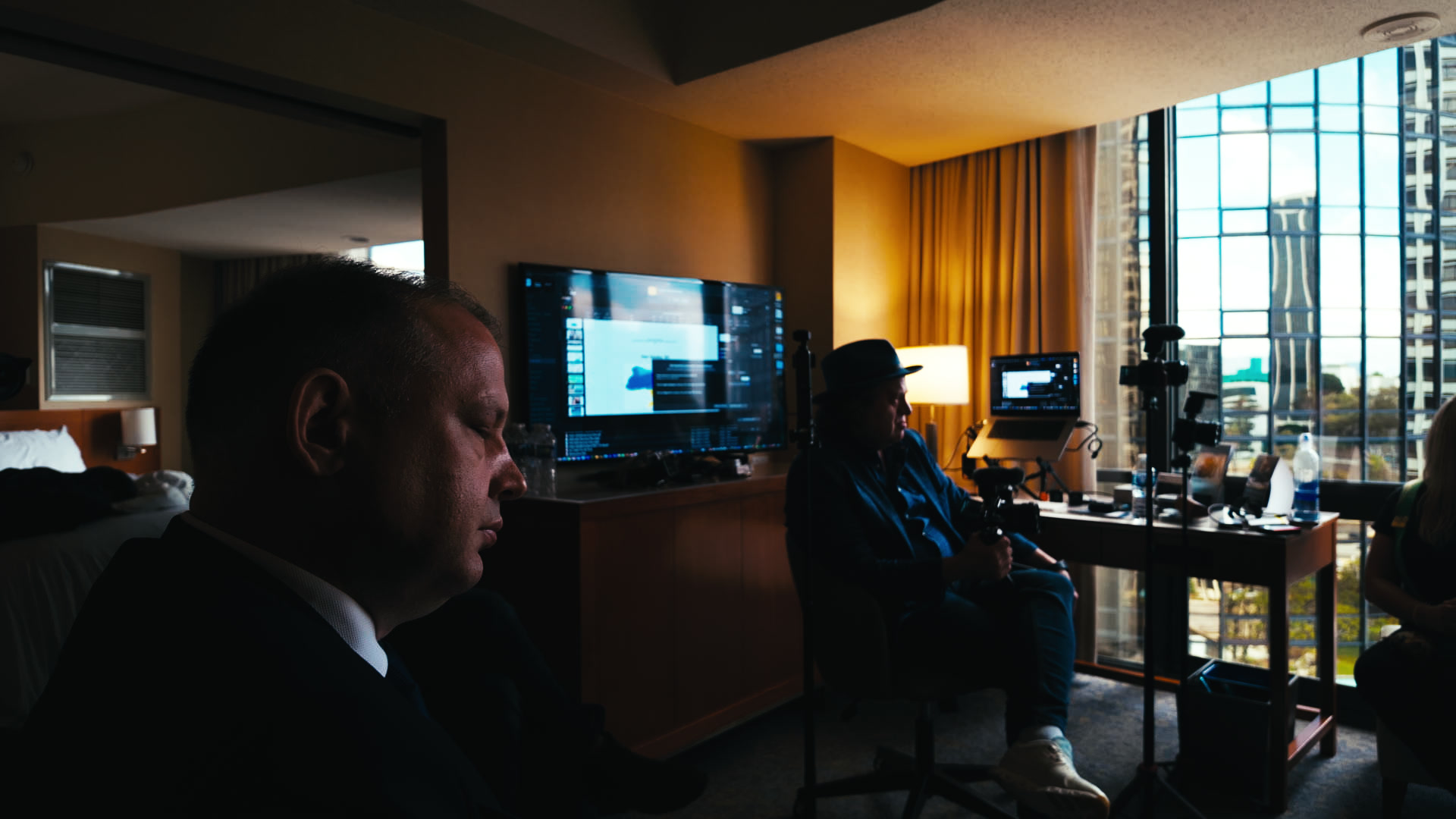
Speaker 1
00:00:00 trip in a couple of weeks. I don't need to try to do anything different.
00:00:00 trip in a couple of weeks. I don't need to try to do anything different. You know, just showing up is good enough, but it turns out I'll be bringing you guys too. So I am raising my game. Yeah, you're more than just showing up this time. You gotta, you know, I have to say to Alex's point, you know, Alex wasn't in a combat zone.
Speaker 2
00:00:18 He wasn't, you know, in the military for his career like I was. So we assume a certain amount of risk. We know we're going into hazardous territory. We assume that, our families assume that you get acclimated, you accept it. That's part of the nature of doing medical care in a combat zone. But for civilians, it's very unusual. So, you know, for my first mission, I wasn't going to go alone. I asked a bunch of people, but they backed out. So, you know, I mean, understandably, you know, like, well, you know, my life insurance is not going to cover me if something happens in Ukraine. Okay, we understand that it's a combat zone. We're not going because we want our families compensated if we pass away. And you know, I have young children or I have a lot of other
00:01:08 extenuating circumstances where they don't want to put themselves at risk. And I understand that. Not everybody needs to go in person, but there's still other ways that they can support. One thing about Alex that I thought was so remarkable is that I didn't ask Alex. Alex asked me. You know, I asked a dozen other people. None of them showed up. But Alex actually pursued me to find out what I had done. And then he took it upon himself, his own initiative, to organize the trip to go multiple times. And then to stay interconnected and be an amazing editor, wordsmith for us, because I am dyslexic, so I'm the best writer, to actually get all of our publications organized for the highest scientific level.
Speaker 1
00:00:00 trip in a couple of weeks. I don't need to try to do anything different.
00:00:00 trip in a couple of weeks. I don't need to try to do anything different. You know, just showing up is good enough, but it turns out I'll be bringing you guys too. So I am raising my game. Yeah, you're more than just showing up this time. You gotta, you know, I have to say to Alex's point, you know, Alex wasn't in a combat zone.
Speaker 2
00:00:18 He wasn't, you know, in the military for his career like I was. So we assume a certain amount of risk. We know we're going into hazardous territory. We assume that, our families assume that you get acclimated, you accept it. That's part of the nature of doing medical care in a combat zone. But for civilians, it's very unusual. So, you know, for my first mission, I wasn't going to go alone. I asked a bunch of people, but they backed out. So, you know, I mean, understandably, you know, like, well, you know, my life insurance is not going to cover me if something happens in Ukraine. Okay, we understand that it's a combat zone. We're not going because we want our families compensated if we pass away. And you know, I have young children or I have a lot of other
00:01:08 extenuating circumstances where they don't want to put themselves at risk. And I understand that. Not everybody needs to go in person, but there's still other ways that they can support. One thing about Alex that I thought was so remarkable is that I didn't ask Alex. Alex asked me. You know, I asked a dozen other people. None of them showed up. But Alex actually pursued me to find out what I had done. And then he took it upon himself, his own initiative, to organize the trip to go multiple times. And then to stay interconnected and be an amazing editor, wordsmith for us, because I am dyslexic, so I'm the best writer, to actually get all of our publications organized for the highest scientific level.
00:01:53 So you can't just do the mission. You have to be able to do the mission, report on what's being done, and then look at it from a scientific standpoint. Because, honest to God, they're actually making history there. They're doing things that we could never do in Iraq and Afghanistan. If you were to transport the whole Walter Reed Medical facility and move it an hour from the battlefront, that's what's being done over there. They're advancing medical care in ways that we could never do. They had microsurgery, they had sophisticated bi-plinter digital subtraction angiography, machines to look at blood vessels that we didn't have until our soldiers came back 7-10 days later. But they were doing definitive surgery up front early on where we were doing this piecemeal operation with all these complications. And then the volume of patients were so much larger. So it's like, are we teaching? But truth be told, I think Alex and I and other Americans, But truth be told, I think Alex and I and other Americans,
00:02:52 we're learning a lot. Learning a lot. And, you know, Andre talks about this cycle. We're doing the care, analyzing the care, taking those lessons learned, and then changing the care. So it's a cycle of learning for us. And we've been very fortunate to be involved in that process. It's small. We're there, but basically it takes almost a week to get there and get back, and then you're there for a week. So it's a very small part of the whole year. But during that interval, you see things that you would not see anywhere else. And I tell people, I say, you know, what happens is, in the United States, I'm in a thousand-bed hospital in Washington, D.C. And how many times do I hear excuses? Well, we can't accept that admission. We don't have a bed. Or we can't do that operation because we don't have the equipment.
00:03:39 Or my wellness is affected. I need to take a rest. You know, so you're like. Insurance. Or we can't do the care of this patient. Or we can't do the care of this patient. That's the insurance. That's the insurance. Rocco's mentioned this before. So Rocco, in the Middle East, when you were deployed there, what was the average employment? 12 months or something? Well, it was only supposed to be three to six months, but we were there for 14 months.
Speaker 1
00:04:00 So, okay, you're there a year. But as you pointed out, in Negro, they don't get to go home after. But as you pointed out, in Negro, they don't get to go home after. That is their home. I mean, so this same group of people, same doctors and nurses have been taking care of thousands of these penetrating TBI patients. They never leave it. Rocco Youth had great friends. It's an immersive experience. I mean, they're living it every day. I mean, they're living it every day. Every night. Every night. And that's why... - It's so amazing for Rocco to come to this big - It's so amazing for Rocco to come to this big international meeting because everyone, I'm sorry, not Rocco, you, Andre. Because, you too. But, because Andre has recognized that he is the world's expert in penetrating brain injury, and it's not something he ever wanted to do. - Right, I mean he's a skull-based tumor surgeon. - Andre is one of the best skull-based surgeons, probably the best skull-based surgeon I've ever operated with. He does tumors, but now he's had to become an expert
00:04:49 in all these horrible penetrating injuries, fragments kind of go up through the bottom of the skull of the brain or through the eyes into the
Speaker 3
00:04:55 brain it's incredibly difficult work and his results are just phenomenal I would like to say there are two parts different parts first of all we talk about our professional work how many casualties how we treat how we operate but another I think it's more important part it's in which condition we work in which condition we will because in iraq and he is done roko was in the desert but his family was safe they're back in the safety place and iraq and he is done they have rotation three six months rotation new people came to the desert and now they go to rest
00:05:46 in our situation we know rotation we don't have a rotation more than a lot of people especially neurosurgeon doctors go abroad together with his family some people go to the another hospital peaceful hospital for elective surgery where they don't treat casualties military that's why it's our number of doctors decrease a half before the number of patients we treat
Speaker 1
00:06:27 increase double double decrease personnel but double maybe more three times more operation also because all the other patients from the south and east are going to need throw
Speaker 3
00:06:42 so not only is the combat casualties but there are a lot more refugees the number of doctors decrease but the number of patients increase due to the i say 45 000 and plus a lot of forced migrants from donetsk wugansha paris nicolai herson region go went to dnepro that's why it's more difficult the most stronger part of our team in my department it's nurses no one go away only go to due to pregnancy in order to burn the baby and come back nurses is the strongest part of our department yeah during the attack during
00:07:36 the explosion we go to the corridor and i saw how they cry i said i don't cry you also don't need to cry say thank you chief we don't cry it's one situation another situation every day i start my working day go to icu go to icu in military block where severe wounded people lay it's not physical difficult physically i can to sleep at three four hours per day it's enough
00:08:30 but it's more difficult emotionally because i saw a lot of youngest men boys guys the same age like my oldest son Bohdan 27 years old it was difficult emotionally that's why it's more terminal state i understand realize they couldn't die it's very difficult but more difficult is
00:09:00 realize about my youngest son sata slav it's very difficult for him every night every late evening he couldn't go back while he's checked all telegram channels and realize it's safety not safety a lot of drones go to Dnipro one direction from one direction a lot of drones from another direction missile attack and during the
00:09:36 [RUS] [NEEDS_TRANSLATION] В своем
00:10:05 We live near our factory, the Užný Masinost even Elon Musk used this system for go to his rocket orbit. Yes, it's a large place. We live very close for this factory.
00:10:53 And this factory was bombed a lot of times. a lot of times. Sometimes I was alone at home, sometimes my family was at home. It's during this explosion, some part of picture from the wall down, in the nearby windows, buildings, windows totally crushed, destroyed. It's another situation how we live now. I show you our, name it, shed your.
00:11:46 For example, 10 pm, go to sleep. The next, shakets, half past three rockets attack, five ballistic, and half past five explosions. This is why we start the alarm, the air alarm, we go to the underground and our shelter. I think we have a possibility to show the shelter.
Speaker 4
00:12:30 under our five petite historic buildings we go and sell it.
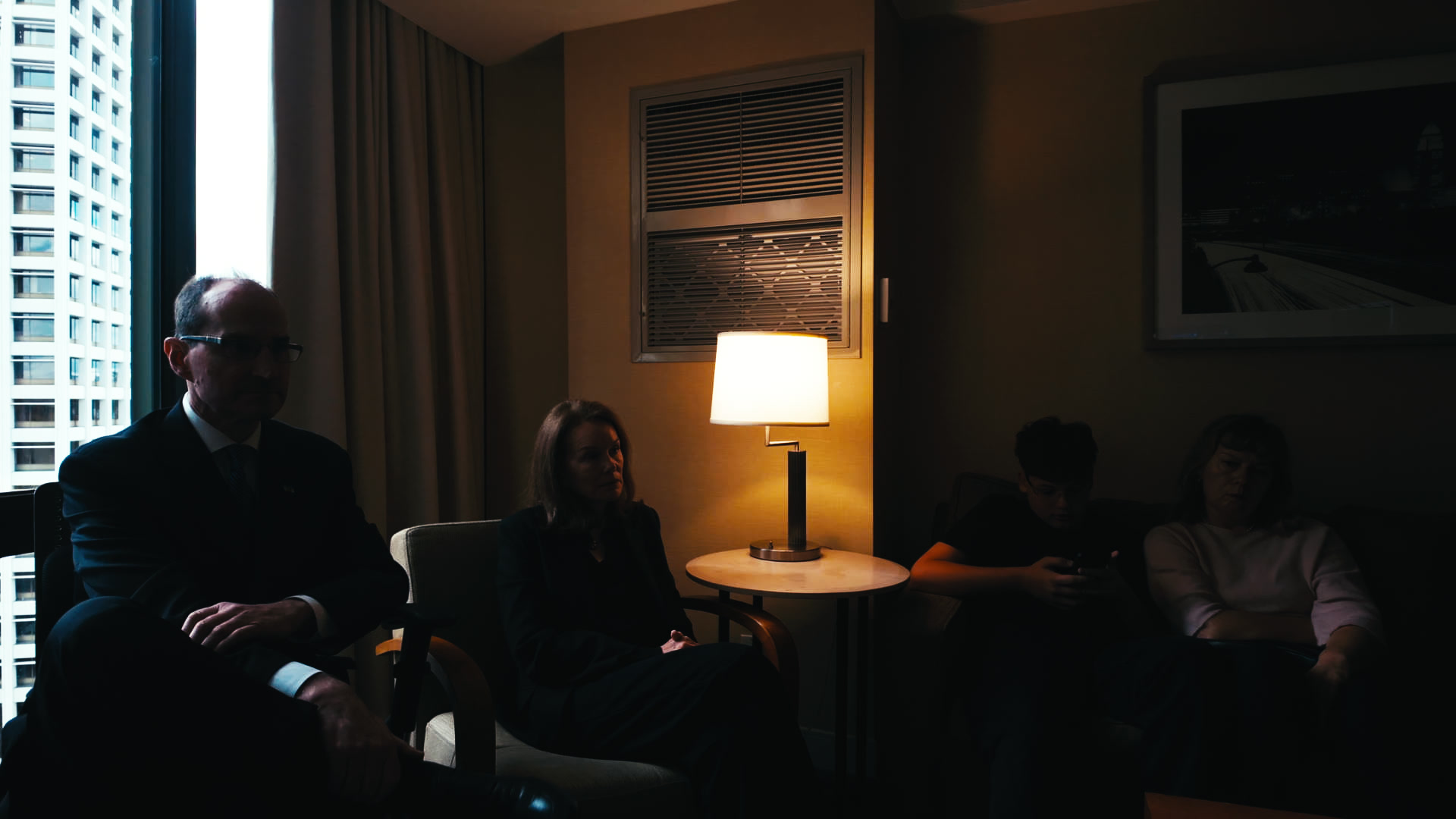
Speaker
00:00:00 Explosions, it's hit all buildings, even the basement.
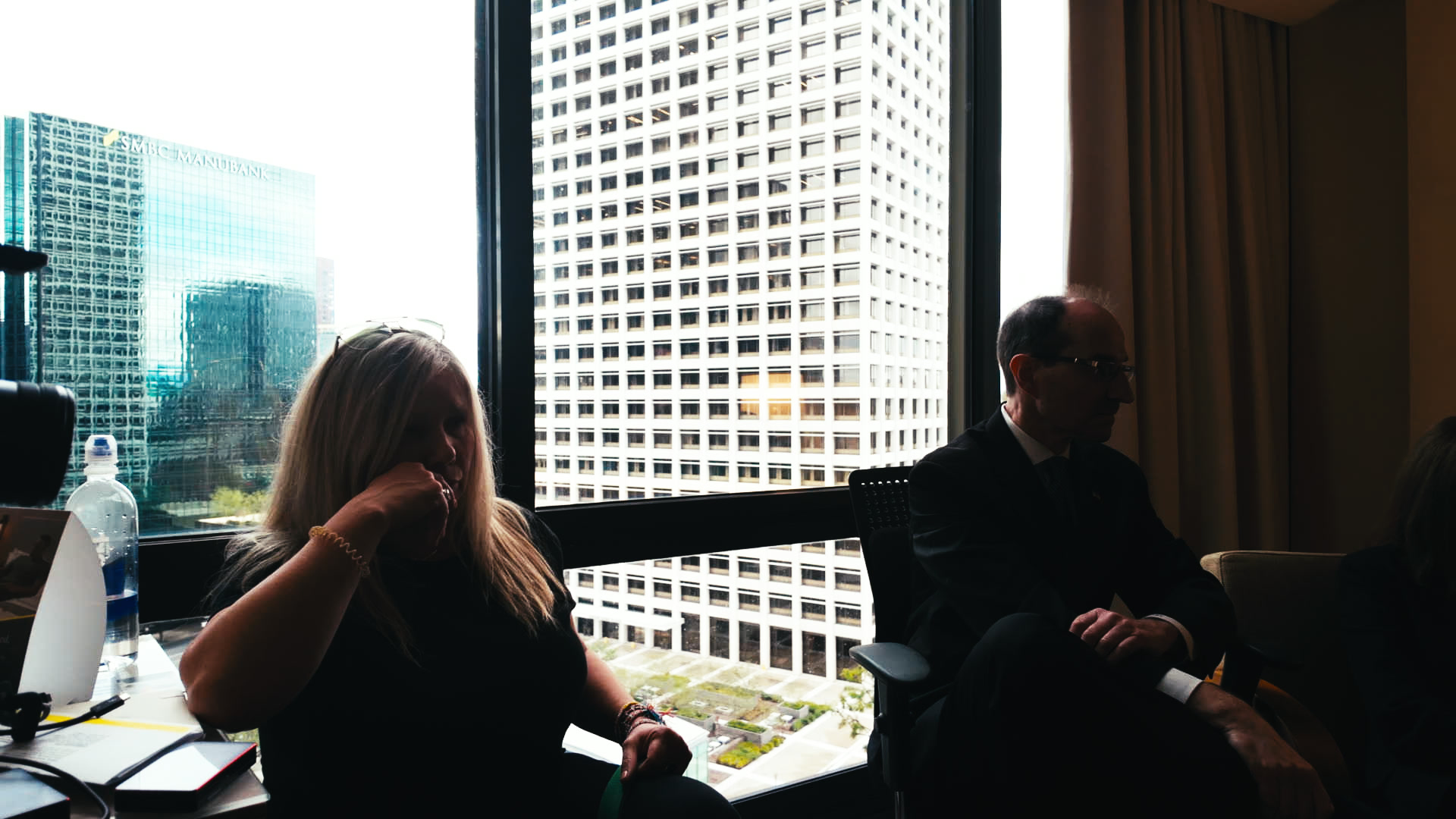
Speaker 1
00:00:00 So this is three and a half years of the battle grip on a scale that's never been reported before.
00:00:00 So this is three and a half years of the battle grip on a scale that's never been reported before. So, you know, it's not one or two drones. It's up to almost a thousand drones a night. And then multiple missiles. So let's say you take out 80 or 90% of the drones. You still have 10 to 20% of the drones which are going to inflict terrible damage to the civilian. And they're weapons of terror, right? So it's trying to grind down the civilization so that you don't have any will resist. And now, as the weather gets colder, the Russians are notorious for targeting the infrastructure for gas and electric. So they take out their heating, they take out their electricity.
00:00:51 cities go completely black. So they're in darkness without heating, sometimes without water, you know, that can be affected.
00:01:00 So, you know, this is on a scale that it's so hard to explain to Americans, they just don't get it. They've never been attacked at this scale, you know, to understand that you have this accumulating, not just a once time kind of event but multiple times during a week and to then wake up next morning go to work do these complex operations the staff are all there you know it's not like at washington hospital center where people like oh it's a friday i'm going to call out sick on friday because i want a long weekend you know it's like they're showing up in the normal reward zone And the only time they're late for work is because there was a roadblock because of a
Speaker 1
00:00:00 So this is three and a half years of the battle grip on a scale that's never been reported before.
00:00:00 So this is three and a half years of the battle grip on a scale that's never been reported before. So, you know, it's not one or two drones. It's up to almost a thousand drones a night. And then multiple missiles. So let's say you take out 80 or 90% of the drones. You still have 10 to 20% of the drones which are going to inflict terrible damage to the civilian. And they're weapons of terror, right? So it's trying to grind down the civilization so that you don't have any will resist. And now, as the weather gets colder, the Russians are notorious for targeting the infrastructure for gas and electric. So they take out their heating, they take out their electricity.
00:00:51 cities go completely black. So they're in darkness without heating, sometimes without water, you know, that can be affected.
00:01:00 So, you know, this is on a scale that it's so hard to explain to Americans, they just don't get it. They've never been attacked at this scale, you know, to understand that you have this accumulating, not just a once time kind of event but multiple times during a week and to then wake up next morning go to work do these complex operations the staff are all there you know it's not like at washington hospital center where people like oh it's a friday i'm going to call out sick on friday because i want a long weekend you know it's like they're showing up in the normal reward zone And the only time they're late for work is because there was a roadblock because of a
Speaker 2
00:01:45 war damage. Amazing, my first trip there, my last day was on a Friday, right? And it was about 5 in the morning when I heard the explosions and you were texting me about there was actually an attack underway. And fortunately it wasn't that bad and the hotel lights flickered but stayed on. And two hours later I'm walking to the hospital, it's like the light goes on. Those farmers are pulling up to drop off their vegetables and things to sell. You see the people on the trolley taking the bus to work. It's part of life. Unconquerable is the word that comes to mind. Unconquerable. See, Churchill gave this amazing talk after Obama, I think it was in Coventry, in the 1940s.
Speaker 1
00:02:28 And I thought of that talk, and I sent it to Andre, I sent it to Alex, and I said, And this is the unconquerability of the Ukrainian people. That they have embodied that spirit of, you know, resistance of the human will. We will not give up. We will not surrender. We will not give in. We will fight to the end. And part of that, for a regular civilian, is basically living every moment to its fullest. Don't put off tomorrow what you could enjoy, embrace today. You see people getting married. You see people having children. You see children doing a dance competition. I mean, it's like you see people going to school, you know, and the schools are sometimes underground.
00:03:17 You know, for protection for the children. You see them embracing life. And that's just incredibly inspiring for the rest of you. to see that kind of will for life. As I was leaving once, the attendant on the train,
Speaker 3
00:03:38 Andre, introduced me to her.
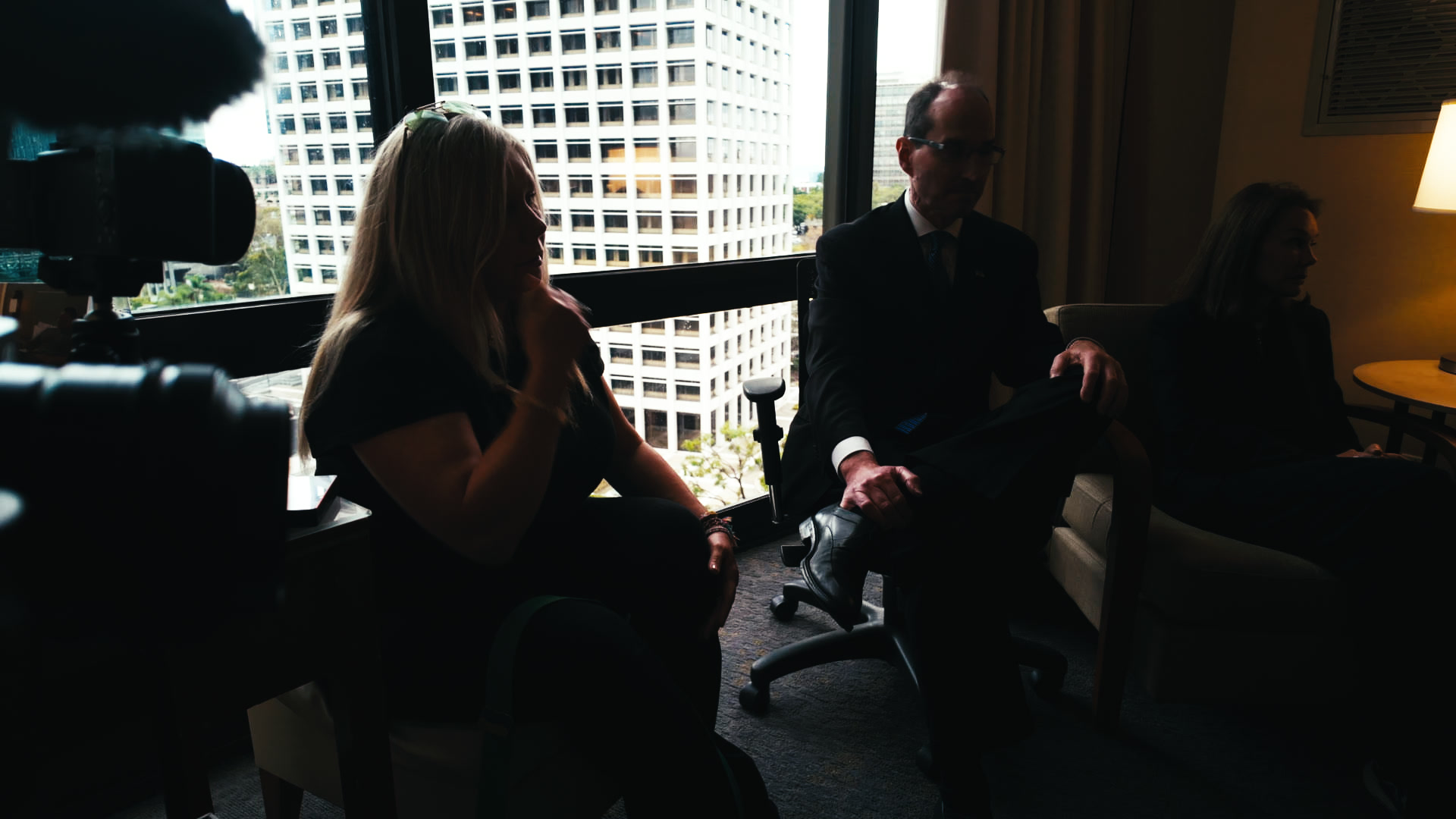
Speaker 1
00:00:00 So that's a strategy of basically industrialized warfare.
00:00:00 So that's a strategy of basically industrialized warfare. Because this is what we call a war of attrition. It's a war of attrition. And in a war of attrition, it's not just soldiers. It's about means for warfare. So if you look at World War II, in World War II, when we had the strategic bombing against Germany, What made the biggest difference wasn't the firebombing of German cities, it was taking out Nazis, Germany's, refineries, because if they didn't have refineries, if they didn't have oil, then their fighter pilots didn't have oil, their tanks didn't have oil, right? So it's basically oil was the blood of a wartime machine.
00:00:51 So to take out the war machine, you take out the world. And it's also very common. - Look at the difference between what Russia's doing and what Ukraine is doing, right? Ukraine is trying to be very targeted
Speaker 2
00:01:00 and deliberate strategic targets, oil refineries, exact things like that. Russia doesn't care. They're blowing up apartment blocks and hospitals and playgrounds and village squares and supermarkets. - They don't care, they don't have value for human's life, period. Plus, they, our whole second army is a joke.
Speaker 1
00:00:00 So that's a strategy of basically industrialized warfare.
00:00:00 So that's a strategy of basically industrialized warfare. Because this is what we call a war of attrition. It's a war of attrition. And in a war of attrition, it's not just soldiers. It's about means for warfare. So if you look at World War II, in World War II, when we had the strategic bombing against Germany, What made the biggest difference wasn't the firebombing of German cities, it was taking out Nazis, Germany's, refineries, because if they didn't have refineries, if they didn't have oil, then their fighter pilots didn't have oil, their tanks didn't have oil, right? So it's basically oil was the blood of a wartime machine.
00:00:51 So to take out the war machine, you take out the world. And it's also very common. - Look at the difference between what Russia's doing and what Ukraine is doing, right? Ukraine is trying to be very targeted
Speaker 2
00:01:00 and deliberate strategic targets, oil refineries, exact things like that. Russia doesn't care. They're blowing up apartment blocks and hospitals and playgrounds and village squares and supermarkets. - They don't care, they don't have value for human's life, period. Plus, they, our whole second army is a joke.
Speaker 3
00:01:22 There is no professional there. They press the bottom of that, oh, let's see where it will end. Oh, three kilometers right or left. They don't care. And there is no specialist there. And the whole thing with their nuclear weapons that everybody was so afraid of escalation, it's another joke. I mean, if somebody's gonna press the red button, it's gonna go up and it's gonna drop down because none of this has been served since 1997. Because up until 1997, it was serviced by Ukrainian engineers. Ever since, it's just like a whole shell sitting there.
Speaker 1
00:01:56 Yeah. So it's... It's a totally mass incompetent army that's riddled with corruption. I mean, look at how the Moscow was taken out. How does their state-of-the-art warfighting naval vehicle ship be taken out by a country without a navy? - Yeah, the flagship of the Black Sea. - So the flagship was taken out because there's so much corruption, it didn't have the appropriate radar detection active. - And it didn't have an ability to protect it. - No. - And then the most recent one,
Speaker 3
00:02:30 when they blew up the right outside of Sochi, they sent two fake boats, and Russia immediately attacked them, and the boats had cameras on it, so the guys back in Ukraine were sitting in life view and everything was happened. And then when they knew everything was happened, to send the real stuff and blow it all up. I mean, we are fighting, like, I don't know, barbarians.
Speaker 1
00:02:53 - But it's a David and Goliath type of war because they have three times the population, right? And they have so much more natural resources, right? And they have allies who don't have democracy. Their allies can supply them endlessly. North Korea is gonna supply them thousands of thousands of soldiers because they're getting a benefit. We don't know what that benefit is. Maybe it's missile technology, engineering technology, where they can strike the US. Right? And so this is bailing out, you know, North Korea. So it
00:03:30 becomes a very dangerous situation where in the West, in the US, you know, we were just in Europe and it's almost like Europe is totally detached from this war. It's like the Europeans don't realize this is happening on your doorstep. This is happening in your countries, the hybrid war. And yet, you know, nobody wants to think about the horrors of war and what can happen.
Speaker 3
00:03:55 But they're not at a stage where they're able to defend themselves and fight back.
00:04:00 Because Europeans, generationally, since even before Second World War,
Speaker 1
00:04:04 they were so relaxed, like, oh, just give me my pizza, my wine and cheese, and I'll be fine. I mean it is really interesting to be in Vienna you know we're World War one they're broken out in the Austria-Hungary War in Sarajevo and to see that repeat disconnected mentality in Vienna you know it's it's the opera it's the music it's celebrating hobbies it's not realizing that you know tens of thousands and human lives are being lost on a daily basis on a battlefield at your doorstep. You know, it's like all of Ukraine is defending Europe. It's like, you know, your Air Force, your Army, your anti-drone technology is not up to speed.
00:04:51 You know, you can learn this from the Ukrainians. The Ukrainians can show you what will work and what won't work. You know, and you can then become more prepared for the Russian onslaught. It's just, it really is sort of interesting. But to this point, and to Andre's effect, is that Andre is about leadership. And leadership in the trenches. Meaning that he didn't run for cover. He didn't take off and take his family out of Ukraine to Europe to escape the war. He stayed there. And because he stayed there, he gave confidence to other people that they could stay. That they can in fact continue to work. So it's such a pivotal point of how much dependent upon the personality of Andre to stay put, to show them we can take care of patients, we can continue this mission and not abandon our people.
00:05:51 Because it would have been very easy for him. I look at my colleagues, 99% of them would head for the hills, they would take off. You know, I don't have a lot of faith in a lot of people I work with today that say that they would stay behind if in fact their city was attacked. If anyone of means would have figured out, how do I get out of here? If anyone of means would have figured out, how do I get out of here? I mean, we saw it during COVID, where people of wealth basically figured a way to have, you know, a life on their vacation resort. Hashtag Ted Cruz. Exactly. So, I mean, so the real thing here is that of leadership under fire. The leadership under fire by Andre and his family, who live it every single day, is truly remarkable. I mean, that just is totally inspiring to me. You know, we did these short intervals, three months, six months, maybe a year, but that was over.
00:06:41 And our families were safe. And we weren't getting bombed directly. Yes, there were IEDs, you did have your risk. But it was on such a low level, it doesn't even compare to what the normal everyday civilian feels in Ukraine. Or anywhere in Ukraine. Anywhere in Ukraine, any city that's, no city is protected.
Speaker 4
00:07:01 - I would like to add information. It's difficult to mention that no one in Ukraine don't feel in safety place, no one, no one. If Alex said to me, he would like to go to the battlefield, I say it's very dangerous, first of all, because it's now kill zone, it's 20, 30 kilometers. It's not like a line battlefield. It's kill zone, it's wide zone, where drones, a lot of drones, and Russia's see where the car,
00:07:48 especially journalists, and would like to damage it.
Speaker 2
00:07:52 It's... - Yeah, they specifically targeted journalists. Yeah, so that's the response that Terry mentioned. You guys were thinking about going to the stabilization points,
00:08:00 which are kind of the first stop. And Terry said, yeah, no. Yeah, I saw what was happening there, Yeah, I saw what was happening there,
Speaker 5
00:08:11 and it was like, well, that's visually interesting. But then, yeah, the report, like, don't go there.
Speaker 4
00:08:17 that uh dnepro is not more safety place than pokrovsky or another region near the front line it's no it's a lot of dangerous every day every day we go to the bed and no one don't think we'll wake up next month this morning or not it's true we live in this condition it's 3.5 years that's why it's the main reason when i catch my family together with me in vien in la because i couldn't imagine how i will top this message and think where they now what's happened
00:09:10 now i will call every hour to realize what is the feeling that's why it's very helpful for mind for emotional health sataslav rest in vienna and even today's on it's one sunday maybe not sunday go to the santa monica beach and swimming swimming in the ocean I am happy. When we arrived, we will be a vacation, a school vacation, and we decided to send him to the
00:10:06 [UKR] [NEEDS_TRANSLATION] Козак кемп. Козацький лагері.
Speaker 2
00:10:10 Yes?
Speaker 4
00:10:13 [UKR] [NEEDS_TRANSLATION] Коли ви там, то як ви там, що скартація не будуть там.
Speaker 2
00:10:17 [RUS] [NEEDS_TRANSLATION] Козацька хвортеця. [RUS] [NEEDS_TRANSLATION] Козак кемп. [RUS] [NEEDS_TRANSLATION] Козацька хвортеця.
Speaker 4
00:10:23 [UKR] [NEEDS_TRANSLATION] Як дитячій тапор.
00:10:24 [RUS] [NEEDS_TRANSLATION] Детячий табор.
Speaker 3
00:10:25 [UKR] [NEEDS_TRANSLATION] Таборт, він не такий, як привиклий Артек.
00:10:30 [UKR] [NEEDS_TRANSLATION] В лісці. [UKR] [NEEDS_TRANSLATION] Це як бойскавці.
00:10:34 yeah
Speaker 2
00:11:00 and they ride horses and they cook for themselves and it's yeah
Speaker 1
00:11:19 that's wow yeah like i was saying life goes on in spite of everything else When you go there it's like traveling back in time. Because you don't do like when you travel worldwide here, you don't fly into Kiev or fly into Nebra. You take the train and you're on these trains, the train starts from Warsaw to Kakao, and as you're going through these trains, it's a process of 24 to 30 hours. So you take a train to Kiev and another train from Kiev to Nipro or a train to Lviv and you train from Lviv to Nipro. And in these trains, you're basically traveling through the countryside and you see the beauty
00:12:04 of the countryside. You see the beauty of the cities as you're coursing through. And it's a slow process, but you're like stepping back into what it would have been like to sort go back into World War II or go back into these areas where you know people are there's a sea of humanity moving in two different directions right so you see people leaving Ukraine but then you see people
00:12:30 coming back to Ukraine like the women and children coming back from Poland to see
Speaker 3
00:12:36 their you know their fathers and their spouses who are on the front lines and they'll meet maybe in the train stations or they just cannot afford leaving
Speaker 1
00:12:46 outside Ukraine, they are forced to come in back home. That's right. And so you see the children on the train. And it's very emotional. Because, you know, when I left for Iraq, I had my wife, she's pregnant, and we had two young children, and I had two adult, older children from the first marriage. So those older, they're now adults, of course all of them, but at the time they're all young children.
Speaker 2
00:13:11 So that separation of the fathers and the mothers who are on the front lines from their children is something that you notice on the trains. It is interesting how many women are traveling alone on
Speaker 3
00:13:23 a train. You see them traveling, right? Because men cannot leave. Yeah, and men do come out and seem like they're in the military. I was on the Polish border the first week when the war started
Speaker 1
00:13:34 delivering humanitarian aid and what I saw was heartbreaking. Yeah, I mean it was almost 10
Speaker 3
00:13:41 women and children who left. - And like people were walking out, they had no idea where they were going. They had their small briefcases, they left their whole life behind. - Their whole life in a briefcase. - The fear of unknown, it was horrible.
Speaker 1
00:13:55 - Yeah, and that's what's so striking about this, is that the Western world has this incredibly short attention span. Is that war still going on? - Exactly, oh my gosh, word to word. Hey, what's going on with your parents?
Speaker 2
00:14:16 So I mean, I was a professor there and she thanked me the next day and said some of her students came up and said, oh, we had no idea that Russia is attacking Ukraine like that.
Speaker 5
00:14:25 They thought it was just the occasional drone goes off course and explodes. Well, isn't, isn't her city completely overrun? She's in Kharkiv. Yeah, she's from Kharkiv. But like, isn't that beyond now the front? No, no, no. It's still standing. It's still standing. But they're bombing it. They just bumped the train from Kyiv to Kharkiv.
Speaker 3
00:14:45 The whole train was civilians and children. I have videos of it if you want me to. So Logan, you think this is an interesting story here? Yeah. You still want to go? I've been up my mind a few weeks ago. I'll send you all your tickets by the way. Those just got set up the Raza. What makes you want to go, Logan? because I think that this is a story that needs to be told and I think that
Speaker 6
00:15:16 there is an angle here that's different than other media you see coming out of Ukraine other documentaries sure and I think I'm fascinated by kind of this this dichotomy of like life in Ukraine where you're dealing with you know obviously there's kind of the medical aspect it's the hospital war yeah but also this idea of like nipro is a city where there's like a million people that live there but most people in the united states haven't heard of this place right and they're living right at this kind of precipice of right you know normal life into anything south you know east of that is becomes extremely dangerous um and it's like you know it's like how do you grapple with that how do you live your life and um and then then you know obviously with the work that you guys are doing
00:16:03 doing hours in Morocco, it's like, you know, that's extremely heroic, but also, you know, Andrei is there the entire time. And, you know, Thad's articulated that as well, the fact that, you know, it's like you guys get to leave, but then, you know, this is continuing. And, you know, to everyone's point, I think the US media is a very, like, very, very thin and small attention span towards things that I feel like, you know, it was like Ukraine was kind of the hot topic and then we move on to Israel and Hamas and Gaza and Iran and then now it's like
Speaker 2
00:16:36 you know it's like all these things have kind of been pushed now it's Trump every day it's Trump yeah now we're exactly now now we're back to Trump yeah when we arrived on Sunday you remember my first day my first visit you we went to lunch you showed me the city maybe we could do that on Sunday
Speaker 4
00:16:53 afternoon you could show them yeah some of the negro please I saw the city but I two sides, the bright side and the dark side. But I would like to worry about recording possibility to a lot of film, recording. place where damage, for example, damage our factory.
Speaker 3
00:17:37 I show, but if our policy or Department of Defense, Service of Defense of Ukraine show we... Okay, so because of the war situation, it's certain places which were destroyed, which were born, or strategic objects are not allowed to be filmed.
Speaker 4
00:18:07 Okay. So for example, you cannot... Because it's maybe, you know, they think we are Russian agents, and so what is not damaged and need damage again.
Speaker 3
00:18:22 At the beginning of the war you were not allowed to shoot any kind of drones or any kind of missiles anywhere, because people would make videos of it, post it, and then the Russians can see the location and see what's happening. So it was a kind of providing information for the enemies. - First of time, I show ROKA. You can see this hospital maternity department.
Speaker 4
00:18:47 ROKA start to-- - Yeah, video. - Yeah, video. - Someone was like reporting what I was doing - Someone was like reporting what I was doing and Andre very quickly identified that. So I didn't get like pulled up by the security services. Yeah. That's why I show all of this, but we can do a recording bright side of Dnepro, but some
Speaker 3
00:19:14 side especially factory it's uh yes you can you can do videos it's more than one hour if the year passed by since the moment of the explosion and you can see because there's still
Speaker 1
00:19:42 results of it then you can make video it but something recent you cannot yeah so there's a apartment complex that was attacked in january 2023 where approximately 46 people were killed and over 100 injured and it was one single missile that is one of these uh hypersonic missiles that's
Speaker 4
00:20:02 designed to take out an aircraft carrier and it took out an entire 12-story swath of this apartment
Speaker 3
00:20:08 [RUS] [NEEDS_TRANSLATION] В самом госпитале, стены можно снимать, внутри там много зависло.
Speaker 4
00:20:14 [RUS] [NEEDS_TRANSLATION] В госпитале, вы можете сделать видео о стенах, лептовых, [RUS] [NEEDS_TRANSLATION] и дамажных частью. [RUS] [NEEDS_TRANSLATION] Да, мы называемо "вуден" windows. [RUS] [NEEDS_TRANSLATION] Там, где было скло, забыто фанеру. [RUS] [NEEDS_TRANSLATION] Все можно снимать. [RUS] [NEEDS_TRANSLATION] Где звук был, на двери, они сейчас поставили...
00:20:33 It's a building. So, if they can see that we can film, we have problems with the security of Ukraine. But some more strategic factories, if they will see that you recorded, you might have issues with the authorities.
Speaker 3
00:20:51 But, if you remember, we will show our own building.
Speaker 1
00:21:00 uh they would love to show you just remind him to what do you like to show you there uh their own like handmade uh basement shelter yeah there's a beauty to the city i used to wake up as soon as the
Speaker 2
00:21:13 curfew was off and uh i'm a avid runner at least before i got my gift done very recently a couple of times this is the rocks i was talking about this is uh the 12 floors that they've just taken
Speaker 7
00:21:24 out this used to be all the buildings there so now it looks like nothing's there wow in the morning
Speaker 1
00:21:30 and we can't remember there to the kids right yeah yeah in the morning to see the sunrise coming up
Speaker 2
00:21:36 over the neepro river along the river walk which is where i would run it's just magnificent the
Speaker 1
00:21:42 longest river walk in europe logan 35 meters it's a big river yeah and logan's a runner as well yeah so i would wake up in the morning i'd go for a run of course um andre was not very happy with me
Speaker 4
00:21:56 You're supposed to stay in this little square where I told you you're at, you know, 30 kilometers. It's our hospital, it's hotel, it's our flag, the highest flag maybe was in Ukraine, maybe in Kyiv, and church. This place is the most safe place in Dnepro, you can stay here. Okay, okay. Next day, during the morning,
00:22:30 Roka sent me a picture, 18 kilometers from this place, when he said, "You need to stay." "You need to stay." It was just so beautiful. So here you are in a city,
Speaker 1
00:22:45 stricken by war, but the most beautiful parks and churches and monuments and, you know, not a single piece of trash or dirt anywhere. Just meticulously kept. And so, you know, if you're a runner, you sort of take in the city, like, early in the mornings, and you sort of get a feel for, you know, the terrain. And it was just absorbing. I ran too far away, of course. But it was hard to stop because it just got prettier and prettier. And I would stop, take a picture, stop, take a picture. And every mile or so, there was a bomb shelter. It's like a concrete block that you could run into.
00:23:30 So I'm probably okay here. But there are other people. You're not by yourself. There's other people out there as well. And there are a whole group of people who are waiting for the curfew to be over to then start their normal day. And, you know, like you said, it's like night and day. It's like day comes on, people are back to their regular activities. And it's a beautiful park, Shevchenko Park. And this park sits up on this hill and it has beautiful scenery.
00:24:00 Then you go down towards the river and then there's a bridge over to an island. And on this island is like a little small amusement park, a church. So I've been there like in the early summer in May and then also in the winter. And in the winter, it's beautiful with the snow. And you see the little kids out there with their sleds. And then you see all these little people out there with their dogs, walking their dogs. And you see them shoveling the snow to make a walk path for people to go. So it was near Valentine's Day, right?
00:24:30 So I have all these pictures of all these Valentine's and flowers and people celebrating. And along the river, I've got a picture of this. There's this place where young lovers take locks. - Locks, yeah. and they put their locks on a bench, and it's the Cupid bench. And so there's all these locks in the midst of a war, people attesting their love for each other. I mean, it's so powerful.
00:25:00 It's like life doesn't stop. It's just life becomes that much more important. - Intense. - That much more intense and precious, yeah. It's like no time has ever wasted. There's all kinds of artists who've written books about this. And I can share that with you. Yeah, how much time we wasted in our lives here versus there, it's just no time is wasted. So for a photographer, a cinematographer,
00:25:30 or a storyteller, this is amazing for stories. You know, just sit and talk with the nurses. Like, we talk with the nurses, and I have to say, how do you get to work? takes them like over an hour and a half to get to work. You just gotta take a train, you gotta take a bus, and take a trolley. She's never late, she's there every day. She's in the operating room with Andre. It's either Ola or Karina. And they're always either scrubbed in or circulated.
00:26:00 Same nurses, Karina or Ola. Karina or Ola. It's like you never get that in the US. - You guys part of the same team, been there forever. I mean, these nurses know Andre's every move. know what he needs before he knows it because they just work so closely together for so long it has like a beauty unto itself and it's like as you go further further west what happens is that there's this dichotomy of separation the military hospitals are over here civilian hospitals are over here and they don't collaborate here because it's so close to the front lines the civilian hospital becomes the military. It's totally different. But as you get further away from the front lines, people pursue business. They pursue economic gain. They pursue the normal, you know, flow of life.
00:26:51 And they say, well, you know, that's not necessarily my problem. You go to the military hospital. We're not going to take care of that, which is sort of a shame. And the same thing happened when we were in Iraq and Afghanistan. As you got closer and closer into theater, you got into the the combat zone, everybody would find a way to work together. Whereas when I came back to Washington, D.C., everyone found an excuse why they couldn't work together. So it's like I have these patients coming back, and I was like, well, they should be able to get civilian rehabilitation care. Well, they can't. They have to go to the VA. I said, but the VA is prepared to do these things with the young patient population. They said, well, that's not our problem. So that's like the same thing I saw in Ukraine is that like, they're so close to the front lines, everybody finds a way to work together. Whereas like in the other cities, especially in the - It's such a beautiful observation. I love that picture you show in your talk at the end. You show President Zelenskyy walking with Director Rozhanko. - And Director Rozhanko, this, you know, - And Director Rozhanko, this, you know, great-haired senior guy who runs a hospital,
Speaker 1
00:00:00 Where you know you think like there's fucking like soldiers in the street being like let's see your fucking papers.
00:00:00 Where you know you think like there's fucking like soldiers in the street being like let's see your fucking papers. Right. Right. She was basically saying that like she didn't see there was like a problem to move around during the curfew. It was more like you just can't leave the city. But it wasn't like there were checkpoints like all over the place. I mean there was some like trolling but... Because we're talking like, okay, we're going to go to Dr. The Circus house.
00:00:30 We'll be able to spend the night there. If we stayed just a little too late. If we stayed just a little too late. I will say it probably would be a powerful scene if we spent the night there. The air raid warning and they would go into the basement. The air raid warning and they would go into the basement.
Speaker 2
00:00:46 Because they were talking about that and how difficult that was for them. I don't disagree that staying there. We could get Andre in his morning and going to work and all that kind of stuff.
Speaker 1
00:00:00 Where you know you think like there's fucking like soldiers in the street being like let's see your fucking papers.
00:00:00 Where you know you think like there's fucking like soldiers in the street being like let's see your fucking papers. Right. Right. She was basically saying that like she didn't see there was like a problem to move around during the curfew. It was more like you just can't leave the city. But it wasn't like there were checkpoints like all over the place. I mean there was some like trolling but... Because we're talking like, okay, we're going to go to Dr. The Circus house.
00:00:30 We'll be able to spend the night there. If we stayed just a little too late. If we stayed just a little too late. I will say it probably would be a powerful scene if we spent the night there. The air raid warning and they would go into the basement. The air raid warning and they would go into the basement.
Speaker 2
00:00:46 Because they were talking about that and how difficult that was for them. I don't disagree that staying there. We could get Andre in his morning and going to work and all that kind of stuff.
00:01:00 That could be... Yeah, we'd have to kind of put that ask in and see what that... They want us to see the real stuff. Like, so they're, you know, it was so great to have... So Andre was, like I said on the call, I was there with his wife and son and they didn't speak much English. So she was very, once she started speaking in Ukrainian, she was very emotional, you know, and about, like, how important it was for us to show, like, the toll on everything, right? and that like, you know, I was telling them that I want each of them to do like recordings
00:01:47 just as a, thank you, as a sort of ability to get things down or recorded in terms of like what can help us, at least in the beginning, what can help us find our storylines or, you know, jump into our storylines. But, like, but I said, you know, like, and just telling us about this. And she was, like, very much, like, you know, there are a lot of things that can't be put into words that you just have to see, you know. And I'm, like, I know what you're talking about. But it was, like, it was really nice to, like, so why I'm saying that is, like, I don't think it's going to be, it'll be an imposition, but I don't think it's going to be an unwelcomed imposition to, like, have, you know, us stay or some of us stay, that kind of thing.
00:02:37 I'm like, that's, I mean, honestly, that's kind of what we want, right?
Speaker 1
00:02:43 You know, we want like the, the real, right? No, definitely. These are kind of the notes that I picked up on. So on Sunday, the train's going to arrive at 7 a.m. Andre's going to pick up all of us. And then he wants to do some sort of tour of the city, which we're not really sure what that means or like how long that's going to be. And then Alex wants to go to church. So if that was something we wanted to pursue filming, that would be something that we would test the local fixer with being like, hey, can you get permission for us to shoot, you know, advance at this church.
Speaker 2
00:03:23 And you were saying that the church that he goes to wasn't very interesting. Well, that's what Alex said that like it's a. We have to go to an interesting church. No, no, I'm saying can't we? No, no, I'm saying can't we? Can we be like, hey, can you go to this church instead? Yeah, I would love it if he, you know, like, he seems like a, like, he's a devout Catholic. So, like, you know, I don't know how open he would be, but I would love it if he were going to an Orthodox service, right? like and where they have the, you know, the different depictions of Christ and they have all the mosaics. Yeah, the church is kind of mid. Yeah, so like the... This is the one he goes to? It's the first one that shows up. It's the first one that shows up. I'm sorry, it's probably not that... Yeah, Roman Catholic Church is over there. That's the... Actually, I... St. Joseph, I mean, it looks like it's pretty central in the city. You should just tell him, like, hey, even if you don't go to a service,
Speaker 1
00:04:26 we'd love to have you just sitting in a pew in this church, you know?
00:04:30 Like a nice-looking church? Yeah, I would agree, because that's kind of the scene. Yeah, I would agree, because that's kind of the scene. That'd be easier for us to get access to. Yeah, and we want it empty, and he's just sitting there contemplative, right? Yeah, yeah, almost like kind of portraiture. Right, exactly. Yeah, I like that. Yeah, and that way you can, you know, then we kind of shoot a little scene with him going in and sitting down, and you can add a voiceover interview or other things.
Speaker 2
00:04:52 You can kind of put that in at various places or just have it silenced. Yeah, we can have him, like, after a little while, we can get him to speak to what he's saying, or we can do it in an interview later. What I love about the Eastern churches is they don't have the crucifix, like in Roman Catholic, they have the, you know, the Christ, I forget what it's called, but he's doing this hand signal, right? And it's all about, like, sort of more of a welcoming than a scary figure, you know? And that was, you know, part of the schism was this idea of, like,
00:05:37 not wanting to depict the crucifixion, wanting to depict the welcoming. And whereas we in the West, we see orthodox Catholicism as more severe and strict and whatnot. But like to at least have that element of it where it is that like, you know, welcoming. And so I've been doing a mosaics class for a little while. I'm going in my third term of it. primarily because well anyway there's there's some mosaics in Ravenna Italy that I want to go see and I'm making them but for some reason like because I'm doing the mosaics it really like
00:06:26 USSR was big on doing mosaics and like all of these these soviet cities have like soviet era mosaics that are crumbling right and so i think i feel like the um i feel like uh visually there's something like getting the mosaics in this church versus the mosaics of ussr and how um how that part of the world is uh uses those that kind of style of imagery to um to make comments on their life or to define who they are. So anyway, go ahead, Logan. I didn't mean to. I didn't mean to. Oh, no. Good. And then I didn't write this down, but I'm pretty sure he said that he wants to have dinner with Alex that first day, right?
Speaker 1
00:07:18 And I think us. And I think us. Yeah. So I don't know if that meant that we were going to a restaurant or if that was going to be at his house. Mm-hmm. And then we're gone usually before the hotel serves for breakfast, So we have to come up with some sort of breakfast plan.
Speaker 2
00:07:33 I'll be traveling with organe powder, you know, little packets. So protein shakes. Not to say I'll have enough for you guys. Not to say that you can't do something entirely different.
Speaker 1
00:07:47 For sure. And then Andre was kind of like, well, I'm not going to be able to devote you time every day. So you kind of have to submit a schedule or things that we were trying to film. and then he was going to accommodate. But that being said, he did seem like he said that, but then he was pretty generous in all the other things he was telling us. I do think we should probably try to schedule sooner rather than later what day would be good to interview him in his office.
Speaker 2
00:08:13 Sometimes we can get him down for an hour or two. And you've seen the picture of the hospital director, right?
Speaker 1
00:08:22 I think so. He's got a good look. Are we trying to talk to the hospital director, too? I don't know.
Speaker 2
00:08:30 Because that would probably be something we'd have to formally put in a request to schedule as well. I mean, the hospital director is excited to have us there, but here he is with Zelensky. Gotcha. And he looks the part, right? And so I'm on the fence on it, let me put it that way. I could see us like, you know, yeah, we could definitely learn something from him. Because like he's the one, correct me if I'm wrong, but he's the one that institutes like the whole,
00:09:16 it's like he's involved in their morning meetings. I'm not sure. Well, I'll ask. Because, like, if he is involved in the morning meetings, then, like, then it makes him a character interacting. Yeah, it does say, it says,
Speaker 1
00:09:30 overall meeting with the department, a meeting with the GM, which I think that might be him, right? It could be, yeah. And the third meeting is, like, a professor of some sort is what I think I got.
Speaker 2
00:09:41 I'll look to clarify on the transcript. He was speaking with an accent, so the transcript doesn't always... And then he says afterwards he does kind of like a walkthrough. And then there's a clinic. And then he said on Monday, typically there's no surgery.
Speaker 1
00:09:56 But his son is coming in on Monday. And he's going to work 4 p.m. to 8 a.m.
Speaker 2
00:10:00 So his son will be there on that night. He said that would be, we could stay there with him that night. He said that would be, we could stay there with him that night.
Speaker 3
00:10:08 Monday is which day? Like what day are we getting there? Sunday. So that would be our time. I thought he said it was Tuesday that his son was going to be there all night. I don't know. Maybe you check the transcript too. I was walking this, writing this down pretty quickly.
Speaker 1
00:10:23 And then pretty much the rest of the week, he does those same meetings in the morning.
00:10:30 And then Andre has surgery scheduled for Tuesday, Wednesday, and Friday. And then Alex will typically stick with Andre. He said Tuesday was a good time to meet with his son at his house. Wednesday, we could have dinner with him at his house. Usually him and Alex will meet on the last day before departure at his house as well. There's this guy who's American who's working at the doctor right now. His name is Connor Gerlin. He's like a doctor on the resident. Yeah, yeah. So he's a younger guy. And I think he's Jewish. And so that's the largest Jewish center in the world there.
Speaker 2
00:11:03 Which Rocco, before Logan got there, Rocco was telling us about having gone there.
Speaker 1
00:11:08 I think he even had a service that he went to with one of the people at the hospital. said it was profound. Anyway, so potentially an English-speaking secondary character.
Speaker 2
00:11:19 Yeah, that we could talk to. But like American that's younger, that's not like at the end.
Speaker 1
00:11:25 These guys were following, their kids are out of college, right? This is the one who's just out of college himself, right? And then on Friday, they're going to have some sort of like goodbye send off with Alex. And then Rocco had mentioned, I don't know how to spell this, if this is the correct thing, the endovascular suite. He said this was like an x-ray suite that was interesting to film. He advised that that might be a good procedure to film. And one day of this week at around 10am, they're going to take all the patients that they're going to get like move to another hospital and they're going to transport them via train. Yeah. So we will want to film that. Yeah. And Rocco sent me like pictures of it. And it's like just like dozens of ambulances and stuff.
00:12:18 I feel like we should put this in a schedule. Yeah. It was so funny because like. Well, we should read it. Well, we should read it. Because we should get the interview or the conversation transcribed. Yeah. I've already got it transcribed. I've already got it transcribed.
Speaker 2
00:12:30 Like the. Oh, we did like a live transcription. Otter is really good about that. Otter is really good about that. And so what I'm also doing though is I had a couple other mics going. So I'm going to have Otter do some additional transcriptions. But I have Otter on my phone as well. So here's other kind of key information that was presented was we'll have a staging room in the hospital that's going to have like a bathroom and stuff.
Speaker 1
00:12:53 Yeah, that's where we can sleep. It'll be a part where we can sleep and then, you know, we can probably set up like our batteries and our DIT and all that stuff there. But I think kind of the complicating elements that I initially flagged was it seemed like there was going to be a lot of bouncing back and forth. Where it's like, oh, if we wanted to go to his house, it wasn't something that we would only do once.
Speaker 4
00:13:17 It seemed like, oh, if we wanted to be the son, it would have to be this day.
Speaker 2
00:13:21 Well, that's why I put everything in. Yeah. So yeah, so like the transcript is here, but what I usually do with the transcript is even though there's an AI built into this where you can ask questions, I usually take the whole transcript over to Claude or ChatGPT and like ask questions specifically, and then I can search through the transcript to find it.
Speaker 4
00:13:46 And you can obviously search right now, word search. But yeah, I feel like it's like we should make the schedule where we see all the events that are happening on this day and then we'll see what happens.
Speaker 1
00:13:59 All the time. Yeah, thank you. Yeah, utilize our time. Let me see here. Which one of the questions about that? When is Alex the first woman? When is Alex? Oh, right? No, no, not Alex. Sorry. The sun. Bodan? Bodan, yeah. is he Monday or Tuesday.
Speaker 2
00:14:24 I'm just going to go ahead and take this off the transcripts and go over to Gemini. Gemini is a little better with the long phone. Here's one too. Read this transcript, isolate key points, identify the schedule that we'll have on the ground there, talk about the shooting techniques that we discussed, list off the important moments that we discussed that we have to capture while we're in the ground.
00:15:18 This is a conversation between myself, someone from Logan Courtney, and the subjects and some of the subject's family. So it's Alice Milotka, and then Patty, his wife, but Patty is really doing. And then on the street, and then for information from us, his wife and child, and her son, her teenage son. And then there was Waco Orlanda.
Speaker 1
00:15:57 Oh yeah, another rule, a double wall rule. You want two walls to separate you from the outside. They're protected. And then there's an app called the "Doop State" that they all have that like, traps what's happening with the war. It's like an interactive map of the front line. And then we're going to provide a few other things to get the measurements. Yeah.
00:16:30 Which I thought we already did, but on one call, but I think it needed to be a reiterator. But I think there's shoes and stuff like that. Yeah, I didn't realize there were shoes. Like, you know, are your shoes? That's what possible.
Speaker 2
00:16:50 I guess. Get out of here? Yeah. Let me go ahead and let these things run while we walk across the street. Alright, let's go. And then we'll do a little bit of a claw as well.
Speaker 1
00:17:09 But yeah, I think maybe the next big step for us within the next 48 hours will be let's look at this transcript and then put together a first form of the schedule so that we can submit requests for people's availability sooner or later. I can start Tetris-ing this thing. All right, I can enter and walk at the same time.
Speaker 2
00:17:33 Um, it'd just be really cool if we fell into another $40,000 in the next 48 hours.
Speaker 1
00:17:38 We'll see what we can do. Just clone ourselves here. Yeah, exactly. Um, would certainly make this a lot easier. We would. Because even reading that, I'm like shit. It's a lot. It's a lot going on at different times of the day. Yeah.
Speaker 2
00:17:55 Yeah, we can't work fast next morning. Right. Right. Thank you. Thank you. Thank you. Alright. I mean, if she's available we'll work for free, sure. Yes.
Speaker 1
00:18:33 I mean, I can ask Rosem about, like, I've seen... Yes, I think you got like military badges of the hierarchy. I feel like kill team six unfortunately is a PMC group. Fucking the Blackwater. Right. There you go.
00:19:00 Guns for hire. A thousand percent. A thousand percent. That's how you get a kill team mission. Yeah, I guess. I guess. I thought there was a yeah I guess the the the the social causes are I don't
Speaker 2
00:19:19 know right right
Speaker 1
00:20:19 Excitement of the war. I think I would have rather gone there. I just like that. I just like being a little rattle. Right. Even if it's not as good quality. I agree.

Speaker
00:00:00 (Transcript content available)

Speaker
00:00:00 (Transcript content available)

Speaker
00:00:00 (Transcript content available)

Speaker 1
00:00:00 All right, that's recording.
00:00:00 And so now I have a team with me that we're actively raising funds for my bigger productions. And let me make sure I'm rolling everything. And so that means that--here we go. Rolling there. That means that I'm not going to be doing quite as many documentaries, But I learned as I started to do them that I was actually pretty good at them. And I was also pretty good at the interviewing part of it. And I enjoyed it. And so I didn't want to totally give up the interviewing. So that's the, yeah, I think everything's recording.
00:00:48 And I have one to go if I need it for anything. So, let me see. So yeah, so, Andre, thank you so much for coming. I really appreciate your being here, and thank you all, three of you, that I'll be in your way, and with my I'm really, I'm honored by the opportunity to be of service to your country and your story. And my big thing is that I saw, I lived in Austin, Texas for a little while. And Austin, Texas is home of UT.
00:01:39 And while I was living there, I made a film about their rival, a team member of their rival. And I found that, like, you can get anyone to root for anyone else as long as you connect with humanity, their humanity. And so, like, what I want to do is not to be overbearing on the wise. All I want to show is, like, for you two, I want to show that, like, you know, you have convictions. You know, you're going because you feel called to, compelled to. And that is something that I think any audience member can understand and be attracted to.
Speaker 1
00:00:00 All right, that's recording.
00:00:00 And so now I have a team with me that we're actively raising funds for my bigger productions. And let me make sure I'm rolling everything. And so that means that--here we go. Rolling there. That means that I'm not going to be doing quite as many documentaries, But I learned as I started to do them that I was actually pretty good at them. And I was also pretty good at the interviewing part of it. And I enjoyed it. And so I didn't want to totally give up the interviewing. So that's the, yeah, I think everything's recording.
00:00:48 And I have one to go if I need it for anything. So, let me see. So yeah, so, Andre, thank you so much for coming. I really appreciate your being here, and thank you all, three of you, that I'll be in your way, and with my I'm really, I'm honored by the opportunity to be of service to your country and your story. And my big thing is that I saw, I lived in Austin, Texas for a little while. And Austin, Texas is home of UT.
00:01:39 And while I was living there, I made a film about their rival, a team member of their rival. And I found that, like, you can get anyone to root for anyone else as long as you connect with humanity, their humanity. And so, like, what I want to do is not to be overbearing on the wise. All I want to show is, like, for you two, I want to show that, like, you know, you have convictions. You know, you're going because you feel called to, compelled to. And that is something that I think any audience member can understand and be attracted to.
00:02:25 Because we all have goals and dreams, right? Or we may know what a passion is if we haven't identified it yet in ourselves. But when we see other people following it, we can root for that. And so our way in will be you two on your train rides in, right? And then we'll get introduced to the hospital, Meshnaqaba as a whole, Dnipro, the city, and to you. And I feel like it's going to be more you and the other surgeons there. I particularly find it very compelling that your son works alongside you.
00:03:12 And so whether or not we include other surgeons, we probably will. I know you mentioned a young one.
Speaker 2
00:03:25 Something I haven't told you yet is that when Rocco was there, first or second visit, there was a neurosurgery resident from the University of Virginia named Connor Berlin who took a month to go. He has Jewish...
Speaker 1
00:03:40 Oh, yeah, I've seen pictures of him there. And he's actually going to be there when you're there. When is he going to be there? He will be from 20 to 30. October.
Speaker 3
00:03:54 October is some... Oh, okay. Four or five days will be together. Yeah, so that's somebody else you can talk to. That is great. Yeah, I've seen a number of pictures of his last trip, And it's a pretty large Jewish population in Dnipro as well. There's the big center.
Speaker 1
00:04:11 I'm a quarter Jewish, so my mother's father was Jewish. So there's a little...
Speaker 4
00:04:19 Yeah, you have to go to the Menorah Temple, to the Holocaust Museum there. So it was the first time I actually had been to a Jewish temple. Really? Yeah. Did you go for a service or did you go just to see it? One of the circle colleagues, the ENT colleagues, took us there on our last day and it was quite emotionally impressive. I mean, you know, how did this all start? This sort of started from a phone call and all of us veterans from the US Army and military were very engaged in the news in Ukraine when war broke out. We felt very strongly about what was happening in Ukraine, but there was a few who were actually already over there doing trauma work, humanitarian work, and they were trauma surgeons.
00:05:00 Trauma surgeons from former military, John Holcomb, Warren Dorlock in particular, and I had known them for almost 30 years from deployments in Iraq and their trauma work in Afghanistan as well. It was a very tight network of us, and so I responded to their message and they said that they needed help and I asked what kind of help did they need and initially it was logistics help, it was equipment, it was materials. So I started reaching out to a lot of the reps and companies I know and working with and see if we couldn't put together equipment packages for them. And it started out very small. We would collect these packages, sort of like crowdsourcing, we'd pack them into these plastic tubs and I would then rent a U-Haul, drive up to New Jersey.
00:05:48 Initially I was meeting some of the trauma surgeons at the airport in Newark and we would give them these packages, but they're going to take one or two of these big tubs at once. And then it expanded where we connected with a large NGO called Rosin, which had been there for over 10 years since 2014, and Luke Tomsic. And Luke said, listen, we can ship pallets. And through Luke, we were able to connect with Professor Serko and his team. And it started with a webinar in about maybe October, November of 2022. And from that webinar, I immediately identified that's where I need to go. Because I had served in the army for 31 years. I was in Iraq in the first beginning portion of 2003. And we were initially totally isolated in the
00:06:35 middle of the desert. And when I saw what was going on at Mishnokoff Dnipro, I felt this instant connection. That was the same kind of feeling I felt when I was out in the middle of the desert. That you're this island totally separate from the rest of the world and you're like at the end of the line for all logistics support, for all equipment, but you're getting the most number of casualties. So I worked very closely with one of my former neurosurgery technologist who's Ukrainian American and he helped me through Razum to make coordination where we landed in Krakow and then we rented a car drove to the B and then we took a train from the B 14 hours to the city of Dnipro and that
00:07:21 was our first visit so that's how it all sort of started and then it just became a yearly thing and then Alex and I were together at a penetrating brain injury guidelines meeting and Alex told me what his plans were in terms of he's just with a Lithuanian passport and his background being Lithuanian-American. And we had a connection many years through the Trauma Foundation and through our teaching work as well as we're both from Chicago. So that was another connection. And we had this idea of how can we do more? How could we go there in person? How could we do more advocacy? How could we do more logistic support?
00:08:00 How could we help the folks who are on the front lines? And we swore in oath, those of us who were in the military, For me, it was at West Point in 1986. We saw our oath to the Constitution of the United States to defend it against all enemies, foreign and domestic. And we instantly saw, those of us who were prior service, that Putin, Russia, and Syria was an enemy of the free world. Not just an enemy to Ukraine, but an enemy to democracy throughout the world, and an enemy to humanity.
00:08:30 That they did not value international order. They did not value the sense of civilization as it stands, that it was an imperial conquest, that they were going to commit genocide on the largest scale to try to grasp that which was not theirs. And if they couldn't have what wasn't theirs, they were going to destroy it, just totally down to the cinder of ashes. And so that reminded me of what happened in World War II when Poland was invaded from both sides and being a student of history, say this is all happening again. And just like the beginning of World War II, the world seemed to not care and not to make any interventions. There was no movement of U.S. troops. There was no movement of NATO.
00:09:15 There was no attempt to have any kind of no-fly zone or any kind of intervention to protect millions and millions of lives in Ukraine. So I'm not Ukrainian by blood, but I'm Ukrainian by spirit, soul, and heart.
Speaker 5
00:09:27 Thank you.
Speaker 4
00:09:32 And it's just, you know, you can't stand on the sidelines. You know, it's like you were trained, you know, to go into Iraq, to go into Afghanistan, to defend those who were fighting, to basically free other people. I mean, we didn't go into Afghanistan and Iraq to conquer it. We wanted to basically depose terrorism and to try to make life better for others. And so I saw if this is not the exact same thing that we saw in World War II, then we're ignoring our responsibilities as leaders of the free world. And so, you know, a lot of people in the U.S., they said, well, it's not your war, it's not your time, these aren't your family members. I said, but yes, they are.
00:10:17 I said, we're not necessarily family by blood, but we're family by ideals. And if you don't connect with people who are going through the very same things that we did while we were fighting these wars overseas, then your humanity is affected. It's very hard for those of us who are brought up this way to look the other way. And it's a strain on the families, no doubt. My wife, my five daughters, my son, they're always incredibly stressed out when I go there. Like, Dad, you did your time in Iraq. You're now into your third mission over in Ukraine. It's like you're really stressing us out a lot. I said, "Don't worry, I'll be fine. I'll be fine." And, you know, like, "But Dad, you're not invincible."
00:11:02 I said, "No, it's not about invincibility. It's about you have a purpose, and you have a mission that is making a huge difference. It's not that my particular effort is going to save a lot of lives, but what you do is you spread hope, support, and advocacy. And you tell them they're not alone, that we'll be there for them, that we'll help them in any which way we can. And it just grows. I mean, it grows enormously. Alex's missions,
00:11:30 Max Shapiro and Peter Kim Nelson's missions as well, all to the same hospital. They do the neuro-undervascular work, Tom's missions, Alec Razumovsky and Ken Green went there to help teach transcranial Dopplers and neurocritical care. So it's like this this incredible sort of momentum that you gain by people working together. So although I may have been one of the first, it just was this whole effort spread amongst many, many other people. And ours is just a small portion of this. There's orthopedic surgeons going. There's trauma surgeons going. There's huge efforts because they have many, many more amputees than we had in Iraq and Afghanistan. If we had 2,000 over a period of 20 years, they've had 60,000 over a period of 3 years just in amputees.
00:12:15 So it's a large-scale combat operation. It's literally like World War II. It's a near-peer adversary. It's not an insurgency. It is truly war. And in the United States, it was sort of military at war during the global war on terrorism. It was military families bear the burden. The rest of society was sort of detached from it. In Ukraine, it's the entire society that bears the cost. Civilians being targeted. Everyone in Ukraine has someone, a loved one, or someone that they know who's either on the front lines, has died, been injured or affected, or whose daily life is disrupted by drone attacks, air raid sirens, going to bomb shelters, where their sleep, their lifestyle, their ability to live is totally affected.
00:13:03 So it's one of those things where it's just, as a soldier, as a surgeon of soldiers, you're hardwired to basically respond to a call, and that was the call. Luckily, I was no longer active duty, so I didn't have to abide by the regulations that restricted active duty members from going. So I was like, hey, I'm free. I'm a retiree. I did my time, so you can't say no. And so because of that restriction on active duty military members, they're not allowed to go, which is a terrible, terrible shame, because it's such an opportunity for us to learn, to assist, and to be prepared for our next war. You know, I tell everybody war is sort of a race of learning, and we're losing that race.
00:13:49 Ukraine is winning that race, but we as a country, U.S., are losing that race because we focus on the past. We're not focusing on preparing for the future. And to prepare for the future means you have to engage on the ground with what's going on in Ukraine. Because China's watching. Russia's, of course, watching. Iran is watching. North Korea's watching. They're getting stronger by this collaboration of evil, and we as a free world are getting weaker. They see the West as being very timid, very hesitant, without the will to fight. And the way the Russian mentality is, they don't fight one year at a time. They fight generationally. It's 30 years. It's a generation. We'll indoctrinate the Ukrainian children to fight against their own nation for the next generation. So you have to realize you're dealing with a mindset that looks in generations,
00:14:39 Whereas our mindset in the US looks at it in days, months, in barely a year. So it's a different mindset. So you have to have that uniformity of will to fight. And there's a hybrid war going on all over Europe right now. You see attacks with warehouses in Warsaw being set on fire. You see incursions of drones into Poland. You see the Munich airport shut down because of drones. You see assassination attempts on the Rheinmetall CEO who helps produce weapons in Germany for Ukraine. So this is what we call hybrid warfare in the military. In the military, that means that basically it's not a massive ground war, but it's a preparation to deter other allies from fighting, to make it so that if they show willingness to support Ukraine,
00:15:30 that their population will be in danger. So it's to break and divide NATO, break and divide the United States.
Speaker 1
00:15:38 And, you know, we as the West, as the U.S. and NATO, we promised our support to this country when...
Speaker 4
00:15:44 Exactly. Yeah. When they gave up their nuclear weapons. Yes. In 1994. In 1994. The Budapest Accords. The Budapest Accords.
00:16:00 And so it's, what a paradox, right? So it was Britain, U.S. and Russia. And so the one who guaranteed their protection and who's on the UN Security Council, another absurdity, says, well, we'll guarantee their security. And now they claim to the current administration, we want to be involved in their security decisions. Well, that's ridiculous. You are the reason why there's war. You know, if Russia stops fighting, war's over. If Ukraine stops fighting, Ukraine's over. So it's this ludicrous disinformation and propaganda that's being promoted by Russia. And they are masters of propaganda. They are masters at disinformation. It's something that they've been doing for decades, for generations under the Soviet Union. And they know that we could destroy the U.S. not by head-to-head confrontation,
00:16:52 but by having the U.S. divided, by fighting amongst itself. Yeah, what happened? current right now. So if there's any attempts to basically create division in a country, they will optimize it. They've done it with bots in the Philippines. So if you look at the Philippines, Maria Ressa's biography, when she talked about it, she said there were these Russian bots that were working as sort of like an experimental project to basically create division in the Philippines. And people believed what they were seeing from these Russian bots. And the same happen in the US. And so if there's ever any kind of cultural divide, they will emphasize that cultural divide to create division. Say, "Oh, you know, Ukraine, it's a
00:17:40 territorial dispute." It's not a territorial dispute. It has nothing to do about territory. It's about human values and the values of civilization, values of a democracy. And so you get into these discussions with these lawmakers where they self-determined. They figured ways, well, we can't give them F-16s. We can't give them long-range missiles. We can't give them this because there would be escalation. It's like, we have a saying at West Point. It's like, the olive branch is best delivered from the point of the spear. It's like, and that's a Roman quote. If you want peace, you have to show strength. If you want war, you show weakness. And so the West has shown weakness,
00:18:25 and so the war continues. If aggression goes unchecked, then it keeps going.
00:18:30 That's correct. That's correct. It basically reaffirms and gives Putin more wherewithal to attack other countries. You know, he's not going to stop in Ukraine. He has his eyes on, you know, basically the Swarokhi gap between what's basically Lithuania, Kolonkrad, Belarus, and Soviet Union. He wants to reconnect. That's right. In the next. Exactly. So, you know, he has all these other sites that he's looking at, you know, because it's about conquest. For him, it's about bringing back, you know, the Soviet Union Empire.
Speaker 5
00:19:03 I think at this point, he completely lost his connection with reality. And he's just doing it because he cannot lose the war because they're going to turn on him. So as long as there's some war, he can stay as...
Speaker 4
00:19:17 Absolutely.
Speaker 5
00:19:21 He uses the word president, dictator. Dictator. It's very Aurelian. in the Orwellian model, if you have perpetual war, you have a perpetual crisis,
Speaker 4
00:19:31 and then you can use these extra democratic means to stay in power.
Speaker 5
00:19:39 And make money. Oh, the profiterian is unbelievable. But it's not just him making money, too. You know, it's the oligarch. It's people who profited. And it's the people who are complicit. India getting oil.
Speaker 4
00:19:54 Saudi Arabia getting oil. areas of South America getting oil. So it doesn't just restrict to Iran, North Korea, or China.
00:20:00 You see other people benefiting from cheap oil. And it's really tragic because India is supposed to be one of our allies, but they're not. They're not allies of the Western free world, and they're benefiting from this. And even within NATO itself, you see Hungary and Slovakia who basically are supporting Putin and are puppets of Putin.
Speaker 1
00:20:22 Yeah, it's not a good thing. I applaud both of you for doing what you've been doing. Having the courage of conviction. It's pretty impressive and like you know you brought up areas in Lithuania so I know it's personal for you if this goes unchecked. And, but you have, all three of you, you have to live this. What, what do I not, what do I guess, what does the rest of the world maybe not understand yet about what's happening there?
00:21:14 Even if it's been reported, what do we need to know?
Speaker 3
00:21:23 I would like to say first of all, for example, for today, I received information from my colleague. It's a number of casualties from the full start Russian military invasion.
Speaker 2
00:21:41 It's to be... So even though we're here in Los Angeles, Andrei is still in contact, still working, they're still using WhatsApp to send him images about patients and asking his It's a number of patients today, 45,619.
Speaker 3
00:22:04 It's number of wounded people, both civilian and military, starts a full-scale military invasion, was admitted in our hospital. So that's just about.
Speaker 2
00:22:22 February 2022, it's 46,000. It's start to 24. 24. February 2022. Okay, February 24, 2022. Yeah, today it's admitted 45,619 patients. They sent me information about what we need to do.
Speaker 3
00:22:41 That's why a lot of casualties. First of all, instruments, consangments, in order to care this huge number of patients. We need to find a lot of way to find these instruments, cateters, coils, volunteers, humanitarian aids. Because every day it's a number of 35 patients admitted in our hospital. 35 every day. 35 wounded people admitted in our hospital. That's why the first problem was to find the resources to continue this a lot of patients.
00:23:27 Continue a lot of patients because it's only penetrating traumatic brain injury. We treated more than 2,500 cases. That's why when Rokko proposed his help, it's like fresh air for our alliance. Miracle. Yes. It was constantly support. Every three months we got a lot of tons, hundred tons, and maybe a thousand tons from US. find friends colleagues they would like to help you it's not only for neurosurgeon a lot of equipment
00:24:14 for general surgeon ant surgeon maxilla facial surgeon or urologist vascular surgeon and the Vascular surgeon anesthesiologist specialist IC units is a lot of a lot of but not all some but in very good condition because to be honest a lot of country send a lot of like um yes yes go to the operation go to the factory and find what need never to use it's not functional
00:25:00 not functional but say to Ukraine
Speaker 5
00:25:10 yes, send to Ukraine and then just use it and say it's a humanitarian aid say there's a humanitarian aid we must be happy
Speaker 3
00:25:23 we must be happy and say thank you but Roko sent us first of all, before, asked what we need what we need We send the list, one list, two list, three list, and all Roka sent, even expired, we used. We used, we used. For example, forceps for perform operations, bipolar forceps to stop bleeding, in US, use one time. We use 40 times. 40 times here 40 times but since to a rock and their colleagues we have we know how we need to do but we need instruments to do this operation is the first goal the second goal is a rocker
00:26:08 sent new technologies in our practice non-invasive measurement of intracranial pressure new technologies to close a complex intracranial aneurysm. The papillometry, I say, some other devices we never see before, we never used before, and this would start our maybe cooperation, and Roco, first visit was in February 2023. we start to work in operation room, open operation room, endovascular operation room, together with Roka.
00:26:56 It was the first, maybe, it's like they open the door, we say it in Europe, but they open the door in Dnepro, in Mechnikov hospital, it was an example. First, don't afraid to be in the front line hospital. Because a lot of people go to the western of Ukraine. Lviv and other cities, previously it was a safety place. More safety place, but now it's also a lot of drones, shahats, but 2023, 2024, all American colleagues for Asian colleagues surgeon surgeon traumatologist go to view
00:27:44 view Western of Ukraine but no one go to Dnipro was the first is a is a example was there for another people it's was support not only material support it also emotional support for our matchnikov team because my colleagues so that we don't stay alone we have a support from American colleagues since his was very important after it we continue work and Alex first contact was the also Maxim Shapira sent
00:28:31 contact Alex I start the conversation by email and first of all I know that Alice is a world famous neurotransmitologist has a lot of publication has a high rate in scientific, I think maybe we need to analyze our results. We need to publish. We need to share our knowledge. This is Logan.
Speaker 1
00:29:14 I think you can find it. You can, Lacey, you can get the other chair and bring it closer. Okay. So this is Logan. He's our cinematographer. He's gifted at what he does. And we're just hearing from Andre right now about how this has all come about. And, yeah, and so he's gotten to the point where, I was talking about now getting to the point where Alex is. How about a quick round of introductions for a little bit? Yeah, sure. Andre Circo, the star of the show. Rocco Armando, US Army veteran Washington State. It's Tatiana, it's Andreslav, it's Vatoslav.

Speaker 1
00:00:00 - You got emails from me? - That's nice meeting your personality. - Yes, this is Laysia. - Well, you met her. - Okay, are we... - Don't be shy. - Don't be shy. - Here, let me turn off the... - No, no, no. - Do we need to turn the ear to the seat?
Speaker 3
00:00:27 - No, don't be shy. - For our music, it's good.
Speaker 4
00:00:30 So, um, it's worth mentioning. Andres specifically wanted to bring them because he didn't want to leave them in case his apartment building got hit by drones. Wow.
Speaker 5
00:00:44 Well, he's in different time zones, so he's exhausted. Yes. Well, I want to get back to you in one second, but, um, I don't know how well you two can understand English, but, um, it's not, um, I don't want to go just to document the individuals like your husband, your father, but I want to see the surrounding, we want to see the surrounding world of Dnipro as
Speaker 1
00:00:00 - You got emails from me? - That's nice meeting your personality. - Yes, this is Laysia. - Well, you met her. - Okay, are we... - Don't be shy. - Don't be shy. - Here, let me turn off the... - No, no, no. - Do we need to turn the ear to the seat?
Speaker 3
00:00:27 - No, don't be shy. - For our music, it's good.
Speaker 4
00:00:30 So, um, it's worth mentioning. Andres specifically wanted to bring them because he didn't want to leave them in case his apartment building got hit by drones. Wow.
Speaker 5
00:00:44 Well, he's in different time zones, so he's exhausted. Yes. Well, I want to get back to you in one second, but, um, I don't know how well you two can understand English, but, um, it's not, um, I don't want to go just to document the individuals like your husband, your father, but I want to see the surrounding, we want to see the surrounding world of Dnipro as
Speaker 2
00:01:00 I've been thinking about naming the film, we'll find the name as we go, but in advance, The Front arrives at night, where it's like, around, everybody's trying to live, And maybe not forget what's happening, definitely not forget what's happening, but for you, you go in each day and the front line is there.
00:01:47 And so that kind of strain, you know, or pressure point between what is happening 60 miles away, what's happening inside the hospital, and then how the rest of the city And so I'm very glad to have both of you here, because I do want to be able to see you at home.
Speaker 6
00:02:19 [UKR-NEEDS] - Так, так. Я зрозуміла, що людина хоче побачити всі ситуації, які виникають з додому. [RUS-NEEDS] - Саме так, саме.
Speaker 7
00:02:54 [RUS] Let me put it down. [RUS] Look, if it's cold, tell me.
Speaker 3
00:03:01 [UKR-NEEDS] - Щоб ти не заболіг, ти ж все. [RUS] Okay? [RUS] Okay. [UKR-NEEDS] - Ми будемо дуже раді, ми дуже... [RUS-NEEDS] Она будет очень рада, чтобы вы показали вас, в Днепре, и мы будем пытаться сделать вашу жизнь более комфортной.
Speaker 6
00:03:15 [RUS-NEEDS] И мы будем пытаться сделать жизнь, когда вы были в порядке.
Speaker 2
00:03:28 Now can, uh, uh, uh, what is it like to be a teenager? Do you guys still have, uh, um, you get together with your friends, are there school events, or are there sports, or?
Speaker 8
00:03:52 I go to the school and online and study English online in the teacher.
Speaker 3
00:03:56 Together with teachers. Yes. I have a few words. Alex, and then I talked about Czatastavia. Yeah. Alex said what I can be helpful, most helpful for us, and Alex also neurointensivist, and I like anesthesiologist, intensive care unit and trauma and ask me I can help your anesthesiologist in our ICU and the first time Alex goes went to the operation room the next time Alex say I would like to work it more
00:04:43 or with anesthesiologist. And the third time I would like to go to the urgent room to see how this patient admitted in hospital, how we organize this process. And after that, Alex created this idea every month, monthly meeting together with Neira ICU in Dnepro. and near ICU, his team is Texas Dallas. We one time prepare Alex and his team cases, difficult cases, complex cases,
00:05:35 how we need to treat patients is the best variant, another time we prepare these cases. It's, we start to find all way when we can to help, First of all, Ukrainian people, Ukrainian neurosurgeon, and how we can to protest Russian aggression, protect. Be against. Stand against. Stand against. That's why Roko, more consulence. Alex, more maybe experience in education, experience in scientific work. We create one group in WhatsApp. This group we connection every day, every day. We describe and
00:06:22 analyze cases. We share our knowledge, experience. Also we talk about politics, talk about situation in the front, in the the Dnipro, what damage this time when a lot of missile attacks, a lot of drones, that's why it's a group, group work every day, every night, because if I go to bed, the At the time, Alex and Roko put up a message, and early in the morning, I read this message, answer, and they wake up.
00:07:10 That's why Roko even gave his blood donation to our hospital. It was Donor Day when we invite all the students, all employees from another, for example, university and Roko also, I would like to give my blood. Prepare, take American passport and go. I would like to give my blood. We need to sync your signature. We need to fill all form.
00:07:55 And first of all, was answer. What is the region? I asked Roka, Washington DC. Roka said the part of Washington DC, they see, watching this list, there are subordinate regions. there are Washington DC was not the last one no they was confused they was confused no no ok for this situation we have paper form we fill paper form and go to the doctors doctors answer smoking no blood pressure
00:08:47 20 years old man, 120 per 80 millimeters. They, bad food, not only healthy food, running, doctor was imagine. I never seen these people. Yeah, it's true. And Rokov, it was an example, not only maybe 500 milliliters blood, it will be for military wounded people or civilian wounded people. It was an example that the U.S. together with Ukraine. U.S. support Ukraine. It was a very important moment. And after that, I think we need to prepare more articles and share our experiences.
00:09:34 since since roco his resident now is dr ex-sandar lighted alex and his team we start to create a lot of publication articles in the world famous journal journal of neurosurgery it's a one of from two world famous journal neurosurgery and journal of neurosurgery now we have near eight maybe nine
00:10:00 publication publication is this journal it's we need to pay attention attention from all neurosurgeon around the world and we start to talk part in all Congress, meeting, webinars mostly together. For example, Roko Armando in person was, I don't remember, I forgot the place, it's Walter Ritt, maybe a lecture, Also, in this year, conference, military resurgence in Utah.
00:10:56 Rokko was in person. We, together with Alex, were in my cabinet in Dnepro and gave a presentation online. That's why Rokko said, Alex said about Ukraine, about Dnepro, about Ukrainian neurosurgery, and use all possibility, all the opportunity to share this knowledge. It's also very important because Russia, Russia, Russian neurosurgeon also tried to find their way, Journal Congress I decided no Russia only you must be Ukraine and help to Alex Roko we have to use this possibility and in this year the first time we decided go
00:11:47 to European Association neurological society meeting in Vienna yeah and help to another European neurosurgeon we create a symposium joint symposium like European Association neurological surgeon and Ukrainian neurosurgical association where I president this association it's never have been before it's in this congress was separate symposium where for my colleagues and I, even our general director, Sergey Ryzenko, and our military neurosurgeon friends from Sweden,
00:12:35 from Belgium, it was Ukrainian, joint Ukrainian Neurosurgical Association and European Association Neurological Society meeting, name it treatment of severe and military wounded penetrating tbi injury it's was impressive at the end of this meeting i prepare a gift for a chief of this uh weekend ukrainian flag ukrainian flag and prepare a large plate a large plate it's a name it in petrikyuka patent the particular patent is one place of the world where it's a patent handmade painting create
00:13:22 a creation it belongs to uh unesco heritage this was big plate in this map of ukraine map of ukraine before the 1990s together with crimea together with donetsk wugansk region and was photo flag ukrainian and big plate who would play and we share instagram facebook it's also people a lot of people this and roco alex and gregory gavril ukrandi bell asked me we would like to see you in congress neurological surgeon in los angeles i answer i never have been in usa i never came in
00:14:13 it's a very difficult imagine how i can to leave my hospital for two weeks because i have one vacation during one week per year but I need to go time from 2 October to 8 it's 16 days it was difficult but I decided it's a good possibility to be in person and talked about our joint work first of fall and our results our work and show each my presentation in Vienna in this Los Angeles in
00:14:58 Vienna I have four presentation or representation these two presentation first my presentation start with i show murder russia's killer russia's pregnant woman child and shows this uh bombing this destroy and people you never imagine what maybe in 21 century and i show pregnant woman i he was in the maternity hospital in Kamensky city, it's only 50 kilometers from Dnepro. At night, Russia bomb this maternity hospital.
00:15:52 One mother-to-be, maybe pregnant woman, died. another 23 years with multiple injuries, fracture arm, fracture leg, and severe traumatic brain injury was admitted in our hospital. And I operate this woman. Operation was successful. And the next day after operation, our general director had a conversation with him. And she said, I thank you, because we We say not only my life, we say, save my unborn child. All people who see or imagine.
00:16:43 Yesterday, the late evening was president reception. A lot of people come to me and say, we never imagined this. We never see. It was information for all of us.
00:17:00 That's why it's our mission to treat patients in our difficult condition with supplies what we have. Ukrainska muharkavyti.
Speaker 7
00:17:17 Do what you can, where you are, what you have. Yes, but since Rocco and Alex we have the possibility to do this.
Speaker 3
00:17:32 And more than we need to share, we need to... ...unite. Unite. European society, American society, and all neurosurgeons in one group support to Ukraine. It's a big mission. It's a safe life. It's very important to give our patient best treatment, advanced treatment in the world is the second level, but more than it's we need to show only Humanity, democracy, and other humanity values will win Ukraine's wars, it will be free, independent,
00:18:17 sovereign democratic country. It's a big mission even this Congress. In this Congress and I show 40 second video it was plenary session. Plenary session, big room and Randy Bell, our friends from Ukraine, told about about new guidelines penetrating TBI injury.
Speaker 9
00:18:58 address
Speaker 2
00:19:28 How is the AC? Do I need to change the temperature? I'm OK. But I'm done. Maybe. Maybe. OK. Everybody's good on the air? Just a little bit. Maybe a little warmer. Yes. Yeah. Yeah. Because it's a little.
Speaker 3
00:20:08 Teple. Oh, OK. I don't think the blanking. I mean, if the other one is a little bit, it's a little bit. Right. Yeah, yeah, yeah. American. And does anybody need a water and we can get soda?
Speaker 2
00:20:22 Anything?
Speaker 4
00:20:28 Let me follow up a little bit of what Rokko and Andres said and Logan.
00:20:30 You need to watch Rokko's opening comments here. I told you, this guy is good. He's our most articulate and passionate advocate for what's happening in Ukraine. That's your whole documentary right there. Right. So I still remember we were at that guidelines meeting. It was early September of 2023 in Bethesda when he started talking about Ukraine. We were standing at a break, standing in a hallway area. I said, how did you wind up going there? And he started telling me. And this light bulb kind of clicked off. I said, I can do that, too. And it turns out that he mentioned Luke Tomich, who works with Razum in Ukraine. Luke is in New Jersey, Razum in New York City. And I actually hired Luke when we were in Austin. So I still had his contact information on my phone.
00:21:18 So after that meeting in the Uber on the way from Bethesda down to the airport in Washington, I got hold of Luke. And we started the ball rolling. And Rocco and I both come in and realize a big part of what we do is also just kind of advocacy and educating people and giving these talks wherever we can. And at the end, during a question and answer session, people would always ask me, how and why did I get involved? So I had to stop and kind of try to articulate that and put that into words because it just seemed like you said, why would you not go? And there are a couple of things. One is that my wife, Patty, she's a nurse who's been volunteering with the Red Cross for a long time. And I've always thought that was kind of interesting, but that's very kind of frontline, emergency department stuff, paramedic stuff, and maybe not best suited for a neurosurgical
00:22:07 skill set. You know, to quote Liam Neeson, "not have a very particular set of skills," maybe not good for when you're trying to help people with fires and floods and all that. And the other thing, Rocco mentioned my family, my parents came from Lithuania, and a few years ago I became a citizen of Lithuania and got my passport. And we made our first trip to Vilnius in June of 2023 which was a great trip. I strongly recommend it. But part of that was we took a tour of what's called the KGB Museum. It's the former headquarters of the KGB at Vilnius which is now a museum which is fascinating to just learn about the history of what went on there. But you go to the basement and you see these cells where something about smaller than the size of
00:22:56 this room they would cram 20 to 30 people in there with no beds no chairs or anything you see the torture chamber where there's still a padding on the walls you know to buffalo screaming you go to the sub-basement where I think they told us a thousand people were executed between 1945 and 1952 and you realize the same stuff is still happening in the countries you mentioned you know Russia
Speaker 10
00:23:21 in China. And the occupied portions of In Ukraine, yeah. Yeah. Donuts and Wuhan. And so maybe, in retrospect, maybe the combination of what Patty has been doing and what I saw in the KGB museum in Vilnius kind of preconditioned me. So when Rocco mentioned this, it all kind of clicked and said, yeah, why would you not go to try to fight evil and prevent some of that stuff from happening as well? And
Speaker 4
00:23:54 said and Audrey mentioned this also so my first trip there just kind of getting the lay of the land second trip I wanted to spend more time in the ICU and then the third trip I wanted to spend a
00:24:00 couple nights taking call and maybe to see the stuff see the patients when they first come in and we were leaving you know there's a little dinner for me that night before we go to the train station to catch the 10:00 p.m. train and one of the anesthesiologist said don't forget about us. And that's what Rocco was saying too, just by showing up, you realize that you're having such a big impact because they know that at least some people in America still care. And I've been wearing this Ukrainian lapel pin on this trip here, and multiple people at the airports that come up to me and say they really like the pin, you know, give me thumbs up, you know, they're supporting Ukraine. So I realized for my fourth trip in a couple of weeks, I don't need to try to do anything different. You know, just showing up is good
00:24:48 enough but it turns out I'll be bringing you guys too so I am crazy by game yeah
Speaker 10
00:24:52 you're more than just showing up this time I have to say to Alex's point you know Alex wasn't in the combat zone he wasn't you know in the military for his career like I was so we assume a certain amount of risk we know we're going to hazard territory we we assume that our families assume that you get acclimated you accept it. That's part of the nature of doing medical care in a combat zone. But for civilians, it's very unusual. So, you know, for my first mission I wasn't gonna go alone. I asked a bunch of people, but it backed out. So, you know, I mean, understandably, you know, well, you know, my life insurance is not gonna cover me if something happens in Ukraine. Okay, we understand it. It's a combat zone.
00:25:38 We're not going because when our family is compensated, we pass away. And, you know, I have young children, or I have a lot of other extenuating circumstances where they don't want to put themselves at risk. And I understand that. Not everybody needs to go in person, but there's still other ways that they can support.
00:26:00 One thing about Alex that I thought was so remarkable is that I didn't ask Alex. Alex asked me. You know, I asked a dozen other people, none of them showed up, but Alex actually pursued me to find out what I had done, and then he took it upon himself, his own initiative, to organize a trip, to go multiple times, and then to stay interconnected and be an amazing editor-wordsmith for us, because I am dyslexic, so I'm not the best writer, to actually get all of our publications organized for the highest scientific level. So you can't just do the mission. You have to be able to do the mission, report on what's being done, and then look at it from a scientific standpoint.
00:26:48 Because, honest to God, they're actually making history there. They're doing things that we could never do in Iraq and Afghanistan. If you were to transport the whole Walter Reed Medical Facility and move it an hour from the battlefront, that's what's being done over there. They're advancing medical care in ways that we could never do. They had microsurgery, they had sophisticated bi-clinare digital subtraction angiography, you know, machines to look at blood vessels that we didn't have until our soldiers came back seven, ten days later. But they were doing definitive surgery up front early on where we were doing this piecemeal operation with all these complications. And then the volume of patients were so much larger. So it's like, are we teaching? Maybe a little bit. But truth be told, I think Alex and I and other Americans, we're learning a lot. Learning a lot.
00:27:40 And, you know, Andre talks about this cycle of doing the care, analyzing the care, taking those lessons learned, and then changing the care. So it's a cycle of learning for us. And we've been, you know, very fortunate to be involved in that process. You know, it's small. You know, we're there, but, you know, basically it takes almost a week to get there and get back. And then you're there for a week. So it's a very small part of the whole year. But during that interval, you see things that you would not see anywhere else. And I tell people, you know, what happens is in the United States, I'm in a thousand-bed hospital in Washington, D.C. And how many times do I hear excuses? Well, we can't accept that admission if we don't have a bed. Or we can't do that operation because we don't have the equipment. Or my wellness is affected.
00:28:26 I need to take a rest. You know, so you're like...
00:28:30 It's not dangerous. Right? or we can't do the care because the patient doesn't have the insurance. - Rocco has mentioned this before. So Rocco, in the Middle East, when you were deployed there, what was the average employment?
Speaker 4
00:28:41 12 months or something? - Well, it was only supposed to be three to six months, but we were there for 14 months. - So, okay, you're there a year. - A year, a year, but then you come home. - But as you pointed out, in Nipro, they don't get to go home after. That is their home. I mean, so this same group of people, same doctors and nurses, have been taking care of thousands of these penetrating TBI patients. They never do that. So, Rocco, you had a great phrase, it's an immersive experience. Totally. They're living it every day. And every night. Every night. You don't escape it. That's why it's so amazing for Rocco to come to this big international meeting because everyone, I'm sorry, not Rocco, you, Andre, because, you too. But because Andre has recognized that he is the world's expert in penetrating brain injury, and it's not something he ever wanted to do. Right. I mean, he's a skull-based tumor surgeon. Andre is one of the best skull-based surgeons, probably the best skull-based surgeons I've ever operated with. He does tumors.
00:29:32 But now he's had to become an expert in all these horrible penetrating injuries. The fragments kind of go up through the bottom of the skull and the brain or through the eyes into the brain. It's incredibly difficult work, and his results are just phenomenal.
Speaker 3
00:29:43 I would like to say there are two parts, different parts.
Speaker 1
00:29:47 First of all, we talk about our professional work, how many casualties, how we treat, how

Speaker 1
00:00:00 But another, I think it's more important part, it's in which condition we work.
00:00:00 In which condition we work. Because in Iraq and Horestan, Iroko was in the desert, but his family was... They were safe. They're back in the States. They were safe. Safety place. And Iraq and Horestan, they have rotation. three, six months rotation. New people came to the desert and as they go to rest. In our situation, we know rotation. We don't have a rotation. More than a lot of people, especially neurosurgeon, doctors go abroad together with his family.
00:00:46 Some people go to the another hospital, is full hospital for elective surgery where don't treat casualties, military. That's why it's our number of doctors decrease half before the war.
00:01:00 But the number of patients we treat increase. double double decrease the personnel but double maybe more three times more
Speaker 1
00:00:00 But another, I think it's more important part, it's in which condition we work.
00:00:00 In which condition we work. Because in Iraq and Horestan, Iroko was in the desert, but his family was... They were safe. They're back in the States. They were safe. Safety place. And Iraq and Horestan, they have rotation. three, six months rotation. New people came to the desert and as they go to rest. In our situation, we know rotation. We don't have a rotation. More than a lot of people, especially neurosurgeon, doctors go abroad together with his family.
00:00:46 Some people go to the another hospital, is full hospital for elective surgery where don't treat casualties, military. That's why it's our number of doctors decrease half before the war.
00:01:00 But the number of patients we treat increase. double double decrease the personnel but double maybe more three times more
Speaker 2
00:01:14 operation because all the other patients from the south and east are going to Nipro so not only is the combat casualties but there are a lot more
Speaker 1
00:01:28 - The number of doctors decreased, but the number of patients increased due to the, I say 45,000 and plus a lot of forced migrants from Donetsk, Lugansk, Parisian, Nikolai, Kherson region went to Dnipro. That's why it's more difficult. The most strong part of our team in my department is nurses. No one go away. Only go to due to pregnancy in order to burn the baby and come back. Nurses is the strongest part of our department.
00:02:16 Yeah, during the attack, during the explosion, we go to the corridor and I saw how they cried. I said, I don't cry. Also, don't need to cry. I said, thank you, chief, we don't cry. It's one situation. another situation every day I start my working day go to ICU go to ICU in military book where severe wounded people like it's not physical difficult physically I can to sleep at three four
00:03:02 hours per day it's enough but it more difficult emotionally because I saw a lot of youngest men boys guys the same age like my oldest son Bogdan 27 years old it was difficult emotionally that's why it's more is terminal state, I understand, realize they couldn't die. It's very difficult. But more difficult is realize about my youngest son, Sato Slav. It's very difficult for him. Every night, every late evening,
00:03:47 he couldn't go to bed while he's checked all telegram channels and realize it's safety not safety a lot of drones go to Dnepro one direction from one direction a lot of drones from another direction mr attack and during the his sleep wake wake up woke up and catch telephone check this situation what's the real situation what you can see here
00:04:30 It's a little bit of a normal, but it's true. It's a little bit of a explosion. We live near the factory. The south-westry of the source.
Speaker 3
00:05:02 It's a source factory which builds cars.
Speaker 1
00:05:08 - Yes, but previously a lot of, for rocket, the first step of rocket, even Elon Musk used this system for go to his rocket orbit. Yes, it's a large place. We live very close for this factory And this factory was bombed a lot of times. A lot of times, it's... Sometimes I was alone at home, sometimes my family was at home. It's during this explosion,
00:05:57 some part of picture from the wall down
00:06:00 in the nearby windows, the buildings windows totally crushed, destroyed. It's another situation how we live now. I show you our, name it, schedule. For example, 10 pm, go to sleep. The next, shahyets, half past three rockets attack, fire ballistic, and half past five explosions.
00:06:49 this is why we then start alarm air alarm we go to the underground in our shelter shelter i i think we have possibility shows it shorter it's under our five that is a story we go and it's a seller but not reliable seller because it's i saw a lot of videos where direct exposure it's hit all building even the basement shelter but we go and
00:07:34 It's very difficult for younger son, for Svetoslav. He... Shaking. His heart is a bit more... Racy. Yes, it's the last time when we were at Svetl, thanks to our neighbors. He paid attention to this dog, and when we heard explosion, especially shakhet. Shakhet, it's like voice, it's one times more closer, closer, and sounds great.
00:08:28 [UKR-NEEDS] Якщо не скажу українське, ми чуємо звук шахеда. [UKR-NEEDS] І з хвилиною громкості стає більше, гучніше, гучніше. [UKR] And we understand the impression that they want to hit exactly us.
00:09:00 [RUS-NEEDS] Потом так тихенько затыщает, и начинает падать. [RUS-NEEDS] И потом резкий и неприятный звук. [RUS-NEEDS] И потом explosion.
Speaker 3
00:09:22 [RUS] And explosion. [RUS-NEEDS] И потом есть большой explosion. [RUS] And wave.
Speaker 1
00:09:29 and the way of explosion. - Even with the underground, - In the basement. - There are ventilation, winter-tory system. - The air ducts, yeah. - And the air ducts, yeah. - You can feel the air moving out of the air ducts. - The blast wave. - The blast wave, yeah. - It's last time we were . - Last time when they were there, there was count upon it.
00:10:00 Yes. 10, 11, 12, 15, 13, it was shahed. There were like 8 of those shaheds. But we realized, understand that after shaheds will be ballistic missiles, because shaheds need to destroy air defense system. Destruct, yeah. And after that we realized we'll be ballistic. Ballistic is three, four. Ballistic is one kilometer, two kilometer from our place where we live.
00:10:30 It's very not impressive. It's very not difficult for me. Obviously I know next day I will have a very complex operation. and for six hours, I said to my wife, I go to bed. They said, Andriusha. No, Andriy. - Look at your telegram.
Speaker 3
00:11:04 - Telegram canal. - Telegram canal, it's our region is in red. Our region in red.
Speaker 4
00:11:13 - Our region is under air.
00:11:14 [UKR-NEEDS] Що характерно, що коли закінчується атака, ми з підвалю виходимо, ми раді один одному бачити, і в цей час люди, які постраждали, туди ведять рятівники. [UKR-NEEDS] Росія намагається вдарить туди, де приїхали наші рятівники, [UKR-NEEDS] та знищить їх. І це така тактика у них останнім часом.
Speaker 3
00:11:47 All the paramedics and all the search and rescue go to the places which were damaged the most. And what Russians do, they do second wave of attack on the same place, so they can not only kill civilians, which were already injured, but also they kill the search and rescue and paramedics.
Speaker 1
00:12:07 They have double taps. Yeah. It's a tactical. That's their tactics. Today I have conversation in my oldest son Bogdan. Bogdan said now I'm in rush to the basement because a lot of shakets are above Dnepro. and maybe three or four days before we... - We didn't... - Departure, before. Before, it's... I show you. - It's the center of the micro. You can see here, you can see here, in the center of the door.
00:13:00 Bogdan was very close for this place in his car when he heard his voice under the... And glasses from windows covered his car. And very often Bogdan on duty on Friday. On Friday, but Roshis like to bomb our city on Friday, late evening. Late evening, 25 October 2024, ballistic explosion very close for our hospital.
00:13:49 It's this time 440 windows totally destroyed. Destroyed the roofs in rooms, walls, and Bogdan this time performed operation removed. Subdural intracranial hematoma, and windows was totally destroyed, and glasses covered.
Speaker 2
00:14:24 - He's in the middle of this guy's head, guys brains exposed the window blows open also
Speaker 1
00:14:53 Rocco Armando.
Speaker 2
00:15:10 I thought he was dead. He wakes up and says, I guess I'm not dead. He's got to finish the operation. He finishes the operation. Right. Yeah. Patient did great. 26 years old. So, you know, when I see this and I think about history, I think about the Battle of Britain. So, the Battle of Britain was devastating.
Speaker 5
00:15:29 It really only lasts eight months. So, this is three and a half years of the Battle of Britain on a scale that's never been reported. before. So, you know, it's not one or two drones. It's up to almost a thousand drones a night, and then multiple missiles. So let's say you take out 80 or 90 percent of the drones. You still have 10 to 20 percent of the drones which are going to inflict terrible damage to civilians. And they're weapons of terror, right? So it's trying to grind down the civilization so that you don't have any will to resist any more. And now, as the weather gets colder, the Russians are very notorious for targeting the infrastructure for gas and electric. So they take out their
00:16:16 heating, they take out their electricity. Cities go completely black. So they're in darkness without heating, sometimes without water, they can be affected. So this is on a scale that it's so hard to explain to Americans. They just don't get it. They've never been attacked at this scale. To understand that you have this accumulating, not just in a once-time kind of event, but multiple times during a week. And to then wake up the next morning, go to work, do these complex operations, the staff are all there.
00:17:02 You know, it's not like at Washington Hospital Center where people are like, "Oh, it's a Friday. I'm going to call out sick on a Friday because I want a long weekend." You know, it's like they're showing up in the middle of a war zone. And the only time they're maybe late for work is because there was a roadblock because of the war damage.
Speaker 2
00:17:19 It was amazing. My first trip there, my last day was on a Friday, right? And it was about 5:00 in the morning when I heard the explosions and you were texting me about there's actually a tax underway. And fortunately it wasn't that bad. And the hotel lights flickered but stayed on. And two hours later I'm walking to the hospital, it's like life goes on. The farmers are pulling up to drop off their vegetables and things to sell. You see the people on the trolley and taking the bus to work. It's just part of life.
Speaker 5
00:17:49 Unconquerable is the word that comes to mind. Unconquerable. So, Churchill gave this amazing talk after a bombing, I think it was in Coventry, in the 1940s. And I thought of that talk, and I sent it to Andre, I sent it to Alex, and I said, this is the unconquerability of the Ukrainian people. that they have embodied that spirit of resistance, of the human will, that we will not give up, we will not surrender, we will not give in, we will fight to the end. And part of that, for a rather civilian, is basically living every moment to its fullest. Don't put off tomorrow what you could enjoy, embrace today.
00:18:34 You see people getting married. You see people having children. You see children doing a dance competition. I mean, it's like you see people going to school, you know, and the schools are sometimes underground for protection for the children. You see them embracing life. And that's just incredibly inspiring for the rest of humanity to see that kind of will to live. As I was leaving once, the attendant on the train, Andre, introduced me to her. Her son was imprisoned in the Azov Brigade. So this is a brigade that held off in the city of Mariupol to the very, very end in a steel industrial complex.
00:19:20 And he was pictured in this famous picture where this shard of light was coming down through an opening in the ceiling right to him, like a spiritual Renaissance picture. And that was his mom on the train. And I had this coin, military coins, that we pass around as veterans. So I gave her this coin. The coin was actually from President Obama. And I said, this is the most valuable coin I have, but I'm going to give it to you because you as a mother are making the ultimate sacrifice. You know, and I can only imagine what it would be like for that mother knowing that her son is a POW with the Russians. I mean, my mom went crazy, you know, having one son in Afghanistan and another son in Iraq,
00:20:17 but it was only for 12 to 6 months, and here it's three and a half years where he's a POW. And to think about the sacrifice that these families are making is just enormous.
Speaker 2
00:20:29 Oh, and the Russians treat their P.O.W. is horrible.
Speaker 5
00:20:34 Horrible. I mean, it's just, you see, you know, they lose 50, 60, 70 pounds, wounds not treated, all kinds of electrocution, torture, all kinds of abuse to scales that just go beyond description. It's like that KGB museum.
Speaker 3
00:20:54 It's a way of life in Russia. Totally.
00:21:00 It's a different human. They're animals. They're not humans. That's horrible. The entire nation is like that. Ukraine the latest podcast. They're talking about how when they have upcoming prisoners in Russia and Ukraine, the Russians will take out people, the prisoners who are going to let go.
Speaker 2
00:21:15 And they put them in a special place for a couple of weeks so all their wounds and bruises can go away and heal up. So they don't look quite so bad. are feeding them more also when they know they're going to be released. It's said that Ukrainians
Speaker 5
00:21:32 treat their animals like people and Russians treat their people like animals. Worse. Worse than animals. I mean it's just inhuman. What you were saying at the beginning, Russia's never going to stop. If you look at Russian history it doesn't matter if it's Russia or Soviet Union, all they do, their leadership
Speaker 2
00:21:49 just keeps expanding and trying to conquer. They're never satisfied. Because they're accidental nations, so they're never accepted. Yeah.
Speaker 5
00:22:00 I mean, what only brings it to an end is where you make the cost of war so expensive, so intolerable, that for their survival, they have to stop. He'll lose 2 million, 3 million, 5 million people, because life doesn't mean anything. They're not sending the oligarch son from St. Petersburg or Moscow. They're saying the minorities from the far eastern portion of the country. They're the ones bearing the burden.
Speaker 1
00:22:28 They're sending criminals.
Speaker 5
00:22:30 And prisoners, yeah. So, you know, it's not anybody who has any kind of ability to resist. I mean, it's over a million soldiers. Over a million capital cases. And now they have North Koreans. They have 10,000 North Koreans there. That's right. Now they have from India, from Cuba. That's right. It's insanity. It is totally insanity. It's absolutely insanity. So you talk about the axis of evil, what President Bush and previously Reagan talked about. I mean, here it is. You have Iran, you have North Korea, you have China, you have Russia. I mean, being supported, right? Being supported by, like, India, Brazil, these other countries, Saudi Arabia. Why is Saudi Arabia buying oil from Russia? Because it's economically benefiting.
00:23:19 They use the oil to run their factories, then they sell their refined oil at a higher price. It's all for profit.
Speaker 3
00:23:28 So do you think us bombing all the refineries, I mean us as Ukrainians, will somehow be helpful? Absolutely.
Speaker 5
00:23:38 So that's a strategy of basically industrialized warfare. Because this is what we call a war of attrition. It's a war of attrition. And in a war of attrition, it's not just soldiers. It's about means for warfare. So if you look at World War II, in World War II, when we had the strategic bombing against Germany,
00:24:00 what made the biggest difference wasn't the firebombing of German cities. It was taking out Nazis, Germany's refineries. Because if they didn't have refineries, if they didn't have oil, then their fighter pilots didn't have oil. Their tanks didn't have oil. So it's basically oil was the blood of a wartime machine. So to take out the war machine, you take out the oil.
Speaker 2
00:24:32 And it's also their economy. Look at the difference between what Russia is doing and what Ukraine is doing. Ukraine is trying to be very targeted and deliver strategic targets, oil refineries and things like that. Russia doesn't care. They're blowing up apartment blocks and hospitals and playgrounds to village squares and supermarkets. - They don't care, they don't have value for human life, period.
Speaker 3
00:24:55 Plus, they, our whole second army is a joke. There is no professional there. They press the bottom of it, oh, let's see where it will end. Oh, three kilometers right or left. They don't care. And there's no specialist there. And the whole thing with their nuclear weapons that everybody was so afraid of escalation, it's another joke. I mean, if somebody's gonna press the red button, it's gonna go up and it's gonna drop down, because none of this has been served since 1987. Because the pageant in 1987, it was served by Ukrainian engineers.
00:25:30 Ever since, it's just like a whole shell sitting there. - Yeah. - So it's-- - It's a totally mass incompetent army that's riddled with corruption. I mean, look at how the Moskova was taken out. How does their state-of-the-art warfighting naval vehicle ship be taken out by a country without a navy? Yeah, the flagship of the Black Sea.
Speaker 5
00:25:58 So the flagship is taken out because there's so much corruption.
00:26:00 It didn't have the appropriate radar detection active. And it didn't have an ability to protect it. No. And then the most recent one, when they blew up right outside of Sochi, They sent two fake boats and Russia immediately attacked them on the boats, had cameras on
Speaker 3
00:26:14 end, so the guys back in Ukraine were sitting in life viewing everything that happened. And then when they knew everything that happened, they sent the real stuff and blew it all up. I mean, we are fighting like, I don't know, barbarians.
Speaker 5
00:26:29 But it's a David and Goliath type of war, because they have three times the population, and they have so much more natural resources. And they have allies who don't have democracy. Their allies can supply them endlessly. North Korea is going to supply them with thousands and thousands of soldiers because they're getting a benefit. We don't know what that benefit is. Maybe it's missile technology, engineering technology, where they can strike the U.S. Right. And so this is bailing out North Korea. So it becomes a very dangerous situation where in the West, in the U.S., we were just in Europe, and it's almost like Europe is totally detached from this war. It's like the Europeans don't realize this is happening on your doorstep.
00:27:20 This is happening in your countries, the hybrid war. And yet, you know, nobody wants to think about the horrors of the war and what can happen. But they're not at a stage where they're able to defend themselves.
Speaker 3
00:27:35 and fight back. Because Europeans, generationally, since even before Second World War, they were so relaxed, like, oh, just give me my pizza, my wine, and cheese, and I'll be fine.
Speaker 5
00:27:44 Totally. I mean, it is really interesting to be in Vienna, you know, where World War I had broken out in the Austro-Hungary War in Sarajevo, and to see that repeat disconnected mentality in Vienna. You know, it's the opera, it's the music, it's celebrating hobbies. It's not realizing that, you know, tens of thousands of human lives are being lost on a daily basis on a battlefield at your doorstep. You know, it's like all of Ukraine is defending Europe. It's like, you know, your Air Force, your Army, your anti-drone technology is not up to speed. You know, you can learn this from the Ukrainians.
00:28:32 The Ukrainians can show you what will work and what won't work. And you can then become more prepared for the Russian onslaught. It's just, it really is sort of interesting. But to this point, and to Andre's effect, is that Andre is about leadership, and leadership in the trenches. Meaning that he didn't run for cover. He didn't take off and take his family out of Ukraine to Europe to escape the war. He stayed there. And because he stayed there, he gave confidence to other people that they could stay, that they can, in fact, continue to work. So it's such a pivotal point of how much dependent upon the personality of Andre to stay put, to show them we can take care of patients,
00:29:22 we can continue this mission and not abandon our people. Because it would have been very easy for him. I look at my colleagues. 99% of them would head for the hills, they would take off. You know, I don't have a lot of faith in a lot of people I work with today that say that they would stay behind if in fact their city was attacked. No, if anyone of means would have figured out how do I get out of here? I mean, we saw it during COVID where people of wealth basically figured a way to have, you know, a life on their vacation resorts or on their ships or everything else.

Speaker 1
00:00:00 So I mean, so the real thing here is that of leadership under fire.
00:00:00 The leadership under fire by Andre and his family who live it every single day is truly remarkable. I mean that just is totally inspiring to me. You know, we did it in these short intervals, three months, six months, maybe a year, but then it was over. And our families were safe. And we weren't getting bombed directly. Yes, there are IEDs, you did have your risk, but it was on such a low level, it doesn't even compare to what the normal everyday civilian feels in Ukraine.
00:00:30 Or anywhere in Ukraine. Anywhere in Ukraine. Any city that's, no city is protected. I would like to add information. It's difficult to imagine that no one in Ukraine don't feel a safety place.
Speaker 2
00:00:46 No one. If Alex said to me, he would like to go to the battlefield, I said, it's very dangerous, first of all, because it's now a kill zone, it's 20, 30 kilometers. It's not like a lion battlefield. It's a kill zone. It's a wide zone where drones, a lot of drones, and the racists see where the car, especially journalists, would like to damage this. It's specifically targeting journalists.
Speaker 1
00:00:00 So I mean, so the real thing here is that of leadership under fire.
00:00:00 The leadership under fire by Andre and his family who live it every single day is truly remarkable. I mean that just is totally inspiring to me. You know, we did it in these short intervals, three months, six months, maybe a year, but then it was over. And our families were safe. And we weren't getting bombed directly. Yes, there are IEDs, you did have your risk, but it was on such a low level, it doesn't even compare to what the normal everyday civilian feels in Ukraine.
00:00:30 Or anywhere in Ukraine. Anywhere in Ukraine. Any city that's, no city is protected. I would like to add information. It's difficult to imagine that no one in Ukraine don't feel a safety place.
Speaker 2
00:00:46 No one. If Alex said to me, he would like to go to the battlefield, I said, it's very dangerous, first of all, because it's now a kill zone, it's 20, 30 kilometers. It's not like a lion battlefield. It's a kill zone. It's a wide zone where drones, a lot of drones, and the racists see where the car, especially journalists, would like to damage this. It's specifically targeting journalists.
Speaker 3
00:01:33 Yeah, so that's the response that Terry had mentioned. guys were thinking about going to the stabilization points which are kind of the first right stop and terry said yeah no yeah yeah i i saw what was happening there and it was like well that that's
Speaker 4
00:01:44 visually interesting but then yeah the report like don't go there so is that uh nepro is not more
Speaker 2
00:01:52 safety place and pokrovsky or another region near the front line it's no it's a lot of
00:02:00 dangerous every day every day we go to the bed and no one don't think will wake up next month this morning or not it's true we live in this condition it's 3.5 years that's why it's a main reason when i catch my family together with me in vn in l.a because i couldn't imagine how i will tap this message and think where they know what's happened now i will call every hour to realize why i catch it's very helpful for your mind for emotional health satoslav satoslav
00:03:00 rest in Vienna and even today's on it will be Sunday maybe not yes Sunday go to the Santa Monica beach and swimming in the ocean. I am happy. When we arrive, we'll be a vacation, school vacation, and we decided to send him to the Kossak camp, Kossak, Kossak, Kossak, Kossak, Kossak,
Speaker 3
00:03:49 [RUS-NEEDS] Это называется Казацкая хвортеця. [RUS-NEEDS] Да, Казацкая хвортеця там...
Speaker 5
00:03:58 [RUS-NEEDS] Это как детский табор, да.
Speaker 2
00:04:03 [RUS-NEEDS] Но это не такой, как привыкли Артек. [RUS-NEEDS] Потому что там... [RUS-NEEDS] В лесе... [RUS-NEEDS] Это как бойскаут. [RUS] Yes, yes. [UKR-NEEDS] В шароварах живуть в лісі, в дерев'яних будиночках, і в них багато таких активностей.
Speaker 5
00:04:20 [UKR-NEEDS] Міздана коня.
00:04:36 They have a small little house that is in the middle of the cabins. And they ride horses and they cook for themselves. Yeah. That's my thing. Like I was saying, life goes out in spite of everything else.
Speaker 1
00:05:01 When you go there, it's like traveling back in time. Because, you know, you don't do like we travel worldwide here, right? You don't fly into Kiev or fly into Nibiru. You take a train, and you're on these trains. The train starts maybe from Warsaw back out, and as you're going through these trains, it's a process of 24 to 30 hours, right? So you take a train to Kiev and another train from Kiev then to Nipro or a train to Lviv and another train from Lviv to Nipro. And in these trains, you're basically traveling through the countryside and you see the beauty of the countryside. You see the beauty of the cities as you're coursing through. And it's a slow process, but you're like stepping back into what it would have been like to sort of go back into World War II.
00:05:51 or go back into these areas where, you know, people are, there's a sea of humanity moving in two different directions, right? So you see people leaving Ukraine, but then you see people coming back to Ukraine, like the women and children coming back from Poland to see their, you know, their fathers and their spouses who are on the front lines, and they'll meet maybe in Nipro, they'll meet at the train stations. Or they just cannot afford leaving outside Ukraine. They can't. They are forced to come back home. That's right. And so you see the children on the train. And it's very emotional. Because, you know, when I left for Iraq, I had left my wife, she's pregnant. We had two So that separation of the fathers and the mothers who are on the front lines from their children is something that you notice on the trains.
Speaker 3
00:06:50 It's interesting how many women are traveling alone on a train.
Speaker 1
00:07:00 You see them traveling, right? Because men cannot leave. Yeah, the men cannot leave. And men come out and see much in the military. That's right. I was on the Polish border the first time when the war started. Yeah, yeah. Delivering humanitarian aid. Oh my goodness. And what I saw was heartbreaking. Yeah. I mean, it was almost 10 million women and children who left. Yeah. And, like, people were walking out. They had no idea where they were going. Right.
Speaker 5
00:07:27 They had their small briefcases. They left their whole life behind. Their whole life in a briefcase.
00:07:30 The fear of unknown. It was horrible. Yeah. And that's what's so striking about this, is that the Western world has this incredibly short attention span.
Speaker 1
00:07:35 Oh. Is that war still going on?
Speaker 5
00:07:43 Exactly. Oh my gosh. Word to word. Hey, what's going on with your parents? What's going on? When I gave this talk to University of Dallas, I was like, fuck you! I mean, it's exactly what I confront on a daily basis. So Irina was a professor there, and she thanked me the next day, and some of her students came up and said,
Speaker 3
00:08:00 oh, we had no idea that Russia is attacking Ukraine like that. They thought it was just the occasional drone goes off course and explodes. Well, isn't her city completely overrun? She's in Kharkiv. Yeah, she's from Kharkiv. But isn't that Pyong now? No, no, no. Kharkiv is still holding out. It's still standing. They're bombing it. Yeah. But it's-- Because they just bumped the train from Kiev to Kharkiv. The whole train was civilians and children.
Speaker 5
00:08:25 I have videos of it if you want me to-- So, Logan, do you think this is an interesting story here? Yeah. You still want to go? No. I'm in my mind a few weeks ago that I want to go and do this. Yeah, I'll send you all your tickets, by the way. Those just got set up the Raza. What makes you want to go, Logan? I mean, this is... Because I think that this is a story that needs to be told. Yes.
Speaker 6
00:08:54 And I think that there is an angle here that's different than other media you see coming out of Ukraine, other documentaries. Sure. And I think I'm fascinated by kind of this dichotomy of, like, life in Ukraine, where you're dealing with, you know, obviously there's kind of the medical aspect of this, the hospital, the war, but also this idea of like Newport is a city where there's like a million people that live and they're living right at this kind of precipice of, you know, normal life into anything south, you know, east of that becomes extremely dangerous.
00:09:30 And it's like, you know, it's like how do you grapple with that? How do you live your life? And then, you know, obviously the work that you guys are doing now with Vaco, it's like, you know, that's extremely heroic, but also, you know, Andre is there the entire time. And you know, a lot of the tabs articulated that as well, the fact that, you know, it's like you guys get to leave, but then, you know, this is continuing. And, you know, to everyone's point, I think the US media is a very, like, very, very thin and small attention span towards things. And I feel like, you know, it was like Ukraine was kind of the hot topic, and then we moved on to Israel and Hamas and Gaza and then Iran. And then now it's like, you know, it's like all these things have kind of been pushed to the— Now it's Trump. Every day it's Trump.
Speaker 3
00:10:18 Yeah, exactly, now we're back to Trump. It's a Trump team. Yeah. And honestly, when we arrived on Sunday, you remember my first day, my first visit, we went to lunch, you showed me the city.
00:10:30 Maybe we could do that on Sunday afternoon. You could show them. Yeah, I saw the city, but I, there are two, two sides.
Speaker 2
00:10:47 are two sides, Dnepro, the bright side and the dark side. - Part, different parts. - Yeah, but I would like to worry about, we couldn't possibility to a lot of filming,
Speaker 5
00:11:00 - Recording.
Speaker 2
00:11:10 - Recording place where damage, for example, damage our factory, I show, but if our policy or Department of Defense, Service of Defense of Ukraine show we --
Speaker 5
00:11:28 Oh, okay. So because of the war situation, it's certain places which were destroyed, which were bombed, or strategic objects are not allowed to be filled.
Speaker 2
00:11:44 - Okay. - So for example, you cannot-- - Because it's maybe, they think we are Russian agent, and so what is, don't damage, and need damage again.
Speaker 5
00:11:57 - At the beginning of the war, you were not allowed to shoot any kind of drones or any kind of missiles anywhere, because people would make videos of it, post it and then the Russians can see the location and see what's happening. So it was kind of providing information for the enemies.
Speaker 2
00:12:15 First of time I show Roka Roka, you can see this hospital maternity department.
Speaker 4
00:12:19 Roka start to video pictures.
Speaker 1
00:12:27 Someone was like reporting what I was doing and Andre very quickly identified that. So I didn't get like pulled up by the security services and locked up.
Speaker 4
00:12:36 - Yeah, it's a safety.
Speaker 2
00:12:41 - That's why I show all of this, but we can do a recording bright side of Dnepro, but some side, especially factory, it's don't, yes. Our, you can, you can record in our hospital. - You can do videos. - Never there, it's more than one hour, - If the year passed by since the moment of the explosion,
Speaker 5
00:13:15 and you can see, there is still results of it, then you can make video of it. - Yes, yes. - Something recent you can note. - Yeah, so there's a apartment complex that was attacked in January 2023, where approximately 46 people were killed, over 100 injured, and it was one single missile. That is one of these hypersonic missiles that's designed to take out an aircraft carrier.
Speaker 1
00:13:39 And it took out an entire 12-story swath of this apartment complex.
Speaker 2
00:13:44 It's a shocking scene.
Speaker 5
00:13:50 The hospital, you can make videos of walls and whatever is left over.
Speaker 2
00:13:54 Yeah, we call it wooden windows. Where the glass used to be?
Speaker 5
00:14:08 Where the glass used to be? Where the glass used to be? There is a box. If they see, we can film, we may have problems. Some more strategic factories, if they will see that you recorded, you might have issues with the authorities. But in the same time, if you remember, we will show our very cleanly bedroom. They would like to show you their own handmade basement.
Speaker 1
00:14:41 The basement, yes.
Speaker 5
00:14:47 Shelter. Yes. There's a beauty to the city. I used to wake up as soon as the curfew was off. And I'm an avid runner, at least before I got my hip done recently a couple of months.
Speaker 3
00:14:55 talking about this is the 12 floors of just taking out this used to be all the
Speaker 1
00:15:01 buildings there so now it looks like nothing's there but in the morning to see and we can't even more air yeah yeah in the morning to see the sunrise coming up over the Dnipro River along the river walk which is where I would run was just
Speaker 3
00:15:17 magnificent the longest river walk in here up Logan 30 kilometers it's a big Yeah, so I would wake up early in the morning, I'd go for a run.
Speaker 1
00:15:25 Of course, Andre was not very happy with me. You're supposed to stay in this little square where I told you you're 13 kilometers.
Speaker 4
00:15:36 - About 30 kilometers. - I hate the Rokko. It's our hospital, it's hotel, it's our flag, is the highest flag maybe was in Ukraine, maybe in Kyiv,
Speaker 2
00:15:53 more, it's in church. This place is more safety place in Dnepro, you can stay here. Okay, okay. Next day, you're in the morning, - I sent him pictures. picture 18 kilometers from this place when you say you need to stay stay go to the it was just so beautiful I mean so so here you are you know in a city stricken
Speaker 1
00:16:20 by war but the most beautiful parks and and churches and monuments and you know not a single piece of trash or dirt anywhere just meticulously kept and so you you know if you're a runner you sort of take in the city like early in the mornings and you sort of get a feel for you know the terrain and it was just absorbing I ran too far right of course but it was hard it was so hard to stop because it just got prettier and prettier and I would stop take a picture stop take a picture and and every mile or so there was a bomb shelter it's like a a concrete block that you could run into.
00:17:07 So I'm probably okay here. But there are other people. You're not by yourself. There's other people out there as well. And there are a whole group of people who are waiting for the curfew to be over to then start their normal day. And, you know, like you said, it's like night and day. It's like day comes on, people are back to their regular activities. And it's a beautiful park, Shavchenko Park. And this park sits up on this hill and it has beautiful scenery. Then you go down towards the river and then there's a bridge over to an island and on this island is like a little small amusement park, a church. I've been there in the early summer in May and then also in the winter.
00:17:52 In the winter, it's beautiful with the snow and you see the little kids out there with their sleds and then you see all these little people out there with their dogs,
00:18:00 walking their dogs, And you see them shoveling the snow to make a walk path for people to go. So it was near Valentine's Day, right? So I have all these pictures of all these Valentines and flowers and people celebrating. And along the river, I've got a picture of this. There's this place where young lovers take locks. Locks, yeah. And they put their locks on a bench, and it's the Cupid bench. And so there's all these locks in the midst of a war. people attesting their love for each other. I mean, it's so powerful. It's like life doesn't stop. It's just life becomes that much more important. - Intense.
00:18:46 - That much more intense and precious, yeah. It's like no time is ever wasted. There's all kinds of artists who've written books about this. I can share that with you. how much time we wasted in our lives here, versus there, it's just, no time is wasted. So for a photographer, cinematographer, or a storyteller, this is amazing stories. You know, to sit and talk with the nurses, like, we would talk with the nurses, and I was like, "How do you get to work?" It takes them like over an hour and a half to get to work. You just gotta take a train, gotta take a bus, and take a trolley. She's never late, she's there every day. She's in the operating room with Andre.
00:19:30 It's either Ola or... Karina. Karina. And they're always either scrubbed in or circulating. Same nurses. Karina or Ola. Karina or Ola. It's like you never get that in the U.S. It's part of the same team. Been there forever. These nurses know Andre's every move. They know what he needs before he knows it. Because they just work so closely together for so long. It has like a beauty unto itself. And it's like, as you go further, further west, what happens is that there's this dichotomy, this separation. The military hospitals are over here, civilian hospitals are over here, and they don't collaborate. Here, because it's so close to the front lines, the civilian hospital becomes the military hospital. It's totally different.
00:20:18 But as you get further away from the front lines, people pursue business. They pursue economic gain. They pursue the normal flow of life. And they say, well, you know, that's not necessarily my problem. You go to the military hospital. We're not going to take care of that, which is sort of a shame. And the same thing happened when we were in Iraq and Afghanistan. As you got closer and closer into theater, you got into the combat zone, everybody would find a way to work together. Whereas when I came back to Washington, D.C., everyone found an excuse why they couldn't work together. So it's like I had these patients coming back. like well they should be able to get civilian you know rehabilitation care well they can't they have to go to the VA I said but the VA isn't prepared to do these things with the young patient population I said well that's not our problem so that's like the same thing I saw in Ukraine is that like as they're
00:21:06 so close to the front lines everybody finds a way to work together whereas like
Speaker 3
00:21:12 in the other cities especially the the beautiful observation I love that picture you show in your talk at the end you show President Zelenskyy walking with director rzenko yeah and director rzenko this you know great-haired senior guy who runs the hospital he's talking to the president of this country he's wearing blue jeans and sneakers because they're
00:21:30 just too busy taking care of patients to bother with the stupid stuff about dressing up like i am here you know it's a whole different perspective and every day the head of the hospital meets with
Speaker 1
00:21:39 all the division chairman and they sit down face to face and they have a conference and he gives an update on hospital, update on what's going on with the war, update of what's going on in terms of things within the city. It's like, what we used to call in the military, it was a battle update brief. The battle update brief. But it was being given by the civilian general director for the hospital. We never have meetings like that in our hospital. It's like you get an email, you get a text, you know, you get something like, there's such a disconnection between the people who are in charge and the people who are actually, you know, and here it was just so very intimate and so very direct. Like, I tell people, I say, you know, so there was no administrators, there were no computers,
00:22:25 there was no lawyers.
00:22:30 I said it was just pure medicine. I said it was like so different from what you see. What was that slide we saw at this meeting? In the last 10 or 20 years, the number of physicians in this country has gone up by 50%. the number of administrators got up by 3,200 percent.
Speaker 3
00:22:44 Wow.
Speaker 1
00:22:48 Yeah, it's like this. The number of administrators. It goes like this. And so that's not what medicine was about. You go back to Ukraine in two wars and find out what medicine is about. What did I say? My name is Sirko. Yeah? His name is Sirko. Sirko is our It was a very famous Ukrainian activist leader. It's the general circle, it's the general.
Speaker 5
00:23:19 Well, it's the Ukrainian activist leader. No, no. The wars that protected the Ukrainian land. So, though Kazakhs were military soldiers, per se, but like high-ranked soldiers who were protecting Ukrainian land, they were freezing. They were even invited by Turkish government, they were invited by French people, French government.
Speaker 2
00:23:57 - One of the leaders, he lost him with a corn,
Speaker 5
00:24:09 he never lost a single battle.
Speaker 2
00:24:14 - Yes, 64 battles he won. - He had 64 battles and he won.
Speaker 5
00:24:20 - And when he, - And when he, - When after he passed away, they cut his hand, - And carried it as a flag. - In front of, And Satoisla, we think that he is a far-fetched - As we were talking about earlier, that Svatslav is going to,
00:25:08 is a camp which is based on the traditions and history of that independent Kazakhs, independent soldiers who were fighting for freedom of Ukraine. And their older son, Bogdan, went to this camp as well, and he's been attending it for many years. He was talking about the plans, like for example on Sunday.
Speaker 2
00:25:37 Sunday, we can take it, we can leave the hotel. He's going to pick you up and you can stop by the hotel.
Speaker 5
00:25:46 And then afterwards he's going to organize like an excursion, a tour of the city.
Speaker 3
00:25:51 Yeah, for the afternoon. Yeah. So that's time to go to the hotel, drop off our luggage, get a shower, sleep a little bit.
Speaker 4
00:26:00 No sleep. No sleep. No sleep. No sleep. No sleep. I'll go to church. Okay, Alex, stay asleep. We are going to-- We can sleep on the train. Alex is on the 25th. That's Sunday. Yeah, we will arrive Sunday, October 26th, Andre. Is that correct? What time does-- do you know what time the train arrives? It's scheduled? 7:00 AM. 7:00 AM. Okay, so we'll have a full day there. Yeah, so like I said, we'll get to the hotel, drop off our stuff.
Speaker 3
00:26:30 you probably want to take a shower. And we have early check-in at the hotel. That's not a problem. And Andre, you don't work that day on Sunday? I don't work.
Speaker 4
00:26:44 I like to have time to show us around and stuff. Yeah, so, we'll put a deal of-- Is it just you two and Laura coming?
Speaker 3
00:26:53 As of right now. Yeah, unless we get a little more money. And you're leaving, Logan, on Friday the 31st. We're going to stay.
Speaker 6
00:27:06 We're not going to stay another two days. Two days. Just to keep shooting. Okay, so I'll try to work with Ari and see if we can change your train ticket. Gotcha. Okay, yeah. Most of the time, I was going to ask on that schedule. So you're going to be leaving then Monday, November. Wait a minute.
Speaker 3
00:27:22 Friday, Saturday. You're coming back Sunday, November 2nd? Is that when you're leaving, ETHRO? Um, because you're leaving on the 31st, right? Friday night at 10pm. Yeah, then it would be the 2nd. So, I'm going to be traveling with you, Alex, to get you leaving, to get that part. Yeah.
Speaker 4
00:27:42 I had considered breaking off and going to Romania because I've been doing history of my family, and that's... Oh, wow. We're from there, and it was Hungary at the time, but yeah, the Matulas are from there. So I was thinking of doing that, but I think I'll go all the way back to Warsaw before heading over.
Speaker 3
00:27:57 And when we get to Warsaw, how many nights are you going to stay?
Speaker 4
00:28:02 Just one, because I'm going to go to either Romania or Italy after. Okay, so we get back to Warsaw Saturday night.
Speaker 3
00:28:09 I just booked a hotel right by the airport. So I take an Uber equivalent from the train station to the airport. So I plan these at 6.30 a.m. So where do you want to stay that night in Warsaw? I don't have a reservation for you yet. There's a Marriott across the street on PlayStation. Yeah, yeah, yeah. It's downtown. It's not a Marriott anymore. It's like the... The Presidential Hotel of Warsaw. That's where we're staying. Yeah, we're staying there on the way in. I mean, I think... I think I'll stay at the same hotel as you because I'll fly to... As I'm planning, I'm flying to Milan after the... Okay. That next day. So just at the hotel right by the airport? Yeah. Unless you're telling me it's not... No, it's a great hotel. Why don't you spend a day in Warsaw? It's a Marriott Courtyard Inn, but it's at the airport. Yeah, no, so give me the same place that we get on the... The presidential?
Speaker 4
00:29:09 Yeah. Okay, yeah, right by the train station. One thing that's interesting about that, especially historically, if you get a chance to stay there, because you can go into the old city of Warsaw,
Speaker 1
00:29:15 you can go to where the Tomb of the Unknown Soldier is in Warsaw, And if you go through the old city in Warsaw, what you'll see, I don't know if you've ever been to Warsaw, they have totally rebuilt it after World War II. And so this is one thing I was struck by, and you may be as an artist, is that you feel like you're walking into the pre-World War II of Warsaw. There'll be somebody playing a violin, there'll be somebody who's performing, There'll be kids actively and older adults in the cobblestones. And then you can take pictures. And there's pictures that they have of Warsaw

Speaker 1
00:00:00 the end of World War II versus Warsaw now and then Warsaw before World War II.
00:00:00 And then what that does is it gives you this perspective of not just the annihilation from war, but also the potential and the hope for rebuilding. Because there's these same villages in Ukraine that have been devastated, totally destroyed, that we are all hopeful that can be rebuilt just like Warsaw was rebuilt.
Speaker 2
00:00:22 especially going to be there on Sunday, and this is where people are there with families and lots of going on.
Speaker 1
00:00:27 And they're incredibly connected to Ukrainians, because of their proximity and knowing of what Russia is about, because they lived through it. And so I found that, if you have the time to do it, just one day to do it was very nice.
Speaker 1
00:00:00 the end of World War II versus Warsaw now and then Warsaw before World War II.
00:00:00 And then what that does is it gives you this perspective of not just the annihilation from war, but also the potential and the hope for rebuilding. Because there's these same villages in Ukraine that have been devastated, totally destroyed, that we are all hopeful that can be rebuilt just like Warsaw was rebuilt.
Speaker 2
00:00:22 especially going to be there on Sunday, and this is where people are there with families and lots of going on.
Speaker 1
00:00:27 And they're incredibly connected to Ukrainians, because of their proximity and knowing of what Russia is about, because they lived through it. And so I found that, if you have the time to do it, just one day to do it was very nice.
Speaker 2
00:00:42 It's 24 days, and they fly out in the line.
Speaker 3
00:00:47 Go ahead, I'll say this. Oh, I thought you were going to say something. Well, actually, I'm going to talk to Logan, so just working this out. So you're going to leave. I'll email Laura later. Yeah. I'll email Irina from Raza, who buys the Ukraine tickets. You're going to leave Dnipro Sunday night, the 2nd. So we get into Warsaw the night of Monday the 3rd. And we'll get to a hotel of Warsaw the night of Monday. Are you going to leave Tuesday the 4th, fly out of Warsaw? We're actually leaving on the morning of the 7th. On what day?
Speaker 4
00:01:23 Was that Friday? What, in a week? Wait, what day are you leaving? Warsaw? Like, Laura and I were going to stay a few days. Oh, in Warsaw. In Warsaw, okay. So, when does your flight leave Warsaw? It's about noon on the 7th. The 7th. Are you going to stay a week in Warsaw? Oh, well, I guess because don't we lose, if we're leaving Sunday night, then we'll lose a day, I guess it would be two or three days. Let me double check. So you'll be getting into about 24 hours after you leave Nippero, you get into Warsaw. Gotcha, so it'll be Monday night.
Speaker 3
00:01:57 So it'll be Monday night. Let me make sure it's not... Yeah, so you'll have all day Tuesday, Wednesday, Thursday, and you can leave Friday morning. Yeah, that sounds correct. So you guys probably want to stay in the center of the city, right? Yeah, yeah. Not up on the airport. Doesn't have to be fancy or anything, you know? You'll just have to get up extra early that Friday morning. Gotcha. Yeah, you can download an app that's called Bolt, which is equivalent to Uber. Yeah, that's what I use. Yeah, not as many people use it, though.
00:02:30 You can use Uber, but it takes longer. I figured that out in Lithuania. Two Uber cars by the 100-thin. I can put all this in my name for you via email. What do you think? You can go to Ukraine, right? No, no, they're going to go to Ukraine. He is coming from Ukraine on 31 July, and he is left in the Dnipr. remember as a young child that my dad needing to call Poznan because we were
Speaker 6
00:03:15 gonna be late it was late at night and he asked that we're going through a checkpoint you know how do I call Poznan he's like you want to call Poznan go to Poznan and so we kept we kept going but also growing up we went into East Germany as well Czechoslovakia when it was Czechoslovakia and I remember one time I I woke up and there was the person asking for the papers, you know, but the guy was next to him with his finger on the trigger of the machine gun and you look out and there's As a child, that's incredibly impressionable.
Speaker 2
00:04:02 You're going back to face a childhood trauma? Yeah, so we were actually in Europe in 89 when the wall fell. We were living in Denmark.
Speaker 6
00:04:12 My dad was writing a book with a colleague, so we went there often. Oh, my goodness. But my dad's a college professor. So going to the conferences like you are, I used to be in your position. I mean, in fact, I've been, right before we spent the year in Europe, we went to a conference in Santa Monica. So I had that experience as well. I was a little younger than you were.
Speaker 1
00:04:38 Have you been back since to Poland? I've not been back to Poland since. My favorite film director is from Poland. Kieslowski is his name. My last name is a word in Polish. Matula means mommy dearest. Wow. I'm very much looking forward to being back.
Speaker 6
00:05:01 It's amazing. It's one of the most thriving, productive democracies in all of Europe. I think it gives Ukrainians great hope.
Speaker 1
00:05:09 When you see a country that was destroyed so much by World War II and how it could be rebuilt, and how they fought for their freedom and fought against the Soviet oppression. Because they were behind the Iron Curtain and they had to stand up against that. It's really quite inspiring.
Speaker 7
00:05:30 Now they're fighting to maintain their national identity. That's right. The Home Act is so impressive. Yeah, it's a lot of different areas. Yeah, yeah, I was being Yeah, Krakow is beautiful as well
Speaker 1
00:06:01 That's a lot of surprise. It was just... Well, what surprised me was the lack of people. We were out at noontime in this market square. There was not one person.
Speaker 3
00:06:18 Where was it? What month? We were in a village, I think. She's used to like London and stuff. There's thousands of people everywhere. What's the month of the year ago? June. June, yeah. I mean, the population is so much less than us.
Speaker 7
00:06:30 And then on the street corner, you could see buildings from different eras of different occupations. All one, two, three, four, totally different. Wow. And it's just, it was, you know, then the culture's still thriving. Sure, sure. Yeah, it's just, I loved it. It was a fascinating place to be, so alien to what we're used to. I don't know if I told you, but on one of my trips, honestly surprised me.
Speaker 3
00:07:01 There were a half a dozen doctors and nurses from Lithuania who were visiting Medsikov. Wow. So they walked in and had the morning report. Oh, that's great. Yeah, that's fantastic. Yeah, I said, good morning, them in Lithuania, and we exchanged it for Medsikov. Oh, that's wonderful. And about a month later, I get this email from somebody in the Ministry of Health in Republic of Lithuania. Wow. Wondering if I could join a virtual meeting with some of the Lithuanian neurosurgeons Because the government is trying to get them to go to Ukraine
00:07:30 Because they're afraid they're going to get to take a little bit of a problem And it was funny trying to set up the meeting because we had a date But then my email stopped going through and the guy got back to me for other email He said he'd been hacked by the Russians so he had to get a new email account
Speaker 5
00:08:08 [RUS-NEEDS] я хочу
Speaker 2
00:08:24 [RUS] yes
00:08:39 First of all, it's gonna be negative to Celsius, which is around 28 degrees Fahrenheit. - So bring some more photos.
Speaker 5
00:08:48 - Yeah, there could be a cold wind there. - Oh, wow. - Colder.
Speaker 2
00:08:57 - You wanna suggest what he can show you? But if you want something else?
Speaker 3
00:09:04 Express your opinion and so as you know. - Yeah, so it'll be kind of cold. Okay, all right, yeah. And it's not-- Yeah, that's 10 days ahead. It's not that. Not that. It's negative 2. It's a little. No, it's also negative 2. 28 Fahrenheit. Yeah, but the app was not showing that. Yeah, they're showing that.
Speaker 5
00:09:25 Yeah, behind the little piece. You want me to translate you real quick about the way-- Yes.
Speaker 2
00:09:36 So just give him a second and listen to it. and then if you have any questions, address it at the end. Because we began on Sunday and we went to a hotel. Yeah.
Speaker 5
00:09:46 Meet, hotel, excursion. He picks you up, takes you to a hotel, and then tour the city on Sunday. Yeah.
Speaker 2
00:09:54 Then, dinner, a little sleep, maybe breakfast. Yeah.
Speaker 3
00:10:00 On Monday. We have a breakfast at the hotel, unfortunately. - Rock of stars is 7:30 in the morning or something. Usually you're wrong by that. So bring some power bars or buy some cereal or milk and fruit or something like that.
Speaker 4
00:10:35 So you're trying to attend church on Sunday? Yeah, but that's okay. Yeah, usually it's a few kilometers away, it starts at 10, it goes for a long time, like an hour, 25 minutes.
Speaker 3
00:10:43 I didn't make it to church.
Speaker 6
00:10:48 I did want to shoot it, but apparently it's just a regular looking church. It's not like a U.S. or Ukrainian Orthodox.
Speaker 8
00:10:54 Can you let him finish?
00:10:58 [RUS-NEEDS] Я могу вытягивать двери, честно.
Speaker 5
00:11:00 [RUS-NEEDS] Нет, потому что надо организовать. [RUS-NEEDS] Я сказала, чтобы слушала. [RUS-NEEDS] Да, потому что нужно понимать, что я не буду вольным. [RUS-NEEDS] Я буду заряженой работой, просто я их могу передвигать, [RUS-NEEDS] и они будут задеяны как daily routine practice, [RUS-NEEDS] они могут все снимать и ходить. [RUS-NEEDS] Он хочет понимать, что он не может быть с вами полностью,
Speaker 2
00:11:25 he has to work so whether you're there or not he still has a job I can to take care of it so he wants to plan everything very specifically so you can get the most use of your time being there and he wants you to be fully dressed fully prepared to go and do shooting or whatever
Speaker 5
00:11:44 we're dealing with the toilet
Speaker 2
00:11:49 a separate room in the hospital where there is a bathroom where you can wash your hands if you need to sit down, if you need to change or store your belongings.
Speaker 5
00:11:54 We will wear a mask and wear a mask.
Speaker 2
00:12:02 He will give you proper shoes and attire, like hospital attire to wear, so you can freely move through the hospital. He needs to know who will be responsible, who can send him your information, your shoe size, your clothing size, so he can prepare everything accordingly so you can
Speaker 6
00:12:25 I think Terry would be the one. Terry. Yeah, Terry. She's pretty well-known. He's gonna give you his old information that you need, maybe WhatsApp.
Speaker 2
00:12:52 Yeah, because the one's 10 meters, you know, your chest size. And Terry will have to send it to him.
Speaker 5
00:13:00 Right. Every day starts at 7:55 a.m.
00:13:06 [UKR-NEEDS] Зустріч з командою лікарі-медсестри відділення. [UKR] After this, meeting with the general director. [UKR] All of this can be filmed. [UKR-NEEDS] Після цього третій мітинг, я провожу як професор, [UKR-NEEDS] завідувач клініки з трьома відділеннями нейрохірургії.
Speaker 2
00:14:08 After the consultations with patients. As usual, on Wednesday is not an operation day.
Speaker 5
00:14:17 We have to go to our whole department, to visit every patient. On Monday, he will be on duty on Monday. He starts at 4:00 a.m. to 8:00 a.m. I don't know if there is a need to leave.
Speaker 2
00:14:50 If you feel like it would be something you would be interested in doing,
Speaker 5
00:14:52 [UKR-NEEDS] Більшість оригентних операцій, вони, як правило, пізно вечора або вночі. [UKR-NEEDS] Наступні дні – то ж саме. Три мітинги. Три раунди. І потім, як правило, я в операційній.
Speaker 2
00:15:11 And then, typically afterwards, he is in surgery.
Speaker 5
00:15:27 Tuesday, Wednesday, Thursday, Friday, he is in surgery.
00:15:30 We will do one or two operations together.
Speaker 2
00:15:35 Sometimes, usually, Alec is doing one or two surgeries, with him they do surgeries together.
Speaker 5
00:15:44 Alec said that you would like to meet him with him. For example, the first time you can meet him with him at home, take him an interview, if it's necessary.
Speaker 2
00:15:54 He said that he would like to meet with Babdan, his son, so Tuesday evening would be probably a good time doing that. We can meet at his house and interview him there.
Speaker 5
00:16:01 Okay. On Wednesday you can have dinner and meet at his house. Okay. With my family, with Svetoslav, Svetoslav will be in Kazakh camp. Svetoslav will be departing to his Kazakh camp, so he won't be there, but he will welcome to meet with him. We meet with us at home, it's like as a rule. The last day, last day, it's on Friday, and Rooka and Alex, we meet with us at home.
Speaker 2
00:16:29 You usually meet on the last day before you leave, and Rooka knows it, and Alex knows it, the last evening before departure we all meet at our house.
Speaker 5
00:16:43 But you think this would be a good time for all of us to meet together on Thursday? On Thursday, and to have Conor Berlina from Virginia. He's a resident who will finish his residence with us.
Speaker 2
00:16:59 How was he?
Speaker 5
00:17:04 Conor Berlina. Oh, and meet with Conor Berlina. So Logan, there's another young surgeon who has gone over there and spent a month. is going to be back and he's spending two weeks.
Speaker 3
00:17:17 He's still a resident. He's at University of Virginia. He was at Franco there before. He spent a month. He's spending a couple of weeks. So he will finish his residency in a year and a half, but then he's doing an extra year of spine training after that.
Speaker 5
00:17:31 What's his name? Connor. Connor Berlin. I think it's C.O. And he are Berlin. He's, what am I trying to say, You can find him. He'll be around. But also there's there are articles I've seen on him. So you can look who he is. And then, in the next couple of weeks, we'll be watching Alex and your team. We'll be on the next couple of weeks.
Speaker 2
00:18:00 On Friday, just kind of have a final before goodbye meeting in some coffee shop, please restaurant and he can invite some other neurosurgeons and other anesthesiologist. What should propositions? Any thoughts? Suggestions? So, it's all good. Andrei, one more time, which days do you do surgery? Tuesday, Wednesday, Thursday. Tuesday, Wednesday, Thursday. Friday. Friday. Thursday as well. Sometimes on Monday, when I have severe penetrating tibia injury,
Speaker 5
00:18:42 it's not too late. on Monday also will be operation. - And is that typically in the evening or is that during the day? - Usually on the day. After meeting, rounds, consultation, and 10:00 a.m., 11:00 a.m., go to operation room. - Gotcha.
Speaker 7
00:19:04 - So, what's that? - Yeah, probably during the day and then at nighttime too. It's like 24 hours, circle of, So what he's saying is consultations or patients and clinic, but if Bogdan has an emergency or something, we can figure it out and get you to the operating room.
Speaker 6
00:19:15 That's great. And you say you operate with Bodan or with Andre or on your own?
Speaker 3
00:19:25 Well, usually I follow Andre. Sometimes if he has meetings, I might go to the ICU. Gotcha. You learn a lot of talking to the ICU people. I'm assuming that like I've been assuming that most everything do the ICU people
Speaker 6
00:19:44 any of them speak English or how do they communicate?
Speaker 3
00:19:49 Yeah pretty well the one who speaks best is Nick he's a resident but the ICU people most are Spatialina and Italian they speak something.
Speaker 5
00:19:59 They'll talk about it. So we've been looking into having a translator with us to help understand what's happening y poder comunicar.
Speaker 6
00:20:10 Están tratando eso. Pero ¿tú que es bueno si hubiera un traductor con nosotros? Sí, los trabajadores.
Speaker 2
00:20:23 ¿Puedes ir a un trabajador? Sí, sí, si es lo que necesitas.
Speaker 1
00:20:30 Por favor. Yo iba para decir, It also might be worthwhile to bring them to the angio suite because there are a lot of interesting stuff that they could film. So the endovascular suite is another kind of operating room, but it's endovascular neurosurgery where we do catheter-based treatments. So it has a setup where there's a control room. It's an x-ray suite. And you can actually do some good video recording there of procedures.
Speaker 5
00:20:58 Also, I show our department, ICU department, emergency department, and the WSCO Center. Yeah, because it's state-of-the-art.
Speaker 1
00:21:08 So that was a big change compared to when I was there in 2023. So when I came back in 2024, and then it was improvement from then to 2025, they built a brand-new state-of-the-art biplanar angiography suite with a brand-new machine that wasn't there before. Can you help with that? Did you write letters? I wrote some letters.
Speaker 2
00:21:35 - Please, kind of like, say in advance, what do you want to shoot more, what do you want to shoot less, so he can make plans accordingly. - So, in terms of, I feel like, I feel like we're going to go there and feel out what is happening, what the... Yeah, we'll decide the first day will be like orientation, figure out what you see and where you want to be.
Speaker 6
00:22:03 So from the story perspective, what we're going to film, at least in the beginning, I feel like we're going to be filming the first day or so from -- our mentality will be that it's from Alex's point of view. I mean, even though we're shooting, then it will shift to your point of view, as in, like, we're following the person that's visiting, and then even though you guys are together, it'll be a perspective shift. Because what I want with the film is I want for the world to be invited in through the people that are going and then it's your world that we're inhabiting.
Speaker 2
00:22:43 You got it.
Speaker 6
00:22:56 But yeah, as Logan and I have discussed, there comes a time, I'm not sure, but is there, will procedures themselves I feel like we're only going to need to cover so many of the procedures because it'll be not similar but but I'm just curious though or is it is it is it different every time or probably from me it is different
Speaker 3
00:23:32 every time but that's detailed neurosurgery. From your point of view, probably not, right Rocco?
Speaker 1
00:23:46 You're going to need only so much video recording of the operating room of the procedure of the craniotomy and the procedure of the flow of what's done. So the operating theater itself is its own world but there's probably only so much of that because they're so active in the treatment of surgery that they're not gonna be able to have a dialogue with you during the operation. - Yes. - Or focusing on the operation. So, but I think that's an important part of any documentary. People wanna see that. They wanna see surgeons operating, right? But what's really, I think, in some of the work that's been done before, what really engages people is when you talk to them after the operation, or then they round on the patient afterwards or then the preoperative assessment before they go to surgery kind of thing. Yeah, it's like following the patient.
00:24:41 Exactly. So this sort of, this pathway that you go on with a patient. So it might be a case where you see the patient come in through the emergency triage area, and then you might see Bogdan or one of the other attendings assessing that patient, conferring with Andre about the treatment and then you follow that patient to the operating room or to the angiosuite then to the operating room and then to the ICU.
Speaker 2
00:25:09 And then go a little bit with the story of the patient because there is no way of knowing the severity of the injuries or what you're going to witness while you're there.
Speaker 1
00:25:17 Every patient has a story about how they got injured and how they got evacuated and all the effort that it took to get them from the front lines to the nudge and cough is a story unto itself. So that's another potential storyline, right? Right. Is the humanity of these patients coming into the center and then how they flow through the center to get their treatment done. And then how, at the end, they're packed up and they go onto the hospital trains to leave.
Speaker 2
00:25:46 How close is the next similar facility in Ukraine to where you are?
Speaker 5
00:25:52 Similar facility? Our hospital is the most busy hospital in eastern Ukraine. That's why a lot of patients accumulated in our hospital. And after that we treat this patient sent to the Kiev, some small part Odessa, a lot of Vinitsa and Lviv. That's why it's near the... - It was the busiest one. - Yeah. The Dnipro, there are no. The previous city, small hospital, maybe in Kharkiv also, it's very busy hospital in Kharkiv and Dnipro. It's first came out of casualties in this hospital.
00:26:41 After we perform primary treatment, primary operation, three, four, five days, we need to evacuate this patient to another hospital to continue treatment, rehabilitation process in order to prepare a new free space, free bed for people. I say 35 patients every day arrive. 35 arrive.
Speaker 3
00:27:15 Andrew, every day, do the patients go to the hospital train at 10 a.m. every day? Remember, my first visit there, they were all lined up to go.
Speaker 1
00:27:23 It's usually twice a week, right? Usually two times a week or something. It's different because it's every week we have a schedule. I see.
Speaker 5
00:27:36 In which city will departure our people. I see. For example, if Vinitsa, Lviv and Kyiv is the main direction, in these days, a lot of people, maybe 40, 50 patients, evacuated from ICU units from another department but there are some small city like Ivana-Frankivsk, Ternopoli, it's only 10 patients, 15 patients evacuated without ICU patients. That's why it's a different situation and Usually the main direction, Lviv, Vinicius and Kyiv, usually it's near 10 a.m.
Speaker 3
00:28:22 Yeah, that would be good for them to get on film, too.
00:28:30 It's very interesting. Do you know what day that's going to be? Yeah? What day? Yeah, when we're there. I will know when I come back. Coming or going? Leaving Mexico. Right. Yeah, so they have to leave to make room for the new ones that will be coming in. - And all our--
Speaker 4
00:28:51 - Coming, it's continuous. - Okay. - 'Cause I'm in a two hour spot. Do you want to steal your key out here? - Here. - Thank you, I'll be back in a few minutes. - 14 hours, three. - 14 hours, three. - Coming process, it's a continuous process. Every one hour, two hour, patient admitted to the hospital, but evacuated is together. collect these people and a lot of 30 maybe cars, ambulance, go to train station.
Speaker 5
00:29:17 So, I can just share your contact information with him.
Speaker 3
00:29:29 You can hear it.
Speaker 5
00:29:41 - I can't believe I've been able to manage all these cameras.
Speaker 6
00:29:54 But go ahead, yes.

Speaker 1
00:00:00 You keep kicking them over.
Speaker 2
00:00:00 Just a few times. I know this as part of your story that you tell, that you're going to tell. I think, and this is just a random question for my own curiosity. Americans feel like that this war is between Ukraine and Russia. I don't think they have an understanding how it impacts us as well and what's going on in America today. It's all part of, if there's no freedom for the Ukraine,
00:00:30 it's just going to get, Russia's going to get farther and farther and farther. I don't think people understand the implication for us and how it relates to that. Is that something that you're going to touch on or no? Well, so, like, I think that what I want. I'm not saying that very well. And I realize. I think what you're trying to say is very understandable. And I think that maybe that is an imperative for people to take notice, get involved. You know, we see the Ukrainians as very brave. We admire that. But admiring somebody and sitting on the sidelines and watching and looking at it is a lot different than actually doing something, whatever that may be,
00:01:20 you know, getting involved in whatever way that is.
Speaker 1
00:00:00 You keep kicking them over.
Speaker 2
00:00:00 Just a few times. I know this as part of your story that you tell, that you're going to tell. I think, and this is just a random question for my own curiosity. Americans feel like that this war is between Ukraine and Russia. I don't think they have an understanding how it impacts us as well and what's going on in America today. It's all part of, if there's no freedom for the Ukraine,
00:00:30 it's just going to get, Russia's going to get farther and farther and farther. I don't think people understand the implication for us and how it relates to that. Is that something that you're going to touch on or no? Well, so, like, I think that what I want. I'm not saying that very well. And I realize. I think what you're trying to say is very understandable. And I think that maybe that is an imperative for people to take notice, get involved. You know, we see the Ukrainians as very brave. We admire that. But admiring somebody and sitting on the sidelines and watching and looking at it is a lot different than actually doing something, whatever that may be,
00:01:20 you know, getting involved in whatever way that is.
Speaker 4
00:01:24 Just like one of those silver lining, like you don't want to be promotional. You want to be informative. Yeah, yeah, yeah. But at the same time, you want to be informative enough where it touches people's hearts where they willingly want to do it. Yeah, yeah, yeah. It's like a good salesperson. I mean, it's not the work to use in particular circumstances, but it is what it is. Getting the sourcing information is what I'm saying. Getting, you know, keeping the interest alive. The transit's still going, the health is still needed. You know.
Speaker 3
00:02:04 So what I want to do again is that it's all about connecting, the audience connecting to the humanity of the individuals. And so I don't want to get into like where we're doing interviews of people talking about the geopolitical implications. But what I do want to like is the individuals that we're following. If there's interactions like that where they talk about that where the information flows naturally. Rather than it being about, you know, like we're going to cut to this information.
Speaker 2
00:02:37 It's not your message.
Speaker 3
00:02:42 blatantly. But I find, so yeah, I mean, I find that if you convey information like this in the course of the action of a film, that the information is processed at a different level where they just, they understand it's part of the fabric of what's going on, and so that when they leave the experience, they leave with this additional knowledge that maybe wouldn't have gotten through if you just cut to this person saying, you know, this is the situation. So, yes, absolutely. But we're going to do it in a way where, yes, where it comes out. So, like, that's, you know, that's...
Speaker 2
00:03:25 Thank you. Thank you for answering my question. You're welcome.
Speaker 3
00:03:30 I've done some conservation documentary work. I told your husband this. And so one thing that I, the biologist that I went into the field with, he had said to me that he got more comments about the film that we did And then I was like, well, that's because instead of like it being about these species going extinct, it was about you and your passion to go to this and then people who had the passion
00:04:00 to do this. And then within that, you got to express all of this other information that was just part of the package. And I think that's the, I think it's actually incredibly effective at instilling information at an even deeper level. Because it's just sort of like, it's part of the fabric of the story.
00:04:30 So, yeah, absolutely. But not in a, here, this is the presentation of what we're. - It's more automatic, catechotic,
Speaker 2
00:04:42 and more organic. - Yeah. - It comes out. - So, I mean, I may prompt something like that if, but I'm hoping that we're just gonna go
Speaker 3
00:04:50 and it's gonna be, it'll come out. Maybe in conversations between the two of you or some such. I'm not, don't force anything. I actually don't want you guys to force anything at all. I'm hopeful to not, you know, I want to catch you like after surgeries to get maybe a few words here and there. But this sort of like leads to another thing that I want to do on this film that can actually start now. I would love for each of you, at first it starts as something for us to create. a playbook from that'll eventually become a part of the film. And what it is, is like,
00:05:39 I would love for you guys to record some voice notes and send it to us just about like, you know, what it is you've seen, what it is, you know, that would be of interest, all of these things, just whenever they occur, right? You know, just like, you can just record it, and then we can add to the transcription. But what I want to do when we're there is I want you guys to continue this at the end of the day, just recording what it was that happened that day into your phone, the voice notes. But we're also occasionally going to film a couple of those moments so that like we can utilize those times where you're telling us uh you're you know and i mean as a as a filmmaker i don't i could see a world where we tell the audience where we that we asked you
00:06:29 guys to record your thoughts but i i wanted to come out like um um we're logan and i have talked a lot about Heart of Darkness and how there's a traveling element to getting into where you get to. And one of the things that that film does effectively, I don't, I mean, I'm getting into the technical film, I don't normally like voiceover because often voiceover is used to, the director just has the voiceover explain what you're already seeing. But like, if you have, in a narrative film, if you have a voiceover that colors some different aspect, it becomes very compelling. But with you guys, I don't think we're going to do too many traditional
00:07:19 interviews. It'll be catching you in moments. But then in the evening, or in your office, in the hotel room just like we'll get a couple shots occasionally of just you explaining what you had seen that day and that way we can have this sort of like like you know I'm reading them do no harm it's a Henry Marsh yeah and yes and it's a I'm learning a lot in it but like what I love about the reading it is is this idea of getting a little inside of the surgeon's thought process.
00:08:04 As in, I'm only early in the book, a quarter of the way through a third of the way, but him talking about the last surgery didn't go well, so there's more fear than normal. then like, you know, whether with the sheer volume of what you guys experience, you know, whether it becomes, I don't know, I mean, however you respond to it, I think, you know, my goal is, or my thought is that we won't use too much of this explaining, you know, what that's happening, but to have these little periods, and Andre, you, and Bodan, and anybody else we follow there you can do these recordings in Ukrainian we will have them translated so you
00:08:55 can feel more comfortable explaining everything you know if you want to do some of it in English you're that's fine but completely in Ukrainian is not a problem so
Speaker 5
00:09:08 [UKR-NEEDS] Звісно. [RUS-NEEDS] це було заплановано, вона вийшлася, все добре, або щось не вийшло. [UKR-NEEDS] Те, що відчуває реалію. [UKR-NEEDS] Він каже, що Генрі Марш читав книгу, там це все написано, це треба читати, [UKR-NEEDS] але насправді це передає те, що відчуває людина, і для них це дуже важливо.
00:09:56 [UKR-NEEDS] Українською мовою не треба підбирати слова англійські, [UKR-NEEDS] що для них буде можливість перекласти і пустить субтитри. [RUS-NEEDS] Для них важливо, що кожен день...
Speaker 6
00:10:10 [UKR-NEEDS] Тоді, Андрій, воно ще знаєш, як виритим життя нашого міста і наших людей, це також важливо. [UKR-NEEDS] Люди вже адаптувалися до війни, люди адаптувалися до цього всього, хоча до цього адаптувалися.
Speaker 4
00:10:19 important for you also to show that as was mentioned earlier many times that people got adapted to it it's like it became norm became part of their lives that there was bombings there was a she had there was somebody's killed or somebody's injured there's something that destroyed that you have to go to a shelter it's became unfortunately it became the everyday life and then that's what she was just saying
Speaker 6
00:10:50 [UKR-NEEDS] Дуже посилав, коли приїдуть, щоб не нехтовували тривогами зараз.
Speaker 5
00:10:59 [RUS-NEEDS] Не нехтовували власною обезпекою.
Speaker 6
00:11:07 [RUS-NEEDS] Так, якщо тривога, щоб ви реагували.
Speaker 4
00:11:09 And she says that also it's very important that if you hear air and siren, you need to react. You cannot just say like, "Oh, we'll be fine." You have to walk away from the window. Especially outside the hospital. Especially outside the hospital. Go to the shelter. - We use a, in Ukraine what we have, it's called a double wall rule. So make sure you are inside of the building where there are two walls which separate you from outside of the building. - In the past it wasn't as bad, but recently it's been very serious and pretty bad. And I actually, I've been in Kiev in January for a month and people get used to it.
00:11:56 attention to your sorry anymore oh we'll be fine and then like somebody doesn't wake up and somebody doesn't wake up and somebody doesn't wake up the next morning and then it becomes like oh shit maybe we're not gonna be fine maybe we need to respond but then people get used to it and they
Speaker 3
00:12:15 forget and they move on with their life thank you so i mean i i i could even i could even see a world where we would get some of your thoughts into the like everything you just shared right now like that kind of thing or beyond or your your concerns you recording those those voice memos as well
Speaker 4
00:12:36 He says that it would be very good, but you would also have to write on the phone everything you have said, all your feelings, all your anger, all your pain, to write on the phone.
Speaker 5
00:12:57 It's not even if it's very convenient. It may be when you come to us, guests. It's a good idea, maybe you can record it when you come to see them on one side so that you agree that she can talk about it and you can record it.
Speaker 3
00:13:07 Yeah, I definitely want to get it in the room.
Speaker 6
00:13:15 She said it's impossible to describe it with words.
Speaker 4
00:13:21 It's such a terrifying pain, an ongoing pain. She's been crying for three years and she cannot cry anymore, there's no tears left.
Speaker 6
00:13:31 [UKR-NEEDS] Не шкода землі своїх людей, не передати словами, це не можна записати.
Speaker 4
00:13:36 [RUS] This cannot be recorded.
Speaker 6
00:13:43 [UKR-NEEDS] Це не знає, це не можна записати.
Speaker 5
00:13:49 [UKR-NEEDS] Ні, це все слова, ти розумієш, що те страждання, які переживаються разлюті,
Speaker 6
00:13:53 [UKR-NEEDS] коли ви побачите на губицях військових, які просто сидять, [UKR-NEEDS] отак от тримаючи голову, вони не розуміють, де вони.
Speaker 4
00:14:06 [RUS-NEEDS] Це не можна пояснити, це треба просто показати, мабуть. [RUS-NEEDS] Це дуже важко.
Speaker 5
00:14:15 [UKR-NEEDS] Ну і друга ситуація, що ми не розуміємо. [UKR-NEEDS] У нас є такий чат, називається Deep Stay Map.
00:14:26 We have a chart called Deep State.
Speaker 4
00:14:30 And every day they read an update.
Speaker 5
00:14:36 This line of the Zitkne, it's closer to Dnepro.
Speaker 4
00:14:46 Every day they read an update on what's going on there, and they see the front lines are getting closer and closer to Dnepro. everyday. For example, this is today that enemy occupied Piripudova, Kamar and Mirna and moves closer to Ivani's campus Kresenka. So those are little villages and towns which are getting closer and closer to Dnipro. Every day, small part,
Speaker 5
00:15:17 part of village, one village, two village, three village, occupied by Russia, it's like a
Speaker 4
00:15:27 It's a It's a
Speaker 7
00:15:38 It's like a spreading virus. You know, an infection spreading up into the body of the nation. I mean, I think what this all comes down to is a multi-perspective storytelling, right? So it's like you're telling a story and you're traveling, so you're taking a journey. You're taking the audience on this journey from the West via this long train ride into the battle lines. And in this journey, you're telling the story from the perspective of Alex and Andre and Tatiana and eventually myself, and then the other people in Mechnikov. And you're telling it from this perspective of what they see, how they live, how they adapt, how they feel, right?
00:16:26 And you can't do that in words sometimes. Of course. So you do it in images, right? So there are certain images that are incredibly powerful. One of the stories I'll never forget is on the second trip, I met the mother of some young man who I treated on the first trip. And I found out about how his brother had brought him, they're both fighting the battle of Bakhmut, and the brother had brought him to the combat casually care for terrible head, neck, facial bleeding. But then the brother returned and went back into the battle of Bakhmut. The brother was killed, and we saved his brother.
00:17:15 This is actually written up in the Washington Post. And then to meet the mother and to see the connection of the family with this soldier. So it's a totally different perspective. And what I tell people is that, you know, when we were in Iraq and Afghanistan, you know, we never saw the families. We just saw the casualties. And when we came back to Walter Reed and we saw both the casualties and the family, it changes your perspective. Because when that mother shows up, it's not this big, bulking, you know, soldier that they see. What they see is this little boy who they taught swimming lessons. it's this son they spent 18 years of their life with before they sent them away to the army.
00:18:06 And that's a part of your work that's, it's really hard to translate that, you know, to the lay public, because you're supposed to be this objective, isolated, almost robotic surgeon, but it's very hard to not let that affect you, especially when the soldiers are the same age as your son, and you feel that instant connection. So, you know, for a mother, you know, I see my own mother. For a child, I see my own children.
00:18:53 for those periods when I was gone for 12 months. And I try to imagine, what would that be like
00:19:00 if I was gone for three and a half years? Or what would that be like if they were under attack and I had to worry about them every night? And it's hard, because I'll be honest, it's hard for me to explain this to even my own family, because this is their perspective. My daughters are like, Dad, that's very selfish of you to go. I said, what do you mean selfish of me to go? Well, you're not thinking of us. But that's sort of a reflection of the United States. It's like we have developed into a country that is so inwardly thinking that we don't think beyond ourselves. And even my own children, not all of them, but the younger ones, certainly, they get this perspective of, but I should be the most important one.
00:19:46 You should be thinking about being around for me, and when I get married and I have children, God forbid something happens to you, and you're not thinking about that, Dad. And you try to explain to them that there's levels of consideration and thought and safety.
00:20:00 You don't take unnecessary risk. You don't go to the zero line. You don't go to the front lines. You don't ignore air raid sirens, but you still have to make an impact. You still have to show a presence. So I think that's the beauty of cinematography. I think that's the beauty of storytelling, is being able to convey that kind of a story. And it's very difficult to do, because there's a language barrier, there's a cultural barrier, there's all those things, but there's a common humanity in that. There's mothers and fathers, husbands, wives, children. That's what Americans can connect to. That's what the West can connect to.
Speaker 3
00:20:44 Well, and all of that can be seen visually, even without understanding the language. Totally. And one thing that I just want to add, though, like, I don't typically like voiceover. So, like, because we're, like, this is a visual medium, right?
00:21:00 You know, and so, like, if a picture is worth a thousand words, we're dealing with 24,000 words a second. So, all of my talk about, like, these extra things, it's only to color at times, Because for the most part, like, the emotions that you're talking about, you'll be able to see and to feel. And even if, you know, I know that there are going to be periods where we don't even have to have subtitles of a lot, you know, where you understand what's happening and And so, understand that even though I was talking about these recordings, that yes, absolutely, you know, we're going there to get the visuals, to get this.
00:21:47 Sure. To connect it. Reality, you know. Like, you know, everybody can understand a photograph, or everybody can understand moving pictures. You can see what's happening in them for yourself, you know.
00:22:00 Yeah. And so the emotions that you're talking about. And, like, you know, before you guys leave, anything that you've shown me, I'd love to get copies of or just sent to me. Because, you know, I want to sort of compile what this is so that the rest of the team can have an idea.
Speaker 1
00:22:18 I had talked to Terry. We had a Zoom meeting, and she was kind of saying the same thing. look I got thousands of pictures on my computer for rock the whole time so I should just see that stuff. Send it. Yeah. Send up a time for like a virtual like a zoom meeting or something and we can I can share my screen she can kind of pick out the one she wants or something because you know I can try to pick a few and send them to you but who knows what you guys might think is visually
Speaker 3
00:22:46 interesting is not what I would think is visually interesting. Well the video you showed that your your son shot that video in the middle of Hebrew? Yeah.
00:23:00 I mean, that's... Well, share an album. Create an album and just share it with everybody. I think it's wonderful. The great album. Google Drive album. And, yeah, I mean, all of it can be used in this sort of pastiche of what we're going going to be put together. It's sort of like, because those kinds of videos also, I mean, I also wanted the other images and type of information shared, but those kinds of videos that are like, they're the human first person, right? And so having that to sort of like augment, and especially, you know, Logan and I will figure these things out, but the immediacy of you guys
00:23:48 just you showing me the video on the phone it's almost like um it has a you know an additional level to it but um you know i'm yeah this is uh go ahead patty no patty how do you how do you feel
Speaker 2
00:23:58 when your husband goes away um how do i feel so when he first said he was going i was like okay you don't go. My philosophy is, I mean, I'm a Red Cross nurse and people ask me, "Why do you go? And it's so uncomfortable, and you're in a shelter, and you don't have any food." And I'm like, "If I don't do it, who's going to do it?" You know, who has... Somebody has to do it. Somebody's got to do it.
Speaker 7
00:24:33 In a word. If I don't do it, then who? Yeah, if it's not me, who? And I know I do go with other people, but... You either do or you don't. You're a giver, you're a taker. You're probably somewhere in between.
Speaker 2
00:24:45 But my philosophy is sort of if we all could give more and take less, you know, do more. And it's not a difficult thing to do, you know. I think it's just kind of a mindset for me.
00:25:00 Unless there's a compelling reason not to, then why not? You know, it's a good, it's his life's work, it's helping people, and what better way to do it, you know, to go somewhere where people desperately need help, you know,
Speaker 3
00:25:11 I, so...
Speaker 2
00:25:26 I don't worry, I don't worry. I worried about the 24-hour, the only thing I said to Alex was, so what happens if you go on the 24-hour train ride, and they're hitting, like, the electric, whatever, and your train stops in the middle of nowhere and he goes, well I'll call somebody. And I was like, I said, well, you better think about that because your phone might not work. But it's like anything else, you know, you just, you can't stop doing something. I would feel worse for him if he didn't do it because, or didn't go, or didn't do what he does every day. Because of fear. You have to confront your fears in life. If you don't, you're kind of a coward. I mean, that's harsh. But, you know, that's just a bad thing about it. That's the bravest person in the room.
Speaker 7
00:26:18 Because she's married to me. Because what it is is that you have so little control as a family member when your loved one goes in the hardest way. So I applaud you for that. Because you have no control. So, you know, I saw this to all the military families. when their loved ones got deployed and got deployed multiple times, right? Even though our deployments might have been short, there's some guys who went three, four, five, I had one soldier nine times and he was injured on his ninth time. And it was the families that bear the burden because they have no control, but they have to respect the life work of their loved one, you know, who is basically standing up
00:27:00 to try to make the world a better place. And that word, if not me, then who? - Who, yeah.
Speaker 2
00:27:11 - Yeah, yeah.
Speaker 4
00:27:12 [RUS-NEEDS] Вона каже, що вона працювала для червоного хреста, [UKR-NEEDS] вона працювала, і вона каже, що всі запитують, [RUS-NEEDS] для чого ти це робиш, а вона каже, якщо я це не буду робити, [RUS] then who will do this? [UKR-NEEDS] Полидно, щоб ти була смілива, щоб ти проживала так своє життя, [UKR-NEEDS] щоб допомагати людям, більше давати і менше брати. [UKR-NEEDS] І вона каже, що я не можу хвилюватися, коли він там, бо я не можу ні на що подіяти. [UKR-NEEDS] Вони обсуждали питання, що в сім'ях воєнних, коли воєнний в США їдуть до Іраку або до інших країн на депоймент на 3-6 місяців, то ті їхні сім'ї, коли нарушаються вдома, [UKR-NEEDS] Вони хвилюються, обов'язково, але це дивний рівень хвилювання, бо вони ні на що не можуть повлияти.
Speaker 6
00:28:10 [RUS-NEEDS] Так, все право, все в руках Божих. [UKR] There's so much humor that helps us.
Speaker 4
00:28:30 [UKR-NEEDS] І поглиблене вивчення якихсь тем, які ти раніше не вивчав.
Speaker 6
00:28:34 [UKR-NEEDS] І ти займаєш музик, що він не концентрується на негативі, на смертях, на цьому всьому. [UKR-NEEDS] Це єдиний вихід. Люди почали вчитися.
Speaker 4
00:28:55 The other exit from this severe stress and pain is learning, education. People learn things they never thought they would be interested in. They learn about music, they learn about engineering stuff. People just learn and learn and learn and throw themselves into education instead of focusing on the negativity. It's a compensation.
Speaker 2
00:29:50 constantly, everything. And if you look at it from the outside looking in, you're like, what? They're laughing. Why are the nurses laughing?

Speaker 1
00:00:00 We don't do it in, we work in something about it.
00:00:00 But it's just how it's just... You just naturally get into that. You naturally get into that rhythm of... It's self-soothing in a kind of a way. But how else do you get through it? Yeah. When Trump asked for a peace prize,
Speaker 3
00:00:20 the Ukrainians were surprised, but then they said, We will nominate you on the Prime Minister. Just give us a help. We will say: "You are the best, the best."
Speaker 1
00:00:31 We just laughed. So all the Ukrainians were like: "We'll support you, we'll give it to you in exchange for Tamahax." Yes. We'll say whatever you want us to say, just give us Tamahax. - Premium, not a big premium. - You want Nobel Prize, you want Nobel Prize. - That's a good problem. - That's a good exchange. I can't see the fire, I've got to see this somewhere.
Speaker 1
00:00:00 We don't do it in, we work in something about it.
00:00:00 But it's just how it's just... You just naturally get into that. You naturally get into that rhythm of... It's self-soothing in a kind of a way. But how else do you get through it? Yeah. When Trump asked for a peace prize,
Speaker 3
00:00:20 the Ukrainians were surprised, but then they said, We will nominate you on the Prime Minister. Just give us a help. We will say: "You are the best, the best."
Speaker 1
00:00:31 We just laughed. So all the Ukrainians were like: "We'll support you, we'll give it to you in exchange for Tamahax." Yes. We'll say whatever you want us to say, just give us Tamahax. - Premium, not a big premium. - You want Nobel Prize, you want Nobel Prize. - That's a good problem. - That's a good exchange. I can't see the fire, I've got to see this somewhere.
Speaker 4
00:01:04 There was a picture, we were just talking about learning, and what it was is this young child during an air raid attack. And the young child is in a blackout. So this young child is over a book and has a headlight on. And it's the cutest little picture you ever see about resilience and the resilience of the children and resilience of the population to say, even in the midst of a blackout, this young child is going to put a headlight on to learn how to read. And it was just so cute. I can't find it here now. But it was like, it's just like that visual that sort of captures that moment to say, you know, I'm not going to let this war stop us. We're going to let it stop.
00:01:53 You know, our learning, our ability to grow, our ability to live. To live, to love, to grow, to continue life. You know, it's a, that looks like Nikita Lombroso. So Nikita, right? So Nikita has a young child. He's a young daughter. and he's a young man he's not but what 30 years old i mean at most and he's been doing this for over three and a half years so you think about that you know you're at like the prime of your life with young children young families and here you are you know basically day in and day out under these conditions serving to try to save another life because that's what you're trained to do. But at the same time, Nikita has classmates of his who are on the front lines. And so he
00:02:42 feels the sense of guilt. Why am I not on the front lines? Why am I privileged to be in this hospital? I mean, it's so bizarre, but you have to understand that's the context of his reference is that every Ukrainian sees what they're doing, but they also see others who doing more. And so that perspective of I need to see if I can't do more. I'm like but you're already doing this, you're saving lives. The same thing with Boudin. Boudin would volunteer to go to a far forward hospital in addition to doing his work at Meshnikov into a hospital that was near the front lines to do trauma surgery because he felt this connection for his classmates who are actually in
00:03:28 in the trenches. So that's something that would be very valuable to convey. You know, it's this, in the US, we come up with excuses. In Ukraine, they come up with solutions.
Speaker 5
00:03:40 Yes. That's a great line. That's a great way to put it.
Speaker 6
00:03:48 It's like, Bogdan was at a military hospital, and after that, only two days after he This hospital is rocket was bombed directly this operation room.
00:04:00 Yeah, totally destroyed. Yes, I sent photo from this operation room previously, and after that, you leave this hospital, go to home.
Speaker 4
00:04:18 It was destroyed. Yeah, right. Direct hit. And then you mentioned that Nikita has a younger daughter. And I'm always thinking about the kids who were four, five years old when the war started.
Speaker 1
00:04:28 They're almost ten now. They don't know life in peacetime. They don't know life without the war. That's their life. That is their whole life. Their whole existence has been war. And it's a huge generation of kids now. It's becoming a generation. Oh, yeah. Well, thank you, guys.
Speaker 4
00:04:56 Thank you. Okay, director, tell us what's next. What's next is, I think we've gone over, like, you know, what we're going to try and do. I can't see anything.
Speaker 2
00:05:08 There we go. Yeah, there it is. And, you know, I'm -- my -- oh, did you want to go through this and tell me -- like, Normally, again, I don't show the subjects what we're-- the stories that we're telling, but I can. That might be a good idea, actually. Some of the numbers-- Right. Yeah, some of these-- For the director. Yeah. So-- Do you have a way to write down or keep notes or something on some of the changes? Well, the-- Do you have a paper? Yeah. Do you have a pen? Yes, but yes, if you want to write it down go ahead. There should be some stationery somewhere in there. But also like in addition to these, I'm recording to this which goes straight to transcripts. Oh, okay, all right.
00:06:01 So like just telling me we'll have it on these and I'll put it in a transcript. You don't want to outwrite anything.
Speaker 5
00:06:09 So what I had emailed you earlier. Yes, get rid of UT Southwestern and Parkland and Chief of Inter Surgery. They don't support me at all, Rockwell, in this. Oh, really? I'm just acting as a private citizen. I'll change it, but for the most part,
Speaker 2
00:06:27 also this is only being shared with people who would be buyers. Actually, Georgetown University does support me.
Speaker 4
00:06:37 So MedStar, Georgetown University, I would include. So I do get support from them as well as support for donations. MedStar, Georgetown University, hospital.
Speaker 5
00:06:48 And, yeah, you're a 31-year veteran. I said you tend to go every February, around the anniversary. Yeah, near the anniversary. It's really, I go around. So first mission was April, May, but then I found out that Andre's birthday is in, is it the 19th of February?
Speaker 4
00:07:07 Oh. So I tend to go on his birthday, only because he has the best birthday parties ever. He's at the meals better. Wow. That's awesome. So once I found out it was his birthday, I said, yeah, I want to go in February when it's his birthday. That is incredible. Because the most impressive thing to see, you know a man is well-loved when on his birthday, not just his patients, but everybody in the hospital is bringing him gifts and flowers and chocolates. I mean, it's really outpouring.
Speaker 6
00:07:37 Yeah. I'm going to tell you on the day on the road, you know, people are giving chocolate. I know you're probably a Bears fan, but like, bringing some of that to connect to like the...
Speaker 4
00:07:47 Actually, we do have a Bears fan.
Speaker 2
00:07:55 I think we have a Bears fan. I'm sure we're part of a bunch of Texas themes. Yeah, I think something from Dallas though, at least for the visual, and then you can bring
00:08:00 something from, you know...
Speaker 4
00:08:07 Well, he has it. one of his junior attendings has the Bears head cover. Yeah, of course.
Speaker 5
00:08:16 And the medical director for NFL is Alan Sills, who's a neurosurgeon, this concussion stuff. So I actually have sent him a couple of pictures. Oh, that's great. Just so you know. On a Sirko in Ukraine, they're still wearing an NFL, you know, the Calvary's cap. So there's a story to this.
Speaker 4
00:08:30 You go back. Who was the famous coach for the Dallas Cowboys? - It's how Landry. - Was it Landry? - Yeah. - So he was in World War II, part of the Eighth Army Corps, of the Eighth Air Corps, that was fighting the B-17s over Germany. So you know in the series Masters of the Sky, the book Masters of the Sky, He actually had served as a, I think it was maybe 18, 17, 8 years of age. It was amazing, you know, to see his connection to service. Anyway, it just reminded me of that.
Speaker 5
00:09:18 Okay, go back.
Speaker 1
00:09:24 Andrei, Bogdan is 27, yeah. Bogdan is 27 years old? Yeah, 27. Okay. He thinks he's 27. Clarify. The 50,000 war wounded since 2014. It's the, yeah, the war started in 2014.
Speaker 6
00:09:43 Yeah, from the full, since full, start full-scale military invasion, 45,000 plus 5,000 before, from 2014.
Speaker 2
00:09:59 Okay, so that was in 2014 with the illegal annexation.
00:10:00 So 2014 to 2022, there's 5,000. And there's 45,000 cents. Yes. Yeah, okay. So it should be since 2014. Yes. Yeah. I can change that. If you would like to say 45,000 since 2022. Yeah. Then I've got that. Okay, next. You want to read any of this? I think this is all. You've seen this, right? Alex, you've seen this?
Speaker 5
00:10:30 It's a 24-hour train ride from Warsaw. It's from how far from Helm to the border? That's maybe 20 hours or so. It takes about 30 hours to go from Warsaw to Dnepro. Well, I get it in 24 hours. I travel on. I figured out. I spent a long time searching Google. We leave Helm about 10, 30.
Speaker 2
00:10:56 Yes, with Helm. It's about 1 hour. It's about 21 hours or 20 hours?
Speaker 1
00:11:08 4 hours from Warsaw to Helm. It's 3 hours from Warsaw to Helm and then 1 hour waiting in Helm.
Speaker 6
00:11:16 3 hours. From Dnipro to Helm? about 20 hours or so. - 20 hours, it's like one day. 23, 24.
Speaker 5
00:11:34 - And all of that, that's an official radio transcript? - Yes, yes. - Have you read this, Patty? On the right, this is from Snake Island, the first day of the war. I'm sure I should just do the air. - And I can play the recording.
Speaker 2
00:11:53 My okay so yeah I guess this I mean it doesn't really matter like that those kinds of things but it will matter for like when we're actually have the film done but yes but 24 days I'm very alone to the 2500 brain surgeries is that
Speaker 6
00:12:39 - Is that your whole team? - All team. - Yeah, whole team, yeah. Just say, just say, "Mexico neurosurgeon." - Yeah, "Mexico neurosurgeon," yes.
Speaker 1
00:12:51 [UKR] Andrii, let me take the child to... [UKR] Andrii, let me take the child to... [UKR-NEEDS] Андрій, разом з дружиною, [UKR-NEEDS] підожди, поки у вас тут вся команда, [RUS-NEEDS] ми привезли "a piece of" [UKR] a piece of Ukraine,
Speaker 6
00:13:04 "a piece of Ukraine"
Speaker 2
00:13:06 [UKR-NEEDS] Ні, не сало. [RUS-NEEDS] Я подарую... [UKR-NEEDS] Я так розумію, головний Матова, [RUS-NEEDS] йому подарували? [RUS-NEEDS] Я, я, я, я, я, я...
Speaker 1
00:13:16 - Is that souvenir? Heritage of UNESCO.
Speaker 6
00:13:23 Heritage of UNESCO, yes. One place of the world where it's created by and made paintings.
Speaker 1
00:13:35 I want to take a picture too. No, no, no.
Speaker 4
00:13:41 I finally remembered it. Should I have someone put the cleave on plates and balls? The bag. The bag is even beautiful. Look how beautiful it is. Beautiful. It's beautiful. It's beautiful.
00:14:00 It's amazing. It's amazing. So the artists have also taken the empty tubes, the java tubes, the anti-tank tubes, And they cut the same flowers and artwork. Yeah, it's amazing.
Speaker 2
00:14:19 And so what does it represent then? It's a cultural history art.
Speaker 1
00:14:26 It's just cultural history. It's just the Ukrainian. It means. It's like the soul of your country because it's flowers. - Yeah, I know I was gonna say, it's passed down from generation to generation.
Speaker 3
00:15:09 [UKR] In Russia there's a style like khokhloma. [UKR-NEEDS] Ми не обстосвідаємо. [UKR] No, wait. [UKR-NEEDS] Вони вивезли українців в Сибір, які писали петриківку, [UKR-NEEDS] і видали її за свою хохлому, тому що вони називали українців хохлами.
00:15:29 So they have this "Hukhuma", and this is our Petrikivka.
Speaker 1
00:15:34 So Russians have very similar artists called "Hukhuma", and back in the days they took Ukrainian artists and sent them to Siberia and made all of this. And they called Ukrainians "Hukhly", so they renamed the place like this as "Hukhuma". but now the real name is
Speaker 5
00:16:00 yeah um um do most of the casualties still come at night okay i'm gonna change them okay we will finish very quickly yeah we could be very quick so the patients mostly come like the combat casualties come at night right because the drone They do not travel very much. It's true.
00:16:30 It's true.
Speaker 4
00:16:30 Okay, next slide. Okay, and uh, picture. Yeah, so these are other similar movies. Yeah, that's all. Well, that's just sex case. You know, you're saying, "You know, you're saying, every six weeks or so there's like a news article about, you know, like a newsworthy shelling, but like, I mean, is it like a weekly or something? Thank you for being here.
Speaker 7
00:16:57 So Thaddeus? Yes. Is this helpful? You're still excited? Oh my gosh, yes. I mean, this is such an honor. I mean, you know, we intend to go back with Rocco, but also to know we're going to go on this trip as if we're getting the whole film this first time just because we don't know what's
Speaker 2
00:17:22 what's going to happen and you know uh uh one other thing before i forget rocco how often do
Speaker 4
00:17:28 drive supplies up to razzle from dc so it's usually about uh once every two months or so so that might
Speaker 5
00:17:35 be worth that as you guys coordinate fly out there just you can see how rocco has gotten boxes so yeah from from he runs a u-haul he loads them and he drives them himself to new york city He drops him off at Oz. Yeah. He pays for an Amazon pop. That would be actually, you know, because I was thinking, like, there wouldn't be, we wouldn't want to see you in Dallas or, you know, and want to see you in the States, but
Speaker 2
00:17:59 that, like, could really connect, you know? And not to say, like, not to say that we couldn't, but, like, you know, the whole idea is, you know, us traveling in, but this, that's obviously needed supplies that you're personally, that he's personally taking to. He's amazing at how he gets surprised. I think he steals him. Is this a landmark? It's just a. Because I think the city is just so interesting.
Speaker 7
00:18:33 It's got a lot of. So, we also sent the message from WhatsApp. He will reply to that number, and he will send all the videos and images that you've got to.
Speaker 2
00:18:41 Actually, I've got your number now, so let me just send a message.
Speaker 7
00:18:48 Is it typically overcast there? It depends. Sometimes the sun is pretty important. And so what I want to do also, you were talking about the WhatsApp chat that you have between neurosurgeons. At some point, I'd love to shoot that and just show it.
Speaker 2
00:19:19 There's also three of us. There's a bone-in-a-lip-a-lip-a-lip-a-lip-a-lip-a-lip- Thank you so much for giving so much of your day today.
Speaker 1
00:19:39 And they're using every possibility to get people attention to what's going on.
Speaker 2
00:20:09 I don't say this out of ego, so I'll start with saying what you do. I see myself in the conscious show. I see myself in the conscious show. I see myself as the light happens. I used to feel self-conscious about talking about what we do, but with something like
00:21:14 Because we are trying to change the world with this. Going to one of the stabilization points, but everything we've written now, and we talk about fixers and stuff.
Speaker 7
00:21:30 And so they're saying, in the past few months, it's gotten very, very dangerous. Even versus earlier this year, it's a lot worse now. But if the drugs are targeted for any kind of vehicle traffic
Speaker 1
00:21:39 and reporters, to win, mushet, to sell it.
Speaker 7
00:21:43 Yeah, the fixer was saying, if we win, we'd have to go win the military. and then we have to tie any kind of press stuff. And that's why I still have to go. I have to go. Because every time you're hurting, you have to go. I know, but like, I have to. So, the.
Speaker 2
00:22:00 I told my folks, I was like, the real danger would be not going. Once you know, you have to go. Yeah. I mean, for my personal, I was trying to give up my own risk level and stuff. But also, the way the story is like you know it's like what do we need to tell us what's important for people to see you know is there a similar term to weapons of mass destruction in uh in ukrainian and if there's not just the concept right so that's a statement in english but i see films uh weapons of mass construction
Speaker 1
00:22:32 where you you build allies you you win friends um yeah but just because i mean like my experience
Speaker 2
00:22:38 Yeah, and also I'm sorry I had to be operating all of these, but I wasn't giving 100% of my eye contact, but I was 100% with you guys.
Speaker 1
00:23:12 I just feel like getting this.
Speaker 2
00:23:24 - Is this where they still don't have that up? - I'm not just sorry. - Because I've been to Russia before, I've been to Romania as well. - That's as weapons, weapons. - Romania. - I'm sure that it's a long time coming.
Speaker 6
00:23:44 - And right side, another side. It's not to destroy damage, it's the need to from the heart to the head. It's the main idea. Not in other direction. Not from the head to the cut. First of all, we must take guarantees to the truth. And then we understand, realize what's happening.
Speaker 3
00:24:25 is
Speaker 1
00:24:31 This is actually what sounds like. And there's not worrying about people in the world who spread the truth, who are able to deliver the truth. Like I'm trying to do it all, he's going to different seminars. And he has any new ass and he's trying to deliver the actual truth of what's going on there. It's too much. Thank you. Thank you. Thank you. Thank you very much. You're welcome. I look forward to seeing you. Yes, yes.
Speaker 2
00:25:25 You and I will be in touch with that. Thank you. Great work.
00:25:30 Thank you. I appreciate it. And at some point, we'll be able to get some of the stories. Oh, absolutely. Yes, yes. I'm going to try and make it to that picnic a little bit on Saturday evening. I don't know if she's going to be there. All right. Can you send me an email? Yeah, with all the final. The only thing I cannot do is get the trainings inside Ukraine because I don't know how the system works.
Speaker 7
00:26:03 Once I get there, Raza was doing that, right? Yeah, I mean, she's actually in Ukraine, but she works with Raza. I hope there's still seats available and all that.
Speaker 2
00:26:14 but once you confirm you show this to logan
Speaker 5
00:26:32 Yeah, he's got the military West Point background as well.
00:27:00 No, I think he's going to be great now.
Speaker 2
00:27:04 So, you know, we're just... Okay, go ahead. Do I need to turn something on? I haven't done this before. Have you done this? Mine just accepted it. It felt really wrong and kind of violating, but it all accepted. It's kind of like vibration. That's how rocket rolls. Yeah, let me... I'll just text it to you. Sure. Well, I have to have two texts. Yeah, he's got mine. Okay. let me see airdrop phone numbers where is the airdrop or we can just go yeah i'll just send i'll send you i got it right here for you all right yeah send it to me um i'll i'll i'll thank you thank you and uh i've just got a little bit of a chance um thank you thanks so much for your time and like i definitely want to go we want to go with you sure um Hopefully everything's over and we won't have to go.
00:27:53 Good to see you. Thank you. I'll see you in the future. Have a wonderful day. Thank you so much. We'll talk later. For sure. Bye-bye. Bye. Bye, guys. All right. That was quite the adventure. Chaotic.
Speaker 7
00:28:26 Surprisingly chaotic. Yeah. All this? Yeah, just everything.
00:28:30 Yeah, well. I think we've learned some good stuff, right? Yeah, absolutely. Absolutely.
Speaker 2
00:28:41 now personally I am starving I haven't eaten today I don't know about you but I don't mind if we hang around here and I order room service but I gotta get something you don't think you'll make it towards oh sure so yes I would still eat I'd still eat um, um. Like a little lunch? Yeah, I'd still eat something later. I'd just get some room service right now. Let me text Laura and just tell her that we finished up here.
Speaker 7
00:29:19 We're trying to do this call at like 5:30 at 6:00 is what Laura said.
Speaker 2
00:29:23 Has she been in touch with Tyrion King?
00:29:30 I don't know. The hell is up.
Speaker 7
00:29:42 My car is like dead dead. I need to charge it before we go to dinner. Gotcha. I'm wondering if we have a gap now. Maybe. I'll go deal with that and then I'll just come back. Right. When we do the call. We can do that. You calling King or James? Yeah, my mother calls.

Speaker 1
00:00:00 I'll message King Terry. Well, maybe I'll do that. Go ahead, and I'll message you as well. It'll be you, King Terry, Logan, you, obviously, Laura. Okay, sounds good. All right, well, that was very... And I'm sorry that I didn't... Oh, yeah, you're going through the cracks. I don't know why I thought it was between one or two, and they were going to decide. No, no, it's my, I'm, I thought I, I thought I had said that it was one o'clock. Did they say a lot of good stuff in the first, like, hour? They did, but it was a lot, you got what Rocco, who he is, and his, but like, he was very, like, he was leading the conversation at the beginning.
Speaker 2
00:00:44 So basically, he's a super compelling character, because he's, he's, he's, he's, he's, like, a lot more charismatic than Alex, uh, so that was, like, very, he's very articulate in the way that he explains things.
Speaker 1
00:00:56 So that was the thing. When we started out with this, my thought was, like, I'll just go with Alex in October, at the end of the month, right? And we'll see what we get. I get what I get. And then we'll be able to use that to put some money together to go in February. But then, like, the idea was just, like, man, we're going. We have the access. Like, why not try, you know? And so as I told Rocco as he was leaving, hopefully the war's over. and we don't have to go. We only have to return. Right. But I still think it's smart
00:01:30 and for our own safety to try and figure out getting it all. But I'm mentally booked that February trip. Yeah, that was great. Especially also it being during Rocco's birthday. Oh, you got my card? I put it on the table there. Is it the birthday? Is it the anniversary of the Invader? Yeah, it feels very... Yeah, and I like the way we'll talk more about it, but the way I want to approach it is like, is to try and edit the whole film before going and then get that and maybe edit Right. You know? All right, so we'll put that in a little bit. Yep, yep. Cheers. Cheers.
Speaker 1
00:00:00 I'll message King Terry. Well, maybe I'll do that. Go ahead, and I'll message you as well. It'll be you, King Terry, Logan, you, obviously, Laura. Okay, sounds good. All right, well, that was very... And I'm sorry that I didn't... Oh, yeah, you're going through the cracks. I don't know why I thought it was between one or two, and they were going to decide. No, no, it's my, I'm, I thought I, I thought I had said that it was one o'clock. Did they say a lot of good stuff in the first, like, hour? They did, but it was a lot, you got what Rocco, who he is, and his, but like, he was very, like, he was leading the conversation at the beginning.
Speaker 2
00:00:44 So basically, he's a super compelling character, because he's, he's, he's, he's, he's, like, a lot more charismatic than Alex, uh, so that was, like, very, he's very articulate in the way that he explains things.
Speaker 1
00:00:56 So that was the thing. When we started out with this, my thought was, like, I'll just go with Alex in October, at the end of the month, right? And we'll see what we get. I get what I get. And then we'll be able to use that to put some money together to go in February. But then, like, the idea was just, like, man, we're going. We have the access. Like, why not try, you know? And so as I told Rocco as he was leaving, hopefully the war's over. and we don't have to go. We only have to return. Right. But I still think it's smart
00:01:30 and for our own safety to try and figure out getting it all. But I'm mentally booked that February trip. Yeah, that was great. Especially also it being during Rocco's birthday. Oh, you got my card? I put it on the table there. Is it the birthday? Is it the anniversary of the Invader? Yeah, it feels very... Yeah, and I like the way we'll talk more about it, but the way I want to approach it is like, is to try and edit the whole film before going and then get that and maybe edit Right. You know? All right, so we'll put that in a little bit. Yep, yep. Cheers. Cheers.
00:02:39 Again, incredible, incredible meeting. We are definitely doing the Lord's work, if you will. The proverbial Lord's. We don't have to be a non-denominational, non-religiosity Lord. Whoever your Lord is, we're doing that work. anyway Logan's taking care of his car to get a charge I'm taking care of a few things around the hotel he's going to come back here in a bit and we'll do the call what are we thinking like 6 o'clock our time on the west coast Just... crazy times amazing what a gift this project is
00:03:57 And cut.
00:04:42 Look at that. Look at how good you are. You're just all over, aren't you? Look at you. Look at us. Now do you still have me after I did that? Oh, you didn't. How dare you. You lost the subject. There, here's the subject again. There you go. Now you will not lose the subject again, will you? Let's spike the camera, spike the lens with the sunlight.
00:05:29 I'm obviously spiking it right now, but there you go. Glory, look at that, glorious, glory. My eyes have seen the glory of the coming of the sunset. Yes, there we go. Gratitude, onward. はい
00:09:51 ご視聴ありがとうございました
00:15:40 ご視聴ありがとうございました
00:19:07 Okay.

Speaker
00:00:00 (Transcript content available)
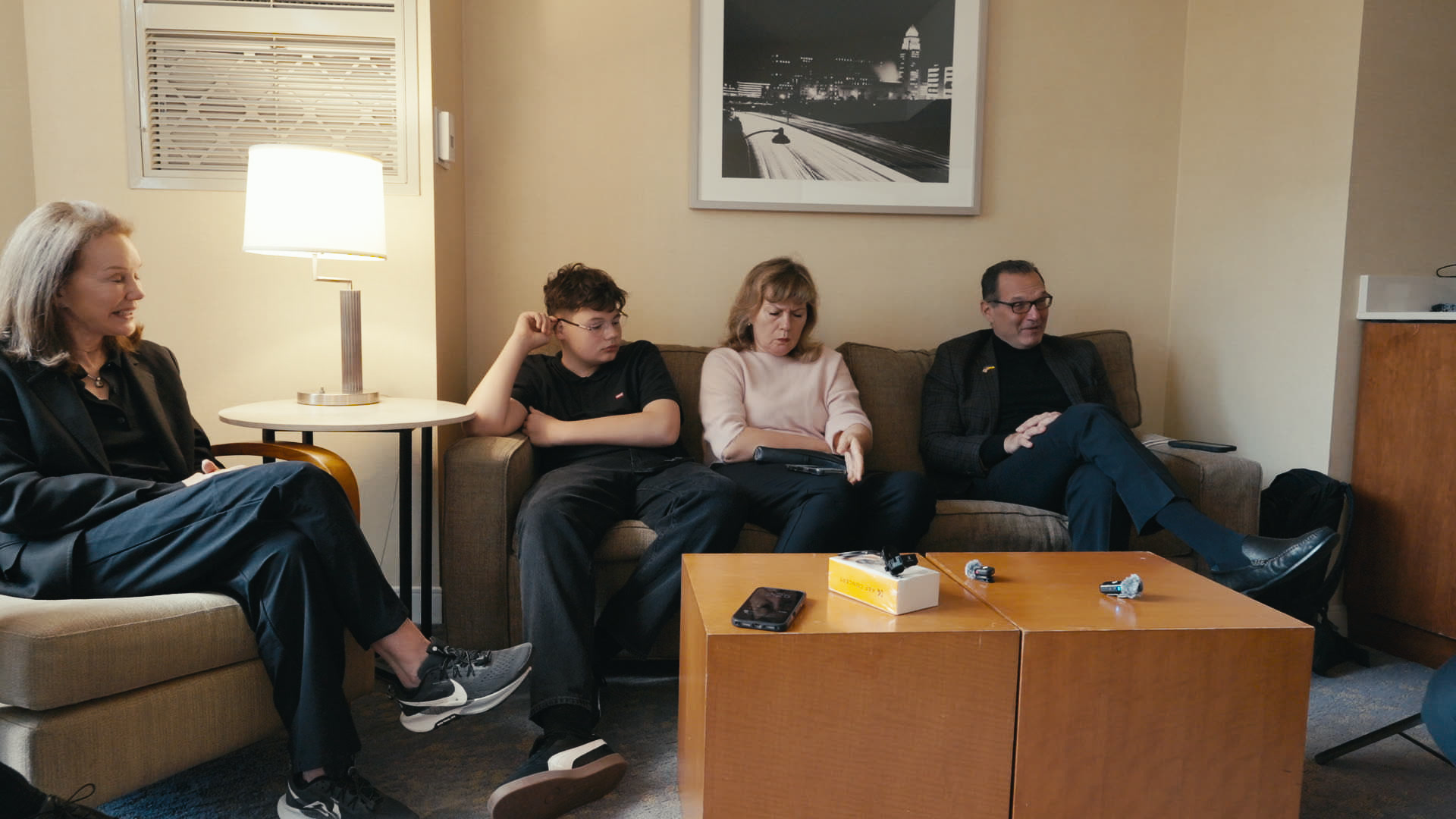
Speaker
00:00:00 (Transcript content available)
Speaker 1
00:00:00 [RUS] [NEEDS_TRANSLATION] Как мой старый сын, Багдан, 27 лет.
00:00:00 [RUS] [NEEDS_TRANSLATION] Как мой старый сын, Багдан, 27 лет. [RUS] [NEEDS_TRANSLATION] Это было тяжело эмоции, поэтому это терминал. [RUS] [NEEDS_TRANSLATION] Я понимаю, что я не могла умереть. [RUS] [NEEDS_TRANSLATION] Это очень тяжело. [RUS] [NEEDS_TRANSLATION] Но это тяжело, чем я понял, что мой младший сын, Сятослав. [RUS] [NEEDS_TRANSLATION] Это очень тяжело для него. [RUS] [NEEDS_TRANSLATION] Каждую ночью, каждую вечную вечную вечную вечную вечную вечную вечной ноч
00:00:54 [RUS] [NEEDS_TRANSLATION] Воспитывайся, попроси и собираешь телефон, проверку эту ситуацию, какая настоящая ситуация.
00:01:04 [UKR] [NEEDS_TRANSLATION] Вот здесь можно видеть.
Speaker 1
00:00:00 [RUS] [NEEDS_TRANSLATION] Как мой старый сын, Багдан, 27 лет.
00:00:00 [RUS] [NEEDS_TRANSLATION] Как мой старый сын, Багдан, 27 лет. [RUS] [NEEDS_TRANSLATION] Это было тяжело эмоции, поэтому это терминал. [RUS] [NEEDS_TRANSLATION] Я понимаю, что я не могла умереть. [RUS] [NEEDS_TRANSLATION] Это очень тяжело. [RUS] [NEEDS_TRANSLATION] Но это тяжело, чем я понял, что мой младший сын, Сятослав. [RUS] [NEEDS_TRANSLATION] Это очень тяжело для него. [RUS] [NEEDS_TRANSLATION] Каждую ночью, каждую вечную вечную вечную вечную вечную вечную вечной ноч
00:00:54 [RUS] [NEEDS_TRANSLATION] Воспитывайся, попроси и собираешь телефон, проверку эту ситуацию, какая настоящая ситуация.
00:01:04 [UKR] [NEEDS_TRANSLATION] Вот здесь можно видеть.
00:01:15 [RUS] [NEEDS_TRANSLATION] Ненормативная лексика, но это правда.
00:01:23 [UKR] [NEEDS_TRANSLATION] Вибух, чуть.
00:01:54 Elon Musk used this system for his rocket orbit. Yes, it's a large place. We live very close to this factory. And this factory was bombed a lot of times. It's a... Sometimes I was alone at home, sometimes my family was at home. It's a... During this explosion, some part of picture from the wall down in the nearby windows...
00:02:40 uh buildings windows totally crushed destroy it's a another situation we how we live now i show you our name it For example, at 10:00 p.m. go to sleep. The next, "Shahidz", half past three, rockets attack, at five, ballistic, and half past five, explosions.
00:03:27 [RUS] [NEEDS_TRANSLATION] Это почему мы начнем с аэр-алармом и мы идём на земле. [RUS] [NEEDS_TRANSLATION] В нашей шорте. [RUS] [NEEDS_TRANSLATION] Да, это шорте. [RUS] [NEEDS_TRANSLATION] Я думаю, что мы можем показать шорте. [RUS] [NEEDS_TRANSLATION] Это под наш пяти пяти-пятаж-постоверен.
00:03:53 We go and... Yes, a cellar. Cellar, but not a reliable cellar because it's... I saw a lot of videos where direct... Exploders hit all buildings, even the basement, shelter, but we go. and it's very difficult for younger son, for Svetlislav, he... ...shaking, his heart is a bit more... ...racy. ...racy, yes. Last time when we were at Svetl,
00:04:39 [RUS] [NEEDS_TRANSLATION] Спасибо за нашими близкими, все его внимание, за это внимание за этот ребенок.
00:04:52 [UKR] [NEEDS_TRANSLATION] І коли ми бачили випадку, вирішово шахет, це як звичайно, [UKR] [NEEDS_TRANSLATION] це одне разом більш клозе, і звичайно. [UKR] [NEEDS_TRANSLATION] Я кажу українційно, ми чуємо звук шхета [UKR] There's a Shahed drone, and with each minute the volume gets louder, louder, louder, and we understand the feeling that it wants to hit exactly us. [VO CANDIDATE]
00:05:39 [RUS] [NEEDS_TRANSLATION] Потом тихонько затищает. [RUS] [NEEDS_TRANSLATION] Он начинает падать. [RUS] [NEEDS_TRANSLATION] Это значит, он падает. [RUS] [NEEDS_TRANSLATION] Риски неудобный звук.
Speaker 2
00:05:52 А потом, explosion.
Speaker 1
00:05:56 [RUS] [NEEDS_TRANSLATION] И там, и там, и есть большой explosion.
00:05:59 wave wave explosion even with uh on the underground in the basement there are ventilation uh winter territory system yeah yeah yeah you can feel the air moving out of the air the last way
00:06:21 [RUS] [NEEDS_TRANSLATION] Да, это последний раз мы сняли в Рах
00:06:51 It distracts. And after that we realize we'll be ballistic. Ballistic is 3, 4. Ballistic is 1-2 km from our place where we live. It's very not impressive. It's not difficult for me. Obviously, I know next day I will have a very complex operation. For six hours, I said to my wife, "I go to bed."
Speaker 2
00:07:26 They said, "Andre."
Speaker 1
00:07:33 Look at your telegram channel.
Speaker 2
00:07:38 Телеграм-канал "our region is in red".
Speaker 3
00:07:44 "our region is under air"
00:07:46 [UKR] [NEEDS_TRANSLATION] Так, що характерно, якщо можна сказати, що коли закінчується атака, [UKR] [NEEDS_TRANSLATION] Ми з Підбалю виходимо, ми раді вони не будемо бачити, і в цей час люди, які постраждали, видять рятівники.
Speaker 2
00:08:09 [UKR] And Russia tries to strike where our rescuers have arrived, this has been their tactic lately. [VO CANDIDATE]
00:08:20 All the paramedics and all the search and rescue go to the places which were damaged the most. And what Russians do, they do second wave of attack on the same place, so they can not only kill civilians, which were already hurt, injured, but also they kill the search and rescue and paramedics.
Speaker 3
00:08:39 They have double attacks. So that's their tactics, that's what they can do.
Speaker 1
00:08:45 [RUS] [NEEDS_TRANSLATION] Сегодня я поговорил с моим сыном Богданом. [RUS] [NEEDS_TRANSLATION] Богдан сказал, что я сейчас в пляжу, потому что много шахеров в Днепрове.
00:09:00 [RUS] [NEEDS_TRANSLATION] И может быть 3-4 дней до конца. [RUS] [NEEDS_TRANSLATION] Это центр Днепров.
00:09:30 [RUS] [NEEDS_TRANSLATION] Вы можете видеть здесь. [RUS] [NEEDS_TRANSLATION] Это центр Днепров. [RUS] [NEEDS_TRANSLATION] Богдан был очень близким к этому месту, в его машине, когда он поднял этот шаг,
00:09:55 and glasses from windows covered his car. And very often Bohdan is on duty on Friday. On Friday, but she's to like to sit on Friday, late evening. late evening in 25 October 2024 ballistic explosion very close for our hospital it's this time 440 windows totally destroyed destroy the roofs in and runes, walls, and back down this time,
00:10:44 performed operation, removed, acute subdural gematoma, intracranial gematoma, and windows was totally destroyed, and glasses covered. - So he's in the middle of this guy's head, the guy's brain is exposed.
Speaker 4
00:11:00 - And he, the, the, the emergency operating,
00:11:00 - And he, the, the, the emergency operating, the window, the window blows open, and right in the middle, we've got it.
Speaker 1
00:11:36 [RUS] Attention!
00:11:37 Name it U.S. Army, it's a gift. Rock Armando. I thought he was dead. He wakes up and says, I guess I'm not dead. Then he finishes the operation. Patient did great. Patient did great. 26 years old. So, you know, when I see this and I think about history, I think about the Battle of Britain. So the Battle of Britain was devastating. It really only lasted eight months. So this is three and a half years of the battle break on a scale that's never been reported before.
Speaker 6
00:12:11 So, you know, it's not one or two drones. It's up to almost a thousand drones a night. And then multiple missiles. So let's say you take out 80 or 90% of the drones. You still have 10 to 20% of the drones which are going to inflict terrible damage to the link. And they're weapons of terror, right? So it's trying to grind down the civilization so that you don't have a will to resist it. And now, as the weather gets colder, the Russians are notorious for targeting the infrastructure for gas and electric. So they take out their heating. They take out their electricity. Cities go completely black. So they're in darkness without heating,
00:13:02 sometimes without water, you know, that can be affected. So, you know, this is on a scale that it's so hard to explain to Americans. These people just don't get it. They've never been attacked at this scale. You know, to understand that you have this accumulating, not just in a once-time kind of event, but multiple times during a week. And to then wake up the next morning, go to work, do these complex operations. The staff are all there. You know, it's not like at Washington Hospital Center where people are like, "Oh, it's a Friday. I'm gonna call out sick on Friday because I went a long weekend." You know, it's like, they're showing up in the middle of a war zone.
Speaker 4
00:13:44 And the only time that they're maybe late for work is because there was a roadblock because of the war damage. It was amazing. My first trip there, my last day was on a Friday, right? And it was about 5:00 in the morning when I heard the explosions. And you were texting me about there's actually an attack underway. And fortunately, it wasn't that bad. And the hotel lights flickered, but stayed on. And two hours later, I'm walking to the hospital. It's like, life goes on. The farmers are pulling up to drop off their vegetables and things to sell. You see the people on the trolley and taking the bus to work. It's just part of life. Unconquerable is the word that comes to mind. Unconquerable. Churchill gave this amazing talk after a bombing, I think it was in Coventry, in the 1940s.
Speaker 6
00:14:33 And I thought of that talk, and I sent it to Andre, I sent it to Alex, and I said, this is the incomparability of the Ukrainian people, that they have embodied that spirit of, you know, resistance of the human will, that we will not give up, we will not surrender, we will not give in. We will fight to the end and part of that for a rigorous civilian is basically Living every moment to its fullest Don't put off tomorrow Enjoy embrace today You see people getting married see people having children you see children doing a dance competition Right, I mean it's like you see people going to school, you know, and the schools are sometimes underground
00:15:23 for protection for the children. You see them embracing life. And that's just incredibly inspiring for the rest of the United States, to see that kind of will to live. As I was leaving once, the attendant on the train, Andre, introduced me to her. Her son was imprisoned in the Azaf Brigade. So this is a brigade that held off in the city of Mariupol to the very very end in a steel industrial complex. And he was pictured in this famous picture where this shard of light was coming down through an opening in the ceiling right to him.
00:16:09 Like a spiritual renaissance picture. And that was his mom on the train. And I had this coin, military coins, you know, that we passed around as veterans. So I gave her this coin. The coin was actually from President Obama. And I said, "This is the most valuable coin I have, but I'm going to give it to you because you as a mother are making the ultimate sacrifice." You know, and I can only imagine what it would be like for that mother knowing that her son is a POW with the Russians. I mean, my mom went crazy, you know, having one son in Afghanistan, another son in Iraq, but it was only for 12 to 6 months, and here, it's 3 and a half years for his POW.
Speaker 4
00:16:59 And to think about the sacrifice that these families are making, it's just enormous.
Speaker 6
00:17:04 Oh, and the Russians treat their POW, it's horrible. Horrible, horrible. I mean, it's just, you see, you know, the woman's 50, 60, 70 pounds, means not treated all kinds of Electrocution torture all kinds of abuse To scales that just go beyond description It's like that KGB music You know it's a it's a way of life in Russia. Totally. It's a different human
Speaker 2
00:17:33 It's an animal they're not humans The entire nation is like that. I mean Ukraine latest the podcast is they're talking about how when they have upcoming
Speaker 4
00:17:42 prisoner exchanges in russia and ukraine the russians will take the people you know the prisoners when they're going to let go and they they put them in a special place for a couple of weeks so all their wounds and bruises can go away and heal up you know so they don't look quite so
Speaker 6
00:17:56 bad they start feeding them or also they know that they'll be released yeah it's it's said that ukrainians treat their animals like people and russians treat their people like animals
Speaker 4
00:18:11 worse than ours right i mean i mean it's just inhuman you can expect what you're saying at the beginning russia is never going to stop if you look at russian history it doesn't matter if it's
Speaker 2
00:18:20 russia or soviet union all they do their leadership just keeps expanding and trying to conquer they're
Speaker 6
00:18:25 never satisfied with the accidental nations so they've never existed yeah i mean what what only brings it to an end is where you make the cost of war so expensive, so intolerable, that for their survival they have to spend. Who lose 2 million, 3 million, 5 million people? Because life doesn't mean anything. You know, they're not sending the oligarch son from St. Petersburg or Moscow. They're saying the minorities from the far eastern portion of the country. They're the ones bearing the burden.
00:19:00 And prisoners. And prisoners, yeah. So, you know, it's not anybody who has any kind of ability to resist.
Speaker 2
00:19:07 I mean, it's over a million soldiers, over a million capitalists. And now they have North Koreans, they have 10,000 North Koreans there. That's right. Now they have... From India, from Cuba. From India, from Cuba. That's right. It is totally insanity. It is totally insanity. It's absolutely insanity. So you're talking about the axis of evil, you know, President Bush,
Speaker 6
00:19:26 previously Reagan talked about I mean here it is you have Iran you have Korea you have China you have Russia being supported right being supported by like India Brazil you know these other countries Saudi Arabia why is Saudi Arabia buying oil from Russia because it's economically done benefit they use the oil
Speaker 2
00:19:53 to run their factories then they sell their refined oil at a higher price it's all for profit
Speaker 6
00:19:59 so do you think that's bonding all the refineries i mean us as ukrainians yeah uh will like somehow will be helpful absolutely so so that's a strategy of basically uh industrialized uh warfare because this is a this is what we call a war of attrition it's a war of attrition and in a war of attrition it's not just soldiers. It's about means for warfare. So if you look at World War II,
00:20:30 in World War II, when we had the strategic bombing against Germany, what made the biggest difference wasn't the firebombing of German cities. It was taking out Nazis, Germany's refineries. Because if they didn't have refineries, if they didn't have oil, then their fighter pilots didn't have oil. Their tanks didn't have oil. Right. So it's basically oil was the blood of a wartime machine. So to take out the war machine, you take out the oil. And it's also their economy. Look at the difference between what Russia is doing and what Ukraine is doing. Ukraine is trying to be very targeted and deliberate strategic targets, oil refineries,
Speaker 4
00:21:13 and things like that. Russia doesn't care. They're blowing up apartment blocks and hospitals and playgrounds and village squares and supermarkets.
Speaker 2
00:21:20 They don't care, they don't have value for human life, period. Plus, their whole second army is a joke. There is no professional there. They press the bottom of it, "Oh, let's see where it will end." "Oh, three kilometers right or left." They don't care. And there's no specialist there. and the whole thing with their nuclear weapons that everybody was so afraid of escalation, it's another joke. I mean, if somebody's gonna press the red button, it's gonna go up and gonna drop down because none of this has been served since 1987. Because up until 1987, it was
Speaker 6
00:22:01 served by Ukrainian engineers. Ever since, it's just like a whole shell sitting there. So it's... It's a totally mass incompetent army that's riddled with corruption. I mean, When you look at how Moscow was taken out, how does their state-of-the-art warfighting naval vehicle, ship, be taken out by a country without a navy? Yeah, the flagship of the Black Sea. So the flagship was taken out because there's so much corruption, it didn't have the appropriate radar detection active.
Speaker 2
00:22:36 And it didn't have an ability to protect it. And then the most recent one, when they blew up right outside of Sochi, they sent two fake boats, and Russia immediately attacked them. And the boats had cameras on end, so the guys back in Ukraine were sitting in life viewing everything of what's happened. And then when they knew everything what's happened, they sent the real stuff and blew it all up.
Speaker 6
00:22:59 I mean, we are fighting, like, I don't know, barbarians. But it's a David and Goliath type of war, because they have three times the population, right? And they have so much more natural resources, right? And they have allies who don't have democracy. Their allies can supply them endlessly. North Korea is going to supply them with thousands and thousands of soldiers because they're getting a benefit. We don't know what that benefit is. Maybe it's missile technology, engineering technology, where they can strike the US. Right. And so this is bailing out North Korea. So it becomes a very dangerous situation where in the West, in the US, we were just in Europe. And it's almost like Europe is totally detached from this war.
00:23:50 It's like the Europeans don't realize this is happening on your doorstep. This is happening in your countries, the hybrid war. And yet, you know, nobody wants to think about the horrors of the war and what can happen.
Speaker 2
00:24:05 But they're not at a stage where they're able to defend themselves and fight back. Because Europeans, generationally, since even before Second World War,
Speaker 6
00:24:14 they were so relaxed, like, oh, just give me my pizza, my wine, and cheese, and I'll be fine. Totally. I mean, it is really interesting to be in Vienna, you know, where World War I, they're broken out in the Austro-Hunger War in Surrey, and to see that repeat disconnected mentality in Vienna. You know, it's the opera, it's the music, it's celebrating hobbies. It's not realizing that, you know, tens of thousands of human lives are being lost on a daily basis on a battlefield at your doorstep. You know, it's like all of Ukraine is defending Europe. It's like, you know, your Air Force, your Army, your anti-drone technology is not up to speed. You know, you can learn this from the Ukrainians. The Ukrainians can show you what will work and what won't work.
00:25:07 You know, and you can then become more prepared for the Russian hostile. It's just, it really is sort of interesting. But to this point, and to Andre's effect, is that Andre is about leadership, and leadership in the trenches. Meaning that he didn't run for cover. He didn't take off and take his family out of Ukraine to Europe to escape the war. He stayed there. And because he stayed there, he gave confidence to other people that they could stay. That they could, in fact, continue to work. So it's such a pivotal point of how much dependent upon the personality of Andre to stay put, to show them we can take care of patients, we can continue this mission and not abandon our people.
00:26:01 Because it would have been very easy for him. I look at my colleagues, 99% of them would head for the hills, they would take off. You know, I don't have a lot of faith in a lot of people I work with today that say that they would stay behind if, in fact, their city was attacked. If anyone of means would have figured out, how do I get out of here? If anyone of means would have figured out, how do I get out of here? I mean, we saw during COVID where people of wealth basically figured a way to have, you know, a life on their vacation resort. So, I mean, so the real thing here is that of leadership under fire. The leadership under fire, and I'm the leader of this family who live it every single day, it is truly remarkable. I mean, that just is totally inspiring to me. You know, we did these short intervals, three months, six months, maybe a year, but then it
00:26:51 And our families were safe. And our families were safe. And we weren't getting long during that. Yes, there are IEDs, you did have your risk, but it was on such a low level, it doesn't even
00:27:00 compare to what the normal everyday civilian feels in Ukraine. Or anywhere in Ukraine. Anywhere in Ukraine, any city that's, no city is protected.
Speaker 1
00:27:11 I would like to mention, it's difficult to mention that no one in Ukraine don't feel in safety place. No one. No one. If Alex saved me, he would like to go to the battlefield, I said.
00:27:32 [RUS] [NEEDS_TRANSLATION] Это очень опасно, потому что это в киеве зона 20-30 километров. [RUS] [NEEDS_TRANSLATION] Это не как лайн-баттлевед. [RUS] [NEEDS_TRANSLATION] Это киев зона, это в киеве зона, где много дронов, и расисты видят,
Speaker 5
00:27:57 as a car especially journalist and would like to damage this it's
Speaker 4
00:28:03 yeah it's retarded in general yeah yeah that's a difference that terry mentioned you guys were
Speaker 5
00:28:08 thinking about going to the stabilization points which are kind of the first right stop and uh terry said yeah no yeah we yeah i i i saw what was happening there and it was like well that that's
Speaker 1
00:28:22 visually interesting but then yeah they report like yeah don't go there so that uh new pro is not more safety place than pokrovsky or another region near the front line it's no it's a lot of dangerous every day every day we go to the bed and no one don't think we'll wake up next month this morning or not. It's true. We live in this condition. It's 3.5 years. That's why it's the main reason when I catch my family together with me in Vienna,
00:29:08 in LA because I couldn't imagine how I will tap this message and think where they know what's
00:29:19 [RUS] [NEEDS_TRANSLATION] Я позвоню каждую часу, чтобы понять, что это ощущение.
00:29:30 [RUS] [NEEDS_TRANSLATION] Это очень полезно для мозга, для эмоций, для здоровья.
00:29:40 so that's love rest in Vienna and even today's moment, it's Sunday, We will go to Santa Monica beach and swimming in the ocean. I am happy. When we arrived, we will be on a school vacation and we decided to send him to the Cossack camp.
00:30:18 [RUS] [NEEDS_TRANSLATION] Козацький лагерь. [RUS] [NEEDS_TRANSLATION] Козацька хортеця.
Speaker 3
00:30:31 [UKR] Yes, the Cossack Khortytsia. [UKR] Like a children's camp. [UKR] A children's camp, but not like the usual Artek.
Speaker 1
00:30:40 [UKR] In the forest. [UKR] In the forest. [UKR] This is like a boy scout.
00:30:44 They are walking around bare feet, in the Ukrainian traditional camps, in the forest, in the trees, in the trees.
Speaker 2
00:31:03 [RUS] [NEEDS_TRANSLATION] У них много активностей. [RUS] [NEEDS_TRANSLATION] Гизда на конях. [RUS] [NEEDS_TRANSLATION] - Они живут в маленьком кабинке, [RUS] [NEEDS_TRANSLATION] и они рейтят птицами, [RUS] [NEEDS_TRANSLATION] и они поедают для себя. [RUS] Yes, yes.
Speaker 3
00:31:19 [RUS] [NEEDS_TRANSLATION] - Передай, передай, чтобы все поделали. [RUS] [NEEDS_TRANSLATION] - Света слава там, [RUS] [NEEDS_TRANSLATION] шаравора.
Speaker 6
00:31:30 Wow. Yeah, like Rocco was saying, life goes out in spite of everything else. When you go there, it's like traveling back in time. Because, you know, you don't do like we travel worldwide here, right? You don't fly into Kiev or fly into Hebrew. You take the train, and you're on these trains. The train starts moving from Warsaw back out. And as you're going through these trains, it's a process of 24 or 30 hours, right? So you train to Kiev and another train from Kiev to Neapro or a train to Lviv and another train from Lviv to Neapro. And in these trains, you're basically traveling through the countryside and you see the beauty of the countryside.
00:32:15 You see the beauty of the cities as you're coursing through. And it's a slow process, but you're like stepping back into what it would have been like to sort of go back into World War II. We're going back into these areas where people are... There's a sea of humanity moving in two different directions. So you see people leaving Ukraine, but then you see people coming back to Ukraine. Like the women and children coming back from Poland to see their fathers and their spouses who are on the front lines.
Speaker 2
00:32:51 And they'll meet maybe in Ukraine or they meet at the train stations. Or they just cannot afford leaving outside Ukraine. They have forced to come in. They have forced to come in. But that's right. And so you see the children on the train.
Speaker 6
00:33:03 And it's very emotional. Because, you know, when I left for Iraq, I had my wife. She's pregnant. We had two young children. And I had two adult, older children from my first marriage. So those older, they're now adults, of course, all of them. But at the time, they're all young children. So that separation of the fathers and the mothers who are on the front lines
Speaker 4
00:33:27 children is something that you notice on the train.
Speaker 2
00:33:30 It is interesting how many women are traveling alone on a train. You see them traveling, right? Because the men cannot leave. Yeah, the men can. And the men do come out and it seems like they're in the military. That's right. I was on the Polish border the first week when the war started, delivering humanitarian aid. And what I saw was heartbreaking. Yeah. I mean, it was almost 10 million women and children who left. And like, people were walking out. had no idea where they were going. They had their small briefcases, they left their whole life behind.
00:34:00 - Their whole life in briefcases. - The fear of unknown, it was horrible.
Speaker 6
00:34:05 - Yeah. And that's what's so striking about this, is that the Western world has this incredibly short potential. Oh, is that war still going on? - Exactly, oh my gosh, word to word. Hey, what's going on with your parents? Is that war still going on? - So, now you're just talking to the University of Dallas. - Fuck you! I mean, it's exactly like a front on a daily basis. So Irina was a professor there, and she thanked me the next day,
Speaker 4
00:34:30 and some of her students came up and said, "Oh, we had no idea that Russia is attacking Ukraine like that." They thought it was just the occasional drone goes off course and explodes.
Speaker 5
00:34:39 Well, isn't her city completely overrun? She's in Kharkiv. Yeah, she's from Kharkiv, but like, isn't that beyond now, the front?
Speaker 2
00:34:46 No, no, no, Kharkiv is still holding out. It's still standing, because they're bombing it heavily. They just bumped the train from Kiev to Kharkiv. The whole train was civilians and children. I have videos of it if you want me to.
Speaker 4
00:35:00 I can airdrop it to you. So, Logan, do you think this is an interesting story here? Yeah. You still want to go? I made up my mind a few weeks ago. I'll send you all your tickets, by the way. Those just got set up the route zone. What makes you want to go, Logan? I mean, this is a... Because I think that this is a story that needs to be told.
Speaker 7
00:35:24 And I think that there is an angle here that's different than other media you see coming out of Ukraine, other documentaries. And I think that there is an angle here that's different than other media you see coming out of Ukraine, other documentaries. Sure. And I think I'm fascinated by kind of this dichotomy of, like, life in Ukraine, where you're dealing with, you know, obviously there's kind of the medical aspect, it's the hospital, the war, but also this idea of like, you throw as a city where there's like a million people that live there, but most people in the United States haven't heard of this place. And they're living right at this kind of precipice of, you know, normal life into anything south,
00:36:00 you know, east of that becomes extremely dangerous. And it's like, you know, it's like, how do you grapple with that? How do you live your life? And then, you know, obviously the work the U.S. are doing now in Morocco, it's like, you know, that's extremely heroic, but also, you know, Andre is there the entire time. And, you know, Dad's articulating that as well, the fact that, you know, it's like you guys get to leave, but then, you know, this is continuing. And, you know, to everyone's point, I think the U.S. media is a very, like, very, very thin and small attention span towards things that I feel like, you know, was like Ukraine was kind of the hot topic and then we moved on to Israel and Hamas and Gaza and then Iran and then now it's like, you know, it's like all these things have kind of been pushed. - Now it was Trump, every day it's Trump.
Speaker
00:00:00 (Transcript content available)
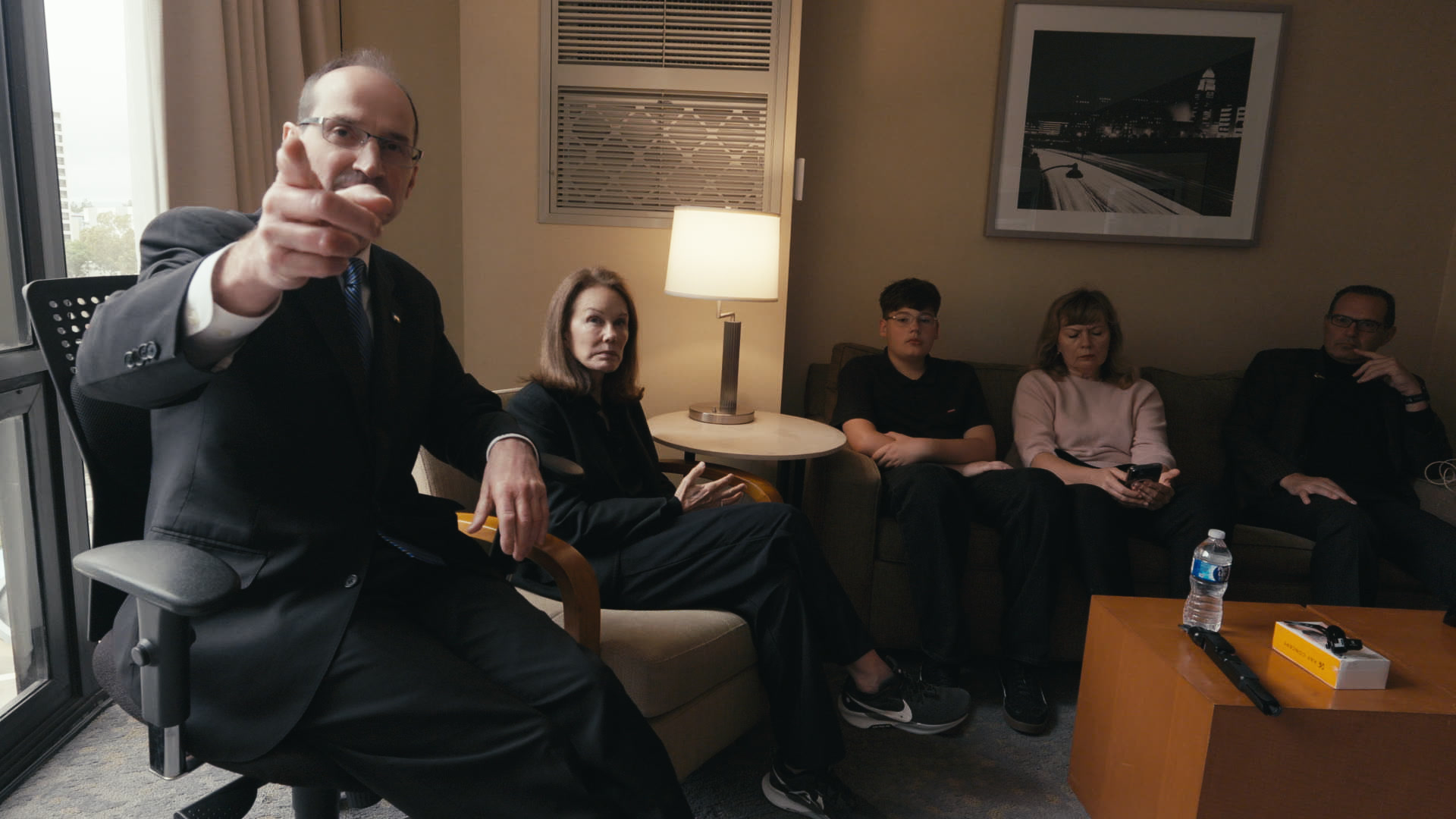
Speaker 4
00:01:43 yeah this is not going to be in a documentary right yeah
Speaker 6
00:03:45 you can uh um you can also control it with your phone wow and uh i can take a picture of you taking
00:04:27 [RUS] [NEEDS_TRANSLATION] Я не розпов
00:05:40 Or I thought I told him the time. Does he know how to get up here? No, but he won't be here for a little while because I didn't tell him the time. I'll just do that. I have a key so I'm just...
Speaker 4
00:01:43 yeah this is not going to be in a documentary right yeah
Speaker 6
00:03:45 you can uh um you can also control it with your phone wow and uh i can take a picture of you taking
00:04:27 [RUS] [NEEDS_TRANSLATION] Я не розпов
00:05:40 Or I thought I told him the time. Does he know how to get up here? No, but he won't be here for a little while because I didn't tell him the time. I'll just do that. I have a key so I'm just...
Speaker 4
00:08:15 This is funny. I love your cool little cameras here. I have a son who's a budding engineer.
00:13:52 So there's a little... Yeah, you have to go to the Menorah Temple, to the Holocaust Museum there. So it was the first time I actually had been to a Jewish temple.
00:14:00 Really? Yeah, did you go for a service or did you go just to see it? One of the circle colleagues, the ENT colleagues, took us there on our last day and it was quite emotionally impressive. I mean, you know, how did this all start? This sort of started from a phone call and all of us veterans from the U.S. Army and military were very engaged in the news in Ukraine and war broke down. We felt very strongly about what was happening in Ukraine. But there was a few who were actually already over there doing trauma work, humanitarian work. And they were trauma surgeons. Trauma surgeons from former military, John Holcomb, Warren Dorlock in particular. And I had known them for almost 30 years from deployments in Iraq and their
00:14:53 trauma work in Afghanistan as well. It was a very tight network of us. So I responded to their
00:15:00 message and they said they needed help. I asked what kind of help did they need. Initially it was logistics help, it was equipment, it was materials. So I started reaching out to a lot of the reps and companies I know and working with and see if we could put together equipment packages for them. And it started out very small. We would collect these packages sort of like crowdsourcing, We packed into these plastic tubs. I would then rent a U-Haul, drive up to New Jersey. Initially, I was meeting some of the trauma surgeons at the airport in Newark, and we would give them these packages, but they're going to take one or two of these big tubs at once. And then it expanded where we connected with a large NGO called Rosin, which had been there for over 10 years, since 2014, and Lou Thompson. And Lou said, "Listen, we can ship pallets." And through LOOP, we were able to connect with Professor Serko and his team.
00:15:53 And it started with a webinar in about October, November, 2022. And from that webinar, I immediately identified that's where I needed it. Because I had served in the Army for 31 years. I was in Iraq in the first beginning portion of 2003. And we were initially totally isolated in the middle of the desert. And when I saw what was going on at Metroponik, I felt this instant connection. That that was the same kind of feeling I felt when I was out in the middle of the desert. That you're this island totally separate from the rest of the world.
00:16:30 And you're like at the end of the line for all logistics support, for all equipment, but you're getting the most number of casualties. So I worked very closely with one of my former neurosurgery technologists who's Ukrainian-American, and he helped me through RASM to make coordination where we landed in Krakow, and then we rented a car, drove to Lviv, and then we took a train from Lviv 14 hours to the city of Nipro. And that was our first visit. So that's how it all sort of started, and then it just became a yearly thing. And then Alex and I were together at a penetrating brain injury guy-lines meeting, and Alex told me what his plans were in terms of he's just gotten his Lithuanian passport and his background being a Lithuanian-American. And we had a connection many years through the Trauma Foundation and through our teaching work as well as we're both from Chicago. So that was another connection. And we had this idea of how can we do more?
00:17:28 How could we go there in person? How could we do more advocacy? How could we do more logistics support? How could we help the folks who are on the front line? And, you know, we swore an oath, those of us who were in the military, for me it was at West Point in 1986. We swore an oath to the Constitution of the United States to defend it against all enemies, foreign and domestic. And we instantly saw, those of us who were prior service, that Putin, Russia, was an enemy of the free world. Not just an enemy to Ukraine, but an enemy to democracy throughout the world. and an enemy to humanity. That they did not value international order. They did not value the sense of civilization as it stands. That there was an imperial conquest, that they were going to commit genocide on the largest scale to try to grasp that which was not theirs.
00:18:20 If they couldn't have what wasn't theirs, they were going to destroy it. Just totally down to the cinder of ashes. And so that reminded me of what happened in World War II Poland was invaded from both sides and being assumed in history, say this is all happening again. And just like in the beginning of World War II, the world seemed to not care and not to make any interventions. There was no movement of US troops, there was no movement of NATO, there was no attempt to have any kind of no-fly zone or any kind of intervention to protect millions and millions of lives in Ukraine. So I'm not Ukrainian by blood, but I'm Ukrainian by spirit, soul, and blood. And it's just, you know, you can't stand on the sidelines. You know, it's like
00:19:11 you were trained, you know, to go into Iraq, to go into Afghanistan, to defend those who were fighting, to basically free other people. I mean, we didn't go into Afghanistan and Iraq to conquer it. We wanted to basically depose terrorism and to try to make life better for others and so i saw if this is not the exact same thing that we saw in world war ii then we're ignoring our responsibilities as leaders of the free world and so you know a lot of people in the u.s they said well it's not your war it's not your time um these aren't your family members i said but yes they are i said we're not necessarily by blood or family by ideals and if you don't connect with people who are going through the
00:20:00 very same things that we did while we were fighting you know these wars overseas then your humanity is affected it it's very hard for those of us who are brought up this way to look the other and it's a strain on families no doubt i mean my wife my five daughters my son they're you're always incredibly stressed out when i go over there like dad you did your time in iraq you know you're now into your third mission over ukraine it's like you're you're really
00:20:30 stressing us out a lot i said don't worry i'll be fine i'll be fine and you know like but dad you're not invincible it's not about invincibility it's about you have a purpose and you have a mission that is making a huge difference it's not that my particular effort is going to save a lot of lives But what you do is you spread hope, support, and advocacy. And you tell them they're not alone, that we'll be there for them, that we'll help them any which way we can. And it just grows. I mean, it grows enormously. Alex's missions, Max Shapiro, and Peter Kim Nelson's missions as well, all to the same hospital. They do the mural and devasco work. Tom Sikons missions
00:21:42 huge efforts because they have many, many more amputees than we have in Iraq and Afghanistan. If we had 2,000 over a period of 20 years, they had 60,000 over a period of three years just in amputees. So it's a large scale combat operation. It's literally like World War II.
00:22:00 It's a near period of time. It's not an insurgency. It is truly a war. And in the United States, it was sort of military at war during the global war on terrorism. Military families bear the burden. The rest of society was sort of detached from it. In Ukraine, it's an entire society that bears the cost. Civilians being targeted. Everyone in Ukraine has someone or loved one or someone that they know who's either on the front lines, who's died, been injured or affected, or whose daily life is disrupted by drone attacks, air raid sirens, going to bomb shelters, where their sleep, their lifestyle, their ability to live is totally effective. So it's one of those things where it's just, as a soldier, as a surgeon of soldiers, you're hardwired to basically respond to a call.
00:22:50 And that was the call. Luckily, I was no longer active duty, so I didn't have to abide by the regulations that restricted active duty members from going.
00:23:00 So it's like, hey, I'm free. I'm a retiree. I did my time, so you can't say no. And so because that restriction on actively military members, they're not allowed to go, which is a terrible, terrible shame because it's such an opportunity for us to learn, to assist and to be prepared for our next war. You know, I tell everybody war is sort of a race of learning and we're losing that race. Ukraine is winning that race, but we as a country, the U.S., are losing that race because we focus on the past. We're not focusing on preparing for the future. And to prepare for the future means you have to engage on the ground with what's going on in Ukraine. Because China's watching. Russia's, of course, watching. Iran is watching. North Korea is watching. They're getting stronger by this collaboration of evil than we as a free world are getting weaker.
00:23:53 They see the West as being very timid, very hesitant, without the will to fight. And the way the Russian mentality is, they don't fight one year at a time. They fight generational. It's 30 years. It's a generation. We'll indoctrinate the Ukrainian children to fight against their own nation for the next generation. So you have to realize you're dealing with a mindset that looks at generations, whereas our mindset in the U.S. looks at it days, months, and barely a year. So it's a different mindset. So you have to have that uniformity of will to fight. And there's a hybrid war going on all over Europe. You see attacks with warehouses in Warsaw being set on fire. You see incursions of drones into Poland. You see the Munich airport shut down because of drones. You see assassination attempts on the Rheinmetall CEO who helps produce weapons in Germany for Ukraine.
00:24:50 So, you know, this is what we call hybrid warfare in the military. In the military, that means that basically it's not a massive ground war, but it's a preparation to deter other allies from fighting. To make it so that they show willingness to support Ukraine, that their population will be in the military.
00:25:30 In 1994. In 1994. The Budapest Accords. The Budapest Accords. And so it's, what a paradox, right? So it was Britain, U.S., and Russia. And so the one who guaranteed their protection and who's on the U.N. Security Council, another absurdity, right? It says, well, we'll guarantee you there's security. And now they claim to the current administration, we want to be involved in their security decisions. Well, that's ridiculous. You are the reason why there's war. You know, if Russia stops fighting, war's over. If Ukraine stops fighting, Ukraine's over. So it's this ludicrous disinformation and propaganda that's being you know promoted by russia and they are masters of propaganda they are masters at
00:26:17 disinformation it's something that they've been doing for decades for generations under the soviet union and you know they know that we could destroy the us not by head-to-head confrontation but by having us divided by fighting amongst itself what's what happened current right now you know so if So if there's any attempts to basically create division in a country, they will optimize it. They've done it with bots in the Philippines. So if you look at the Philippines, Maria Ressa's biography, when she talked about it, she said there were these Russian bots that were working as sort of like an experimental project to basically
00:27:00 create division in the Philippines. And people believed what they were seeing from these Russian bots. and the same thing happened in the US. So if there's ever any kind of cultural divide, they will emphasize that cultural divide to create division. Say, oh, you know, Ukraine, it's a territorial dispute. It's not a territorial dispute. It has nothing to do about territory. It's about human values, the values of civilization, values of democracy. And so you get into these discussions with these lawmakers where they self-determined, they figured ways, well, we can't give them F-16s. We can't give them long-range missiles. We can't give them this because there will be escalation. It's like, we have the saying at West Point. It's like, the olive branch is best delivered
00:27:49 from the point of the sphere. It's like, and that's a Roman quote. If you want peace, you have to show strength. If you want war, you show weakness. And so the West is showing weakness, The direction goes unchecked and it keeps going. That's correct. That's correct. It basically reaffirms and gives Putin more wherewithal to attack other countries. He's not going to stop him. He has his eyes on, you know, basically the Sulawki gap between what's basically Lithuania, Kalingrad, Belarus, and Soviet Union. He wants to reconnect. He'll be next. He'll be next. Exactly.
00:28:30 So, you know, he has all these other sites that he's looking at, you know, because it's about conquest for him. It's about bringing back, you know, the Soviet Union empire. I think at this point he completely lost his connection with reality and he's just
Speaker 6
00:28:44 doing it because he cannot lose the war because they're going to turn on him.
Speaker 4
00:28:49 So as long as there's some war, he can stay as...
Speaker 6
00:28:53 Absolutely. I hate using the word president and dictator. Dictator. It's very... It's very aurelian.
Speaker 4
00:29:00 In the Aurelian model, you have perpetual war, you have a perpetual crisis, and then you can use these extra democratic means to stay in power. And make money. Oh, the profiterian is unbelievable. But it's not just him making money too. It's the oligarchies, people who profited. it's the people who are complicit. India getting oil, Saudi Arabia getting oil,
00:29:30 areas of South America getting oil. So it doesn't just restrict to Iran, North Korea, or China. You see other people benefiting from cheap oil. And it's really tragic because India is supposed to be one of our allies. they're not allies of the Western free world and they're benefiting from this. And then even within NATO itself, we see Hungary, Slovakia, who basically are
Speaker 6
00:34:48 to use it as a humanitarian aid.
00:39:23 show uh ronko armonda the us army veteran in washington dc that's tatiana that's andre's wife
00:40:17 Wow. Well, and he's in different time zones,
00:41:57 [RUS] [NEEDS_TRANSLATION] потому что я хочу быть able to see... [RUS] [NEEDS_TRANSLATION] Продолжение. [RUS] [NEEDS_TRANSLATION] Он говорит, что он очень доволен, что вы здесь находитеся, [RUS] [NEEDS_TRANSLATION] потому что когда он поедет в Днепр,
00:42:12 [UKR] [NEEDS_TRANSLATION] Він не тільки хоче знімати кіно про лікарню, [UKR] [NEEDS_TRANSLATION] Щоб ти не забула, ти все.
00:42:47 She will be very happy to show you around and to introduce you to and welcome you to their home in Ukraine.
00:56:50 the greenstone mortalities
00:59:23 Do I need to change the temperature? I'm okay.
00:59:30 - Just a little bit, maybe like, make it a little warmer. - Yes. - Because... Yeah, yeah, yeah.
Speaker 4
00:59:59 food? food? food? food? food? food? food? food? food? food? food? food? food? food? food? food? food? food? food? food? food? food? food? food? food? food? food? food? food? food? food? food? food? food? food? food? food? food? food? food? food? food? food? food? food? food? food? food? food? food? food? food? food? food? food? food? food? food? food? food? food? food? food? food? food? food? food? food? food? food? food? food? food? food? food? food? food? food? food? food? food? food? food? food? food? food? food? food? food? food? food? food? food? food? food? food? food? food? food? food? food? food? food? food? food? food? food? food? food? food? food? food? food? food? food? food? food? food? food? food? food? food? food? food? food? food? food? food? food? food? food? food? food? food? food? food? food? food? food? food? food? food? food? food? food? food? food? food? food? food? food? food? food? food? food? food? food? food? food? food? food? food? food? food? food? food? food? food? food? food? food? food? food? food? food? food? food? food? food? food? food? food? food? food? food? food? food? food? food? food? food? food? food? food? food? food? food? food? food? food? food? food? food? food? food? food? food? food? food? food? food? food? food? food? food? food? food? food? food? food? food? food? food? food? food? food? food? food? food? food? food? food? food? food? food? food? food? food? food? food? food? food? food? food? food? food? food? food? food? food? food? food? food? food? food? food? food? food? food? food? food? food? food? food? food? food? food? food? food? food? food? food? food? food? food? food? food? food? food? food? food? food? food? food? food? food? food? food? food? food? food? food? food? food? food? food? food? food? food? food? food? food? food? food? food? food? food? food? food? food? food? food? food? food? food? food? food? food? food? food? food? food? food? food? food? food? food? food? food? food? food? food? food? food? food? food? food? food? food? food? food? food? food? food? food? food? food? food? food? food? food? food? food? food? food? food? food? food? food? food? food? food? food? food? food? food? food? food? food? food? food? food? food? food? food? food? food? food? food? food? food? food? food? food? food? food? food? food? food? food? food? food? food? food? food? food? food? food? food? food? food? food? food? food? food? food? food? food? food? food? food? food? food? food? food? food? food? food? food? food? food? food? food? food? food? food? food? food? food? food? food? food? food? food? food? food? food? food? food? food? food? food? food? food? food? food? food? food? food? food? food? food? food? food? food? food? food? food? food? food? food? food? food? food? food? food? food? food? food? food? food? food? food? food? food? food? food? food? food? food? food? food? food? food? food? food? food? food? food? food? food? food? food? food? food? food? food? food? food? food? food? food? food? food? food? food? food? food? food? food? food? food? food? food? food?
Speaker 1
00:00:00 [RUS-NEEDS] - Да, еще, Алекс сказал, ну планы, да?
00:00:26 [RUS] [NEEDS_TRANSLATION] - Да, еще, Алекс сказал, ну планы, да?
Speaker 2
00:00:30 [UKR] [NEEDS_TRANSLATION] Наприклад, неділя. [UKR] Yes, I'll tell you about the plan, for example, for Sunday. [UKR] On Sunday we're picking up, we can take you, leave things at the hotel.
Speaker 3
00:00:45 [UKR] After that I'll organize a city tour, show you. [UKR] [NEEDS_TRANSLATION] - Так, для втрачає? [UKR] [NEEDS_TRANSLATION] - Так, ми вийшли в час до готелі, залишли в бутылку, сподіватися, сподіватися. [UKR] [NEEDS_TRANSLATION] - Так, ми вийшли в час до готелі, залишли в бутылку, сподіватися, сподіватися.
Speaker 1
00:00:00 [RUS-NEEDS] - Да, еще, Алекс сказал, ну планы, да?
00:00:26 [RUS] [NEEDS_TRANSLATION] - Да, еще, Алекс сказал, ну планы, да?
Speaker 2
00:00:30 [UKR] [NEEDS_TRANSLATION] Наприклад, неділя. [UKR] Yes, I'll tell you about the plan, for example, for Sunday. [UKR] On Sunday we're picking up, we can take you, leave things at the hotel.
Speaker 3
00:00:45 [UKR] After that I'll organize a city tour, show you. [UKR] [NEEDS_TRANSLATION] - Так, для втрачає? [UKR] [NEEDS_TRANSLATION] - Так, ми вийшли в час до готелі, залишли в бутылку, сподіватися, сподіватися. [UKR] [NEEDS_TRANSLATION] - Так, ми вийшли в час до готелі, залишли в бутылку, сподіватися, сподіватися.
00:00:59 No sleep, no sleep. Alex, no sleep. No sleep. I'll go to church. Alex, stay asleep. Alex is on the 25th. This Sunday, we will arrive Sunday, October 26th. What time does the train arrive? 7:00 a.m. Okay, so we'll have a full day there. Yeah, so like I said, we'll get to the hotel, drop off our stuff, you probably want to take a shower. We have early check-in at the hotel, that's not a problem.
Speaker 1
00:01:35 And Andre, you don't work that day on Sunday? I don't work. I don't work. I really kill off time. Oh yeah, show us around and stuff. Yeah, so, Dario, we'll put in the deal.
Speaker 3
00:01:48 Is it just you two and Laura coming? As of right now. Yeah, unless we get a little more money. And you're leaving, Logan, on Friday the 31st. We're going to stay. Lord, I'm going to stay another two days. Two days. Just to keep shooting. Okay, so I'll try to work with Irene and see if we can change your train ticket. Gotcha. I was going to ask on that schedule. I was going to ask on that schedule. So you're going to be leaving then Monday, November. Wait a minute. Friday, Saturday. You're coming back Sunday, November 2nd. Is that when you're leaving, E.P. Row? Because you're leaving on the 31st, right? Yeah, Friday night at 10 p.m. Yeah, then it would be the 2nd.
Speaker 5
00:02:30 So I'm going to be traveling with you, Alex, to get you leaving, to get that part. Yeah. I had considered breaking off and going to Romania because I've been doing history in my family, and we're from there. It was Hungary at the time, but yeah, the Matulas are from there.
Speaker 3
00:02:52 So I was thinking of doing that, but I think I'll go all the way back to Warsaw before heading over.
Speaker 5
00:02:56 And when we get to Warsaw, how many nights are you going to stay? Just one, because I'm going to go to either Romania or Italy after.
Speaker 3
00:03:04 Okay, so we get back to Warsaw Saturday night. I just booked a hotel right by the airport. I take an Uber equivalent from the train station to the airport. My plane leaves at 6:30 a.m. So where do you want to stay that night in Warsaw? I don't have a reservation for you yet, so let me know where. - It's in Marriott, that close the station, the PlayStation. - Yeah, yeah, yeah. Is that where you understand? It's downtown, the Marriott.
00:03:30 Well, it's not in Marriott anymore. It's like a presidential hotel of Warsaw. - And that's where we're staying when we-- - Yeah, we're staying there on the way in. - I mean, I think I'll stay at the same hotel as you, because I'll fly to, as I'm planning, I'm flying to Milan after the next day.
Speaker 5
00:03:51 So just at the hotel right by the airport? Yeah, unless you're telling me it's not. Why don't you just take a day in Warsaw? Why don't you just take a day in Warsaw? It's a Marriott courtyard in, but it's at the airport. Yeah, no, so get me the same place that we get on the way in. Yeah, yeah. Yeah, yeah. One thing that's interesting about that, especially historically,
Speaker 6
00:04:10 if you get a chance to stay there, because you can go into the old city of Warsaw, you can go to where the Tomb of the Unknown Soldier is in Warsaw. And if you go through the old city of Warsaw, what you'll see, I don't know if you've ever been to Warsaw, they have totally rebuilt it after World War II. So this is one thing I was struck by, and you may be as an artist, is that you feel like you're walking into the pre-World War II of Warsaw. There'll be somebody playing a violin, there'll be somebody who is performing, there'll be kids actively and older adults in the cobblestones. And then you can take pictures. And there's pictures that they have of Warsaw at the end of World War II
00:04:56 versus Warsaw now and then Warsaw before World War II. And then what that does is it gives you this perspective of not just the annihilation from war, but also the potential and hope for rebuilding.
Speaker 2
00:05:10 Because there's these same villages in Ukraine that have been devastated, totally destroyed, that we are all hopeful that can be rebuilt just like Warsaw was rebuilt.
Speaker 6
00:05:22 Especially when you're here on Sunday, and this is where people are there with families and lots of going on. And they're incredibly connected to Ukrainians because their proximity and knowing of what Russia is about because they lived through it.
Speaker 5
00:05:37 And so I found that if you have the time to do it, just a one day to do was very... I'll say this. I'll hold this. Oh, I thought you were going to say something. I'm going to talk to Logan. So just working this out. So you're going to leave.
Speaker 3
00:05:53 i'll email laura later yeah i'll email irina from raza who buys ukraine tickets um you're gonna leave negro sunday night the second so we get into warsaw the night of monday the third and we'll get your hotel in warsaw the night of but are you gonna leave tuesday the fourth flyer warsaw we're actually leaving on the uh this the morning of the seventh on what day uh was that friday putting it a week wait wait what what what day are you leaving warsaw like loran i were going to stay a few days oh in warsaw okay so when does your flight leave warsaw uh it's about noon on the 7th the seven are you going to stay a week in warsaw oh well i guess because we don't we lose
00:06:42 if we're leaving sunday night then we'll lose a day i guess it'd be two or three days let me double So you'll be getting into about 24 hours after you leave Nipido, you get into Warsaw. Gotcha. So it'll be Monday night. Three days there. Let me make sure it's not... You just do Monday, Thursday, Friday or not? Yeah, so you'll have a holiday Tuesday, Wednesday, Thursday. You can leave Friday morning. Yeah, that sounds correct. Okay. So you guys probably want to stay in the center of the city, right? Yeah, yeah. Not off by the airport. It's not going to be fancy or anything, you know? Yeah, you'll just have to get up extra early that Friday morning. Gotcha. That's totally fine.
Speaker 2
00:07:36 [UKR] You stayed in Poland, nobody is going to Ukraine, right?
00:07:38 No, no, you'll get it. He's coming from the 31st of July, and he's still in Dnipri.
Speaker 5
00:07:50 So I used to go to Poland every other summer when it was behind the Iron Curtain. We would go to Poznan. My dad's a computer scientist.
00:08:00 He's about to be 88. And so we would go to this computer science conference in Poznan. And so we really didn't spend much time in Warsaw. But I still remember as a young child that my dad needing to call Poznan because we were going to be late. It was late at night. And he asked, we're going through a checkpoint. He asked the police officer, you know, how do I call Poznan? He's like, you want to call Poznan? Go to Poznan. And so we kept going.
00:08:30 But also growing up, we went into East Germany as well, into Czechoslovakia. Went with Czechoslovakia. And I remember one time I woke up and there was the person asking for the papers, you know. But the guy was next to him with his finger on the trigger of the machine gun. And you look out and there's this whole battalion of army out there. And I was like, please have your papers, dad. Please have. It was so I. As a child. Incredibly impressionable. Incredibly impressionable. So. So.
00:09:00 You went back to face a child with trauma. So we were actually in Europe in 89 when the wall fell. So we were actually in Europe in 89 when the wall fell. So we were living in Denmark. My dad was writing a book with a colleague. So we went there often. Oh, my goodness. But my dad's a college professor, so going to the conferences like you are, I used to be in your position. In fact, I've been, right before we spent the year in Europe, we went to a conference in Santa Monica. So I had that experience as well. I was a little younger than you were. Have you been back since to Poland? I've not been back to Poland since. My favorite film director is from Poland. Kieslowski is his name. And my last name is a word in Polish. Matula means mommy dearest.
00:09:54 So I'm really looking forward. I'm very much looking forward to getting back. It's one of the most thriving, productive democracies in all of Europe.
Speaker 6
00:10:05 I think it gives Ukrainians great hope. When you see a country that was destroyed so much by World War II and how it could be rebuilt, and how they fought for their freedom and fought against the Soviet oppression. And, you know, because they were behind the Iron Curtain, they had to stand up against that.
Speaker 4
00:10:25 So it's really quite inspiring. Now they're fighting to maintain their national identity. That's right. You said you saw the credit card. several different areas yeah why did it not go well i don't know because i don't think about it
Speaker 3
00:10:40 but now i'm looking at it i don't see any kind of information and now they're all like yeah bring it
Speaker 6
00:10:46 back the website was being made making a flight
Speaker 4
00:10:56 yeah krachow's beautiful as well hey that delania surprised me yeah just Well, what surprised me was the lack of people. We were out at noontime in this market square. There was not one person. Where was it? We were in business, I think. It seems to use it like London and stuff. There's thousands of people everywhere. What's the deal? June, yeah. June, yeah. I mean, the population is so much less than us.
00:11:30 and then on um every on the street corner you could see buildings from different eras of different occupations yeah all one two three four totally different and it's just it was you know then the culture's still thriving sure sure yeah it's just i love that it was a fascinating place today so
Speaker 3
00:11:53 you know alien to what we're using oh yeah i don't know if i told you but i'm one one of my trips It honestly surprised me.
00:12:00 There were half a dozen doctors and nurses from Lithuania who were busy in Meshikov. So they walked in and in the morning report. So they walked in and in the morning report. Oh, that's great. Yeah, that's fantastic. Yeah, I said, "Good morning, they're from Lithuania." And we exchanged information. Oh, that's wonderful. And about a month later, I get this email from somebody in the Ministry of Health in the Republic of Lithuania, wondering if I could join a virtual meeting with some of the Lithuanian neurosurgeons. Oh, that's so good. The government is trying to get them to go to Ukraine. Because they're afraid they're going to get to the
00:12:30 . And it was funny trying to set up the media, because we had a date, but then my email stopped going through. And the guy got back to me for another email. He said, "He's been hacked by them." So he had to get a new email account. Wow. The 20-year people are incredible. I was in the 20-year in 1990. I'm not sure about that. Yeah. Trying that without a... They were just more... Without a foundation number.
Speaker 1
00:12:55 [UKR] [NEEDS_TRANSLATION] Я думаю, що я треба повідомлінням на Кінець, тому що не вона не вона не вона не вона. [UKR] [NEEDS_TRANSLATION] Відволіклися на Польщу, на Литву, я хочу деякі моменти організаційні.
Speaker 2
00:13:32 [UKR] [NEEDS_TRANSLATION] По-перше, температура буде мінус 2.
00:13:36 - The cold is gonna be negative to Celsius, which is around 28 degrees Fahrenheit.
Speaker 1
00:13:43 - So bring some more cold. - Yeah, there's, there could be a cold wind there. - Oh, wow. - Oh, wow. - Colder. - I'll tell you what we can show you. - You can suggest what he can show you, but if you want something else. - You can express your opinion. - Yeah, so it'll be kind of cold. Yeah. Okay. All right. Yeah. Not that. That's 10 days ahead. Not that. Not negative two. No, it's also negative two. Yeah, but the app was not showing that.
Speaker 5
00:14:20 Yeah. Yeah.
Speaker 1
00:14:26 You want me to translate you real quick about the
00:14:30 [UKR] [NEEDS_TRANSLATION] Знайдемо з днів.
Speaker 3
00:14:56 [UKR] [NEEDS_TRANSLATION] Понеділок...
00:14:59 [RUS] [NEEDS_TRANSLATION] Молодець...
Speaker 4
00:15:00 [UKR] [NEEDS_TRANSLATION] Відповідно, згодом не помруть, то Олекс погає. [UKR] [NEEDS_TRANSLATION] Ну, може він помрал - ділите досвіду.
Speaker 3
00:15:19 You said you're also trying to go to church on Sunday? I'm not going to drive the information to make sure. I'm sorry. He said, "I'm not going to drive the information to make sure." Yeah, let me try. After, why were you saying a little bit?
00:15:30 You're also trying to attend church on Sunday? Yeah, but it's okay. Yeah, that usually is probably... As it passes a few kilometers away, it starts at 10, it goes for a long time. It's like an hour, 25 minutes.
Speaker 1
00:15:48 So it's... No,
Speaker 2
00:16:19 [UKR] [NEEDS_TRANSLATION] І ходить... [UKR] [NEEDS_TRANSLATION] - Ви виріш [UKR] [NEEDS_TRANSLATION] - Я дам вам спіль
00:17:19 He needs to know who is responsible, who can send him your information, your shoes size, your
Speaker 5
00:17:29 clothing size, so he could prepare everything according to you, so you can walk around the hospital. I think Terry would be the one to... Terry? Yes, she's your... Yes, she's your...
Speaker 2
00:17:47 [RUS] [NEEDS_TRANSLATION] Он будет дать вам информацию, что вы нужны. [RUS] WhatsApp? - Yes, that was the communication. [RUS] [NEEDS_TRANSLATION] - Он хочет стеменитровый, на ческортоте. - И Терри будет отправиться к ним.
Speaker 1
00:17:58 [RUS] [NEEDS_TRANSLATION] - Далеко. - Каждый день начинается с 7:55. [RUS] Meeting with the team of doctors, nurses, management.
00:18:15 [UKR] [NEEDS_TRANSLATION] Після цього мітинг з генеральним директором. [UKR] [NEEDS_TRANSLATION] Це все можна буде знімати і за нами...
Speaker 2
00:18:27 [UKR] [NEEDS_TRANSLATION] Після цього третій мітинг я провожу як завідувач клініки з трима відділеннями нейрохірургії.
Speaker 1
00:18:38 He is organizing as a professor with a separate department on neurosurgery.
Speaker 2
00:18:45 After that, we have an approach to three departments of reanimation and intensive therapy. Afterwards, they walk through the three different ICU sections of the neurosurgery.
Speaker 1
00:19:01 After that, we have a consultation with patients.
00:19:11 [UKR] [NEEDS_TRANSLATION] Консультації пацієнтів. Як правило, понеділок це неопераційний день. Ми маємо вход по всьому нашому відділенню, дивимося всіх пацієнтів. [UKR] [NEEDS_TRANSLATION] В понеділок буде чергувати Богдан. [UKR] [NEEDS_TRANSLATION] Він починає чергувати з 4 годин дня.
Speaker 2
00:19:44 [UKR] [NEEDS_TRANSLATION] Я не знаю, чи є необхідність залишатися на ніч, а якщо є бажання,
Speaker 1
00:19:48 [RUS] [NEEDS_TRANSLATION] залишитися.
00:19:54 [UKR] [NEEDS_TRANSLATION] Більшість органітних операцій, вони, як правило, пізно вечора або вночі. [UKR] [NEEDS_TRANSLATION] Наступні дні теж саме.
Speaker 2
00:20:09 [RUS] [NEEDS_TRANSLATION] Три митинга, три раунда, и по-прежнему, я в операции.
Speaker 1
00:20:22 [RUS] [NEEDS_TRANSLATION] И тогда, как правило, я в операции. [RUS] [NEEDS_TRANSLATION] Тюзды, вензды, сьозды и фрайды, и в операции.
Speaker 2
00:20:30 [RUS] [NEEDS_TRANSLATION] Будем с Алексом, как правило, одну-две операции, делаем разом.