▌ Day 03
Speaker
00:00:00 (Transcript content available)
Speaker
00:00:00 (Transcript content available)
Speaker
00:00:00 (Transcript content available)
Speaker
00:00:00 (Transcript content available)
Speaker
00:00:00 (Transcript content available)
Speaker 1
00:00:00 Okay, just for you.
00:00:00 Okay, just for you. Shoe covers, yes. The funniest thing I noticed is that shoe covers are really important in a lot of other countries. I've been to China where you need to do this free walk around the hospital. And if you go in the main entrance of the hospital, you have to put shoe covers on. But we stink in the back so we don't have to do that. I'm still having trouble with this one for some reason. The magnet's not holding very well. The magnet's not holding very well. So let's take this off and that should hold it better. Yeah, let's just see.
Speaker 2
00:00:51 Okay. The magnets work slightly different on the inside, and I'm going to say... Is this okay? It's okay. It's okay.
Speaker 1
00:00:58 [RUS] In this place we...
Speaker 2
00:01:03 [RUS] Thank you.
Speaker 1
00:01:52 So we're starting in the military ICU first for rounds?
00:01:56 [RUS] Yes, usually.
Speaker 1
00:00:58 [RUS] In this place we...
Speaker 2
00:01:03 [RUS] Thank you.
Speaker 1
00:01:52 So we're starting in the military ICU first for rounds?
00:01:56 [RUS] Yes, usually.
00:01:57 [UKR] I operated at the medical hospital, [UKR] removed the infected hematoma.
00:02:03 [RUS] After that at Mechnikov we did a DSA [RUS] and discovered, [RUS] found a traumatic aneurysm [RUS] in the posterior cerebral artery. [RUS] And we decided, [RUS] that we would do treatment in the delayed period [RUS] after two weeks,
00:02:22 in order to put the stand and double Serapy because you couldn't do the risk of hemorrhage progression. That's chapter two in your textbook. That's chapter two in your textbook. I show you primary CT and PCT control maybe tomorrow. Yeah. Check. Quickly.
00:02:55 [UKR-NEEDS] Вячеслав Іванович, я вчора казав, що якщо дві легені забиті, я подивився вчора комп'ютерний томограф,
00:03:27 [UKR] Vyacheslav Ivanovich, I said yesterday that if both lungs are contused, I looked at yesterday's CT scan, [UKR] indeed, not ground glass, but quite serious.
00:04:07 Alex, as I mentioned yesterday, not only lung confusion, it's heart confusion,
Speaker 2
00:04:14 because the level of troponin is 10 times higher. You hit a choke leak, we call it in America. Leaking troponins. Look at it. You can see it. No, I don't see it. I can see it. I can see it.
Speaker 1
00:04:30 I can see it. I can see
Speaker 2
00:04:44 That's great. Yes, 60% oxygen. If I were to a year. Is he no neosinophrin? The blood pressure is normal. The blood pressure is normal.
Speaker 3
00:05:00 Blood pressure is normal. Inversion. Yeah, invasive blood pressure. What's his hemoglobin this morning? One of the hundred sixty.
Speaker 1
00:05:14 [RUS] Can you see?
Speaker 3
00:05:18 [RUS] - Invasive arterial pressure. [RUS] - Femoral. [RUS] - Femoral. [RUS] - Advise on... [RUS] - You can look at the possibility [RUS] of changing the invasive arterial pressure.
Speaker 1
00:05:31 [RUS] Here's what, I'll ask, he needs to be completely shaved. [RUS] If help is needed, then he will help me [RUS] the orderly, you completely shave the head,
00:05:43 [UKR] Clean with soap, shampoo, powder and the ophthalmologists. [UKR] When she comes, I'm working, who is left, [UKR] if she does surgeries, [UKR] if she doesn't, then I'll need to arrange with the additional staff, [UKR] so they come to our operating room. [UKR] Because the eye is destroyed, it's just sutured, [UKR] we'll need to open the surgical site. [UKR] And this looks, this looks.
00:06:12 [RUS] So we need to say right away that if yes, they'll tell you, [RUS] and if not, then I'll call Borisova, I'll check who will come to us. [RUS] And once you finish the transfusion, call, [RUS] I give the signal, we go to the OR,
Speaker 3
00:06:30 [RUS] I'll head to the OR and warn them. [RUS] Good, we've seen it. [RUS] Yes, yes. [RUS] In the operating room and in the ward.
Speaker 1
00:06:39 [RUS] Although I had a different opinion.
00:07:09 [UKR] This isn't the ward, but you're giving strong commands.
Speaker 3
00:07:13 [RUS] Well, okay, tracing.
00:07:15 [UKR] I don't know what's happening.
Speaker 1
00:07:27 [RUS] We're waiting, we're waiting, we're waiting until 7:13, they promised them to us.
Speaker 3
00:07:33 [RUS] Good. [RUS] Well, you understand. [RUS] Yes, I don't know. [RUS] Well, 6:00, thank you. [RUS] Good. [RUS] We're going to Oleg's, they removed for evacuation. [RUS] What? [RUS] Lumbar drain, what does he have?
00:07:46 Should we make it? I'm looking for 2,000. Should he be on a seizure medicine? Do you have a tracer there? A seizure? Yes, again. We usually don't prescribe anti-seizure therapy.
Speaker 1
00:08:05 I'm looking for a second. I don't want to see a bear. No. It's not a kilogram. It's not a kilogram.
00:08:14 [RUS] I'm going, alright.
Speaker 3
00:08:20 [RUS] I'm not going. [RUS] I'll go. [RUS] I'll go. [RUS] Come in with Alex. [RUS] Come in with Alex. [RUS] Come in with Alex. [RUS] First two a bit later. [RUS] Well, go ahead.
Speaker 1
00:08:48 Huh?
00:08:49 [RUS] Good that he...
Speaker 3
00:09:14 [RUS] She didn't promise me today. [RUS] Thank you.
00:10:39 [RUS] The time when we [RUS] How is he clinically?
00:11:39 [UKR] Zhenya, do we have Cerostatin or Inolid?
00:11:45 [RUS] And these medications may be contraindicated in this condition, [RUS] and so you must have a conclusion, [RUS] only if the benefit outweighs the risks. [RUS] As a rule, it's prednisolone, right? [RUS] Yes, well, there are different dosages,
Speaker 1
00:12:04 [RUS] well, we did cultures, of course, that's all. [RUS] And what date was this culture, Anton? [RUS] Thursday, the fourth. [RUS] I think we can call. [RUS] One more time. [RUS] With this one.
00:12:21 [UKR] Need to with the foreigners for a reason.
00:12:23 [RUS] Bumann, let's go. [RUS] Bumann, let's go.
Speaker 4
00:12:29 [RUS] Bumann, let's go.
00:12:30 [RUS] Let's go.
00:12:30 [RUS] Let's go.
00:12:30 [RUS] Let's go. [RUS] Let's go.
Speaker 2
00:12:42 CSF for better logical examination, but we don't receive yet results.
Speaker 1
00:13:01 Seizure medicine also.
Speaker 3
00:13:34 Most of the patients with P3TBI have got a levatoracet
Speaker 2
00:14:33 - Vol... So that's important because I, they don't do a lot of gloves. I don't wear gloves when I touch that last patient and check his eyes. So I got to make sure I disinfect my hands at some point along the way. In the US you have this antiseptic dispensers every hospital bedside. Here you got to figure out where they are and keep that in mind.
Speaker 1
00:15:02 The sinks usually don't wait to save the small bones.
00:15:31 [RUS] from the shattered, fragmented areas of the eye that need to be removed. [RUS] Today we'll just take our operating room and open this up.
Speaker 5
00:15:44 [RUS] Isn't it wrong that the eye is sutured closed? [RUS] No, if there's nothing there, then it's simply done like this. [RUS] There are no eyelids here, so they just sutured the tissues.
Speaker 1
00:15:52 [UKR] That's possible.
Speaker 5
00:15:53 [RUS] Possible? [RUS] And how long can it take before it heals? [RUS] And how long can it take before it heals? [RUS] Look, in theory there could be blepharoplasty in about six months and we could try putting in some type of prosthesis.
Speaker 1
00:16:08 [RUS] But I'm not sure if there's any orbit here at all or anything to insert something into later.
Speaker 5
00:16:13 [RUS] Well, in what sense? If we open all this and see more ragged tissue areas, can we remove them? [RUS] We can do this repeatedly, but yes, there's at least something there. [RUS] I just don't have the initial photo to see what it was.
Speaker 1
00:16:27 [RUS] I only have this version after treatment, so I can't tell you how thoroughly it was cleaned.
Speaker 5
00:16:31 [RUS] I already showed the initial photo. [RUS] It's hard to tell from it.
Speaker 2
00:16:44 [RUS] Is the entire orbit broken there?
Speaker 3
00:16:53 If I'm talking, can you hear me live? I can't, but I can monitor you. They're just discussing the case where about the ORI. Yeah. You saw it.
Speaker 5
00:17:04 [RUS] - Multiple orbital layers, multiple fractures, to separate the eye orbit from intracranial contents.
Speaker 1
00:17:15 [RUS] - And when will you operate on this? - Around one o'clock. [RUS] The platelets should arrive at 11:00, we'll infuse the platelets and take him at one.
Speaker 5
00:17:25 [RUS] We'll open all of this. [RUS] - I understand, look, the question is. [RUS] Most likely, even if we go in to re-examine, first you need to operate, and then we come in and do our part, roughly speaking. [RUS] Just to re-examine how well everything inside was cleaned, roughly speaking. [RUS] The question is that I work until two, after two the on-call doctor comes. [RUS] Whether they'll want to go in on him. [RUS] Again, if they didn't open anything initially, they just looked at it like this and left it.
Speaker 1
00:17:54 [RUS] The question is that we need to call and coordinate this.
Speaker 5
00:18:00 [RUS] Svetlana Borisovna.
Speaker 1
00:18:01 [UKR] Well, with Yulia Ivanovna, with Yulia Ivanovna.
00:18:05 [RUS] Well, can you handle this question? [RUS] Yes, right now I'll. [RUS] You can call and say that I'm ready to go now, [RUS] but because of the platelets, the neurosurgeons will take him only around one o'clock. [RUS] They'll take him only around one o'clock and will call for them to come to the OR. [RUS] Why? Because we don't know how well it was cleaned there. [RUS] Because if it was poorly cleaned and it's closed, [RUS] There will be panophthalmitis, it will all suppurate and then there will be big problems. [RUS] But leaving it open also, I thought we wouldn't leave it open.
Speaker 5
00:18:32 [UKR] We won't leave it open, right?
Speaker 1
00:18:34 [RUS] And where exactly was the surgery? [RUS] In a mobile hospital. [RUS] Uh-huh, so...
Speaker 5
00:18:42 [RUS] It was in a mobile hospital. Now I'll check who...
Speaker 1
00:18:46 [RUS] Can you send these initial photos? [RUS] And you to me... [RUS] Phone number. [RUS] I'll give you mine, and you send me a message on Telegram.
Speaker 3
00:19:04 50, 558, 30, 55.
00:19:23 [RUS] Now I'll look and talk to them about coming in prepared.
00:19:42 - One nurse? - Yeah, only one nurse.
Speaker 2
00:19:49 - In the United States, instead of one nurse, there would be three nurses and one nurse has two patients. - Two nurses and 15 patients. - Two nurses and 15 patients. - Yeah, sometimes. - In the ICU. - Yeah. - Amazing.
Speaker 1
00:20:34 [UKR] Can I ask a question about Ivanov? [UKR] Yes, done. [UKR] And what work did the ophthalmologists do?
Speaker 3
00:20:42 [RUS] Who did it?
00:20:44 [UKR] No, the ophthalmologists didn't do anything. [UKR] His eye was completely crushed, [UKR] there was no eyelid, [UKR] I sent the photo. [UKR] And I just pulled the skin over the cheekbone, [UKR] and up to the forehead as I could, [UKR] to close this defect as much as possible. [UKR] And there was no enucleation.
00:21:03 [RUS] What they write as "Enucleation at the previous stage" - that's not surgery, [RUS] Diana wrote: traumatic amputation.
Speaker 1
00:21:13 [RUS] No one performed an enucleation on him.
Speaker 3
00:21:15 [UKR] - Understood. Thank you, Petro Leopovych.
00:21:17 [RUS] - No, we don't, we don't have, we have the capability, [RUS] we have it. - Good.
Speaker 5
00:21:21 [UKR] - Good. - Thank you.
Speaker 1
00:21:22 [RUS] - Then, in any case, someone from Dukhov will come, [RUS] and hit, we, we, we, we, we, we, we, we, we, we, we, we, we, we, we, we,
Speaker 5
00:21:33 [RUS] and our anesthesiologist is calling him. [RUS] When you finish, then our approaches, [RUS] but there's no point anymore, [RUS] we from the start, [RUS] anyway we can't work together on this, [RUS] usually you finish first, [RUS] then we come in. [RUS] In general, that will be early, [RUS] we can open this, [RUS] you work and leave. [RUS] Usually, after the surgery anyway, [RUS] and shaking and everything, so we don't have to go back in later. [RUS] So, roughly speaking, we're suturing,
Speaker 1
00:22:00 [RUS] we sutured, [RUS] We sutured and left only the lower part unsutured. [RUS] This is exactly the area we left unsutured, then we called you.
Speaker 5
00:22:10 [RUS] And you'll suture it.
Speaker 1
00:22:14 [RUS] And then we go into this part, so you leave this, and we go in and clean it out.
Speaker 5
00:22:20 [RUS] And you'll suture it afterwards. [RUS] Yes, of course. [RUS] Well yes, at least we'll assist a bit. [RUS] Good. [RUS] Thank you.
Speaker 1
00:22:29 [UKR] And in this ward?
Speaker 3
00:23:00 The chest tube.
Speaker 2
00:23:09 Look at this. Chest tube, Dre. We have big bottles in the US. They just recycle other food bottles.
Speaker 1
00:23:30 Zdrowadziliście
00:24:29 Greetings.
Speaker 3
00:24:52 The woman removed the subdural and the demat
00:25:29 [UKR] Thank you. [UKR] Initially they wrote subdural hematoma, then we revised it to acute cerebrovascular disorder. [UKR] Sergiy Petrovych this morning, while you were there, watched, [UKR] the video and said it's trauma, subdural hematoma and skull base fracture. [UKR] It seems you don't want me.
00:26:17 [UKR] - I was the one on duty, I was there for you, right?
00:26:20 [RUS] - We didn't offer him transport because he has severe pain syndrome. [RUS] - If he didn't fall, didn't hit his head? [RUS] - Ah, maybe he doesn't remember. [RUS] Ah, I don't know.
00:26:29 16th.
Speaker 1
00:26:30 No.
00:26:32 [RUS] - And how is it, did your head suddenly start hurting? [RUS] Did your head hurt? [RUS] I would have fallen there at 1.5 meters.
Speaker 3
00:26:40 [RUS] I felt so good before all this...
Speaker 1
00:26:44 [RUS] Hit the back of your head, right? [RUS] Hit the back of your head, right? [RUS] Yes, that's all, buddy. [RUS] And are we working well on the back of the head? [RUS] For us it's only good that, I think, half the back of the skull was fractured. [RUS] We did catheter angiography and excluded the aneurysm. [RUS] We'll treat it as brain contusion. [RUS] Massive SAH above the tentorium.
Speaker 2
00:27:03 [RUS] I think it will be better, we'll take him later. [RUS] Andrey, it entered him, how did it get into the left orbit.
Speaker 1
00:27:09 [RUS] No, no, this doesn't affect the antibiotic,
00:27:13 It's a fall down and have some problems with occipital fracture
Speaker 2
00:27:20 with acute subdural hematoma above the cerebellum.
Speaker 1
00:27:26 Why is he have echemosis on the left side?
Speaker 3
00:27:31 [RUS] Well, don't forget that you have many injuries, both on the right and on the left. [RUS] And here, for me, between me and the vehicle, the drone, it was.
00:27:39 Uh-huh.
Speaker 2
00:27:40 [RUS] I have a window, idiot. [RUS] I have, window.
Speaker 1
00:27:46 [RUS] I have, window, I have, ok
00:27:59 due to explosion, wave, they strike between different surfaces. It's a fracture. And chemopneumotorax also. It's a multiple... Yes, it's like the patient we saw before. Yes, it's like the patient we saw before.
Speaker 2
00:28:39 [RUS] Resuscitation team, resuscitation team.
00:29:00 So Dennis in black, Dennis is the, should I be looking at the camera when I say this something to you? Should I, I want to explain something, should I look at the camera or look at you? Um, well no, it's going to be more natural for you to look at me, right? Yeah, so Dennis, the guy in black, is the medical director for the military ICU. So Dennis, who was the one in black with the beard, he's a medical director for the military part of the neuro ICU. So he's just around there and his patients, they're finalizing plans for what to do with the case today. Then they'll go to the non-military unit. We'll be there in a few minutes. Is that okay?
00:29:46 I can keep doing this all the whole trip. So we got from the best way to make a book. These little editorial notes, I think, will be very helpful. Yeah, of course. Just give me one to me, and we'll put it in later. Okay.
00:30:00 So we just finished rounding in the military part of the neuro ICU, and Dennis, the guy in the black scrubs and the beard, was the one who was leading that. So we're done with that, and we're about to switch and go to the civilian part, or the non-military part of the neuro ICU. Is Dennis based here? Yeah, they're all here. It's all one. They're next to each other. It's just a divide up administratively into military and non-military. We start rounds in a military unit.
Speaker 1
00:30:30 Has it been more full before in the hallways? We wait our general director.
Speaker 2
00:30:40 Two or three minutes. He would like to also see the space.
Speaker 1
00:30:45 Absolutely. Every hospital is the same. The general director is the boss in every hospital. Yeah, yeah. But our general director is involved in resolving clinical questions, clinical problems, patients.
00:31:03 [RUS] But now the general director only deals with how to earn money in the hospital. [RUS] But the general director is also involved in our medical problems, situations. [RUS] - He's very good. - He's a doctor. [RUS] In the past, he was a doctor by profession. [RUS] So not just an administrator.
Speaker 4
00:31:31 No, he actually goes out and sees patients.
Speaker 2
00:31:35 Yeah, that's correct. You and I have discussed this on our group chat with Braco. Yeah. So you were talking to the ophthalmologist about the patient working.
Speaker 1
00:31:46 We talked to the ophthalmologist. You need to invite the ophthalmologist to do it in our, maybe after we perform our stage, the surgical stage of operation, We call to our ophthalmology center and invite ophthalmology to create wound treatment for the eyes. Because it is crushed but not perform any operation, partial alteration. Yeah, good.
00:32:35 Might be if we can. Da.
Speaker 2
00:32:46 Oh, I was talking a moment about this. When Director Venko comes, can we put a microphone on him also? I think it's neat also, yeah. Yes. Prepare one microphone for General Director.
Speaker 1
00:00:00 [RUS] Thank you.
00:00:16 [UKR] Thank you.
00:00:30 [UKR] Finally, end, applied anastomosis. We set up an angio suite. Military vascular surgeons are working hard. [UKR] Patent vessels. No signs of ischemic stroke. And now he's going to the angio suite for our invasive angiography, [UKR] to check if there are any dissections, if any endovascular interventions are needed. [UKR] Your shift. He's fresh, just arrived. Was signing in.
00:01:05 [RUS] Volodym.
Speaker 1
00:00:00 [RUS] Thank you.
00:00:16 [UKR] Thank you.
00:00:30 [UKR] Finally, end, applied anastomosis. We set up an angio suite. Military vascular surgeons are working hard. [UKR] Patent vessels. No signs of ischemic stroke. And now he's going to the angio suite for our invasive angiography, [UKR] to check if there are any dissections, if any endovascular interventions are needed. [UKR] Your shift. He's fresh, just arrived. Was signing in.
00:01:05 [RUS] Volodym.
00:01:11 [UKR] One more thing, also operated at evacuation stages, hematoma formed. [UKR] We performed cerebral angiography, found aneurysm of the posterior cerebral artery, [UKR] traumatic pseudoaneurysm, but in this territory it can only be closed together with the artery, [UKR] so we decided to treat conservatively, and Thursday, Friday control angiography, [UKR] and possibly place a stent.
00:01:39 [RUS] Is he sedated now?
00:01:40 [UKR] Yes, now on sedation. [UKR] He was explosive background, off sedation, reaching supratentorial English, [UKR] and if we manage to place the stent, he has the opportunity to prescribe
00:01:53 We talked about double antiplatelet therapy after the implantation. We have to understand. Yes, yes, people that have like this.
Speaker 2
00:02:16 [RUS] This is a patient with hemorrhagic stroke. Sergey Petrovych was a player and mind with him.
00:02:49 [UKR] We'll take the child hunting when the war ends.
00:02:53 [RUS] Bless you.
Speaker 1
00:03:02 [UKR] This is our Ivanov, very critical. [UKR] As we assumed yesterday, not only affected the brain, affected the heart too, because the troponin test is elevated 10 times. [UKR] We ordered now, waiting, platelets, platelet concentrate should arrive. [UKR] Only after platelet concentrate infusion, he'll go to the OR.
00:03:30 [UKR] She invited our ophthalmologist, because the eye needs to be operated on again. [UKR] She's now deciding if she'll do it or invite someone from the regional ophthalmological hospital. [UKR] I say, you decide this question independently. [UKR] If needed, I can call Svetlana Borisovna, ask her. [UKR] She says, if they don't resolve it at their level, then I'll call Svetlana Borisovna,
Speaker 2
00:03:57 [UKR] they never refuse us and will come, because the eye was only closed, and all those membranes need to be removed. [UKR] Andrii Hryhorovych, this soldier's life is only in our hands, no one else in our country can help him. [VO CANDIDATE]
Speaker 1
00:04:14 [UKR] I think here our American surgeon, Alex Valadka, he can help. [UKR] This is how he initially presented, after I showed you the photograph, so an extremely severe wound. [UKR] But I think step by step, Vyacheslav Ivanovych, Alex and I also discussed all the indicators, [UKR] We'll stabilize everything. [UKR] Again I'll say, in favor of military neurosurgeons, they placed access directly into the artery. [UKR] So there's the capability to directly measure arterial pressure.
Speaker 2
00:04:58 [UKR] This is quite significant.
00:05:00 [UKR] We'll definitely thank all military surgeons, neurosurgeons today, [UKR] In our turn, to transport and save such critical patients on site is extremely difficult.
Speaker 1
00:05:15 [UKR] I understand that great, great, great, great, great, great, great, great, great, great [UKR] didn't drop below the necessary level, both in indicators, pressure, and everything.
Speaker 2
00:05:45 [UKR] And on Thursday with Alex we'll be giving a presentation at the military surgeons' online conference. [UKR] Today, let's today, maybe announce that we're posting, I'll thank all military surgeons,
Speaker 1
00:06:01 [UKR] and these manipulations we do, that try to add life to survival. [UKR] Oleksandr Anatoliyovych, I'll ask you...
Speaker 2
00:06:15 [UKR] Oleksandr Anatoliyovych, write a post.
Speaker 1
00:06:19 [UKR] - What would you like to say about all these moments that allow them here. [UKR] - To thank military surgeons, first of all, that field surgeons [UKR] performed an end-to-end anastomosis. [UKR] In this case, invasive blood pressure monitoring started from the mobile hospital. [UKR] You'll draft it, show us, and we'll coordinate. [UKR] Draft it, these are two cases. [UKR] Yes, one or two cases, and show Serhii Anatoliyovych the draft version too. [UKR] And we'll thank Vitaliyovych and all his military surgeons and military anesthesiologists. [UKR] Because truly, thanks to what they did, these patients were able to reach us.
00:07:00 [RUS] That's absolutely true.
Speaker 2
00:07:05 [RUS] We'll take him to the OR, then I'll tell Yuriy that we're heading to the operating room.
00:07:24 [UKR] That today such collaborative work of our neurosurgeons, especially Oleh Pavlovych and Mr. Oleksandr, who has already worked so much. [UKR] And this experience that Alex Valadka has will allow us to continue developing. This needs to be shared publicly.
00:07:53 [RUS] Thank you.
00:08:19 [UKR] Thank you to all your colleagues who work in civilian medicine, a hundred times more. [UKR] A hundred times more for the fact that every day you save such critically wounded heroes as we see here. [VO CANDIDATE] [UKR] There's no one to talk to, no one to discuss things with. [UKR] Their lives depend on us. [VO CANDIDATE] [UKR] So when they thank us, it means so much.
Speaker 1
00:08:48 [UKR] They thanked us so much. [UKR] I said that we do a huge amount of work, [UKR] but then the anesthesiologists on Vyacheslav Ivanovych's team prepare and manage many patients. [UKR] And Alex. [UKR] Alex is our universal department director.
00:09:09 [RUS] He has a doctorate and professorship in neurotraumatology and anesthesiology.
Speaker 2
00:09:15 [RUS] That's why he helps both me and Vyacheslav Ivanovych. This is very important.
Speaker 3
00:09:25 [UKR] Thank you.
Speaker 4
00:09:49 [RUS] We agreed that we won't.
00:10:19 I'm going to look off camera if I'm talking to somebody. So now we're switching to the civilian ICU where Slava, the guy in the blue scrubs, is the medical director there.
00:10:30 We just want to do a different part of the same floor. It is very unusual for the general director to come around like that. He was around me yesterday, was concerned about some patients, and he wanted to come back and check on him.
Speaker 3
00:10:42 Especially the guy we've got not heard of him later today. I just loved how gentle he was with him. Yeah, he's a real hospital. He actually goes and sees patients. He doesn't just hide behind his best-called head. Yeah, he's an actual doctor. Yeah. Hey! I was wondering where you were hiding.
Speaker 1
00:11:17 [UKR] Who's presenting?
Speaker 3
00:11:18 [RUS] Alona?
00:11:20 [UKR] Patient, 57 years old, admitted Saturday, fell off a motorcycle while intoxicated. [UKR] Closed traumatic brain injury with first-degree brain contusion. [UKR] Repeat CT after 12 hours, he's currently in psychomotor agitation, sedated.
Speaker 1
00:11:41 [UKR] There's a skull base fracture there, and contusions, with contusions.
Speaker 3
00:11:51 [UKR] Rostislav, where is Vadym? Vadym Volodymyrovych, are you there?
00:11:56 Yes.
00:12:02 [RUS] Tomorrow, tomorrow.
Speaker 1
00:12:04 [UKR] - We already agreed. [UKR] Vadym Volodymyrovych got lost. [UKR] Oleksandr Anatoliyovych is writing a post.
00:12:17 [RUS] Didn't finish training Serhii Anatoliyovych.
00:12:18 [UKR] And I want to finish training Vadym Volodymyrovych.
00:12:19 No? No.
00:12:21 [RUS] Good.
00:12:22 [UKR] Vadym Volodymyrovych...
00:12:25 [RUS] Come on, do the ultrasound. [RUS] The diagnosis needs to be rewritten. [RUS] Not the first article.
Speaker 3
00:12:29 Spur.
Speaker 1
00:12:30 [UKR] So what.
Speaker 3
00:12:32 [RUS] So what, considering that...
Speaker 1
00:12:35 [UKR] He was admitted at night, I admitted him on Sunday.
Speaker 3
00:12:42 [UKR] He's not fully conscious, he hasn't regained the level of consciousness, [UKR] psychomotor agitation, skull base fracture, right? [UKR] No, there's no fracture, I'm documenting a clinical fracture,
Speaker 1
00:13:25 [RUS-NEEDS] Ушиб мозг в первой степени - это то же самое с отраслением мозга.
00:13:27 [RUS] First-degree brain contusion - it's the same as cerebral concussion.
00:13:30 [RUS] Same thing as brain concussion. [RUS] To a different degree. [RUS] Let's go. [RUS] Hello! [RUS] Are you sick? [RUS] You won't write that you're a violinist. [RUS] I just went with Sallik to pick up. [RUS] Thank you.
Speaker 3
00:13:48 [RUS] This year I'm working in the fourth department.
00:13:52 [UKR] But the city has a massive case, he collapsed and was brought down to us.
Speaker 1
00:14:18 tomorrow or on a wednesday okay how many days after surgery do you wait two months two months tomorrow or on a wednesday okay how many days after surgery do you wait two months two months yes yes okay so we'll go icu and see all patients together together with
00:15:09 I would like to take two months ago, perform surgery due to the first ventricle discharge. And feel very well. But after that, some symptoms, disturbance coordination, we perform CT control and realize an obstruction of hydrocephalus and we plan to perform with the shunt, vertical peritone shunt in our department but he is deteriorated quickly fast and go to the CT perform CT angiography and realize
00:15:49 [RUS] This is massive thromboembolism, pulmonary arteritis. [RUS] Massive. [RUS] And also, pulmonary edema.
00:16:00 [RUS] Now we'll get Solumedrol and continue this treatment.
00:16:04 Yes. Yes.
Speaker 3
00:16:08 [RUS] Stroke. [RUS] Stroke.
Speaker 1
00:16:14 [RUS] Stroke. [RUS] Stroke, after thrombolysis. [RUS] Stroke, after thrombolysis.
Speaker 3
00:16:17 [UKR] And also stroke.
Speaker 1
00:16:18 Tromboextraction. Trombolysis, tromboextraction, this patient, severe patient. So the stroke patients will go to another service.
Speaker 3
00:16:34 Tomorrow we will see this patient more carefully, spend time, and we will be patient.
00:16:40 [RUS] Is this master? [RUS] This is sw...
00:17:15 [UKR] Severe TBI, surgery, tracheostomy, complications.
00:17:52 [UKR-NEEDS] Це пацієнт з закритим черепоносковою травмою, з заборонною в охоплотних іскриневих участок.
00:18:19 [UKR] This is a patient with closed traumatic brain injury, with involvement in the occipital region. [UKR] He is, in principle, according to the invitation, we want to transfer him to you.
Speaker 1
00:18:36 [UKR] Is he responsive? [UKR] You're not presenting him so that we take him?
00:18:40 [RUS] Well, please take him. [RUS] Watch the films. You know, there, such a cow is needed by yourself. [RUS] You can't milk it in a day, your hand will get tired. [RUS] We haven't seen milk yet. [RUS] And in English yet? [RUS] Good afternoon! [RUS] What-what? [RUS] Yes, and stay healthy. That's good. [RUS] How old are you? [RUS] How old?
00:19:07 58?
00:19:08 [UKR] And work with your hands.
00:19:09 [RUS] this is me, show me the little owl
Speaker
00:00:00 (Transcript content available)
Speaker 1
00:00:00 [RUS-NEEDS] Вот это хорошо предлагает.
00:00:31 [RUS] Now that's a good suggestion.
Speaker 2
00:00:36 [RUS] We've been training, Andrii Leonovych, since Friday. [RUS] - Is this the stroke unit? [RUS] - Yes, and one more of the patients.
Speaker 1
00:00:45 Yes. Yes.
Speaker 1
00:00:00 [RUS-NEEDS] Вот это хорошо предлагает.
00:00:31 [RUS] Now that's a good suggestion.
Speaker 2
00:00:36 [RUS] We've been training, Andrii Leonovych, since Friday. [RUS] - Is this the stroke unit? [RUS] - Yes, and one more of the patients.
Speaker 1
00:00:45 Yes. Yes.
00:00:48 [RUS] - Okay, and one more patient, we can maybe see after surgery.
00:00:52 If you need to ask Yule, they call me and invite me for ICU for general trauma and ICU for If you need to ask Yule, they call me and invite me for ICU for general trauma and ICU for polytraum, maybe a bit later. And now we go to the round in our departure. And now we go to the round in our departure. Yeah. And then ICU round. Yeah, no, no, no. Of course. Grazie.
00:01:58 Grazie.
00:03:18 [RUS] Hello!
Speaker 2
00:03:44 [RUS] 10 seconds per patient. [RUS] Katya, quietly. [RUS] And there wasn't any drainage today? [RUS] No. Just like that?
Speaker 1
00:00:00 - That really is, people are very stoic.
00:00:00 - That really is, people are very stoic. - Okay. - I don't mean like the... - I don't mean like the... - Just the general idea. - Yeah, I know they're stoic. - Yeah, I know they're stoic. - There are some real gastrointestinal, and unfortunately, those are really good tumors. You tell the patient you have a bad tumor, you operate, but the diagnosis is still really bad. - Yeah, and that's what I mean by drama. I don't mean like the response. - Yeah.
Speaker 3
00:00:50 [RUS-NEEDS] Это ламковое слепачие атомовское порадение, выдавана физическая московая гематома,
00:00:54 [RUS] This is a fragmentation blast injury, we had extradural cerebral hematoma, [RUS] subdural hematoma, in the fragments, in the calamus and in the capsule, [RUS] she is recovering, rehabilitation and discharge civilian.
Speaker 1
00:00:00 - That really is, people are very stoic.
00:00:00 - That really is, people are very stoic. - Okay. - I don't mean like the... - I don't mean like the... - Just the general idea. - Yeah, I know they're stoic. - Yeah, I know they're stoic. - There are some real gastrointestinal, and unfortunately, those are really good tumors. You tell the patient you have a bad tumor, you operate, but the diagnosis is still really bad. - Yeah, and that's what I mean by drama. I don't mean like the response. - Yeah.
Speaker 3
00:00:50 [RUS-NEEDS] Это ламковое слепачие атомовское порадение, выдавана физическая московая гематома,
00:00:54 [RUS] This is a fragmentation blast injury, we had extradural cerebral hematoma, [RUS] subdural hematoma, in the fragments, in the calamus and in the capsule, [RUS] she is recovering, rehabilitation and discharge civilian.
00:01:11 [UKR] Civilian? [UKR] Civilian patient with fragmentation, mine-blast injury.
00:01:18 in the internal capsula and the lead to in the internal capsula and the lead to intra cerebral and cerebral gematoma operate you can see recovery very well I simply need to remove... - I should do it - - remove this central line - Yeah, central line, yeah.
00:02:07 - Can she smile?
00:02:09 [RUS] Smile. [RUS] - It's clear what we're saying, but... [RUS] - Wait. [RUS] - Expressive. [RUS] - Expressive. [RUS] - Shoulders. [RUS] - Shoulders.
Speaker 4
00:02:28 [RUS] Thank you. [RUS] Thank you. [RUS] - Continue. [RUS] - Continue. [RUS] - Upper.
Speaker 3
00:02:42 [RUS] I feel very good.
00:03:07 50 kilometers from the front line. Front line, chronic subdural hematoma, removed through the burrhole, excellent CT control, excellent condition, would like to go to home, he said my husband can pick up me and go to home. So 50 kilometers from the front line. Yeah, yeah.
00:03:33 [UKR] Who? Anatoliyovych? [UKR] This is Fin. [UKR] This is a combined trauma. [UKR] Today it's already 3-4 weeks after draining the subdural hematoma. [UKR] And there's an open fracture of the femoral neck. [UKR] Did she tear open her wound herself?
00:03:55 Yes.
Speaker 1
00:00:00 [RUS-NEEDS] Я думаю, что мы еще раз не перевяжем.
00:00:01 [RUS] I think we won't do another dressing change. [RUS] And home, right? [RUS] Yes, yes. [RUS] Good. [RUS] Let's go. [RUS] The device is...
Speaker 2
00:00:15 [UKR] Bone fracture with primary plastic surgery.
Speaker 1
00:00:18 [RUS] We'll do the frontal treatment, we're doing panning- [RUS] Petro, this is the one who [RUS] Depressed skull fracture [RUS] Dura [RUS] Dura
Speaker 1
00:00:00 [RUS-NEEDS] Я думаю, что мы еще раз не перевяжем.
00:00:01 [RUS] I think we won't do another dressing change. [RUS] And home, right? [RUS] Yes, yes. [RUS] Good. [RUS] Let's go. [RUS] The device is...
Speaker 2
00:00:15 [UKR] Bone fracture with primary plastic surgery.
Speaker 1
00:00:18 [RUS] We'll do the frontal treatment, we're doing panning- [RUS] Petro, this is the one who [RUS] Depressed skull fracture [RUS] Dura [RUS] Dura
00:00:58 [UKR] Aminevo
00:00:59 [RUS] They marked the deep contusion
00:01:00 [RUS] Christophor, border of hematoma [RUS] Nevolochkov [RUS] We can, please [RUS] Please [RUS] Valeriy, one of them, stimulator installation, peroneal nerve injury.
Speaker 2
00:01:32 [RUS] Today is the skull tragedy, we'll start stimulating. [RUS] Here this one, this is for you, fibular, peroneal how? [RUS] Fibularis.
00:01:42 Injury fibularis is not, but they perform
Speaker 1
00:00:00 So what was his patient's injury?
00:00:00 So what was his patient's injury? Fibularis nerve injury. So fibular nerve injury? Yes, severe nerve injury. And Vadim performed surgery last week.
Speaker 2
00:00:14 Oh, two, three. And Vadim is your peripheral nerve expert?
Speaker 1
00:00:21 Every week he performed from three to seven operations for peripheral nerve surgery.
Speaker 1
00:00:00 So what was his patient's injury?
00:00:00 So what was his patient's injury? Fibularis nerve injury. So fibular nerve injury? Yes, severe nerve injury. And Vadim performed surgery last week.
Speaker 2
00:00:14 Oh, two, three. And Vadim is your peripheral nerve expert?
Speaker 1
00:00:21 Every week he performed from three to seven operations for peripheral nerve surgery.
00:00:30 And Rostislav is a student. He taught him.
Speaker 2
00:00:37 And you put a stimulator in so you can feel something about the size of an American quarter that goes to the nerves under the stimulator there, which stimulates to maybe facilitate nerve recovery. So we just simulated him in a leg jump so that he...
Speaker 1
00:01:00 When you simulate up there, you can see what's happening with the foot. Before surgery, he couldn't move and... He couldn't move it all before? No, no. It's a...
00:01:18 [RUS] This is a neurostimulator NSSRM, right?
00:01:22 Yes. Yes.
00:01:25 [RUS] Ukrainian production. [RUS] Ukrainian production. [RUS] No, it works very well, but I think it's 10, 20, 50 times less expensive than [RUS] And the same quality as institutional production. [RUS] So it's from our capital, Kyiv, very good. [RUS] I'll install it for the summer. [RUS] More than 80 million dollars worth was installed by Vadym. [RUS] Just the last 2 months. [RUS] That's all, you're done. [RUS] I'll come later and tell you. [RUS] Good afternoon! [RUS] You're already there. [RUS] Is this also good?
00:02:17 [RUS] Allow me, skull flap, whose? [RUS] Depressed skull flap?
Speaker 3
00:02:21 Yes.
00:02:30 [RUS] Day of plastic surgery coming up. [RUS] Being discharged today. [RUS] Next. [RUS] I'm okay.
00:02:38 This patient came to us for ophthalmologists with vision loss because of this fragment near optic nerve.
Speaker 2
00:03:05 So is this combat related? Combat military? And after... After... After... After injury he had vision, but after a few months lost. And we think that this
Speaker 3
00:03:31 fragment can be capsulated and compress the nerve, optic nerve. - Yeah, scar tissue. - Yeah, yeah, and we have to do surgery. We have to throw a maxilla at this surgeon, head and neck surgeon, and scopically, We will try to drill this ball of orbit and decompress the optic nerve.
Speaker 4
00:04:15 But I finished. When will his surgery be? This week. Okay, good. good operation. We will try and we don't know
Speaker 3
00:04:29 optic nerve will work after surgery,
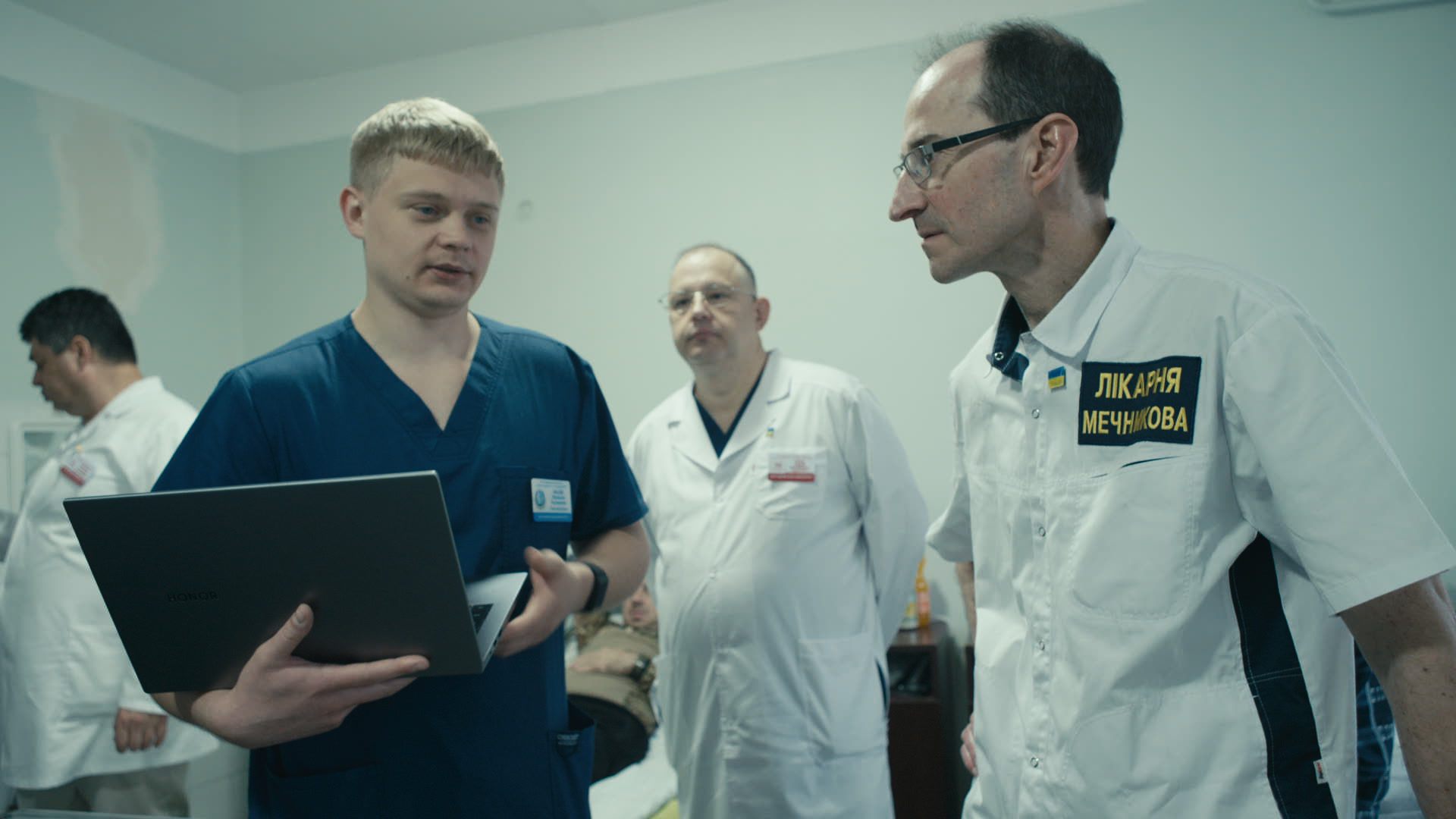
Speaker 1
00:00:00 exactly know that he won't get better.
Speaker 2
00:00:00 exactly know that he won't get better. Yeah, yeah. He needs an operation. We hope it will be better after we remove the compression of this nerve,
Speaker 1
00:00:12 but we couldn't expect what we get, what we receive after surgery.
Speaker 3
00:00:18 And we discussed the situation.
Speaker 1
00:00:00 exactly know that he won't get better.
Speaker 2
00:00:00 exactly know that he won't get better. Yeah, yeah. He needs an operation. We hope it will be better after we remove the compression of this nerve,
Speaker 1
00:00:12 but we couldn't expect what we get, what we receive after surgery.
Speaker 3
00:00:18 And we discussed the situation.
Speaker 1
00:00:35 [RUS] We operated on this patient yesterday, with this skin defect. [RUS] We can see this on the monitor, on our monitor.
Speaker 3
00:00:53 [RUS] - Defect from... [RUS] - From... due to trauma.
00:01:00 [RUS] - Civilian people...
00:01:02 [UKR] - Mine blast. [UKR] - Mine blast.
Speaker 1
00:01:04 [RUS] - Civilian people... [RUS] - Civilian people... [RUS] - Together with the warriors.
00:01:41 [RUS-NEEDS] Это упал, да?
00:01:43 [RUS] He fell, right? [RUS] A fall? [RUS] Well, tell me honestly
Speaker 3
00:01:51 [RUS] Well, alcohol [RUS] Good, got attached [RUS] Good, got attached
00:02:04 Male Speaker:
Speaker 1
00:02:10 Male Speaker: Male Speaker: Alex, the soldiers with severe diagnosis -- It's a brain tumor, epidermoid cyst, large, with compression, transversal sinuses, and inclusion transversal sinuses. It is a slow performance surgery, total removal, resolve all function. Well done. Yes. Yes? Yes.
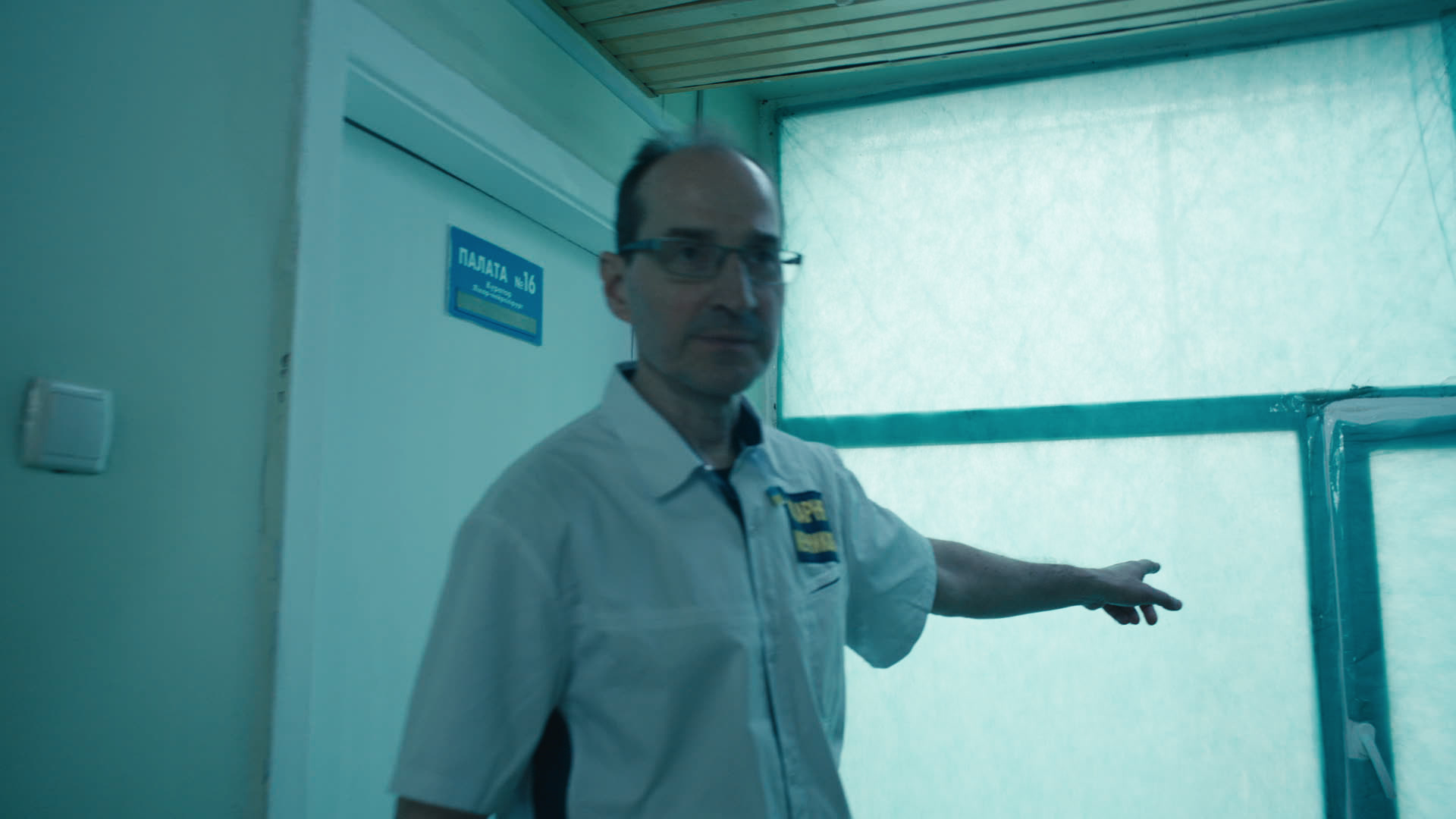
Speaker 1
00:00:00 From a blast a while ago, they haven't gotten around
00:00:00 From a blast a while ago, they haven't gotten around repairing this part of the hospital yet. They'll get there eventually.
Speaker 2
00:00:32 [RUS] Vadym, deck
00:00:39 - Civilian war time. - So civilian war time. - He worked on the tractor and during this work, his work, FPV drone, fall down and explosion. It's a.
Speaker 1
00:00:00 From a blast a while ago, they haven't gotten around
00:00:00 From a blast a while ago, they haven't gotten around repairing this part of the hospital yet. They'll get there eventually.
Speaker 2
00:00:32 [RUS] Vadym, deck
00:00:39 - Civilian war time. - So civilian war time. - He worked on the tractor and during this work, his work, FPV drone, fall down and explosion. It's a.
Speaker 3
00:01:02 [RUS] What place is this? [RUS] This place is Syreivka, Pokrovsk direction.
00:01:09 [UKR] Pokrovsk region and this is the front line.
Speaker 4
00:01:13 [RUS] Now I'll show you. [RUS] Turn it up. [RUS] Now I'll show you the glasses.
Speaker 2
00:01:24 [RUS] From the front line it's one kilometer.
Speaker 3
00:01:29 [UKR] Can you say it like that?
00:01:30 [RUS] Wait, wait, wait, wait, where do I select here?
Speaker 2
00:01:45 [UKR] This is what my excavator looked like after.
Speaker 3
00:01:49 [UKR] I was here and working on this tractor.
Speaker 2
00:01:56 [RUS] If I had stayed in the cabin, I would've been Cargo 200, but I managed to jump out. [VO CANDIDATE] [RUS] He had just enough time to get away from it and escape.
Speaker 3
00:02:12 [RUS] - He heard it coming? [RUS] Yes, yes. [RUS] - And further in the video, what's that? [RUS] - That's the evacuation. [RUS] - Evacuation, right? [RUS] Evacuation, this isn't involvement.
Speaker 2
00:02:54 [UKR] I don't remember what happened [UKR] Multiple contusions, abdominal, pelvic cavities, renal, small fragment.
Speaker 5
00:03:34 [UKR] And on the head he has closed injuries.
00:03:37 [RUS] There's a grazing brain wound.
Speaker 6
00:04:22 [RUS-NEEDS] Мы, конечно, повернемся сюда.
Speaker 2
00:04:32 [RUS] We'll definitely come back here.
00:04:34 The Press: The Press: Every day. The Press: We talked about this example of war crime against civilian people. The Press: Civilian people who walk in the field and drone, the PV drones, it's like to kill The Press: Civilian people who walk in the field and drone, the PV drones, it's like to kill The Press: Not a military target. The Press: Not a military target. The Press: Not a military. The Press: Not a military. The Press: Not a military. It's civilian people. It's a war crime.
00:05:28 [RUS] This is a place for military personnel.
00:05:35 [UKR] And you can see many photographs on this wall. [UKR] These photographs were drawn by our Ukrainian children. [UKR] They wrote to our defenders. [UKR] This is on the... [UKR] "For which I thank you very much. I really hope everything will be fine soon and we'll live in a peaceful country again." [VO CANDIDATE] [UKR] "Remember that you are truly a brave person. I wish for you to return home soon, to your family." [VO CANDIDATE]
00:06:24 [UKR] "I believe in you. Remember everything and then everything will be fine."
Speaker 5
00:06:30 [UKR] "Not everyone is able to defend the homeland, so you are a true hero. Thank you and your brothers-in-arms for your protection. We believe in you. Glory to Ukraine!" [VO CANDIDATE]
00:06:59 Yeah. Yeah, I know you are.
Speaker 2
00:07:10 What are we doing?
Speaker 4
00:07:21 On Wednesday we'll be, this patient will be What is the surgery?
Speaker 2
00:08:25 [RUS] - This is the skull. [RUS] These are two main directions.
Speaker 4
00:08:59 [UKR] And also Kyiv.
00:09:02 [RUS] Kyiv. [RUS] Today. [RUS] Today. [RUS] Today. [RUS] But next week there will be a conference in Venice and Dnipro.
Speaker 1
00:09:28 Grazie. You always in there? Where's Andre? The Andre's in Jacques.
Speaker 2
00:10:34 [RUS] - The patient was operated on in 1985 because she had a schwannoma.
00:10:51 operated 40 years ago by my teacher professor professor McCulloch Masechuk 40 years 40 years ago I told you she was 13 years old she was 13 years old when he had she had first operation but now it's
00:11:56 [RUS-NEEDS] На цей день.
00:11:58 [UKR] For today. [UKR] Next. [UKR] Prokopiv, radiation therapy [UKR] and chemotherapy [UKR] Radiotherapy. [UKR] Next. [UKR] Who is presenting you? [UKR] And who was assigned to this ward first?
00:12:25 [RUS] I'll be right there.
Speaker 5
00:12:32 [RUS] Oleksandr Anatoliyovych, you present after Nikita Oleksandrovych, continue. [RUS] This is the splenic one. Is the disc satisfactory?
00:13:01 Yes.
Speaker 7
00:13:03 [UKR] Yes, exactly.
00:13:06 [RUS] Angiography? [RUS] Yes, that's not it.
Speaker 2
00:13:14 [RUS] I can't.
Speaker 7
00:13:18 [RUS] Do you have CT, MRI discs?
Speaker 5
00:13:21 No.
00:13:22 [RUS] Yes, I don't think so.
Speaker 7
00:13:25 I want to give you a few. The station is huge. Where is the digital? Oh, yeah. I'll take you this.
00:14:14 but we have... but we have...
Speaker 8
00:14:23 - Can you show the tuber blush again? - Go back. - Yeah, yeah.
Speaker 1
00:14:30 - In English.
Speaker 2
00:14:34 - It's called a tuber blush. - I don't need to name.
00:14:40 [RUS] I have many similarly severe patients. [RUS] You keep calling.
00:14:48 [UKR] I have 100 such patients.
00:14:51 [RUS] I'm also busy right now. [RUS] You called once, twice. [RUS] What do you want to say? [RUS] What do you want to say now? [RUS] Tell me. [RUS] I'm waiting for blood. [RUS] I'm waiting for blood. [RUS] Sergei Anatoliyovych and I examined him. [RUS] We're waiting for blood, we're waiting for platelet concentrate. [RUS] Please stop calling. [RUS] Just bring the platelet concentrate, that would be the best help. [RUS] That would be the best help you can give today. [RUS] Let's go, let's go, let's go. [RUS] It's squeaking. [RUS] Since 6 in the morning. [RUS] Me too.
Speaker 8
00:15:30 [RUS] We would ask you to get up, but no need. [RUS] In 2004. [RUS] In 2004.
Speaker 2
00:15:35 Yes. Yes.
00:15:36 [UKR] 21 years ago, this was the first surgery.
00:15:41 [RUS] That was 40 years ago, this was 21 years ago, and the latest one. [RUS] I'll see, I told your daughter that the surgery will be tomorrow or midweek. [RUS] This week. [RUS] We'll decide, because the surgery is such that it takes 4, 5, 6, maybe 7 hours.
00:16:00 [RUS] So, you show. [RUS] Well, of course you'll be sleeping now. [RUS] The main thing is that Rostislav and I are well-rested.
00:16:10 [UKR] For surgeons, this is hard work. [UKR] But for you, it's not hard. [UKR] Understood? [UKR] The professor came specially from America so we could operate on you together. [UKR] And he also needs to sleep well, because if he doesn't rest, he won't have the strength. [UKR] And we'll see how we finish the day today. [UKR] If he's still alive, we'll wear him out.
Speaker 6
00:16:33 [UKR] Continue presenting.
00:16:37 [RUS] Dodoladova. [RUS] Today is the last day.
Speaker 2
00:16:39 [UKR] Radiation and Dmitry.
00:16:40 [RUS] Good, and this is a handsome guy. [RUS] Sit down, but curly-haired. [RUS] He's responsible for you. [RUS] Nikita Golidin has transferred you to him. [RUS] Thank you. [RUS] You're ready and all set. [RUS] Vadim, can you help? [RUS] Girls, everything is warm. [RUS] I generally think that we still [RUS] walk on the floor.
00:16:59 Can we give you back?
00:17:03 [RUS] - Are you preparing Iron Man? Are you preparing Iron Man?
00:17:32 We perform angiography, transfer of sinus was occluded. We perform surgery together with... - It occluded right there. - Yeah, here's normal side. - Yeah, from his side to this side, totally... - So, I just wanna show. - No. - No. - I'm calling V. V. V. V. V. V. V. V. V. V. V. V. V
00:18:02 [RUS] This is it. [RUS] And this is asterisk. How do you draw an arrow? [RUS] Asterisk is a star. [RUS] - Arrow. - Arrow. [RUS] Arrow. Arrow show. [RUS] - Labbe. - Vein of Labbe, yes. [RUS] I said, anastomotic vein. [RUS] Labbe. Labbe. Labbe anastomotic vein. [RUS] Asterisk – Labbe vein. [RUS] This is the collateral vessels, [RUS] Everything good? [RUS] Yushchenko is the president.
00:18:47 [RUS] Ex-president. [RUS] Complicated surgery, and Vadim also invited [RUS] to shave, to do the haircut.
Speaker 4
00:18:57 [UKR] If the haircut is not good, Vadim is to blame.
00:19:01 [RUS] We won't be done during surgery. [RUS] Bandage.
Speaker 2
00:19:07 [RUS] Don't shave too much.
00:19:09 [UKR] And the incision is in a completely different place.
00:19:12 [RUS] Next.
00:19:13 [UKR] Good, good. [UKR] Good, good. [UKR] Good, good. [UKR] Gamma knife surgery [UKR] now radiating.
Speaker 4
00:19:22 [RUS] Okay.
00:19:28 [UKR] She's undergoing a course with us, as I understand, [UKR] rehabilitation, right?
Speaker 2
00:19:37 [RUS] Already removed. [RUS] - You have no hidden camera. [RUS] - Understood? [RUS] - Smile.
Speaker 5
00:20:07 [RUS] Good afternoon! [RUS] There's a valve, disconnected, disconnected, the second one, no shunt, no anything,
Speaker 2
00:20:44 [RUS] no better option, but then she's 80 years old.
Speaker 5
00:20:51 [UKR] - Need to discuss with the relatives and maybe move him to a different queue.
Speaker 2
00:20:56 [RUS] - There are defects there, in these places, and in these places, and in these places,
Speaker 5
00:21:04 [RUS] - I'm saying, remove it there, and if it gets worse, if hydrocephalus increases, then put a new shunt on the other side.
Speaker 2
00:21:12 [RUS] - I won't object, but the parents say she won't tolerate the anesthesia, but they don't know that...
Speaker 6
00:21:21 [RUS] - He writes that there was rounds, that during rounds we decided to remove the old shunt, and on the other, opposite side, put a new shunt if it gets worse.
00:21:57 The pain will not
Speaker 5
00:22:04 When was your surgery? When? Tuesday. On Tuesday last week we perform. We perform.
Speaker 2
00:22:28 [UKR] We're now arriving at this block, this is Anastasia, who could tell you. [UKR] We go to the doctors' room, write out the approximate surgical schedule. [UKR] After that I make coffee with milk. [UKR] Alex and I sit in my office, consulting patients. [UKR] You can have some coffee, tea. I've prepared some coffee, cups. I'll show you where we have coffee, tea. [UKR] You can drink, then come back to film how we consult, and gradually I'll introduce Mykhailo, he'll be preparing you for observing the surgeries. [UKR] That's the plan. Good afternoon.
00:23:39 Thank you.
Speaker 5
00:23:42 [RUS] We decided that we decided that we performed mostly
00:24:12 [UKR] She completed the full course of radiation and chemotherapy. [UKR] Then she developed seizures in the right limbs, we did an MRI, [UKR] unfortunately, there's a lesion on the left side.
00:24:30 [UKR] We recorded it, well, nothing helped.
Speaker 3
00:24:35 [UKR] Left side relapse? [UKR] Left side relapse.
00:24:38 [RUS] And now on the right side. [RUS] Yes, recorded. [RUS] Scheduled for MRI, at fifty.
Speaker 5
00:24:47 [RUS] - But they refused, because there's titanium.
Speaker 2
00:24:51 [RUS] - Yes, we can't do that. [RUS] - Well, nothing to say, at least do a 1.5 Tesla scan then. [RUS] - 1.5 Tesla or maybe with contrast then. [RUS] - Yes, if... [RUS] - There, MRI with contrast, they won't do it.
00:25:24 [RUS-NEEDS] Сети контроль, вы можете показать.
00:25:33 [RUS] CT scan control, can you show it. [RUS] Artem, light switch please. [RUS] We're like children of the underground here.
00:25:49 Rostislav, total resection. Rostislav, total resection.
00:25:53 [RUS] 6 days post-surgery. [RUS] 6 days post-surgery.
00:25:57 Yes.
00:25:58 [UKR] Going home, Mykhailo.
Speaker 5
00:26:00 She feels very well and would like go to home.
Speaker 2
00:26:07 Tower, not today, it's raining outside.
Speaker 8
00:26:10 [RUS] The daughter is waiting at home, like me, a professor, going somewhere home. [RUS] And it's raining since morning, it's okay. Home is better.
Speaker 2
00:26:18 [RUS] Get well, take care. [RUS] Home. [RUS] Artem, move aside. [RUS] Are you serious, there's so much here.
00:26:26 [UKR] It's visible there, it's visible.
00:26:28 [RUS] Thank you. [RUS] And what about the discharge cases, you understand?
00:26:36 Yes?
00:26:40 [RUS] Oh, how good. [RUS] How good that our experiment [RUS] is nearing resolution. [RUS] Good afternoon! [RUS] Ira, who is presenting?
00:27:05 Yes.
00:27:35 [RUS] A month ago, right? [RUS] Well, the seventh. [RUS] Well, the seventh.
00:27:39 [UKR] Didn't align quite well, but it's okay.
00:27:41 [RUS] Healed well.
00:27:45 [UKR] Giant tumor, fourth ventricle, ependymoma.
Speaker 4
00:27:47 [RUS] Surgery. [RUS] He'll have neuropathy. [RUS] Ulnar nerve surgery performed. [RUS] Right with left. [RUS] On the left. [RUS] Waiting for transfer for further rehabilitation.
Speaker 2
00:27:59 [RUS] Nerve, ulnar compression. [RUS] Vadim's surgery. [RUS] Here. [RUS] Right here in the canal.
00:28:06 Yes. Yes. Yes.
00:28:09 [RUS] Cubital tunnel. [RUS] Guyon's. [RUS] Guyon's.
00:28:13 [UKR] Do you like it?
00:28:14 Yes.
00:28:16 [RUS] Chernenko. [RUS] Chernenko. [RUS] Now. [RUS] We'll operate, Pedro Moises. [RUS] Pedro Moises. [RUS] Pedro Moises. [RUS] Again, first time in the same surgery.
00:28:30 2011?
00:28:34 [RUS] First time this patient was operated on in 2010,
00:28:40 [UKR] with a large epidermoid cyst, extending to the ventricular system, [UKR] and due to this recurrence with hydrocephalus we operated on the shunt.
Speaker 3
00:28:51 [UKR] When did we operate? Two-three months ago.
Speaker 2
00:28:55 [UKR] Two months ago.
00:28:57 [RUS] everything was fine, he was discharged, had COVID.
Speaker 5
00:29:00 [RUS] Ah, my first time.
Speaker 2
00:29:04 [RUS] It was my first attempt. [RUS] Tested positive for coronavirus, after that, hydrocephalus, [RUS] after that, Rostislav did ventriculoperitoneal shunt.
Speaker 7
00:29:14 [RUS] But we now think that this, [RUS] because, this is the second, [RUS] that this, that
Speaker 2
00:29:27 [RUS] Non-separation. [RUS] We think it's not working, [RUS] that there may be a defect
Speaker 7
00:29:57 [RUS] - It's not working well, but we have to... [RUS] - Yes, we just need to
00:30:34 Another one? Yeah, very big and very complicated loading. And we will put the patient before surgery because we think that it is very big.
Speaker 2
00:31:06 After our removing, it can be a very big demo of brainstem. You can see here this force ventricle is compressed, totally compressed with star hydrocephalus.
Speaker 1
00:31:21 That's why in order to improve. There's a cap around it though, that's a good sign. Yeah, that's a good sign. CSF space. In this side, yes, but in other places now.
Speaker 2
00:31:34 In other places you can see this hyperdense intensive signal from the brain stem in T2.
Speaker 5
00:31:43 [RUS] These are also symptoms, but this is a good sign. [RUS] This is the surgical code. Meningioma, skull base, cavernous sinus, operated.
00:32:00 [RUS] 70% - is this partial resection? - Yes.
Speaker 2
00:32:04 [RUS] Partial resection of meningioma with subsequent radiation therapy. [RUS] Oleksandr, this is staging with the oncologists for the meningioma. [RUS] Total resection variant.
Speaker 1
00:32:29 [RUS] More
00:32:42 So, something worth pointing out is that in the United States, all our hospitals have electronic medical record system. So from my phone right now, I can log in my hospital, pull up images and orders. They have to do that manually through telegram. So they create a huge group chat where they type up notes in Word, upload them, and they upload videos of all the images. So it looks like it works pretty well, but it's not a real PAC system like we have. Obviously, another thing is that we're seeing a very heavily tumor-oriented, skull-based-oriented civilian practice.
Speaker 5
00:33:12 That's because of Andre's specialty. He gets referrals for all these really difficult cases.
Speaker 1
00:33:16 And all those people we've walked past outside his office, they're all waiting for him? Yeah. Consultations.
Speaker 2
00:33:42 [RUS] Vadim
Speaker 7
00:34:18 [RUS] - What tumor [RUS] Everything okay?
Speaker 2
00:34:30 [RUS] It will get better. [RUS] Georgiy, epidermoid [RUS] Suprasellar region to cerebellopontine region
00:34:44 All nerves from 3 to 12 years were involved in this tumor. And after surgery also coronavirus disease, hydrocephalus, a lot of complications. But now it's slower, slower recovery.
00:35:13 [RUS] - Soldier with shrapnel
00:35:34 All neurosurgeons in my department have the possibility to perform surgery. You can see Vadim, two multi-formal glioblastoma, Rastislav, several complexiators, Alexander performed. That's why our wounded people get the best treatment in the world, because for them, the
Speaker 1
00:35:57 operation perform very experienced neurosurgeon who could work on the illumination and the microscope knows very well neuroanatomy yes and have a tissue hand like yes well they learn from you the way you do it
Speaker 7
00:36:13 [RUS] Yes, yes, yes. [RUS] Corrector. [RUS] He destroyed
Speaker 2
00:37:15 brain foci is maybe metastasis. Alexandre performed surgery, removed large foci in the
Speaker 1
00:37:24 vermis cerebellum and after that patient had a surgery, maybe due to the CT control of the surgery.
Speaker 7
00:37:42 Looks very good.
00:38:13 [RUS] We worked very well together. [RUS] King-BG
00:38:42 the digital movement and now he has radiation therapy. That's good. And because of the drama, I was at the great... Good. Let's go. Or a typical... A typical... Great street. Great street.
00:39:00 First up, maybe... What is... Is it a portable hard drive? Is it a portable hard drive? It is... Like extra... Yeah. Extra memory. And where do you have... And where do you have... I have all my patients... The information is on your computer. I save for my... For your presentations. Yeah.
Speaker 1
00:39:33 Andres.
Speaker 5
00:39:37 [RUS-NEEDS] Я тебе напишу в телеграмме, хорошо?
Speaker 2
00:40:06 [RUS] I'll message you on Telegram, okay? [RUS] Write tomorrow, Chernenko goes first.
00:40:42 So this is the operation? Yes, maybe for the inventory. I know a person.
00:40:50 [RUS] Serkov, Volodko, Malyi. [RUS] So, the second will be this soldier, if he's broken. [RUS] We'll try to start early in the morning with Chernenko.
Speaker 5
00:41:14 [RUS] And after that we'll start. [RUS] Daik, last name.
Speaker 2
00:41:39 [UKR] Thank you.
00:41:47 [RUS] Sarchuk. [RUS] They'll go through the maxillary sinus with an endoscope, [RUS] and a fragment flew in from below and is now causing compression of the optic nerve. [RUS] Sharp decline in vision. [RUS] After the injury it was fine, and then around there, probably scar tissue started forming,
Speaker 4
00:42:10 [RUS] and started pressing on...
Speaker 5
00:42:14 [RUS] - Endoscopically you'll be able to break it down? [RUS] - We'll drill through the lower wall of the orbit. [RUS] - And it should fall down here. [RUS] - And there you'll see, I'll show you.
Speaker 2
00:42:26 [RUS] There's an entry hole there. [RUS] They'll find the hole where it entered. [RUS] Need to open it more with a curette, than hook
Speaker 4
00:42:37 [RUS] and extract this fragment here. [RUS] - Ah, not with the endoscope, they'll do it endoscopically? [RUS] but he'll create access to the holes, so it's in the maxillary sinus, [RUS] and with the endoscope he'll go in and look on the screen. [RUS] He'll do the viewing. [RUS] Written? [RUS] For Wednesday write Teslenko then, she'll be alone, [RUS] large parasagittal, this meningioma on both sides.
Speaker 2
00:42:59 [RUS] Then write Serkova, Latko, Malyi and Fidera. [RUS] There'll be enough work for everyone. [RUS] Okay? [RUS] Where did we lose Nastya?
Speaker 5
00:43:18 [RUS] Varya from Nastya, Anastasia is cooking.
Speaker 2
00:43:26 [UKR] Can we take Kormynsky for Thursday?
Speaker 4
00:43:44 [RUS] okay write Kornetsky [RUS] can we skip the nerve [RUS] from Ihor's side [RUS] until this is [RUS] Thursday or Friday [RUS] I'll tell you exactly [RUS] first day the nerve goes [RUS] short [RUS] short [RUS] They were shooting down Shaheds, he has a bullet, they were fishing in boats and it just went through.
Speaker 2
00:44:06 [RUS] Radial nerve among me.
Speaker 4
00:44:08 Yes. Yes.
00:44:11 [RUS] They were fishing with Isenko Igor Valeryevych somewhere on a boat on the lake. [RUS] They were shooting down Shaheds, uninvited, and a bullet ricocheted and hit him right in the arm.
Speaker 2
00:44:29 [RUS] Radial median, two nerves.
Speaker 4
00:44:32 [UKR] Second last name is Kamilsky Marchenko.
00:44:35 [RUS] And Halinashko? [RUS] Whose? [RUS] Let's see now. I'll give you one day, either Thursday or Friday entirely with Anatoliyovych. [RUS] I'll know by the second. [RUS] What's the last name? [RUS] Second one. Haletsky. [RUS] Haletsky. [RUS] Haletsky. Whose? [RUS] Northern Bortikov [RUS] Write the word
Speaker 5
00:45:01 [UKR] Saint Serhiy Petrovych
00:45:02 [RUS] 22nd assignment [RUS] Well, need to test [RUS] We have one now, this Samoshonkova [RUS] And what about no? [RUS] Multifocal glioblastoma [RUS] Operated on left, now right [RUS] And somewhere down there write Samoshonkov too
Speaker 2
00:45:19 [RUS] Well also, in the 22nd there's Shun, this Petro Klyvai [RUS] another joker came
Speaker 4
00:45:36 [RUS] but he's recovering this one
00:45:39 [UKR] Ah, it seems, whoever came, whoever you recognize. [UKR] Someone, come on, chest, leave it, in a day or two, having been discharged. [UKR] Well, the tests came back, everything's normal. [UKR] There was no COVID.
00:45:52 [RUS] Haletsky. [RUS] Why?
00:45:56 [UKR] And on Wednesday maybe I'll take two military nerves, if it went substituted and I'll praise.
00:46:02 [RUS] Well, running, on Wednesday, two nerves,
Speaker 2
00:46:06 [UKR] The guys came in too.
00:46:18 [RUS] - Let's then, conditionally, swap Haletsky for Thursday,
Speaker 5
00:46:23 [RUS] and these 2 soldiers, Vladimir and Aleksandrov, for Friday, arrows are just placed here. [RUS] - Yes, Haletsky for 4th, instead of VOKO. [RUS] We have Korotky and Kordynsky scheduled.
00:46:34 Oh, it's cute. Oh, it's like this. Oh, it's like this. And like that.
Speaker 2
00:46:48 It's so clear that there wasn't any other way. Maybe.
Speaker 1
00:46:57 So, this is very important, you guys. Listen up.
00:47:00 Wonderful. Yeah. We all have different mugs, so don't drink the water from the faucets. There's pumping stations and stuff. Everybody has water coolers in there, so we've got to find a way to tell them apart.
Speaker 5
00:47:14 Put her name or something underneath. Talk it's for you. Oh, this is... It's beautiful.
Speaker 1
00:47:27 The best cup you ever gave me, Andre, was the... The best cup you ever gave me was from what the soldiers at Snake Island told in Moskva on February 22nd. "Rush to worship, go ask yourself." Very popular mug if I read that to others. I would like to show you one cabinet, one room here.
Speaker 4
00:47:55 [RUS] Laura, Logan, Tebi
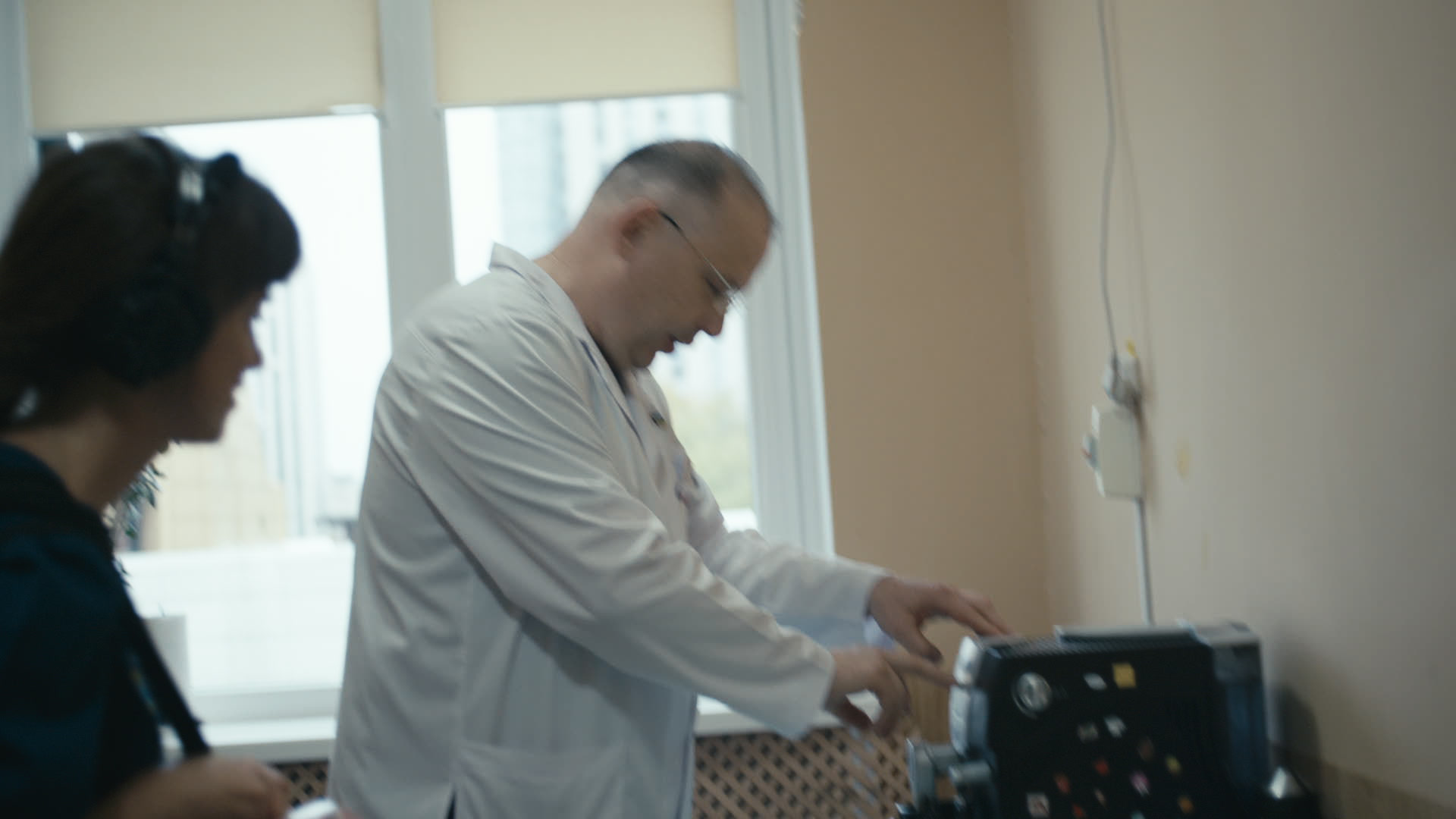
Speaker
00:00:00 - Yeah.
Speaker
00:00:00 You can see here, here is a place for doctors,
Speaker
00:00:00 - Full energy.
Speaker 1
00:00:00 You have a cargen of the sight.
Speaker 2
00:00:00 You have a cargen of the sight. Yes, I am in the Ukrainian. Good. You have a lower view. Yes. I can see one eye. Do you see it? No, I can't see it. No, I can see it. No, I can see it. That's not the chair.
Speaker 1
00:00:18 There you go, chair, chair. Chair, chair, you ask. Chair, chair, you ask. It's a not stable enough. Change the Chair. There you get that, yeah.
Speaker 3
00:00:30 You step out of here. You have to get it. Okay.
Speaker 1
00:00:00 You have a cargen of the sight.
Speaker 2
00:00:00 You have a cargen of the sight. Yes, I am in the Ukrainian. Good. You have a lower view. Yes. I can see one eye. Do you see it? No, I can't see it. No, I can see it. No, I can see it. That's not the chair.
Speaker 1
00:00:18 There you go, chair, chair. Chair, chair, you ask. Chair, chair, you ask. It's a not stable enough. Change the Chair. There you get that, yeah.
Speaker 3
00:00:30 You step out of here. You have to get it. Okay.
Speaker 2
00:00:37 Sorry guys. Sorry guys.
Speaker 4
00:00:47 I'm gonna just put that under the roof of the roof. Land on your ass. Okay. Hang on one sec. - Hold it. - Hold it.
Speaker 1
00:01:25 Now there are too many people in here. Very warm. Very warm.
Speaker 2
00:01:30 I've been here for a week, on this campus. On which campus? Where the eyes are... I'm uploading a CT to see the progress here.
Speaker 4
00:01:42 So patients come with discs. He puts them onto his hard drive. And we're waiting for it to burn from the CD to the hard drive. There's no centralized system. I think we should talk about this. Am I on camera right now over there? I was on camera. I'm talking to you or something? Talking to someone off camera? Probably, you just talked over here, right?
Speaker 3
00:02:12 Towards the back camera. Sure, yeah. I mean, I can sit a little farther if you want. Okay. What we're doing right now is all the patients show up with a CD, a compact disc, and then
Speaker 4
00:02:23 Andre takes that and copies it to his hard drive. And we can see the progress of that while we're waiting to see the images. So Andre will have a record of it on his hard drive when he backs it up here. But then you just eject the CD and give it to the patient. So the patient goes to see other doctors, they take the CD with them and all their paper records. Gotcha. So we're almost uploaded. No. You are wrong. You are wrong. It's a CD is empty.
Speaker 1
00:02:54 Unfortunately, I will ask my resident to repeat, repeat, record it. No.
00:03:00 Yeah. So what is all this here? No, no. It's right to find information. Okay. Oh, so I guess it's gonna time out. He's busy, come in, you cheaply to me
Speaker 4
00:03:31 Yes.
Speaker 1
00:03:43 I'm standing looking - They recorded an empty disc for me. - Empty disc? - Empty disc, yes. Empty disc. I'll ask my assistants to record a disc for you now. Come in. Mikhail said it will be punished. Look here, the patient had an MRI done, but the disc is empty. Do you know Shulgina? Shulgina Kristina, who works on the MRI,
00:04:34 tell her to urgently record the disc. The professor is sitting with the American professor, waiting for him to record it. now Artyom and now just a second yes like test 3 tests there should be Sinolis Anastasia the Sinolis company call Anastasia Spasena is there or not wait in the corridor while they bring you the disc and I'll chat meanwhile okay let her stay here let's quickly run to record it we'll call you okay because if I don't see your disc, it will be bad.
Speaker 5
00:05:28 Come in, you'll go down in history. How interesting everything is here. Come in, have a seat. This is Dmitry, he's the head of our project. Wipe, have a seat. We'll go down in history. You'll go down in history. Why not? History is important. Let's remind.
00:06:00 There it lies. There it is on top.
Speaker 1
00:06:08 Do you mind if you're recorded and shown on American television in 2-3 years?
Speaker 6
00:06:13 -Totally for. -Totally for. -For I play. -Totally insanely.
Speaker 3
00:06:21 -Totally the camera topic, where I will. -We won't talk about bonuses, about everything else.
Speaker 5
00:06:29 -We'll be there quietly. Only for military, free installations.
Speaker 1
00:06:33 -Military aid. -What are they called? -Cranial defects. -They're customized, yes, called? -Individual, didn't lead here. - The titanium. - The individual prepare titanium mesh for cranioplastic for soldiers is free. - It's Free? - Oh really? - Yes, that's good. - It's free for all soldiers. - Okay. Approximately, we planted nets, and we formed
00:07:39 Hands, Lambrosa, their company. Why do I know, because my doctor Vadim will and operated on this patient. When it was necessary to operate, to save, and they were busy. And when she started to recover, already possible and they put a shunt, and ordered such a plate. That's why I know. We now have a plate, there are also more report plans, we can do, if this is more interesting for you, more classic. people yeah yeah a lot what uh what is the price in the u.s uh very expensive yeah very expensive
Speaker 3
00:08:27 for us yes yeah how much maybe maybe 15 000
Speaker 4
00:08:43 If you keep the other... You can see Alan better. In fact, our hospital complains about that when we do this. I think 2,000 for company and 30,000 for you. They pay for my trips to Ukraine. No, yes.
Speaker 1
00:09:07 This implant costs 2,000 euro. In the US it's 15,000 euro. Quite a bit. Stand and stand. Stand to your credit card. Yes. Good bonus. Are you from Kyiv? Yes, I'm from Usvitoy hospital. Colleague traumatologist. Nothing. Dmitry is from Kyiv. I'm from Kharkiv. Bardanovich Anastasia. I even remember, I'm making a business card.
Speaker 4
00:09:41 Don't you have such a nice business card?
Speaker 1
00:10:06 So, is the patient here for cranioplasty? Yeah, it's a representative of this firm. Oh, I see. A representative company and talked about this product, about how we can help our soldiers
Speaker 4
00:10:29 and how much does it cost for ordinary patients. Yeah, and you would try to cover this as pericranium too, when you put it in? Yeah. If there is pericranium there? Yes, that's good. It's very likely.
Speaker 5
00:10:48 Powder Canada. Titanium powder is made in Canada. Titanium is produced from Canada.
Speaker 1
00:11:00 I believe 51 countries. - But Canada is the second place, which is located in
Speaker 5
00:11:35 We'll work. Only the Americans will go.
Speaker 1
00:11:40 If anything, we can print for the Americans too. On the shore. If you want, you can prepare and create in Ukraine and send to Ukraine. The company is registered with us. 50% rent to me and 50% to you.
Speaker 5
00:12:01 - Can I also get a couple percent for cleanliness?
Speaker 1
00:12:05 - No, it will be approximately. Alex has been coming to us very often, this is already his fourth visit.
Speaker 6
00:12:13 So, now we're waiting for when they finish the military operation. Will we put the final plate on him? - No, important parameter. - I ask in Kishe. Let's go. After all, next visit we might be able to print something there. A big one, massive, so that for the arrival it's interesting. Try to install. I think our implant will fit much better than what they do for them in the States.
Speaker 1
00:12:47 Can we talk? Can we talk? Let's time it, the next visit will be in February, his colleague from Washington will come, somewhere Siro Carmonda. They're preaching to preserve one patient, one patient, with a large defect, skull defect, and then make and create this titanium plate. and we perform the ceremony in
00:13:44 In 2004, there was still Conmet, Megamet in Donetsk, Ryzhin, I won't get up there, but we started the first individual titanium plates in Ukraine to install and they requested our cases and such a large A4 format brochure wrote out our cases specifically on individual titanium plates, that was 20 years ago, in 2005
Speaker 6
00:14:09 the brochure came out. So we've installed the most of them in Ukraine, these titanium plates. Our innovation on the side is that usually they print them on a printer, but we mill them. That is, they're monolithic, solid, they're not porous. And I think that in the States there may be small ones, but there are no large milled ones. There aren't. I think that large milled ones - that's our thing.
Speaker 1
00:14:37 - Yes, I think it's a good idea, I'll just show that we operate and publish behind the Americans. This is their world-famous journal, journal of Neurosurgery. And this is our illustration in our article. Went on the cover. Alex ahead of everyone. We're even in general, this has never been in the world. This is the journal Neurosurgery. August. Twenty-five. Very fresh. And in this issue two of our articles, one after another.
Speaker 3
00:15:29 That is, in such a cool journal we have two of our articles at once.
Speaker 4
00:15:34 That one, yes, that's the one. I'll bring you extracts from these two. I have more in my bag. I'll show you in front of the journalists. They can film. I think I brought another copy of these journals, in order to share with our journalists. Good afternoon, I won't. - Good afternoon.
Speaker 1
00:15:56 Goodbye. - Goodbye. - Periodically I remind about the beast. I remembered when I heard that our colleagues from the neighboring department, they mainly treat strokes, but my doctor did decompressive craniectomy, [VO CANDIDATE] saved a life, and when the cherry came on the cake,
Speaker 5
00:16:16 then they took the cake for themselves. - Okay, the cake will come to you too, everything will be fine. - I'm not worried, I'm for that my doctors too...
Speaker 1
00:16:27 Thank you. - You saw, you ate while you were with us. - Dmitry, I don't know, how are you. Dmitry. Hello!
Speaker 3
00:16:43 Can I get my chair and change that? Do you want to move that chair so that it's--yeah, one of the suitcases? Yeah.
Speaker 1
00:00:00 [UKR] - Are you going to the operating room?
00:00:00 [UKR] - Are you going to the operating room? [UKR] Of course, mom. [UKR] Thank you, thank you.
00:00:05 [RUS] - Sister? [RUS] - Let it be.
Speaker 2
00:00:11 [UKR] - Your eyebrows and eyelashes are done much more, so you look older.
Speaker 1
00:00:00 [UKR] - Are you going to the operating room?
00:00:00 [UKR] - Are you going to the operating room? [UKR] Of course, mom. [UKR] Thank you, thank you.
00:00:05 [RUS] - Sister? [RUS] - Let it be.
Speaker 2
00:00:11 [UKR] - Your eyebrows and eyelashes are done much more, so you look older.
Speaker 1
00:00:20 [UKR] - You have a 16-year difference.
00:00:24 - 16?
00:00:25 [UKR] Do you mind if American colleagues film, maybe in a year or two there will be a documentary shown in America.
Speaker 2
00:00:32 [UKR] How we consult with our American professor. [UKR] They'll make a movie, good, let them see it in a couple of years. [UKR] Why are you scaring me like that? [UKR] I'm not breaking news, Zoya referred me to you. [UKR] You said I needed surgical intervention.
Speaker 3
00:00:48 [UKR] This is a high-risk one, I think of our films.
Speaker 1
00:00:50 [RUS] Oh, oh, oh, oh, oh, oh, oh, oh, oh, oh, oh, oh
Speaker 2
00:01:02 [RUS] Are you in Zaporizhzhia? - Yes. [RUS] - How did this appear? - It appeared about two years ago, maybe a year and a half, my right hand started... [RUS] - Is there a call-up? - Chumak. [RUS] - Chumak. - It started shaking, I went to a clinic in Bodlytsia. They told me it was just pinched nerves, because we... [RUS] - Where did you go? - To Bodniansk.
00:01:23 [UKR] I went to the clinic, they just told me it was a pinched nerve and to take vitamins.
00:01:30 [UKR] Well, it didn't go away, literally, I thought, okay, it's pinched, so it's pinched. [UKR] I thought, well, nothing scary. [UKR] And literally around the 10th of this month, my right hand started failing me. [UKR] I immediately consulted in the city, they scheduled me for an MRI, and some other tests too. [UKR] Some kind of thing you did to me. [UKR] And when they did the MRI, my doctor immediately called and said I have a tumor. [VO CANDIDATE] [UKR] I started calling everyone, asking what to do next. [UKR] My friend, she was Zorina, she also had surgery.
Speaker 1
00:02:06 [UKR] I sent her all my tests, and she gave me another doctor's name, Vaska.
Speaker 2
00:02:33 [UKR] - After, now
00:02:41 [RUS] He also called, he didn't say decoration. [RUS] He said he could do it for me in two weeks, because he sees it's growing into a new area.
Speaker 1
00:02:52 [RUS] Were you sick, or tell me, I'll give you two weeks now.
Speaker 2
00:03:03 [RUS] Did he upload here? [RUS] Uploaded, well no. [RUS] Well, did he upload here or not? [RUS] No, no, I only sent him the conclusion and sent a photo. [RUS] And that's it, and he told me I need surgery, that most likely it's time to be hospitalized.
00:03:19 [UKR] After such surgery...
00:03:21 [RUS] He said it's benign in my case. [RUS] Yes, yes, he said it's benign in my case. [RUS] He said that most likely it's time to be hospitalized.
00:03:30 [RUS] So, yes. [RUS] - I'll put my arm in front of me. [RUS] - I'll say what moves, he can
Speaker 1
00:04:04 [RUS] - He told me that I might have slowed speech, that I might have right side issues, that it's all connected. [RUS] - Tremor, and... [RUS] ...weakness in the right hand. [RUS] ...weakness and... [RUS] ...impairment... [RUS] ...speech, right? [RUS] - No, can't be. [RUS] - Ah, but now there's weakness in the right hand. [RUS] - Did this happen suddenly? [RUS] - No, did it appear suddenly or gradually?
Speaker 2
00:04:36 [RUS] - No, gradually. [RUS] - It's somewhat ready. [RUS] - Yes, it was just shaking. [RUS] I could just spill something, but I could do everything. [RUS] And then, well, I don't know, gradually it started getting heavy, [RUS] and I started having trouble pressing things, [RUS] cutting with a knife, it became harder and harder for me, [RUS] and I can't grip with five fingers, but each day it's worse.
Speaker 1
00:04:58 [RUS] But I can say it didn't hurt, and then I said directly "but".
00:05:28 Do you have a headache?
Speaker 2
00:05:30 Do you have a headache? Yes, but not a part. I have a blood. It could be a disease. It could be a disease. It's just a weak body. What should you say? I told you about the bleeding from the nose. It's a pistachis. But it's not... depends on this. No, no, it's different.
00:05:57 [RUS] - I have headaches, but I don't know, my head hurts every day.
Speaker 1
00:06:04 [RUS] - Periodically? - Periodically, yes. [RUS] - Something, as I see it, it's not just numbness. [RUS] - It happens when my blood pressure is elevated.
Speaker 2
00:06:12 [RUS] - And now? - Well, after that it was still 156 over 111.
Speaker 1
00:06:18 Then I got a circle, Maybe surgery. I think it's need to perform surgery. I would like to see in the axel coronal and the sagittal view.
00:07:23 How would you approach this? I need to 3D-dimensional video because, for example, in this case you can go through the silverfish maybe. This is maybe through the sword ventricle here.
00:07:43 [UKR] from this, I need to do it on my screen. [UKR] Two minutes left
Speaker 2
00:10:27 [RUS] And vision? [RUS] I took it well, quietly, now we'll go through to [RUS] yes and the patient wants to get to you [RUS] maybe at
Speaker 3
00:11:11 [RUS] Good.
Speaker 1
00:11:58 Yeah, it must be...
00:12:47 [RUS] I think in this situation the best approach
00:12:49 it's sub-temporal, the sub-temporal approach. Sub-temporal approach. You can see this one. Maybe you can remove the inferior gyrus. It's almost like a hippocampus resection. Yes, resection. Going up higher. Yeah, because if you go from the this part you can see this uh optic nose and after that high asthma and after that optic radiation goes here according to i want one more
00:13:36 this one she noticed any visual field problems oh yes you can see here
00:13:45 [UKR] Vision is normal, right? Focus on the left eye. [UKR] Look, first of all, this is indeed a congenital pathology, it's a cavernous angioma, [UKR] and it's accompanied by gradual bleeding.
00:14:00 [UKR] That is, small hemorrhages, worse, worse, its volume keeps increasing.
Speaker 2
00:14:05 [UKR] Secondly, surgery is really needed, because these hemorrhages can become larger over time.
Speaker 1
00:14:14 [RUS] What consequences could there be from this surgery? [RUS] Now, wait, don't rush.
00:14:19 [UKR] Congenital repeated hemorrhages, surgery is needed.
00:14:22 [RUS] Before surgery, angiography must be performed in any case. [RUS] What is that? [RUS] It's an invasive study of the vessels. [RUS] We look at how the arteries go to it, [RUS] whether they supply blood or not, [RUS] how other arteries pass nearby. [RUS] Now wait. [RUS] The left side is responsible for movement in the right extremities and for speech. [RUS] If it's a tumor, the tumor is operated on in our department. [RUS] If it's vascular pathology, as in your case, that's the domain of vascular neurosurgery.
Speaker 2
00:15:00 [UKR] If Ilya Yevheniyovych takes your surgery, if he takes it, he's not rushed, he can operate on you.
Speaker 1
00:15:11 [RUS] Okay, I've already had three weeks, nothing will change. [RUS] If he looks carefully at the MRI and says no, then we'll take you.
Speaker 2
00:15:22 [RUS] We have an agreement that we operate on tumors, they operate on vascular pathologies, we don't take each other's patients.
00:15:29 [UKR] I called the doctor's office, I told him you recommended him, he said you wouldn't interfere, [UKR] because you're not doing that, if you already say so, then you'll take me. [UKR] He said I'll take you, this week you need to call me, just ask him what tests to take,
Speaker 1
00:15:46 [UKR] and then I'll come, examine and operate immediately, he hasn't seen the video.
00:15:51 [RUS] - In any case, I operate in this zone, and Plyushchev, and Ilya Yevheniyovych operates. [RUS] I only operate on tumors, and he operates on vascular pathology. [RUS] If he says no, then come to me, and we'll talk then. [RUS] But we call it correctly, "Ethics and deontology." [RUS] We don't poach patients because these are complex things, [RUS] and we have a distribution, and there are two specialized departments.
00:16:20 [UKR] That's why I know, he has results, he operates.
Speaker 2
00:16:27 [UKR] And specifically from that department he's performed the most such interventions.
Speaker 1
00:16:32 [UKR] Did you want to be present there? [UKR] - That's asking too much. [UKR] I can't split myself into a thousand little bears. [UKR] - He understands that he can... [UKR] His operating room is next to mine. [UKR] One door away is his operating room. [UKR] If needed, he calls, he can summon me. [UKR] I can even come to his operating room during surgery. [UKR] So call him, get your tests done, get hospitalized.
00:17:00 [UKR] And in any case, every morning we hold operational meetings. [UKR] And once again on our big screen, [UKR] - She's going to be admitted to us. [UKR] - It's called angiography. [UKR] And it's standard.
00:17:30 [UKR] - So, when she comes for hospitalization, right? [UKR] - Yes. In any case, he performs this examination for you.
Speaker 4
00:17:37 [UKR] - Tell me, and then what could it be? [UKR] He didn't say what complications could occur, right?

Speaker
00:00:00 (Transcript content available)

Speaker
00:00:00 - Okay, I will take that.
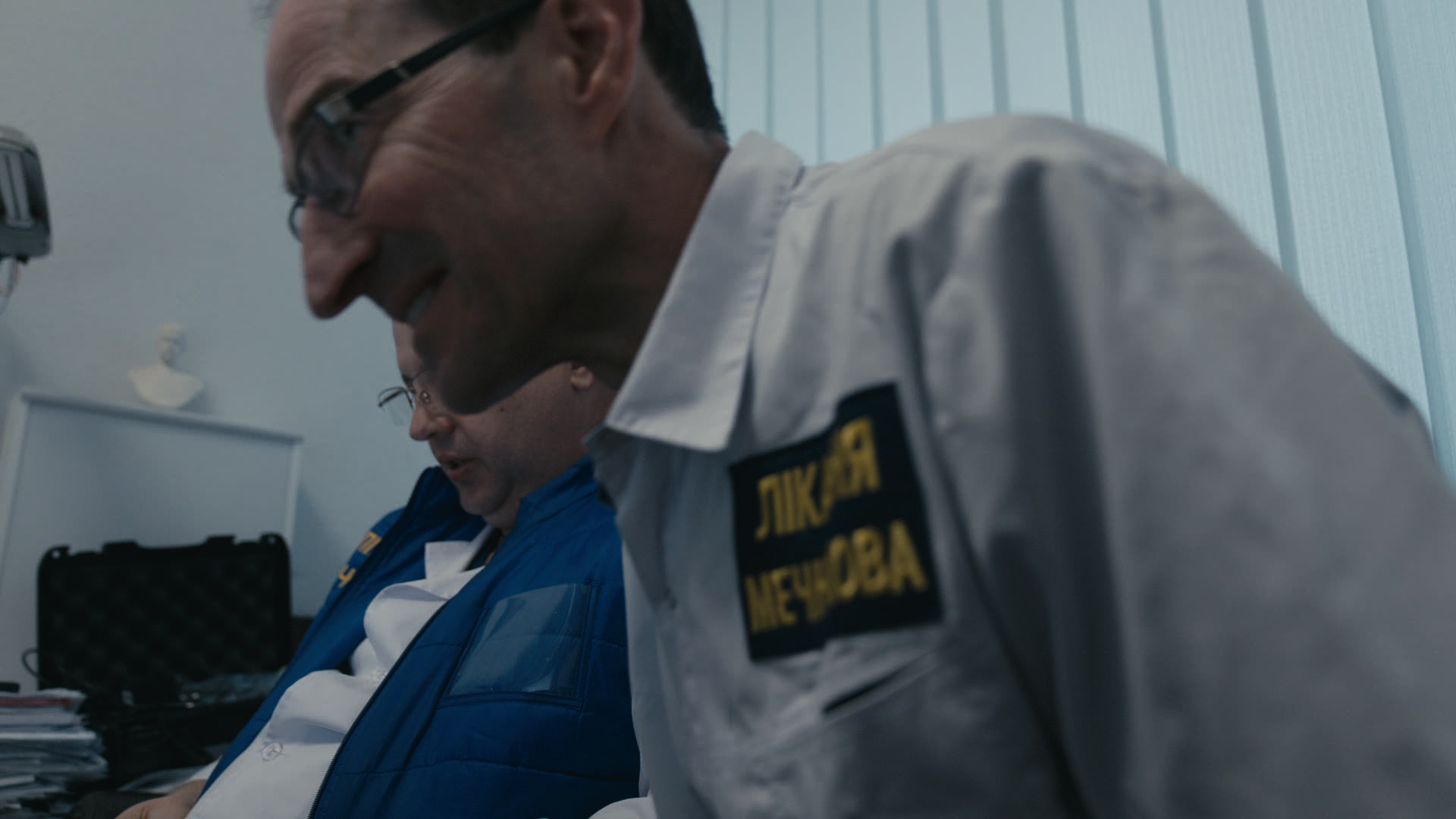
Speaker 1
00:00:00 to prevention?
00:00:00 to prevention? Yes. Is this. Now, if you have written, then you have written. Now, if you have written, then you have written. Now it works.
Speaker 2
00:00:18 Laura, I just figured out, I think one of the large pairs of scrubs was supposed to be mine.
Speaker 3
00:00:24 But was there, there were no mediums though, right? No, two largest. I think that maybe they didn't get one for Anastasia.
Speaker 1
00:00:00 to prevention?
00:00:00 to prevention? Yes. Is this. Now, if you have written, then you have written. Now, if you have written, then you have written. Now it works.
Speaker 2
00:00:18 Laura, I just figured out, I think one of the large pairs of scrubs was supposed to be mine.
Speaker 3
00:00:24 But was there, there were no mediums though, right? No, two largest. I think that maybe they didn't get one for Anastasia.
Speaker 4
00:00:30 They didn't get what? They didn't get one for Anastasia. Did we tell them to get some for her? Did we tell them to get some for her?
Speaker 2
00:00:37 What size is it? What size is it? L. So I think maybe they thought she was going to be large, or they just did it for safety. So I think maybe they thought she was going to be large, or they just did it for safety.
Speaker 4
00:00:45 Well, I haven't heard of her even yet, so... I mean, I'm doing okay. Yeah, you're fine. I'll show you this green, is this side of the room? I mean, I'm... we'll be very good, we
Speaker 1
00:01:24 - Not falling, not falling, everything's normal, just frostbitten.
Speaker 5
00:01:29 And what about the hormones? What did the hormones show? - Nothing like that there. What's there? - Not nice, not nice.
Speaker 2
00:01:48 - This, probably, it's a cipher.
Speaker 1
00:02:00 [UKR-NEEDS] Дивіться тут потрібно робити операцію?
00:02:25 Look here, do we need to do surgery? You open your eyes so wide
Speaker 5
00:02:32 Without surgery? Without some medication maybe
Speaker 1
00:02:38 This is already like awesome - And you're far, Rostislav? 22, good job. You know where you need to be.
Speaker 2
00:03:13 And come home for a second.
Speaker 1
00:03:37 So, I see. Zhenechka came from Kryvyi Rih. Pituitary adenoma with infrasuprasellar growth. Hormones are all normal. That is, hormones are inactive for now. And seem to be based on normal. Check what I'm saying. I'm proposing surgery to her, if she agrees, then on November 10th through the nose. [VO CANDIDATE] If she wants to wait until she loses vision, that's her right. But it seems to me that there's no need to wait long here.
00:04:24 - We'll judge faster now, they calculated the whole team for 12 people there. We have 6 and you have 6. - Okay? - We'll judge now, and then you'll judge and we'll gather in the operating room.
Speaker 5
00:04:42 - Right now there... - You said that pituitary adenoma with infra-suprasellar growth.
Speaker 1
00:04:48 Pupils explained. Surgery and hospitalization prepared for 10.10. - Thank you. - Thank you. - Thank you. - Thank you. - Thank you. - You just referred to patient and talked to talk. - I recommend to perform transnesal transphaneudyl approach remove this pituitary adenoma because
Speaker 2
00:05:11 it's hormonal and it's a severe compression, hyasma and optic nerves.
Speaker 1
00:05:24 so will he do the surgery or yeah good for him good but vault control contrast contrast agent well vein something of the year
Speaker 3
00:06:11 one day doing IVs and on the left eye do the same she completely completely can't see very very can't see and but some contours there fingers close the right us how many fingers before they divided him pushed away
Speaker 1
00:06:56 and offspring They sent this patient for me with diagnosis alfactory groove mengeoma, but I think it's not alfactory groove, it's a tuberculose mengeoma. Tuberculose mengeoma with intracellular, retrocellular and lateral paracellular
Speaker 2
00:07:28 roast with compression optic nerves. The medial optic nerve, yeah, that's why he has a temporal field. Yeah.
Speaker 1
00:07:41 Here we need to do surgery, remove this tumor. The tumor is benign, but it's pressing on the optic nerve, and you've gone blind in one eye so far, and then you'll go blind in the second eye. Difficult surgery, but we do such surgeries in our clinic. We give a list for the surgery. You go to the senior nurse with this list. Everything that's from the hospital, she crosses out. Everything that's not, you buy. I'm tentatively writing you down for November 17th.
00:08:45 You consult with relatives, take tests and then on November 17th come to me. November 17th will be Monday. And on Monday come to me. And on Monday come to me.
Speaker 3
00:09:07 Your phone. 099-647-53-57. And did Kulis examine you? Well, just after your consultation, she said you'll pass to me and I'll look at everything. Well, just after your consultation, she said you'll pass to me and I'll look at everything.
Speaker 1
00:09:42 You'll go to the additional care department, where you were, to Debadogin Sergey Egorovich.
Speaker 3
00:09:49 yes and show my conclusion please write
Speaker 1
00:10:00 or which office I'll write one million dollars
00:10:30 in the USA it's more expensive than in our country - You're asking such things. We work in a state hospital. I'm writing so you remember 17, 11, 2025.
Speaker 3
00:11:20 Uh-huh. Uh-huh. And it's mandatory that someone from the relatives be there, so we can talk. Because we do these surgeries almost every day, but no one will say this will be a simple walk, it's a complex surgery.
Speaker 1
00:11:31 And we must say this, all the risks, all possible complications. [VO CANDIDATE] We must tell him, if you don't operate, you'll simply go blind over time. I talked about diagnosis, our treatment tactic and our maybe possible complication and we decided to hospitalization this patient on November of 17th together with relatives. I again talked about this diagnosis, our approach. I am going to perform this surgery. Yes.
Speaker 3
00:12:12 this is the conclusion, and I'm writing to whom to go and show it Yes, alright. - And to senior Mexisis, can I show this, yes?
Speaker 1
00:12:44 - You said, show it. When you go, we will give you...
Speaker
00:00:00 (Transcript content available)
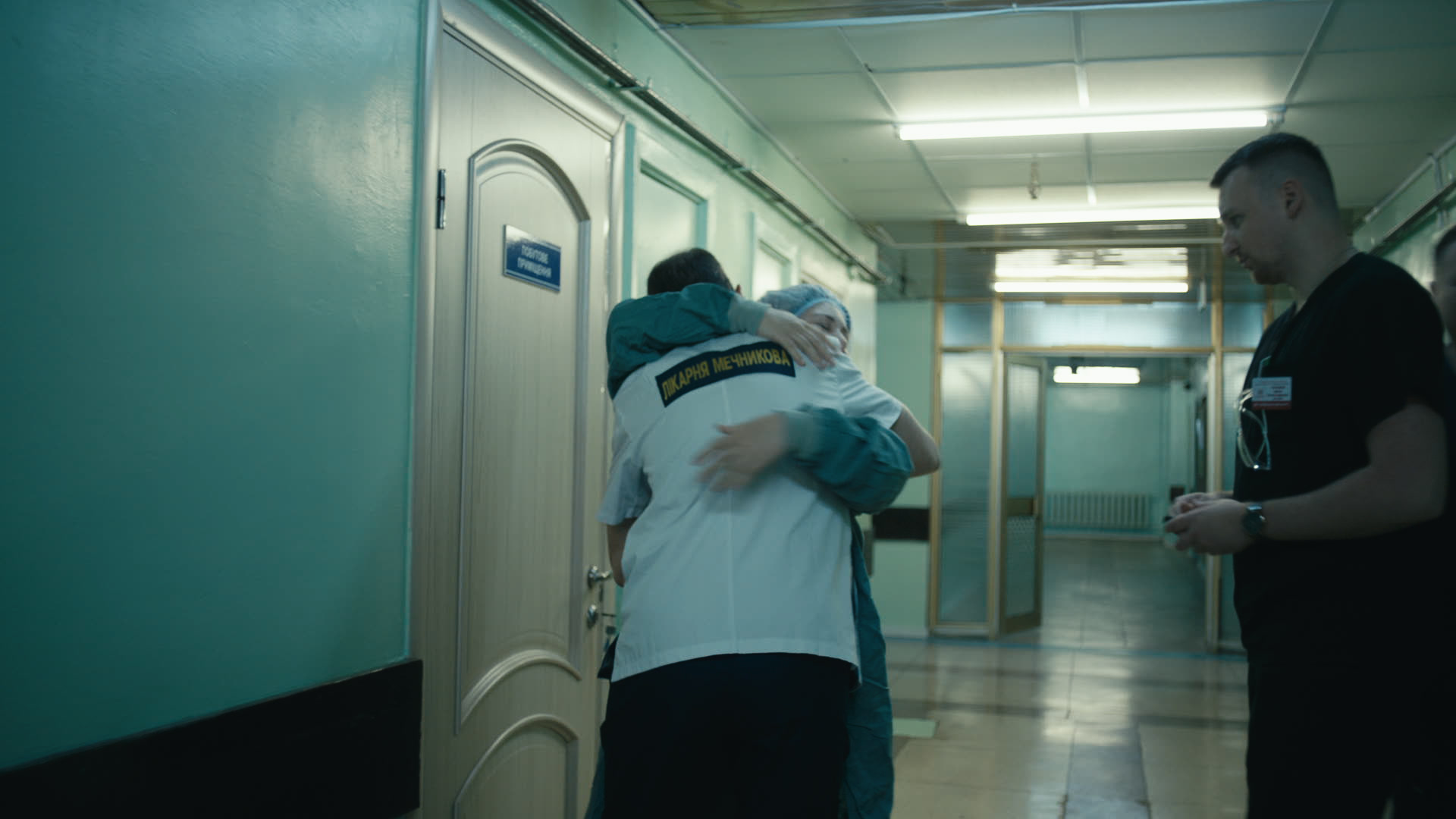
Speaker
00:00:00 (Transcript content available)
Speaker 1
00:00:00 feeling a little constricted.
00:00:00 feeling a little constricted. No, no, no. No, no, no. I was just, if I put it on the wrong way.
Speaker 3
00:00:18 No, no, no, this is good. I was just wondering if I had gone in the back. So do you have a disinfectant? Not yet. - We should probably clean the backpack too,
00:00:30 Laura, if it's going in there. Oh, I thought they did just want to see the patient thing operating room. So we have this camera stand that we will disinfect and bring in the OR. And there's a thing also. Oh, he's wearing it already. If they cleaned it. Yes, the patient can come down now. Yeah. - Alex, do you have your mic? - Yeah, it should be on. - Okay, good.
Speaker
00:00:00 (Transcript content available)
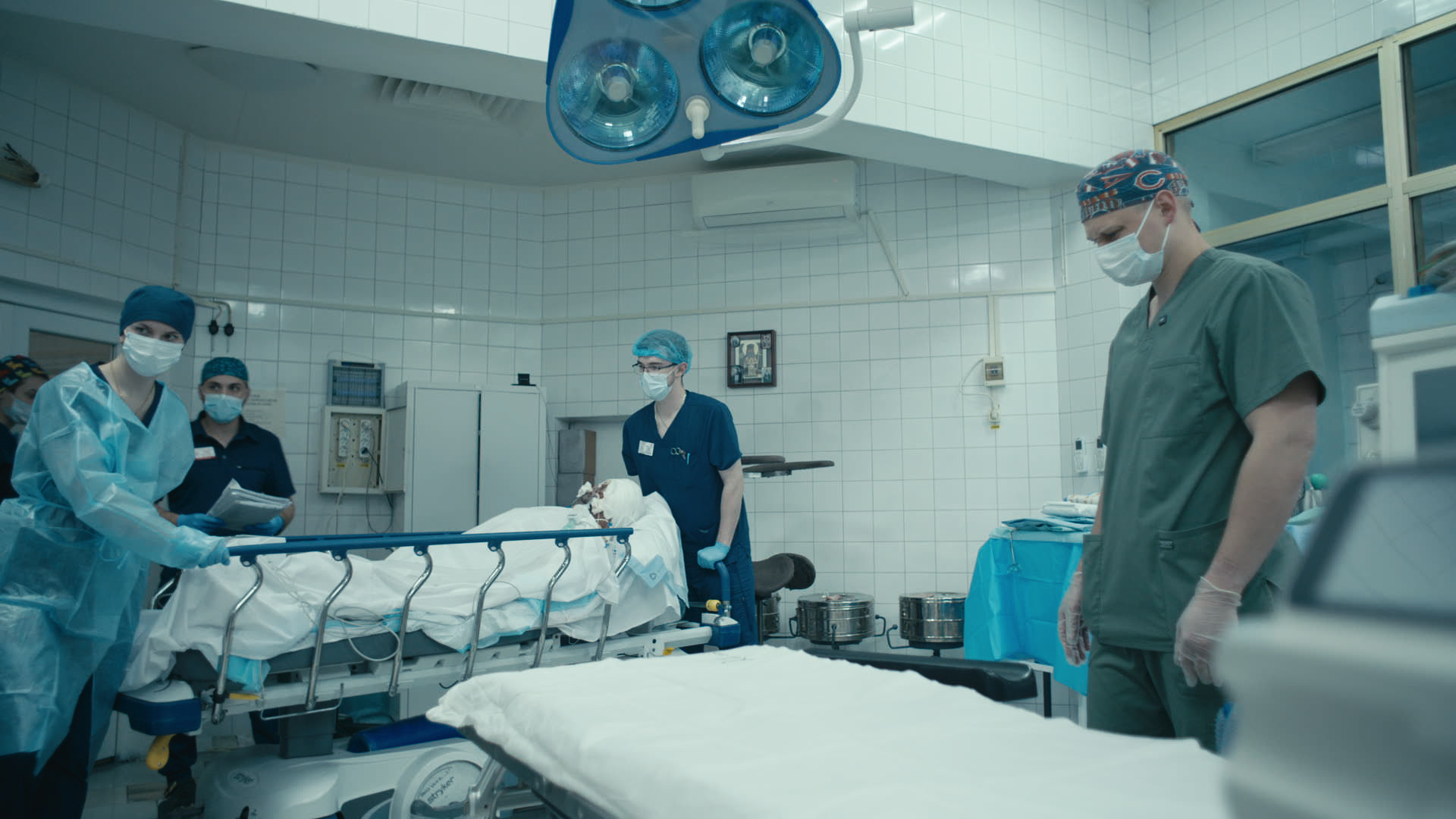
Speaker 1
00:00:00 [RUS-NEEDS] Андрей Геннадьевич, это жильество похоже на наразовую ликварию.
00:00:12 Andrey Gennadievich, this dwelling looks like a nasal CSF leak.
Speaker 2
00:00:31 [RUS] Hard?
Speaker 1
00:00:47 Tough? - Is this right? - There's some kind of tampon on the right. - There are blade tampons there, he has zones standing there. - I don't have tampons on both sides. - Lower?
Speaker 1
00:00:00 [RUS-NEEDS] Андрей Геннадьевич, это жильество похоже на наразовую ликварию.
00:00:12 Andrey Gennadievich, this dwelling looks like a nasal CSF leak.
Speaker 2
00:00:31 [RUS] Hard?
Speaker 1
00:00:47 Tough? - Is this right? - There's some kind of tampon on the right. - There are blade tampons there, he has zones standing there. - I don't have tampons on both sides. - Lower?
Speaker 2
00:01:00 Let's go. - Then, when I believe, I won't. Yes? - Yes, damn it. How so? - Normal? - With a little bit.
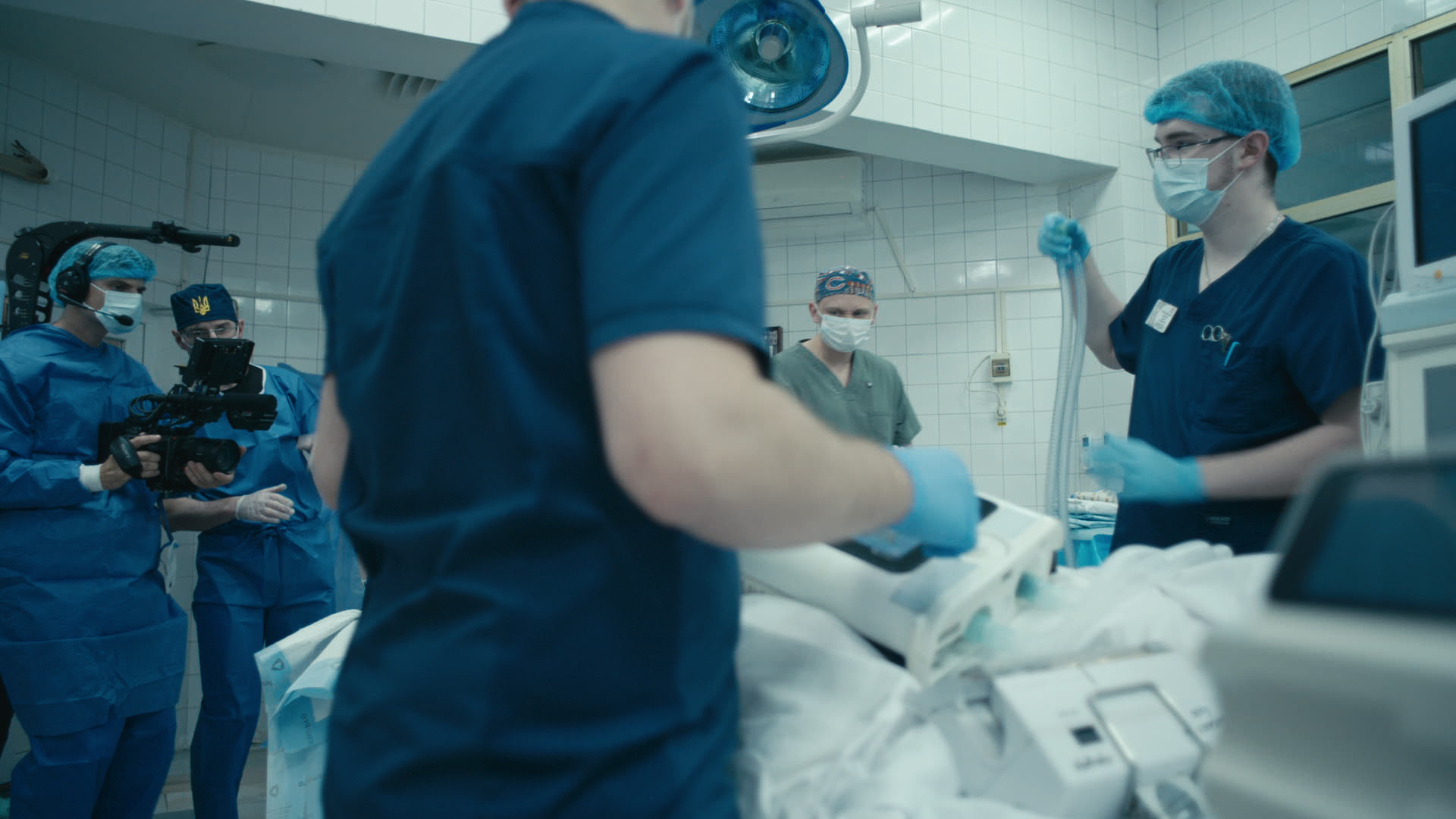
Speaker 1
00:00:00 [RUS] [Subtitles by DimaTorzok]
Speaker 2
00:00:08 Vielen Dank.
Speaker 1
00:00:32 [DELETED - ASR ARTIFACT]
00:01:15 [RUS] Don't press anything, you have live pressure readings here. [RUS] 120, but it drops by 20, down, so it's about the same. [RUS] We can use a perfusor to keep it clean. [RUS] Pure fentanyl, and what if it's half?
Speaker 1
00:00:00 [RUS] [Subtitles by DimaTorzok]
Speaker 2
00:00:08 Vielen Dank.
Speaker 1
00:00:32 [DELETED - ASR ARTIFACT]
00:01:15 [RUS] Don't press anything, you have live pressure readings here. [RUS] 120, but it drops by 20, down, so it's about the same. [RUS] We can use a perfusor to keep it clean. [RUS] Pure fentanyl, and what if it's half?
00:01:37 [UKR] One, one percent.
00:02:09 [RUS-NEEDS] - Это выдох, а вдох?
00:02:21 [RUS] This is exhale, and inhale?
Speaker 3
00:02:25 [RUS] On this machine I had it glitching on them while measuring.
Speaker 1
00:03:24 [RUS] I need to sterilize this one, take this one out.
00:03:29 No?
00:03:31 [RUS] Cooling system [RUS] The whole transparent system, it doesn't need sterilizing, it's disposable, this stays with... [RUS] You need to make sure not to... [RUS] This cable, which... [RUS] This is the flushing solution. [RUS] Yes, it's simple, it's still lying there, it's not a flush, because to fill the system, but you can't disconnect it.
Speaker 3
00:04:07 [RUS] Saturation.
Speaker 1
00:04:33 [RUS] Do you also have 50% oxygen? [RUS] Well, you have 60% [RUS] This found oxygen to draw, you see, at 3 [RUS] Ah, well, not falling, well [RUS] -Consequ
00:05:40 [RUS-NEEDS] Хорошо. Я вам хотелось бы, чтобы вы поставили в межму,
00:05:53 [RUS] Good. I would like you to put it in the inter, [RUS] so that you don't send. [RUS] Because it's removed by experiment. [RUS] Yes, we won't figure it out.
00:06:07 [UKR] Either Diz Petrovich will help.
Speaker 4
00:06:13 [RUS] Liba Diz, if you help, I'll put you on on. [RUS] Or maybe let it be empty there? [RUS] Yes, they're standing there. [RUS] Let them stand there, because they'll constantly be pouring through it.
Speaker 2
00:06:56 [RUS] What's there? [RUS] Let's go from this side.
Speaker 4
00:07:00 [RUS] If the microscope is there, from this side, then I know.
Speaker 3
00:07:08 [RUS] Yes, if there's a bit to the right, a bit to the left.
Speaker 4
00:07:40 [UKR] So interesting.
00:07:47 [RUS] The main thing is to write on the history.
00:07:53 [UKR] Bond preferably should be removed from the nose altogether and put through the sock. [UKR] Can you write that?
Speaker 2
00:08:00 [RUS] With red pencil and stamp.
00:08:58 Thank you. later
00:09:46 We are injecting L-acine epinephrine?
Speaker 4
00:10:02 We are injecting L-acine epinephrine? Yes, yes. Can you explain why you do that? A little high-evin? Not a clean, yeah? Epinephrine. It's a local anesthetic with short and long duration, plus epinephrine.
00:10:57 [RUS-NEEDS] Легко.
00:10:59 [RUS] Easy. [RUS] Did it work?
00:11:34 Yes.
00:11:36 [RUS] A bit higher. [RUS] Is it working? [RUS] It's working. [RUS] By distance, it was quick, good? [RUS] More. [RUS] More.
00:14:46 Thank you.
Speaker 2
00:15:54 Thank you.
00:17:32 Thank you. Thank you.
Speaker 4
00:18:29 [RUS-NEEDS] Смотрите, как пульсирует.
00:18:57 [RUS] Look how it's pulsating.
00:19:09 Kolejna wójta
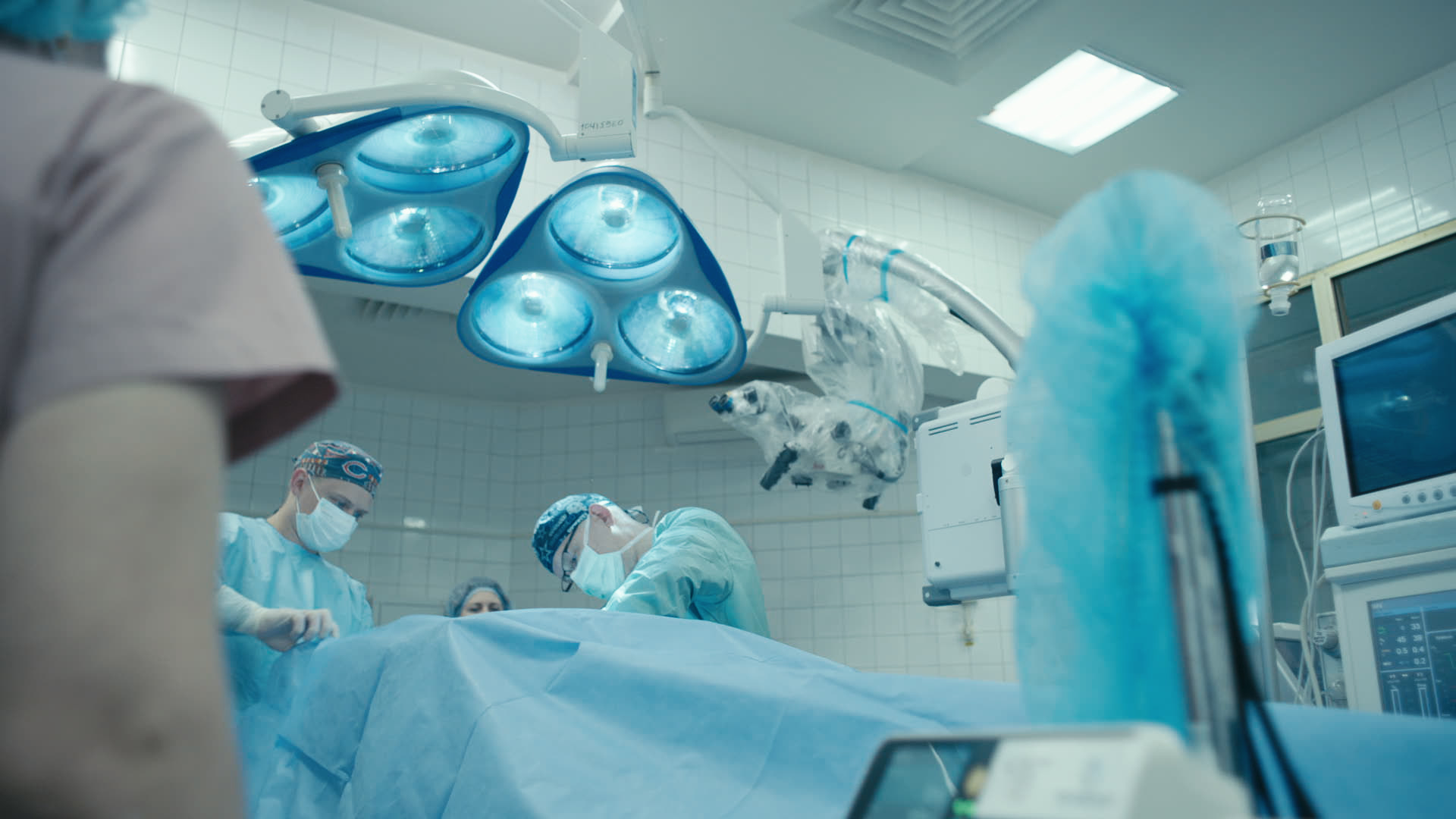
Speaker
00:00:00 (Transcript content available)
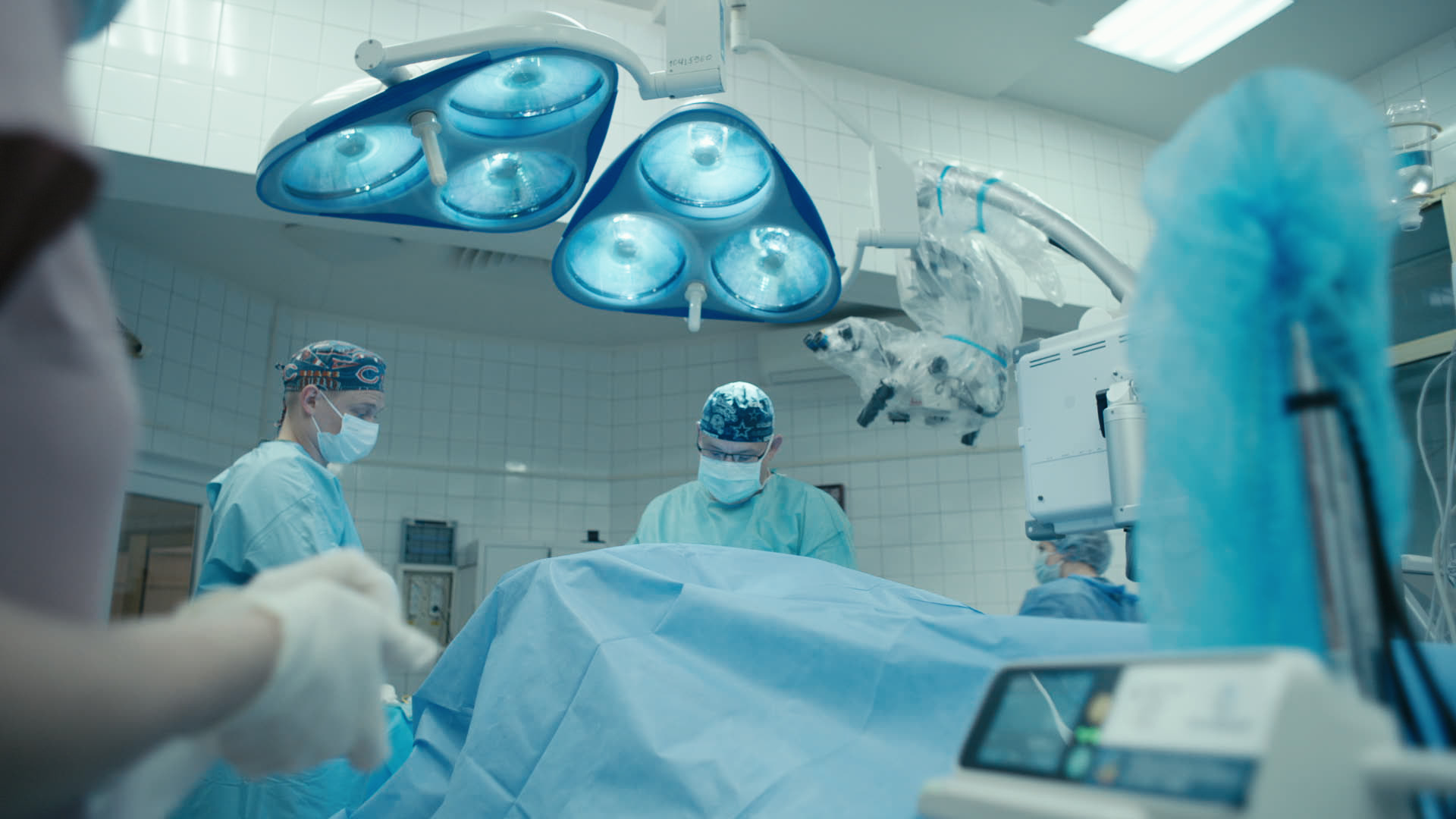
Speaker
00:00:00 (Transcript content available)
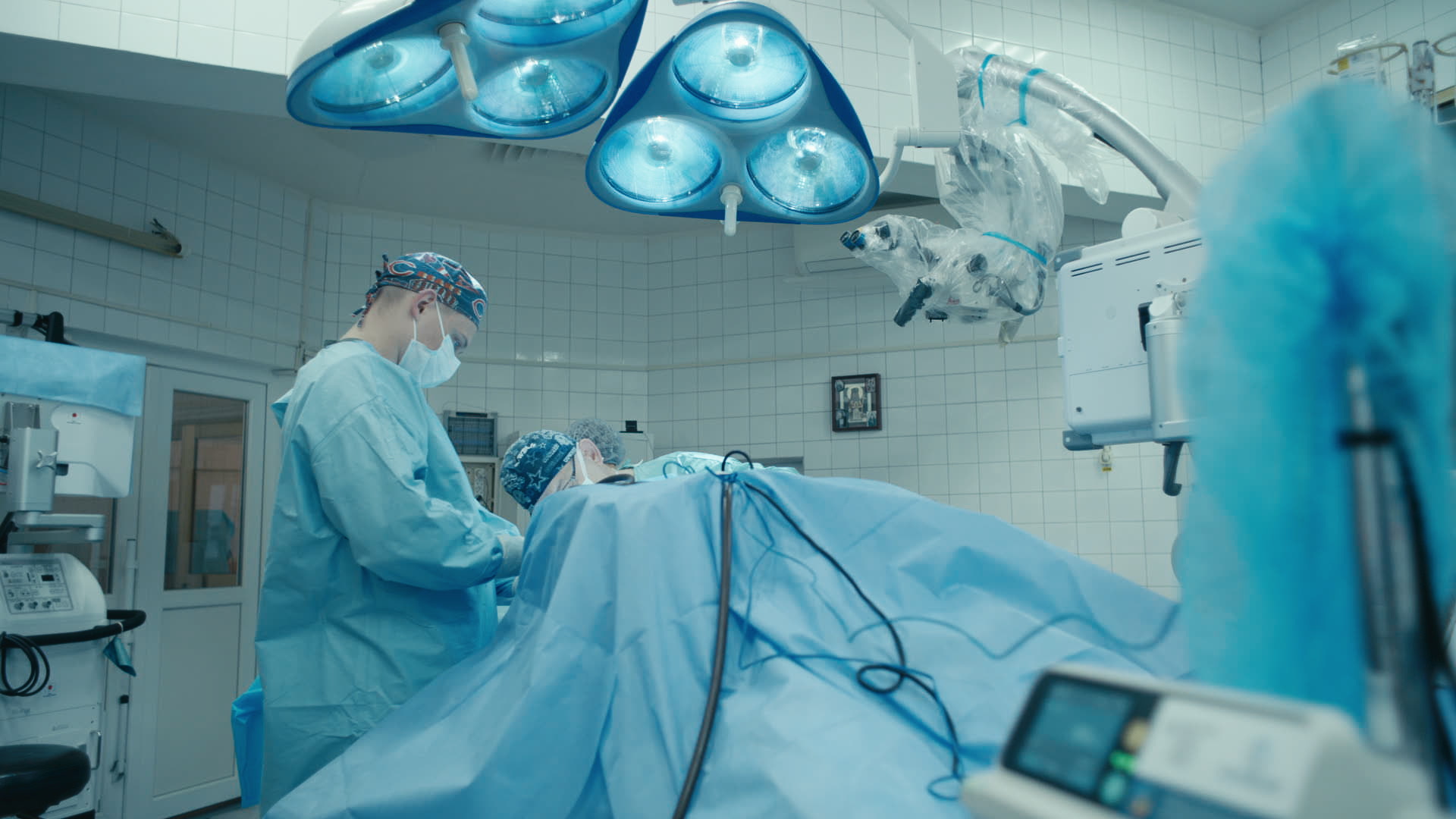
Speaker
00:00:00 (Transcript content available)
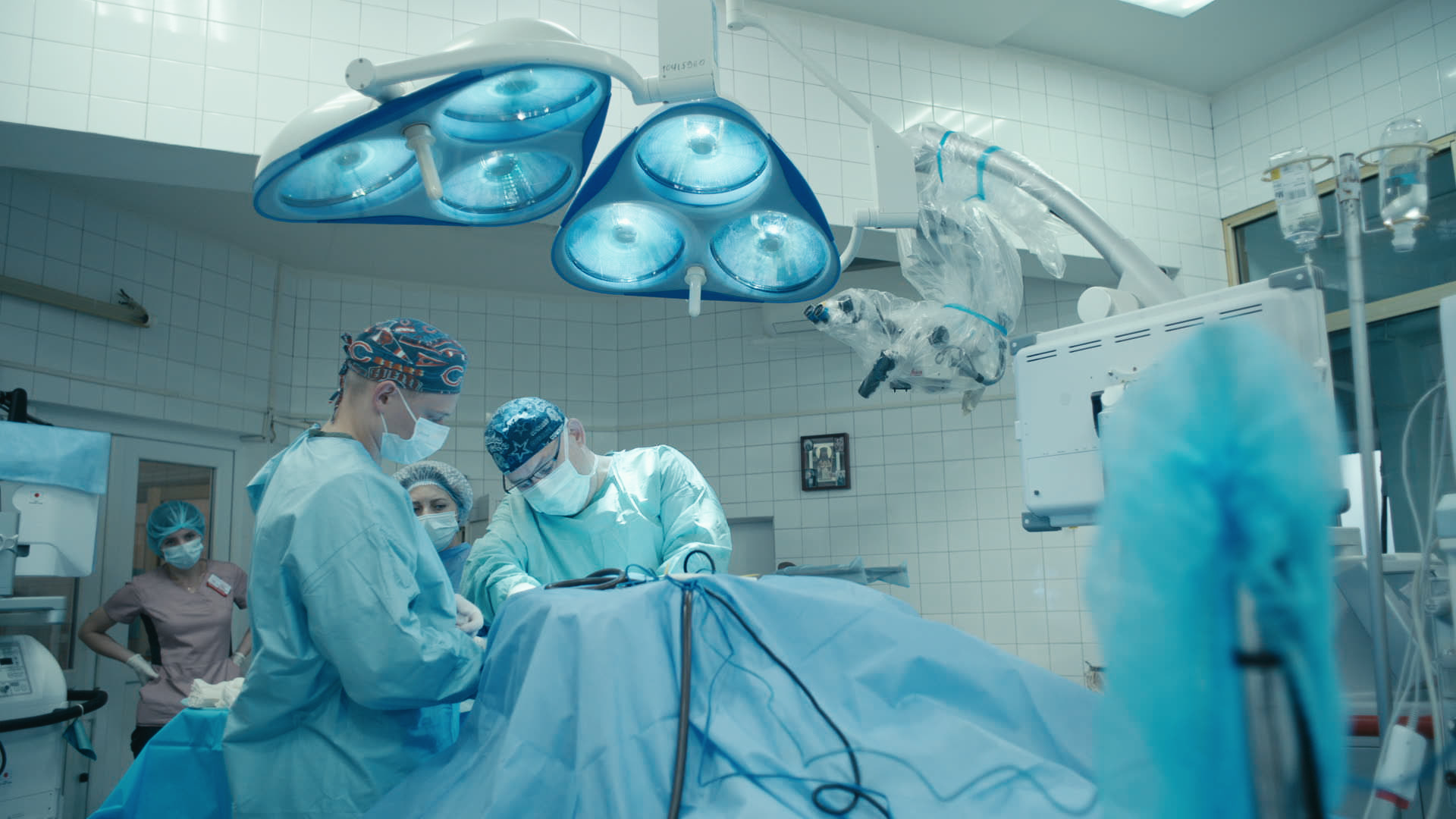
Speaker 1
00:00:58 [RUS-NEEDS] Ну да, вот так.
00:01:00 [RUS] Well yes, like this. [RUS] Here it is. [RUS] Here I am. [RUS] By the way, he passed to you [RUS] The remaining part we will transfer [RUS] for us [RUS] and then we'll sort it out [RUS] and actually [RUS] we will sort out [RUS] with these [RUS] on camera, yes [RUS] I just got here [RUS] on camera
Speaker 2
00:01:40 [RUS] [Subtitles by DimaTorzok]
00:03:09 [RUS] [Subtitles by DimaTorzok]
Speaker 1
00:00:58 [RUS-NEEDS] Ну да, вот так.
00:01:00 [RUS] Well yes, like this. [RUS] Here it is. [RUS] Here I am. [RUS] By the way, he passed to you [RUS] The remaining part we will transfer [RUS] for us [RUS] and then we'll sort it out [RUS] and actually [RUS] we will sort out [RUS] with these [RUS] on camera, yes [RUS] I just got here [RUS] on camera
Speaker 2
00:01:40 [RUS] [Subtitles by DimaTorzok]
00:03:09 [RUS] [Subtitles by DimaTorzok]
00:03:40 Köszönöm szépen. [DELETED - ASR ARTIFACT]
00:04:53 おやすみなさい。
00:05:43 [DELETED - ASR ARTIFACT]
Speaker 1
00:06:15 [DELETED - ASR ARTIFACT] So, we're going to have to stack. This is the one who's
00:08:10 [RUS] [Subtitles by DimaTorzok] [RUS] [Subtitles by DimaTorzok]
00:09:13 [RUS] [Subtitles by DimaTorzok]
00:10:27 おやすみなさい [DELETED - ASR ARTIFACT]
00:12:08 Thank you.
00:14:01 Thank you.
00:14:56 おやすみなさい。 [DELETED - ASR ARTIFACT] [DELETED - ASR ARTIFACT]
00:16:24 おやすみなさい。
Speaker 2
00:16:40 [DELETED - ASR ARTIFACT]
00:17:27 ... おやすみなさい。
00:19:40 [DELETED - ASR ARTIFACT]
00:22:52 [RUS] [Watch next episode]
00:23:19 [RUS] Watch the continuation in the next episode.
00:23:45 [DELETED - ASR ARTIFACT] [DELETED - ASR ARTIFACT]
00:24:52 [RUS] [To be continued...]
00:27:16 水を入れます。 [DELETED - ASR ARTIFACT]
00:28:17 [DELETED - ASR ARTIFACT]
00:29:23 [DELETED - ASR ARTIFACT]
Speaker 1
00:30:14 [DELETED - ASR ARTIFACT] - Huh?
00:30:30 - You bring it in. おやす
Speaker 2
00:31:43 [DELETED - ASR ARTIFACT] I'm going to go.
00:32:59 [DELETED - ASR ARTIFACT]
Speaker 1
00:34:24 I
Speaker 2
00:34:48 Let me try something like that, Laura, for now.
00:35:44 [RUS] Everyone good? [RUS] Ah, okay? [RUS] So skinny, slender, just like you, Natalya Sergeevna. [RUS] Small ones, you should have seen, [RUS] Laura drags such a suitcase, [RUS] heavier than she is. [RUS] What, are you working out, they, yeah? [RUS] They fit differently. [RUS] Laura is from Beneprate, remember that.
00:36:08 Yes.
00:36:15 [RUS] These look like Oops or Koopsi. Remember this one? [RUS] This one. [RUS] Yes? What was it called? [RUS] Proluntika, the film. [RUS] Like someone gets shocked by electricity. [RUS] Nastya is there, on the left side. [RUS] Nastya, there's high voltage there, so they don't touch it,
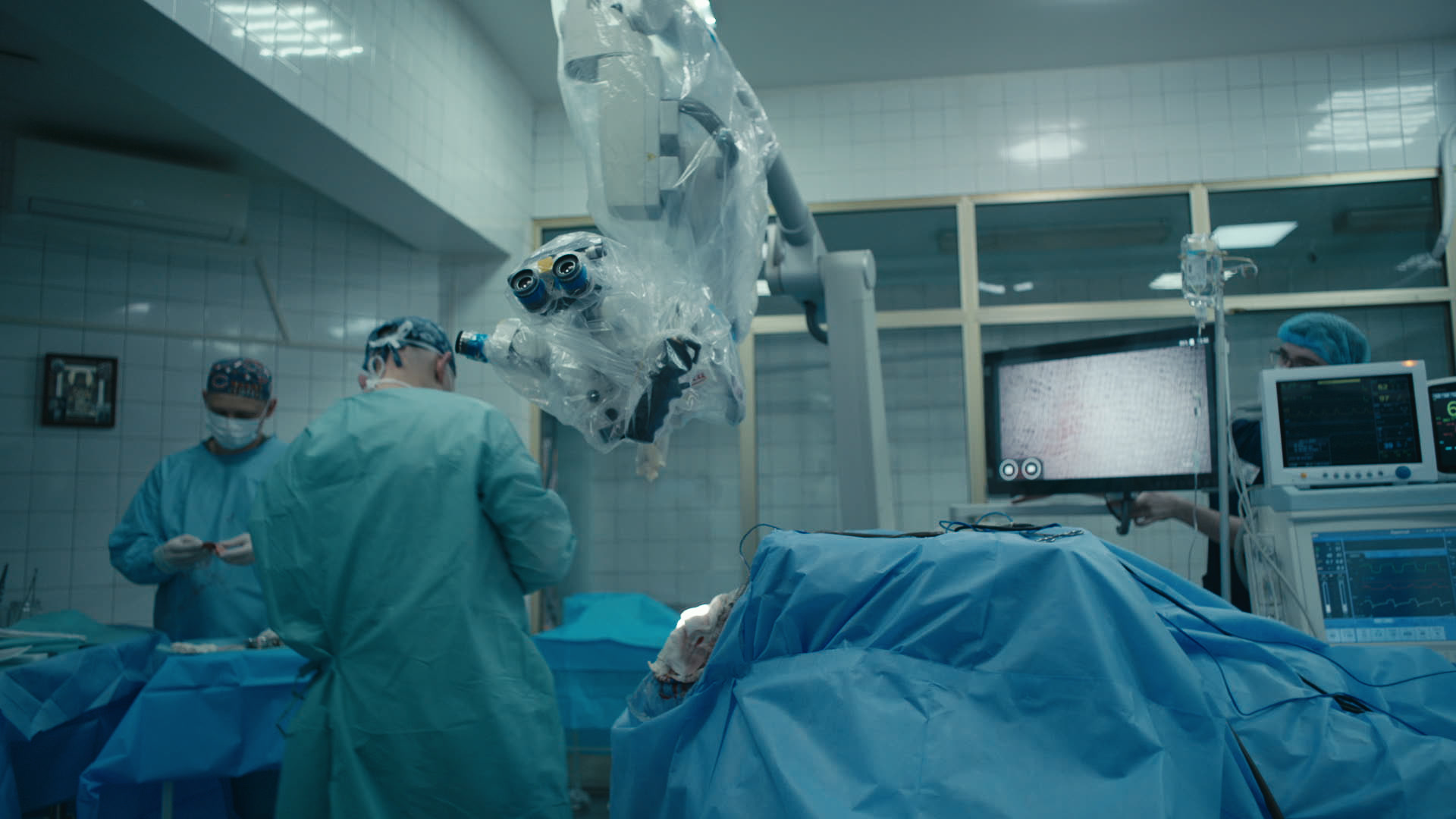
Speaker 1
00:00:00 *door opens*
00:00:00 *door opens*
00:00:30 Thank you.
00:01:00 Thank you. *phone rings* *phone rings* *phone rings* *phone rings*
Speaker 1
00:00:00 *door opens*
00:00:00 *door opens*
00:00:30 Thank you.
00:01:00 Thank you. *phone rings* *phone rings* *phone rings* *phone rings*
Speaker 2
00:01:53 Yeah, I think you might have been right.
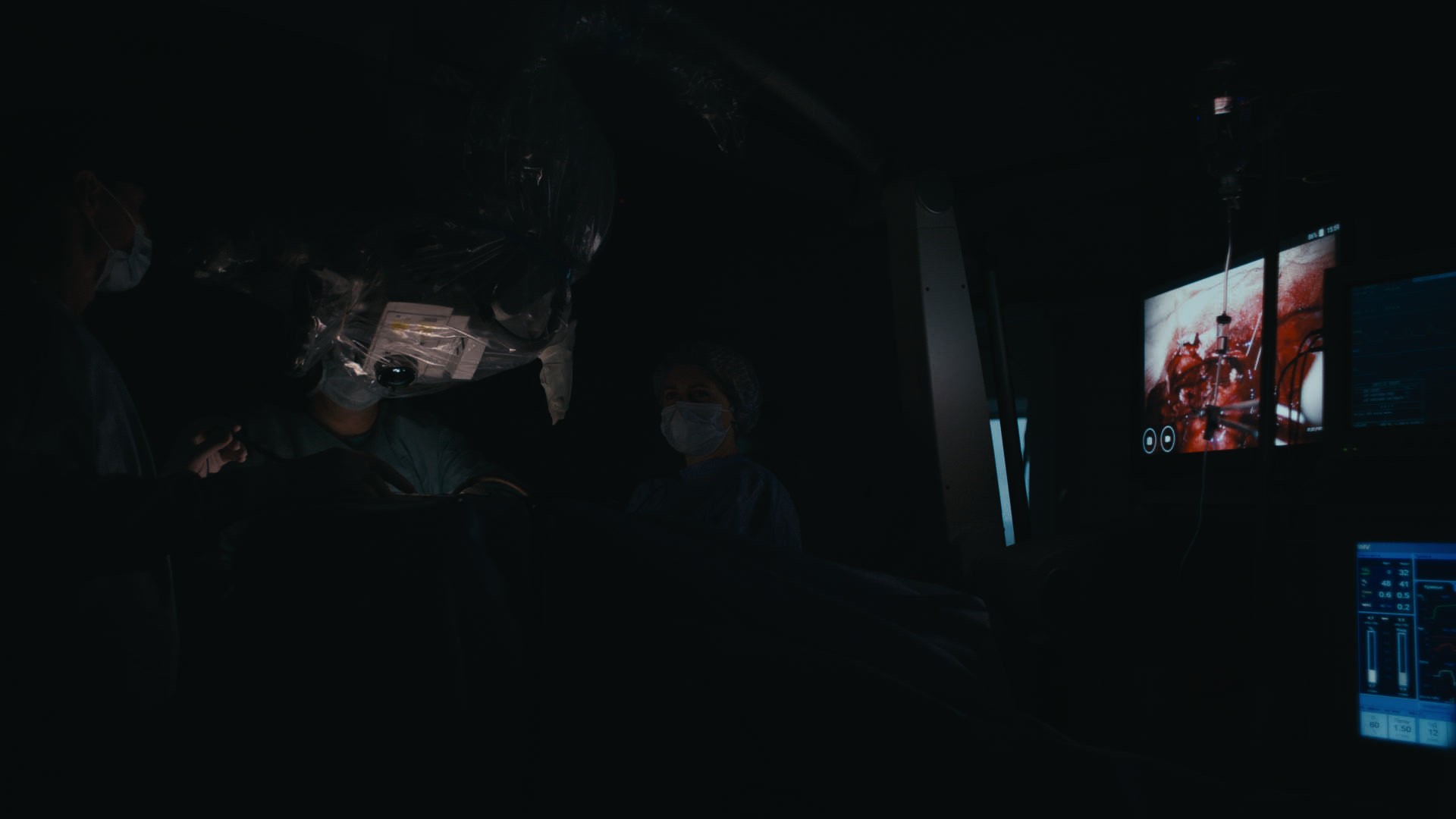
Speaker
00:00:00 (Transcript content available)
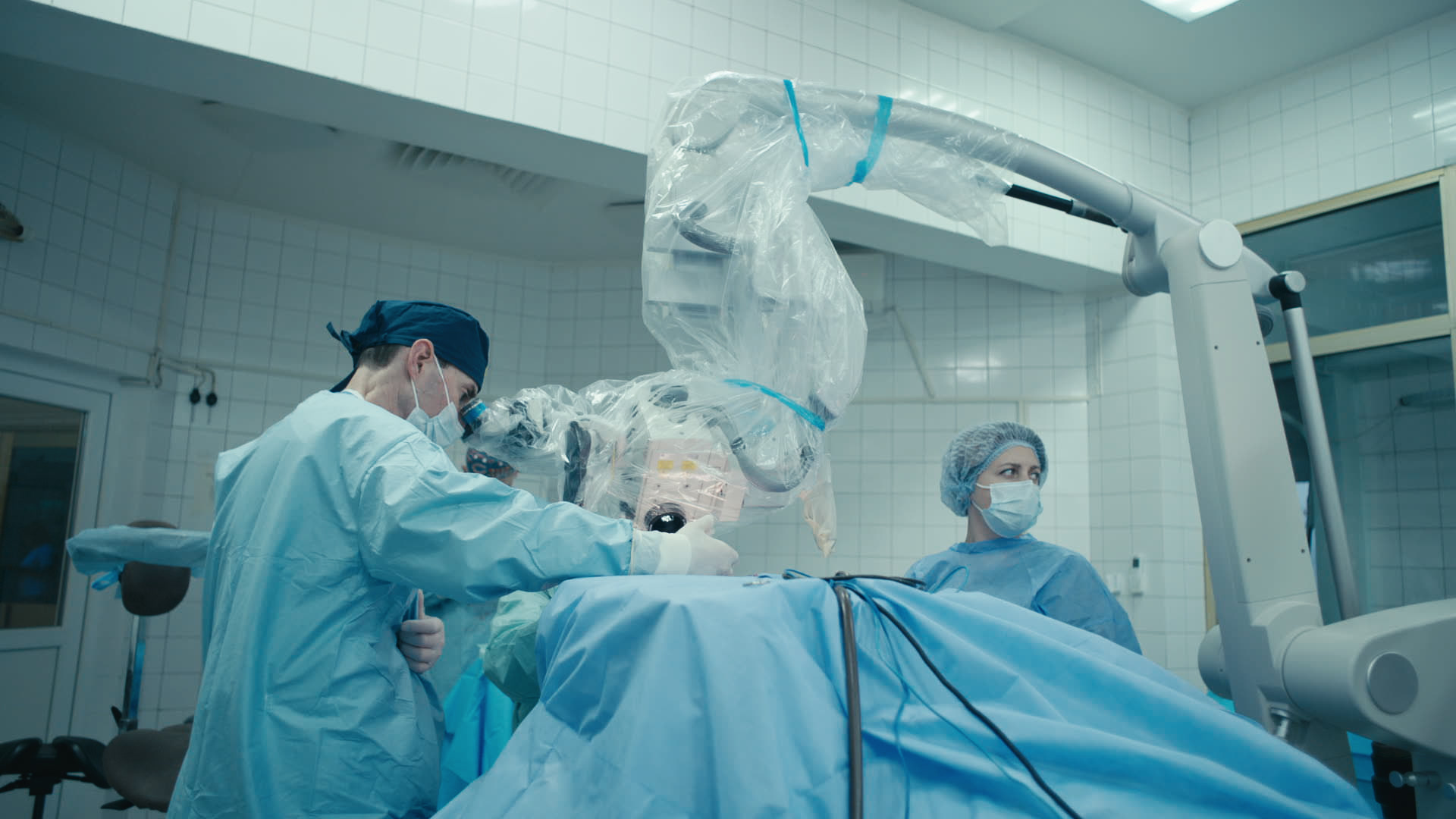
Speaker
00:00:00 (Transcript content available)
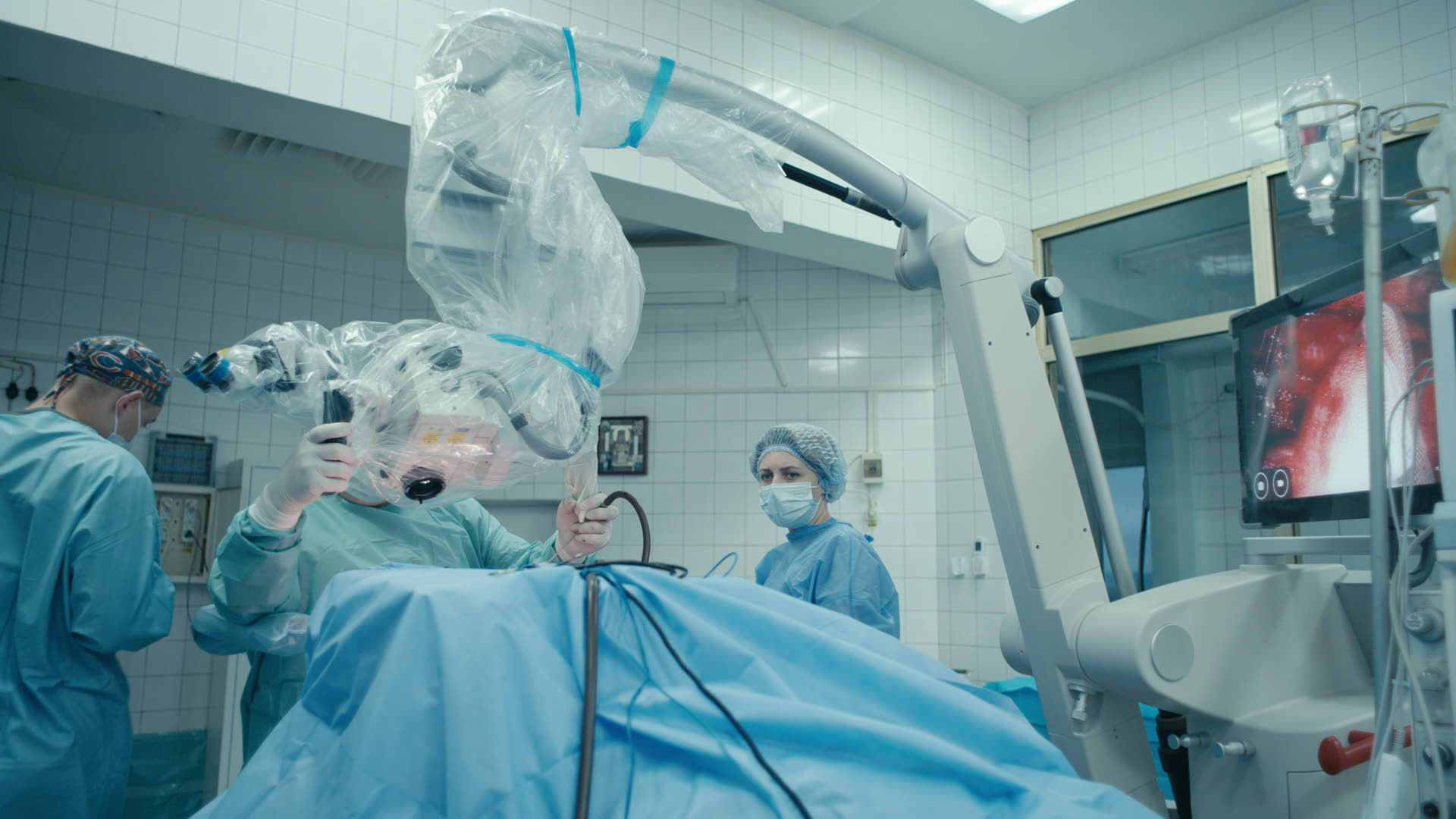
Speaker 1
00:00:00 To jest to, że
Speaker 2
00:00:00 To jest to, że
00:00:44 [RUS] Now we'll open from the right side.
00:01:00 [RUS] If we don't look, it won't be right.
Speaker 1
00:00:00 To jest to, że
Speaker 2
00:00:00 To jest to, że
00:00:44 [RUS] Now we'll open from the right side.
00:01:00 [RUS] If we don't look, it won't be right.
00:01:57 [RUS] [To be continued...]
00:02:19 ご視聴ありがとうございました
00:03:10 [RUS] [Watch next episode] [RUS-NEEDS] - Попроб
00:04:05 [RUS] - Try
00:04:40 [RUS] [DYNAMIC MUSIC]
00:05:21 [RUS] [DYNAMIC MUSIC] [RUS] Thank you.
00:06:30 [UKR] Suction, bipolar, port heart.
00:07:00 [RUS] Thank you.
00:07:54 I'm going to
00:08:00 Use the muscle, temporal muscle. And after that cover it with... ...tachosyl. Pachotachosyl. Is it better or worse than bronchotachosyl? It's a neutral compound. Randomized, dry. At least 200 patients.
00:08:48 .
Speaker 1
00:09:05 The President: The President: Oh, we'll take a picture to send it to Conor. The President: Did you get my phone and take a The President: We'll send it to Conor Berlin, The President: We'll send it to Conor Berlin, because he -- this is the -- we're going to The detector seal he sent. picture that right now. You can tell them that's the hole or flight. Good. Quick one.
00:09:59 There.
00:10:00 Can I get a picture of the tapas seal? Right there. Oh yeah. Get a picture. That's the tapas seal going in. I don't know about that. Thank you.
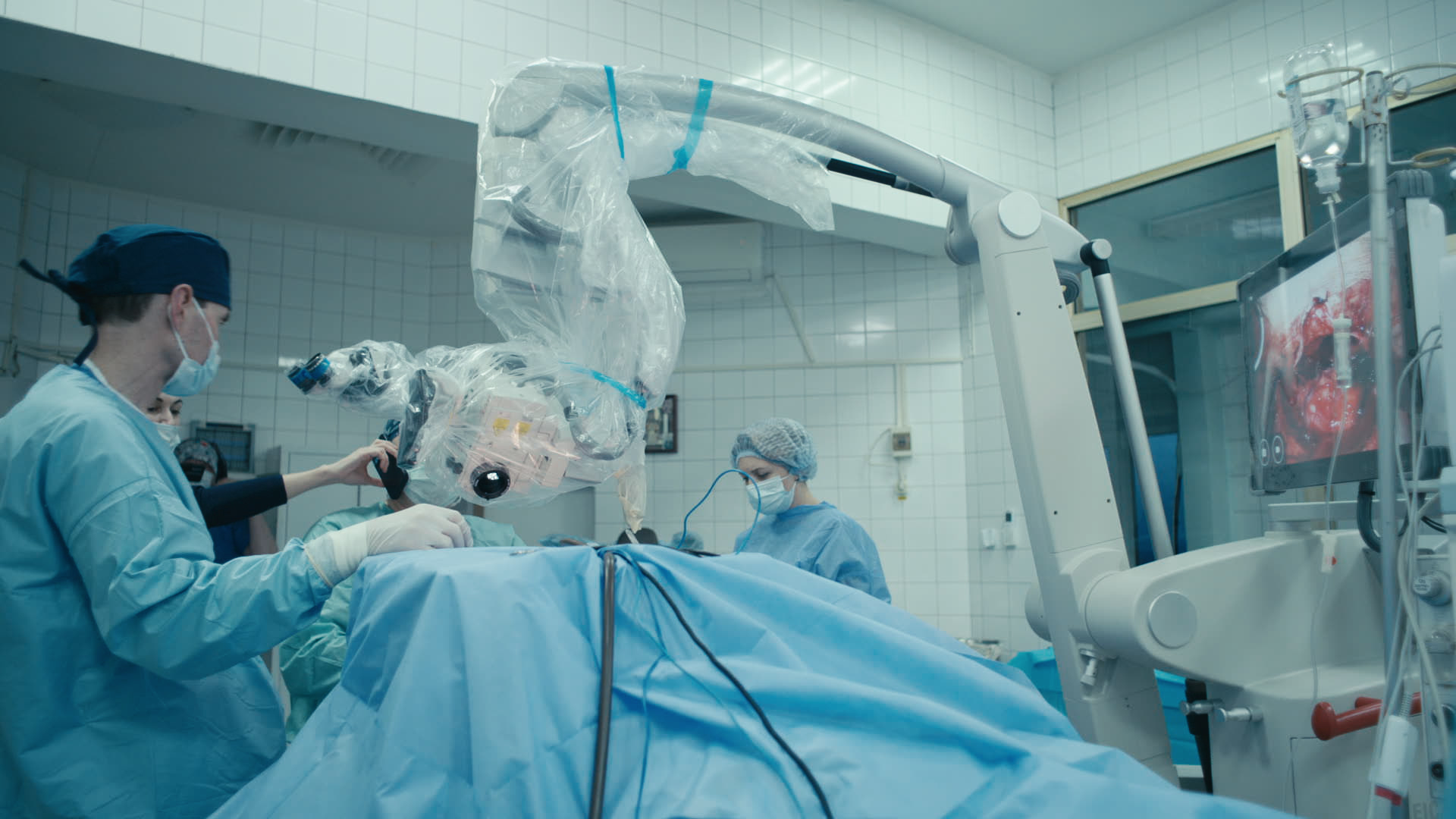
Speaker
00:00:00 [RUS] One second.
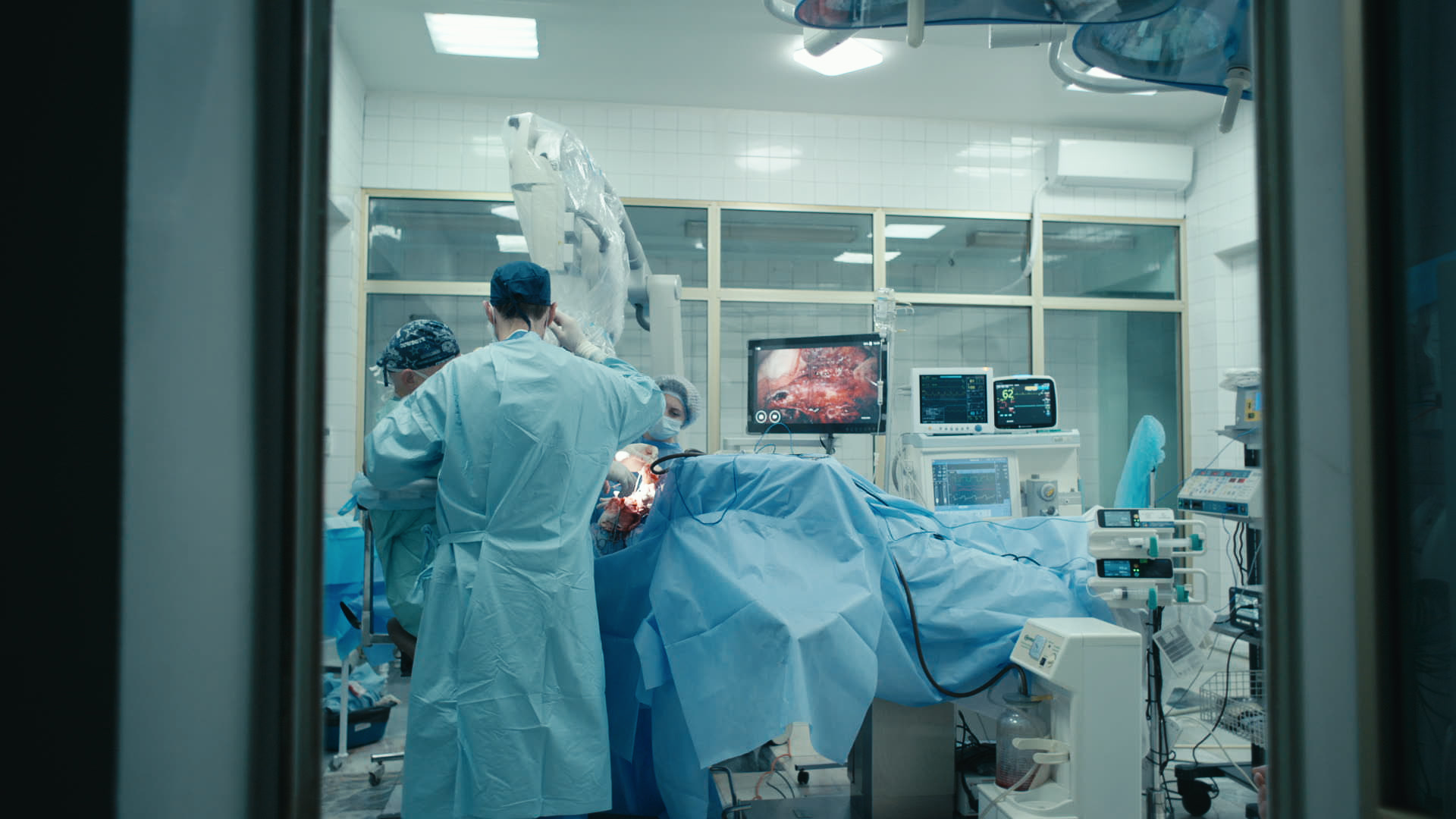
Speaker
00:00:00 (Transcript content available)
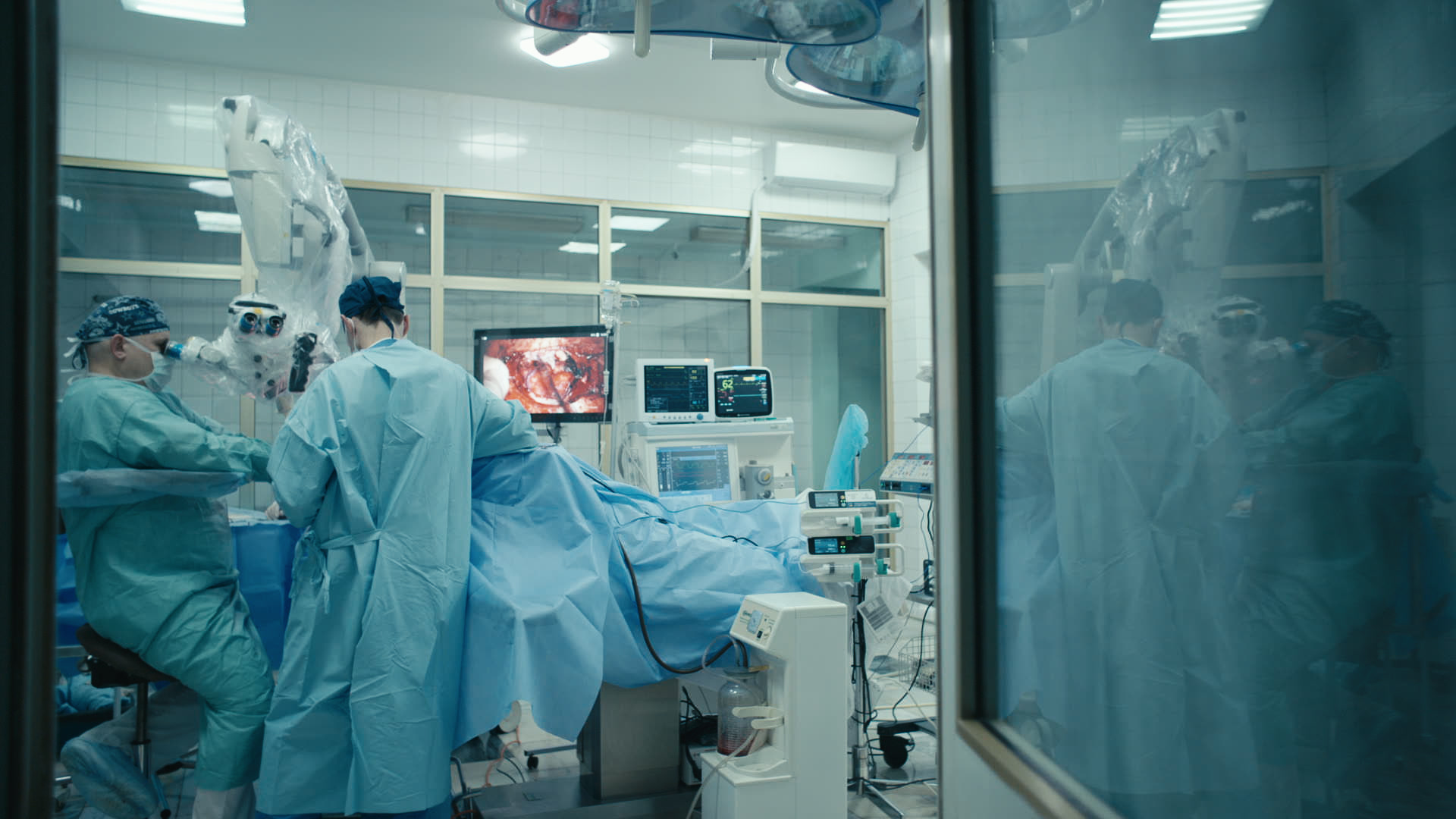
Speaker 1
00:00:00 Yeah. Yeah. Well, what's nice about the Epic Six is it runs a lot less power. Yeah, because you can take better fonts. Yeah, I also have a change of cars when you came down here. Where, where is it? You're touching it, you're just like, it's a little used to light. Oh, I'm sorry, I was looking for where it's at, or is it? Oh, it's at the top right corner of the... It's nice and false. Yeah, it's set that for a while. What's that?
00:01:11 Thank you. Thank you.
00:02:42 . - Try to get consultations.
00:03:00 - Yeah. - Kind of a good, good. - Consultations, like, you can kind of work out the the waiting hallway, you know, the people who are waiting today, you've got to be just something more, that's a, we can't really do anything with it today, but that's a lot that's a lot of, that's interesting, You know, you're waiting there and you just get in and, you know, and you go, "Not the best." It's a sort of gear form, but it's like, these people are on the line too, you know, and they're going and they're looking to the circle form.
Speaker 1
00:00:00 Yeah. Yeah. Well, what's nice about the Epic Six is it runs a lot less power. Yeah, because you can take better fonts. Yeah, I also have a change of cars when you came down here. Where, where is it? You're touching it, you're just like, it's a little used to light. Oh, I'm sorry, I was looking for where it's at, or is it? Oh, it's at the top right corner of the... It's nice and false. Yeah, it's set that for a while. What's that?
00:01:11 Thank you. Thank you.
00:02:42 . - Try to get consultations.
00:03:00 - Yeah. - Kind of a good, good. - Consultations, like, you can kind of work out the the waiting hallway, you know, the people who are waiting today, you've got to be just something more, that's a, we can't really do anything with it today, but that's a lot that's a lot of, that's interesting, You know, you're waiting there and you just get in and, you know, and you go, "Not the best." It's a sort of gear form, but it's like, these people are on the line too, you know, and they're going and they're looking to the circle form.
00:03:46 Alright. So, it's pretty kind of crazy. I don't think we probably don't need to do the rounds again, right? So like maybe we set up in this game. Yeah, well we could probably do that part of the round. But like the rest of it probably not needed. And then that would be some time to set up in the office. I feel like it would be nice to get kind of better dialed in in there. And to really show up the consultation stuff as well.
00:04:37 And then hopefully we find someone interesting. Yeah, you know tomorrow and then that checks that off. Right. And we gotta figure out when we're gonna talk about the track. Right, maybe tomorrow too. Yeah, and maybe tomorrow we could do that after we do the consultation. I think tonight at the hotel we should shoot a little with Alex telling us what we've gone through today. I'm sure you're going to show them that there's a hotel tonight, and anyone may or not have some plans. I think it was either that or we make sure to get a little longer after, but I think Alex can contextualize this.
00:05:24 You can get both that and just sort of like an evening at the hotel type thing. So the last thing I'll say about the consultation, in my research, one of the things that came up a few times was that the first students will say that it's not the actual surgery, it's knowing when not to operate when you're not going to do I think you're not going to help. In fact, it could be more dangerous.
00:06:11 And then, you know, like, a lot of these individuals, like, um, you know, um, they think like, they're blind, right? It's just where he has like the idea that someone who looks healthy to come in and then It's just where he has like the idea that someone who looks healthy to come in and then Yeah.
00:07:15 I was like, in real time, wondering. There's a big gas. It was quiet. It was a younger girl's mother. I couldn't tell what was wrong. I don't know. I was saying she was already
Speaker 2
00:07:39 over years ago. Oh no no. She was a person, like And then, but they really wanted a way to be involved. So they, if you said, that our operations are very close to each other,
00:08:24 next to each other, so when you have an operation, you know, you don't see. But there was something related to analysis of something like that. But there was something related to analysis of something like that. I think when I get the check-in, I think she looked like perfectly okay, I think, but there was something that was blood flowing.
Speaker 1
00:08:53 That's what I just thought, it was not really long to get it this one. But it's not. It's so crazy to keep going back to the English version, but the same thing was happening 20 years ago, where they were just lined up, and then same thing with the two doctors interacting on what they do. It's crazy how, I don't know, that that film exists before coming through this.
00:09:38 And it's that doctor that made this thing happen because, you know, as you've heard, young Americans, and maybe he's not young anymore, but he loses his father's son. So that's Rosam, and the... Here we are. So I wonder if after the consultations or before the consultations we get just a little bit
00:10:33 I mean, I think he's like, he's a hell of busy in the morning, right? Like, because he's going to go to the community and then he's going to go around. Yeah, and he does surgeries on Tuesday. I wonder if we need to schedule a time for an interview with him. I think we do, but as much as this is our story, I think that tomorrow is the only chance to get this normal type surgery. We should plan on being back here to get that, because I don't know when he's scheduled to do anything else. - Scheduled to do? - Yeah, well, Tuesdays are usually the surgery days - Yeah, well, Tuesdays are usually the surgery days
00:11:24 in terms of what he's planned for with patients and then the rest of the days are as things come up. So I think he has a scheduled due for surgery. I'm not sure, but just from the conversations, it was Tuesday. Like, normally he wouldn't have a surgery today. Well, I thought we should probably talk to that person beforehand, right?
Speaker 2
00:11:51 Right. I think it was one of the demon visited today during the morning around, because he mentioned
Speaker 1
00:12:01 he didn't be operating tomorrow or last day. I wonder if we after this before we leave if we can find that patient and talk to them just to get a little before. I was pretty much thinking that after this we're done here. But, you know, maybe there's time we ask Alex if it's -- because we believe if tomorrow we can get that patient before surgery, you know, before they're put under, that's also good, and I think that works. That's probably better. But, you know, the night before dinner is -- who knows.
00:12:51 - So then again, we got him. - Still, all this, you know, - This is very good.
00:13:00 - Yeah, I don't know. Yeah. Because I didn't film every single page. And you know, I'm just a little more. Yeah. So some of the photos on various other people. Oh, sure. I mean, there's a lot. I think before she will re-operate one and then go on,
Speaker 3
00:13:23 is it for a game, possibly? Okay. They just need to ask me. Right. So maybe you can get some extra juice set. - Of course.
Speaker
00:00:00 (Transcript content available)
Speaker
00:00:00 (Transcript content available)
Speaker
00:00:00 (Transcript content available)
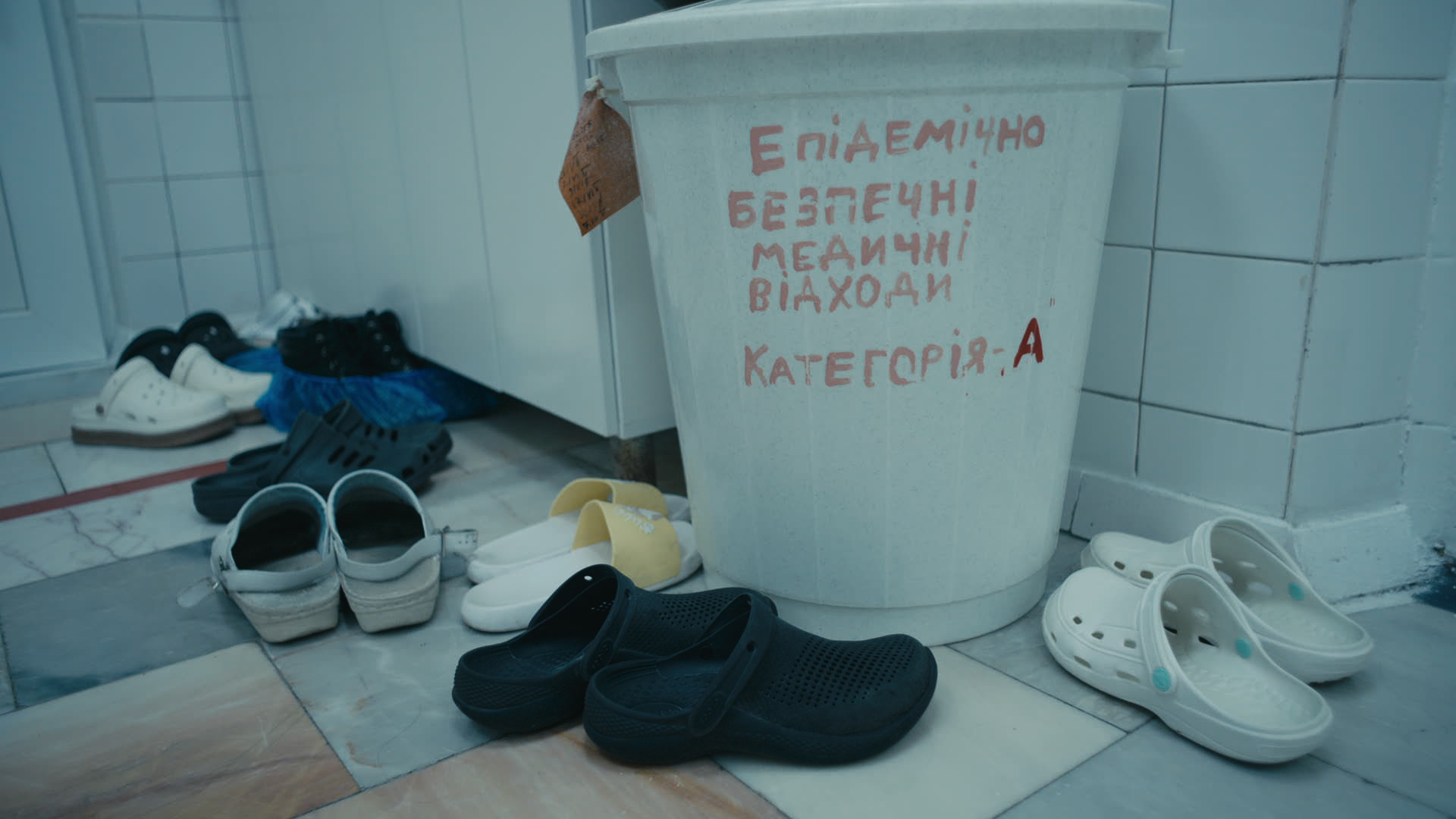
Speaker
00:00:00 (Transcript content available)
Speaker
00:00:00 (Transcript content available)
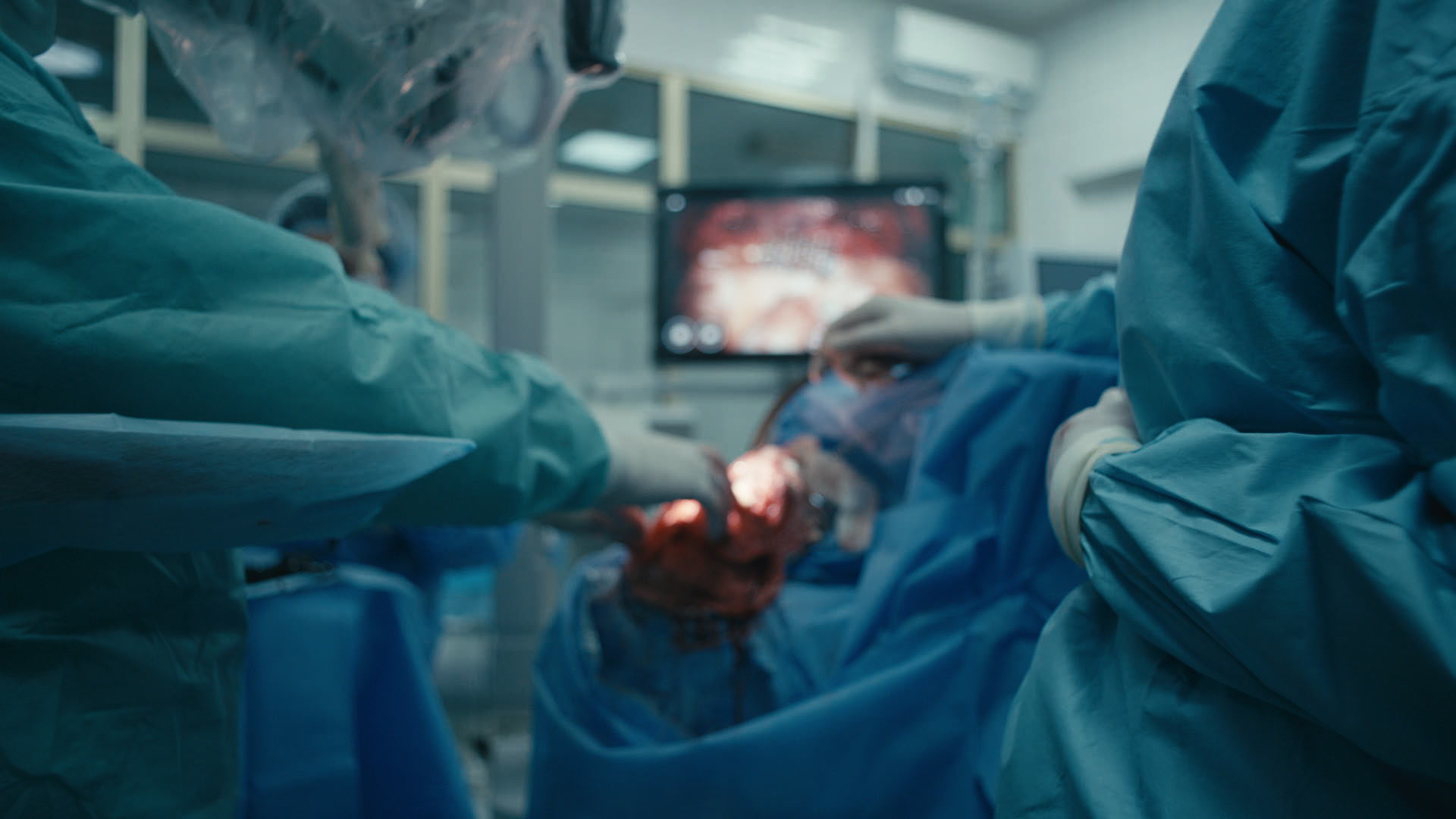
Speaker 1
00:00:00 It's true, but you would like to film this?
00:00:00 It's true, but you would like to film this? Yeah. I think it's maybe one day later if patients will be recovering. That's why this will be a good reason to talk and they will give permission to film this. Okay? Yeah, copy. Maybe it's Wednesday, Thursday, maybe. Right. So Alex, I think the only other thing we want to do is move in here.
Speaker 2
00:00:50 Oh, it's okay. Oh, I seriously did it. Oh, okay. Hold on. He's coming. Yeah, he will be coming.
Speaker 3
00:01:45 A gente vai fazer um I'll get a screw in. I'm going to go over the image.
Speaker 1
00:00:00 It's true, but you would like to film this?
00:00:00 It's true, but you would like to film this? Yeah. I think it's maybe one day later if patients will be recovering. That's why this will be a good reason to talk and they will give permission to film this. Okay? Yeah, copy. Maybe it's Wednesday, Thursday, maybe. Right. So Alex, I think the only other thing we want to do is move in here.
Speaker 2
00:00:50 Oh, it's okay. Oh, I seriously did it. Oh, okay. Hold on. He's coming. Yeah, he will be coming.
Speaker 3
00:01:45 A gente vai fazer um I'll get a screw in. I'm going to go over the image.
Speaker 1
00:03:15 So, let's go.
Speaker 3
00:03:32 I think we'll try to get some more.
00:04:29 [RUS] And just a bit, Tsargia Grigorievych's outflow was sutured and stapled. [RUS] Yes, we can take apart the chair.
00:04:51 Obrigado.
Speaker 1
00:05:58 Alex, we need to cut the tie.
Speaker 3
00:06:13 Alex, we need to cut the tie. Oh, it's already tied. That's right. It's tied. Yeah. I understand.
Speaker 1
00:07:23 Okay.
00:08:18 Can I ask one thing? I just don't want to film my tattoo. I just don't want to film my tattoo. You don't want to film what? My tattoo on my arms. No problem.
Speaker 2
00:08:33 Other times we put the mic here but it works in the pocket.
Speaker 1
00:08:38 Just do it quick. Be careful. I wanted to...
Speaker 2
00:09:01 So if you don't mind me asking him to call the film, why don't you want the tattoo shown? Can you repeat? Why don't you want the tattoo shown? Because now it works in my country and it's very specific, you know? ah gotcha it's kinda, not safe do you have something like identifying? yes, yes ah can you please put my eyes on the nose?
Speaker 3
00:09:38 yes
00:09:45 [RUS] Thank you.
Speaker 1
00:10:09 [RUS] Did they show? [RUS] Did they show? [RUS] They showed. [RUS] Do you know Sidashtan? [RUS] Kyrozhtan?
00:10:20 Yes.
00:10:22 [RUS] And Talmulov.
00:10:23 Yes. Yes.
00:10:47 [RUS] - Should he come? - Yes. [RUS] - I'll tell you. [RUS] - And now once more.
00:11:06 Uh-huh.
00:11:10 [RUS] - Look, I'll just think that today I'll cleverly move him in the queue. [RUS] He says they don't have ophthalmologists there. [RUS] The eyelid was destroyed, and he just took it, [RUS] and here it's closed, lower edge, and the wound was just sutured. [RUS] And we called for this person to come, roughly speaking, [RUS] Syroshtan, opened up the eyeball, and removed, well,
00:11:36 [UKR] leaving practically just the shells, and probably sutured it back,
00:11:40 [RUS] because it's not the summer, lower eyelid, not May. [RUS] What happened to you?
00:11:52 [UKR] We didn't reopen the wound that Levko Zahomyrovych had sutured,
00:11:58 [RUS] together with Elena Leonidivna.
00:12:02 [UKR] Because it was there, although I didn't reopen it, but it was dry.
00:12:06 [RUS] My task. [RUS] My task. [RUS] My task.
00:12:11 Here.
00:12:15 [RUS] And also we need, [RUS] and suture. [RUS] And then, if suturing, [RUS] this is good, to stretch out the substrate. [RUS] this is good, to stretch out the substrate. [RUS] What we did here. Understand?
00:12:26 [UKR] Like this.
00:12:27 Here.
00:12:29 [RUS] So that if the epidermis falls apart, [RUS] so that it's covered here. [RUS] And suture. [RUS] - You placed
00:13:06 [UKR] Only the eyeball was knocked out, the shells weren't damaged, because when we opened, we got retrobulbar hematoma and brain. [UKR] The shell is broken, bones are broken, meaning, roughly speaking, retrobulbar hematoma and brain, we placed Tachocomb,
00:13:24 [RUS] I just need many layers, and the whole task is to clean where we can. Okay?
00:13:39 Hmm- operation okay i will wait you okay so i'll be there in a few minutes yeah yes yes
Speaker 3
00:14:02 how much how are you
00:14:08 [UKR] I don't see him.
Speaker 1
00:14:37 [RUS] Look. [RUS] - Yes, we need micro
Speaker 3
00:15:10 [RUS] This will be the best option. [RUS] Will you open more? [RUS] Yes, you'll open. [RUS] I can't, I don't want to. [RUS] I can't, I don't want to.
00:15:16 Everything is changed.
00:15:18 [RUS] Katya, is it?
00:15:19 Yes.
00:15:22 [RUS] Great, we'll leave two rounds of spikes. [RUS] Because if things go wrong with Artem, you understand, [RUS] we'll need to cut.
00:15:30 [RUS] And that's it, they won't know where his infection was. [RUS] It happened to someone. [RUS] And so there were two infections.
Speaker 1
00:16:03 [RUS] Now.
Speaker 3
00:16:39 [RUS] Now.
Speaker 1
00:17:25 I will be in my own.
Speaker 3
00:17:29 - I'd like to work together in the program. - And if you wanna perform five, that's a couple of, yeah, because it's not a good tissue, that.
00:18:33 I'm learning from you. No, no, no.
Speaker 1
00:00:00 and it's like you can wrap it together and...
00:00:00 and it's like you can wrap it together and... - Yeah, it is hard to get good knots. - Yeah, so it's better to use monofilament like something like this. - Yeah, yeah. - Because first of all, it's very important to start from the hardest part of the construction because you have the spot like this,
00:00:30 where you're inside, so you have to start from this
Speaker 2
00:00:34 and then finish it where it's more easier. - If you want to see more of the nuts and bolts of surgery, it's a little bit. Right there, you can try the stool. This is where the action is. So I'd like to say, I don't know how much blood and dust you want to show in this documentary.
Speaker 1
00:00:00 and it's like you can wrap it together and...
00:00:00 and it's like you can wrap it together and... - Yeah, it is hard to get good knots. - Yeah, so it's better to use monofilament like something like this. - Yeah, yeah. - Because first of all, it's very important to start from the hardest part of the construction because you have the spot like this,
00:00:30 where you're inside, so you have to start from this
Speaker 2
00:00:34 and then finish it where it's more easier. - If you want to see more of the nuts and bolts of surgery, it's a little bit. Right there, you can try the stool. This is where the action is. So I'd like to say, I don't know how much blood and dust you want to show in this documentary.
Speaker 3
00:00:55 Yeah, we try to mix a little bit of that and also like trying to keep you guys talking too.
00:01:00 Yeah. Because you know we've got, I think, that too.
Speaker 4
00:01:16 I think the thing is to show the reality and then capture the reality and then choose what
Speaker 2
00:01:53 After our operation, an ophthalmology will be there? After our operation, an ophthalmology will be there? Yes, yeah, okay. I just want to get that in.
00:02:42 So, we can show a film over the video.
Speaker 1
00:02:48 Thank you. the ball, the ground, and now we have like, the basis of reconstruction, and now we can like, yeah, it's easy to...
00:04:11 In your university, in your hospital, do you have like, programs for trauma, surgery,
Speaker 2
00:04:16 or something like this? Not for, not specifically for the bureau. Yeah, yeah, I know. For general trauma. For general trauma. And what they do in the United States now, it's not only trauma, there's acute care surgeries.
Speaker 1
00:04:31 So it's trauma, and then other emergencies, and then ICU care. And how long, fellowship, two years? I believe it's two years, yes. And how does work as a trauma surgeon in the United States?
Speaker 2
00:04:49 It's a lot easier than here. It's all shift work. So you maybe do some hospital's 12 hours or some 24 hours. Then you're done after that. Then you're done after that. Sometimes you do ICU work. Sometimes you do ICU work. Not like in the old days where you never go home.
Speaker 1
00:05:09 Is after residence of general? Yes. It's so hard to find place in fellowship of trauma surgery.
Speaker 2
00:05:26 It's not very competitive specialization in the United States. It's better now because we were just talking about this. 20 years ago they changed it from trauma because that then you never went home and CT scanning became so fast that after CT scanning you would not get to operate without. - Okay, no. - And fewer surgeries, bad hours, and they don't like it. So that's why they said we're gonna do all emergency surgeries to get more cases, and we'll also take over to the ICU, and we'll make a shift work.
Speaker 1
00:06:09 A lot of women will get these. - It's right, for work-life balance, - Yeah. - Yeah. It's a long hour, but not nearly a day.
Speaker 2
00:06:20 Like not every day you live in the workstation. Yeah. So work like hours, you're serving yourself.
Speaker 1
00:06:35 I just read about this type of specialty. Actually interesting. And you share.
Speaker 2
00:07:07 O que é o senhor? We want your house tomorrow, right? Yeah. Thank you for that. In which time it's supposed to be? I don't know. You tell us. Do you know what time we're going to buy this house tomorrow? I don't know. Just that. You tell us. Whenever he invites us to be over. Whenever he invites us to be over.
Speaker 4
00:07:46 Whatever time works for him. By the way, Alps, we'll leave with you, and you leave. We won't stay for the Alamo.
Speaker 1
00:08:05 Like, for reconstruction, you see? - I'm going to Because actually in Ukraine still today we don't have like trauma surgery.
00:08:50 And we actually don't have normal education for the guy who is in the army as surgeons.
Speaker 2
00:09:00 So they start learning in the mobile hospital. Well, that's what happens in the United States too. When a war starts, none of the general surgeons know about trauma. And then they learn it all there, so they have all this expertise. And then after the war, it goes away again.
Speaker 1
00:09:19 That's why people like Bronco are so important. Because when I'm thinking about the place of residency, I think about military residency of general surgery,
00:09:30 but it's only like name. It's not about experience, it's not about knowledge, because you live not at home for years, but you don't have knowledge and any experience after this for years. And you start learning only when you go to the war.
Speaker 2
00:09:56 Because the fact that you studied at 2,000 years ago, right?
00:10:00 War is the best school of the desert. You guys had enough for one day? Yeah. Alright, we're going to leave you now. Go to the office and get our things. Go to the office and get our things.
00:10:47 We'll see you. We'll see you. We'll see you. Okay. And the other way. Wait, we're going to get one thing. We're just going to get a wide shot of the two of you together.
Speaker 4
00:11:01 Just stand there for another minute and then... That's a nice step. Can you get Alex moving from the screen, maybe? Yeah. So Alex, whenever you're ready, you can leave from the transit. You can go and get your robe off and we'll have you walk out from here and then we'll meet you in the hand washer. Okay.
Speaker 1
00:00:00 I'm going to wash my hands again from all this crap. I'm going to wash my hands again from all this crap. All right, thank you guys. See you tomorrow.
00:00:56 Yes.
Speaker 2
00:01:06 Natalia, will Kravina and Olga stay tonight also?
Speaker 1
00:01:10 No, we will not stay tonight. We will go home. So we have different nurses for the eye doctors?
Speaker 1
00:00:00 I'm going to wash my hands again from all this crap. I'm going to wash my hands again from all this crap. All right, thank you guys. See you tomorrow.
00:00:56 Yes.
Speaker 2
00:01:06 Natalia, will Kravina and Olga stay tonight also?
Speaker 1
00:01:10 No, we will not stay tonight. We will go home. So we have different nurses for the eye doctors?
Speaker 2
00:01:17 Olga is due today. Olga will be here tonight because Olga is due. We are going home. Oh, that's a good way. Wow. Long day. Okay.
Speaker 1
00:01:56 Karina, can I leave this here or should I take it with me?
Speaker 3
00:02:02 Can I wear it tomorrow? Okay. Okay. Thank you. So we need to change now. Uh huh.
Speaker 1
00:02:20 Alright, I'm taking my mask off too. Yeah, this is the substers. We're fine. All right, guys.
Speaker
00:00:00 Oh, yeah, you guys got special OR shoes.
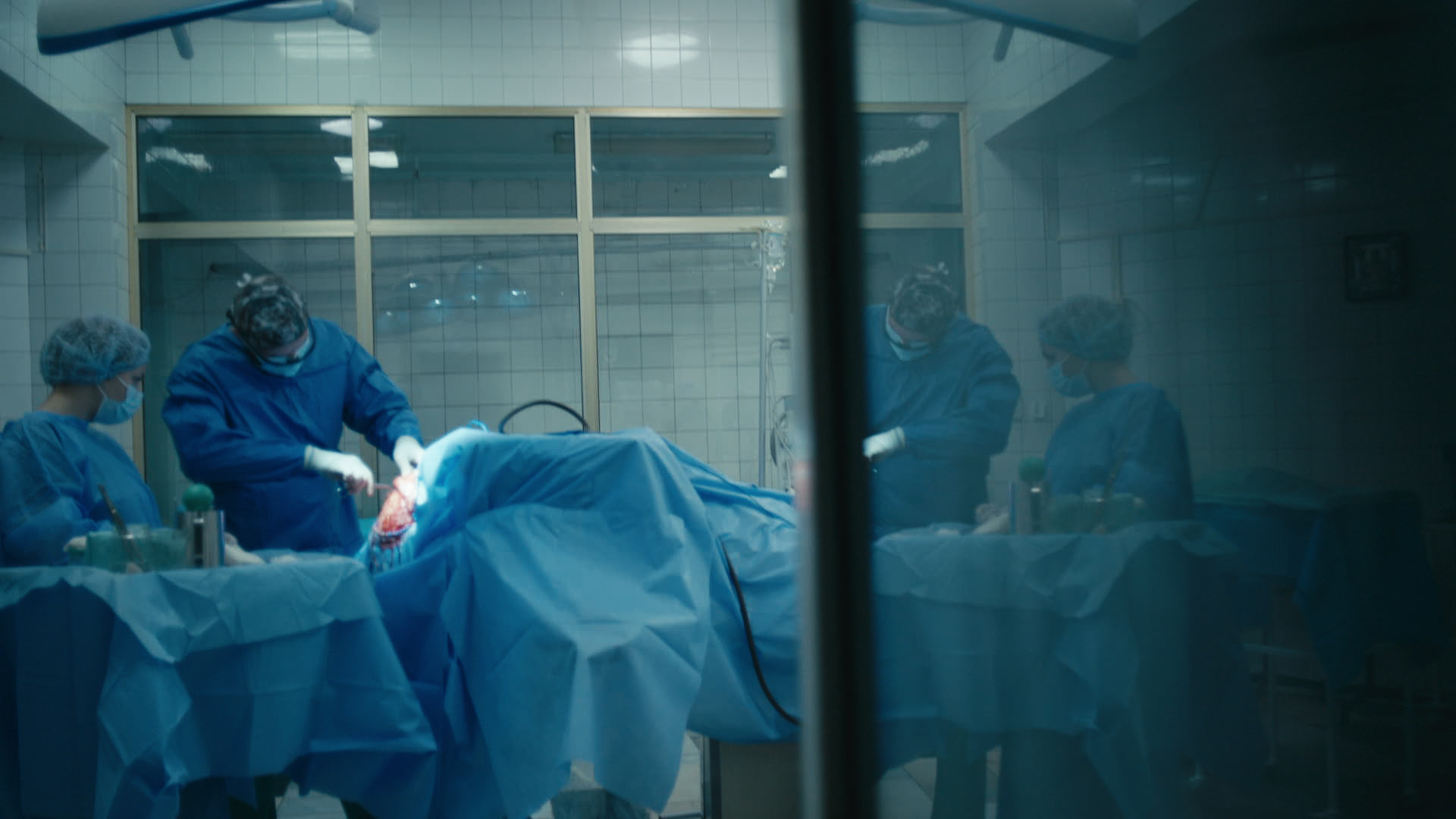
Speaker
00:00:00 (Transcript content available)
Speaker 1
00:00:00 Yeah, well, that's why we come in the back to wear this hospital.
00:00:00 Yeah, well, that's why we come in the back to wear this hospital. I mean, it's strange. You walk in the front door of the hospital and you have to wear those. You sit in the back, you know. Where do I need these? Okay. Even here. There you go. Yeah.
Speaker
00:00:00 (Transcript content available)
DR. ALEX VALADKA (American Neurosurgeon)
00:00:00 Literally, what I want more than anything for this is for you to just be reflective.
Dr.
00:00:00 Literally, what I want more than anything for this is for you to just be reflective. And, you know, even like this is going to be likely the end of the first five minutes of the film. Okay, let me say the end of the first five minutes. 20 minutes. Okay, so let me say something that was interesting about Anastasia. She seemed really kind of bothered today, you know. She didn't want to go into patients' rooms, even though it would have been helpful. And at surgery, she was hanging back, and we were walking out together, and I asked her how she's doing. She made a comment that the drilling, you know, the drilling of the skull, when it got really loud, and then the smell really bothered her for some reason.
00:00:47 And I'm thinking, you know, we're all visitors. We're laughing and joking about this. She has to live this every day. You know, we're out of here next week. And she's not. I don't want to say this on film, though, because then this becomes like a reality TV show. I don't want to say this on film, though, because then this becomes like a reality TV show. I don't have any of my Ukrainian flag maintenance anymore. I don't know what happened to my... Anyway. We're not gossiping about each other, you know, because that's not good either. Oh, you mean if you want to talk to me? Yeah, if I'm talking to my camera about a member of our team, you know, how this affects her. No, I mean, I think you, well, I think, you know, I don't know, I mean, it's an interesting question. Tell you what, Laura's doing a great job queuing me. Are you rolling right now?
00:01:36 We are rolling. Yeah. Well, I think he's... So the other thing I thought was really gratifying was... I gotta get a mic on you. Oh, shit. We do have the shotgun. I don't know if you want to say it. Where did I leave the mic now? There's one over there. Is that the one that's on the TV? Yeah. All right. Yeah, I mean, it's hard to see. I guess what shop. Not shop, but you know, you know, keep that thought they got. You know, people are going to think this is just some logo for some obscure clothing brand or something. Trust me, I've had this shirt probably won't be a lot.
DR. ALEX VALADKA (American Neurosurgeon)
00:00:00 Literally, what I want more than anything for this is for you to just be reflective.
Dr.
00:00:00 Literally, what I want more than anything for this is for you to just be reflective. And, you know, even like this is going to be likely the end of the first five minutes of the film. Okay, let me say the end of the first five minutes. 20 minutes. Okay, so let me say something that was interesting about Anastasia. She seemed really kind of bothered today, you know. She didn't want to go into patients' rooms, even though it would have been helpful. And at surgery, she was hanging back, and we were walking out together, and I asked her how she's doing. She made a comment that the drilling, you know, the drilling of the skull, when it got really loud, and then the smell really bothered her for some reason.
00:00:47 And I'm thinking, you know, we're all visitors. We're laughing and joking about this. She has to live this every day. You know, we're out of here next week. And she's not. I don't want to say this on film, though, because then this becomes like a reality TV show. I don't want to say this on film, though, because then this becomes like a reality TV show. I don't have any of my Ukrainian flag maintenance anymore. I don't know what happened to my... Anyway. We're not gossiping about each other, you know, because that's not good either. Oh, you mean if you want to talk to me? Yeah, if I'm talking to my camera about a member of our team, you know, how this affects her. No, I mean, I think you, well, I think, you know, I don't know, I mean, it's an interesting question. Tell you what, Laura's doing a great job queuing me. Are you rolling right now?
00:01:36 We are rolling. Yeah. Well, I think he's... So the other thing I thought was really gratifying was... I gotta get a mic on you. Oh, shit. We do have the shotgun. I don't know if you want to say it. Where did I leave the mic now? There's one over there. Is that the one that's on the TV? Yeah. All right. Yeah, I mean, it's hard to see. I guess what shop. Not shop, but you know, you know, keep that thought they got. You know, people are going to think this is just some logo for some obscure clothing brand or something. Trust me, I've had this shirt probably won't be a lot.
00:02:28 You can finish that thought. You seem to have to go on something and you can answer me. Well, just seeing the people in the hallway. Well, just seeing the people in the hallway. Oh, you mean the patients stacked up in the hallways? Yeah. Do I need closer to you? Oh, you're okay. Right. So we were talking about how you could tell people were very happy to see me there. I mean, there's genuine hugging and smiling and stuff like that and telling me they're so happy to have me back. It means a lot to them when someone comes all the way from the United States. Regardless of what we do while we're here, just by virtue of the fact that you're making all the effort to come here, you know, and show support that way, it means a lot to them.
00:03:15 Yeah, but it also means a lot to you. I could feel your joy at being back and greeting the people. That's a good point. So this originally kind of started, I told you the story when I heard Rocco Ramon to speak at a meeting over two years ago now, and he described his experience in Ukraine. Then I got to talking to him and said, how did this all work out? And the light bulb went off in my head, right? It's like, wow, he's actually doing something to try to make a difference. Maybe in only a small way, but it's pushing things in the right direction. And that's what was motivating me initially, trying to help and be part of something big. Now it's personal. Now I know these people. We're friends. We've scrubbed on tough cases together.
00:04:00 We've done CPR in the ICU. Being around there are some really sick people. So we really do care about them. Ander Circle does a great job of keeping Rocco and me in a loop every day via our WhatsApp chat about what's going on. Not only in the country, but what's going on with the people in the hospital. So they really are like friends, and you want to help your friends when they're in trouble. You know, Alex, we've talked about this enough times that it's kind of hard to come out the first time. but I feel like this is a great spot for you to sort of just reflect like you did when we first met on, you've had numerous positions, awards, all of these things where, you know,
00:04:50 I know you've said it before, but like, I think this is a good setting for it, because, you know, we're going to have this, like, everything in the film is going to come to this end of the,
00:05:00 you're wrapping up the first 20 minutes and then I think this is a great place to get that information out. So I've been incredibly blessed to have, by most objective measures, have a great career. I've done a lot more things than I ever could have dreamed of doing. Things that you can kind of put on your resume or check boxes on. You know, I've been president of one of the major national societies. I've been involved with the American Board of Neurological Surgery as a, you know, the vice chair level and done some work there. Um, NIH study section where you're actually, uh, supposedly a smart person, invited to review research grants and you learn a lot, but it's a lot of hard work and it's an honor to be invited. And at this point in my career, um, you know, a lot of people kind of start slowing down, you
00:05:48 know, heading for the exit and I had no plans to do that. And that's why it's so exciting to be involved in something like Ukraine, because all those things I just mentioned, they're very important. And I don't mean to downplay how important they are for my specialty and for the profession of medicine as a whole. But they can't compare to trying to help in a war. And people ask me, well, what difference are you making? You're just one person. Yeah, but you get enough, you know, one here, one there, it does tend to make a difference. And if nothing else, I think it gives the Ukrainian people some encouragement, because no surprise, every Ukrainian I've talked to says, thank you for coming, I really appreciate your support. And what struck me is talking to someone yesterday, where she mentioned that every Ukrainian is
00:06:39 a volunteer. You know, they go home and they try to volunteer and do something in their spare time to help their country. You know, she started a small company that makes first aid kits. Maybe cut the tape. I'm talking about Anastasia, so maybe we shouldn't go into that much detail. But people... Oh, yeah. All right, let's go. That might be a case, but... All right. Yeah, we're talking about how... She said everyone in Ukraine is a volunteer. And it reminded me a lot of the United States in World War II, right? gas rationing and meat rationing and coupons and all that stuff the whole country was in 100 percent and you know ukraine's at 100 most americans aren't even aware of what's happening here
00:07:26 you know every once in a while there's a story in the news but it's it's different being here and i really think it does make a difference you know like i said not to disparage what i've done in the past not to disparage the people who are doing those very important things now but this This takes it to a whole new level. You know, the joke I make with people is, would you trade a walk-on part in the war for a lead role in a cage? Anybody who's over the age of 50 or 60 probably recognize that as a Pink Floyd lyric. And not that I was playing a lead role in a cage, I was playing a lead role in kind of a stereotyped vision of success in academic medicine in America. And I still value that, and that's important. Kind of comparing that to having a walk-on part in a war, literally, is one thing that
00:08:16 motivates me to keep doing this. And now they're my friends. So I keep reassuring them we're not going anywhere. You know, I saw one of them this morning. I reminded her that when I was leaving my last visit, she said, please don't forget about us. And I told her today, I said, I didn't forget about you guys. But I'm not going to. I mean, I'm here for the duration and I'll be helping with the reconstruction as well. So tell us about the journey here this time and give us a few things that you gave us on the train, but like, you know, the trip and how he, we were there right before an airstrike.
00:09:01 And then when we get to the hotel, just check in. When you get to the hotel, you just check in the air raid center. Oh, yeah. you know, and then, and then like. you know, and then, and then like. Okay, well, let's take those one at a time. So, yeah, thinking about the train ride, actually, our little crew here had a heck of a time getting to Warsaw on time, but once we did, it was pretty straightforward. You get on the train from Warsaw to Helm at the border and get on the other train. We were lucky we didn't get attacked. I made that joke when we arrived at 7 a.m. the next morning. We made it through. But we have a pretty long layover at Keeve in the middle of the night.
00:09:48 I don't know the exact time. It was like midnight or something like that. It's like half an hour, maybe longer. But apparently just maybe an hour or two after we left, Keeve got attacked. Early that Sunday morning, we were going to arrive at 7, so an hour or two before that, I was just checking the news, updates on the apps on my iPhone. and saw the big update, you know, Kiev attacked by missiles at 2:35 a.m. Actually, I've got to be careful. Maybe not missiles, maybe drones, but Kiev was attacked by Russian, you know, airborne weapons. Then you got to thinking, yeah, maybe that could have been us. Now, let's do it one more time and say, instead of it being a crew,
00:10:36 crew, say I or the train, you can say we, but like, you know, once I finally got to the train, you know, it seemed pretty easy, something like that. Just to take us out of it, I'm not sure yet, I'll take us out of it. Okay, you're right, so stay that over. As if we're not here, we weren't here with the journey.
00:11:00 Okay, so the, yeah, the trip here was actually pretty smooth. no problem with the flights over and getting to Warsaw getting up early the next morning getting on the train the ride itself was pretty uneventful I was able to get some work done and we were supposed to pull I was supposed to pull in the key or our trainers was to pull in a key so we're supposed to pull into
00:11:30 to Nipro at 7 a.m. on Sunday and maybe at 5 or 6 a.m. I'd gotten up was just checking news updates on the apps on my phone and saw that Keeve had been attacked at 2:35 that morning and we have a pretty long layover at Keeve. I was asleep for most of it but it's around midnight or 12:30 or something in that neighborhood maybe half an hour or longer and yeah we missed a pretty significant attack by a relatively short amount of time and it made me stop and think you never know what's gonna happen you're taking a train ride for granted and that passenger trains have been attacked it's unlikely but not impossible I know you just seen Andre a couple weeks before but let's how good is it to see Andre
00:12:23 anytime you get a chance to see him. How do you feel to just walk up and see your old path? Or walk up the train? It's always great to see Andrei, especially after a long train ride, which represents a culmination of two and a half days of travel to get here. And I'm constantly amazed at Andrei. He's such a fascinating guy. It's always great to see people in their own environment. I'm talking about people who are highly skilled and accomplished. He can multitask better than anyone I've ever known. He can be having two separate conversations going at once, and he's constantly getting interrupted on WhatsApp by the other hospitals, sending him updates and CT scans about patients, the military hospitals, about sending them to Metchnikov,
00:13:11 or whether they should do an immediate, the trade of art is damage control surgery first, and then send them to us. But he always goes right back to what he was doing, no matter how many interruptions he has. I've never met anybody else that could do that, because you do something, you get interrupted, you lose your train of thought.
00:13:30 He's very organized, likes to plan everything way in advance. He plans his surgeries the night before for a long time, which is one of the reasons why he's such a great surgeon. And yet, he can also bob and weave and roll. You know, the old cliche that no battle plans, survives first contact with the enemy. or Mike Tyson's version of it, is that everyone's got a plan for the fight until they get hit in the face, that type of thing. Something happens that messes up Andre's plans, he just rolls with it. He doesn't scream or yell or get upset, and even if he does happen to get a little annoyed, he gets over it very quickly. The training program in this country is very different than what they have in our country. So in the United States, you finish your seven years of neurosurgery, then maybe an extra year for advanced training in a field and then you're done you can do anything
00:14:25 as a matter of fact if you're the guy who got some specialized training in a very complex field like skull base surgery like andre you know you're you may be doing the biggest cases out there here it's very different people who the young attendings who are officially finished with their training they are still very much under Andre's wing and he he takes a almost paternal interest in them and how well they're progressing so even though they're they're finished with their training they have a lot less autonomy than we have in our country so he kind of gives them cases gradually more and more challenging cases you know it keeps mentoring them that way he cares a lot about his team and people. He's a fascinating guy. I keep talking with Rocco about we need to write
00:15:15 some sort of article about you know leadership under fire or some title like that. Just kind of thinking about what lessons can we learn from being not only an effective administrative leader and an outstanding surgeon, but he actually
00:15:30 goes home at night after a long day and works on academic projects. You're It's amazing. He's an incredible individual. Hero of the nation, right? Yeah. There's a legend of Ukraine versus national hero of Ukraine or something. I don't understand the gradations. But he was awarded, or he was given one of these awards directly from Volodymyr Zelenskyy, the president. We've got to find that video. If there is a video. There must be. He sent me at least a still picture of it. If he can send this video, the microscope video, he's got that. Yeah. But, you know, he had a whole thing planned for you, for us, for you, for us, the film-going audience.
00:16:27 But he had something on his mind for you. Like, it was pretty quick into the journey of taking us around. Like, I mean, we might have been like 200 yards from the, you know, 200 meters, whatever, from the train station when he brings up a case. So just tell me about what, you know, the surgery we had today, but like literally you get off the train and like you're driving over and he's got something on his mind. Oh, yeah, I don't remember that, to be honest. Yeah, no, he said like, we have this case that's quite interesting.
00:17:00 Yeah, he did. So literally, he picks me up at the train station, you know, we're driving and barely got out of the parking lot. And he, he kept getting these messages from the military hospital or mobile military hospital about a patient they had a terrible injury. You know, the technical term is like polytrauma. Here, they use polytrauma to not include traumatic brain injury that's getting a bit too much in the weeds the point is the guy has a bad brain injury as well as injuries to all four extremities injuries to the the chest the heart the lungs you're writing under too much detail here but also injuries to his face and he was critically ill he was too unstable to go
00:17:50 to surgery immediately in terms of blood pressure not being good enough in and things like the way we measure blood clotting, things like that. So we decided the best thing for him was to stabilize a patient overnight, and then if he's okay the next morning, do it then. But yeah, Andre kept thinking about that, the whole drive, and then we got together later that afternoon, he was still talking about it. That's why he thinks about these things and turns it over and over and thinks about it from every angle to make sure he's not missing anything. There's no way maybe that things could be done better.
00:18:30 Yeah, I think that was the patient who we just operated on, right? You're right, Jeff's thinking about it. That started early Sunday morning. - No, it was like, my ears perked up. I was like, this is the story. It was like, 'cause he said it immediately. And by the way, us not in the medical field, the technical term is, the guy got blown up. I don't mean to be, he got very badly war injured. You know, like not, it's not pretty.
00:19:00 Another thing that struck me around today is I, again, I had always known this, but maybe I had forgotten it on an emotional level. But how many civilians have been victims of what I call combat related injury, they call it war injury. I mean, civilians literally, some very nice elderly gentlemen plowing his field in a tractor-type

Speaker
00:00:00 right here and open and close your mouth
Dr.
00:00:00 All right, go back down.
00:00:00 All right, go back down. So to get into some of the technical parts of what we saw today in the operating room, let me start over. To get into some of the technical details about what Andre did today in the operating room and how he basically plugged that hole in the skull at the bottom of the brain, first he harvested some temporalis muscle. So if you put your hand here and open and close your jaw, you feel a muscle move, temporalis and because of the big incision that we had the temporalis was right there so it's easy to harvest or take a small piece of it use that to plug the hole and then he used um
00:00:45 to try to help reconstruct the dura and bolster that closure a couple of things the trade name is Taka Seal, which he gets from the United States, especially from people like Rocco and Conner Berlin and other places. That is a very sticky kind of a way to help get a watertight seal, but also bolster and give some support. He also used something, a trade name for that is DuraGen, which you can kind of lay on the dura that helps eventually almost kind of gets incorporated into dura you know what you don't have enough dura to go the dura is that covering right over the brain right you got to get a water tight seal so as we were working he kind of put a couple of large pieces of that to reconstruct all
00:01:31 that that dura that had been destroyed and then that's exposing brain to a hole in the bottom of the skull and to bacteria which is a disaster waiting to happen so he got he got that closed and laid it under there and then he closed whatever dura there was and then he put another big piece of muscle under there that he harvested. And then he worked his magic with this thing called the pericranium that before the case he had injected with a lot of local anesthetic and epinephrine so it swelled up and was easier And then if you have a piece that's like this, he kind of cut it in third. And then if you have a piece that's like this, he kind of cut it in third. So like here's a slice here and a slice here. So you take the middle strip and lay it down over the opening to help get a watertight durable closure.
Dr.
00:00:00 All right, go back down.
00:00:00 All right, go back down. So to get into some of the technical parts of what we saw today in the operating room, let me start over. To get into some of the technical details about what Andre did today in the operating room and how he basically plugged that hole in the skull at the bottom of the brain, first he harvested some temporalis muscle. So if you put your hand here and open and close your jaw, you feel a muscle move, temporalis and because of the big incision that we had the temporalis was right there so it's easy to harvest or take a small piece of it use that to plug the hole and then he used um
00:00:45 to try to help reconstruct the dura and bolster that closure a couple of things the trade name is Taka Seal, which he gets from the United States, especially from people like Rocco and Conner Berlin and other places. That is a very sticky kind of a way to help get a watertight seal, but also bolster and give some support. He also used something, a trade name for that is DuraGen, which you can kind of lay on the dura that helps eventually almost kind of gets incorporated into dura you know what you don't have enough dura to go the dura is that covering right over the brain right you got to get a water tight seal so as we were working he kind of put a couple of large pieces of that to reconstruct all
00:01:31 that that dura that had been destroyed and then that's exposing brain to a hole in the bottom of the skull and to bacteria which is a disaster waiting to happen so he got he got that closed and laid it under there and then he closed whatever dura there was and then he put another big piece of muscle under there that he harvested. And then he worked his magic with this thing called the pericranium that before the case he had injected with a lot of local anesthetic and epinephrine so it swelled up and was easier And then if you have a piece that's like this, he kind of cut it in third. And then if you have a piece that's like this, he kind of cut it in third. So like here's a slice here and a slice here. So you take the middle strip and lay it down over the opening to help get a watertight durable closure.
00:02:18 And then he took another strip to close another part of it. And then at the very end, when he put the skull back with these little plates, he put that third final strip over those plates. Actually, let me rephrase that. So he used the pericradium, which is, if you imagine a piece of it like this he gets, You can kind of put a slice here and a slice here, so you have three sections of it, right? So one section you can lay directly over the dura and suture that in, so you get a watertight closure. The advantage is it's still attached to its blood supply, right? So it's not dead, it's actually living. It gives a great closure. Again, something he really started advocating for quite a bit. Then the second piece goes outside the skull.
00:03:03 When you put the bone flap back, we use little plates and screws, And those can actually erode through the scalp sometimes or be cosmetically unpleasant, especially on the forehead. So you kind of lay this stuff over it to give another layer. Then the third piece, you actually sew to the inside of the scalp where there was the penetrating injury, where there was this shrapnel or whatever came through, made a big cut right there.
00:03:30 You close that as best you can. Then put this in there to give an extra closure. So again, doing all this extra work, multiple layers of closure really prevents infection, helps the wounds heal much better. And it's something I started to teach my residents back home when we get cases like this. - You know, I've never been in a room where the skull was exposed or the brain was exposed. But the crazy thing is, it's like, you know, I had moments of like, oh, wow, that's, you know, it's a shock to the system.
00:04:00 but I really did feel like I was witnessing artistry. - It really is amazing watching him. Like I said, and it's also easy to get so wrapped up in the details of what's the next step, what's the next step, what's the next step. But you do gotta sit back sometimes, like this is amazing. You know, raping on somebody's brain, I mean, someone's whole personality is right here. So I try very hard to once in a while come up for air and regain that big perspective before diving deep into details of what comes next. People's emotions, people's memories, what makes them them? Well, you know the old joke where the patient asked an ear surgeon and said, Doc, will I be able to speak Spanish after surgery? And the doc says, sure. I said, that's funny, I can't speak Spanish now.
00:04:54 Well, you know, maybe you need to have the Ukrainian in the Kranium.
00:05:00 Oh, my gosh. I guess I went there. Laura? No, I'm sorry. Really? I mean, how do you think the surgery went? Like, did you think it went well? Did it accomplish everything you guys set out to do? I was looking at you a little bit when I was trying to answer the question, so that's my bad. I was looking at you a little bit when I was trying to answer the question, so that's my bad. I think the surgery today went really well. You know, we did what we needed to do, which was plug the hole, stop the CSF leak, did a good watertight closure. So the surgery went well, and now we'll have to see how the patient does, because he had a lot of bad injuries. So we've done the best we can for now, and we'll see how he does in the ICU. So as I understand it, normally without this kind of trauma, you want to wake up the patient pretty quickly to make sure that you've kept them and they don't have any paralysis and that kind of thing.
00:05:58 But I know in this case, he might not be woken until Wednesday or Thursday. You mentioned it. Like, what's not the prognosis per se, but like, what are the potential pitfalls for him from him waking up at least at all? or in a state where he can have his mental health at least?
00:06:30 So even though the surgery went well, he may already have had a pretty bad brain injury, whether it's kind of a diffuse injury from blast effect or because he had so many bad systemic injuries that he'd get hypotensive, that his blood pressure would get too low because he was bleeding from everywhere so much. And once you had even a relatively mild hit to the brain, if your blood pressure drops or if your oxygen drops for whatever reason like lung problems that's like an incredible double whammy so we don't really know all the details what happened to him in those first few minutes after injury so that's going to be a major concern now and then the usual concerns with any neurosurgical operation is he going to get a wound infection and a true spinal fluid leak he's at high risk for seizures so he's on medicine to prevent that which
00:07:20 kind of a standard protocol in the community now so that's just the brain alone now what about all those other injuries you know hopefully his lung problem won't get worse hopefully his extremity injuries won't get infected there's still a lot that can go wrong with this poor guy but at least today we did i think we did a very good job i should say adri did a very good job about trying to repair his injuries to his skull and his brain as best we could. You mentioned it in situation with Director Ryashenko. That was amazing seeing him there. That was amazing seeing him there. And I just loved how delicate he was with patients, how much I felt emotion from him. Yeah, so it was very impressive to see Director Sergei Ryashenko.
00:08:11 I got to work with my Ukrainian nurse. Sergei Dreschenko, actually come to the ICU to see some of the patients himself, because he is a real, he's a doctor's administrator. He doesn't sit behind a desk all day. I mean, he's out there spending a lot of time in the hospital. He knows what goes on.
00:08:30 He's doing his very best to provide the best care for the patients. And he apparently was around this weekend and checked on some of the patients who was concerned about them. So he made a point of coming around today and really making sure things were going well, making sure that the patients didn't need anything, making sure that the doctors and nurses had as many resources as he could get them to do their job. He's just a solid, solid guy doing a great job under incredibly trying circumstances. Yeah, he came in on Sunday to do all that. last thing i know i said that earlier but last this time uh just tell me about mexico hospital and how it's like it's the largest you know ex-hospital and all these people uh um come from
00:09:20 different places uh and also how that affects like people waiting to see andre but like so mexico is one largest hospitals in a region um and as a result they get input from a lot of other surrounding regions. And because of, you know, again, the old cliche that Rocco uses, imagine putting Walter Reed near the front line. So you have this great hospital that can do amazing stuff, and it gets this constant influx of casualties, but because it's such an advanced referral center, it gets people from all other areas, too, with their complex medical conditions, like a lot of the brain tumors that Andrei sees. So he gets referred to toughest cases.
00:10:00 On top of that, a lot of the Ukrainians who are fleeing the Russians in the south and the east are kind of moving up to the Nipro because it's the nearest big city. So it seems like things are more crowded here than they were when I first started coming. And it seems like Andrei's clinics, where he sees what he calls consultations, there are a lot more of those patients now. So their volume of brain tumors and aneurysms and all the neurosurgical things you see in a general population has increased on top of all the increase in the uh the combat related injuries all that's superimposed on the fact that a lot of the people have left they've either gone to the military they've gone to other parts of ukraine or left the country
00:10:46 all together so there's a reduced workforce handling this increased workload and unlike our soldiers when they would go to the Middle East for a sort of a defined rotation of maybe 12 months plus or minus these people are here for the duration you know they can't just finish their tour of duty and go back home then you saw the work that they do today it's just amazing they do with a good attitude and they work hard and they do their best and go home and do it again tomorrow No tour, just duty. No tour, just duty. Yes. Logan? Hi. I'm good.
00:11:30 All right. I hope you got something out of that. I hope you got something out of that. Oh, we did. This is really kind of like when you have to write a term paper, right? You're kind of figuring out what you're going to include. You sort of know the theme, what's going to go where. You just have hundreds of hours of film to play where to do that. What's like, you know, I heard someone talk about writing, that it can be like mopping the wrong way. And what I mean by that is you dump out the water bucket on the floor and then you go back and clean it up. That's not how you mop the floor when you're doing it as a job, but as you're figuring it out, you just...
Speaker
00:00:00 (Transcript content available)
Speaker
00:00:00 - Want to rest up?
Speaker 1
00:00:00 Alright, Logan. Yep.
00:00:00 Alright, Logan. Yep. Let's make this door close real quick here. And go for it. *Loud noise*
00:01:19 I'm going to go. *Burz noise*
Speaker 2
00:02:49 *Wheels and wind blowing* It's all that deep, right? So, I'm going to go to the next one.
Speaker 1
00:00:00 Alright, Logan. Yep.
00:00:00 Alright, Logan. Yep. Let's make this door close real quick here. And go for it. *Loud noise*
00:01:19 I'm going to go. *Burz noise*
Speaker 2
00:02:49 *Wheels and wind blowing* It's all that deep, right? So, I'm going to go to the next one.
00:03:35 I'm going to go.
00:04:23 *sweep* I'm going to go to the I'm going to go ahead and
00:05:41 I'm going to go. I'm going to go ahead and
00:06:36 I'm going to go ahead and
Speaker 1
00:07:09 おやすみなさい I don't know if you saw it, but in case we go back and get a shot, you can just say all those people lining up in the rain to get in the hospital, just say it. We passed a lot of people lining up already to get their medications, I think, you know, they should come. These are all the buildings that we're using to help repair the hospital after the strike for about a year ago. They've already done a lot of the repair, but obviously there's still more to do. Go!
00:08:29 I'm going to go. Thank you.
00:09:38 *Rain* I think it's
00:10:44 I'm going down.
Speaker 2
00:11:08 *mão de descanso*
00:11:30 [UKR] Good.
00:11:58 - On the 5th?
00:12:00 - Well, okay. The 5th is good.
Speaker 1
00:12:06 This is the one? Yes. That's not us. Thank you.
00:13:35 Asta-i Hello Alex, how are you? Did you get some rest last night? Did you sleep? A bit more, I would like to. I think we need to change our clothes and our shoes. Yeah? Yes, I have all that. Have you seen Anastasia and Laura? No, no, no, no, no. I didn't see it. No, no. Yeah, they have a... They have a... Uniform. Uniform? Yeah, it's in one of the other bags. Yeah, it's in one of the other bags. We have time, right? No, we don't think it's like... Where are you? Where are you? Anastasia? They were in the parking lot.
00:14:54 This is a lot of This is a lot of
Speaker
00:00:00 (Transcript content available)
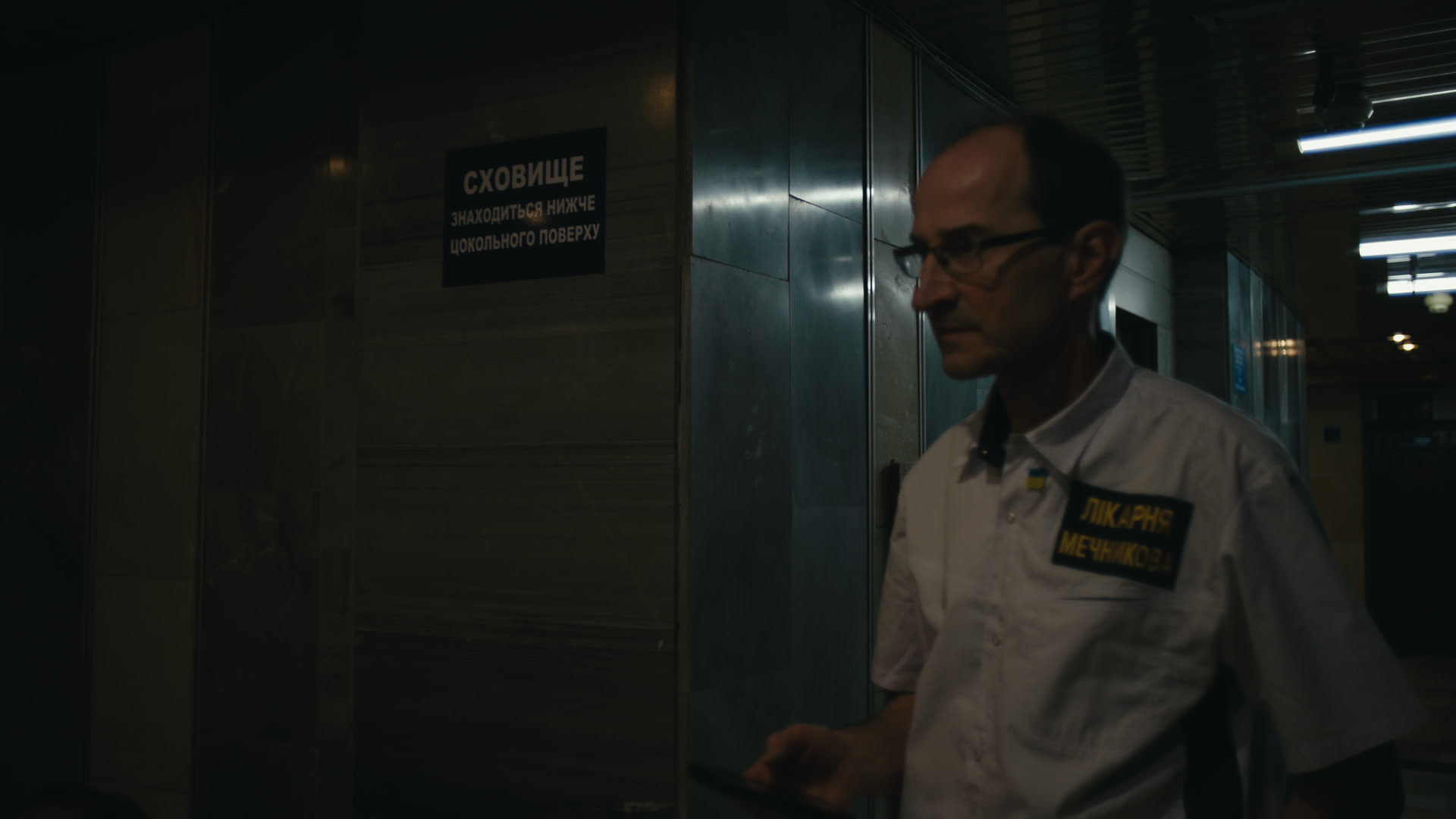
Speaker
00:00:00 It might.
Speaker 1
00:00:13 Yeah. This is...
Speaker 2
00:00:29 Is this already on?
00:00:30 It's on, yeah. You're talking, you're mute. All right. Okay, just to make, I email Gideen, I try to get a pair of small and a pair of medium scrubs. We'll see what she says. Yeah, he's locking in the door. Quick meeting here. Then we run downstairs to the big director's meeting. Then we run downstairs to the big director's meeting. Then run back up here for a meeting. It's a little more lengthy with all of the neurosurgeons. They talk about the cases that came in.
Speaker 3
00:00:58 And then he'll see consultations after that.
Speaker 1
00:00:13 Yeah. This is...
Speaker 2
00:00:29 Is this already on?
00:00:30 It's on, yeah. You're talking, you're mute. All right. Okay, just to make, I email Gideen, I try to get a pair of small and a pair of medium scrubs. We'll see what she says. Yeah, he's locking in the door. Quick meeting here. Then we run downstairs to the big director's meeting. Then we run downstairs to the big director's meeting. Then run back up here for a meeting. It's a little more lengthy with all of the neurosurgeons. They talk about the cases that came in.
Speaker 3
00:00:58 And then he'll see consultations after that.
00:01:00 Let's go. Alright. Let's go. Attention please. Yes. Attention please. Okay. Dobry rano
Speaker 4
00:01:44 [UKR] Yes, I'm reporting. [UKR] He was discharged home.
Speaker 3
00:02:15 [RUS] Which ward?
00:02:17 [UKR] This is the one who was discharged, on Friday he [UKR] was released and sent home. [UKR] Yesterday they called, saying he had a seizure. [UKR] Well if... [UKR] And what's the histology there? [UKR] Not yet.
00:02:30 [UKR] The histology will be ready today [UKR] already complete with immunohistochemistry. [UKR] Well, that's all that's needed.
00:02:42 - And the amount of
00:03:12 [RUS] and there was a report, discharge, and after that, after the season, [RUS] you can see this patient today, [RUS] during our rounds. [RUS] Yes, next.
Speaker 4
00:03:29 [UKR] Ward nine, Tupiko, temperature Saturday evening 38.5, morning 36.
Speaker 3
00:03:39 [UKR] Kondratenko, ward nine, blood pressure 160 over 110 Saturday evening, yesterday normal pressure, and his temperature maximum 36.9. [UKR] Well, so, let's say, in the ward, who needs our attention? [UKR] He was critical from the beginning. [UKR] He's getting better. [UKR] And what did we do with him? [UKR] Well, we'll quickly remove it, we'll be transferring him. [UKR] Because we put the bone back in place, [UKR] then there was a dural hematoma under the bone, [UKR] He's on IV, and he has a drain in place. [UKR] Now he's hemodynamically stable,
00:04:31 [UKR] he was underhydrated, dehydrated.
00:04:36 [RUS] Now a bit better.
00:04:41 [UKR] We'll put in a request for his transfer.
00:04:56 [RUS] Ukraine.
Speaker 5
00:04:57 No.
Speaker 3
00:05:07 Dose
00:05:27 [UKR] Volodya Losyervych, right? [UKR] - Yes, I'm following him, even Wednesday they'll discharge. [UKR] - This is interesting, he can't swallow, we need to do something.
Speaker 5
00:05:39 [UKR] - And he runs around so much that mom can't...
Speaker 3
00:05:43 [UKR] - They can't get the feeding tube into him, he'll only take it with force. [UKR] - Well, we need to figure this out, these are signs of bulbar syndrome, right?
00:05:52 [RUS] Where's the bulbar syndrome from?
00:05:54 [UKR] - He's a bit, you know, inadequate. [UKR] [INAUDIBLE] ...with Oldyayevskyi. Somehow problems with discharge developed.
00:06:03 [RUS] Swollen.
Speaker 5
00:06:04 [UKR] Swollen, yes. [UKR] Yesterday reviewed from ICU P...
Speaker 3
00:06:26 [UKR] No, I didn't get in. [UKR] We got stuck with him. [UKR] This time we'll assign by ward, and next time we'll assign the doctor who approved the transfer.
00:06:38 [RUS] And who was supposed to be?
00:06:39 [UKR] Is that so? [UKR] Open it. [UKR] Open it. [UKR] Open it. [UKR] Open it. [UKR] Yes, they brought him in, I asked, he was like sedated, but then for 4 hours he started doing such things that it was simply impossible to work. [UKR] - You gave them an injection there. [UKR] - So they're not like a cucumber, but to us they're still like little monsters. [UKR] - Well, cucumber, also. [UKR] Dex, is that a pro or what? [UKR] - Well, yes.
00:07:14 [RUS] Dex, awesome. [RUS] Dex, awesome.
00:07:16 [UKR] Valiv, he's handsome. [UKR] They wanted to transfer him on Saturday. [UKR] You endured, and recovered. [UKR] I really didn't want to transfer him. [UKR] I understood that they painted the doorstep, [UKR] so he'd step on it, and then follow, [UKR] we could find him.
00:07:37 [RUS] Why look for him?
00:07:41 [UKR] We still have such difficult cases, don't hold back.
00:07:45 [RUS] Good job, Yuri, you said to paint the threshold.
Speaker 5
00:07:49 [UKR] To paint the threshold from the frame, you said?
Speaker 3
00:07:53 I, you.
00:07:55 [UKR] So they wouldn't transfer, wouldn't transfer. [UKR] Just saying.
00:08:00 [UKR] So they'd run around. [UKR] Good. From this point we planned, we're preparing for rounds, every day we'll do them everywhere.
00:08:09 [RUS] After rounds in the ICU, in our department, because we're planning to operate on patients, and there are many patients for consultation.
00:08:22 [UKR] So we have rounds right after the OR block.
00:08:25 [RUS] Yes, we just came quickly, looked at two questions.
00:08:30 [RUS] Who's important and who's scheduled for surgery, so we know what to prepare for today. [RUS] Two paths. [RUS] Two paths? One path. [RUS] Save him from it, save from the beginning.
Speaker 1
00:08:45 [UKR] What what? [UKR] Well, it's a joke, it's old.
Speaker 3
00:08:48 [RUS] Two paths. I just don't remember it.
00:08:51 [UKR] With us will be, alongside us, a film crew of four people. [UKR] I'll introduce you later to the camera operators. [UKR] Two guys, two girls. [UKR] Thank you.
Speaker 5
00:09:37 Watch your step. Thank you.
Speaker 3
00:10:07 Thank you. Because now it's only four. Work. Yes. Only four. And four. Sleep. Yes. Yes. Sleep. Sleep. Sleep. Yes.
00:11:06 Good morning. - Aleksandr, happy birthday yesterday. - Hey! - Congratulations. - Yes, so much.
Speaker 1
00:11:34 - I hope it's a good month for birthday. - Yes. - Okay.
Speaker 3
00:11:48 - Hey, Antovich.
Speaker 1
00:11:51 [RUS] - I love you. [RUS] Hello! [RUS] Hello! [RUS] Hello! [RUS] Hello!
Speaker 3
00:12:00 [UKR] [INAUDIBLE]
00:12:01 [RUS] Aleksandr, Ukrainian. [RUS] Good afternoon!
Speaker 1
00:12:04 [UKR] See you.
00:12:09 [RUS] Ukrainian speaks Ukrainian. [RUS] Did your Ukrainian warm up? [RUS] Did Ukrainian speak? [RUS] Ukrainian. [RUS] Ukrainian.
00:12:21 [INAUDIBLE] Just watch the mirrors.
00:13:44 [RUS] Good afternoon, friends.
00:13:50 [UKR] Our American friends, today with us we have Professor Alex Valadka, [UKR] a world-renowned neurotraumatologist, specialist in critical care therapy. [UKR] We already know him and are very grateful.
00:14:11 [RUS] And today the main group of our specialists, [RUS] who want to film all our work, [RUS] this is connected with our wounded patients, [RUS] military wounded, this is very important, [RUS] because I know that in Russia for Ukraine [RUS] it's important for us that everyone understands,
00:14:38 [UKR] How much today is being done against us, how today the Ukrainian medical streets face it, [UKR] and all those who live through these hardships, there are very many people, [UKR] You've seen that the large front, they constantly strike with UAVs, artillery, rockets, glide bombs. [UKR] We saw that 9 people were brought to us in Petropavlivka. That's our region. [UKR] And completely civilian people, who have no idea what military equipment is and so on.
00:15:27 [RUS] The UAVs strike and drop. [RUS] The UAVs, thank God.
00:16:03 [UKR] Dr. Kamazov, Dr. Teineka, Dr. Teinenko, Dr. Kaskov, Dr. Painets, Dr. Tomov, Dr. Vysnychev, Dr. Savdiiv, Dr. Pylekh, Dr. Rozovsky, Dr. Rozumbov.
00:16:19 [RUS] [INAUDIBLE] [RUS] Dr. Hryshyn, Dr. Hudesko, Dr. Aklana, Dr. Asan, Dr. Astala, Dr. Yanovatova. [RUS] [INAUDIBLE]
00:17:00 [UKR] Dr. Asan, Semina, Andrii Mykolaiovych.
00:17:07 [RUS] [INAUDIBLE]
00:17:08 [UKR] Thank you very much.
00:17:09 [RUS] [INAUDIBLE] [RUS] I can. [RUS] [INAUDIBLE] [RUS] [INAUDIBLE] [RUS] [INAUDIBLE] [RUS] [INAUDIBLE]
Speaker 3
00:17:41 [UKR] Thank you.
Speaker 1
00:18:02 [UKR] Thank you. [UKR] Very many severe cases. I was in the ICU over the weekend, in intensive care. [UKR] [INAUDIBLE] [UKR] [INAUDIBLE] ...I said that I can't, how difficult it is. [UKR] There's nobody to complain to. I realized that I started, that I started, that it's important to work. [UKR] I understand how important what you're doing today is. [UKR] There isn't a single day in this building when there isn't something more to say to you.
00:18:53 [UKR] Good afternoon, thank you, seeing everyone. [UKR] I bow to you. [UKR] Friends, [INAUDIBLE] [UKR] [INAUDIBLE] [UKR] when they meet on the 14th, we'll hold our meeting, so that on the long question. [UKR] Thank you.
00:20:01 [UKR] Everyone supports us, I think everyone is supported, [UKR] while adding one bandage-related matter, [UKR] which will be for the protocol. [UKR] And at 14:45 we move to the old therapeutic building, [UKR] there will be a new event, Yuri Yuliyovych was warned about the court, [UKR] that already run, don't tell what's planned there, [UKR] but there, when they're planned, like in the cemetery, [UKR] Those who can't run, can register an amendment to be happy, and this event must be supported. [UKR] Thank you, thank you for coming so quickly to leave. Friends, there's no [INAUDIBLE] today in the place.
Speaker 3
00:21:13 [UKR-NEEDS] Сьогодні ми заказали тромбоконцентрат для поранення, він повинен будити в 11-12 годин для тромбоконцентрат.
00:21:21 [UKR] Today we ordered platelet concentrate for the wounded, it should arrive at 11-12 o'clock, the platelet concentrate. [UKR] We'll do a transfusion and take him to the operating room together with the ophthalmologists. [UKR] Yes, today we need to operate, because there's direct communication with the ocular environment and high risk of infectious-septic complications. [UKR] But yesterday the surgeons correctly did damage control. So the traumatologists handled their part. [UKR] They transfused plasma, platelet concentrate, stabilized him today again with platelet concentrate, and we'll take him to the OR together with Professor Maris Halatka.
Speaker 1
00:22:06 [UKR] We're planning, for now a severe wound, I'll report to you. [UKR] [VO CANDIDATE] Very severe, a young man just came in without a leg, without an arm,
Speaker 3
00:22:15 [UKR] and also with a very severe head injury. [UKR] Plus lung contusion, lung blast, plus cardiac contusion, [UKR] which I'm reporting, I was there in front, right in this place, when he was running, [UKR] so this is severe polytrauma of the body and, of course,
Speaker 1
00:22:52 [UKR] [INAUDIBLE]
00:23:20 [RUS] [To be continued...] [RUS] [Thanks for watching!]
Speaker 6
00:24:12 [UKR] [DELETED - ASR ARTIFACT] [UKR] You give me the candidate, and the diagnosis with the patient's surname you send me in personal Telegram.
Speaker 1
00:24:41 [UKR] For today until the 9th, I ask you to provide candidates to Kurokovnytsky and Chorkov. [UKR] [INAUDIBLE]
00:25:02 [RUS] Today conduct all the private ones. [RUS] We're returning home to the people.
Speaker 3
00:25:12 Thank you.
00:26:07 We have acquired our operations in 12 cities of the Central University of Ukraine. Say that again? Can you tell me? In this round meeting, General Director said we have acquired our severe wounded civilian soldiers in 12 cities of Ukraine.
Speaker 2
00:26:36 [RUS] 12 countries in the center and in Ukraine continue to treat with medicine.
Speaker 7
00:27:02 [RUS] Thank you.
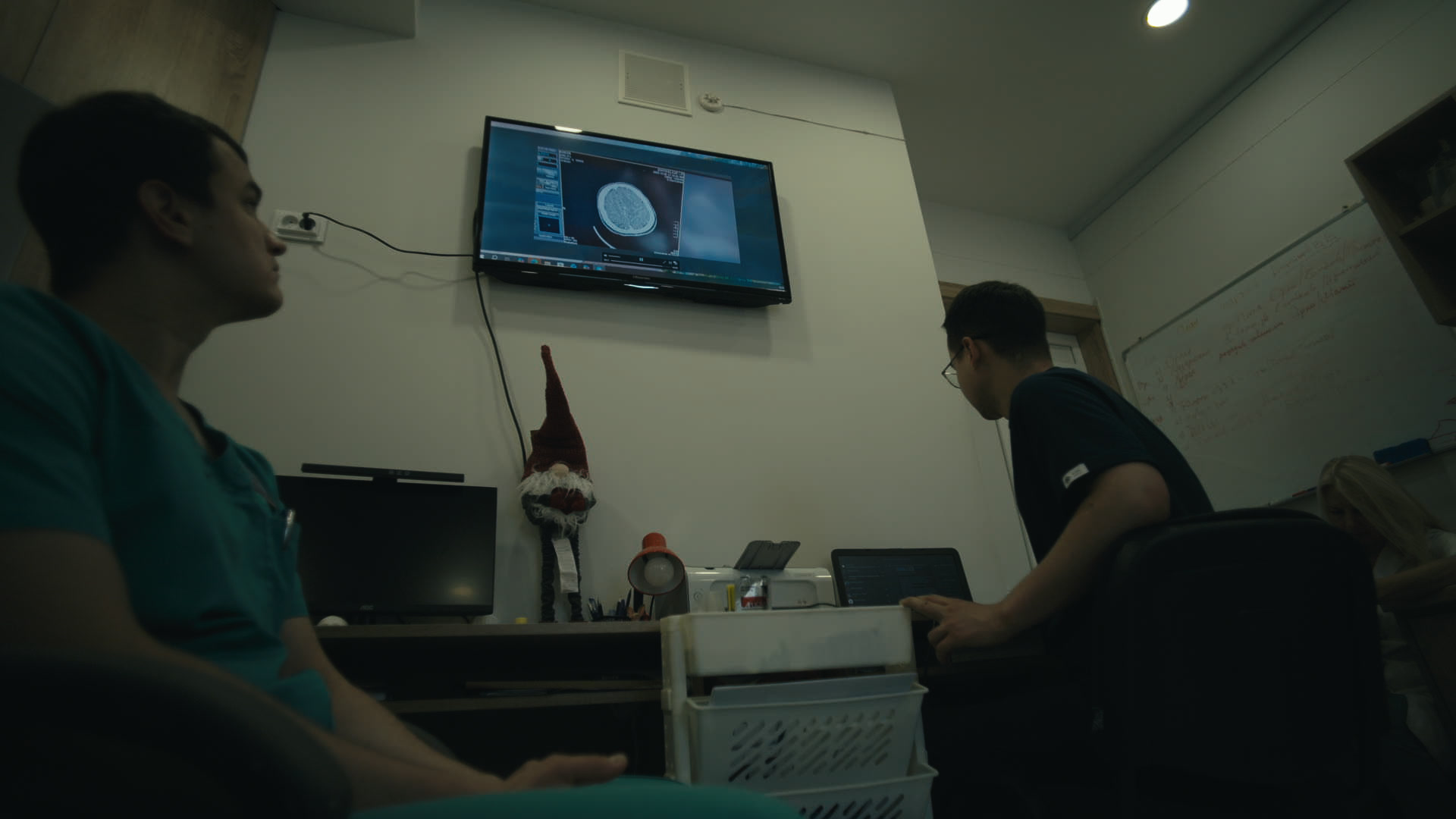
Speaker 1
00:00:00 [RUS] Choosing
00:00:29 [RUS] - Choosing
00:00:31 [UKR] - Do you have just an angiography?
00:00:34 [RUS] - Just a catheter.
Speaker 1
00:00:00 [RUS] Choosing
00:00:29 [RUS] - Choosing
00:00:31 [UKR] - Do you have just an angiography?
00:00:34 [RUS] - Just a catheter.
00:00:39 [UKR] - It's documented here, but we discussed for a long time because it's a bit unclear. [UKR] But even if there's an aneurysm there, the appearance is a bit kidney-shaped. [UKR] Probably, it's still better to do an angiography for him. [UKR] - Will you find out how high?
00:01:25 [RUS-NEEDS] Александр Анатольевич вчера поставил уже было 2000 запросов.
00:01:55 [RUS] Aleksandr Anatoliyovych yesterday already put in 2000 requests. [RUS] And did you tell him?
00:02:00 [RUS] I told him, but you're the department head. I can't say that.
00:02:07 [UKR] I said it politely.
00:02:11 [RUS] Yesterday there were 2000, in the evening I came and... [RUS] Sasha, you're better. [RUS] And what about today? [RUS] Today I'm not dreaming.
00:02:24 [UKR] - Four, five, six. And yesterday already on the functional trainer there were two.
00:02:31 [RUS] - And did you clean them in the morning?
00:02:36 [UKR] - I'm just saying that these drains we have... Artem, Ilya, Mykhailo, who is stronger among you?
00:02:45 [RUS] - Equally.
00:02:46 [UKR] Take them so that in the storage room you find a place where neurosurgeons sleep, put them in the drawer so there are drains available. [UKR] Get them from Olya or Karina. If you can't get them from them, I also have some. [UKR] There are some under the tap.
00:03:06 [RUS] Get a couple.
00:03:09 [UKR] Serhii Petrovych handed off to Davyd. [UKR] After surgery they're there later. [UKR] And will something else come out there? [UKR] A tip? [UKR] A tip. [UKR] A tip? [UKR] And not only. [UKR] This is a normal situation. [UKR] They understand that these are jokes.
Speaker 2
00:03:35 [UKR] [INAUDIBLE]
00:04:12 [RUS] No, on the right there's a stenosis, and it's 60%
Speaker 1
00:04:18 [UKR] and on the left, look, you see, in the form in the catheter, I sent it.
00:04:25 [RUS] Got it? [RUS] And there they also wrote it was discussed, I read,
00:04:30 [RUS] placed by Cherednychenko, and, in addition, [RUS] we do it by hand, we take extraction, [RUS] they inserted some stents, and there it says 99% stenosis, right, Serhii Viktorovych? [RUS] - Do you remember? -
00:05:13 [UKR] I thought that here we don't have any dividers for that, so that... [UKR] Colleague commented that... [UKR] Here we need to finish the schedule, it's half empty.
00:05:36 Our colleagues asked who will be the second number.
00:06:06 [RUS] Best ZBS Resident ZBOV. [RUS] What are you laughing at? It's true. [RUS] Actually, they want to come for a week and work with you, you'll give a masterclass in Ukrainian Neurosurgery. [RUS] Okay? [RUS] Okay, I'll present this.
00:06:32 [UKR] Teddy is the group leader, he's very accomplished in the film industry, specifically documentaries. [UKR] Almost all of them have Emmy awards, Logan, he's been working for 7 years together with Teddy, Laura. [UKR] They're all distinguished and all have many awards, I won't translate. [UKR] Anastasia is our local, she understands both Ukrainian and English, and she will be, as a link, [UKR] she'll be the liaison between us and them, and will help them work.
00:07:19 [UKR] Of course, they don't work as fast as we do, I already understand this from yesterday and this morning, [UKR] but I think by the end of the week everything will be fine. [UKR] [VO CANDIDATE] I think any help, especially highlighting what's happening in Ukraine, what wounded we have, what conditions we work in, this is very important. [UKR] Yesterday I gave them a tour and showed what can't be filmed, showed the building on the embankment that's destroyed. [UKR] We were having lunch in the center, where there was an attack near the center, drones were falling there. [UKR] I showed them, this is the situation.
00:08:00 [UKR] I think this is a positive moment. [UKR] They flew from America and will work with this knowledge. [UKR] So full assistance they can have in your operating rooms, and in the ICUs. [UKR] We work, we show, we tell. [UKR] Victory.
Speaker 2
00:08:28 [UKR] That's at our place.
Speaker 3
00:08:32 [UKR] No, consultant, referral to neurologist.
Speaker 4
00:08:37 [UKR] Misha, Misha, is it already the 27th?
00:08:41 This guy has been here for a long time. This one is new. What are you doing now? I think we're going to do rounds on every patient in a whole service. At least once a week. Then, while the OR is getting set up, he'll see some consultations in the office. And it would be a good idea because you guys need a lot of time to set up. We can break you out maybe during a consultation until you can set up in EO1. I think that probably makes the most sense.
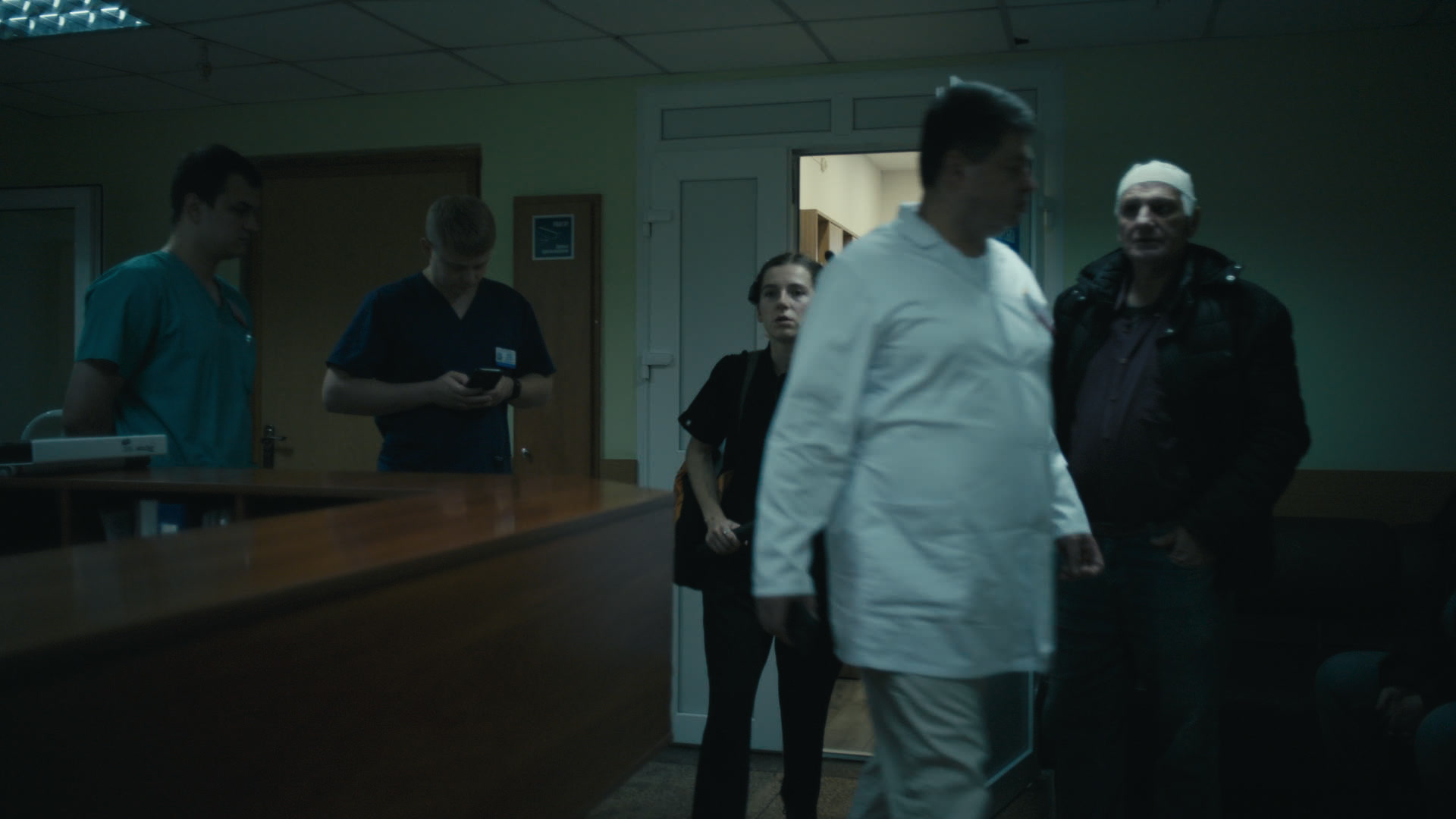
Speaker
00:00:00 We have this for minutes before we go to the ER, so if you need to charge batteries.
Speaker 1
00:00:00 This is a very like
00:00:00 This is a very like Okay. Start with here.
Speaker 2
00:00:42 I think we need to consider like batteries.
Speaker 3
00:01:05 - That's not a bad idea.
Speaker 1
00:00:00 This is a very like
00:00:00 This is a very like Okay. Start with here.
Speaker 2
00:00:42 I think we need to consider like batteries.
Speaker 3
00:01:05 - That's not a bad idea.
Speaker 4
00:01:10 - We just don´t
Speaker
00:00:00 - Maybe we don't wanna leave the Ronin here.
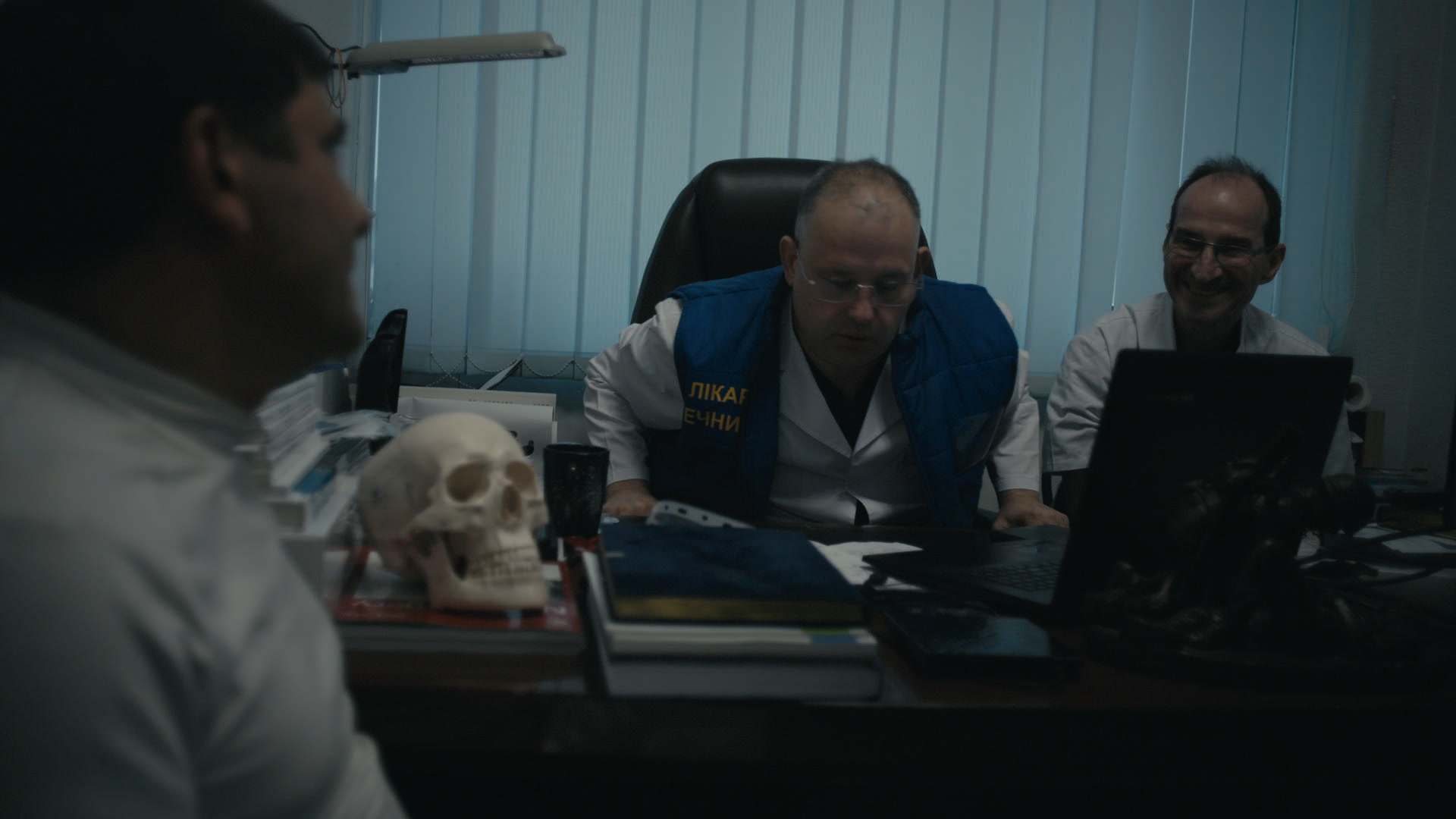
Speaker 1
00:00:00 We will have a little bit of a drink, because we will be sick, so we will not be sick.
00:00:00 We will have a little bit of a drink, because we will be sick, so we will not be sick.
Speaker 2
00:00:59 Yes.
Speaker 1
00:01:04 [RUS] I have a fair request for you, at the end...
Speaker 1
00:00:00 We will have a little bit of a drink, because we will be sick, so we will not be sick.
00:00:00 We will have a little bit of a drink, because we will be sick, so we will not be sick.
Speaker 2
00:00:59 Yes.
Speaker 1
00:01:04 [RUS] I have a fair request for you, at the end...
00:01:31 [UKR] - Surname?
00:01:32 [RUS] - Akper. [RUS] - Akper.
00:01:37 [UKR] - Can I ask, our pathologist they're filming, that the people you consult, ask if they don't mind, so they won't be on camera if the person doesn't want to be in the shot. [UKR] - I'll ask, what's your name? [UKR] - Khali.
00:01:55 - You are not happy that our American telegrams will submit our consultation with you?
00:02:00 - You are not happy. - Good. This is Professor from Dallas, Alex Mala. We consult with you together.
Speaker 4
00:02:14 And that you are not happy, we are just watching. - Is this camera speeding already? - Should be. - Check the safe here. - Yeah, you're good, you're good. Let's close the door.
00:02:30 - Sorry. - We're rolling. - Let me just check. - I'm sorry. - Yeah. - You have a car on the vision. - Yes, it's a car on the screen. The view? Yes, I can't see it. Do you see it? Almost not.
Speaker 2
00:03:14 Can you go through the door? It's a bit of
00:04:14 - On what corpus? - Where the glass light... - What thermology? - Uploading CT, you can see the progress here. So patients come with discs. He puts them onto his hard drive. - Gotcha. - And we're waiting for it to burn from the CD to the hard drive.
Speaker 5
00:04:33 There's no centralized system. I think we should talk about this... Am I on camera right now over there? I was filming it. You are on camera. Okay, so should I have talking to you or something? Talking to someone off camera? I would, probably, he just talked over here, right?
Speaker 4
00:04:51 To, like, towards that camera? Sure, yeah, yeah. I mean, I can sit a little farther if you want. Okay, so what we're doing right now is all the patients show up with a CD, a compact disc,
Speaker 5
00:05:02 and then Andre takes that and copies it to his hard drive, and you can see the progress of that while we're waiting to see the images. So I'm going to have a record of it on this hard drive when he backs it up here. But then you just eject the CD and give it to the patient. So the patient goes to see other doctors, they take the CD with them and all their paper records. Action. So we're almost uploaded. No. You are wrong. You are wrong.
Speaker 1
00:05:30 It's a CD is empty. Empty. Unfortunately, I will ask my resident to repeat the recording. No. What is all this here? No, no. It's right to find information.
Speaker 5
00:05:50 Yeah, you're good. Yeah, so I guess it's gonna turn out. We're totally good. I mean, I'm not.
Speaker 1
00:05:55 [RUS] - Come in, it'll be cheaper, [RUS] Empty disc. Empty disc. I'll now ask my assistants to burn a disc for you.
00:06:51 [RUS] Artem, come in. Mikhail said there will be punishment. [RUS] He's already coming after me.
00:07:00 [RUS] Look, the patient had an MRI, and the disc failed. [RUS] Do you know Shulhina? Krystyna Shulhina who works at MRI, tell her to urgently burn a disc. [RUS] Tell her, the professor is sitting with the American professor, waiting for it to be burned. [RUS] - I understand. - Now, Artem. [RUS] And now, one moment. [RUS] - Is this Tesla 3, right? [RUS] - Yes, Tesla 3. [RUS] There should be "Sinoliz Anastasia". [RUS] Company "Sinoliz", and her name is Anastasia. [RUS] Ask if she's there or not? [RUS] - "Sinoliz Anastasia" is there. [RUS] - Wait, in the hallway while they bring you the disc, I'll talk in the meantime. [RUS] Okay? Let her stay here.
00:07:53 [RUS] Let's quickly run and record it. We'll call you, okay? [RUS] Okay, good. [RUS] Because if I don't see your disc, it'll be bad. [RUS] Come in, you'll be in history. [RUS] Come in, you'll be in history. [RUS] God! [RUS] How interesting everything is here. [RUS] - This is Dmitry, this is the director of our project.
Speaker 6
00:08:24 [UKR] Dmitry, have a seat.
Speaker 1
00:08:27 [RUS] - We'll go down in history. [RUS] You'll go down in history, yes. [RUS] And why not? [RUS] History is important.
Speaker 6
00:08:37 [UKR] Reminding.
00:08:39 [RUS] Yes, well, here it is, also.
Speaker 1
00:08:43 [RUS] Here it is on top, yes.
00:08:48 [UKR] You don't mind being recorded, it'll be shown on American television in a year or two? [UKR] - Only in favor. - Only in favor.
Speaker 4
00:08:55 [RUS] - Play.
Speaker 6
00:09:03 [UKR] - We won't talk about bonuses, about all the installations.
Speaker 1
00:09:09 [UKR] - We'll be quiet there. Only for military, free installations.
00:09:15 [RUS] - What's it called?
00:09:16 - It's customized, it
00:10:17 [RUS] Maybe, a ruble, implantosa, their company. [RUS] Why do I know, because my doctor Vadym operated on this patient. [RUS] When they needed to operate, to save her, they were busy. [RUS] When she started recovering, then they could put in a shunt, and ordered such a plate.
Speaker 6
00:10:42 [RUS] That's why I know. [RUS] We now also have, where we can make from PEEK, if that's more interesting for you, more classic.
Speaker 1
00:10:54 [RUS] - Do we use it? - Yes, yes, a lot. [RUS] - What do we often use? - Titanium urite.
00:11:00 [RUS] Do you use it? - Yes. [RUS] - What do we use? - What about in the USA? [RUS] - Very expensive. - Very expensive for the USA? [RUS] Yes, yes. - How much? [RUS] - Maybe 15,000 dollars. - 15,000?
Speaker 5
00:11:13 Yeah. That's what the hospital has to pay. Two thousand euros. You can send patients for us. And you will keep the other 13,000 so you can see how much better.
Speaker 1
00:11:28 Matter of fact, our hospital complains about that when we do this. I think 2,000 for company and 13,000 for you.
00:11:39 [RUS] Yes, that's true. [RUS] - I'm trying to pay for my trips to Ukraine. [RUS] - No, yes, yes. [RUS] If this implant costs 2,000 euros, in the US it's 15,000 euros,
Speaker 6
00:11:52 [RUS] so this and this, and this, and I'll send it to your credit card.
Speaker 1
00:11:59 [RUS] Yes, it's a bonus. [RUS] Yes, good. [RUS] - Yes, yes, I'm a certified doctor. [RUS] - Yes, yes, I'm a certified doctor.
00:12:11 [UKR] - Dmitry Spieva, I'm from Kharkiv.
00:12:14 [RUS] - Here, and here, Anastasia. [RUS] - I'll remind you, where you live and business card.
Speaker 6
00:12:21 [RUS] Do you have such, not business cards, beautiful? [RUS] - Price list?
00:12:30 [RUS] - Price list. [RUS] Price list, but you don't have a price list. [RUS] I'll look at the titanium. [RUS] Well, PEEK is a bit more expensive because there are additional fixing plates, [RUS] and it's necessary. [RUS] But titanium, in any case, includes the cost. [RUS] If it's a patient. [RUS] - Is this because of training glass? [RUS] - No, no, no. [RUS] This is a representative of this company.
Speaker 1
00:12:57 [UKR] - Oh, I'm a representative. [UKR] - I'm a company representative.
Speaker 5
00:13:01 [RUS] And we were talking about how we can help our soldiers, and how it's very expensive for regular patients. [RUS] And we can check the titanium when we insert it. [RUS] - If there's carcinogen. - Yes, yes. [RUS] - It's very likely.
Speaker 6
00:13:28 [RUS] - Powder from Canada.
Speaker 1
00:13:30 [RUS] - Titanium powder from Canada. [RUS] - Titanium from Canada. [RUS] - This is first place.
00:13:42 Yes.
00:13:44 [UKR] Canada is the second country, then.
00:13:51 [RUS] - This is Russia [RUS] - This is Russia [RUS] If you want, you can prepare and create in Ukraine and send to Ukraine. [RUS] Yes, 50% to 50%
Speaker 6
00:14:35 [RUS] 50% rent for me and 50% for you. [RUS] Come on, we already split it.
Speaker 1
00:14:42 [UKR] Can I have a couple of percent?
00:14:45 [RUS] That'll be the bonus.
00:14:49 [UKR] Alex comes very often, already the fourth visit to us. [UKR] Now we're waiting for them to bring us a wounded military patient.
Speaker 7
00:14:58 [UKR] Will you put an early plate for him? [UKR] No, difficult time.
00:15:04 [RUS] I ask, please, give our colleagues from America.
00:15:10 [UKR] Maybe for the next visit we could print something there. [UKR] a large defect stuffed, so that for the visit it would be interesting, [UKR] to try writing. I just think that our edge plates [UKR] fit much better than what they make at Mercedes.
Speaker 1
00:15:28 [UKR] - Can do, as we can, whenever we can arrange. The next visit will be in February, [UKR] his colleague from Washington will come, somewhere around, Rok Armonda.
00:15:38 They propose to prepare one patient soldier with a huge maybe complex skull defect and then create and make this titanium plate and we'll perform surgery together with Rok Armanda maybe on February.
Speaker 7
00:16:00 [UKR] Okay, we'll hang it on my desk, as a reminder, you gave a good idea and this will be such a case, and we can show. [UKR] And in parallel, I'll remember for these others too. [UKR] Either PEEK, or Titanium, or both.
Speaker 1
00:16:17 [UKR] I told you once. We've been working since 2003, there was still Konmet, Megamet, Donetsk.
00:16:30 [UKR] The ridge, now I won't stand up, but we started placing the first individual titanium plates in Ukraine, [UKR] and they asked for our cases and released such a big brochure in A4 format with our cases [UKR] specifically for individual titanium plates, this was 20 years ago, in 2005 that brochure came out.
Speaker 7
00:16:50 [UKR] So we've placed the most of these titanium plates in Ukraine. [UKR] For us, with PEEK, the innovation is that usually they print them on 3D printer, and we mill them. [UKR] They're monolithic, solid, they're not porous. [UKR] And I think that in the States small ones maybe exist, but large milled ones don't. [UKR] I think large milled ones are our history. [UKR] It's solid. [UKR] - Well, what ambition, yes, it gets distributed. [UKR] - You won't have it, right? [UKR] - Yes, I think it's a good idea, I'll just show that we with the Americans
Speaker 1
00:17:30 [RUS] And we operate and publish. This is their world-renowned journal in Neurosurgery journals. [RUS] And this is our illustration, our article, featured on the cover. [RUS] Alex Rokoperedov, we still generally, there was nobody like this in the world, this is the Journal of Neurosurgery. [RUS] In August '25, very fresh. [RUS] And in this issue two of our articles, one after another.
Speaker 7
00:18:09 [UKR] That is, in such a journal, where immediately two of our articles.
Speaker 5
00:18:14 [RUS] Only full publication. [RUS] I'll bring more copies. [RUS] Yes, and more in my bag. [RUS] I'll show them to the leading journalists.
Speaker 1
00:18:24 [UKR] Thank you for your attention.
Speaker 6
00:18:55 [UKR] - Higher on the cake, they took the cake for themselves. [UKR] - Well, it's okay, you'll come, you'll have cake, everything will be fine.
Speaker 1
00:19:02 [UKR] We'll get through this. [UKR] - I'm not worried about my doctors also...
Speaker 6
00:19:08 [UKR] 100%. Thank you. [UKR] Thank you. [UKR] - Thank you, while you were with us.
Speaker 4
00:19:16 [UKR] - Dmitry, I don't know how you. [UKR] Dmitry.
Speaker 5
00:19:19 I need a baby bag from here and can I get my fan changed out?
Speaker 1
00:19:32 Yeah. My internist went to register for a disk. If he goes, we will let him go without a doubt because he is waiting for a patient. Yes, that's the next one.
00:20:27 [RUS] Come in. [RUS] We'll soon go to the operating room. [RUS] Of course, mom.
00:20:34 [UKR] Thank you. - No, I.
00:20:39 [RUS] - Let it be.
Speaker 3
00:20:42 [UKR] - Your eyebrows and eyelashes are painted much more, so you look older.
Speaker 1
00:20:51 [UKR] - You have a difference, let's say, 16 years. [UKR] - 16? They're a bit, if the American colleagues are filming, maybe in a year or two there'll be a documentary in America.
00:21:33 [RUS] - Is that you in Zaporizhzhia, yes?
00:21:34 Yes.
Speaker 3
00:21:35 [RUS] - And how did this appear? [RUS] - It came back, about a year and a half ago, probably, as it could,
00:21:40 [UKR] about 1.5 years, my hand just started like this...
00:21:42 [RUS] - And the reason is what? [RUS] - Tremor. [RUS] 5 thousand, 5 thousand, mine started. [RUS] I came to Boris, she told me that it's just [RUS] nerve pinching, to me, in Varnyansk, [RUS] in Varnyansk, in Zaporizhzhia, in Zaporizhzhia, in Plazsk. [RUS] I came to Varnyansk, but I just said that [RUS] because of nerve pinching and taking vitamins, everything...
00:22:00 [UKR] Well, we didn't go through anything, she literally didn't think, [UKR] because day by day, so day by day, [UKR] because I don't have anything sports-related. [UKR] And literally around the 10th, all at once, [UKR] I had this, and my right hand just started to fail.
00:22:13 [RUS] I immediately reached out to the doctor, she scheduled me for an MRI,
00:22:16 [UKR] and also prescribed something like this for me. [UKR] And when they did the MRI, my doctor immediately called me [UKR] and said that I had something similar. [UKR] I started calling, asking what to do next. I have a friend, she was Zorina, she also had surgery.
Speaker 1
00:22:37 [UKR] He sent his analysis, he recommended another doctor to me. [UKR] - Professor now works in the emergency hospital, [UKR] Vikola Viktorovych Zorin, I don't know how to visit, before
Speaker 3
00:22:58 [UKR] he worked with us, we worked with him. [UKR] - I asked him, he says, what's your diagnosis, which I told you,
Speaker 7
00:23:03 [RUS] I can't process it in my head.
Speaker 3
00:23:06 [UKR] - Who else did he recommend? [UKR] - He didn't push, I usually, I usually, [UKR] he said that surgery.
00:23:16 [RUS] I said that he can do it, we not in 2 weeks, because he went on leave.
Speaker 1
00:23:21 [RUS] He has swelling, something hurts, something he'll say, I'll be 2 weeks now. [RUS] - Didn't you upload here? - Uploaded, yes and no.
Speaker 3
00:23:37 [RUS] - Didn't you upload here, or not? - No, no. [RUS] - I sent him this conclusion and sent a photo. [RUS] And that's it, and he then said that he'll do surgery, that most likely it's paralysis. [RUS] After such surgery... - He said it's probably congenital, right? [RUS] - Yes, yes, he said it's not congenital, said that most likely paralysis.
00:24:00 [RUS] Ugh, so that's it, I would... [RUS] - Now my hand is weak, it can't do anything on it anymore...
00:24:06 [UKR] Now it can't, that we didn't cut.
Speaker 1
00:24:36 [RUS] that we can't say for sure that it's all connected. [RUS] - Tremor and eyelid in the right area.
Speaker 2
00:24:51 [RUS] Eyelid gate. [RUS] - No, no, the doctor said it could be.
Speaker 1
00:24:57 [UKR] - And now there are weak extremities.
00:24:59 [RUS] - They say this is happening? [RUS] - No, did this appear suddenly or gradually?
Speaker 3
00:25:07 [RUS] - No, gradually. [RUS] - Is this a 2-year-old problem? [RUS] - Yes, it just trembled. [RUS] I could just spill something, but I could do everything. [RUS] And here, well, I somehow don't know, gradually it started to feel heavy, [RUS] and it became more or less difficult to press there, to cut with a knife. [RUS] It became harder, harder, and now it can't grip. [RUS] You can't say, it gets worse during the day.
Speaker 5
00:25:29 I think it's maybe...
Speaker 3
00:25:41 [RUS] [INAUDIBLE]
00:26:11 [UKR] It's just weak vessels in me.
Speaker 1
00:26:13 [RUS] That's all.
Speaker 3
00:26:15 [UKR] - If this.
Speaker 1
00:26:32 [UKR] - You were saying
00:27:02 [RUS] - The symptoms are increasing, right, now?
Speaker 2
00:27:07 It's harder, harder. Yes, it's harder. With the hand, I am more. Right around, it's more.
Speaker 1
00:27:17 More. I think it's need to perform surgery. I now would like to see in a coronal and a digital view. How do you approach this? I need to 3D video see because for example in this case you can go through the silver
00:28:08 [UKR] [INAUDIBLE]
00:28:38 So...
Speaker 3
00:30:58 [RUS] [INAUDIBLE] [RUS] Good, I see.
00:31:01 Yes. Yes.
00:31:02 [RUS] I didn't complain to anyone. [RUS] [INAUDIBLE]
Speaker 9
00:31:06 No.
Speaker 1
00:31:07 [UKR] Did they bring lunch? [UKR] There, we bring it. [UKR] There, in that room. [UKR] Yes, yes. [UKR] And Pashchuk, who's lying there, wants to see you.
Speaker 9
00:31:16 [UKR] [INAUDIBLE] [UKR] [INAUDIBLE]
Speaker 1
00:31:40 [RUS] I'm first with the disc already. [RUS] Good. [RUS] Good.
00:32:57 [DELETED - ASR ARTIFACT] I think in this situation the best one is the sub-temporal approach. You can see this one. Maybe it can remove the inferior gyrus. Yes, because if you go from the...
00:33:46 this part you can see this optic nerves and after the high asthma and after the optic radiation goes here.
00:34:20 [RUS] Indeed, this is congenital pathology,
00:34:23 [UKR] This is a cavernous angioma and it's accompanied by gradual bleeding. [UKR] Small hemorrhages, worse, worse, and it increases, increases, increases.
Speaker 3
00:34:36 [UKR] This is second. Surgery is indeed needed, because this hemorrhage can become even larger over time.
Speaker 1
00:34:45 [UKR] - How can this surgery be? [UKR] - Wait, hold on, don't rush. I started to say. Congenital, repeated hemorrhage, surgery is needed.
00:34:53 [RUS] [INAUDIBLE]
00:35:23 [UKR] If this is vascular pathology, as in your case, on this floor opposite the vascular neurosurgery.
Speaker 3
00:35:31 [UKR] If Illia Yevheniyovych takes your surgery, if he takes it, a week or two is not urgent, he can operate on you.
Speaker 1
00:35:41 [UKR] Can I, they already gave me, nothing will happen. [UKR] If he looks carefully at the MRI and says no, then we'll take it. [UKR] We have such an agreement, that we operate on tumors, they operate on vascular,
Speaker 3
00:35:58 [UKR] we don't take patients from each other. [UKR] I was on the phone with him, I told him that you were recommended to me, [UKR] he said that you don't take this, because there you're not something. [UKR] If he refuses, then you'll take. [UKR] He said that I'll take you, Nesidnina Yuliyevna, I just need to call. [UKR] He won't say what tests to do and for me to come to you, but immediately decide and operate.
Speaker 1
00:36:19 [UKR] He doesn't see the video. [UKR] In any case, this brain zone I operate and Pliushchev, Illia, Yevheniyovych operates.
00:36:30 [UKR] I only operate on tumors, he operates on vascular pathology. [UKR] If he says no, then come to me, we'll talk then. [UKR] it's called ethics and deontology. We don't pull to ourselves, because these are complex things and we have division, [UKR] and there are specifically two departments. So I know, he has results, not bad, good results, he operates.
Speaker 3
00:36:57 [UKR] And specifically from that department he performed the most such interventions.
Speaker 1
00:37:03 [UKR] - Well, we'd like you to be present there.
Speaker 3
00:37:07 [UKR] I can't be torn into thousands of pieces. [UKR] - It's unfair, you understand, that maybe...
Speaker 1
00:37:13 [UKR] - His operating room is next to mine. [UKR] His operating room is one door away. [UKR] If needed, he involves, he can call, [UKR] I can even come to him during surgery. [UKR] So call him, do your tests, get hospitalized. [UKR] - In any case, every morning we hold operative meetings. And again on the big screen every morning we review the plans for the surgeries we're planning to do today. [UKR] - Is that what you finally decided? - It's only done when she's admitted to us.
Speaker 6
00:37:55 [UKR] - Yes, it's called angiography. I'll write it down for you, and it's standard.
Speaker 1
00:38:00 [UKR] - So, when she comes for hospitalization, right? [UKR] - Yes, he will perform this examination for you in any case. [UKR] - Tell me, if I don't recover, he didn't say what could happen afterward.
Speaker 3
00:38:12 [UKR] - As a rule, there can be speech disorders, movement and vision disorders, but as a rule, over time it gradually...
Speaker 1
00:38:23 [UKR] You see, he said that this could last a whole lifetime. [UKR] - Now it will be better, I haven't finished. No one will say it will recover 100%. [UKR] But that after surgery it will be better, that I know.
Speaker 3
00:38:40 [UKR] Part of it is because this cavernoma damaged the brain structure, and part because after surgery the edema zone increases.
Speaker 1
00:38:48 [UKR] - How many more times? How much will such an operation cost? [UKR] - One million dollars. - One million dollars. [UKR] - And why don't you ask? - [INAUDIBLE] [UKR] - American, Canadian, or Australian?
Speaker 3
00:39:06 [UKR] - Ours. - Our dollars. [UKR] All done, run. - All done, thank you.
Speaker 6
00:39:12 [RUS] Have a nice day. - Have a nice day. [RUS] Goodbye.
Speaker 3
00:39:18 [UKR] - We'll exit, we won't exit yet, we won't.
00:39:20 [RUS] And you sideways? [RUS] Yes, even sideways we aimed. [RUS] I have an animal, but yes, it worked. [RUS] Thanks for the sideways.
Speaker 4
00:39:32 [RUS] We're getting a new battery, [RUS] so we just know, [RUS] that the doors don't open here in one second. [RUS] And that's it, thanks.
Speaker 1
00:39:43 [RUS] Girls, I'm consulting my person.
00:39:46 [UKR] Everyone then moves to the dining hall,
00:39:49 I will take the phone and say, you said you are sitting. All of us tomorrow. Because after we will go to the operation.
Speaker 4
00:40:04 Anastasia, we will consult a patient. We will get lunch. After this, we will do it. I'm very bright guys this card. Can we see if you're...
Speaker 5
00:40:14 Is there a red light? Yeah, red light. Okay, great. No, it's orange.
Speaker 4
00:40:24 Orange.
00:40:30 Yeah, I don't think I... This is not... Is that right? Hold on to the... on your magnet. It's blinking, I know. Actually, here, I'll hand it back to you when I know it's on, right? I know his is on.
Speaker 5
00:41:38 *starts* Oh, that's our uniform. You have a nice pair. This is senior physician uniforms. You have to be senior, yeah, sorry. I'm sorry you can't wear them. I'm not even a professional.
00:42:00 You mean your shirt there? Yeah, I don't know. These are called senior physician uniforms. Oh, man. Junior physicians can't wear them. I was going to ask for one, but I guess... Yesterday I was under rain, and I was a bit cold.
Speaker 1
00:42:16 And that's why today it's a warmer process and prevention.
Speaker 5
00:42:33 - Laura - Yeah, just figure out. - Yeah, just figure out. - One of the large pairs of scrolls are supposed to be mine. But was there, there were no mediums though right? I think that maybe they didn't get one for Anastasia. I think that maybe they didn't get one for Anastasia. They didn't get what? They didn't get one for Anastasia. Did we tell them to get some for her? There's one next to her left. Yeah, what size is it? L. Oh.
00:43:00 So I think maybe they thought she was going to be large or they just did it.
Speaker 10
00:43:04 Safety. Safety. Well I haven't heard back to my reading it yet so. I mean I'm doing okay. Yeah, you're fine. I don't know if I was doing this. If you will eat very well, you'll grow us, grow us, grow us. If you will eat very well, you'll grow us, grow us, grow us. If you will eat very well, you'll grow us, grow us, grow us.
Speaker 9
00:43:18 If you feeding me the food, yeah, then it'll fit by the end of the week. It's a hypochopathy. There's all these hormones. Who's it. Someone wrote, this is probably not Tamara Vasilyvna.
Speaker 1
00:43:38 Tamara Vasilyna.
Speaker 8
00:43:43 [UKR] - Is your vision declining? [UKR] - No, nothing is declining, everything is normal.
Speaker 9
00:43:49 [UKR] And what about the hormones?
00:43:52 [RUS] What did the hormones show?
Speaker 8
00:43:56 [UKR] - Nothing special there. [UKR] Give me the patrol.
Speaker 9
00:44:09 [UKR] [INAUDIBLE]
00:44:12 [RUS] [INAUDIBLE]
Speaker 3
00:44:16 [UKR] [INAUDIBLE]
Speaker 6
00:44:25 [RUS] [INAUDIBLE] [RUS] Hormones.
00:44:29 Vision.
Speaker 1
00:44:34 [INAUDIBLE]
Speaker 8
00:44:45 [UKR] - Look, does an operation need to be done here? [UKR] - I'd prefer, of course, without operations. [UKR] - Without operations.
Speaker 1
00:44:58 [UKR] - Well, that's for you to decide.
00:45:26 [RUS] - Come on, you, briefly, weakly. [RUS] 22, good job. [RUS] You know, this needs to be. [RUS] Stop by home for a second. [RUS] So, that's it, I think I'll exit now. [RUS] That's how a little bit will come out. [RUS] A woman came from Kryvyi Rih.
00:46:11 [RUS] [INAUDIBLE]
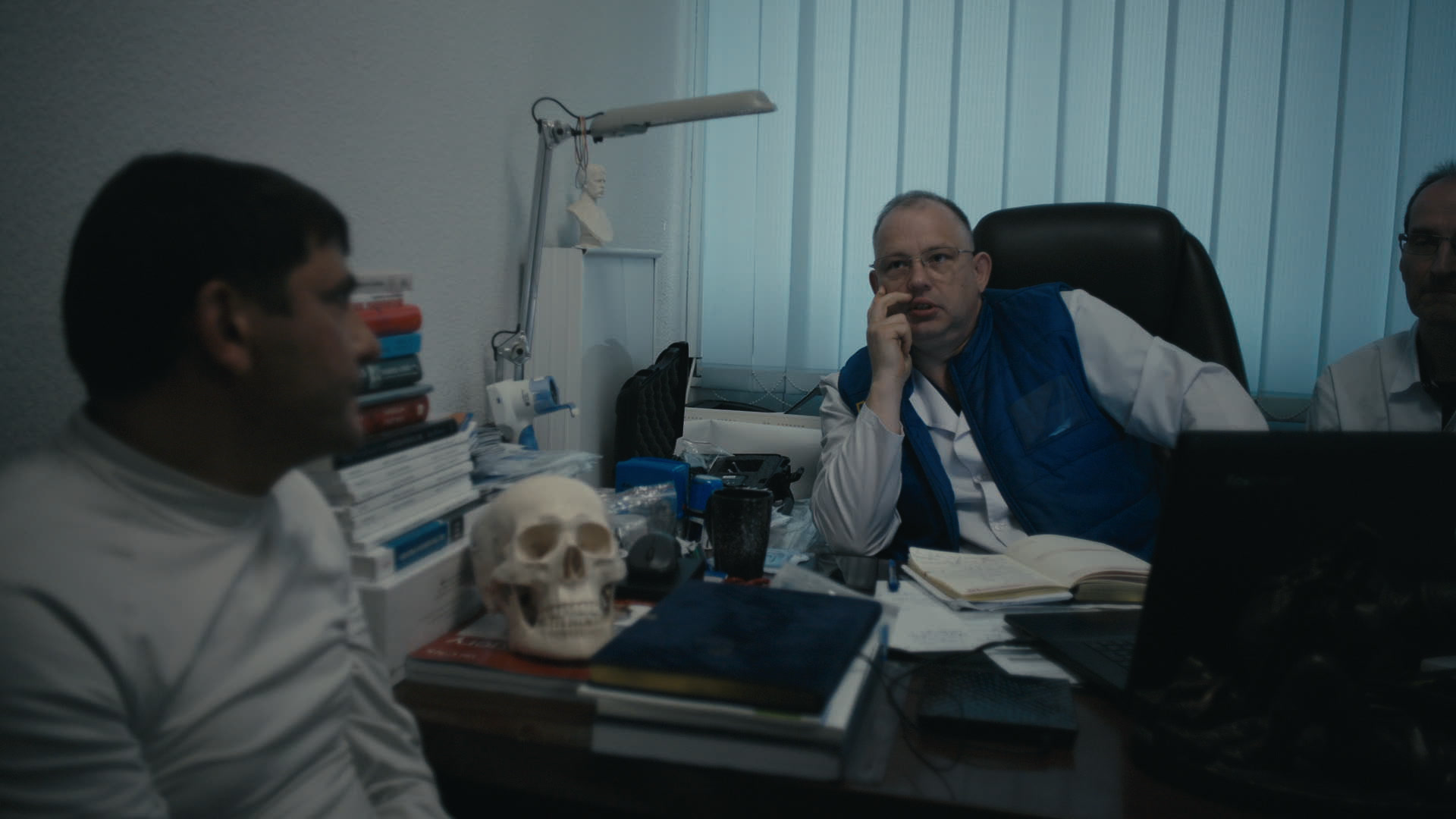
Speaker 1
00:00:28 Because it's a severe compression, hyasthma and optic nerves. Because it's a severe compression, hyasthma and optic nerves. So will he do the surgery? Yeah. oh yes sorry
00:01:10 [RUS] Water-based contrast. [RUS] Contrast agent.
Speaker 3
00:01:24 [RUS] Something water-based into the vein. [RUS] They do IVs here, how the vein does IVs.
Speaker 1
00:01:32 [RUS] The vein does IVs.
Speaker 1
00:00:28 Because it's a severe compression, hyasthma and optic nerves. Because it's a severe compression, hyasthma and optic nerves. So will he do the surgery? Yeah. oh yes sorry
00:01:10 [RUS] Water-based contrast. [RUS] Contrast agent.
Speaker 3
00:01:24 [RUS] Something water-based into the vein. [RUS] They do IVs here, how the vein does IVs.
Speaker 1
00:01:32 [RUS] The vein does IVs.
Speaker 3
00:01:39 [RUS] - And the left eye? - Yes, the left eye. - Very bad. - No, right is normal, I can't see with the left.
Speaker 1
00:01:47 [RUS] - You can't see at all? - Well, very poorly, very poorly. Can't distinguish. Even a little [RUS] I can't see a person's face. - You can't see? - Yes.
Speaker 3
00:02:00 [RUS] But some outlines, fingers there, and close your right eye, how many fingers...
Speaker 1
00:02:10 [RUS] [INAUDIBLE] [RUS] [INAUDIBLE]
00:02:29 They sent this patient for me with diagnosis alfactory group meningioma, but I think it's not alfactory group, it's a tubercleum cell meningioma.
Speaker 3
00:02:42 Tubercleum cell meningioma with intracellular, retracellular and lateral paracellular roast with compression optic nerves.
Speaker 1
00:02:52 You have a lot of nerve, that's why you have a gentle feel. Here you need to do an operation. To get the disease.
00:03:24 [RUS] Complex operations, but we do such operations at our clinic. [RUS] We give you a surgery list, you take this list to the head nurse. [RUS] Whatever the hospital has, she crosses off, whatever is not available, you buy. [RUS] I'm tentatively scheduling you for November 17th. [RUS] You consult with relatives, take tests, and then come to me on November 17th.
00:04:19 [RUS] November 17th is a Monday. [RUS] And you come to me on Monday.
Speaker 3
00:04:28 [RUS] Your phone number.
Speaker 1
00:04:29 - It's 99, 647, 53, 57.
Speaker 3
00:04:41 [RUS] - Did the oculist examine you? [RUS] - Yes, right after your consultation, [RUS] She said, come to me and I'll look at everything.
Speaker 1
00:05:03 [RUS] You'll go to the additional care department, where you were.
Speaker 3
00:05:08 [UKR] Where Podogin Serhii Heorhiiovych is.
Speaker 1
00:05:10 [RUS] That's on the first floor, right? [RUS] Yes. And you show my conclusion. [RUS] Please write her surname or office number, I'll forget.
Speaker 3
00:05:24 [RUS] I'll write it.
Speaker 1
00:05:36 [RUS] And how much does this operation cost?
00:05:41 [UKR] 1 million dollars.
00:05:50 [RUS] In the USA it's more expensive than in our country. [RUS] You asked, I said we give you a list, you go to the head nurse, whatever is in [RUS] the hospital she crosses off, she crosses off everything, whatever the hospital warehouse can provide, whatever is not [RUS] you buy wherever possible, you come and we operate. Someone asks, we work with
00:06:16 [UKR] in the hospital.
00:06:35 [RUS] I'm writing this to remember. 17.11.2025. Okay?
00:06:41 Uh-huh.
00:06:42 [RUS] And it's mandatory that someone from the family is there so we can talk. [RUS] Because we do these operations almost every day, but no one will say it's going to be a simple walk. [RUS] This is a complex operation. And we must say this. All risks, all possible complications. [RUS] [VO CANDIDATE] But one thing I can say. If you don't have the operation, you will simply go blind over time.
00:07:03 I talked about diagnosis, our treatment tactic and our maybe possible complication and we decided to hospitalization this patient on November of 17th together with the relatives I again talked about this diagnosis, our approach, and I am going to perform this surgery
Speaker 3
00:07:32 [RUS] This is the conclusion, and I'm writing who to approach and show it to.
Speaker 1
00:08:00 [RUS] Did you show this paper to the head nurse? [RUS] No, that's when you're admitted. [RUS] Now you go to this person, [RUS] you show this paper and this one. [RUS] Okay? [RUS] Good. [RUS] Thank you very much. [RUS] It's still too early to say thank you. [RUS] We've only planned. [RUS] [INAUDIBLE]
Speaker 4
00:08:52 [UKR] So that everything is eaten, because you'll need a lot of strength.
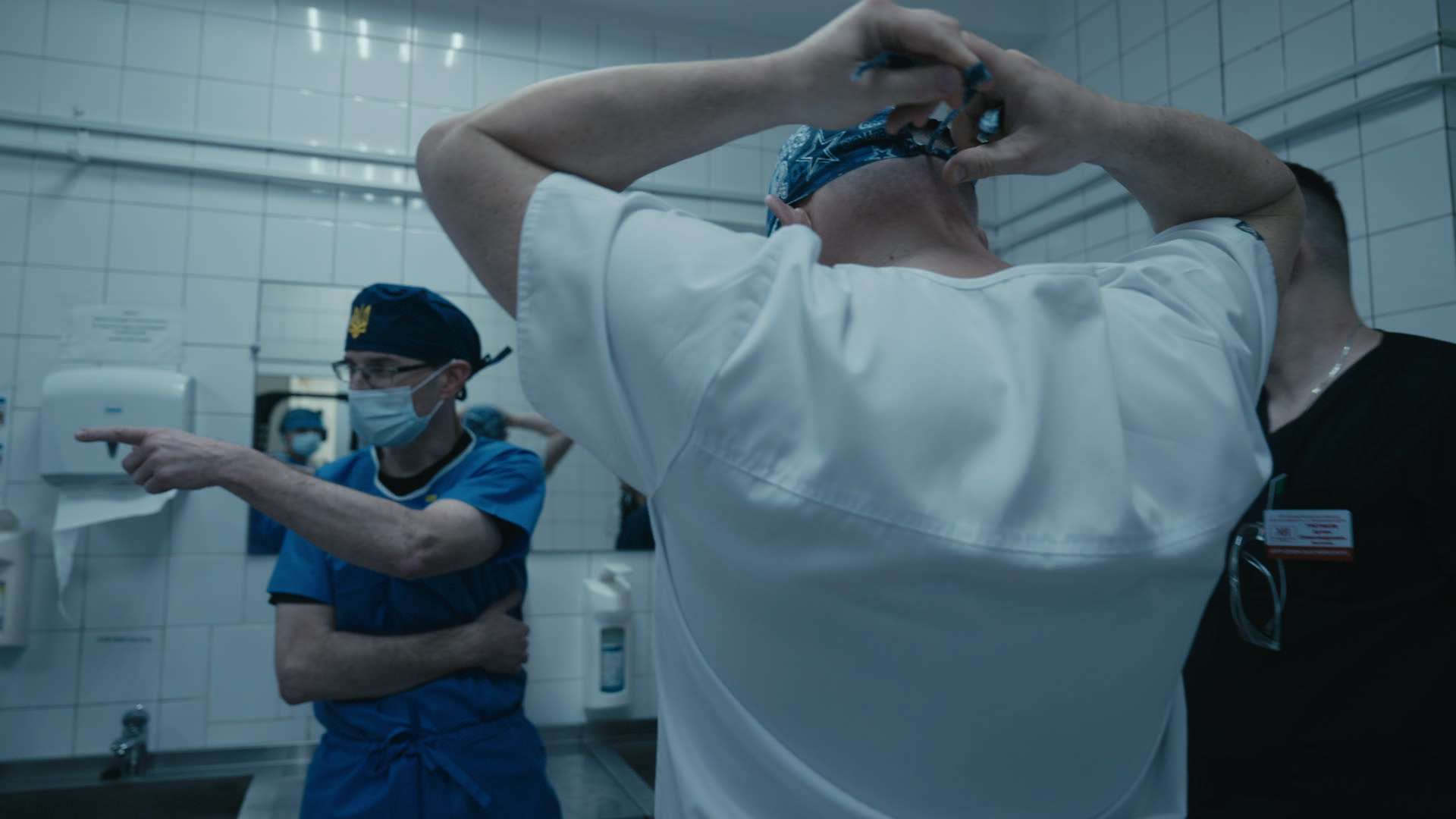
Speaker 1
00:00:00 wearing the Chicago Bears cap.
00:00:00 wearing the Chicago Bears cap. And I live in Dallas. I don't know if he's got the Dallas Cowboys cap. The NFL is represented.
Speaker 2
00:00:08 - That is the best cap. - Yes. - Texas, yeah. - It's also a gift from. - Yeah, and Laura also has Texas. - Yeah.
Speaker 3
00:00:17 [RUS] [INAUDIBLE] [RUS] [INAUDIBLE] [RUS] - We'll ask you, and what? [RUS] We do the rest, the main stage of the operation, and you
Speaker 1
00:00:00 wearing the Chicago Bears cap.
00:00:00 wearing the Chicago Bears cap. And I live in Dallas. I don't know if he's got the Dallas Cowboys cap. The NFL is represented.
Speaker 2
00:00:08 - That is the best cap. - Yes. - Texas, yeah. - It's also a gift from. - Yeah, and Laura also has Texas. - Yeah.
Speaker 3
00:00:17 [RUS] [INAUDIBLE] [RUS] [INAUDIBLE] [RUS] - We'll ask you, and what? [RUS] We do the rest, the main stage of the operation, and you
Speaker 2
00:00:31 [RUS] will come to help. [RUS] [INAUDIBLE]
Speaker 1
00:00:52 I can give you a smaller one too. You've gotten used to that one. I have a light. I like them too much. I know. We can put a piece of tape over it.
Speaker
00:00:00 (Transcript content available)
Speaker
00:00:00 (Transcript content available)
Speaker
00:00:00 - I missed it.
Speaker 1
00:00:00 - Wszystko, można. [DELETED - ASR ARTIFACT]
Speaker 2
00:00:38 [RUS] Andrii Hryhorovych, the approaches shifted to the nasal liquorrhea. [RUS] Which nostril? [RUS] The right one. [RUS] I'm on the right. [RUS] Let me set up this equipment. [RUS] I'll go now.
Speaker 1
00:00:55 3, 2, 1. 1.
00:01:03 [RUS] Don't need to help. [RUS] Look at this.
Speaker 1
00:00:00 - Wszystko, można. [DELETED - ASR ARTIFACT]
Speaker 2
00:00:38 [RUS] Andrii Hryhorovych, the approaches shifted to the nasal liquorrhea. [RUS] Which nostril? [RUS] The right one. [RUS] I'm on the right. [RUS] Let me set up this equipment. [RUS] I'll go now.
Speaker 1
00:00:55 3, 2, 1. 1.
00:01:03 [RUS] Don't need to help. [RUS] Look at this.
Speaker 3
00:01:11 [UKR] We'll set it up right away.
Speaker 2
00:01:14 [RUS] You're saying right Andrii is scheduled? [RUS] Yes, right. [RUS] Both are scheduled for 3 there.
Speaker 1
00:01:25 I'm going to go to the ...
Speaker 4
00:03:33 - It's good luck. - It's good luck. It's in focus.
Speaker 2
00:04:17 [RUS] - Turn it off here and here, yes, I understand.
00:05:05 [RUS] [DYNAMIC MUSIC]
Speaker 1
00:05:24 [RUS] - We have...
00:06:17 [UKR] [INAUDIBLE]
00:06:48 Okay. I'm thinking like a. But you can get a better shot. That's it. On the side? Yeah, right there. That's it.
Speaker 4
00:07:15 It's funny because I'm thinking that we're in that camera's angle, but I mean this is more important, you know, it's like we get the close-up and stuff. Yeah, it's okay.
00:08:28 We just have the best on the tear deck so this camera will be kind of a new. Okay. If I've been like all up in that area.
Speaker 1
00:08:45 Good.
Speaker 4
00:08:51 I mean, you could man that camera if you want.
00:09:00 Like, you know, like if it's stacked, do you think you could just pan in five minutes
Speaker 3
00:09:03 [RUS] Thank you.
00:10:02 [DELETED - ASR ARTIFACT]
00:10:03 [RUS] Let's go from this side. [RUS] If the microscope is there, from this side.
Speaker 1
00:10:13 [RUS] Yes, if it's a bit right, a bit left there...
00:10:29 So he came back to the ICU just to explain everything going out with the patient to you,
Speaker 3
00:10:34 [UKR] Stand, like this.
Speaker 4
00:11:04 [UKR] Can you write this?
00:11:47 Do you think that can be better? I think that camera was more important later, like once things kind of settled down here, you know? I mean, I don't know what's about to happen, but I think it's about to be a full-length camera, right? Like, once they're looking through the microscope, there's a lot less Alaska Aleph.
Speaker 1
00:12:33 The So you are injecting lidocaine epinephrine? Yes. Can you explain why you do that? Lidocaine, noropine, yeah?
Speaker 3
00:13:19 It's a local anesthetic with short and long duration. Plus a candy print. Only all are nose combination. How much is it? It's secret. What is the F-shirt report? Yeah. This is the report. How does the acryliproenterate help
00:14:19 [RUS] Can you get a bit closer? [RUS] The distance from the head is all good. [RUS] Maybe it was a bit...
Speaker 1
00:14:52 Good job.
00:15:52 like that. Yeah, you'll see it as actually. She'll tighten those things down.
Speaker 4
00:15:57 You have to film that right now.
Speaker 1
00:16:28 The I guess the kiln
Speaker 3
00:17:10 We will wash it. Okay.
00:17:40 [RUS] [DELETED - ASR ARTIFACT]
00:18:09 [DELETED - ASR ARTIFACT]
00:18:58 [DELETED - ASR ARTIFACT]
00:19:31 [RUS] We also have bananas, if they won't dry out.
Speaker 1
00:19:35 Yes. Yes.
Speaker 3
00:19:39 [RUS] It doesn't seem necessary, considering there's no panel, [RUS] to open on both sides and still go into the exposure. [RUS] Because there's a linear fracture there on the right side too, understand? [RUS] No one is transporting now, we won't irrigate, but tomorrow liquid will run from his nose easily.
Speaker 1
00:21:09 [DELETED - ASR ARTIFACT]
Speaker 3
00:22:10 *Captioning*
00:22:34 [RUS] [INAUDIBLE]
00:23:25 [UKR] By 10 cm, move the microscope for now, we'll release the brake and move it a bit.
00:23:38 [RUS] Stop, good job.
00:24:06 [DELETED - ASR ARTIFACT]
Speaker 1
00:24:29 [DELETED - ASR ARTIFACT]
Speaker 3
00:24:46 [RUS] Gloves, please hand me size 7.5 [RUS] No no, it's okay to provide.
00:24:51 [UKR] Someone walked under the microscope and touched it.
00:24:57 [RUS] I sent him for that remote.
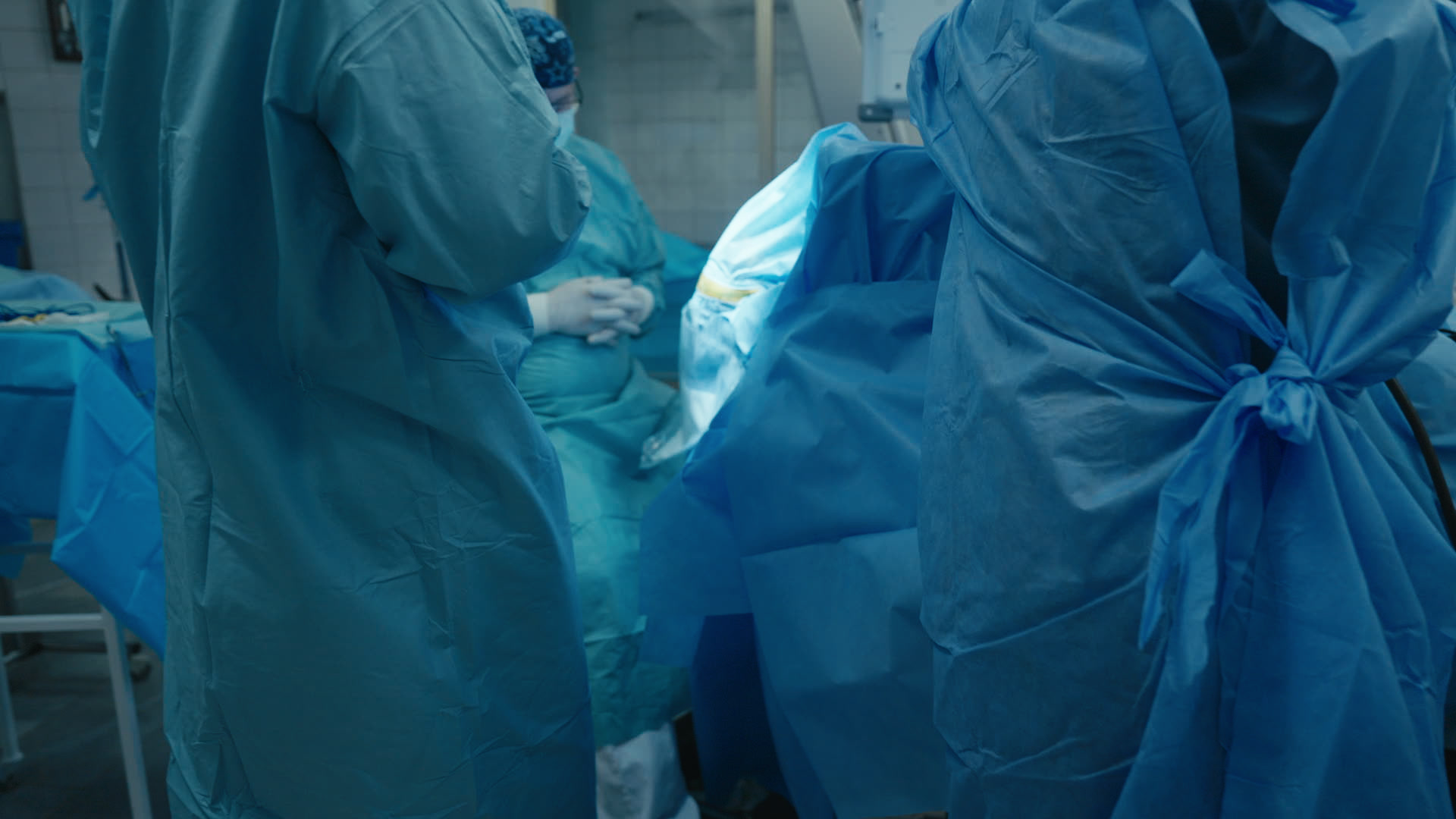
Speaker 1
00:00:00 Like higher? Like higher? Okay. Do you think you can do that?
Speaker 2
00:00:54 I mean it feels like maybe once we get started here we'll see what happens and we'll consider like moving it potentially too. Moving it I think where I can see.
00:02:06 チョコレートを作る。 チョコレートを作る。
00:03:10 。
Speaker 1
00:00:00 Like higher? Like higher? Okay. Do you think you can do that?
Speaker 2
00:00:54 I mean it feels like maybe once we get started here we'll see what happens and we'll consider like moving it potentially too. Moving it I think where I can see.
00:02:06 チョコレートを作る。 チョコレートを作る。
00:03:10 。
Speaker 1
00:04:19 砂糖 What is this?
00:05:00 It's like a cauterine. Oh, so it's cauterizing the wound, isn't it? Yeah, so there's two kinds of areas. There's one which is a gingival or something that's occurring in all directions, which is fine for spinal muscle. The problem is the growth of the brain and it spreads everywhere in control of the brain. It's a different kind of seizure. I don't know.
00:05:57 *Sounds of *Sounds of
Speaker 2
00:06:55 It's easy. and the light from the,
00:07:00 because they're so bright. Everything else is like on camera, you know, it's so dark, but your eyes don't really notice that. That's all I've got.
00:08:47 小麦 Laura Lee in your shop. It's kind of like, uh, we're kind of stacked.
Speaker 1
00:09:15 Wrocław Is that common?
Speaker 2
00:10:29 A little bit, yeah. With that, we do have a hundred. I wonder if now that it's becoming more like centric on the scalp, maybe it's worth changing I would just lose the ability to zoom, which I've been using. I would just lose the ability to zoom, which I've been using. But at the same time, I don't know how much tighter you want to go on this for like gore I don't know. I don't know.
Speaker 1
00:11:48 *Extreme music plays* I think it's pretty much long right now.
Speaker 2
00:12:12 I think we can change now for the drills to see that would be a nice thing to have closer.
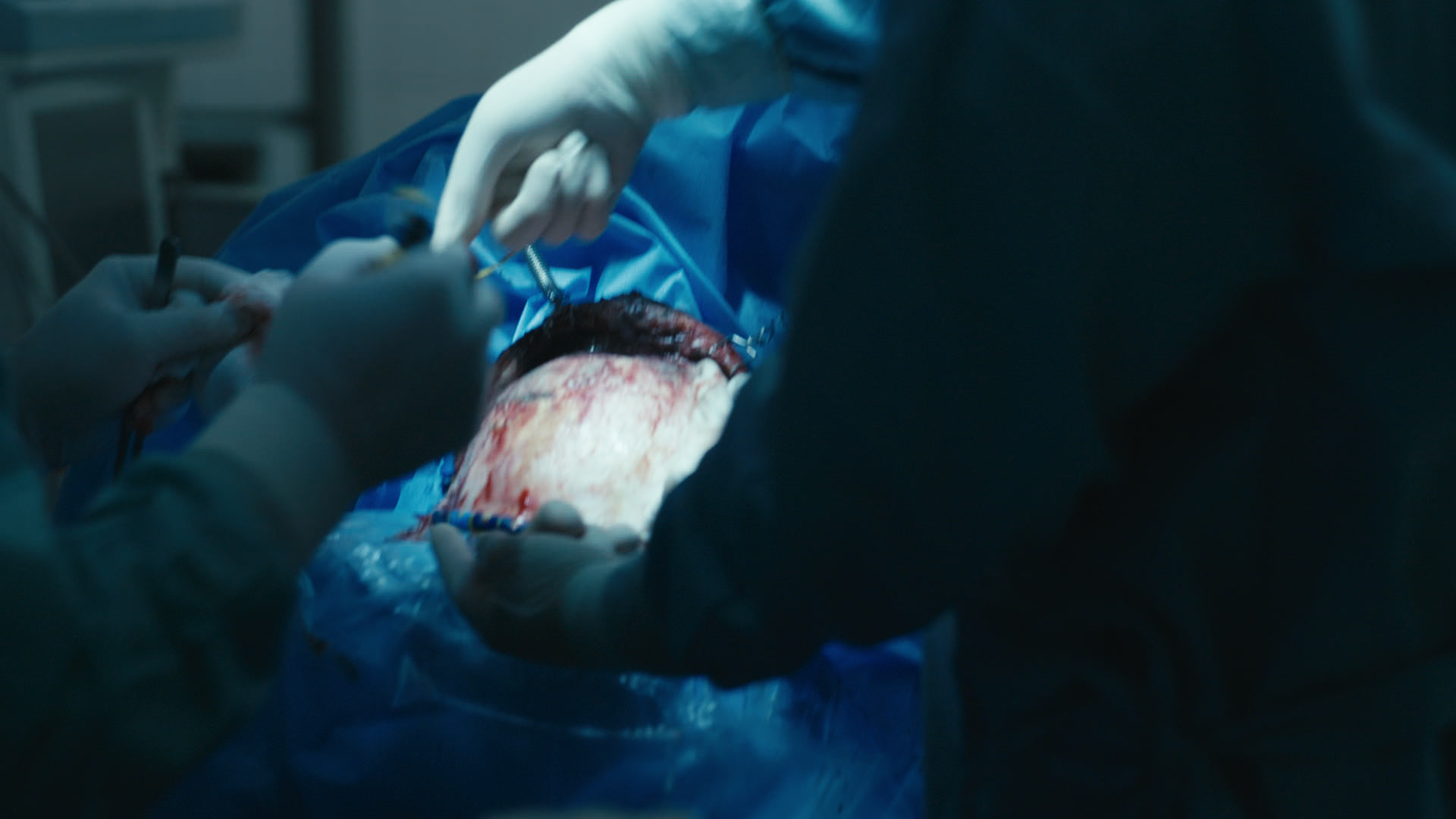
Speaker
00:00:00 (Transcript content available)
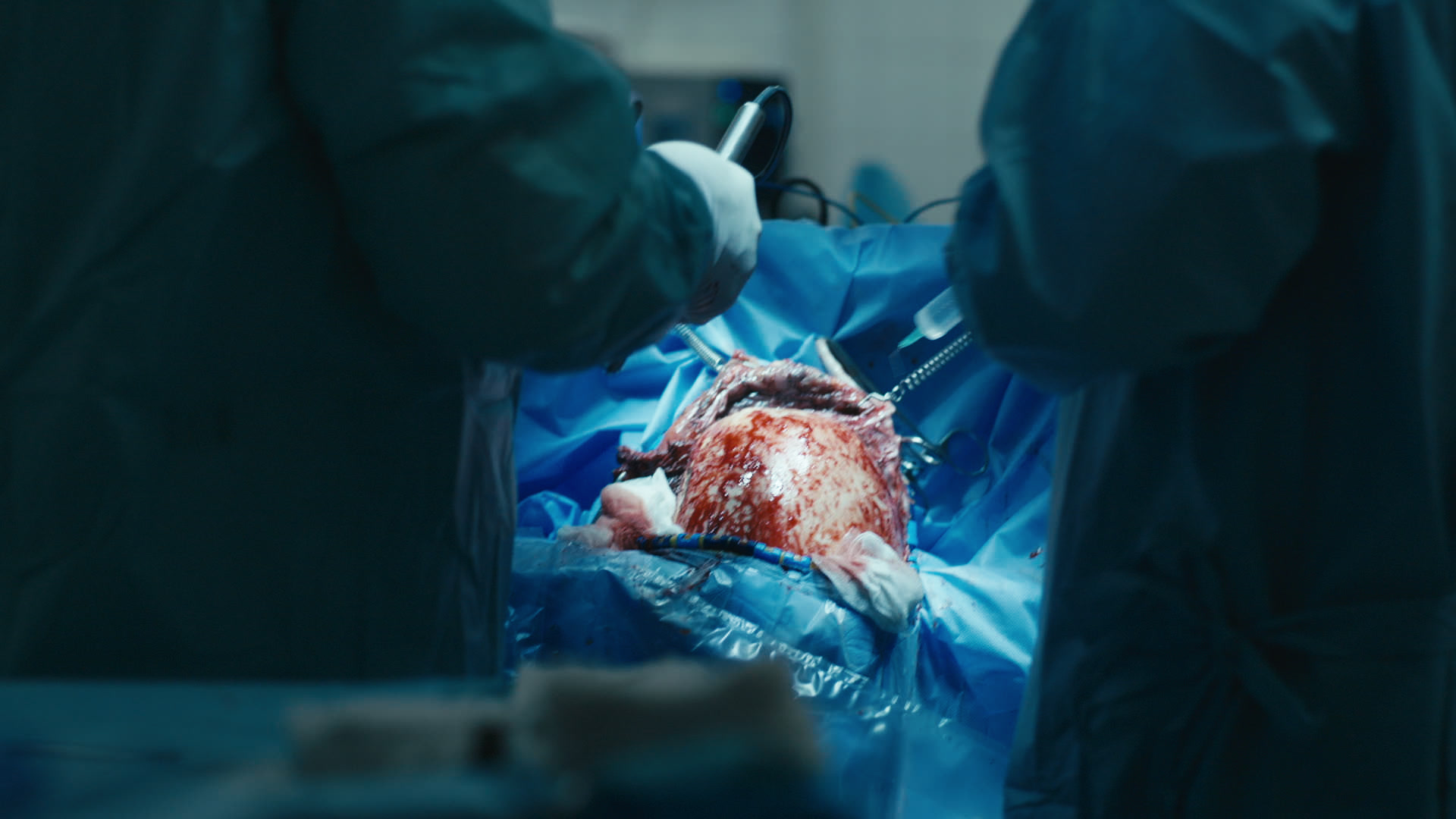
Speaker 1
00:00:00 Oh, you couldn't really see anything from the first spot, could you? Oh, you couldn't really see anything from the first spot, could you? You couldn't really see what was happening from the first spot. Oh. Is that the drill out?
00:01:00 スープを入れて Wrocław
00:03:28 The They're just recording all of that in a lock.
00:04:55 Gotcha. I guess the other option more is we could just stack. You know, like I could push you right to my right. I mean, that's probably good, right? that. Because I'm getting a bit like surgery right now. It's like getting on to the space and everyone else is just important. Capturing. Or about her shot. She was saying she was blocked. We were saying, you know, get everyone's faces. You know, all that stuff out in the room is just as important as suffering. You know, what's happening right here. It's like I have most of the time, you know, it's like, it's like, "Aye, right, right."
Speaker 1
00:00:00 Oh, you couldn't really see anything from the first spot, could you? Oh, you couldn't really see anything from the first spot, could you? You couldn't really see what was happening from the first spot. Oh. Is that the drill out?
00:01:00 スープを入れて Wrocław
00:03:28 The They're just recording all of that in a lock.
00:04:55 Gotcha. I guess the other option more is we could just stack. You know, like I could push you right to my right. I mean, that's probably good, right? that. Because I'm getting a bit like surgery right now. It's like getting on to the space and everyone else is just important. Capturing. Or about her shot. She was saying she was blocked. We were saying, you know, get everyone's faces. You know, all that stuff out in the room is just as important as suffering. You know, what's happening right here. It's like I have most of the time, you know, it's like, it's like, "Aye, right, right."
00:06:09 A little scary. Knife thing. No, yeah, I just saw the corner of my eye slicing. バター
00:07:10 バター 小麦粉
00:08:10 *Bur I think it's easier to watch it through the monitor than it is to watch it with my own eyes.
Speaker 2
00:08:33 I think my brain is like, this is the real one I'm watching it, but I think about it like, eating that I can't ride with that. I just want to know. Yeah.
Speaker 1
00:08:53 That's how I felt yesterday when I first saw him. I'm a little worried about that, you know?
00:09:00 I was just like, "Alright, I'm going to go." I'm just like watching this guy through the camera. It doesn't process. Your brain just doesn't process it.
Speaker 2
00:09:33 車椅子ウォーカー Wrocław バター
00:10:40 バター
Speaker 1
00:11:28 Zobaczki It's kind of a tough exposure because these lights are so directional. I can maybe close down a little bit. I can pipe water. - You can watch. - You can watch. - Okay. - Okay. - Alright.
Speaker 2
00:12:18 Like that for now. Karina, here. This one first? Okay. Okay.
00:13:21 Actually, do you want to go back in there a little bit? What's a better shot of me doing this or bringing the scope in?
Speaker 1
00:13:28 Are they bringing the scope in now?
00:13:30 I probably have enough of you scrubbing there, so I'll go back in.
Speaker 3
00:13:45 Let's put the 24-7 back on this camera. Thank you.
Speaker 1
00:14:10 [UKR] [INAUDIBLE]
00:14:31 It can go pretty much definitely on one battery.
Speaker 3
00:14:44 Yeah, I agree.
00:14:49 [RUS] Olya, you're meeting. [RUS] Like in that movie Madagascar. [RUS] Alex the lion.
00:15:00 [RUS] Alex.
00:15:11 [UKR] [INAUDIBLE]
Speaker 1
00:15:45 that monitor. that monitor. Can you hold it up and don't get to stay right there. Can you show him? Cracker line right there. That's from the... Like a puzzle. Yeah, like a puzzle. It's like a white old crotch.
Speaker 2
00:16:03 I'll just take it, please. Can I tell you?
Speaker 1
00:17:33 Yeah, I think you might be right. I think now it's like you're in a good position to see them. Yeah. I think you can drop back and I'll wear them like standers.
00:18:24 I can't believe it. If you do a few more, it may not be too close before you...
Speaker 3
00:19:11 バター
Speaker 1
00:19:30 This one. What was that? You should probably see some of the monitors. Oh yeah.
00:20:21 not down here. Well, maybe we do actually. If we did more, they would be in the top pouch. Like the one that's got the laptop compartment. Other side.
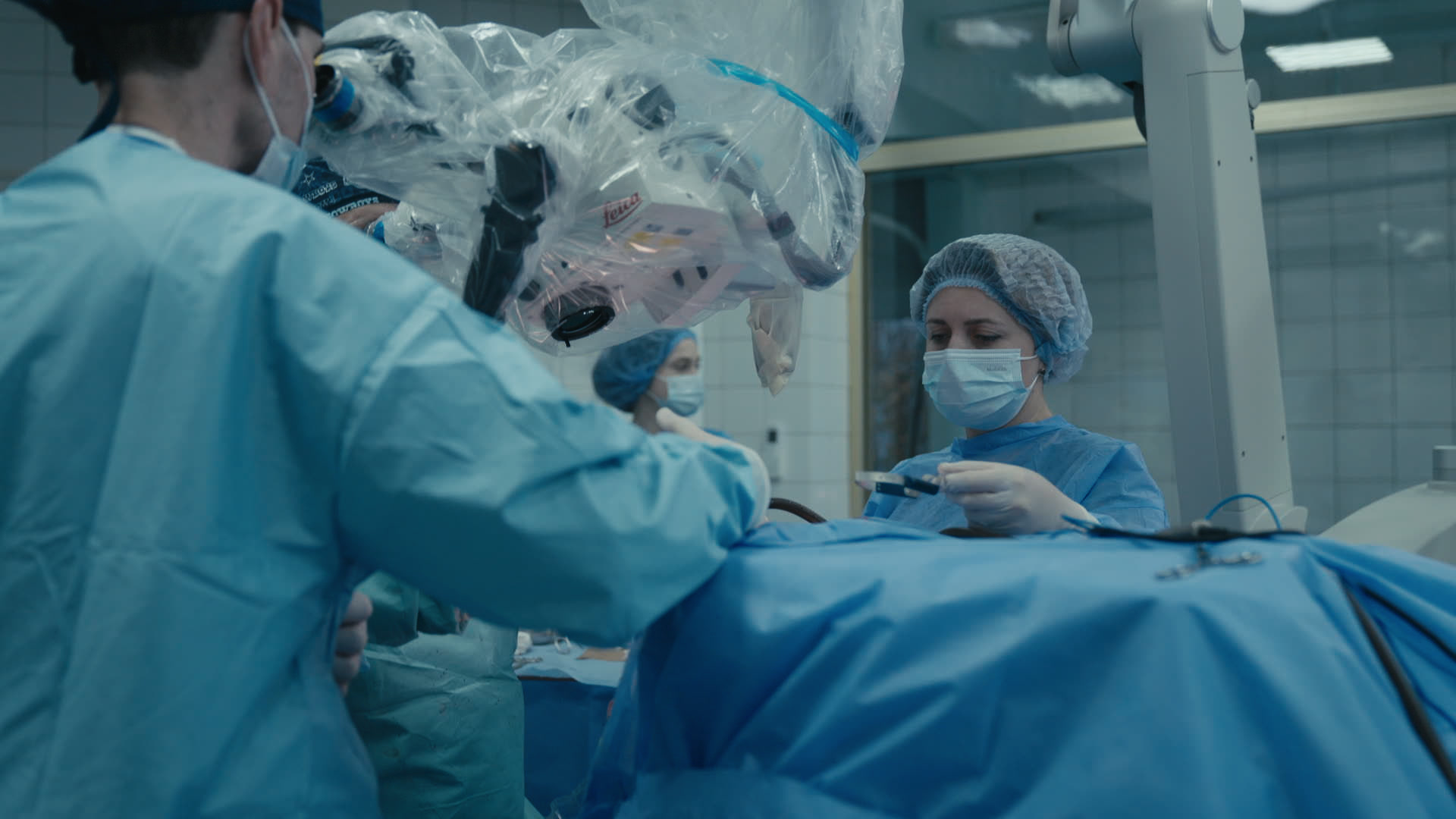
Speaker
00:00:00 (Transcript content available)
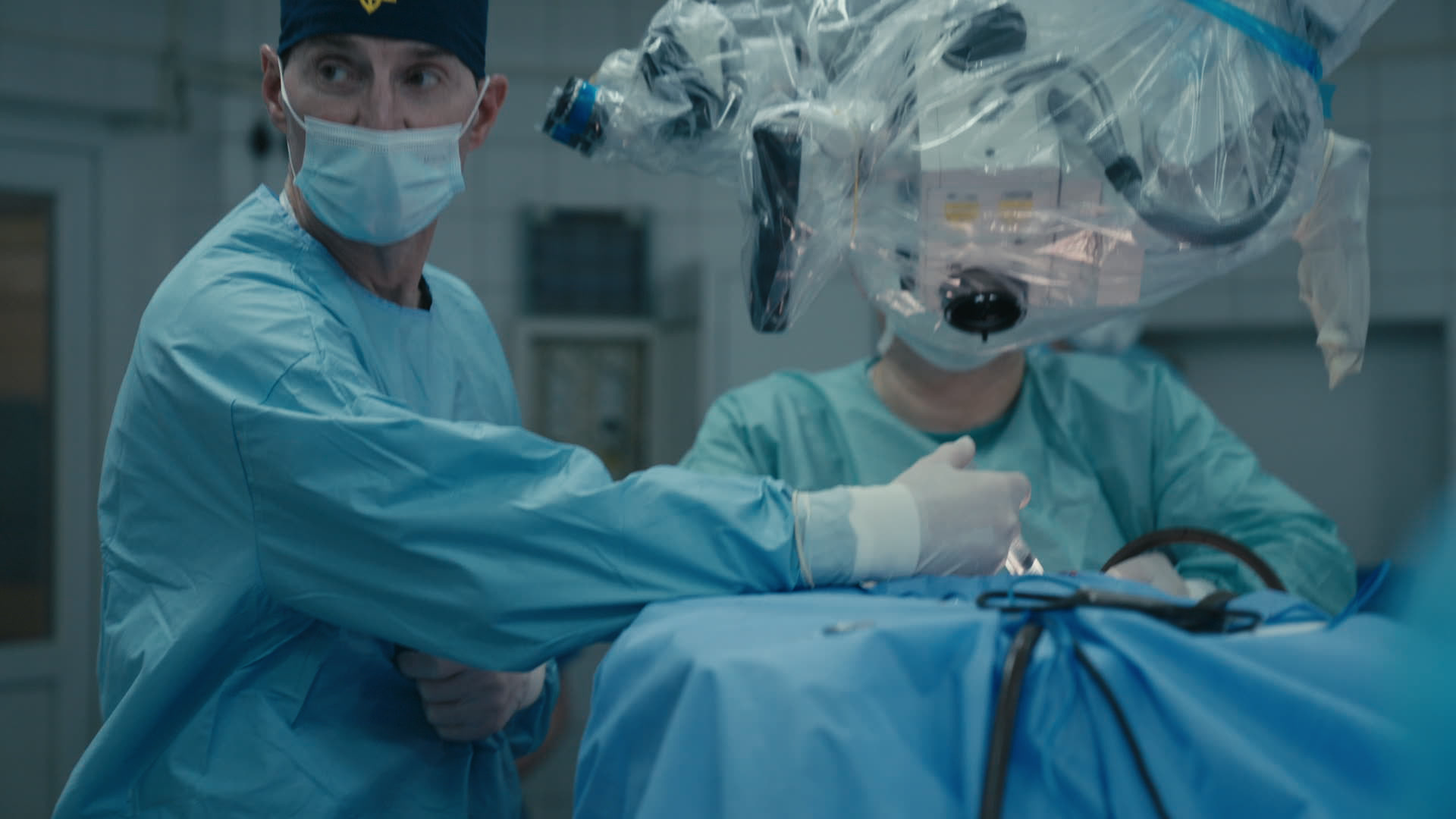
Speaker
00:00:00 (Transcript content available)
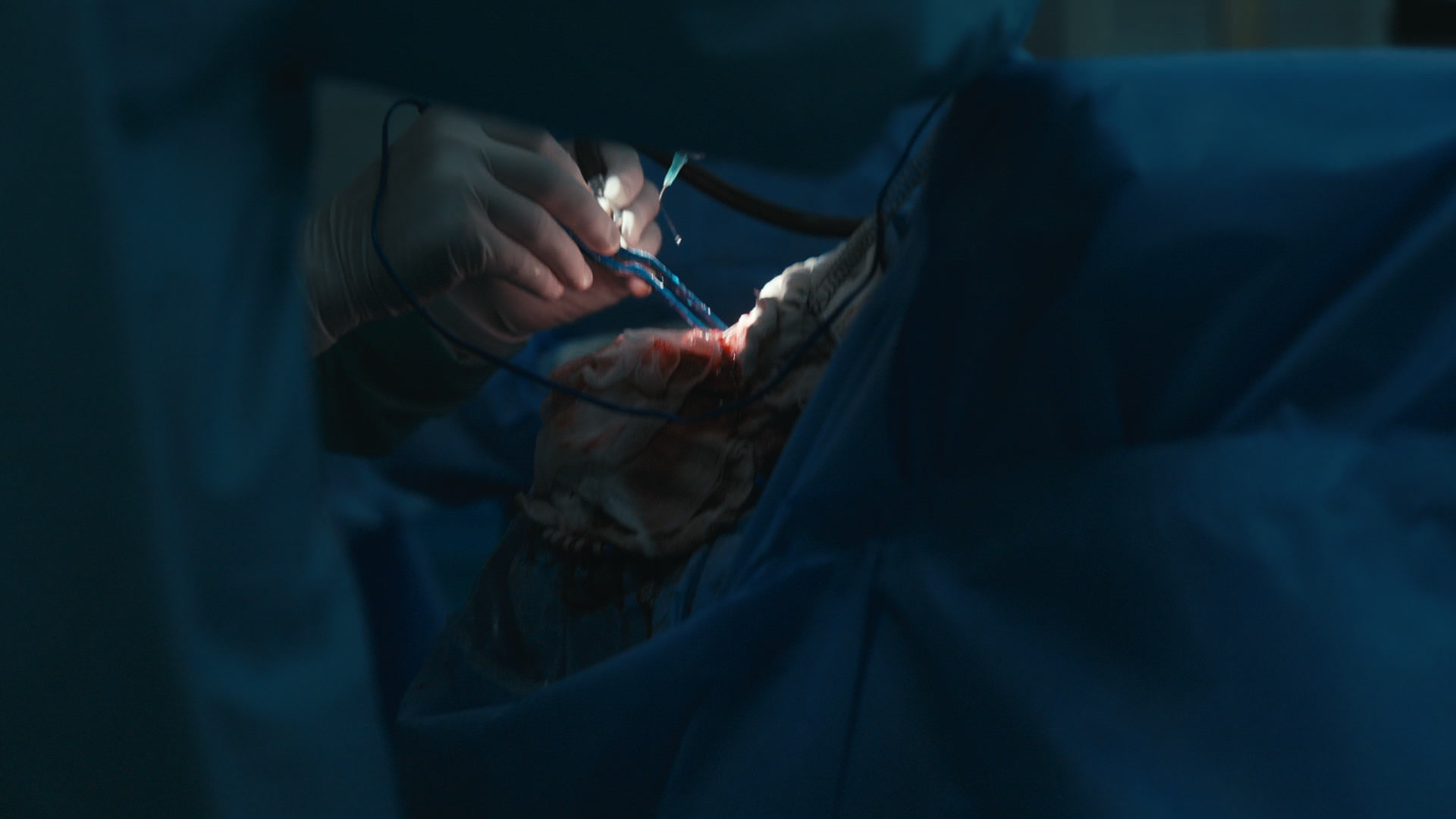
Speaker
00:00:00 (Transcript content available)
Speaker
00:00:00 (Transcript content available)
Speaker 1
00:00:03 I think it's...
00:00:48 [RUS-NEEDS] Смотрите, что
00:01:16 [RUS] Look, what...
00:01:30 [RUS] We went in from the left side. [RUS] Now we'll work on the right.
Speaker 1
00:00:03 I think it's...
00:00:48 [RUS-NEEDS] Смотрите, что
00:01:16 [RUS] Look, what...
00:01:30 [RUS] We went in from the left side. [RUS] Now we'll work on the right.
Speaker 2
00:01:37 [RUS] Because the liquorrhea was running. [RUS] - From the right, probably. - Yes.
Speaker 1
00:01:43 [RUS] So if we don't look, it'll be wrong. [RUS] Problem with stitching.
00:02:01 [DELETED - ASR ARTIFACT]
Speaker 2
00:02:37 [DELETED - ASR ARTIFACT] [DELETED - ASR ARTIFACT]
00:03:30 [DELETED - ASR ARTIFACT]
00:04:00 [DELETED - ASR ARTIFACT]
00:04:27 [UKR] [INAUDIBLE]
00:04:42 [RUS] Volya, please, alcohol. [RUS] Alcohol - two. [RUS] Can't there, right? [RUS] No, the other side.
00:05:02 [DELETED - ASR ARTIFACT]
00:05:50 [DELETED - ASR ARTIFACT]
Speaker 1
00:00:00 [RUS] [Subtitles by DimaTorzok] [RUS] [Subtitles by DimaTorzok]
00:00:41 Wrocław
00:01:46 [DELETED - ASR ARTIFACT] *Sigh* Are you talking about defecting the cell? Use the muscle, temporal muscle.
00:02:33 The pocket and the opposite cover is the...
Speaker 1
00:00:00 [RUS] [Subtitles by DimaTorzok] [RUS] [Subtitles by DimaTorzok]
00:00:41 Wrocław
00:01:46 [DELETED - ASR ARTIFACT] *Sigh* Are you talking about defecting the cell? Use the muscle, temporal muscle.
00:02:33 The pocket and the opposite cover is the...
Speaker 2
00:04:26 Get a picture of the TACA seal right there. Get a picture of the TACA seal right there. Get a picture. That's the TACA seal going in. Time to go about that. [DELETED - ASR ARTIFACT] So, we're going to
Speaker 3
00:05:37 We're putting this product to the video. I'm in the video. Yeah, I'm in the video. Fresh out of the box. Okay. Should we cut this camera for a while then? Because you're out of all of them, right? I don't know what. Maybe we should save it towards the end of the operation.
00:06:00 I think we're pretty much shot out. [DELETED - ASR ARTIFACT]
00:07:00 [RUS] Watch the continuation [RUS] - A sponge like this, please, and surgicel. [RUS] - Yes, surgicel. [RUS] Let's go.
Speaker 1
00:07:14 [RUS] - Careful, don't de-sterilize my ALISA. [RUS] Nastya, watch so it doesn't de-sterilize. [RUS] Come on, a sponge, like a cotton pad.
00:08:06 [RUS-NEEDS] И как только выкатывайся.
00:09:09 [RUS] And as soon as it rolls out. [RUS] Now we'll seal it on the right. [RUS] - I can't.
00:09:56 [RUS] Which ones? [RUS] [INAUDIBLE] [RUS] - Need to put a cloth, was dripping blood.
Speaker 3
00:10:43 [RUS] [DYNAMIC MUSIC]
Speaker 1
00:11:17 [RUS] Take whatever you can?
00:12:27 [RUS-NEEDS] Зашиваться, может быть, если Михаил Бахайлов на месте, он придет, приходит в приемник, а ты придешь в операционную.
00:12:29 [RUS] For stitching, maybe, if Mykhailo Bakhailov is there, he'll come, goes to reception, and you'll come to the operating room. [RUS] Yes, well you'll help.
Speaker 3
00:12:43 [RUS] Yes, now, if you call this one, if Mykhailo Bakhailov is there, then he goes to reception, and you'll come, help, with stitching.
Speaker 1
00:13:15 [RUS] We'll show.
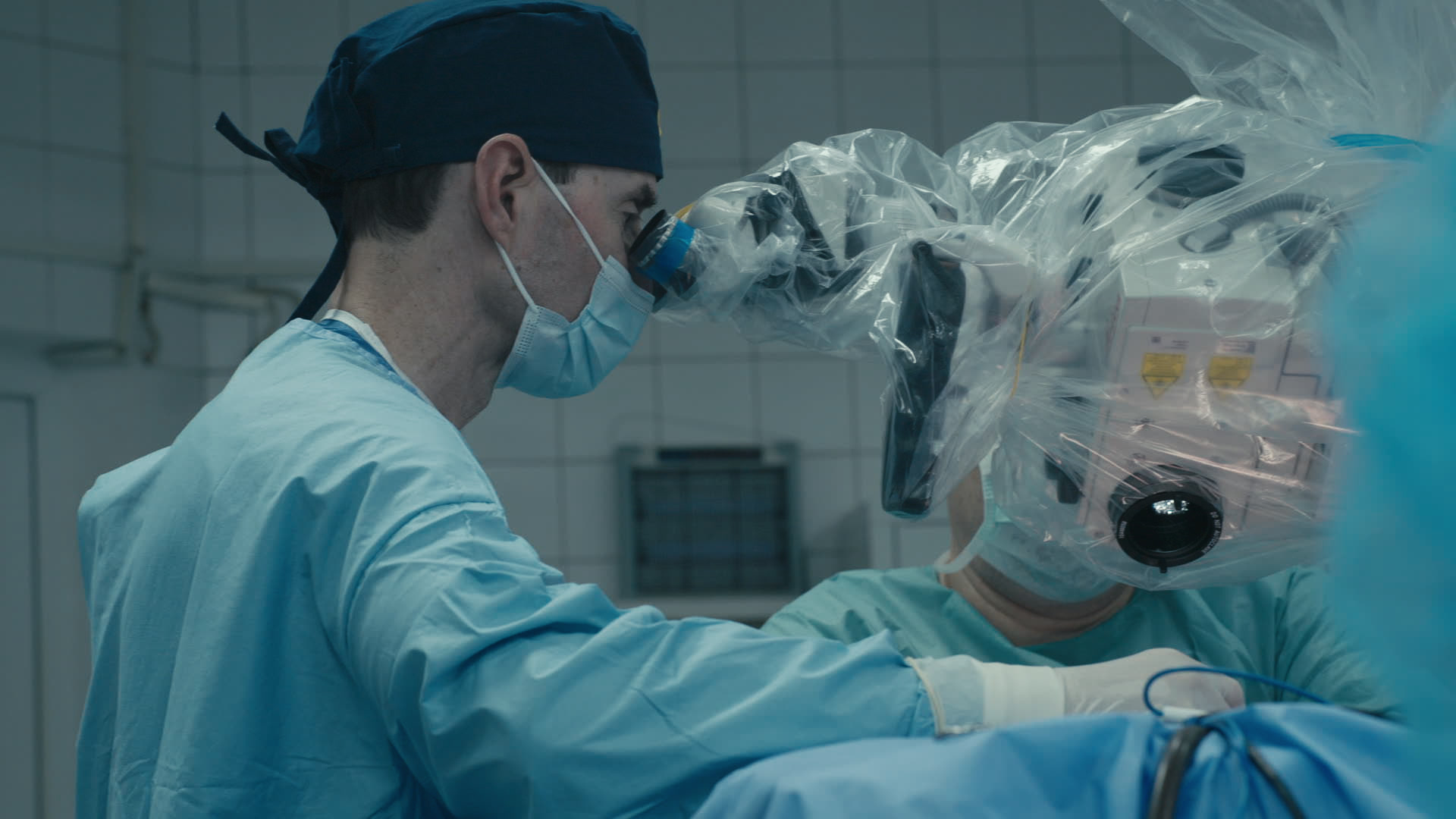
Speaker
00:00:00 shot out.
Speaker
00:00:00 (Transcript content available)
Speaker
00:00:00 A few seconds too late.
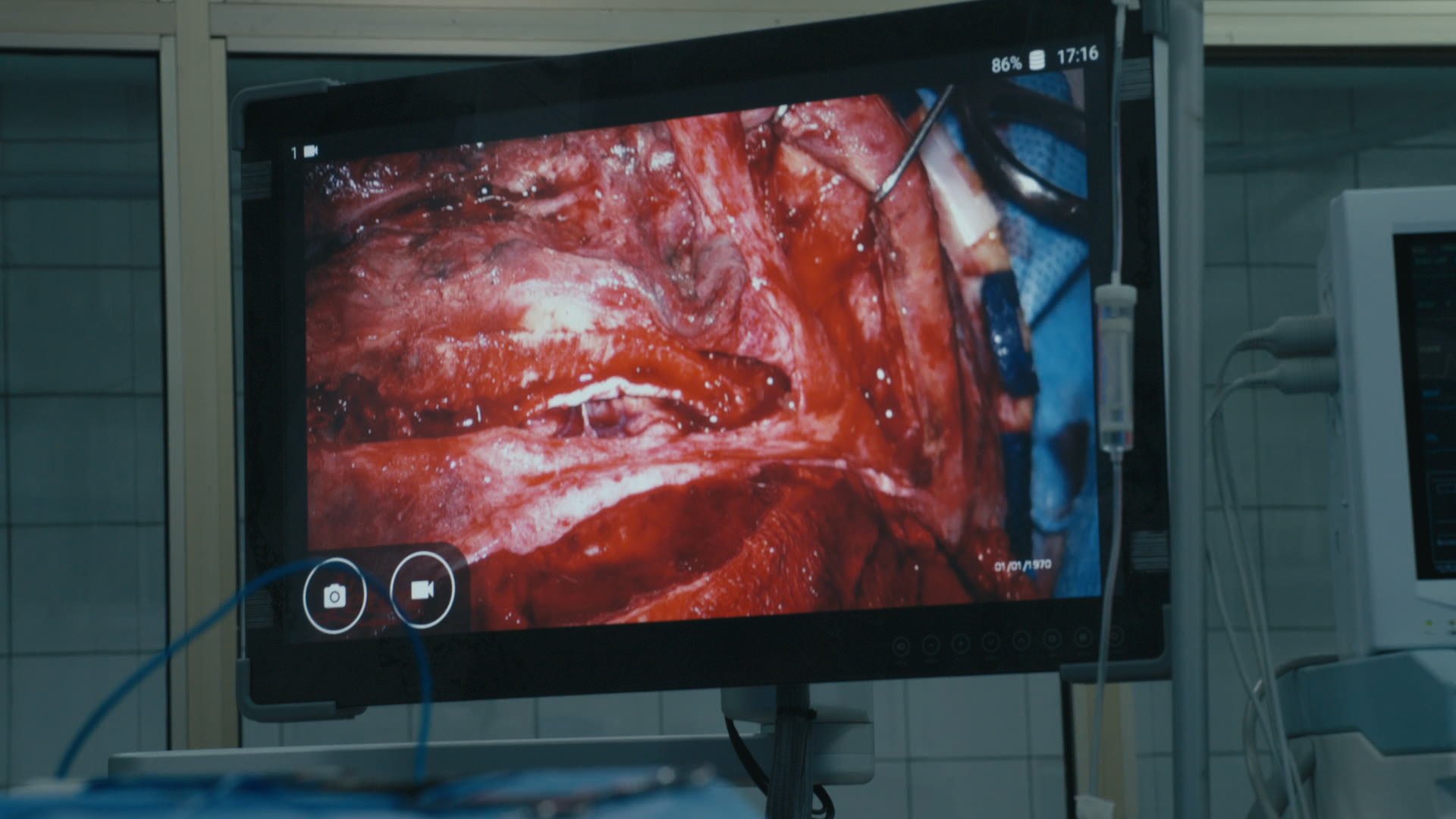
Speaker 1
00:01:27 Stop, stop, stop.
Speaker 2
00:01:32 Stop, stop, stop. The team still has more than a week to go here. These have been long days. Do you rethink the NBA by trying to take the in-house call tonight? Take in-house call? If someone was going to stay in-house tonight? If someone was going to stay in-house tonight? No, no. We were wanting to. Yeah, I think that's not going to work. There's always the option, maybe Saturday or Sunday night. We're trying to Sunday night, yeah. Yeah, show it later in the afternoon. Because you guys got to go home and do editing, and we got long nights every night this week. Now we want to get you at the hotel tonight, just sort of giving us a debrief of this, and
Speaker 3
00:02:33 that's it, basically. Yeah. And Bodan is coming in to finish this out? No, he's on call tonight. Yes, he will be a bit later in order to cause a wound because it can perform better than
Speaker 1
00:02:55 He spent a lot of time in the department, the plastic department.
Speaker 1
00:01:27 Stop, stop, stop.
Speaker 2
00:01:32 Stop, stop, stop. The team still has more than a week to go here. These have been long days. Do you rethink the NBA by trying to take the in-house call tonight? Take in-house call? If someone was going to stay in-house tonight? If someone was going to stay in-house tonight? No, no. We were wanting to. Yeah, I think that's not going to work. There's always the option, maybe Saturday or Sunday night. We're trying to Sunday night, yeah. Yeah, show it later in the afternoon. Because you guys got to go home and do editing, and we got long nights every night this week. Now we want to get you at the hotel tonight, just sort of giving us a debrief of this, and
Speaker 3
00:02:33 that's it, basically. Yeah. And Bodan is coming in to finish this out? No, he's on call tonight. Yes, he will be a bit later in order to cause a wound because it can perform better than
Speaker 1
00:02:55 He spent a lot of time in the department, the plastic department.
Speaker 2
00:03:03 That's why possibility I involved him.

Speaker 1
00:00:00 All right, good. Where is the other one now?
00:00:00 All right, good. Where is the other one now?
00:02:13 *Gun* *crash*
00:03:16 So, let's go. Thank you.
Speaker 1
00:00:00 All right, good. Where is the other one now?
00:00:00 All right, good. Where is the other one now?
00:02:13 *Gun* *crash*
00:03:16 So, let's go. Thank you.
00:04:09 [inaudible]
00:05:29 [inaudible] Amen.
Speaker 2
00:06:05 All right, let's just get these on you guys, these guys, all right? Do you want to put one on under your right?
Speaker 1
00:06:17 Yeah, yeah.

Speaker 1
00:00:00 Speaker 1: suitcase maybe and I go together with you
00:00:00 Speaker 1: suitcase maybe and I go together with you Speaker 1: to a hotel I come back and go to see
Speaker 2
00:00:13 Speaker 1: him in order to understand to realize his condition and plan maybe operation
Speaker 1
00:00:24 Speaker 2: Yeah, I think the sooner the better. Speaker 1: We need help to take you.
Speaker 1
00:00:00 Speaker 1: suitcase maybe and I go together with you
00:00:00 Speaker 1: suitcase maybe and I go together with you Speaker 1: to a hotel I come back and go to see
Speaker 2
00:00:13 Speaker 1: him in order to understand to realize his condition and plan maybe operation
Speaker 1
00:00:24 Speaker 2: Yeah, I think the sooner the better. Speaker 1: We need help to take you.
00:00:30 Speaker 2: Uh oh. Speaker 1: I lose, I lost.
Speaker 3
00:00:37 Speaker 2: Dad, where'd you lose? Speaker 3: Back of a pin, like, the lapel pin. Speaker 3: At least I didn't lose the lapel pin, but I was just seeing if I could, Speaker 3: I saw it bounce under the car when the backing fell off. Speaker 3: So I was just at least seeing if I could see it before we left. Speaker 3: Alright, I don't see it. Speaker 3: We can, uh, it's not a huge loss. Speaker 3: Alright, well, thanks for the, uh... Speaker 3: No, a pin, the back of a pin, so I have a lapel pin and then a backing.
00:01:22 Speaker 3: But, yeah, it's a lost cause. Speaker 3: Thank you for helping, though, Alex. Speaker 3: I appreciate it. Speaker 2: Yeah, okay. Speaker 3: Sorry. Speaker 3: It's like a metal backing, you know, bronze kind of. Speaker 3: It's like a metal backing, you know, bronze kind of. Speaker 2: Yeah, yeah, yeah, I know those things. Speaker 2: I've lost them before, too. Speaker 2: All right, thank you. Speaker 2: No, I thought it was worth it.
Speaker 2
00:02:02 Speaker 4: Alex, are you going with Andrei to check on that patient tonight? Speaker 2: I think we should probably drive you guys back to the hotel.
Speaker 1
00:02:10 Speaker 2: I mean, uh... Speaker 1: I think it's not needed today. Speaker 1: We will check this patient tomorrow on the hour round in ICU units. Speaker 1: Yeah. Speaker 1: Because we need to change your clothes. Speaker 1: I think I only check this patient's condition and I check his laboratory analysis and check
Speaker 2
00:02:45 Speaker 1: hemodynamics and check neurological condition. Speaker 2: So Logan, that guy had a bad brain injury but he also was pretty badly messed up every Speaker 2: place else in his body.
Speaker 1
00:03:46 Speaker 2: Are you good?
Speaker 2
00:04:12 Speaker 1: If he will be stable, he will be, because he has severe injury.
Speaker 1
00:04:26 Speaker 2: It's exposed brain, yeah, infection. Speaker 1: If you have injured people,
00:04:30 Speaker 1: they will spend a lot of time in ICU units, Speaker 1: and have a lot of entry wounds for Speaker 1: possible septic complications. Speaker 1: That's why we need to perform debridement and plastic surgery for closure of skull base injury, Speaker 1: especially defects in the anterior skull base to prevent CSF leak and meningitis
00:05:17 Speaker 1: because he will be under analgesia and sedation. Speaker 1: We couldn't expect to notice and check the nasal CSF leak. Speaker 1: Yes. Speaker 1: Yes. Speaker 1: That's why in any way we need to perform surgery, Speaker 1: but we need to find the best time for surgery Speaker 1: because after traumatic shock, hemorrhagic shock, Speaker 1: with low blood pressure, with low platelets, Speaker 1: we can create a new trauma, new damage.
Speaker 2
00:06:01 Speaker 2: Yeah, I agree. Speaker 2: Yeah, I agree. Speaker 2: The best thing for his brain injury Speaker 2: is to stabilize his blood pressure, Speaker 2: and fix his platelet count, that is coagulation. Speaker 2: But as soon as he's stable, Speaker 2: he needs surgery as soon as possible Speaker 2: to cover the brain and prevent CSF leak.
Speaker 1
00:06:43 Speaker 4: You said this patient has a lot of other injuries? Speaker 1: Yes, a lot of injuries. It's a lung contusion. Speaker 1: It's a polytrauma or combined injury. Speaker 1: It's due to mine blast fragmentation injury. Speaker 1: In this case, there are a lot of projectiles, mine blast fragments through the soft tissue. Speaker 1: The body, extremities, face, head.
Speaker 2
00:07:19 Speaker 1: That's why it's very difficult polytrauma. Speaker 2: Yeah, he's had, I think, one leg amputated originally and then one arm.
Speaker 1
00:07:27 Speaker 1: One leg amputation and one arm amputation. Speaker 1: That's why it's a severe skeletal trauma, Speaker 1: trauma to extremities, thoracic trauma with lung Speaker 1: and severe brain contusion with penetrating brain injury with pneumocephalus, with brain Speaker 1: contusion in the left frontal lobe.
Speaker 4
00:08:02 Speaker 1: I need to check where is Anastasia. Speaker 4: This is a dumb question. Speaker 4: If a patient has a lot of different injuries like that, who's in charge? Speaker 4: How do you guys determine what's the most critical Speaker 4: method of treatment to deal with all these problems?
Speaker 2
00:08:25 Speaker 4: Because you're talking with a lot of different other departments of doctors too, right? Speaker 2: The easiest thing is the old ABCs, airway breathing Speaker 2: circulation. If somebody needs to do an operation to stop the bleeding, Speaker 2: stabilize blood pressure and get an airway, those are the most important
Speaker 1
00:08:41 Speaker 2: things to go through. Speaker 1: Manage the whole party.
00:09:00 Speaker 1: Yes. Speaker 1: Except maybe, yeah. Speaker 1: Except maybe, yeah. Speaker 1: So, yeah. Speaker 1: So, yeah.
Speaker 2
00:09:12 Speaker 2: So, usually, once you stabilize those, a brain injury is pretty high on the list, and that Speaker 2: would take priority, but this guy is not in imminent danger of dying from his brain injury, Speaker 2: and it's going to be a very complex reconstruction. Speaker 2: You know, you're literally looking down and seeing his frontal lobe right there.
00:09:30 Speaker 2: There's nothing covering it. Speaker 2: So it's going to be very difficult to cover the brain and get everything closed
Speaker 1
00:09:37 Speaker 2: so there's no cerebral spinal fluid leak. Speaker 1: If patients have severe brain compression, we need to perform surgery as soon as possible Speaker 1: to remove intracranial hematoma and decrease intracranial pressure. Speaker 1: But in this situation, we don't have a large intracranial hematoma. Speaker 1: With brain compression, we need to find the best time for our surgery, Speaker 1: because our surgery is additional trauma for the brain, for the body, for the organism. [VO CANDIDATE] Speaker 1: With this patient, that's why we need to make the right correct decision what's the best time
00:10:24 Speaker 1: for this patient. I need to check his condition, neurological state, uh, somatic condition with
Speaker 4
00:10:35 Speaker 1: arterial pressure and laboratory analysis.
Speaker 1
00:10:43 Speaker 4: When was this patient injured? How long ago was he brought here? Speaker 1: He was injured yesterday. Speaker 1: Tomorrow I need to check the correct, precise time of injury. Speaker 1: And after that, a lot of stages. Speaker 1: For example, from the front line to advanced surgical group, maybe stabilization point. Speaker 1: After that, go to the military hospital. Speaker 1: In the military hospital, perform amputation and primary wound treatment, Speaker 1: wound treatment of the extremities, body, and head.
Speaker 2
00:11:28 Speaker 1: After that, the patient transfers to the medical hospital. Speaker 2: So the flow of casualties is, on the front line, Speaker 2: if you're injured, the first thing is see if it's an injury that you or your buddy can take care of, Speaker 2: like apply a tourniquet or hold pressure or something. Speaker 2: And then they go to these areas called stabilization points, which are just what they sound like. Speaker 2: Try to stabilize a patient hemodynamically. Speaker 2: They can do very simple emergency operations like looking in the abdomen or the chest if there's acute bleeding.
00:12:00 Speaker 2: But generally, they just try to stabilize them. Speaker 2: and then send them to the military hospitals, as Andrei said. Speaker 2: That's usually the first place where a patient will get a head CT scan, Speaker 2: so you can find out what's going on intracranially. Speaker 2: And if there's a huge blood clot pushing on the brain right there, Speaker 2: they always contact Andrei for these. Speaker 2: And he will tell them, just operate right there, Speaker 2: then when he's stable, send them to Mechnikov Hospital. Speaker 2: But if there's no immediate life-threatening brain injury, Speaker 2: like he's going to be dead in a few minutes, then they all go to Mechnikov Hospital,
Speaker 4
00:12:36 Speaker 2: where they can be further stabilized and operated on later that day or first thing the next morning.
Speaker 2
00:12:42 Speaker 4: You're saying, Alex, off camera, the fact that you can see his brain is a good thing. Speaker 2: No, it's just that it's not as bad as you would think. Speaker 2: When these people come into the emergency department, they all say, Speaker 2: oh, shit, this guy's brain's exposed. Speaker 2: But sometimes, believe it or not, it's not as bad as you would think. Speaker 2: The key there is preventing infection. [VO CANDIDATE] Speaker 2: You've got to cover the brain and then cover the scalp so bacteria can't get in and cause Speaker 2: meningitis or brain abscess.
Speaker 1
00:13:18 Speaker 2: Where's Anastasia? Speaker 1: Right. Speaker 2: Okay.
00:13:40 [RUS] Speaker 1: Dnipro River.
Speaker 2
00:13:53 Speaker 1: Big refrigerator where we save wounded soldiers who died.
Speaker 1
00:14:06 Speaker 2: Like a morgue? Speaker 1: Yes, like a morgue, but the morgue doesn't have the possibility to perform examination of all patients in time. Speaker 1: That's why it's a large refrigerator. Speaker 1: I'll show you this refrigerator to save these... Speaker 1: ...people's bodies. Speaker 1: It's right close to here, this place where the new multi-storey building was created.
Speaker 2
00:14:41 Speaker 1: It's our reality. [VO CANDIDATE] Speaker 2: Oh boy. Speaker 1: Distance maybe 20 meters. It's our reality.
Speaker 1
00:14:49 Speaker 2: That's terrible. Speaker 1: I don't like to go there. I understand I need to after my patient died, but I don't like it.
00:15:00 Speaker 1: I don't like it. [VO CANDIDATE] Speaker 1: Oh, you can see the memorial. It's like the Mother of Victory. Speaker 1: Is that a hospital there? Speaker 1: I need to correctly translate this. Speaker 2: No, that's not a hospital. Speaker 1: You can stay here and go.
Speaker 2
00:15:40 Speaker 2: Wait, what are we doing? Speaker 2: Okay.
00:16:00 Speaker 2: I guess we're getting out. Speaker 2: I don't know. Speaker 2: Yeah, this is a memorial. It's probably good footage. Whoa, whoa, whoa. Speaker 1: Whoa, whoa, whoa.
Speaker 4
00:16:52 Speaker 2: It's okay, you've got Ukrainian health insurance. Speaker 4: Yeah, that's probably better than my health insurance, honestly. Speaker 2: It's a hell of a lot cheaper, less than five euros a day.
00:17:00 Speaker 4: That's crazy. Speaker 4: Warzone health insurance? Speaker 2: Yeah, but look how cheap everything is in this country.
Speaker 2
00:17:08 Speaker 2: It's amazing. I mean all those groceries we bought at the grocery store before we went on the train. Speaker 2: It was like, yeah, yeah. Speaker 2: Yes.
00:17:55 Oh, eternal flame? Speaker 2: Oh, eternal flame? Speaker 2: Yeah, fire. Speaker 1: There was fire previously. Speaker 1: Every year on the 9th of May.
Speaker 1
00:18:33 Speaker 2: Uh-huh. Speaker 1: Previously we celebrated the Day of Victory.
Speaker 2
00:18:41 Speaker 1: Day of victory, but now we celebrate on the 8th. Speaker 2: Yeah, like Western Europe. Speaker 2: Yes, yes. Speaker 1: 8th of May. Speaker 2: Uh-huh. Speaker 1: 8th of May. Speaker 1: You can see it here.
Speaker 3
00:18:57 Speaker 3: Hang on, can you check your mics and see if-- Speaker 3: OK, you're still red, all right, good. Speaker 3: And let's see here. Speaker 3: Yeah, it was just on hold. Speaker 2: Yes, still red. Speaker 3: All right, great. Speaker 2: OK, do you want to say that again, maybe, what this is?
Speaker 1
00:19:16 Speaker 2: Just repeat what you just told me. Speaker 1: I need to check when it was created, but it's a monument to people who died in the Second Speaker 1: World War. Speaker 1: You can see here, every year on the 9th of May, Speaker 1: previously we celebrated the Day of Victory, but now we started to celebrate on the 8th of Speaker 1: May together with all people in... Speaker 1: Western Europe. Speaker 1: Yeah, in Europe. Speaker 1: And on this day you can see this river. Speaker 1: Oh yeah. Speaker 1: Dnipro River. Speaker 1: It's a beautiful place. Speaker 1: There are also a lot of people together with children walking here.
Speaker 2
00:20:06 Speaker 2: Yeah. Speaker 2: Okay. Speaker 1: And you can see light. Speaker 1: Yes, the light, maybe I don't understand where exactly, but it's a mother with a hand raised up.
Speaker 1
00:20:19 Speaker 1: Raised up. Speaker 1: Yeah? Speaker 2: Yes, yes, yes. Speaker 1: Oh, let's go. Speaker 1: Maybe ambulance with patient, we go to hospital. Speaker 1: Maybe ambulance with patient, we go to hospital.
Speaker 2
00:20:31 Speaker 1: You can see here. Speaker 2: Alex, can you see? Speaker 1: Ambulance? Speaker 2: Uh-huh. Speaker 1: Going to Mechnikov. Speaker 1: Going to Mechnikov. Speaker 1: Yeah, right there. Speaker 2: Oh yeah, there's the tallest flag, yeah. Speaker 2: Okay, yes. Speaker 1: You can see our Ukrainian flag. Speaker 1: Yeah. Speaker 1: Yeah. Speaker 1: Wow, wow. Speaker 1: I can see from different directions, Speaker 1: from different places, Speaker 1: wherever you go, you can see this flag. Speaker 1: Yeah? Speaker 2: Yeah. Speaker 2: Let's go. Speaker 2: Okay.
00:21:19 Speaker 1: The weather is cold, rainy, but I think we spent a good day.
Speaker 1
00:21:26 Speaker 2: Oh, today was a great day, yeah. - Oli. Sitä pysyä.
Speaker 2
00:21:56 You coming this way? Speaker 2: You coming this way?
Speaker 5
00:22:15 Speaker 2: Should I go back and keep her company? Speaker 5: No, I think she's almost...
Speaker 2
00:22:21 Speaker 2: Yeah. Speaker 2: He's right there. Speaker 2: He's coming down the steps.
Speaker 1
00:22:36 Speaker 2: *Sigh*
00:23:11 [RUS] Speaker 1: Yes, yes. [RUS] Speaker 1: I'm also approaching Mechnikov now, where will you be? [RUS] Speaker 1: Now, let's, I'll call you back, I just need to go
Speaker 2
00:23:35 [RUS] Speaker 1: to the ICU, I'll call you, okay?
Speaker 1
00:23:42 Speaker 2: Oh you found it? Good. Speaker 1: You, Teddy. Speaker 1: Logan, you can go together with Alex quickly into the ICU unit and we'll get one of you Speaker 1: with camera. Speaker 1: Okay. Speaker 1: Only one. Speaker 1: Only one with small camera, yeah? Speaker 1: Only one with small camera, yeah?
Speaker 2
00:24:19 Speaker 2: Yeah, yeah. Speaker 2: Very great. So apparently every day when they're finished filming, they have to go back to their room Speaker 2: So apparently every day when they're finished filming, they have to go back to their room
00:25:08 Speaker 2: with computers and work on all the videos and edit and things like that. Speaker 2: All good.
00:26:20 Speaker 2: You good? Speaker 2: Yep.
Speaker 5
00:26:37 Speaker 5: I think you could if you want. Speaker 5: You're here. Speaker 5: You're here. Speaker 5: You can see it.
Speaker 2
00:26:50 Speaker 1: Tell me we're good. Speaker 2: Yeah. Speaker 1: Teddy, we are going to go to my office. Speaker 1: And I, Alex, and one of your team can possibly go to
Speaker 1
00:27:05 Speaker 1: Mechnikov Hospital, to ICU units. Speaker 1: I need to check the condition of one patient. Speaker 1: Mikhail, are you on the train? Speaker 1: I'm near the train. Speaker 1: I'm near the train. Speaker 1: I'll be right there. Speaker 2: So for photographing the guy in the ICU, I mean, I don't want to put you on the spot,
Speaker 2
00:27:25 Speaker 2: but you or Thad would be better. Speaker 2: What do you think? Speaker 4: I mean, I'd probably go if we get one camera to go.
Speaker 1
00:27:30 Speaker 2: Yeah, okay. Speaker 1: You can talk about... Speaker 2: Who's this? Speaker 1: It's Thad. Speaker 1: You can talk about our plan. Speaker 2: Hey. Speaker 2: Oh, yeah, there you are. Speaker 2: Oh, yeah, there you are. Speaker 2: Okay. Speaker 2: Yeah, so... Speaker 4: We're behind. Speaker 4: We need to... Speaker 4: Give us a second to catch you, but tell us the plan. Speaker 2: So we'll go to Mechnikov Hospital, we will take a lot of the camera equipment and, oh,
Speaker 2
00:27:53 Speaker 2: we're putting it in right now, and take it up to Andrei's office tonight so we don't have Speaker 2: to do it tomorrow. Speaker 2: And then while we're there, Andrei and I and one other person can run to the ICU to check Speaker 2: on this new guy who just came in. Speaker 2: And I was just, you know, if it's just one camera person, I don't know if it'd be better Speaker 2: if it's you or Logan. Speaker 2: I don't know how this works. Speaker 2: Where are you guys? Speaker 1: She has a manual transmission. Speaker 3: She had to wait until she could really--
Speaker 3
00:28:27 Speaker 2: Okay, so you're coming up the hill? Speaker 3: Oh, I'm fine.
00:28:30 Speaker 3: Uh-huh. Speaker 3: Not for me. Speaker 3: Yeah, I think it would be better for Logan to shoot it, Speaker 3: but I can come too. Speaker 3: Unless Logan's-- what do you think, Logan? Speaker 3: Are you tired, or-- Speaker 3: No, I'm down to do it. Speaker 2: Yeah, I think they're going to limit us. Speaker 2: I think we're sort of stretching the rules by coming in tonight.
Speaker 4
00:28:53 Speaker 2: So, yeah. Speaker 4: I would love to go in there, but Logan's going to make it look better.
Speaker 2
00:29:01 Speaker 4: Yeah. Speaker 2: You guys are behind us right now? Speaker 2: OK. Speaker 2: OK. Speaker 2: OK. Speaker 1: On the right, right ahead, you can see the windows above--
Speaker 1
00:29:28 Speaker 2: Yeah, that's where... Speaker 1: The windows are lit up, and they were completely destroyed. Speaker 1: The windows were completely destroyed.
Speaker 5
00:29:54 [UKR] Speaker 1: And even now you can see there's a wooden fence there, and it's unfinished, not fully repaired. This was all completely destroyed.
Speaker 1
00:30:05 [UKR] Speaker 5: This was completely destroyed.
Speaker 3
00:30:06 Speaker 1: Yes.
00:30:10 [RUS] Yes. [RUS] Yes. [RUS] Yes. [RUS] Yes.
Speaker 1
00:30:16 October 25, October 2024.
Speaker 5
00:30:20 Speaker 1: October 25th, October 2024.
Speaker 1
00:30:24 Speaker 5: Right. Speaker 1: If you remember, I showed you the place near the hospital Speaker 1: where this explosion happened and where a big, Speaker 1: deep crater was located. Speaker 1: Yes? Speaker 1: Yes.

Speaker
00:00:00 (Transcript content available)

Speaker 1
00:00:00 Yeah, let's try to get as much as we can.
Speaker 2
00:00:22 Speaker 1: Yeah, let's try to get as much as we can. Speaker 2: - I put like the, oh boy. Speaker 2: - Sand bag.
Speaker 1
00:00:38 Speaker 1: So what, oh yeah, you got the stuff back here.
Speaker 2
00:00:46 Speaker 1: What can I help you carry? Speaker 2: - Well, I think I can carry not this, Speaker 2: but I think the,
Speaker 1
00:00:00 Yeah, let's try to get as much as we can.
Speaker 2
00:00:22 Speaker 1: Yeah, let's try to get as much as we can. Speaker 2: - I put like the, oh boy. Speaker 2: - Sand bag.
Speaker 1
00:00:38 Speaker 1: So what, oh yeah, you got the stuff back here.
Speaker 2
00:00:46 Speaker 1: What can I help you carry? Speaker 2: - Well, I think I can carry not this, Speaker 2: but I think the,
Speaker 3
00:00:57 Speaker 2: taking the key stands and the tripod. Speaker 3: - It's my own son. Speaker 3: He goes, Speaker 3: - Oh, hey. Speaker 3: His name is Michael. Speaker 3: He'll help us to bring your...
Speaker 1
00:01:14 Speaker 1: Okay, I have this. Speaker 1: What else do they need? Speaker 1: Here, Michael. Speaker 1: Laura. Speaker 1: Laura. Speaker 1: This is Anastasia. Speaker 1: This is Anastasia. Speaker 2: Yeah, Laura. Speaker 2: Yeah, Laura. Speaker 2: Thank you. Speaker 2: A tricot? Speaker 2: Yes. Speaker 1: I got that. Speaker 1: That looks heavy.
Speaker 2
00:01:30 Speaker 2: That's not too heavy. Speaker 2: That's bad. Speaker 2: It's not very difficult. Speaker 2: If you can. Speaker 1: This or no? Speaker 2: I don't think so. Speaker 1: That's just the best? Okay.
Speaker 1
00:02:01 Speaker 2: Thank you.
Speaker 2
00:02:19 Speaker 2: This thing? Speaker 2: This thing? Speaker 2: Let's leave that. Speaker 2: The keys. Speaker 1: Okay, you have your keys. Speaker 1: Just push just to close. Speaker 3: Remember me, what case is the corner?
Speaker 1
00:02:33 Speaker 3: This one. Speaker 1: This one. Speaker 1: Yes, I think this is the medical supplies. Speaker 1: Yeah, this other one. Speaker 1: Yeah. Speaker 1: Yeah, just that one. Speaker 1: Yeah, that was just the t-shirts and hats. Speaker 1: So, okay. Speaker 1: Okay. Speaker 3: This is Logan with us. Speaker 1: Yeah, Logan, you coming? Speaker 1: I'm coming. Speaker 1: Okay. Speaker 1: Let's go stand under the overpass here. Speaker 1: Let's go down to the rain. Speaker 1: You got to wait for him? Speaker 1: Mikhail? Mikhail?
00:03:21 Speaker 1: Go ahead. Speaker 1: Here, can I hear something for you? Speaker 1: Yeah, I'll take this. Speaker 1: This is a roller bag, right? Speaker 1: Here, Mikhail. Speaker 1: Yeah, stop. Speaker 1: Here. Speaker 1: Stop, stop, stop. Speaker 1: You can put it down. Speaker 1: It rolls. Speaker 1: Yeah.
00:04:35 Speaker 1: Oh, this is new.
Speaker 2
00:04:54 Speaker 1: How are you? Speaker 2: This is don't new. Speaker 2: Huh? Speaker 2: This is don't new. Speaker 2: Don't use. Speaker 1: Yeah, this is all very different.
00:05:10 [RUS] Speaker 2: Fourth?
Speaker 1
00:05:11 Speaker 2: Yes. Speaker 1: I can take some of this for you. Speaker 1: It's very heavy. Speaker 1: You can get the roller back.
00:06:11 Speaker 1: Oh, more benches. Speaker 1: Everything has changed. Speaker 4: Everything's changed? Speaker 1: Yeah, there used to be just one narrow bench here. Speaker 1: Now there's three. Speaker 1: Growing. Speaker 1: This is Andre's office is in there. Speaker 1: Yes. Speaker 1: Okay, Andre's. Speaker 1: I'll go with the anesthesia and see if they need some help. Speaker 4: I'll stay with it. Speaker 1: Yeah. Speaker 1: Okay.
00:07:01 Speaker 1: No. Speaker 1: No. Speaker 1: Okay. Speaker 1: Okay. Speaker 1: Okay, there's the stairs. Speaker 1: That's how I usually get here. Speaker 2: So if we are dropping off everything now, maybe tomorrow we can just walk, right? Speaker 1: Yeah, I think that's the plan. Speaker 1: Let's see what, if Logan needs any more cameras.
00:08:10 Speaker 3: No, I'm sure I'm sure.
Speaker 2
00:08:24 Speaker 1: Did they already go upstairs, Anastasia? Speaker 2: I don't like that. Speaker 2: I'll go just check my cams and see if they left this additional thing for fans.
Speaker 1
00:08:33 Speaker 1: Okay, we'll wait. Speaker 1: The cameras were in her car. Speaker 1: She just wants to be certain they have everything. Speaker 1: These movie people, many, many cameras, many suitcases. Speaker 1: How do you say suitcase? Speaker 1: Baggage? Speaker 2: Baggage. Speaker 1: Baggage, yeah. Speaker 2: Yeah, they have many. Speaker 1: Baggage.
00:09:18 Speaker 2: A documentary? Speaker 1: It's like a video, yeah, like a short movie. Speaker 1: Okay, good, thank you. Speaker 1: Okay. Speaker 1: Probably this way. Speaker 1: This way. Speaker 1: What?
Speaker 2
00:10:29 Speaker 1: Have you ever been here to Mexico before? Speaker 2: Yeah, but I don't think that in this building. Speaker 2: I've been to a few different ones. Speaker 2: I've been to a few different ones. Speaker 1: You seem to know your way around very well. Speaker 2: Well, I've been to hospitals recently, like in the last year, some time. Speaker 2: Yeah. Speaker 2: My mom was in the hospital, so like hospitals in Ukraine, Speaker 2: I think like entrance is very similar. Speaker 2: Just go to the corridor to the left somewhere and see an elevator.
Speaker 1
00:10:56 Speaker 2: So I just follow my information. Speaker 1: but
Speaker 2
00:11:10 Speaker 1: Oh yeah, that's everywhere. Same in America, the people always smoke outside. Speaker 2: Yes. Speaker 2: Oh, wow.
Speaker 1
00:12:03 Speaker 2: Yes. Speaker 1: Yes. Speaker 1: Chanel, Chanel. Speaker 3: Do I have a white coat? Speaker 1: Oh, okay. Speaker 1: Ah. Speaker 1: Ah.
00:13:30 Speaker 5: There we go.
Speaker 4
00:13:42 Speaker 1: The white flags are always the best part.
Speaker 1
00:13:58 Speaker 4: - You think you're gonna be walking this way or that way?
Speaker 4
00:14:02 Speaker 1: - We'll be going that way. Speaker 4: - Okay.
Speaker 2
00:14:15 Speaker 2: Can you turn it out anymore? Speaker 2: Can you turn it out anymore? Speaker 2: You put the bag up, right? Speaker 1: Let's do one quick check.
Speaker 3
00:14:35 Speaker 3: You can wait and sit in my office and wait maybe 10 minutes.
Speaker 1
00:14:40 Speaker 3: Okay? Speaker 1: Oh, here. I got that. Speaker 2: I just want to have a quick look at it.
Speaker 4
00:14:48 Speaker 2: Okay. Speaker 4: We have the tear deck. Is that what they're taking?
Speaker 2
00:14:55 Speaker 3: Look, this is Micheala, one of the members. Speaker 2: Good. Speaker 3: This is the display, and he does all the functions.
Speaker 3
00:15:02 [UKR] Speaker 3: If the operating rooms are busy, you will be assigned to her with Artem, and this week you will fully assist her.
Speaker 2
00:15:09 [UKR] Speaker 3: Because they need to be dressed, changed, taken away, fed, given water. [UKR] Speaker 2: Well, okay? So, introduce yourselves right away.
00:15:31 Speaker 2: How fast would you get that? Speaker 2: - Yeah, we need the car keys. Speaker 2: - Yeah, we need the car keys. Speaker 2: - Sorry, I gotta go, we're grabbing one more thing. Speaker 1: - Yeah, let's go to the car again. Speaker 2: - I think. Speaker 2: - Okay.
00:16:00 Speaker 2: - We're going to the go with you? Speaker 2: - Yeah, if you want. Speaker 2: - Okay, you're good. Speaker 2: I got a sport in the house. Speaker 4: - Is this my water over here? Speaker 4: - I think so. Speaker 4: - You would like water? Speaker 4: - I think, well, that might be mine, I think.
Speaker 1
00:16:17 Speaker 4: So you running out of battery Speaker 1: - Hey, hey! Speaker 1: - How are you? Speaker 1: - Hi. Speaker 1: - Are you on duty tonight? Speaker 1: - Oh, you saw that terrible patient, huh? Speaker 1: - Oh, you saw that terrible patient, huh? Speaker 1: The very difficult case? Speaker 1: - Yeah. Speaker 3: - Yeah, yeah, you saw the patient
00:17:15 Speaker 1: Yeah. Speaker 1: What a mess. Speaker 1: What a mess. Speaker 1: Hello. Speaker 1: So, Logan, since we unloaded the car, will we be able to walk over tomorrow? Speaker 1: Yes. Speaker 1: Tomorrow morning? Speaker 6: We'll walk over here. Speaker 6: We'll walk over here.
Speaker 5
00:17:42 [UKR] Speaker 3: Now we're going to the lab, we'll look at him, because he often calls, waiting at the reception, to report to them. [UKR] Speaker 5: Well, we're coming now with everyone.
Speaker 3
00:17:57 [UKR] Speaker 5: Skrybets, Fedir Anatoliyovich, the anesthesiologists are coming, everything.
00:18:08 Speaker 3: started all our administration general director medical director also was invited and saw this
Speaker 1
00:18:19 Speaker 3: patient with severe injury this patient yes and our general director usually spend time in weekend
Speaker 3
00:18:30 Speaker 1: in hospital yeah yeah
Speaker 1
00:19:00 Speaker 3: So, you're back.
00:19:46 Speaker 1: Okay, okay, we're good. Speaker 1: Let's go. Speaker 1: Let's go.
00:20:30 Speaker 1: Logan, you will get to know the stairwell very well. Speaker 1: It's a cool-looking stairwell. Speaker 1: So directly below us is the big rehab place. Speaker 1: Is that when I said rehab? Speaker 1: Yeah. Speaker 1: Rehabilitia. Speaker 1: Maybe we can set up a time if you guys Speaker 1: to go through and look at some of those people in there. Speaker 1: So that's the one where Speaker 1: Victor Pinchuk donated $11 million. Speaker 1: He's the second richest man in Ukraine. Speaker 1: And he and his wife had a sculpture Speaker 1: made by an American. Speaker 1: And they sold it for $11 million and he donated it to the hospital.
Speaker 4
00:21:15 Speaker 1: They used that to jumpstart a really state of the art rehab facility.
Speaker 7
00:22:24 Speaker 3: -
00:22:54 [RUS] Speaker 7: Cathedral.
Speaker 3
00:23:19 [UKR] Speaker 7: The traumatologists worked, they drilled, relocated the external fixator, formed everything there, normal pulse, ligated.
Speaker 7
00:23:33 [RUS] Speaker 3: And Skrybets said that he examined the wounds at your place, or he didn't? [RUS] Speaker 7: He was going to relocate the external fixator at my place, and then we adjusted a bit here. [RUS] Speaker 7: Adjusted, yes? [RUS] Speaker 7: it was standing [RUS] Speaker 3: and she [RUS] Speaker 7: it's written in the stages
00:24:22 [RUS] Speaker 7: it's written in the stages [RUS] Speaker 7: ours just write fragmentation [RUS] Speaker 7: we do it differently [RUS] Speaker 7: we can't [RUS] Speaker 7: and that's all [RUS] Speaker 6: I don't remember the name, the girl who constantly walks around [RUS] Speaker 6: I remember
Speaker 5
00:24:43 [RUS] Speaker 5: that's the doctor's wife, right? [RUS] Speaker 5: that's the doctor's wife, right? [RUS] Speaker 7: no, no, the doctor's wife [RUS] Speaker 7: doesn't cover [RUS] Speaker 3: and this is a new one [RUS] Speaker 7: she watches everything well, the body [RUS] Speaker 7: she's experienced [RUS] Speaker 7: she's young, but good [RUS] Speaker 3: because if he will be stable [RUS] Speaker 3: we will operate on him tomorrow [RUS] Speaker 3: and maybe if she looks
Speaker 6
00:25:05 [RUS] Speaker 6: and should participate [RUS] Speaker 6: she usually comes in the morning [RUS] Speaker 6: Yes, I'm just in favor of us being able to negotiate in September, [RUS] Speaker 6: Svetlana Borisovna, yes, Svetlana Morchak, [RUS] Speaker 6: either before us, or after us, in the second stage they re-revise, [RUS] Speaker 6: possibly, if necessary, they remove,
Speaker 3
00:25:32 [RUS] Speaker 6: if it remains, there will be fewer infected complications. [RUS] Speaker 3: We were talking about our tactics.
00:25:54 Speaker 3: First of all, we invite an ophthalmologist in order to decide what we need to do additional Speaker 3: to the left eye. Speaker 3: Because left eye is totally destroyed, but I'm not sure if all stage of operation was Speaker 3: performed in mobile hospital. Speaker 3: In this case, we need to perform an eculation. Speaker 3: Yes. Speaker 3: First of all, transfusion, how many?
Speaker 7
00:26:23 Speaker 7: Red, 2-0. Speaker 7: Liter, 2-0. Speaker 7: Liter, 3-0.
Speaker 3
00:26:35 Speaker 1: What was the last hemoglobin?
Speaker 1
00:26:39 Speaker 3: 131. Speaker 1: No, playlists, no. Speaker 1: What was hemoglobin? Speaker 1: 13.1. Speaker 1: Yeah, 131. Speaker 1: Okay. Speaker 1: That's good. Speaker 1: And platelets, are they better? Speaker 3: 107. Speaker 1: Good.
Speaker 3
00:27:00 Speaker 1: Okay.
Speaker 1
00:27:04 Speaker 3: Okay.
Speaker 7
00:27:09 Speaker 1: Good.
00:27:10 [RUS] Speaker 7: And for tomorrow we asked, in case we need them, they should reserve for us. [RUS] Speaker 7: They will drop again during the operation. [RUS] Speaker 7: And how will you be sure? [RUS] Speaker 6: How will you be sure, that they will be at low normal?
Speaker 3
00:27:27 [RUS] Speaker 7: We're monitoring, we'll recheck in the evening after the hemotransfusion in an hour, we'll recheck at night.
Speaker 7
00:27:33 [UKR] Speaker 3: And did he arrive on norepinephrine?
Speaker 3
00:27:35 Speaker 7: No.
00:27:36 [RUS] Speaker 3: Did the pressure stabilize itself? [RUS] Speaker 3: Morning analysis. [RUS] Speaker 3: Of what?
00:27:54 Speaker 3: You need to repeat the laboratory analysis, you'll in the morning to check platelets,
Speaker 1
00:28:00 Speaker 3: hemoglobin, elitricitis, maybe. Speaker 1: Is it planning to operate tomorrow? Speaker 1: Yeah.
Speaker 3
00:28:16 Speaker 3: Yes. Speaker 3: Yes.
00:28:48 [RUS] Speaker 7: - There they sutured, she forwarded it.
00:28:50 Speaker 3: - What?
00:28:51 [RUS] Speaker 3: - Sutured, she forwarded it. [RUS] Speaker 3: - Who? Khudik? - Yes. [RUS] Speaker 3: - And it's in the general chat, right? [RUS] Speaker 3: - Yes, yes. [RUS] Speaker 3: - Matchin wrote that they put sutures there. [RUS] Speaker 3: - Well, probably, she started forwarding there in the morning.
00:29:07 [UKR] Speaker 3: This one arrived at 3 o'clock, this one arrived at 5 o'clock,
00:29:09 [RUS] Speaker 3: and he even had two numbers. [RUS] Speaker 3: - You saw the mortality tables there? [RUS] Speaker 3: - No, I noticed that he had two numbers. [RUS] Speaker 7: Tags from the new wounded, I have the diagnoses there. [RUS] Speaker 3: 4970, and he has another 4979 there. [RUS] Speaker 3: Now I'll show you. [RUS] Speaker 3: Ivanov 45979, and then Ivanov 45979.
Speaker 7
00:29:44 [UKR] Speaker 3: Today, 70.
00:29:47 [RUS] Speaker 7: Right.
Speaker 3
00:29:49 [UKR] Speaker 7: High-level amputation. [UKR] Speaker 3: Now we will communicate with his friends. [UKR] Speaker 3: We know with Alex, but without films. [UKR] Speaker 3: Good
00:30:39 [UKR] Speaker 3: You know, what you will do, what we are planning with the professor, this will be correct. [UKR] Speaker 3: Seems like everything. I have no questions.

Speaker
00:00:00 (Transcript content available)

Speaker 1
00:00:00 ¿Qué tal? Speaker 1: What's up?
Speaker 2
00:00:30 Speaker 1: Oh, okay. Speaker 2: So because they're, Speaker 2: they have problems, like complicated wounds, et cetera. Speaker 2: But today, they seem to be a doctor. Speaker 2: What do you mean, responsive? Speaker 2: I think that they didn't, like, he tried to talk to them. Speaker 1: So he tried, are they patients or the doctors? Speaker 2: The general director tried to talk to patients, Speaker 2: but they were not really, like, talking. Speaker 1: Oh, yeah, that's because they're sick.
Speaker 1
00:01:00 Speaker 1: Okay.
00:01:00 Speaker 1: Okay. Speaker 1: Yeah, they're in bad interest. Speaker 1: Now I get it. Speaker 3: Yeah, now, I'm looking at my mind. Speaker 3: This whole thing is really fine. Speaker 1: Or usually morning rounds, like, click, click, click. Speaker 1: Because I just got it. Speaker 3: I was telling them, yeah, it's like a broken play. Speaker 1: At some point, you've got to finish all the trials. Speaker 1: And then, just one day, we'll do it. Speaker 1: And then, usually, I'm going to discuss. Speaker 1: Oh, I'm going to say clinic patients.
Speaker 1
00:00:00 ¿Qué tal? Speaker 1: What's up?
Speaker 2
00:00:30 Speaker 1: Oh, okay. Speaker 2: So because they're, Speaker 2: they have problems, like complicated wounds, et cetera. Speaker 2: But today, they seem to be a doctor. Speaker 2: What do you mean, responsive? Speaker 2: I think that they didn't, like, he tried to talk to them. Speaker 1: So he tried, are they patients or the doctors? Speaker 2: The general director tried to talk to patients, Speaker 2: but they were not really, like, talking. Speaker 1: Oh, yeah, that's because they're sick.
Speaker 1
00:01:00 Speaker 1: Okay.
00:01:00 Speaker 1: Okay. Speaker 1: Yeah, they're in bad interest. Speaker 1: Now I get it. Speaker 3: Yeah, now, I'm looking at my mind. Speaker 3: This whole thing is really fine. Speaker 1: Or usually morning rounds, like, click, click, click. Speaker 1: Because I just got it. Speaker 3: I was telling them, yeah, it's like a broken play. Speaker 1: At some point, you've got to finish all the trials. Speaker 1: And then, just one day, we'll do it. Speaker 1: And then, usually, I'm going to discuss. Speaker 1: Oh, I'm going to say clinic patients.
Speaker 4
00:02:28 Speaker 1: -
00:03:55 [RUS] Speaker 4: Thank you.
00:04:18 [UKR] Speaker 4: Thank you.
00:04:29 [RUS] Speaker 4: We decided that we won't go conservative, but specifically, as for infectious anti-infection therapy, we can support the stance.
00:05:36 [RUS] Speaker 4: Thank you.
00:06:06 [UKR] Speaker 4: I'm telling you, it's not just about the heart concerns, because the troponin test is elevated 10 times. [UKR] Speaker 4: We've ordered now, we're waiting, the platelets should arrive, platelet concentrate. [UKR] Speaker 4: And only after the platelet concentrate infusion, he'll go to the operating room. [UKR] Speaker 4: We've invited our ophthalmologist because the eye needs to be operated on again. [UKR] Speaker 4: She's now coordinating whether she'll do it or whether they'll invite someone from the regional ophthalmology hospital. [UKR] Speaker 4: I say, you decide the question yourself. If needed, I can call Svitlana Borysivna, ask her. [UKR] Speaker 4: She says, if we can't resolve it ourselves, then I'll call Svitlana Borysivna, they never refuse us.
00:06:56 [RUS] Speaker 4: And they'll come, because the optics close,
00:07:00 [RUS] Speaker 4: you've closed it, and there, as you can see, and that's it, [RUS] Speaker 4: they'll sort it out. [RUS] Speaker 4: Yes, what those, those warriors, [RUS] Speaker 3: these are ours, what they can't, [RUS] Speaker 3: our colleagues, [RUS] Speaker 3: this, in my opinion, I, [RUS] Speaker 3: we in general, [RUS] Speaker 3: in American, our colleagues, [RUS] Speaker 4: Alexey, Lavkov, [RUS] Speaker 4: yes, how many times has he, [RUS] Speaker 4: it can't be, [RUS] Speaker 4: this, what,
00:07:23 Speaker 4: this,
00:07:38 [RUS] Speaker 4: To be continued...
Speaker 3
00:08:39 [RUS] Speaker 4: To be continued...
Speaker 4
00:08:56 [UKR] Speaker 3: High output. [UKR] Speaker 4: and in the Istanbul case didn't make a mistake in the end in this case
00:09:30 [UKR] Speaker 4: mandatory measurement of arterial pressure, [UKR] Speaker 4: starting already from the mobile hospital,
00:09:35 [RUS] Speaker 4: you'll take and show,
00:09:36 [UKR] Speaker 4: so that this case doesn't happen again. [UKR] Speaker 4: Yes, you saved the case, [UKR] Speaker 4: and Sergiy will show you too, [UKR] Speaker 4: what will be done. [UKR] Speaker 4: Thanks to the humanitarian, [UKR] Speaker 4: centigrade, and to these [UKR] Speaker 4: military surgeons with their faces, [UKR] Speaker 4: military anesthesiologists. [UKR] Speaker 4: Because really, [UKR] Speaker 4: thanks to what they did,
Speaker 1
00:12:34 [RUS] Speaker 3: Thank you.
00:13:24 Speaker 1: Yeah, who's drugs? Speaker 1: Is the medical director there? Speaker 1: Well, we're just going to a different part of the same floor.
00:13:30 Speaker 1: Gotcha. Speaker 1: And it's very unusual for the general director to come around like that. Speaker 1: He was around there yesterday, was concerned about some patients, Speaker 1: and he wanted to come back and check on them, Speaker 1: especially the guy we got up our general director today. Speaker 3: I just loved how gentle he was with him. Speaker 1: He's a real doctor. Speaker 1: He actually goes and sees patients. Speaker 1: He doesn't just hide behind the desk all day. Speaker 3: Yeah, he's an actual doctor. Speaker 3: Yeah.
Speaker 4
00:14:53 Speaker 4: Yes.
00:16:12 [RUS] Speaker 4: To be continued... [RUS] Speaker 4: You can, as the brain in the first degree, this is the same with brain reflection. [RUS] Speaker 4: This is the same with empty.
Speaker 5
00:16:42 [RUS] Speaker 4: Empty.
Speaker 4
00:17:06 [UKR] Speaker 5: Thank you.
00:17:13 Speaker 4: ventricle, after that patient, it has low level of Speaker 4: . Speaker 4: And after that,. Speaker 4: -
00:18:06 Speaker 4: Okay, I would like to take two months ago Speaker 4: performed surgery due to the FNDMO Speaker 4: phosphatricle discharge. Speaker 4: And I feel very well. Speaker 4: But after that, some symptoms Speaker 4: before one's coordination, we performed Speaker 4: control and realize Speaker 4: . Speaker 4: . Speaker 4: . Speaker 4: . Speaker 4: . Speaker 4: .
00:18:53 Speaker 4: and plus a lower level to it. Speaker 4: Now, let's see, so, with the role and continue this treatment. Speaker 4: Yeah, okay. Speaker 4: Yeah, okay. Speaker 5: Stroke, stroke, after thrombolysis, and also, stroke.
00:19:42 [RUS] Speaker 4: To be continued... [RUS] Speaker 4: By the way.
00:20:43 Speaker 4: Thank you.
Speaker 5
00:21:01 [RUS] Speaker 4: To be continued...
00:21:17 [UKR] Speaker 5: Patient with closed cranial trauma hospitalized in the area with coronavirus times. [UKR] Speaker 5: He's, in principle, in moderate consciousness, [UKR] Speaker 5: we wanted to transfer him.
Speaker 4
00:21:33 [UKR] Speaker 5: Available for contact. [UKR] Speaker 4: You're not preparing him so much so that he'd take him. [UKR] Speaker 5: He'll take him, please. [UKR] Speaker 4: Look at the film, you know there, [UKR] Speaker 4: what I'm managing myself, [UKR] Speaker 4: you don't see the task, [UKR] Speaker 4: sprayed plate, [UKR] Speaker 4: we didn't get the milk here.
Speaker 1
00:21:51 [RUS] Speaker 4: Good afternoon.
00:22:15 Speaker 1: or something. Speaker 1: Yeah, yeah. Speaker 1: We've got to start putting in on a view. Speaker 4: Yeah. Speaker 4: We already have a sense how to kind of lose a team. Speaker 1: But they really have a great piece of it. Speaker 1: But they really have a great piece of it. Speaker 3: Yeah. Speaker 5: I think that was the key that's working overnight,
Speaker 3
00:22:32 Speaker 3: the one that you're doing here. Speaker 3: I think it's tomorrow. Speaker 3: Yeah. Speaker 3: Oh, is it tonight? Speaker 1: Monday, yeah. Speaker 1: I think so. Speaker 5: I thought it was the second.
Speaker 4
00:23:21 [RUS] Speaker 5: To be continued...
00:24:14 Speaker 4: -
00:27:00 [RUS] Speaker 4: Thank you. [RUS] Speaker 4: Thank you. [RUS] Speaker 4: No? Just like that?
Speaker 3
00:28:59 Speaker 4: Thank you.
Speaker 1
00:29:12 Speaker 3: I want to get some of the people that are lined up this year.
Speaker 3
00:29:19 Speaker 3: Okay. Speaker 3: Okay. Speaker 3: Yeah, yeah. Speaker 1: Are you using consultations? Speaker 3: Because I think that that's-- Speaker 3: There's going to be drama about, you know, Speaker 3: we can't help you or-- Speaker 3: No, we did. Speaker 3: I think that there's still a--
00:29:30 Speaker 3: Yeah.
00:29:30 Speaker 3: Yeah. Speaker 3: I know that we-- Speaker 3: Like, the human alley. Speaker 1: Oh, just the general idea. Speaker 1: Yeah. Speaker 1: Yeah. Speaker 3: Yeah, no, I know there's still a-- Speaker 1: There are some people that's going to be in the same place.
Speaker 4
00:30:13 [UKR] Speaker 4: And now is this all the same?

Speaker 1
00:00:00 [RUS] [To be continued...]
00:00:18 [RUS] Speaker 1: To be continued...
00:01:30 [RUS] Speaker 1: and I want to go home [RUS] Speaker 1: and I want to go home [RUS] Speaker 1: and how far are you from the front [RUS] Speaker 1: from the Zero Line [RUS] Speaker 1: Sloviansk [RUS] Speaker 1: Sloviansk [RUS] Speaker 1: from Sloviansk to the Zero Line
00:01:45 Speaker 1: 50 km Speaker 1: 50 km Speaker 1: 50 km
Speaker 1
00:00:00 [RUS] [To be continued...]
00:00:18 [RUS] Speaker 1: To be continued...
00:01:30 [RUS] Speaker 1: and I want to go home [RUS] Speaker 1: and I want to go home [RUS] Speaker 1: and how far are you from the front [RUS] Speaker 1: from the Zero Line [RUS] Speaker 1: Sloviansk [RUS] Speaker 1: Sloviansk [RUS] Speaker 1: from Sloviansk to the Zero Line
00:01:45 Speaker 1: 50 km Speaker 1: 50 km Speaker 1: 50 km
00:01:49 [RUS] Speaker 1: frontline [RUS] Speaker 1: frontline [RUS] Speaker 1: In this case [RUS] Speaker 1: In this case [RUS] Speaker 2: Thank you.
Speaker 2
00:03:54 [RUS] Speaker 1: To be continued...
Speaker 3
00:04:45 [UKR] Speaker 2: Thank you.
00:05:19 Speaker 3: Just the tide isn't working out. Speaker 3: Yeah. Speaker 3: Yeah.
Speaker 4
00:05:49 Speaker 4: Thank you.
Speaker 2
00:05:56 [RUS] Speaker 4: Thank you.
Speaker 3
00:06:28 Speaker 2: Okay, so one more time.
Speaker 1
00:06:30 Speaker 3: And then, yeah, and we want to show. Speaker 1: - Is this patient's injury? Speaker 1: - Brachial nerve injury. Speaker 1: - Brachial nerve injury? Speaker 1: - Yes, severe nerve injury. Speaker 1: And we're going to perform surgery. Speaker 1: - I think, yeah. Speaker 1: - Chita, Chita. Speaker 1: - Chita, Chita. Speaker 1: - And I think that's your, Speaker 1: I mean, the peripheral nerve experts. Speaker 1: - Round of what I say. Speaker 1: Every week, he perform from three to seven Speaker 1: operations for peripheral nerve surgery.
Speaker 4
00:07:00 Speaker 1: - And you put a stimulator in so you can feel something Speaker 4: about the size of an American quarter Speaker 4: that goes to the nerves and the stimulator there Speaker 4: which stimulates to maybe facilitate nerves recovery. Speaker 4: So we just stimulated him in a light jump.
Speaker 1
00:07:51 Speaker 1: - Speaker 1: - Ukrainian production? Speaker 1: - No, it's work very well, very well, Speaker 1: but I think it's 10, 20, maybe 50 times less price Speaker 1: than this same in international manufacturing. Speaker 1: That's why it's from our capital, from our city here.
Speaker 2
00:08:56 Speaker 2: -
00:10:09 Speaker 2: Thank you. Speaker 2: Thank you.
Speaker 1
00:11:17 Speaker 2: Thank you.
Speaker 2
00:11:57 Speaker 1: monitoring our money.
Speaker 4
00:12:01 Speaker 2: - Good morning. Speaker 4: - Defect from what? Speaker 2: - From blast trauma.
Speaker 2
00:12:09 Speaker 2: Civilian people who... Speaker 2: - Mine blast. Speaker 2: - Mine blast. Speaker 2: - Yeah, yeah. Speaker 2: - Yeah, yeah. Speaker 1: - Civilian people, mine blast. Speaker 2: - Combat blast. Speaker 2: - Yeah, yeah. Speaker 1: And we say wartime injury. Speaker 1: - Wartime injury. Speaker 1: - Yes.
Speaker 1
00:12:46 Speaker 4: How did he get injured?
00:12:51 [RUS] Speaker 1: This is from a fall, right? [RUS] Speaker 1: A fall. [RUS] Speaker 1: Tell us now.
Speaker 4
00:14:32 Speaker 4: This is still from the last a while ago. Speaker 4: They haven't gotten on repairing this part of the hospital yet. Speaker 4: They'll get there eventually.
Speaker 1
00:15:42 [RUS] Speaker 1: Pokrovsk region. [RUS] Speaker 1: I was here and was working on a tractor.
Speaker 2
00:16:51 [RUS] Speaker 1: - And there further in the video, what is this? [RUS] Speaker 2: - So this is how evacuation happens with us. [RUS] Speaker 1: - Evacuation, yes?
Speaker 1
00:17:00 [RUS] Speaker 1: - Yes, yes, yes, yes.
Speaker 2
00:17:00 [RUS] Speaker 1: - Yes, yes, yes, yes.
Speaker 1
00:17:05 [RUS] Speaker 2: - This is how evacuation happens with us.
Speaker 2
00:17:09 Speaker 1: What's the question? Speaker 2: It's 160.
Speaker 1
00:17:22 [RUS] Speaker 1: There was a great fire, right? [RUS] Speaker 1: You don't know? [RUS] Speaker 1: Lost consciousness. [RUS] Speaker 1: Loss of consciousness, [RUS] Speaker 1: Multiple shrapnel wounds, abdominal, pelvic cavity, renal, small fragment.
00:18:28 [UKR] Speaker 1: He's somewhere for us to interview, we can get his consent, let them talk to him. [UKR] Speaker 1: This is a case where he was a civilian working on a tractor. [UKR] Speaker 1: At that moment a drone arrived, he miraculously jumped out from the drone,
00:19:28 Speaker 1: - Speaker 1: - Okay, military, civilian people. Speaker 1: - It's war, war, war, terrorist action. Speaker 1: - It's a room usually for military, Speaker 1: a real for military people. Speaker 1: And you can see on this wall
00:20:14 Speaker 1: what
00:20:16 [RUS] Speaker 1: they did to our children [RUS] Speaker 1: they are beasts
00:20:44 [UKR] Speaker 1: that everything will be fine soon and we will live again in peace in Ukraine. [UKR] Speaker 1: Remember that you are a truly brave person. [VO CANDIDATE] [UKR] Speaker 1: I want to wish you to return home soon, to your loved ones. [UKR] Speaker 1: I believe in you. Remember, everything will be fine for you.
Speaker 4
00:21:04 [UKR] Speaker 1: Not every person is capable of defending the Motherland, so you are truly a hero. [VO CANDIDATE]
Speaker 3
00:21:15 Speaker 4: Oh, yeah, of course, of course, yeah, of course. Speaker 3: You doing okay? Speaker 3: Look, look, look like it hurt. Speaker 3: Yeah. Speaker 3: Yeah, I know you're already taking...
00:22:03 Speaker 3: Nice. Speaker 3: Nice. Speaker 3: Okay. Speaker 3: What is the operation on him? Speaker 2: - Not the operation, only when he goes trauma. Speaker 2: - Okay. Speaker 2: - It's an observation. Speaker 2: Just observation, no surgery. Speaker 4: - Oop, oop. Speaker 4: Sorry. Speaker 3: Can I pay attention?
Speaker 1
00:22:58 [RUS] Speaker 2: Time. [RUS] Speaker 1: Kyiv.
00:25:30 Speaker 1: - Professor, Professor McCulloch-Masicuk. Speaker 1: - Oh, yeah, yeah. Speaker 1: - 40 years ago, I told you. Speaker 1: She can't get your own. Speaker 1: She was 13 years old when she had a first operation Speaker 1: removed vestibular schwannoma, but now it's a vestibular Speaker 1: and compressed stem and she started deteriorating Speaker 1: with disturbed coordination, Speaker 1: the soil improvement,
00:26:25 [RUS] Speaker 1: To be continued...
Speaker 2
00:26:35 [UKR] Speaker 1: Next. [UKR] Speaker 2: About the tumor, about Gamma Knife and chemotherapy.
Speaker 1
00:26:42 [UKR] Speaker 1: I hope chemotherapy. [UKR] Speaker 1: Next. [UKR] Speaker 1: So tell us.
Speaker 2
00:26:52 [UKR] Speaker 2: And then we'll see. [UKR] Speaker 2: And then we'll see.
00:27:00 [UKR] Speaker 2: We'll see.
00:27:09 Speaker 2: Do we have more that you're going to be telling him about?
Speaker 3
00:27:17 Speaker 2: More patients. Speaker 3: - Yeah, let me put this.
Speaker 1
00:28:49 [RUS] Speaker 2: Thank you. [RUS] Speaker 1: You're calling constantly. [RUS] Speaker 1: Well, I understand.
00:29:23 [UKR] Speaker 1: I have 100 such patients.
00:29:25 [RUS] Speaker 1: I'm also busy now. [RUS] Speaker 1: You called a second time. [RUS] Speaker 1: Well, what do you want to say? [RUS] Speaker 1: What do you want to say now? [RUS] Speaker 1: Well, tell me.
00:29:34 Speaker 1: Yes.
00:29:39 [UKR] Speaker 1: Well, so I'm waiting for blood.
00:29:40 [RUS] Speaker 1: I'm waiting for blood. [RUS] Speaker 1: Sergey Anatolyevich and I examined him. [RUS] Speaker 1: We're waiting for blood.
00:29:45 [UKR] Speaker 1: We'll go to the operating room.
00:29:47 [RUS] Speaker 1: Well, don't call many times. [RUS] Speaker 1: To be continued...
00:30:21 [UKR] Speaker 1: I'll see, I told your daughter, either tomorrow or Wednesday there will be surgery. [UKR] Speaker 1: We'll decide, because the operation is like this, 4-5-6 hours, 7 hours. [UKR] Speaker 1: During this time you'll be sleeping. The main thing is that Sviatoslav and I are strong, that we get enough sleep.

Speaker 1
00:00:00 [UKR] Speaker 1: Did you understand? The professor specially came from America so we could re-operate on you together.
00:00:00 [UKR] Speaker 1: Did you understand? The professor specially came from America so we could re-operate on you together. [UKR] Speaker 1: And he also needs to get sleep, because if he doesn't sleep, he won't have strength. [UKR] Speaker 1: And we'll see how we finish the day today, if he's still alive.
Speaker 2
00:00:16 [UKR] Speaker 1: Because we're pushing him hard. Continue reporting.
Speaker 1
00:00:22 [UKR] Speaker 2: Added, today, last day, about Mineba. [UKR] Speaker 1: Good, he's a handsome guy, a bit gray-haired, but curly, he's responsible for you,
Speaker 1
00:00:00 [UKR] Speaker 1: Did you understand? The professor specially came from America so we could re-operate on you together.
00:00:00 [UKR] Speaker 1: Did you understand? The professor specially came from America so we could re-operate on you together. [UKR] Speaker 1: And he also needs to get sleep, because if he doesn't sleep, he won't have strength. [UKR] Speaker 1: And we'll see how we finish the day today, if he's still alive.
Speaker 2
00:00:16 [UKR] Speaker 1: Because we're pushing him hard. Continue reporting.
Speaker 1
00:00:22 [UKR] Speaker 2: Added, today, last day, about Mineba. [UKR] Speaker 1: Good, he's a handsome guy, a bit gray-haired, but curly, he's responsible for you,
00:00:30 [UKR] Speaker 1: Nikita Guridin transferred you to him. [UKR] Speaker 1: Politer. [UKR] Speaker 1: Maybe, help the girl not to sit? [UKR] Speaker 1: I generally think, our egg, because we walk so twisted. [UKR] Speaker 1: Victory, girls, back? [UKR] Speaker 1: No, frames. [UKR] Speaker 1: She's preparing ironman, I seasoned ironman, is there?
00:01:33 [UKR] Speaker 1: I scolded Vanya Vladimirovich, you know, together with the nurse.
00:01:38 [RUS] Speaker 1: Because I would like to give you maximum hairstyles. [RUS] Speaker 1: Because I would like to give you maximum hairstyles.
00:01:44 Speaker 1: It's a short animal side
00:02:13 [RUS] Speaker 1: Assances from Labeo Vain and from Compre...
00:02:18 [UKR] Speaker 1: corrected pathfind beat
Speaker 3
00:02:21 [RUS] Speaker 1: applied dirscience
Speaker 1
00:02:23 [UKR] Speaker 3: everything is good
00:02:26 [RUS] Speaker 1: Yushenko [RUS] Speaker 1: doctor [RUS] Speaker 1: ex-correct [RUS] Speaker 1: doctor [RUS] Speaker 1: doctor [RUS] Speaker 1: and also Vadim [RUS] Speaker 1: invited [RUS] Speaker 1: to trust them
00:02:41 [UKR] Speaker 1: won't like it
00:02:45 [RUS] Speaker 1: didn't finish [RUS] Speaker 1: operations. There was revision. [RUS] Speaker 1: She's completely [RUS] Speaker 1: little
00:04:39 [UKR-NEEDS] і гірше, я б на розтарку з другої сторони поставив новий шум.
00:04:53 [UKR] Speaker 1: and worse, I would put a new screw on the extension from the other side. [UKR] Speaker 1: I won't ask about that. [UKR] Speaker 1: I won't ask, but, usually, it's directed to put, [UKR] Speaker 1: mentioned on the cartilage handle, and I don't know what... [UKR] Speaker 1: Well, write what was nearby, and then we decided that we need [UKR] Speaker 1: to remove the old screw, and put from the other side, if it's worse, [UKR] Speaker 1: a new screw.
Speaker 4
00:05:42 Speaker 4: -
Speaker 1
00:05:54 [RUS] Speaker 4: Tuesday.
00:05:56 [UKR] Speaker 1: Answer.
00:06:26 [RUS] Speaker 1: Coffee with milk.
00:06:30 [UKR] Speaker 1: And Alex and I sit in my office [UKR] Speaker 1: and consult the patient. [UKR] Speaker 1: You can also drink coffee, tea.
00:06:38 [RUS] Speaker 1: I prepared a reserve of cups. [RUS] Speaker 1: Show for us three coffees, [RUS] Speaker 1: three teas.
00:06:44 [UKR] Speaker 1: You can drink, and then come, [UKR] Speaker 1: film, we'll consult once. [UKR] Speaker 1: And slowly I'll introduce [UKR] Speaker 1: Mykhailo, he will prepare you [UKR] Speaker 1: for the operating room. [UKR] Speaker 1: Tell me, that's the plan.
00:06:57 [RUS] Speaker 1: Good afternoon.
00:07:25 [UKR] Speaker 1: Kiromia is exhibited site, involve mine etheries, this is then with cutting,
Speaker 4
00:07:34 [UKR] Speaker 1: constant, grandfather, grandfather church, grandfather church, grandfather church, grandfath
Speaker 5
00:08:06 Speaker 4: Thank you.
Speaker 1
00:08:58 [RUS] Speaker 5: Thank you.
Speaker 5
00:10:24 Speaker 5: - Speaker 5: Thank you.
Speaker 4
00:11:00 [RUS] Speaker 4: Thank you.
Speaker 1
00:12:04 [RUS] Speaker 4: Thank you.
Speaker 3
00:13:30 civilian craft, that's a bit of our specialty.
00:16:55 Speaker 3: civilian craft, that's a bit of our specialty. Speaker 3: If he gets referrals for his very different patients. Speaker 5: And all those people we've walked past outside of his office, they're all waiting for him?
Speaker 5
00:17:05 Speaker 3: Yeah. Consultations.
Speaker 4
00:18:39 Speaker 5: Do we have more water? Speaker 4: Okay. Speaker 5: What was that? Speaker 4: Yeah. Speaker 4: Yeah.
Speaker 5
00:19:00 Speaker 5: Yeah.
00:19:00 Speaker 5: Yeah. Speaker 5: Grab my other one of these. Speaker 5: Is it in the in-bit room? Speaker 5: Is it in the in-bit room? Speaker 5: Yeah, it's in the other bag, I think. Speaker 5: Yeah, it's in the other bag, I think. Speaker 1: All the research in my department,
Speaker 4
00:21:34 Speaker 5: So where are you going for five minutes? Speaker 4: I'm going to pick up additional parts for assistance. Speaker 5: Okay. Speaker 4: Oh, okay. Speaker 5: So just somewhere else in the hospital, right? Speaker 5: Or are you going to? Speaker 4: No, I'm just going downstairs. Speaker 4: To the department. Speaker 4: To the department. Speaker 5: Gotcha, gotcha, okay.
Speaker 5
00:21:54 Speaker 5: No problem. Speaker 5: Thank you. Speaker 5: Yeah, I think that the consultations might not seem interesting, but I'm very interested Speaker 5: in them because that's when they have to tell people that it's inoperable and how long they
Speaker 4
00:22:42 Speaker 5: have or the... Speaker 4: If you go through that, ask them if you can feel it.
Speaker 3
00:23:17 [RUS] Speaker 3: Andrey, thank you.
00:24:09 Thank you.
Speaker 1
00:24:44 Speaker 3: Thank you.
00:25:15 [UKR] Speaker 1: Thank you.
00:25:17 [RUS] Speaker 1: And I don't know, yes? [RUS] Speaker 1: Yes, yes. [RUS] Speaker 1: Small and I don't know. [RUS] Speaker 1: Did you write?
00:25:26 Speaker 1: Yes.
Speaker 4
00:25:28 [RUS] Speaker 1: I don't know, like you through the maxillary sinus. [RUS] Speaker 4: Savchuk. [RUS] Speaker 1: Savchuk.
Speaker 1
00:25:36 [RUS] Speaker 1: Through the maxillary sinus, I'll go in with an endoscope, [RUS] Speaker 1: and there from below, [RUS] Speaker 1: fragment, extract, [RUS] Speaker 1: and remove, [RUS] Speaker 1: orbital floor, [RUS] Speaker 1: and optic nerve. [RUS] Speaker 4: Tell me.
00:26:22 [RUS] Speaker 1: Can it be done without an endoscope? [RUS] Speaker 1: He'll make an access to get into these maxillary sinuses.
00:26:30 [RUS] Speaker 1: And with the endoscope he'll reach it and look on the screen. [RUS] Speaker 1: Did you write? [RUS] Speaker 1: This is office tape, there will be one, large, transparent [RUS] Speaker 1: for two sides. [RUS] Speaker 1: This is how Sadkov, Latka, Malyi and Fidovyi write. [RUS] Speaker 1: There will be enough work for everyone. [RUS] Speaker 1: Good? [RUS] Speaker 1: Where did we lose the master? [RUS] Speaker 1: Variev is the master, Anastasia Varievskaya.
00:27:20 [RUS] Speaker 1: Thank you. [RUS] Speaker 1: In 4 or 5, in 3, in 4, in 5, in 1, in 1, in 1, in 3, in 4, in 1.
Speaker 4
00:27:41 [RUS] Speaker 1: In the box. [RUS] Speaker 4: In the box. [RUS] Speaker 4: Miners were beaten. [RUS] Speaker 4: A bullet hit him. [RUS] Speaker 4: You saw in the boat. [RUS] Speaker 4: In the extreme right. [RUS] Speaker 4: In the forearm. [RUS] Speaker 4: Bullet?
00:27:54 Speaker 4: Yes.
00:27:56 [RUS] Speaker 4: They with the surgeon, Igor Valerievich, [RUS] Speaker 4: were somewhere there on a boat fishing or something, near.
Speaker 1
00:28:06 [RUS] Speaker 4: and the bullet flew off, ricocheted and hit him right in the arm. [RUS] Speaker 1: [VO CANDIDATE] Forearm they're calling. [RUS] Speaker 1: Agunitsky Malchenko. [RUS] Speaker 1: Agunitsky. [RUS] Speaker 1: Let's see now. [RUS] Speaker 1: I'll give you in one day or 4-3,
00:28:56 [RUS-NEEDS] И там, где там внизу, напиши, что оно шоу.
Speaker 4
00:28:58 [RUS] Speaker 1: And there, where it's down below, write that it's a scar.
Speaker 1
00:29:04 [RUS] Speaker 4: Well, what, this is the second one, there, below, some boiling, but...
Speaker 4
00:29:11 [RUS] Speaker 1: And also, what, a scar. [RUS] Speaker 4: And will he survive this?
00:29:24 Speaker 4: Yes. Speaker 4: ...
00:30:29 Speaker 4: . Speaker 4: .

Speaker 1
00:00:00 Speaker 1: We all have different modes, so don't drink water from the process.
00:00:00 Speaker 1: We all have different modes, so don't drink water from the process. Speaker 1: There's pumping stations and stuff. Speaker 1: Everybody needs water. Speaker 1: We've got to try to make a film apart. Speaker 1: They're made or something. Speaker 2: It's for...
Speaker 2
00:00:17 Speaker 2: I'll just see it. Speaker 2: Beautiful.
Speaker 1
00:00:23 Speaker 1: The best cup you ever gave me, Andre, was the...
Speaker 1
00:00:00 Speaker 1: We all have different modes, so don't drink water from the process.
00:00:00 Speaker 1: We all have different modes, so don't drink water from the process. Speaker 1: There's pumping stations and stuff. Speaker 1: Everybody needs water. Speaker 1: We've got to try to make a film apart. Speaker 1: They're made or something. Speaker 2: It's for...
Speaker 2
00:00:17 Speaker 2: I'll just see it. Speaker 2: Beautiful.
Speaker 1
00:00:23 Speaker 1: The best cup you ever gave me, Andre, was the...
00:00:30 Speaker 1: The best company ever gave me was from what the soldiers at Snake Island told in Muscova on February 22nd, the Russian warship, go after yourself. Speaker 1: Yeah. Speaker 1: Very popular. Speaker 2: I would like to show you one minute. Speaker 2: One room. Speaker 2: Yeah.
Speaker 3
00:00:53 Speaker 3: Yep. Speaker 3: Yep. Speaker 3: Yep.
Speaker 1
00:01:08 Speaker 3: Oh, thank you.
Speaker 4
00:01:19 Speaker 1: Oh, OK.
Speaker 1
00:01:37 Speaker 4: What's that? Speaker 1: This is where the garage I was going to sit. Speaker 4: Okay. Speaker 4: Gotcha.
Speaker 2
00:01:45 Speaker 2: Laura. Speaker 2: Laura. Speaker 4: He's asking for you. Speaker 2: I would like to explain. Speaker 2: Because Anastasia is escaped. Speaker 2: Because Anastasia is escaped. Speaker 2: This is moving. Speaker 2: And now, we prepare, what would you like? Speaker 2: Coffee or tea? Speaker 2: Water? Speaker 2: Water? Speaker 1: Yes. Speaker 1: Remember, I didn't have to drink coffee. Speaker 1: But she loves coffee. Speaker 1: I'll drink coffee. Speaker 1: She takes coffee in her bed. Speaker 1: She takes coffee in her bed. Speaker 1: Yeah. Speaker 2: That's why I prepare coffee. Speaker 2: Beautiful coffee that is in my room. Speaker 2: You can drink a lot of water.
00:02:30 Speaker 2: We can drink, for example, coffee. Speaker 2: And what you like? Tea. Speaker 2: This different type of tea. Speaker 2: It's all free. Speaker 2: It's from our department, but maybe it's 1:00 on 2:00 PM, we will have lunch, thanks to charity organization, rather than for Ukraine.
00:03:00 Speaker 2: To Ukraine, it's charity, but it will be lunch a bit late, and maybe from 1:00 to 2:00 PM every day. Speaker 2: That's why you take some food from the hotel. Speaker 2: You can eat here, drink coffee, drink tea.
Speaker 3
00:03:21 Speaker 2: And now I show.
Speaker 2
00:03:35 Speaker 3: Should we go this way? Speaker 2: Então, no US... Speaker 2: - Starbucks? - Starbucks. Speaker 2: - É better. Speaker 5: - É espresso? Speaker 2: - Esspresso? Speaker 2: - Sim, eu acho que é.
Speaker 5
00:04:23 Speaker 5: - Eu acho que é um... Speaker 5: - Você pode se rins our glasses? Speaker 5: - Eu acho que é que você...
Speaker 3
00:04:36 Speaker 1: It just seems like one of these has a little.
Speaker 2
00:04:43 Speaker 3: Or just. Speaker 2: You can come back in my office and also film a process. Speaker 2: We now start consultation, a lot of questions. Speaker 2: I think you're right there. Speaker 2: I think you're right there. Speaker 2: I think friends might be good. Speaker 2: I think friends might be good.
Speaker 3
00:05:14 Speaker 3: Yeah, I need to go to the bathroom as well. Speaker 3: Here, I'll leave my one with yours. Speaker 3: You get a pen. Speaker 3: Yeah, I got a pen.
Speaker 4
00:05:34 Speaker 4: Okay, you're good. Speaker 4: He was giving out mugs and showing how to do coffee and all that kind of stuff. Speaker 1: Would you like to grab your sink? Speaker 4: Yeah, sure. Speaker 4: And there's water in here.
Speaker 3
00:06:02 Speaker 4: I don't think so. The bags are in here.
Speaker 4
00:06:15 Speaker 3: It is. Speaker 4: Okay. It's not in the one you've been carrying right?
Speaker 3
00:06:27 Speaker 4: Yeah that's what I'm thinking. Speaker 3: All right. Yes. Now I need to charge this one. Speaker 3: It's been a huge help. Speaker 3: I Speaker 3: Yeah Speaker 3: Right cool. Speaker 3: Yeah, so I Speaker 3: I tend to Speaker 3: get warm when I do this stuff Speaker 3: so Speaker 3: might as well Speaker 3: I don't think so
Speaker 4
00:07:16 Speaker 3: We're right here. Speaker 4: We can what? Speaker 4: And then film some consultations? Speaker 4: Okay, cool. Speaker 4: Where are our waters? Speaker 4: - Here is a bag, but I was in the next one. Speaker 6: - Aha. Speaker 3: Hit the bathroom here.
Speaker 2
00:08:04 Speaker 4: Hello. Speaker 2: - You forgot your camera. Speaker 4: - Oh yeah, I know. Speaker 4: So I thought we were going right back. Speaker 4: And the bathroom's right here.
Speaker 4
00:08:21 Speaker 4: I'll go... Speaker 4: I'll go... Speaker 4: No, no, it's mine. Speaker 4: Yeah, yeah, I thought we were going right back. Speaker 4: So I was going to the bathroom, but...
Speaker 1
00:09:13 Speaker 4: Is there a place we can get water? Speaker 1: Yeah, we're going to get Andrew's office. Speaker 4: Okay. Speaker 1: Where's mine tomorrow? Speaker 4: It's in there. Speaker 1: Where's mine? Speaker 1: Yep. Speaker 4: And the bathroom was right next to the door? Speaker 1: Yeah, it's actually in the little office you guys are camped out. Speaker 4: Okay, oh in each of the rooms?
Speaker 4
00:09:35 Speaker 4: Should I close this? Speaker 4: no
00:10:26 Speaker 4: How soon are you doing the consultations? Speaker 4: Right now?
Speaker 2
00:10:30 Speaker 2: You can have time to drink.
00:10:30 Speaker 2: You can have time to drink. Speaker 2: Water for a tea. Speaker 2: Water for a tea. Speaker 2: You might like a short snack? Speaker 2: A lot of questions. Speaker 2: That's why we have a possibility to see a lot of questions.
Speaker 4
00:10:44 Speaker 2: Okay. Speaker 4: Thank you. Speaker 4: I appreciate it. Speaker 4: All right. Speaker 4: I'm going to go back. Speaker 4: We'll come in to get some of this, but we'll have a little bit of break first, but then we'll Speaker 4: Okay? Speaker 4: Okay? Speaker 1: Oh, yes. Speaker 1: Okay. Speaker 1: Excellent. Speaker 1: You should go.
Speaker 2
00:11:00 Speaker 2: Alex, maybe you need to cover with the... Speaker 2: I'm okay. Speaker 2: Because it's a bit... Speaker 2: Oh, nice. Speaker 2: Just stop the show.
Speaker 3
00:11:25 Speaker 3: Thank you. Speaker 3: Merci. Speaker 3: Thank you.
Speaker 4
00:14:18 Speaker 3: Thank you.
Speaker 1
00:14:34 Speaker 4: Where'd you go? Speaker 1: 22. Speaker 1: I said I had a foot. Speaker 1: I said I had a foot. Speaker 1: Would you like to grab some foot? Speaker 4: Yeah, I need you to... Speaker 3: Here is this. Speaker 3: This is yours. Speaker 3: I think this is Logan's or something. Speaker 3: Okay, yeah. Speaker 3: Well, I thought Laura had Logan's.
Speaker 3
00:14:52 Speaker 3: 22 is where we are. Speaker 3: Okay Speaker 3: Okay Speaker 3: Okay, that's fine Speaker 3: Unfortunately, this one is dead.
00:15:50 Speaker 3: I don't know I have a plug somewhere. There we go. That's good. Okay Speaker 3: Here you go Speaker 3: It's just not charging anymore Speaker 3: É um... Speaker 3: Não tem um...
00:16:38 Speaker 3: Yes, yes. Speaker 3: Yeah. Speaker 3: Just my... Speaker 3: The way Speaker 3: the Speaker 3: thing Speaker 3: hangs around my neck Speaker 3: has my back a little tweaked. Speaker 3: Yeah, I'm happy. Speaker 3: Okay. Speaker 3: You okay? Speaker 3: I'll hit the bathroom. Speaker 3: When you leave, just close the door, okay? Speaker 3: Right. Speaker 3: I'll go to the. Speaker 4: Okay, cool. Speaker 4: And I'll lock it. Speaker 4: Thank you.

Speaker 1
00:14:41 Thank you.
00:16:09 Speaker 1: Let's take it here.
00:17:30 Speaker 1: Hey, what's your calling here?
Speaker 2
00:18:10 Speaker 1: I don't know.
Speaker 1
00:14:41 Thank you.
00:16:09 Speaker 1: Let's take it here.
00:17:30 Speaker 1: Hey, what's your calling here?
Speaker 2
00:18:10 Speaker 1: I don't know.
00:19:17 Speaker 2: How do you like your informational suite here? Speaker 2: It's great. Speaker 2: It's an awesome room, isn't it? Speaker 2: Yeah, I love it. Speaker 2: I need to ask Logan if we want to take gear now. Speaker 2: I always like to turn everything off. Speaker 2: I think I told you this one just in case something does explode.
Speaker 1
00:19:41 Speaker 2: Yeah, you want to ask Logan real quick? Speaker 1: Yeah. Speaker 1: I had asked him on our website.

Speaker 1
00:00:00 [RUS] Speaker 1: I can't work out in the evening in 1 week
00:00:00 [RUS] Speaker 1: I can't work out in the evening in 1 week
00:00:30 [UKR] Speaker 1: I said that she needs to have surgery, as soon as possible, paralysis. [UKR] Speaker 1: After such surgery... [UKR] Speaker 1: He said that it's probably congenital.
00:00:38 [RUS] Speaker 1: Yes, yes, he complained that it's congenital.
Speaker 1
00:00:00 [RUS] Speaker 1: I can't work out in the evening in 1 week
00:00:00 [RUS] Speaker 1: I can't work out in the evening in 1 week
00:00:30 [UKR] Speaker 1: I said that she needs to have surgery, as soon as possible, paralysis. [UKR] Speaker 1: After such surgery... [UKR] Speaker 1: He said that it's probably congenital.
00:00:38 [RUS] Speaker 1: Yes, yes, he complained that it's congenital.
00:00:40 [UKR] Speaker 1: I said that, as soon as possible, paralysis. [UKR] Speaker 1: Now it's such my person, but she can't be anything.
Speaker 2
00:00:52 [UKR] Speaker 1: They accidentally won't take.
Speaker 1
00:00:53 [RUS] Speaker 2: They landed, sat down.
Speaker 3
00:00:56 [UKR] Speaker 1: I say, where to press, I...
Speaker 1
00:01:49 [UKR] Speaker 3: No, this is staging.
00:01:56 [RUS] Speaker 1: I was just shaking, I could just spill something, but I could do everything.
00:02:00 [RUS] Speaker 1: But, well, I somehow, I don't know, slowly started on heaviness, [RUS] Speaker 1: and it became more or less easier for me to press something, and cut with a knife. [RUS] Speaker 1: It became harder and harder for me, and then again I can't. [RUS] Speaker 1: Because it will get worse for me. [RUS] Speaker 1: But I, you could say, need calibration, and then they told me directly, well... [RUS] Speaker 3: This, of course
00:02:52 [RUS] Speaker 1: - Will it be possible? - Can't, yes? [RUS] Speaker 1: - It's just weakness of the vessels, that's all.
Speaker 3
00:03:00 [RUS] Speaker 3: - Some kind of disease, but... [RUS] Speaker 3: - I don't know if this is a disease, but...
Speaker 1
00:03:08 [RUS] Speaker 3: - Yes, yes, it's not probable. [RUS] Speaker 1: - Headaches, but there are, but I don't know, that every day
00:03:20 [UKR] Speaker 1: Periodically, yes. [UKR] Speaker 1: It happens when I measure my pressure, it's elevated. [UKR] Speaker 1: So periodically. [UKR] Speaker 1: Well, last time it was 156 over 111. [UKR] Speaker 1: Then blood came from me, my pressure dropped, [UKR] Speaker 1: there, one hundred over 70.
Speaker 3
00:03:42 [RUS] Speaker 1: Well, it's low for me.
Speaker 1
00:03:49 [RUS] Speaker 3: Symptoms are increasing, yes, now? Getting worse, worse? [RUS] Speaker 1: Yes, it's growing. And with the hand it's becoming worse.
Speaker 3
00:03:57 [UKR] Speaker 1: And, right, it's kept.
00:03:59 [RUS] Speaker 3: Tromban, there, there, there, there, there, there, there, there, there, there, there, there, there, there, there, there
00:04:13 Speaker 3: I'm telling you. Speaker 3: video
Speaker 4
00:05:41 [UKR] Speaker 3: Thank you.
Speaker 1
00:07:43 [RUS] Speaker 1: Okay. [RUS] Speaker 1: Okay.
Speaker 3
00:09:13 Speaker 3: Yeah, yeah.
00:10:02 Speaker 3: I think in this situation the best word is a sub-temporal approach. Speaker 3: sub-temporal approach. Speaker 3: You can see this one. Speaker 3: Maybe you can remove the inferior. Speaker 3: Inferior guidance. Speaker 3: Yes, the reception. Speaker 3: Yes, the reception. Speaker 3: Yes, because if you go from the...
00:10:30 Speaker 3: You can see this...
Speaker 4
00:10:49 [RUS] Speaker 3: DYNAMIC MUSIC
00:11:07 [UKR] Speaker 4: This is a vascular angioma, and it's accompanied by the fact that it bleeds slowly. [UKR] Speaker 4: Small blood vessels decide, majority, majority, and the rest, and this is the second.
Speaker 1
00:11:24 [UKR] Speaker 4: [VO CANDIDATE] It really needs to be operated on, because this hemorrhage can become even bigger with time.
Speaker 4
00:11:29 [UKR] Speaker 1: What consequences can this operation have? [UKR] Speaker 4: Time will tell, don't rush. [UKR] Speaker 4: Congenital, vascular hemorrhages, surgery is needed. [UKR] Speaker 4: Surgery is needed, in any case angiography needs to be performed. [UKR] Speaker 4: This is an invasive examination of vessels. [UKR] Speaker 4: To see how the arteries go to it, whether they supply blood or not, how the nearby arteries pass. [UKR] Speaker 1: Can this be done with you? [UKR] Speaker 4: The left side is responsible for movements in the right limbs and for speech.
Speaker 1
00:12:03 [UKR] Speaker 4: If it's a tumor, the tumor is operated on in our department. If it's vascular pathology, as in your case, there's a vascular neurosurgery school for this. If I, who takes on your operation, if he takes it on, a week or two is not urgent, he can operate.
Speaker 4
00:12:26 [UKR] Speaker 1: Can I, two more weeks, nothing will happen?
00:12:30 [UKR] Speaker 4: If he looks carefully at the MRI and says that no, [UKR] Speaker 4: then we'll take it. [UKR] Speaker 4: We have such an agreement that we operate on tumors,
Speaker 1
00:12:41 [UKR] Speaker 4: they operate on vascular pathology, we don't take from each other. [UKR] Speaker 1: I was with him on the phone, I didn't say that you were recommended to me, [UKR] Speaker 1: he said that you won't take it on, because you there something not this. [UKR] Speaker 1: If he already refuses, then you'll take it. [UKR] Speaker 1: He said so, that I'll take you, for all these weeks, [UKR] Speaker 1: we just didn't fall out.
00:13:00 [UKR] Speaker 1: He said, when the tests are done, [UKR] Speaker 1: and then I should come, [UKR] Speaker 1: immediately to be admitted and operated on. [UKR] Speaker 1: He, doesn't see video. [UKR] Speaker 4: In any case, I operate on this zone of the brain,
Speaker 4
00:13:12 [UKR] Speaker 4: both I and Vinich operate. [UKR] Speaker 4: Only I operate on tumors, [UKR] Speaker 4: he operates on vascular pathology. [UKR] Speaker 4: If he says no, [UKR] Speaker 4: then come to me, we'll talk then. [UKR] Speaker 4: it's called, correctly, ethics and deontology. [UKR] Speaker 4: We don't pull patients from each other, because these are complex things,
00:13:30 [UKR] Speaker 4: and we have a division, and there are two departments specifically. [UKR] Speaker 4: Therefore, I know, he's not bad, and he operates.
Speaker 1
00:13:42 [UKR] Speaker 4: And it's from that department that he's performed the most such procedures.
Speaker 4
00:13:47 [UKR] Speaker 1: - Well, we would like you to be present there.
Speaker 1
00:13:51 [UKR] Speaker 4: I can't split into a thousand moments. [UKR] Speaker 1: We understand that...
Speaker 4
00:13:58 [UKR] Speaker 4: His operating room is located next to my operating room. [UKR] Speaker 4: Through the ICU is his operating room. [UKR] Speaker 4: If needed, he involves, he can call, [UKR] Speaker 4: I can even approach him in the operating room during surgery. [UKR] Speaker 4: So call him, do the tests, get hospitalized. [UKR] Speaker 4: And in any case, every morning we conduct operative meetings. [UKR] Speaker 4: And once again on a large screen in our residents' room, [UKR] Speaker 4: every morning we analyze the plans of those operations,
Speaker 1
00:14:27 [UKR] Speaker 4: which we plan to do today, approach, which approach, what-what.
Speaker 4
00:14:32 [UKR] Speaker 1: What exactly, what you're saying, it needs to be done literally in a few days?
Speaker 1
00:14:37 [UKR] Speaker 4: It's only done when she's admitted to us. [UKR] Speaker 1: Aha, already on site. [UKR] Speaker 4: It's called angiography, I'll write it for you, and it's standard.
Speaker 4
00:14:45 [UKR] Speaker 1: So, when she comes for hospitalization, yes? [UKR] Speaker 4: He'll perform this examination for you in any case.
Speaker 1
00:14:52 [UKR] Speaker 1: Tell me, can there be problems with the hand? [UKR] Speaker 1: He didn't say that there could be paralysis, yes? [UKR] Speaker 4: As a rule, there can be, speech disorders can be, disorders of the hand and vision.
Speaker 5
00:15:05 [UKR] Speaker 4: But, as a rule, it gradually with time... [UKR] Speaker 5: Rehabilitation, that's all... [UKR] Speaker 1: You see, he didn't say that this could be for life.
Speaker 4
00:15:13 [UKR] Speaker 4: With time it will be better, if it doesn't end in failure.
00:15:16 [RUS] Speaker 4: Better. No one will say that it will recover 100%. [RUS] Speaker 4: But that after surgery it will be better, I don't know. [RUS] Speaker 4: Because part, so that this wasn't, grieved the neighboring tissue.
Speaker 1
00:15:29 [RUS] Speaker 4: And part, that after surgery the swelling zone increases.
Speaker 4
00:15:34 [UKR] Speaker 1: How much will such an operation cost? [UKR] Speaker 4: One million dollars. [UKR] Speaker 1: One million dollars?
00:15:38 [RUS] Speaker 1: That's not right. [RUS] Speaker 4: It's a paradox right away.
Speaker 1
00:15:45 [RUS] Speaker 4: - American, Canadian, Australian. [RUS] Speaker 1: - Ours. [RUS] Speaker 1: - Ours. [RUS] Speaker 1: - Okay, run. [RUS] Speaker 1: - Run. [RUS] Speaker 1: - Good, okay. [RUS] Speaker 1: - Goodbye. [RUS] Speaker 4: - Are you sideways? [RUS] Speaker 1: - Yes, even sideways doesn't run.
Speaker 6
00:16:17 Speaker 6: We're getting a new battery, so just know that the door's gonna open here, one second.
Speaker 4
00:16:28 Speaker 6: It's all dance. Speaker 4: Come right. Speaker 6: Alex, can you check your mic? Speaker 4: Can you check your mic? Speaker 4: Is it red light? Speaker 4: Yeah, yeah.
Speaker 6
00:16:57 Speaker 6: Can we see if you're... Speaker 6: Is there a red light? Speaker 6: Yeah, red light. Speaker 6: Hey, great.
Speaker 3
00:17:07 Speaker 3: No, it's orange. Speaker 3: Orange, yeah.
Speaker 6
00:17:15 Speaker 6: Yeah, I'm just going to hang on here. Speaker 6: This is not... Speaker 6: Hold on to the... Speaker 6: You holding on to your magnet? Speaker 6: Thank you. Speaker 1: I'm just going to watch it. Speaker 1: I'm just going to watch it. Speaker 6: I'm going to go ahead and figure this out. Speaker 6: It's blinking, I know. Speaker 6: Actually, here, I'll hand it back to you when I know it's on, all right?
Speaker 2
00:18:00 Speaker 6: I know his is on.
Speaker 3
00:18:31 Speaker 2: Oh, I think I just Speaker 3: That's why I think there is a woman. Speaker 3: I want to
Speaker 5
00:19:32 Speaker 5: I think that maybe they didn't get one for Anastasia. Speaker 5: They didn't get what? Speaker 5: They didn't get one for Anastasia. Speaker 5: Did we tell them to get some for her? Speaker 2: Yeah, what size is it? Speaker 5: Elk. Speaker 5: I think maybe they thought she was going to be large, or they just did it safety. Speaker 5: I think maybe they thought she was going to be large, or they just did it safety. Speaker 2: Well, I haven't heard Becca Irina yet, so... Speaker 5: I mean, I'm doing okay. Speaker 2: Yeah, I'm doing fine.
Speaker 4
00:19:57 Speaker 5: I mean, I'm... Speaker 4: If you will eat very well, you grow, grow, grow.
Speaker 5
00:20:03 Speaker 5: You're feeding me the food. Speaker 5: Yeah, that's what I'm going to eat.
Speaker 1
00:20:09 Speaker 1: My crying, my hypothyroidism, Speaker 1: It all is, and I have the first hormones, Speaker 3: Who has the first? Speaker 1: Who says, Tamar? Speaker 1: Tamar Vasilyevna. Speaker 1: Tamar Vasilyevna.
00:20:27 [RUS] Speaker 4: Is your vision dropping or what? [RUS] Speaker 1: No, not dropping, I have nothing, everything's normal, only means normal. [RUS] Speaker 3: And what about hormones? [RUS] Speaker 1: Hormones showed. [RUS] Speaker 1: What's there like that? [RUS] Speaker 1: And now, I don't know, I don't know.
Speaker 4
00:20:52 [RUS] Speaker 1: I know here, we here your large
Speaker 2
00:21:34 [UKR] Speaker 4: Thank you.
Speaker 3
00:22:22 [RUS] Speaker 2: Thank you.
Speaker 4
00:22:55 [RUS] Speaker 3: And heom
00:23:22 [UKR] Speaker 4: You can postpone the trip, it's her right, but it seems to me that waiting until Monday.
Speaker 5
00:23:29 [UKR] Speaker 4: Okay?
Speaker 4
00:23:30 [UKR] Speaker 4: And for now, we'll have a snack now, there's calculated for this coma.
00:23:30 [UKR] Speaker 4: And for now, we'll have a snack now, there's calculated for this coma. [UKR] Speaker 4: The coordinator at six.
00:23:37 [RUS] Speaker 4: Table 6, you have 6.
00:23:39 Speaker 4: Yeah.
00:23:40 [UKR] Speaker 4: So what? [UKR] Speaker 4: We'll have a snack now and then eat, we'll gather in the operating room.
00:23:46 Speaker 4: Yeah.
00:23:47 [UKR] Speaker 4: What, you, to tell, just the conclusion? [UKR] Speaker 4: What, you, to tell, just the conclusion? [UKR] Speaker 4: Conclusion, that pituitary adenoma at seven, asked with suprasellar growth, and in fact we undressed the operation is scheduled, and hospitalization on November 10.
Speaker 1
00:23:59 [UKR] Speaker 1: Thank you.
Speaker 4
00:24:00 [UKR] Speaker 1: Thank you.
00:24:08 Speaker 4: I recommend to perform trans-nasal
Speaker 2
00:24:50 [RUS-NEEDS] ну вену что-то вода
00:25:08 [RUS] Speaker 2: well for the vein something water [RUS] Speaker 2: here yes, but IVs
00:25:12 [UKR] Speaker 2: I don't see anymore, I'm lying here
Speaker 3
00:25:14 [RUS] Speaker 2: every day they do an IV [RUS] Speaker 3: and on the left eye
Speaker 2
00:25:25 [RUS] Speaker 2: yes, left eye [RUS] Speaker 2: already bad [RUS] Speaker 2: no, right is normal, left I don't see
00:25:30 [UKR] Speaker 2: don't see at all
00:25:32 [RUS] Speaker 2: well, very badly [RUS] Speaker 2: very badly, well I can't distinguish a little bit further, a person
Speaker 3
00:25:39 [UKR] Speaker 2: things I don't see at the end
00:25:40 [RUS] Speaker 3: you don't see, yes?
Speaker 4
00:25:41 Speaker 3: yes
00:25:44 [RUS] Speaker 4: well, some contours, there fingers, close the right eye
Speaker 2
00:25:49 [UKR] Speaker 4: how many fingers? [UKR] Speaker 2: two, I see barely-barely, and then
Speaker 3
00:26:01 [RUS] Speaker 2: it's here, like this, like this
00:26:13 Speaker 3: They sent this patient for me, this diagnosis, Speaker 3: I factor group, but I think it's not I factor group, Speaker 3: it's tuberculose, tuberculose, Speaker 3: s
Speaker 4
00:26:56 [RUS] Speaker 4: benign, but it's pressing on the optic nerve.
Speaker 3
00:27:00 [RUS] Speaker 4: And you've already gone blind in one eye, and then you'll go blind [RUS] Speaker 3: in the second eye.
Speaker 4
00:27:08 [RUS] Speaker 4: [VO CANDIDATE] Difficult operation, but we do such operations. [RUS] Speaker 4: In our clinic. [RUS] Speaker 4: We give a list for the operation [RUS] Speaker 4: You with this list approach the head nurse [RUS] Speaker 4: Everything that's in the hospital she crosses out [RUS] Speaker 4: Everything that's not you buy [RUS] Speaker 4: I conditionally schedule you
00:27:38 Speaker 4: For
00:27:40 [RUS] Speaker 4: November 17
00:27:47 Speaker 4: you
00:27:51 [UKR] Speaker 4: consult with relatives
00:27:54 [RUS] Speaker 4: do the tests [RUS] Speaker 4: and then on November 17 [RUS] Speaker 4: come to me [RUS] Speaker 4: November 17 [RUS] Speaker 4: that will be Monday [RUS] Speaker 4: Monday [RUS] Speaker 4: or Monday
00:28:11 Speaker 4: and
00:28:48 [RUS] Speaker 4: You'll go to the additional assistance department, where you were,
Speaker 2
00:28:52 [UKR] Speaker 4: where Badogin Sergey Yurievich is.
Speaker 4
00:28:54 [RUS] Speaker 2: That's on the first floor?
00:28:55 Speaker 4: Yes.
Speaker 2
00:28:56 [RUS] Speaker 4: And show my conclusion.
Speaker 4
00:29:03 [RUS] Speaker 2: Please, write her last name or some office.
Speaker 2
00:29:08 [RUS] Speaker 4: I'll write.
Speaker 4
00:29:20 Speaker 2: I think that's a good one.
00:29:25 [UKR] Speaker 4: 1 million dollars.
00:29:41 [RUS] Speaker 4: You asked, I said, we give you a list, [RUS] Speaker 4: you go to the head nurse, [RUS] Speaker 4: everything that's in the hospital, she crosses everything out, [RUS] Speaker 4: crosses out everything that the hospital, the warehouse can provide, [RUS] Speaker 4: what's not there you'll buy if possible come we'll operate on you [RUS] Speaker 4: we work in the hospital [RUS] Speaker 4: I'm writing here, to remember.
00:30:20 Speaker 4: 17.11.2020.
00:30:24 [RUS] Speaker 4: Good?
00:30:25 Speaker 4: Yeah.
00:30:26 [RUS] Speaker 4: It's not necessary for someone from relatives to be there, so we can talk. [RUS] Speaker 4: Because we do these operations almost every day. [RUS] Speaker 4: But no one will say that this will be a simple walk. [RUS] Speaker 4: This is a difficult operation. [RUS] Speaker 4: And we must tell all the risks, all possible complications. [RUS] Speaker 4: But it's better to tell him. [RUS] Speaker 4: [VO CANDIDATE] If we don't operate, you'll simply go blind over time.
00:30:44 Speaker 4: So.

Speaker 1
00:00:00 Speaker 1: Our treatment detected and our maybe possible complication and we decided to hospitalization
00:00:00 Speaker 1: Our treatment detected and our maybe possible complication and we decided to hospitalization Speaker 1: this patient on November of 17th together with relatives. Speaker 1: I again talked about this diagnosis, our approach.
Speaker 2
00:00:20 Speaker 1: I am going to perform this surgery. Speaker 2: Yeah, good.
00:00:27 [RUS] Speaker 2: this is the conclusion
Speaker 1
00:00:00 Speaker 1: Our treatment detected and our maybe possible complication and we decided to hospitalization
00:00:00 Speaker 1: Our treatment detected and our maybe possible complication and we decided to hospitalization Speaker 1: this patient on November of 17th together with relatives. Speaker 1: I again talked about this diagnosis, our approach.
Speaker 2
00:00:20 Speaker 1: I am going to perform this surgery. Speaker 2: Yeah, good.
00:00:27 [RUS] Speaker 2: this is the conclusion
00:00:28 [UKR] Speaker 2: and now I'm writing like this
00:00:29 [RUS] Speaker 2: and show him
Speaker 3
00:00:32 Speaker 2: yes
Speaker 2
00:00:55 Speaker 3: I'll show you the link. Speaker 2: No, when you look at it, we give you... Speaker 2: Now you go to this friend and show you this one and this one. Speaker 2: Okay? Speaker 2: Thank you very much. Speaker 2: I'm not sure you're talking about it. Speaker 2: We're planning to... Speaker 2: Time to lunch. Speaker 2: Okay, let's start... Speaker 2: Yeah, earlier, yeah. Speaker 4: He came with that. Speaker 4: Okay, let's start clearing all the stuff out here.
00:01:29 [RUS] Speaker 2: 22 seconds, 22 room,
00:01:33 Speaker 2: to go to lunch, Speaker 2: and that's it, go to operation room.
00:01:38 [RUS] Speaker 4: Okay.
00:01:39 [UKR] Speaker 2: Anastasia, [UKR] Speaker 2: room 22 and start eating actively, [UKR] Speaker 2: rest up a bit. [UKR] Speaker 2: So that everything is eaten, [UKR] Speaker 2: because you'll need all of it very much. [UKR] Speaker 2: Anastasia, [UKR] Speaker 2: And if we come for you? [UKR] Speaker 2: Yes, they'll come get you, [UKR] Speaker 2: they'll take you, undress you,
00:01:57 [RUS] Speaker 2: I can't, so I won't be there.
Speaker 4
00:02:27 [RUS] Speaker 2: For today, I'll send one more patient.
Speaker 2
00:02:32 [RUS] Speaker 4: Yes, now we can find a new patient. [RUS] Speaker 2: don't be shy take and eat for you there are 12 portions plus for my doctors too there will be so
00:03:08 Speaker 2: Yes. Speaker 2: I would like to check.
Speaker 4
00:03:15 Speaker 4: Oh, yeah. Hey, wait. We got to film this. Speaker 4: Wait, wait. Stop, stop, stop. Let them film this, Andrei. Speaker 2: Film this. Speaker 2: Yeah, film this. Speaker 2: Are you nearby? Speaker 2: Because I need to find the carcassial. Speaker 2: One more for this operation today. Speaker 4: Okay. Speaker 4: All right. Well, let's try it. Speaker 4: We can redo it.
00:03:30 Speaker 4: But these are the things from Hunter Berlin, UVA. Speaker 4: Yeah. Speaker 2: Film quickly. Speaker 4: Or, Andrei, you can just find it. Speaker 4: We can recreate it.
Speaker 5
00:03:42 Speaker 4: Is he coming? Speaker 5: I haven't heard Logan. Speaker 5: Anastasia, do you see Logan? Speaker 4: Yeah, let's just find it out, Anthony. Speaker 4: This is going out. Speaker 2: If you will come? Speaker 4: No, but he may take too long. Speaker 4: So we can do it. Speaker 4: We can film it later.
Speaker 2
00:04:01 Speaker 2: I only need to find...
Speaker 4
00:04:09 Speaker 2: Maybe on this side here? Speaker 4: Yes, yes. Okay, what size?
Speaker 2
00:04:27 Speaker 4: Nine by... ten by five centimeters. Speaker 2: I take two, but I think we use only one. Speaker 2: That's crazy that then...
Speaker 4
00:04:37 Speaker 2: After that, we open again. Speaker 4: Yeah, filming this. Speaker 4: Someone's going to ask about, did we play customs and border control and all that. Speaker 5: Yeah, but are there more of these in there? Speaker 4: No, but there's plenty of other stuff. Speaker 4: Or we can put an empty box in there or something. Speaker 4: Yeah, yeah. Speaker 5: I'll grab this. Speaker 5: Let's go to eat. Speaker 5: Yep.
Speaker 5
00:05:00 Speaker 5: It's like that you're using something immediately.
Speaker 4
00:05:04 Speaker 5: It's a story. Speaker 4: Oh yeah, that's amazing how they do that.
Speaker 5
00:05:10 Speaker 4: Okay, oh sorry. Speaker 5: - Well, so. Speaker 4: - Well, we're gonna film, we'll do it later, Speaker 4: but that box of supplies from Connor Berlin, Speaker 4: the rest from UVA, Speaker 4: Andre just went in there and got something Speaker 4: we're gonna use right now. Speaker 5: - Just stuff, you used stuff that we brought in Speaker 4: for this operation. - We can recreate it. Speaker 4: Yeah, we'll do it later. Speaker 4: Let's get some lunch, you guys been working hard. Speaker 5: - Yeah, it's all good now. Speaker 4: OK. Speaker 5: Yes. Speaker 4: Oh, yes. Speaker 4: Thank you. Speaker 5: Are you about to tell them that you're done today? Speaker 5: OK. Speaker 5: OK. Speaker 5: I just was thinking rolling. Speaker 4: No, no, no. Speaker 2: Now we're with it. Speaker 4: Yeah. Speaker 4: Yeah. Speaker 4: Yeah. Speaker 4: Thank you. Speaker 4: Yeah, I have my phone.
Speaker 2
00:06:01 Speaker 4: OK. Speaker 2: 22, second, 22 room go. Speaker 4: - Okay, now. Speaker 2: - And I will be soon. Speaker 2: - Okay.
Speaker 3
00:06:22 Speaker 4: Hey. Speaker 3: ok Speaker 3: ok
Speaker 4
00:07:15 [RUS] Speaker 6: To be continued...
00:07:49 Speaker 4: So you read.
Speaker 5
00:08:24 Speaker 4: Are we eating lunch or going to the operating room? Speaker 5: We're eating lunch. Speaker 5: We need to eat very fast. Speaker 3: We have like eight minutes left before we need to eat. Speaker 4: Oh, is that what happened? Speaker 4: Okay. Speaker 4: All right. Speaker 5: When I need to bring back, I thought we messed up.
Speaker 3
00:08:38 Speaker 4: Well, Audrey's going to eat too though, right? Speaker 3: Yeah, I know, but we're trying to get like... Speaker 4: Huh? Speaker 4: Okay, go ahead. Speaker 4: Okay, go ahead. Speaker 4: yeah that's i kept telling telling him
Speaker 4
00:08:51 Speaker 4: yeah i i kept telling him that hey here you guys just grab something or eat quick Speaker 4: yeah i don't know what these things are Speaker 4: What are these do we know? Speaker 4: Lasagna and veggies Speaker 4: And where are the girls? Speaker 4: I don't know I kept telling him Speaker 4: Yeah, they're giving him an IV infusion of platelets
00:09:40 Speaker 4: I said like three times you guys want to film this in the OR. Speaker 4: Right. Speaker 4: He said... Speaker 3: He said they'll take us to the ER before the patient arrives, but you want to film even... Speaker 3: Right. Speaker 4: No, but you want to film the patient... Speaker 3: We want to set up in the OR. Speaker 4: Yeah, yeah. Speaker 3: Yeah, they said that they'll take us. Speaker 4: So it looks like we got lasagna and veggies. Speaker 4: Oh, geez. Speaker 4: Are they all the same thing? Speaker 4: Probably. Speaker 4: Oh, no, this is-- OK, wait. Speaker 4: These are different things. Speaker 4: Yeah, we're just kind of seeing what we got here. Speaker 4: Oh, here's-- oh, this looks better. Speaker 4: This is salmon. Speaker 4: So salmon, lasagna.
00:10:34 Speaker 4: What are you jonesing for, Laura? Speaker 4: Yeah, that was my call, too. Speaker 4: Let's see if there's any left. Speaker 4: What is that? Speaker 4: Yeah, what is that? Speaker 4: What is that? Speaker 4: Okay, anybody else want salmon? Speaker 4: Okay, anybody else want salmon?
00:11:00 Speaker 4: Alright, I'm claiming it. Speaker 4: Yeah, lasagna and vegetables. Speaker 4: Those are all lasagna, vegetables, vegetables. Speaker 4: You guys are just like residents in surgery, man. Speaker 4: Eating on your feet. Speaker 4: Hurry, hurry, hurry. Speaker 4: Let me tell you a story about that when I was an intern. Speaker 4: von Junior Reson.
00:12:04 Speaker 4: So once I was a junior resident, we had a horrible chief, and we were rounding, and I was on call that night. Speaker 4: And this was about 5 or 6 or 7 in the evening. Speaker 4: And she said, sorry, I won't have time to eat dinner tonight. Speaker 4: So my fellow residents paid me for a stat thing in the ED. Speaker 4: They were setting me up, so I ran to the cafeteria and got a hamburger. Speaker 4: And like John Belushi at animal house, I shoved the whole thing in my mouth in the elevator on the way up, Speaker 4: just so I'd have something before I was up all night. Speaker 4: Okay. Speaker 4: Okay. Speaker 4: So this food comes from Raza, correct? Speaker 4: Yeah. Speaker 4: But I think, yeah, I think I'm very happy when Rako and I come because they get good
00:12:51 Speaker 4: lunches. Speaker 4: So when we get downstairs, we're all going to have to change into OR scrubs.
Speaker 5
00:13:08 Speaker 4: That would be a bit of a thrilling circus. Speaker 5: Wow. Speaker 5: I'm eating parmigran cheese. Speaker 5: I love my burnt ones.
Speaker 4
00:13:24 Speaker 4: The restaurant this comes from is maybe a 10-minute walk from our hotel.
00:13:30 Speaker 4: It's called the Dollar Bar, like American Dollar, D-O-L-L-A-R. Speaker 4: I was laughing. Speaker 4: I was laughing. Speaker 4: Because one of the things, they have pictures of American currency, but I took it home, but Speaker 4: there's like gags people where the president plays. Speaker 4: You're like, Mr. T, right? Speaker 4: Remember that restaurant? Speaker 4: The boxer and the dollar bar? Speaker 4: Mr. T and other people. Speaker 4: You have a picture of that somewhere. Speaker 4: So this is very different than the United States. Speaker 4: I mean, the OR is waiting for Andre. Speaker 4: So he did all those rounds and clinic, and then whenever he's ready, they'll go. Speaker 4: Yeah, it's just the opposite for us, where the OR says you're going now, Speaker 4: and you pattern your day around that. Speaker 4: And if you don't, you lose your OR time, and someone else will take it.
00:14:26 Speaker 5: I mean, you probably don't even get a cool shirt. Speaker 4: Oh, the reps will give you all sorts of stuff. Speaker 4: That was fascinating. Speaker 4: It was the first time I've seen reps talk to Andre, Speaker 4: because they're giving it free titanium to reconstruct the soldiers who need it.
Speaker 3
00:14:39 Speaker 4: It's free to the soldiers. Speaker 3: I think I'm going to go back and finish the... Speaker 3: Yeah, I'm going to get ready then, too.
Speaker 4
00:14:49 Speaker 4: They're going where? Speaker 4: The soldiers... Speaker 5: The TIT is basically the data wrangling,
Speaker 5
00:14:58 Speaker 5: which you wouldn't believe how much of a nightmare it is.
Speaker 4
00:15:04 Speaker 5: You just have to be-- Speaker 4: I'm starting to learn. Speaker 5: You just have to be diligent about it.
Speaker 5
00:15:12 Speaker 5: So, like, you know, ideally, you have like, well, it's tough no matter how many people are doing it.
Speaker 3
00:15:30 Speaker 5: It's a good effort. Speaker 3: No, go ahead.
Speaker 4
00:16:39 Speaker 3: - You need to do it in the bathroom. Speaker 4: - If I use the bathroom in here? Speaker 4: - Of course.
00:18:36 You having fun so far?
Speaker 3
00:18:53 Speaker 4: You having fun so far? Speaker 3: Oh yeah. Speaker 4: It's kind of a different place to hang out, isn't it? Speaker 3: It is.
Speaker 4
00:19:00 Speaker 4: Unfortunately, this is going to be a killer week for you guys.
Speaker 3
00:19:05 Speaker 4: Every evening is taken up. Speaker 3: It's a killer week in a different way.
Speaker 4
00:19:12 Speaker 4: Oh, you just, ooh, you dropped your credit card. Speaker 4: Oh, gosh. Speaker 4: Is that what that is? Speaker 4: Actually, no. Speaker 5: It's a business card for business I don't use anymore, but I like the logo. Speaker 6: Make sure to keep the car. Speaker 4: Is our patient still upstairs? Speaker 4: Is our patient in the operating room yet? Speaker 4: Do you know? Speaker 4: Yeah, they want to film them going they want to film the patient going there
00:20:23 Speaker 3: People. Speaker 4: Yeah, they had lunch, they were getting their cameras set up. Speaker 3: Maybe we will...
00:20:30 Speaker 4: Go to the operating room now? Speaker 4: Okay, yeah, let's go. Speaker 4: Okay, yeah, let's go. Speaker 4: Yeah, they are working on their cameras. Speaker 4: Yeah. Speaker 4: I can go over here. Speaker 4: Over here. Speaker 4: Yes.
Speaker 3
00:20:54 Speaker 4: Okay. Speaker 3: Yes.
00:21:00 Speaker 3: I prepare the shake. Speaker 3: Okay.
Speaker 4
00:21:08 Speaker 4: Good. Speaker 4: Okay, ready to go to the OR? Speaker 4: Mikhail's ready to walk us down.
Speaker 3
00:21:19 Speaker 4: Where's Laura? Speaker 3: She's in the other room. Speaker 4: Okay. Speaker 4: Ready to go? Speaker 3: How many men have come to this party? Speaker 3: How many men have come to this party? Speaker 3: There's two in there. Speaker 3: And the other two you have.
00:21:30 Speaker 3: I have this one. Speaker 3: So I'll put this in the back. Speaker 3: Okay. Speaker 3: She's in the back. Speaker 3: She's in the back.
Speaker 4
00:21:42 Speaker 3: This is the back. Speaker 4: I didn't spell your name, so A-R-Tem. Speaker 4: Yeah, that's just like a sound. Speaker 4: That's easy. Speaker 4: Yeah, Ar-Tem. Speaker 4: Okay. Speaker 4: Let's go. Speaker 4: Thank you. Speaker 4: Thank you. Speaker 4: Thank you. Speaker 4: Uh-oh. Speaker 4: Where's my KL? Speaker 4: Oh, it's operating. Speaker 4: Grazie.
00:23:13 Speaker 4: *Scoff Speaker 4: Logan, you're a medium. Speaker 4: And do we have small for the girls? Speaker 4: All medium? Speaker 4: All medium. Speaker 4: Okay, well, I guess everyone's wearing medium. Speaker 4: Yeah, we will need many pairs though. Speaker 4: Oh, no. Speaker 4: Is Luba here? Speaker 4: Can we ask Luba? Speaker 2: Just one second. Speaker 2: Okay.
00:24:11 Speaker 4: All they have is mediums. Speaker 4: So it's Luba. Speaker 4: So it's weird. Speaker 4: In the US, you have techs who scrub. Speaker 4: Scrub techs or surgical technicians. Speaker 4: And RNs circulate. Speaker 4: And RNs circulate. Speaker 4: Well, don't say all they do. Speaker 4: It was just incredibly detailed, like your job. Speaker 4: They know everything about neuro.
00:24:30 Speaker 4: They know everything about ortho. Speaker 4: Hey, hola. Speaker 4: Good to see you again. Speaker 4: Yeah, yeah, we have five people. Speaker 4: Yeah, camera people. Speaker 4: Okay. Speaker 4: But do we have the appropriate size? Speaker 4: Oh, OK. Speaker 4: Let's see. Speaker 4: Large, large, medium, medium, medium. Speaker 4: OK, do we have small? Speaker 3: Small? Speaker 4: OK, thank you. Speaker 4: Yeah, let me-- who's down here? Speaker 4: Is Laura here yet or Anastasia?
00:25:20 Speaker 3: Hopefully they know where they're going. Speaker 4: Did Artem lose us? Speaker 4: Huh? Speaker 4: Okay, they're coming. Speaker 4: Yeah. Speaker 4: Okay, you take medium, you said, Logan? Speaker 4: I'll take medium, too. Speaker 4: Stand up, Laura. Speaker 4: This is medium. Speaker 4: We're looking for smalls. Speaker 4: OK, the mediums are still big on you. Speaker 4: Especially-- they're looking for small right now. Speaker 4: OK. Speaker 4: Yeah, Ola will be right back. Speaker 4: Oh, here she is. Speaker 4: You have smalls? Speaker 7: Just N and M. Speaker 4: I guess you guys would be using mediums then. Speaker 4: I guess you guys would be using mediums then.
00:26:10 Speaker 4: OK. Speaker 4: Yeah, I will-- so why don't we do-- Speaker 4: how about boys first, then girls? Speaker 4: Would that be better? Speaker 4: OK. Speaker 4: All right. Speaker 4: OK, perfect. Speaker 4: OK, perfect. Speaker 4: So Logan, do you want medium, Logan? Speaker 4: Sure. Speaker 4: Here, actually, take those. Speaker 4: . Speaker 4: . Speaker 4: . Speaker 3: I'm not taking the gas to the operation Speaker 3: I don't care. Speaker 4: The what? Speaker 3: It's not the. Speaker 5: Anything we're not taking to the operation when we leave here. Speaker 4: Yes, yeah. Speaker 5: All right. Speaker 5: All right. Speaker 5: So we're going to change now and make the case, OK? Speaker 4: Yeah. Speaker 4: I'm going to take my mind. Speaker 3: You know, for some reason, I've got to hang stuff up here.
Speaker 3
00:26:53 Speaker 3: Well, this replaces our current scrub. Speaker 3: Like, you didn't go over. Speaker 4: No, it replaces. Speaker 4: Yeah. Speaker 4: Although, that's a good question. Speaker 4: Places do it differently.
Speaker 4
00:27:14 Speaker 4: Thanks. Speaker 4: And you guys, again, be hyper-vigilant about the sterile feel. Speaker 4: I was going to say that to you because Karina is really sweet and nice, Speaker 4: but you can hear her sterile feel. Speaker 4: It's a little cool mama grizzly on you. Speaker 4: What is that? Speaker 4: No, no, sterile feel. Speaker 4: No, no, sterile feel. Speaker 4: Oh, it's like, you know, there's a, like, this sterile table, you know, stuff like that. Speaker 4: The microscope is gonna have a sterile drape on it, so I have to use it. Speaker 4: So if you touch this sterile drape, it's not sterile, you gotta change it. Speaker 4: And you just like, Speaker 4: committed the worst sin ever. Speaker 4: You know, it's one to be terrible. Speaker 4: Your family will live in eternal shame and damnation because of your actions.
Speaker 5
00:28:02 Speaker 5: You know, Logan's gonna get in there and start operating, and I don't give it. Speaker 5: Or where. Speaker 5: How hard can it be? Speaker 5: It's not brain surgery. Speaker 5: I like the right surgery. Speaker 5: No, it's not rocket science. Speaker 5: You're right.
Speaker 4
00:28:21 Speaker 4: They actually, this is the walkroom. Speaker 4: Do you actually wash stuff every day? Speaker 4: They wash the scrub caps, the scrub caps every day? Speaker 4: The nurses do this. Speaker 4: The nurses do this.
00:28:30 Speaker 4: I thought you tried doing that. Speaker 4: The nurse back home would be a lot of nurses. Speaker 4: I should say something about where the sun don't shine. Speaker 4: Right.
Speaker 3
00:29:14 Speaker 3: You should leave your phone and wall and stuff here too. Speaker 3: Uh, yeah, you can probably ask a little about this. Speaker 4: They keep it as well. Speaker 4: I don't have my wallet, I can have these options.
Speaker 4
00:29:28 Speaker 4: Is this thing okay? Speaker 4: Go back on? Speaker 3: Is this thing okay? Speaker 3: Is this thing okay? Speaker 4: Uh, this is kind of dirty to be honest. Speaker 3: I don't know if I'd this should come inside.
Speaker 5
00:29:39 Speaker 3: We can ask them, but yeah, probably not. Speaker 5: This thing doesn't get washed. Speaker 5: Yeah, it's probably not a good idea. Speaker 4: Is this thing centered on my forehead? Speaker 4: That's the most important thing. Speaker 4: I'm trying to represent them correctly.
Speaker 4
00:29:54 Speaker 4: Yeah, that's not a thing about it. Speaker 4: They're going to make you change your shoes too. Speaker 4: They're different. Speaker 4: Maybe there's a table or something you can rest that on Speaker 4: I have no pockets on these.

Speaker 1
00:00:00 So I need to get you guys, do you want me mic'd up in there? Speaker 1: So I need to get you guys, do you want me mic'd up in there? Speaker 1: I think so. Speaker 1: Let's see, let me know if this will work. Speaker 1: Yeah. Speaker 1: Can I, uh, can I don one of these? Speaker 1: Um, yeah, you can do that. Speaker 1: Yeah, they'll give you one. Speaker 2: They'll give me one? Speaker 1: Um, this should not go in the operating room, okay? Speaker 1: Or can it go? Speaker 1: Yeah, is it possible? Speaker 1: He puts it around his vest and this thing comes over the head.
00:00:45 Speaker 1: I don't know how clean it is, though. Speaker 1: So no, right? Speaker 1: Oh, you can, oh. Speaker 1: Could they disinfect it? Speaker 1: Could they disinfect it? Speaker 1: Yeah, if they disinfect it would be great. Speaker 1: Yes, if you could disinfect it. Speaker 1: Let's get out of here. Speaker 1: OK. Speaker 1: I'll grab it inside. Speaker 1: Here. Speaker 1: Here.
Speaker 3
00:01:37 Speaker 3: I think the other. Speaker 3: I think the other.
Speaker 2
00:01:54 Speaker 1: would be great. Yeah, okay. Yeah, they're your two residents, dad. Tell them what to do.
Speaker 1
00:00:00 So I need to get you guys, do you want me mic'd up in there? Speaker 1: So I need to get you guys, do you want me mic'd up in there? Speaker 1: I think so. Speaker 1: Let's see, let me know if this will work. Speaker 1: Yeah. Speaker 1: Can I, uh, can I don one of these? Speaker 1: Um, yeah, you can do that. Speaker 1: Yeah, they'll give you one. Speaker 2: They'll give me one? Speaker 1: Um, this should not go in the operating room, okay? Speaker 1: Or can it go? Speaker 1: Yeah, is it possible? Speaker 1: He puts it around his vest and this thing comes over the head.
00:00:45 Speaker 1: I don't know how clean it is, though. Speaker 1: So no, right? Speaker 1: Oh, you can, oh. Speaker 1: Could they disinfect it? Speaker 1: Could they disinfect it? Speaker 1: Yeah, if they disinfect it would be great. Speaker 1: Yes, if you could disinfect it. Speaker 1: Let's get out of here. Speaker 1: OK. Speaker 1: I'll grab it inside. Speaker 1: Here. Speaker 1: Here.
Speaker 3
00:01:37 Speaker 3: I think the other. Speaker 3: I think the other.
Speaker 2
00:01:54 Speaker 1: would be great. Yeah, okay. Yeah, they're your two residents, dad. Tell them what to do.
Speaker 1
00:02:05 Speaker 2: All right, thank you. Speaker 1: Breaking new grounds here. First time for everything, right? Speaker 1: ok
00:04:11 Speaker 1: Hi. Speaker 1: What is your name? Speaker 1: Oh, you're upside down. Speaker 3: Uh-huh. Speaker 1: Let's see. Speaker 1: What is your name? Speaker 1: What is your name? Speaker 3: Nina. Speaker 1: Oh, Nina. Speaker 1: Nina. Speaker 1: Nina. Speaker 1: Nina.
00:04:30 Speaker 1: Okay. Speaker 1: Are these okay? Speaker 1: Hello. Speaker 1: Hello. Speaker 1: Hey, you should see all the camera equipment. Speaker 1: They're trying to get ready and clean out here. Speaker 4: Where is our patient? Speaker 1: I don't know. Speaker 4: I thought you would go and...
00:05:29 Speaker 1: Oh, see the patient. Speaker 1: No, I thought they just wanted to see the patient in the operating room. Speaker 1: So we have this camera stand that we will disinfect and bring in the OR. Speaker 1: And there's a thing also. Oh, he's wearing it already. So we're good.
Speaker 4
00:05:41 Speaker 1: Yes, a patient can come down now. Yeah. Alex, do you have your mic? Yeah, it should be on.
Speaker 1
00:05:51 Speaker 4: Okay. Okay. I'll go and tell him that we are right and it wasn't here.
Speaker 4
00:05:57 Speaker 1: Okay. Yeah. Okay. And can they come in the operating room and get set up?
Speaker 1
00:06:02 Speaker 4: - If you can, but you should ask Olga. Speaker 1: - Olga, okay. Speaker 1: Olga, can they go in the operating room now Speaker 1: and set up the cameras? Speaker 1: Yeah, you need a hat.
Speaker 5
00:06:23 Speaker 1: Has this one been disinfected yet? Speaker 5: - They wiped the tripod down, yeah. Speaker 1: - Okay.
Speaker 1
00:06:31 Speaker 1: Okay, so we'll get you guys hats in the master right here. Speaker 1: Then you can start getting set up before the patient gets here.
Speaker 5
00:06:37 Speaker 5: - So I didn't wash my hands? Speaker 5: - So I didn't wash my hands? Speaker 1: - You don't, you know, you're not gonna scrub. Speaker 1: Oh, yeah, so.
Speaker 1
00:06:49 Speaker 5: - Thank you. Speaker 1: - Yeah, how do these go? Speaker 1: I guess, Speaker 1: Like this? Speaker 1: - Yes, you have to. Speaker 1: - Oh, again also? Speaker 1: Okay. Speaker 1: That's right. Speaker 1: Oh. Speaker 1: - Yeah, fine. Speaker 1: - Yeah, fine. Speaker 1: I've already been broken a few times before. Speaker 1: Now you gotta put your comms on.
00:07:41 Speaker 1: And shoe covers? Speaker 1: OK. Speaker 1: Yeah, I'll prop you up here. Speaker 1: All right, you're ready to go. Speaker 1: So this is how the room is going to be set up. Speaker 1: Andrei is going to be standing and sitting, working all around here. Speaker 1: We will be bringing in a microscope Speaker 1: At some point it's not in here now. Oh, there it is back there. Yes, so they'll wheel that in
00:08:31 Speaker 1: So best place you guys to kind of stand over here Speaker 1: These are all the sterile there. Don't get don't get anywhere near those. Yeah, these are all the sterile back tables and things like that Speaker 1: Yeah, yeah Speaker 1: stuff. I told him, yeah, I told him. Stay away, stay away. I said staying back here is best.
00:09:00 Speaker 1: Yeah, yeah, that's the chair Andrea will sit in, so that'll be draped in back here. Speaker 1: Yeah, and be careful of the lights too, you don't want to... Speaker 1: So the way this works, we'll use these early for the surgery, and then... Speaker 1: Yeah, that's where I'm on. Speaker 1: And I have a sterile handle here, which you can't touch. Speaker 1: But it's sterile so we can touch it. Speaker 1: But then when you're bringing a microscope, Speaker 1: we take these things out. Speaker 1: And you figure out where you want to put this stand. Speaker 1: Those are OR clogged, right? Speaker 1: Yeah, OK. Speaker 1: Yeah, OK.
00:09:47 Speaker 1: Do you have bigger hats for the ladies with long hair? Speaker 1: Yeah, because it might be hard for your hair to fit in those things. Speaker 1: They have bouffant type caps for the women. Speaker 1: Hang on. Speaker 1: Is that OK? Speaker 1: Does your hair fit in that? Speaker 1: Yeah, OK. Speaker 1: Is that OK? Speaker 1: Yeah. Speaker 3: OK. Speaker 1: Oh, I see. Those are bigger. Yeah, it's a Texas-themed hat that I've got. Speaker 1: Yeah, it looks good. You were born to wear this stuff.
00:10:41 Speaker 1: Laura. Speaker 1: Look at that. Speaker 1: probably the mask first lord it has to go over your ear Speaker 1: Okay. Speaker 1: Get that hooked on a little. Speaker 1: You don't want that to come off in the middle. Speaker 1: Okay, that's better. Speaker 1: Yeah, get that back on this side.
00:11:26 Speaker 1: Yeah, good. Speaker 1: Good and perfect.
00:11:30 Speaker 5: - Estou aqui para o outro lado. Speaker 1: The patient is on the way? Speaker 1: Okay, good.
Speaker 3
00:12:09 Speaker 1: Laura, where is your backpack? Speaker 3: The backpack is right here. Speaker 1: Okay, Thad, can you give us the backpack?
Speaker 1
00:12:19 Speaker 1: Can you disinfect this also? Speaker 1: Can this go in the operating room? Speaker 1: because this Speaker 1: Okay, just keep it in here so you guys can come in and out of the OR to get stuff out of here
Speaker 2
00:12:42 Speaker 1: if you need to. Speaker 2: - Mikael. Speaker 2: - We disinfected the monitor already. Speaker 1: - Yeah. Speaker 1: - Can you bring in the tripod? Speaker 1: Yeah, that right there, yes. Speaker 2: - And then,
Speaker 1
00:13:24 Speaker 2: these mics, do you have your mic here? Speaker 1: - Yeah, I'm good. Speaker 1: - Okay. Speaker 1: - Okay, we got to have the.
00:13:30 Speaker 3: - Is this in operation? Speaker 1: - Yes. Speaker 1: - Yes. Speaker 3: - That's how we do it. Speaker 3: - Right. Speaker 3: - I'm down. Speaker 1: Hi, hi. Speaker 1: I'm out of my shoe. Speaker 1: Oh, I need to get over our shoes too. Speaker 1: Okay, you guys figure out where you want it. Speaker 1: I need to change my shoes.
Speaker 3
00:14:32 Speaker 1: Can I take any of these? Speaker 3: Oh, yes. Speaker 3: Yes. Speaker 1: Okay, thank you. Speaker 3: - It's like a real Hollywood movie. Speaker 3: - Yeah, please, thank you.
Speaker 4
00:15:11 Speaker 3: Yeah, I have a lot
Speaker 1
00:15:41 Speaker 4: - Yeah, even Apple TV? Speaker 1: - No, I don't watch Apple TV. Speaker 1: Sometimes I'll buy a movie. Speaker 1: I downloaded Oppenheimer, but still haven't watched it. Speaker 4: - I've described Apple TV, just one series,
Speaker 4
00:15:54 Speaker 4: I'm watching "Slow Horses" about M5. Speaker 4: - M5, M5, no. Speaker 4: - M5, M5, no. Speaker 1: - Oh, the British, British intelligence.
Speaker 1
00:16:06 Speaker 4: - British investigation. Speaker 1: - That's interesting. Speaker 4: - Like CSI? Speaker 1: Yeah. Speaker 1: Okay, you have my phone. Speaker 4: You don't need to charge your phone. Speaker 1: No, not yet. Speaker 1: I charge it. Speaker 4: We always make a wish when we see 14, 14. Speaker 1: I wish this patient does well. Speaker 1: I wish this case goes well. Speaker 1: Let me check out your name. Speaker 1: You are Loam. Speaker 4: Daniel. Daniel. Daniel. You may say Daniel. Speaker 1: Oh, okay, Daniel, the middle name. Yeah. Speaker 4: Daniel. Speaker 1: Daniel? Daniel? Daniel? Daniel. Speaker 1: Daniel. Hey, I'm Alex Laika. Nice to be here.
Speaker 4
00:16:52 Speaker 1: I know her.
Speaker 1
00:16:56 Speaker 4: Alex is my favorite professor and my favorite American person. Always.
Speaker 4
00:17:02 Speaker 1: You say that to all the Americans and all the professors. Speaker 4: Even better than Leonardo DiCaprio and John Depp. Speaker 1: Yeah. Speaker 1: So, how do you roll your R's? Speaker 4: Roll my R's? Speaker 1: Yeah, like, R, you could say that. Speaker 1: They do that in Spanish a lot and then Ukrainian. Speaker 4: Spanish and Ukrainian language? Speaker 1: Yeah, you say R's different. Speaker 1: I can't... Speaker 4: R, we say R. Speaker 1: Yeah, how do you do that? Speaker 4: I don't know. Speaker 4: It's very difficult to me to say this. Speaker 4: Where do you put your tongue? Speaker 4: This is apple.
Speaker 1
00:17:58 Speaker 3: What size of your hand? Speaker 1: I think eight. Speaker 1: 8 yeah Speaker 1: Yes, yes.
Speaker 6
00:18:27 Speaker 6: I think you will wash in the main stage of operation. Speaker 6: We start with Rostislav, open the door, and take the microscope and take you. Speaker 6: We start with Rostislav, open the door, and take the microscope and take you.
Speaker 1
00:18:40 Speaker 6: Okay. Speaker 1: Sounds good. Speaker 6: Before you can tell them, yeah, let's go ahead. Speaker 6: Before you can tell them, yeah, let's go ahead.
Speaker 6
00:18:50 Speaker 6: On the main stage, we will work with the microscope. Speaker 6: On the main stage, we will work with the microscope. Speaker 6: I invite you. Speaker 6: Perfect. Speaker 1: Okay, so guys, the plan is that I'm not going to scrub at the beginning.
Speaker 1
00:19:04 Speaker 1: Rostislav will with Andre and take off the bone, so I'll be able to kind of position you guys. Speaker 1: But then when they go under the microscope, I'll scrub it. Speaker 1: I can keep you guys out of trouble. Speaker 1: I can keep you guys out of trouble. Speaker 2: Who else is going to be in here? Speaker 1: Rostislav.
00:19:26 [RUS] Speaker 3: Hello.
00:20:00 Speaker 1: Oh, here's Rostislav right here. Speaker 1: Perfect. Speaker 1: Rostislav, they wanted to put a microphone on you.
Speaker 2
00:20:14 Speaker 2: Well, I'll come back.
Speaker 1
00:20:22 Speaker 2: Okay, great. Speaker 1: So, to answer your questions, I was born and raised in Chicago, which is where I was wearing Speaker 1: a Chicago Bears cap, and I live in Dallas, and he's got the Dallas Cowboys cap.
Speaker 6
00:20:42 Speaker 1: The NFL is representing. Speaker 6: Texas is the best. Speaker 1: Texas, yeah. Speaker 6: It's also a gift from... Speaker 1: Laura also has Texas.
Speaker 2
00:21:30 Speaker 2: I can give you a smaller one. Speaker 2: You've gotten used to that one. Speaker 1: Yeah. Speaker 1: I have a light. Speaker 1: A light coming through my scrubs. Speaker 2: I know. Speaker 2: We can put a piece of tape over it. Speaker 1: No, that's fine. Speaker 1: I'll have a gown on over this when I see it. Speaker 1: Okay, all right.
Speaker 1
00:22:04 Speaker 1: Do you want the stand in here or no? Speaker 1: The what? Speaker 1: Yes. Speaker 1: Yes. Speaker 1: The tripod or whatever.
Speaker 3
00:22:42 [RUS] Speaker 6: Olya, tell us how we can connect if there isn't. [RUS] Speaker 3: I already told you. [RUS] Speaker 3: I already told you. [RUS] Speaker 6: You told us? [RUS] Speaker 3: How it will go. [RUS] Speaker 3: We haven't covered the chair yet, haven't prompted.
Speaker 6
00:22:58 [RUS] Speaker 3: And I told you that you can't approach the chair to the microscope.
00:23:06 Speaker 6: it's rules it will be in this line Speaker 6: you couldn't go to this line Speaker 6: yeah it's the first rule the second rule if you will be covered in the Speaker 6: still closest that's maybe uh 1.5 meters around us it's also we don't have permission it's closer
Speaker 1
00:23:33 Speaker 6: Okay, you're coming with six, three, and two, and six. Speaker 1: Yeah, so don't cross that line and don't get within 1.5 meters. Speaker 1: It's interesting because you can understand why they're terrified about infection because Speaker 1: the ICU patients are right on top of each other. Speaker 1: That's why they go overboard here. Speaker 1: You'll notice in the OR they'll stop a few times and they use a lot of cotton balls and Speaker 1: from patient to patient without washing hands between patients. Speaker 1: You know, it's like... Speaker 1: We're just the opposite. Speaker 1: We're maybe a little too loose sometimes in ROR, Speaker 1: but they're OCD in the ICU.
00:24:43 Speaker 1: I also love the pictures in pretty much every room. Speaker 1: You saw them at so many patients' bedsides. Speaker 1: All right, so Andre was just saying that this is kind of a line. Speaker 1: Don't cross here because all that's sterile.
00:25:28 Speaker 1: And then when they get scrubbed, they're working. Speaker 1: Don't get within about one and a half meters in that mode. Speaker 1: So that's kind of the regulations.
Speaker 5
00:25:37 Speaker 1: I'll remind him. Speaker 5: Which way is he going to be facing? Speaker 5: Like, is his head going to be facing this way? Speaker 1: He's probably going to be neutral, yeah. Speaker 1: Andre, the patient's head will just be neutral? Speaker 1: Yeah, so he'll be lying flat on his back looking up at the ceiling Speaker 5: So if this camera is here
Speaker 1
00:25:56 Speaker 5: Will we be able to actually see anything or will we just see the backs of them? Speaker 1: You know probably see the backs of them a lot. So would it be able to move to this?
Speaker 5
00:26:12 Speaker 1: If you want to see the surgeons focus more on them you should probably be over there. Yeah
Speaker 1
00:26:18 Speaker 5: Because of the handout one, it's like, you know, I can just say. Speaker 1: I mean, if you're like a surgical geek interested in the technical parts of surgery, you'd be here. Speaker 1: But that's probably, I think you are interested in the surgeons. Speaker 1: Yeah, anesthesia sits there. Speaker 1: So that's Natalia's chair. Speaker 1: And they have anesthesia tech who will be getting up periodically. Speaker 1: So Natalia, can they take that tripod stand and put it here? Speaker 1: Will that be in your way? Speaker 1: Because that way they can look at the surgeons and see what they're doing.
Speaker 5
00:27:05 Speaker 1: Now, will this get in your way, Natalia, when you have to come here? Speaker 5: I can find it there. Speaker 1: Yeah. Speaker 1: Yeah, even... Speaker 1: Yeah. Speaker 1: So, it's always going to be sitting here for the case.
Speaker 1
00:27:22 Speaker 1: So yeah, it's a little maybe, can you maybe move it to the, we can push this, we can create Speaker 1: a little gap here. Speaker 1: Yeah. Speaker 1: Yeah. Speaker 1: Come on, let's do this. Speaker 1: Okay. Speaker 1: So you can slide that leg over that way a little bit. Speaker 1: You're on a wire, hang on, come back an inch, yeah.
Speaker 5
00:27:56 Speaker 1: And will this thing get in your way? Speaker 5: It kind of would.
Speaker 1
00:28:00 Speaker 5: Take a look, Alex. Speaker 1: Yeah, Natalia? Speaker 5: I'll show this. Speaker 1: Natalia? Speaker 1: move somewhere? See, because this is the picture they're getting.
Speaker 5
00:28:10 Speaker 4: Uh-huh, you can move it.
Speaker 1
00:28:15 Speaker 5: Oh yeah, yeah. Speaker 1: Yeah, it's actually being even better over here.
Speaker 4
00:28:20 Speaker 5: Yeah, it can be close as long, you know, like, you can go as far as like there. Speaker 4: Yeah. Speaker 4: But we will see later. Speaker 1: Yeah.
Speaker 1
00:28:34 Speaker 1: Yeah, this is going to be one of their drips.
Speaker 5
00:28:38 Speaker 1: Okay, is this in your way if we do it over here? Speaker 5: Ah, a little bit. Speaker 5: Yeah, the closer it gets, the more, or like, you know, Speaker 5: it reports to the landing, it becomes more. Speaker 1: Yeah, yeah, we just... Speaker 5: I could move, I could move forwards, I could lose it,
Speaker 1
00:28:56 Speaker 5: but I don't know if that makes me too close. Speaker 1: Why don't you try a little bit?
00:29:00 Speaker 5: Yeah, you know, because if I'm kind of like here... Speaker 1: No, that should be fine. Just lift the leg up. Let me get these cords out of here. Speaker 1: Okay. Speaker 1: Natalia, how about this? Let's work here. Speaker 1: Is this a good place? Speaker 1: You're happy with that? Okay. All right. That'll work. Oh, by the way, you don't even know each Speaker 1: other. Have you met? This is Laura, this is Logan, this is Natalia, everyone's Speaker 1: favorite anesthesiologist. Yeah, Natalia is wonderful. We all love Natalia.
00:29:49 Speaker 1: Patients head is gonna be right here. So a right-handed surgeon, well you have to Speaker 1: go back and forth because of the injury. So sometimes you might be over here. There'll
Speaker 4
00:30:02 Speaker 1: be two surgeons. There'll be Andre and Rostislav. Speaker 4: Can you speak Ukrainian? Speaker 1: Russian? Speaker 4: You speak Ukrainian? Speaker 4: Yeah. Speaker 4: Speak Ukrainian or Russian? Speaker 4: Laura speaks Ukrainian. Speaker 4: No. Speaker 4: No. Speaker 1: No. Speaker 1: Oh, no, but she has a great-grandfather. Her last name is Kulik.
Speaker 1
00:30:21 Speaker 3: Oh. Speaker 1: Yeah. Speaker 1: So she has a little bit of Ukrainian. Speaker 1: So Laura, yeah, so I was saying that one surgeon is probably going to be standing here, the Speaker 1: other over here. Speaker 1: Then they're going to bring in the microscope and on there it will be sitting down and probably

Speaker 1
00:00:00 Oh, I like that. Speaker 1: Oh, I like that. Speaker 1: Over there, maybe? Speaker 1: - Stereo pack. Speaker 1: - Rostovsky, over there? Speaker 2: - Well, I see. Speaker 1: - Oh, okay, I see, good. Speaker 1: Under your Ukrainian flag is upside down. Speaker 1: Yeah, these magnets are not very good. Speaker 1: Okay, sky blue.
00:00:48 [RUS] Speaker 3: Come on, let's get going.
00:01:27 Speaker 1: So, Andre said that a couple of lines, like you shouldn't go past this line because it's
Speaker 2
00:01:32 Speaker 1: all that sterile, and once they're all scrubbed, maybe like a 1.5 meters from now.
Speaker 1
00:00:00 Oh, I like that. Speaker 1: Oh, I like that. Speaker 1: Over there, maybe? Speaker 1: - Stereo pack. Speaker 1: - Rostovsky, over there? Speaker 2: - Well, I see. Speaker 1: - Oh, okay, I see, good. Speaker 1: Under your Ukrainian flag is upside down. Speaker 1: Yeah, these magnets are not very good. Speaker 1: Okay, sky blue.
00:00:48 [RUS] Speaker 3: Come on, let's get going.
00:01:27 Speaker 1: So, Andre said that a couple of lines, like you shouldn't go past this line because it's
Speaker 2
00:01:32 Speaker 1: all that sterile, and once they're all scrubbed, maybe like a 1.5 meters from now.
Speaker 1
00:01:38 Speaker 2: Yes, that's what I was talking about. Speaker 1: It's funny, we are opposite in America where we maybe are not so strict in the operating room, but very strict in the ICU. Speaker 1: And here we are not so strict in the ICU. We would just scrub our hands after every patient.
Speaker 4
00:01:57 Speaker 1: They have so many patients, they don't do that.
Speaker 1
00:02:03 Speaker 4: So the patient will be coming soon? Speaker 1: I hope so, yeah.
Speaker 5
00:02:10 Speaker 5: This is going to run out of battery here in a second.
Speaker 1
00:02:20 Speaker 5: So, it won't help. Speaker 1: What is the ear thing? Speaker 1: Yeah. Speaker 1: Oh, it was. Speaker 2: -
00:03:26 Speaker 1: Do you want this one tight already? Speaker 1: Do you want this tight already?
00:03:30 Speaker 1: Should this one be loose? Speaker 1: Good. Speaker 1: Good. Speaker 1: Yeah, this is nicer than the one we have. Speaker 1: It looks new. Speaker 1: - Okay.
Speaker 5
00:03:47 Speaker 5: So, cool. Speaker 5: So I'm gonna set this somewhere. Speaker 5: One of these, this one's rolling, this one's not on. Speaker 5: We need to change out anybody's mics. Speaker 5: But this is just gonna catch sort of ambient sound.
00:04:00 Speaker 5: Or, you know, anyway, I don't know if this is Speaker 5: - Do you believe it or? Speaker 2: - Wait, is this recording?
Speaker 1
00:04:21 Speaker 1: You and Andre will be standing here, right? Speaker 1: Right here, come here. Speaker 1: So we'll have one surgeon here and one here, like in this area. Speaker 1: Where's Logan? Speaker 1: All right. Speaker 1: Tell him we're posing for his shot. Speaker 1: That figures. Speaker 1: What is a gaffer exactly? Speaker 1: Never knew what it was. Speaker 1: Never knew what it was. Speaker 2: A gaffer is the person that sets up the lights. Speaker 1: Oh, the lights. Speaker 2: Yeah, it's on a big set. Speaker 2: Yeah, it's on a big set. Speaker 1: Okay, so we're going to be standing like this for surgery. Speaker 1: Okay.
00:05:11 Speaker 1: All right, good.
Speaker 2
00:05:18 Speaker 1: Yeah, we can always get... Speaker 2: If people sit here, are they going to be in the shot? Speaker 2: Yeah. Speaker 1: Yeah, yeah.
Speaker 1
00:05:37 Speaker 1: Yeah. Speaker 1: Yeah. Speaker 1: Should be okay. Speaker 1: Yeah. Speaker 1: Yeah. Speaker 2: The patient will come from this side. Speaker 2: Or not from that door. Speaker 1: Yeah, I don't know where the patient's going to come from. Speaker 2: Not from that door, definitely. Speaker 2: No, yeah, it's probably here. Speaker 2: Yeah. Speaker 2: I just fear that when they bring him, they're bringing him now. Speaker 1: Okay, patient's coming. Speaker 1: Hey, Logan, patient's coming. Speaker 1: Patient's right there. Speaker 1: Okay, here we go.
Speaker 2
00:06:50 Speaker 1: Let me get some gloves.
Speaker 4
00:07:25 [RUS] Speaker 2: Should we put this on right away? [RUS] Speaker 4: Tightly.
Speaker 2
00:07:31 [RUS] Speaker 4: There's some kind of tampon on the right. [RUS] Speaker 2: Both are tamponaded for Cargo 300. [RUS] Speaker 2: anterior tamponade
Speaker 3
00:07:48 [RUS] Speaker 2: Just right, normal. [RUS] Speaker 3: Normal? [RUS] Speaker 3: A little higher, at least by 100 centimeters.
Speaker 4
00:07:59 [UKR] Speaker 4: So, I'll hold the head. [UKR] Speaker 4: So, I'll hold the head.
00:08:01 [RUS] Speaker 4: Danya, I drew up 20 centimeters there, and 10-4 centimeters. [RUS] Speaker 4: Yes, I'm holding, let him. Are you going to do it right now?
Speaker 1
00:08:09 [RUS] Speaker 4: Yes, go ahead and do it.
Speaker 4
00:08:10 Speaker 4: I'm okay. Speaker 4: I'm okay.
Speaker 1
00:08:30 You'll see in a second. Speaker 1: You'll see in a second. Speaker 1: going to put the pins in his skull. Speaker 1: He was cleaning it with alcohol.
00:09:19 Speaker 1: Maybe back there, trying to think of the best shot. Speaker 1: Let's see this.
Speaker 3
00:10:45 Speaker 1: All right.
Speaker 2
00:11:27 [RUS] Speaker 3: Thank you.
Speaker 1
00:12:59 Speaker 2: - Speaker 1: - See, I'm thinking like a surgeon. Speaker 1: That's interesting. Speaker 1: But if you think there's a better shot Speaker 1: for the sacrum documentary from there, go for it. Speaker 1: This is just the usual way they prep. Speaker 1: He's gonna inject the shit pedal. Speaker 2: - On the side. Speaker 1: Yeah, right there in the.
Speaker 2
00:13:29 Speaker 2: It's like something that we're in that. Speaker 2: This is more important. Speaker 2: You don't think we need to close it. Speaker 2: Right now.
Speaker 1
00:14:23 Speaker 1: Olga. Speaker 1: What about that? Speaker 1: Thank you.
00:15:26 Speaker 1: - The ICU guy talking to the OR nurse. Speaker 1: Yeah. Speaker 1: So they're kind of talking about how sick the patient was Speaker 1: in the ICU and making sure the person in charge Speaker 1: of the OR knows all the issues. Speaker 1: So right there you have the ICU doc who came out to sort of sign the patient out to Natalia.
00:16:13 Speaker 1: so the ICU person can fully brief the person Speaker 1: and they charge the patient for the next few hours. Speaker 1: He's a complicated guy. Speaker 1: - Wow. Speaker 3: - All right. Speaker 1: - So you came from the ICU. Speaker 1: - Yes. Speaker 1: - Just to explain to Natalia Speaker 1: everything going on with the patient. Speaker 1: So he came out from the ICU just to explain everything going out with the patient to you. Speaker 1: He has like a sign out. Speaker 1: That's very good. Speaker 1: Thank you. Speaker 1: Get out of the way.
00:17:08 Speaker 3: I was just going so far.
Speaker 2
00:17:12 Speaker 1: It's kind of a mess, a lot of moving parts.
Speaker 1
00:17:44 Speaker 2: What is he currently applying? Speaker 1: A beta-9. Speaker 1: So first he's given with alcohol, Speaker 1: then he's applying beta-9. Speaker 1: He's applying beta-9. Speaker 5: He's applying what? Speaker 1: A beta-9 and anisepic. Speaker 1: And then he's going to inject a lot of lidocaine with epinephrine. Speaker 1: Well, he does that for two reasons. Speaker 1: One, the epinephrine kind of minimizes bleeding from the scalp. Speaker 1: But also, this is getting kind of in the weeds, but he infiltrates the paracranius, which Speaker 1: is a layer right outside the skull bone. Speaker 1: It's kind of like, it's like the covering of the bone. Speaker 1: You know, in most, for most neurosurgeons, it just gets in a way, but he has become a
Speaker 2
00:18:24 Speaker 1: master at using it to reconstruct all sorts of defects. Speaker 2: Wow. Speaker 1: And he talks a lot, and he's published, we mentioned this in some articles about how you Speaker 1: take like one piece like this, you kind of divide it into thirds.
Speaker 1
00:18:36 Speaker 1: One third goes directly over the dura, which is a covering over the brain. Speaker 1: Helps spinal fluid leaks. Speaker 1: Then you put your bone on it. Speaker 1: Then you put that metallic mesh over the bone and hold it in place. Speaker 1: Then the second layer of pericraniin goes over that because we learned in the Middle East Speaker 1: that if you use big titanium mesh crafts over years, they'll erode through the scalp. Speaker 1: Andre realized you just cover a pericraniin and that doesn't happen.
00:19:00 Speaker 1: Then the third layer he'll use to repair the inside of the scalp. Speaker 1: there's a bullet hole or something or fragment hole. You know, you give an extra layer again Speaker 1: to prevent infection and things like that. Yeah, here he goes. Yeah, he's already started doing that. Speaker 1: So you are injecting lidocaine with epinephrine now? Yeah, yeah. Speaker 1: And can you explain why you do that?
00:19:53 Speaker 1: And what does the epinephrine do for you?
Speaker 3
00:20:01 Speaker 1: How does the epinephrine help the surgery? Speaker 3: How epinephrine help the surgery? Speaker 3: It leads to constrict the arterial vessel,
Speaker 1
00:20:11 Speaker 3: a small arterial vessel constriction. Speaker 1: So less bleeding from the scalp? Speaker 1: Less bleeding from the scalp? Speaker 1: Less, less. Speaker 3: You can see. Speaker 3: Yes.
00:20:58 Speaker 1: So that old frame looks like a tank running over in World War II. Speaker 1: You know, see how he does things. It's pretty clever. Speaker 1: You know, he's kind of... Speaker 1: He's really good and it's working incredibly well for him. Speaker 2: Well, you know, if you got something that's working...
Speaker 5
00:21:18 Speaker 1: Yeah. Speaker 5: He's doing it.
Speaker 1
00:21:28 Speaker 1: That's a thing you're going to see during the surgery, we're going to be putting instruments Speaker 1: on there back and forth when it's covered. Speaker 1: And also that little bar, that thin, the top part looks like a guardrail almost or a railing Speaker 1: on a balcony. Speaker 1: He's going to use that when you reflect the scalp, you put metal things on springs and Speaker 1: hook them onto that. Speaker 1: You'll see it in a little while. Speaker 1: Okay, now be careful. There's a drapey and a microscope, so that's no man's land.
Speaker 5
00:21:51 Speaker 1: Okay. Speaker 5: You can use the microscope. Speaker 5: You'll put your head through the... Speaker 1: Yeah, so... Speaker 5: ...from the plastic, it'll be covered. Speaker 1: You what? Speaker 1: Yeah, you'll see in a sec. She'll tighten those things down.
Speaker 1
00:22:11 Speaker 1: Yeah, you know, I filmed that right now. Speaker 1: I'm not feeling from them. Speaker 1: Oh, not yet. Speaker 1: Yeah, she's got to put the glass cover Speaker 1: on the bottom part there first. Speaker 1: Okay, now maybe if you get a little closer, Speaker 1: I think I'll wait this house. Speaker 1: - Yeah, and film Andre too. Speaker 1: Okay, now I can go back to film. Speaker 1: Now step back and film Olga. Speaker 1: She's gonna tighten up the eyepieces on that.
00:23:03 Speaker 1: See, you have to get all the billowing stuff Speaker 1: out of the way so it doesn't get in your way Speaker 1: during surgery. Speaker 1: Yeah. Speaker 1: You feel him scrubbing?
00:23:30 Speaker 3: Yeah, I think it's scrubbing. Speaker 1: You want to scrub now? Speaker 1: Okay. Speaker 1: Okay.
00:24:20 Speaker 1: How's it going so far? Speaker 1: There's a lot of moving parts here. Speaker 1: So much stuff they capture on camera. Speaker 1: I'm glad you're at least getting part of her. Speaker 1: I'm glad you're at least getting part of her. Speaker 1: See, it's cool what she's doing now.
00:24:30 Speaker 1: just kind of taking a big billowing plastic drape Speaker 1: and cinching it up everywhere. Speaker 1: Now she's tightening down the parts Speaker 1: that go over the eye pieces.
00:25:00 Speaker 1: I'm just thinking that this might be good for the start of the case, when they're kind Speaker 1: the scalp both standing. When they're both under the microscope, I don't know where to Speaker 1: put this thing. We'll have to kind of call an audible, you know, and see what angles we Speaker 1: have. Because that metal thing that's going to be covered in the sheet, that might be in Speaker 1: your line of sight. Otherwise, you're just going to be filming out and you're looking through Speaker 1: a scope. But we'll see. We'll figure it out. Speaker 2: Yeah, I think we'll hang on it with the camera over there. Speaker 1: Yeah, yeah, that's probably a good idea. We'll see exactly how he sits. Speaker 1: It's so weird because I don't sit at all that I use a microscope.
Speaker 2
00:25:42 Speaker 1: I've been that way for... Speaker 2: You don't use a microscope? Speaker 1: No, I don't sit. Speaker 1: Oh. Speaker 1: Oh. Speaker 1: So a lot of people do it standing. Speaker 1: I've been doing it that way for 38 years. Speaker 1: But some people love to sit. Speaker 1: And it really affects the way you position a patient sometimes and how you think about
Speaker 1
00:25:58 Speaker 1: the cases. Speaker 1: You rehearse it in your mind. Speaker 1: So the whole sitting thing is really weird. Speaker 2: Yeah. Speaker 1: Step back. Speaker 1: Don't get too close, Logan. Speaker 1: So would there be a way you could just kind of focus on that part and enlarge that, but
00:26:44 Speaker 1: not with that thing in a way.
Speaker 2
00:26:49 Speaker 2: That's good. Speaker 2: That's good. Speaker 2: I mean, maybe Logan's kind of getting it. Speaker 2: Yeah.
Speaker 1
00:27:03 Speaker 1: Now I understand that you guys have to spend so many hours editing this, man. Speaker 1: You could look for a long time, just for a few seconds of good film. Speaker 1: Yeah. Speaker 1: Focus on Sviatoslav. Speaker 1: I don't know if people want to see how he gets gowned up. Speaker 1: You can get a couple steps closer. Speaker 1: Actually, maybe you zoom out a little bit.
00:28:17 Speaker 1: They're going to drape now, so step in.
00:28:30 Speaker 1: So that thing, if they have this called like a back table, it's sterile, so you always
Speaker 3
00:28:34 Speaker 1: have to be conscious of yourself in space. Speaker 3: pulsation of the brain. Speaker 3: Yeah. Speaker 1: The cribiform plate. Speaker 1: Orbital roof.
Speaker 5
00:29:04 [RUS] Thank you.
00:29:24 [RUS] Speaker 5: Thank you.

Speaker 1
00:00:00 [RUS] Thank you.
Speaker 2
00:00:04 [RUS] Speaker 1: Thank you.
00:01:13 Speaker 2: I keep feeling you're sterile because you've got that going on, you know, messing with my Speaker 2: I heard.
00:02:41 Speaker 2: Thank you. Speaker 2: Okay. Speaker 2: You want to raise your hand? Speaker 2: Okay.
Speaker 1
00:00:00 [RUS] Thank you.
Speaker 2
00:00:04 [RUS] Speaker 1: Thank you.
00:01:13 Speaker 2: I keep feeling you're sterile because you've got that going on, you know, messing with my Speaker 2: I heard.
00:02:41 Speaker 2: Thank you. Speaker 2: Okay. Speaker 2: You want to raise your hand? Speaker 2: Okay.
00:04:55 Speaker 2: So, I don't think you said tomorrow we have a relatively short case to start, and then
00:05:00 Speaker 2: we'll spend more time in the ICU going over some of the patients there. Speaker 2: So that'll be good. Speaker 3: This side is pretty nice. Speaker 2: Yeah, it'll be a lot more fun. Speaker 2: Do you have a way to...I guess that's right, yeah. Speaker 2: It looks a little weird at an angle, but it just goes away this thing in the position. Speaker 2: That looks fine when I put my head. Speaker 2: Yeah, I mean, if this is a good shot, you know, otherwise we could try to get you over Speaker 2: there more. Although, I don't know, you might squeeze Logan out. Speaker 2: That's right.
00:06:08 Speaker 2: When we get under the scope, you'll be able to see more because I'll be projecting it Speaker 2: on the monitor. Speaker 2: You can just show me the monitor. Speaker 2: Usually event monitor. Speaker 2: But yeah, we'll see. Speaker 2: I hope they do. Speaker 2: That's a cautery. Speaker 2: Yeah, it is. Speaker 2: Yeah, so there's two kinds we use. Speaker 2: There's one, this is a unipolar.
00:06:30 Speaker 2: It sends a current in all directions, which is fine for scalp and muscle. Speaker 2: But the problem is once you get through the brain, if it spreads everywhere and controlled, Speaker 2: the brain works by electricity when it causes a seizure. Speaker 2: When he's using it as a bipolar, where the current just spreads between the tips, so it's Speaker 2: a little more controlled. Speaker 2: The current doesn't dissipate everywhere. Speaker 2: And a lot of OCDs prefer the bipolar more. Speaker 2: It's a little more controlled than just burning everything. Speaker 2: The unipolar is called the BOLVI. Speaker 2: I don't know why, but the bipolar is called the bipolar. Speaker 1: What was that terminal? Speaker 1: What was the beating? Speaker 1: What was the beating? Speaker 2: When he steps on the pedal. Speaker 1: Oh, I see. Speaker 2: He's stepping out and out of control of the car.
00:07:39 Speaker 2: Can the cameraman walk over and stand over here? Speaker 2: Be careful.
Speaker 4
00:08:00 Speaker 2: Is it okay if it's so dark? Speaker 4: Not really. Speaker 2: Can you zoom in on a scalp maybe?
Speaker 1
00:08:14 Speaker 2: It's weird that it's so dark like that. Speaker 1: - The light are on.
Speaker 2
00:08:20 Speaker 2: - Those lights are on. Speaker 2: Oh, I mean, 'cause you're-- Speaker 2: - 'Cause they're so bright. Speaker 1: - Yeah, they're washing them. Speaker 1: - It's a dark one. Speaker 1: - It's a dark one. Speaker 1: - Oh, I'm sorry.
00:08:30 Speaker 1: Thank you. Speaker 2: Can you zoom any more in there? Speaker 2: - That's all. Speaker 2: - This is the peeling back of the scalp right now. Speaker 2: That's pretty cool. Speaker 2: At some point tonight, I know there's a lot of editing, but we should at least have a brief Speaker 2: kind of debrief. Speaker 2: Yeah, I'm sure you have a million questions because you've seen everything today. You've seen ICU, clinic, O-R.
00:09:15 Speaker 2: Hopefully, maybe we'll get to the emergency department. What are we doing here?
Speaker 1
00:10:10 Speaker 1: What are we doing here?
Speaker 2
00:10:16 Speaker 1: I thought I was going to stack.
Speaker 1
00:10:43 Speaker 2: - Are you giving the music in the soundtrack?
Speaker 2
00:10:50 Speaker 1: Is that common? Speaker 2: - Most surgeons seem to do it nowadays. Speaker 2: They're gonna drill inside there trying to finish reflecting a scalp back. Speaker 2: Okay, see now, he's doing what I was telling you earlier, Logan, he's using those spring Speaker 2: things and hooking it on that guardrail. Speaker 2: There are lots of different ways to do it, but this is what works well for him.
Speaker 4
00:11:43 Speaker 2: Will you even show this or just too gory for the movie? Speaker 4: I think we'd show some of it. Speaker 2: Will you be able to zoom in on that in post production without making it too rainy? Speaker 4: Yeah, you can punch it. Speaker 4: we're shooting in 4k and as long as we keep it you know 10 or above
Speaker 1
00:12:00 Speaker 4: like that we do we do have a hundred Speaker 1: i wonder now that it's becoming more like separate on the scalp maybe it's worth
Speaker 4
00:12:09 Speaker 1: yeah changing that lens i would just move the ability which i've been using
Speaker 2
00:12:15 Speaker 4: yeah i don't know i mean like Speaker 2: so he's putting on another retractor i don't know i think how much tighter you want to go on
Speaker 1
00:12:21 Speaker 1: Yeah. Speaker 1: On this for like, for more purposes, I don't know.
Speaker 2
00:12:27 Speaker 2: Can you film Natalia talking now? Speaker 2: I don't know what she's saying, but it could be important. Speaker 2: Can you zoom out for a second and catch the whole conversation? Speaker 2: Yeah, you focus kind of. Speaker 2: They're laughing. Speaker 2: They're talking about dinner tonight. Speaker 2: Okay.
Speaker 3
00:13:01 Speaker 2: Everything okay? Speaker 3: Yes, okay. Speaker 2: Well, what does, does this play with time come back? Speaker 2: Did you repeat it? Speaker 3: I repeat what to the play list. Speaker 3: Blood pressure is a little bit higher. Speaker 3: It was 105, 107 and now 127. Speaker 3: That's good. Speaker 3: That's good. Speaker 3: That's good. Speaker 3: And I just decided to check. Speaker 2: Oh, see if you wanted blood pressure? Speaker 3: Invasive blood pressure. Speaker 3: He has invasive blood pressure because not invasive blood pressure is impossible because
Speaker 2
00:13:36 Speaker 3: he doesn't have one arm and other arm is immobilization. Speaker 2: Yeah, listen, and you understand, for a piece like this, it would certainly be invasive blood pressure. Speaker 2: They do it a lot in the radial artery.
00:14:41 Speaker 2: Are you okay? Speaker 2: Do you want to come see what's happening? Speaker 5: I think it's I have a good view from here. Speaker 2: Okay. Speaker 2: So when Talia was actually saying no, the patient's fine, but actually the blood pressure
00:15:00 Speaker 2: is going up a little bit, which is great in a guy who needed multiple units last night. Speaker 2: But some surgeons, some neurosurgeons wind up within a certain range, you know, the theory Speaker 2: It's still fine. It's still normal. Speaker 2: That's good. Speaker 2: Good for him. Speaker 2: They were making a big deal too about him getting, um, first of all, two things. Speaker 2: First of all, what they call invasive blood pressure, which we do it all the time, just
00:15:30 Speaker 2: put a little arterial line in there. They don't do it very much at all. Speaker 2: But also in him, they had to do it in this trauma artery, because his right arm is unputated, Speaker 2: His left arm is trash or fractures. Speaker 2: So you can't use the usual. Speaker 2: So when you went-- Speaker 2: His left arm was what? Speaker 2: It's trash. Speaker 2: It's broken. Speaker 2: It screwed up so many fractures and so much trauma. Speaker 2: They couldn't put an artery in there. Speaker 2: They couldn't put an alien in there. Speaker 1: Alex, is there a free stool? Speaker 1: I don't know. Speaker 1: I don't know. Speaker 1: Cool. Speaker 2: Here, be careful.
00:16:16 Speaker 2: Once they finish up this part, they'll be using the drill, which can be visually striking. Speaker 2: It makes a good sound for the documentary, but depending where they're standing, they Speaker 2: may be blocking the view. Speaker 2: So if that happens, maybe jump to the side of you. Speaker 2: He's harvesting pericranium right now. Speaker 2: That's what Rostislava is levering up.
00:17:00 Speaker 2: That's pericranium. Speaker 2: That's a key thing that we're going to reconstruct with, Speaker 2: because you keep it attached with blood supply. Speaker 2: So it's ascoirized. Speaker 2: It's not just the tissue you'd be putting on there. Speaker 4: That's what's right around the skull. Speaker 2: Just outside the skull, yeah. Speaker 2: And it's a lot thicker and easier to work with, Speaker 2: because you objected all that local anesthetic at the beginning. Speaker 2: Usually, it's just kind of a thin, tough fiber slayer. Speaker 2: It's hard to work with. Speaker 2: Gotcha. Speaker 4: So what are the, was there a, was there a thought that might not happen or?
00:17:47 Speaker 2: No, just hit the stabilizer. That's all. If the guy is bleeding out, then the palate Speaker 2: counts low and you do blood transfusions. It's best to put off the brain surgery until
Speaker 4
00:17:56 Speaker 2: you take care of all that stuff. Speaker 4: But then we did it today when he normally does the surgery tomorrow. Speaker 4: Yeah.
Speaker 2
00:18:12 Speaker 4: Is there something happening that needs to come out immediately? Speaker 2: Dr. No, it's just the more you delay, greater risk of infection and stuff like that.
Speaker 4
00:18:19 Speaker 2: Plus, I'm sure he's got cases already scheduled for tomorrow. Speaker 4: Yeah, of course. What are they?
Speaker 2
00:18:26 Speaker 2: Dr. So, tomorrow, he said, should be a little bit of an easier day because he's got one case Speaker 2: which to do first, kind of reconstructing the skull base. Speaker 2: I wanted the patients we rounded on, who had surgery a while ago, and now they're leaking Speaker 2: the skull base. That shouldn't be too difficult. Speaker 2: Then he said we're going to spend more time in the ICU because there's some sick patients
Speaker 4
00:18:44 Speaker 2: there he wanted to spend more time on today but we didn't have the time.
Speaker 2
00:18:59 Speaker 4: What is he getting out or what is he going to be doing in there? Speaker 2: I think a shot of me hugging Karina. Speaker 2: Oh, she's a other nurse who just won't get in. Speaker 2: Karina. Hey. Speaker 2: Hey, step over here so we can wait. Speaker 2: Go over here so we can see this hugging. Speaker 2: Okay. Hey, okay.
00:19:30 Speaker 2: All right, give me a hug.
Speaker 3
00:19:34 Speaker 2: Give me a hug like we're friends. Speaker 3: - Friends? Speaker 2: - All right. Speaker 2: Thank you. Speaker 2: You're on film now. Speaker 2: Thank you. Speaker 2: Oh, okay.
Speaker 2
00:20:07 Speaker 4: I was trying to get T-Grip producers for the record. Speaker 2: - So in spite of all the challenges Speaker 2: about this being thrown together at the last minute Speaker 2: and a third of the way around the world, Speaker 2: I think it's working out okay. Speaker 2: I think this is actually gonna lead to something good.
Speaker 4
00:20:30 Speaker 4: I mean, this itself, like,
00:20:30 Speaker 4: I mean, this itself, like, Speaker 4: timing, you know, this case, when it's sort of right in line with what we're looking for.
Speaker 2
00:20:49 Speaker 4: So again, are they, oh, okay, are they extracting some shroud? Speaker 2: We're trying to reconstruct the skull base because he's, his left eye is gone, right? Speaker 2: It's a trash, they kind of witch-stitch, and he may encounter it for a surgery, you could Speaker 2: it pulsating, you know, because it's connected to the brain space. So he's going to try to Speaker 2: reconstruct his skull base. And also ophthalmology is going to come in and figure out what to Speaker 2: do, just to nucleate what's left of the eye. Speaker 2: Oh, jeez. Speaker 2: Yeah. Speaker 1: This was a drone attack? Speaker 2: Yeah, and you know, they're kind of blurring together. I think it was a drone attack that Speaker 2: He basically broke a lot of stuff in his right leg, left leg is amputated.
00:21:38 Speaker 2: I'm sorry, left leg is fractured, right leg amputated, right arm amputated, left leg trash, Speaker 2: pulmonary contusion. Speaker 2: He had some heart enzymes that were leaking into the blood, called troponin, it's called Speaker 2: a choke leak, but his heart was working well. Speaker 2: It was just working well, if you look at the ICU, it was oxygenating, and you obviously
Speaker 1
00:21:59 Speaker 2: a bad hit to his head in his face. Speaker 1: - Amazing he died alive. Speaker 4: - Amazing he died alive. Speaker 4: - Amazing he died alive. Speaker 4: - So he was driving a vehicle? Speaker 2: - No, no, that was another guy. Speaker 2: This guy was a soldier. Speaker 2: That nice little guy driving. Speaker 2: Actually, I don't know what this guy was doing when he got bombed.
Speaker 6
00:22:35 Speaker 2: So is this working for you, anything? Speaker 6: I think it's good for you.
Speaker 2
00:22:41 Speaker 2: I was telling Logan, we'll see what happens when they bring the scope in. Speaker 2: And hopefully there'll be at least something Speaker 2: that you can see on the monitor. Speaker 2: I don't know if it's worth filming. Speaker 2: I don't know how long and guts you want in this.
Speaker 6
00:22:55 Speaker 2: You don't want to scare people away. Speaker 6: - I kind of agree, I think. Speaker 6: It's too graphic.
00:23:00 Speaker 6: I don't know, it's too graphic. Speaker 6: I might not be able to watch it.
Speaker 2
00:23:24 Speaker 2: Good luck trying to figure out how to sit on that thing. Speaker 2: I gave up years ago. Speaker 2: I think you're supposed to go by the saddle that arrives right up and there's a pretty sensitive area there.
00:24:24 Thank you.
Speaker 1
00:24:43 I kind of come back. Speaker 1: I kind of come back.
00:25:42 Is that the drill out?
Speaker 2
00:26:49 Speaker 1: Is that the drill out? Speaker 2: Yeah. Speaker 2: Can you stand right where I am over here, get Andre's hand out of the way and scooch Speaker 2: over a little bit? Speaker 2: It's actually a very quiet drill. Usually it makes a lot of noise. Speaker 1: You keep it pretty well there. Speaker 2: Yeah, I'm used to it being louder too. Speaker 2: using an electric drill, not an air-powered drill. Speaker 2: Uh-huh.
Speaker 4
00:27:41 Speaker 4: Is this the-- are we able to wake him up after this,
Speaker 2
00:27:48 Speaker 4: or is he-- Speaker 2: They'll probably keep him-- Speaker 2: Since it's late in the day, they'll probably keep them intubated. Speaker 2: And we'll see how his blood pressure on the lid is. Speaker 2: They might start letting them wake up tomorrow or the next day. Speaker 2: That thing's called a Hudson Brace. Speaker 2: I mean, I actually have used one in the ICU to put stuff in. Speaker 2: But most people haven't used it in decades in the United States Speaker 2: because we have lots of money and we can afford fancy toys. Speaker 2: He's doing that right over the midline. Speaker 2: because if you get better control, right in the middle line, Speaker 2: there's a huge thing called the superior central sinus Speaker 2: that's pretty much drains most of the blood from the brain. Speaker 2: And it's embedded in walls of the dura.
00:28:30 Speaker 2: So most things, if they bleed, you can collapse them. Speaker 2: That one won't collapse, and people can die from that. Speaker 2: And yeah. Speaker 2: It's good to know when to be careful. Speaker 2: It's good to know when to be careful. Speaker 2: It's good to know when to be careful. Speaker 4: What are the dangers of what's happening right now? Speaker 2: with the drill you worry about plunging too deeply into the brain, which you never want
Speaker 4
00:28:53 Speaker 2: to do, and the midline you worry about putting a big hole in the superior chagel sinus.
Speaker 2
00:28:59 Speaker 4: And then the reconstruction, what are the risks? Speaker 2: Well the big risks, especially in this case, are going to be infection, and continued Speaker 2: TSF leak, which you don't want, and then possibly postoperative hematoma, but that's why you spend Speaker 2: at the end of the case, making sure it's really dry. Speaker 2: You know, if you had chest surgery and you bleed a couple of Speaker 2: tablespoons of blood in your chest, no one notices, but you Speaker 2: bleed that same volume in your brain, you could kill somebody. Speaker 4: Oh wow.
00:29:46 Speaker 1: What are these guys reporting over there, Alex? Speaker 2: Hmm? Speaker 1: What are these laws with their... Speaker 2: Oh, that's the anesthesia record. Speaker 2: Yeah, you can go take a picture of it. Speaker 2: It's basically everything like, you know, in five-minute increments or so, like blood
00:30:00 Speaker 2: pressure, heart rate, brain tissue... Speaker 2: Yeah, oxygen, carbon dioxide, all this other... Speaker 2: When they gave a drug, now that's all electronic medical record, but they don't have it here. Speaker 2: And actually they color in different things. Speaker 2: So like the range of heart rate is orange. Speaker 2: And you know, between the upper and lower blood pressure, Speaker 2: it's a different thing, you know? Speaker 2: You should take a picture of that. Speaker 2: You should take a picture of that. Speaker 2: It's amazing. Speaker 2: I mean, it is kind of like how we did things 30 or 40 years Speaker 2: ago in the US, but somehow they still Speaker 2: manage to get great results. Speaker 2: And in some cases, even better results, Speaker 2: like with Ivers tumors. Speaker 2: It just goes on to knowing your anatomy and knowing basic surgical technique.

Speaker 1
00:00:00 Now he's sawing the bone off. Speaker 1: Now he's sawing the bone off.
Speaker 2
00:00:15 Speaker 1: He's up the midline, now he's gonna continue. Speaker 2: I guess the other option where it's like you could, you know, like I could push you right Speaker 2: like my right. Speaker 2: I mean, that's probably good, right? Speaker 2: Yeah, that's true. Speaker 2: Because I'm getting into it like surgery right now.
Speaker 1
00:00:43 Speaker 2: It's like getting on to the space and everyone else is just a board of the shuttrain.
Speaker 2
00:00:48 Speaker 1: Say again? Speaker 2: I'm always talking to worry about her job. Speaker 2: She would think she's lost for a second. Speaker 2: You know, getting in the spaces and, you know, Speaker 2: all that stuff happening in the room is just a board of the covering. Speaker 2: - You know, what's happening? Speaker 2: - Right here. Speaker 2: - Right here. Speaker 2: - How much are we gonna show the outcome? Speaker 2: - Yeah, exactly. Speaker 1: - Yeah, and I'm talking more about that too. Speaker 1: You don't wanna scare people away from this.
Speaker 1
00:00:00 Now he's sawing the bone off. Speaker 1: Now he's sawing the bone off.
Speaker 2
00:00:15 Speaker 1: He's up the midline, now he's gonna continue. Speaker 2: I guess the other option where it's like you could, you know, like I could push you right Speaker 2: like my right. Speaker 2: I mean, that's probably good, right? Speaker 2: Yeah, that's true. Speaker 2: Because I'm getting into it like surgery right now.
Speaker 1
00:00:43 Speaker 2: It's like getting on to the space and everyone else is just a board of the shuttrain.
Speaker 2
00:00:48 Speaker 1: Say again? Speaker 2: I'm always talking to worry about her job. Speaker 2: She would think she's lost for a second. Speaker 2: You know, getting in the spaces and, you know, Speaker 2: all that stuff happening in the room is just a board of the covering. Speaker 2: - You know, what's happening? Speaker 2: - Right here. Speaker 2: - Right here. Speaker 2: - How much are we gonna show the outcome? Speaker 2: - Yeah, exactly. Speaker 1: - Yeah, and I'm talking more about that too. Speaker 1: You don't wanna scare people away from this.
Speaker 1
00:01:28 Speaker 1: Maybe under the scope, maybe Logan can go to the foot of the bed, you know, and shoot Speaker 1: I'm going to get him that way.
Speaker 2
00:01:39 Speaker 1: The ones are capturing the bears and the cowboys. That's the important thing.
Speaker 1
00:01:45 Speaker 2: No, I just thought of it one of my under. Speaker 1: He's irrigating for two reasons. Number one, the bone dust that comes up as you drill. Speaker 1: You don't want that to get in the drill. It also dissipates the heat. Speaker 1: You generate a lot of heat doing this. Speaker 1: You want to protect the brain from getting cooked. Speaker 2: Oh. Speaker 1: Oh, yeah. Speaker 1: I get to cut people's brains open. Speaker 1: I get paid to do it, and I never get arrested. Speaker 1: Can't beat that.
00:02:30 Speaker 1: Where's the door?
00:03:18 Speaker 1: Can you bring your right arm down? Speaker 1: Can you bring your right arm down? Speaker 1: Yeah, it's perfect. Speaker 1: - Shh, shh, shh. Speaker 1: No, it's good, it's good. Speaker 1: You can look at both cameras and see what they're seeing on that. Speaker 1: I can see it. Speaker 1: Oh, but yeah. Speaker 1: That's still pretty cool. Speaker 1: You guys are teaching me a lot. Speaker 1: I'll never read the credits if they've got a movie again in the same way.
00:04:06 Speaker 2: Yeah. Speaker 1: See, it's natural for him to rest his arm up there because that's where the instruments are. Speaker 1: I know it blocks the shot though.
00:05:33 [RUS] Speaker 1: To be continued...
Speaker 2
00:06:52 Speaker 1: Thank you. Speaker 2: Thank you.
Speaker 1
00:08:00 Speaker 2: ... Speaker 1: Karina, here. This one first? Okay. Speaker 1: Actually, do you want to go back in there, Logan? What's a better shot? Me doing this or them bringing a scope in?
00:08:51 Speaker 1: Yeah, Karina, are they bringing in a microscope? Speaker 1: Huh? Speaker 1: Karina, do I dry my arms now? Speaker 1: And then this one. Speaker 1: Thank you.
00:10:04 Speaker 1: It's still wet.

Speaker 1
00:00:00 [RUS] [To be continued...]
Speaker 2
00:00:26 [RUS] Speaker 1: To be continued...
00:02:43 Speaker 2: I'm trying to just get out of the same way.
00:03:28 Speaker 2: Thank you.
Speaker 1
00:00:00 [RUS] [To be continued...]
Speaker 2
00:00:26 [RUS] Speaker 1: To be continued...
00:02:43 Speaker 2: I'm trying to just get out of the same way.
00:03:28 Speaker 2: Thank you.
00:03:30 Speaker 2: anything or just watching? Speaker 2: Is Alex doing anything there or just watching?
Speaker 1
00:03:41 Speaker 3: Mike Speaker 1: on the right just holding the pliers or whatever. Speaker 1: Yeah.
Speaker 3
00:04:10 Speaker 3: Okay. Speaker 3: I think this mic has died. Speaker 3: That's what I was wondering.
00:06:03 Speaker 3: Thank you.
Speaker 1
00:07:32 Speaker 3: Thank you. Thank you.
00:12:31 Speaker 1: Thank you.
00:14:01 Speaker 1: Thank you.
00:15:48 Speaker 1: Thank you. Thank you.
Speaker 3
00:16:24 Speaker 1: Thank you. Speaker 3: Yeah, just how he settles in.
00:18:33 Speaker 3: Thank you.
Speaker 2
00:18:59 Speaker 3: Thank you.
00:23:22 Speaker 2: Two.
Speaker 1
00:28:10 Speaker 2: I'm going to go.
00:29:10 Speaker 1: I think that's a whole bunch.

Speaker 1
00:01:13 Obrigado. Speaker 1:
00:03:26 [RUS] Speaker 1:
Speaker 2
00:05:13 Speaker 1:
00:06:41 Speaker 2: Thank you.
Speaker 1
00:01:13 Obrigado. Speaker 1:
00:03:26 [RUS] Speaker 1:
Speaker 2
00:05:13 Speaker 1:
00:06:41 Speaker 2: Thank you.
00:13:49 [RUS] Speaker 2:
00:15:12 Speaker 2: Thank you.
00:15:30 Speaker 2: No, no. Speaker 2: We were running. Speaker 2: Yeah, I think that's not going to work. Speaker 2: There's always the opportunity to be Saturday or something. Speaker 2: It's kind of Sunday night. Speaker 2: Yeah, show up later. Speaker 2: You guys got to go on. Speaker 2: You guys got to go on. Speaker 2: We want to get through. Speaker 2: And then we want to get through. Speaker 2: And that's it. Speaker 2: Yeah. Speaker 2: Thanks, Lord. Speaker 2: Thanks, Lord. Speaker 2: Thanks, Lord. Speaker 2: No, he's not called to. Speaker 1: . Speaker 1: .
Speaker 1
00:17:43 Speaker 1: Thank you.
00:20:52 Speaker 1:
Speaker 2
00:21:19 [RUS] Speaker 1: Thank you.
00:24:47 [RUS] Speaker 2: Thank you.
00:26:12 [RUS] Speaker 2:
Speaker 1
00:27:24 Speaker 2: Thank you. Speaker 1: You're both with the relative session?
Speaker 2
00:28:12 Speaker 1: Thank you.

Speaker 1
00:01:00 [RUS] Thank you.
00:09:08 [RUS] Speaker 1: Thank you.
00:10:30 Speaker 1: Yes, we'll go.
00:11:39 [RUS] Speaker 1: Thank you.
Speaker 1
00:01:00 [RUS] Thank you.
00:09:08 [RUS] Speaker 1: Thank you.
00:10:30 Speaker 1: Yes, we'll go.
00:11:39 [RUS] Speaker 1: Thank you.
00:12:30 [RUS] Speaker 1: And this isn't?
00:12:32 Speaker 1: What?
00:12:38 [RUS] Speaker 1: For the two, yes? [RUS] Speaker 1: For the two. [RUS] Speaker 1: Oh, don't sing.
Speaker 2
00:13:44 [RUS] Speaker 1: Thank you.
Speaker 1
00:14:12 Speaker 2: So, how is this? Speaker 1: I know we'll be in my office. Speaker 1: Alex, two minutes, work together. Speaker 1: He's working on my office. Speaker 1: Yeah, I'm sitting there. Speaker 1: Yeah. Speaker 1: Yeah. Speaker 1: Yeah. Speaker 1: Yeah. Speaker 3: Yeah.
00:15:00 Speaker 1: This one? Speaker 2: I just wanted to point it at Alex. Speaker 2: I just wanted to point it at Alex.
Speaker 2
00:15:07 Speaker 2: I mean, it's not going to be great, but it's, yeah, just gets anything. Speaker 2: Yeah. Speaker 2: Thank you.
Speaker 4
00:16:18 Speaker 3: Why are we using a different handle? Speaker 4: Just because for myself it's better because when you use a couple of hands, you can write it together. Speaker 4: Yeah, it is hard to get fit now. Speaker 4: Yeah. So it's better to use the moment woman. Speaker 4: Yeah. Speaker 4: Because first of all, it's very important to start from the hardest part of the construction. Speaker 4: because you have a spot like this, Speaker 4: you're inside, so you have to start from this
Speaker 3
00:17:03 Speaker 4: and then finish it. Speaker 3: There is more in it. Speaker 3: If you want to see more of the nuts and bolts of surgery, Speaker 3: right there, you just got a stool, Speaker 3: where the action is. Speaker 3: I don't know how much blood does you want to show Speaker 3: when it's stuck in that way. Speaker 3: Yeah, we're trying to mix a little bit of that, Speaker 3: and also like trying to get you guys talking too. Speaker 3: - Yeah, yeah. Speaker 3: - You can see everybody. Speaker 3: That's it.
00:18:32 Speaker 3: No, just go. Speaker 3: Sir? Speaker 3: Are they operating after we are? Speaker 3: Yeah. Speaker 3: I'm going to tell you, after we finish this case, Speaker 3: then the microbiologist will come and do their surgery.
00:19:00 Speaker 3: Yes, yes, after our operation, and after our operation, we'll be there. Speaker 3: Yes, yeah, okay. Speaker 3: I just want to get that. Speaker 3: I don't know.
Speaker 4
00:19:11 Speaker 4: So, what's that? Speaker 4: We'll be here.
Speaker 3
00:19:18 Speaker 3: We'll be here.
Speaker 4
00:19:30 Speaker 3: We'll be here. Speaker 4: This is a part from the, like, above the one, and now we have a basis for reconstruction
Speaker 3
00:20:33 Speaker 4: Thank you. Speaker 3: - And what they do in the United States now, Speaker 3: it's not only trauma, there's a huge surgery. Speaker 3: - Yeah, a huge surgery.
Speaker 4
00:21:00 Speaker 3: So trauma, then other emergencies, and then I see you here. Speaker 4: - And how long, I believe it's two years. Speaker 4: - I believe it's two years, yes. Speaker 4: - And probably, like, work as a trauma disorder Speaker 4: in the United States, it's like, Speaker 4: oh, it's a lot easier than here, Speaker 3: but they got shift work. Speaker 3: So you maybe do some hospital school hours or some 24 hours.
Speaker 3
00:21:26 Speaker 3: And then you're done after that. Speaker 3: Sometimes you do ICU work.
Speaker 4
00:21:32 Speaker 3: Not like in the old days. Speaker 4: It's up to residents of general surgery. Speaker 4: Yes. Speaker 4: It's so hard to find place in the machine with crown surgery.
Speaker 3
00:21:55 Speaker 4: It's not very competitive to say it's a certification in the United States.
00:22:00 Speaker 3: It's better now because we were just talking about it. Speaker 3: About 20 years ago, they changed it in common because back then, Speaker 3: you never went home and CT scanning became so fast that for CT scanning, Speaker 3: We're not having an operative. Speaker 3: We have fewer surgeries, bad hours, and that's why they said we're going to do all the emergency Speaker 3: surgeries to get more cases, and we'll also take them to the ICU, and we'll make a shift Speaker 3: work. Speaker 3: So, a lot of women will get to the treatment. Speaker 3: In fact, work-wide balance is a good choice.
Speaker 4
00:22:46 Speaker 3: It's still long hours, but not nearly a day. Speaker 4: Not every day you live in the room.
Speaker 3
00:22:56 Speaker 4: You work there. Speaker 3: So work-wide balance, if you're certain, it's not that great.
Speaker 4
00:23:04 Speaker 4: I just read about this.
Speaker 3
00:23:08 Speaker 4: I said, "In your thing,
00:24:02 Speaker 3: You tell us. Speaker 3: Do you know what time you'd like to buy this house for? Speaker 3: I don't know. Speaker 3: You tell us. Speaker 3: Okay. Speaker 3: Whenever he invites us to be over. Speaker 3: Whenever time works for him. Speaker 3: By the way, Alex, what do we need for you when you make work? Speaker 3: We won't stay for the office.
Speaker 4
00:24:32 Speaker 3: . Speaker 4: It's a better place.
00:25:22 Speaker 4: They actually don't have normal education for the type of role in their own. Speaker 4: It's a surgeon.
Speaker 3
00:25:30 Speaker 4: So they start loading in the mobile works. Speaker 3: I mean, that's what happens in the United States, too. Speaker 3: When the war starts, then the young surgeons know about the problem. Speaker 3: And then they learn it all there, so they have all this expertise.
Speaker 4
00:25:45 Speaker 3: And then after the war goes away again. Speaker 4: That's why people like Rocco or so forth. Speaker 4: When I think about the place of residency, I think about the military residency of general surgery, but it's only like name. Speaker 4: It's not about experience, it's not about knowledge, because you live at home for years, but you don't have knowledge and like any experience after this year.
Speaker 3
00:27:01 Speaker 4: Thank you. Speaker 3: Okay, okay. Speaker 3: All right. Speaker 3: Thank you.
00:27:52 Speaker 3: So now, whenever you're ready, you can go and you can go and get the robot, and then Speaker 3: you have to walk out and come here, and I'll leave you in the room. Speaker 3: OK. Speaker 3: OK. Speaker 3: I don't want to.
00:28:41 Speaker 3: and then the light will go up. Speaker 3: Okay. Speaker 3: Okay. Speaker 3: Just remember to do that before you hit the bathroom Speaker 3: or something. Speaker 3: Okay.
Speaker 2
00:28:52 Speaker 2: I'll go farther down. Speaker 2: So we have to do this. Speaker 2: There we go. Speaker 2: I'm going to scrub the top over.
Speaker 3
00:29:00 Speaker 3: You guys feel me walking out? Speaker 3: Yeah. Speaker 3: I'm going to wash my hands again. Speaker 3: Yeah.
Speaker 4
00:29:08 Speaker 4: There we go.
Speaker 3
00:29:17 Speaker 4: Thank you.
00:30:05 Speaker 3: Thank you. Speaker 3: Oh, that's a good one. Speaker 3: - Can I leave this here?
00:31:07 Speaker 3: - Karina.

Speaker 1
00:00:02 Huh? Speaker 1: Can I wear it tomorrow? Speaker 1: Okay. Thank you. Speaker 1: Okay. Thank you.
Speaker 2
00:00:16 Speaker 1: So we need to change now.
Speaker 1
00:00:22 Speaker 2: Alright, I'm taking my mask off too. Speaker 1: Yeah, this is...
00:00:30 Speaker 1: Alright guys. Speaker 1: Can I have one more job? Speaker 1: Yeah, I'm just working by myself. Speaker 1: You guys got special OR shoes. Speaker 1: Yeah, we got... Speaker 2: Where do we get rid of these? Speaker 2: Trash right there. Speaker 2: I'll give it a little minute.
Speaker 1
00:00:02 Huh? Speaker 1: Can I wear it tomorrow? Speaker 1: Okay. Thank you. Speaker 1: Okay. Thank you.
Speaker 2
00:00:16 Speaker 1: So we need to change now.
Speaker 1
00:00:22 Speaker 2: Alright, I'm taking my mask off too. Speaker 1: Yeah, this is...
00:00:30 Speaker 1: Alright guys. Speaker 1: Can I have one more job? Speaker 1: Yeah, I'm just working by myself. Speaker 1: You guys got special OR shoes. Speaker 1: Yeah, we got... Speaker 2: Where do we get rid of these? Speaker 2: Trash right there. Speaker 2: I'll give it a little minute.
Speaker 2
00:00:55 Speaker 2: Can I grab? Speaker 2: Where should I leave? Speaker 2: Where should I leave?
Speaker 3
00:01:06 Speaker 2: Um, yeah.
Speaker 4
00:02:38 Speaker 3: - Where will you get to get to the room? Speaker 4: - Do you want to get a little bit of a room? Speaker 3: - No, I'm not sure. Speaker 4: - Are you ready? Speaker 3: - No, no, no, no. Speaker 3: - Okay, picture.
Speaker 3
00:02:56 Speaker 1: - What? Speaker 3: - I'll take a picture. Speaker 3: - I don t know how to fix this.
Speaker 1
00:03:00 Speaker 1: It's so cool. Speaker 1: - Oh, we got a photo. Speaker 1: Can you guys get your backpack out of there? Speaker 1: No. Speaker 1: Oh, but it's here though, right? Speaker 1: Yeah. Speaker 1: Nothing in the OR. Speaker 3: No, we're going to take everything. Speaker 2: Yes, okay. Speaker 2: Maybe we can take it with this camera. Speaker 2: You can take it with your cell camera as well. Speaker 2: Here it is. Speaker 2: Here, you can take it with that, but also the...
Speaker 2
00:03:31 Speaker 2: Yeah, there you go. Speaker 2: Oh, Alex, you want to... Speaker 2: Oh, group hug. Speaker 4: Okay.
00:04:34 Speaker 2: Well now we got your face, so I'm gonna stop. Speaker 2: I forget the mic was in front of my face. Speaker 2: Blood, sweat, and tears going into this vacuum, Henry. Speaker 3: Smile! Speaker 2: Thank you. Speaker 2: Here we go. Speaker 2: Oops, didn't mean to do that. Speaker 2: Put it back. Speaker 2: Play. Speaker 2: I was supposed to throw the user out. Speaker 2: That works. Speaker 1: Garbage can't hear right behind you. Speaker 2: And I'll, the one you got on your phone, you should send, please, back here. Speaker 2: All right. Speaker 2: All right, let's go. Speaker 2: Let's go. Speaker 2: You're sounding like Andre now. Speaker 2: Exactly. Speaker 1: Yes. Speaker 4: Can we go by the other side? Speaker 4: What is the face? Speaker 3: I want to switch you again. Speaker 3: You are?
Speaker 3
00:05:23 Speaker 3: I like that.
Speaker 2
00:05:27 Speaker 3: Do you want to turn this off? Speaker 2: Yeah. Speaker 2: We'll turn them off when we... Speaker 2: You gotta carry a lot of this other stuff, right? Speaker 2: Yeah. Speaker 2: I just got a cane too, right? Speaker 1: You can't miss a little bit of carrying it. Speaker 1: It's about to die, man. Speaker 1: Okay, one day. Speaker 1: And we're taking this also. Speaker 2: Oh, whoops. Speaker 2: No, no, I can't turn this off because he's on it. Speaker 2: Oh, I'll turn it back on. Speaker 1: You're right. Speaker 2: I'm just... Speaker 2: I don't think we're shooting anymore, but I'm leaving the one on that has your sound on it.
Speaker 3
00:05:59 Speaker 1: No, but I did, after they did you wear shoe covers, then you asked you, did you notice the hospital director wasn't wearing it?
Speaker 1
00:06:04 Speaker 3: Yeah, I did. Speaker 1: I don't know, yeah. Speaker 1: So you're after Steve, but not for me. Speaker 1: Wouldn't you say you try to hide getting out of them? Speaker 1: Oh, what the? Speaker 1: I tried to what? Speaker 1: Didn't you say you tried to avoid getting out of wearing them? Speaker 1: Tried to avoid getting what? Speaker 1: Avoid getting wearing the covers. Speaker 1: I'm sorry, I'm not catching you. Speaker 1: Sorry about that. Speaker 1: Because I said, you said that when you want to vlog, Speaker 1: Because I said, you said that when you want to vlog, Speaker 1: you try to avoid wearing your covers. Speaker 1: Oh, yeah, yeah, yeah. Speaker 1: Yeah, well, that's why we come in the back door Speaker 1: of this hospital. Speaker 1: You walk in the front door of the hospital, Speaker 1: You walk in the front door of the hospital, Speaker 1: and you have to wear those. Speaker 1: You're stuck in the back, you know.
Speaker 2
00:06:46 Speaker 4: Where do I leave these? Speaker 2: OK. Speaker 2: Leave them here? Speaker 2: OK, there you think. Speaker 2: All right. Speaker 2: All right. Speaker 2: Yes, here, I'll grab it.
Speaker 1
00:07:04 Speaker 1: Okay, is that everything? Speaker 1: Yeah, Kanita, thank you very much. Speaker 1: See you tomorrow. Speaker 1: I was going to take a shot of you walking down the hall. Speaker 1: With a backpack. Speaker 1: We'll steal the backpack from you. Speaker 1: Okay. Speaker 1: All right, ready? Speaker 1: One second.
Speaker 3
00:07:24 Speaker 4: Okay. Speaker 3: Good call. Speaker 3: I like it.
Speaker 1
00:08:00 Speaker 1: Yes.
Speaker 2
00:08:26 Speaker 1: Thank you.
Speaker 1
00:08:41 Speaker 2: Do we have anything in Andre's office? Speaker 1: Yeah, my stuff is in Andre's office. Speaker 1: I need to go there to change. Speaker 1: From here, I change it to my senior position uniform. Speaker 1: That's when Andre's office changes the street clothes. Speaker 1: I'll tell Andre, I'll just leave my senior position's uniform Speaker 1: in 15 or 16 when we have the keys. Speaker 1: So we'll just have to get here early tomorrow. Speaker 1: We'll learn to get all the camera stuff set up. Speaker 1: Yeah, we need to go in over 15 minutes. Speaker 1: in the morning yep yes i mean because we're also talking like tomorrow like obviously we want to Speaker 1: film the follow-up because you'll do a follow-up with this patient in the walkthrough in the morning Speaker 1: right um or will he be moved away from yeah no no there will be a follow-through but see okay
00:09:26 Speaker 1: ideally in a perfect world i would get a really good guy i've seen by myself which is what i do at Speaker 1: home because you get to spend more time with the patient i feel like that'd be a better team Speaker 1: If we can get early enough to get organized and get into the ICU. Speaker 1: But if I can't, I'll let it sit. Speaker 1: Because, you know, when I do, it's just like our round. Speaker 1: So I realized a long time ago, since nobody else in my department cares about the ICU, Speaker 1: so I get there early, find out what's going on with the patients, talk to the nurses, you know. Speaker 1: Because I think that would be a good time. Speaker 1: Absolutely. Speaker 1: And that would be a different year than what we shot today, too.
00:10:00 Speaker 1: I mean, if we can leave at 7 tomorrow, it won't be raining. Speaker 1: You can actually film me walking without the rain. Speaker 1: Yeah, those ones start the morning. Speaker 2: Yeah, he... Speaker 1: I stepped in the worst pop-up. Speaker 2: Yeah, you stepped into a puddle. Speaker 1: I got these. Speaker 1: I wore these old 511 tactical boots. Speaker 1: I was very happy for that yesterday. Speaker 1: Puddles were stepping in. Speaker 1: Puddles were stepping in. Speaker 1: My feet were both dry. Speaker 1: All red. Speaker 2: And then you, you know, slipped in some mud.
Speaker 2
00:10:29 Speaker 2: Yeah, it was a tough walk. Speaker 2: It was, uh... Speaker 2: Yeah, he stepped in the puddle because I stopped you to tell us about the...
Speaker 1
00:10:45 Speaker 2: The look on his face was telling. Speaker 1: So could he have... Speaker 1: Well, I know, but it wouldn't have happened. Speaker 1: Well, I know, but it wouldn't have happened. Speaker 1: I don't know how hard it is to film in the rain. Speaker 1: Yeah. Speaker 1: All right. Speaker 1: Okay. Speaker 2: Let me just drop this stuff here. Speaker 2: And my...
Speaker 4
00:11:20 Speaker 2: All right.
00:11:54 [RUS] Speaker 4: It's all from the mask.
Speaker 3
00:12:22 [RUS] Speaker 4: Let's go. [RUS] Speaker 3: Where are you last? [RUS] Speaker 3: This one? In Tsyurupy? [RUS] Speaker 3: I'm here in Tsyurupy, and I'm from Vinnytsia. [RUS] Speaker 4: Are you translators? [RUS] Speaker 3: I'm like everyone. [RUS] Speaker 4: I'm like everyone. [RUS] Speaker 4: Good question.
00:13:15 [RUS] Speaker 4: They're filming a movie about Alex, right? [RUS] Speaker 3: Well, they're filming a movie about Andrey, Sirko, [RUS] Speaker 3: Plus Alex, plus the hospital. [RUS] Speaker 3: Alex is not number one. [RUS] Speaker 3: Like in this film? [RUS] Speaker 4: Well, okay. [RUS] Speaker 4: I was watching, thinking it wasn't more. [RUS] Speaker 4: Something more about the hospital, about you. [RUS] Speaker 3: Well, good. [RUS] Speaker 3: Well, good.
Speaker 4
00:13:40 [UKR] Speaker 3: What, even Kashchev?
Speaker 3
00:13:42 [RUS] Speaker 4: Of course. [RUS] Speaker 3: For us, definitely.
00:13:46 Speaker 3: She asked, is Alex the hero of the movie? Speaker 3: He said that he's not the main character. Speaker 3: Is it Andrean?
Speaker 1
00:14:08 Speaker 1: Is that my Ukraine tribe? Speaker 1: Yeah. Speaker 1: It's okay there? Speaker 1: It's okay there? Speaker 1: And you go over here. Speaker 1: Oh, I'll let you go.
Speaker 2
00:14:20 Speaker 4: All right.
Speaker 1
00:14:25 Speaker 2: You didn't have to do it yourself. Speaker 1: You go in here?
Speaker 2
00:14:30 Speaker 1: My nurses back home do not take care of me so well. Speaker 2: I see this is why you vacation here, right? Speaker 2: Yeah. Speaker 2: Alright, let's go. Speaker 2: Let's go! Speaker 2: Let's go! Speaker 2: Let's go!
Speaker 3
00:14:50 Speaker 2: This is true. Speaker 3: You want to take the Venice? Speaker 3: Yeah. Speaker 3: I'll carry that. Speaker 3: I'll take that and then I'll carry the easy work.
Speaker 1
00:15:06 Speaker 3: Yeah, I think we'll do Venice. Speaker 1: Do you want to wear the Sinus out? Speaker 4: I don't know. Speaker 4: I don't know. Speaker 4: One second. Speaker 1: Yeah, for some reason, I guess just read you.
Speaker 3
00:15:16 Speaker 1: I don't know. Speaker 3: So we're going to Andre's office, right? Speaker 2: Yeah, Andre's office. Speaker 2: Yeah, we're going to Andre's office, and then we're going to the hotel, and we'll get a little
Speaker 2
00:15:25 Speaker 2: with him, and then we're done. Speaker 2: Yeah. Speaker 2: Yeah. Speaker 2: I mean, a very little.
00:15:30 Speaker 2: There's a lot to talk about.
00:15:30 Speaker 2: There's a lot to talk about. Speaker 2: I mean, actually, maybe not a very little, because he does have a lot to talk about.
Speaker 1
00:15:36 Speaker 2: This has been a really good scene. Speaker 1: We need Anastasia at the hotel. Speaker 1: Oh, she's driving. Speaker 2: Yeah, you can go. Speaker 1: Yeah, she can go home, right? Speaker 1: You've had two very long days. Speaker 1: You've had two very long days. Speaker 1: You're done. Speaker 4: Oh, God. Speaker 4: Oh, thank you. Speaker 4: Yeah.
Speaker 2
00:15:59 Speaker 1: Yeah, Anastasia can go.
00:16:00 Speaker 2: Yes, absolutely. Speaker 2: Maybe we'll pack up the car, drive it back to the hotel.
Speaker 1
00:16:06 Speaker 2: Yes. Speaker 1: Okay, yeah, we can do that. Speaker 1: And we can just walk across the street to the place I was talking about. Speaker 1: And I need to water. Speaker 1: And I need to water. Speaker 2: Yes, me too. Speaker 1: Water. Speaker 2: But I think we're just filming at the hotel. Speaker 2: No, no.
Speaker 2
00:16:26 Speaker 1: No, I think we're just going to talk to Andre right now. Speaker 2: Yeah, we're going to run down. Speaker 2: I don't think we're.
00:16:30 Speaker 2: I don't think we're. Speaker 2: Uh-oh. Speaker 2: Uh-oh. Speaker 2: Alex, I feel so fortunate to be here. Speaker 2: I'm so grateful. Speaker 2: It's an amazing hospital. Speaker 2: Amazing people. Speaker 2: I'm only disappointed that I can't get one of those cool shirts. Speaker 2: I was just going to ask. Speaker 2: One of these? Speaker 2: Yeah.
Speaker 1
00:17:12 Speaker 2: Now it's a real honor. Speaker 1: I was very impressed that the director was at our ICU today. Speaker 1: He was very good. Speaker 1: He was very good. Speaker 1: Yeah. Speaker 4: - It's very good.
Speaker 2
00:17:58 Speaker 1: - Speaker 2: These stairs were causing you trouble. Speaker 2: Yeah, they do. Speaker 2: They want to sell it quick. Speaker 2: Right, yeah. Speaker 2: Yeah, not very much. Speaker 2: And it kind of like, at least in that light, it's hard to tell where the steps ended. Speaker 2: I mean, not if you were looking carefully, but you could really look carefully.
00:19:11 Speaker 2: I'm just gonna say thank you. Speaker 2: Thank you. Speaker 2: We'll see you tomorrow. Speaker 2: Yeah, I'm gonna go change. Speaker 2: Yeah.
Speaker 5
00:19:21 [UKR] Speaker 3: How much time do we need tomorrow? [UKR] Speaker 5: Well, look, I think it's not necessary to film the general director
00:19:30 [RUS] Speaker 5: director director director.
00:19:32 [UKR] Speaker 5: You ask them if they want me to come up another six days, [UKR] Speaker 5: then we have a meeting with the department every day, [UKR] Speaker 5: and then a third meeting, when we conduct with all doctors
Speaker 3
00:19:44 [UKR] Speaker 5: and we'll discuss all cases, and so there were.
Speaker 2
00:19:48 Speaker 3: Yes.
Speaker 1
00:20:09 Speaker 2: Do you
Speaker 2
00:20:24 Speaker 1: The one downstairs with the director Rozhenko and all of them, do we still need to go? Speaker 2: I don't think so. I mean, if we get that one again, it's only like your last day.
Speaker 1
00:20:32 Speaker 2: But I think because there's a big dinner, we don't have to even get it then, right?
Speaker 2
00:20:36 Speaker 1: Yeah, so we don't need to go. Speaker 2: Yeah. Speaker 3: Good. Speaker 3: What about dinner, when? Speaker 3: And the one in the department, like the department's meeting, you also don't need? Speaker 2: So, but, okay, just, you're doing a surgery tomorrow, right? Speaker 2: On a tumor. Speaker 2: No, it's a...
Speaker 5
00:21:00 Speaker 5: No, it's a... Speaker 5: Cerebro-spinal fluid. Speaker 5: A tumor will be on Wednesday. Speaker 5: A patient had a tumor surgery a while ago, and it's leaking. Speaker 5: A patient had a tumor surgery a while ago, and it's leaking. Speaker 5: - The different complex cases will be on Wednesday. Speaker 5: - On Wednesday. Speaker 5: - Tomorrow will be a short operation, Speaker 5: maybe one half hour, maybe. Speaker 5: And after that, we will go together with Alex Speaker 5: in ICU, narrow ICU units, Speaker 5: and we'll together watch patients, Speaker 5: our anesthesiologist, Speaker 5: is ask to help them with diagnosis, with treatment.
Speaker 2
00:21:42 Speaker 5: They maybe will be interesting when we work in ICU. Speaker 2: No, I think that'd be great. Speaker 2: And so then tomorrow, we may just get a shot of that surgery tomorrow, if that. Speaker 2: But I would want us to make sure that we talk to the patient Speaker 2: that's going to be having the surgery on Wednesday Speaker 2: So we can get to know them a little. Speaker 2: And is that going to be a difficult surgery? Speaker 2: Yeah. Speaker 5: On Wednesday, very difficult surgery.
Speaker 5
00:22:14 Speaker 5: Patient was operated 20 years ago. Speaker 5: And after that, 20 years, his tumor grows, grows, grows, grows. Speaker 5: And now it's a huge giant. Speaker 5: Can you step out for one minute so I can change my hands? Speaker 5: Don't go far. Speaker 5: Well, so listen. Speaker 1: I can stay. Speaker 1: Yeah. Speaker 1: Yeah, he's been... Speaker 5: That's why, yes, tomorrow I will, first of all, speak with patients before surgery. Speaker 5: I will tell you about what we plan to do. Speaker 5: And also I will check and show, see on my screen. Speaker 5: Right. Speaker 5: And analyze and prepare to surgery on Wednesday.
00:23:02 [RUS] Speaker 5: And are you doing every day? [RUS] Speaker 5: Yes, as always. [RUS] Speaker 5: Yes, every day. [RUS] Speaker 5: Every day. [RUS] Speaker 5: A briefing, after that round, in the ICU. [RUS] Speaker 5: Anastasia, tomorrow we can visit two other intensive care units,
Speaker 3
00:23:24 [RUS] Speaker 5: where we were today.
Speaker 5
00:23:27 Speaker 3: So tomorrow we can also go to different ICU units where we are not to be today. Speaker 5: Because we are a bit in a hurry to consultation patients and have operations. Speaker 5: That's why it's another ICU unit. It's a different type of patients, different severity of injuries. Speaker 5: That's why it's very interesting. Speaker 5: Yeah, of course. Speaker 5: I think every day is very interesting when we have a talk with a third meeting, a third Speaker 5: meeting together with our neurosurgeons. Speaker 5: No, I like that. Speaker 5: I am the chief of neurosurgical department, not only my department, as a professor, I am
00:24:12 Speaker 5: the chief of three departments. Speaker 5: And we discuss about every day about cases, what was on duty. Speaker 5: I think you'll have a report tomorrow, case and case which we prepare to operate in this day.
Speaker 2
00:24:35 Speaker 5: That's why I think it's useful to be on the third meeting. Speaker 2: Oh, no, no, I like, I definitely want to be there. Speaker 2: What day this week would be a good day to just have a conversation with you and you're doing it doesn't have to be a long interview but just like you know I know you showed on one of the news stories I saw the different pieces of shrapnel you pulled out.
Speaker 5
00:25:02 Speaker 5: I think on Thursday, we will have two reports on the Congress. Speaker 5: Congress, military surgeon and military anesthesiologist. Speaker 5: After that, I don't have any operation. Speaker 5: I will have to speak with you as much as need.
Speaker 2
00:25:24 Speaker 5: Thursday, Thursday. Speaker 2: Thank you again for opening up your world to us. Speaker 2: I mean, I know it's an incentive because you want the world to see what's happening here. Speaker 2: But all the same, I know we're not the easiest to deal with. Speaker 2: But I mean, it's been already a real gift to be here.
Speaker 5
00:25:49 Speaker 2: And I'm honored. Speaker 5: I recommend today, in the evening, go to sauna. Speaker 5: We were just talking about it. Speaker 5: Yes, go to sauna. It's worth it.
Speaker 2
00:26:03 Speaker 1: But they have all this editing to do for the video. Speaker 2: It's not even editing that we're doing right now. Speaker 2: It's just data wrangling. Speaker 2: So it's like we can't even start the editing before the data wrangling happens. Speaker 5: If you need, I also can to save for your video from the microscope. Speaker 2: Yes, please. Speaker 2: Like what we did today. Speaker 1: We were wondering, Andre, if this is a documentary, will people be scared to see blood?
Speaker 1
00:26:34 Speaker 1: But a little bit would be. Speaker 1: No, I think like. Speaker 5: Only part, only small part. Speaker 5: Small part, you can see. Speaker 5: Small part, you can see. Speaker 2: But like, I think, and I'll discuss with this, with Logan, just the microscope, the microscope shot.
Speaker 2
00:26:51 Speaker 2: We can we might even like shoot a screen of it. So it's like
Speaker 5
00:26:57 Speaker 2: So it's even closer right but yeah, we we made sure we got everything so that like we you know Speaker 5: You can start your recording on one screen, on another screen you can see this beautiful Speaker 5: It's beautiful. Speaker 5: It's beautiful. Speaker 5: I see not from screen, it's from my computer. Speaker 5: You can cut in this type, for example, when we put it.
00:27:30 Speaker 5: That was beautiful. Speaker 5: Yeah, we gotta go. Speaker 5: Thank you.
Speaker 2
00:27:37 Speaker 2: I'm always the one slowing him down. Speaker 2: Okay. Speaker 5: From Monday to Thursday, you'll be more fast.
Speaker 1
00:27:46 Speaker 5: And on Friday, maybe on Sunday, you'll be...
Speaker 5
00:27:50 Speaker 1: We may try to go to the ice cream tomorrow.
Speaker 2
00:27:54 Speaker 5: On Sunday, you'll be a flash. Speaker 2: Oh, what? Speaker 5: Fast, fast, fast. Speaker 1: Oh, by Sunday, we'll be totally fast, yeah. Speaker 1: What time do you want to meet with everyone tomorrow then? Speaker 1: Same time, 7:45? Speaker 1: Uh, 7:45. Speaker 1: Okay. Speaker 1: Alright. Speaker 1: See ya, Kevin. Speaker 1: Okay. Speaker 2: I'm gonna go change.
Speaker 1
00:28:19 Speaker 1: Wait. Speaker 1: Yes. Speaker 1: Are we meeting these things here? Speaker 1: Oh, yeah. Speaker 1: Oh, yeah. Speaker 1: Is my umbrella in here?
00:28:30 Speaker 1: Yes. Speaker 1: Yes. Speaker 1: She is so good. Speaker 1: I prepared. Speaker 1: Yes. Speaker 1: All right. Speaker 1: Are we taking all the stuff back there? Speaker 1: Yes. Speaker 1: Okay. Speaker 1: Well, let's go back there then. Speaker 1: No, no, no.
00:28:53 [RUS] Speaker 1: No, not like that. [RUS] Speaker 1: You don't
Speaker 3
00:29:23 Speaker 3: Thank you. Speaker 3: *Gunsch*
00:30:23 Speaker 3: - Do you want to get that to the battery? Speaker 3: - Uh, yes. Speaker 3: - I do. Speaker 3: - Thank you.
Speaker 1
00:30:35 Speaker 1: - And we're missing, I think the battery Speaker 1: we're missing a problem with the lens bag, right? Speaker 3: - The card's from the Venice. Speaker 1: - And then, did you pull the Ronin 4D card yet?

Speaker 1
00:00:03 I think all of you need to be charged. Speaker 1: This also needs to be charged.
Speaker 2
00:00:16 Speaker 1: You didn't shoot that much on the room. Speaker 2: No, I just saw him walking over. Speaker 2: I'll probably just do the same thing. Speaker 1: Should we use a tripod here? Speaker 2: Yes, I think so. Speaker 2: So I'm going to use it tonight at the hotel.
Speaker 1
00:00:37 Speaker 1: So they're coming tomorrow again for 7:45.
Speaker 2
00:00:41 Speaker 1: Let me know what time I should come to the hotel. Speaker 2: We might go earlier.
Speaker 1
00:00:03 I think all of you need to be charged. Speaker 1: This also needs to be charged.
Speaker 2
00:00:16 Speaker 1: You didn't shoot that much on the room. Speaker 2: No, I just saw him walking over. Speaker 2: I'll probably just do the same thing. Speaker 1: Should we use a tripod here? Speaker 2: Yes, I think so. Speaker 2: So I'm going to use it tonight at the hotel.
Speaker 1
00:00:37 Speaker 1: So they're coming tomorrow again for 7:45.
Speaker 2
00:00:41 Speaker 1: Let me know what time I should come to the hotel. Speaker 2: We might go earlier.
Speaker 1
00:00:47 Speaker 1: Yeah, let's discuss. Speaker 1: I think the plan for tomorrow is that we go to the third meeting. Speaker 1: The ones that we attended today, the meeting of the department. Speaker 1: where they will be discussing what happened in the previous 24 hours. Speaker 1: And Bohdan is going to report probably on what happened during the night, Speaker 1: because he is staying to work at night shift today.
Speaker 2
00:01:15 Speaker 1: And then we will go to ICU unit, to like new places.
Speaker 1
00:01:20 Speaker 2: New places? Oh. Speaker 1: and the answer is going to be a short operation tomorrow. Speaker 2: Is that what they just talked about? Speaker 2: Okay. Speaker 2: Okay. Speaker 2: Because that's different than what we were planning. Speaker 1: Well, new places as in different units, different ICU units. Speaker 1: And I know you said that Thursday is a good day to have an interview with Steve. Speaker 1: I thought there's gonna be a longer, uh, more difficult preparation. Speaker 1: I thought there's gonna be a longer, uh, more difficult preparation. Speaker 2: Oh, so we're not gonna do consultation so far. Speaker 1: Let's talk about that. Speaker 1: Yeah. Speaker 1: Oh.
Speaker 3
00:02:06 Speaker 3: Thank you. Speaker 3: Hopefully I won't. Speaker 3: Actually, the funny thing is that, um, Speaker 3: There was a big thing for Andre in Los Angeles two weeks ago. Speaker 3: He's never been to America before. Speaker 3: It rained a lot. Speaker 3: So I had to buy this umbrella in a hotel gift shop.
Speaker 2
00:02:29 Speaker 3: So wherever I go, do you see Andre this hotel? Speaker 2: No, they're not good, but I'm bringing the charger back.
Speaker 1
00:02:36 Speaker 2: So we'll just bring that to people here.
Speaker 2
00:02:40 Speaker 1: So what do we not take? Speaker 2: We're not going to take the FXX. Speaker 2: We're going to leave the EasyRig. Speaker 2: We're going to leave the tripod. Speaker 2: And then I'm going to leave the Tom. Speaker 1: Okay. Speaker 2: I'm going to leave this 100mm lens on here. Speaker 2: But we should take this. Speaker 2: Yeah. Speaker 2: Okay.
00:03:00 Speaker 2: I should have a spot in there. Speaker 2: Yeah. Speaker 2: Yeah.
Speaker 4
00:03:57 Speaker 4: So surgery Wednesday. Speaker 4: A person had a surgery 20 years ago and didn't do the trick and the tumor has been growing ever since. Speaker 2: That's a Monday? Speaker 4: Yeah. A difficult case, he says. Speaker 4: So, we'll be able to meet the patient tomorrow, you know, have that experience.
00:04:49 Speaker 4: I have some ingredients, Speaker 4: I have the tube light and stuff in here. Speaker 4: Yeah, let's bring that in. Speaker 2: So we might actually use it. Speaker 4: I will not.
00:05:00 Speaker 4: I was actually going to put them in the little cases. Speaker 4: Is the deity bag out here? Speaker 4: Maybe I took it out.
Speaker 2
00:05:28 Speaker 2: Is this the bag you want that? Speaker 2: Yes, thank you. Speaker 2: That was the one I'm looking for.
Speaker 4
00:05:51 Speaker 4: And you know what? After all that, I think I've left them in this bag. Speaker 4: I did. I did. Speaker 4: I may be learning. Speaker 4: Where is the Speaker 4: Where is the directed monitor? I can put the... Speaker 4: We packed it. Okay. Speaker 4: What did you do with the things that were taped on it? Speaker 4: I'll go ahead and take them now. Speaker 4: Thank you.
00:06:43 Speaker 1: Whew.
00:07:33 Speaker 4: Thank you for today. Speaker 4: I know we're hopping in the car with you, but still I can still say thank you now. Speaker 4: Are you good? Speaker 4: Yeah. Speaker 4: I can still be working with you. Speaker 4: Yes, we are fortunate to have you. Speaker 4: Okay, so Bodan has one of my mics. Speaker 4: Alex is still wearing his mic. He has a mic.
00:08:19 Speaker 4: *gruntos*

Speaker
00:00:00 (Transcript content available)

Speaker 1
00:00:00 This one is going to be easier. Speaker 1: This one is going to be easier. Speaker 1: We'll hang on. Speaker 1: This one's rolling. Speaker 1: We'll hang on to it in case you can put a magnet. Speaker 1: Can it magnetize somewhere? Speaker 1: There you go. Speaker 1: Okay. Speaker 1: Cool. Speaker 1: And I'll take these things. Speaker 1: I wish I had a place to... Speaker 1: These don't even clamp. Speaker 1: Okay.
00:00:49 Speaker 1: Oh no. Speaker 1: Oh no. Speaker 1: I really need to give this job over to somebody. Speaker 1: Come on. Speaker 1: I'm just trying to lock the screen. Speaker 1: Lock the screen.
00:01:34 Speaker 1: Screen lock.
Speaker 2
00:01:38 Speaker 1: Screen lock.
Speaker 1
00:00:00 This one is going to be easier. Speaker 1: This one is going to be easier. Speaker 1: We'll hang on. Speaker 1: This one's rolling. Speaker 1: We'll hang on to it in case you can put a magnet. Speaker 1: Can it magnetize somewhere? Speaker 1: There you go. Speaker 1: Okay. Speaker 1: Cool. Speaker 1: And I'll take these things. Speaker 1: I wish I had a place to... Speaker 1: These don't even clamp. Speaker 1: Okay.
00:00:49 Speaker 1: Oh no. Speaker 1: Oh no. Speaker 1: I really need to give this job over to somebody. Speaker 1: Come on. Speaker 1: I'm just trying to lock the screen. Speaker 1: Lock the screen.
00:01:34 Speaker 1: Screen lock.
Speaker 2
00:01:38 Speaker 1: Screen lock.
00:02:06 [UKR] Speaker 2: Thank you.
Speaker 3
00:02:10 Speaker 2: Right.
Speaker 4
00:02:40 Speaker 3: Is his head really facing this light? Speaker 4: He's probably moving. Speaker 4: Andre, the patient's head would just be neutral. Speaker 4: Yeah, so he'll be flying flat on his back looking up in the ceiling.
Speaker 3
00:02:52 Speaker 3: So, like, if this camera's here, will we be able to actually see anything, or will we just see the backs of all you guys? Speaker 3: So, like, if this camera's here, will we be able to actually see anything, or will we just see the backs of all you guys?
00:03:00 Speaker 3: We'll probably see the backs of them a lot.
00:03:00 Speaker 3: We'll probably see the backs of them a lot. Speaker 3: So, would it be able to move to this point?
Speaker 1
00:03:07 Speaker 3: Is it like your step?
Speaker 4
00:03:22 Speaker 1: This one's about to die, so it's not even worth having in here. Speaker 4: You might go and put it in the books. Speaker 4: Yeah. Speaker 4: Anesthesia sits there.
00:03:30 Speaker 4: So that's Atalia's chair. Speaker 4: And they have anesthesia. Speaker 4: We'll be getting a period of time.
Speaker 5
00:03:37 Speaker 4: Thank you.
00:04:05 [UKR] Speaker 5: Thank you. [UKR] Speaker 5: Did they bring her? [UKR] Speaker 5: They say some metastases, what metastases, how to comment on it.
00:04:29 [RUS] Speaker 5: Not connecting with GTNK, but with the disk. [RUS] Speaker 5: Contraindications. Look, Rostyslav.
Speaker 6
00:04:44 [RUS] Speaker 5: One more time. [RUS] Speaker 6: Go ahead. [RUS] Speaker 6: And here there's the opposite hemisphere. [RUS] Speaker 6: This is an indicator of formation. [RUS] Speaker 6: Here, one, node, second node will appear, here's a small one, and back there.
00:05:06 Speaker 6: Asta.
00:05:36 [RUS] Speaker 6: It's limited to these two. [RUS] Speaker 6: That is, multiple lesions of two lobes. [RUS] Speaker 6: There it is. [RUS] Speaker 6: There it is. [RUS] Speaker 6: Multiple metastases. [RUS] Speaker 6: Into the brain.
Speaker 2
00:06:20 [UKR] Speaker 4: If it's better for us to sit... I don't know, tell me, what...
Speaker 4
00:06:26 [UKR] Speaker 2: Look, you can sit there on the chairs, by the wall by...
Speaker 2
00:06:30 [UKR] Speaker 4: Look, give me, yes, one, what... [UKR] Speaker 2: ...in front of the nucleus will go, maybe I'll pull myself to this middle. [UKR] Speaker 2: If, or, to start through the middle, let's you and I... [UKR] Speaker 2: ...think about it, in time. [UKR] Speaker 2: ...in time, in time...
Speaker 4
00:06:49 [RUS] Speaker 2: Thank you.
00:07:19 Speaker 4: We are not allowed to come to anything which is covered in blue. Speaker 4: The people in blue, incoming people in blue, no closer than one meter. Speaker 4: They are not coming close to the microscope, which we are running a bit later on. Speaker 4: And they are not coming close to instruments and to another chair that they are going to cover in blue as well.
Speaker 1
00:07:44 Speaker 4: And to all of them at least one meter away. Speaker 1: Can I give these to one of you to just make sure they're... Speaker 1: Yeah. I don't... I wish they clamped on. Speaker 1: I guess they did earlier, didn't they? Speaker 1: Didn't they have a clamp? Speaker 1: What is this?
Speaker 4
00:10:05 Speaker 1: This is going to run out of battery here in a second, so it won't help. Speaker 4: What is the ear thing? Speaker 4: I don't know. Speaker 4: I don't know. Speaker 4: Yeah. Speaker 4: I think so. Speaker 4: It's just a safe battery. Speaker 4: It's going to be... Speaker 4: It is right now. Speaker 4: Yeah, but don't be able to go to the other piece. Speaker 4: so i was going to go
Speaker 1
00:11:34 Speaker 4: So cool, so I'm gonna set this somewhere Speaker 1: One of these this one's rolling this one's not on if we need to change out anybody's mics Speaker 1: But this is just gonna catch sort of ambient sound or you know anyway, I don't know if this is a good place to leave it or Speaker 1: No, no, this is a recording sound right you've got receivers Speaker 1: Okay.
Speaker 4
00:12:28 Speaker 1: Okay. Speaker 4: Yeah, he's out here. Speaker 4: All right. Speaker 4: I don't know what we're proposing for his child. Speaker 4: I don't know what we're proposing for his child. Speaker 4: You can stand it. Speaker 4: You know, if you're in a hallway, you have a face. Speaker 4: People have a face. Speaker 4: What is the gap? Speaker 4: I was thinking that. Speaker 4: I was thinking that. Speaker 4: Gap versus the person that sets up the lights. Speaker 4: Oh, the lights. Speaker 4: Yeah, I don't think it's that, like, slogan. Speaker 4: Okay, so we're going to be standing like this for surgery. Speaker 4: Okay. Speaker 3: Yeah, this will work.
Speaker 3
00:13:00 Speaker 4: All right, good. Speaker 3: On the
Speaker 6
00:13:59 Speaker 3: Patients right there.
00:14:59 Speaker 6: 3, 2, 1.
00:15:09 [RUS] Speaker 6: Now we're sitting. [RUS] Speaker 6: I was running.
00:15:13 [UKR] Speaker 6: We'll set it up right away.
00:15:43 [RUS] Speaker 6: Did you fall asleep?
00:20:13 [RUS] Speaker 6: You don't need this.
00:21:07 Dziękuję.
00:22:48 Speaker 6: Thank you.
00:23:13 [RUS] Speaker 6: Next.
00:26:37 Speaker 6: Thank you. Speaker 6: Yeah, yeah.
00:27:43 Speaker 6: . Speaker 6: . Speaker 6: . Speaker 6: . Speaker 6: . Speaker 6: . Speaker 6: . Speaker 6: . Speaker 6: . Speaker 6: . Speaker 6: You can see it.

Speaker 1
00:00:00 Thank you.
00:01:07 Speaker 1: Thank you.
00:01:30 Speaker 1: taking a big billowing plastic drape and cinching it up everywhere. Speaker 1: Now she's tightening down the plastic billowing Speaker 1: behind it. Speaker 1: Thank you.
00:02:16 Speaker 1: Thank you.
Speaker 1
00:00:00 Thank you.
00:01:07 Speaker 1: Thank you.
00:01:30 Speaker 1: taking a big billowing plastic drape and cinching it up everywhere. Speaker 1: Now she's tightening down the plastic billowing Speaker 1: behind it. Speaker 1: Thank you.
00:02:16 Speaker 1: Thank you.
00:04:03 Speaker 1: I mean, Speaker 1: Thank you.
Speaker 2
00:04:43 Speaker 1: E aí
00:06:42 [RUS] Speaker 2: Thank you.
00:08:32 [RUS] Speaker 2: To be continued...
00:10:17 Speaker 2: Thank you. Speaker 2: Okay.
00:12:20 以上で終わります
Speaker 1
00:15:50 Thank you.
00:16:30 A CIDADE NO BRASIL
00:17:08 [RUS] [To be continued...]
00:19:30 [RUS] Speaker 1: To be continued...
00:21:06 Speaker 1: Thank you.
00:22:17 Speaker 1: E aí
00:23:47 Speaker 1: Applause
00:24:52 Speaker 1: A CIDADE NO BRASIL Speaker 1: Amen.
00:26:40 Speaker 1: Thank you. Speaker 1: Thank you.
00:27:46 Aplausos

Speaker 1
00:07:18 Obrigado.
Speaker 2
00:07:45 Speaker 1: Vamos lá.
00:08:45 I just thought I was going to have my own explanation.
00:09:33 Speaker 2: I just thought I was going to have my own explanation.
Speaker 1
00:07:18 Obrigado.
Speaker 2
00:07:45 Speaker 1: Vamos lá.
00:08:45 I just thought I was going to have my own explanation.
00:09:33 Speaker 2: I just thought I was going to have my own explanation.
00:12:45 Speaker 2: E aí
Speaker 1
00:16:03 [RUS] Speaker 2: Thank you.
Speaker 2
00:17:02 [RUS] Speaker 1: What's it called?
Speaker 1
00:17:38 [RUS-NEEDS] В этом фильме
00:18:00 [RUS] Speaker 1: In this film [RUS] Speaker 1: Bataraska [RUS] Speaker 1: Lev, Alex [RUS] Speaker 1: Alex [RUS] Speaker 1: Alex [RUS] Speaker 1: His damn mandibular flashes
Speaker 2
00:19:19 Speaker 1: Thank you.
00:20:42 Speaker 2: Yeah. Speaker 2: Thank you.
00:24:11 Speaker 2: A CIDADE NO BRASIL Speaker 2: Thank you.
00:25:08 Speaker 2: A CIDADE NO BRASIL Speaker 2: A CIDADE NO BRASIL
00:27:17 [RUS] Speaker 2: To be continued...
00:27:56 Yeah, okay. Speaker 2: Yeah, okay. Speaker 2: Just look behind you here. Speaker 2: This is off-line, did you lose it? Speaker 2: No one in completely dead. Speaker 2: This is off-line. Speaker 2: What is that, this is a head full battery. Speaker 2: One died, but now it's like, oh, I don't know why.
00:28:30 Speaker 2: Can you hear me again? Speaker 2: Do you want to take it? Speaker 2: No, no, no, there you go. Speaker 2: She's turning it on. Speaker 2: Okay.

Speaker 1
00:00:14 So I'm just going to...
00:01:24 Speaker 1: So I'm just going to... Speaker 1: Thank you.
00:03:48 I don't know if you talk to her or someone and say that at the next time that there's Speaker 1: I don't know if you talk to her or someone and say that at the next time that there's Speaker 1: a little bit of a break, we'd like to change his mind. Speaker 1: I will ask.
00:04:46 Speaker 1: You think
Speaker 1
00:00:14 So I'm just going to...
00:01:24 Speaker 1: So I'm just going to... Speaker 1: Thank you.
00:03:48 I don't know if you talk to her or someone and say that at the next time that there's Speaker 1: I don't know if you talk to her or someone and say that at the next time that there's Speaker 1: a little bit of a break, we'd like to change his mind. Speaker 1: I will ask.
00:04:46 Speaker 1: You think
00:05:33 Speaker 1: - Thank you.
00:05:57 [RUS] [To be continued...]
00:06:26 [RUS] Speaker 1: To be continued... [RUS] Speaker 1: To be continued...
00:08:17 Speaker 1: I'm sorry. Speaker 1: Yeah. Speaker 1: Yes, he has a long friend coming out there.
00:10:40 [RUS] Speaker 1: To be continued...
00:16:16 Speaker 1: Altyazı M.K.
00:21:32 [RUS] [To be continued...]
00:22:06 [RUS] Speaker 1: To be continued...
Speaker 2
00:25:20 Speaker 1: Obrigado.
00:26:23 Speaker 2: The opposite power is the...
Speaker 1
00:27:18 Speaker 2: Thank you. Speaker 1: I'm going all over. Speaker 1: I'm taking a picture of the camera. Speaker 1: Can you get my phone? Speaker 1: Please, sir. Speaker 1: We'll set it to the counter for a link. Speaker 1: We'll see this is a pretty good time. Speaker 1: See what you said. Speaker 1: I'm going to do this. Speaker 1: I'm going to do this. Speaker 1: I'm going to do this. Speaker 1: I'm going to do this Speaker 1: I'm going to do this Speaker 1: Thank you.

Speaker 1
00:04:00 [RUS] Thank you.
00:04:39 Să vă mulțumesc pentru vizionare.
00:05:07 [RUS-NEEDS] Если Михаил Бакарова на месте, он придет, приходит приемник, а ты придешь в первую операцию.
00:05:30 [RUS] Speaker 1: If Mikhail Bakarov is in place, he'll come, the receiver is coming, and you'll go to the first operation. [RUS] Speaker 1: Yes, well, help. [RUS] Speaker 1: Yes, if here, ahead, it's Sviatoslavov. [RUS] Speaker 1: If Mikhail Bakarov is in place, then the receiver is coming, and you'll go to the first operation. [RUS] Speaker 1: Yes, let's go.
Speaker 1
00:04:00 [RUS] Thank you.
00:04:39 Să vă mulțumesc pentru vizionare.
00:05:07 [RUS-NEEDS] Если Михаил Бакарова на месте, он придет, приходит приемник, а ты придешь в первую операцию.
00:05:30 [RUS] Speaker 1: If Mikhail Bakarov is in place, he'll come, the receiver is coming, and you'll go to the first operation. [RUS] Speaker 1: Yes, well, help. [RUS] Speaker 1: Yes, if here, ahead, it's Sviatoslavov. [RUS] Speaker 1: If Mikhail Bakarov is in place, then the receiver is coming, and you'll go to the first operation. [RUS] Speaker 1: Yes, let's go.
00:10:47 E aí
Speaker 2
00:14:00 Speaker 2: -
00:14:38 [RUS] Speaker 2: To be continued...
00:15:03 Speaker 2: Thank you.
00:18:20 [RUS] [Subtitles by DimaTorzok] [RUS] [To be continued...]
Speaker 1
00:19:14 [RUS] Speaker 2: To be continued...
00:20:23 Speaker 1: I can deliver the system. Speaker 1: Side. Speaker 1: Side. Speaker 1: Move, move. Speaker 1: Right, and the move. Speaker 1: Okay.
Speaker 2
00:21:48 Agradeço a todos os senhores
00:25:22 Thank you.
00:26:19 Speaker 2: Thank you.

Speaker 1
00:11:52 Thank you.
00:13:31 Speaker 1: I'll start with you.
Speaker 2
00:14:04 Speaker 1: Thank you.
00:14:53 Speaker 2: . Speaker 2: What is it, what is it?
Speaker 1
00:11:52 Thank you.
00:13:31 Speaker 1: I'll start with you.
Speaker 2
00:14:04 Speaker 1: Thank you.
00:14:53 Speaker 2: . Speaker 2: What is it, what is it?
00:20:54 [RUS] Speaker 2: To be continued...
00:21:11 Speaker 2: Thank you.
Speaker 1
00:23:33 [RUS] Speaker 2: To be continued...
Speaker 2
00:25:09 Speaker 1: Thank you.
00:26:30 Speaker 2: I think it's maybe one today or another day, Speaker 2: especially with the new year recovery. Speaker 2: That's why it's new year. Speaker 2: That's why it's new year. Speaker 2: So, it's good. Speaker 2: So, this is all for, Speaker 2: so, can they give you permission to see this. Speaker 2: Okay? Speaker 2: Yeah, I think.
00:27:23 Speaker 2: Thank you.
00:30:24 [RUS] Speaker 2: To be continued...

Speaker 1
00:02:57 Thank you. Speaker 1: Thank you.
00:04:13 Speaker 1: Thank you.
00:05:09 [RUS] Speaker 1: Thank you.
Speaker 2
00:06:30 [RUS] Speaker 1: Anya, and the children once more.
Speaker 1
00:02:57 Thank you. Speaker 1: Thank you.
00:04:13 Speaker 1: Thank you.
00:05:09 [RUS] Speaker 1: Thank you.
Speaker 2
00:06:30 [RUS] Speaker 1: Anya, and the children once more.
00:08:38 [RUS] Speaker 2: Thank you.
00:09:11 Speaker 2: Thank you.
00:09:56 [RUS] [To be continued...]
00:10:38 Speaker 2: -
00:11:00 [RUS] Speaker 2: And that's it, they don't prompt.
00:12:37 Speaker 2: Thank you.
00:13:00 [RUS] Speaker 2: I have a god, someone for the whole
Speaker 1
00:13:40 Speaker 2: This one? Speaker 1: Yeah. Speaker 1: I just wanted to point it at Alex. Speaker 1: I mean, it's not going to be great, but it's, yeah, just get anything.
Speaker 2
00:13:51 Speaker 2: Thank you. Speaker 2: Thank you.
Speaker 3
00:14:58 Speaker 3: Why are we using a different hand? Speaker 3: Just because for myself it's better because when you use like a front and it's like you can write it together and Speaker 3: Yeah, it is hard to get fit now. Speaker 3: Yeah. So it's better to use the moment-to-movement. Speaker 3: Because first of all, it's very important to start from the hardest part of the construction. Speaker 3: because you have a spot like this, Speaker 3: where you're inside, so you have to start from this, Speaker 3: and then finish it.
Speaker 1
00:15:49 Speaker 1: - Well, then, if you want to see more Speaker 1: of the nuts and bolts of surgery, Speaker 1: you can go. Speaker 1: It's right there, maybe, just by the stool, Speaker 1: that's what the action is. Speaker 1: But, like, we were saying, Speaker 1: I don't know how much money does it
00:16:00 Speaker 1: you want to show when it's back to the surgery. Speaker 1: Yeah, we're trying to mix a little bit of that and also trying to get you guys talking too. Speaker 1: Yeah. Speaker 1: We can hear about it.
00:17:43 Speaker 1: I'll be there. Speaker 1: Yes. Speaker 1: OK. Speaker 1: OK. Speaker 1: Just want to get that in. Speaker 3: So, for the other person, we'll be showing more. Speaker 1: We need to stay there for a brief.
00:18:00 Speaker 1: You'll be here later.
Speaker 3
00:18:06 Speaker 1: Thank you. Speaker 3: E aí
Speaker 1
00:19:20 Speaker 3: . Speaker 1: So what they do in the United States now is not only trauma, there's a few years earlier.
Speaker 3
00:19:41 Speaker 1: So trauma, and then other emergencies, and then ICU care. Speaker 3: And call them, oh, it's two years? I believe it's two years, yes. Speaker 3: And how does work as a trauma disorder in the United States?
Speaker 1
00:19:58 Speaker 3: Oh, it's a lot easier than here. Speaker 1: is they call shift work. Speaker 1: So you can maybe do some hospital's 12 hours Speaker 1: or some 24 hours, but then you're done after that. Speaker 1: - Okay. Speaker 1: - And sometimes you do ICU work, you know. Speaker 1: Not like in the old days where you never go home.
Speaker 3
00:20:19 Speaker 3: - Is out there a residence in a certain area? Speaker 3: - Yes. Speaker 3: It's so hard to find ways in publishing with crown surgery. Speaker 3: It's not very, like, a completely just to say,
Speaker 1
00:20:39 Speaker 3: the certification in that case. Speaker 1: It's better now because they, we were just talking about this. Speaker 1: About 20 years ago, they changed it in the crown. Speaker 1: Back then, you never went home, and CT scanning became so fast Speaker 1: that, after CT scanning, we're not able to operate, Speaker 1: So we had fewer surgeries, bad hours, and that's why they said we're going to do all Speaker 1: the emergency surgeries, we get more cases, and we'll also take them to the ICU, and we'll Speaker 1: make a shift work. Speaker 1: So a lot of women will get to the surgery. Speaker 3: In fact, work-wide balance is a good one.
00:21:25 Speaker 1: yeah Speaker 1: So, my hospital, there's not many of their surgeons Speaker 1: are in the trauma, so I work mostly with the trauma surgeons. Speaker 1: So, yeah, the trauma is in the trauma basis. Speaker 1: The medical director of the young surgeon I see used Speaker 1: very good work with an acne cure, a co-investigator, Speaker 1: and all my research points. Speaker 1: So many of the patients are in the very good.
00:22:17 Speaker 1: What's up for what patient? Speaker 1: uh Speaker 1: Do you know what time we'd like to buy this house tomorrow? Speaker 1: I don't know. Speaker 1: Just, you tell us. Speaker 1: Okay. Speaker 1: Whenever you'd like us to be over. Speaker 1: Whenever time works for me. Speaker 1: By the way, Alex, we'll leave with you and you may be able to work. Speaker 1: We won't stay for the house tomorrow.
00:23:14 Speaker 3: For reconstruction, you see, it's going to be rapid, the third-running, this type of...
Speaker 3
00:23:21 Speaker 1: I work that over here, we've stored that from my residents back home, we've used it for some of these... Speaker 3: And if you use like a grill or something like... Speaker 3: ...it's better. Speaker 3: So, we can use the micro.
Speaker 1
00:23:41 Speaker 3: We're not.
Speaker 3
00:23:48 Speaker 1: We're not. Speaker 3: Because actually, if you bring it to today, you don't have trauma surgery. Speaker 3: And actually, you don't have normal education for the type of role in the army.
Speaker 1
00:24:08 Speaker 3: So, they start loading in the mobile hospital. Speaker 1: Well, that's what happens in the United States, too. Speaker 1: When the war starts, then they get a surgeon to know about trauma. Speaker 1: and then they learn it all there, so they have all this expertise, and then after the war, it goes away again.
Speaker 3
00:24:29 Speaker 1: That's what people like Procto or so forth. Speaker 3: When I think about the place of residency, I think about like, military residency of general surgery, Speaker 3: but it's only like, name. It's not about experience, it's not about knowledge, Speaker 3: Because you live at home for years, but you don't have no interest in any student up to this year.
Speaker 1
00:25:00 Speaker 3: And you start learning when you go to work. Speaker 1: The topography said that 2,000 years ago, right? Speaker 1: War is the best world of the earth.
00:25:55 Speaker 1: Thank you. Speaker 1: Thank you.
00:26:42 Speaker 1: Okay. Speaker 1: Okay. Speaker 1: Okay. Speaker 1: We'll get the mic back to you tomorrow. Speaker 1: Okay. Speaker 1: No problem. Speaker 1: I have to turn off something. Speaker 1: Yeah, when you pull it out, there are two buttons. Speaker 1: You just pull one of them. Speaker 1: For a few beats, and then a slide will go up. Speaker 1: For a few beats, and then a slide will go up. Speaker 1: Okay? Speaker 1: Okay. Speaker 1: Just remember to do that before you hit the bathroom or something. Speaker 1: Okay. Speaker 1: Okay.
00:27:33 Speaker 1: I'll go further down. Speaker 1: So we don't see this. Speaker 1: There we go.
Speaker 3
00:27:58 Speaker 3: Thank you, guys. Speaker 3: Thank you, guys. Speaker 3: Thank you. Speaker 3: Thank you.
Speaker 1
00:28:29 Speaker 3: Yeah. Speaker 1: Natalia, will Karina and Olva stay tonight also? Speaker 1: No, you don't stay tonight, you don't go home. Speaker 1: So you have different nurses for the eye doctors? Speaker 2: Olva stays late. Speaker 1: Oh. Speaker 1: Huh? Speaker 1: Oh. Speaker 1: Oh. Speaker 2: Oh, that's a good one.
Speaker 2
00:29:00 Speaker 2: One day. Speaker 2: Oh. Speaker 2: Okay. Speaker 2: Oh. Speaker 2: Oh. Speaker 2: Oh. Speaker 2: Oh.
Speaker 1
00:29:19 Speaker 2: Oh, Speaker 1: Can I leave this here or should I take it with me? Speaker 1: Can I wear it tomorrow? Speaker 1: Okay. Speaker 1: Thank you. Speaker 1: So we need to change now. Speaker 1: Uh-huh. Speaker 1: I'm taking my mask off, too. Speaker 1: I'm taking my mask off, too. Speaker 1: Yeah, this is... Speaker 1: We're fine.
00:30:00 Speaker 1: All right, guys. Speaker 1: Can I get one more job? Speaker 1: Yeah, I'm just working by myself. Speaker 1: Yeah. Speaker 1: Yeah, you guys got special OR shoes. Speaker 1: Yeah, we got... Speaker 1: Yeah, we got... Speaker 1: - You can leave those and try to find your own. Speaker 1: - Where do we get rid of these? Speaker 1: - Oh, trash right there. Speaker 1: - Okay. Speaker 1: - I'll give them one minute. Speaker 1: - Can I grab? Speaker 1: Where should I leave? Speaker 1: Where should I leave?

Speaker 1
00:01:13 [RUS] DYNAMIC MUSIC
Speaker 2
00:01:31 Speaker 1: Okay, picture.
Speaker 1
00:01:36 Speaker 2: What? Speaker 1: I'll take a picture. Speaker 1: I'm going to fix this. Speaker 2: Did you guys get your backpack out of there? Speaker 1: No. Speaker 2: Huh? Speaker 1: Not yet. Speaker 2: Oh, but it's here, though, right? Speaker 2: Okay, all right. Speaker 2: Okay, all right. Speaker 2: Nothing in here, all right? Speaker 2: No, yeah, we're going to get everything. Speaker 3: Yes, okay. Maybe we can take it with this camera.
Speaker 3
00:02:07 Speaker 3: Here, you can take it with that, but also the -- yeah, here you go. Speaker 3: Oh, Alex, you want to -- Speaker 3: Oh, group hug. Speaker 2: Okay.
Speaker 1
00:01:13 [RUS] DYNAMIC MUSIC
Speaker 2
00:01:31 Speaker 1: Okay, picture.
Speaker 1
00:01:36 Speaker 2: What? Speaker 1: I'll take a picture. Speaker 1: I'm going to fix this. Speaker 2: Did you guys get your backpack out of there? Speaker 1: No. Speaker 2: Huh? Speaker 1: Not yet. Speaker 2: Oh, but it's here, though, right? Speaker 2: Okay, all right. Speaker 2: Okay, all right. Speaker 2: Nothing in here, all right? Speaker 2: No, yeah, we're going to get everything. Speaker 3: Yes, okay. Maybe we can take it with this camera.
Speaker 3
00:02:07 Speaker 3: Here, you can take it with that, but also the -- yeah, here you go. Speaker 3: Oh, Alex, you want to -- Speaker 3: Oh, group hug. Speaker 2: Okay.
Speaker 2
00:02:25 Speaker 2: - Wait, Karina, can you take a picture? Speaker 2: - Yes.
Speaker 3
00:02:30 Speaker 2: - Yes and Nastassias. Speaker 3: - I'll get back on this side. Speaker 3: - Mm-hmm. Speaker 3: - Not balanced. Speaker 3: - Oh, sorry, not balanced. Speaker 3: I always end up on the end. Speaker 1: - Can you go? Speaker 3: - Thank you. Speaker 3: - Yeah.
Speaker 2
00:02:51 Speaker 2: Yeah. Speaker 2: Yeah. Speaker 2: Yeah. Speaker 2: Yeah. Speaker 2: Yeah, because you aren't going to rig it the guy. Speaker 2: No, this is gross. Speaker 2: Yeah, I'm not going to sweat. Speaker 2: No, I'm not. Speaker 2: Oh.
00:03:00 Speaker 2: That's good one. Speaker 2: It's because it's sealed here. Speaker 2: Yeah, so I got a key and I'm wearing like three. Speaker 3: Uh, Logan, one, one more. Speaker 3: One more. Speaker 3: One more? Speaker 3: You're killing it. Speaker 3: You're killing it. Speaker 3: You're killing it. Speaker 3: Yeah. Speaker 3: Give me a- Speaker 3: My hair's not loose. Speaker 3: Yeah, it's funny- Speaker 3: Well, now we got your faith, so I'm just- Speaker 3: I swear that the mic was in front of my face. Speaker 3: What's sweat and tears going into this vacuum, right?
Speaker 3
00:03:24 Speaker 1: Thank you. Speaker 3: Here we go. Speaker 3: Oops, didn't mean to do that. Speaker 3: Put it back.
Speaker 2
00:03:30 Speaker 2: What? Speaker 2: Of course I throw these out. Speaker 2: That works. Speaker 2: Garbage candy right behind you there. Speaker 3: And the one you got on your phone, please send.
Speaker 3
00:03:39 Speaker 3: Please, Matthew. Speaker 3: All right. Speaker 3: All right. Speaker 3: Let's go. Speaker 3: Let's go. Speaker 3: You're sounding like Audrey now. Speaker 2: Exactly. Speaker 2: Yes. Speaker 2: - I do not know how I am.
Speaker 2
00:04:21 Speaker 2: I'm about to die, man. Speaker 2: You had one day.
Speaker 3
00:04:26 Speaker 2: And we're taking this also? Speaker 3: Oh, whoops. Speaker 3: No, no, I can't turn this off because he's on it. Speaker 3: Oh, I'll turn it back on. Speaker 3: You're right? Speaker 3: I don't think we're shooting anymore, but I'm leaving the one on that has your sound on it.
Speaker 2
00:04:39 Speaker 2: But hey, did you have a true cover? Speaker 2: Did you have a possible director? Speaker 2: Was it where I'm getting? Speaker 1: Yeah, I did. Speaker 2: I'm on that. Speaker 2: So you're obviously leaving that for me. Speaker 2: It's strange. You walk in the front door of the hospital and you have to wear those. Speaker 2: It's not going to back you know.
Speaker 3
00:05:27 Speaker 1: Where do I leave these? Speaker 3: Okay. Speaker 3: Leave them here? Speaker 3: There you go. Speaker 3: Yep. Speaker 3: All right. Speaker 3: Yes. Here, I'll grab it. Speaker 2: Oh. Speaker 2: Okay. Speaker 2: Is that everything, Karina? Speaker 2: Karina, thank you very much. Speaker 2: Karina, thank you very much. Speaker 1: Thank you. Speaker 1: Thank you. Speaker 2: I was going to take a shot of you walking down the hall.
Speaker 2
00:05:54 Speaker 2: We'll steal the backpack from you. Speaker 2: All right, ready? Speaker 2: One second.
Speaker 1
00:06:07 Speaker 1: And we'll be ready. Speaker 1: I'll go for it. Speaker 1: Good call. Speaker 1: I like it.
Speaker 2
00:06:40 Speaker 2: Have you guys got to change first? Speaker 2: Yes. Speaker 2: Yes. Speaker 3: Do we have anything in Andre's office? Speaker 2: Yeah, my stuff is in Andre's office. Speaker 2: I need to go there to change. Speaker 2: From here I change it to my senior position uniform. Speaker 2: And Andre's office change it to street clothes.
00:07:35 Speaker 2: What I'll do, I'll tell Andre I'll just leave my senior position's uniform in 15 or 16. Speaker 2: where we have the keys. Speaker 2: Yeah. Speaker 2: So we'll just have to get here early tomorrow. Speaker 2: We learn to get all that camera stuff set up. Speaker 2: Yeah, we need like another 15 minutes Speaker 2: at the end of the morning. Speaker 2: Yep. Speaker 2: Yeah, so he could be a little stressed. Speaker 3: Yes. Speaker 2: I mean, because we were also talking Speaker 2: like tomorrow, like, Speaker 2: obviously we want to film the follow-up, Speaker 2: because you'll do a follow-up Speaker 2: with this patient Speaker 2: in the walk-through in the morning, right? Speaker 2: Or will he be moved away from... Speaker 2: Yeah, no, no. Speaker 2: There will be a follow-through, Speaker 2: but see, okay, ideally, Speaker 2: in a perfect world, Speaker 2: I would get to relieve Speaker 2: I feel like that would be better. Speaker 2: If we can get early enough to get organized and get into the ICU, but I could tell it Speaker 2: If we can get early enough to get organized and get into the ICU, but I could tell it
00:08:20 Speaker 2: us in. Speaker 2: Yeah. Speaker 2: Because, you know, when I did it, it was just like our rounds, so I realized a long time Speaker 2: ago, since nobody else in my department cares about the ICU, so I get there early, find out Speaker 2: what's going on with the patients, talk to the nurses, you know. Speaker 2: Because I think that would be a good... Speaker 3: Absolutely. Speaker 2: That would be a different year than what we shot today. Speaker 2: I mean, if we can leave at 7:00 tomorrow, it won't be raining. Speaker 2: You can actually film me walking without the rain. Speaker 2: Yeah, those ones start the morning. Speaker 3: Yeah, he... Speaker 3: I stepped into the worst pop-up. Speaker 3: Yeah, he stepped into a puddle. Speaker 2: I got these... I wear these old 5'11 tactical boots. Speaker 2: I was very happy for that yesterday.
Speaker 3
00:09:00 Speaker 2: The puddles were stepping in. Speaker 3: And then you slipped in some mud. Speaker 3: Yeah, the umbrella was trying to. Speaker 3: Yeah. Speaker 3: It was a tough walk. Speaker 3: It was.
Speaker 2
00:09:20 Speaker 3: Yeah, he stepped in the puddle because I stopped you to tell us about the look on his face was telling. Speaker 2: So, Karina, it wasn't your fault. Speaker 2: Well, I know, but it wouldn't have happened. Speaker 2: You talk how hard it is to film in the rain. Speaker 2: You know what I'm doing? Speaker 2: Yeah. Speaker 1: Can you just throw these out? Speaker 2: I'm getting a double up on me. Speaker 2: All right. Speaker 1: Okay. Speaker 1: Next. Speaker 3: Let me just drop this stuff here.
Speaker 3
00:10:00 Speaker 3: All right.
Speaker 1
00:10:00 Speaker 3: All right.
00:10:36 [RUS] Speaker 1: It's all from the mask. [RUS] Speaker 1: You deleted them. [RUS] Speaker 1: What can I say? [RUS] Speaker 1: Yes, I deleted late night calls. [RUS] Speaker 1: Yes, called late even. [RUS] Speaker 1: Yes, mom even called. [RUS] Speaker 1: Well, I just realized later it was with the phone. [RUS] Speaker 1: Yes, mom found the call. [RUS] Speaker 1: I also have no connection behind my heart. [RUS] Speaker 1: Yes, it's not like here.
00:11:22 [RUS] Speaker 1: Girls. [RUS] Speaker 1: And where did you settle down? [RUS] Speaker 1: Did you give a tsunami?
00:11:39 [UKR] Speaker 1: I'm here at the tsunami, excuse me.
00:11:41 [RUS] Speaker 1: Did you pin them? [RUS] Speaker 1: I'm like everyone. [RUS] Speaker 1: I'm like everyone. [RUS] Speaker 1: Good work. [RUS] Speaker 1: They're making a film about Alex, right? [RUS] Speaker 1: Well, no, they're making films, [RUS] Speaker 1: about Andrey, SIRKO, [RUS] Speaker 1: plus Alex, [RUS] Speaker 1: plus the hospital. [RUS] Speaker 1: Alex is not number one. [RUS] Speaker 1: I'm in this film. [RUS] Speaker 1: Well, okay. [RUS] Speaker 1: The way I'm looking at it, I thought it was more about him. [RUS] Speaker 1: It's more about the hospital, about you all.
00:12:18 Speaker 1: Yes?
00:12:19 [RUS] Speaker 1: Well, good. [RUS] Speaker 1: Well, should I show up, it seems? [RUS] Speaker 1: Of course. [RUS] Speaker 1: For us definitely. [RUS] Speaker 1: She asked if Alex can't be in the film, he can't be in the main film.
Speaker 2
00:12:55 Speaker 2: go here. Speaker 2: Oh, I'll let you go.
Speaker 3
00:13:00 Speaker 1: All right.
Speaker 2
00:13:05 Speaker 3: You didn't have to do it yourself.
Speaker 3
00:13:11 Speaker 2: My nurses back home do not take care of me so well. Speaker 3: I see this is why you vacation here, right? Speaker 3: Yeah. Speaker 3: All right, let's go. Speaker 3: Let's go. Speaker 3: Let's go. Speaker 3: Let's go.
Speaker 1
00:13:30 Speaker 3: This is true. Speaker 1: Oh, you want to take the Venice? Speaker 1: I'll carry that. Speaker 1: I'll carry that. Speaker 1: I'll take that, and then I'll carry it easier. Speaker 1: Yeah. Speaker 1: Do you want to wear the Sinus out? Speaker 1: -
Speaker 3
00:14:21 Speaker 3: Oh, she's driving. Speaker 3: Yeah, no, you can go. Speaker 2: Yeah, you can go home, right? Speaker 2: You can head out. Speaker 2: You can head out. Speaker 2: You've had two very long days. Speaker 2: You're done. Speaker 1: Oh, thank you. Speaker 1: Oh, thank you. Speaker 1: Yeah. Speaker 2: Yeah, yeah, Anastasia can go. Speaker 3: Yes, absolutely. Speaker 3: Maybe we'll pack up the car, drive us back to the hotel, and then...
Speaker 2
00:14:46 Speaker 3: Yes. Speaker 2: Okay, yeah, we can do that. Speaker 2: Yes, me too.
Speaker 3
00:14:57 Speaker 3: No?
00:15:00 Speaker 3: No. Speaker 3: No. Speaker 3: I think we're just going to talk to Andre right now. Speaker 3: Yeah. Speaker 3: I don't think we're. Speaker 1: I don't think we're. Speaker 3: Uh-oh. Speaker 3: Alex, I feel so fortunate to be here. Speaker 3: I'm so grateful. Speaker 3: It's an amazing hospital. Speaker 3: Amazing people. Speaker 3: I'm only disappointed that I can't get one of those cool shirts. Speaker 3: I was just going to ask. Speaker 3: One of these? Speaker 3: Yeah.
00:15:51 Speaker 3: Turn off my name again. Speaker 3: No, it's a real honor. Speaker 2: I was very impressed that the director, Lysenko, was at our ICU today to see patients.
Speaker 2
00:16:04 Speaker 2: He was very good. Speaker 2: Yeah. Speaker 2: Yeah. Speaker 1: - It was one. Speaker 2: - Very good.
Speaker 3
00:16:48 Speaker 3: These stairs were causing you trouble. Speaker 3: Right, yeah. Speaker 3: Yeah, not very much. Speaker 3: And it kind of like, at least in that light, it was hard to tell where the steps ended.
Speaker 1
00:17:06 Speaker 3: I mean, not if you were looking carefully, but you could really look carefully.
Speaker 3
00:17:34 Speaker 1: Uh, yeah. Speaker 3: I'm just gonna say thank you. Speaker 3: Thank you. Speaker 3: We'll see you tomorrow. Speaker 3: See you tomorrow? Speaker 3: Yeah, I'm gonna go change.
Speaker 1
00:18:00 Speaker 3: Yeah.
Speaker 4
00:18:01 [UKR] Speaker 1: At what time should we be here tomorrow? [UKR] Speaker 4: Listen, I think we definitely need to film the general director of the hospital, of the hospital, of the hospital, of the hospital, of the hospital...
Speaker 1
00:18:41 Speaker 1: Yeah. Speaker 1: Do you want to film more of the morning meetings?
Speaker 3
00:18:48 Speaker 3: I don't think we have to film tomorrow's morning meeting. Speaker 3: I think maybe... Speaker 2: Wait. Speaker 2: Which morning meeting? Speaker 2: The one downstairs with the director and all of them, do we still need to go? Speaker 3: I don't think so. I mean, if we get that one again, it's only like your last day. Speaker 3: But I think because there's a big dinner, we don't have to even get it then, right?
Speaker 1
00:19:16 Speaker 3: Yeah, so we don't need to go. Speaker 1: in the department, like the department's meeting, Speaker 1: in the department, like the department's meeting, Speaker 4: you also don't need.
Speaker 3
00:19:30 Speaker 4: - With doctors, you need more. Speaker 3: - So, but, okay, just, you're doing a surgery tomorrow,
Speaker 4
00:19:37 Speaker 3: right, on a tumor? Speaker 4: - No, it's a. Speaker 4: - No, it's a. Speaker 4: - It's a. Speaker 4: - Oh, what? Speaker 4: - Cerebro-spinal fluid. Speaker 4: - Well, a big tumor will be on Wednesday. Speaker 4: - A patient had a tumor surgery a while ago, Speaker 4: - A patient had a tumor surgery a while ago, Speaker 4: and it's leaking. Speaker 4: - Difficult, complex cases will be in Speaker 4: On Wednesday. Speaker 4: On Wednesday. Speaker 4: Tomorrow will be a short operation, maybe one half hour, maybe. Speaker 4: And after that, we will go together with Alex in ICU, narrow ICU units. Speaker 4: And we'll together watch patients.
Speaker 3
00:20:16 Speaker 4: Our anesthesiologist asks to help them with diagnosis, with treatment. Speaker 3: I think that would be great. Speaker 3: Tomorrow we may just get a shot of that surgery tomorrow. Speaker 3: I would want us to make sure that we talk to the patient that's going to be having the surgery on Wednesday. Speaker 3: So we can get to know them a little. Speaker 3: Is it going to be a difficult surgery? Speaker 4: Yeah. Speaker 4: On Wednesday, very difficult surgery. Speaker 4: Patient was operated 20 years ago, and after that, 20 years, his tumor grows, grows, grows,
Speaker 4
00:21:03 Speaker 4: grows, grows, and now it's a huge... Speaker 4: Can you step out the line so I can change my hands? Speaker 4: Don't go far. Speaker 4: Well, so listen. Speaker 4: Oh, I can stay. Speaker 4: I can stay. Speaker 4: Yeah, he's... Speaker 4: Great. Speaker 4: Great. Speaker 4: That's why, yes, tomorrow I will first of all speak with patient before surgery. Speaker 4: I will tell you about what we plan to do.
00:21:30 Speaker 4: And also I will check and show, see on my screen.
Speaker 3
00:21:37 Speaker 4: And analyze and prepare to surgery on Wednesday.
00:21:43 [RUS] Speaker 3: And are you doing rounds today?
Speaker 4
00:21:45 Speaker 3: Yes.
00:21:47 [RUS] Speaker 4: As usual. [RUS] Speaker 4: Yes, every day. [RUS] Speaker 4: Among the meetings. [RUS] Speaker 4: After that in ICU. [RUS] Speaker 4: Anastasia, [RUS] Speaker 4: we can go to two other [RUS] Speaker 4: intensive care units, [RUS] Speaker 4: where we weren't today.
00:22:07 Speaker 1: So tomorrow we can also go to different... Speaker 4: ICU units where we're not to be today. Speaker 4: Because we're a bit in a hurry to consultation patient and have operations. Speaker 4: That's why it's another ICU unit. Speaker 4: It's a different type of patient, different severity of injuries.
Speaker 1
00:22:32 Speaker 4: That's why it's very interesting. Speaker 1: Yeah, of course. Speaker 4: I think every day is very interesting when we have talk with a third meeting, a third meeting together with our neurosurgeons.
Speaker 4
00:22:44 Speaker 4: No, I like that. Speaker 4: I am the chief of neurosurgical department, not only my department as a professor, I am the chief of three departments.
Speaker 1
00:22:56 Speaker 4: And we discuss about every day about cases, what was on duty.
Speaker 4
00:23:03 Speaker 1: On duty. Speaker 4: I think you'll be able to report tomorrow. Speaker 4: And case which we prepare to operate in this day.
Speaker 3
00:23:16 Speaker 4: That's why I think it's useful to be on the third meeting. Speaker 3: Oh, no, no. Speaker 3: I definitely want to be there. Speaker 3: What day this week would be a good day to just have a conversation with you in here?
Speaker 4
00:23:33 Speaker 3: It doesn't have to be a long interview, but just like, you know, I know you showed on one of the news stories I saw, the different pieces of shrapnel. Speaker 4: I think on Thursday, we will have two reports on the Congress, military surgeon and military anesthesiologist.
Speaker 3
00:23:55 Speaker 4: After that, I will not have any operation, and I will have to speak with you as much as I need.
Speaker 4
00:24:04 Speaker 4: Yeah, yeah. Speaker 4: Yeah, yeah. Speaker 4: Thursday, Thursday. Speaker 3: Thank you again for opening up your world to us.
Speaker 3
00:24:12 Speaker 3: I mean, I know it's an incentive because you want the world to see what's happening here. Speaker 3: But all the same, I know we're not the easiest to deal with. Speaker 3: But I mean, it's been already a real gift to be here.
Speaker 4
00:24:30 Speaker 3: And I'm honored. Speaker 4: I recommend today in the evening go to sauna. Speaker 4: Yes, yes. Speaker 4: Go to sauna, it's worth...
Speaker 2
00:24:43 Speaker 2: But they have all this editing to do for the videos. Speaker 2: They work hard. Speaker 3: Yeah, it's not even editing that we're doing right now. Speaker 3: It's just data wrangling. Speaker 3: So it's like we can't even start the editing before the data wrangling happens.
Speaker 4
00:24:55 Speaker 4: Let's go, we have a different scene. Speaker 4: If you need, I also can't save for you a video from the microscope.
Speaker 3
00:25:05 Speaker 3: Yes, please. Speaker 3: Like what we did today? Speaker 2: We were wondering, Andre, if this is a documentary, will people be scared to see blood?
Speaker 2
00:25:15 Speaker 2: But a little bit would be. Speaker 2: No, I think like. Speaker 4: Only part, only small part. Speaker 4: So. Speaker 4: Small part, you can see. Speaker 3: But like, I think, and I'll discuss with this, with Logan, just the microscope, the microscope shot.
Speaker 3
00:25:32 Speaker 3: We can we might even like shoot a screen of it. So it's like Speaker 3: So it's even closer right but yeah, we we made sure we got everything so that like we you know
Speaker 4
00:25:44 Speaker 3: Yeah, but we need to go have other things over there. Speaker 4: Start your recording on one screen. Speaker 4: On the other screen, you can see this beautiful, beautiful quality. Speaker 4: Right. It's beautiful.
00:26:00 Speaker 4: It's not from screen. It's from Microsoft. Speaker 4: Yeah. Speaker 4: You can cut in this type, for example, when we...
Speaker 1
00:26:10 Speaker 4: That was beautiful. Speaker 1: Yeah, I know. Thank you. Thank you. Speaker 1: Yeah, I know. Thank you. Thank you. Speaker 2: All right. Speaker 3: I'm always the one slowing him down.
Speaker 4
00:26:21 Speaker 1: Okay. Speaker 4: From one day to other day, you'll be more fast, fast. Speaker 4: Yeah, yeah, yeah. Speaker 4: Yeah, yeah, yeah. Speaker 4: And on Friday, maybe on Sunday, you'll be... Speaker 4: We'll see.
00:26:30 Speaker 2: We either try to go to the ice cream tomorrow or get to the earliest. Speaker 4: On Sunday, you'll be a flash. Speaker 4: Right. Speaker 4: Flash. Speaker 4: Fast, fast, fast. Speaker 2: On Sunday, by Sunday, we'll be totally fast, yeah. Speaker 2: What time do you want to meet with everyone tomorrow then? Speaker 2: At the same time? Speaker 2: 7.45? Speaker 2: 7.45. Speaker 2: Okay. Speaker 2: All right.
Speaker 3
00:26:53 Speaker 2: Okay. Speaker 3: I'm going to go change.
Speaker 2
00:26:58 Speaker 3: Oh. Speaker 2: Wait.
00:27:00 Speaker 2: Yes. Speaker 2: Are we meeting these things here? Speaker 2: Oh, yeah. Speaker 2: Do you want to find a girl in here? Speaker 2: Do you want to find a girl in here? Speaker 2: Are we going to see? Speaker 2: Yes. Speaker 2: Yes, oh, she is so good. Speaker 2: I prepared. Speaker 2: Yes. Speaker 2: All right.
Speaker 1
00:27:26 Speaker 2: Are we taking all the stuff back there? Speaker 1: Yes. Speaker 2: Okay. Speaker 2: Well, let's go back there then. Speaker 2: No, no, no, stop. Speaker 2: No, you're not taking it. Speaker 2: You're going to have incredible traps Speaker 2: and last by the time we're done with this.
00:27:39 [RUS] Speaker 2: Thank you. [RUS] Speaker 1: Thank you. [RUS] Speaker 1: Thank you.
Speaker 2
00:28:00 [RUS] Speaker 1: We have 500 things every second.
Speaker 1
00:28:03 Speaker 2: Thank you. Speaker 1: *clicks
00:29:03 Speaker 1: Yeah, what did that say today? Speaker 1: Uh, yes. Speaker 1: Thank you. Speaker 2: I think the battery is missing a problem in the lens bag, right? Speaker 1: The card's... Speaker 1: I pulled from the Venners. Speaker 2: And have you pulled a Roman 4D card yet? Speaker 2: And have you pulled a Roman 4D card yet? Speaker 2: No. Speaker 2: I think all of these things need to be charged. Speaker 1: I think it also needs to be charged.
Speaker 2
00:29:46 Speaker 1: You didn't shoot that much on the one. Speaker 2: No, I just saw him walking over. Speaker 2: I'll probably just do the same tomorrow. Speaker 1: Should we use a tripod here? Speaker 2: Yes, I think so. Speaker 2: So, I don't know if we'll use it tonight at the hotel.
Speaker 1
00:30:07 Speaker 1: So, we're coming tomorrow again for 7.45.
Speaker 2
00:30:11 Speaker 1: Let me know what time we should come to the hotel. Speaker 2: We might go earlier.
Speaker 1
00:30:17 Speaker 1: Yes, it's gas. Speaker 1: I think the plan for tomorrow is that we go to the third meeting. Speaker 1: The one that we attended today, the meeting of the department, Speaker 1: where they will be discussing what happened in the previous 24 hours, I think. Speaker 1: And Bohdan is gonna report probably on what happened during the night, Speaker 1: because he is staying to work at night shift today.

Speaker 1
00:00:00 Speaker 1: New places.
Speaker 2
00:00:00 Speaker 1: New places. Speaker 2: New places? Speaker 1: And, the answer is going to be a short operation tomorrow.
Speaker 1
00:00:10 Speaker 2: Is that what they just talked about? Speaker 1: Yeah. Speaker 2: Because that's different than what we were planning. Speaker 1: Well, new places as in different units, different ICU units. Speaker 1: And, and we said that Thursday is a good day to have an interview with him.
Speaker 2
00:00:29 Speaker 1: I think there is going to be a longer, more difficult preparation. Speaker 2: We're not going to do consultation tomorrow. Speaker 2: Let's talk about that.
Speaker 1
00:00:00 Speaker 1: New places.
Speaker 2
00:00:00 Speaker 1: New places. Speaker 2: New places? Speaker 1: And, the answer is going to be a short operation tomorrow.
Speaker 1
00:00:10 Speaker 2: Is that what they just talked about? Speaker 1: Yeah. Speaker 2: Because that's different than what we were planning. Speaker 1: Well, new places as in different units, different ICU units. Speaker 1: And, and we said that Thursday is a good day to have an interview with him.
Speaker 2
00:00:29 Speaker 1: I think there is going to be a longer, more difficult preparation. Speaker 2: We're not going to do consultation tomorrow. Speaker 2: Let's talk about that.
Speaker 3
00:00:46 Speaker 3: Thank you. Speaker 3: Hopefully I won't pay. Speaker 3: Actually, the funny thing is that there's a big thing for hundreds. Speaker 3: He's been in Los Angeles two weeks ago. Speaker 3: He's never been so bad before. Speaker 3: It rained a lot. Speaker 3: So I had to buy this umbrella in the hotel gift shop.
Speaker 2
00:01:10 Speaker 3: Wherever I go to see Andre, this hotel comes in. Speaker 2: No, they're not good. Speaker 2: But I'm bringing the charger back. Speaker 2: So we'll just bring back to the charger. Speaker 1: So what do we not do? Speaker 2: We're not going to take the FXX. Speaker 2: We're going to leave the EasyRate. Speaker 2: We're going to leave the tripod. Speaker 2: And then I'm going to leave the comms. Speaker 1: Okay. Speaker 2: I'm going to leave this 100mm lens on here because we don't know where the... Speaker 1: But we should take this. Speaker 2: Yeah. Speaker 2: Okay.
Speaker 1
00:01:40 Speaker 2: That should have a spot in there. Speaker 1: Yeah.
Speaker 4
00:01:53 Speaker 1: Thank you. Speaker 4: So surgery Wednesday, a person had a surgery 20 years ago and
Speaker 2
00:02:43 Speaker 4: Didn't do the trick and the tumor has been growing ever since.
Speaker 4
00:02:48 Speaker 2: That's on Wednesday. Speaker 4: A difficult case, he says. Speaker 4: A difficult case, he says. Speaker 4: So, um, we'll be able to meet the patient tomorrow, you know.
00:03:00 Speaker 4: Oh, sure. Speaker 4: Have that experience. Speaker 4: We don't need that here. Speaker 4: The deity bag outside over here. Speaker 4: Do we need any of the... Speaker 4: We probably do. Speaker 4: Wow, I have the tube light and such stuff in here.
Speaker 2
00:03:35 Speaker 4: Yeah, let's bring that in. Speaker 2: So we might actually use it. Speaker 1: Can I put them in your microphone? Speaker 4: I will not. Speaker 4: I was actually going to put them in the little cases.
Speaker 4
00:03:45 Speaker 4: Is the baby bag out here? Speaker 4: Maybe I took it off.
Speaker 2
00:04:08 Speaker 2: Is this the bag you want that? Speaker 2: Yes, thank you. Speaker 2: That was the one I was looking for.
Speaker 4
00:04:31 Speaker 4: And you know what? After all that, I think I've left them in this bag.
Speaker 1
00:04:39 Speaker 4: I did. I did.

Speaker
00:00:00 (Transcript content available)

Speaker 1
00:00:00 Would you like Bogdan to help you with this again? Speaker 1: Would you like Bohdan to help you with this again? Speaker 1: Alright. Speaker 1: It was a very romantic moment the first time.
Speaker 2
00:00:17 Speaker 2: Yeah, one sec. Speaker 2: You're my comms, Laura.
Speaker 1
00:00:23 Speaker 2: Absolutely. Speaker 1: Well, it looks better without me in it. Speaker 1: There you go.
Speaker 3
00:00:37 Speaker 3: Yeah, should we take that thing in the back room?
Speaker 1
00:00:00 Would you like Bogdan to help you with this again? Speaker 1: Would you like Bohdan to help you with this again? Speaker 1: Alright. Speaker 1: It was a very romantic moment the first time.
Speaker 2
00:00:17 Speaker 2: Yeah, one sec. Speaker 2: You're my comms, Laura.
Speaker 1
00:00:23 Speaker 2: Absolutely. Speaker 1: Well, it looks better without me in it. Speaker 1: There you go.
Speaker 3
00:00:37 Speaker 3: Yeah, should we take that thing in the back room?
Speaker 1
00:00:42 Speaker 3: You can see us standing here looking at it. Speaker 1: Yeah, yeah, it's gotta go around the corner. Speaker 1: Yeah, you can take it after I take this picture. Speaker 1: And then I'm gonna put my camera down. Speaker 1: I picked up the camera just to get a picture of the picture. Speaker 1: picture. And there we go. Here we go. And let's see.
Speaker 4
00:01:08 Speaker 1: Thank you. Speaker 4: So what would you like me to do?
Speaker 1
00:01:17 Speaker 1: If you can squeeze that over here, you're fine. Otherwise just... Speaker 1: Well, yeah, actually, because it's better to have a huge... Speaker 1: I think it's going to be easy enough for her to understand me Speaker 1: that I don't need you to ask questions, Speaker 1: but for nuance and whatnot, just be available. Speaker 1: That's what I'm saying. Speaker 1: Yeah. Speaker 1: Yeah. Speaker 4: Do you want Sasha to answer in Ukrainian? Speaker 1: Yes, yes, yes. Speaker 1: And so, like, I want you to be, I want you to follow up, right?
00:02:00 Speaker 1: So I can ask in English, and if there's something as she's talking, I want you to follow up. Speaker 1: Or, you know what, you know what I asked her in English. Speaker 1: That's what I want more of. Speaker 1: But, you know what, go ahead. Speaker 1: You talk her. Speaker 4: What do you want to learn? Speaker 4: What don't you know yet? Speaker 1: I just want to hear about the experience of being in Dnipro, you know, and Bohdan being Speaker 1: at the hospital and then being together and, you know, how they met and all those, you know. Speaker 1: How they met too. Speaker 1: Oh, yeah, you know what, you weren't here when we did the earlier, so yeah, okay.
00:02:45 Speaker 1: How about you take your questions in this thing? Speaker 1: Right. Speaker 4: And I will stand maybe in the corner. Speaker 1: Okay. Speaker 1: Or I can sit next to you. Speaker 2: You can sit here. Speaker 2: That'll be the outline. Speaker 2: Why don't you sit there and you have the conversation. Speaker 1: I'll be on comms. Speaker 1: I'll let you know. Speaker 1: I'll let you know what to start with. Speaker 1: But ask the follow-ups. Speaker 1: You know, you did a great job. Speaker 1: I could tell you were, there were things that, and I'll be in the other room.
Speaker 5
00:03:11 Speaker 5: First, I'll just say how great she looks.
Speaker 1
00:03:17 Speaker 1: Okay. Speaker 1: Okay.
Speaker 3
00:03:47 Speaker 3: I'm asking Caddy if this is a good idea with the classroom.
Speaker 1
00:03:51 Speaker 3: I think you're saying yes, this is going to be great. Speaker 1: You're starting to, hopefully you're starting to feel the same thing. Speaker 3: Are they talking?
Speaker 3
00:04:00 Speaker 1: Oh yeah. Speaker 3: They're recording? Speaker 1: Not yet. Speaker 1: You want to sit here or she... Speaker 6: No, no, no. Speaker 6: I just really sit here, just sit here. Speaker 6: She's very pretty. Speaker 1: Can you straighten out her shirt where the magnet is?
Speaker 1
00:04:17 Speaker 1: It's kind of... Speaker 1: Yeah, that's good. Speaker 1: Just ask her about what she felt the first time she saw Bohdan.
Speaker 3
00:04:42 Speaker 1: What was that? Speaker 3: Are we timing now? Speaker 1: One second. Speaker 1: Yeah, now we are. Speaker 1: But don't have it beat.
Speaker 1
00:05:12 Speaker 1: Can one of you keep your mic active? Speaker 1: I'd just like to hear her intonation.
Speaker 5
00:06:04 Speaker 3: Very nice. Speaker 5: E aí
00:07:27 Speaker 5: E aí
00:09:15 [RUS] Speaker 5: Спасибо.
00:10:00 [RUS] [NEEDS_TRANSLATION] Speaker 5: Продолжение следует... [RUS] [NEEDS_TRANSLATION] Speaker 5: Продолжение следует...
00:10:56 Speaker 5: .
Speaker 7
00:11:43 Speaker 5: . Speaker 7: Attention, air raid alert. Speaker 7: Proceed to the nearest shelter.
Speaker 1
00:12:03 Speaker 1: Your confidence is your... Speaker 1: What is that next line of her... Speaker 1: Your confidence is... Speaker 1: Actually, so we don't even need your alarm since I'm not interviewing her. Speaker 1: If I'm interviewing her, I like to keep my eye line with the subject, but like this as this here.
Speaker 3
00:12:29 Speaker 1: I mean, you're fine keeping it to the--
Speaker 1
00:12:30 Speaker 3: That's how much memory we have left. Speaker 1: 23 minutes, yeah. Speaker 3: Okay. Speaker 3: So we're back recording now? Speaker 1: Yeah, recording.
Speaker 3
00:12:49 Speaker 1: She looks great in person but she also looks really good on camera. Speaker 3: The car would be nice to you. You can take her out for a nice dinner. Speaker 3: You can charge it at that, yes. Speaker 1: Right, yes.
Speaker 8
00:13:00 Speaker 1: Charge it at the underhill account. Speaker 8: She also very like photo. She has a photo Speaker 8: I will show you. She performed photo by this photo-apparat and used this camera.
Speaker 1
00:13:31 Speaker 8: So she was very like camera and everything. Speaker 1: I love cameras. Speaker 1: These are all mine. Speaker 1: Not the one we were using. Speaker 1: That was not mine.
00:14:46 Speaker 1: I had asked her to describe the Hebrew of her childhood, you know, and what it was like, and, you know, just sort of to bring that to life prior to 2022. Speaker 1: And she had some good things to say. So just ask her to describe the Hebrew of growing up here. Speaker 1: You mean another question beyond that? Speaker 1: Then if you didn't ask her about it, Elaine. Speaker 1: One thing, we talked about Bohdan feeling that the word was safe. Speaker 1: Like you feel safe around him.
00:15:30 Speaker 1: And so we use that word, you can have her... Speaker 1: Okay, great, wonderful. Perfect. Speaker 1: And then just ask her about the people half a world away. Speaker 1: Why should we care? Speaker 1: So anyway, do those two things and check with me again. Speaker 1: We still have maybe five more minutes. Speaker 1: So five to eight months. Speaker 1: All right. Speaker 1: Cheers. Speaker 3: So every night they have to go back to their hotel room
Speaker 3
00:16:06 Speaker 3: and take all this film and download it. Speaker 3: It's a lot of work for them. Speaker 3: I had no idea. Speaker 3: So here's the thing. Speaker 1: I love doing this. Speaker 1: It's so much fun for me. Speaker 1: But for people like Laura and Logan,
Speaker 1
00:16:24 Speaker 1: they do this every day. Speaker 1: And granted, most days it's not this amazing stuff. Speaker 1: But it's like, you know, I have to be very cognizant.
Speaker 3
00:16:36 Speaker 1: Yeah, Logan's holding a camera and even if it's got it on his lap, it's...
Speaker 1
00:16:40 Speaker 3: I was thinking it's insane, didn't it? Speaker 1: It's really, you know, it's not... Speaker 1: I can sit here and enjoy it, but they're...
Speaker 3
00:16:49 Speaker 1: They've got things to do, so yeah, it's a tough line to... Speaker 3: So, we have 11 minutes, but you have 19 minutes.
Speaker 1
00:17:00 Speaker 3: Yes, we got about three or four minutes left before we got out of the shelter.
Speaker 3
00:17:04 Speaker 1: Yeah. Speaker 3: So, you can't see this under that thing. Speaker 3: Yeah, yeah. Speaker 3: This is the best. Speaker 8: Yeah, I saw in the operation room. Speaker 3: Yeah, yeah, yeah. Speaker 3: Yeah, it's amazing, so that takes the weight of the camera off him. Speaker 3: I mean, he's still wearing on his back. Speaker 3: I mean, he's still wearing on his back.
00:17:30 Speaker 3: Yeah, exoskeleton. Speaker 3: He was so sweaty after surgery because he was in a gown, he looked like he had a long workout.
Speaker 1
00:17:38 Speaker 1: He didn't need this honor. Speaker 1: Special Forces. Speaker 1: Yeah.
Speaker 3
00:18:10 Speaker 1: ... Speaker 3: Is your phone in silent? Speaker 1: Is she proud to log down? Speaker 1: And the work... Speaker 1: Okay. Speaker 1: And we'll ask... Speaker 1: Logan, do you have something we should get from her? Speaker 1: I'll come... Speaker 1: So just... Speaker 1: Did you already ask her what it meant to be
Speaker 1
00:18:30 Speaker 1: Ukrainian? Speaker 1: And what it means to her? Speaker 1: Yeah, those two, and then we can be done. Speaker 3: It should be... Speaker 3: I guess not...
Speaker 3
00:18:45 Speaker 3: Yeah, you have three pictures of what we're going to. Speaker 3: Yeah.
Speaker 8
00:18:59 Speaker 3: Yeah.
Speaker 3
00:19:04 Speaker 8: Thank you so much. Speaker 3: Yeah, that used to be your room. Speaker 3: Now it's his room. Speaker 3: Yeah, that's a great picture. You two are such a huge couple. Speaker 3: Yeah, that's amazing. Speaker 3: That whole big white thing. Speaker 3: That whole big white thing. Speaker 3: Thank you.
Speaker 1
00:19:21 Speaker 3: Okay, she was 13 and a half minutes. Speaker 1: Yeah, tell her thank you. Speaker 1: Well done. Speaker 1: All right. Speaker 1: I would have had her talk more. Speaker 1: Yeah, yeah. Speaker 3: What is the hard drive or the memory? Speaker 3: Yeah, yeah. Speaker 3: She's great. Speaker 3: She's got both of them. Speaker 3: You could record them for hours. Speaker 6: It's like turn on. Speaker 6: I don't know. Speaker 6: She needs to keep it on. Speaker 6: She needs to keep it on. Speaker 3: Oh, yeah. Speaker 3: Do you remember the magnet ones? Speaker 3: It's mine. Speaker 3: Oh, whose is this?
Speaker 4
00:20:00 Speaker 3: Those is dad's. Speaker 4: Bohdan's respondent. Speaker 1: But Bohdan still has his on. Speaker 1: Okay. Speaker 1: Okay. Speaker 1: Okay. Speaker 1: No, no, keep it on, because we're-- or turn it back-- yeah, turn it back on, because we're
Speaker 6
00:20:14 Speaker 1: going-- you're going to show us the shelter. Speaker 6: It's like this photo present. Speaker 6: My friend, we work together in Mechniko, and this photo is still alive after bombing, you
Speaker 1
00:20:28 Speaker 6: know, it's like a little bit crushed. Speaker 1: It's right after the bombing? Speaker 1: Is that what it is? Speaker 6: before and this photo was in my little room, it was crushed too after bombing and this Speaker 6: photo is still alive after bombing you know, and everything. Speaker 1: Everything else is destroyed is what you're saying. Speaker 1: Oh wow, yeah. Speaker 1: Well you look strong. Speaker 1: And then you got the US Army, was that a gift from Morocco? Speaker 1: Yeah.
00:21:31 Speaker 1: I don't think we're Speaker 1: We're in an overstaying our welcome phase.
Speaker 2
00:21:37 Speaker 2: At least I helped like wrap the light and stuff before going. Speaker 2: At least I helped like wrap the light and stuff before going. Speaker 2: I mean, maybe anything that's left. Speaker 2: You can pack up like DIT while we... Speaker 2: Alright.
Speaker 3
00:22:17 Speaker 2: *sounds of Speaker 3: Thank you.
Speaker 2
00:22:52 Speaker 3: What? Speaker 2: Okay. Speaker 2: Yeah, because most of our stuff is burning out right now, right? Speaker 1: So, Logan, just so you're aware, I am planning on in the edit with the colorist to try and
Speaker 1
00:23:10 Speaker 1: out the mic thing or you know just match the area.
Speaker 2
00:23:17 Speaker 1: I think it'll be more noticeable in interviews that there's just something there.
Speaker 1
00:23:24 Speaker 2: Should we black it out in the future? Speaker 1: I guess so. Speaker 1: On like interviews or? Speaker 1: Well, see like the thing for me is that like even if we can't get it out and even if people Speaker 1: where like, oh, there are a lot of Ukraine flags there. Speaker 1: I don't think it, like my whole thought on having it be a Ukraine flag,
Speaker 2
00:23:42 Speaker 1: which is that sort of like, you know, it's... Speaker 2: I guess it didn't really bother me right now. Speaker 2: I haven't noticed that that much, but maybe I just see them so much now. Speaker 1: Well, no, no, then that's good. Speaker 1: That's good. Speaker 3: Plus, I mean, for a documentary about Ukraine, it's perfectly appropriate.
Speaker 1
00:23:58 Speaker 1: Yeah, exactly. Speaker 1: Exactly.
00:24:00 Speaker 1: Yeah, well, you know, maybe I shouldn't feel like I got to. Speaker 1: So, like, we always want to hide the mic. Speaker 1: And so, like, using these that have the magnet on it makes it super easy to put it on. Speaker 1: And I don't have to, as, like, when we have a sound man, you know, I actually have some medical tape with me. Speaker 1: And you would put, like, the pack here and then, like, medical tape up here so that it's all hidden. Speaker 1: And so that we're, you know, it's not like we have come into your apartment and set up a light. Speaker 1: Right? Speaker 1: So it looks, you know. Speaker 1: And so, but with the magnet, it makes it, like, much quicker and easier when we don't have a sound man, you know.
00:24:45 Speaker 1: Or woman. Speaker 1: Sound woman. Speaker 1: And I just, I figured making it look like a Ukrainian flag would be great. Speaker 1: I asked Anastasia if we could find maybe some magnets that were Ukraine flagged.
Speaker 6
00:25:03 Speaker 1: And then she came back with tape that was yellow and blue.
Speaker 1
00:25:09 Speaker 6: It's more easier than an American flag. Speaker 1: Oh, yes, yes. I could not--I had to put several layers on to make it work. Speaker 1: Yeah, I couldn't even do a single layer in the American flag. Speaker 1: Uh-oh. Speaker 1: Uh-oh. Speaker 1: What happened? Speaker 1: What happened? Speaker 1: We've damaged their wall.
Speaker 5
00:25:30 Speaker 1: We've damaged their wall. Speaker 5: Yeah. Speaker 6: Don't worry. Speaker 6: It's for memory. Speaker 6: Don't worry. Speaker 6: Everything's okay. Speaker 6: Yeah, we'll fix it.
Speaker 6
00:25:45 Speaker 6: Don't try it. Speaker 6: Everything's okay. Speaker 6: Just put a picture over. Speaker 6: Just put a picture over. Speaker 1: I mean, they've got a memory.
Speaker 1
00:25:57 Speaker 1: I got that one. Speaker 1: I did it on too. Speaker 1: But now you have his DNA on your wall. Speaker 1: It's proof that he's been here. Speaker 1: I love that one.
Speaker 4
00:26:23 Speaker 1: yeah that this happened that we were here yeah
Speaker 6
00:26:35 Speaker 4: yeah there you go it's like you know in Japanese culture Speaker 6: they like the cups which was crushed a little bit and they fixed this and it cost more than just new Speaker 6: because this cup has history. Speaker 6: - Has a story. Speaker 6: - Yeah, and they have the type of art to reduce the cups using different like Speaker 6: to fix the cups, and the cups can cost $1000, Speaker 6: because it was crushed and then refixed it.
Speaker 4
00:27:21 Speaker 6: That's cool. Speaker 4: Yeah. Speaker 6: Like, cool with some gold or something like this. Speaker 6: Right. Speaker 6: They have name it of this art. Speaker 6: I don't remember how actually it's named, but it's very popular in Japan.
Speaker 1
00:27:33 Speaker 1: Well, we can make a few more marks. Speaker 1: Make the place worth even more, right? Speaker 1: Right now. Speaker 1: Right, OK. Speaker 1: Then you go. Speaker 1: Try out making more marks. Speaker 1: Yeah, I think that's a decent plan. Speaker 1: Oh, yes. Speaker 1: Yeah, definitely a fatigue related. Speaker 1: What can I do to help? Speaker 2: Hey, not much, right? Speaker 2: Well, I think you can maybe get all your stuff back up there. Speaker 1: Yeah, that's what I was in the midst of.
00:28:00 Speaker 1: I think I have the, let me get around you. Speaker 1: You're fine. Speaker 1: No, I'm just saying that I'm moving around you. Speaker 1: Oh, man. Speaker 1: All right. Speaker 1: All right. Speaker 1: Okay. Speaker 1: I just need you in the back. Speaker 1: I'm making you worth more like the Japanese cup she was talking about.
Speaker 6
00:29:00 Speaker 1: kintsugi Speaker 6: yeah more and more like this cup can cost 10 dollars and uh thanks to kintsugi can Speaker 6: hundreds of dollars. Speaker 6: Oh wow. Speaker 6: Yeah. Speaker 6: They say that this cup is more valuable, more cost, because this cup has history.
Speaker 1
00:29:35 Speaker 1: Yeah, of course. I get it. I like that.
Speaker 7
00:29:40 Speaker 1: I like that.
Speaker 5
00:29:44 Speaker 7: - Yeah, I'm gonna show pictures of what we did to your apartment.
Speaker 7
00:29:55 Speaker 5: Maybe I should add a picture of the--

Speaker 1
00:00:00 [UKR] Speaker 1: I think it's important for both Ukraine and the USA, that everyone understands how intense the combat operations are today,
00:00:00 [UKR] Speaker 1: I think it's important for both Ukraine and the USA, that everyone understands how intense the combat operations are today, [UKR] Speaker 1: and how much the ordinary Ukrainian soldier suffers today, as well as everyone who lives near the front line. [UKR] Speaker 1: A lot of people are coming in now, those who, unfortunately, near the front line are constantly being hit by KABs, artillery, rockets, drones. [UKR] Speaker 1: We saw that 9 people were brought to us from Petropavlivka. That's our region.
00:00:46 [UKR] Speaker 1: And completely civilian people who have no idea what military equipment is and everything else. [UKR] Speaker 1: But the KABs are dropped, they fall into civilian homes. [UKR] Speaker 1: Unfortunately, today we will be doing rounds and first of all we'll take those who were injured both in operations and for providing assistance. [UKR] Speaker 1: I want to thank everyone who worked on Saturday, on Sunday, on Saturday Dr. Linotova came to work, Dr. Mostova, Dr. Sokolenko, Dr. Arkhmanov, Dr. Deineka, Dr. Tamilin, Dr. Krasnov, Dr. Ukrainets, Dr. Komok, Dr. Lisnichev, Dr. Sergiov, Dr. Pelev,
00:01:46 [UKR] Speaker 1: Dr. Uzovska, Dr. Garbisha. [UKR] Speaker 1: I understand, yes, it's your day off, but you gave it to help [UKR] Speaker 1: both the wounded and civilians who are constantly coming to Mechnikov Hospital today. [UKR] Speaker 1: And on Sunday, I see, Andrii Hryhorovych didn't write himself down, but he was there too. [UKR] Speaker 1: I'll add Professor Sirko, Dr. Marchenko, Dr. Myroshnychenko, Dr. Lesnichenko, Dr. Krasnov, Dr. Grishin, Dr. Uzovska, Dr. Rakhman, Dr. Gasan, Dr. Mostova and Dr. Yanotova. [UKR] Speaker 1: I'll add Professor Sirko Andrei Grigorievich.
Speaker 1
00:00:00 [UKR] Speaker 1: I think it's important for both Ukraine and the USA, that everyone understands how intense the combat operations are today,
00:00:00 [UKR] Speaker 1: I think it's important for both Ukraine and the USA, that everyone understands how intense the combat operations are today, [UKR] Speaker 1: and how much the ordinary Ukrainian soldier suffers today, as well as everyone who lives near the front line. [UKR] Speaker 1: A lot of people are coming in now, those who, unfortunately, near the front line are constantly being hit by KABs, artillery, rockets, drones. [UKR] Speaker 1: We saw that 9 people were brought to us from Petropavlivka. That's our region.
00:00:46 [UKR] Speaker 1: And completely civilian people who have no idea what military equipment is and everything else. [UKR] Speaker 1: But the KABs are dropped, they fall into civilian homes. [UKR] Speaker 1: Unfortunately, today we will be doing rounds and first of all we'll take those who were injured both in operations and for providing assistance. [UKR] Speaker 1: I want to thank everyone who worked on Saturday, on Sunday, on Saturday Dr. Linotova came to work, Dr. Mostova, Dr. Sokolenko, Dr. Arkhmanov, Dr. Deineka, Dr. Tamilin, Dr. Krasnov, Dr. Ukrainets, Dr. Komok, Dr. Lisnichev, Dr. Sergiov, Dr. Pelev,
00:01:46 [UKR] Speaker 1: Dr. Uzovska, Dr. Garbisha. [UKR] Speaker 1: I understand, yes, it's your day off, but you gave it to help [UKR] Speaker 1: both the wounded and civilians who are constantly coming to Mechnikov Hospital today. [UKR] Speaker 1: And on Sunday, I see, Andrii Hryhorovych didn't write himself down, but he was there too. [UKR] Speaker 1: I'll add Professor Sirko, Dr. Marchenko, Dr. Myroshnychenko, Dr. Lesnichenko, Dr. Krasnov, Dr. Grishin, Dr. Uzovska, Dr. Rakhman, Dr. Gasan, Dr. Mostova and Dr. Yanotova. [UKR] Speaker 1: I'll add Professor Sirko Andrei Grigorievich.
00:02:36 [UKR] Speaker 1: Friends, thank you very much that today we work without days off, for the sake of saving the lives of heroes and civilians. [UKR] Speaker 1: It happened that yesterday two of our powerful leaders celebrated their birthdays. [UKR] Speaker 1: This is Oleksiy Vasyliovych Hubaryk.
00:03:27 [UKR] Speaker 1: fewer wounded came in from Sunday to Monday. [UKR] Speaker 1: But this also suggests that more will be coming to us today. [UKR] Speaker 1: I really ask you to plan the day so that we can provide everyone with the help they need. [UKR] Speaker 1: There are very many serious cases. I was on rounds during the weekend in the second intensive care unit, how severe everything is. [UKR] Speaker 1: How severe everything is and, friends, I can't convey to you how severe it is. [VO CANDIDATE] [UKR] Speaker 1: There's no one to talk to. I want to thank you first of all. [UKR] Speaker 1: You work very courageously. I understand how important what you're doing is today.
00:04:16 [UKR] Speaker 1: There's no one, not a single person in this military ward who has anything to say to you. [UKR] Speaker 1: Good day, thank you for all your visits. Thank you for everything. Friends, it's very good that Anatolii Yaroslavovych has returned. [UKR] Speaker 1: I will really ask that on Wednesday we hold two big meetings. [UKR] Speaker 1: First of all there will be stroke day. [UKR] Speaker 1: At 2 PM we'll meet, we'll hold our meeting, about the agreement.
00:05:00 [UKR] Speaker 1: Question two. I want there to be understanding with Anatolii Yaroslavovych. [UKR] Speaker 1: The first question is a 10% increase in our salary positions. [UKR] Speaker 1: And the second question is very important for normal work, so that we can pay the 13th salary. [UKR] Speaker 1: These are two questions. I think everyone supports us. I think everyone supports these questions. [UKR] Speaker 1: Necessarily, there must be attendance for the record. [UKR] Speaker 1: And at 2:45 PM we move to the old therapeutic building.
00:05:45 [UKR] Speaker 1: There will be a big event, let's prevent stroke. Yurii Yuriyovych will tell in more detail what is planned there. [UKR] Speaker 1: but there's a run planned, whoever can't run, can walk through the park.
00:06:00 [UKR] Speaker 1: But this event must definitely be supported. [UKR] Speaker 1: Thank you, Yaroslavovych, thank you, very glad that you came back very timely from vacation. [UKR] Speaker 1: Very timely. [UKR] Speaker 1: Friends, there's not a single free bed available today, according to the data, although we always have some reserve, [UKR] Speaker 1: We must definitely plan proper evacuation this morning, so that there are beds in intensive care, so that we can continue to receive our wounded first of all. [UKR] Speaker 1: And also civilians who need our help today. I want to hear your questions, friends.
Speaker 2
00:06:46 [UKR] Speaker 1: Andrii Hryhorovych, what are the plans? [UKR] Speaker 2: Today we ordered platelet concentrate, we're treating the anti-plasma transport. [UKR] Speaker 2: Around 11-12, one platelet concentrate we'll do a transfusion and take to the operating room, [UKR] Speaker 2: together with the ophthalmologists. [UKR] Speaker 2: Today we need to operate, because there's direct connection with the eye environment [UKR] Speaker 2: and high risks of septic complications. [UKR] Speaker 2: but yesterday the surgeons did the damage control correctly,
Speaker 3
00:07:23 [UKR] Speaker 2: that is, the traumatologists did their part, transfused plasma, [UKR] Speaker 3: we got platelet concentrate, stabilized him, today once more,
00:07:30 [UKR] Speaker 3: platelet concentrate and I'll take to the operating room together with Professor Harysa Galaktova. [UKR] Speaker 3: Thank you.
Speaker 2
00:08:05 [UKR] Speaker 3: with coagulopathy, blood clotting. [UKR] Speaker 2: Everyone worked, honestly, on duty, [UKR] Speaker 2: and it wasn't just sitting around, both anesthesiologists and surgeons.
Speaker 1
00:08:16 [UKR] Speaker 2: There's a chance, I can tell you during the rounds. [UKR] Speaker 1: Thank you, thank you. Very powerful. [UKR] Speaker 1: Definitely look with Mr. Alex, [UKR] Speaker 1: do everything possible to save him. [UKR] Speaker 1: It's terrible to look at, there's no place, [UKR] Speaker 1: where there's no wound, no place. [UKR] Speaker 1: The chest is shattered, beaten by fragments, the head, everything in the world, so severe. [VO CANDIDATE] [UKR] Speaker 1: I looked at the second intensive care unit, this military block, it's terrible. [VO CANDIDATE] [UKR] Speaker 1: Everything is very terrible, very terrible. [VO CANDIDATE]
Speaker 4
00:08:51 [UKR] Speaker 1: What are you planning? [UKR] Speaker 4: Today, we will be planning staged correction, parameters.
Speaker 1
00:09:01 [RUS] Speaker 4: Today there's also a consultative reception, there will be patients with oncologists
00:09:31 [UKR] Speaker 1: And the group that will be filming, this is our history. They're recording it and it's very important that we have it.
Speaker 5
00:09:40 [UKR] Speaker 1: So let's go to the people, do the rounds and today we'll resolve all the main issues. Thank you. [UKR] Speaker 5: Colleagues, for three days I'll be working with you on evacuation, so please provide me in the general chat, [UKR] Speaker 5: be sure to indicate the department, surname and number in the patient table. [UKR] Speaker 5: You give me the candidate, and diagnoses with patient surname you give me in personal Telegram.
Speaker 1
00:10:11 [UKR] Speaker 5: For today by 9 o'clock please provide candidates for Kropyvnytskyi and Cherkasy. [UKR] Speaker 1: Once again I want to remind you that we evacuate to 12 cities in Ukraine. Very large evacuations. [UKR] Speaker 1: They allow us to unload intensive care a bit, so we can then receive the wounded at night.
00:10:30 [UKR] Speaker 1: This is very important. To do everything on time today. Friends, thank you. And let's go to the people.
00:10:37 [RUS] Speaker 1: Glory.
00:11:37 Speaker 1: We have acquired our Russian
Speaker 2
00:11:46 Speaker 1: The President: Say that again? Speaker 2: The President: In this round, we can hear the General Director said we have
Speaker 6
00:11:56 Speaker 2: We are prepared our
Speaker 3
00:12:57 [RUS] Speaker 6: Okay.
Speaker 2
00:13:27 [RUS] Speaker 3: - Okay, thank you.
00:15:27 [RUS] Speaker 2: Sit down.
00:16:27 [UKR] Speaker 2: Help our colleagues, Anastasia, so we don't disrupt the production process, [UKR] Speaker 2: you will help, move to ceramics, [UKR] Speaker 2: to talk with the equipment, so that we definitely [UKR] Speaker 2: don't let this affect our work, or production, we shouldn't.
Speaker 7
00:16:53 [UKR] Speaker 2: You tell, Mikhail, what you taught them.
Speaker 8
00:17:02 [UKR] Speaker 7: You informed
00:17:23 Speaker 8: and he has a personal approach to Speaker 8: to move the doors and to the door. Speaker 8: And he has a personal approach to Speaker 8: moving the doors. Speaker 8: Can you bring Alex's mic out with that one?
Speaker 7
00:17:47 Speaker 8: Can you do that?
Speaker 2
00:17:56 [RUS] Speaker 7: Next among the patients who require attention, this is patient Ivanov, stable.
Speaker 9
00:18:27 [UKR] Speaker 2: Thank you.
Speaker 2
00:18:54 Speaker 9: I can't get this flag that's erased.
00:19:09 [UKR] Speaker 2: Open wound, then today we'll do dressings, so that granulation develops. [UKR] Speaker 2: Because if it's closed there, there will be inflammation. [UKR] Speaker 2: So you didn't find the second one, right? [UKR] Speaker 2: Well, show this picture, this is what came out after they stitched it up. [UKR] Speaker 2: Thank you.
00:19:59 [UKR] Speaker 2: or even exenteration, because we had several patients, [UKR] Speaker 2: who were not radically treated in Zaporizhzhia, and then they came to us [UKR] Speaker 2: after 5-7 days, and there already, like this, pan-ophthalmitis, [UKR] Speaker 2: and then meningitis, ventriculitis, so we must definitely call the colonists. [UKR] Speaker 2: And you see this flap, if we don't stitch it with the eye, [UKR] Speaker 2: Then the question is, what do we stitch it with? With the periosteum of the orbit, or with the muscles that remain? [UKR] Speaker 2: We can't just close a gap and leave it, because it's broken there, it will be like this place, it will be like that,
Speaker 8
00:20:45 [UKR] Speaker 2: it will always be pan-ophthalmitis. We'll figure it out. [UKR] Speaker 8: - He's in an oxygen tent, they moved him to the back of the head, [UKR] Speaker 8: maybe, but since there were granulations.
Speaker 2
00:20:57 [UKR] Speaker 2: - We'll see what happens.
Speaker 7
00:21:01 [UKR] Speaker 2: Okay, next. [UKR] Speaker 7: Military Mosiichuk, 56 years old, facial wound on the right side [UKR] Speaker 7: and the trajectory of the projectile, apparently, through the carotid artery, [UKR] Speaker 7: because at the evacuation stages an end-to-end operation was performed, we have anastomosis.
Speaker 2
00:21:18 [UKR] Speaker 7: We did CT angiography, it seems everything is clear there, that everything is patent, working, I don't see much sense in doing cerebral angiography.
Speaker 7
00:21:28 [UKR] Speaker 2: And they stitched the carotid end-to-end? The internal one? [UKR] Speaker 7: Yes, there... [UKR] Speaker 7: Or the internal and external? [UKR] Speaker 7: It's unclear. If they stitched it, they stitched it well, because I don't see any steps, nothing on the CT angiography.
00:21:47 Speaker 2: -
Speaker 2
00:22:17 Speaker 7: So we see that there's no need to do this. Speaker 2: In military hospitals, this operation performed vascular surgeon.
Speaker 9
00:22:29 Speaker 2: So vascular surgeon can do very well. Speaker 9: So do they put the patient on anti-platelet medicine or anti-thrombotics?
Speaker 2
00:22:40 Speaker 9: You know, aspirin or...
Speaker 9
00:22:44 Speaker 2: - Aspirin. Speaker 9: - Aspirin. Speaker 2: - That's why it's a severe neck injury with a Speaker 2: profuse arterial bleeding and diagnose rupture of carotid artery.
Speaker 2
00:23:01 Speaker 2: And even in military hospital in this austere condition, Speaker 2: Yeah, and yeah, and anastomosis and they work very well, because we perform CT angiography Speaker 2: and CT angiography show it's a pathway is preserved and perform CT, the brain CT in a Speaker 2: - Special regime, yeah? Speaker 2: - Diagnosis ischemic, stroke. Speaker 2: - Diagnosis ischemic, stroke. Speaker 2: - Ischemic, no.
Speaker 9
00:23:42 Speaker 2: - Speaker 9: - And the patient is doing fine clinically? Speaker 2: - No, no sedation now, yeah. Speaker 2: - Sedation. Speaker 9: - Okay, that's good, that's a great outcome. Speaker 9: No stroke. Speaker 2: - Maybe some, right side, right?
Speaker 2
00:23:58 Speaker 2: - Right side. Speaker 2: - Right side. Speaker 2: - We need the CT control. Speaker 9: Yeah, that's more, is that more watershed area?
Speaker 9
00:24:06 Speaker 2: - We perform CT control. Speaker 9: - Yeah, that's good.
Speaker 7
00:24:14 Speaker 9: Yeah, that's a very good outcome.
Speaker 2
00:24:42 Speaker 7: Hello. Speaker 2: - Military personnel with-- Speaker 2: - Do you have hypertension? Speaker 2: - Intraventricular hemorrhage. Speaker 2: - High blood pressure? Speaker 2: - Speaker 2: - 55. Speaker 2: - 55 years old and intraventricular hemorrhage
Speaker 7
00:25:07 Speaker 2: - Speaker 7: - Still a little bit Speaker 7: - Still a little bit Speaker 7: superhempic hemorrhage right at the original.
00:25:20 [RUS] Speaker 2: Show it again. [RUS] Speaker 7: - And here
Speaker 2
00:25:45 Speaker 9: Is it hydrocephalus also? Speaker 2: No, it's a little time to perform hydrocephalus, but we think about this. Speaker 2: We perform CT control and digital subtraction angiography.
00:26:00 Speaker 2: Mm-hmm.
00:26:03 [UKR] Speaker 2: What else? [UKR] Speaker 2: - Yes, possible. - And where will you buy it? [UKR] Speaker 2: - And we'll return the funds later, because military, operated on the combat block, there 4 thousand hryvnias, 5 thousand, 6 thousand hryvnias. [UKR] Speaker 2: - And you told him? - I told you, I told you, well you're the heads of department, I can't say it like you can.
00:27:00 [RUS] Speaker 2: I'm so cultured, well in the morning it wasn't there, yesterday evening it was already 2000, I came and [RUS] Speaker 2: and today what [RUS] Speaker 2: no I'm saying it was 4 4 6 and 4 5 6 and yesterday on the functioning drainage it was already 2
00:27:23 [UKR] Speaker 2: And in the morning clean liquor was indicated. [UKR] Speaker 2: I'm just for these drainages we have, Artem and Illia Mikhailov, which of you is stronger?
00:27:37 [RUS] Speaker 2: Equal?
00:27:38 [UKR] Speaker 2: Then the two of you take and carry, find a place in the storeroom where the neurosurgeons sleep at night, put in a drawer, so there are lumbar drainages.
Speaker 7
00:27:47 [UKR] Speaker 2: Take from Olya or Karina, if you don't take from them, I also have some.
Speaker 2
00:27:52 [RUS] Speaker 7: - It's under the tap. - What? [RUS] Speaker 2: - Under the tap. - Wait. [RUS] Speaker 7: - There is, under the package. - Get a couple. [RUS] Speaker 2: - Sergei Petrovich will pass to David. [RUS] Speaker 2: - After the operation there's a call. - And something else will fall out there. [RUS] Speaker 2: - Cognac. - Cognac. [RUS] Speaker 2: - Cognac? - Yes. [RUS] Speaker 7: - And not only. - And not only. [RUS] Speaker 2: This is a normal situation. [RUS] Speaker 2: They understand that you all are joking. [RUS] Speaker 2: Smile.
00:28:27 [UKR] Speaker 2: Always smile. [UKR] Speaker 2: Always smile.
00:28:28 [RUS] Speaker 2: Always smile, always joke, you don't live even one day. [RUS] Speaker 2: Got it. [RUS] Speaker 2: Got it. [RUS] Speaker 2: Mikhail, what is this terrible indication? [RUS] Speaker 6: This is planning surgery, for the facial patient.
Speaker 6
00:29:07 Speaker 6: - Yes.
Speaker 2
00:29:10 [UKR] Speaker 6: And on the left generally separated, what separated.
00:29:20 [RUS] Speaker 2: And there they also transferred, wrote, I read, coordinated with Cherednychenko,
00:29:25 [UKR] Speaker 2: and Sergei Petrovich Hryhoruk, in Feofaniya they did thromboextraction, [UKR] Speaker 2: placed some stents, and there they write 99% stenosis, right, Sergei Petrovich? [UKR] Speaker 2: Do you remember about this one? [UKR] Speaker 2: Well, yes. And what's planned? [UKR] Speaker 2: I have two scalars.
00:29:41 [RUS] Speaker 2: To open?
00:29:43 [UKR] Speaker 2: No, not balloon. Stents. [UKR] Speaker 2: Don't they have stents?
Speaker 3
00:29:48 Speaker 3: No.
00:29:50 [UKR] Speaker 3: No? [UKR] Speaker 3: We get this through humanitarian aid. [UKR] Speaker 3: So look, there was a stroke,

Speaker 1
00:00:00 Speaker 1: Can still be?
Speaker 2
00:00:00 Speaker 1: Can still be? Speaker 2: And what's going on now? Speaker 1: Yeah, we're just going to make sure we're packed up here so that as soon as we're done Speaker 1: Yeah, we're just going to make sure we're packed up here so that as soon as we're done
Speaker 1
00:00:16 Speaker 1: with the shelter we can just carry this out to the car. Speaker 1: But yeah, we're... Speaker 1: There you go. Speaker 1: We're going to do the shelter and then we're done. Speaker 1: And then you can go back to sleep. Speaker 3: Should I go with the answer too? Speaker 1: Yeah, I mean, unless you don't want to. Speaker 2: You're already in the field, so don't worry. Speaker 1: Yeah, like, might as well at this point. Speaker 1: Yes, you should. To answer, should you? Yes, you should. Speaker 1: Unless you didn't want to, then you're fine, not. Speaker 1: But if you're leaving it up to me, 100%. Speaker 4: I need to move the cameras. Speaker 1: You move the cameras? Speaker 1: Yes, absolutely. Speaker 1: Yes, absolutely. Speaker 1: All right. Speaker 1: Whose are these things? Speaker 1: I guess so. Speaker 1: I guess so. Speaker 1: Let me--
00:01:14 Speaker 1: I'm coming back to-- are you-- Speaker 1: Yes, we do. Speaker 1: We do. Speaker 2: It's mine. Speaker 1: Oh, okay. Speaker 1: This is true. Speaker 1: This is true. Speaker 1: Okay, good, good, good. Speaker 1: I was just moving it for... Speaker 1: Oh, my goodness. Speaker 1: My goodness. Speaker 2: It's like full memory. Speaker 1: My bad. Speaker 4: But... Speaker 1: Actually, it didn't... Speaker 1: My goodness. Speaker 1: Yes. Speaker 1: Tadeusz is right. Speaker 1: I'm sorry. Speaker 2: I'm sorry, too. Speaker 1: No, no. Speaker 1: It's my bad.
Speaker 1
00:00:00 Speaker 1: Can still be?
Speaker 2
00:00:00 Speaker 1: Can still be? Speaker 2: And what's going on now? Speaker 1: Yeah, we're just going to make sure we're packed up here so that as soon as we're done Speaker 1: Yeah, we're just going to make sure we're packed up here so that as soon as we're done
Speaker 1
00:00:16 Speaker 1: with the shelter we can just carry this out to the car. Speaker 1: But yeah, we're... Speaker 1: There you go. Speaker 1: We're going to do the shelter and then we're done. Speaker 1: And then you can go back to sleep. Speaker 3: Should I go with the answer too? Speaker 1: Yeah, I mean, unless you don't want to. Speaker 2: You're already in the field, so don't worry. Speaker 1: Yeah, like, might as well at this point. Speaker 1: Yes, you should. To answer, should you? Yes, you should. Speaker 1: Unless you didn't want to, then you're fine, not. Speaker 1: But if you're leaving it up to me, 100%. Speaker 4: I need to move the cameras. Speaker 1: You move the cameras? Speaker 1: Yes, absolutely. Speaker 1: Yes, absolutely. Speaker 1: All right. Speaker 1: Whose are these things? Speaker 1: I guess so. Speaker 1: I guess so. Speaker 1: Let me--
00:01:14 Speaker 1: I'm coming back to-- are you-- Speaker 1: Yes, we do. Speaker 1: We do. Speaker 2: It's mine. Speaker 1: Oh, okay. Speaker 1: This is true. Speaker 1: This is true. Speaker 1: Okay, good, good, good. Speaker 1: I was just moving it for... Speaker 1: Oh, my goodness. Speaker 1: My goodness. Speaker 2: It's like full memory. Speaker 1: My bad. Speaker 4: But... Speaker 1: Actually, it didn't... Speaker 1: My goodness. Speaker 1: Yes. Speaker 1: Tadeusz is right. Speaker 1: I'm sorry. Speaker 2: I'm sorry, too. Speaker 1: No, no. Speaker 1: It's my bad.
Speaker 5
00:01:58 Speaker 1: Golly, we are all tired.
Speaker 1
00:02:00 Speaker 5: We better leave before we destroy this. Speaker 1: I knew. Speaker 1: Seriously. Speaker 1: That was a mistake. Speaker 1: I don't think we actually got any on the camera.
Speaker 2
00:02:13 Speaker 1: Maybe right here. Speaker 2: Don't say camera man. Speaker 1: Yeah, there you go. Speaker 1: Good.
Speaker 1
00:02:22 Speaker 2: Oh, it's a big. Speaker 1: Are you on there? Oh, there you go. It's fine. It's been in the rain today and yesterday.
Speaker 4
00:02:30 Speaker 1: There you go. Alright. Speaker 4: Thank you. Speaker 4: No, no, no.
Speaker 5
00:03:50 Speaker 4: Thank you.
Speaker 3
00:04:03 Speaker 5: Andre has got a big operation.
Speaker 5
00:04:07 Speaker 3: 9.30, that's right. Speaker 5: Okay, so the way Andre's been working this week, Speaker 5: you probably won't start until later, right? Speaker 5: He has so many consultations in the morning, Speaker 5: and we have a meeting with Director Dzerzhenko tomorrow at 9.30 in the morning. Speaker 3: I think tomorrow is a big operation. Speaker 5: Tomorrow is a big operation, yeah.
00:04:30 Speaker 5: Probably late morning or early afternoon. Speaker 5: That's going to be that recurrent redo tumor, that nice old lady.
Speaker 1
00:04:36 Speaker 1: I think maybe we won't go over with you in the morning. Speaker 1: You'll go over your time, and we'll start like an hour later going over, Speaker 1: something like that. Speaker 1: You go. Speaker 1: Okay. Speaker 1: I mean, I'm good with trying to go at your time again,
Speaker 5
00:04:54 Speaker 1: but tomorrow night we have, are we over at Andre? Speaker 5: I'm going to need the keys, though, because my stuff is. Speaker 5: I mean, we'll figure out what to do tomorrow morning.
Speaker 1
00:05:09 Speaker 5: Yeah, so we've got to be fine, but we'll have to find a way to... Speaker 1: I mean, yeah, I look, I don't want to... Speaker 1: I think, but tomorrow night's definitely going to be... Speaker 1: It feels like it'll be later than tonight. Speaker 1: So starting a little later at least would be helpful. Speaker 5: That's true. Speaker 1: That's the only reason. Speaker 5: I agree. So tomorrow night we're at Andre and Tatiana. That's Wednesday. Speaker 1: So maybe it's 8:15 at the hotel and 8:30 we're over there and we're just gonna be ready to get... Speaker 1: I mean technically it could be later but I don't want to be late for Rishchenko, the director. Speaker 1: Logan, do you and Laura have a second?
00:05:58 Speaker 1: We're just talking about the morning. Speaker 1: Sorry, Bohdan, Sasha. Speaker 1: One second. Speaker 1: Okay. Speaker 1: We're thinking of not going at the same time as Alex tomorrow, Speaker 1: just because we're going to have another late night. Speaker 4: We're going to have another two hours to the morning. Speaker 1: Yeah. Speaker 1: Yeah, so like 8.30 in the lobby or 8.15 in the lobby.
Speaker 5
00:06:24 Speaker 1: Yeah, I mean, it's 9:30. Speaker 5: Yeah, it's on the first floor. Speaker 5: It's there where we interviewed Alina, the one, this morning.
Speaker 1
00:06:36 Speaker 5: It's somewhere in that area. Speaker 1: Yeah. Speaker 5: Where is Arthur Rinko's office? Speaker 2: He has some offices and it depends where you have decision to talk with him.
Speaker 2
00:06:55 Speaker 2: Actually, he gives all interviews on the first floor. Speaker 2: Yeah.
00:07:00 Speaker 2: Yeah. Speaker 2: Yeah, emergency department. Speaker 5: Yeah, I think that's what Andre had said. Speaker 5: Yeah, and remember, Director Rezenko does not like being late. Speaker 1: No. Speaker 1: That's why we're saying like 8.15, 8.30. Speaker 1: It's not like we don't I correct me if I'm wrong
Speaker 4
00:07:15 Speaker 1: We don't have enough stuff for it to be more than an hour set up right or do you?
Speaker 1
00:07:21 Speaker 4: What do you think? Yeah, no, I wouldn't get there. Yeah, okay. Yeah, okay Speaker 1: I wouldn't push it. Yeah, so like 8:15 and all that yeah, there's always a yeah 8:15 in the lobby Speaker 1: All right, that's that sound good Laura? So maybe 8:00 a.m. at the lobby?
Speaker 5
00:07:36 Speaker 1: 8:15 okay, yeah, cuz 8:30 at the hospital
Speaker 1
00:07:40 Speaker 5: Okay, so we're going to the shelter now. Speaker 1: Mm-hmm. Speaker 5: Let's go. Speaker 4: Oops. Speaker 4: Oh. Speaker 2: Let's show your camera. Speaker 2: One hundred. Speaker 2: I say you wanted to see. Speaker 2: Really. Speaker 1: I wanted to see it. Speaker 1: I wanted to see the hundred-year-old camera.
00:08:00 Speaker 1: I mean, Logan wants to see it, too. Speaker 1: We're just done with the camera. Speaker 1: We're just done with the camera. Speaker 1: He has a lot of cameras with him. Speaker 1: Yeah. Speaker 3: I don't know where it is from one minute. Speaker 1: So that's why she was playing coy.
Speaker 4
00:08:45 Speaker 1: I was trying to take a picture of it, but I ended up hitting the video button. Speaker 4: That's way 100 years old. Speaker 4: Wow. Speaker 1: Alright, let me actually get a picture now. Speaker 3: And I found only one instruction in the internet to know how to take a picture.
Speaker 1
00:09:05 Speaker 3: It was very difficult. Speaker 1: There we go now now I'll get to still if I can clearly I do this for a living Speaker 1: The one I use more strictly for video I have to grab it to Speaker 1: I have to grab it to make sure I'm getting a photo. Oh battery exhaust Speaker 1: Every everything's against me Speaker 1: That's fine. Speaker 2: Hard day. Speaker 1: Hard day. Speaker 1: Oh, that's why. Speaker 1: There we go. Speaker 1: There we go. Speaker 1: Now. Speaker 1: Now we should be good. Speaker 1: Yes. Speaker 1: Yeah, now you're good. Speaker 1: There you go. Speaker 1: Yeah. Speaker 1: Oh, look at that. Speaker 1: Now I'm going to get... Speaker 1: Perfect. Speaker 1: All right.
00:10:27 Speaker 1: Okay. Speaker 1: I'd still rather I figure out the time code.
Speaker 4
00:10:32 Speaker 1: Yes, then... Speaker 4: Yeah, he's probably gonna be angry about that for sure. Speaker 1: But hey, if I figure it out tonight, it's still more than 60% of the trip.
Speaker 5
00:10:43 Speaker 4: Basically a way of synchronizing the clocks on all the cameras together so that, you know, in the edit, they know exactly what time each of these cameras is filming. Speaker 5: We're gonna leave this stuff up here, aren't we? Speaker 5: Yeah, I think we can do... Speaker 5: If you go to the shelter and then come back and take all our stuff.
Speaker 1
00:11:06 Speaker 1: Alright. Speaker 1: Okay. Speaker 1: What is this turning? Speaker 1: That's... Speaker 1: Yeah, that's his, uh, that's his cigarette, uh... Speaker 1: Uh... Speaker 1: Uh...
00:11:30 Speaker 1: No, we can leave it. Speaker 1: Do you guys need the monitor? Speaker 1: I can do it without a monitor, I can just be with you. Speaker 1: Well, you... Speaker 1: You look like you want it. Speaker 4: Uh, no, that's fine. Speaker 1: Alright, cool. Speaker 1: Let's go. Speaker 1: No, it's the monitor sitting there. Speaker 4: I don't know. Speaker 4: No, I don't. Speaker 1: You were close. Speaker 1: This wasn't the way we came from, but not quite as far.
Speaker 5
00:12:06 Speaker 5: Laura, it's funny. Speaker 5: The hospital has a lot of those things. Speaker 5: The doorway is only about this tall. Speaker 5: In my first trip here, I was tripping every time. Speaker 5: It's where the second day I figured it out and Andre notices everything. Speaker 5: He said, "You no longer trip." Speaker 5: And that's why you notice that when we start going towards where we had those morning meetings, Speaker 5: you know, that they just redo the bed doorway. Speaker 5: They don't have to worry about that.
Speaker 1
00:12:40 Speaker 1: So, you see why I wanted to do a scene with them and not like Alex coming to visit.
Speaker 5
00:12:49 Speaker 1: Oh yeah. Speaker 5: I agree, that's always much better. Speaker 1: Yeah, yeah. Speaker 1: Yeah. Speaker 1: Well, I think there was something lost in translation.
Speaker 1
00:12:57 Speaker 1: Like, it was like, "Oh, Alex is going to have dinner." Speaker 1: I'm like, "No, no, that's not what we're doing." Speaker 1: But I'm actually glad you came along so you could experience... Speaker 1: It's worth it. Speaker 5: You get to hang out with my friends. Speaker 1: It's always good. Speaker 1: It's good for your ego, too. Speaker 1: Did you hear all that? Speaker 1: It shouldn't look like a showroom. Speaker 1: Uh-huh. Speaker 1: Oh, wait, wait, wait. Speaker 1: We should start rolling from back here. Speaker 4: This is there, right? Speaker 1: Yeah. Speaker 1: It's going to be over there.
Speaker 4
00:13:30 Speaker 1: Do you want the rest of us to be out here and you come out from the elevator?
Speaker 1
00:13:34 Speaker 4: Yeah, we can come out from the elevator. Speaker 1: Okay, so... Speaker 1: Do you think the A&A... Speaker 1: They can explain that, Speaker 1: but it's a good point. They're just showing it to us in this time. Speaker 1: This is not a reenactment. Speaker 1: But that's a great point. Speaker 1: So it's just like... Speaker 1: You know, when I was younger, there was a show called MTV Cribs, Speaker 1: where these rock stars would show where they lived. Speaker 1: That's what this is. Speaker 1: Except for it's shelters. Speaker 1: It's not cribs. Speaker 1: Oh, there you go. Speaker 1: So what we'll do is we'll stay out of the way here, Logan,
00:14:21 Speaker 1: and as soon as you guys go through, we'll follow. Speaker 1: Okay? Speaker 1: So you two and Logan are going to get on the elevator,
00:14:30 Speaker 1: and it's going to open. Speaker 1: going to roll one near on the other, it's going to open, you're just going to take him Speaker 1: on a... Do we want them... Yeah. Giving us a tour, per se. So just you can... That's
Speaker 4
00:14:45 Speaker 1: what I feel. I mean, that's not necessarily what we do, normally. Speaker 4: Yeah, whatever they want to do. Speaker 4: Yeah, yeah. You...
Speaker 5
00:15:06 Speaker 1: Oh no, once Logan's ready. Speaker 5: Yeah, you have to change the battery. Speaker 1: Yeah, yeah.
Speaker 1
00:15:22 Speaker 1: So, you know, like, you actually don't have to talk to the camera at all. You don't have to talk to him. Speaker 1: walk but if you're gonna talk to him when you're only in the elevator it's like so
Speaker 3
00:15:31 Speaker 1: this is this is where we come when we see that it's red you know and then we
Speaker 1
00:15:35 Speaker 3: have so yeah and then it's like through that yeah I mean I would think in Speaker 1: English because you're telling the rest of the world what's happening here but Speaker 1: like if you're more comfortable talking about in Ukraine just just do it in Speaker 1: Ukrainian alright? Speaker 1: Oh, was this closed before? Speaker 1: Okay. Speaker 1: Okay. Speaker 1: She's going to hold it when it opens.
Speaker 2
00:16:16 Speaker 1: Yeah.
00:16:18 [RUS] [NEEDS_TRANSLATION] Speaker 2: Теперь мы вам показываем место, где мы иногда провели около ночи,
00:16:30 Speaker 2: all night just in the parking because we don't have any like a specific shelter for the safety Speaker 2: place where we have knowledge and news that a lot of rockets and a lot of drones go to the Speaker 2: And we see just here, I like this place, right? Speaker 2: And now I'm in jeans and sneakers, but it will be like in use in some like charts that our city is red. Speaker 2: And it's like we'll be bombing after in two or three minutes when we have to hurry up. Speaker 2: It's just like in what I, at home, like, actually sometimes I forgot my sneakers, I cannot find any shoes, and I go just buy any shoes on my head, on my feet.
00:17:30 [RUS] [NEEDS_TRANSLATION] Speaker 2: Я просто сидел здесь с Саша и мы просто говорим и живем за евро или границу, что означает что все в порядке, в безопасности и мы идем к себе. [RUS] [NEEDS_TRANSLATION] Speaker 2: Так что мы получили возможность в этом доме
00:18:19 Speaker 2: I think they want to park. Speaker 2: I think they want to go there. Speaker 1: Aha, they want to park there. Speaker 2: He doesn't go there.
Speaker 1
00:18:30 Speaker 2: Let's go. Speaker 1: Where are we going? Speaker 1: Oh, he's going there. Speaker 1: Okay, I got it. Speaker 2: - Something like this. Speaker 3: - Yeah, and I think that I can just stay here,
Speaker 3
00:18:43 Speaker 3: because if you don't have parking in your house, Speaker 3: you need to stay in the apartment. Speaker 3: Just wait. Speaker 2: - And we don't have like in Kyiv or the station of subways
Speaker 2
00:18:58 Speaker 2: or something like this, so it's horrible. Speaker 2: And so something like this. Speaker 2: It's our shelter. Speaker 2: We need to shelter and it can help to stay safe.
Speaker 3
00:19:13 Speaker 1: Have you had to come here when he's been at the hospital? Speaker 3: No, it was like, I don't know, ballistic help.
Speaker 4
00:19:24 Speaker 3: I don't know how to say it in English. Speaker 4: It's a very fast rocket. Speaker 3: And you don't have time to go to shelter.
Speaker 3
00:19:32 Speaker 3: I just saw, for example, that Nipro red and-- Speaker 3: - Up to one minute. Speaker 3: - It's all, it's exposure. Speaker 3: And what I can do, just go away from windows, and it's all.
Speaker 1
00:19:46 Speaker 1: - Well, I think that's all we needed. Speaker 1: I mean, we can follow you back up, but that's about it. Speaker 1: About it. Speaker 1: But yeah, you are fortunate. Speaker 1: You want to get it with some more light? Speaker 1: Is that what you're thinking, Logan? Speaker 4: - I think we're past that point.
Speaker 4
00:20:00 Speaker 4: - Yeah. Speaker 4: but I wish we just have to walk into the screen to see the space all along.
Speaker 1
00:20:11 Speaker 1: So, where you are right now we're gonna have you walk out and just walk into that spot, Speaker 1: and we'll use the voices that you've been, the words you said before, will cut under this Speaker 1: or over this. So just walk out and then walk to that spot. Speaker 1: yeah this is where you would be look the little guy was interested no that's it
00:21:07 Speaker 1: yeah thank you and we did it with like 10 11 minutes yeah that's fair yeah yeah Speaker 1: Rare. I mean, it's like, do I have any more questions? I don't. I think we're good.
Speaker 4
00:21:23 Speaker 1: Alright, do we want to have them just go with them upstairs to have a little bit? Speaker 4: Yeah, yeah.
Speaker 1
00:21:35 Speaker 1: Yeah, I know. I agree. Yeah, yeah. I agree. This can be just like you guys coming back from Speaker 1: Anything, whatever, we'll follow you. Speaker 1: Yeah. Speaker 1: Hold, hold, hold. Speaker 1: You guys. Speaker 1: We don't need a card to get back up, right? Speaker 1: Okay, we'll let you go up on what floor? Speaker 2: Ten. Speaker 1: So you guys go up and we'll come back and we'll come after you, okay? Speaker 1: So you guys go up and we'll come back and we'll come after you, okay?
00:22:30 Speaker 1: I'll go with you in case I need to direct them. Speaker 1: I'm just saying. Speaker 1: We're going up now, so in a second, come up to 10.
00:23:00 Speaker 1: Do you wanna, well, you already got the door opening. Speaker 1: I'm sure you were behind. Speaker 1: All right. Speaker 1: Got it. Speaker 1: Yeah. Speaker 1: Yeah. Speaker 5: Whew. Speaker 1: Yeah. Speaker 1: It was good.
Speaker 4
00:23:48 Speaker 1: And I got to get on the floor of an elevator. Speaker 4: You know? Speaker 1: Well, I was-- how was I going to get out of their way?
Speaker 1
00:23:57 Speaker 1: I guess I could have gone out, but-- Speaker 1: Yeah, it's going to be easier for you to get what you need to get out that way. Speaker 1: Sasha, you don't have to come out with us. Speaker 1: I'll take your mic. Speaker 1: I'll take your mic. Speaker 1: Thank you. Speaker 1: You're welcome. Speaker 1: And we can-- you're welcome. Speaker 4: I'm going to have to go to the grocery store. Speaker 4: And it's a photovolta. Speaker 4: Do you have to go to the grocery store? Speaker 5: I'm going to have to go to the grocery store.
Speaker 4
00:24:46 Speaker 5: I'll certainly forget. Speaker 4: Do you know roughly where you'd be at, like, 8:30? Speaker 5: You can just have to go to the grocery store. Speaker 5: Um, we're like at 8:30.
Speaker 5
00:24:57 Speaker 5: They may still be in the meeting upstairs.
Speaker 2
00:25:03 Speaker 5: I am the master.
Speaker 1
00:25:09 Speaker 2: I will pick up the tsunami. Speaker 1: So take us to the tsunami? Speaker 1: All right, yeah, sure. Speaker 1: Sure. Speaker 1: We can all fit in her car, though. Speaker 2: It's okay. It's near. Speaker 2: It's like seven, eight minutes. Speaker 1: Sure. Yeah, I mean, if you want to, please do. Speaker 1: I'll ride. Speaker 1: It'll give them more room.
Speaker 4
00:25:37 Speaker 4: Oh, no, it's mine. Speaker 4: That's mine. Speaker 4: The jacket? Speaker 4: Yeah.

Speaker 1
00:00:00 So what is the plan for that patient?
Speaker 2
00:00:12 Speaker 1: So what is the plan for that patient?
00:00:16 [RUS] Speaker 2: carotid endarterectomy [RUS] Speaker 2: something we have [RUS] Speaker 2: we need to finish the schedule
00:00:25 [UKR] Speaker 2: and it's half empty
Speaker 1
00:00:00 So what is the plan for that patient?
Speaker 2
00:00:12 Speaker 1: So what is the plan for that patient?
00:00:16 [RUS] Speaker 2: carotid endarterectomy [RUS] Speaker 2: something we have [RUS] Speaker 2: we need to finish the schedule
00:00:25 [UKR] Speaker 2: and it's half empty
00:00:29 [RUS] Speaker 2: on the 2nd
00:00:30 [UKR] Speaker 2: our colleagues
00:00:32 [RUS] Speaker 2: were asking who will be on duty [RUS] Speaker 2: on the 2nd
00:00:37 Speaker 2: ask me Speaker 2: who was on duty Speaker 2: on Sunday Speaker 2: yeah Speaker 2: wadim wadim botikov Speaker 2: yeah the best of the best Speaker 2: neurosurgeon Speaker 2: yeah Speaker 2: yeah Speaker 2: yeah Speaker 2: best of the best resident Speaker 2: in the world
00:01:04 [RUS] Speaker 2: Why are you laughing? It's true. [RUS] Speaker 2: Actually, they want to come for a week
00:01:10 [UKR] Speaker 2: and work with you,
00:01:13 [RUS] Speaker 2: you'll show them, right? [RUS] Speaker 2: Master class [RUS] Speaker 2: of Ukrainian neurosurgery. [RUS] Speaker 2: Okay? [RUS] Speaker 2: Okay, I'll introduce them. [RUS] Speaker 2: You all know, [RUS] Speaker 2: Teddy,
00:01:27 Speaker 2: he's
00:01:28 [RUS] Speaker 2: head of the group,
00:01:33 Speaker 2: he
00:01:34 [UKR] Speaker 2: is in the film industry, specifically documentaries. [UKR] Speaker 2: Almost all of them have Emmy awards, Logan, [UKR] Speaker 2: he's been working 7 years together with Teddy, Laura too. [UKR] Speaker 2: They're all outstanding, they all have a bunch of awards,
00:01:55 [RUS] Speaker 2: they won't need translation.
00:01:57 [UKR] Speaker 2: Anastasia - she's our local, she understands Ukrainian [UKR] Speaker 2: and English, and she'll be the link between us and them, and will help them work. [UKR] Speaker 2: Of course, they don't work as fast as us, I already understood that yesterday, and this morning, [UKR] Speaker 2: but I think by the end of the week everything will be fine. [UKR] Speaker 2: I think any help, especially coverage of what's happening in Ukraine, [UKR] Speaker 2: what wounded we have, in what conditions we work, is very important. [VO CANDIDATE] [UKR] Speaker 2: Yesterday I gave a tour and showed, Yuzhmash said we can't film too much, [UKR] Speaker 2: showed the building on the embankment that's destroyed.
00:02:42 [UKR] Speaker 2: Just as we were having lunch in the center, where you could see the impact near the church, [UKR] Speaker 2: where the drones fell, showed them, well, that kind of situation. [UKR] Speaker 2: So they, I think this is a positive moment, they flew in from America and will work with understanding.
00:03:00 [UKR] Speaker 2: Therefore, full support, they can be in your operating rooms, and in the ICUs. [UKR] Speaker 2: There was a call from the military. [UKR] Speaker 2: So we work, we show, we tell.
Speaker 1
00:03:14 Speaker 2: - Yeah. Speaker 1: Okay, this is new, right? Speaker 1: Okay, this is new, right? Speaker 1: Was this here before? Speaker 1: Yeah. Speaker 3: Logan, they added something new. Speaker 1: This was not here last time. Speaker 1: This guy has been here for a long time.
Speaker 4
00:03:40 Speaker 1: This one is new.
Speaker 1
00:03:50 Speaker 4: What are you doing now, Alex? Speaker 1: I think we're going to do rounds on every patient in a whole service. Speaker 1: He does that at least once a week. Speaker 1: Then, while the OR is getting set up, he'll see some consultations in the office. Speaker 1: It would be a good idea because you guys need a lot of time to set up. Speaker 1: If we can break you out maybe during the consultations, you can set up in the OR. Speaker 1: I think that probably makes the most sense. Speaker 1: I would like to be there a smoother transition because these scrub techs are great and very nice. Speaker 1: We actually scrub nurses. Speaker 1: But you get too close to their field, Speaker 1: they'll rip your lungs out. Speaker 4: - I mean, because Andre will do consultations other days, Speaker 1: - Yeah, yeah, yeah. Speaker 1: - Yeah, yeah, yeah. Speaker 1: - So I feel like we should just get to the heart Speaker 1: very early and be ready.
00:04:30 Speaker 1: - We just need to get him to understand that. Speaker 1: - But if-- yeah, we need-- Speaker 1: - But if-- yeah, we need-- Speaker 1: Yeah, just mention-- Speaker 1: tell them you're friends of mine, friends of Rocco's.
00:05:00 Speaker 1: So, what's the plan? Speaker 1: So, I noticed that the... Speaker 1: Hey, film this, Logan. Speaker 1: So, on the doors, you have this area, Speaker 1: this tall, where I was tripping over when I came here.
Speaker 3
00:05:14 Speaker 1: And now you're fixing them. Speaker 3: Yeah. Speaker 3: Yeah, that's good. Speaker 3: Good. Speaker 1: Although actually after my first day or two, I stopped tripping.
Speaker 1
00:05:22 Speaker 1: And Andrei said, "You are not tripping anymore." Speaker 1: He notices. Speaker 5: Yeah. Speaker 1: Okay. Speaker 1: So when Andrei is seeing consultations, will you be in the operating room getting a patient
Speaker 3
00:05:36 Speaker 1: ready for surgery? Speaker 3: No, I think we will go together. Speaker 3: Okay. Speaker 3: Okay. Speaker 3: Let's go.
Speaker 1
00:05:55 Speaker 3: .
Speaker 4
00:06:08 Speaker 1: Did you see my text a guy in late blue surgery? We should at some point we should probably talk to him just for the ego-stroking thing. It's important Speaker 4: What if we need to get our battery? Speaker 4: Start everything. Speaker 2: And then... Speaker 2: If you would like to take some... Speaker 2: Since you have time. Speaker 2: Yeah, we're gonna take some stuff. Speaker 2: Because we are going to ICU units. Speaker 1: Round, okay. Speaker 1: I can help you guys carry something.
Speaker 6
00:06:57 Speaker 1: Who has the keys? Speaker 6: To the other room. Yeah, you have them?
Speaker 1
00:07:00 Speaker 6: I have them. Speaker 1: Let's take all this stuff out of Andre's office.
Speaker 4
00:07:08 Speaker 1: And this bag too? Speaker 4: - Yes. Speaker 1: - I got it, I got it.
Speaker 1
00:07:20 Speaker 7: - And then this can be left, right? Speaker 1: - Well, that's where patients sit during consultations. Speaker 1: I can help with all this. Speaker 1: This is Logan's, I think. Speaker 1: This is Logan's, I think. Speaker 1: I have a free hand. Speaker 1: Try to take these things.
Speaker 2
00:07:54 Speaker 1: Yeah. Speaker 2: They had to be easier. Speaker 2: Yeah.
Speaker 1
00:08:14 Speaker 1: Okay. So, what's expensive? What should we leave? Speaker 1: Okay, at least for now they will move it. Speaker 1: Ooh, I don't know. That is... Speaker 1: That is... Speaker 1: Yeah, that's probably a good idea. Speaker 1: Okay, are we moving down there? Speaker 1: Let's just get it out of the public area. Speaker 1: We can make a couple of trips. Speaker 1: Hold that open for a sec.
00:09:28 Speaker 1: Have you guys ever seen the old movie Ghostbusters?
00:09:30 Speaker 1: Yeah. Speaker 1: Who's the key master? Speaker 1: I think Andre's settling down. Speaker 1: He hates being late, and now that the schedule's back, Speaker 1: and you could tell he was making jokes during the conferences and things. Speaker 4: Yeah, I mean, I think on our end, I think we just need to be even clear.
Speaker 4
00:09:53 Speaker 1: We'll get there early, but also we got to realize you guys do need time to set up, so that's why you need to get in the OR early.
Speaker 1
00:09:58 Speaker 4: Yeah, I didn't realize how long we need to put the scrubs on now and stuff, otherwise... Speaker 1: Okay, the first day is always a shakedown cruise. Speaker 1: So keep in mind, I don't know how long we have. Speaker 1: I'm surprised we have this much time, actually. Speaker 1: - Really? Speaker 1: - So he's gonna want to go in rounds. Speaker 1: Let's go, let's go. Speaker 1: - Do you know the Pelican case one?
Speaker 6
00:10:33 Speaker 1: - Oh, is it next door, maybe? Speaker 6: - It's like the hard case. Speaker 6: - I think it's still in the,
Speaker 1
00:10:42 Speaker 1: - Speaker 1: - The Pelican case has it. Speaker 1: Let's go look real quick. Speaker 1: It has the batteries in it, right? Speaker 1: Oh, yeah, and we'll already get those things in too. Speaker 1: All right, let's go. Speaker 1: Actually... Speaker 1: Thank you.
00:11:48 Speaker 1: Ah, here it is, here it is. Speaker 1: Okay, good. Speaker 1: Okay, let's get this in and then we're going around. Speaker 1: Okay, let's get this in and then we're going around. Speaker 2: Okay, let's go. Speaker 1: Laura, what is in these heavy bags I'm carrying? Speaker 1: It's what? Speaker 1: It's sand. Speaker 1: I'm literally carrying sand around. Speaker 1: Is this like the first circle of hell? Speaker 1: Carry sand around for eternity? Speaker 1: That's really funny. Speaker 4: Where is that? Speaker 4: I have no idea. Speaker 1: I was wondering the same thing. Speaker 1: He left his credit cards and stuff in Audrey's office. Speaker 1: Oh my God. Speaker 1: All right. Speaker 1: It'll be fine. Speaker 1: It'll be fine. Speaker 1: okay
00:12:59 Speaker 1: ready to go around guys Speaker 1: yeah Speaker 1: - It's okay, we can go with that. Speaker 1: - Speaker 1: - All right. Speaker 2: We will come to the entrance, they will take it,
Speaker 6
00:13:58 Speaker 6: that will probably need to go and ask for people's consent Speaker 6: or something just so you have it in your records. Speaker 6: Yeah, that's a good idea. Speaker 2: I think Anastasia helped you. Speaker 2: Yes, yes. Speaker 1: And also, since they need so much time to set up, Speaker 1: they should get to the OR earlier and do all that set up.
Speaker 2
00:14:21 Speaker 1: But yeah, consent is important.
Speaker 6
00:14:24 [RUS] Speaker 2: - Did they give you shoe covers, or didn't they give you shoe covers? - No, they didn't give caps either. [RUS] Speaker 6: - Although, maybe there's something here, what's this? [RUS] Speaker 6: - These are caps.
Speaker 2
00:14:39 [RUS] Speaker 6: - Help me.
Speaker 6
00:14:43 [RUS] Speaker 2: - And here you had caps? - Yes, here there are caps.
Speaker 1
00:14:48 Speaker 6: I need some more.
Speaker 4
00:15:00 Speaker 1: Yeah, we're not going to be that far so worse comes to worse. Speaker 4: Just sitting here. Speaker 1: Okay. Speaker 4: You put that on, right? Speaker 1: Yeah, okay. Speaker 1: Worse comes to worse, guys, run back, and get more.
Speaker 1
00:15:11 Speaker 1: You got the keys, Laura? Speaker 1: Anastasia, you have the keys. Speaker 1: Okay, how about this room? Speaker 1: Um, yes. Speaker 1: That's locked. Speaker 1: Oh, no. Speaker 1: It's open. Speaker 1: Well, nothing's in here, but okay. Speaker 1: Maybe the other way? Speaker 1: Yeah, they're actually very difficult here. Speaker 1: Thank you.
Speaker 2
00:15:48 Speaker 1: Yeah, you just have to... Speaker 2: Okay.
Speaker 1
00:16:04 Speaker 2: Yeah. Speaker 1: than a lot of other countries. Speaker 1: And I've been to China, where they made you Speaker 1: do this free walk around the hospital. Speaker 1: And if you go in the main entrance of the hospital, Speaker 1: you have to put shoe covers on. Speaker 1: But we stink in the back, so we don't have to do that.
00:16:51 Speaker 1: I'm still having trouble with this one for some reason. Speaker 1: The magnet is not holding very well. Speaker 5: Here, so let's take this off and that should hold it better.
Speaker 5
00:17:00 Speaker 5: There you go. Speaker 5: Do you feel good? Speaker 5: Okay. Speaker 5: The magnet looks slightly different on these. Speaker 5: My point is thick. Speaker 5: Is this okay? Speaker 2: All right. Speaker 2: All right.
Speaker 1
00:17:43 Speaker 2: Intercept. Speaker 1: Busy Monday. Speaker 1: Yeah, but usually you don't operate on Mondays.
Speaker 2
00:17:59 Speaker 2: It's a daily routine. Speaker 2: Work. Speaker 2: We can say round, dozen, consultations.
Speaker 1
00:18:12 Speaker 2: And after that operation, it's-- Speaker 1: Yeah, but you usually don't operate on Mondays, right? Speaker 2: Not usually yet. Speaker 2: Usually Monday for rounds, consultations, but today we do the--
Speaker 3
00:18:28 Speaker 1: There's Alexander Speaker 3: o
Speaker 1
00:19:10 Speaker 3: o Speaker 1: So we're starting in a military ICU first for rounds?
Speaker 2
00:19:31 Speaker 2: Yeah. Speaker 2: Yeah. Speaker 2: that operated in military hospital, remove intracerebral hematoma. Speaker 2: After that in Mexico we performed DCA and realized, find traumatic aneurysm, posterior cerebral artery. Speaker 2: And we decided to perform endovascular treatment in the late period, after two weeks in order to put stent. Speaker 2: and then anti-platelets? Speaker 2: - Double anti-platelets, yeah. Speaker 2: - Double anti-platelets, yeah. Speaker 2: - Anti-platelet therapy, because you really couldn't
Speaker 1
00:20:10 Speaker 2: due to risk of hemorrhagic progression. Speaker 1: - Yeah, that's chapter two in your textbook.
Speaker 2
00:20:16 Speaker 2: - I show you primary CT and CT control maybe tomorrow. Speaker 2: - Yeah. Speaker 2: - Yeah. Speaker 2: - Quickly, okay. Speaker 3: - Sure.
Speaker 1
00:20:35 Speaker 2: Okay. Speaker 1: He's a military patient who had a stroke? Speaker 1: Is he a military patient with a stroke? Speaker 1: So this was not combat related. Speaker 1: Yeah.
Speaker 2
00:20:51 Speaker 1: Oh, this is our patient for today.
Speaker 1
00:21:00 [RUS] Speaker 2: - Yesterday I
Speaker 3
00:21:24 Speaker 1: Can he go to surgery?
Speaker 1
00:21:28 Speaker 3: Invasive blood pressure. Speaker 1: Oh, invasive. Okay. Speaker 1: Yeah. Speaker 1: Does he have any Speaker 1: neosinophrine? Speaker 1: Anything? Speaker 2: Alex, as I Speaker 2: mentioned yesterday, Speaker 2: not only lung confusion, Speaker 2: it's a hard confusion Speaker 2: because the level of troponin Speaker 2: Oh, yeah. Speaker 1: Yeah, he had a trope leak, we call it in America. Speaker 2: Yeah, leaking to opponents. Speaker 1: Okay, it's not too bad.
00:22:19 Speaker 1: Not great. Speaker 1: Yes, he's on 60% oxygen? Speaker 3: No. Speaker 1: FiO2, yeah. Speaker 3: Yes. Speaker 1: Is he on no neosinephrin? Speaker 1: The blood pressure is normal? Speaker 3: Blood pressure is normal. Speaker 1: Good. Speaker 3: Invasion. Speaker 1: Yeah, invasive blood pressure. Speaker 1: And what's his hemoglobin this morning? Speaker 3: It's 116.
Speaker 3
00:22:46 Speaker 1: 11.6, okay. Speaker 3: It's a set up. Speaker 1: Yeah. Speaker 3: You can see. Speaker 1: Yeah, the amputation. Speaker 2: Invasive arterial pressure. Speaker 2: Femoral arterial. Speaker 2: Femoral. Speaker 2: Femoral approach.
Speaker 2
00:23:00 Speaker 2: Device, and you can see the possibility to measurement invasive arterial pressure. Speaker 2: Yeah.
00:23:07 [UKR] Speaker 2: One thing I'll ask, he needs to be completely shaved, if help is needed, Maksim will help the nurses, the hair shaved off, wash with soap, shampoo. [UKR] Speaker 2: And the ophthalmologist, when she comes, I work with her, [UKR] Speaker 2: to contact me. [UKR] Speaker 2: If she's doing the operation,
00:23:30 [UKR] Speaker 2: if she's not doing it, [UKR] Speaker 2: then I'll need to arrange help, [UKR] Speaker 2: when they come to our operating room. [UKR] Speaker 2: Because the orbit is open,
00:23:40 [RUS] Speaker 2: it's just sutured closed,
00:23:41 [UKR] Speaker 2: we'll need to open it and see the volume of the operation. [UKR] Speaker 2: We need to look. [UKR] Speaker 2: So, if so,
00:23:51 [RUS] Speaker 2: they'll tell you to call me, and if not, I'll call [RUS] Speaker 2: I'll find out who will come to us. [RUS] Speaker 2: And you just finish the transfusion, you can call, [RUS] Speaker 2: I'll give you, Masha, we're going to the operating room, 21st, I warned Natalia Sergeevna. [RUS] Speaker 2: warned. [RUS] Speaker 3: You already looked? [RUS] Speaker 2: From the operating room we go to the trauma ward. [RUS] Speaker 2: From the operating room we go to the trauma ward. [RUS] Speaker 2: Trauma ward. [RUS] Speaker 2: Although I had a different opinion. [RUS] Speaker 3: Well, you understand.
Speaker 1
00:24:19 Speaker 1: Dennis, is he on levitoresatam, Kepra?
Speaker 3
00:24:26 Speaker 1: Kepra, seizure epilepsy medicine? Speaker 3: Yeah, yeah. Speaker 3: Destruction. Speaker 3: Excuse.
Speaker 1
00:24:40 Speaker 3: Yeah. Speaker 1: Oh, okay. Speaker 1: Is he taking levotoracetam or Kepra? Speaker 1: Epilepsy medicine for seizures? Speaker 1: Medicine for seizures? Speaker 1: You know, uh... Speaker 3: ...
Speaker 3
00:25:03 Speaker 3: ... Speaker 3: ... Speaker 3: ... Speaker 3: ... Speaker 3: ...
Speaker 1
00:25:16 Speaker 3: ... Speaker 1: Should we maybe? Speaker 1: Andrei, should he be on a seizure medicine?
Speaker 2
00:25:29 Speaker 1: Levitrecytin? Speaker 2: Yeah, Keppra?
Speaker 1
00:25:39 Speaker 2: Yeah, okay. Speaker 1: I'm just wondering because he's such a bad injury. Speaker 1: What antibiotics is here?
Speaker 3
00:26:08 Speaker 1: Antibiotics? Speaker 3: Antibiotics, meropenem and lenazolid. Speaker 3: Good.
Speaker 2
00:26:23 Speaker 3: Bang!
00:26:27 [UKR] Speaker 2: - Zdravia Petrovich, they're greeting you.
00:26:30 [RUS] Speaker 2: - Look, I called the 7th hospital.
Speaker 3
00:26:35 [RUS] Speaker 2: They just have piles and disasters. [RUS] Speaker 3: - Luxuriously? - Luxuriously, yes. [RUS] Speaker 2: Because 9th, they have endocrine there.
Speaker 2
00:26:49 [RUS] Speaker 2: - She promised me today to deliver the battle.
Speaker 3
00:26:55 [RUS] Speaker 2: - Good afternoon, I'm very strong. - I'm really doing pain relief. [RUS] Speaker 3: - I really hope so.
Speaker 1
00:27:02 [RUS] Speaker 3: Elf.
Speaker 8
00:28:01 Speaker 2: -
Speaker 1
00:28:34 Speaker 8: Yeah. Speaker 1: There are a lot more people around just one of the usual. Speaker 1: It's kind of like a busted play. Speaker 1: Things have gotten really disorganized here, but we'll probably pick up later.
Speaker 8
00:29:44 Speaker 1: Should we try to talk to the pre-bombed neurosurgeon at some point?

Speaker 1
00:00:00 Speaker 1: about this patient this morning I think that's why I'm under you I've been talking
00:00:00 Speaker 1: about this patient this morning I think that's why I'm under you I've been talking Speaker 1: about this guy hospital directors are coming in yes I think that's a lot of the
Speaker 2
00:00:07 Speaker 1: phone calls Speaker 2: we discuss about antibiotic therapy for this one yeah for this patient we sent the Speaker 2: for better logical examination, but we don't receive yet results. Speaker 2: Yeah. Speaker 2: Hypocadist. Speaker 3: I get older.
Speaker 3
00:00:30 Speaker 3: I'll put it in the back of the laboratory. Speaker 3: You should stay. Speaker 1: Is he on seizure medicine also?
Speaker 1
00:00:00 Speaker 1: about this patient this morning I think that's why I'm under you I've been talking
00:00:00 Speaker 1: about this patient this morning I think that's why I'm under you I've been talking Speaker 1: about this guy hospital directors are coming in yes I think that's a lot of the
Speaker 2
00:00:07 Speaker 1: phone calls Speaker 2: we discuss about antibiotic therapy for this one yeah for this patient we sent the Speaker 2: for better logical examination, but we don't receive yet results. Speaker 2: Yeah. Speaker 2: Hypocadist. Speaker 3: I get older.
Speaker 3
00:00:30 Speaker 3: I'll put it in the back of the laboratory. Speaker 3: You should stay. Speaker 1: Is he on seizure medicine also?
Speaker 1
00:00:39 Speaker 1: With the penetrating injury? Speaker 1: No.
Speaker 3
00:00:43 [RUS] Speaker 2: Again, questions about anti-seizure therapy, Alex. [RUS] Speaker 3: On admission? [RUS] Speaker 3: No, he means as a standard. [RUS] Speaker 3: In TBI, that we prescribe... [RUS] Speaker 3: For everyone who doesn't represent that there is Levetiracetam. [RUS] Speaker 3: Yes, well, in KEPR, Levetiracetam... [RUS] Speaker 2: Because partial seizures, they don't manifest clinically, [RUS] Speaker 2: but can only be detected on Levetiracetam.
Speaker 2
00:01:06 [RUS] Speaker 3: The majority of consumers, actually.
00:01:09 Speaker 2: Most of our patient with penetrating TBI got a Speaker 2: - Levitory Cetam, yeah. Speaker 2: - Levitory Cetam, yeah. Speaker 2: - Okay. Speaker 2: - We talked about this patient in our meeting. Speaker 2: He's operated in-- Speaker 1: - Oh, yeah, the endorinostomosis, yeah.
Speaker 1
00:01:31 Speaker 3: - Right now, he's in the cerebral vascular center. Speaker 1: - Okay, yeah, he's a good surgery. Speaker 1: - Yeah. Speaker 1: - Where's Logan?
00:02:00 Speaker 1: Logan, get me doing this. Speaker 1: Go ahead, sorry. Speaker 3: - Next question. Speaker 1: So that's important because I, they don't do a lot of gloves. Speaker 1: I don't wear gloves when I touch that last patient and check his eyes. Speaker 1: So I got to make sure I disinfect my hands at some point along the way. Speaker 1: And in the U.S. you have these antiseptic dispensers every hospital bedside. Speaker 1: Here you got to figure out where they are and keep that in mind
Speaker 2
00:02:37 Speaker 1: The sinks usually don't work too well. Let's see if this one does. Yeah
00:02:42 [RUS] Speaker 2: There's no eye there. There's crushed tissue.
Speaker 4
00:02:52 [RUS] Speaker 2: What was there?
Speaker 2
00:02:58 [RUS] Speaker 4: - No, I understand, I'm asking something else.
00:03:00 [RUS] Speaker 2: Was the wound adequately treated in the mobile hospital? [RUS] Speaker 2: Maybe there are crushed tissue fragments of the eye left, [RUS] Speaker 2: which need to be removed. [RUS] Speaker 2: My effort is we'll just take our operating room and open it.
Speaker 4
00:03:20 [RUS] Speaker 2: It's not right that the eye is sewn shut, is it? [RUS] Speaker 4: - No, if there's nothing there, that's just how it's done. [RUS] Speaker 4: There are no eyelids, so they just sewed the tissues together. [RUS] Speaker 4: That's possible, yes. [RUS] Speaker 2: Possible? And how long can it be until it heals? [RUS] Speaker 4: Look, theoretically, maybe later in six months some blepharoplasty [RUS] Speaker 4: and try to insert something like a prosthesis.
Speaker 2
00:03:43 [RUS] Speaker 4: But I'm not sure if there's even any orbit left or anything to insert it into.
Speaker 4
00:03:48 [RUS] Speaker 2: But what's the point? If we open it all up and see some fragments, some pieces, can we remove it? [RUS] Speaker 4: We can repeat this, but there's probably nothing left there. [RUS] Speaker 4: I think if you don't have the primary photo to show what was wrong.
Speaker 2
00:04:02 [RUS] Speaker 4: I only have this version already sutured, so I can't say how well they removed it.
Speaker 4
00:04:07 [RUS] Speaker 2: Well, I already showed you the primary photo. [RUS] Speaker 4: It's hard to say from it.
Speaker 1
00:04:19 [RUS] Speaker 4: Is the whole orbit fractured?
00:04:24 Speaker 1: Is my mic live? Speaker 1: Do you guys hear it if I talk? Speaker 1: If I'm talking, can you hear me live? Speaker 5: I can't, but I can monitor you. Speaker 1: Okay. Speaker 1: Well, they're just discussing the case. Speaker 1: We're about to go to the ORI. Speaker 1: Yeah, the guy who you saw his case is going on. Speaker 1: Hey, who is she? Speaker 1: Is she an ENT doctor? Speaker 1: Ophthalmology. Speaker 1: Okay. Speaker 1: So that ladies and ophthalmologists are talking about what they do with the orbit.
00:05:15 Speaker 4: - Speaker 1: - If we can get consent from the family and that guy, Speaker 1: he would be a great index case for this whole documentary. Speaker 1: It's a horribly injury. Speaker 1: So hopefully surgery goes well, hopefully he wakes up, Speaker 1: hopefully family can sense, because that would be huge. Speaker 1: If not, we could find someone else, but there's a reason why I made a guy get injured when you guys showed up.
Speaker 2
00:06:02 [RUS] Speaker 2: and then there will be big problems. [RUS] Speaker 2: But leaving it open too, I thought, [RUS] Speaker 2: we won't leave it open, we won't, right? [RUS] Speaker 4: Where exactly was the operation? [RUS] Speaker 2: In the mobile hospital. [RUS] Speaker 4: Aha, well that is... [RUS] Speaker 2: This is in the mobile hospital. [RUS] Speaker 2: Now I'll look at who... [RUS] Speaker 4: Can you send me these primary photos? [RUS] Speaker 2: And you me... [RUS] Speaker 2: Phone number. [RUS] Speaker 2: I'll say mine, and you send me some message on Telegram.
Speaker 3
00:06:38 Speaker 2: 50 Speaker 3: 558 Speaker 2: 30 Speaker 3: 53
Speaker 1
00:07:01 Speaker 1: * Logan, Logan * Speaker 1: * So Dennis, there are five patients in this room.
Speaker 3
00:07:09 Speaker 1: Is there one nurse taking care of all these patients? Speaker 3: Three military patients.
Speaker 1
00:07:16 Speaker 3: Three military, two civilian patients. Speaker 1: And one nurse? Speaker 3: Yeah, only one nurse. Speaker 3: Only one nurse, yeah. Speaker 1: So, in the United States, instead of one nurse, Speaker 1: there would be three nurses in here. Speaker 1: One nurse has two patients.
00:07:30 Speaker 3: In our department, we have two nurses and 15 patients. Speaker 1: Two nurses and 15 patients. Speaker 1: Yeah, sometimes. Speaker 1: In the ICU? Speaker 1: Yeah.
Speaker 2
00:07:41 Speaker 1: Yeah.
00:08:07 [UKR] Speaker 2: Petro Lubomirovich, greetings. [UKR] Speaker 2: May I ask a question about Ivanov? [UKR] Speaker 2: What was the scope from the ophthalmologist's side?
Speaker 3
00:08:17 [RUS] Speaker 3: Who performed it?
00:08:20 [UKR] Speaker 3: The ophthalmologists didn't do anything, he had eyelids, [UKR] Speaker 3: there were no eyelids, I sent a photo. [UKR] Speaker 3: And I just stretched the skin over the cheek, [UKR] Speaker 3: and to what extent, as much as I could, to close the soft tissues.
Speaker 6
00:08:38 [RUS] Speaker 3: - Ah, there was no enucleation. What they write, enucleation at the front whatever, that's not an operation, that's not what was done, it was a traumatic amputation.
Speaker 2
00:08:47 [RUS] Speaker 6: - Yes, so no one performed an enucleation on him. [RUS] Speaker 2: - Understood, thank you, thank you, thank you, Petro Lubomirovich. [RUS] Speaker 4: - We had a lot of trauma at our place, which don't work.
Speaker 4
00:08:55 [UKR] Speaker 2: - Good, thank you.
Speaker 2
00:08:57 [RUS] Speaker 4: - Okay, then in any case, when you approach the enucleation,
Speaker 4
00:09:00 [RUS] Speaker 2: - Yes, well in any case, then I need a phone number, that is, you decide who it will be?
Speaker 2
00:09:04 [RUS] Speaker 4: I'll send you the contacts. [RUS] Speaker 2: Contacts, so the person knows. [RUS] Speaker 2: And as soon as we enter the operating room, our anesthesiologists will call.
Speaker 4
00:09:11 [RUS] Speaker 4: When you finish, then ours will come.
00:09:13 [UKR] Speaker 4: We only need a few minutes. [UKR] Speaker 4: We only need a few minutes.
00:09:15 [RUS] Speaker 4: Because there's still. [RUS] Speaker 4: Because there's still. [RUS] Speaker 4: We still can't work together. [RUS] Speaker 4: We'll work separately. [RUS] Speaker 4: First you usually finish, then you change. [RUS] Speaker 2: Well, considering that it's a wound, we can open it. [RUS] Speaker 2: You'll work and leave. [RUS] Speaker 4: Well usually, after I'll sign anyway. [RUS] Speaker 4: And everything, so nothing can be found later. [RUS] Speaker 2: That is, roughly speaking, we suture, we sutured and left only the lower part of this unsutured.
Speaker 2
00:09:42 [RUS] Speaker 2: Precisely this section we left unsutured, and then we called you. [RUS] Speaker 2: And you sutured it. [RUS] Speaker 4: Yes, yes, I'll do it now. [RUS] Speaker 4: And then we go into this part, so you leave this, and we enter when we clean on...
Speaker 4
00:09:56 [RUS] Speaker 2: And you then suture it. [RUS] Speaker 4: Yes, of course. [RUS] Speaker 4: Well yes, yes, at least we'll tack it, yes. [RUS] Speaker 2: Good.
Speaker 3
00:11:02 Speaker 3: -
Speaker 2
00:11:03 [RUS] Speaker 3: Right now it's good.
Speaker 3
00:11:40 [UKR] Speaker 2: Denis Petrovich, on your responsibility. [UKR] Speaker 3: Accompanying, continues to lie, coma level one, no changes in principle, generally. [UKR] Speaker 3: There, where Bohdan Andriyovych operated epidural subdural hematoma.
Speaker 2
00:12:25 [UKR] Speaker 3: This is a free woman.
00:12:28 Speaker 2: woman removed subdural and epidural hematoma both sides.
Speaker 1
00:12:33 Speaker 2: It's left in the comatose states. Speaker 1: Acute or chronic subdural? Speaker 1: Acute. Speaker 1: Both sides? Speaker 2: Yeah, acute. Speaker 1: Was he a combat injury or? Speaker 1: No. Speaker 1: Civilian.
Speaker 3
00:12:46 [UKR] Speaker 3: Level of consciousness propose to check. [UKR] Speaker 3: Shoulders on shoulders. [UKR] Speaker 3: Shoulders on shoulders.
Speaker 2
00:12:54 [UKR] Speaker 3: Shoulders in size. [UKR] Speaker 2: Good. Thank you. [UKR] Speaker 2: How are you feeling? [UKR] Speaker 2: Worked with hands? [UKR] Speaker 2: Good. [UKR] Speaker 3: Thank you. [UKR] Speaker 3: Thank you. [UKR] Speaker 3: The patient said yes. [UKR] Speaker 3: The patient said yes. [UKR] Speaker 3: Thank you. [UKR] Speaker 3: On breath preserved on
Speaker 3
00:13:43 [RUS] Speaker 6: Trauma, subdural hematoma and fracture, that he's suitable. [RUS] Speaker 3: I think he's not older. [RUS] Speaker 3: - They did it with etomidate, right?
Speaker 6
00:13:54 Speaker 3: - Yes.
00:13:55 [RUS] Speaker 6: - We didn't bring him to consciousness because he has severe pain syndrome.
00:14:00 [RUS] Speaker 6: - And he's not suitable, he doesn't hold his head at all.
Speaker 2
00:14:02 [UKR] Speaker 6: - Can we not examine him like this.
00:14:05 Speaker 2: - 16. Speaker 2: - No.
Speaker 7
00:14:07 [RUS] Speaker 2: - And how did the head suddenly start hurting out of nowhere? [RUS] Speaker 7: It almost hurt, I was there literally for two days, maybe a day and a half. [RUS] Speaker 7: I take things very well. [RUS] Speaker 7: Hit the back of your head? [RUS] Speaker 7: The back of the head, yes, a little bit. [RUS] Speaker 2: Hit the back of your head hard? [RUS] Speaker 7: We only did well because there was a helmet on the back of the head.
Speaker 2
00:14:28 [RUS] Speaker 2: While they did the CT on him, they knocked him out. [RUS] Speaker 2: Diagnose, we'll give it as brain contusion, massive subarachnoid hemorrhage.
00:14:40 Speaker 1: So, Andre, he had an injury, looks like it came in here, went to his left orbit. Speaker 2: No, no. Speaker 2: It's not penetrating TBI injury. Speaker 2: It's a fall. Speaker 2: Fall down and have some problems, occipital fracture, with acute sub-dural hematoma above Speaker 2: the cerebellum. Speaker 1: Why is he had ecchymosis on the left eye? Speaker 1: Why is he had ecchymosis on the left eye?
00:15:48 Speaker 2: - Speaker 2: fracture. Speaker 2: It's a polytrauma from a drone. Speaker 2: It's a polytrauma from a drone.
Speaker 3
00:15:55 Speaker 2: It's like the patient we saw before.
Speaker 1
00:16:12 [RUS] Speaker 3: Denis.
00:16:36 Speaker 1: So Dennis in black, Dennis is the -- Speaker 1: should I be looking at the camera when I say this, looking at you? Speaker 1: Should I -- I want to explain something. Speaker 1: Should I look at the camera or look at you? Speaker 5: Well, no, it's going to be more natural for you to look at me, right? Speaker 1: Yes, so Dennis, the guy in black, is the medical director for the military ICU. Speaker 1: So we just surrounded with him. Speaker 1: So Dennis, who was the one in black with the beard,
00:17:00 Speaker 1: He's a medical director for the military part of the neuro ICU. Speaker 1: So we just round down his patients. Speaker 1: They're finalizing plans for what to do with the case today. Speaker 1: Then it'll go to the non-military unit. Speaker 1: We'll be there in a few minutes. Speaker 1: Is that okay? Speaker 1: I don't know. Speaker 1: Well, I can keep doing this all, you know, the whole trip. Speaker 1: So we've got to figure out the best way to make it look. Speaker 1: These little editorial notes, I think, can be very helpful for you guys. Speaker 5: Yes, of course. Speaker 5: Just give me one to me and we'll take it later and decide how to do it. Speaker 1: So we just finished rounding in the military part of the NERI-ICU and Dennis, the guy in Speaker 1: the black scrubs and the beard, was the one who was leading that. Speaker 1: So we're done with that and we're about to switch and go to the civilian part, the non-military
Speaker 5
00:17:49 Speaker 1: part of the NERI-ICU. Speaker 5: Is Dennis based here? Speaker 5: Hmm? Speaker 1: Yeah, they're all here. Speaker 1: They're next to each other. Speaker 1: It's just they divide up administratively Speaker 1: into military and non-military. Speaker 1: We start rounds in a military unit. Speaker 1: OK, Anthony? Speaker 5: More full before in the hallways and such?
Speaker 2
00:18:10 Speaker 5: Has it been more full before in the hallways? Speaker 2: OK, go ahead. Speaker 2: We wait our general director. Speaker 2: Oh, OK. Speaker 2: Two, three minutes, he would like to also see this patient today.
Speaker 1
00:18:20 Speaker 1: Absolutely. Speaker 1: Every hospital is the same. Speaker 1: The general director is the boss in every hospital. Speaker 2: Yeah, yeah, yeah. Speaker 2: It's true. Speaker 2: But our general director is involved in
Speaker 2
00:18:33 Speaker 2: resolve clinical questions, clinical problem, patients. Speaker 2: But I know some general director Speaker 2: decides only how to earn a lot of money for hospital. Speaker 2: But our general director also involved Speaker 2: medical problems medical situation and yeah he's great yeah he's very good yes
Speaker 1
00:18:59 Speaker 2: and the past doctor of medicine profession that's why it's not only this like Speaker 1: administrator now he's yeah he actually goes out and sees patients yes that's Speaker 1: very important yeah yeah you and I have discussed this on our group chat with Speaker 1: Rocco yeah good so you were talking to the ophthalmologist about the patient
Speaker 2
00:19:20 Speaker 2: We talked to the ophthalmologist, you need to invite our ophthalmologist during our, or maybe after we perform our stage, neurosurgical stage of operation, we call to our ophthalmologic center and invite ophthalmologic to create wound treatment for the eyes. Speaker 2: Because it's crushed but not perform
Speaker 5
00:19:48 Speaker 2: and the
Speaker 1
00:20:16 Speaker 5: I think I'm going to put a microphone on the general director. Speaker 1: Oh, sure. Speaker 1: When the director comes, can we put a microphone on him also?
Speaker 2
00:20:31 Speaker 1: Yes, okay. Speaker 2: I want a microphone for general director.
Speaker 1
00:20:38 Speaker 1: You can put that bag down. Speaker 1: I feel bad for you, Laura. Speaker 1: We have a few minutes here to sit. Speaker 1: So every hospital has its politics. Speaker 1: So whether the general director or the, in our case, the CEO of the hospital wants to come see a patient, we'll wait for him. Speaker 3: Can you be the person who decides, like, yes, we're going to operate today? Speaker 1: No, that's Andrei's job. Speaker 1: But general director, because I think this has become a big political case. Speaker 1: That's why Andrei stood up and gave his spiel this morning at the morning conference. Speaker 1: It was something about this patient. Speaker 1: I can only pick up parts of it. Speaker 1: Yeah, is that what he was talking about? Speaker 3: So, you just reported on the stage of this patient, said that they ordered something needed for his operation,
Speaker 8
00:21:23 Speaker 8: and then they just exchanged a few sentences where the general director said that yes, this patient is in a very bad state, Speaker 8: and that you need to know what is possible. Speaker 8: Yeah. Speaker 8: The doctor also said that he came down here yesterday from what I just thought he mentioned Speaker 8: The doctor also said that he came down here yesterday from what I just thought he mentioned
Speaker 1
00:21:47 Speaker 8: and he said that everyone was not really responsive so in a critical state.
Speaker 8
00:21:56 Speaker 1: Oh you mean the doctors weren't helpful? Speaker 8: No, they weren't.
00:22:00 Speaker 8: He just said that like guys you work very hard and like we have a lot of work to do. Speaker 8: I've been to see patients yesterday. Speaker 8: They were not really responsive. Speaker 8: They don't feel too good. Speaker 1: Oh, they were responsive. Speaker 8: Weren't. Speaker 1: Oh, okay. Speaker 8: Well, because they're... Speaker 8: Like, they have probably, like, complicated wounds, etc. Speaker 8: But today they feel a bit better. Speaker 8: What did he mean responsive?
00:22:30 Speaker 8: I still don't understand. Speaker 8: I think that they didn't, like, he tried to talk to them. Speaker 1: So he tried-- oh, the patients or the doctors? Speaker 8: The general director tried to talk to patients, Speaker 8: and they were not really, like, talking to them. Speaker 1: Oh, yeah, that's because they're sick. Speaker 1: Yeah. Speaker 1: Oh, I see. Speaker 1: OK, yeah, they have bad injuries. Speaker 1: OK, now I get it. Speaker 5: Yeah, but Alex, what do you think the timeline is doing now? Speaker 1: This whole thing is totally falling apart. Speaker 1: Usually morning rounds are like, clip, clip, clip, Speaker 1: because of this guy. Speaker 1: I was telling Dad, it's like a broken play of football. Speaker 1: We're just kind of winging it. Speaker 1: At some point we've got to finish all these rounds and since it's Monday we go through
Speaker 1
00:23:06 Speaker 1: everybody on the floor. Speaker 1: And then usually Andre just has a few administrative meetings and sees clinic patients, which he Speaker 1: calls consultations. Speaker 1: Now we've got to do this big operation too, so this may be a weird kind of Monday. Speaker 1: But I was telling Laura that if we can get consent from this guy's family, the one we're Speaker 1: going to operate on, he'd be a perfect case for this whole thing. Speaker 1: It's a horrible injury and hopefully he'll do well. Speaker 8: What was his family? Speaker 1: There were three guys and they weren't that old, Speaker 1: so I'm thinking they were a brother or a son or something. Speaker 1: They were kind of what you'd expect, very concerned. Speaker 1: And Andre, from what I could pick up, Speaker 1: he was like brutally honest about the injuries. Speaker 1: He didn't try to package it softly or anything like that.
00:23:55 Speaker 1: And they were concerned, anxious, you know, Speaker 1: do your best and that kind of thing I think so but he was all covered up
Speaker 2
00:24:04 Speaker 2: one more Speaker 2: this yeah Speaker 9: yeah Speaker 9: yeah Speaker 9: yeah
Speaker 9
00:24:27 Speaker 5: yeah Speaker 9: This is a modern thing. Speaker 9: This is a lot of modern stuff.
Speaker 2
00:24:48 Speaker 2: This is a bad thing.
00:24:51 [UKR] Speaker 2: Good. [UKR] Speaker 2: vessels are patent, no signs of ischemic stroke, [UKR] Speaker 2: and now he's going to the angio room for our invasive angiography, [UKR] Speaker 2: to check if there are any dissections,
00:25:38 [UKR] Speaker 2: whether any endovascular solution is needed. [UKR] Speaker 2: Much better. He's fresh, just arrived.
Speaker 1
00:25:46 [UKR] Speaker 2: Rostislavets, who admits.
Speaker 2
00:25:57 Speaker 1: I've never seen a general director around before at this, so this is huge for your documentary.
00:26:17 [UKR] Speaker 2: and on Thursday-Friday control angiography and possibly place a stent. [UKR] Speaker 2: Now he's on sedation. [UKR] Speaker 2: He was deep, in a coma after sedation he's coming out to the level of stupor. [UKR] Speaker 2: And if we manage to place a stent, we'll be able to prescribe dual antiplatelet therapy. [UKR] Speaker 2: You talked about dual antiplatelet therapy.
Speaker 1
00:26:40 Speaker 2: is a insert implantation.
Speaker 9
00:26:50 Speaker 1: yes yeah dual anti-platelets yes very important
00:27:18 [RUS] Speaker 9: Thank you.
Speaker 2
00:27:45 [UKR] Speaker 9: Is this yours? [UKR] Speaker 2: We invited our ophthalmologist because we need to re-operate on the eye. [UKR] Speaker 2: She's now coordinating whether she will do it or will invite someone from the regional ophthalmological hospital. [UKR] Speaker 2: I say, you decide this question yourselves. [UKR] Speaker 2: If needed, I can call Svitlana Borisovna and ask her.
00:28:34 [UKR] Speaker 2: She says, if they don't resolve the issue at another level, then I'll call Svitlana Borisovna.
Speaker 9
00:28:40 [UKR] Speaker 2: they never refuse us and will come, because the eye was just closed, but we need to remove these membranes. [UKR] Speaker 9: Andriy Hravich, the life of this warrior is only in our hands, no one else in our country will help him. [VO CANDIDATE]
Speaker 2
00:28:58 [UKR] Speaker 9: I think that here our American surgeon, Alex Volodko, he can help. [UKR] Speaker 2: This is how he came in initially, after which I showed you the photo, so it's an extremely severe wound. [UKR] Speaker 2: But I think that step by step, Viacheslav Ivanovych, Alex and I also discussed all the indicators, we'll stabilize everything.
00:29:30 [UKR] Speaker 2: Again I'll say, to the credit of the military neurosurgeons, they placed access directly into the artery, that is, there's a possibility of direct measurement of arterial pressure.
Speaker 10
00:29:41 [UKR] Speaker 2: This was quite world-class level.

Speaker 1
00:00:00 [UKR] Speaker 1: The second feat is yours.
Speaker 2
00:00:00 [UKR] Speaker 1: The second feat is yours.
00:00:30 [UKR] Speaker 2: to do at a conference of military surgeons online.
Speaker 1
00:00:34 [UKR] Speaker 2: And we also... [UKR] Speaker 1: I today... Let's today
Speaker 1
00:00:00 [UKR] Speaker 1: The second feat is yours.
Speaker 2
00:00:00 [UKR] Speaker 1: The second feat is yours.
00:00:30 [UKR] Speaker 2: to do at a conference of military surgeons online.
Speaker 1
00:00:34 [UKR] Speaker 2: And we also... [UKR] Speaker 1: I today... Let's today
00:00:38 [RUS] Speaker 1: definitely write a post,
00:00:40 [UKR] Speaker 1: where we thank all military surgeons. [UKR] Speaker 1: And these manipulations that they do, [UKR] Speaker 1: that allow saving lives before the hospital. [VO CANDIDATE] [UKR] Speaker 2: Oleksandr Kovych, I'll ask you...
Speaker 2
00:00:55 [UKR] Speaker 2: Because I won't have time. [UKR] Speaker 2: Oleksandr Anatolyevich, write a post together with Serhiy Anatolyevich. [UKR] Speaker 1: What you would like to say about all these moments, which today allow. [UKR] Speaker 2: To thank the military surgeons, first of all, that vascular surgeons [UKR] Speaker 2: anastomosis finally performed in this case invasive measurement [UKR] Speaker 2: of arterial pressure, starting from the mobile hospital. [UKR] Speaker 2: You'll write it, show it. Write up these two cases. [UKR] Speaker 2: Yes, one or two cases, and show Serhiy Anatolyevich the draft version too, and we'll thank both the humanist, patient's Vitalievych, and all his people, military surgeons, and military anesthesiologists.
Speaker 3
00:01:37 [UKR] Speaker 2: Because really thanks to what they did, there is a possibility that these patients made it to us. This is really true. [VO CANDIDATE]
Speaker 1
00:02:00 [RUS] Speaker 3: I want to say hello.
00:02:07 [UKR] Speaker 1: Today there's also such joint work with our neurosurgeons.
00:02:12 [RUS] Speaker 1: Especially Andriy Horievych was there, Mr. Oleksandr, who has already conducted many operations. [RUS] Speaker 1: And this experience that Oleks Balatko has, will allow us to look at this resident.
00:02:33 Speaker 1: we
00:02:57 [UKR] Speaker 1: But you've already seen hundreds of times more,
00:03:00 [UKR] Speaker 1: than all your colleagues who work in civilian practice. [UKR] Speaker 1: Hundreds of times more. [UKR] Speaker 1: Hundreds of times more what you today, [UKR] Speaker 1: every day save such severely wounded heroes, [UKR] Speaker 1: like the ones we see, there's no one to talk to,
00:03:18 [RUS] Speaker 1: there's no one to consult with.
Speaker 2
00:03:21 [UKR] Speaker 1: And their lives have to be saved.
Speaker 4
00:03:44 Thank you for being such a strong leader. Speaker 4: Thank you for being such a strong leader.
00:03:49 [RUS] Speaker 2: Oleksandr Oleksandrovych, he's a certified doctor and professor in neurotraumatology and in anesthesiology, so he helps me, helps Vyacheslav Ivanovych, this is very important. [RUS] Speaker 4: Thank you. [RUS] Speaker 1: Good morning. [RUS] Speaker 1: Good morning. [RUS] Speaker 1: Thank you. [RUS] Speaker 1: Thank you. [RUS] Speaker 1: Time to go. [RUS] Speaker 1: Time to go. [RUS] Speaker 1: Thank you. [RUS] Speaker 4: Time to go. [RUS] Speaker 4: Time to go. [RUS] Speaker 4: Time to go. [RUS] Speaker 4: Time to go.
00:04:27 [UKR] Speaker 4: Thank you.
00:05:02 Speaker 4: I'm going to look off camera like I'm talking to somebody. Speaker 4: So now we're switching to the civilian ICU where Slava, the guy in the blue scrubs, is Speaker 4: the medical director there. Speaker 4: So we're just going to a different part of the same floor. Speaker 4: And it's very unusual for the general director to come around like that. Speaker 4: He was around yesterday, was concerned about some patients, so he wanted to come back and
Speaker 5
00:05:24 Speaker 4: check on them, especially the guy we're going to operate on later today. Speaker 5: I just love how gentle he was with him.
Speaker 4
00:05:30 Speaker 4: Yeah, he's a real hospital director. Speaker 4: He actually goes and sees patients. Speaker 4: He doesn't just hide behind his desk all day. Speaker 4: He's an actual doctor. Speaker 4: Yeah. Speaker 3: - Hi. Speaker 4: Hey, welcome.
Speaker 6
00:05:53 Speaker 4: I was wondering where you were hiding.
00:06:23 [RUS] Speaker 6: It's not bad. There's a skull base fracture, but contusions...
Speaker 2
00:06:29 [RUS] Speaker 6: No, no, no. Yes, yes. [RUS] Speaker 2: Rostyslav, where's Vadim there?
Speaker 3
00:06:37 [UKR] Speaker 2: Vadim Vladimyrovych, are you there? Yes.
00:06:41 [RUS] Speaker 3: Andriy Hryhorovych, will you surprise me, what are you saying? [RUS] Speaker 3: Tomorrow, tomorrow. We've already agreed.
Speaker 2
00:06:54 [UKR] Speaker 2: We've lost Vadim Vladimyrovych. [UKR] Speaker 2: Oleksandr Anatolyevich is writing a post.
00:07:00 [UKR] Speaker 2: I want to assign it to Vadim Vladimyrovych.
00:07:02 Speaker 2: No?
00:07:04 [RUS] Speaker 2: Okay.
00:07:05 [UKR] Speaker 2: Vadim Vladimyrovych, come on, I'll take a photo.
00:07:09 [RUS] Speaker 2: Diana needs to rewrite it. [RUS] Speaker 2: Not first degree, not contusion.
00:07:12 [UKR] Speaker 2: But what?
00:07:14 [RUS] Speaker 2: And what, considering that... [RUS] Speaker 2: What day is today?
Speaker 4
00:07:19 Speaker 6: He went on a week on Sunday Speaker 4: I still remember what you said in my life. Speaker 4: Don't forget about us. Speaker 4: I will never forget about you yet.
Speaker 6
00:07:55 [RUS] Speaker 2: Sonogram, what sonogram...
00:08:24 [UKR-NEEDS] Олександрова, який дійсно.
Speaker 2
00:08:25 [UKR] Speaker 6: Ah, Oleksandrova, who really.
00:08:56 Speaker 2: we operated ependymoma for ventricle. Speaker 2: After that patient has low level of platelets, Speaker 2: thrombocytopenia, we said. Speaker 2: And after that, massive thromboembolism lungs. Speaker 2: Really? Speaker 2: Yeah. Speaker 2: Yeah. Speaker 2: Now, it's an ICU continued treatment. Speaker 4: Is he on anticoagulation? Speaker 2: I think one day, maybe,
Speaker 4
00:09:23 Speaker 2: Maybe tomorrow or on Wednesday.
Speaker 2
00:09:27 Speaker 4: Okay. How many days after surgery do you wait?
Speaker 4
00:09:32 Speaker 2: Two months. Speaker 4: Two months after surgery. Speaker 2: Okay, so a long time. Speaker 2: You will go to ICU and see all patients carefully. Speaker 2: Together with Vyacheslav and Natalia. Speaker 4: No, no, him. How many days ago was his surgery?
Speaker 2
00:09:52 Speaker 2: I would like to take two months ago perform surgery due to the ependymoma Speaker 2: first ventricle discharge okay and now he feels very well but after that some Speaker 2: symptoms symptoms disturbance coordination we perform CT control and Speaker 2: realize unobstructed hydrocephalus okay and we plan to perform Speaker 2: with the shunt. I see. In our department but he is deteriorated quickly, fast and go to the CT,
00:10:30 Speaker 2: perform CT angiography and realize massive lung artery. Yeah. Pulmonary embolism. And plus, Speaker 2: lower level platelets yeah now we receive uh solumedrol and continue this treatment yeah okay Speaker 2: yeah Speaker 2: Throb extraction. Speaker 2: Okay. Speaker 2: Thrombolysis, thromb extraction, this patient severe patient. Speaker 4: So the stroke patients will go to another service. Speaker 2: We'll get it in a bit. Speaker 2: Tomorrow we'll see this patients more carefully. Speaker 2: Spend time. Speaker 6: We'll get to the show. Speaker 6: We got to go to the show. Speaker 2: I'm not. Speaker 2: I'm not.
00:11:31 [RUS] Speaker 6: And then
Speaker 3
00:12:29 [RUS] Yes.
Speaker 2
00:12:33 [RUS] Yes скажи.
Speaker 6
00:12:59 [UKR-NEEDS] Це пацієрт з закритимого своєттену і заблила в охотників з краневих чах.
00:13:02 [UKR] Speaker 6: This is a patient with closed craniocerebral injury and contusion of the frontal lobes. [UKR] Speaker 6: He, in principle, is in slight suppression, we wanted to transfer him to you.
Speaker 2
00:13:15 [UKR] Speaker 6: Fairly stable.
Speaker 6
00:13:19 [UKR] Speaker 2: You're not planning to transfer him so that we take him?
Speaker 2
00:13:23 [UKR] Speaker 6: Take him, please.
Speaker 6
00:13:24 [RUS] Speaker 2: You know, there's such a cow that needs to be milked yourself, from behind you won't get it, your hand gets tired, we haven't seen milk yet [RUS] Speaker 6: and according to the intention, is it like this? [RUS] Speaker 6: yes, yes [RUS] Speaker 2: good afternoon
Speaker 2
00:13:42 [RUS] Speaker 2: doesn't cloud his mind, that's good [RUS] Speaker 2: pupil's equal? [RUS] Speaker 2: pupil? 58?
Speaker 4
00:13:51 [UKR] Speaker 2: and work with your hands like this
00:13:56 Speaker 4: Would it be worth it for you guys to maybe try to pick some of the other neurosurgeons
00:14:00 Speaker 4: and try to do interviews with them or something one on one at some point? Speaker 4: We've got to start figuring out how to do that.
Speaker 5
00:14:07 Speaker 4: You already got a sense how he kind of leads a team, but they really are very cohesive.
Speaker 4
00:14:15 Speaker 5: Was it Nikita that's working overnight then, the one night we were going to be there?
Speaker 5
00:14:20 Speaker 4: I think so, tonight, yeah. Speaker 4: Monday, yeah. Speaker 4: Monday, yeah. Speaker 4: I think so.
Speaker 4
00:14:30 Speaker 4: Nick is good. Speaker 4: Nick actually speaks pretty good English. Speaker 4: He's an anesthesia resident, so they do the ICU work, yeah. Speaker 4: His name is also Nikita, but he goes on Nick.
Speaker 6
00:14:45 Speaker 4: Go!
00:15:00 [UKR] Speaker 6: Thank you.
Speaker 2
00:15:17 [UKR] Speaker 6: Yes, right now he's also stable, we can transfer him to us.
Speaker 6
00:15:22 [RUS] Speaker 2: Yes, candidate.
00:15:24 [UKR] Speaker 6: He has relatives, he has brothers, sisters, sisters-in-law, they all call.
Speaker 2
00:15:29 [UKR] Speaker 6: To talk with him. [UKR] Speaker 2: That's good proposal. [UKR] Speaker 2: Yes, good proposal.
Speaker 6
00:15:36 [RUS] Speaker 3: Exercise.
Speaker 2
00:15:39 [UKR] Speaker 6: This is all stroke, stroke-infarction. [UKR] Speaker 2: Yes, another patient with a stroke.
00:15:48 Speaker 2: Okay. Speaker 2: Another ICU we will go maybe after operation, maybe. Speaker 2: If you need to ask you'll, they call me and invite me for ICU for general trauma and ICU Speaker 2: If you need to ask you'll, they call me and invite me for ICU for general trauma and ICU Speaker 2: for polytrauma maybe a bit later. Speaker 2: Now we go to the round in our department. Speaker 2: Now we go to the round in our department. Speaker 4: The floor, yeah. Speaker 4: The nine ICU round.
Speaker 4
00:16:24 Speaker 4: What do you think?
00:17:06 [RUS] [To be continued...]
00:17:36 Grazie.
00:18:18 [RUS] [To be continued...] [RUS-NEEDS] Я не вижу все это.
Speaker 3
00:18:56 [RUS-NEEDS] - Да, вот это. - А на одинороженном был?
00:19:26 [RUS] Speaker 3: Yes, that's it. Was it on the same day? [RUS] Speaker 3: No. No? Just like that?
Speaker 2
00:19:30 [RUS] Speaker 2: Yes. Marina, they brought you flowers and gave them. [RUS] Speaker 2: Ah, a lot of flowers, a lot of flowers, and I... [RUS] Speaker 2: Here, for various reasons flowers, and I didn't... [RUS] Speaker 2: I'll support, for Marina. [RUS] Speaker 2: Well, what will he do, here... [RUS] Speaker 2: I told him to write a post, and after that he didn't forget. [RUS] Speaker 3: A system for you, God. [RUS] Speaker 2: But Diana said, weak. [RUS] Speaker 2: Vadim. [RUS] Speaker 2: Vadim. [RUS] Speaker 2: What, who's Diana? [RUS] Speaker 2: The system owes. [RUS] Speaker 2: You yourself owe already, yes? [RUS] Speaker 2: Today we'll have him. [RUS] Speaker 2: And what did I say?
Speaker 3
00:20:10 [RUS] Speaker 2: Did you read what's written on the badge?
Speaker 2
00:20:12 Speaker 3: Huh?
Speaker 3
00:20:13 [RUS] Speaker 2: Did you read what's written on the badge?
Speaker 2
00:20:18 [RUS] Speaker 3: I didn't have time to read. [RUS] Speaker 2: Read it. [RUS] Speaker 2: While we've lost.
Speaker 4
00:20:48 Speaker 4: So now we're starting rounds in the floor patients. I guess they're waiting for when
Speaker 5
00:20:52 Speaker 4: your surgeon who is on call or post call or something.
Speaker 4
00:20:56 Speaker 5: I want to get some of him with the people that are lined up to see him.
Speaker 5
00:21:04 Speaker 4: Yeah, that's gonna be next. Yeah, yeah. Hurry, do some consultations.
Speaker 4
00:21:08 Speaker 5: Because I think that there's gonna be drama about, you know, we can't help you.
Speaker 5
00:21:13 Speaker 4: Not really. People are very stoic. Speaker 5: I don't mean like that. Speaker 5: I don't mean like that. Speaker 5: I don't mean like that.
Speaker 4
00:21:20 Speaker 4: Oh, just the general idea. Speaker 4: Yes. Speaker 5: I know they're stoic. Speaker 5: I know they're stoic. Speaker 4: There are some glioblastomas, and unfortunately, those are malignant tumors. Speaker 4: So you tell the patient you have a bad tumor, you operate, but prognosis is still really bad.
Speaker 3
00:21:33 Speaker 4: Yeah, and that's what I mean by the response.
Speaker 7
00:22:11 Oh, civilian patient.
Speaker 2
00:22:31 Speaker 7: Oh, civilian patient. Speaker 2: patient is a small fragment located in the internal capsula and thalamus and
Speaker 4
00:22:40 Speaker 2: uh Speaker 4: oh yeah central line yeah Speaker 4: Yeah. Speaker 4: Yeah, does she move the right side well? Speaker 4: Can she talk well? Speaker 4: She can't move the right side yet. Speaker 4: Can she smile? Speaker 4: Okay. Speaker 2: I understand all we say, but-- Speaker 2: But you can't talk.
Speaker 2
00:23:32 Speaker 2: Express, yeah. Speaker 2: Express, yeah. Speaker 2: And, right,.
Speaker 4
00:23:44 Speaker 3: Okay. Speaker 4: Logan. Speaker 4: Chronic subdural hematoma. Speaker 4: Also, Burr hole? Speaker 2: Burr hole, yeah. Speaker 2: Yeah, yeah. Speaker 2: And she say, "I feel very well".
Speaker 2
00:24:01 Speaker 2: I feel Speaker 2: is from frontline frontline chronic sub-dural hematoma removed through the burr hole excellent
Speaker 4
00:24:33 Speaker 2: CT looks great excellent condition would like go to home she said my husband can to pick up me and go Speaker 4: to home back to 50 kilometers from The Zero Line back home Speaker 4: The hardware. Speaker 4: It's the band of his arm.
Speaker 2
00:25:21 Speaker 4: Orthopedic injury as well as brain injury. Speaker 2: Also, the last patient,
Speaker 4
00:25:33 Speaker 2: the patient, the wounded to Multiple functions. Speaker 4: Yeah.
Speaker 2
00:26:06 Speaker 2: frontal lobe perform primary cranioplasty with titanium mesh and perform Speaker 2: treatment so we are going to discharge but he just fell how did he get hurt Speaker 2: fall down from bicycle okay
Speaker 3
00:26:30 [RUS] Speaker 2: Bike.
Speaker 2
00:27:14 [RUS] Speaker 3: Mary's book
00:27:28 Speaker 2: This is a growth.
Speaker 4
00:27:58 Speaker 2: Three or five. Speaker 4: Where's Logan?
00:28:00 Speaker 4: I said that for the camera. Speaker 4: You guys are missing stuff. Speaker 4: It's changing.
00:28:30 - Ah. Speaker 4: Oh, oh. Speaker 4: Oh, oh. Speaker 4: Okay, so one more time. Speaker 4: So what was it? Speaker 4: So what was this patient's injury? Speaker 2: Fibular nerve injury. Speaker 4: So fibular nerve injury. Speaker 2: Yes, CPN injury. Speaker 2: And Vadim is your peripheral nerve expert?
Speaker 2
00:29:24 Speaker 2: Around the water. Speaker 2: Every week he performed from three to seven operations Speaker 2: for peripheral nerve surgery. Speaker 2: And Sviatoslav is the best, he's a student. Speaker 2: He taught him, yeah.
Speaker 4
00:29:42 Speaker 4: And you put a stimulator in so you can feel something Speaker 4: about the size of an American quarter that goes to the nerve
Speaker 7
00:29:48 Speaker 4: and the stimulator there which you stimulate Speaker 7: to maybe facilitate nerve recovery.

Speaker 1
00:00:02 - Speaker 1: - And you can see what's happening. Speaker 1: When you simulate up there, Speaker 1: you can see what's happening with the foot. Speaker 1: Oh, oh. Speaker 1: He couldn't move at all before surgery? Speaker 2: - No. Speaker 1: - Oh, yeah.
Speaker 2
00:00:23 Speaker 2: It's a neuro-stimulator, NAC3M, Speaker 2: - Yeah. Speaker 2: - Yeah, let's see.
00:00:30 [RUS] Speaker 2: Ukrainian production? [RUS] Speaker 2: No, this works very well. [RUS] Speaker 2: But I think this is 10, 20, 50 times cheaper. [RUS] Speaker 2: The reason is that it's in international production. [RUS] Speaker 2: So this is from our capital, from the city of Kyiv. [RUS] Speaker 2: And it works very well.
00:01:01 Speaker 2: More than 80 is this simulation was installation by Vadim Speaker 2: Great Speaker 2: On the last two years Speaker 1: Yeah Speaker 1: Vadim Speaker 1: Vadim, good work Speaker 1: Very good Speaker 2: Stations with skull fracture Speaker 2: Depressed skull fracture
Speaker 1
00:00:02 - Speaker 1: - And you can see what's happening. Speaker 1: When you simulate up there, Speaker 1: you can see what's happening with the foot. Speaker 1: Oh, oh. Speaker 1: He couldn't move at all before surgery? Speaker 2: - No. Speaker 1: - Oh, yeah.
Speaker 2
00:00:23 Speaker 2: It's a neuro-stimulator, NAC3M, Speaker 2: - Yeah. Speaker 2: - Yeah, let's see.
00:00:30 [RUS] Speaker 2: Ukrainian production? [RUS] Speaker 2: No, this works very well. [RUS] Speaker 2: But I think this is 10, 20, 50 times cheaper. [RUS] Speaker 2: The reason is that it's in international production. [RUS] Speaker 2: So this is from our capital, from the city of Kyiv. [RUS] Speaker 2: And it works very well.
00:01:01 Speaker 2: More than 80 is this simulation was installation by Vadim Speaker 2: Great Speaker 2: On the last two years Speaker 1: Yeah Speaker 1: Vadim Speaker 1: Vadim, good work Speaker 1: Very good Speaker 2: Stations with skull fracture Speaker 2: Depressed skull fracture
Speaker 3
00:01:58 Speaker 3: - Speaker 3: Left side, left eye. Speaker 3: Yeah, yeah, because of this
Speaker 1
00:02:06 Speaker 3: metallic fragment near optic nerve. Speaker 1: So is this combat related? Speaker 1: Combat military? Speaker 3: And after, after, after,
Speaker 3
00:02:21 Speaker 3: after injury he had vision, but after a few months lost. Speaker 3: and we think that this fragment can Speaker 3: encapsulate it and compress the nerve. Speaker 3: Yeah, with scar tissue around. Speaker 3: Yeah, and we have to do surgery. Speaker 3: We throw a maxilla. Speaker 3: this surgeon had a neck surgeon and endoscopically we will try to drill this ball of orbit and
00:03:15 Speaker 3: and decompress the optic nerve. Speaker 3: - I put this one in the middle. Speaker 3: - Yeah, but I finished. Speaker 1: - So when will his surgery be? Speaker 3: - This week. Speaker 1: - Okay, good. Good operation.
00:03:30 Speaker 3: - We will try and we don't know Speaker 3: optic nerve will work after surgery, Speaker 3: but if we don't do this,
Speaker 1
00:03:43 Speaker 3: - We exactly know that. Speaker 1: - He won't get better, yeah, yeah, yeah. Speaker 1: He needs an operation. Speaker 2: - We hope it will get better after we remove
Speaker 2
00:03:55 Speaker 2: compression, this nerve, but we couldn't expect Speaker 2: what we get, what we receive after surgery. Speaker 2: And we discuss the situation. Speaker 2: It's a response through the maxillary cavity together with our maxillofacial surgeon.
Speaker 3
00:04:15 Speaker 2: And the specific system.
Speaker 2
00:04:20 Speaker 3: We operate this patient yesterday with this skin defect.
Speaker 1
00:04:29 Speaker 2: We can see this patient monitoring our morning meeting.
Speaker 3
00:04:36 Speaker 1: Yeah, the defect from what? Speaker 3: From just a blast trauma. Speaker 1: Oh, just really? Speaker 3: Civilian people who... Speaker 3: Mind blast. Speaker 3: Mind blast. Speaker 1: Oh, okay, civilian who had a combat blast injury.
Speaker 2
00:04:51 Speaker 1: Yeah. Speaker 2: And we say wartime injury.
Speaker 1
00:05:17 Speaker 2: - Speaker 1: - From what was... how did he get injured? Speaker 2: - How? Speaker 2: - Speaker 1: - Fall down. Speaker 1: - Fall, okay. Speaker 4: - No. Speaker 4: - Alcohol.
Speaker 2
00:05:52 Speaker 4: -
00:06:01 [RUS] Speaker 2: Soldier with a head injury
Speaker 1
00:06:22 Speaker 2: - This is all function.
Speaker 2
00:06:28 Speaker 1: Good. Speaker 2: Well done. Speaker 1: Yes. Speaker 1: Very good. Speaker 1: Very good. Speaker 1: Good. Speaker 1: Good. Speaker 5: That's much. Speaker 5: That's much. Speaker 1: The soldier had a brain tumor.
Speaker 1
00:07:05 Speaker 1: So this is still from the blast a while ago. Speaker 1: They haven't gotten around repairing. Speaker 1: this part of the hospital yet, Speaker 1: but they'll get there eventually. Speaker 1: - Yeah, did you open or endoscopic?
Speaker 2
00:07:47 Speaker 2: - Civilian wounded people. Speaker 2: - Civilian wounded people.
Speaker 1
00:08:11 Speaker 2: -
Speaker 2
00:08:25 Speaker 1: - How far is the Pukhov's area from here?
00:08:31 [RUS] Speaker 2: Now I'll show you. [RUS] Speaker 2: Yes, good.
00:08:35 [UKR] Speaker 2: From The Zero Line about 3 kilometers.
Speaker 5
00:08:39 [UKR] Speaker 2: Can you tell us?
Speaker 1
00:08:40 [RUS] Speaker 5: Yes, yes, yes. [RUS] Speaker 1: See-ky. [RUS] Speaker 1: See-ky. [RUS] Speaker 5: See-ky. [RUS] Speaker 5: See-ky.
Speaker 2
00:08:59 Speaker 2: He was here and worked on this tractor.
Speaker 1
00:09:15 Speaker 2: He had a little time in order to escape from this and go away.
Speaker 2
00:09:22 Speaker 1: Did he hear the drone coming? Speaker 2: Evacuation, yeah? Speaker 1: Yeah, go back, go back, show the track. Speaker 1: Yeah, go back, go back, show the track. Speaker 2: Evacuation, is this...
00:09:46 [RUS] Speaker 2: Here's our poor 160. [RUS] Speaker 2: Running, evacuating. [RUS] Speaker 2: Fire, the fire was big, yes? [RUS] Speaker 2: You don't know?
00:10:00 [RUS] Speaker 2: Turned on. [RUS] Speaker 2: Turned on. [RUS] Speaker 2: Was coming back. [RUS] Speaker 2: Was coming back. [RUS] Speaker 2: Was coming back. [RUS] Speaker 2: Was coming back. [RUS] Speaker 5: Was coming back. [RUS] Speaker 2: According to the diagnosis, according to the treatment, Anatoliy.
Speaker 1
00:10:46 Speaker 1: Maybe you should be hanging with us in case the health coach Speaker 1: remember the patients that they want to come back to and get Speaker 1: consent from and all that stuff. Speaker 5: Yeah.
Speaker 2
00:11:02 [UKR] Speaker 2: He's somewhere for an interview, we can get consent from him and come talk with him. [UKR] Speaker 2: This is a case when he was a civilian, working on a tractor, at that moment a drone flew in, he miraculously jumped out of the drone, lost consciousness, and his tractor completely burned down.
Speaker 1
00:11:20 [UKR] Speaker 2: When are we planning the discharge?
00:11:23 Speaker 1: Tell them I like this pin.
Speaker 5
00:11:28 Speaker 1: Yeah. Speaker 5: Yes. Speaker 5: Yes.
Speaker 2
00:11:53 Speaker 2: Huh? Speaker 2: - Civilians, yeah.
00:12:00 Speaker 2: - We talked about, it's a example, Speaker 2: war crime against civilian people. Speaker 2: - Civilian people who walk in the field Speaker 2: - Civilian people who walk in the field
Speaker 1
00:12:10 Speaker 2: and drone, FPV drones, it's like to kill them.
Speaker 2
00:12:16 Speaker 1: - Yeah, not a military target at all. Speaker 2: - No, not a military, civilian people. Speaker 2: It's a war crime. [VO CANDIDATE] Speaker 2: Terrorist, action.
00:12:39 [RUS] Speaker 2: This is a room for military, for military people.
00:12:45 [UKR] Speaker 2: And you can see many paintings on the wall. [UKR] Speaker 2: These paintings were made by our Ukrainian children. [UKR] Speaker 2: They made them for our defenders on this wall [UKR] Speaker 2: Motherland, for which I thank you very much. I really hope that everything will be good soon and we will live again in our country. [UKR] Speaker 2: Remember that you are a truly brave person. I want to wish you that you will soon return to health, to your family.
Speaker 1
00:13:34 [UKR] Speaker 2: I believe in you. Remember this and everything will be good.
00:13:51 Speaker 1: You're clearly going to have to hire Anastasia kind of remotely help translate it out of this Speaker 1: - Yeah, of course. Speaker 1: - Yeah, of course. Speaker 6: - Yeah, of course. Speaker 6: - You doing okay there? Speaker 6: - No. Speaker 6: - It hurts. Speaker 6: - Looked like it hurt.
Speaker 6
00:14:07 Speaker 1: - Yeah, that's gonna leave a mark. Speaker 6: - Yeah. Speaker 6: Yeah, I know you were already checking.
Speaker 3
00:14:17 Speaker 6: - That's great. Speaker 3: - Should we get him to do that again? Speaker 3: - Should we get him to do that again? Speaker 3: - Take a picture. Speaker 3: - Hmm? Speaker 2: - Apollymus Unitsa. Speaker 2: - Apollymus Unitsa. Speaker 2: - Is that the-- Speaker 1: - Oh, here.
Speaker 2
00:14:30 Speaker 2: - On Wednesday, we'll be, Speaker 2: this patient will be-- Speaker 1: - Okay, I texted you that. Speaker 1: That's in our deep NPR cinematography chat. Speaker 2: - Nice.
Speaker 6
00:14:43 Speaker 2: - On Wednesday, we'll be over-quiet on Winitsa. Speaker 6: - Okay. - Okay. Speaker 6: - What is the operation on him? Speaker 3: - No, the operation on the Speaker 3: when it was trauma. Speaker 3: - Okay. Speaker 3: Just observation? Speaker 1: No surgery? Speaker 3: Yeah. Speaker 3: That's all right.
Speaker 2
00:15:20 Speaker 1: Get anesthesia in here.
00:16:00 [UKR] Speaker 2: Vinnytsia and Lviv.
Speaker 1
00:16:21 Speaker 2: On Wednesday you'll be able to win it and the view. Speaker 1: Very thick. Speaker 1: hey Speaker 1: hey Speaker 1: where did Andre go? Speaker 1: oh he's in there
00:17:00 Speaker 1: where's Andre? Speaker 1: where's Andre?
Speaker 5
00:17:07 Speaker 1: No, okay.
Speaker 3
00:17:42 Speaker 5: - This one? Speaker 3: - Good on. Speaker 3: - Patient operated in 1985 because he had
Speaker 2
00:17:54 Speaker 3: he had the vestibular schwannoma.
00:18:00 Speaker 2: - Operated 40 years ago by my teacher, Speaker 2: Professor, we call him a C-chook. Speaker 2: - Oh yeah, yeah, yeah. Speaker 2: - 40 years ago, I told you.
Speaker 7
00:18:51 Speaker 2: - Speaker 7: - Yeah, we see it here.
Speaker 4
00:19:15 Speaker 4: -
Speaker 2
00:19:16 [UKR] Speaker 4: chemotherapy [UKR] Speaker 2: chemotherapy
00:19:23 [RUS] Speaker 2: who visits you [RUS] Speaker 2: well, who did they transfer the room to first
Speaker 5
00:19:35 [RUS] Speaker 4: I'll share
Speaker 2
00:19:40 [UKR] Speaker 5: we'll bring it [UKR] Speaker 2: Alexander Anatolyevich
Speaker 6
00:19:45 Speaker 6: - Do we have more that you're gonna be telling him about? Speaker 6: Do we have more that you're gonna be telling him about?
Speaker 1
00:19:52 Speaker 1: - Will you be presenting more patients? Speaker 1: - Yeah. - Yeah, okay.
Speaker 5
00:20:00 Speaker 3: - I can't buy a set of mini-
Speaker 3
00:20:30 [RUS] Speaker 5: - Not simple.
Speaker 1
00:21:05 Speaker 3: - We can see to see if we have been and the perisodital sinus and you can see this
Speaker 3
00:21:19 Speaker 1: - The blush. Speaker 3: Yeah, and thanks meant on DC, but you have
Speaker 1
00:21:33 Speaker 1: Yeah, he showed the tumor blush again go back Speaker 1: In English
Speaker 2
00:21:44 Speaker 1: English called a tumor blush
00:21:46 [RUS] Speaker 2: Don't need to keep calling, don't need to keep calling. I have many such severe patients. [RUS] Speaker 2: Many severe patients. But you constantly call. [RUS] Speaker 2: Well, I understand this. I have a hundred such patients.
00:22:00 [RUS] Speaker 2: I'm also calling now. You called once, a second time. [RUS] Speaker 2: Well, what do you want to say? So tell me. [RUS] Speaker 2: And what do you want to say now? Well, tell me.
00:22:09 Speaker 2: Yes.
Speaker 1
00:22:21 Speaker 2: What's he saying? Speaker 1: What's he saying? Speaker 8: Someone calls him about the patient which doesn't feel good, and he says, all my patients Speaker 8: don't feel good. Speaker 1: That's not very nice to say that in public. Speaker 5: Yeah. Speaker 1: - Yeah, I understand, but keep that behind closed doors.
Speaker 2
00:22:45 Speaker 1: Yes.
00:22:47 [RUS] Speaker 2: 21 years ago there was an operation. [RUS] Speaker 2: Here 40 years ago, here 21 years ago. [RUS] Speaker 2: And the last one. [RUS] Speaker 2: I'll see, I told your daughter, either tomorrow, or on Wednesday there will be an operation. [RUS] Speaker 2: This week. [RUS] Speaker 2: We'll decide, because the operation is like this, 4, 5, 6, maybe 7 hours. [RUS] Speaker 2: Yes, you know what? [RUS] Speaker 2: Well, you will sleep today. [RUS] Speaker 2: The main thing is that we are strong with Sviatoslav, that we get enough sleep. [RUS] Speaker 2: This is surgery, this is important. [RUS] Speaker 2: And for you it's not important. [RUS] Speaker 2: Understand? [RUS] Speaker 2: The professor specially came from America so that we could operate on you together.
00:23:30 [RUS] Speaker 2: And he also needs to sleep. [RUS] Speaker 2: Because if he doesn't sleep, he won't have strength. [RUS] Speaker 2: And we'll see how we finish today. [RUS] Speaker 2: If he's alive, then we'll already pull him in. [RUS] Speaker 2: Yes, because we're exhausting him. [RUS] Speaker 2: Let's continue presenting. [RUS] Speaker 8: Dudaladova. [RUS] Speaker 8: Today is the last day.
00:23:49 [UKR] Speaker 8: Radiation and Kucherya.
00:23:50 [RUS] Speaker 2: Good, and this is a handsome guy. [RUS] Speaker 2: Sitting, but Kucherya, he's responsible for you. [RUS] Speaker 2: Nikita Golodin transferred you to him. [RUS] Speaker 2: Let's go. [RUS] Speaker 2: Nikita, have you already prepared. [RUS] Speaker 2: Vadim, can you help the girls with all the aunts? [RUS] Speaker 2: I generally think that I don't know, because we still walk around the corridors like this anyway. [RUS] Speaker 5: - Can you give it to him? - No, I can't. [RUS] Speaker 2: I'm preparing for Iron Man [RUS] Speaker 2: I'm preparing for Iron Man, yes?
Speaker 4
00:24:17 Speaker 2: Yes
Speaker 2
00:24:32 [RUS] Speaker 4: Yushchenko, to Moscow it floated
Speaker 1
00:24:39 Speaker 2: Confluence, we perform angiography, transfer of silence was occluded. Speaker 1: Yeah, occluded right there. Speaker 1: Here's normal side, here's bad. Speaker 2: From his side to this side, totally. Speaker 2: I'm here, okay. Speaker 2: I'm here, okay. Speaker 2: I'm here, okay.
00:25:00 Speaker 2: I'm here,
Speaker 2
00:25:09 Speaker 1: So show the normal side, yeah, right there. Speaker 2: Yeah, yeah. Speaker 2: And this is asterisk. Speaker 2: How is the "sterisk" going to be? Speaker 2: Asterisk is a ***. Speaker 2: Arrow. Speaker 2: Arrow. Speaker 2: Arrow shows... Speaker 2: Labbe? Speaker 2: Venalabbe, yeah. Speaker 2: It's a... Speaker 2: ...ostomotic vein. Speaker 2: Lower...
00:25:39 [RUS] Speaker 2: Labbe vein and the ipsilateral posterior and also the surrounding sinus [RUS] Speaker 2: Labbe vein and the ipsilateral posterior and also the surrounding sinus
Speaker 4
00:25:47 [RUS] Speaker 1: That's good for her.
Speaker 2
00:26:24 [RUS] Speaker 4: - We have neurosurgery, we have of course, rehabilitation. [RUS] Speaker 2: - Smile, you're being filmed with a hidden camera. [RUS] Speaker 2: Understand? [RUS] Speaker 2: Smile!
Speaker 5
00:27:17 [RUS] Speaker 5: Good day.
Speaker 1
00:27:46 Speaker 5: - Does he have an acoustic killer? Speaker 1: Her left side nerve is out.
Speaker 2
00:27:57 Speaker 1: - She looks very bad.
00:28:00 [UKR] Speaker 2: - We need to discuss with the parents and maybe move it to a different shunt.
00:28:06 [RUS] Speaker 2: - Well, it will be closed there, there are defects, it's more touching there. [RUS] Speaker 2: - In these places, the trap is along the way, we need to pull it out altogether. [RUS] Speaker 2: - Well, I'm saying, isolate it there, and if it gets worse, then I'll grow it, then put a new shunt on the other side.
Speaker 1
00:28:22 [RUS] Speaker 2: I'll tie it off.
00:28:52 Speaker 1: Oh, wow. Speaker 1: This is just a tumor in the orbit there. Speaker 1: The anterior part of the skull base right in the left eye. Speaker 1: Yikes. Speaker 1: When was her surgery? Speaker 1: When? Speaker 2: Tuesday.
Speaker 7
00:29:50 Speaker 7: -

Speaker 1
00:00:00 [RUS-NEEDS] Я приготовил презент каждому по чашке.
00:00:02 [UKR] Speaker 1: I've prepared a gift for each, a cup.
00:00:05 [RUS] Speaker 1: I'll show you where we have three coffee, three tea. [RUS] Speaker 1: You can drink, and then come, [RUS] Speaker 1: see how we consult once,
00:00:12 [UKR] Speaker 1: and gradually I'll introduce Mikhail,
Speaker 1
00:00:00 [RUS-NEEDS] Я приготовил презент каждому по чашке.
00:00:02 [UKR] Speaker 1: I've prepared a gift for each, a cup.
00:00:05 [RUS] Speaker 1: I'll show you where we have three coffee, three tea. [RUS] Speaker 1: You can drink, and then come, [RUS] Speaker 1: see how we consult once,
00:00:12 [UKR] Speaker 1: and gradually I'll introduce Mikhail,
00:00:14 [RUS] Speaker 1: and he will prepare you before the surgical trip.
00:00:19 [UKR] Speaker 1: I'll tell you, such a plan.
Speaker 2
00:00:21 [RUS] Speaker 1: Good afternoon.
00:00:23 Speaker 2: this patient is like first stage of treatment she has
Speaker 4
00:01:10 Speaker 3: - Speaker 4: What app do you use? Is it Telegram? Speaker 4: Yeah, the act to a video.
Speaker 3
00:01:48 Speaker 4: And what, do you put all the videos on the telegram or is there a big chat on the telegram?
00:01:54 [UKR] Speaker 3: This is an MRI, she was on Friday, but they refused, said that here and there, and there, [UKR] Speaker 3: we didn't call, what to say, they did half a test there. [UKR] Speaker 3: Half, or maybe with contrast then. [UKR] Speaker 3: - Yes, nothing. [UKR] Speaker 3: - Well it's not with contrast.
00:02:29 Speaker 3: Good morning.
Speaker 4
00:02:30 Speaker 3: Good morning. Speaker 4: Good morning. Speaker 1: operate with excellent city control you can show
Speaker 1
00:02:57 Speaker 4: oh yeah
Speaker 4
00:03:09 Speaker 1: She feels very well and would like go to home.
Speaker 1
00:03:16 Speaker 4: Tell her not today, it's rainy outside. Speaker 1: She feels very well and would like go to home. Speaker 1: Okay. Speaker 4: Yes. Speaker 4: Yes.
Speaker 3
00:04:12 [RUS] Speaker 1: Ira, who's reporting? [RUS] Speaker 3: We have another radiation epidemiology. [RUS] Speaker 3: Next. [RUS] Speaker 3: This is cervical.
Speaker 1
00:04:31 Speaker 2: Cervical - this is radiation therapy.
00:04:34 [RUS] Speaker 1: We take epidemiology. [RUS] Speaker 1: Do we have? [RUS] Speaker 1: What operation was it? [RUS] Speaker 1: Well, a month ago, right? [RUS] Speaker 1: Ah well, mesh.
00:04:48 [UKR] Speaker 1: Aha, didn't match, but nothing.
00:04:51 [RUS] Speaker 1: No, no, everything's good [RUS] Speaker 1: Giant tumor fourth ventricular epidermoid. [RUS] Speaker 5: Well, there's neuropathy
00:05:10 Speaker 1: compression yeah on the nerve yes a cubit cubital nerve cubital tunnel thank you Speaker 1: To the 11th.
00:05:44 [UKR] Speaker 1: - First time this patient came in the 2010s, [UKR] Speaker 1: with a giant epidermoid. [UKR] Speaker 1: We removed it on the system, and for this recurrence we operated.
00:06:00 [UKR] Speaker 1: We operated when, if? [UKR] Speaker 1: Two-three months ago. [UKR] Speaker 1: Two months ago.
00:06:06 [RUS] Speaker 1: everything was fine, you still recovered, brought covid. [RUS] Speaker 1: After our equipment
Speaker 2
00:06:36 Speaker 1: Pneumocephaly. Speaker 2: Pneumocephaly. Speaker 1: And we think this is a pneumocephaly due to maybe a defect located in the mastoid process
Speaker 6
00:06:45 Speaker 1: in the place where was performed primary surgery. Speaker 1: Due to decrease, decrease intracranial pressure. Speaker 1: Due to decrease, decrease intracranial pressure. Speaker 1: Due to decrease, decrease intracranial pressure. Speaker 1: Due to decrease, decrease intracranial pressure.
Speaker 1
00:06:56 Speaker 1: Yeah, in the air. Speaker 1: Air go to the... Speaker 1: Yeah, from the sinus.
Speaker 2
00:07:00 Speaker 4: So, what will you do with the shunt?
Speaker 4
00:07:08 Speaker 2: Shunt work good, but we need to...
Speaker 2
00:07:13 Speaker 4: By just sucking up the air. Speaker 2: Yeah, we only need to close this defect of pyramid. Speaker 2: And after that, I think this air disappeared. Speaker 2: Yeah, it should stop. Speaker 4: When will you do that? Speaker 2: This week. Maybe tomorrow. Speaker 2: - Hi, this patient with huge Speaker 2: petroclival meningioma. Speaker 2: another one yeah very big and very complicated loading and we will put the
00:08:02 Speaker 2: before surgery because we think that it is very big after our removing can be very big
Speaker 4
00:08:18 Speaker 2: edema of brainstem. You can see here this fourth ventricle is compressed, totally compressed.
Speaker 1
00:08:29 Speaker 4: It started hydrocephalus. That's why in order to... There's a cap around it though, that's a good sign. Speaker 1: Yeah, that's a good sign. CSF space. In this side, yes, but in other places now.
00:08:43 [RUS] Speaker 1: Yes, in another place you can see this intensive signal from brain in T2. [RUS] Speaker 1: This is also a bad symptom, but this subarachnoid space - this is a good symptom.
Speaker 4
00:09:19 [RUS] Speaker 1: Alexander operates this patient with sphenoid meningioma.
00:09:51 Speaker 4: So something worth pointing out is that in the United States all our hospitals have electronic Speaker 4: medical record systems. Speaker 4: So from my phone right now, I can log in my hospital, pull up images and orders. Speaker 4: They have to do that manually here through Telegram. Speaker 4: So they create a huge group chat where they type up notes in Word, upload them, Speaker 4: and they upload videos of all the images. Speaker 4: So it looks like it works pretty well, but it's not a real PAC system like we have. Speaker 4: And obviously another thing is that we're seeing a very heavily tumor-oriented, Speaker 4: skull-based-oriented civilian practice. Speaker 4: That's because of Andre's specialty. Speaker 4: He gets referrals for all these really difficult cases. Speaker 7: - And all those people we've walked past Speaker 7: outside of the office, they're all waiting for him? Speaker 4: - Yeah, yeah, consultations.
Speaker 1
00:10:51 Speaker 1: - Also, Vadim performed surgery. Speaker 1: - Yeah.
Speaker 4
00:11:02 Speaker 4: What kind of tumor was this?
Speaker 3
00:11:09 Speaker 4: GBM.
Speaker 1
00:11:11 [RUS] Speaker 3: Meaning, I see.
00:11:41 Speaker 1: huge tumor from from supracellular region to c1 region oh very nice yeah all nerves from Speaker 1: sixth to 12 years were involved in this tumor and after surgery also coronavirus disease
Speaker 2
00:12:04 Speaker 1: hydrocephalus, a lot of complications, yes, but now it's slow, slower recovery. Okay.
Speaker 1
00:12:12 Speaker 2: This patient operated with a sphenorbital meningioma, he is a soldier with a brain tumor.
Speaker 4
00:12:32 Speaker 1: with brain tumor also, Rostislav performed surgery.
Speaker 1
00:12:36 Speaker 4: Okay. Speaker 1: That could be a fracture. Speaker 1: Okay. Speaker 1: All neurosurgeon in my department Speaker 1: took possibility to perform surgery. Speaker 1: You can see Vadim, two multi-formal glioblastoma, Speaker 1: Rostislav, several complex patients, Speaker 1: performed. That's why our wounded people
00:13:00 Speaker 1: get the best treatment in the world. Speaker 1: Because for them, operation performed very experienced Speaker 1: neurosurgeon who could work under illumination, Speaker 1: under microscope, knows very well neuroanatomy.
Speaker 4
00:13:18 Speaker 4: And tissue handling. Speaker 4: And tissue handling. Speaker 4: Well, they learn from you, the way you do it. Speaker 4: Well, they learn from you, the way you do it. Speaker 4: Yes. Speaker 4: Yes.
Speaker 2
00:13:30 Speaker 4: Yes.
00:13:58 [RUS] Speaker 2: Participant
Speaker 3
00:14:00 Speaker 2: traumatic subarachnoid in the left side and have a phase elements of the phase.
Speaker 1
00:14:11 Speaker 3: Okay, we talked about these patients in our early morning meeting, patient operated multiple Speaker 1: Brain foci is maybe metastasis. Speaker 1: Alexandra performed surgery, removed a large foci in the vermis cerebellum. Speaker 1: And after that, patient had a surgery.
Speaker 4
00:14:40 Speaker 1: Maybe due to the CT control after surgery.
Speaker 2
00:14:52 Speaker 4: - Yeah, that's very good. Speaker 2: - Patient treated Speaker 2: with hydrocephalus several years ago Speaker 2: and now he had like, Speaker 2: - Examination. Speaker 2: - Examination only. Speaker 2: We have,
Speaker 1
00:15:16 Speaker 2: MRT, MRI.
Speaker 2
00:15:20 Speaker 1: we can see that the patient worked very well.
Speaker 3
00:15:27 Speaker 2: Very well, yeah.
Speaker 1
00:15:31 Speaker 3: Can be discharged. Speaker 1: Yes. Speaker 2: Last, not least.
Speaker 2
00:15:41 Speaker 2: This patient with recurrent Speaker 2: He has a giant Meningioma and now after our surgery we did a little movement and now he has radiation therapy. Speaker 2: Okay.
Speaker 4
00:16:00 Speaker 2: Because Meningioma was grade two.
Speaker 2
00:16:04 Speaker 2: Let's go. Speaker 2: Let's go. Speaker 2: Or atypical Meningioma, maybe in grade three.
Speaker 4
00:16:10 Speaker 4: Rostislav, what is it? Speaker 4: Is this a portable hard drive? Speaker 2: I just have extra memory. Speaker 4: Okay. Speaker 4: And where do you have... Speaker 2: I have all my patients...
Speaker 2
00:16:27 Speaker 4: That information is on your computer and a hard drive?
Speaker 4
00:16:31 Speaker 2: I save for my... Speaker 4: For your presentations. Speaker 4: Yes. Speaker 4: Yes. Speaker 4: Let's see. Speaker 4: Now, Andrei, is it? Speaker 4: Yeah. Speaker 4: Yeah.
Speaker 3
00:17:16 Speaker 3: yes
Speaker 4
00:17:27 [RUS] Speaker 3: need
Speaker 3
00:17:52 Speaker 4: - So this is the operating schedule for next week?
00:18:26 [RUS] Speaker 3: Return? [RUS] Speaker 3: Return.
00:18:30 [RUS] Speaker 3: Ah, I have a phone. [RUS] Speaker 3: You must drink. [RUS] Speaker 3: I'll defeat. [RUS] Speaker 1: Write down, another operation [RUS] Speaker 1: compression of the optic nerve. [RUS] Speaker 1: Maliy and Neznaika. [RUS] Speaker 1: Maliy and Neznaika. [RUS] Speaker 1: Maliy and Neznaika. [RUS] Speaker 1: Wrote it down? [RUS] Speaker 3: Assistant? [RUS] Speaker 1: Neznaika. [RUS] Speaker 1: Neznaika. [RUS] Speaker 1: Savchuk.
Speaker 1
00:19:00 [RUS] Speaker 1: Through the sphenoid sinus they'll go in with an endoscope and there from below [RUS] Speaker 1: a fragment flew in and is now causing compression of the optic [RUS] Speaker 1: nerve. [RUS] Speaker 1: Sharp decrease in vision. [RUS] Speaker 1: After the injury it was good, but then around it, probably, [RUS] Speaker 1: scar tissue began to form and began to press on
Speaker 2
00:19:26 [RUS] Speaker 2: - We'll drill out the lower wall of the orbit.
Speaker 1
00:19:30 [RUS] Speaker 2: - And it should sag down here. [RUS] Speaker 1: - And there you'll see, Rostislav will show you. [RUS] Speaker 1: There's an entry hole there. [RUS] Speaker 1: They'll find the hole where it flew in. [RUS] Speaker 1: It needs to be opened more and firmly, to hook it. [RUS] Speaker 1: and with the help of the endoscope they will [RUS] Speaker 1: he'll make him access [RUS] Speaker 1: an opening, so there'll be in the maxillary sinus [RUS] Speaker 1: and with the help of the endoscope he'll go in and on the screen
00:19:57 Speaker 1: 2/3
00:19:58 [RUS] Speaker 1: will do an examination
00:20:00 [RUS] Speaker 1: wrote it down [RUS] Speaker 1: for Wednesday write Teslenko then [RUS] Speaker 1: she'll be alone, a large parasagittal [RUS] Speaker 1: this is Meningioma on two sides [RUS] Speaker 1: then write [RUS] Speaker 1: Serkova, Latko, Maliy and Fidelya [RUS] Speaker 1: There'll be enough work for everyone. [RUS] Speaker 1: Good? [RUS] Speaker 1: And where did we lose Nastya? [RUS] Speaker 1: Varya and Nastya. [RUS] Speaker 1: Anastasia, Varya and?
Speaker 3
00:20:30 Speaker 8: She had to grab something from the car. Speaker 3: Ah, okay.
00:20:35 [RUS] Speaker 3: Okay.
Speaker 5
00:20:36 [UKR] Speaker 3: So, can we take Korminsky for the fourth?
00:21:10 [RUS] Speaker 5: At once [RUS] Speaker 5: he was fishing in a boat and directly went through the radial median nerve [RUS] Speaker 5: a bullet? yes they with Igor Valeryevich were somewhere there fishing in a boat [RUS] Speaker 5: or something on the lake shooting down unknown Shaheds and the bullet ricocheted [RUS] Speaker 5: ricocheted and directly hit him directly in the arm and there which nerve?
Speaker 1
00:21:39 [RUS] Speaker 5: Radial median 2 nerves.
Speaker 5
00:21:41 [UKR] Speaker 1: And the second surname Kornitsky, Marchenko.
Speaker 1
00:21:44 [RUS] Speaker 5: And Halida, and ours, that one, whose? [RUS] Speaker 1: That's what I'm saying, let's see now. [RUS] Speaker 1: One day I'll give you, either Thursday or Friday completely with Anatolyevich.
Speaker 5
00:21:54 [RUS] Speaker 1: And I'll take care of the second one. [RUS] Speaker 5: What surname? Conditionally, the second Galetsky.
Speaker 1
00:22:03 [RUS] Speaker 1: Galetsky, whose? [RUS] Speaker 1: Galetsky, whose?
Speaker 3
00:22:08 [RUS] Speaker 3: - Conditionally write, you have 22 at Karasina. [RUS] Speaker 3: - We have Samoshonka now. [RUS] Speaker 3: - And what do I have? [RUS] Speaker 3: - Temporal Glioblastoma, was on the left, now...
Speaker 2
00:22:23 [RUS] Speaker 1: - And somewhere down there write Samoshonka too.
Speaker 1
00:22:28 [RUS] Speaker 2: - Well, this is second, there, Sean, operated repeatedly, he has... [RUS] Speaker 1: another Sean came Sean [RUS] Speaker 1: and recon
Speaker 5
00:22:46 [RUS] Speaker 1: but he's recovering this one there [RUS] Speaker 5: as I scanned he didn't call [RUS] Speaker 5: well let's do these golden ones behind for two [RUS] Speaker 5: you'll call out completely garbage Lisa [RUS] Speaker 5: they gave us everything normal someone's not there [RUS] Speaker 5: Aleksy [RUS] Speaker 5: and then for Wednesday we can take two military nerves, there, if he went under local anesthesia [RUS] Speaker 5: write down, Wednesday, two nerves
Speaker 1
00:23:15 [RUS] Speaker 5: already arrived at Khomtsa [RUS] Speaker 1: well let's then conditionally swap Galetsky to Thursday
Speaker 3
00:23:32 [RUS] Speaker 1: these two, Vadim and Alexander to Friday, just put arrows
Speaker 4
00:23:37 [RUS] Speaker 3: yes, this is 2, 4, 4, 4, 4, 5, 5, 5, 5, 6, 7, 8, 9, 9, 9, 10, 9, 10, 10, 10, 10,
00:24:07 Speaker 4: Oh, this is very important to you guys. Speaker 4: Listen up. Speaker 1: Only for you. Speaker 4: Yeah. Speaker 4: We all have different mugs, Speaker 4: so don't drink your water from the faucets. Speaker 4: There's pumping stations and stuff. Speaker 4: Everyone has water coolers in there, Speaker 4: so we've got to find a way to tell them apart, Speaker 4: put our name or something underneath.
00:24:30 Speaker 1: Oh, this is beautiful. Speaker 4: The best cup you ever gave me, Andre, was the... Speaker 4: If you want to film this. Speaker 4: The best cup you ever gave me was Speaker 4: from what the soldiers on Snake Island Speaker 4: told the Moskva on February 22nd. Speaker 4: Russian warship, go F yourself. [VO CANDIDATE] Speaker 4: Very popular mug about residents' office. Speaker 1: I would like to show you one cabinet, one room here. Speaker 4: Here, I'm gonna... Speaker 4: Laura, Logan, Daddy.
00:25:17 Speaker 4: No, it's okay, we can still keep Andre. Speaker 4: I hear my name. Speaker 4: Yeah. Speaker 4: I tried to scribble for vodka in the bottom of my mind. Speaker 4: Uh-oh. Where did Andrei go? Speaker 4: Vadim, where is he? Speaker 4: Where's Andrei? Speaker 4: Oh, okay. He's over here. Never mind. Speaker 4: This is where we're going to have lunch or all that. Speaker 3: I don't know. Speaker 4: Oh, I don't know. Speaker 4: It's part of the... Speaker 4: Logan, it's part of the routine, Speaker 4: like where we're going to eat lunch every day. Speaker 4: This is where Razim is going to send the food up here.
Speaker 1
00:25:58 Speaker 1: Laura.
Speaker 7
00:26:00 Speaker 1: Laura. Speaker 7: He's asking for you.
Speaker 1
00:26:11 Speaker 1: I would like to explain one information because Anastasia is escaped at this moment.
Speaker 4
00:26:17 Speaker 1: And now we prepare, what would you like, coffee or tea?
Speaker 1
00:26:22 Speaker 4: - Water? Voda? Yes. You know, remember, I do not drink coffee or tea, but she loves coffee.
Speaker 4
00:26:28 Speaker 1: - I'll drink coffee. - Yeah.
Speaker 1
00:26:30 Speaker 4: - She takes coffee in her vein. - Yeah. Speaker 1: - Yes. That's why I prefer coffee. Speaker 1: Beautiful water that is in my room. Speaker 1: - Yes. - You can drink a lot of water. Speaker 1: We can drink, for example, coffee. Speaker 1: yeah and would you like tea yes this different type of tea it's all free
00:27:00 Speaker 1: nothing nothing is great sugar from our department but maybe it's at one on 2 p.m. Speaker 1: We will have lunch. Speaker 1: That's to charity organization, Razom for Ukraine. Speaker 1: Together to Ukraine. Speaker 1: It's charity, but it will be lunch a bit later, Speaker 1: maybe from 1 to 2 p.m. every day. Speaker 1: That's why you will take some foods from hotel. Speaker 1: Oh, yeah, we have the hotel breakfast. Speaker 1: You can eat here, drink coffee, drink tea. Speaker 1: Okay? Speaker 1: And now I show.
Speaker 4
00:27:41 Speaker 4: Yeah, we grab a pen and...
Speaker 1
00:27:49 Speaker 4: That's right. Speaker 1: - Speaker 1: - Name, yeah? Speaker 1: - Laura, yeah? Speaker 1: - Yeah. Speaker 1: - It's big, it's small. Speaker 6: - Okay. Speaker 1: - It's even better than in the US. Speaker 4: - Starbucks? Speaker 1: - Starbucks. Speaker 1: It's better, it's better. Speaker 8: - Well, is it espresso? Is that why?
Speaker 8
00:28:33 Speaker 4: You tell us. Speaker 8: Yeah, I think it is. Speaker 8: In the United States, you usually just drink like coffee, which is like watered down, Speaker 8: In the United States, you usually just drink like coffee, which is like watered down, Speaker 8: espresso. Speaker 8: You can rinse our glasses. Speaker 4: Yeah, that's what they kind of do. Speaker 4: Yeah, it's weird. Speaker 4: You rinse them after you use them. Speaker 4: He has a water thing in his office.
Speaker 4
00:28:51 Speaker 1: He has like heat, rinse, and rest.
Speaker 1
00:28:55 Speaker 4: I don't know if it's stuff in it or just the pattern. Speaker 1: - Can you come back in my office and also-- Speaker 1: - Oh, maybe this one is safer than yours? Speaker 1: - Process, we now start consulting patients, Speaker 1: a lot of patients-- Speaker 4: - Oh yeah, I think you're right there. Speaker 4: A quick rinse might be good. Speaker 4: - Yes, yeah. Speaker 1: - Yeah, I'm here. Speaker 1: - Bathroom and return, Speaker 1: I will go to my office, yeah? Speaker 4: - Yeah, actually, yeah, we'll do that too.

Speaker 1
00:00:00 Sure.
00:00:47 Speaker 1: Oh, no. Speaker 1: And then Thaddeus after me. Speaker 1: Do you have the key? Speaker 1: I will lock up after him. Speaker 2: Yes. Speaker 2: Okay.
00:02:10 Speaker 2: *Gunshot
00:02:58 Speaker 1: - All right, dad, where's that? Speaker 1: - All right, dad, where's that?
Speaker 1
00:00:00 Sure.
00:00:47 Speaker 1: Oh, no. Speaker 1: And then Thaddeus after me. Speaker 1: Do you have the key? Speaker 1: I will lock up after him. Speaker 2: Yes. Speaker 2: Okay.
00:02:10 Speaker 2: *Gunshot
00:02:58 Speaker 1: - All right, dad, where's that? Speaker 1: - All right, dad, where's that?
Speaker 2
00:03:00 Speaker 2: - Here, if you would like it. Speaker 2: - Oh, this one. Speaker 2: - It's also a work. Speaker 1: - Good, okay.
Speaker 3
00:03:16 Speaker 3: Okay.
Speaker 1
00:03:27 Speaker 3: Is there a place where we can get water? Speaker 1: Yeah, we're going to get it in Andre's office.
00:03:30 Speaker 3: Okay. Speaker 1: Where's my mug? Speaker 1: Did I leave it? Speaker 3: It's in there. Speaker 1: I put my name at the bottom. Speaker 1: I put my name at the bottom.
Speaker 3
00:03:38 Speaker 3: And the bathroom is where you... Speaker 3: It was right next to there. Speaker 1: Yeah, or it's actually in the little office. Speaker 1: You guys are camped out. Speaker 1: There's a bathroom in there. Speaker 3: In each of the rooms? Speaker 3: In each of the rooms? Speaker 3: Yeah
Speaker 2
00:04:19 Speaker 1: Okay. Speaker 2: Just for a moment. Speaker 4: Do you want it from this side? Speaker 2: Yeah, I just want it to be a little bit. Speaker 2: Hold like water? Speaker 2: Yes.
Speaker 3
00:04:40 Speaker 3: How soon are you doing the concentration? Speaker 3: Right now. Speaker 3: - Right now? Speaker 2: - You can do time to drink water, coffee, tea, Speaker 2: - You can do time to drink water, coffee, tea,
Speaker 2
00:04:48 Speaker 4: - You want some water? Speaker 2: - Yeah, please. Speaker 2: - A short snack. Speaker 2: - Local questions, that's why we have Speaker 2: a possibility to see local questions.
Speaker 3
00:04:58 Speaker 1: - Okay. Speaker 3: - Thank you.
00:05:00 Speaker 3: Appreciate it. Speaker 3: All right, I'm gonna, I'll go back. Speaker 3: We'll come in to get some of this, Speaker 3: but we'll have a little bit of break first. Speaker 3: - Yeah, yeah. Speaker 1: Oh, yes, okay. Speaker 1: Oh, yes, okay.
Speaker 1
00:05:16 Speaker 1: - I'm okay. Speaker 1: - I'm okay.
Speaker 2
00:05:41 [RUS] Speaker 2: - And then I'll give the command, if anything, we have a liaison
00:05:47 [UKR] Speaker 2: Misha and Artem. [UKR] Speaker 2: Maybe you stored it, and we'll come there around two, two-thirty. [UKR] Speaker 4: Yes, I'm still thinking. And second thing, Svyata called, the senior from admissions, asking when someone with a tumor can come for a consultation.
Speaker 4
00:06:03 [UKR] Speaker 2: I'm glad you asked her about this.
Speaker 5
00:06:04 [RUS] Speaker 4: I have no idea.
Speaker 4
00:06:09 [RUS] Speaker 5: Tomorrow, not Thursday morning. [RUS] Speaker 4: Okay. And third question. Neurology. Botik is already consulting us. [RUS] Speaker 4: Yes. I'll go to him, because someone's been finding it for days hasn't surfaced. [RUS] Speaker 4: Yes. I'll go to him, because someone's been finding it for days hasn't surfaced.
Speaker 2
00:06:24 [RUS] Speaker 4: So as not to waste time, right?
Speaker 4
00:06:25 Speaker 2: Yes.
Speaker 2
00:06:26 [RUS] Speaker 4: You said. [RUS] Speaker 2: You said. [RUS] Speaker 2: You said. [RUS] Speaker 2: Let them come in. [RUS] Speaker 2: Come in, please. [RUS] Speaker 6: Ah, for hospitalization. [RUS] Speaker 4: You, yes. [RUS] Speaker 4: Come in.
Speaker 6
00:06:43 [RUS] Speaker 6: Good afternoon.
Speaker 7
00:07:27 Speaker 6: ...
00:07:41 [UKR] Speaker 7: And when were you here? [UKR] Speaker 7: A month and a half ago. [UKR] Speaker 7: What-what? [UKR] Speaker 7: A month and a half later. [UKR] Speaker 7: I'm there, like the disc stayed with you.
Speaker 6
00:07:52 [RUS] Speaker 6: It stayed, yes. [RUS] Speaker 6: Somewhere, probably, it went to Dima, somewhere around those dates.
Speaker 2
00:07:59 [UKR] Speaker 5: We can check exactly.
00:08:41 Speaker 2: - Uh-huh
00:09:30 [RUS] Speaker 2: To be continued... [RUS] Speaker 2: - And you, give
Speaker 6
00:10:15 [RUS] Speaker 2: And why is it all falling out?
00:10:16 [UKR] Speaker 6: I did this first MRI, there at the hospital. [UKR] Speaker 6: I think that here once I did an MRI. [UKR] Speaker 6: There to there without. [UKR] Speaker 2: Is it somewhere with me? [UKR] Speaker 6: Yes, it stayed nearby.
Speaker 2
00:10:28 [RUS] Speaker 2: Well at least without contrast, because so far I don't see that...
Speaker 7
00:11:13 [RUS] Speaker 2: *Laughter [RUS] Speaker 7: Now need to get in. [RUS] Speaker 7: Small hematoma [RUS] Speaker 7: Oral cavity
Speaker 2
00:12:02 [RUS] Speaker 2: - Come on, when [RUS] Speaker 2: - Talk to her, and how she's feeling about it. [RUS] Speaker 2: If anything, we can arrange it. [RUS] Speaker 7: - Well, so she'll work it out there. [RUS] Speaker 2: - Yes, yes, yes, if so, then arrange it and let her do this. [RUS] Speaker 7: - Good.
00:13:21 Speaker 7: Thank you.
00:14:32 Speaker 2: I'll see if I have this maybe. Speaker 2: No, I'm actually okay. Speaker 1: Yeah. Speaker 1: Yeah. Speaker 1: Do you have an iPhone charger though? Speaker 1: Oh, actually, I have my laptop. Speaker 1: No, my laptop's over there. Speaker 1: Okay. Speaker 1: Okay. Speaker 1: I will fix.
Speaker 1
00:15:15 Speaker 1: We have one here too. Speaker 1: Yeah, we are good. Speaker 1: here Speaker 1: here
Speaker 2
00:16:13 Speaker 1: Thank you.
00:16:21 [RUS] Speaker 2: I don't remember, Cossack kettle, we'll hospitalize you, do one more examination, called angiography, because this tumor has invaded the sinus, the sinus is such a vessel, and, as far as I remember, they allocated live sleeves, right, Alexey Petrovich? [RUS] Speaker 2: Now the doctor will come, I'll trust him, he'll be your attending physician,
00:16:46 [UKR] Speaker 2: prepare for surgery, I'll perform the surgery, I don't know yet,
00:16:50 [RUS] Speaker 2: when, we first need this examination, that is, we'll admit you to the department, [RUS] Speaker 2: do the angiography and decide.
00:18:04 Speaker 2: you can see here it's a transfer of sinus yeah yeah and you know invasion in transfer
Speaker 1
00:18:16 Speaker 2: of the sinus and this you can see when I love it here Speaker 1: Yeah, you have a corona. Speaker 1: I see the sinus there. Speaker 2: Yeah, it would be very difficult.
Speaker 2
00:19:03 Speaker 1: The left side.
00:19:52 [RUS] Speaker 2: Wait a sec. [RUS] Speaker 2: at the junction of the transverse and sigmoid transition and here it's unclear where these two veins of the lobe go [RUS] Speaker 2: and they need to be preserved, because this is the left side, so there are no speech disturbances. [RUS] Speaker 2: Therefore call Perelitsa or Cherednichenko, schedule for invasive angiography. [RUS] Speaker 2: And after invasive angiography we'll then schedule her and operate. [RUS] Speaker 2: Well like we had with Yushchenko. [RUS] Speaker 2: Yushchenko, yes. [RUS] Speaker 2: Okay? [RUS] Speaker 2: Now I'll go introduce myself.
00:20:42 [UKR] Speaker 2: Go in with Vladimir, he'll tell you everything.
Speaker 1
00:20:46 [RUS] Speaker 2: Okay?
Speaker 2
00:21:05 Speaker 1: I like it. Speaker 2: Yes, in order to... Speaker 3: I'm okay. Speaker 1: I was very warm this morning. Speaker 1: So it was very... Speaker 1: It was not cold. Speaker 1: I'm very humid. Speaker 1: Yeah, so...
00:21:20 [RUS] Speaker 1: - Yes. - Okay. [RUS] Speaker 2: And who brought you? [RUS] Speaker 2: Bodka. [RUS] Speaker 2: Bodka? [RUS] Speaker 2: He just left. [RUS] Speaker 2: Who's coming? [RUS] Speaker 2: We'll process it. [RUS] Speaker 2: Maybe they'll release you when the anesthesiologist examines you.
00:22:07 [RUS] Speaker 2: We just did rounds, scheduled until Thursday, there's a critical patient.
00:22:13 [UKR] Speaker 2: Suddenly someone cancels, suddenly a slot opens up.
00:22:15 [RUS] Speaker 2: We'll call you in earlier then. [RUS] Speaker 2: Clear? [RUS] Speaker 2: We have it on the right, yes? [RUS] Speaker 2: Right side. Didn't go away? [RUS] Speaker 2: Right side. Didn't go away? [RUS] Speaker 4: It hurts. Two years. Treating and treating. Without results. [RUS] Speaker 2: And come back, please, one more time.
00:22:39 [UKR] Speaker 2: Patient with trigeminal neuralgia.
00:22:42 [RUS] Speaker 2: We'll operate. [RUS] Speaker 2: Two years.
00:22:47 Speaker 2: Two years. Speaker 2: Duration, yeah, right side. Speaker 2: It's a medical treatment. Speaker 2: It's not a help that we are going to perform
00:23:00 Speaker 2: micro-vascular decompression by Peter Gennettel. Speaker 2: Yes. Speaker 2: - Hello. Speaker 2: - Who was the next doctor? Speaker 2: Who was the doctor? Speaker 2: - He said, "Botico", he said, "he's just coming." Speaker 2: - I haven't even seen you.
Speaker 1
00:23:34 Speaker 1: - Speaker 1: - So, Vadim will do that case also? Speaker 2: - I will perform surgery. Vadim will prepare a patient for operation.
Speaker 5
00:23:41 Speaker 1: - Okay.
00:24:18 [RUS] Speaker 5: This is, actually, the husband. [RUS] Speaker 5: Now released, had the opportunity to get examined a bit,
00:24:30 [RUS] Speaker 5: because in the beginning there were problems with vision.
Speaker 2
00:24:35 [RUS] Speaker 5: Started searching, started looking as much as possible.
Speaker 5
00:24:40 [RUS] Speaker 2: How old?
00:24:41 Speaker 5: 67.
00:24:44 [UKR] Speaker 5: The state in March at that level of examination showed something. [UKR] Speaker 5: At first she was with Alexander Anatolyevich.
Speaker 2
00:24:58 [UKR] Speaker 5: I looked, he said that it's only surgery.
Speaker 5
00:25:02 [UKR] Speaker 2: And how did she get to Vadim Andriyovych? [UKR] Speaker 5: To Vadim Andriyovych, family comrades, [UKR] Speaker 5: when we were getting treatment, highly recommended, [UKR] Speaker 5: let's say, by phone we met with the doctor.
Speaker 2
00:26:16 Speaker 2: I think his mother, 67 years old. Speaker 2: Soldier? Speaker 2: Soldier. Speaker 2: Soldier. Speaker 2: Officer. Speaker 2: Officer. Speaker 2: Officer. Speaker 2: And I can have time for maybe short vacation, period vacation, and would like to get consultation
Speaker 1
00:26:39 Speaker 2: about diagnosis and treatment. Speaker 1: If I would like to get a consultation for his mother.
Speaker 2
00:26:45 Speaker 2: yeah
Speaker 1
00:26:54 Speaker 2: it's a gift yeah
Speaker 5
00:27:11 Speaker 1: make a picture of those
Speaker 2
00:27:43 [RUS] Speaker 5: - Ready.
00:28:18 Speaker 2: If you remember, we might be one day spend, go to the emergency department and try to examine Speaker 2: patient in location mode.
00:28:30 Speaker 2: Yeah. Speaker 2: Oh, yeah. Speaker 2: Yeah. Speaker 2: Yeah. Speaker 2: Yeah. Speaker 1: Yes. The other thing would be good for the journalists to go to the emergency department at 10 a.m. one day to see all the transfers that go out.
Speaker 5
00:28:48 Speaker 1: I remember you showed me on the first day. It was a very complicated process.
Speaker 2
00:29:09 [RUS] Speaker 5: I realized that there's more on the flash drive, I thought, you didn't know. [RUS] Speaker 2: And here just don't forget that this is. [RUS] Speaker 5: No, no, this is grabbed. [RUS] Speaker 2: I'll transfer it to my database, because patients get lost.
00:29:40 Speaker 2: I am sure I am going to work in this temp rhythm.

Speaker 1
00:00:00 Yes. Speaker 1: Yes.
00:00:30 Speaker 1: I agree. They're very slow.
00:02:11 Speaker 1: Thank you.
00:02:42 [RUS] Speaker 1: To be continued...
Speaker 1
00:00:00 Yes. Speaker 1: Yes.
00:00:30 Speaker 1: I agree. They're very slow.
00:02:11 Speaker 1: Thank you.
00:02:42 [RUS] Speaker 1: To be continued...
00:03:02 Speaker 1: 67 Speaker 1: 67 Speaker 1: Yeah
Speaker 3
00:03:24 [RUS] Speaker 2: It's nice to visit The Zero Line and [RUS] Speaker 3: Well, according to vision, here's the optic nerve, so, here it is, this is the left, this is the right, this is the chiasm. [RUS] Speaker 3: - Yes, we check like this, that this. [RUS] Speaker 3: Here the nerve is not compressed, not squeezed. [RUS] Speaker 3: The tumor is located much lower, here. [RUS] Speaker 2: - And the tumor itself, this is it, yes, right away? [RUS] Speaker 3: - Yes, it's in this form. [RUS] Speaker 3: Here it is. [RUS] Speaker 3: In this case, what I would recommend, [RUS] Speaker 3: I'll give you the coordinates of a professor at the Institute of Neurosurgery.
00:04:18 [RUS] Speaker 3: You'll call her first by phone, [RUS] Speaker 3: you'll say that Professor Sirko gave you your phone number. [RUS] Speaker 3: He deals with endoscopic surgery of tumors through the nose, so as not to do craniotomy. [RUS] Speaker 3: Because when there are large components, then we do craniotomy, I do a lot of such operations, they come from Kyiv, from Uzhgorod to us.
00:04:44 [UKR] Speaker 3: But in this case, most of it is in the sinus, and here it's necessary to remove it endoscopically, and then close it well, so that this cerebrospinal fluid, which bathes the brain and spinal cord, so there won't be CSF leaks. [UKR] Speaker 3: He masters this technique, and he has very extensive experience, because here you need to be careful. [UKR] Speaker 3: And this black thing, this is the carotid artery. [UKR] Speaker 3: - Here, here, here, here, here, here, here, here, here, here, here
00:05:14 Speaker 3: This situation is the best variant of transnasal endoscopic approach. Speaker 3: This one. Speaker 3: And I know a professor from the Romodanov Neurosurgical Institute. Speaker 3: And I know a professor from the Romodanov Neurosurgical Institute. Speaker 3: Who is that? Speaker 3: Huk.
00:05:30 Speaker 3: We mentioned him when we prepared our article.
Speaker 1
00:05:30 Speaker 3: We mentioned him when we prepared our article. Speaker 1: Yes. Speaker 1: Yes. Speaker 1: May not have a picture, but we mentioned it. Speaker 1: Endoscopic. Speaker 1: Yeah, here he is. Speaker 1: Yeah, show him, that's the article we wrote.
Speaker 3
00:06:00 Speaker 1: Yeah, show him. Speaker 3: Andrei Sirko.
00:06:12 [RUS] Speaker 3: I know psychiatry and neurosurgical oncology, many things we are pioneers and have high experience. [RUS] Speaker 3: And here at the end we write precisely about performing endoscopic and endonasal approaches.
00:06:26 [UKR] Speaker 3: Professor Mykola Huk specializes in the Institute of Endonasal Surgery of the skull base,
00:06:30 [RUS] Speaker 3: Romodanov Neurosurgical Institute.
00:06:33 [UKR] Speaker 3: Oleksiy Volapya helped us prepare for publication in such a journal, he proofread. [UKR] Speaker 3: That is, he immediately remembered, he's so meticulous, he checked whether Huk is spelled correctly, whether this is his article.
00:06:51 [RUS] Speaker 3: We had to get a photo, permission for their publication. [RUS] Speaker 3: I say, well, this photo, I don't know, a thousand times, a thousand times this photo has already [RUS] Speaker 3: been used on internet resources somewhere.
00:07:07 [UKR] Speaker 3: You need to find the first source and get permission.
00:07:13 [RUS] Speaker 3: Those who are alive, they got it from them. Those who are not alive, they got it from relatives there. [RUS] Speaker 3: I'm referring to the one who deals with this. [RUS] Speaker 3: In this case, if it were only like this,
00:07:30 [RUS] Speaker 3: we could go with the help of a microscope. [RUS] Speaker 3: We also operate through the nose with a microscope. [RUS] Speaker 3: If there were a large component here, [RUS] Speaker 3: we would go through the skull from behind. [RUS] Speaker 3: But here's a situation that will require an endoscopic approach, [RUS] Speaker 3: so that you can enter from the side. [RUS] Speaker 3: Endoscope helps, microscope looks like this, and endoscope 30-45 degrees helps 100. [RUS] Speaker 3: Much more. [RUS] Speaker 3: So I'm writing, what's his name, where he is located and his phone number.
Speaker 2
00:08:01 [UKR] Speaker 2: Well, with others, while you're writing, you're getting ahead, if, probably, if he doesn't go, let's say, to meet, can I come back to you?
00:08:15 [RUS] Speaker 2: You can.
00:08:18 [UKR] Speaker 2: Or I just understand, because our time is very limited, I don't know, somehow the command will decide the question, that it's possible to extend the leave or family months.
00:08:30 [UKR] Speaker 2: It's possible she already on the thirtieth should already be at the place of deployment.
Speaker 3
00:08:51 [UKR] Speaker 2: So, this is not coming, or what?
00:08:54 [RUS] Speaker 3: At the Kyiv Institute of Surgery, you'll call him by phone? [RUS] Speaker 3: Maybe he'll say to send him the images, email, he'll tell you everything. [RUS] Speaker 3: Maybe he'll say to send him the images, email, he'll tell you everything.
Speaker 2
00:09:01 Speaker 3: Uh-huh.
00:09:31 [UKR] Speaker 2: Thank you.
00:09:33 [RUS] Speaker 2: - By the way, this tumor, is it benign? - Benign.
00:09:36 [UKR] Speaker 2: - Uh-huh. - So in principle this, as I told you, this place is visible. [UKR] Speaker 2: - Visible. - Visible.
Speaker 3
00:09:46 [UKR] Speaker 2: - So this is a bit...
00:10:13 Speaker 3: a Speaker 3: I think tomorrow we go to the operation room,
Speaker 1
00:10:19 Speaker 3: operate patient with defective mastoid process.
Speaker 3
00:10:23 Speaker 1: Oh, the one we saw? The one we're going around? Speaker 3: Yes. After that we will go to the ICU units Speaker 3: and spend more time together with Vyacheslav Griesen, Speaker 3: and he asked us to see carefully some patients after trauma. Speaker 3: Yeah, yeah. Speaker 3: That's why tomorrow it will be more easy for me operation. Speaker 3: We perform faster. Speaker 3: Yeah, yeah. Speaker 3: And after that, we spend time working with our anesthesiologist in the ICU unit.
Speaker 1
00:10:56 Speaker 1: I think the journalists would also like to maybe talk to some of your neurosurgeons one-on-one, Speaker 1: and also some of the ICU doctors, too. Speaker 1: And also, they would love to get the Rector Dzerzhanko, too. Speaker 1: So we can work on that. Speaker 1: - Yeah. - Yeah, that'd be good. Speaker 3: - Because on Wednesday, Speaker 3: we'll have very complex case.
Speaker 3
00:11:21 Speaker 3: Falx meningioma, patient was operated 21 years ago. Speaker 3: Now it's huge. Speaker 3: Huge tumor we will operate on Wednesday.
00:11:32 [RUS] Speaker 3: Here.
Speaker 2
00:11:37 [RUS] Speaker 3: where is this tube 8
00:12:07 Speaker 2: No.
00:12:12 [UKR] Speaker 2: There were problems there before too,
00:12:15 [RUS] Speaker 2: we consulted about everything,
00:12:16 [UKR] Speaker 2: got some treatment, [UKR] Speaker 2: had some procedures. [UKR] Speaker 2: And now also thought, [UKR] Speaker 2: that maybe repeated procedures, [UKR] Speaker 2: and already as possible started examinations. [UKR] Speaker 2: As I thought, [UKR] Speaker 2: last time we had leave a year ago, [UKR] Speaker 2: if possible.
00:13:58 Speaker 2: a
00:14:00 [RUS] Speaker 2: - And Pasha, can I get your contact just in case,
Speaker 3
00:14:04 [UKR] Speaker 2: if, for example, Kosovyk Aleksandrovich?
Speaker 2
00:14:07 [RUS] Speaker 3: - In any case you'll need to come. [RUS] Speaker 2: - No, I 0,5,5,5,5,5,5,5,5,5,5,5,5.
00:14:15 Speaker 2: - Yes, 30,5.
00:14:20 [RUS] Speaker 2: - What just to indicate that this is the result?
00:14:28 Speaker 2: - Yes
Speaker 4
00:14:42 Speaker 2: Okay. Speaker 4: - Watch it. Speaker 4: - Watch it.
Speaker 1
00:14:54 Speaker 1: This is like Catholic Church. Speaker 1: You're in the confessional. Speaker 1: One person comes in, another goes out.
Speaker 2
00:15:00 Speaker 1: Yeah. Speaker 2: No, of course not.
Speaker 5
00:15:20 Speaker 2: Grazie.
00:15:37 [RUS] Speaker 5: In 2024 there was an accident in March, then they put [RUS] Speaker 5: compression, told me to rest, prescribed medications, [RUS] Speaker 5: headaches nothing like that bothered me. [RUS] Speaker 5: This year in September my head started to hurt very badly,
00:16:00 [RUS] Speaker 5: the back of the head and then in the area of the bridge of the nose and it's kind of like surrounding [RUS] Speaker 5: as if in a circle like this, it goes, goes, goes, goes. [RUS] Speaker 5: I went to Naum to Olga Yuryevna, she says: [RUS] Speaker 5: "Go for an MRI, can we look?" [RUS] Speaker 3: Yes, come in.
00:16:17 [UKR] Speaker 5: And so the MRI came, I understand, she didn't like it,
00:16:23 [RUS] Speaker 5: she said, you can go to you. [RUS] Speaker 5: And I understand that... [RUS] Speaker 3: Here's medicum 1, medicum 2, what's here? [RUS] Speaker 5: I asked to send previous images for 2024 and for 2025, so that maybe for you there the dynamics would be easier to see.
Speaker 3
00:17:11 [RUS] Speaker 3: Headaches? [RUS] Speaker 3: Where does it hurt? [RUS] Speaker 5: Back of the head. [RUS] Speaker 5: Sometimes the area shifts.
Speaker 4
00:17:19 [RUS] Speaker 3: Where did it hurt when you had sinusitis? [RUS] Speaker 4: Everything, took the ball away. [RUS] Speaker 4: The impression is that now the head is expanding.
Speaker 3
00:17:30 Speaker 3: - Well,
00:17:58 [RUS] Speaker 3: maybe we'll seat this our comrade there
Speaker 5
00:18:03 [RUS] Speaker 3: I'll say [RUS] Speaker 5: September [RUS] Speaker 5: I took ibuprofen and it didn't help to somehow ease the condition so I could work and then [RUS] Speaker 5: Yurina said to take a course of at least two months of Armandine and Betaserc and on Betaserc [RUS] Speaker 5: I at least got this coordination restored because it was like [RUS] Speaker 5: you stand there and you have another head rotating in your head that is I couldn't [RUS] Speaker 5: concentrate elementarily there well to read something yes normally but at the same time like vision
Speaker 3
00:18:36 [RUS] Speaker 5: - Didn't decline, didn't start to decline. [RUS] Speaker 3: - Subtitles - Severe headache and dizziness. [RUS] Speaker 3: - Okay? Alex, you understand?
00:18:48 Speaker 3: - Yes.
00:18:55 [RUS] Speaker 3: translate
Speaker 4
00:19:02 [RUS] Speaker 3: we don't need to [RUS] Speaker 4: - Why a translator? [RUS] Speaker 4: - I don't know.
Speaker 3
00:19:16 [RUS] Speaker 5: - I'm a narc
Speaker 1
00:19:46 Speaker 3: But when she came, I go to LA.
Speaker 3
00:20:14 Speaker 1: - The headache is worse when she gets up, positional.
Speaker 1
00:20:37 Speaker 3: - In sitting position better. Speaker 1: - Better, okay. Speaker 3: - She feels better. Speaker 1: Yeah, I was just thinking, yeah.
Speaker 3
00:21:13 Speaker 1: office. Has an ophthalmologist seen her? Does she have papilledema?
Speaker 1
00:21:19 Speaker 3: No, no, no. It's only result MRI examination. Conclusion. Here I write, I wrote this conclusion.
Speaker 3
00:21:38 Speaker 1: - But that's nothing now.
Speaker 5
00:21:40 [RUS] Speaker 3: There was nothing. And also pituitary adenoma, but you can see here normal size, normal [RUS] Speaker 5: condition, they just compared like two images from the past there when
Speaker 3
00:21:59 [RUS] Speaker 5: March 2024 not later after the accident and they say look here there's nothing here and here [RUS] Speaker 3: here's such a size and by fissure yes
Speaker 5
00:22:11 [RUS] Speaker 3: now let's see how you got two pictures
Speaker 3
00:22:25 [RUS] Speaker 5: You're in one place, on one machine.
Speaker 5
00:22:40 [UKR] Speaker 3: here's the anterior-posterior size 9 millimeters
00:23:06 [RUS] Speaker 5: Betaserc stabilized me I even started sleeping more or less then it started hurting
Speaker 3
00:23:13 [RUS] Speaker 5: probably a week and a half ago this is when you already left with a cold nasal discharge started and again [RUS] Speaker 3: my head started hurting look I measured your pituitary that was here now it's somehow 2 10 to 862 and I measured the pituitary that you had before [RUS] Speaker 3: and I measured the pituitary that you had before [RUS] Speaker 3: even smaller well this might be a measurement error but here you had the sphenoid [RUS] Speaker 3: sinus clean empty and now you have why I'm asking [RUS] Speaker 3: our head nurse had sphenoiditis, here it's filled, you see white, white, white
00:24:04 [UKR] Speaker 3: sphenoiditis [UKR] Speaker 3: sphenoiditis, sphenoiditis
00:24:10 Speaker 3: now I find maybe this is actually you
00:24:26 [RUS] Speaker 3: when it gets disrupted the ostium of the sphenoid sinus gets blocked there [RUS] Speaker 3: when it gets disrupted the ostium of the sphenoid sinus gets blocked there [RUS] Speaker 3: inflamed mucus is produced and we increase pressure and headaches just as described [RUS] Speaker 3: the head nurse she generally had such that it wasn't relieved by any medications until we
00:24:52 [UKR] Speaker 3: diagnosed somewhere they diagnosed through the nose prescribed therapy it helped her
00:24:58 [RUS] Speaker 3: with medication but in some cases you need to open it and when you open it the person [RUS] Speaker 3: is born again that's why regarding your pituitary everything is fine with you [RUS] Speaker 3: you don't have tonsillar herniation, you need an ENT doctor. [RUS] Speaker 3: Especially since you immediately brought this ARVI, you brought a viral infection, [RUS] Speaker 3: after viral sometimes bacterial joins. [RUS] Speaker 3: Here you have reasons.
Speaker 5
00:25:30 [RUS] Speaker 3: I'll write you a short conclusion. [RUS] Speaker 5: tell me please maybe you recommend someone from [RUS] Speaker 5: Gergaulova.
00:25:46 Speaker 5: Yuve.
00:25:50 [RUS] Speaker 5: First, twelfth, ninety.
Speaker 3
00:26:20 [RUS] Speaker 5: In general, in your department we don't treat anything. [VO CANDIDATE] [RUS] Speaker 3: Live and enjoy life. [VO CANDIDATE] [RUS] Speaker 5: Live and enjoy. [RUS] Speaker 4: Show what you can show in six months.
00:26:31 [UKR] Speaker 3: You'll say, six months.
Speaker 4
00:26:32 [RUS] Speaker 3: You'll say, the professor is on vacation.
Speaker 3
00:26:36 [RUS] Speaker 4: Is there an amount?
00:26:39 [UKR] Speaker 3: One million dollars.
Speaker 4
00:26:41 [RUS] Speaker 4: Tell me, doctor Fukhanov didn't work on the ninth floor. [RUS] Speaker 4: Tell me, doctor Fukhanov didn't work on the ninth floor.
Speaker 3
00:26:46 [RUS] Speaker 4: Do you know anything about it? [RUS] Speaker 3: I'll call to find out if the doctor is there. [RUS] Speaker 4: with whom we operate through the nose. [RUS] Speaker 2: Guys, guys, guys.
00:27:55 [RUS] Speaker 3: Wait, wait. [RUS] Speaker 3: Hello, Lenina. [RUS] Speaker 3: Are you not operating? [RUS] Speaker 3: Yes, and I have a patient I consulted.
00:28:37 [UKR] Speaker 3: All sphenoid sinusitis was treated, she has sphenoiditis.
00:28:40 [RUS] Speaker 3: Here she is coming up, maybe she'll make it. [RUS] Speaker 3: Eighth floor, ENT department, yes, residents' room. [RUS] Speaker 3: Eighth floor, ENT department, just quickly, before they leave.
Speaker 4
00:28:53 Speaker 3: Thank you. Speaker 4: Thank you. Speaker 4: Thank you.
Speaker 1
00:29:01 Speaker 4: Thank you. Speaker 1: Don't forget. Speaker 1: Who is the patient? Speaker 1: Which woman? Speaker 1: This one. Speaker 1: She doesn't look like she has headaches.

Speaker 1
00:00:00 [RUS-NEEDS] Рассказывайте.
Speaker 2
00:00:11 [RUS] Speaker 1: Tell me about it. [RUS] Speaker 2: You sent me for tests. [RUS] Speaker 2: The diagnosis was confirmed. [RUS] Speaker 3: What diagnosis?
Speaker 3
00:00:19 Speaker 3: HIV. Speaker 3: HIV. Speaker 3: HIV.
Speaker 2
00:00:23 [RUS] Speaker 3: Have you been to see me before?
Speaker 1
00:00:00 [RUS-NEEDS] Рассказывайте.
Speaker 2
00:00:11 [RUS] Speaker 1: Tell me about it. [RUS] Speaker 2: You sent me for tests. [RUS] Speaker 2: The diagnosis was confirmed. [RUS] Speaker 3: What diagnosis?
Speaker 3
00:00:19 Speaker 3: HIV. Speaker 3: HIV. Speaker 3: HIV.
Speaker 2
00:00:23 [RUS] Speaker 3: Have you been to see me before?
Speaker 3
00:00:25 Speaker 2: Uh-huh.
Speaker 2
00:00:26 [RUS] Speaker 3: And where did I write something? [RUS] Speaker 2: - And what did you, in
Speaker 3
00:01:23 Speaker 2: Thank you. Speaker 3: multiple lesions you can see here this one
Speaker 4
00:01:55 Speaker 3: This one. Speaker 4: This one. Speaker 3: This one. Speaker 3: And this one. Speaker 3: And I expect this maybe it's a. Speaker 4: Does he have a medical history? Speaker 4: Yeah. Speaker 4: It's possible. Speaker 4: Yeah. Speaker 3: I sent her to perform an exam.
Speaker 2
00:02:22 [RUS] Speaker 3: The result is your work achievement. [RUS] Speaker 2: No, just. They delayed it for 14 weeks.
00:02:30 [RUS] Speaker 3: And 14 what? [RUS] Speaker 2: No, 2 weeks.
Speaker 3
00:03:00 Speaker 4: ¿Es que Speaker 3: They also suspected this diagnosis.
Speaker 4
00:03:24 Speaker 3: That's why they wrote you need to wait 14 days in order to receive the finished result.
Speaker 3
00:03:36 Speaker 4: Okay, what was the date of this? What date was this done?
Speaker 4
00:03:43 Speaker 3: What date? Speaker 4: Yeah. Speaker 3: It's 23. Speaker 4: No, so I have to wait another two weeks.
Speaker 3
00:03:53 [RUS] Speaker 3: - You will receive the final result. [RUS] Speaker 3: You need to go to our infectious disease specialist at the specialized center. [RUS] Speaker 3: Previously it was located in Ksenevka. [RUS] Speaker 3: I'll write all this down for you. I'm just telling you for now. [RUS] Speaker 3: Let me tell you the location. [RUS] Speaker 3: Hello.
00:04:45 [RUS] Speaker 3: I think that... [RUS] Speaker 3: And when will this first dose be? [RUS] Speaker 3: Well, I think that... [RUS] Speaker 3: Look, we'll finish the first dose [RUS] Speaker 3: and go to the operating room.
00:05:01 Speaker 3: Yes.
00:05:02 [RUS] Speaker 3: Yes, we'll finish the first dose [RUS] Speaker 3: and go to the operating room. [RUS] Speaker 3: But I don't want to start the incision [RUS] Speaker 3: and drip in parallel. [RUS] Speaker 3: Let them finish the drip.
00:05:11 Speaker 3: Yes.
00:05:12 [RUS] Speaker 3: They just finished dripping, you're in command. Alex and I have already done rounds in the department, now we're consulting a patient, and as soon as you finish dripping, we're ready to come to you. [RUS] Speaker 3: Yes, yes, yes, yes. [RUS] Speaker 3: Natalya said that you received a consultation with an infectious disease specialist at the AIDS center. [RUS] Speaker 3: as soon as you receive the result, because
Speaker 2
00:05:59 [RUS] Speaker 3: this needs to be treated
Speaker 3
00:06:03 [RUS] Speaker 2: - Don't need to cut it out? - No [RUS] Speaker 3: and there are many, no need [RUS] Speaker 2: - And what do I need? [RUS] Speaker 3: - I'll write you a conclusion [RUS] Speaker 3: now I'll write
Speaker 4
00:06:18 Speaker 3: associated disease. Speaker 4: Is there any history of malignancy? Speaker 4: No.
Speaker 3
00:06:38 Speaker 4: Yeah. Speaker 3: Toxoplasmosis? Speaker 3: Toxoplasmosis? Speaker 3: Toxoplasmosis, yeah, it's true. Speaker 3: Yeah, yeah. Speaker 3: It's usually, it's like abscess, Speaker 3: taxoplasmosis abscess. Speaker 3: - It's a concomitant disease. Speaker 3: - It's a concomitant disease.
Speaker 4
00:06:54 Speaker 4: - Yeah, from HIV, but it goes away with that treatment.
Speaker 3
00:06:58 Speaker 4: No biopsy, I mean, no biopsy, just medicine. Speaker 3: - No, no, no, just medicine. Speaker 3: When we first time got started a taxidermy system
Speaker 4
00:07:09 Speaker 3: for biopsy, we tried to perform all patients biopsy. Speaker 4: - We presented, we had our ICU conference this month. Speaker 4: You were traveling, but I presented a case of toxo.
Speaker 3
00:07:21 Speaker 4: You said you have a patient. Speaker 3: - And we start to perform all patients biopsy, biopsy, biopsy, Speaker 3: and receive result, toxoplasma, abscess. Speaker 3: After that, we perform analysis, this, Speaker 3: oh, yes, it's positive. Speaker 3: After that, we change our tactic. Speaker 3: First of all, we need to receive these results. Speaker 3: If this results negative, only this situation will be performed by--
Speaker 4
00:07:45 Speaker 4: Exactly. Yeah. Speaker 4: Exact same as us, yeah. Speaker 4: Okay, so we'll wait. Speaker 4: We'll come back.
Speaker 3
00:08:21 Speaker 3: a
00:08:34 [RUS] Speaker 3: I wrote you what this is? [RUS] Speaker 3: Just saw it and said you need to get the result.
Speaker 2
00:08:42 [RUS] Speaker 3: He says they have the same treatment tactic. [RUS] Speaker 2: Do I need to get treatment, right? [RUS] Speaker 3: Well yes, I'll write everything for her. [RUS] Speaker 3: I just told you verbally.
Speaker 3
00:08:53 [RUS] Speaker 3: how can I tell you, it all depends on how sensitive the therapy will be
00:09:00 [RUS] Speaker 3: there are people who get treated and live long and happily, and there are cases when the therapy doesn't work well, it can progress
Speaker 2
00:09:08 [RUS] Speaker 3: reflection
Speaker 3
00:09:09 Speaker 2: Grazie.
00:09:55 Speaker 3: It's our general director. Speaker 3: Mentioned I and Alex Brunner. Speaker 4: What was this text or email?
Speaker 4
00:10:07 Speaker 3: It's a post. Speaker 4: Oh, post on the internet. Speaker 3: It's a book, a 114 share. Speaker 3: yeah
00:11:35 Speaker 4: Great. Speaker 4: Good.
00:14:26 Speaker 4: Okay, good question. Speaker 4: So the journalists would probably like to see the very beginning of the operation, Speaker 4: when a patient goes to the operating room and gets set up. Speaker 4: So can one of the residents maybe go help him get down there and change into, you know, change in OR scrubs and all that? Speaker 4: Yeah. Speaker 4: I can call and find out where they are.
Speaker 5
00:15:17 [RUS] Speaker 5: Last year there was a concussion. The concussion was severe at the Kosmicheskoe clinic. [RUS] Speaker 5: In general, the year was somehow kind of abnormal. [RUS] Speaker 5: And they did an MRI. [RUS] Speaker 5: And in summer I went to the gym. [RUS] Speaker 5: And after a week of exercise, one day, something, I don't know what happened, [RUS] Speaker 5: but since June, my head hurts every day. [RUS] Speaker 5: We got treatment in our city.
Speaker 3
00:15:49 [RUS] Speaker 5: And every day just nausea and dizziness, and headache, on pills.
00:15:56 [UKR] Speaker 3: And at Kosmicheskoe, there's a department there.
Speaker 5
00:15:58 [RUS] Speaker 3: Didn't you come back a second time?
00:16:00 [RUS] Speaker 5: No, but they said, you should go to your local place, to your, this is when you were discharged.
Speaker 6
00:16:04 [RUS] Speaker 5: But we got in, the ambulance brought us specifically, because... [RUS] Speaker 6: What was the mechanism of injury? [RUS] Speaker 6: I fell off a ramp on a bicycle.
Speaker 3
00:16:14 [RUS] Speaker 6: And as my friend said, who saw it all, I fell. [RUS] Speaker 3: Show me the discharge summary from Kosmicheskoe first.
Speaker 5
00:16:21 [RUS] Speaker 5: He lost consciousness, Darya said, when he was falling. [RUS] Speaker 5: Now.
00:16:28 Speaker 5: And...
00:16:30 [RUS] Speaker 5: And fell partially.
Speaker 3
00:16:39 Speaker 5: Nu uitați să vă abonați la următoarea mea.

Speaker
00:00:00 (Transcript content available)

Speaker 1
00:00:00 Okay. Speaker 1: Those are good to go on. Speaker 1: Those are good to go on. Speaker 1: I don't think I will.
Speaker 2
00:00:26 Speaker 1: Let me just make sure.
00:00:57 [UKR] Speaker 2: Tell me, do we need hats, or are these half ones enough?
00:01:01 [RUS] Speaker 2: I won't buy them.
Speaker 1
00:00:00 Okay. Speaker 1: Those are good to go on. Speaker 1: Those are good to go on. Speaker 1: I don't think I will.
Speaker 2
00:00:26 Speaker 1: Let me just make sure.
00:00:57 [UKR] Speaker 2: Tell me, do we need hats, or are these half ones enough?
00:01:01 [RUS] Speaker 2: I won't buy them.
00:01:04 [UKR] Speaker 2: It closed, probably? [UKR] Speaker 2: And these we can give to the guys, right?
00:01:09 Speaker 3: Yes.
00:01:11 [RUS] Speaker 2: Enough? [RUS] Speaker 2: Enough.
00:01:14 [UKR] Speaker 2: The SPG, do you see it, do you see it? [UKR] Speaker 2: The SPG, do you see it, do you see it?
Speaker 4
00:01:25 [UKR] Speaker 2: The SPG, you
00:01:30 Speaker 4: Okay. Speaker 4: Do we need to disinfect these guys?

Speaker 1
00:00:00 Speaker 1: Well, I'll come back.
00:00:00 Speaker 1: Well, I'll come back. Speaker 1: Okay, great. Speaker 1: Here you go. Speaker 1: Very stupid of operation.
Speaker 2
00:00:17 Speaker 1: Here you go. Speaker 2: So, to answer your questions, I was born and raised in Chicago, Speaker 2: which in our massive office, I was wearing the Chicago Bears cap, Speaker 2: but I'm in Dallas, I've just got the Dallas Cowboys cap. Speaker 2: The NFL is represented. Speaker 2: Texas is the best. Speaker 2: Texas. Speaker 3: It's also a gift from... Speaker 2: Laura also has Texas. Speaker 4: Can you take a picture of me? Speaker 4: They are waiting for a click on the analysis.
Speaker 3
00:00:48 Speaker 4: And tomorrow they will be a shunt. Speaker 3: We will do the main operation.
Speaker 1
00:00:00 Speaker 1: Well, I'll come back.
00:00:00 Speaker 1: Well, I'll come back. Speaker 1: Okay, great. Speaker 1: Here you go. Speaker 1: Very stupid of operation.
Speaker 2
00:00:17 Speaker 1: Here you go. Speaker 2: So, to answer your questions, I was born and raised in Chicago, Speaker 2: which in our massive office, I was wearing the Chicago Bears cap, Speaker 2: but I'm in Dallas, I've just got the Dallas Cowboys cap. Speaker 2: The NFL is represented. Speaker 2: Texas is the best. Speaker 2: Texas. Speaker 3: It's also a gift from... Speaker 2: Laura also has Texas. Speaker 4: Can you take a picture of me? Speaker 4: They are waiting for a click on the analysis.
Speaker 3
00:00:48 Speaker 4: And tomorrow they will be a shunt. Speaker 3: We will do the main operation.
00:00:54 [RUS] Speaker 3: You'll come to help with the growth. [RUS] Speaker 3: To suture. [RUS] Speaker 3: He has a tube there.
00:01:00 [RUS] Speaker 3: He's a patient. [RUS] Speaker 3: At Medical Plaza. [RUS] Speaker 3: He didn't come to me, he didn't go there. [RUS] Speaker 3: Yes, who needs these jobs. [RUS] Speaker 3: Did you have a snack? [RUS] Speaker 1: Well, maybe.
Speaker 1
00:01:17 [RUS] Speaker 1: Give me a little. [RUS] Speaker 1: Give me a little. [RUS] Speaker 1: Give me a little. [RUS] Speaker 1: Do you have.
Speaker 4
00:01:23 [RUS] Speaker 1: Do you have.
Speaker 3
00:01:26 [UKR] Speaker 4: So one patient.
00:01:55 [RUS] Speaker 3: I'll attach this phone now.
00:02:24 Speaker 3: Thank you. Speaker 3: It will be this line. Speaker 3: You couldn't move to this line.
00:03:00 Speaker 3: This line, yes? Speaker 3: It's the first rule. Speaker 3: The second rule, if you will be covered in the stereo process, Speaker 3: it's maybe 1.5 meters around us. Speaker 3: It's also, because of the transmission, it's closer. Speaker 3: Okay, we're gonna use sit and turn it on this.
Speaker 5
00:03:25 Speaker 3: Okay? Speaker 5: Okay, this is Speaker 5: Thank you.
Speaker 2
00:05:48 Speaker 5: - Speaker 2: So would it be able to move to this part? Speaker 2: To be on here instead? Speaker 2: If you wanted to see the surgeon, focus more on that, Speaker 2: you could probably be over there. Speaker 2: Let's see if that, yeah. Speaker 2: Because on the end of one, it's like, you know, Speaker 2: I could say, I mean, if you're like a surgeon, Speaker 2: you're interested in the technical part of the surgeon, Speaker 2: you'll be here, but it's probably, Speaker 5: if you want to see the surgeon. Speaker 2: And the surgeon sits there, so that's the highest share. Speaker 2: I think anesthesia tech will be getting up for that. Speaker 5: So, Natalia? Speaker 2: Can they take a. Speaker 2: Could it appear? Speaker 2: Could it be a. Speaker 2: Yeah, that's what we're doing out there.
00:06:48 Speaker 2: . Speaker 2: I'm going to go ahead and go ahead
Speaker 3
00:07:28 [RUS] Speaker 3: Contraindications, look, it cleared up. [RUS] Speaker 3: One more time, yes?
00:07:34 Speaker 3: Yes. Speaker 3: Yes.
00:07:37 [RUS] Speaker 3: In the middle of the structure, yes? [RUS] Speaker 3: And plus there is one in the opposite hemisphere. [RUS] Speaker 3: Even without MRI. [RUS] Speaker 3: Here's one, a nodule, a second nodule is visible, here's a small one and there's one in the back. [RUS] Speaker 3: Here's a little sphere, which is already in the other hemisphere.
00:08:25 [RUS] Speaker 3: This isn't even connected to these two. [RUS] Speaker 3: So it's multiple lesions. [RUS] Speaker 3: More and more. [RUS] Speaker 3: Here it is. [RUS] Speaker 3: Sit down. [RUS] Speaker 3: Multiple brain metastases.
Speaker 4
00:08:38 [RUS-NEEDS] я хотел посмотреть эти мне надо длинный бор будет на этой неделе надеюсь
00:09:42 [RUS] Speaker 4: I wanted to look at these, I'll need a long bur, hopefully this week. [RUS] Speaker 4: What kind will it be? [RUS] Speaker 4: Well, really long. [RUS] Speaker 4: Like the type they used for an adenoma. [RUS] Speaker 4: That throw it out.
Speaker 5
00:10:27 [RUS] Speaker 4: Why? [RUS] Speaker 5: They want to replace it in the operating room, but here it is in the rooms. [RUS] Speaker 4: What package? [RUS] Speaker 5: They covered it a bit so it wouldn't get dirty, so it wouldn't get dusty.
Speaker 1
00:10:40 [RUS] Speaker 4: But it's clean. [RUS] Speaker 1: I don't know, I don't want them to be clamped. [RUS] Speaker 1: I think they did it, yes? [RUS] Speaker 5: Yes, that's not it. [RUS] Speaker 5: That's not it. [RUS] Speaker 5: That's not it.
Speaker 4
00:11:03 Speaker 4: over there maybe Speaker 4: stereo pack Speaker 2: over there Speaker 4: let's say it's here Speaker 2: oh okay
Speaker 3
00:11:15 Speaker 5: thank you
Speaker 4
00:11:28 [UKR] Speaker 3: So here's the bigger size.
00:12:04 Speaker 4: Hello. Speaker 4: Good morning. Speaker 4: Good morning. Speaker 2: ...
Speaker 5
00:13:02 Speaker 2: .
Speaker 4
00:13:07 Speaker 5: I think so, just to say it's a bit. Speaker 4: Oh, we're seeing these. Speaker 4: You don't know. Speaker 4: In another direction. Speaker 2: Bigger. Speaker 5: Yeah, there's one thing but I think it's fine. Speaker 5: I'm gonna go like that. Speaker 5: In that way. Speaker 5: And wait for us.
00:13:30 Speaker 1: So come out. Speaker 4: That's how bad. Speaker 4: Tascaba Torchawa. Speaker 3: I only see one. Speaker 4: Mm-hmm. Speaker 4: One. Speaker 4: Oh.
Speaker 2
00:14:03 Speaker 2: You want this one tight already? Speaker 2: Is that a kind? Speaker 2: Is that a kind? Speaker 2: Is that a kind? Speaker 2: Yes. Speaker 2: That is a. Speaker 2: I will do that again on what we have. Speaker 2: That is yes. Speaker 2: Okay.
Speaker 1
00:14:24 Speaker 1: So, I'll do that a little bit. Speaker 1: So one of these, this one's rolling, this one's not on. Speaker 1: We need to change out anybody's mics. Speaker 1: But this is just going to catch sort of ambient sound. Speaker 1: Or, you know, anyway, I don't know if this is a good place to leave it. Speaker 1: Is this recording sound here? Speaker 1: No, this is recording sound. Speaker 1: You've got this. Speaker 1: Okay.
Speaker 2
00:14:51 Speaker 1: So Alex is saying they're going to be sort of here. Speaker 2: Right, you and I will be standing here.
00:15:00 Speaker 2: You know what I mean?
00:15:00 Speaker 2: You know what I mean? Speaker 2: I mean, you probably know. Speaker 2: So I have one surgeon here and one here, like in this area. Speaker 2: Yeah. Speaker 2: Yeah. Speaker 2: Where is that? Speaker 2: I'm moving. Speaker 1: Let me see if he's in here. Speaker 1: Yeah, I'm just down here. Speaker 2: All right. Speaker 2: We're posing for his shot. Speaker 2: Okay. Speaker 2: What is a gaffer? Speaker 2: I've always seen that. Speaker 2: Never knew it was. Speaker 2: The person that sets up the lights. Speaker 5: Yeah. Speaker 5: Yeah. Speaker 2: Okay, so we're going to be standing like this for surgery. Speaker 2: Okay. Speaker 2: Yeah, this don't work. Speaker 2: All right, good.
Speaker 4
00:15:51 Speaker 2: Um,
00:16:34 [RUS] Speaker 4: Hello, this is Sviatoslav. [RUS] Speaker 4: Hello, can you hear me? [RUS] Speaker 4: Just now.
00:16:47 [UKR] Speaker 4: I want to say that we will be preparing for tomorrow.
00:16:54 [RUS] Speaker 4: Okay, I'll call back now. [RUS] Speaker 4: I'll call back.
00:17:09 [UKR] Speaker 4: Like this.
00:17:11 [RUS] Speaker 4: The girls are resting.
Speaker 5
00:17:39 [RUS] Speaker 4: So in general [RUS] Speaker 5: And where is our
00:18:39 [RUS] Speaker 5: 1-2-1, and in the ten there's 4 fentanyl. [RUS] Speaker 5: You holding? [RUS] Speaker 5: Yes, I'm holding, let go. [RUS] Speaker 5: Will you do everything? [RUS] Speaker 5: Right away? [RUS] Speaker 5: Right away? [RUS] Speaker 5: Yes, go do it. [RUS] Speaker 5: Yes, go do it.
Speaker 4
00:18:46 Speaker 2: You okay?
00:18:58 [RUS] Speaker 4: Odessa BA. [RUS] Speaker 4: Here, hold this.
00:19:00 [RUS] Speaker 4: Yes, hold it. [RUS] Speaker 4: Ah, there it is.
00:19:22 Speaker 2: Oh!
00:19:49 [RUS] Speaker 4: Not that. [RUS] Speaker 4: It's just when we put in the Russian flap and they move very poorly, then they're not fixed and we don't [RUS] Speaker 4: pull.
00:20:46 [RUS] Speaker 4: It doesn't turn at all. [RUS] Speaker 4: Now I'm unscrewing it. [RUS] Speaker 4: Then we'll need to do it one more time. [RUS] Speaker 4: Click. [RUS] Speaker 4: Now.
00:21:00 [RUS] Speaker 4: Click. [RUS] Speaker 4: Maybe more. [RUS] Speaker 4: Enough.
Speaker 3
00:21:07 [RUS] Speaker 3: Unscrew both here and here. [RUS] Speaker 3: Yes, this end, you
00:22:01 [RUS] Speaker 3: What do you think?
00:22:03 Speaker 3: Yes.
00:22:06 [RUS] Speaker 3: Here? [RUS] Speaker 3: Like this then?
00:22:09 Speaker 3: Uh-huh.
00:22:10 [RUS] Speaker 3: Well yes. [RUS] Speaker 3: Well, we'll stretch something forward.
Speaker 4
00:22:50 Speaker 4: -
Speaker 3
00:22:51 [RUS] Speaker 4: Just during the work too.
Speaker 4
00:23:02 Speaker 3: Yes.
Speaker 3
00:23:10 [RUS] Speaker 4: Well of course I don't doubt him, yesterday he was suturing wounds. [RUS] Speaker 3: You were showing?
Speaker 5
00:23:22 Speaker 3: Yes. Speaker 5: No. Speaker 5: No. Speaker 5: No.
Speaker 4
00:23:27 [RUS] Speaker 4: No need to doubt. [RUS] Speaker 4: We have. [RUS] Speaker 5: This whole transparent system. [RUS] Speaker 4: No need to remove it. [RUS] Speaker 4: It tears. [RUS] Speaker 4: No, well, even though it darkened, it's hermetically sealed, everything here.
Speaker 5
00:23:41 [RUS] Speaker 3: This is per centimeter to redo, yes?
Speaker 3
00:23:45 [RUS] Speaker 5: This is a flushing tube.
Speaker 4
00:23:51 Speaker 3: Yes.
00:24:17 [RUS] Speaker 4: I'll lift, and you insert. [RUS] Speaker 4: Now from this side.
00:24:56 Speaker 4: Grazie.
00:25:26 [RUS] Speaker 4: This stool is needed. [RUS] Speaker 4: Microscope from which side?
Speaker 3
00:26:45 [RUS] Speaker 4: Well yes, they'll be there. [RUS] Speaker 3: Just... [RUS] Speaker 3: Let's go from this side. [RUS] Speaker 3: If it's just right there, from this side, then... [RUS] Speaker 4: We need it straight. [RUS] Speaker 3: Yes, if slightly to the right there, slightly to the left...
00:27:17 Speaker 3: Thank you.
Speaker 4
00:27:46 [RUS] Speaker 3: Thank you.
Speaker 1
00:28:34 [RUS] Speaker 4: Why is there no lid?

Speaker 1
00:00:01 Yes, yes. Speaker 1: Can you explain why it's an epinephrine? Speaker 1: It's an epinephrine. Speaker 1: It's a lot of anesthetic with a short and a long duration of epinephrine. Speaker 1: For the oil, a lot of combination. Speaker 1: It's a lot of heat. Speaker 1: It's a secret. Speaker 1: How does the epinephrine help the surgery? Speaker 1: How I can help the surgery? Speaker 1: It's a little constricted arterial vessel.
00:00:47 Speaker 1: A small arterial vessel constriction. Speaker 1: Less bleeding from the scalp?
00:00:55 [RUS] Speaker 1: A little, no less.
00:01:29 [UKR] Speaker 1: Like this.
Speaker 1
00:00:01 Yes, yes. Speaker 1: Can you explain why it's an epinephrine? Speaker 1: It's an epinephrine. Speaker 1: It's a lot of anesthetic with a short and a long duration of epinephrine. Speaker 1: For the oil, a lot of combination. Speaker 1: It's a lot of heat. Speaker 1: It's a secret. Speaker 1: How does the epinephrine help the surgery? Speaker 1: How I can help the surgery? Speaker 1: It's a little constricted arterial vessel.
00:00:47 Speaker 1: A small arterial vessel constriction. Speaker 1: Less bleeding from the scalp?
00:00:55 [RUS] Speaker 1: A little, no less.
00:01:29 [UKR] Speaker 1: Like this.
00:01:30 [RUS] Speaker 1: Yes, yes. [RUS] Speaker 1: Wait a moment. [RUS] Speaker 2: It's slipping.
00:02:05 Speaker 2: So.
00:02:14 [RUS] Speaker 1: Excellent.
00:02:25 Thank you.
00:04:18 Speaker 1: Thank you.
00:04:45 [RUS] Speaker 1: - Try it. [RUS] Speaker 1: - Time is money.
00:05:00 Speaker 1: Thank you.
00:05:55 Speaker 1: so
00:07:35 [RUS] [To be continued...]
Speaker 3
00:08:14 - Gdzie poradę?
Speaker 1
00:08:26 [RUS-NEEDS] Смотри, как пульсирует.
Speaker 2
00:08:53 [RUS] Speaker 1: Look how it pulsates.
Speaker 1
00:08:55 [UKR] Speaker 2: Ah, I saw.
00:08:58 [RUS] Speaker 1: The transmission pulsation of the brain. [RUS] Speaker 1: Little dots. [RUS] Speaker 1: Go ahead. [RUS] Speaker 1: Go ahead. [RUS] Speaker 1: Look how the brain pulsates.
00:09:19 Speaker 1: What section of the brain do you have the effect of the orbital roof?
00:10:11 [RUS-NEEDS] все таки дальнее можно на 10 см пока отодвинуть микроскоп
00:10:15 [UKR] Speaker 1: You can still move the microscope about 10 cm away. [UKR] Speaker 1: Take it off the brake and move it a bit.
00:10:27 [RUS] Speaker 1: Yes yes yes more more more. [RUS] Speaker 1: Great, well done.
Speaker 2
00:11:28 [RUS] Speaker 2: Danya,
Speaker 3
00:11:30 [RUS] Speaker 2: Need to wipe it first, or can we process it?
Speaker 1
00:11:37 [RUS] Speaker 3: Open the gloves, please, 7.5. [RUS] Speaker 1: Danya, you'll be punished. [RUS] Speaker 1: Someone walking under the microscope, [RUS] Speaker 1: touched it. [RUS] Speaker 1: Why did I send him for this remote? [RUS] Speaker 1: So, this is your fault. [RUS] Speaker 2: We'll put the glove on now, right?
Speaker 3
00:12:19 [RUS-NEEDS] Девушки отдыхают.
00:12:47 [RUS] Speaker 3: The girls are resting. [RUS] Speaker 3: Thank you.
Speaker 2
00:14:08 [RUS] Look.
00:14:40 [RUS] Speaker 2: Look.
00:15:05 Speaker 2: I'm going to go.
Speaker 1
00:15:54 Speaker 2: *shrug*
00:16:02 [UKR] Speaker 1: - He sent him off like that.
Speaker 2
00:16:27 [RUS] Speaker 1: - Alik says we'll be analyzing...
Speaker 1
00:16:30 [RUS] Speaker 2: - On camera? [RUS] Speaker 1: - On camera, yes. I just took this today.
00:16:36 Speaker 2: - Uh-huh. Speaker 1: All right.
00:17:18 [RUS-NEEDS] Смотрите, что у нас есть.
00:18:31 [RUS] Speaker 1: Look what we have here.
Speaker 2
00:18:47 [RUS] Speaker 1: Maybe won't have time, not so many patients as we wanted at work. [RUS] Speaker 2: Comes late, don't need to, not like that, although actually sometimes I come and sit there. [RUS] Speaker 2: Like a fool, and patients don't show up. [RUS] Speaker 2: They scheduled but didn't come. [RUS] Speaker 2: But that's not the clinic's problem, that's the patients' problem. [RUS] Speaker 2: Oh, by the way, I'll tell you a story later, [RUS] Speaker 2: How I consulted people with pituitary adenoma at the office. [RUS] Speaker 1: Next.
00:19:29 [UKR] Speaker 1: Next, on the frame of disassembly remains, [UKR] Speaker 2: No, I'm saying it still remains, [UKR] Speaker 2: But when we turn it here and there,
Speaker 1
00:19:42 [RUS] Speaker 2: We'll need to sew the periosteum there from the inside, would be nice. [RUS] Speaker 1: One more field, one more.
00:19:57 Speaker 1: Thank you.
00:20:50 [RUS-NEEDS] Открывайся на этих процентов.
Speaker 2
00:20:57 [RUS] Speaker 1: Opening at these percentages.
Speaker 1
00:21:29 [RUS] Speaker 2: Wait, it'll taste good.
00:22:06 Speaker 1: Don't move, please, search.
Speaker 2
00:22:27 [RUS] Speaker 1: We'll bring something in, no need. [RUS] Speaker 2: Don't need to stretch it, maybe. [RUS] Speaker 2: Maybe we shouldn't stretch it. [RUS] Speaker 1: Come on, the hooks. [RUS] Speaker 2: Oh, the eyebrow already. [RUS] Speaker 1: It might hurt a little, some pressure... [RUS] Speaker 2: Prepare hydrogen peroxide, we'll need another hook here. [RUS] Speaker 2: By the way, not too bloody, check his platelet count.
Speaker 1
00:23:11 [UKR] Speaker 2: Ninety.
Speaker 2
00:23:13 [RUS] Speaker 1: I can, you've been lying too long.
Speaker 1
00:23:18 [RUS] Speaker 2: It happens even with normal patients, you lift all this, it bleeds and bleeds.
Speaker 3
00:23:42 [RUS] Speaker 1: High or low?
Speaker 1
00:23:47 [RUS] Speaker 3: Just you.
Speaker 2
00:23:53 [RUS] Speaker 1: Excellent, you're under.
00:24:51 [RUS] Speaker 2: Actually I thought it would be worse but it looks normal, meaning it's not torn.
Speaker 1
00:24:56 [RUS] Speaker 2: This aponeurosis, meaning we can throw some sutures here and it'll be fine, and the skin on top is okay.
Speaker 2
00:25:09 [RUS] Speaker 1: - You mean to throw sutures when sewing this flap? [RUS] Speaker 2: - Yes, well, see, no-no, when we're closing up. [RUS] Speaker 1: - And what? [RUS] Speaker 2: - Well I'm saying the aponeurosis, it's not torn, like [RUS] Speaker 2: it's there, just needs to be sutured hermetically and
Speaker 1
00:25:21 Speaker 2: that's it.
Speaker 2
00:25:23 [RUS] Speaker 1: - Well, suture it now? [RUS] Speaker 2: - No, later, when we... [RUS] Speaker 1: - First suture, then sew the flap there too, [RUS] Speaker 1: What do you think?
Speaker 3
00:25:30 [RUS] Speaker 2: - Well yes.
Speaker 2
00:25:45 [UKR] Speaker 3: So, God willing.
Speaker 1
00:26:09 [RUS] Speaker 2: Let's make it like this, so this is where it started, like this because there's a pedicle here, well and [RUS] Speaker 1: - Yes, that's the pedicle, then we can use part for... [RUS] Speaker 1: There, and another part for the substrate. [RUS] Speaker 1: I think there's still a pedicle here. [RUS] Speaker 1: Cut off a piece here. [RUS] Speaker 2: You can. [RUS] Speaker 1: Roughly speaking.
Speaker 2
00:26:51 [UKR] Speaker 2: And here at the covering.
Speaker 1
00:26:57 Speaker 2: I'm going to make sure.
Speaker 2
00:27:25 [RUS] Speaker 1: - Are we going to put it in some position now? - Well yes, of course.
Speaker 3
00:27:55 [RUS] Speaker 2: You want to put it there?
00:27:57 Speaker 3: Uh-huh.
00:28:11 [RUS] Speaker 3: Look.
Speaker 1
00:28:45 Speaker 3: I'm going to go ahead and
Speaker 2
00:28:58 [RUS] Speaker 1: - Well, of course, it starts like this. - Well yes. [RUS] Speaker 2: - Take it, I had a stay suture. - Let me make a stay.
Speaker 1
00:29:18 [RUS] Speaker 2: - Will it work like this? - On a thread or just a clamp? [RUS] Speaker 1: - How will you do it? [RUS] Speaker 1: - I don't know what you need. [RUS] Speaker 2: - No, it's fine.
Speaker 2
00:29:34 [RUS] Speaker 2: Jock.

Speaker 1
00:00:00 [RUS-NEEDS] Время
00:00:06 [RUS] Speaker 1: Time
Speaker 2
00:00:39 [RUS-NEEDS] Змея.
00:01:01 [RUS] Speaker 2: Snake. [RUS] Speaker 2: Snake fell. [RUS] Speaker 3: Snake fell?
Speaker 1
00:00:00 [RUS-NEEDS] Время
00:00:06 [RUS] Speaker 1: Time
Speaker 2
00:00:39 [RUS-NEEDS] Змея.
00:01:01 [RUS] Speaker 2: Snake. [RUS] Speaker 2: Snake fell. [RUS] Speaker 3: Snake fell?
Speaker 1
00:01:10 Speaker 2: Uh-huh.
00:01:19 [RUS] Speaker 1: Anya, shark?
Speaker 3
00:01:42 I think maybe we perform this hole and fix this in order to... Speaker 3: I think maybe we perform this hole and fix this in order to...
00:02:13 [RUS-NEEDS] Потому что нам нужно мысли сейчас кусок отрезать
00:02:43 [RUS] Speaker 3: Because we need to cut a piece now.
00:02:47 [UKR] Speaker 3: Here's the bandage, like this, look. [UKR] Speaker 3: Like this.
00:02:51 [RUS] Speaker 3: A strip like this, we can put it there, on both sides. [RUS] Speaker 3: Give me the key. [RUS] Speaker 3: Thank you.
00:03:55 [RUS-NEEDS] Держим, потом найдем где на крыльце.
Speaker 1
00:04:13 [RUS] Speaker 3: Hold it, then we'll find where on the porch.
00:04:16 Speaker 1: Uh-huh.
Speaker 3
00:04:59 [RUS-NEEDS] Откровить.
Speaker 1
00:05:16 [UKR] Speaker 3: Open it.
Speaker 2
00:05:29 [RUS] Speaker 1: And you, what's this?
Speaker 3
00:05:47 [RUS] Speaker 2: More clamps. [RUS] Speaker 3: Thank you.
00:06:46 [RUS] Speaker 3: And this one. [RUS] Speaker 3: Not closed yet. [RUS] Speaker 3: I think it's normal, yes?
00:07:06 Speaker 3: Yeah.
00:07:46 [RUS] Speaker 3: When we remove the hematoma on the left, [RUS] Speaker 3: I think on the right it will allow us to decompress [RUS] Speaker 3: the middle cranial fossa. [RUS] Speaker 3: Assemble?
00:07:59 Speaker 3: Uh-huh.
00:08:01 [RUS] Speaker 3: Assemble.
00:08:09 [UKR] Speaker 3: I think the classic way is normal.
Speaker 2
00:08:13 Speaker 2: Hurray. Speaker 2: Hurray. Speaker 2: Hurray. Speaker 2: Hurray.
Speaker 3
00:08:26 [RUS] Speaker 3: We'll need to sharpen the drill bit later. [RUS] Speaker 3: Take. [RUS] Speaker 3: Saw.
00:09:41 [RUS] Speaker 3: We'll need to sharpen it already. [RUS] Speaker 3: A little bit probably [RUS] Speaker 3: We'll need to. [RUS] Speaker 3: Bad. [RUS] Speaker 3: What is it? The drill?
00:09:51 Speaker 1: Yes.
00:09:53 [RUS] Speaker 3: Teresa it seems. [RUS] Speaker 1: Come on. [RUS] Speaker 1: Come on. [RUS] Speaker 1: Teresa doesn't want to be cut, she would sit.
Speaker 2
00:10:02 [RUS] Speaker 2: Wow. [RUS] Speaker 2: A bit deep, huh? [RUS] Speaker 2: I want to eat. [RUS] Speaker 2: Listen. [RUS] Speaker 2: The bone is thick.
00:10:30 [RUS] Speaker 2: Wait.
Speaker 3
00:10:35 [RUS] Speaker 2: Maybe it won't go? It won't go, yes. [RUS] Speaker 3: No, this so the spine doesn't need to. [RUS] Speaker 3: What's in the spine, what's in the spine doesn't need to, he says.
Speaker 1
00:10:54 Speaker 3: Yes.
Speaker 3
00:10:59 Speaker 1: This...
00:11:00 Speaker 3: Uh-huh.
Speaker 1
00:11:03 [RUS] Speaker 3: Go ahead. [RUS] Speaker 1: Tell me when I can change? [RUS] Speaker 1: Tell me when I can [RUS] Speaker 1: change the attachment?
Speaker 3
00:11:24 [UKR] Speaker 1: Okay.
00:11:43 [RUS] Speaker 3: What do you see there? [RUS] Speaker 3: Somewhere there, yes? [RUS] Speaker 3: Yes, there is. [RUS] Speaker 3: Ready.
00:12:33 [RUS-NEEDS] Не улетел, да?
00:13:26 [RUS] Speaker 3: Didn't fly away, right? [RUS] Speaker 3: Still, I think we need to saw through this loop.
Speaker 2
00:13:32 [UKR] Speaker 2: So why? [UKR] Speaker 2: He'll have the wrong shape of the foramen then.
00:13:37 [RUS] Speaker 3: So we won't be able to put it back the way we want, right? [RUS] Speaker 2: We'll see everything we need.
Speaker 3
00:14:29 [UKR] Speaker 2: Eyelids are preserved.
00:14:45 [RUS] Speaker 3: Nothing.
00:14:52 [UKR] Speaker 3: Let's saw through after all.
00:14:55 [RUS] Speaker 3: Now we'll give Ruslan the task, he'll twist. [RUS] Speaker 3: Ruslan.
00:15:00 [UKR] Speaker 2: With titanium or threads?
00:15:03 [RUS] Speaker 3: You think one titanium plate can work. [RUS] Speaker 3: One titanium plate can work. [RUS] Speaker 3: With a straight titanium plate can work. [RUS] Speaker 3: With a straight titanium plate and do it.
Speaker 2
00:15:20 Speaker 3: Uh-huh.
00:15:36 [UKR] Speaker 2: Yeah, that's possible.
00:15:51 [RUS] Speaker 2: Closer. [RUS] Speaker 2: They can do it.
Speaker 3
00:16:09 [RUS] Speaker 2: Yes, yes, it will be here. [RUS] Speaker 3: Let us make some holes.
00:16:44 [RUS-NEEDS] вот здесь я говорил
Speaker 2
00:17:14 [RUS] Speaker 3: Here I was saying.
Speaker 3
00:17:15 Speaker 2: Uh-huh.
00:17:18 [RUS] Speaker 3: We won't drill ideally so as not to hit the sinus, right?
00:17:21 Speaker 3: Uh-huh.
00:17:22 [RUS] Speaker 3: And here just right.
Speaker 1
00:17:43 [RUS] Speaker 3: We'll drill everything and place it.
Speaker 3
00:17:47 [RUS] Speaker 1: Now we're changing. [RUS] Speaker 3: Nina.
Speaker 1
00:18:00 [RUS] Speaker 1: Now here's a change. [RUS] Speaker 1: Coagulation at 17.
00:18:03 [UKR] Speaker 1: Like this. [UKR] Speaker 1: Like this.
Speaker 3
00:18:33 [RUS] Speaker 3: Perfect? Perfect, with the plate. [RUS] Speaker 3: Yes. Come on.
00:19:00 [RUS] Speaker 3: Let's have her wrap this plate. [RUS] Speaker 3: Okay, we can re-drape.
00:19:30 Speaker 3: All right. Speaker 3: We can work. Speaker 3: Okay. Speaker 3: All right.
00:20:07 [RUS] Speaker 3: I think now we'll open the dura completely to the contusion, and when it deflates, then we'll see if there's torn dura or not torn. [RUS] Speaker 3: And from that we'll decide what we'll do with the dura.
Speaker 2
00:20:24 [RUS] Speaker 3: You stand somewhere on the left, Alex, Alex, you this platform on the scope. [RUS] Speaker 2: I'll do the bone first. [RUS] Speaker 2: I need to take the Stryker screwdriver. [RUS] Speaker 2: So I can send it for sterilization. [RUS] Speaker 2: Well, a Phillips head. [RUS] Speaker 2: Well, a cross head. [RUS] Speaker 2: Because [RUS] Speaker 2: The state bought screws [RUS] Speaker 2: And plates. [RUS] Speaker 2: And these specific screws [RUS] Speaker 2: Are Stryker ones. Well, not Stryker ones [RUS] Speaker 2: They bought Chinese ones, [RUS] Speaker 2: But they fit that one.
Speaker 3
00:21:30 [RUS] Speaker 2: Luntik. [RUS] Speaker 3: This is, of course,
00:22:37 [RUS] Speaker 3: Time.
Speaker 2
00:23:03 [RUS] Speaker 3: Alex.
Speaker 3
00:23:05 Speaker 2: See here. Speaker 3: Nice.
Speaker 1
00:23:17 Speaker 2: Line of fracture. Speaker 1: Hey, can you hold it up? Speaker 1: Can you show her this fracture line right there?
Speaker 2
00:23:30 [RUS] Speaker 1: It's like a puzzle.
00:24:08 Speaker 2: -
Speaker 1
00:24:36 [RUS] Speaker 2: No scraps? [RUS] Speaker 1: Oh there's a piece here.
00:25:09 Speaker 1: Yeah.
00:27:49 Speaker 1: Thank you. Die Kirche

Speaker 1
00:00:00 Speaker 1: that so here's the here's the thing i i appreciate where you're coming from with this idea of uh the Thank you. Speaker 4: We just need to find the post office.
Speaker 2
00:01:00 [RUS-NEEDS] - Та не, виключаю.
Speaker 3
00:01:11 [RUS-NEEDS] Так, на ощупь, лиск. [RUS-NEEDS] Микряси.
Speaker 2
00:01:22 Det är inte det.
Speaker 1
00:00:00 Speaker 1: that so here's the here's the thing i i appreciate where you're coming from with this idea of uh the Thank you. Speaker 4: We just need to find the post office.
Speaker 2
00:01:00 [RUS-NEEDS] - Та не, виключаю.
Speaker 3
00:01:11 [RUS-NEEDS] Так, на ощупь, лиск. [RUS-NEEDS] Микряси.
Speaker 2
00:01:22 Det är inte det.
Speaker 1
00:01:54 *Sigh*
Speaker 2
00:02:42 Speaker 2: I'm good, thank you.
Speaker 4
00:03:47 [RUS-NEEDS] Показывает у меня
00:04:03 Speaker 2: 10:00 one at 10:15 so I mean if you guys theoretically could get there as late as
00:04:48 ご視聴ありがとうございました
00:05:03 [RUS] [To be continued...]
00:06:18 Oh, okay. Grazie.
00:07:20 Speaker 3: You can have an interview with me tomorrow after 10:30,
00:08:22 ご視聴ありがとうございました
00:09:07 Thank you.
00:09:35 [RUS] [To be continued...]
00:10:24 Thank you.
Speaker 2
00:11:01 [RUS] Uh-huh.
00:12:12 Okay.
Speaker 3
00:12:22 I'm going to put it in Speaker 1: I mean, I've seen that picture before.
Speaker 2
00:14:40 Nie.
00:16:02 Czas. Speaker 3: Yes, yes.
00:17:18 Speaker 1: So,
00:18:40 [RUS-NEEDS] Смотрите, он не готов.
Speaker 4
00:19:07 [RUS-NEEDS] Вот это край оболочки. [RUS-NEEDS] Вот это орбита. [RUS-NEEDS] Это все орбита. [RUS-NEEDS] То есть, грубо говоря, мост лежит на ретро-бербальной крышастке. [RUS-NEEDS] Сейчас мы будем ее закрывать.
Speaker 2
00:19:33 [RUS-NEEDS] Ну идеально мышцу положить, а сверху этой ретро-баймарной клетчатки, то этот, надкосницу.
Speaker 4
00:19:39 [RUS-NEEDS] Его не вытяну через глаз?
Speaker 2
00:19:49 [RUS-NEEDS] Чего я вытяну?
00:19:51 Speaker 2: Andre, what time are we here on Friday? Speaker 3: I think around 5 to 9 to 9.
Speaker 4
00:20:00 [RUS-NEEDS] идеально мысли что без этого там где продрявленная пластинка [RUS] Without power, we just transported by air.
Speaker 2
00:20:19 [RUS-NEEDS] - Просто воздух оттуда, не с орбиты. [RUS-NEEDS] На орбиту можно лоскут на сквознице, а здесь туда тахоком.
Speaker 4
00:20:29 [RUS] Can we tape everything with tachycomp?
Speaker 2
00:20:42 Speaker 1: I wish we just had, I wish we had the patient from Monday.
Speaker 4
00:20:44 [RUS-NEEDS] А сверху потом положить? [RUS-NEEDS] Мы же отдельно мышцу ложим, коронавируй. [RUS-NEEDS] Что-то? [RUS-NEEDS] Даже без ножек мышцу ложим. [RUS] Ну yes [RUS-NEEDS] Ну я думаю, что уходило, что вытягивать не буду.
00:21:00 [RUS-NEEDS] Ты согласен с вами?
Speaker 2
00:21:04 Speaker 4: This cake is amazing.
Speaker 4
00:21:05 [RUS-NEEDS] Потому что можно потянуть и потом
00:21:06 Speaker 2: It's very delicious. Speaker 2: Did you bake this yourself?
Speaker 2
00:21:13 [RUS-NEEDS] у нас кроме надкосницы потом у нас растет с этой [RUS-NEEDS] периорбитой будет стенка такая рубцовая [RUS] Roughly speaking, we reach the intact membrane.
Speaker 4
00:21:39 Speaker 2: by him getting ready? Speaker 1: him like getting ready
00:21:46 [RUS-NEEDS] - Сейчас, сейчас, Алексей, еще менять, как бы, лайк ушел, расчесал большой ватник.
Speaker 3
00:21:56 [RUS-NEEDS] - Посмотрите, сейчас мы уже не можем.
Speaker 4
00:22:04 [RUS] Yes? [RUS-NEEDS] - Посмотри, мы дошли до, везде до оболочки, да, мам? [RUS] [Thanks for watching!]
00:22:57 Speaker 3: It was only one group, 15 people.
00:23:28 [RUS-NEEDS] Забрать за ремки.
Speaker 2
00:23:56 [RUS-NEEDS] Откроем с правой стороны и посмотрим, что там.
Speaker 4
00:24:17 [RUS-NEEDS] Мы слева уже разобрались. [RUS-NEEDS] Теперь мы разберемся справа. [RUS-NEEDS] Потому что ликвард бежал. [RUS-NEEDS] С правой стороны.
00:24:30 [RUS-NEEDS] С дри, да.
00:24:30 [RUS-NEEDS] Если мы не посмотрим, это будет неправильно. [RUS-NEEDS] И сразу давай подчеркну. [RUS] [Subtitles by DimaTorzok] [RUS] [To be continued...]
00:25:27 ご視聴ありがとうございました
00:26:21 [RUS-NEEDS] что там такое
Speaker 3
00:27:01 [RUS] ah [RUS] ah
Speaker 4
00:27:07 [RUS-NEEDS] Смотрите, рукавица.
00:27:14 Thank you.
00:27:39 [RUS-NEEDS] Это можно решать
00:28:16 Speaker 4: And his dad was on business, and he went with his mom to different museums,
00:28:39 [RUS-NEEDS] Ну да, да.

Speaker 1
00:00:00 [RUS-NEEDS] Байполяр процесс
Speaker 2
00:00:03 [RUS] [NEEDS_TRANSLATION] Байполяр процесс
Speaker 3
00:00:57 [RUS] [NEEDS_TRANSLATION] Я поставлю, мне неудобно будет перехватить.
00:01:26 - What did you use? - I was packing the defect in the cell. - Wait, what did you use? - Use the muscles, the temporal muscles. - Yeah, yeah. - I like that. - Packing and after that, cover it with... - Contro-techosyl. - Contro-techosyl. - Contro-techosyl. - Is it better or worse than roco-techosyl? - Is it better or worse than roco-techosyl? - It's a nitron-compare. I would say, "Randomized try at least 200 percent need to include," because
Speaker 1
00:00:00 [RUS-NEEDS] Байполяр процесс
Speaker 2
00:00:03 [RUS] [NEEDS_TRANSLATION] Байполяр процесс
Speaker 3
00:00:57 [RUS] [NEEDS_TRANSLATION] Я поставлю, мне неудобно будет перехватить.
00:01:26 - What did you use? - I was packing the defect in the cell. - Wait, what did you use? - Use the muscles, the temporal muscles. - Yeah, yeah. - I like that. - Packing and after that, cover it with... - Contro-techosyl. - Contro-techosyl. - Contro-techosyl. - Is it better or worse than roco-techosyl? - Is it better or worse than roco-techosyl? - It's a nitron-compare. I would say, "Randomized try at least 200 percent need to include," because
Speaker 1
00:02:16 it's Blind randomized trial. We can name Connor.
Speaker 4
00:02:43 Connor. We have to send it to Connor. Did you get my phone? and take a picture for -- we'll send it to Connor Berlin, because he -- this is the -- we'll get to see what he's done. Actually, take a picture of that right now on the screen, if you can tell him that that's the whole of time.
00:03:31 There it is. Get a picture of the tactical seal. Right there. There's the tactical seal right there. I see it. That's the tactical seal right there. - É um bom dia.
Speaker 1
00:04:39 [RUS] я [RUS] [NEEDS_TRANSLATION] Далее.
00:05:44 [RUS] [NEEDS_TRANSLATION] Светку мы закрыли, она, что ты видела, она про... [RUS] [NEEDS_TRANSLATION] Наверное, после мотковни, что она, как-то, что-то... [RUS] [NEEDS_TRANSLATION] Прозовела, что-то...
Speaker 3
00:05:54 [RUS] [NEEDS_TRANSLATION] Губка не будем еще откладывать, правда? [RUS] [NEEDS_TRANSLATION] Как можно? [RUS] [NEEDS_TRANSLATION] Да, можно. [RUS] [NEEDS_TRANSLATION] Да, есть губка, вот? [RUS] Да! [RUS] [NEEDS_TRANSLATION] Подержи. [RUS] [NEEDS_TRANSLATION] Еще мне... [RUS] [NEEDS_TRANSLATION] осторожно там этот, чтобы не расстрелизовали мне алекса [RUS] [NEEDS_TRANSLATION] Настя, смотри, чтобы не расстрелизовал [RUS] [NEEDS_TRANSLATION] давай как ватник
Speaker 2
00:06:34 [RUS] [NEEDS_TRANSLATION] Рубочек. [RUS] [NEEDS_TRANSLATION] Венки надо подкоагулировать.
Speaker 3
00:07:03 [RUS] [NEEDS_TRANSLATION] Су-жесель положить или подкоагулировать.
Speaker 2
00:07:07 [RUS] [NEEDS_TRANSLATION] На основании оба он. [RUS] [NEEDS_TRANSLATION] Над губкой.
Speaker 4
00:07:20 [RUS] [NEEDS_TRANSLATION] Немножко.
Speaker 3
00:07:48 [RUS] - Ага. [RUS] [NEEDS_TRANSLATION] - Дай, я покажу, что я добав
Speaker 2
00:08:29 [RUS] [NEEDS_TRANSLATION] - Справа заклеиваем и ростик отпускаем. [RUS] [NEEDS_TRANSLATION] - Мне уже надо идти. [RUS] [NEEDS_TRANSLATION] - Уже надо идти. [RUS] [NEEDS_TRANSLATION] - Ты ком поддерж [RUS] [NEEDS_TRANSLATION] туда же [RUS] [NEEDS_TRANSLATION] не лучше мышцы
00:09:17 [RUS] [NEEDS_TRANSLATION] полностью
00:09:21 [UKR] [NEEDS_TRANSLATION] вот так вдоль
00:09:24 [RUS] [NEEDS_TRANSLATION] идеальная [RUS] [NEEDS_TRANSLATION] альфакторий грудь [RUS] [NEEDS_TRANSLATION] альфакторий грудь [RUS] не
Speaker 4
00:09:33 [RUS] [NEEDS_TRANSLATION] Внутрь даже не.
Speaker 3
00:10:03 [RUS] [NEEDS_TRANSLATION] - А полон будет приглашаться? [RUS] [NEEDS_TRANSLATION] - Если Богдан не сильно занят, и не по ней в операционном, то все.
Speaker 5
00:10:16 [RUS] [NEEDS_TRANSLATION] - Наталья, бери Богдана, дай мне трубочку. [RUS] [NEEDS_TRANSLATION] - Я два с половиной скажу.
Speaker 2
00:10:32 [RUS] [NEEDS_TRANSLATION] Я имею ввиду идеально проложить мыску, проклеить это все так оконгом и надо еще накрыть над копницей.
Speaker 3
00:10:42 [RUS] [NEEDS_TRANSLATION] Ну да. [RUS] Да? [RUS] [NEEDS_TRANSLATION] Да, да. [RUS] [NEEDS_TRANSLATION] Все, тогда бежим. [RUS] [NEEDS_TRANSLATION] Тогда можешь бежать. [RUS] [NEEDS_TRANSLATION] Все, спасибо. [RUS] [NEEDS_TRANSLATION] Я с тобой согласовал, если что-то не так, то ты тоже.
Speaker 2
00:10:56 [RUS] [NEEDS_TRANSLATION] - Пожалуйста, [RUS] [NEEDS_TRANSLATION] До побачи.
00:12:03 [RUS] [NEEDS_TRANSLATION] Набрать Мишу? [RUS] [NEEDS_TRANSLATION] Набрать Мишу, да? [RUS] Ага.
Speaker 6
00:14:51 Thank you.
Speaker 7
00:15:40 So they would not allow you to do that, Alex will need to take off his clothes and then put him in like one if he wants to change his mind.
Speaker 6
00:15:49 Oh no, no, I know, I doubt that. But this means that Andre's mic is still working. That's good.
Speaker 7
00:15:56 Okay. Or Alex's, right? Because you don't know who to do it. Alex has the bigger one, the one we still have the smaller one.
Speaker 4
00:16:09 And we know that one bigger one over there turned on and one not turned on.
Speaker 7
00:16:14 I see.
Speaker 6
00:16:19 How are the charges on these? Good. What are those on all? Oh yeah, these have 52 hours, one fully charged.
Speaker 7
00:16:30 Like 32 gigs in memory, so...
Speaker 4
00:16:35 They can go all day.
Speaker 6
00:16:41 It seems that now lockdown will come in and start to wrap up. But I'm not sure. It was probably lockdown on the phone with Andrei, and he asked someone to go to the registration desk, and so then lockdown can come here, I think.
Speaker 7
00:17:04 But I'm not sure I didn't hear everything to go. Gotcha. Yeah.
Speaker 4
00:17:37 What time is it now? 4:36. Because Vodan was supposed to come at 4:30. What time is it now? 4:36. So he might come down and finish it. Oh yeah, you can hear me? You can hear me, okay. You can hear me, okay.
Speaker 7
00:17:54 We don't know how much longer they have until... Anastasia was saying that she thinks it was Vodan that Andre was on the phone with.
Speaker 4
00:18:07 But the ophthalmology still come? I'm not sure if you're the one who's going to apply or not. The thing about the ophthalmologist is he's lost an eye.
Speaker 7
00:18:17 They have to look at him to see what they're going to do. So at least getting some of that initial look and discussion is worth it because it's just like everything that he's got going on is... I mean, I don't envy him waking up. There's going to be a lot of pain. There's going to be a lot of pain. Yeah. And--
Speaker 4
00:18:46 So, how about if you have a little bit of a phone
Speaker 7
00:18:50 coming in so you can put a position of a Wi-Fi here? OK. That's a good idea. So should I leave there?
Speaker 4
00:19:01 [RUS] [NEEDS_TRANSLATION] Спасибо.
00:20:28 [RUS] And if they
00:20:32 [RUS] [NEEDS_TRANSLATION] - А если они [RUS] [NEEDS_TRANSLATION] А это у нас часы не переведены, да, здесь? [RUS] Да.
00:26:18 Thank you. Obrigado.
Speaker 5
00:27:43 Obrigado.
Speaker 4
00:27:54 [RUS] [NEEDS_TRANSLATION] ДИНАМИЧНАЯ МУЗЫКА
00:29:29 Dzień dobry.

Speaker
00:00:00 (Transcript content available)

Speaker 1
00:02:47 No! Speaker 1: I wonder if we should set this back up now into the room that we're in.
00:03:42 [RUS] [To be continued...] [RUS-NEEDS] Девиноградная?
00:04:18 [UKR] Speaker 1: Grape juice?
00:04:19 Speaker 1: Yes,
Speaker 1
00:02:47 No! Speaker 1: I wonder if we should set this back up now into the room that we're in.
00:03:42 [RUS] [To be continued...] [RUS-NEEDS] Девиноградная?
00:04:18 [UKR] Speaker 1: Grape juice?
00:04:19 Speaker 1: Yes,
00:04:57 [RUS] [To be continued...] [RUS] [To be continued...]
00:06:01 [RUS] [To be continued...]
Speaker 2
00:07:30 [RUS-NEEDS] - Филип, ты сейчас к музыкам
00:08:19 [RUS] Speaker 2: - Philip, are you going to the musicians now?
Speaker 1
00:08:48 [RUS] Speaker 2: - A glass jar. [RUS] Speaker 1: And to the right. [RUS] Speaker 2: Clean. [RUS] Speaker 1: Please. [RUS] Speaker 2: More, a couple on top inside. [RUS] Speaker 2: You can also have tea.
Speaker 2
00:09:09 I would like to keep it.
00:09:30 Speaker 2: I would like to keep it. Speaker 2: I would like to keep it.
Speaker 3
00:09:35 Speaker 3: Hi. Speaker 3: I would like to put a mic on you. Speaker 3: If you don't mind, I know you are in the middle of scrubbing in. Speaker 3: I don't know how. Speaker 3: I want to try and catch it beforehand. Speaker 3: You know what actually? Speaker 3: Here's what we can do. Speaker 3: You can just drop it in your pocket. Speaker 3: Okay. Speaker 3: Again? Like this one? Speaker 3: Again? Like this one?
00:10:00 Speaker 3: Yeah, I was gonna say you just drop it, you just put it in your pocket. Speaker 3: Okay. Speaker 3: You don't even have to like, yeah, you don't do anything. There you go. Speaker 3: Yes? Yeah. Speaker 3: Okay. Speaker 3: All good. I'll shake your hand and all the rest later.
Speaker 4
00:10:13 Speaker 3: It's good to meet you. Speaker 4: Nice to meet you. Speaker 3: Yes.
Speaker 3
00:10:25 Speaker 4: It's work? Now? Speaker 3: Yeah, let me take a look.
Speaker 2
00:10:31 Speaker 3: It should be. Let me check.
Speaker 1
00:10:34 [RUS] Speaker 2: Don't get sick? [RUS] Speaker 1: Yeah, buddy
Speaker 4
00:11:11 Speaker 1: Thank you. Speaker 4: Yes. Speaker 4: I just want to film my tattoo.
Speaker 3
00:11:38 Speaker 3: You don't want to film what? Speaker 3: My tattoo on my arm. Speaker 1: No problem. Speaker 3: Okay. Speaker 3: And if, what was I going to say, other times we put the mic here, but it works in the pocket. Speaker 3: Okay. Speaker 3: Just do it quick. Speaker 3: Just do it quick.
Speaker 4
00:12:03 Speaker 5: I don't want you to get him.
Speaker 3
00:12:25 Speaker 4: Because now war is in my country and it's very specific, you know.
Speaker 4
00:12:31 Speaker 3: Ah. Speaker 4: That's right. Speaker 4: It can be not safe.
Speaker 3
00:12:39 Speaker 3: Ah. Speaker 3: Do you have something like identifying? Speaker 3: Yep, yep. Speaker 3: Ah.
00:12:55 [RUS] Speaker 3: Thank you.
Speaker 2
00:14:04 [RUS] Speaker 3: Time.
Speaker 1
00:14:16 Speaker 2: What does that mean? Speaker 1: Oh, you see it, right?
Speaker 2
00:15:34 [RUS] Speaker 2: What should we do, kitten? [RUS] Speaker 2: Well, we have to do something. [RUS] Speaker 2: You were talking about something. [RUS] Speaker 2: Now I'm going. [RUS] Speaker 2: Wait. [RUS] Speaker 2: Please, come here.
Speaker 5
00:16:16 Speaker 5: E aí
00:17:55 [RUS] [To be continued...]
Speaker 1
00:18:23 Obrigado.
00:19:10 Speaker 1: Obrigado.
Speaker 2
00:19:22 Speaker 1: Thank you.
00:22:14 [RUS] Speaker 2: Where is he? [RUS] Speaker 2: - I'll take this basket, I'll take this little one. [RUS] Speaker 2: - Okay. [RUS] Speaker 2: - Ah, you give me, really, mine and sit down.
Speaker 4
00:22:49 Speaker 2: - Yes.
00:22:55 [RUS] Speaker 4: - There's my Bohdan, I basically told him everything, [RUS] Speaker 4: he's now suturing the scalp.
00:23:00 [RUS] Speaker 4: - Yeah I saw all his images. [RUS] Speaker 4: - Yes, the point is that when we opened it, between his brain [RUS] Speaker 4: and the barbed glove reserve there's nothing. [RUS] Speaker 4: That is, roughly speaking, crushed bones, membranes, membranes, [RUS] Speaker 4: membranes, membranes, we did plastic surgery many times, [RUS] Speaker 4: we, he says, with a membrane, patch and our brain, [RUS] Speaker 4: I think we just need to open, now we're suturing it. [RUS] Speaker 6: I'll just, I'll open everything, remove everything that's not needed there, [RUS] Speaker 6: we'll remove it, and then with blepharoplasty there already, [RUS] Speaker 6: if something's there, I'll tighten it, I'll already... Okay.
00:23:30 [RUS] Speaker 4: Yes, that is, roughly speaking, don't pull too hard, [RUS] Speaker 4: so as not to pull out our cheeks. [RUS] Speaker 4: I understand that we need to slightly... [RUS] Speaker 4: Don't overdo it. [RUS] Speaker 4: Don't overdo it, so as not to pull out what we... [RUS] Speaker 4: Throw out what you chose. [RUS] Speaker 4: Yes, what we put in there, turned white. [RUS] Speaker 4: I understand. [RUS] Speaker 4: Let the trips run and then this will happen. [RUS] Speaker 6: Okay, good. Agreed. [RUS] Speaker 4: Yes, yes. [RUS] Speaker 6: Agreed. [RUS] Speaker 2: Drevich, nurses, switch tomorrow, today like a nurse. [RUS] Speaker 6: Have you finished? [RUS] Speaker 2: Pour out on the fill as it is?
Speaker 6
00:24:04 Speaker 6: I will not be able to do this. Speaker 6: There is a plastic bag that you can do. Speaker 6: Yes, yes. Speaker 6: Yes, can I ask you if you have a nose. Speaker 6: No, I will take the plastic bag. Speaker 6: I will put your instrument on the table, which you will show me.
00:24:27 [RUS-NEEDS] не ну
00:25:00 [RUS] Speaker 6: - They say not earlier than 30 minutes.
00:25:00 [RUS] Speaker 6: - They say not earlier than 30 minutes. [RUS] Speaker 6: - Not earlier? [RUS] Speaker 6: - Well, maybe can we give you some tea? [RUS] Speaker 1: - Ah, I'll manage. [RUS] Speaker 6: - Well, you can come up to me on the fourth floor. [RUS] Speaker 6: - No, I'll manage, I'll go to the horses there, yes. [RUS] Speaker 6: I'll go, probably, rest there a little, talk.
00:25:14 Speaker 6: - Yes?
00:25:15 [RUS] Speaker 6: - Well, okay, you're there, on three-four.
Speaker 2
00:26:01 [RUS] Speaker 6: DYNAMIC MUSIC
Speaker 7
00:26:17 Speaker 2: I think it's Speaker 7: Now, you can swap this out with him.
Speaker 3
00:26:52 Speaker 7: Alex. Speaker 3: No, I said as soon as he gets out of his.
Speaker 5
00:27:04 Speaker 3: Obrigado. Speaker 5: and other
00:27:55 Speaker 5: Now, Speaker 5: Thank you.

Speaker 1
00:00:00 I don't know.
Speaker 2
00:00:32 Speaker 1: I don't know. Speaker 2: Yeah, whenever he invites us, I guess. Speaker 1: Whenever he invites us, it'll be over.
Speaker 1
00:00:41 Speaker 1: Whatever time works, it'll be over. Speaker 1: By the way, Alex, we'll leave with you when we go and stay for the outside.
Speaker 3
00:01:14 Speaker 2: It's almost six. Speaker 3: Thank you.
Speaker 1
00:00:00 I don't know.
Speaker 2
00:00:32 Speaker 1: I don't know. Speaker 2: Yeah, whenever he invites us, I guess. Speaker 1: Whenever he invites us, it'll be over.
Speaker 1
00:00:41 Speaker 1: Whatever time works, it'll be over. Speaker 1: By the way, Alex, we'll leave with you when we go and stay for the outside.
Speaker 3
00:01:14 Speaker 2: It's almost six. Speaker 3: Thank you.
Speaker 1
00:02:17 Speaker 3: Thank you.
00:03:52 Speaker 1: We're just going to get a wide shot of the two of you together. Speaker 1: Just stand there for another minute and then... Speaker 1: So Alex, whenever you're ready, you can leave from the trench, you can go and get your robe Speaker 1: off and we'll have you walk out from here and then we'll meet you in the hand washing.
00:04:30 Speaker 1: Okay. Speaker 1: Does that work? Speaker 1: And hold on, just, uh, we'll get the mic back from you tomorrow. Speaker 1: Okay, no problem. Speaker 1: I feel like I put them all over. Speaker 1: Yeah, and when you pull it out, there are two buttons, and you just hold one of them for a few beats, and then I'll probably go off. Speaker 1: Okay. Speaker 1: Okay. Speaker 1: Just remember to do that before you hit the bathroom or something. Speaker 1: Okay.
00:05:17 Speaker 1: A little farther down, so you can see the top.
Speaker 4
00:05:21 Speaker 1: There we go. Speaker 4: Yeah, it still pulls my scrub top over, though. Speaker 4: Because you're going to feel me walking out, I'm going to wash my hands again from all this crap. Speaker 4: Oh, is that mine? Speaker 4: Okay. Speaker 4: Alright, thank you guys. See you tomorrow. Speaker 4: Hello. Speaker 4: So Karina, will you stay here for the eye doctors?
00:06:07 Speaker 4: What? Speaker 4: Will you stay here tonight for the ophthalmologist?
Speaker 2
00:06:22 Speaker 4: Natalia, will Karina and Olga stay tonight also?
Speaker 4
00:06:26 Speaker 2: No, we don't stay tonight, we'll go home. Speaker 4: So you have different nurses for the eye doctors? Speaker 4: August stays late. Wow. Long day. Speaker 4: Okay.
00:07:12 Speaker 4: Karina, can I leave this here or should I take it with me?
Speaker 2
00:07:18 Speaker 4: Can I wear it tomorrow? Speaker 2: Yes. Speaker 4: Okay. Speaker 4: Thank you.
Speaker 1
00:07:31 Speaker 4: So we need to change now. Speaker 1: Uh-huh. Speaker 1: I'm taking my mask off too. Speaker 1: I'm taking my mask off too.
Speaker 4
00:07:40 Speaker 4: Yeah, this is... Speaker 4: We're fine. Speaker 4: All right, guys. Speaker 2: Can I get one more shot? Speaker 2: Yeah, I'm just working by itself. Speaker 2: Yeah. Speaker 4: Yeah, if you guys got special OR shoes, you gotta... Speaker 4: Yeah, leave those or try to find your own. Speaker 1: Where do we get rid of these? Speaker 4: Oh, trash right there. Speaker 4: I'll give it a minute. Speaker 4: Can I grab... Speaker 4: Oops. Speaker 4: Where should I be? Speaker 4: Yeah. Speaker 4: OK. Speaker 4: OK.
00:08:31 Speaker 4: Hey. Speaker 4: How are you? Speaker 4: Oh, I thought he was somebody else. Speaker 4: Never mind. Speaker 4: Oops. Speaker 4: Okay, we can leave these for tomorrow.
Speaker 3
00:09:13 Speaker 4: Are we stretched? Speaker 3: Yeah, we did. Speaker 3: Oh, shit.
Speaker 4
00:10:20 Speaker 4: Hey, did you guys get your backpack out of there? Speaker 4: No, it's here. Speaker 4: Oh, but it's here though, right? Speaker 4: Okay, all right. Speaker 4: Nothing in the OR.
00:10:30 Speaker 4: No, I'm going to take it. Speaker 4: Yeah, it's okay. Speaker 1: You can take it with your solid camera as well. Speaker 1: So, you can take it with that, but also the... Speaker 4: Oh, group hug? Speaker 4: Okay. Speaker 4: Okay.
00:11:00 Speaker 4: Wait, Karina, can you take a picture? Speaker 4: Get Anastasia in here? Speaker 1: I'll get back on this side. Speaker 4: She's part of the team. Speaker 1: I always end up on the end. Speaker 1: Thank you. Speaker 4: Thank you. Speaker 4: All right.
Speaker 5
00:11:25 Speaker 4: You're sweating, dude. Speaker 5: Yeah. Speaker 4: Yeah, get you out of the rig, get the gown off.
00:11:30 Speaker 5: It's gross, yeah. Speaker 5: I'm like, sweating, like, dripping down my back. Speaker 5: Oh. Speaker 5: Well, it's because it's like sealed here, you know, Speaker 5: I'm wearing like three layers. Speaker 5: One more. Speaker 1: One more. Speaker 4: You're killing me, Mouse, you're killing me. Speaker 1: Yeah. Speaker 1: Yeah, it's fine. Speaker 1: Well, now we got your face, so I'm gonna stop. Speaker 1: Well, now we got your face, so I'm gonna stop. Speaker 4: You're sweaty. Speaker 1: And the mic was in front of my face. Speaker 4: Blood, sweat, and tears going into this documentary. Speaker 4: Smile. Speaker 1: Thank you. Speaker 1: Here we go. Speaker 1: Oops, didn't mean to do that. Speaker 1: Put it back. Speaker 1: Play. Speaker 1: I wish I'd throw you to the networks. Speaker 4: Garbage can is behind you there. Speaker 1: And the one you got on your phone needs to send, please, thank you.
Speaker 1
00:12:15 Speaker 4: All right. Speaker 1: All right. Speaker 4: Let's go. Speaker 1: Let's go. Speaker 1: You're sounding like Andre now. Speaker 4: Exactly. Speaker 1: Yes. Speaker 2: I'm going to go ahead. Speaker 4: Let's see.
Speaker 5
00:12:30 Speaker 5: base.
Speaker 4
00:12:59 Speaker 5: I'll
Speaker 1
00:13:00 Speaker 4: And we're taking this also. Speaker 1: Oh, whoops. Speaker 1: No, I can't turn this off because he's on it. Speaker 1: Oh, I'll turn it back on. Speaker 4: You're what? Speaker 1: I don't think we're shooting anymore, but I'm leaving the one on. Speaker 1: It has your sound on it. Speaker 4: By the way, after they made you wear shoe covers and he asked you, did you know, just Speaker 4: hospital director wasn't wearing any? Speaker 2: Yeah, I did. Speaker 2: I'm stuck actually. Speaker 4: I love that. Speaker 4: So your accuracy for the, but not for me.
Speaker 5
00:13:26 Speaker 5: Wouldn't you say you try to hide getting out of them? Speaker 5: Oh, stop.
Speaker 4
00:13:30 Speaker 5: Oh, stop. Speaker 4: I tried to what? Speaker 5: Didn't you say you tried to avoid getting out of wearing them? Speaker 4: Tried to avoid getting what? Speaker 5: Avoid getting wearing the covers. Speaker 4: I'm sorry. Speaker 4: I'm not catching it. Speaker 5: No, no, no. Speaker 5: I said, didn't you say that when you went abroad, you tried to avoid wearing the covers, too? Speaker 4: Oh, yeah, yeah, yeah. Speaker 4: Yeah, well, that's why we come in the back door of this hospital. Speaker 4: I mean, it's strange. Speaker 4: You walk in the front door of the hospital, and you have to wear those. Speaker 4: You sneak in the back, you know.
00:14:19 Speaker 4: Okay, is that everything? Speaker 4: Okay, Karina, thank you very much. Speaker 4: See you tomorrow. Speaker 5: Alex, I'm going to take a shot of you walking out the hall. Speaker 4: With the backpack.
00:14:30 Speaker 4: Okay. Speaker 4: All right, ready? Speaker 4: One second.
Speaker 3
00:14:39 Speaker 3: Okay. Speaker 3: And we're going to be ready. Speaker 3: Alex, we're going to be ready.
Speaker 4
00:15:09 Speaker 4: Okay, do you ladies want to change first? Speaker 4: Uh, we can. Speaker 4: Do you guys want to change first? Speaker 4: Okay. Speaker 4: Okay.
Speaker 5
00:15:20 Speaker 4: Hang on, let me get my phone, though. Speaker 5: Yeah. Speaker 5: No, we're not. Speaker 5: We're shooting anything else at the hospital. Speaker 5: Are we wrapping to the car right now? Speaker 4: Mikael. Speaker 5: I don't know. Speaker 2: I think you're leaving, right? Speaker 4: We're all leaving, right? Speaker 2: Yes, I think the only thing is he wanted to talk, I think we want to talk to Andre about Speaker 2: when Christine's doing surgery on tomorrow. Speaker 5: Oh, we're not missing that. Speaker 2: No. Speaker 2: No. Speaker 2: It was just a little... Speaker 4: I don't know. Speaker 4: I don't know. Speaker 4: Yeah, because I need to go up there. Speaker 4: So you guys have all your... Speaker 1: Do we have anything in Andre's office? Speaker 4: Yeah, my stuff is in Andre's office.
Speaker 4
00:16:00 Speaker 4: So I need to go there to change. Speaker 4: From here, I change into my senior position uniform. Speaker 4: But Andre's office changed into street clothes. Speaker 4: Right. Speaker 4: What I'll do, I'll tell Andre, I'll just leave my senior position's uniform in 15 or 16 rooms Speaker 4: where we have the keys. Speaker 4: Yeah. Speaker 4: So we'll just have to get here early tomorrow. Speaker 4: We learn to get all the camera stuff set up. Speaker 5: Yeah, we need like another 15 minutes in the morning.
Speaker 5
00:16:23 Speaker 4: Yeah, so he'll be less stressed. Speaker 5: Yes. Speaker 5: I mean, because we were also talking, like, tomorrow, like, obviously we want to film the follow-up, Speaker 5: because you'll do a follow-up with this patient in the walk-through in the morning, right?
Speaker 4
00:16:35 Speaker 5: Or will he be moved away from... Speaker 4: Yeah, no, no, there will be a follow-through, but see, okay, ideally, in a perfect world, Speaker 4: I would get early to go to the ICU by myself, which is what I do at home, Speaker 4: because you can spend more time with the patients. Speaker 3: I feel like that would be a better scene. Speaker 4: Yeah, if we can all get here early enough, get organized, and get into the ICU.
Speaker 3
00:16:53 Speaker 4: But if I push, they'll let us in. Speaker 3: Okay. Speaker 4: Because, you know, what Andre does, it's such a rush, just like our round. Speaker 4: So I realized a long time ago, since nobody else in my department cares about the ICU except me,
Speaker 4
00:17:04 Speaker 4: I get there early, find out what's going on with the patients, talk to the nurses, you know.
Speaker 1
00:17:09 Speaker 4: Do all that stuff. Speaker 1: Absolutely. Speaker 1: Absolutely. Speaker 1: That's a different year than what we shot today, too. Speaker 4: I mean, if we can leave at 7 tomorrow, it won't be raining.
Speaker 3
00:17:19 Speaker 4: You can actually feel me walking without the rain. Speaker 1: The neon starts the morning. Speaker 1: The neon starts the morning. Speaker 1: Yeah. Speaker 1: I stepped in the worst puddle. Speaker 1: Oh, jeez. Speaker 1: Oh, jeez. Speaker 1: You stepped into a puddle. Speaker 4: Well, I got these. Speaker 4: I wear these old 511 tactical boots. Speaker 4: I was very happy for that yesterday. Speaker 4: All the puddles were stepping in. Speaker 4: My feet were bone dry. Speaker 1: I'm ready to bring the second pair of socks. Speaker 1: I'm ready to bring the second pair of socks. Speaker 1: And then you, you know, slipped in some mud.
Speaker 1
00:17:44 Speaker 1: I was gonna say that it was in some Ukrainian mode. Speaker 1: I was gonna say that it was in some Ukrainian mode. Speaker 1: Oh man. Speaker 1: The umbrella was trying to... Speaker 5: It was a tough walk. Speaker 5: It was a tough walk. Speaker 5: It was, but... Speaker 1: And then, yeah, he stepped in the puddle Speaker 1: because I stopped you to tell us about the... Speaker 1: Yeah, the look on his face was telling. Speaker 4: So Karina, they talk... Speaker 1: Well, I know, but it wouldn't have happened. Speaker 4: They talk how hard it is to film in the rain.
Speaker 4
00:18:13 Speaker 4: You know, puddles and everything? Speaker 4: Oh, you're gonna dump them off on me. Speaker 4: Okay, let's go in and change here.
Speaker 5
00:18:37 Speaker 4: Is that thing like soaking wet? Speaker 5: Logan? Speaker 5: What was that? Speaker 5: Oh, yeah, definitely like staying it up. Speaker 5: Just got to peel it off. Speaker 5: The next time we'll bring more water down there, too. Speaker 5: I don't think that's the same thing. Speaker 5: Okay, this is what we're going to do. Speaker 5: Now we've learned our lesson tonight. Speaker 5: This is what we're going to do. Speaker 4: On the way home, no cameras, but we're going to, literally, we're going to stop by the market I'm talking about
Speaker 4
00:18:59 Speaker 4: so you can pick up a few liters of water and soft drinks and get some apples and oranges and all those God-given things. Speaker 4: You can see it is really something worth seeing. Speaker 4: even if you were just tourists, like holy shit. Speaker 4: And the prices are so cheap. Speaker 4: Whew. Speaker 1: Hey, they've improved scrubs making since last morning. Speaker 4: So I paid for yours in Laura's room Speaker 4: for how many nights you're gonna be in there?
00:19:30 Speaker 4: Like eight or nine or something? Speaker 4: Oh, for the total bill was like 50,000 if not. Speaker 4: Sounds like a lot, right? Speaker 4: It does sound like a lot. Speaker 4: So first you'd act off a decimal point, so it's 5,000 or 5,000 bucks. Speaker 4: Then you divide by four, so it's like 1,250 bucks for a week in a really nice hotel. Speaker 4: You have to get a spa. Speaker 4: Yeah. Speaker 5: Where they're like making breakfast for us every morning to send out. Speaker 4: You're never going to have time to go hit the spa, but it's worth seeing. Speaker 4: I mean, there's like 12 different ones, you know. Speaker 4: Rocco loves it because Rocco is like a triathlete, you know.
Speaker 5
00:20:06 Speaker 5: Well, isn't there like an Olympic swimming pool? Speaker 5: Something like that, yeah. Speaker 5: It's got like starting blocks and I saw like lanes. Speaker 4: I mean, one of these years, maybe I'll do more something. Speaker 4: But literally, I get here, my days are like this. Speaker 4: Then I have to go home and do emails and work. Speaker 4: Yeah, it's like we're going to go home and it's like, Speaker 5: we're going to film with you and then we're going to do cards. Speaker 4: I mean, this is so funny. Speaker 4: That's the whole night. Speaker 4: I'm usually going to be on vacation and my idea of a good time.
Speaker 4
00:20:29 Speaker 4: Cutting out an hour to go to the fitness center, you know? Speaker 4: Yeah, that would definitely happen. Speaker 4: I don't think it's going to happen this week. Speaker 4: All right, you need to mic me up again? Speaker 4: Actually, I'm figuring this out, I think. Speaker 1: Yeah, I mean, you can just keep it on, because, like, we'll get you later.
Speaker 1
00:20:45 Speaker 1: I mean, I don't think we're filming. Speaker 1: You can put it-- just turn the off-sit. Speaker 1: Well, no, that one goes-- that one's, like, when you-- on a full charge, it has 53 hours. Speaker 1: Well, no, that one goes-- that one's, like, when you-- on a full charge, it has 53 hours.
Speaker 4
00:20:55 Speaker 1: So, it's the other ones that are-- they tank. Speaker 4: Okay, so let's see. I got--
Speaker 1
00:21:07 Speaker 4: Okay. Are we all decent? Speaker 1: Yeah, I love the U with the Trident.
Speaker 4
00:21:16 Speaker 4: Is that your Trident hat? Speaker 4: I think Karina is going to wash it or something. Speaker 4: Hey, Karina, is that my Ukraine Trident cap? Speaker 4: Okay, it's okay there? Speaker 4: All right. And these go here? Speaker 4: But Speaker 4: Karina, you go in here Speaker 4: My nurses back home do not take care of me so well Speaker 4: Thank you
Speaker 2
00:21:52 Speaker 4: Okay Speaker 2: This is why you vacation here, right?
Speaker 4
00:21:57 Speaker 4: All right, let's go. Let's go
Speaker 1
00:22:27 Speaker 4: Yeah, for some reason, maybe I should just reboot my phone.
Speaker 4
00:22:34 Speaker 1: And then we will go to the hotel and we'll get a little with him and then we're done.
Speaker 1
00:22:41 Speaker 4: Yeah. Speaker 1: I mean, a very little. Speaker 4: No, that's fine. Speaker 4: There's a lot to talk about. Speaker 4: I mean, this has been a really good... Speaker 1: Not a very little, because he does have a lot to talk about. Speaker 4: This has been a really good...
Speaker 4
00:22:54 Speaker 4: Oh, she's driving. Speaker 4: Yeah. Speaker 1: Yeah, we know you can go. Speaker 4: Yeah, she can go home, right? Speaker 4: Yeah, you've had two very long days. Speaker 4: You're done. Speaker 4: Oh, oh, oh, thank you.
Speaker 2
00:23:12 Speaker 4: Yeah, yeah, Anastasia can go. Speaker 2: Yes, absolutely. Speaker 5: We'll pack up the car, drive back to the hotel on that.
Speaker 4
00:23:20 Speaker 5: Yes. Speaker 4: Okay, yeah, we can do that. Speaker 4: And then we can just walk across the street to the place I was telling you about. Speaker 4: because I need some water. Speaker 4: Voda, water.
Speaker 1
00:23:30 Speaker 4: Voda. Speaker 1: Voda. Speaker 4: Voda.
Speaker 5
00:23:37 Speaker 2: Are we going to do something with Andre? Speaker 5: No, I think we're just going to talk to Andre right now. Speaker 2: Yeah, I don't think we're...
Speaker 4
00:23:46 Speaker 2: Uh oh. Speaker 4: Oh, see. Speaker 4: They take good care of you here. Speaker 4: Oh.
Speaker 2
00:23:55 Speaker 4: That's a good idea. Take the elevator since we're lugging all this gear.
Speaker 1
00:24:01 Speaker 2: Can I just... I could just... Speaker 1: Yeah, I think that's probably... Alex, I feel so fortunate to be here. Speaker 4: Oh, it's amazing. It's an amazing hospital. Amazing people. Speaker 1: Yeah. I'm only disappointed that I can't get one of those cool shirts.
Speaker 4
00:24:17 Speaker 1: One of these? Yeah.
Speaker 1
00:24:24 Speaker 4: Turn off my VPN. Speaker 1: Now it's a real honor.
Speaker 4
00:24:30 Speaker 4: I was very impressed that the director, Dzenko, Speaker 4: was in our ICU today to see patients. Speaker 4: He was very good. Speaker 4: He was very good. Speaker 4: Duce dobre. Speaker 4: I think we're going to take the other elevators, I think. Speaker 4: Oh, take it to stairs.
Speaker 1
00:25:23 Speaker 4: the problem is my feet keep falling out of these shoes when I'm on stairs yeah me neither I mean
Speaker 2
00:25:41 Speaker 1: I mean, not if you were looking carefully, but you could really look carefully.
Speaker 4
00:26:10 Speaker 2: Hello. Speaker 4: OK, you guys are going to be there? Speaker 4: Hello. Speaker 4: OK.
Speaker 6
00:26:31 Speaker 2: Oh, here. Speaker 6: I'm going to give this to you. Speaker 6: I'm going to change. Speaker 6: Yeah.
00:26:35 [UKR] Speaker 2: How long will we be there tomorrow? [UKR] Speaker 6: Look, I think it's not necessary to film the general director and the doctor for the operation. [UKR] Speaker 6: You ask them, if they want to film something else, then the operation with the department we have every day,
Speaker 4
00:26:54 [UKR] Speaker 6: and then the third operation, when we meet with all the doctors and discuss all the cases that occurred.
Speaker 6
00:27:25 Speaker 4: no no the one wait which morning meeting with her you mean all three morning
Speaker 4
00:27:32 Speaker 6: No, exclude the meeting with General Delema. Speaker 4: Yeah, the one downstairs with the director
Speaker 1
00:27:40 Speaker 4: and all of them, do we still need to go to that? Speaker 1: I don't think so. I mean, if we get that one again, Speaker 1: it's only like your last day. Speaker 1: But I think because there's a big dinner, Speaker 1: we don't have to even get it done, right? Speaker 4: Yeah, okay, yeah, so we don't need to go tomorrow. Speaker 4: Yeah, yeah. Okay. Speaker 2: The dinner is Kika. Speaker 2: The one in the department, Speaker 1: So, but, okay, just, you're doing a surgery tomorrow, right?
Speaker 4
00:28:11 Speaker 1: On a tumor. Speaker 4: No, it's a... Speaker 4: No, it's a... Speaker 4: Cerebral spinal fluid. Speaker 4: A patient had a tumor surgery a while ago, and it's leaking.
Speaker 6
00:28:26 Speaker 6: The different complex cases will be in the
00:28:30 Speaker 6: Wednesday. Speaker 6: Wednesday. Speaker 6: Tomorrow, tomorrow will be a short operation, Speaker 6: maybe one half hour, maybe. Speaker 6: And after that, we will go together with Alex Speaker 6: in ICU, neuro ICU unit. Speaker 6: And we'll together watch patient, Speaker 6: our anesthesiologist ask to help them
Speaker 1
00:28:54 Speaker 6: with diagnosis, with treatment, maybe we'll be interested when we work in the ICU. Speaker 1: No, I think that'd be great. And so then tomorrow, we may just get a shot of that surgery tomorrow, Speaker 1: if that, but I would want us to make sure that we talk to the patient that's going to be having Speaker 1: the surgery on Wednesday so we can, you know, get to know them a little. And is that, it's going to be Speaker 1: be a difficult surgery yeah Speaker 1: yeah
Speaker 6
00:29:30 Speaker 6: 20 years ago Speaker 6: and after that, 20 years, the tumor grows, grows, grows, grows, grows, and now it's a huge... Speaker 6: can you step up a little bit so I can change my hands? Don't go far... Speaker 6: giant... Speaker 3: I can stay. I don't want to embarrass the young lady.

Speaker 1
00:00:00 i will tell you about what you plan to do and also i will
00:00:00 get to show uh see it on my screen right and analyze and prepare to
Speaker 2
00:00:08 and yeah you're doing consultations tomorrow too yes all right yeah yeah every day every day okay
Speaker 3
00:00:23 uh
Speaker 1
00:00:00 i will tell you about what you plan to do and also i will
00:00:00 get to show uh see it on my screen right and analyze and prepare to
Speaker 2
00:00:08 and yeah you're doing consultations tomorrow too yes all right yeah yeah every day every day okay
Speaker 3
00:00:23 uh
Speaker 1
00:00:40 yeah, of course. I think every day is very interesting when we have talk with a third meeting together with our neurosurgeon. No, I like that. I am the chief of neurosurgical department, not only my department, as a professor, I am the chief of scientific chief for three departments. We discussed about every day about cases that was on duty.
00:01:30 We have a report tomorrow, case and case which we prepared to operate in this day. That's why I think we have to be on the third meeting.
Speaker 2
00:01:50 Oh, no, I definitely want to be there. What day this week would be a good day to just have a conversation with you in here? It doesn't have to be a long interview, but just like, you know, I know you showed on one of the news stories I saw on the different pieces of shrapnel.
Speaker 1
00:02:07 I think on Thursday, we will have two reports on the Congress, the military surgeon and military anesthesiologist. After that, I will not have any operation. I will have to speak with you as much as needed. Yeah. Thursday. Thursday. Thank you again for opening up your world to us. I mean, I know it's an incentive because you want the world to see what's happening here.
Speaker 2
00:02:46 But all the same, I know we're not...

Speaker
00:00:00 I remember that.

Speaker 1
00:00:00 Alright dude.
00:00:30 Speaker 1: Alright dude. Speaker 1: Alright here, and this is, you can, you'll be able to plug in here I think. Speaker 1: Uh huh. Speaker 1: Alright, and this is lit. Speaker 1: Because I don't have two of this kind, you won't be able to hear the other mic that I have. Speaker 1: Oop. Speaker 1: Loose guy. Speaker 2: That's good the magnet works that way.
Speaker 3
00:00:51 Speaker 3: So I can know what it's supposed to do.

Speaker
00:00:00 (Transcript content available)

Speaker
00:00:00 (Transcript content available)

Speaker 1
00:00:00 [RUS] Thank you.
00:00:09 [UKR] [NEEDS_TRANSLATION] Дякую.
Speaker 2
00:00:46 [RUS] [To be continued...]
00:01:21 Thank you.
Speaker 1
00:00:00 [RUS] Thank you.
00:00:09 [UKR] [NEEDS_TRANSLATION] Дякую.
Speaker 2
00:00:46 [RUS] [To be continued...]
00:01:21 Thank you.
Speaker 3
00:01:40 Thank you.
Speaker 4
00:02:04 [UKR] [NEEDS_TRANSLATION] Робоцити чекаємо близько 11-ї нам їх обіцяли.
00:03:00 I will find it.
Speaker 3
00:03:38 [RUS] [NEEDS_TRANSLATION] Спасибо.
Speaker 1
00:04:04 [RUS] [NEEDS_TRANSLATION] Спасибо.
Speaker 4
00:04:32 What's this patient story? Thank you.
Speaker 1
00:06:03 Thank you.
00:07:10 We discussed about antibiotic therapy.
Speaker 4
00:07:14 For this patient, we sent the CSF for better clinical examination, but we don't receive yet results.
Speaker 1
00:07:35 [RUS] [NEEDS_TRANSLATION] Спасибо. [RUS] Да.
Speaker 2
00:08:57 Thank you. at some point you're on the way. In the US, you have these separate defenses every hospital bedside. Here, you gotta figure out where they are if you get another distance. You can never do it. Let's see.
Speaker 4
00:09:40 [RUS] а
Speaker 5
00:10:12 [RUS] [NEEDS_TRANSLATION] мы будем это открыв [RUS] [NEEDS_TRANSLATION] попробовать ставить по типу протеза. [RUS] [NEEDS_TRANSLATION] Но я не уверена, насколько тут есть [RUS] [NEEDS_TRANSLATION] хоть какая-то орбита [RUS] [NEEDS_TRANSLATION] или хоть что-то, куда это потом вставляет. [RUS] [NEEDS_TRANSLATION] Ну, смысл в чем? Если мы это все откроем, [RUS] [NEEDS_TRANSLATION] и увидим там еще участки, [RUS] [NEEDS_TRANSLATION] какие-то лохмотья, мы можем его доудалить? [RUS] [NEEDS_TRANSLATION] Мы можем это полуторять, [RUS] [NEEDS_TRANSLATION] но, в принципе, там есть хоть что-то. [RUS] [NEEDS_TRANSLATION] Я думаю, что там, если у нас,
00:11:00 [RUS] [NEEDS_TRANSLATION] у меня есть первичные фотки, [RUS] [NEEDS_TRANSLATION] что было, я уже не могу сказать, [RUS] [NEEDS_TRANSLATION] насколько там хорошо удалили. [RUS] [NEEDS_TRANSLATION] А первичные фотки, друзья, пока тоже.
Speaker 2
00:11:29 If I'm talking, can you hear me live? I can't, but I can monitor you. They're just discussing the case. Yeah. Yeah. Yeah. Yes. Yeah. Yeah.
Speaker 4
00:11:54 Just keep this one together.
Speaker 6
00:12:00 So ladies, ophthalmologists are talking about the orbit.
Speaker 5
00:12:04 I just can't hear.
00:12:08 [RUS] [NEEDS_TRANSLATION] Это надо вначале, чтобы заоперировали вы, а потом мы заходим уже и делаем свое. [RUS] [NEEDS_TRANSLATION] Просто пересмотреть, насколько там внутри все обработано. [RUS] [NEEDS_TRANSLATION] Вопрос в том, что я работаю в двух, после двух идет до ком. [RUS] [NEEDS_TRANSLATION] Насколько захотят они у него заходить. [RUS] [NEEDS_TRANSLATION] Повторно, если они первично ничего не открыли. [RUS] [NEEDS_TRANSLATION] Они первично вывод посмотрели и оставили. [RUS] [NEEDS_TRANSLATION] Это вопрос, что когда зазвонить, это говорилось с этим. [RUS] [NEEDS_TRANSLATION] Светлана Борисовна. [RUS] [NEEDS_TRANSLATION] Ну, я бы не считаю, что я бы не считаю. [RUS] [NEEDS_TRANSLATION] Я бы не считаю, что я бы не считаю. [RUS] [NEEDS_TRANSLATION] Ну, а вы можете набрать, сказать, что я готова пойти сейчас,
Speaker 1
00:12:45 [RUS] [NEEDS_TRANSLATION] но из-за тромбоцитов нейрохирурги возьмут его только где-то в час. [RUS] [NEEDS_TRANSLATION] Только где-то в час возьмут и будут звать, чтобы пришли в операционный. [RUS] [NEEDS_TRANSLATION] Почему? Потому что мы не знаем, насколько хорошо там было обработано. [RUS] [NEEDS_TRANSLATION] Потому что если плохо обработано, и оно будет закрыто,
00:13:00 [RUS] [NEEDS_TRANSLATION] будет пара в том месте, и все, оно нагнается, и тогда будут большие проблемы.
Speaker 5
00:13:04 [RUS] [NEEDS_TRANSLATION] Но оставлять открытым тоже, я думал, мы же не оставим открытым, не оставим, правильно?
Speaker 1
00:13:10 [RUS] [NEEDS_TRANSLATION] А где это именно была операция? [RUS] [NEEDS_TRANSLATION] В мобильном госпитале. [RUS] [NEEDS_TRANSLATION] Это в мобильном госпитале. [RUS] [NEEDS_TRANSLATION] Сейчас я посмотрю, кто... [RUS] [NEEDS_TRANSLATION] Вы мне можете эти первичные фотографии отправить? [RUS] [NEEDS_TRANSLATION] А вы мне... [RUS] [NEEDS_TRANSLATION] Замер телефона. [RUS] [NEEDS_TRANSLATION] Я хоть скажу, а вы мне какое-то сообщение в телеграме напишите.
Speaker 4
00:13:38 50 558 30
Speaker 1
00:15:07 [UKR-NEEDS] А який там обіяв був за сторони аутермолу?
00:15:13 [UKR] [NEEDS_TRANSLATION] А який там обіяв був за сторони аутермолу?
Speaker 3
00:15:19 [UKR] [NEEDS_TRANSLATION] Ні, аутермолу нічого не робили, не облуповився, розслушивши, не господи. [UKR] [NEEDS_TRANSLATION] Тобто ховики не було, я не подавався, я в кірою на щобу і почалася, щоб заклити, щоб заклити, щоб ішли дитат. [UKR] [NEEDS_TRANSLATION] А енукулації не було. [UKR] [NEEDS_TRANSLATION] Тому що пишуть енукулацію на попередньому етапі, це вони операцію. [UKR] [NEEDS_TRANSLATION] Це не дялося, це ця дейка термотична ампутація.
Speaker 1
00:15:48 [UKR] [NEEDS_TRANSLATION] Тому енукулації ми не робили ніж там. [UKR] [NEEDS_TRANSLATION] Зрозумів. Дякую, дякую, дякую, Петро Рябович. [UKR] [NEEDS_TRANSLATION] Нас немало дармовано наших етапів на того наручу. [UKR] [NEEDS_TRANSLATION] Добре, дякую. [UKR] [NEEDS_TRANSLATION] Дякую. [UKR] [NEEDS_TRANSLATION] Всьо, в будь-якому випадку, хтось до пола подійде,
00:16:00 [UKR] [NEEDS_TRANSLATION] і попали вишить, що в будь-якому випадку. [UKR] [NEEDS_TRANSLATION] Тобто ви рішите, хто це буде.
00:16:04 [RUS] [NEEDS_TRANSLATION] Я вам скину контакты. [RUS] [NEEDS_TRANSLATION] Контакты, чтобы человек знал. [RUS] [NEEDS_TRANSLATION] И только мы заходим в операционный, [RUS] [NEEDS_TRANSLATION] наш анестезиолог его набирает. [RUS] [NEEDS_TRANSLATION] Вы же когда заканчиваете, тогда наши подходят. [RUS] [NEEDS_TRANSLATION] У нас же нет смысла подходить к началу того, [RUS] [NEEDS_TRANSLATION] У нас же нет смысла подходить к началу того, [RUS] [NEEDS_TRANSLATION] как вы уже там. [RUS] [NEEDS_TRANSLATION] Все равно мы вдвоем не сможем работать.
Speaker 5
00:16:20 [RUS] [NEEDS_TRANSLATION] Вначале обычно заканчиваете, [RUS] [NEEDS_TRANSLATION] потом приходим. [RUS] [NEEDS_TRANSLATION] Учитывая, что это рано будет, [RUS] [NEEDS_TRANSLATION] мы можем это открыть, [RUS] [NEEDS_TRANSLATION] вы поработаете и ушли. [RUS] [NEEDS_TRANSLATION] Обычно в терминологии заходили после,
00:16:30 [RUS] [NEEDS_TRANSLATION] потому что все равно, [RUS] [NEEDS_TRANSLATION] и кресет, и все, чтобы потом не было зайти. [RUS] [NEEDS_TRANSLATION] Мы зашили и оставили только нижний час, вот это не зашито.
Speaker 1
00:16:42 [RUS] [NEEDS_TRANSLATION] Вот именно вот это час, что мы оставили не зашито.
Speaker 5
00:16:46 [RUS] [NEEDS_TRANSLATION] Мы его зашили. [RUS] [NEEDS_TRANSLATION] И мы тогда захочем, но вот этот час, мы уже не можем. [RUS] [NEEDS_TRANSLATION] И вы его потом зашили. [RUS] [NEEDS_TRANSLATION] Да, конечно. [RUS] [NEEDS_TRANSLATION] Ну да, да, это вот не шарит. [RUS] [NEEDS_TRANSLATION] Спасибо.
Speaker 4
00:19:03 [RUS] [NEEDS_TRANSLATION] Спасибо.
Speaker 3
00:20:04 [UKR] [NEEDS_TRANSLATION] Дякую.
Speaker 1
00:20:34 [RUS] [NEEDS_TRANSLATION] Спасибо.
Speaker 4
00:21:07 [RUS] [NEEDS_TRANSLATION] А как там ни с того ни с того заболела голова? [RUS] [NEEDS_TRANSLATION] Ну, она почти болела. [RUS] [NEEDS_TRANSLATION] Я там могу находиться. [RUS] [NEEDS_TRANSLATION] Он заболел. [RUS] [NEEDS_TRANSLATION] Апоративно хорошо.
Speaker 1
00:21:20 [RUS] [NEEDS_TRANSLATION] За пилком ударился, да? [RUS] [NEEDS_TRANSLATION] Ну, а за пилком хорошо ударился? [RUS] [NEEDS_TRANSLATION] У нас только хорошо, но, мне кажется, полуэтилка была включена. [RUS] [NEEDS_TRANSLATION] Ну, как ты, я его зробила, не в ризму выключила.
00:21:40 So, Andre, you had an injury, it looks like it came in here, like it was left orbit? No, no, it's not penetrating TBI injury, it's a fall. fall down and have some problems occipital fracture with the between different surfaces.
00:22:38 between different surfaces. It's a fracture. It's a polytrap.
Speaker 2
00:22:55 Yes, it's like the patient we saw before. Dennis, the guy in black, is the member of the military.
Speaker 4
00:24:00 I have to appear.
Speaker 6
00:24:21 I think you can keep doing this all the whole trip. So we've just been drowning in the military part of the Nero ICU,
Speaker 2
00:24:39 and Dennis, the guy in the black scrubs and the beard, was the one who was leading that. So we're done with that. We're about to switch in the civilian part, the non-military part of the Nero ICU.
Speaker 6
00:24:52 Is Dennis based here? Is that based in... It's all one-- they're next to each other. It's all one-- they're next to each other. It's just a... ...that died of the industry, it's a military and...
Speaker 2
00:25:00 ...not military. We start rounds in... ...and military. Yeah. Has it been more full before? In the hallways and such? Has it been more full before in the hallways? Can we wait our general director? Can we wait our general director? We're going to three minutes. We're going to three minutes. We would like to also see this question. Okay. Absolutely. Yeah. Every hospital is the same. Is that the general director with the boss in every hospital? Yeah, yeah.
Speaker 1
00:25:30 But our general director is involved in resolve clinical questions, clinical problems, patients. But now some general director decided only how to earn a lot of money for hospital. But our general director also involved medical problems, medical situation. He's great. He's very good. He's a doctor. And a doctor of medicine profession.
Speaker 2
00:26:03 That's why it's not only this like administrator. Yeah, he actually goes out and sees patients. Yeah. Yeah, you and I discussed this in our group chat with Ranka. Yeah. So you were talking to the ophthalmologist about the patient. We talked to the ophthalmologist. You need to invite our ophthalmologist.
Speaker 1
00:26:27 after we perform our stage, the research stage of operation, we call to our ophthalmology center and invite ophthalmology to create wound treatment for the eyes.
Speaker 6
00:26:45 Because it's crushed but not perform any operation, - I think I'm gonna put a mic on. the general director
00:27:35 yep i am doing that right now we're going to need to figure
Speaker 4
00:27:46 We're gonna need to figure that out. I haven't had time to take a look.
00:29:05 The Press: Oh, they were responsive. Oh, yeah.
Speaker 2
00:29:26 Thank you. or up here. Now I get it. Yeah, I mean, Alex, what do you think the timeline is right now between-- This whole thing is totally fine.

Speaker 1
00:00:00 It's like a broken play of football.
00:00:00 It's like a broken play of football. We're just going to be here. At some point, we've got to finish all these rooms. We go through everybody on the floor. We go through everybody on the floor. And then usually, Andrew, he just has a few administrative meetings and sees the clinic patients, which he calls consultation. Now, we're going to do a big operation, too. Now, we're going to do a big operation, too. So this is going to be a weird kind of one day. But I was telling him a lot of that. If we can get a consultation from this guy's family, we'll be doing that. He'd be a perfect case for this whole thing. Yeah, definitely. Absolutely. What was his family like yesterday? There were three guys and they weren't getting old. They were concerned.
00:00:47 When I had to pick up, he was a dude, he had a package. It's off there. - Yeah. - And they were concerned, anxious. - Oh, yeah, there is, yes. - Have they seen him?
Speaker 2
00:01:00 - Yes, sir.
Speaker 1
00:00:00 It's like a broken play of football.
00:00:00 It's like a broken play of football. We're just going to be here. At some point, we've got to finish all these rooms. We go through everybody on the floor. We go through everybody on the floor. And then usually, Andrew, he just has a few administrative meetings and sees the clinic patients, which he calls consultation. Now, we're going to do a big operation, too. Now, we're going to do a big operation, too. So this is going to be a weird kind of one day. But I was telling him a lot of that. If we can get a consultation from this guy's family, we'll be doing that. He'd be a perfect case for this whole thing. Yeah, definitely. Absolutely. What was his family like yesterday? There were three guys and they weren't getting old. They were concerned.
00:00:47 When I had to pick up, he was a dude, he had a package. It's off there. - Yeah. - And they were concerned, anxious. - Oh, yeah, there is, yes. - Have they seen him?
Speaker 2
00:01:00 - Yes, sir.
00:01:16 [RUS-NEEDS] Такие модерновые штучки.
00:01:35 [RUS] [NEEDS_TRANSLATION] Такие модерновые штучки. [RUS] [NEEDS_TRANSLATION] Модерновые. [RUS] [NEEDS_TRANSLATION] Все очень тяжелые. [RUS] [NEEDS_TRANSLATION] Все очень тяжелые. [RUS] [NEEDS_TRANSLATION] Все очень тяжелые.
Speaker 3
00:01:56 [UKR] [NEEDS_TRANSLATION] Поранення шиї залетіло через скулову дугу, через шию і поранення сонної артерії з прокузною артеріальною кровотечою. [UKR] [NEEDS_TRANSLATION] Військові нейрохірурги, молодці, прооперували, кінець-кінець наклали гностомоз. [UKR] [NEEDS_TRANSLATION] У нас зробили ангіографію. [UKR] [NEEDS_TRANSLATION] Потужно працюють військові судинні хірурги, прохідні судини. [UKR] [NEEDS_TRANSLATION] Немає ознаки гішемічного інсульту, і зараз він йде в ангіокабінет на нашу інвазивну ангіографію, [UKR] [NEEDS_TRANSLATION] щоб перевірити, чи немає дисекцій, чи не потрібні якісь андовоскулярні витрачання.
Speaker 2
00:02:41 [UKR] [NEEDS_TRANSLATION] Він свіжий, тільки надійшов Ростислав.
00:02:48 [RUS] [NEEDS_TRANSLATION] Молодець, молодець.
Speaker 3
00:02:53 [UKR] [NEEDS_TRANSLATION] Давайте наших герої подивимося. [UKR] [NEEDS_TRANSLATION] і можливо поставити стенд. [UKR] [NEEDS_TRANSLATION] Зараз седація чи кома? [UKR] [NEEDS_TRANSLATION] Так, зараз вона виседація. [UKR] [NEEDS_TRANSLATION] Він був в глибокій комі, поза седацію [UKR] [NEEDS_TRANSLATION] на рівень супора виходить.
00:03:29 [RUS] [NEEDS_TRANSLATION] Якщо вдасться поставити стенд,
00:03:31 [UKR] [NEEDS_TRANSLATION] і мають можливість призначити [UKR] [NEEDS_TRANSLATION] подвійну антитромбоцитарну терапію.
00:03:36 [RUS] [NEEDS_TRANSLATION] Ви талтебао
00:03:38 [UKR] [NEEDS_TRANSLATION] антіплетелис серапію
00:03:40 after the insert
00:03:43 [RUS] [NEEDS_TRANSLATION] Ми розбирали. [RUS] [NEEDS_TRANSLATION] Ми розбирали. [RUS] [NEEDS_TRANSLATION] Селиксом розбирали. [RUS] [NEEDS_TRANSLATION] - Понимаешь ситуацию? [RUS] [NEEDS_TRANSLATION] - Да, да, дуал антиплейлит. [RUS] [NEEDS_TRANSLATION] - Да, да, дуал антиплейлит. [RUS] [NEEDS_TRANSLATION] - Супер, супер.
Speaker 2
00:04:01 [RUS] [NEEDS_TRANSLATION] - Сейчас, сейчас, сейчас. [RUS] [NEEDS_TRANSLATION] Висковый, да? [RUS] [NEEDS_TRANSLATION] - Да, висковый с эмироичным инсультом. [RUS] [NEEDS_TRANSLATION] Сергей Петрович был в ГРУ и вместе с ним мы все его смотрели. [RUS] - Угу. [RUS] [NEEDS_TRANSLATION] Сколько лет?
00:04:19 [UKR] [NEEDS_TRANSLATION] Відповідає на питання, вже є. [UKR] [NEEDS_TRANSLATION] Добре. Сам звідки, брат? [UKR] [NEEDS_TRANSLATION] Біля Луцька. [UKR] [NEEDS_TRANSLATION] Біля Луцька, так? Ну, супер. [UKR] [NEEDS_TRANSLATION] Поїдемо до ТНП, коли війна закінчиться.
00:04:36 [RUS] [NEEDS_TRANSLATION] Ви здоров'я, ви здоров'я. [RUS] [NEEDS_TRANSLATION] Я був там гарна природа. [RUS] [NEEDS_TRANSLATION] Гарна. [RUS] [NEEDS_TRANSLATION] Это наш Иванов, очень тяжелый.
Speaker 3
00:04:49 [RUS] [NEEDS_TRANSLATION] Как мы вчера предполагали, не только забей леген, забей сердце, потому что 10 раз тропониновый тест
00:04:59 [UKR] [NEEDS_TRANSLATION] Тест підвищений, зараз заказали, чекаємо, повинні прийти тромбоконцентрат, [UKR] [NEEDS_TRANSLATION] і тільки тромбоконцентрат ми проведемо інфузію, він поїде в операційну. [UKR] [NEEDS_TRANSLATION] Запросили нашого офтальмолога, тому що потрібно повторно оперувати ОКО. [UKR] [NEEDS_TRANSLATION] Вона зараз узгоджує, чи вона буде, чи запросить з обласної офтальмологічної лікарні. [UKR] [NEEDS_TRANSLATION] Я кажу, ви вирішуєте самостійно питання, якщо потрібно, я можу позвонити Світлані Борисовні.
00:05:33 [RUS] [NEEDS_TRANSLATION] Обов'язково.
Speaker 2
00:05:35 [UKR] [NEEDS_TRANSLATION] Якщо не вирішать, я наберу Світлана Борисовна, вони ніколи нам не відбавляють і прийдуть, тому що око тільки закрили, а там потрібно ці всі оболонки прибирати.
00:05:50 [RUS] [NEEDS_TRANSLATION] Андрей Георгиевич, жизнь этого воина только в наших руках, больше ему никто в нашей стране не допомогает.
Speaker 3
00:05:57 [RUS] [NEEDS_TRANSLATION] Я думаю, что тут и американский наш хирург Алекс Володко, он может допомогать. [RUS] [NEEDS_TRANSLATION] Это первое, с этим он поступал, после того, как немного обработали, я вам показывал фотографии,
00:06:14 [UKR] [NEEDS_TRANSLATION] тому вкрай важке поранення, але я думаю, що поетапно, от В'ячеслав Іванович, ми з Аликсом теж обсудили всі показники, [UKR] [NEEDS_TRANSLATION] все стабілізуємо, що знову ж скажу на користь військових нейрохирурів, поставили доступ прямо в артерію,
Speaker 2
00:06:37 [UKR] [NEEDS_TRANSLATION] тобто є можливість прямого вимірювання артеріального тиску, це доволі...
00:06:42 [RUS] [NEEDS_TRANSLATION] Молодцы! Давайте сегодня обовязково благодарим всем военно-воспорцам, нейрохирургам, первую очередь, таких тяжких довести и врятовать на месте в крайне сложно.
Speaker 3
00:06:57 [RUS] [NEEDS_TRANSLATION] Я понимаю, что они уже сделали подвиг, но другой подвиг по выживанию за вами.
00:07:05 [UKR] [NEEDS_TRANSLATION] - За нами, а потім за ринейматологами, Сергій Анатольевич, а потім за ринейматологами. [UKR] [NEEDS_TRANSLATION] Тому що треба ми зробимо, а далі його потрібно тримати. [UKR] [NEEDS_TRANSLATION] Знаєте, як літак, який летить, його треба тримати, щоб він не опускався нижче необхідного рівня і по показникам, і по тиску, і по всьому.
Speaker 2
00:07:27 [UKR] [NEEDS_TRANSLATION] І в четверх ми з Олексом будемо доповідь робити на конференції військових хірургів онлайн. [UKR] [NEEDS_TRANSLATION] Давайте сьогодні обов'язково напишемо пост, де подякуємо всім військовим хірургам.
Speaker 3
00:07:44 [UKR] [NEEDS_TRANSLATION] І оці маніпуляції, що вони роблять, що дозволяють врятувати життя до лікарні. [UKR] [NEEDS_TRANSLATION] Олександр Оліч, я тебе попрошу.
Speaker 2
00:07:57 [UKR] [NEEDS_TRANSLATION] Анатолійович, напиши пост з Сергію Анатолією.
Speaker 3
00:08:01 [UKR] [NEEDS_TRANSLATION] Щоб ви хотіли сказати про всі ці моменти, які сьогодні дозволяють артурувати. [UKR] [NEEDS_TRANSLATION] Військовим хірургам, перш за все, що суддіні хірурги Анастамоз кінець кінець виконали.
Speaker 2
00:08:14 [UKR] [NEEDS_TRANSLATION] В даному випадку інвазивне вимірювання артеріального тиску, вже починаючи з мобільного шпиталю.
Speaker 3
00:08:22 [UKR] [NEEDS_TRANSLATION] Наберіть ці два випадки, щоб ми розуміли. [UKR] [NEEDS_TRANSLATION] Так, ці два випадки і Сергій Анатолійовичу теж покажеш чорновий варіант. [UKR] [NEEDS_TRANSLATION] І ми подякуємо і Гуманюку, пацієнтині Віталійовичу, і всім його обличчям, військовим хірургам і військовим анестезіологам. [UKR] [NEEDS_TRANSLATION] Тому що дійсно, тільки тому що вони зробили, є можливість, що ці пацієнти доїхали до нас.
Speaker 2
00:08:43 [UKR] [NEEDS_TRANSLATION] Це дійсно правильно.
00:08:48 [RUS] [NEEDS_TRANSLATION] Дай Боже. [RUS] [NEEDS_TRANSLATION] Я хочу сказать, друзья, что сегодня такая суместная [RUS] [NEEDS_TRANSLATION] работа наших нейрохирургах, особенно Андрей Жулович, пан Александр, который уже [RUS] [NEEDS_TRANSLATION] провел очень много операций. И этот опыт, который имеет Алекс Валатков, позволит нам [RUS] [NEEDS_TRANSLATION] ликовать не одно життя. Это нужно использовать на полное.
00:09:44 [RUS] [NEEDS_TRANSLATION] Друзья, очень тяжело все, очень тяжело, но вы все учились.
00:09:50 [UKR] [NEEDS_TRANSLATION] Я розумію, що коли дивишся на вік, наші молоді хлопці, але ви вже побачили в сотні разів більше, [UKR] [NEEDS_TRANSLATION] ніж всі ваші колеги, які працюють в цивільній медицині. [UKR] [NEEDS_TRANSLATION] В сотні разів більше. [UKR] [NEEDS_TRANSLATION] В сотні разів більше те, що ви сьогодні кожного дня рятуєте таких важких героїв,
00:10:15 [RUS] [NEEDS_TRANSLATION] которые мы видим, нет с кем поговорить, нет с кем поспелковаться. [RUS] [NEEDS_TRANSLATION] И их жизнь зависит только от вас на 100%. [RUS] [NEEDS_TRANSLATION] Поэтому большое спасибо вам. [RUS] [NEEDS_TRANSLATION] Это очень дорого стоит. [RUS] [NEEDS_TRANSLATION] Андрей Григорьевич, вам спасибо, что вы такую команду сильно собрали.
Speaker 3
00:10:35 [RUS] [NEEDS_TRANSLATION] Я скажу, что мы делаем большой кусок работы, [RUS] [NEEDS_TRANSLATION] но благодаря анестезологам команды Вячеслава Ивановича
Speaker 2
00:10:46 [RUS] [NEEDS_TRANSLATION] Спасибо за субтитры Алекс. [RUS] [NEEDS_TRANSLATION] Спасибо.
Speaker 1
00:11:58 Thank you. We're just going to a different car on the same floor. Gotcha. And it's very unusual for the general director to come around like that. He was around it yesterday. He was concerned about some patients. He wanted to come back and check them out, especially the guy who got a number of doctors there today. I just loved how gentle he was with him.
00:12:30 Yeah, he's a real hospital. He actually goes and sees patients. He doesn't just hide behind his desk. Yeah, he's an actual doctor. Yeah.
Speaker 3
00:13:34 [RUS] [NEEDS_TRANSLATION] Водя, Вадим Вадимович есть? [RUS] [NEEDS_TRANSLATION] Девушки отдыхают.
00:15:01 [RUS-NEEDS] Северный путь
00:15:42 After that, my syndrome is in the lungs. After that, my syndrome is in the lungs. And now, ICU will continue. And now, ICU will continue. Is it like why it is? I see it one day, or maybe tomorrow or on Wednesday.
00:16:28 How many days after surgery? Two months. Two months, yes. Okay. So, we will go to ICU and see all patients in care for it. Together with Vyacheslav, Natalia. Okay. How many days ago was the surgery? Okay. I would like to take two months ago performed surgery due to the post-hematical discharge. And I feel very well. But after that, some symptoms, disturbance coordination, we perform CT control and realize
00:17:15 anostroptive heterosephalus. And we tend to perform the patient. I saw him in our department, but he is deteriorated, quickly, fast, and go to the CT, perform CT angiography. and realize muscle from the embolism,
Speaker 5
00:17:35 and the last lower level
Speaker 3
00:17:42 now we This patient is working on the service.
00:18:36 [RUS] Да. [RUS] Да. [RUS] Да. [RUS] [NEEDS_TRANSLATION] Не знаю. [RUS] [NEEDS_TRANSLATION] Не плачу.
Speaker 5
00:18:43 [RUS] [NEEDS_TRANSLATION] Не плачу. [RUS] [NEEDS_TRANSLATION] Не садим и дели этого. [RUS] [NEEDS_TRANSLATION] А его перевели еще в четверг. [RUS] Да. [RUS] [NEEDS_TRANSLATION] Показываете паровалы его на шерп. [RUS] [NEEDS_TRANSLATION] У нас было не было права, но и было не было права. [RUS] Угу. [RUS] Угу. [RUS] Угу. [RUS] Угу. [RUS] Угу. [RUS] Угу.
Speaker 3
00:19:15 Grazie.
Speaker 5
00:19:37 Grazie.
00:20:05 [RUS] [NEEDS_TRANSLATION] Закрепление полосковиковой, заблеваемого обморозного кискалена участка. [RUS] [NEEDS_TRANSLATION] И в принципе, это не наоборот. [RUS] [NEEDS_TRANSLATION] Включение. [RUS] Да. [RUS] [NEEDS_TRANSLATION] Поделок, поделок, поделок, поделок. [RUS] Да. [RUS] Да.
Speaker 3
00:20:19 [RUS] [NEEDS_TRANSLATION] Доступный контакт. [RUS] [NEEDS_TRANSLATION] Я не так предлагаю, чтобы мы его забрали. [RUS] [NEEDS_TRANSLATION] Заберите, пожалуйста. [RUS] [NEEDS_TRANSLATION] Поделись на фильме. [RUS] [NEEDS_TRANSLATION] Знаешь, там, такая корова нужна самому. [RUS] [NEEDS_TRANSLATION] Задень не выдаешь. [RUS] [NEEDS_TRANSLATION] Встанет рука.
Speaker 5
00:20:30 [RUS] [NEEDS_TRANSLATION] Мы молока не выдали. [RUS] [NEEDS_TRANSLATION] А панкинский?
Speaker 3
00:20:36 [RUS] [NEEDS_TRANSLATION] Добрый день. [RUS] [NEEDS_TRANSLATION] Что-что? [RUS] [NEEDS_TRANSLATION] Ага, и вам не хворачивает. [RUS] [NEEDS_TRANSLATION] Это хорошо. [RUS] [NEEDS_TRANSLATION] Сколько вам ровно? [RUS] [NEEDS_TRANSLATION] Сколько?
00:20:49 58?
00:20:51 [RUS] [NEEDS_TRANSLATION] Руками попрацюйте. [RUS] [NEEDS_TRANSLATION] Язычок покажите.
00:21:43 ¿Qué es el señor?
00:23:02 trauma
00:23:59 おやす おやす
00:25:11 I'm going to go.
00:25:52 [RUS] ah доберемся
Speaker 4
00:27:01 help you there you go help you there you go
00:27:54 okay now Alex I do eventually like one hit I want to get some of him
Speaker 1
00:28:01 with the people that are lined up to see him. Yeah, that's going to be nice. Okay, cool. Yeah, yeah. Can I do some consultations? Because like I think that that's, there's going to be drama about, you know, we can't help you or that kind of thing.
Speaker 4
00:28:14 That really, these people are very stoic. Yeah. Yeah. No, but I don't mean like that he, that alley, that, that, that. Oh, just the general idea. Yeah, no, I know they're stoic. Yeah, no, I know they're stoic. Yeah, no, I know they're stoic. There are, there are some real best known, but I'm sure. Those are the numbers. Yeah, and that's what I mean by drama.

Speaker 1
00:00:28 - Thank you.
Speaker 2
00:01:02 [UKR] Speaker 1: Vikarko, I feel very good, right?
00:01:04 [RUS] Speaker 2: I want to go home.
Speaker 1
00:01:06 [UKR] Speaker 2: I'm not hospitalized, so I hope. [UKR] Speaker 1: And I want to go home. [UKR] Speaker 1: And how far is your home from the line of the front?
Speaker 1
00:00:28 - Thank you.
Speaker 2
00:01:02 [UKR] Speaker 1: Vikarko, I feel very good, right?
00:01:04 [RUS] Speaker 2: I want to go home.
Speaker 1
00:01:06 [UKR] Speaker 2: I'm not hospitalized, so I hope. [UKR] Speaker 1: And I want to go home. [UKR] Speaker 1: And how far is your home from the line of the front?
00:01:12 [RUS] Speaker 2: Slovyansk. [RUS] Speaker 1: Slovyansk.
Speaker 2
00:01:16 [UKR] Speaker 1: And from Slovyansk to the line of the front, how many kilometers?
Speaker 1
00:01:20 [UKR] Speaker 2: Fifty. [UKR] Speaker 1: Fifty kilometers?
00:01:29 Speaker 1: - Speaker 1: Excellent condition, would like to go to home. Speaker 1: He said my husband can pick up me and go home. Speaker 1: Happy family, yeah. Speaker 1: Yeah, this is Dr. Tom, and coach.
00:01:50 [RUS] Speaker 1: Today brought trauma. Today already 3-4 weeks after removal of subdural hematoma.
00:02:00 [RUS] Speaker 1: And there from open trauma of the skull.
Speaker 3
00:02:05 [RUS] Speaker 1: Our skin healed itself, right? [RUS] Speaker 3: Yes, our skin.
Speaker 1
00:02:55 [RUS] Speaker 3: Thank you.
00:03:11 Speaker 1: and to perform Speaker 1: we are going to Speaker 1: push up Speaker 1: hold down
Speaker 2
00:03:40 Speaker 1: hold down
00:03:41 [RUS] Speaker 2: Next time, there, I need to make sure I [RUS] Speaker 2: We're getting back to the stimulator.
Speaker 4
00:04:54 Speaker 2: It's just the height isn't working out. Speaker 2: It's too tight. Speaker 2: It's too tight. Speaker 2: Yeah. Speaker 4: Yeah.
Speaker 2
00:05:23 Speaker 4: Yeah. Speaker 2: You guys are missing stuff. Speaker 5: He's changing lenses.
Speaker 1
00:05:41 Speaker 1: Vardim is a renowned specialist in treatment peripheral nerve surgery.
Speaker 5
00:06:03 Speaker 1: Okay, so one more time. Speaker 5: And then, yeah, we want to show. Speaker 5: What was this patient's injury? Speaker 1: Fubular nerve injury? Speaker 1: Yes, severe nerve injury. Speaker 1: And.
Speaker 1
00:06:20 Speaker 1: Chitlan, Chitlan. Speaker 1: Is the purple nerve expert? Speaker 1: Every week he performed from three to seven operations for peripheral nerve surgery.
Speaker 2
00:06:35 Speaker 1: And Rostislav is a student. Speaker 2: And you put a stimulator in so you can feel something about the size of an American quarter Speaker 2: that goes to the nerve and stimulator there, which maybe facilitate nerve recovery. Speaker 2: So we just simulated him in a light jump. Speaker 2: So the being. Speaker 2: You can see what's happening. Speaker 2: When you simulate a pair, you can see what's happening.
Speaker 1
00:07:09 Speaker 1: The passenger, he couldn't move. Speaker 1: You can move there. Speaker 1: No, no. Speaker 1: It's a. Speaker 1: It's a nanostimulator NAC3M. Speaker 1: It's Ukrainian production. Speaker 1: No, it works very well, but I think it's 10, 20, Speaker 1: maybe 50 tons less price than this same in international Speaker 1: That's why it's from our capital from here, and very well.
00:08:01 Speaker 1: More than 80 years this demolition was installation by Wadiq.
Speaker 2
00:08:07 Speaker 1: On the last two years.
Speaker 3
00:08:18 Speaker 2: -
00:09:17 Speaker 3: After injury, he had vision, but after a few months, lost.
00:09:30 Speaker 3: And we think that this fragment can oscillate. Speaker 3: And press the north. Speaker 3: It's going to start with you. Speaker 3: Yeah. Speaker 3: And we have to do surgery of the throat at maxilla. Speaker 3: This surgeon had a neck surgeon.
00:10:00 Speaker 3: and the scope clip we'll try to drill Speaker 3: with an endoscope. Speaker 3: If you use this whole of orbit, Speaker 3: can decompress some optic nerve. Speaker 3: Can I put this on you? Speaker 3: No, but I finished. Speaker 3: We are ready. Speaker 3: You're done, okay. Speaker 3: You're done, okay. Speaker 3: When will the surgery be? Speaker 3: This week. Speaker 3: Okay, good. Speaker 3: Good afternoon.
00:10:30 Speaker 3: We will try and we don't know optic nerve
Speaker 2
00:10:36 Speaker 3: will work after surgery, Speaker 2: but if we don't do this, we exactly know that he needs to improve.
Speaker 1
00:10:50 Speaker 1: We hope it will be better after we remove compression, Speaker 1: but we didn't expect to get the receipt after surgery. Speaker 1: We discussed the presentation and the rest of the file Speaker 1: the Speaker 1: we Speaker 1: uh Speaker 1: yesterday Speaker 3: and
00:11:35 Speaker 1: and Speaker 1: and
Speaker 2
00:11:58 [RUS] Speaker 1: Teacher.
Speaker 1
00:12:22 [UKR] Speaker 2: Now
Speaker 2
00:12:28 [RUS] Speaker 1: Vadim?
Speaker 1
00:12:30 [RUS] Speaker 2: Now I'll tell you.
00:12:32 Speaker 1: Yes. Speaker 1: Yes.
00:12:47 [RUS] Speaker 1: This will diagnose brain tumor,
00:13:04 and then more. This is a much, much, much of compression. The gluteal sinusitis, and the blood from surgery, and the removal of the function. A little low. Yes. Soldier had a brain tumor.
Speaker 2
00:13:41 Thank you. Speaker 2: Thank you. Speaker 2: Yeah, don't get there eventually.
Speaker 1
00:14:39 Speaker 2: Open or I just got it? Speaker 1: over there Speaker 1: this
00:14:59 [RUS] Speaker 1: I work on a tractor, and during this work,
00:15:05 Speaker 1: FPV drone, fall down, and explosion.
00:15:11 [RUS] Speaker 1: What mission?
00:15:14 [UKR] Speaker 1: Mission Serenevka. [UKR] Speaker 1: Near Pokrovsk, Pokrovsk region. [UKR] Speaker 1: Civilian area there.
Speaker 2
00:15:22 [RUS] Speaker 1: Now I'll show you.
00:15:25 Speaker 2: How far is that, because.
Speaker 1
00:15:27 [RUS] Speaker 2: Now.
Speaker 2
00:15:59 Speaker 1: He was here and broke on this drunken.
Speaker 1
00:16:05 Speaker 2: I have a little time in order to escape from this and go away. Speaker 1: Did he hear the drone coming?
Speaker 2
00:17:15 [RUS] Speaker 1: We're returning to our
00:17:46 Speaker 2: you should be here with us in case Speaker 2: helps us remember the patients that they want to come back to Speaker 2: and get consent from and all that stuff.
Speaker 1
00:18:03 [UKR] Speaker 1: He won't give an interview, we can get consent from him, come talk to him. [UKR] Speaker 1: This is a case where he was a civilian, working on a tractor, at that moment a drone flew over, [UKR] Speaker 1: he miraculously jumped out of the drone, fell, lost consciousness, and his tractor completely burned.
Speaker 4
00:18:19 [UKR] Speaker 1: He got tired of telling about it. [UKR] Speaker 4: Okay.
Speaker 5
00:18:27 Speaker 5: Can you ask him if he minds if we come back and talk to him?
Speaker 2
00:18:32 Speaker 5: Oh, he doesn't mind? Speaker 2: Okay. Speaker 2: Yes.
Speaker 1
00:18:39 Speaker 2: All of Speaker 1: against civilian people who walk in the field and drone, Speaker 1: a TV drone is right to kill them. Speaker 1: Not in military, sorry. Speaker 1: Not in military, it's civilian people. Speaker 1: yes
00:19:40 Speaker 1: it's a room usually for military people and you can see on the wall a lot of pictures this picture Speaker 1: What created our Ukrainian children, they sent to our defendants this on blood for the wall by Misha.
00:20:08 [UKR] Speaker 1: Here it says I, I written Ukrainian. Dear warriors, you defend our country, for which I thank you very much. I really hope that everything will be fine soon and we will live again in a peaceful country.
Speaker 2
00:20:24 Speaker 1: I want to say that you
Speaker 5
00:20:54 Speaker 2: kind of remotely i'll translate it out of this yeah of course you do it okay there
Speaker 2
00:21:02 Speaker 5: look like it
Speaker 5
00:21:08 Speaker 2: that's going to be the mark yeah yeah i know you're already checking Speaker 5: that's weird Speaker 5: Should we get him to do that again? Speaker 5: Take a picture? Speaker 5: Hmm? Speaker 5: Okay. Speaker 2: Oh, here. Speaker 1: On Wednesday, we'll be... Speaker 2: Okay, I texted you there. Speaker 2: That's in... Speaker 2: ...Nepro Cinematography chat. Speaker 2: ...Nepro Cinematography chat. Speaker 5: Nice. Speaker 1: On Wednesday, we'll be able to operate on... Speaker 5: Okay. Speaker 5: What is the operation on him? Speaker 2: no operation only when both trauma okay just observation just observation yes no surgery
00:22:02 Speaker 5: gotta pay attention
Speaker 1
00:22:11 [RUS] Speaker 5: Thank you.
00:22:53 Speaker 1: .
00:23:02 [UKR] Speaker 1: In Vinnytsia and Lviv.
00:23:04 [RUS] Speaker 1: These are two main directions.
00:23:09 [UKR] Speaker 1: And also Kyiv.
00:23:12 [RUS] Speaker 1: Kyiv. [RUS] Speaker 1: Today. [RUS] Speaker 1: Today. [RUS] Speaker 1: In Kyiv.
00:23:30 Speaker 1: What are you doing? Speaker 1: Korean subtitles by
Speaker 3
00:24:31 Speaker 1: Thank you.
Speaker 1
00:24:49 Speaker 3: in 1995, because she had a... Speaker 1: ... Speaker 1: ... Speaker 1: ... Speaker 1: ... Speaker 1: ... Speaker 1: ... Speaker 1: ... Speaker 1: She had a cross operation and removed the stibular sonoma, but now it's stibular sonoma residue and compressed brain stem.
Speaker 2
00:26:09 Speaker 1: -
00:26:13 [UKR] Speaker 2: She underwent radiotherapy and chemotherapy.
Speaker 3
00:27:36 We perform DCA2. Speaker 3: We perform DCA2. Speaker 3: to see the VIN and the perisodotosinus. Speaker 3: And you can see this enhancement on DC, but we have...
Speaker 1
00:28:29 Speaker 3: Oh, it's not. Speaker 1: Can you show the tumor blushing?
Speaker 2
00:28:36 Speaker 2: Yeah, yeah.
Speaker 1
00:28:44 Speaker 2: In English, it's called a tumor blush.
00:28:49 [RUS] Speaker 1: I have many such seriously ill patients, but you constantly call. [RUS] Speaker 1: Well, I understand this, but I have a hundred such patients, I'm also busy now. [RUS] Speaker 1: You called once, a second time. [RUS] Speaker 1: So what do you want to say? [RUS] Speaker 1: And what do you want to say now? [RUS] Speaker 1: Well, tell me.
00:29:09 Speaker 1: Yes.
00:29:14 [UKR] Speaker 1: So I'm waiting for blood.
00:29:15 [RUS] Speaker 1: I'm waiting for blood, we'll get Sergey to look at it, we're waiting for blood, we're waiting for platelet concentrate [RUS] Speaker 1: well, don't call, bring platelet concentrate, that will be your best help, that will be your best
00:29:30 [RUS] Speaker 1: your benefit today let's let's let's let's it's been creaking since 6 in the morning
Speaker 4
00:29:42 Speaker 1: in 2004 Alex 20 and 21 years ago was operate first time this 40 years ago

Speaker 1
00:00:00 [RUS] Speaker 1: There will be surgery in the middle.
00:00:00 [RUS] Speaker 1: There will be surgery in the middle. [RUS] Speaker 1: This week. [RUS] Speaker 1: We'll decide when... [RUS] Speaker 1: Because the operation is like this: 4, 5, 6, maybe 7 hours. [RUS] Speaker 1: You will be asleep in the middle. [RUS] Speaker 1: The main thing is that Rostislav and I are strong. [RUS] Speaker 1: That we get enough sleep. [RUS] Speaker 1: It's not important for you. [RUS] Speaker 1: You understand? [RUS] Speaker 1: The professor came specially from America so we could operate on you together.
00:00:30 [RUS] Speaker 1: And he also needs to get enough sleep, because if he doesn't sleep, he won't have strength. [RUS] Speaker 1: And we'll see how we finish today. [RUS] Speaker 1: If he's alive, then we'll schedule him.
Speaker 2
00:00:43 [RUS] Speaker 1: We'll report more. [RUS] Speaker 2: Well, today is the last day.
Speaker 1
00:00:00 [RUS] Speaker 1: There will be surgery in the middle.
00:00:00 [RUS] Speaker 1: There will be surgery in the middle. [RUS] Speaker 1: This week. [RUS] Speaker 1: We'll decide when... [RUS] Speaker 1: Because the operation is like this: 4, 5, 6, maybe 7 hours. [RUS] Speaker 1: You will be asleep in the middle. [RUS] Speaker 1: The main thing is that Rostislav and I are strong. [RUS] Speaker 1: That we get enough sleep. [RUS] Speaker 1: It's not important for you. [RUS] Speaker 1: You understand? [RUS] Speaker 1: The professor came specially from America so we could operate on you together.
00:00:30 [RUS] Speaker 1: And he also needs to get enough sleep, because if he doesn't sleep, he won't have strength. [RUS] Speaker 1: And we'll see how we finish today. [RUS] Speaker 1: If he's alive, then we'll schedule him.
Speaker 2
00:00:43 [RUS] Speaker 1: We'll report more. [RUS] Speaker 2: Well, today is the last day.
Speaker 1
00:00:50 [RUS] Speaker 1: Okay, and this handsome guy is sitting, curly, he's responsible for you.
00:00:55 [UKR] Speaker 1: Nikita Gulidin transferred you to him. [UKR] Speaker 1: They've already prepared some extracts and closed the files.
Speaker 3
00:01:02 [UKR] Speaker 3: Apparently, the girls on Kisepp. [UKR] Speaker 3: And left. [UKR] Speaker 3: Apparently, girl, girl, girl. [UKR] Speaker 1: Ironman is being prepared. Do we have an example of ironman? Is there?
00:01:28 [RUS] Speaker 3: Yes, yes.
00:01:30 [RUS] Speaker 3: Sitting, standing, lying down. [RUS] Speaker 3: Yushchenko, [RUS] Speaker 3: Voza Moscow-Poplyna.
Speaker 1
00:01:41 [RUS] Speaker 1: Confluences
00:01:42 Speaker 1: we perform Speaker 1: angiography, Speaker 1: transfer of science was occluded. Speaker 1: I
00:01:58 [UKR] Speaker 1: Vladimir together with the nurse
00:02:02 [RUS] Speaker 1: the task is what we would like to maximize the haircut
00:02:09 Speaker 1: It's a short and normal side. Speaker 1: Yeah, right? Speaker 1: Yeah, yeah. Speaker 1: And this is asterisk. Speaker 1: Yes, the. Speaker 1: Asterisk is. Speaker 4: Arrow. Speaker 1: Arrow shows that-- Speaker 1: A day. Speaker 1: A day. Speaker 1: It's a, say, the-- Speaker 1: Asta-moodie-kwen.
00:02:35 [RUS] Speaker 1: Row, row, row, row, stomaticline, assors, [RUS] Speaker 1: this is labeo-may, this is collateral, [RUS] Speaker 1: vessels, due to occlusion, signs.
00:02:48 [UKR] Speaker 1: Everything okay?
00:02:51 [RUS] Speaker 1: Yushchenko, he's the president.
Speaker 4
00:02:56 [RUS] Speaker 1: Yushchenko, there. [RUS] Speaker 1: Ex-president. [RUS] Speaker 1: Ex-president.
Speaker 3
00:03:00 [RUS] Speaker 1: Difficult operation, and Vadim invited
00:03:06 [UKR] Speaker 3: If you don't like the haircut, we'll blame you.
00:03:10 [RUS] Speaker 3: We didn't finish the operation. [RUS] Speaker 3: Gave him a haircut, so to speak.
Speaker 1
00:03:17 [RUS] Speaker 1: Gave him a haircut, so to speak. [RUS] Speaker 1: Incisions not in the right place at all. [RUS] Speaker 4: Patient, hunter, [RUS] Speaker 4: Patient, hunter, [RUS] Speaker 4: after glioma surgery [RUS] Speaker 4: who had radiation therapy.
00:04:56 Speaker 3: -
Speaker 3
00:05:20 [UKR] Speaker 1: Thank you.
Speaker 1
00:05:27 [RUS] Speaker 3: Anastasia, they don't know that they're not... [RUS] Speaker 1: He writes that there was an entrance, that at the entrance we decided that we need to extract the old shunt, and from the other, from the opposite side, install, if it's worse, a new shunt. [RUS] Speaker 1: And until we extract the shunt, the wounds were closed.
Speaker 3
00:05:44 [RUS] Speaker 1: As I told him? [RUS] Speaker 3: Oleg, Natalochka.
00:05:47 [UKR] Speaker 3: Such a clinic.
00:05:50 Speaker 3: Okay. Speaker 3: Okay. Speaker 5: So, wow. Speaker 5: She has a tumor in the orbit there. Speaker 5: The anterior part of the skull base right in the left eye.
Speaker 1
00:06:14 Speaker 3: When was your surgery?
00:06:20 [UKR] Speaker 1: Tuesday, Tuesday last week, we propose a puncture. [UKR] Speaker 1: Now we're reaching this unit, I'll have Anastasia Mala tell about it. [UKR] Speaker 1: We go into the doctors' room, we'll write out an approximate operation plan. [UKR] Speaker 1: After that I'll brew coffee with milk. [UKR] Speaker 1: Alex and I will sit in my office, we'll consult patients. [UKR] Speaker 1: You can also have coffee, tea.
00:07:02 [RUS] Speaker 1: I prepared coffee cups in reserve.
00:07:05 [UKR] Speaker 1: I'll show you where we have free coffee, free tea. [UKR] Speaker 1: You can drink, then come, film, how we consult once.
Speaker 4
00:07:13 Speaker 1: I will show you to prepare for the operation. Speaker 4: This patient with the P-shunt, Speaker 4: like first stage of our treatment, Speaker 4: she has a huge
Speaker 1
00:07:36 Speaker 4: and a mengeoma of olfactory groove. Speaker 1: Also, many dermatosis,
Speaker 5
00:07:44 [RUS] Speaker 1: This is a very interesting pattern
00:08:38 Speaker 5: What app do you use? Speaker 5: Is it telegram?
Speaker 6
00:08:50 Speaker 3: Do you put all the videos on Telegram or is there a big chat?
Speaker 3
00:09:10 [RUS] Speaker 6: Exits, exits.
00:10:19 [RUS] Speaker 3: It's Chelsea, exactly the same. [RUS] Speaker 3: I said that people weren't prescribed there, and you write on your plan. [RUS] Speaker 3: And discharged.
00:10:30 [RUS] Speaker 3: And I didn't prescribe something, but I already wrote. [RUS] Speaker 3: But I wasn't prescribed anymore, and I hardly had any.
Speaker 4
00:10:38 [RUS] Speaker 4: That's it all. No. [RUS] Speaker 4: And the fact that we... [RUS] Speaker 4: We have such legislation.
Speaker 3
00:11:14 [RUS] Speaker 3: Thank you.
Speaker 4
00:11:20 [RUS] Speaker 3: we have it receiving
Speaker 1
00:11:30 [UKR] Speaker 4: excessive radiation therapy
00:11:35 [RUS] Speaker 1: We operated on ependymoma fourth ventricle, right?
00:11:38 Speaker 1: Yes.
00:11:39 [RUS] Speaker 1: When was the operation? [RUS] Speaker 1: Well, a month ago. [RUS] Speaker 1: A month ago, right? [RUS] Speaker 1: Ah, well, nets, plus.
00:11:48 Speaker 1: Yeah.
00:11:49 [UKR] Speaker 1: Three didn't match, but it's okay.
00:11:51 [RUS] Speaker 1: It didn't heal well. [RUS] Speaker 1: Giant, tumor, fourth ventricle, ependymoma operation.
Speaker 3
00:11:58 [RUS] Speaker 7: Keloid with neuropathy of the ulnar nerve operated. [RUS] Speaker 3: On the right and left. [RUS] Speaker 3: On the left we're waiting for transfer for further rehabilitation.
Speaker 1
00:12:08 [RUS] Speaker 1: Nervus ulnar compression. [RUS] Speaker 1: Vadim operated. [RUS] Speaker 1: It was in the canal?
00:12:15 Speaker 1: Yes.
00:12:18 [RUS] Speaker 1: Cubital. [RUS] Speaker 1: Cubital. [RUS] Speaker 1: Cubital. [RUS] Speaker 1: Nervus ulnar. [RUS] Speaker 4: Chernenko. [RUS] Speaker 1: Chernenko.
Speaker 4
00:12:30 [RUS] Speaker 4: Now I'll show you.
00:13:30 Speaker 4: - Speaker 4: surgery and now we realize that here have pneumocyflus and we think this pneumocyflus due to maybe
Speaker 1
00:13:42 Speaker 1: a defect located in the mastoid process in the place where was performed primary surgery Speaker 1: here maybe due to decrease pressure increase intracranial pressure yeah in the air go to the
00:14:00 [RUS] Speaker 1: Yes, today we'll repeat, yes, fine slices computer we'll do.
Speaker 4
00:14:04 [RUS] Speaker 1: So what are you doing with the shunt? [RUS] Speaker 4: The shunt works well, but we must... [RUS] Speaker 4: We must just close this pyramid effect.
Speaker 5
00:14:22 [RUS] Speaker 4: And after that, I think, this pyramid effect will disappear.
Speaker 4
00:14:27 [RUS] Speaker 5: Yes, why are you doing this? [RUS] Speaker 4: This recently,
00:14:59 Speaker 4: and we will we will put the patient before surgery because we think that it is very big
Speaker 1
00:15:15 Speaker 4: after our removing can be very big a demo of brainstem you can see here this force ventricle
Speaker 5
00:15:26 Speaker 1: yeah it's compressed totally compressed with star hydrocephalus that's why in order to improve
Speaker 1
00:15:33 Speaker 5: there's a cap around it though that's a good sign yeah it's a good sign in this side yes but another Speaker 1: other places now another place you can see this uh hyperdense intensive signal from the brain stem
00:15:52 [RUS] Speaker 1: and in T2 this is also a symptom, but this is archeoty, this is a good symptom.
00:16:00 Speaker 1: Yes.
00:16:31 [RUS] Speaker 1: I don't know, [RUS] Speaker 1: 98 not total removal. [RUS] Speaker 1: That is, up to 50 there's simply no whole.
Speaker 3
00:16:55 Speaker 3: 90 - everything
00:17:20 [UKR] Speaker 3: Meningioma of the sphenoid wing it's opened on the computer. [UKR] Speaker 3: We agreed to do angiography, but he was turned away because of weight.
Speaker 1
00:17:31 [UKR] Speaker 3: So 10 kg we didn't take cerebral angiography.
Speaker 3
00:17:38 [UKR] Speaker 1: We tried in the legs, pulled out, didn't get it.
00:17:42 [RUS] Speaker 3: Dead end.
00:17:43 Speaker 3: Yeah. Speaker 3: Yeah. Speaker 3: Yeah. Speaker 3: He's mine. Speaker 1: Also, what do you perform surgery? Speaker 1: Yeah. Speaker 1: GLB. Speaker 1: Universal neurosurgeon. Speaker 1: Performed not only brain tumor, also peripheral nerve surgery.
Speaker 1
00:18:04 Speaker 1: What kind of tumor was this?
00:18:07 [RUS] Speaker 1: What did you remove? [RUS] Speaker 5: GBL [RUS] Speaker 5: GBL [RUS] Speaker 5: Yes, complete removal [RUS] Speaker 1: Total removal [RUS] Speaker 3: Gross total
Speaker 3
00:18:19 [RUS] Speaker 3: And this is a picture, what we
Speaker 1
00:18:23 [RUS] Speaker 3: She had four operations [RUS] Speaker 1: Tube feeding, I see [RUS] Speaker 1: Next
Speaker 4
00:18:30 [RUS] Speaker 4: Sapko, it's shit
Speaker 1
00:18:36 [RUS] Speaker 4: Everything's normal already? [RUS] Speaker 1: A little better [RUS] Speaker 1: It will be better [RUS] Speaker 1: Giant epidermoid
00:18:48 [UKR] Speaker 1: Supracellar
00:18:50 [RUS] Speaker 1: Seven [RUS] Speaker 1: All nerves [RUS] Speaker 1: Nets [RUS] Speaker 1: Inside [RUS] Speaker 1: Inside [RUS] Speaker 1: Yes, we have many
00:19:36 Speaker 1: Good. Speaker 1: Thank you. Speaker 1: All neurosurgeon in my department took possibility to perform surgery. Speaker 1: You can see Vadim, two multi-formal glioblastoma, Rostislav, several complex patients, Alexander Speaker 1: That's why our wounded people get the best treatment in the world, because for them, the operation Speaker 1: performed very experienced neurosurgeon who could work under illumination, under microscope,
Speaker 5
00:20:14 Speaker 1: knows very well neuroanatomy, yes, and have a... Speaker 5: Tissue hand, like that. Speaker 5: Well, they burn from you, the way you do it. Speaker 5: Well, they burn from you, the way you do it. Speaker 5: Yes, it's true.
Speaker 4
00:20:39 [RUS] Speaker 3: Patient PKHAI
00:20:41 [UKR] Speaker 4: Yes, he's also Ilyin
00:20:44 [RUS] Speaker 4: Ilyin is a soldier with mine-blast trauma
Speaker 1
00:20:51 [RUS] Speaker 4: Not Boles
00:21:19 Speaker 1: for your morning meeting, patient operated multiple brain focci, maybe metastasis, Alexandra Speaker 1: performed surgery, removed large focci in the vermice cerebellum, and after that patient
Speaker 5
00:21:38 Speaker 1: had a surgery, maybe due to the CT control of the surgery.
Speaker 4
00:21:52 Speaker 5: Yeah, looks very good. Speaker 4: This patient treated with hydrocephalus several years ago, Speaker 4: and now he has like an examination only. Speaker 4: And we have,
00:22:41 Speaker 4: uh this patient with uh uh recurrent giant mengeoma and now uh after our surgery uh Speaker 4: we did a little movement and now uh he has a radiation therapy because mengeoma was a great too Speaker 4: good let's go or a typical i mean gym maybe in grade three what is what is it this a portable Speaker 4: hard drive uh it is uh like extra extra memory okay and where do you have um i i have all um my Speaker 4: patients information I save for for my for your presentation yeah yeah I can go
00:23:43 Speaker 4: there
Speaker 6
00:23:58 [RUS-NEEDS] Ой!
Speaker 1
00:24:19 Speaker 6: Oh!
00:24:45 [RUS] Speaker 1: First will be Chernenko. [RUS] Speaker 1: What's up? [RUS] Speaker 1: This is an operation?
Speaker 4
00:25:21 [RUS] Speaker 1: Good. [RUS] Speaker 4: Now I'll tell you.
00:25:30 [RUS] Speaker 4: Continue. [RUS] Speaker 4: Ah, my phone died.
Speaker 1
00:25:35 [RUS] Speaker 4: Yes, I left it at my place. [RUS] Speaker 1: The other operation is compression of the optic nerve. Malyy and Neznayka.
Speaker 4
00:25:43 [RUS] Speaker 4: Yes, yes. Malyy and Neznayka.
Speaker 1
00:25:50 [RUS] Speaker 4: Did you write it? Is this an assistant? [RUS] Speaker 1: Yes. Neznayka. This is a maxillofacial surgeon.
00:25:56 [UKR] Speaker 4: Savchuk is his last name. Savchuk.
00:26:01 [RUS] Speaker 1: through what sinus cavity they'll go in with an endoscope, [RUS] Speaker 1: and there from below a fragment flew and is now causing compression of the optic nerve. [RUS] Speaker 6: Loss of vision. [RUS] Speaker 1: Vision. [RUS] Speaker 1: After the injury it was good, but then around there, probably, scar tissue began to form
Speaker 4
00:26:20 [RUS] Speaker 1: and began to press on... [RUS] Speaker 4: On the optic...
Speaker 1
00:26:27 [RUS] Speaker 4: We'll drill the lower wall of the orbit.
00:26:30 [RUS] Speaker 1: And it should sag here. [RUS] Speaker 1: And there we'll see. [RUS] Speaker 1: I'll show you now. [RUS] Speaker 1: There's a place where the entry hole is. [RUS] Speaker 1: They'll find the door where it flew in. [RUS] Speaker 1: It needs to be opened more.
00:26:44 [UKR] Speaker 1: And firmly, to pick it up.
00:26:47 [RUS] Speaker 1: And here this scope. [RUS] Speaker 1: With the help of an endoscope. [RUS] Speaker 1: They made him access to the holes so it was in the upper sinus cavity. [RUS] Speaker 1: And with the help of an endoscope he'll go in and on the screen... [RUS] Speaker 1: We'll see. [RUS] Speaker 1: On Wednesday writes Teslenko, she'll be alone, big, [RUS] Speaker 1: parasagittal meningioma on two sides. [RUS] Speaker 1: Then writes Serkova, Olabka, Amala and Federya. [RUS] Speaker 1: There'll be enough work for everyone. [RUS] Speaker 1: Okay? [RUS] Speaker 1: Where did we lose Nastya? [RUS] Speaker 1: Varya or Nastya. [RUS] Speaker 1: Anastasia Varya or Nastya.
Speaker 5
00:27:31 Speaker 5: She did grab something. Speaker 5: I'm gonna call.
Speaker 1
00:27:54 [RUS] Speaker 1: And can we not skip? [RUS] Speaker 1: and this will be on Thursday or as I'll tell you exactly which day first will come
Speaker 7
00:28:04 [RUS] Speaker 1: not archopathy short short shaheds they were shooting down [RUS] Speaker 7: he has a bullet [RUS] Speaker 7: boats and bachi [RUS] Speaker 7: bullet? yes [RUS] Speaker 7: they with Igor Valeryevich [RUS] Speaker 7: somewhere there on a boat were fishing [RUS] Speaker 7: on the lake [RUS] Speaker 7: shooting down shaheds [RUS] Speaker 7: and a bullet flew off [RUS] Speaker 7: ricocheted [RUS] Speaker 7: and hit him right in the arm [RUS] Speaker 6: and there's a nerve [RUS] Speaker 3: radial among them two nerves
Speaker 3
00:28:41 [UKR] Speaker 3: and the second last name [UKR] Speaker 3: Korminsky-Marchenko
Speaker 1
00:28:45 [RUS] Speaker 3: and our. [RUS] Speaker 1: That's what I'm saying. [RUS] Speaker 1: Now I'll look. [RUS] Speaker 1: Or Thursday treatment center regional sanatorium. [RUS] Speaker 1: Or Thursday treatment center regional sanatorium. [RUS] Speaker 1: And I'll know. [RUS] Speaker 1: And the second one.
Speaker 3
00:28:58 [UKR] Speaker 3: Pamilya.
00:28:59 [RUS] Speaker 3: Conditionally.
00:29:00 [RUS] Speaker 3: Second. [RUS] Speaker 3: Galetsky. [RUS] Speaker 3: Galetsky. [RUS] Speaker 3: Galetski.
Speaker 1
00:29:15 [RUS] Speaker 3: We still have Samoshonkov. [RUS] Speaker 1: Well, typical glioblastoma. [RUS] Speaker 1: And there, where down there, write Samoshonkov.
Speaker 4
00:29:29 [RUS] Speaker 4: Well, also, maybe on the 22nd there's a shunt, this Petroklevalniy, [RUS] Speaker 4: I'll squeeze it in somewhere. [RUS] Speaker 1: And also write shunt.

Speaker 1
00:00:00 [RUS-NEEDS] Галецкий
00:00:01 [RUS] [NEEDS_TRANSLATION] Галецкий [RUS] [NEEDS_TRANSLATION] Галецкий [RUS] [NEEDS_TRANSLATION] И тогда на среду можно два нервы военных возьмем [RUS] [NEEDS_TRANSLATION] Если шоу под место [RUS] [NEEDS_TRANSLATION] Их полюет [RUS] [NEEDS_TRANSLATION] Но бежит среда [RUS] [NEEDS_TRANSLATION] Нервы две [RUS] [NEEDS_TRANSLATION] Похолопцы поступили
Speaker 2
00:00:28 [RUS] [NEEDS_TRANSLATION] давайте поменяем местами Горницкого на четверть [RUS] [NEEDS_TRANSLATION] вот эти двоих стрелочки поставили [RUS] [NEEDS_TRANSLATION] Горницкого на четверть [RUS] [NEEDS_TRANSLATION] у нас записаны Роткий и Курмитский
Speaker 3
00:00:44 oh This is very important to you guys. What's that? Wonderful. Yeah. We all have different mugs, so don't drink water from the faucets. There's pumping stations and stuff. Everybody has water coolers in there, so... We've got to find a way to tell them our third name or something underneath. Yeah. Talk in to four. Thank you.
Speaker 1
00:00:00 [RUS-NEEDS] Галецкий
00:00:01 [RUS] [NEEDS_TRANSLATION] Галецкий [RUS] [NEEDS_TRANSLATION] Галецкий [RUS] [NEEDS_TRANSLATION] И тогда на среду можно два нервы военных возьмем [RUS] [NEEDS_TRANSLATION] Если шоу под место [RUS] [NEEDS_TRANSLATION] Их полюет [RUS] [NEEDS_TRANSLATION] Но бежит среда [RUS] [NEEDS_TRANSLATION] Нервы две [RUS] [NEEDS_TRANSLATION] Похолопцы поступили
Speaker 2
00:00:28 [RUS] [NEEDS_TRANSLATION] давайте поменяем местами Горницкого на четверть [RUS] [NEEDS_TRANSLATION] вот эти двоих стрелочки поставили [RUS] [NEEDS_TRANSLATION] Горницкого на четверть [RUS] [NEEDS_TRANSLATION] у нас записаны Роткий и Курмитский
Speaker 3
00:00:44 oh This is very important to you guys. What's that? Wonderful. Yeah. We all have different mugs, so don't drink water from the faucets. There's pumping stations and stuff. Everybody has water coolers in there, so... We've got to find a way to tell them our third name or something underneath. Yeah. Talk in to four. Thank you.
Speaker 2
00:01:30 Oh, this is... Beautiful.
Speaker 3
00:01:37 The best cup you ever gave me, Andre, was the... The best cup you ever gave me was from what the soldiers on Snake Island told in Muskova on February 22nd, the rest of the warship, go after yourself.
Speaker 2
00:01:56 Very popular mug by resident's office. I would like to show you one cabinet, one room.
00:02:13 [RUS] [NEEDS_TRANSLATION] Майкл
Speaker 3
00:02:32 Where is the opposite? Oh, okay. What is that? This is where Rosam is going to sit on the booth here. Okay. Gotcha.
Speaker 4
00:02:59 Laura. Laura, he's asking for you.
Speaker 2
00:03:11 I would like to explain. One information, because Anastasia is a escape. This is this moment. And now, we prepare Alice, what would you like? Coffee or tea? Water? Water? Yes. You know, remember, I do not drink coffee every day. But she loves coffee. I'll drink coffee.
00:03:30 She has coffee in her bag. That's why I prepare coffee. Beautiful water that is in my room. You can drink a lot of water. You can drink, for example, coffee. And would you like tea? Yes? This is different type of tea. It's all three. It's sugar. It's from our department, but maybe it's 1:00 on 2:00 PM. We will have lunch, thanks to charity organization, rather for Ukraine. To have to Ukraine, it's charity, but it will be lunch a bit late,
00:04:19 maybe from 1:00 to 2:00 PM every day. That's why you will take some food from hotel. Oh yeah, yeah, you can eat here, drink coffee, drink tea, okay? And now I show. I show you.
Speaker 3
00:04:42 Yeah. Yeah. Yeah.
Speaker 2
00:04:49 We go this way, yeah.
00:04:52 [RUS] [NEEDS_TRANSLATION] А почему вы сюда?
00:05:24 Starbucks. It's better. Is it Expresso?
00:05:30 Is that why? Yeah, you can tell us. Yeah, you can tell us. Yeah, I can get it. In the United States you usually just drink coffee with the water down Expresso.
Speaker 5
00:05:41 You rinse sunglasses here. Yeah, that's what we kind of do. It's where you rinse them after you use it.
Speaker 3
00:05:48 You can also be here, eat, drink, and dress.
Speaker 2
00:05:55 I don't know if it's stuck in it or just put it in the pattern. You can come back in my office and also film a process. We now start consulting a lot of patients. You can see it. I don't know where this might be good. I don't know where this might be good. I'll go to the bathroom, yeah? Yeah. Yeah, I'm here. I'll go to the bathroom and then you'll go to my office here.
Speaker 4
00:06:27 Yeah, actually, yeah, I'll do that too. Yeah, I need to go to the bathroom as well. Here, I'll leave mine with yours. Yeah, I got a pen. Okay, you're good. He was giving out mugs and showing how to do coffee and all that kind of stuff. Would you like to go back to your sink?
00:07:00 Yeah, sure. and there's water in here I don't think so the bags are in here I don't know where it is Okay. Okay. It's not in the one you've been carrying, right? Yeah. Yeah, that's what I'm thinking.
00:07:45 Alright. Now I need to charge this one. Now I need to charge this one. Oh, it's been a huge help. I, I, yeah. Alright, cool. It is charging. Yeah, so I, I tend to get warm when I do this stuff. So, so, might as well. Um, I don't think so. Oh.
00:08:30 We're right here. We can what? and then film some consultations? ok cool where are our waters? they were in the back but I think they named them all uh huh
00:09:19 You forgot your camera. Oh, yeah, yeah, I know. So I thought we were going right back. And the bathroom's right here. I'm going to, I'll go. No, no, it's mine. You need to carry it. Yeah, yeah, I thought we were going right back. So I was going to the bathroom, but. so
Speaker 3
00:10:27 Is there a place we can get water? Yeah, we're going to get Andrew's office.
Speaker 4
00:10:30 Okay. It's sitting there. Yep.
Speaker 3
00:10:38 And the bathroom was right next to the... Yeah, it's actually in the little office you guys are camped out. Okay. Oh, in each of the rooms?
Speaker 4
00:10:50 Should I close this? oh man
Speaker 2
00:11:40 How soon are you doing the consultations? Right now? You can do time to drink water for 50. You can do time to drink water for 50. - Can I get some water? - Yeah, please. - A short snake? - Yeah. - A lot of questions. That's why we have the possibility to see a lot of questions.
Speaker 4
00:11:58 - Thank you.
00:12:00 Appreciate it. All right. I'm gonna go back. We'll come in to get some of this, but we'll have a little bit of break first, but then we'll
Speaker 3
00:12:09 - Yeah. - Yeah. - Grab it, Cheryl. - Yes. - We've got a lot. - Excellent. I think we need to cover with the... Okay. Because it's a bit...
Speaker 4
00:12:39 Thank you. I'm going to go. Wow.
00:13:43 so
Speaker 5
00:14:58 ...
Speaker 4
00:15:27 *Sigh*
Speaker 5
00:15:48 Where'd you go? 22. Would you like to grab some food? Yeah, I needed... This is yours. I think this is Logan's. Okay, yeah. Well, I thought Laura had Logan's. 22 is where we are? Yeah. Okay. Oh.
Speaker 4
00:16:19 Oh, I actually think we were going to see the bags with you. Okay, that's fine. That's fine. Unfortunately this one is dead. Unfortunately this one is dead. Sure. Oops. I don't know. I have a plug somewhere. I have a plug somewhere. There we go. That's good. Okay.
00:17:25 just not charging anymore one yes yeah the way the thing hangs around my neck has my back a little tweaked.
Speaker 5
00:18:10 Yeah, I'm happy.
Speaker 4
00:18:16 You can have coffee over here. Yeah, okay. I'll hit the back room. I'll lock it.

Speaker
00:00:00 [UKR] In general, this has never happened before, the Journal of World Surgery is published.
Speaker
00:00:00 This is based on Russian missiles.
Speaker
00:00:00 (Transcript content available)
Speaker
00:00:00 (Transcript content available)
Speaker
00:00:00 (Transcript content available)
Speaker 1
00:00:00 soldiers in his unit.
00:00:00 soldiers in his unit. In fact, who came in with this? Rodice. Oh, was that from yesterday? Yeah, we have it. Oh my goodness. Yeah. Wow. Rodice and comrades. So there are comrades? Comrades and relatives. Comrades and relatives.
Speaker 2
00:00:23 Jeez. It's made from fragments of Russian missiles. I know.
Speaker
00:00:00 (Transcript content available)
Speaker 1
00:00:00 playing a kubza, a traditional stringed instrument, with a horse standing nearby, and a weapon,
00:00:00 playing a kubza, a traditional stringed instrument, with a horse standing nearby, and a weapon, sabre, musket, and spear. Beside him, symbolism. His image combines the ideals of a warrior and a philosopher, brave in a battle, yet peaceful, and wise in times of rest. historical roots the legend likely arose during the 17th 18th centuries when the ukrainian cossacks were defending their freedom against foreign powers cultural role the image of kazakh mamai
00:00:45 appears in paintings songs and poems serving as a symbol of national identify and resistance and
Speaker 2
00:00:55 One more read with the English Latin American. Kossak Mamay is one of the most famous characters in Ukrainian folklore. He symbolizes the spirit of freedom, heroism, and the independent soul of the Ukrainian people. In art, he is often depicted sitting cross-legged, playing a koza, a traditional string instrument, with a horse standing nearby and a weapon, such as a saber, musket, or spear, beside him. His image combines the ideals of a warrior and a philosopher, brave in battle, yet peaceful and wise in times of rest.
Speaker 1
00:00:00 playing a kubza, a traditional stringed instrument, with a horse standing nearby, and a weapon,
00:00:00 playing a kubza, a traditional stringed instrument, with a horse standing nearby, and a weapon, sabre, musket, and spear. Beside him, symbolism. His image combines the ideals of a warrior and a philosopher, brave in a battle, yet peaceful, and wise in times of rest. historical roots the legend likely arose during the 17th 18th centuries when the ukrainian cossacks were defending their freedom against foreign powers cultural role the image of kazakh mamai
00:00:45 appears in paintings songs and poems serving as a symbol of national identify and resistance and
Speaker 2
00:00:55 One more read with the English Latin American. Kossak Mamay is one of the most famous characters in Ukrainian folklore. He symbolizes the spirit of freedom, heroism, and the independent soul of the Ukrainian people. In art, he is often depicted sitting cross-legged, playing a koza, a traditional string instrument, with a horse standing nearby and a weapon, such as a saber, musket, or spear, beside him. His image combines the ideals of a warrior and a philosopher, brave in battle, yet peaceful and wise in times of rest.
00:01:45 Historical roots, the legend likely arose during the 17th and 18th centuries,
Speaker 3
00:01:50 when the ukrainian cossacks were defending their freedom against foreign powers alex can you do this again now that we have the real camera up i was just uh i was just getting random did you do you
Speaker 1
00:02:02 care about it do you want to film it or should we move on i don't i i don't know it's it's about that
Speaker 2
00:02:07 guy so yeah i think we i'll figure it out you can you can put it on me
Speaker 3
00:02:21 You're gonna scratch your desk. You wanna get out of the way here? Okay, sit down, Alex. You got it? Yeah, I got it. Okay. Can I say, come on. Please. Please. Come on. Come on. I'll do you want to close your laptop for a second so I can see. A few guys. - There we go. - Okay, Kasek Mamai is one of the most famous characters in Ukrainian folklore. He symbolizes the spirit of freedom, heroism, and the independent soul of the Ukrainian people.
Speaker 2
00:02:58 In art, he is often depicted sitting cross-legged, playing a kobsa, which is a string, traditional stringed instrument,
Speaker 1
00:00:00 Before you take it down, do you want to get a shot closer of it at least? Before you take it down, do you want to get a shot closer of it at least?
Speaker 2
00:00:24 I wouldn't want to have that weight with me. Well, no, if we have to ship it, then unfortunately we have Anastasia who can do anything.
Speaker 1
00:00:37 Here, I'll get a picture. Hey, Alex, you want to get in there? We'll get a picture. Yeah, there you go. There you go.
Speaker
00:00:00 We saw MRI and now we saw CT here.

Speaker
00:00:00 (Transcript content available)

Speaker
00:00:00 (Transcript content available)

Speaker
00:00:00 (Transcript content available)

Speaker
00:00:00 (Transcript content available)

Speaker
00:00:00 (Transcript content available)

Speaker
00:00:00 (Transcript content available)

Speaker
00:00:00 (Transcript content available)