Sample Sequence: The Descent — Americans Enter Ukraine
Trip 1, Day 1 · The journey from Warsaw into Ukraine
16 clips
80m 30s total footage
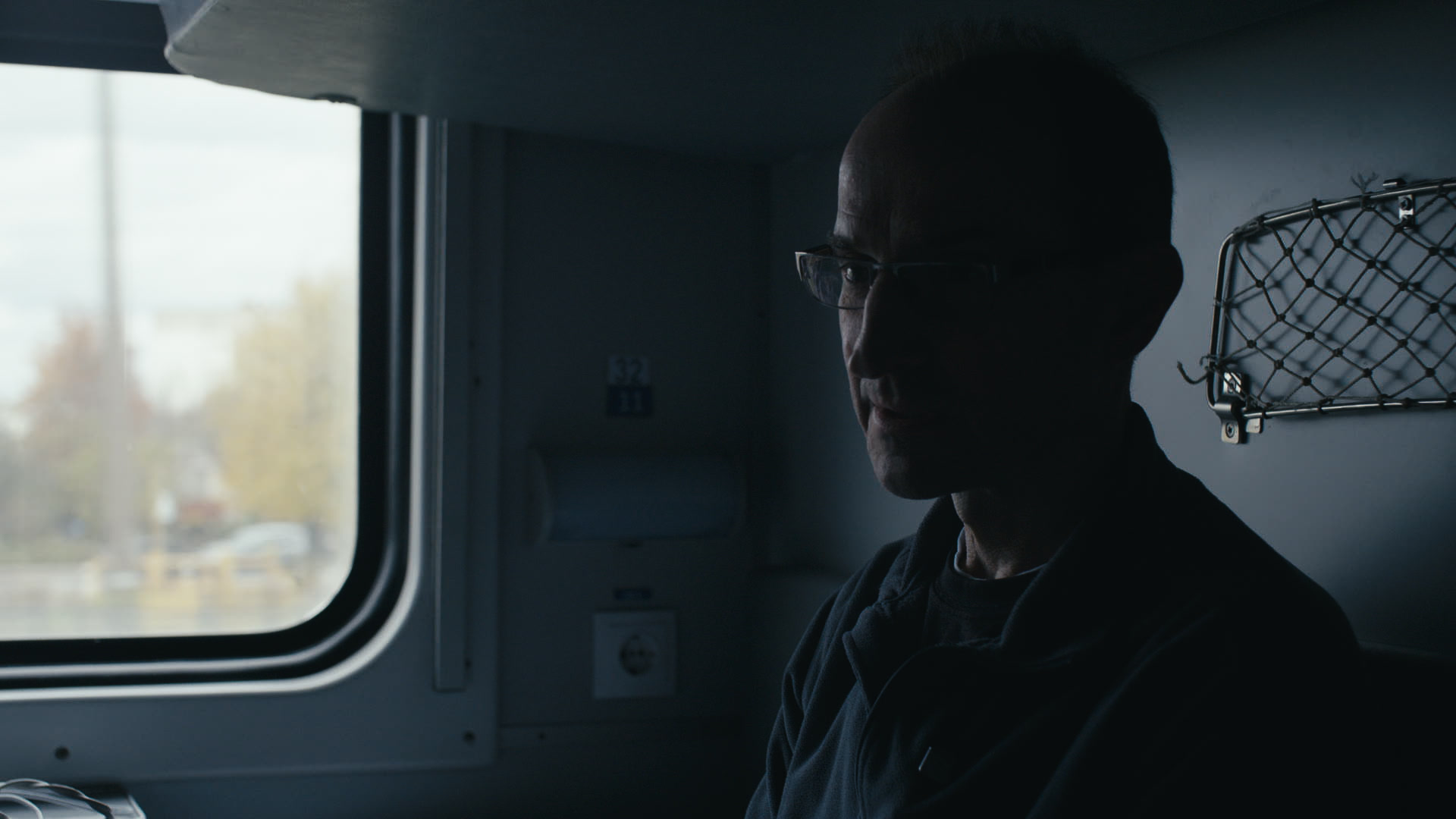
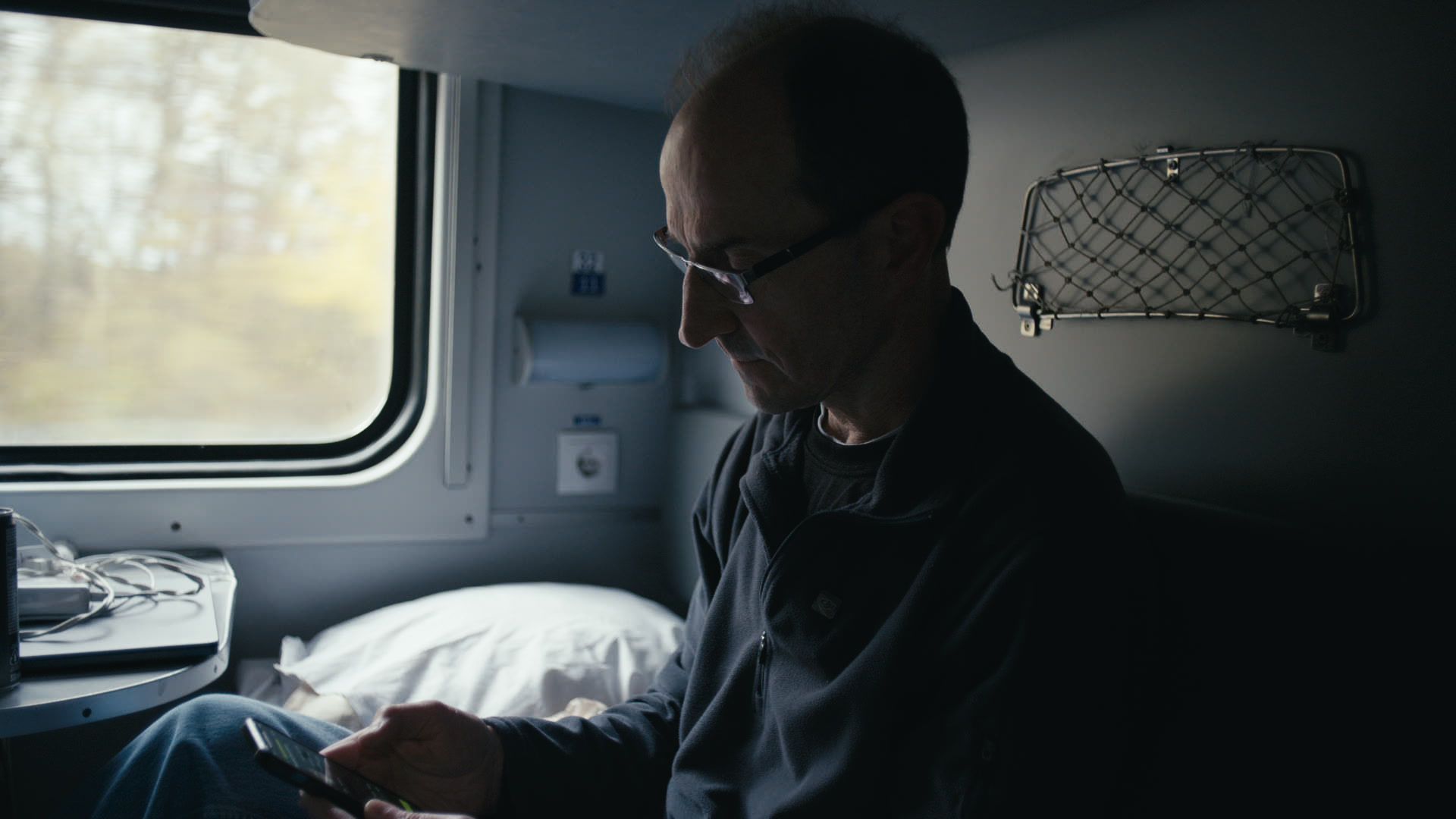
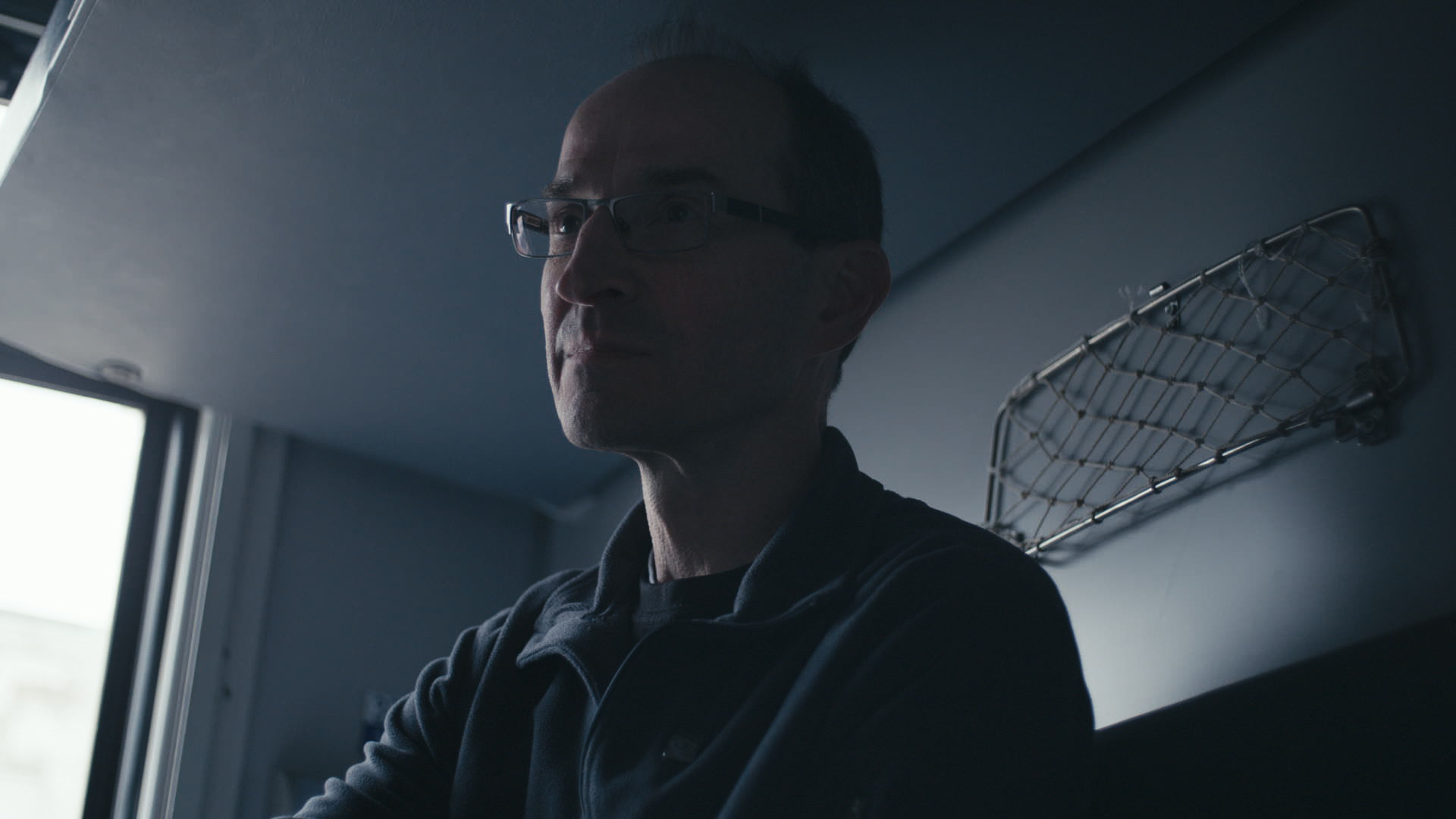
"Alex on the train from Warsaw, speaking directly to camera... the Americans enter Ukraine geographically before they enter it morally. Shows train-interview intimacy + verite arrival + hero establishing shot."
— Ivan's editorial rationale
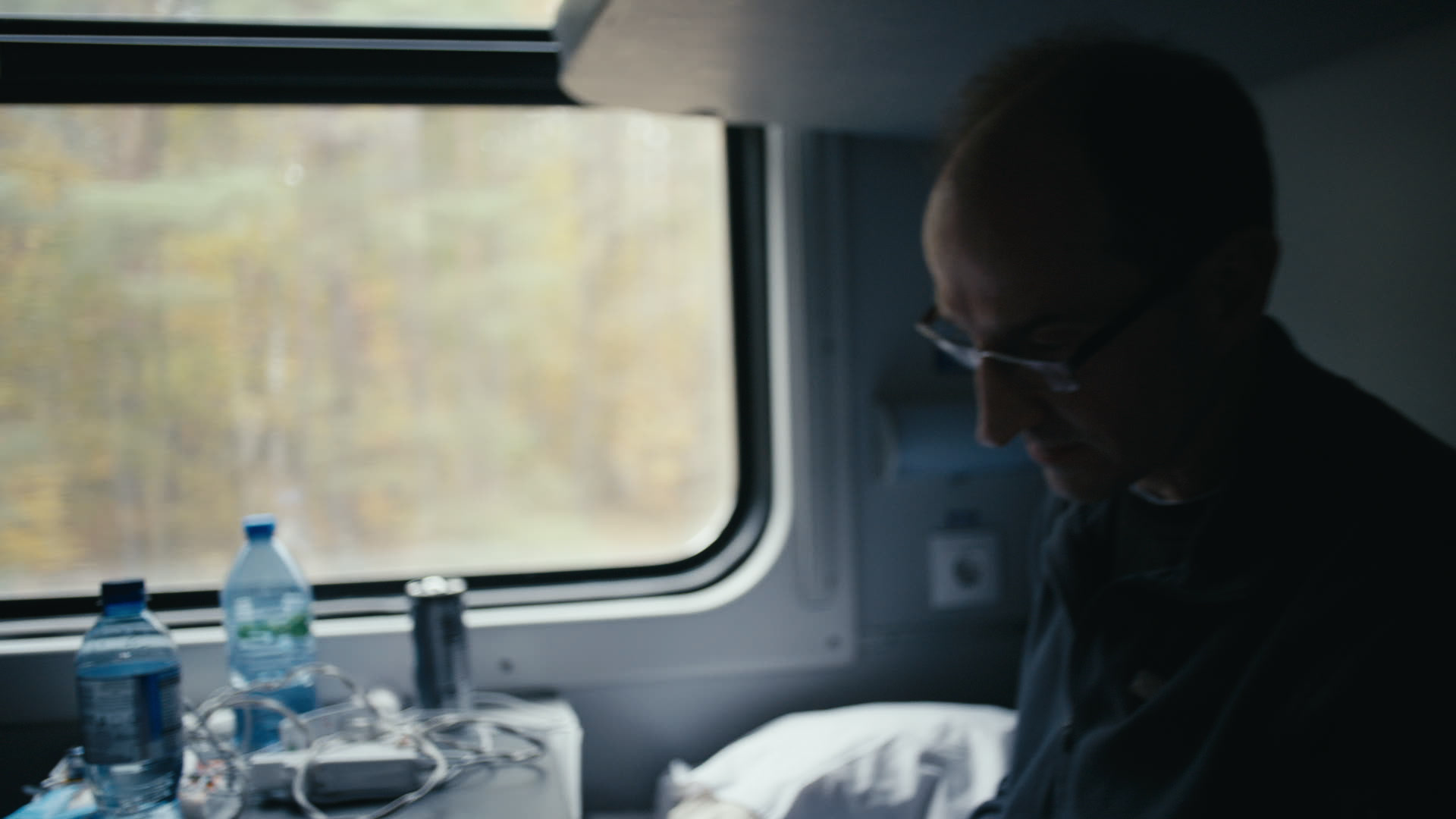
00:00:00 Dr.: comes into play is my eyesight. And then my brain plays tricks.
00:00:00 Dr.: You're good like that, Logan? Yeah, I'm good for a little bit. I'll move around a bit. Thank you. So what are you talkin...
Dr.
00:00:00 comes into play is my eyesight. And then my brain plays tricks.
00:00:00 You're good like that, Logan? Yeah, I'm good for a little bit. I'll move around a bit. Thank you. So what are you talking about? I don't know, but the leaves are changing. Just mention that. So you asked me earlier about the thoughts on Ukraine. I mean, here's a really nice countryside. What's interesting is that as we're riding along here, I noticed that But these leaves in this part of the country are already further along in the autumn process here. There are more yellows and oranges and browns than it were just a little while ago. It's a beautiful country. It really is. And that is actually why, or part of why, it's been in such an important sort of region over the centuries of the thousands of years of mankind being in the European area.
00:00:51 So it sounds pretty stupid to say that we are lucky in America because we're protected by two oceans. You know, if you grow up in the United States, you live there your whole life, you don't even think about being attacked or invaded. But when you're actually physically here, you know, almost anywhere in Europe, but especially kind of in Eastern Europe like this, you really realize that there's nothing stopping any invading army or invading horde of barbarians throughout history coming from any direction. north, south, east or west. Just a big flat plain. There's no natural barriers. It makes you realize how vulnerable these people are. But isn't this a center for agriculture? I mean like... Oh yeah. Yeah. Ukraine is one of the world's bread baskets, right? That was a big problem. All the wheat they need to export through
00:01:42 the Black Sea was under threat for a while. And if that's under threat, then a lot of people in the Tell me again when you got your Lithuanian citizenship. I think it was a couple of years, 2020, late 2022, early 2023. And when did you go to? June of 2023, just a couple of months before I talked to Rocco about this. So I was kind of preconditioned to come for a couple of reasons. We talked about my wife and her volunteering with the Red Cross, which I've always thought was cool. Then I talked about the fact that I kind of seen the former KGB headquarters and, you know, walked the places where they executed people there. So those were swirling My children are grown and they've left the house, so we're empty nesters.
00:02:42 So perfect timing. Are you excited to be heading back? I am because we talked earlier about some of the reasons to do this. Because it's trying to help defend a free democratic state against its tyrannical state's invasion.
00:03:00 a more fundamental notice good versus evil but that was personal because they're my friends and they're my friends who are going through some hard times and so the first time I went was just kind of get the lay of the land right then I thought how can I up my game for my second visit so I I spent more time in the ICU because I'm actually certified in neurocritical care as well and I have A lot of interest in that part of the hospital. And then my third visit, I actually spent a few nights taking call in the hospital at night. And I kept thinking, how am I going to up things for my next visit?
00:03:45 And I realized I don't have to. Because just by showing up, it is such a big shot in the arm for them. Yeah, you bring little gifts as a sort of a gesture of friendship. But it's not because of the gifts or anything like that. It's just seeing someone from America who's willing to make the journey. And sure, there's some risk there, obviously. But I'm surprised that more people from America aren't going all the way to eastern Ukraine, to Medchikov Hospital. If you're interested in trauma, this is the institution that's leading the development of trauma for future conflicts. And those lessons, of course, translate immediately to civilian trauma care. But I mean like the so you're talking about double-legged sword on one side you want to tell people that like hey the
00:04:34 We're still going on but like but no you can go go near it. Yeah, so it's it's sort of a tough thing Right, you know because you both want to like Say the people to be aware, but also like well the you're right, but we're not going to the front line Right the front line is a disaster. There's no longer a front line in traditional sense It's kind of this long gray zone and it's hard to tell who's in charge of different pieces of land. This thing can be kilometers in thickness. You know, it's not just a thin line on a map. But we're not going anyplace over there. We're going to a large city that has a good missile defense system. And especially the area near the hospital is particularly well defended.
00:05:21 The place we're staying at and the hospital itself, they have shelters in the basement. So, there's usually enough of an advanced notice. If something really bad is happening, you can get to the shelter, but it's unlikely because all the defenses are on the hospital. So, yeah, the risk is not zero, but, you know, if you're an infectious disease doctor and you're interested in Ebola and you go to Africa to study Ebola, well, yeah, there's a risk there, right? Or maybe malaria might be a better example, right? You want to go to a place where there's malaria so you can study it. You might catch malaria, but you know, you kind of put up with certain risks. You're a long haul truck driver, you can get in an accident, fall asleep behind the wheel. There's a risk crossing the street.
00:06:08 Yeah. What about brain surgery or neurosurgery? How did you end up in your journey? Like when did you know that this is what you wanted to do? Yeah, that's a good question. I know some people don't make up their minds till late, but it was always something I was very interested in. So for me, medical school was more looking at other specialties to make sure I wasn't missing anything. You know, neurosurgery was always my number one thing, but let's look twice at this or that to make sure maybe there's not something else I'd rather do, because I know a couple of classmates of mine who are dead set on surgery, and they had had this revelation in second or third year of med school that they really don't want to
00:06:53 go into surgery. So they went into other fields. I developed pretty early on an interest in neuro trauma and neuro critical care. And when I was talking to my advisor in medical school about that interest, he's the one who recommended me, recommended that I should do my residency places are strong in that. I'm struck by the statement you just made earlier and like we're going to a city with a strong missile defense whatever whatever you said. It's just like that's just not something we have to think about in the
00:07:30 U.S. you know? Yeah I think it would be well obviously I'm biased but yeah I I think we've become too insular in the United States with this breathless reporting. I mean, I love when the fact that you have some news story that's maybe 18, 24 hours old and have like a live reporter, you know, who's in some other part of the world. So they're awake at 3 a.m. local time or something talking to the evening news in the United States. You don't need a live reporter there. You know, you always see a reporter standing out in the middle of a hurricane, broadcasting about the hurricane. We don't need this kind of stuff like that. I think if we take a step back and think about what's really important, I mean, this conflict going on has redefined how war is going to be fought forevermore.
00:08:16 The future of Europe is at stake, and if Europe's affected, it's certainly going to affect the U.S. People in the U.S. may not want to think that way, but it will. It'll affect the rest of the world as well. How much do you think about the people that you couldn't say or couldn't, whether not operating at all or operating and it wasn't successful, how much does that stay Sometimes, sometimes you think about it at random moments or sometimes when you see a patient with, who shows up with the same kind of injury or same kind of disease or illness that a patient whom you treated had and the one you treated didn't do well.
00:09:02 You know, you think, "Oh, okay, I remember this because this patient over here had this and didn't do well." You just try to do your best to make sure it doesn't happen again. You know, the best surgeons I know, and I work a lot with residents, especially the upper-level residents, who are going to be independently in practice in a year or two. And if they're involved in a case that doesn't go well, they choose them up sometimes. And I know they're going to be the best ones. You know, you have to have several conversations with them and reassure them that you didn't do anything wrong. Or, God forbid, they didn't make a mistake. They learn from it. you sit down with them and make sure they understand what happened again and usually they're well aware of that. Usually if you're most lines of work if like 99% is pretty good you're happy
00:09:52 with that. The problem is that 1% isn't good and that's not good enough if you're in the medical field especially a surgical field. When you see something similar are you are you frightened or excited about the opportunity to do something different or is it a little bit of both? I don't think there's any, there's not that kind of emotion about, it's more like problem solving. It's like okay we need to approach this tumor this way or approach the spine problem this way and you're thinking about this other patient who had a complication and didn't do well, you just, you'll learn from your mistakes but hopefully you learn more from other people's mistakes that you've read about or discuss the conferences. So you don't have to repeat those same mistakes.
00:10:40 Tell me about Metzikov at night. It can be pretty variable but on any one day just on the circle alone will get one to eight cases of penetrating traumatic brain injury which again that means that someone has had usually shrapnel. In the United States when you talk about penetrating brain injury, it's usually a gunshot wound to the head. But in war, it's usually shrapnel from explosions, a piece of metal or brick or pavement or whatever is in someone's head. So they do anywhere from one to eight of those cases, an average of about three per day, just for that disease entity alone. Not to mention the other types of injury or trauma, and then not to mention
00:11:28 and all the other surgeries they do for brain tumors and you know, chronic artery disease, spine disease and all the other branches of neurosurgery. They can be pretty busy at night. And that's when the people are brought in from the front. Yeah, generally it's, we talked about how the so-called rules of war got thrown out the window. It used to be a pretty sacred thing not to attack a medical facility, right? Because theoretically, those doctors and nurses and healthcare workers could be taking care of one of your side's injured soldiers as well as the enemy's injured But that's unfortunately a very naive way to look at things now, which shocked me when I started looking at this. So, of course, ambulances with the big medical symbol on them that used to mean off limits.
00:12:18 No, now they're targets for the Russian drones. They'll go after them. And Ukraine, they have these kind of stabilization centers, which are usually the first place an injured soldier or civilian may get to as they're trying to get them stabilized and move them further away from the line. But again, those have become targets now. So I've been reading how a lot of those are now kind of being hidden or placed underground or not advertised as such. medical symbol used to be kind of like a garlic for a vampire, you know, it keeps away the drones and things. Now it's a magnet, unfortunately.
00:13:00 So we were there when Andre talked about this, but as if we weren't, tell me about Andre talking about his surname and talking about Ivan Sirko. You'll have to talk to him more about that. I know Ivan or Ivan Sirko was a great Cossack leader. I don't know, is he a general, a military leader? And yeah, Andres descended from him. So if you talk about the tradition of service running in his family, it doesn't get much better than that, as witnessed by the fact that his older son is a neurosurgeon. He has finished training and starting his career. His younger son still has a ways to go in his education, of course, but even he is
00:13:48 leading more towards a medical field. Last time I talked to him he was thinking more about trauma surgery. I think because of part of the older son's training he had done a stint that's kind of like a little different than in the United States but like a neurosurgeon who can also do stuff on the other part of the body. So I think the younger son was kind of thinking about that model but knowing Andre I think that by the time his younger son is finished his school the younger son will be a and you're a surgeon too. So there's very strong family traditions dating all the way back to Ivan Sirko. - Wow, I didn't pick up that he was descended from him. I picked up like how, you know, the legendary figure. - No, I thought he's a descendant of him. - Oh, what do you mean? - Yeah, we can clarify when we're there. - I just, for me, he was just talking about having a name that he had to live up to, like, because he is named Sirko,
00:14:44 can't leave people look to him as you know for for the strength that that the Sirko name carries that's what I was a very strong thing you know that I took from it. You're exactly right yeah it's not only his his own personal leadership but he's again unlike in the United States these people do think back to prior generations in their family heritage Talk to me about passion. So I got to tell you that my ancestors come from northern Europe.
00:15:31 So we tend to be a little more stoic and not that emotive. Kind of like the Ukrainians, you know, it struck me in clinic. I mean, either circle would have these conversations with patients, give them very bad news. they're very stoic about it at least they're you know I'm sure when they go home and choose them up yeah we're I'm just not as passionate as someone from the southern part of Europe you know your Greeks or Italians people like Rocco who are much more passionate and articulate about these things but we still have the same drive no question we may express it different ways but Andre Rocco and I I have formed this team, alliance, brotherhood, where we're talking every day on WhatsApp. And we're all very different, which makes us a better team, right?
00:16:20 We all have different strengths that complement each other's weaknesses, different styles. But we're all united by this idea about trying to help Ananday do the best possible job he can to take care of these horrible casualties that he gets every day and try to educate the rest of the world what's happening in Ukraine. Describe being driven, have that drive. You know, it's funny. You asked me to describe that. It was like you asked me to describe, like, why do I go? You know, it's just something I do. I mean, my wife has given up on me because, you know, I pretty much don't have any hobbies. trying to work all the time. You know even on this trip knowing that we wouldn't have very good internet trying to line up the work and things to do on this long train ride that wouldn't require internet.
00:17:11 So it just, well I will say this though, um, you know they used to call people uh workaholics which don't hear much anymore but the idea about working all the time and I've been blessed in my career to hold a lot of leadership positions and organize neurosurgery and be able to give back to the specialty a lot in that way but I think that what I'm doing here now in Ukraine it's a whole order magnitude bigger and not to disparage any of the other you know committee work leadership things I've done or the people who are currently doing those things because it's important but we're talking about a war here I mean literally you know it's not just committee meetings and trying to reconfigure organizations and things like that. Then even trying to improve the way the
00:18:01 specialty is practiced the understates. This is like life and death for a lot of people. So the whole workaholic drive thing, just the innate desire to keep working, I think is important. But you know we all know people who work all the time and they're busy counting their paper clips, you know rearranging the rubber bands and things like that. Think back to my wife. You know, she didn't have to volunteer for the Red Cross. Just someday, one day years ago, she said she's gonna do that. And she stuck with it. I think that's very commendable. It's interesting. What I call passion, you call drive. Yeah. It's funny because I think of myself as actually being a very passionate, driven, hardworking person. And
00:18:54 I know these um they're still in college who are shattering me she said Dr. Black are you always so calm and I that struck me I guess maybe on the outside people think I'm calm but I don't think of myself that being away on the inside. Logan before we lose light completely um are there some topics that uh um you think we should hit in this uh
Speaker
00:00:00 I'll put it in.

00:00:00 Speaker 1: 10 minutes.
00:00:00 Speaker 1: 10 minutes.
Speaker 1
00:00:00 10 minutes.
00:00:00 10 minutes.
Speaker 2
00:00:04 Okay, 10 minutes unfortunately. We're running late. We'll see what control we get.
Speaker 1
00:00:14 We'll go up around a little bit here. They're all looking at you. Laura. Unfortunately, he said we only have 10 minutes. We must be running behind schedule. Where are you guys from? Los Angeles or Dallas? Oh, hey. Oh, hey. How are you doing? You're all right. You're all right. Thank you. What brings you here? We're going to put some... *phone rings*
Speaker 2
00:01:22 - Thank you. - Thank you. - Thank you. - Take care. - Take care. - Don't miss it. - Don't miss it.
00:01:30 - We won't. - Cheers. - Yeah, we only have a few minutes.
Speaker 1
00:01:38 - Oh, where'd Laura go? - Laura went inside to grab your food. - Let's at least try to look at this church here.
Speaker 3
00:01:58 So normally, oh here it is, here's a nice picture right here. I'm gonna walk through this shot, we'll come back to you.
Speaker 4
00:02:09 Oh yeah.
Speaker 1
00:02:42 So, here's that, I assume it's a church, there's crosses on top, but we could go underneath to walk around, that's the little market where I'd say we could buy more stuff, but the
Speaker 3
00:02:53 dude said we only have 10 minutes, so. So, do you want to, yeah, let's go back.
00:03:00 Okay.
00:00:00 Dr.: like we want to get with Alex oh yeah probably be nice to get someone like
00:00:00 Dr.: like Alex right yeah yeah exactly okay or so I'm walking around the crane but also just sitting yeah yeah okay so so wel...
Dr.
00:00:00 like we want to get with Alex oh yeah probably be nice to get someone like
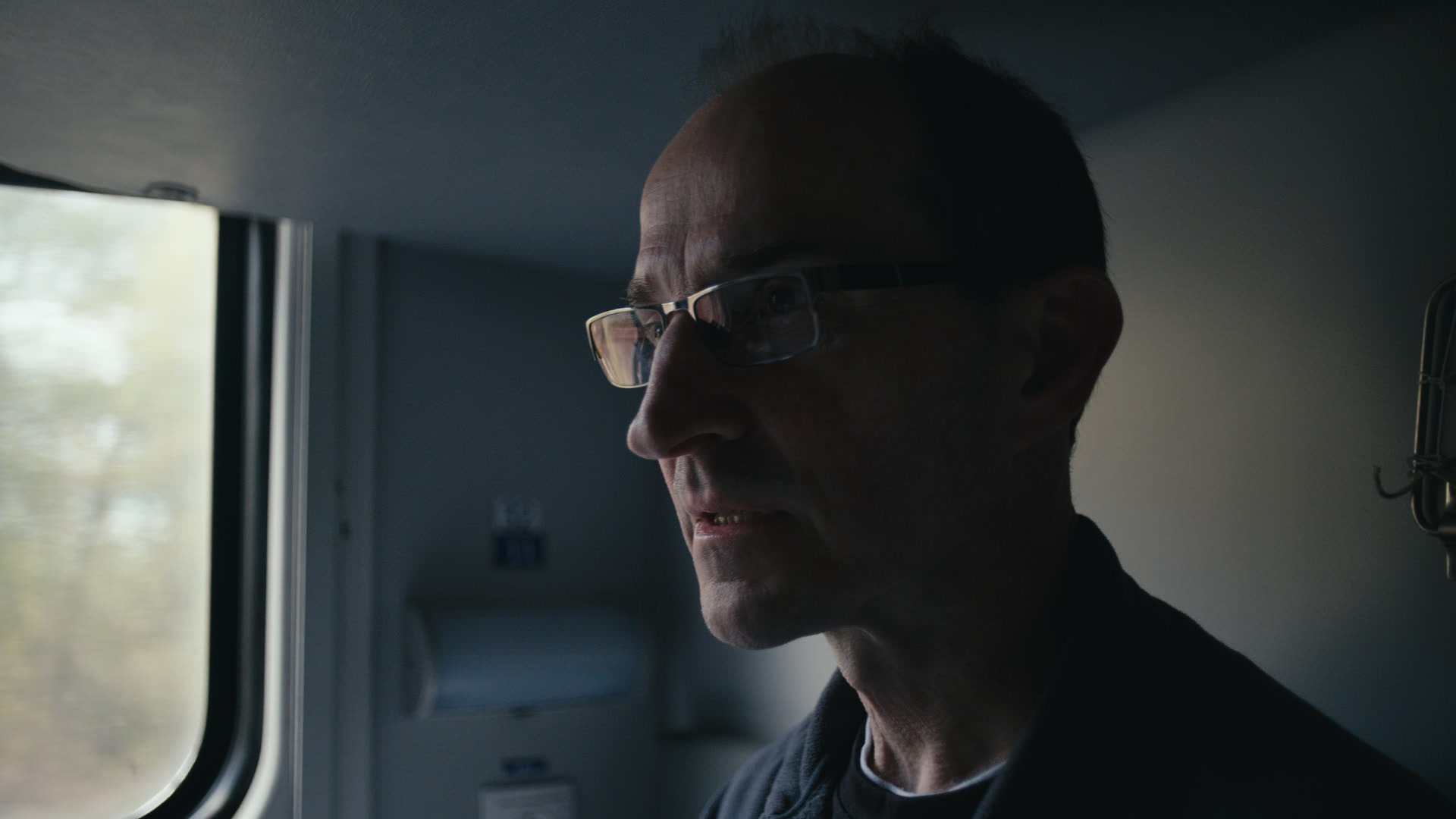
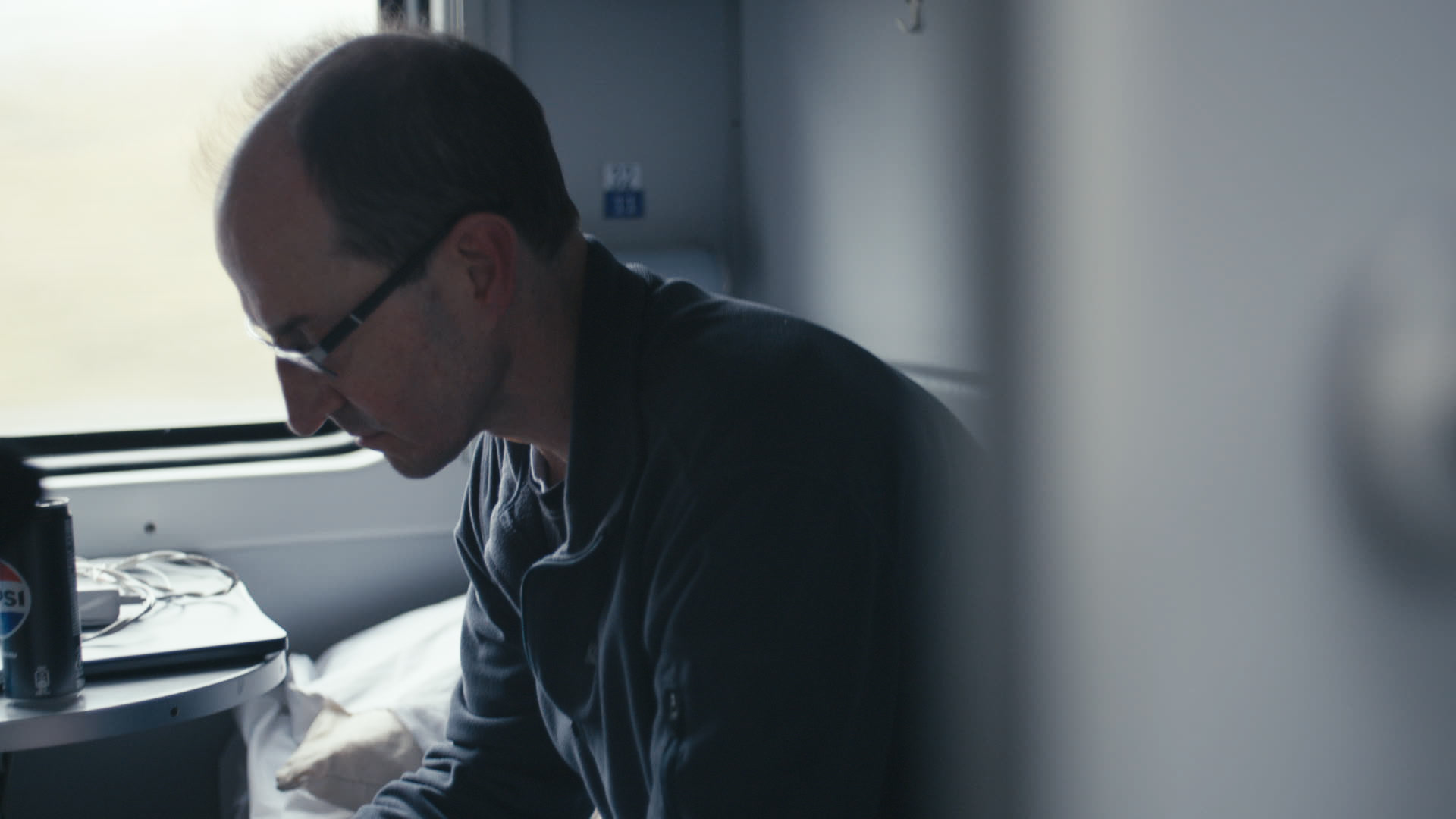
00:00:00 like Alex right yeah yeah exactly okay or so I'm walking around the crane but also just sitting yeah yeah okay so so welcome to the Ukrainian train we are on our way to Dnipro which is in central Ukraine but in terms of the where the front line is it's only an hour from the front line so to get here I live in Dallas and I try to be as efficient as I can with my travel to minimize the time I'm away from work. So the cycle I've gotten into is leave Dallas on a Thursday evening, connect somewhere in Western Europe like London or Frankfurt and get into Warsaw, spend the night there which is Friday night, then Saturday
00:00:46 morning catch a 6:40 a.m. train from Warsaw to the Polish border. That ride is two hours, 45 minutes or something like that. And then an hour later, catch a train that leaves from Helm, the border town, and goes all the way to Nitro, which will get us in at Sunday morning. So if you leave U.S. Central time Thursday night, you get in Sunday morning, you lose eight hours with the time zone change. I know some people take even longer routes, but this is, trust me, I spent a lot of time on Google trying to figure this out. This is the most time efficient way. So when I am out of Dallas on these trips,
00:01:30 I'm out of Dallas for 10 nights, only five of those nights are actually spent sleeping in Dnipro. The other five are spent sleeping on planes or trains or airport hotels in Warsaw or hotels by the train station. - Is it worth it? - Absolutely. Yeah, I think what's happening over there is incredibly overlooked in the West. It's so important, I think, to support the incredibly brave, resilient people over there and the work that they're doing.
00:02:00 It's important to learn from them. We've published several articles in the medical literature with many more in the works on how to take care of these patients. But more importantly, just to not only deal with the medical audience, but the audience at large. People are always really curious about why I go over there. That's something that they never thought anybody would do. So explain to them what it's like, why the war is important. And maybe the best thing of all now is it's most important thing I should say is that it's personal for me now, because I'm friends with these people there. And we've operated on tough cases together. We've done CPR together in the ICU. We've taken care of patients in the ICU who are critically ill. I'm very, very concerned about them and want to do whatever I can to support them.
00:02:50 And making the effort going all this way, all this time and money and effort to get there and just show support for them is a
00:03:00 huge morale booster for them. Because some of them have been doing this, most of them have been doing this for the entire 10 years of the war, even though significant percentage of their colleagues have left and even though they don't get a break. So I think it's absolutely worth it. This is why I spend my vacation time doing this. I mean, I can't imagine. Like, from what you do and get out of it, I can't imagine a better way to spend your vacation time. Seriously. I mean, I have to be careful not to involve my employer in any of this. So I take vacation time. I pay my own travel. You have to buy your own health insurance here in Ukraine because the policies I have at home don't cover us in a war zone, apparently. So all these things kind of insulate my employer.
00:03:47 So I do this on my own time and on my own dollar. And no second thoughts at all. I just wish I could do more. I think that's probably a good way to end our conversation.
DR. ALEX VALADKA (American Neurosurgeon)
00:00:00 tomorrow yes morning yeah we'll walk over for sure
Dr.
00:00:00 tomorrow yes morning yeah we'll walk over for sure Mr. Slavtold, all our administration, general director, medical director, also was invited
00:00:45 to source his patient with severe injury. This patient? Yes, yes. And our general operator usually spend time in the week-end in hospital. Yeah, just a drink, or? Yeah, yeah.
00:01:07 [UKR] I think if you're transferring, then the ophthalmologists will need to do it properly, so they don't miss anything. [UKR] Because this Levko wrote that he only sutured the wound in the eyes and didn't do anything else.
00:00:00 Speaker 1: Oh yeah, look at that, Wi-Fi. Get some of these messages sent real quick. So should I be talking about this or is there ...
00:00:30 Speaker 2: Oops. Oh no.
Speaker 1
00:00:00 Oh yeah, look at that, Wi-Fi. Get some of these messages sent real quick. So should I be talking about this or is there going to be a silent part where I'm just playing with the computer? How about you just feel it out? Like just do your work and comment if you feel... Okay.
Speaker 2
00:00:30 Oops. Oh no.
Speaker 1
00:00:37 I just lost my Wi-Fi. Oh well. All right. Go back to doing something else. What was that statement you told me about a surgeon only touching an email? Yeah, just in general, the business efficiency thing is only touch an email once. Don't look at it and say, "I'll get back to it." Just try to get rid of it right away. But that's the rights. Like I said, I got some things I can do just on word here. Matter of fact, one of the things I need to do is another draft of an article we've been working on with Andre. He just sent it back to me, so I need to kind of start working on that one too. That's my next project. focusing on his series of penetrating injuries to the lateral skull base, you know, kind of in this area here. He and Rocco published one on the anterior skull base before I got involved.
00:01:28 And the numbers that Andre has seen from this just dwarf anything else that's ever been published. And unfortunately, I should say sadly, Andre has some incredible illustrations of how horrible these injuries are. I was smart enough to download this onto my hard drive before I left. The new internet would be sketchy here. Do you want me to stare out the window periodically and think deep about?
00:02:30 You do whatever feels. I don't know for you. I'm looking for this one. Clutter here. Yeah, we're very cluttered. E aí
00:00:00 Okay. Okay. Maybe we can set up a time to actually go through with some of those people in there. So that's the one where Victor Kunchuk donated $11 million.
00:00:45 He is the second richest man in Ukraine. And he and his wife had a sculpture made by an American. And they sold her for $11 million and donated her to the hospital.
00:01:00 And you got to jump start and really stay in the air rehab. Ja, sorry.
Speaker 2
00:02:09 I think when we have permission from all patients, we couldn't, to possibility, show the face. Right, yeah. You can also ask with...
Speaker 3
00:02:30 [RUS] Thank you. [RUS] 130, I think, hemoglobin, 107 platelets. [RUS] The trauma surgeons worked, operated, [RUS] transferred the AZF,
00:03:11 [UKR] formed a normal stump there and there,
Speaker 2
00:03:14 [RUS] bandaged.
Speaker 3
00:03:18 [RUS] Slebin said that they only treated the wounds, [RUS] they were still going to transfer the AZF, [RUS] and they helped a bit, so, [RUS] repaired. He was standing, was, but they did it better. [RUS] They packed the nose there, right? There's nasal bleeding, [RUS] and it's still leaking a bit down the back wall, flowing into the mouth. [RUS] Packed. Left eye is gone, right. [RUS] Our ophthalmologists didn't do anything? [RUS] Our ophthalmologists didn't do anything, at the stages enucleation is written.
00:04:04 [RUS] Because they wrote to me that they only sutured... [RUS] At the stages enucleation is written, at the stages. [RUS] Ours just write crushing, we on Monday [RUS] discharge normal patients, as they come to us. [RUS] Normal patients?
Speaker 2
00:04:19 [UKR] Well, in my opinion, that's the journal, where they constantly come,
Speaker 3
00:04:26 [RUS] Good. [RUS] Is this your doctor, wife not a gift? - No, no, no, she transferred. [RUS] - At least she's new. - New. [RUS] She looks well at what she'll do. - She has experience. [RUS] Well, she's young, but good. [RUS] Because if we're with Abilik, we'll operate on this one tomorrow too.
Speaker 2
00:04:49 [RUS] Maybe, if she looks, and direct participation is needed. [RUS] She usually comes in the morning. - Yes, I just mean that then we'll agree. [RUS] Saddakol, Svetlana Borisovna, right? [RUS] Yes, Stivenko. [RUS] The head, about this doctor, either before us or after us, [RUS] as a second stage, repeatedly, implemented, possibly, if, probably, additionally removed, [RUS] because if it remains, there will be a subdural infection,
00:05:53 [RUS-NEEDS] Если все стаи
Speaker 3
00:05:54 [RUS] If all the packs
Speaker 2
00:06:24 - 131. - 131.
Speaker 1
00:06:32 13.1. 131.
Speaker 3
00:06:37 [RUS] And the platelet count.
Speaker 2
00:06:41 [RUS] 107 hours ago.
00:06:43 107.
00:06:44 [RUS] And from 3 milliliters of thromboconcentrate
Speaker 3
00:06:49 [RUS] 300 milliliters and thromboconcentrate [RUS] And for tomorrow we asked, in case we need them, they should reserve them for us. [RUS] There they go again, he's getting aggressive. [RUS] How will it be detected? [RUS] How will it be detected? [RUS] How will it be detected? [RUS] How will it be detected? [RUS] How will it be detected? [RUS] How will it be detected? [RUS] We're monitoring, this evening after the blood transfusion, we'll recheck in an hour, recheck at night.
Speaker 2
00:07:18 [RUS] Did he come for the organization?
00:07:20 No.
00:07:21 [RUS] He transferred himself temporarily.
00:07:35 [RUS-NEEDS] Уже,
00:08:00 Already,
00:08:23 [RUS] Hemoglobin, reticulocytes, and then take for your operations. [RUS] Because nobody understands what we'll take, and he's already like...
Speaker 3
00:08:30 [RUS] Here, and the wound dressings... [RUS] Ah, it's sutured there, but it was jumping. [RUS] What, what? [RUS] Sutured, but it was jumping. [RUS] Who's walking? [RUS] And there's a general chat there. [RUS] And there's a general chat there. [RUS] Yes, yes. [RUS] Marchin wrote that they reported going there.
Speaker 2
00:08:48 [RUS] What I probably started posting there in the morning. [RUS] This one came in at 3 o'clock, this one came in at 5 o'clock, and he even had 2 case numbers. [RUS] Do you see this in reality? [RUS] Some days he had 2 case numbers. [RUS] Further, Kinov from Ruble did it there. [RUS] 45,970, and he also has 45,979 there. [RUS] I'll show you now.
Speaker 3
00:09:26 [RUS] Ivanov 45979, and then Ivanov 45979.
00:09:34 [UKR] High amputation as well. [UKR] Set the exception.
Speaker 2
00:09:44 [UKR] Now we need to meet with our colleagues, with Arits, but without films.
00:09:54 And this...
00:09:58 [UKR] Thanks, possibly in addition, we gave gave gave, [UKR] I'll go out, explain the current situation, tell them you're on duty, staying, what you'll do, what we'll advise regarding the process.
00:10:27 [RUS] That will be correct.
00:10:59 [UKR] He's not up for discussion.
Speaker 4
00:11:27 [RUS] - Yes, it's a magnet
00:00:00 Speaker 1: Anyway
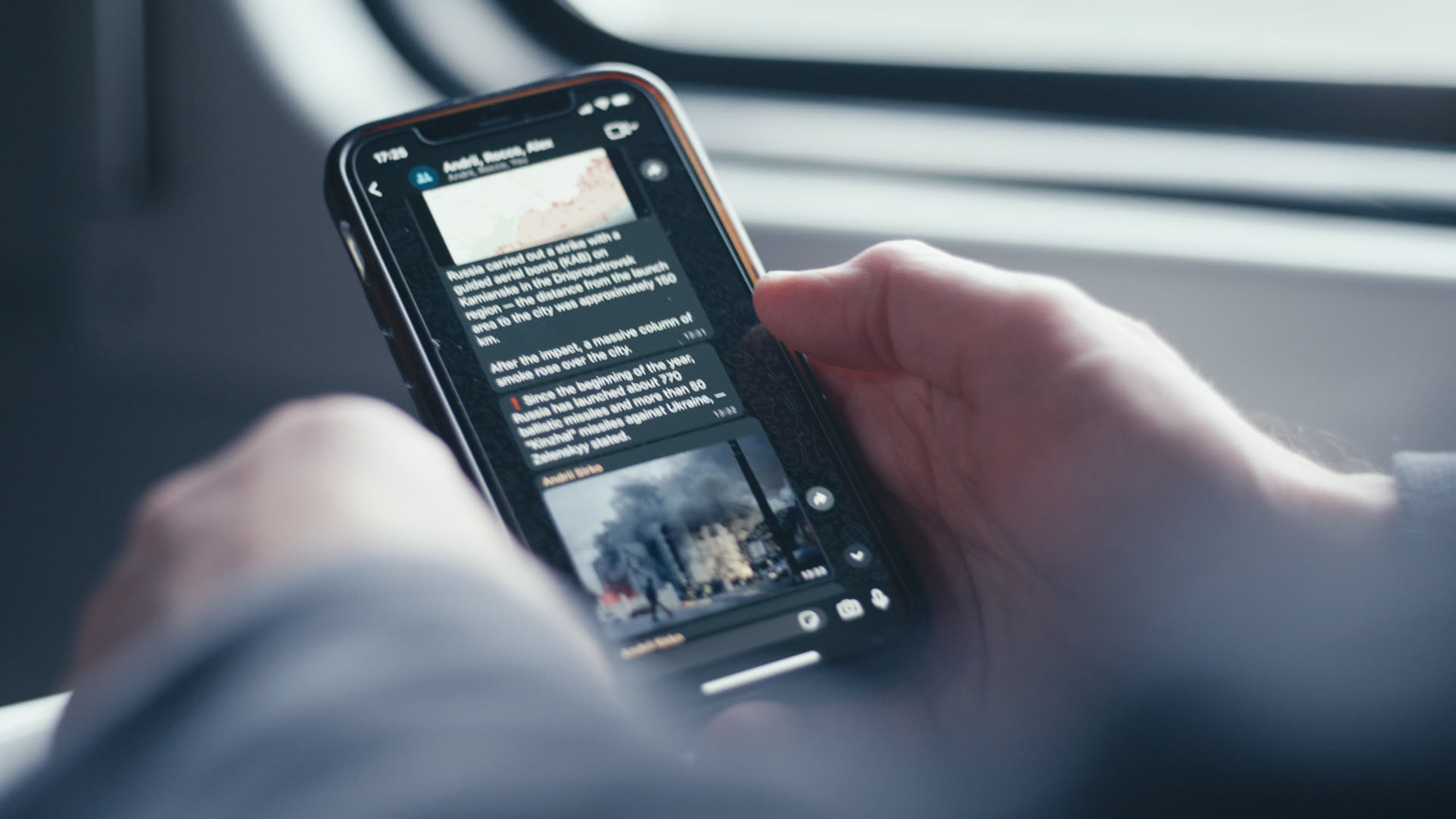
00:00:00 Speaker 1: I think he just sent a text about the latest attack.
Speaker 1
00:00:00 Anyway
00:00:00 I think he just sent a text about the latest attack.
00:00:30 Russia tried out a strike with a guided aerial bomb on Kamiatsky in the Nitro-Petrovsk region. About 150 kilometers from Nitro. Massive column of smoke rose over the city. Mr. Kiersey can talk to me. Yeah, I need people to care. Yikes. We can have him do it again with.
Speaker 2
00:00:59 2.5 inches. A different conductor.
Speaker 1
00:01:23 Yeah, because that guy wasn't playing ball with us. nice so where was it neat about 150 cloud or somewhere we're going you're nervous about going here that you want to wait until the train yeah yeah editorially
Speaker 2
00:01:42 if the train is stopped.
Speaker 1
00:01:49 Yeah, that's going to be the whole background theme. I like to have an opening with that though. That's a great idea. The sound.
00:02:00 Yeah, and I think I texted you. I actually, you know, what I do when I'm here is I kind of text pictures and things and some videos to the people back home, you know, the residents and respecters that we work with. And I did that and I said, this is what it was like all night long. We got the window it's black you just hear the the wheels rolling on the tracks. You want to get his laces here?
Speaker 2
00:02:24 Alright. Yeah. We can wait until you get it. Yeah, that was disappointing. It was always something you look forward to on this trip. Pretty much shortly after we run through this town, it starts getting dark. Yeah, we had a little more time, but certainly don't want to miss the...
Speaker 1
00:02:53 Yeah, see, the guy lied to us.
Speaker 2
00:02:59 We probably have 20 minutes. Yeah, guy. We're going to sit here forever and hear his name. Yeah. Oh, well. I was talking to a Mediterranean cruise, so it didn't suck, but I was talking to one of the people that worked there and they were telling me that they were on a ship when an
00:00:00 DR. ALEX VALADKA (American Neurosurgeon): thing is that by being there with the guy the whole time you know you're you're you're you're
00:00:00 Dr.: outraged because you know how he was you were risking your life just in in your imagination with him as you go through t...
DR. ALEX VALADKA (American Neurosurgeon)
00:00:00 thing is that by being there with the guy the whole time you know you're you're you're you're
Dr.
00:00:00 outraged because you know how he was you were risking your life just in in your imagination with him as you go through this and so you know it was a pretty intense thing but like they had a theatrical run and then it was released by frontline so that was circled back and and and so So like, you know, I wouldn't know, but I'm assuming the more lucrative would be like an HBO type thing. But the most lucrative could be the theatrical run. So we'll try that first. Logan, I'm just asking him, how does the revenue from this work? I have no idea. I do this thing and I don't know how it works. He just knows much more about that than me. Yes. Oh, you can see in the background that building right there to the church. They were fading away, leaving Colville.
00:00:56 Logan, now I'm self-conscious you didn't hear that when they announced the award for best series, they used our documentary. Was this for Pony? No, it was actually for Boz. Oh, that's cool. the clip for the series was Brian and his son in the storage unit. So, which, um, Logan, I don't like the way it's shot, so there's a reason we're here. Anyway, so, uh, oh, here's another church. Oh, yeah. So, Alex, I have this theory or this response to you, and I want you to hear it and either refute it or go into what it makes you think. I've been talking about this film and the service aspect of it, and I have said that I feel like it's not that you're driven by your faith to do this, but the same thing that
00:01:55 Does that make sense to you like that? There's it's it's part and parcel of the same thing. It's not like oh I am I am I am I have this faith. I must do something with it. I think it feels combined it feels like intrinsic You know, I think you're thinking about this a lot more than I am I mean I'm a surgeon right so a lot of people think surgeons are mouth breathing knuckle draggers. It's very simple. I mean this is something, this is a horrible evil
00:02:41 that's being committed. I mean not only is it a tyrannical state attacking a democratic state in Europe of all places, but it's also just good versus evil. I mean no one mentions anymore every day their war crimes being committed. You know the Russians are bombing children's hospitals and and kindergartens and churches and supermarkets and village squares and apartment blocks. We used to talk about the Geneva Conventions and rules of war and all that stuff has gone way out the window. And like no one cares anymore. They just mentioned every day on the news podcast I listened to, they talk about how many hundreds of drones and missiles the Russians have launched and how many got shot down, how many made it through, how many people died. And it's kind of like that's
00:03:30 the way it is now. No one even says that's right or wrong. You know when we met, Irina came with you, right? And she said her class, that people from her class were like, "Oh, I didn't know the war was still going on." Yeah, that was when, after I gave that talk at the University of Dallas, they thought that oh, they were surprised that the Russians are deliberately targeting non-combatant targets, you know, civilian targets. They thought, oh, that was just the occasional stray drone
00:04:00 or missile or something like that. It wasn't active? No, it's a deliberate campaign. The amazing thing is despite the hundreds of drones and missiles and glide bombs and things that are launched every day, every death is tragic. But if only five or six Ukrainians are killed and more injured, that's not a very good return on the investment if you're trying to demoralize the infrastructure. And of course, the more Ukrainians get attacked, what would the U.S. do if somebody were attacking the U.S.? Like, what happened on 9/11? Did we just turn tail and run? Of course not. That was one of the few things that brought the country together and everybody was pretty pissed off and everybody fought back. Ukrainians doing the exact same thing. You know, they're amazingly brave and resilient people. You know, you and I are of an age, but I'm of an age still, but
00:04:48 that we know that Ukraine voluntarily gave up its nuclear weapons. Yeah, the Budapest wars. Yeah, 1994, I think it was. And in return, they were going to be protected and guaranteed security. Which is so funny in a not humorous sense that now everyone's saying, "Well, part of the ending of the war, Ukraine's going to need security guarantees." That didn't work too well for them in 1994. I have a friend who says to me that he believes that most of the world's suffering is because of broken agreements.
00:05:37 You could say that's true at both the individual level, the organizational level, and the international level. Do you want to hit that light? Yeah, interesting. We're going to turn off. Oh. It just came on. earlier yeah no I think yeah yeah so I think it was just they they've started out at nighttime it's gotten late in the day yeah the power on air oh yeah so Logan is it better if these lights are on or we turn them off yeah look at that got that figured out So, who should talk more about Andre? What can we talk about Andre Circo? Well, tell me about him. So, Andre Circo is the, I think he's a cataclyphalist director of the Center for Shiropril Neurosurgery at Shiropril Hospital.
00:06:28 So, by, before the war started, in 2014, he was, and he used to be an excellent tumor surgeon. primarily tumors of the skull base, kind of the bottom part of the brain where there are a lot of cranial nerves that come off and do critical functions like help your face move, you control your vision, your eye movements, things like that. And a lot of the arteries coming up from below to feed the brain. So definitely tiger country in terms of places to operate and he is a master at that. And he was able to transfer that skill set over to victims of the Russian attack who've had shrapnel primarily, or called penetrating brain injury.
00:07:13 And of course it can go anywhere in the brain, but the ones that kind of come from below and maybe go through your eye socket, your frontal lobes up into the brain, or the bottom of the skull up into the brain,
00:00:00 Speaker 1: Just kind of weird I think
00:00:00 Speaker 1: Get some sound sync See here Where's my phone? Alright, one more to go up here
Speaker 1
00:00:00 Just kind of weird I think
00:00:00 Get some sound sync See here Where's my phone? Alright, one more to go up here
Speaker 2
00:00:18 All right.
Speaker 1
00:00:28 So what did you want to talk about? Hang on one second and then we'll get there. All right. Let me just put this on. Also, do I need to be sitting or doing something different? Am I okay with this thing?
Speaker 2
00:00:52 I feel like I'm in a cave here. It's fine, it adds to the ambiance. What's next? Do you set a...
Speaker 1
00:01:00 Yeah. Let's do it for me. One more thing.
Speaker 2
00:01:24 So I remember giving an interview once, getting ready to talk to someone. We had a really great media person in the hospital. "What should I do with my hands?" She sent me this clip from this movie Talladega Nights. You ever seen it with... What do I do with my hands? Yeah, I guess it's kind of funny. Yeah, Will Ferrell, he's giving his hands, because he was asking about it ahead of time, so the audience was ready for this. And they're interviewing his hands were like all over the place, just gonna move it. - I'm just getting the one thing above me. - Every time I've asked if Dad's seen a movie, he always says yes. - Well, you know, I haven't seen-- - That is Will Ferrell, yeah. - I haven't seen as many as most of the recent ones, because there came a time in my life
Speaker 1
00:02:16 and uh um yeah are these are these colors matching yours or are we good you're probably good right but it's like 3d4 for the gender but it's a later problem okay again that's right keep looking at you there yes you should and that's why i got it right here yeah so uh no i uh i'll tell when we're not rolling i'll talk i mean i don't mind it being out there but we're wasting time yeah yeah talking about it i'll tell you in a second um but uh
Speaker 2
00:02:45 let me do that there you go you know the light's good for you guys it is pretty dark in here yeah
Speaker 1
00:02:54 man okay color quit it yeah that's in the mood that's funny is the camera isn't even facing you
00:03:00 Oh there it is, there we go. That's too dark but what are you going to do?
Speaker 2
00:03:13 Just going to have any of you. This one doesn't look good. Oops sorry.
Speaker 1
00:03:27 I'm going to work. Alright, let's do that and...
Speaker 2
00:03:58 Is that magnetic?
Speaker 1
00:04:04 Yeah. That's very cool. Yeah, there you go. Oh shit, I just moved it. No, it's okay. Just put it up like that. Okay. Just like that. That's good. It's okay. It's getting sync sound, so that's why I have it rolling. Which means, you know, anyway, the sound is going to it. So that's just why I was making sure to get it on. It's not, it's nothing, it's a little,
00:04:30 a little claustrophobic.
Speaker 2
00:04:35 - So, you know, this is an interesting example of what it's like in Ukraine right now. I mean, we're sitting here having this conversation on a train, it's normal countryside, and theoretically at any second now, there could be a drone or a missile coming. And that's how these people live in their lives. You know, you can't just stop living because what's going on here. So they're having birthday parties and celebrations. They go to work every day. Knowing in the back of their minds that it could end very badly sometime today. It's amazing, their strength and resilience. And you also have to wonder what the long-term toll line that's going to be, especially on the kids growing up in this. This has been going on for closer to four years now, three and a half years. Have you gotten to talk to Andre about his son growing up in this? Or have you actually talked to Sviatolab?
Speaker 1
00:05:34 Sviatolab. I need a porter to say it. Yeah. Andre's mentioned how when they have to go in the middle of the night to their shelter in the basement of their building, sometimes he gets pretty upset and wondering if he's
Speaker 2
00:05:47 going to die. He is in his early or mid teens right now. And obviously he's not the only one. There are millions of kids in Ukraine doing the same thing. Growing up like that, you hope kids are resilient enough
00:06:00 to overcome that, but you gotta think that to a certain extent they never will. - What have you learned about
Speaker 1
00:06:16 Okay, first, what does, what do people, what surprises people the most when you tell them about your experience doing this?
Speaker 2
00:06:28 Good question. What surprises me is the fact that some of them are only peripherally aware that the war in Ukraine is still going on, which may be understandable if you live in America where there's always a 24 hour news cycle, people have very short memories and currently everything seems to be driven by Donald Trump, right? Everything he does, the left wing opposes the right wing defends and that's what consumes 90% of the media. But you get outside the US or even look at other news sources, not surprising people in Europe are very much concerned about what's going on. So that's one thing is how little it is on the public's radar screen. is most people do the kind of thing, so thank you for going there, it's a great thing you're
00:07:18 doing. It's kind of like every time you meet someone in the military, you say thank you for your service. But there are some who genuinely think it's a stupid thing, like why would you do that? You're not accomplishing anything. And I try to explain to them why I think it
Speaker 1
00:07:33 is important to go. You know, that could be argued about a lot of things. Why do it? Because one person doesn't accomplish much on their own, but all the one people have to do it to make a difference.
Speaker 2
00:07:48 Well, I always remind people of the quote that's attributed to Edmund Burke, and I don't think he ever said this, but the basic idea is that the only thing necessary for the triumph of evil is for good men to do nothing. And of course, that was stated a couple hundred years ago, so you have to update it to say good men and women. But that's a perfect example of how if the U.S. had been more aggressive early on, I've read that a lot of people think Russia could actually have been defeated in 2022. But we didn't. We kept saying we're not going to do this. We kept gradually raising the stakes and dragging it out so long that we didn't intervene. And now, as we're recording this, you know that somewhere between 19 or 21 or so drones went into Poland, depending on which source you read.
00:08:39 They went into Romanian airspace, the Russian went into Romanian airspace for 12 minutes. They crossed into Estonian airspace. I heard just a day or two ago they crossed into Lithuanian airspace. All these drones over airports in Europe, no one's doing anything. Everyone's talking about it and everyone's saying, "Oh, this is really bad," but no one just stepped up to stop. So, does it really make a difference though for one or two people like Rocco and me to go over there? Once you've been over there, once you've become friends with them, you realize how big of an impact it has for them to see that Americans still care
00:09:24 and there are people in the West who still support them and are willing to take the time to go over there there and try to help out and also help publicize what they're doing. You know, not only in an academic sense about publishing technical neurosurgical articles about the management of these types of penetrating brain injury and trying to give those talks at academic meetings, but just to the the wider public about the amazing work that's happening over there and the incredible injustices that are being done every day.
Speaker 1
00:09:58 What do you do to spread the message? You had that talk at UD. How else have you gotten the word out?
Speaker 2
00:10:05 Well, I've tried to give talks at pretty much any venue that will listen, whether it's my own institution, giving departmental grand rounds, which is kind of the weekly conference that medical departments have, or at other groups. Some meetings I normally don't go to, they're not on my regular calendar, but if people want you to talk about Ukraine, I said, yeah, I'm happy to do that. You know, various newsletters and things, they're not so much technically oriented, but more, you know, kind of sociopolitical publications from medical journals. And Rocco is very well positioned. He knows a couple of reporters from ABC, because he helped take care of Bob Woodruff when he was injured.
00:10:54 So he knows Bob Woodruff pretty well. And I'm blanking on her name.
00:11:00 Who's their Sunday morning talk host? Her name is an M. It's a tip of my tongue. She's been to Ukraine a couple of times. She's a friend of Rocco's. I know who you're talking about. Yeah, okay, this is embarrassing. It's okay. It's okay. You're fine. We're not going to play that. So that's a much, again, Rocco's the ultimate extrovert. So he's pretty well connected in those worlds. whatever he can to get the word out to.
Speaker 1
00:11:30 So let's let's.
Speaker 2
00:11:36 You asked me earlier about Andre Circo, what makes him so remarkable. And I've thought about that a lot. And somewhere on my list of things to do is to try to write another article with Rocco. That would just talk about something along the lines of leadership under fire. and just try to briefly describe what makes Andre Circo such a remarkable leader. Because he's an expert at his craft, which is neurosurgery, but he's an expert at organization and motivating his team, very active on social media to try to get the word out there. He's incredibly detail-oriented and organized, and yet, unlike a lot of those people, he can also turn on a dime. you know when all those plans just fall apart he can roll with it and he's a genuinely good person he doesn't yell at people or demean them that's the kind of thing you could write up for a harvard
00:12:26 business review article or some management journal or things like that
Speaker 1
00:12:31 well you uh so when we're just filming a second ago you you were talking about what he had been I mean he still is one of the world's foremost surgeons in, but like the... The elective practice, yeah.
Speaker 2
00:12:50 The technical term is neuro-oncology, which means tumors in the nervous system. So he's been an expert in that for a while, and unfortunately he's had to become the world's expert on penetrating brain injury and surgical management of it.
Speaker 1
00:13:00 And that's what you do as well?
Speaker 2
00:13:09 Yeah, my main area of interest is neuro trauma, neurocritical care. So that's right in my wheelhouse. But I, whenever I go there, I probably learn a lot more than I I don't know what it would be like the first time I went. Because when a lot of neurosurgeons from the west go to other places, it's generally places with very little neurosurgical presence or infrastructure. So places like Sub-Saharan Africa or Latin America, you kind of drop in, do some surgeries and leave. But there it's very different because they have excellent people in Ukraine. the problem at least at Mexico hospital is just the sheer volume is a big challenge for you know they don't have a lot of the resources that we have so trying to do high quality work with
00:13:57 tremendous value uh knowing you have constrained resources is uh is an art and he's an expert at that so that's why i kind of learned some techniques from him and bring them back and
Speaker 1
00:14:09 teach some of my residents so uh you know the statement is it's not brain surgery Is brain surgery really that hard or?
Speaker 2
00:14:21 The residency is seven years long. So it may be hard, but if you devote seven years of your life to studying it, you can pretty much learn almost anything. As a surgeon of any kind, how does it affect your ego?
Speaker 1
00:14:38 At least when you're younger.
Speaker 2
00:14:46 I feel like I'm in a courtroom. Can you explain the question, please? I just mean that, like, you have a life-saving skill, and that's what you do. Or a life-altering, improving.
Speaker 1
00:15:02 What you do directly affects people's existence. Does that, at least when you're younger, give you a self-importance? Or, you know, what does it do? Or you never thought of it this way?
Speaker 2
00:15:19 From what I've seen, the doctors of any type who think that they're important are probably not the best doctors. You know, what you do is you just get so involved in the daily work. I have a kind of a regular number of young students, you know, college students, so they haven't gotten their bachelor's degree yet, who are interested in going into medicine or neurosurgery. And they reach out and ask if they can do some shadowing. And I say, "Sure, the hospital has some, you can understand some fairly strict processes to go through so they can do that." And I think what amazes them the most is that it's not like TV with all the drama and stuff like that.
00:16:00 It's like, on the one hand, we're doing brain surgery, but that's kind of over here. What the daily life is about is, okay, Mr. Smith, you know, is he ready for surgery? Has he had his MRI scans? Does his blood work okay? You know, or Mrs. Jones was admitted overnight through the emergency department. She's having trouble walking for a few months, and this is what they found. You know, her spinal cord is being compressed. And you start figuring out, does she need surgery? What kind of surgery? You know, you get lost in the details of it.
00:16:30 And every once in a while, maybe you realize that what we do is pretty cool. But you can't run around thinking how great you are. So a great story about that. Once when I was in another institution and we were rounding in the morning. And early morning rounds, the people who were in the hospital were kind of explaining to the crew coming out what happened overnight and trading off patients and things like that. And they mentioned that there was a 9-year-old kid who had come in with an epidural hematoma, which is a blood clot under the skull, but it was rapidly enlarging and pushing on the brain. And the kid was going into a coma. So they took him to the OR and operated. The kid's doing great. And the casket next morning looked great. So we were talking on rounds, and the incoming resident said, oh, you did a nine-year-old kid? Yeah. And they said, that's pretty cool. And then we moved on. We had to talk about the next patient. What's the hardest thing about being a neurosurgeon, being a brain surgeon? A lot of things we can't help, unfortunately.
00:17:30 I mean, we've made a lot of advances in a lot of areas, but two of the most things that still are very difficult to treat are malignant brain tumors. Having to tell families that's what they have. And then on the other hand, there's the kind of the emergencies of people with really bad strokes or really bad brain injuries or spinal cord injuries that, despite your best efforts, unfortunately, you have to give the family some very bad news. The thing about that, what's interesting though, is in some ways what's worse than the bad news is the not knowing. When families or patients are kind of waiting to see whether the biopsy results come back malignant tumor or not. Or, you know, we just operated on this man, he was in a car wreck, is he going to wake up and be okay or not?
00:18:20 That's the worst, you know, not knowing. I think people can often eventually come to grips with some kind of bad news, but twisting in the wind is terrible. I just, I can't imagine how hard it is to say there's nothing we can do. Yeah, sometimes you have to say that or you say, listen, we did everything we could and it's still not good enough.
Speaker 1
00:18:52 So I know in studying for this, that a lot of issues formerly in Ukraine with tumors, etc.,
00:19:00 is that there had been a lack of testing so that a lot of the tumors were a lot further along than they needed to be in terms of like if you had the earlier testing and techniques. Is that still the case? So is Andre seeing like more advanced than you would see in the U.S.?
Speaker 2
00:19:28 Yeah, that's a great question, but when you're asking about any particular surgeon like Andre, you got to realize he has been doing this thing in one institution for a long time, and he has a very good reputation, very well-deserved. So the kind of cases he would see might be different than the ones that someone just starting out or at a smaller place might see. So that's a great question and I don't have any direct knowledge of that, but at least from what I've seen, cases aren't necessarily any further along than they would be in the United States. I mean, for example, I spend a lot of time at what's called the safety net hospital, you know, county hospital, where we see a lot of people who have no health insurance. You know, people may not be in a country legally.
00:20:14 And of course we take care of them, but a lot of them show up with incredibly advanced tumors. And I mean they're going blind that kind of thing. Yeah, going blind or just literally things growing out of people's heads.
00:20:30 You know, you have to wonder why, what took them so long to decide to come to the hospital. And the other question is why did you come in now? You've had this going on for a while. What was it about today or tonight that made you decide to finally come in? So tell me again what you just called the county hospital. A safety net hospital? You ever heard that term before? I haven't. It's kind of for people who don't have health insurance or no other place to go. You can't afford to go to some large private hospital. It's a place that's supposed to kind of be there for those who have no other recourse.
Speaker 1
00:21:08 So, as if I didn't know, tell me about Ukraine and tell me about what's going on.
Speaker 2
00:21:15 In what sense?
Speaker 1
00:21:26 That Russia invaded. Yes.
00:21:30 Sovereign nation. Yeah, Russia. And just as you're speaking about it, feel it and think about the meaning of what you're... So let me ask you for documentary purposes, though.
Speaker 2
00:21:41 Do we want to get this much into the politics of the Russian attack? It's not really going to be that we get much into the politics.
Speaker 1
00:21:47 What I'm really asking you for is when you're telling about this, that you might say something about the nuance of it that fits into it.
Speaker 2
00:21:55 So this current war actually started in 2014, which a lot of people aren't aware of, with
00:22:00 Russia's illegal annexation of Crimea. And they had what was called little green men. You have people in military uniforms, but without any insignia on them. So you didn't know what country they were coming from. And I think everybody knew what was going on. But the West pretty much said, "Oh, we're not going to do anything, because everyone's afraid of the Russian bear." So large parts of Ukraine were annexed back then. And Andrei Tsierko with them would see a relatively small number of casualties coming up from the constant fighting down in front of me. And towards the end of calendar year 2021, in January 2022, Russia started building up a lot of troops on Ukrainian border.
00:22:48 And pretty much anyone with half a brain could figure out they were going to attack and invade. And I still remember these endless discussions under news every day about what's going to happen.
00:23:00 I still remember waking up one morning and, you know, the day the invasion started on February 22nd. No, I was going to get the day, February 24th, the year of 2022, when they just rolled in. And everyone said, well, you know, Ukraine is hoes, right? Because Russia's got a huge army and Ukraine's getting it rolled over. And there was that great quote from Ukrainian President Volodymyr Zelenskyy when the West, I think the U.S. had offered him, you know, a way out. But he said something along the lines of, I don't need a ride, I need ammunition.
00:23:30 And the amazing thing is how ill-prepared the Russian army was and how they had no idea how to run a war. And the Ukrainians are incredibly resilient and very smart. So they figured out that Russian generals are using their own cell phones, their own civilian cell phones, not secure military communications to communicate with each other. And immediately the Ukraine started killing the Russian generals. You know, the Russian tanks kind of got stopped in this huge column. I forget if they ran out of gas or got stuck in the mud or stupid reasons like that. And they were just sitting ducks for the Ukrainians. And basically, Ukraine repelled a lot of the attack. You know, if you look at the map of Ukraine, and you can still see roughly 19, maybe 20% or so of the country in the south and east is still occupied by Russia. But then look at the areas that were taken over by Russia in 2022, with the Ukraine captured back. It's a lot of real estate.
00:24:24 So Russia being Russia, the way they seem to always fight their wars is get their butts kicked early on, but they just have such a big population. You know, they can sacrifice people and keep on fighting. The war has essentially been in a stalemate for many, many months now, if not years. You know, Russia may advance a few hundred meters one day, maybe Ukraine pushes back. But there's, it's not going to end anytime soon. And Russia keeps throwing its own people at it. And now they have North Korea and Cuba and others sending them soldiers. And the other thing that's happened, you know, getting back to Medchikov Hospital, is that Dnipro is the biggest city close to where the fighting is happening, to the south and east of Dnipro. And as a result, a lot of people are evacuating those areas and going
00:25:19 up to Dnipro. And in just a year and a half or so that I've been going to Ukraine, I've noticed that cities seem more crowded, you know, more traffic, more cars. Ander Sirko's clinic for his elective patients, you know, the tumors and other things that the general population has that require neurosurgeons, you know, andeurism, spine disease, all that. The number of those patients has increased too. So it's not just the unending number of combat casualties, but a larger volume of the non-combat related neurosurgical needs. When about 30% or more of the workforce in Dnipro, in Meshachikov, has left.
00:26:00 You know, some doctors either left Ukraine altogether, or went to other parts of the country or join the military. So you're doing they have to do a lot more work with a lot fewer people. And the same is the same personnel at Menshikov who've been dealing with this increased value and daily attacks while they're working they're worried about their families getting blown up at home. They've been doing this for for literally for 11 years now and counting since 2014 and it's especially wrapped up since 2022. That's very different than what the U.S. has been doing or what the U.S. was doing in Afghanistan and Iraq in which the medical personnel would rotate in and out for a defined period. So maybe 12 months
00:26:49 or so plus minus was the average rotation. And even though it sucked to be over there, you knew there was an end date for it. You can go back home. They don't have that luxury at Medjokhov hospital. They're there for the duration. There's no other home for them to go to. So again, that psychological stress is terrible on that, but you also really get to see their resilience, their determination, their bravery. They're fighting even harder. not giving up. And from an academic point of view, a byproduct of that is they have this intensive immersive experience and this huge number of combat related injuries. So they are the world's experts now in understanding the natural history of the disease and how
00:27:38 to treat it. And remember, no one else in the world ever has had to fight the kind of war they're fighting. Because when this war started, it was just another traditional war with tanks on some fields in the eastern part of Europe. And this is not an artillery or armor fight anymore. It's a drone war, which no one's ever figured out how to deal with before. And Ukrainians are the world's leaders in developing drone technology and fighting against that. Also, learning how to treat the people injured by this new kind of weapon. - So, some of these questions you know,
Speaker 1
00:28:20 I know the answer to, but I assume I don't. Well, likewise, you heard me say this before. Of course, of course. Well, it's always tough telling someone for the second time. No, I know a little bit how they gave us.
Speaker 2
00:28:30 So are my answers good? Do I need to be more emotive? Do I need to be more like Rocco? No, you're fine. No, no, I mean, like, because I don't know what we're going to use from this. I mean, like, this is just sort of all a precursor.
Speaker 1
00:28:43 So maybe let's think about that. And it's just like, what do you feel when you look at the countryside? And maybe tell us about the first time you went and were you afraid the first time?
Speaker 2
00:29:00 So before I even went, when I got to talking to Rocco about this at this meeting, I may have mentioned we're at September of 2023. And at that time, like every other American, my experience of combat had been people in a desert, right? are you know people living inside the wire and the figured military thing i even asked him like sleeping in tents somewhere in a cot he said no this is like fighting in an urban city i mean pick any big city in america and imagine that drones could take it out at any moment it's it's crazy it's it's not like urban warfare or an insurgency it's like this is real live war on your doorstep So it was a surprise to me to realize, oh, this is just like going to a country in Europe,
00:29:45 staying at a decent hotel, walking five or ten minutes to a big hospital. And the other thing is I was so ignorant about drones. Because you heard, this is back when drones were kind of first being used. And back then, they would use these cute little quadcopter drones that you see, you know, that people use when a building inspector comes to your house that looks at your roof and stuff like that. And they were using those to drop grenades on troops at the front line. So I thought I'm going to have to be looking over my head the whole time, making sure there's going to be no drone. Of course, that's not going to happen in a big city. But the drone technology and the drone weaponry has advanced so much since then. I have a much better understanding about it, too,
00:30:30 since I've been paying more attention and listening to podcasts about this and trying to read more about this. And again, I had no idea. I thought this was gonna be like a traditional kind of neurosurgical mission trip when you go to some underserved part of the world and all these patients with horrible diseases, they've been kind of lining up for the surgeons from America or from the western country to operate on. Now this is different. You know, those guys know what they're doing. And, you know, Rocco has the term reciprocal learning. We learn from each other. He also calls it a cultural exchange. We learn how they take care of patients and we teach them how we do it. As a spin-off of that, the ICU people especially had a lot of questions about how we do this. So we set up a monthly neurocritical care conference with them for that same purpose.
00:31:17 We alternate months, one month we present cases, one month they do.
Speaker 1
00:31:22 Let's hold for a second while he repositions and deep cut hairs. Are you sure you got enough light?
Speaker 2
00:31:29 I'm looking at this little thing. It's starting to get dark in here. I mean, you got to do an overhead light? No, because it won't match. Should I lean forward a little bit? No, that doesn't sound good either. If you scoot a little bit closer, I'll know that better. Hey, there you go. Anything you want to change about this, Logan?
00:00:00 Speaker 1: And you go for it, Alex.
00:00:00 Speaker 1: So, Andre just sent this to Vrakko and me. About a strike in the Nitro-Petrosk region. So here's the city of Dnipro. And...
Speaker 1
00:00:00 And you go for it, Alex.
00:00:00 So, Andre just sent this to Vrakko and me. About a strike in the Nitro-Petrosk region. So here's the city of Dnipro. And this is the city that got hit. And this is where it came from. In Russian territory, about 150 kilometers. And Kiev also got hit. You can see how the smoke there. This is just another day in Kiev and in Ukraine. This stuff happens every day. It's terrible. Did you get the big call in the smoke? I did. Oh yeah, this is something...
00:00:58 Oh shit, I don't want to do that. Yeah, I don't have Facebook or WhatsApp or any of that stuff. We have WhatsApp. Yeah. Stop creating account. Yeah, it shows this woman just kind of standing here that she gets blown up. Oh, here we go. You getting this? Yep. This is from the VBC. ご視聴ありがとうございました
00:01:55 - What else do I need to get, Logan?
Speaker 2
00:02:30 - I think I'm good. - You're good, yeah.

00:00:00 Speaker 1: This documentary goes through here to follow a neurosurgeon from the United States.
00:00:00 Speaker 1: As he goes and volunteers his time at the hospital in Newbro. He does this twice a year. And he broke. Newbro. Newbro, y...
Speaker 1
00:00:00 This documentary goes through here to follow a neurosurgeon from the United States.
00:00:00 As he goes and volunteers his time at the hospital in Newbro. He does this twice a year. And he broke. Newbro. Newbro, yeah. And the hospital there has seen 45,000 wounded since February 2022. And this is still going open. The hospital has seen 45,000 wounded since 2022. And there have been 2,500 brain surgeries.
00:00:47 So he's a brain surgeon who goes, he's one of two Americans who goes twice a year. So, he and another surgeon who comes another time during the year, they do this and end up traveling for as many days as they're on the ground in Nipro. So we want to open the documentary with a few of the rails because that's how we're entering
00:01:34 into the film. I don't know how I got to play with more.
Speaker 2
00:01:46 I'm going to
00:02:15 [RUS] [Subtitles by DimaTorzok]

00:00:01 Speaker 1: Yeah. Thank you. Alex. Yeah. No good.
00:00:30 Speaker 2: Did you show your press badge? I did, I did, yeah. Yeah, and Lika
Speaker 1
00:00:01 Yeah. Thank you. Alex. Yeah. No good.
Speaker 2
00:00:30 Did you show your press badge? I did, I did, yeah. Yeah, and Lika
00:00:00 Speaker 1: somebody or do something but no so yeah um it was uh i was talking to a hospital administrator
00:00:00 Speaker 2: once and i said you know the stupid things that humans do is job security for people administrator positions because the...
Speaker 1
00:00:00 somebody or do something but no so yeah um it was uh i was talking to a hospital administrator
Speaker 2
00:00:00 once and i said you know the stupid things that humans do is job security for people administrator positions because there's always problems to solve and headaches to deal with he laughed and he said sometimes i could use a little less job security
Speaker 1
00:00:21 oh that's too bad that we didn't get more uh there too bad but that's okay i get that you
Speaker 2
00:00:27 guys are pretty flexible with this whole thing oh yeah i mean i'm impressed you guys are like launching this big documentary project you've never even been there yeah you don't know what
Speaker 1
00:00:37 you're getting yourselves into well i mean both logan and i have been in situations where it's just You roll with what happens. But also, we've done this together enough that I... Well, I certainly... I rarely tell him what to do. Yeah.
Speaker 2
00:01:04 So is Laura out there? Laura's out there, yes. So you guys are both only in your early 20s? No, he's 30. Oh, I thought you were older than that. But still, it's pretty young. You seem to know your way around pretty well. I've been working with him since he was 23, so that gives you...
00:00:00 Speaker 1: Não, é ok, eu não...
00:00:00 Speaker 1: Eu acho que não... Eu acho que não é... Então, você lembra o que ele era um... Então, em Brian e a voz... Você lembra o ...
Speaker 1
00:00:00 Não, é ok, eu não...
00:00:00 Eu acho que não... Eu acho que não é... Então, você lembra o que ele era um... Então, em Brian e a voz... Você lembra o voz? Ele era um... E quando eu ouvi... E quando eles estavam me perguntados por um... They, they, I wish my first thought was like,

00:00:00 Speaker 1: I'm going to show its coverage of the...
00:00:00 Speaker 1: It doesn't seem like the tank starts getting tilted up towards where they are and they run away. Yeah, yeah. And then, j...
Speaker 1
00:00:00 I'm going to show its coverage of the...
00:00:00 It doesn't seem like the tank starts getting tilted up towards where they are and they run away. Yeah, yeah. And then, just a little bit of a way to let's see if you see that, you see the individual eyes behind your paint, and then what the actors are saying, but just then
00:00:00 Speaker 1: button on the handle.
00:00:00 Speaker 1: It wasn't working on the handle, but it's working. So, talk to me again about making sure I get a little bit of this cam...
Speaker 1
00:00:00 button on the handle.
00:00:00 It wasn't working on the handle, but it's working. So, talk to me again about making sure I get a little bit of this camera from my side. By the way, Laura, you can actually see that this sound is running here on this thing.
Speaker 2
00:00:22 I can just try to get it up to... I'm going to do one more thing.

00:00:00 Speaker 1: getting the shot on the back
00:00:00 Speaker 1: you know i should take my phone so i can translate
Speaker 1
00:00:00 getting the shot on the back
00:00:00 you know i should take my phone so i can translate
Speaker 2
00:00:11 all these fancy
Speaker 1
00:00:20 Laurie, are you coming with us?
Speaker
00:00:00 (Transcript content available)

00:00:00 Speaker 1: If you could grab Alex, getting him walking back through that would be interesting.
00:00:00 Speaker 1: Maybe even Alex just... We could bring the lenses too. I would say the... They are like... They are like... They are lik...
Speaker 1
00:00:00 If you could grab Alex, getting him walking back through that would be interesting.
00:00:00 Maybe even Alex just... We could bring the lenses too. I would say the... They are like... They are like... They are like... They are like... Oh, you don't film that? Oh, in our car? No, don't film the... You can do it. Let me get the, I'm gonna grab that long box.